

Netflix voice search firing up on Amazon Fire TV 'later this year'

Voice commanding your gadgets is all the rage, and Amazon Fire TV is finding a growing number of services flocking to its spoken-search ranks. Now, it can add another big name to the bunch.
Buried within its Q1 shareholder letter, Netflix revealed it expects Fire TV voice search support to land later this year.
The streaming service didn't offer any more details or a more specific timeline, but the news has to be heartening to Fire TV owners stuck with a less-than-complete voice search offering.
Last week, Amazon announced voice search for Hulu Plus, Crackle and Showtime Anytime would arrive this summer.
- Here are the 10 things you need to know about Amazon Fire TV
- The Roku Streaming Stick may give Fire TV a run for its money

Read More ...
Google Hangouts update finally merges SMS and IM conversations on Android

Google Hangouts and Google Talk before it were once the poor man's iMessages, but a steady number of tweaks have put the Android app on par with Apple's all-in-one service.
The latest update, Hangouts 2.1, finally brings together SMS and Hangout messages into a single conversation window.
There's no longer a need to flip back and forth between texts and instant messages now that they're merged based on contact information.
Google indicated that it will be easy to tell if it's an SMS and Hangouts message and that the contacts list will be broken into two sections: "People you Hangout with" and "Phone contacts."
Other improvements in Hangouts 2.1 include a new homescreen widget for quickly bringing up recent conversations, better video call quality and more reliable message performance.
Almost better than iMessages
Google Hangouts has almost been tweaked to perfection. The Android app merges SMS and Hangouts on Google-powered phones and tablets, but it doesn't do the same for computers.That's something Apple gets right with iMessages, which work across iOS devices and Macs. The latter is really convenient if you're typically working on a computer all day.
Google can best iMessages if its app comes to computers and to iOS. The company has a history of working across all platforms, including iOS, Mac and Windows, something Apple is unlikely to do.
For now, though, Hangouts 2.1 is schedule to roll out to Android users this week via the Google Play Store starting today.
- One of the best Android phones: HTC One M8. Read our review.

Read More ...
Microsoft previews an app for enhanced PowerPoint interactivity and analytics
Microsoft is previewing an application that offers users in-depth analytics and interactive capabilities for PowerPoint.
Office Mix
Micrsoft “Office Mix” will enable users to record interactive media elements such as audio, video and quizzes directly into a presentation. Interested parties can access a sneak peak of the application by logging onto the “Office Mix” preview site.Reports speculate the tool is geared toward the education sector. However, Microsoft has yet to provide any commentary on the preview.
Microsoft launched Office 365 Personal for single users last week.
Office for the enterprise
Microsoft recently launched several new tools and capabilities designed to simplify the use of Microsoft Office in the enterprise. The company also made available Office for the iPad.The company recently said it would not be releasing new versions of its on-premises Exchange or SharePoint servers in 2014.
This story was first reported on ZDNet.

Read More ...
Netflix plans price hike for new members soon

The writing has been on the wall for some time, but now Netflix has confirmed it plans to raise membership prices.
The hike, the company noted in its Q2 shareholder letter, would only affect new members, and it will likely go on the books in the coming months. However, the door appears wide open for current customers to eventually see a price jump as well.
"Our current view is to do a one or two dollar increase, depending on the country, later this quarter for new members only," the letter read. "Existing members would stay at current pricing (e.g. $7.99 in the US) for a generous time period."
The reasoning behind raising prices? It would help Netflix "acquire more content and deliver an even better streaming experience."
If the price is right
CEO Reed Hastings and CFO David Wells, who penned the shareholder note, related that when prices went up in January for new members in Ireland - from €6.99 to €7.99 - the impact was minimal.Existing members were grandfathered in at €6.99 for two years.
A dollar increase in the US would bring the price of above a Hulu Plus membership, which sits at $7.99. Granted, Hulu Plus bombards its members with advertisements, an annoyance Netflix has avoided.
During its last earnings release, the streaming service revealed that it's considering a three-tier pricing structure for new customers, though noted at the time it was in no rush to implement such a cost structure.

Read More ...
Analysis: The Nintendo Game Boy at 25

Today, Nintendo's revolutionary Game Boy turns 25 years old.
It's a day to not only celebrate the release with a game of Tetris (do we really need to give you a reason to play Tetris?), but to fondly remember one of Gunpei Yokoi's greatest inventions.
Before we look at how and why Nintendo's handheld impacted gamers' lives, we need to understand a bit about Gunpei Yokoi, the maestro behind the technology.

Fast Times with Gunpei Yokoi
Nintendo, as many of you know, wasn't always in video games. For years it was the world's largest producer of Hanafuda cards.Yokoi was an employee on Nintendo's toy team, selected early in his career to design a simple extending arm for the 1966 Christmas season. His toy was a success.
When Nintendo became a video game company in 1974, he was the best choice to start his own division where he'd later develop the Game & Watch, known for its simplistic, addictive gameplay.
He would later use these talents to create a platform for games in the late '80s to make what we now know as the Game Boy.
April 21, 1989: a day that gaming changed forever
I don't think that's too audacious to say, nor some kind of hyperbole. The Game Boy, more than Atari's Lynx or Sega's Game Gear, truly paved the way for what gaming on the go could be.It will never be remembered for being all that portable, but the interchangeable cartridge-based Game Boy ushered in a new era of accessible mobile gameplay to a generation already hooked on Nintendo's home console.
It came at the right time and hooked a burgeoning market. The perfect storm of accessibility and affordability (it retailed for $89.95 at launch), the Game Boy found a market not only in the gamer-on-the-go demographic, but also anyone who had a free minute—what we'd now call the casual market.

The Hardware
But don't let its history fool you; it was far from flawless.Its first iteration required four(!) AA batteries and its dim 2.6 in screen pales in comparison to today's technology. It only had 8KB of RAM and a 2-bit color palette (that's exactly four shades of gray, mind you).
Its rivals, the Sega Game Gear and Atari Lynx, outclassed it technically at every turn. The Game Gear supported a few thousand colors compared to the Game Boy's four, and the Atari Lynx had 64KB of RAM, not to mention a 12-bit color palette.
But to a '90s Nintendo it wasn't about flashy graphics or necessarily overloading the system with the best tech; it was just about having great software.
The Games
With a new platform there's always a challenge of filling it with content. Thankfully, with the success of the NES, consumers trusted Nintendo to fulfill this promise.Games like Super Mario Land, The Legend of Zelda: Link's Awakening, and Donkey Kong Land showed that Nintendo knew how to repeat the magic on a handheld, while Kirby's Pinball Land and Pokémon proved that they could innovate on their new platform. These were imaginative, simplistic, and addicting games—in the vein of the Game and Watch systems that came before it—that solidified Nintendo as an intrepid innovator.
Sure, there were straight ports, but most of the Game Boy's 700-plus titles were one-of-a-kind experiences, exclusive to the handheld.

Then came even more hardware…
Nintendo was no stranger to additional hardware. (Remember, these were the people who made the Power Glove.) So it made sense that they would pioneer handheld multiplayer with a pack-in link cable.This relatively mundane wire opened up the world of multiplayer for handhelds. It inspired competition and made Tetris a battle of skill between two great minds rather than simply you facing your old top score.
Now consider the Game Boy Printer and Camera, the latter being found in every mobile device made today. It was a visionary product from a visionary company.
Nintendo was among the first to have these for a handheld, and they had come years before we had heard the words "iPhone" and "Android."
Final Fantasies
Between the original grey brick, the Game Boy Pocket (a departing gift from Yokoi after the Virtual Boy crashed and burned), and the GB Color, close to 120 million units have been sold.In the time since its release only one handheld console has outsold it, its 15-year-older brother the Nintendo DS. Now that's a legacy.
It went on to inspire the mobile market that we know today, and blazed the trail for casual gaming.
We owe a lot to that chunk of plastic, and what better way to celebrate a birthday is there than to break it out for one last stroll down memory lane?
- Want to see what Nintendo's latest handheld is up to in 2014? Check out our Nintendo 2DS and Nintendo 3DS XL reviews!

Read More ...
The next Windows 8.1 update could come this autumn as Windows 8.2

At Microsoft Build 2014 we got a sneak peek at some of the coming changes to Windows 8.1 and now we've learned it might come as soon as this autumn.
The renowned Russian pirate group, WZOR, has released some new details on the next Microsoft OS update. Although the group seems certain it's coming this autumn, it's not sure if Microsoft will decided to call it Windows 8.1 update 2 or Windows 8.2.
Naming conventions aside this update will purportedly bring the new start menu we saw at Build 2014. Similar to the Windows 7 start menu, this returning favorite will allow users to look through a list of their programs again while retaining some of the Metro aesthetic complete with integrated live tiles.
These live tiles will not only launch programs but also update with new information on the weather and inbox counts.
On cloud nine
What's more, the WZOR group has stumbled upon more information for the next full version Microsoft's OS, Windows 9.One of the biggest changes with the next version of Windows is it could live entirely on the cloud similar to Google's Chrome OS. WZOR claims there is a group working on a prototype operating system in which the client software is free to download and additional functionality requires a subscription.
The main core of the OS supposedly resides in the system's BIOS and operates similar to Microsoft's budget Windows Starter package. For any additional functionality users would need an internet connection to download and connect to apps.
With this in mind WZOR believes the next full version of Windows could be free, however, the pirates also were not able to completely confirm this.
It's a bit too early to start talking about Windows 9 but with Bing cards being dealt out last week, Microsoft clearly isn't out of updates or changes for all its platforms any time soon.
- Check out the other major update Microsoft put out for Windows Phone 8.1

Read More ...
EyeMessages incoming: Google Glass enables iPhone owners to receive SMS

Even though Google Glass' firmware was just updated to Android KitKat, the wearable computer is bringing more features to its users' right eyes this week.
SMS for iPhone beams text messages to the line of vision of iOS users who love their Glass, but refuse to give up their Apple handset for an Android phone.
Google notes that this highly requested feature is read-only on iPhone and that "due to some limitations with iOS" you won't be able to reply SMSs from Google Glass.
It's a half-measure that, due to Apple's "walled garden," still makes Android the superior choice among the expanding population of Google Glass users.
Google Glass Calendar app
A native calendar app is also coming to Google Glass via its Glassware store, meaning your agenda will always been in sight.The calendar card is conveniently one swipe to the left in the Google Glass linear operating system, right next to Google Now.
Tapping into the calendar timeline allows you to change the title, time and location of events. It's also possible to RSVP, delete and dismiss appointments.
Both the new SMS for iPhone feature and calendar app are scheduled to appear in the field of view of Google Glass users in the next few days.
- See it to believe it: Contra vs Siri vs Google Now comparison video

Read More ...
Unannounced LG G3 appears to already have mini sibling in the works

Not so long ago, it took months for big-screen smartphones to be joined by a mini-sized edition, but LG appears to be putting such plans on the fast track when it comes to its forthcoming flagship handset.
PhoneArena managed to dig up some additional intel on the as-yet unannounced LG G3, but this time the focus is on a smaller, less intimidating model that will presumably arrive as the LG G3 mini.
The connection between the two smartphones comes down to an internal LG codename, with the G3 known as the "B2" while the latest detective work has outed a "B2MINI" bearing the model number LG-D725.
It's too early to know firm details since no actual images of the device have been leaked yet, but the G3 mini is said to come sporting a 720p display somewhere in the neighborhood of 4.7 inches in size.
Bound for AT&T?
According to MyLGPhones.com, the so-called G3 mini appears headed to US carrier AT&T, who is also said to be a lock for the full-sized G3 bearing the model number LG-D850.Little brother should also arrive swaddled in Android 4.4.2 KitKat, although LG apparently plans to lather Google's mobile OS with its own Optimus skin along the way.
Last but not least, the G3 mini has been tipped with an 8MP rear camera, as noted by the leaked document's confirmation of a 3264 x 2248 pixel resolution.
The mini G3 is expected to arrive "a good few months" after LG finally confirms the full-sized version, which is said to arrive before July on all four major US carriers.
- Get up close & personal with the new Samsung Galaxy S5 in our full review!

Read More ...
Facebook's mobile ad network to finally move beyond testing phase?

Facebook's long been brewing its very own mobile ad network, and word is the company is about to finally spill the contents of its cauldron.
The social network's plans for mobile ads will be fully revealed at its F8 developer conference in San Francisco at the end of April, according to Re/code, which reportedly spoke with "multiple sources familiar with the matter."
Like Google does with its ad network, Facebook will allow developers to use the site's vast stores of user data to more effectively target users.
The Facebook ad network will extend beyond Facebook's own apps, potentially making other developers happy and Mark Zuckerberg even happier.
Ad men
The social network began testing its mobile ad network in January, when it said it would "[work] directly with a small number of advertisers and publishers, rather than an outside ad-serving platform."Facebook struggled with monetizing its own mobile ads initially, but as of the second quarter of 2013 had grown mobile ads to 41 percent of all its advertising revenue.
During the final quarter of the year Facebook's mobile ads generated $1.24 billion (about £7.38b, AU$1.32b).
Facebook has been experimenting with its ads more than ever recently, including a partnership with Google, and sponsored Instagram photos, and much-loathed Facebook News Feed video ads.

Read More ...
HTC reportedly building a premium Nexus 8.9-inch tablet

Google might be making some big changes with its next Nexus tablet by switching over to a larger 8-inch slate created by HTC.
DigiTimes reports that Google has employed HTC to develop the new Nexus 8 tablet, which may come out sometime between July and September.
Sources from the upstream supply chain explained the internet search giant is considering a new design. Therefore Google has decided to split from Asus, who has manufactured the last two generations of Nexus 7 devices.
Supposedly the break up is mutual as the source claims Asus also wanted out due to the third-generation tablet restrictions Google had put in place. Now with the relationship severed, Asus supposedly will now be able to push "its own-brand tablets and smartphones fully."
Premium build, premium price
What's more the tablet might actually be an 8.9-inch slate coming at a $299 premium, according to a CNET report.Rhoda Alexander, director tablet and monitor research at IHS Technology, spoke with CNET suggesting that Google's next tablet will be "high-performance" compared to previous wallet friendly Nexus 7 devices.
Rumors suggest Google's next tablet with feature a larger 8.9-inch with the resolution getting bumped up to 2560 x 1600. As a result, there might be a bigger price tag to boot.
Tablets for all
This isn't the first time Google has switched manufacturers. Previously Google employed Samsung to develop its early smartphones before switching to LG to produce the Nexus 4 and Nexus 5.What's more, this purported partnership slots in perfectly with HTC's plans to "disrupt" the traditional design of tablets and smartwatches. Early this February, we also heard that HTC had won the rights to produce a "high-end" Nexus tablet.
A Nexus 8 tablet has been said to arrive by mid-2014, which corroborates with the new details from the upstream supply sources. What little else we know is the tablet could feature an Intel Bay Trail-T processor.
It's just a over a month until Google I/O where we will hopefully see these early reports of a new Nexus 8, and possibly Nexus 10, bear fruit. Until then stay tuned to this space.
- Check out the best tablets you can already buy today.

Read More ...
Review: Updated: 13-inch MacBook Air

Apple's often imitated but never bettered ultra-portable laptop puts in a strong, though not faultless, performance with this mid-2013 release, the sixth-generation of the MacBook Air.
It offers significant improvements in its solid state storage speed, graphical power, battery life and wireless capabilities, but the processor's clock speeds actually take a backward step. But as we'll see, for most real-world applications, the MacBook Air 2013 matches or out-performs its predecessor.
Like most recent MacBook Air refreshes, the mid-2013 update brings us four new models; two with 11-inch screens and two with 13-inch displays. All use Haswell 1.3GHz Intel Core i5 dual-core processors, replete with Intel HD Graphics 5000, the latest version of Intel's integrated graphics chipset. They also all run the OS X 10.8 Mountain Lion operating system, although this will change to OS X Mavericks when available.
The cheaper model in each of the two screen sizes has 128GB of solid state storage, the more expensive version has 256GB, and all offer 4GB of RAM.
The version on test here is the top-of-the-range 256GB 13-inch MacBook Air, which costs £1,129 / US$1,299 / AU$1,449. The lower specced 128GB 13-inch model is £949 / US$1,099 / AU$1,249.
If your budget won't stretch that far - or if you just want a smaller model - the 11-inch MacBook Airs are priced at £849 / US$999 / AU$1,099 for the 128GB version and £1,029 / US$1,199 / AU$1,349 for 256GB of storage.
- Apple Mac mini review
- 21-inch iMac review
- 27-inch iMac review
- 13-inch MacBook Pro review
- 15-inch MacBook Pro review
- MacBook Pro 13-inch with Retina display review
- MacBook Pro 15-inch with Retina display review
- New MacPro

Eschewing OS X, Windows and Linux for Chrome OS, these run web-based applications and can be bought very cheaply. For example, the Samsung Chromebook cost just £230 / US$330 / AU$320 at launch.
More expensive Chrome-powered notebooks are available too, though. Google's own Chromebook Pixel is a gorgeous high-end notebook costing £1,050 / US$1,300, which is more than either of the two 11-inch MacBook Airs in the mid-2013 refresh, but it proves cloud computers can be as stylish and desirable as an Apple notebook.
If you want a Windows 8 ultra-portable notebook, the Samsung Series 9 NP900X3D has an Intel Core i5 processor, a 13-inch screen and 128GB of flash storage like this MacBook Air. If you prefer Windows to OS X, the Lenovo ThinkPad X1 Carbon Touch is one of the thinnest and lightest Windows 8 netbooks on the market, and a very credible alternative to the MacBook Air.

People who want a Mac but need a lot of processing power, such as video editors, gamers and graphic artists, might be better off with a MacBook Pro or an iMac. But the MacBook Air is fine for everyday computing, and perfect for business travellers and regular commuters.
Specifications
As mentioned earlier, the 2013 13-inch MacBook Airs use Intel's new Haswell processors, the latest in the company's Core range. Off the shelf, they're dual-core 1.3GHz Intel Core i5 chips.Their Hyper-Threading feature enables each of the two cores to run two threads simultaneously, for four virtual cores, and at times of intense needs, underused resources can be reallocated to Turbo Boost their speeds to up to 2.6GHz.

Although the step up to Haswell series processors brings its own reward in terms of performance, the clock speed is actually a step backwards from the previous generation, which used a dual-core 1.8GHz Intel Core i5 off the shelf.
The Haswell processors' integrated Intel HD Graphics 5000 is definitely a step up from the 2012 MacBook Airs, offering up to 40% more graphical power. The new MacBook Airs also use faster flash storage. It's up to 45% quicker than the previous generation, and nine times faster than a standard hard drive.
Wi-Fi is faster too, with the new MacBook Airs giving us 802.11ac wireless internet. This is up to three times as fast as wireless n and offers a better range, assuming your router also offers the ac protocol. Beam forming technology focuses the signal onto connected ac devices for a much more stable connection, too.

Of course, where the new Haswell processors really show their worth is in battery life. According to Apple, the new 13-inch MacBook Air lasts up to 12 hours on a single charge, or 10 hours of movie playback over iTunes.
Like all recent MacBook Airs, when you close the lid it enters Standby Mode, an ultra-low energy state that can last for up to 30 days on a full battery. When you open the lid again, it's on straight away, though its fast solid state storage means it boots extremely fast even when switched off.
The new 13-inch MacBook Air has a second microphone to reduce background noise when using features such as FaceTime or Dictation. The second microphone hole on the left-hand side of the casing is the only physical difference between this mid-2013 and the mid-2012 model; their chassis are otherwise identical.

Interestingly, the oft-predicted Retina screen never emerged. Packing in such a high resolution it's impossible to distinguish between individual pixels at a normal viewing distance, Retina screens proved extremely popular on recent MacBook Pro and iPad models. Yet we didn't get one on the 2013 MacBook Airs, even as a custom option for those ordering on the Apple online store. Perhaps it would've taken too great a toll on the battery life.
Performance
The new Haswell processors use very little power, giving the 2013 13-inch MacBook Air and absolutely stunning battery life. In our test, in which we streamed the live BBC News channel feed on iPlayer over a wireless network, the laptop lasted for nine hours. That's significantly better than the 11-inch MacBook Air's 7 hours 15 minutes, and a substantial improvement over the 2012 MacBook Air's 5.5 hours.Since switching to solid state storage off the shelf with the late 2010 update, the MacBook Air has been known for its good battery life. But with the Haswell processors in place, it's absolutely stunning. At last, you can use your notebook all day long on a single charge.
Benchmarks
Xbench: 357.50
Cinebench 10 Single core: 4242
Cinebench 10 Multi-core: 8636
iTunes encoding (USB SuperDrive): 452 seconds
Movie encoding (iMovie): 242.6 seconds
Doom 3: 68.9fps
Call of Duty 4: 67.8fps
Battery: 9 hours
Novabench, Total: 589
Novabench, Graphics: 44
Although the processors have a slower clock speed than the previous generation, across-the-board performance improvements mostly make up the difference.
The faster graphics enjoyed by the Haswell processors meant that in our Call of Duty 4 test, the 2013 13-inch MacBook Air ran the game at 67.8 frames per second, compared to 59.5fps for the 13-inch, 1.8GHz dual core Intel Core i5 model from 2012.

The much older Doom 3, however, seemed less able to take advantage of the Intel HD 5000 Graphics, running at 68.9fps on the 2013 Air, and 83.0fps on last year's model.
The new MacBook Air's faster storage gave it a definite advantage in our Xbench test, which we set up to measure both the CPU and storage performance. Its score of 357.50 was 5.4% up on last year's model.
But the swings-and-roundabouts improvement offered by the new MacBook Air is clearly demonstrated by our Cinebench test, where graphical and processing power is assessed first using a single core and then with every core available (on these dual-core, Hyper-Threading chips, that's four cores). Using only one core, the 2013 MacBook Air's score of 4242 is 3.9% up on last year's model, but with all cores in play, the 2012 MacBook Air's faster clock speed takes its toll - the 2013 model is actually 1.8% down.

It's around 40 seconds slower when encoding our five-minute test movie to iPod format using iMovie, too.
One thing that hasn't changed is the laptop's display. It's still a 1440 x 900 resolution, 13.3-inch LED-backlit glossy widescreen display, with rich, deep colours and good viewing angles.
The new MacBook Airs are just as portable as their predecessors too, with a tapered height of 0.3-1.7cm (0.11-0.68 inches), a width of 32.5cm 912.8 inches) and a depth of 22.7cm (8.94 inches). Most impressively of all, it weighs just 1.35kg (2.96lbs). If you're sick of lugging a hefty notebook around with you, the MacBook Air could be just what you need.
Verdict
The new 2013 13-inch MacBook Air makes some significant improvements on the 2012 model, but the processor's clock speeds are down. In performance terms, this means it outperforms its predecessor in some tests, but falls behind in others, generally by small margins.However, there's one test where the new MacBook Air clearly trounces the previous model...
We liked
...And that's battery life. The Haswell processors are designed to go light on power, and it shows. On a full charge, the new 13-inch MacBook Air is good for 12 hours of general computing, and lasted for nine hours of live video streaming. Very impressive figures. The new storage, which is 45% faster than the previous generation, and graphics that are around 40% quicker than before, are also to be commended, as are the switch to Wi-Fi ac and the inclusion of a second mic for reducing ambient noise.Key features we loved about previous MacBook Airs haven't gone away either. It's still incredibly light and portable, is very strong despite being thin and has a beautiful backlit keyboard. The multi-touch trackpad is a great asset too.
We disliked
But why did Apple have to reduce the processor's clock speed? It's down to 1.3GHz, from 2012's 1.8GHz, both dual-core Intel Core i5 chips. Improvements elsewhere - most notably the graphics and storage - mean you don't notice it all that much, but we wish the new MacBook Air CPUs at least matched the old ones.The expected Retina screen failed to emerge too, even as a custom option on the Apple online store, but we've mixed feelings about this one anyway. Although gorgeous to look at, would it have compromised the battery life to too great a degree? Talking of the Apple online store, if you want to upgrade your MacBook Air it's best to do it here at the time of purchase, since you can't make component upgrades later.
Final verdict
Despite the swings-and-roundabouts benchmarking results, the new MacBook Air is a definite and significant step up from last year's release. The battery life is little short of incredible. Business travellers taking long flights and students who need it all day for lectures and then throughout the evening for writing an essay will love its all-day power.The new MacBook Airs take it into the Wi-Fi ac era too, giving speedier, more stable wireless connections - as long as your router is also wireless ac.
The faster graphics and quicker storage do much to compensate for the slower processors, but we wish Apple had at least matched the 2012 MacBook Air's clock speeds.

Read More ...
Nokia slips the Microsoft ring on her finger this Friday

Steve Ballmer may be gone, but his legacy at Microsoft will likely be remembered for some time after the Windows maker announced plans to gobble up Nokia, which finally closes this Friday.
Nokia Corporation today announced that the keys to its Devices & Services kingdom will officially be handed off to Microsoft on Friday, April 25, just shy of seven months after the two companies confirmed months of rumors about a possible sale.
Nokia noted "the transaction is now subject only to certain customary closing conditions," but the tentative tone of the exceptionally brief press release appears to be strictly a legal formality.
Microsoft and Nokia announced the €3.79 billion (US$5.2B, AU$5.6B) acquisition on September 3, 2013, and the deal quickly breezed through regulatory approval last December in both the US and Europe.
Now what?
Neither company has been very open about what they plan to do once the deal is wrapped up, although former Nokia Chief Executive Officer Stephen Elop will be heading up Redmond's own devices division after receiving a controversially big payday for his services there.Microsoft General Counsel & Executive Vice President, Legal & Corporate Affairs Brad Smith also announced in a blog post that his company will manage Nokia's website and social media sites "for up to a year," presumably to make the transition easier for customers.
"We look forward to introducing the next billion customers to Microsoft services via Nokia mobile phones," Smith added, curious wording considering suppliers and end users were notified Friday that Nokia Oyj will be rebranded Microsoft Mobile Oy and operate as a Finland-based subsidiary of Microsoft.
Nokia retains a vast patent portfolio and will continue to own and operate its HERE mapping platform (which Microsoft will license for the next four years), and is expected turn its attention to the company's less consumer-focused Solutions and Networks businesses.
- What's the latest on iPhone 6? Find out with our up-to-the-minute news!

Read More ...
AT&T plans to bring fiber internet to an additional 100 US cities

AT&T plans to expand its GigaPower fiber network to an additional 100 cities and municipalities nationwide, the company said. Cities include Atlanta, Chicago, Los Angeles, Miami and San Francisco.
Faster internet in the US
The fiber network will deliver dramatically improved broadband speeds up to 1 GB per second, which would enable consumers to download an HD online movie in less than 36 seconds, download 25 songs in one second, and download TV shows in less than three seconds, the company said in a statement.AT&T is promoting the fiber internet service to small businesses, claiming the service will enable them to more quickly and efficiently upload, download and share large data files and images, back up data remotely in the cloud at one or multiple locations, and video conference with suppliers, business partners, and customers.
Previous rollouts
AT&T previously announced plans to bring its fiber network to Austin, Dallas, Raleigh-Durham and Winston-Salem. The service has been available to some homes in Austin since December, and is expected to roll out in Dallas this summer, the company said.The full list of 21 major metropolitan areas where the fiber network will be installed is: Atlanta, Augusta, Charlotte, Chicago, Cleveland, Fort Worth, Fort Lauderdale, Greensboro, Houston, Jacksonville, Kansas City, Los Angeles, Miami, Nashville, Oakland, Orlando, San Antonio, San Diego, St. Louis, San Francisco, and San Jose.
AT&T will work with each of these communities to determine if and when the rollouts will take place.
The race against Google
In February, Google announced its decision to attempt to roll out fiber internet to 34 cities in nine metropolitan areas in the US, including Phoenix, San Jose, Austin and Salt Lake City. Google began the Austin rollout process this month and the process is expected to be complete for parts of Austin by mid-2014.
Read More ...
Video: Cortana vs Siri vs Google Now

Now that Cortana, Windows Phone 8.1's new personal assistant, is out, we decided to put it up against the field - Siri and Google Now.
For some time, Windows Phone struggled to keep up with iOS and Android in many areas, especially with having a decent and usable notification system. Now that Windows Phone 8.1 brings the platform into the modern age, Microsoft saw it fit to throw in a personal assistant, too.
Like Siri's early days, Cortana is in a beta stage. That means it has a long way to go as far as Microsoft is planning, but we were pleasantly surprised with the results that it gave us. It's pretty clear that Microsoft has put the work into its personal assistant before releasing it in its beta stage.
Any good personal assistant will keep track of your schedule, reminders and take note of the things you're interested in. Cortana mostly nails all of those things, and then some. When you open up Cortana, it shows you news, traffic and other bits of information that might be useful to you, just like Google Now. Siri doesn't really do that.
Talk to me, Cortana
But like Google Now and Siri, Cortana will also take your orders via voice recognition. You can ask Cortana to do simple things, like setting alarms and calendar appointments. However, like Siri, Cortana will also take on more advanced questions, with a few Easter eggs in its set of responses.
Once Windows Phone 8.1 becomes available to the public, everyone will be able to try out the voice-recognition system on Windows Phone handsets. Accessing it is easy - you just press and hold the search button on the home screen and Cortana is reatdy for your every whim and command.
You'll have to watch the video to see how Microsoft's new Windows Phone 8.1 personal assistant holds up against the competition, but we will say that we're very curious to see just how much Cortana will get better over time. It's already great.

Read More ...
Updated: Square reportedly discussing potential buyers after $100 million loss
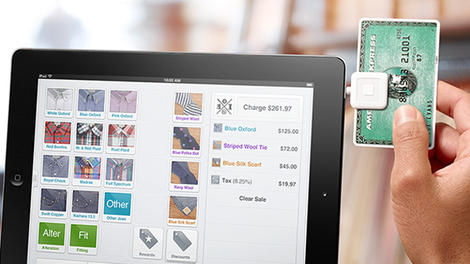
Executives at mobile payments start-up Square are discussing the possibility of being acquired, according to a report in The Wall Street Journal. Potential suitors listed in the report include Google, Apple and eBay.
Square's rough 2013
Square reportedly lost $100 million (about £59m, AU$107m) in 2013, according to The Wall Street Journal's two unnamed sources. Additionally, the startup has used more than $170 million (about £101m, AU$182m) of the $340 million (about £202m, AU$364m) it had raised since 2009, the sources said.A Square spokesman offered the following statement to TechRadar via email:
"We are not, nor have we ever been in acquisition talks with Google, and while we appreciate that Square may be an attractive target for some companies, we have never seriously considered selling to anyone or been in any talks to do so."
A Paypal spokesman also told The Wall Street Journal acquisition talks have not taken place.
Square, Google, eBay and Apple did not immediately respond to TechRadar's request for comment.
Mobile payments
Square is a mobile payments solution that provides the software and hardware that enables merchants to swipe credit cards on mobile devices. The company was founded in 2009 by Twitter co-founder Jack Dorsey and Jim McKelvey.The Wall Street Journal projects Square could be sold for "billions of dollars" despite a 6% decrease in gross margins from 2012 to 2013 and a business model that yields thin profit margins due to fees the company must pay to payment networks like Visa and MasterCard.
Square processed more than $20 billion (about £11.9b, AU$21.4b) in transactions, yielding revenue of about $550 million (about £327m, AU$589m) in 2013, according to the report.
Starbucks and Verizon are Square partners.

Read More ...
In depth: Forget flight mode: how gadgets are set to change air travel forever

Forget flight mode: gadgets changing air travel
The phrase that brings dread at the start of a flight: "Please turn off all electronic devices during take-off and landing. Limited use is allowed during the flight."That wasn't so bad when all you had to do was switch off your Gameboy for a bit (although the lack of saving RUINED Super Mario Land) but nowadays, in our smartphone-addicted times, it's akin to being imprisoned in the 1980s for umpteen hours.
It means flights are dead time, with no communication with the outside world, limited ability to work or play and during take-off and landing you were all but forced to read the in-flight magazine, which is a fate we wouldn't wish on anyone.
There were reasons for this, beyond perhaps the hope that passengers might resort to overpriced alcohol in desperation.
Take-off and landing are the most dangerous parts of a flight. If anything's going to go wrong it's likely to happen during your ascent or descent, so airline staff want you to pay attention to the safety information and not be distracted.
There were also concerns that electronic devices might interfere with radio frequencies used by the cockpits navigation and communication equipment or degrade the signal strength of landing systems.

The times they are a-changin'
But things are finally changing, as it turns out that electronics might not be such an issue after all. Some US airlines recently carried out a series of tests which showed that electronic devices don't actually affect a plane's systems and restrictions are being lessened as a result.What does that mean for passengers? Well first of all you may soon be able to use phones, tablets, e-readers and other handheld devices during take-off and landing.
The UK's Civil Aviation Authority has already allowed BA to make the change and other airlines might soon follow.
This means on British Airways flights you no longer have to turn electronics off before boarding or before the descent, instead simply switching them to aeroplane mode and they can stay on for the duration of the flight.
That applies to any handheld item that has a flight safe mode, though larger devices such as laptops can still only be used when the plane is cruising, which is more to do with keeping the seating area clear in the event of an accident.
The relaxation of restrictions also means less downtime as you'll actually be able to use your phone and tablet during take-off and landing, giving you an average of 30 minutes extra use on every flight.
It's a change which airlines seem to be happy about too. Madhu Unnikrishnan, a media relations manager for Virgin America, told us that "the FAA [previously] restricted the use of personal electronic devices (PED's) during take off and landing, and we complied with the rules. We are pleased that the agency has relaxed the rules to allow the use of PED's from gate to gate."
The fact that people are using personal electronics more and have more freedom to use them has also played into a rethink on in-flight entertainment.
For example Lufthansa has created a service which will stream movies, music and other content straight to passengers phones and tablets, removing the need to have screens built into planes and improving the quality of what you're watching - if you invest in a new smartphone or tablet with a decent screen, of course.

Wi-Fly
Even better, Wi-Fi is now available on some flights. For example BA offers it through its currently rather exclusive and limited OnAir service, keeping passengers connected to their world for the duration of a flight.In the US, on-board Wi-Fi is more widely available. It's a common feature of domestic flights, where there's a hotspot on board the plane, which transmits to specially built mobile phone masts on the ground.
Since whatever device you're using is connecting to the plane rather than directly communicating with antennas on the ground it doesn't interfere with normal phone masts, while the masts that the aircraft communicates with operate at a lower transmitting power than normal ones, to avoid any interference with the plane's navigation systems.
There are still problems to overcome though; for one thing there tends to be a cost attached to the service, which can put people off. Then there's the fact that heavy Wi-Fi use could drain your battery, especially on long flights, yet many planes still don't have power sockets for every seat.
On-board Wi-Fi also poses problems for international travel, as right now it relies on more of a 3G / 4G hotspot on the plane (if available - many are still stuck on 2G / EDGE, which are nigh-on useless to most connected phones), which requires passengers to use data roaming and can have major costs attached.

Phoning home from 30,000 feet
It's an exciting step in the right direction though. It's bringing the in-flight experience into the 21st century and allowing your time on board to be less boring and more productive.The one thing that's still mostly not allowed is phone calls, but airlines are even starting to experiment with that, although there are obvious barriers.
Mobile phone masts don't broadcast very far upwards, not to mention the fact that planes travel so fast that even if you could get a connection it would likely cut out as you move between towers, so even if you were allowed to use your phone on a plane you wouldn't actually be able to make calls the way things are now.
But the solution is simple: airlines would just have to install a 'picocell' on the plane, which is a small cellular base station that basically does the same job as a mobile phone mast.
Then the only hurdle is to ensure that passenger's phones connect to the network at their lowest setting, so as not to interfere with the on-board electronics. But new technologies have solved that problem and some airlines have already implemented them.
Virgin Atlantic for example is experimenting with in-flight calls, while text messages are already sort of possible on Wi-Fi equipped planes, as Unnikrishnan told us that "we do not permit voice calls on board our flights, but guests may send text messages when connected to Wi-Fi through apps, such as iMessage and WhatsApp."
So what does all this mean for aeroplane mode? Well, where it once turned off all connections it may soon be redesigned to allow for Wi-Fi and in the not too distant future it may not be needed at all.
What do you think? Should we lament the loss of that peaceful flight time, or will the end of rubbish screens, lonely hours in the air and nothing but the hiss of the engines be a wonderful thing? Let us know in the comments below.
Drones, clones and no-fly zones: how robot aircraft are taking over the world

Read More ...
In depth: 5 faulty gadgets that gave the world's biggest tech giants red faces

Faulty gadgets and the excuses given
Even the biggest and best technology companies in the world sometimes have problems.Whether it is faulty batteries - Samsung we are looking at you - or the Xbox One's drives not working for some when the first batch of consoles were released, if things can go wrong they will go wrong.
The most recent case was with the Sony Xperia Z2, with reports of overheating when you try and film 4K and some finding that the waterproof casing wasn't quite as waterproof as it should have been.
These are nothing, however, compared to the problems the following gadgets had and the apologies that were released because the kit wasn't up to scratch.
Here's the world's faultiest phones and tablets what the companies did to fix the problems.
1. Antennagate
Apple experienced perhaps the most high profile phone fault ever in what became known as 'Antennagate'.When Apple released the iPhone 4 it was received with much fanfare but it quickly became apparent that holding the phone in your left hand could lead you to bridge the gap between the two antenna segments, causing signal problems and even leading to dropped calls.

Apple's response? "Gripping any mobile phone will result in some attenuation of its antenna performance, with certain places being worse than others depending on the placement of the antennas. This is a fact of life for every wireless phone.
"If you ever experience this on your iPhone 4, avoid gripping it in the lower left corner in a way that covers both sides of the black strip in the metal band, or simply use one of many available cases."
In other words, you're holding it wrong. Apple then went on to point out other phones that supposedly suffered from similar issues, as if that made it all okay.
Ultimately Apple did the right thing and gave any customer who wanted one a free bumper which solved the issue. But that didn't stop a class action lawsuit, which, almost three years later, resulted in measly $15 payouts for those affected and even then only for US customers.
2. Bricked BlackBerry's
The BlackBerry Bold 9900 was an impressive phone when it launched in 2011, but it seems that some handsets worked a lot better than others.
Numerous users reported that their Bold 9900 (and 9930) handsets wouldn't turn on after being left to charge overnight or for similarly long periods of time.
BlackBerry responded that "A limited number of customers have reported an issue where their device does not power on" and that the company is "actively working on a software update to resolve this issue".
While we don't know exactly how many people were affected it seems like it was probably rather higher than BlackBerry's statement suggested, as mobilenewscwp reported at the time that some retailers had as many as a third of all BlackBerry Bold 9900 handsets returned to them as a result of faults.
3. N8's not starting
The N8 was an important phone for Nokia. It came at a time when the company was losing its dominance in the smartphone market and by launching the N8 as its next flagship the Finnish company had a lot riding on it.
Unfortunately the launch wasn't as smooth as it could have been, as many users reported that the phone would power down on its own and in some cases not power back up again.
Nokia claimed that the issue was to do with power management and went on to say: "As product quality is a top priority for Nokia, we have taken immediate actions to address this. As with any product performance issue, this is covered by Nokia's warranty."
It's unlikely that the issue had too much of an impact on sales, but it was still the last thing Nokia needed, particularly when going up against the iPhone 4 at the time.
4. Xperia S display problems
The Xperia S was the first Sony phone following its split from Ericsson. It was a fantastic handset with a top flight screen and an impressive camera, but it emerged that if it got too hot (above 40 degrees Celsius) the screen risked developing an ugly yellow tint.
In response to the issue Sony stated that "This is limited to a small number of units and the cause of this has been corrected. Any consumer observing this slight yellow tint on the display of their Xperia S is welcome to contact their local customer service centre and Sony Mobile Communications will resolve this at no cost to the consumer."
While the issue was unfortunate the Xperia S continued to sell well, so we doubt it's something Sony's dwelled on.
5. PlayBook's problematic operating system
It's one problem after another for BlackBerry. Not only has the company had problems with its Bold 9900 and Bold 9930 handsets (not to mention signal outages and ongoing financial issues), but it also found that around 1000 of its PlayBook tablets shipped with an OS build which was unable to properly load software upon initial setup, rendering them useless.
RIM, as the company was then called, responded in the manner you'd expect, stating that it's working to replace affected devices and that anyone experiencing problems should contact RIM for assistance.
Being limited to around 1000 devices this was a fairly small scale problem, but it got a lot of press and can't have helped the PlayBook's sales which initially weren't great.
Still, it's a happier ending for BlackBerry's little tablet that could, as during Christmas 2012 it was one of the most popular tablets available, shifting 160,000 units. Then again, there weren't that many tablets available...
- After a phone that works? You could do worse than checking out our list of the top 20 smartphones available.

Read More ...
Google Play Editions could finally go global as HTC One (M8) spied in India

The Google Play Editions of popular Android smartphones may finally be set for an international roll out following reports that the HTC One (M8) iteration is about to go on sale in India.
Multiple media outlets claim the raw Android version of the device, minus the Sense UI, will be up for grabs today from the Google Play Store in India.
Currently Google Play Editions of devices like the original HTC One, Sony Xperia Z Ultra and the Samsung Galaxy S4 have only been available for smartphone fans in the United States.
If it bears fruit, the Indian launch could see Google and its partners expand the roll out to other territories.
Nexus experience
The raw Android versions of smartphones, offering 'the Nexus experience' are only available to buy SIM-free, for a significant premium, but have still proved popular.The option to ditch custom UIs from OEMs for a simpler, Google-centric experience as well as faster access to Android OS updates has proved a great incentive for users.
Let's hope this is the beginning of widespread availability outside of Google's motherland.

Read More ...
All signs point to imminent Android 4.4.3 KitKat launch as Google updates app

Google has dropped a major hint that the next incremental update to its Android KitKat mobile OS will arrive imminently.
The firm has issued an update for its Google Edu Device Set-Up app, which is geared at helping schools set up Android tablets for students.
While it reveals nothing about the nature of the update, the app does promise support for the as-yet-unannounced Android 4.4.3 update.
Just last week the Sprint network in the United States also appeared to confirm an update was on the way, but has since removed any references to it.
Bug swatter
The Android 4.4.3 update isn't expected to furnish smartphone and tablet users with any new features, but it should nuke a number of bugs and bring the requisite performance enhancements.Some using the current version of Android KitKat (4.4.2) have been experiencing random reboots, issues with Bluetooth connectivity and problems with automatic connections to Wi-Fi.
We'll let you know for sure when the update drops.

Read More ...
Industry voice: Is Google and Microsoft's minutely pricing better value than AWS's hourly?

If you start a virtual machine (VM) on AWS, it is always rounded up to the nearest hour. Used it for three hours and 45 minutes? Then you'll have to pay for four hours.
This was the de-facto standard until Microsoft and Google entered the IaaS market, and announced they would offer minutely billing. On these clouds, if you only use a resource for 3 hours 45 minutes, then that is all you pay for.
So surely this is good news. In our example above, the 15 minutes' worth of savings we've made can mount up over time, right? Well, yes, those 15 minutes can represent a saving. But the saving is not as big as you'd think.
Is it worthwhile?
How long will a virtual machine typically run for? Seconds, minutes? No, probably not yet. It's more likely a VM will run for days, weeks or even months.Let's take a virtual machine charged per hour – is it more likely to be terminated at the start of the hour, in the middle, or at the end? If we looked at millions of VMs, we'd probably find no pattern – a VM is as likely to be terminated at the end of an hour, as at the beginning.
So, on average, a VM will terminate halfway through an hour – 30 minutes.
This means that on average, we'll only save half the cost of one hour of usage on the hourly provider if we moved to a minute-by-minute provider, regardless of how long we used the VM (assuming the cost of 1 min on provider A = cost of 1/60 of an hour on provider B).
If the VM has been running for days, months, or even years, our average saving will be half the cost of an hour of the resource: that's about half a cent on AWS. Is that saving really worthwhile?
Cloudbursting
However, if cloudbursting becomes a reality then things are different. If a virtual machine can run for seconds or minutes, then smaller time units are important. Let's say our application experiences a sudden rise in demand, causing hundreds of VMs to be created and shutdown within 5 minutes.So now, our average saving is 55 minutes, so 55/60 (91%) of the cost of an instance charged by the hour for every single VM. If the app constantly spikes in these kinds of timeframes, then large savings can be made.
Should I be concerned?
For most users, the charge period shouldn't be a major consideration when evaluating cloud providers. It's more important to understand how the whole application will be priced and scaled, including VMs, bandwidth and other supporting services, and use this total as the basis of comparison, rather than any individual element.The charge period only becomes important when the typical life of a virtual machine is less than the minimum charge unit. Then the cost of paying for time not used by short-lived VMs can rapidly add up.
This cloudbursting capability is still a vision rather than a reality – few applications can provision, configure and interact with a virtual machine in small timescales. But as cloud matures perhaps this will change and eventually maybe units will shrink to milliseconds or even smaller.
If AWS can charge virtual machines in thousandths of a dollar, why not thousandths of a second?
- Owen Rogers is a Senior Analyst at 451 Research, helping clients understand the digital and cloud economy.

Read More ...
Toshiba unveils 'world's fastest' microSD cards

Toshiba has announced what it claims is the world's fastest microSD memory card range, with speeds of up to 260MB/s.
The new series comes in 32GB and 64GB capacities. The 32GB model has a maximum read speed of 260MB/s and a maximum write speed of 240MB/s. The 64GB version has maximum read and writes speeds of 140MB/s and 130MB/s respectively.
Compared to Toshiba's older 32GB UHS-I card, the read speed is 2.7 times faster, while the write speed is a whopping eight times faster.
Speed for smartphones
The new memory cards are UHS-II compliant and use an SD Memory Card Standard Ver. 420 serial bus interface.Toshiba has noted a trend towards higher resolution, and thus larger file size, photos and movies with newer smartphones and tablet computers, making the need for faster storage more essential than ever.
The company will begin shipping samples to smartphone makers immediately. It plans to release more UHS-II microSD cards in the future as the mobile industry continues to boom.

Read More ...
Apple and Google dishing out incentives to earn mobile game exclusivity

Gamers on iOS or Android are facing a wait to get their hands on the most anticipated titles as both companies ramp up their efforts to secure periods of exclusivity, reports say.
The Wall Street Journal claims both firms are offering high profile developers incentives such as prominent positions on the app stores and in marketing materials in order to get first dibs.
The Journal says the incentives-only ploy has already enabled Apple to win months of exclusive access to Plants vs Zombies 2 and Cut The Rope.
Now both Apple and Google are said to be intensifying their attempts as they realise the significance of the gaming sector within the app race.
Carrots dangled
The end game for consumers though is likely to be frustrating delays when it comes to the hottest titles, rather than the democratic all-in approach.Android fans are no means strangers when it comes to waiting for apps to make the jump from iOS, but Google's massive market share has meant this disparity has become less evident in the last few years.
Of course, developers will have the choice to stick to their guns with simultaneous launches on both platforms, but when the carrot of an 'Editors Choice' or 'Featured' placement is dangled it may prove hard to stay impartial.

Read More ...
Would-be smartphone giantkiller OnePlus One spied for the first time?

There's been plenty of talk about the forthcoming OnePlus One handset in recent weeks, but so far - even in this era of uber leaks - we've yet to catch a glimpse of the intriguing, affordable device.
That may have changed this weekend after a series of press renders claiming to show the handset in all its glory have emerged out of China, ahead of the official April 23 reveal date.
The leaked snaps show a supremely slim-looking handset, a series of swappable rear cases and what looks very much like an Apple Lightning-style charging cable.
These pictures are the latest piece of the puzzle for a device that's been labelled a potential smartphone giantkiller that can challenge the top Android and iPhone handsets.
Promising
The maker of the device, which will run the popular, Android-based CyanogenMod operating system, has already pledged a 5.5-inch 1080p display, a Snapdragon 801 CPU, 4G LTE connectivity and 3GB of RAM.The firm has also promised to sell the device for just £290/$400, which appears to be seriously good value for such a high-spec handset.
The full picture will be revealed on Wednesday during the official launch, when we're likely to see a full spec sheet and a release date.
Does the OnePlus One look like it could be your next smartphone? Share your impressions in the comments below.
- And if that doesn't sound enticing enough, maybe just build your own phone

Read More ...
Available Tags:Amazon , TV , Google , Android , Microsoft , Nintendo , Windows 8 , Windows , Windows , iPhone , LG , HTC , tablet , MacBook , Nokia , India , Toshiba , Apple , smartphone ,


No comments:
Post a Comment