

Updated: 10 best mobile phones in the world today

Number 10: Samsung Galaxy Note 3
We've whittled our constantly-updated selection down to the 10 best smartphones you can get you hands on right now - but after you've checked out number one, we've brought you plenty of other options to feast your eyes on.We've all got at least one mobile phone each, right? We've probably got about three or four nowadays, and that counts giving your old Nokia 3310 to your Mum a few years ago.
But while you used to be able to just bank on the new Nokia or always get the next Sony Ericsson because it had a half-decent camera, there are now so many great options out there from loads of manufacturers.
The trouble is, how do you decide which is the best one for you?
Well, this is where we make it easy: we've played with nearly every device on the market and have found the ten best you can spend your money on. It needs to be good, after all, given it will reside in your pocket for the next two years.
Our ranking of the best mobile phones available in Australia today celebrates the brilliance of the smartphone: we love handsets that add in functionality to enrich our lives in so many different ways.
We also partially take into account the price of the phone too - meaning a low-price handset doesn't always need to have high-spec functions to be in our top 10.
A big year for smartphones
The HTC One was the star of last year, staying at the top of the charts for nearly 10 months, seeing off the challenge from the likes of Nokia, Sony, LG and Samsung (namely the Galaxy S4) - showing the smartphone market still has a fair few players.The iPhone 5S proved to still be a little too pricey with a smaller screen, and the iPhone 5C was cheaper but with some ageing hardware. And now Google is playing fast and loose with consumers' wallets, thanks to offering the ultra-cheap Nexus 5 and the even ultra-cheaper Moto G - could those be the phones for you?
But now we're in 2014, and the game has changed. Relentless design reimagination from HTC has led to the excellent HTC One M8 launching, but the Samsung Galaxy S5 and the Sony Xperia Z2 are due any day now and could prove a real contender for your cash.
Not so good news if you can't wait for the iPhone 6: that's not coming for a few months, so if you want something shiny and new now, you'll either need to go for the iPhone 5S (which is still a decent phone) or one of the plethora of high end Android handsets.
If that still doesn't help, well, there's always our extensive mobile phone reviews pages as well - or check out our personally crafted smartphone buyer's guide:
Here are our rankings for the best mobile phones around, currently available in Australia.

10. Samsung Galaxy Note 3
The Samsung Galaxy Note 3 breathes yet more life into a mobile form factor many thought would be dead on arrival, ramping up the specs and the size to give us a new monolith of mobile.It may be big, but the 5.7-inch display is fantastic and the Full HD Super AMOLED technology makes everything pop from websites to movies.
You're able to fit a lot more on screen at a time and that means less scrolling in messages, on websites and down your long contact list and that can only be a good thing.
What really impressed us with the Galaxy Note 3 though was its battery life and sheer speed under the finger. We're used to a day at best when hardcore using the device, but we got far past that without breaking a sweat throughout our tests.
The speed of the Snapdragon 800 quad core processor, combined with 3GB of RAM, means this is the least-slouchy phone we've encountered in a while.
Quick verdict
The Samsung Galaxy Note 3 is a great phone and if you were to own one you wouldn't be disappointed. It provides a great onscreen experience - as long as your hands are big enough to reach across it - and its stuffed so full of tech to almost warrant its lofty price tag - which refuses to tumble much.Its size will be a real stumbling point for many and we'd recommend going into a store and just holding the Note 3 for a while to see if it's something you can cope with - in short, we want all this but in a form that we can hold easily, at a lower price and without the S Pen.
So, essentially, we're really looking forward to the Galaxy S5.
Number 9: HTC One Mini

9. HTC One Mini
If you hold both the One and the One Mini, you'll struggle to tell the difference, apart from the fact one is smaller than the other (obviously). The aluminium build quality pervades, and it's hard to believe that you're not holding one of the most premium devices on the market.Even the polycarbonate band that runs around the edge of the phone is unobtrusive, which means you get a distinctive design that doesn't impact on the way the One Mini sits in the hand.
We love that the functionality of the One Mini isn't compromised from its larger relative, with the likes of UltraPixels and BoomSound all involved without being watered down.
HTC has been very clever in the design of this phone by bringing nearly every great element of the One to the smaller version, and packaging it in a way that still makes it very attractive.
In short, it's a cheaper version of the larger phone that scales down the processor and drops the price. Good combo, HTC.
Quick verdict
Would we recommend the HTC One Mini? Absolutely - the mid-range market renaissance is something we didn't expect, but is an area that HTC is intent on winning - and we think it's managed that with the One Mini.We really love the aluminium shell, the UltraPixel camera and BoomSound on board, plus we get to play with the latest version of Android as well as all the cool apps like the Music Player, which show lyrics to songs as they're playing. Actually, we're just happy to have the headphone-boosting amplifier on board - as long as our songs are nicely audible, we don't really care.
There's a sub-class of phones around at the moment that try and replicate top-end features in the mid-range market, and while this isn't the best phone in that class any more (we'll serve that title to the Sony Xperia Z1 Compact) it's still a cracking buy.
Number 8: Moto G

8. Moto G
Motorola's back, and it's kicking off its global smartphone revival with the keenly priced Moto G handset. A mid-range handset with a low-end price tag - we're talking around $250 in some stores.On paper the Moto G looks like an excellent handset for the price, and in practice it lives up to the billing.
As the Nexus 4 did with the mid-range market, the Moto G has turned the budget end on its head with features found on handsets double its cost.
It exceeds its rivals in several key areas, from the well defined 4.5-inch display to its 1.2GHz quad-core processor and the early Android 4.4 KitKat update. There's a lot to love about the Moto G for its price.
Quick verdict
Motorola must have cut some corners to get the price of the Moto G so low, and the camera is one area which has seen the compromise, but that's one of the only gripes.So here's the upshot: Motorola is back folks, it's official. It may not be the return we would have predicted - there's no flagship phone stuffed full of the latest tech - but arguably what the now Google-owned firm has done is even better.
The Moto G is a top notch, low cost smartphone and we wholeheartedly recommend this as the best budget mobile currently on the market.
Number 7: HTC One

7. HTC One
It's quite a tumble from the top spot for the HTC One, especially given it was our top smartphone for so long. However unless you're desperate to pay a little less per month, the newer One M8 does everything the original did, but so much better.It's nothing to do with the quality of the One – which is still one of the outstanding phones on the market – but more the fact that if you like Boomsound, and Ultrapixel camera, a sharp and bright screen or a powerful processor, the M8 has improved in every way there.
But let's not forget what made this phone so great: the supreme aluminium chassis, the Full HD screen and the simplified version of Sense 5.0 sitting now on top of Android KitKat means it's still a pleasure to use and recommend this handset - but again, only if price is your main driver and you simply must have a One.
The innovations are also more than just marketing gimmicks; Zoe functionality allows the creation of delightful video highlight reels, and the Ultrapixel camera means you've got a much wider range of shots available thanks to being stunning in low light - and none of that is diminished with time.
Quick Verdict
With power, poise and beauty all combined in this innovative phone, HTC has proved it can more than still cut it with the big boys when it comes to bringing out a lust-worthy flagship smartphone - and the One deserves to stay in the top ten.However, remember that this has one year fewer in terms of HTC promising to keep it upgraded, so if you pick it up now you might not get the newer versions of the software in 12 months time. The battery is also not as strong as on the One M8 - but it's still got a lot to offer.
Number 6: iPhone 5S

6. iPhone 5S
Did you see this one coming? The iPhone 5S behind five other Android phones in our rankings? Some think it should be higher, some think lower - it depends on your level of Apple love.Never has a company polarised opinion in the smartphone world like Apple - and with the iPhone 5S, so many are quick to decry it while others know it to be the smartphone they've been waiting for.
And let's make no bones about it: this is a stunning phone, with a gorgeous two-tone finish, a high-res screen with good colour reproduction, a 64-bit chip and that all-powerful TouchID sensor that lets you unlock your phone with a simple fingerprint.
The iOS 7 update is one that we sorely, sorely needed and does bring a lot more power and control - as shown by the impressive and pervasive Control Center.
We really like TouchID, the 64-bit processor might be a little useless now but definitely brings a touch more zip to things, and the M7 chip gives developers something to play with in terms of fitness, with the likes of FitBit taking advantage already.
The issue of price is starting to diminish somewhat - but many vendors are still charging the same for this older phone as the likes of the HTC One M8 despite being a few months older.
Quick verdict
Let's not beat around the bush here: the iPhone 5S is still one of the great smartphones in the world thanks to a great package of technology, design and UI intuition.iOS 7 is the update we've needed for a while, and does a lot to help keep Apple current at the sharp end of the market - but we still can't wait to see what the iPhone 6 will bring, as essentially this is still the same phone as the iPhone 5 but with a better engine under the hood.
Number 5: Samsung Galaxy S4

5. Samsung Galaxy S4
Samsung managed to hold off HTC at the top in 2012, but in 2013 the supreme stylings of the HTC One proved too strong against a phone that's a slightly-better-version of its predecessor, especially when you consider the design.There's a lot, a lot, to love with the Samsung Galaxy S4 though: whether it's a powerful camera, a brilliant screen, a long-lasting battery or just a fluid experience, there's a lot you could want in a smartphone right here.
The cost is a tad higher than on other smartphones, but still cheaper than iPhone level and is descending as the S5 appears. If only it was made out of something a little more premium...
LG, Sony and Google have come out with some attractive propositions and overtaken the best the South Koreans can manage, but that hasn't stopped this being one of the most popular phones of 2013 and the price is ever lower.
Verdict
There's no doubt that, despite the design criticism, this is one of the best smartphones ever made - it's clear, powerful and does everything we'd expect a flagship phone from Samsung to do.It's just a shame that the perceived 'innovation' doesn't really add anything: motion gestures, smart scroll and it's other non-contact bedfellows didn't take smartphones to the next level, which is what we needed in the face of Ultrapixels and BoomSound.
Make no mistake though: you'll love the Samsung Galaxy S4 if you choose to go for it, as it's a decent phone with some really cutting-edge features - but remember there's something better thanks to the Galaxy S5.
Number 4: Google Nexus 5

4. Google Nexus 5
So we've updated our review with the new phone software, and thankfully things are a lot better now. The battery is improved, the camera a little more stable, and the low cost is still in place.You already know we like Android 4.4, the clever implementation and the $399 price tag. We love the high power CPU, the quality screen; even the rubberised outer shell.
You can get the LG G2 for around the same price now though, and that offers a far superior camera, better battery life and a huge slew of extra features - it really depends if you're a fan of the stripped-down experience.
Quick verdict
We're glad to put this smartphone higher up in the rankings, as it's one of the cheapest out there in terms of bang for buck.It's a great phone that hits the marks well - it lacks something in terms of innovation, but that's not a problem for those that want to be able to run all manner of apps and games at a decent price. It doesn't come in at the same price point as previous Nexii, but it's still jolly cheap.
Number 3: Sony Xperia Z1 Compact

3. Sony Xperia Z1 Compact
Hey Sony, lovely to have you back near the top. What's this? A phone without a 1080p screen? A smaller battery? Are you MAD?Wait, we get it. This is the mildly-nonplussing Xperia Z1 shoved into a smaller frame, with almost nothing compromised (the above two points aside).
With a 4.3-inch screen it's one of the most easy to use devices in the hand, coming in next to the iPhone 5S, but it does it with a much lower cost and a great battery life to boot.
On top of that it's waterproof and has expandable memory, plus a superb screen. Well played, Sony - we can't wait to see what else you do in 2014, and the Xperia Z2 looks like a strong competitor indeed.
Quick verdict
Want a great phone that's just a little bit smaller without losing all the power? If so, then we've found your ideal device. Strong CPU, great battery and expandable memory are traits we love to see.It's not got the same screen sharpness as some of the others on show here, and the camera can oddly throw in a little noise here and there, but these are minor gripes indeed.
It's been launched with a palatable price tag as well - so head on down to your local emporium and throw it in some water. Because it's waterproof too, not because you're a vandal.
Number 2: LG G2

2. LG G2
Wait, an LG phone in at number two? Believe it people; LG has made a phone that not only impressed us but ran the HTC One very, very close for the top spot in 2013 - and holds that place into 2014 too.We don't know where to start in terms of extolling the virtues of this new handset from the South Korean firm: it's got an insanely good screen, quality camera, the best audio pumping out from its speakers and headphone jack... the list goes on.
We even came to tolerate, then love, the power and volume buttons being placed on the rear. These aren't ideal, but the ability to knock on the screen makes it really easy to interact with this impressive device.
Verdict
There's so much on offer here that we can't help but recommend it to anyone looking for the best smartphone powerhouse.The only things that we dislike are the cluttered UI (pull down the notifications bar and you'll see why) and the plastic casing, which drops the premium feel of the phone a lot, especially compared to the handset that sits one place above.
But launching at at an affordable price point is a really nice touch from LG, and we reckon it's going to pay dividends.
Number 1: HTC One M8

1. HTC One M8
What to say about the HTC One M8? They often say the second album is the hardest, but the follow up to the all-conquering HTC One takes the best of that phone and yet still re-invents things enough to make it a massive recommendation over the old model.We love the speed of the camera, the Duo Camera is smart as a tack, the Boomsound upgrade is impressive and the design... well, you have to hold it.
The Snapdragon 801 processor has boosted battery dramatically compared to the 600 of last year, and that means that photos also process much more quickly as well - even the front-facing camera is much better.
Gaming, movies, photography, browsing - all work really well, and in a phone that that's easily going to destroy whatever anyone else can design, unless Apple or LG have got some dark sorcery up their sleeves when the iPhone 6 or LG G3 appear later in the year.
Quick Verdict
If we were to criticise the One M8, it would be the camera's lack of a megapixel upgrade, which means pictures are a little less sharp than they might otherwise be.That said, it's a minor point in a phone that has barely any flaws. The lower megapixel camera means faster shutter speeds, and if you don't want to zoom in a lot, most will enjoy the depth perception and background de-focus ability to make some pro-looking snaps.
We urge you to hold this phone and not consider buying it. It's got great specs, a splendid design and some clever hardware innovation where the competition is relying on software to do the same thing.
Can the Galaxy S5, iPhone 6 and Xperia Z2 take the top spot when they appear? It looks like you're going to be spoilt for choice in 2014.
Also consider...
If a phone isn't in the top 10 best phones in the world list, that doesn't mean it's not worth giving two hoots about.Here's a few handsets you might want to think about should none of the above tickle your fancy... although you're clearly VERY hard to please:
Nokia Lumia 520

The Nokia Lumia 520, much like its big brother the Nokia Lumia 620, is a jack of all trades and a master of none - although it really manages to make a good fist of everything it tries, for the low, low price tag it carries.
It looks good, it's got a decent screen both in terms of size and resolution, it rarely stutters or slows down, it's great for calls and messaging, reasonable for media and okay for photos.
To achieve a lower price point the 520 has had to strip away a few things - there's no NFC, compass, camera flash or front facing camera here.
But on the other hand it's also got a bigger screen, a larger battery, a sleeker, slimmer, lighter build and the same processor and RAM as the Nokia Lumia 620, so in many ways it's actually better.
Combine that with a lower price tag and we reckon that this just might be the best entry level Windows Phone 8 handset that you can buy and certainly the best value.
Quick verdict
The Nokia Lumia 520 certainly isn't an iPhone or Samsung Galaxy beater - but it's a superb Windows Phone device that you can pick up for under $150. If you're a fan of a simple interface with some quality add-ons, then you should definitely look at Nokia's latest attempt to win over the smartphone naysayers.Samsung Galaxy S3

With the Samsung Galaxy S4 (and friends) now launched, the S3 has predictably fallen out of focus somewhat.
But don't worry: the S3 is still a strong phone: it's got a good slug of decent features we want and more, and knows what it's doing with processor speed and media management too.
Would we recommend you buy one if you're hankering for a spot of Samsung? Yes, but only if you're trying to save a lot of money, as it's really ageing now.
Price isn't the only reason the Samsung Galaxy S3 is worthy of consideration though. Smart Stay, Super AMOLED HD screen, up to 128GB storage, Music Hub, removable battery, quick camera; for the price, this phone still delivers in ways that many others on the market can't.
Quick verdict
If you're after a decent slab of Samsung tech, the Galaxy S3 is an OK choice. Samsung faced an almost impossible task in trying to create a worthy sequel to the Galaxy S2, and while this is an older model, it's still worth a look.Samsung Galaxy Note 2

Many (including us, we admit) were not convinced when the original Samsung Galaxy Note launched. Who on earth would want something so big to make their calls and surf the internet, even with a glorified stylus? Cue awkward silence.
Millions of you, it would appear. The Galaxy Note sold by the bucketload, so how do you follow that up? With something better, of course - the Samsung Galaxy Note 2, which has shifted millions of units worldwide, and now is the elder statesman thanks to the new Galaxy Note 3 appearing.
Still a strong and eye-catching device, the Galaxy Note 2 is well-connected, and thanks to that increased screen size (up to an eye-bulging 5.5-inches), is, among many things, a quality media player.
Air View, Multi-window, a dock that can turn it into a fully-fledged computer - it's all here, people..
Quick verdict
As a phone, it's big, but once you get over that, if you can, it's great. As a PMP, it really does excel, but there are better options on the market (Note 3 and Sony Xperia Z Ultra, for instance).Ultimately, there's no getting away from the fact that the Samsung Galaxy Note 2 is a niche device. But it does almost everything it sets out to do perfectly, with grace, class and maximum functionality.
With a lower price, it's still powerful enough to last for at least a year, so we have no qualms recommending it as a viable option for your next phone.
iPhone 5C

What's this? A new iPhone not making it into the top five? Wait... not even the top ten?
Well, you can't really blame us. This isn't a new iPhone - it's last year's device in brand new package with more colours to choose from.
There are more LTE bands to choose from too, which is important to Aussie buyers as it means it can give superfast speeds from all the networks.
It's still a really rather good phone, with the Retina display still giving market-leading colour reproduction, a strong camera and the best App Store around.
Quick verdict
We'll be honest: this is the section the iPhone 5 would have lived in, as the iPhone 5C is just a tweaked version of 2012's model, the same phone with a new skin.There will be loads of people looking to buy it simply because the iPhone now comes in pink or green, and to those we say: look at the Lumia range. Nokia's been doing the same thing for years and at a much, much cheaper price point.
The iPhone 5C is the same as a every phone from Apple: too expensive for what it is, but if you're desperate for such a device from the Cupertino brand then this is still a strong handset to plump for - but beware of getting the 8GB option as it can fill up with apps or media very quickly.
Samsung Galaxy S4 Mini

Samsung created a mid-range handset, putting itself right against the 4G-toting Sony Xperia SP and Nokia Lumia 820 - but most importantly now in a war with the HTC One Mini too.
The Galaxy S4 Mini takes the design language of the full-fat S4, and does well to shrink it down without losing the same 'atmosphere'.
A vibrant screen, bright and clear enough, added to the fact it's only 4.3-inches large, mean the S4 Mini is a lot easier to hold in the hand, and the camera is as powerful as we'd expect on a phone of this size and price point.
Quick verdict
What you get with the Samsung Galaxy S4 Mini is a far better trade off of price and features than you got with the Samsung Galaxy S3 Mini, and a phone that sits very comfortably within the S4 range.It's got a lot of the S4 power at a lower price point, and while the S3 to S3 Mini divide was just too great in our eyes, the S4 Mini is a lot closer to its bigger brother.
Nokia Lumia 1520

The Nokia Lumia 1520 is a trailblazing 6-inch smartphone that forges a path for Windows Phone 8 into true high-end territory. And what a swathe this oversized phablet cuts - it's huge.
Its 6-inch 1080p display is a thing of beauty, and is a great way to watch videos and view photos on the go.
Nokia has produced another excellent camera phone here, learning lessons from the Nokia Lumia 1020 and the Nokia Lumia 925 to produce a very well balanced snapper.
However, there's also no denying that this is a ridiculously large phone, and whipping one out in public will be as embarrassing as it is tricky to wield for those who appreciate a little subtly and mobility from their phones.
Quick verdict
The Nokia Lumia 1520 is an absolute beast of a phone that we suspect only the large-handed and generous pocketed will be able to live with day to day.Those who accept the challenge will find the most capable Windows Phone 8 device yet, with top-of-the-range specs that include a stunning 1080p display and a superb 20-megapixel camera.
Sony Xperia Z1

The Sony Xperia Z1 is another powerhouse of a phone. With a 20.7MP camera with G Lens technology, the ability to withstand rain, snow and sand and a superfast Snapdragon 800 processor running the show, it's clearly a great handset to have around.
It also comes in a variety of funky colours, has a pleasing build quality that helps justify the higher price to a degree and basically offers the best of the Sony brand in a smartphone.
We do have a few reservations insofar as the Z1 doesn't really carry the mantle the Xperia Z created; it's got a massively uprated camera and screen technology, but neither particularly wow.
Quick verdict
Don't think that this is anything less than a leading phone from Sony. It's just that the added thickness to accommodate the camera doesn't impress enough to plop it into the top five, nor the sub-par screen, and after the really great showing from the Xperia Z, we were a little disappointed.It's only better than the Z1 Compact if you want a larger screen - other than that, the two are identical.

Read More ...
Updated: Samsung Gear Fit update will make display less awkward to read

The Galaxy Fit's awkward horizontal screen orientation could put a crank in your neck, so Samsung is readying a fix to this obvious flaw.
An update to the wrist-worn gadget with an easier-to-read vertical orientation has been spotted in an official Samsung store in South Korea and the company confirmed its existence to TechRadar.
It's unclear if the option to rotate the screen 90 degrees is destined for the Samsung Galaxy Fit release date or a post-launch firmware update.
The fitness tracker ships globally on April 11, the same day as the Samsung Gear 2 and Gear 2 Neo smartwatches as well as the Galaxy S5 smartphone.
Not compatible with iPhone, other Androids
The Gear Fit's new, more natural screen orientation may make it easier to check your physical activity, but it still won't be possible to sync that data to non-Samsung devices.The stylish curved Super AMOLED is a "world's first" that remains exclusive to 20 Samsung phones and tablets like the popular Galaxy S4 and phablet-sized Galaxy Note 3.
It won't work with other Android devices and certainly won't cater to Apple's iOS platform to the chagrin of some iPhone 5S owners.
That leaves the door open to more compatible Android Wear smartwatches and the rumored iWatch, both of which are expected to put a heavy emphasis on health and fitness tracking.
- Check out the our Amazon Fire TV review

Read More ...
Facebook does care about privacy, looks out for you 80 trillion times a day
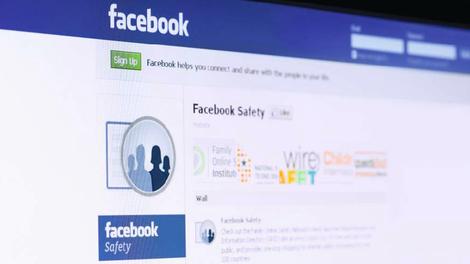
Facebook is once again seeking to cleanse its mucky reputation when it comes to privacy, this time by furnishing the world with new information regarding how it looks after user content and data.
In a briefing with reporters, the social network said it runs a rather sizeable 80 trillion checks every day to ensure any data isn't being wrongly exposed to the world.
The firm also said it conducts 4,000 surveys a day (in 27 languages, no less) directly relating to privacy. Among other things, those results prompted it to start showing on-screen explanations for privacy controls.
Quelling the confusion
Facebook now plans on introducing a host of more explanations, which it hopes will lessen the confusion and misconceptions experienced by users when the company changes tact, as it often has in recent times.Users will be informed they can change the visibility of old cover photos and it will also offer clarification that when a friend shares content it will only be visible to the person's mutual friends.
The company also plans to introduce an in-line box to explain the differences between public status updates and those meant only for friends.
Two-pronged attack
As well as word of the privacy checks and surveys, Facebook also revealed the logistics behind its privacy efforts.Responsibilities are split into two teams: the Privacy Product Engineering squad, which builds the consumer-facing settings; and the Privacy Infrastructure Engineering team which works to ensure any unassigned data is locked down.
So, according to Facebook, it does work really, really hard when it comes to protecting its members from the accidental over-sharing of content, despite their desire to have users share with 'everybody.'

Read More ...
Review: Dell XPS 11 review

Introduction and design
Transforming laptops are finally growing popular outside of the medical and enterprise fields and they're often aimed at. Between the tablet-friendly Windows 8.1 and touchscreens popping up on just about every device, it's clear that vendors are betting big on shape-shifting hybrid machines. To this end, Lenovo designed the back-flipping Lenovo Yoga Pro 2; meanwhile, Asus developed the Asus Transformer Pad with a display that snaps off its keyboard base. Both were interesting devices, but ultimately laptops first and tablets second.Dell is shooting for quite the opposite with the new Dell XPS 11. Instead of a hybrid notebook that turns into a tablet, the Round Rock, Texas firm is positioning its new machine as a tablet first. If anything, the XPS 11 resembles the Microsoft Surface Pro 2, as the two share soft touch keyboards that users can lay out when they need to sit down and type.
With the Dell XPS 12's 12.5 inch, screen-swiveling design, Dell is no stranger to the transforming form factor. For the XPS 11, however, the company devised something lighter, slimmer, and smaller with an 11.6-inch screen. The result is a device that's much tighter, sturdier - sexy even. With a carbon fiber body and stunning 2560 x 1440 resolution display, the XPS 11 is a fashion statement. But is there any more to this laptop-tablet hybrid than looks?

Design
The XPS 11 features a carbon fiber chassis, which not only makes the 0.6-inch (15 millimeter) thin laptop sturdy but also adds a unique look to the notebook. The carbon weave pattern wraps the laptop's body, giving it a futuristic look more common on sports cars and stealth fighter jets.The entire machine iscoated with a thin, rubbery substance that enhances grip when carting it around in hand. The XPS 11's resistive-touch keyboard is also coated with the same material, letting me keep a sure grip whenever I flipped the screen back into tablet mode. This flat keyboard also helps the device feel more natural as a tablet than mashing keys with my fingers on the physical chiclet keyboard of the 11-inch Lenovo Yoga 2.

Opening the clamshell reveals machined aluminium that wraps around the inside lip of the screen and base. It's a small accent that adds an extra dash of style to the XPS 11's otherwise completely black exterior. The 11.6-inch Wide Quad High-Definition (WQHD) screen, meanwhile, is fronted by a giant sheet of Corning Gorilla Glass NBT carbon fiber glass. This super tough sheet of glass adds some serious rigidity to the laptop's display, which during my testing showed very little flex.
Unfortunately, I can't say the hinge on the laptop shared the same sturdiness. While it takes a decent amount of force to reposition the display, the screen rocks up and down whenever I use the keyboard to type on my lap. The hinges are also not strong enough to stand up to the pressure of tapping on the display. These are both slight disappointments, but it's a shame the hinge is the weakest link of this overall rocksolid laptop. Luckily, the hinge is still firm enough to keep the laptop positioned when it is tented or stood up on its side like a book.

Life in 11.6 inches
Generally, 10 inches is my threshold for tablets before they grow to too bulky and heavy. Unfortunately this is also true for the Dell XPS 11. Even though the machine weighs a stark 2.5 pounds (1,130 grams), it's still rather unwieldy to hold for extended periods of time. This is especially so when holding the device vertically - it felt like balancing a see-saw in my hands.What's more, the Dell hybrid's 16:9 aspect ratio is simply not conducive to some things I usually use a tablet for. It's perfect for watching movies and playing a few Windows Store games, but not much else. Comics on the Kindle app don't fill the screen vertically or display a two page pane horizontally, as I hoped. Books, meanwhile, are displayed with their text stretching across the entire screen, forcing me dip my neck every time I finish a page.
Specifications
The Dell XPS 11 is definitely a looker even when compared to the sleek Yoga 2 and the industrial design of the Surface Pro 2. Thanks to the Dell hybrid's carbon fiber construction, it's also the lightest of the bunch at just 2.5 pounds. All the extra plastic on the Yoga 2 ends up weighing it down to a hefty 2.9 pounds (1,315 grams). It's even a smidge lighter than the chunky, 2.55 pound (1,162 grams) Surface Pro 2 with its keyboard cover.Even at its thickest point, the XPS 11 is also thinner and smaller than both devices - if only just slightly - at 11.8 x 7.9 x 0.4 - 0.6 inches, or 300 x 201 x 11 - 15 millimeters (W x D x H). The Yoga 2 is just a bit bigger overall, measuring 11.7 x 8.12 x 0.67 inches (298 x 206.5 x 17.2 millimeters).
The Surface Pro 2, however, beats out the Dell hybrid as the smallest device at 10.81 x 6.81 x 0.53 inches (274.5 x 173 x 13.5 millimeters). But anyone picking the XPS 11 or Microsoft's official tablet won't have any trouble slipping either device into a bag and carrying it around all day.

Spec sheet
This is the Dell XPS 11 configuration sent to TechRadar:- CPU: 1.5 GHz Intel Core i5-4210Y (dual-core, 3M Cache, up to 1.9 GHz with Turbo Boost)
- Graphics: Intel HD Graphics 4200
- RAM: 4GB DDR3L at 1600Mhz
- Screen: 11.6 inch, 2560 x 1440 resolution WQHD screen
- Storage: 256GB SSD
- Ports: 2 USB 3.0 ports, HDMI, MicroSD reader, headphone/mic jack, and security lock slot
- Connectivity: 802.11ac Wi-Fi (Intel Dual Band Wireless-AC 7260), Bluetooth 4.0, NFC
- Camera: 1 megapixel webcam (720p HD video) and dual array digital microphones
- Weight: 2.5 pounds
- Size: 11.8 x 7.9 x 0.4 - 0.6 inches
The XPS 11 starts at a fairer $999 (£799/AU$1,498), with the QHD display included. Every model also gets the future-proofing 802.11ac wireless and NFC connectivity features. However, the base configuration packs a tiny 80GB solid-state drive and an 1.5GHz Intel Core i3-4020Y processor.

The XPS 11 far outclasses the 11-inch Yoga 2 in terms of sharpness, which sports a standard 1366 x 768 IPS display. The 1920 x 1080 panel on the Surface Pro 2 also loses this race but it's still a respectable FHD resolution. Similarly, Dell's hybrid comes with one of the latest Core i5 Haswell chips, but these premium components also make the XPS 11 extremely pricey compared to its constituents.
For $699 (about £420/AU$754), users can get the maxed out Yoga 2 with a 2.16GHz Pentium N3520 (quad-core) processor. The Lenovo also has almost double the storage, with a standard 500GB hard disk drive. The XPS 11, however, still pulls away with a faster Core i5 chip and SSD that runs circles around that 5,400 rpm HDD.
The Surface Pro 2 is much closer in terms of competitive specifications. Packed with twice the RAM and a 256GB SSD, the Microsoft's slate rings up for $1,299 (£1,039/AU$1,469.00). However, the Surface Pro 2 comes with a slightly slower 1.3GHz Intel i5 (dual-core) CPU, but that should still be more than sufficient for tablet use and some light desktop applications.

With such a premium price, the XPS 11 runs into some significant competition outside of its 11.6 inch hybrid class. Users in the market for a lighter and cheaper dedicated laptop can pick up a dual-core, 1.7GHz Intel Core i7-powered 11-inch MacBook Air. Even with 8GB of RAM and the same 256GB SSD, this Macbook slides in under the XPS 11 asking price at $1,349 (£1,239/AU$1,649).
Performance
The Core i5 chip tucked inside of the XPS 11 offered mixed performance at best. The Dell hybrid had no hang ups while streaming 4K YouTube videos. The machine could also run DoTA 2 at a remotely playable 15 frames per second at maximum resolution with all the graphics settings maxed. In short, this is no gaming rig.That said, the Dell XPS 11 struggled to keep up with my image editing in Lightroom and even web surfing. In either case, the laptop chugged a bit, despite being equipped with a decent amount of RAM and a quick SSD.
This could be due to the processor's Intel HD 4200 graphics not being up to snuff to drive the XPS 11's massive 2560 x 1440 resolution whilst keeping up with processor-intensive tasks. At the same time, this middling performance isn't backed up by a battery life that tops out at 3 hours and 49 minutes with regular everyday use.

- 3DMark: Ice Storm: 25,540; Cloud Gate: 2,739; Fire Strike: 351
- Cinebench CPU: 155 points
- PCMark 8 Battery Life: 3 hours, 28 minutes
When compared to its direct competition, the Surface Pro 2, the Dell XPS 11 also falls considerably short. The Surface Pro 2 churned through the toughest 3DMark graphics stressing test with 640 points, while the Dell hybrid only managed to touch the 351 mark - but again, consider the Dell's much larger screen resolution. (TechRadar has yet to receive an 11-inch Lenovo Yoga 2 for a full review.)
The 2K cinema experience, minus the hitchy sound
The screen on the Dell XPS 11 is simply gorgeous. Colors representations are richly saturated, making images pop. Even better is that the display draws deep blacks, which are perfect watching for horror movies at night and playing dark, moody games without those bland streaks of gray. Speaking of games, I was pleased to play some of my favorite games on the higher-resolution screen. Because of the middling processor, you might want to turn off some of the more intense settings (like ambient occlusion) to keep the action moving along at a decent 30 fps.
While the screen presents a vivid picture, the speakers on the XPS 11 can ruin high tones. Certain high-pitched songs, like Short Change Hero, brought out the tinniness of the device's speakers. Explosions also sound garbled when they hit on this laptop. So, while a Michael Bay movie might look great playing on the Dell XPS 11, its speakers can diminish the experience.
Touch keyboard or touchscreen?
Dell made a lot of conceits to design the XPS 11 as a tablet first and laptop second. Nowhere else on this machine is this philosophy more evident than the keyboard. The resistive touch keyboard was made to be as unintrusive as possible, saving users from awkwardly squishing the keyboard while holding the device as a tablet. While Dell has succeeded in this endeavour, touch typing was extremely aggravating on the XPS 11.Like Microsoft's Surface keyboard cover, this keyboard requires mashing on the buttons for anything to register. This grew tiring after a while, especially when balancing the laptop on my lap, as each keystroke caused the laptop to bounce up and down. My biggest gripe with the keyboard: the lack of a definitive transition marking the end of the space bar and other essential buttons, like the Windows key. Rather than hitting the spacebar, I would often just hit an area of rubber between the actual key and the trackpad. The rest of the keyboard is etched with bits of black plastic marking the end of the keys. A simple trough to mark the bottom edge would have easily fixed the issue.

Thankfully, the far more accurate touchscreen was just a poke away to save me from the XPS 11's fussy touch keyboard. The laptop's trackpad also was perfectly usable and sizable for dragging the mouse around the Dell hybrid's expansive WQHD display.
Bundled Software
Dell packed on a few pounds of bundled software with the XPS 11. Luckily, there's nothing too superfluous, as every bit of included software has its own use.- Dell Backup and Recovery: While Windows 8.1 already has a backup and recovery agent, this Dell client adds an extra bit of security in case of virus attacks and accidental file deletions.
- Dell Digital Delivery: This enables users to purchase, download, and update certain apps like Adobe Photoshop Elements 10 and Acrobat X, avoiding update sites.
- Dell Smart Assist Configuration Utility: This tool allows users to customize how often the laptop pulls updates while it is in smart sleep mode.
- Dell Update: An easy download tool that pulls driver and software updates automatically.
- My Dell: An easier way to view your Dell XPS 11 configuration without having to mull around the Windows device manager or tap into your Windows Experience Index.
- PC Checkup: A built-in hardware diagnostic tool for tracking system changes and a drive space manager for those precious gigabytes.
- PocketCloud: A free cloud solution that connects with your Google account to access files and apps across other Windows PCs and Mac machines.

Verdict
Premium looks and design cost a pretty penny. If you seek a gorgeous-looking and feeling laptop-tablet hybrid, the Dell XPS 11 is a fashion model in its class. The Lenovo Yoga 2 is a lovely rubberized machine, and the Microsoft Surface Pro 2 has an exquisitely-made magnesium frame. These rivals have their own appealing characteristics, but the XPS 11 feels like it's in a whole other level as a truly luxury item.We liked
I loved the carbon fiber body of the XPS 11. It's a material you don't see very often on electronics - aside from the faux-patterned back of the Motorola Droid Maxx - and at the same time it does not look gaudy like carbon fiber rims on a minivan. Instead, it's subtly implemented to add strength and personality to the laptop, matching form with function.When I opened up the laptop for the first time, I was greeted by an equally beautiful screen with lavishly deep colors just begging to display high-resolution content. And with 802.11ac Wi-Fi built-in, the XPS 11 is prepared for the advent of beyond-HD streaming.
We disliked
While I could gush on for days about the Dell XPS 11's body, the same rubbery coating is also extremely susceptible to scuffing and scratches. Already a smudge magnet for oily fingerprints, this exterior developed some scars by simply sliding it across an unsanded wooden bench.Then there's that keyboard. It's an admirable effort on Dell's part to eliminate the awkwardness of gripping the device against a keyboard in tablet mode, and it works. However, when I actually sat down to work on this review, my typing experience devolved from "This is okay" to "I just need to get used to it," and eventually hatred.
It's also disheartening that this premium laptop does not have the performance chops to back up its gorgeous screen. While most tablets deliver a mix of battery life and enough power to deal with everyday web browsing, the Dell XPS 11 pours all its energy into powering that sharp display, sacrificing battery life and performance.
Final Verdict
Dell set out to make a tablet device first that could convert into a laptop when users needed it, and it has succeeded, partially, with the XPS 11. Last year, the Dell XPS 12 turned heads with its unorthodox screen-swiveling design. This new hybrid laptop is an evolutionary step that's lighter and more refined. While it's not treading any new ground already covered by the Yoga 2, the XPS 11 is more than a carbon copy, thanks to its build quality and high-resolution screen.There's a lot to consider before picking up an XPS 11. It works somewhat as a tablet and much less so as a laptop, with some big caveats for both use cases. The Yoga 2 is a much more balanced tablet-laptop hybrid that offers a physical keyboard for those who can get over touching buttons on the hybrid's backside. Meanwhile, the Surface Pro 2 is a smaller but similar tablet.
With the XPS 11's high price point, there are dedicated laptops to consider with such a large budget, including the Acer Aspire S7 and 11-inch MacBook Air. With all its trade-offs, the Dell XPS 11 is simply too expensive to recommend outright, but if you have the cash to burn, this hybrid is a looker with an equally beautiful screen.

Read More ...
Comcast reckons a new Apple TV box is on the way, sounds scared

The evidence pointing to a revamped Apple TV set-top box continues to amount, after a US cable network claimed the iPhone maker is exploring the development of a new set-top box.
In a filing to the US Federal Communications Commission (FCC), Comcast cited Apple's plans while defending the proposed merger with Time Warner Cable, which is under scrutiny from regulators stateside.
Comcast said the controversial merger is necessary to protect the cable industry given the increase in competition, on multiple fronts, from Apple, Google, Microsoft and Amazon.
The company believe cable company's territory in being invaded by the tech giants, not just in the TV industry, but also in the home broadband sphere through initiatives like the proliferation of Google Fiber.
Prime position
The filing read: "Today, Google competes as a network, video, and technology provider, and 8 out 9 of the next Google Fiber markets the company announced are in Comcast or TWC areas. Apple tablets are viewing platforms for cable services even while Apple offers an online video service, Apple TV, and explores development of an Apple set-top box.""Microsoft just announced that it will feature ads on the Xbox One, creating a new video advertising platform. And just last week, Amazon announced its own set-top box while it continues to leverage its unequaled sales platform and family of competitive tablets to promote its burgeoning Prime Instant Video business."
Whether Comcast has an inside line into Apple's plans or not isn't clear, but the speculative shouting surrounding an Apple TV refresh has been building to a cacophony for months now.
In 2014, reports have claimed the new set-top box will have a heavy focus on gaming, while others have suggested it will arrive in April with support from cable providers.

Read More ...
Adobe Lightroom Mobile touches down on iPad with gesture controls

Adobe is bringing all the RAW image editing capabilities of Lightroom 5 to the iPad.
The photo software giant has released Lightroom Mobile for iPad. While the app is free, it's also only usable to those already enrolled as a Creative Cloud subscriber.
Adobe's new iPad app links directly to the desktop version and pulls images from any synced collections marked from your computer. From the iPad, users will be able to adjust settings like Exposure, Contrast, Highlights, Clarity, Sharpening and all the usual tools seen on the full application.
The best thing about the mobile app? Adobe has made it as iPad friendly as possible by using very little RAM. And the entire interface is touch friendly; swipes, finger taps and multitouch gestures do everything from adjusting saturation levels to peeking at the image before all your changes.
Cloud powered
Lightroom Mobile is powered entirely by Adobe's Smart Previews, which means users will have to be online all the time when using Lightroom Mobile.However, this also means the iPad won't have to be anywhere near your computer because it's using Adobe's cloud servers as an intermediary. Any changes that photo editors make on their iPad will be automatically applied to the original image the next time they start up the desktop version.
What's more, wedding and other professional photographers will be able to carry around their portfolio without having to load it directly onto the iPad or upload it elsewhere online.
While the Lightroom Mobile requires a Creative Cloud subscription, there's a great cheap way of getting into the "cool club" through the Photoshop Photography Program. For $9.99 (about £5.96,AU$10.67) per month, subscribers will get a copy of Lightroom 5, Photoshop CC, and any subsequent updates Adobe comes out with.
In addition to the iPad Air, Lightroom Mobile works on Apple's mini tablet, the iPad mini 2 with Retina display, and the iPad 2 and higher, as long as it has iOS 7 installed.

Read More ...
LG reveals pricing, release details for its Android Wear-powered G Watch

We're inching ever closer to the upcoming Android Wear invasion, which gets a wee bit closer today thanks to a few additional launch details from manufacturer LG.
Pocket-Lint was on hand to catch an up-close and personal look at a final prototype for LG's forthcoming G Watch, powered by Google's wearable software.
Although the device wasn't actually operational, LG confirmed the G Watch will be available in the UK before July when it will sell for less than £180 (about AU$322).
That may sound a bit on the pricey side considering many of us pay less for a smartphone (with a two-year contract, that is), but the report claims the device "certainly felt premium," which sounds like it may be worth the numbers on the price tag.

Gee, watch
The non-functioning LG G Watch prototype is completely buttonless, which many observers noted after seeing mockup pictures at the Android Wear launch, but is described as otherwise having a strong, slick build.Like the latest Pebble Steel, G Watch owners will also be able to swap out the included strap for another more to their liking, and LG plans to follow up the squarish design with something rounder down the road.
Judging from the hands on photos, the LG G Watch is only a hair larger than the new Samsung Gear 2, which turned its back on the Android platform in favor of a wearables variant of the Korean manufacturer's own Tizen OS.
Assuming the rough July time-frame pans out, LG has less than 90 days to nail down the details and whip the G Watch software into shape prior to release.
- Catch up on the Samsung Galaxy S5 in our full review!

Read More ...
Comcast swears Time Warner Cable merger means faster internet, more VOD

It's been almost a month since Comcast announced its plans to acquire Time Warner Cable, and now the media and internet juggernaut is finally moving forward by making its case to the FCC.
Comcast submitted a formal proposal to commission, explaining all the reasons the giant cable company merger makes sense.
Comcast went on to outline its projected goals and stress the benefits of the merger to its existing customers in a blog post.
Faster, together
First up, Comcast maintained the merger will mean faster internet speeds, especially for current TWC customers.As it stands, the most popular broadband tier for Comcast users is 25 megabits per second, while most TWC subscribers choose a 15 megabits per second plan.
With the merger, TWC should be able to upgrade its broadband infrastructure to the faster DOCSIS 3.1 system. Comcast already uses this system and can offer speeds up to 505 megabits per second.
VOD everywhere
Marching down the list, Comcast turned to connectivity, stating it hopes to add to TWC's current 29,000 Wi-Fi hotspots and build a network of 1 million hotspots.It argued the expanded internet will help expand video on demand (VOD) and TV Everywhere experiences. Comcast will extend its X1 second screen experience, VOD and online video options to TWC customers.
Throw in Xfinity On-Demand and TWC users will have 50,000 new programming choices. Users thus far have only had about 15,000 - 20,000 options to choose from on TWC.
Additionally, the Xfinity TV Go apps will provide access to 300,000 on-demand offerings and 50 live streaming channels, Comcast claimed.
Monopoly?
Of course, the biggest concern surrounding the merger is the possibility of a monopoly rearing its head after TWC and Comcast become one.It will likely do little to assuage fears, but Comcast noted it and TWC "do not compete against each other in any area, so there is no reduction in consumer choice in any market."
"Customers will still have the same number of video, broadband, or phone options before the deal as after it," Comcast continued. "Comcast will serve less than 30% of the multichannel video market after the transaction closes and we divest about 3 million customers."
What's more, the blog post also promises to extend the FCC's Open Internet rules on network neutrality to TWC customers.
- Comcast and TWC promises faster broadband but what's your internet speed?

Read More ...
Apple iWatch tipped to launch in a few months' time

Through all the months and months of rumors there hasn't been a single official utterance about the Apple iWatch, but word is it's still on the docket - and coming out this year.
This rumor comes from the Taiwanese site Economic Daily News, which said Apple will launch the iWatch in the third quarter of 2014. Going by the calendar, the iWatch release date could fall in July (following WWDC?), August or September.
The site spoke with sources in the supply chain who estimated, based on a bill of materials, that Apple wants to ship 65 million of its smartwatches this year.
Sources said the iWatch will be manufactured by Quanta Computer, with Richtek Technology chips, TPK sapphire displays, and Apple processors produced by Samsung.
iWatch you to want me
Apple's iWatch will reportedly sync with users' iPhones and, like other already released smartwatches, focus on health and fitness applications.The other recent rumor churning around in the smartwatch mill is that Samsung is prepping a standalone smartwatch called the Gear Solo that could potentially make calls without needing to sync with a phone.
And in the same report where it outed the Gear Solo, Apple blog Patently Apple also claimed the iWatch is still in the works.
Apparently the president of the watches and jewelry division of the luxury brand LVMH (Moët Hennessy - Louis Vuitton) caught Apple trying to poach employees from him recently.
Now why would Apple need luxury watch and jewelry specialists? It may be months yet before we see the iWatch on stage wrapped around Tim Cook's wrist, but all these rumors have to be pointing to something.

Read More ...
Updated: PS4 vs Xbox One: which is better?

Update: We retooled our PS4 vs Xbox One comparison with a focus on specs, graphics performance, new games and firmware updates.
We're almost six months into the next-generation of video games and PS4 and Xbox One sales numbers have surpassed a combined 10 million without a clear winner.
Both Sony and Microsoft claim to have the advantage in powering gamers through the next decade. To see if that's true, our Xbox One vs PS4 comparison requires an update.
GDC 2014 taught us that Sony is preparing for a virtual reality future with its Project Morpheus headset. It's shaping up to be a real challenger to Oculus Rift with a 2015 release date.
Xbox One gamers finally received Titanfall, a next-gen exclusive courtesy of ex-Call of Duty developers. It came out in late March and Xbox Live subscribers haven't stopped playing since.
We're not at a point where Xbox One and PS4 price drops mean that the average gamer can afford both, so it's important to go feature by feature and pick the best one.
- Order Xbox One now from: Amazon | Zavvi | Tesco | GAME
- Order PS4 now from: Amazon | Zavvi | Tesco | GAME
Xbox One vs PS4 design
Deciding between PS4 and Xbox One is like peeling back an onion, and it starts with the outermost layer, the design.Xbox One's dimensions make it a menacing gaming beast that measures 13.5 in x 10.4 in x 3.2 in. It's also riddled with vents as to not overheat for another Red Ring of Death scenario.
It towers over every other device (though Microsoft advises not to stand it up vertically), and completely dwarfs our smallest home theater gadget, the app-filled Chromecast.
PS4 has a more distinctive angular shape with an overall stylish design. This half-matte half-gloss console measures a slimmer 10.8 in x 12 in x 2 in at its widest regions.
These dimensions make Sony's machine more media cabinet-friendly, at least next to Xbox One. The new Xbox also weighs a heftier 3.56 kg to PS4's 2.75 kg.
PS4 has the advantage of hiding ports too, though as we illustrated in our video comparison, this can actually make it harder to plug cables into the back of the system.
In this way, Xbox One represents functionality over form. A lot of the specs are comparable, but Microsoft and Sony really diverged when it came to the designs of Xbox One and PS4.
That may matter since you're buying into an expensive console that's going to sit front and center in your living room entertainment system for the next ten years.
The future of gaming, in association with O2 Guru
Is PS4 or Xbox One more powerful?
PS4 and Xbox One multiply the power of Xbox 360 and PS3. More importantly, they were built with smarter internal designs, drawing from mistakes of last-generation consoles.Chip manufacturer AMD benefitted the most from these upgrades. Xbox One has a custom 1.75GHz AMD 8-core CPU, a last-minute upgrade over its original 1.6GHz processor.
The PS4 CPU remained clocked at 1.6GHz and contains a similar custom AMD 8-core CPU with x86 based architecture.
This represents a roughly 10% increase in processing power for Xbox One, but the opposite is true when it comes to the all-important graphics processor.
PS4 boasts a 1.84 teraflop GPU that's based on AMD's Radeon technology. The Xbox One graphics chip, also with an AMD Radeon GPU, has a pipeline for 1.31 teraflops.
To that point, the PS4 specs make room for faster graphics rendering than Xbox One, especially when combined with Sony's choice in superior system memory.
Best PS4 vs Xbox One specs for RAM
Even more controversial is the memory under the consoles' matte black hoods. It's not the amount of RAM at issue - both are future-proofed with 8GB of RAM - it's the type used.PS4 has a distinct advantage with faster 8GB GDDR5 memory, while Xbox One went with the slower bandwidth of the 8GB DDR3 variety. But, wait, there's more to it.
Neither system allocates all of that RAM to game developers - some is reserved to run their operating systems.
PS4 reserves up to 3.5GB for its operating system, leaving developers with 4.5GB, according to documentation. They can sometimes access an extra 1GB of "flexible" memory when it's available, but that's not guaranteed.
Xbox One's "guaranteed memory" amounts to a slightly higher 5GB for developers, as Microsoft's multi-layered operating system takes up a steady 3GB. It eeks out a 0.5GB win with more developer-accessible memory than PS4, unless you factor in Sony's 1GB of "flexible" memory at times. Then it's 0.5GB less.
The PS4 and Xbox One specs have similar AMD architecture at their core, but contrast like apples and oranges when it comes to memory. Only developers can determine how this battle is won.

Xbox One vs PS4 front and rear ports
More clear cut is the wireless connectivity situation. PS4 makes room for gigabit ethernet and 802.11 WiFi bands b/g/n, while Xbox One includes all of that plus the older 802.11a band.Xbox One also supports both the 2.4GHz and newer 5GHz channels that are compatible with dual band routers. PS4 limits connections to 2.4GHz, which is likely to have more interference.
Both systems have 500GB hard drives, but only PS4 allows user-replaceable internal drives. An Xbox One teardown found a standard-looking drive inside, but replacing it voids the warranty.
Instead, Xbox One owners will eventually be able to add external storage to their monster-sized system. That's not an option that Sony supports in its "go big or go home" internal approach.
PS4 and Xbox One are void of remarkable characteristics on the front. There's a Blu-ray/DVD combo drive to the left and their respective, muted-color logos to the right. PS3 has a pair of USB ports tucked between its sandwich-like halves next to where the disc drive is located.
It's all around back for Xbox One. That's where it has two USB ports (a third port is on the side), HDMI in, HDMI out, S/PDIF for digital audio, a proprietary Xbox One Kinect port, an IR blaster connection and an Ethernet port. To the far right is a K-lock in case you want to lug this system around to LAN parties.
Sony went with a minimalist approach when it came to PS4's rear ports. You'll only find an HDMI out, S/PDIF, Ethernet and PS4 camera port (marked "AUX") around back.
Xbox One is more feature-packed in this area thanks to its HDMI in and IR blaster connections used for its TV cable or satellite box functionality. PS4 lacks this passthrough technology, opting to stick with gaming as its top priority.
PS4 vs Xbox One graphics comparison
Putting all of these specs to the test, developers have had months to build and demo games to us. We're finally seeing the side-by-side results.The graphics comparison between multi-console games, like the recently released Metal Gear Solid 5: Ground Zeros, have given us the best PS4 vs Xbox One graphics benchmarks.
A gameplay video on YouTube of MGS5: Ground Zeros pans between the four versions of the game with a definitive answer.
The conclusion is that there's slightly more clarity to the PS4 version. Specifically, more distant textures and moving objects appear softer among the otherwise identical Xbox One visuals.
It's a trend we're seeing from PS4 games that achieve a 1080p resolution at 30 or 60 frames per second when their Xbox One counterparts run at 720p or 900p at 30 or 60fps.
That's the case with Assassin's Creed, Call of Duty: Ghosts, The Witcher 2 and Thief. It's even more evident in Tomb Raider: Definitive Edition where it's 60fps on PS4 vs 30fps on Xbox One.
Battlefield 4 is one of the few PS4 games with a native resolution of 900p. Alas, it was still just 720p on Xbox One. Not that it matters. Both versions were plagued with glitches for months.
This is in no way a deal-breaker for the Xbox One, and here's why. First, it's almost impossible to tell the difference without a side-by-side comparison.
Second, everyone's hopeful that as developers mature with the new consoles, the gap will close and games on both systems will prove what next-generation gaming is all about.
DirectX12 could make that a reality, with Microsoft promising a preview version of its Direct3D 12 graphics toolset by the end of the year. It could make up for the slower DDR3 RAM.
Third, the differences are more noticeable in the Xbox One and PS4 graphics comparisons that include Xbox 360 and PS3. Both Microsoft and Sony leave their last-generation graphics chip architecture and RAM limitations behind, and it shows.

Xbox One vs PS4 price difference
It's expensive to be an early adopter, and the PS4 and Xbox One prices proves just that in each of the countries the systems have launched.The PS4 price was the more tempting deal at launch: $399 (£349, AU$549) for the console and DualShock 4 controller. Xbox One was more expensive at $499 (£429, AU$599) for the system, Xbox One controller and Kinect.
An official Xbox One price drop in the UK has made this comparison almost a moot point. The new list price is £399 and some UK retailers have an Xbox One bundle with Titanfall for £389.
There hasn't been a similar price drop in the US or Australia, but the Xbox One Titanfall bundle has been carried over to both territories.
The price difference gave Sony an early lead at face value, and gamers didn't seem to mind that the PS4 camera was a separate purchase. It's also the only console of the two available in Japan.
As shoppers know, however, PS4 was hard to come by early on. That lead to an increase in Xbox One sales over the holidays.
Microsoft's console was more readily available, possibly swaying some gamers and, more likely, parents eager to buy any next-generation gift in stock.
The next push for renewed Xbox One and PS4 sales could come during E3 2014, the annual Los Angeles-based video game event that often kicks off price drops. For next-gen holdouts, June can't come soon enough.

What's in the box?
There's more value in the Xbox One bundle, accounting for some of the price difference, so it's important to dive deeper into what's included and, of course, what's not included in the box.Xbox One comes with the console, a controller, the Kinect camera and, if you purchased the recent bundle, Titanfall.
Its launch consoles originally came with "Day One 2013" emblazoned on the cardboard box and at the center of the controller. A nice perk for Xbox loyalists, though we're sure they would've rather had Titanfall.
The box also contains an HDMI cable, wired mono headset and stingy 14-day free trial for Microsoft's Xbox Live Gold online service. There's no USB charging cable, as the Xbox One controller uses batteries out-of-the-box.
Inside the PS4 box is the console and one DualShock 4 controller. Wires include an HDMI cable (Sony learned its lesson after backlash for not including one with the PS3) and a micro-USB cable for the controller.
Don't throw out the box right away. Tucked inside is a 30-day subscription to PlayStation Plus and a wired mono earbud, contrasting with the just-a-cheap Xbox One headset.
The difference between the PS4 and Xbox One box contents comes down to the camera. When Titanfall and Kinect are included with an Xbox One, its higher prices are negligible.

The Controllers
The most important aspects of the PS4 vs Xbox One controller comparison include comfort, size and battery life, but a lot of this is going to come down to personal preference.The good news is that both conform to your hands better vs the less ergonomic Xbox 360 and PS3 versions.
The Xbox One vs Xbox 360 gamepad comparison illustrates some of the 40 design innovations like a tweaked D-Pad and extra rumble effect via "Impulse Triggers" in the shoulder buttons.
Our PS4 vs PS3 gamepad comparison shows even bigger improvements thanks to the fact that the DualShock 4 is larger this time around. Its handles are easier to grip in long gameplay sessions and its dual analog sticks have a recessed divot. Precision movement is now easier.
The PS4 controller's front touchpad and mono speaker are a unique way to interact with games, and developers are starting to find ways to adopt this technology into their controls schemes.
Which controller is better? There's a lot of satisfaction with the PS4 gamepad, but that may have more to do with people's surprise at how much more comfortable the DualShock 4 is compared to the DualShock 3. That wow factor may wear away soon.
The Xbox One vs PS4 controller comparison ends up being a matter of opinion. Some gamers are accustomed to Sony's parallel dual analog sticks, while plenty of others opt for offset analog sticks that have been part of the Xbox universe since the beginning.

Xbox One Kinect vs PS4 Camera
A robust games list for Xbox One Kinect and PS4 Camera has been slow to materialize, even though Microsoft and Sony insisted on sticking with controller-free camera inputs.Right now, Xbox One Kinect offers more reason to keep the included 1080p camera plugged in. There's a free Kinect Sports Rivals demo that's fun, and the full version just came out.
The new Kinect also supports two Xbox-exclusive workout games, Fantasia: Music Evolved and Just Dance 2014. Fighter Within also makes use of the camera, but it's far from playable.
The added benefit is that Kinect technology is promising, tracking up to six skeletons at once and processing 2GB of data per second. It can pick up heart rates, facial expressions and 25 joints, thumbs included.
Its 60% wider field of vision compared to the Xbox 360 Kinect remedies the annoying "stand 6 feet away" error messages we experienced last time around.
PS4 doesn't have as much to offer at this point, but it's hard to find in stock. Formerly called the PlayStation Eye, it features two 1280x800px cameras in a body that's slimmer than the Kinect.
Unfortunately, the PS4 Camera games list is also slimmer. The included robot mini-game The Playroom has been updated since the console launch, but little else besides Just Dance 2014 requires the device.
In the future, Project Morpheus will utilize the PS4 Camera for virtual reality, but the a long-off prospect of VR games doesn't really explain why the camera is sold out.
The best PS4 and Xbox One games
The PS4 and Xbox One games list is still under 100 and only a few of the new releases stand as exclusives that make deciding between the two matter.The aforementioned Titanfall stands above all others if you're into Call of Duty-style first-person shooters in which you double jump with a jetpack, wall-run and hop into a giant mech.
Launch titles Dead Rising 3 and Ryse: Son of Rome provided over-the-top action early on, and Forza Motorsport 5 was the only first-party racing game at launch of either console.
Call of Duty: Ghosts, while not exclusive to Xbox One, has downloadable content (DLC) that is going to be a timed-exclusive (likely by a month) held over PS4 gamers' heads.
Xbox One games in development include the Halo 5, the next Gears of War game, Quantum Break, Sunset Overdrive and LittleBigPlanet-like Project Spark.
PS4 exclusive Infamous: Second Son couldn't match the groundswell of attention generated by the Titanfall beta, but it's superpower-filled gameplay is nonetheless entertaining.
Killzone: Shadow and Knack are the two Sony-made games that released on discs at launch, but the console is benefiting most from digitally distributed games and indie titles.
Resogun and Mercenary Kings are really driving up the points for PlayStation Plus in our book. They're free right now with a subscription to the Sony's paid service.
Further out, we're looking forward to The Order 1886, Uncharted 4 and The Witness the most. DriveClub is also still on our radar after being delayed from the PS4 launch lineup.

Indie games on PS4 and Xbox One
Our most-wanted PS4 games list doesn't end there because Sony got out in front of supporting independent game developers.Octodad: Dadliest Catch from Young Horses and Transistor from Supergiant Games are coming to Sony's console. Outlast from Red Barrels Studio already made the PC-to-PS4 transition.
At first, Microsoft maintained that Xbox One games would need to be fronted by a publisher. That changed when the company announced that it would allow self-published games and every console would act as a dev kit.
A free dev kit sounds appealing, especially when PS4 developer kits cost thousands of dollars, but Sony has the attention of the indie developer crowd right now.
Xbox One vs PS4 apps
The Xbox 360 and PS3 proved to be more than just gaming machines and Xbox One and PS4 are no different. Of course, most are shared across both platforms.US gamers have access to Netflix, Amazon Instant Video, Hulu Plus, Crackle, Vudu and Redbox Instant along with baseball season newcomer MLB.TV.
In the UK, both systems share Netflix, Crackle, Amazon Instant Video (formerly Lovefilm) and Demand5.
Xbox One in the US corners the app-filled market with ESPN, Fox Now, FX Now, NFL, Ted, The CW, Twitch, Univision Deportes, Verizon FiOS TV and YouTube. It also has Microsoft's own Internet Explorer, OneDrive, Skype and Xbox Music and Xbox Video services.
Exclusive Xbox One apps in the UK include YouTube, Ted, Twitch and region-specific services like 4oD, Blinkbox, Eurosport, Muzu.tv, Sky's Now TV and Wuaki.tv. Microsoft-owned apps Internet Explorer, OneDrive, Skype and Xbox Music and Xbox Video are all here too.
That contrasts with PS4 in the US and UK. Sony's US console features Crunchyroll, Epix, NBA Game Time, NHL GameCenter Live, YuppTV, the WWE Network and the free music video playing app VidZone.
The UK has VidZone and the WWE Network too, plus BBC iPlayer, BBC Sports and BBC News. All regions have access to Sony's Music Unlimited and Videos Unlimited services.
In Australia, app-deprived gamers have access to VidZone and Quickflix and Sony's own apps. Xbox One delivers a better lineup: Crackle, MLB.TV, SBS ON DEMAND, Ted, TENplay, Twitch and YouTube as well as most of Microsoft's apps.
Each region is expected to see more niche apps as time goes on, so this is hardly the final list of apps for Xbox One and PS4. We're still waiting for a proper next-generation version of HBO Go, with the PS4 app said to be in the development now.
Are Xbox One vs PS4 backward compatible?
Sony and Microsoft keep teasing the ability to bring old games to their new systems in a variety of ways, but we're still waiting for Xbox One and PS4 backward compatibility.Of course, it's unlikely to be free. Sony is rolling out PlayStation Now beta invites that so far have brought The Last of Us, God of War: Ascension, Puppeteer and Beyond: Two Souls to Bravia TVs and the PlayStation Vita.
As Sony expands its Gaikai-based video game streaming service to PS3 and PS4 and brings additional PlayStation, PS2 and last-generation games to it, we're likely to see a subscription of some sort for games we're more than willing to pay for to play again.
Microsoft could take the same route with Xbox One backward compatibility. The company is working on Xbox 360 emulation for the newer console, but doesn't have plans to bring it to fruition right now.
None of these options are here yet. That means you'll need to keep your Xbox 360 and PS3 in order to replay Halo 4 and Uncharted 3. You can't sell the systems, and that means people won't be able to readily buy them - they're more likely to purchase them directly from Microsoft and Sony.
Other PS4 and Xbox One differences
The look of the console, the feel of the controller and the appeal of the games list are the main differences from which consumers will decide on PS4 and Xbox One.However, there are other factors at play one should consider before buying into a new system. It's a good idea to converse with friends, keeping mind of their potential bias.
Since there's no such thing as cross-platform multiplayer, you may be split up when playing Call of Duty on PS4 when all of your friends own it for Xbox One.
Both Microsoft and Sony are charging for multiplayer this generation, whereas PS3 gamers got to log into matches Scott-Free.
It should be noted that Sony graciously made streaming video content like Netflix, Hulu Plus and MLB.TV free to use on PS4. You won't be required to purchase a PlayStation Plus subscription if you don't want one. Only Microsoft is going to lock apps behind its Xbox Live paywall.
Microsoft, however, supports MP3 and DLNA playback with the Xbox One, whereas Sony neglected to add such compatibility. It's promising to rectify that in a future firmware update. The Xbox Live requirement for apps is likely to remain.
Next-generation console buyers who don't plan on paying the yearly fee and do plan on using the system for entertainment purposes may want to weigh that into their final decision.

Read More ...
Netflix now streaming in 4K, but only to new 2014 TVs

Netflix's venture into 4K content has begun in earnest, with the company confirming the second season of its flagship original drama House of Cards is now available at the high-res resolution.
Subscribers with a 4K television can now enjoy the underhanded antics of Frank Underwood, providing their next-gen set has a H.265/HEVC video decoder, which is built into most new 2014 models.
Although that significantly limits the availability (yes, even further), it does represent the start of Netflix's pledged spring roll out for 4K streaming content, which it will do for all original content.
Alongside House of Cards, there are also a 'few wildlife documentaries' that have been given a makeover, but there's been no indication of what'll be next.
Breakthrough?
As of today very few folks will be able to take advantage, given those 2014 models were only announced at CES back in January and very few of those have hit the shelves yet.At the show, Netflix pledged to launch 4K friendly apps for sets from Sony, Samsung, LG and Vizio, meaning there'd be no need for specialist streaming devices.

Read More ...
Video: Decent design? See for yourself in our Galaxy S5 video review

There's very little you can find fault with in the Galaxy S5, provided you're able to overlook Samsung's design approach to its flagship series for a third consecutive iteration.
And therein lies the problem: we can't.
Samsung's 2014 contender is about as good as they come in terms of what is required to make a great smartphone these days: a top-end processor, robust camera, above-par battery life and a dazzling display that's the envy of the industry.
But the smartphone game isn't just about ticking the boxes and throwing in a few things in the name of innovation, particularly if it means giving design a glaring shunt into the sideline.
Make no mistake: the Samsung Galaxy S5 is a phone that means business, and a must-have for the Samsung faithful. But whether it does enough to make it anything other than a really powerful phone is another matter entirely.
For the full story, check out our in-depth video review.

Read More ...
Windows XP end-of-life: What you need to know

It's hard to believe that Microsoft originally conceived Windows XP as the replacement of Windows 2000, squarely aiming at a business audience rather than a consumer market.
"Whistler", as it was known prior to entering beta, was meant to improve the perception of Windows after what had been two mildly successful iterations on Windows 95.
Windows 98 and Windows Me had been plagued by bugs, a resurgence of the blue screen of death and compatibility issues. Windows XP, which was launched in October 2001, was to change all that.
Big spending
Microsoft spent north of $1 billion on marketing to get Windows XP off the ground and the general public loved it. More than 400 million copies of Windows XP were sold globally in the first five years of exploitation with total number of licenses shipped likely to hover well above 500 million mark.It worked so well that the operating system is still popular with a bigger desktop market share than all the other versions of Windows put together, bar Windows 7. The latter had to wait till the end of 2011 to finally overtake Windows XP.
The fact that Windows Vista was not well received by reviewers and the market at large allowed Windows XP to capture an even bigger market share, beyond its traditional US and European markets after Microsoft ceased to sell Windows XP licenses.
Netbook dominance
Windows XP, not its successor, was the OS of choice for Intel's popular Netbook platform, one which sold tens of millions and asserted Windows XP's dominance over an entire decade.Even as Windows XP was retired and replaced, businesses demanded that Microsoft continued to ship it. For the first time ever, the software company offered two licenses for the price of one on selected devices in a bid to please its customers and allowing them to downgrade if they wished.
Windows XP was also the first consumer operating system from Microsoft to ship in 32-bit and 64-bit versions. It allowed personal computers to support more than 4GB of RAM which allowed XP to move to workstations, essentially making Windows 2000 (workstation) obsolete.
Moving on
Some might argue that the global recession of 2007-2008 was what caused businesses to freeze their upgrade cycles and stick with what they had.Even as the recession receded, companies found themselves unwilling to upgrade, opting instead for a "don't break, don't change" approach, verging on procrastination.
Still, Windows XP should have been laid to rest a long time ago, possibly as it reached its 10th anniversary. Trying to extend its lifespan has been a subject of controversy with companies like Panda Security pledging to provide security support for the geriatric OS for as long as it was needs, while Opera and Mozilla promised to support the legacy platform.
Microsoft, on the other hand, has been courting companies to move away from it, even resorting to financial incentives to accelerate the transition. Otherwise, organisations will have to fork some serious money just to keep Windows XP running safely or face the consequences.
Lest not forget that others are already luring prospective Windows XP transfers away from Microsoft Windows 7 or 8. Some have been considering Chrome OS, Google's operating system, or Linux as serious candidates to replace Microsoft's antiquated alternative.

Read More ...
Updated: Samsung Galaxy S5 release date, news and features

Release date and design
The Samsung Galaxy S4 is old news. Sure, it's a great smartphone - as you'll see in our in-depth review - but now all eyes are firmly locked on the Samsung Galaxy S5 - which we've finally had some proper time to review.The Samsung Galaxy S5 was launched at MWC 2014, with Samsung's fifth Unpacked conference jammed with journalists looking to see what the latest Galaxy device holds.
- Check out the full Samsung Galaxy S5 review in all its glory - has the South Korean brand got a device that pushes it back to the top of the pile?
It launched, though, with the GS5 moniker but is it the best phone in the world? Read on where we reveal all the specs you need to know and what we thought of the device.
Cut to the chase
What is it? The sequel to the Galaxy S4 - a more refined phone with fewer gimmicks
When is it out? The Samsung Galaxy S5 is available globally from April
What will it cost? The Galaxy S5 will cost £549 - £599 in the UK, and around $650 / AU$700 elsewhere
What is it? The sequel to the Galaxy S4 - a more refined phone with fewer gimmicks
When is it out? The Samsung Galaxy S5 is available globally from April
What will it cost? The Galaxy S5 will cost £549 - £599 in the UK, and around $650 / AU$700 elsewhere
Samsung Galaxy S5 release date and price
All the big smartphone manufacturers are relatively entrenched in annual product cycles now, which means we can usually predict when they will launch their headlining products.
A 'toned down' launch was likely after the New York Times reported that Samsung was going to lose the theatrics for the next launch of its handset - something which would have made a lot of us very happy after the awful 'Broadway' unveil for the S4.
But we did have to sit through at least two songs by an orchestra, which was lovely but seemed to take forever.
And you will be waiting a little bit for the Galaxy S5 too. Samsung isn't doing an Apple-style one week turnaround, as the official Samsung Galaxy S5 release date is actually April 11 in selected markets.
There have been rumors that this date might get pushed backwards a little due to camera module issues - something Samsung quickly decried as 'groundless' - but to add more confusion to the mix, some South Korean operators jumped in early and put the Galaxy S5 on sale already.
It's definitely going to be in the hands of some consumers on April 11, but it will be interesting to see whether those that didn't pre-order have an equally easy time getting their hands on one.
In terms of price there's no point hoping that Samsung might offer the Galaxy S5 at a more competitive rate than its predecessors, coming in at £599 in the UK and $650 in the US, with Australia's pricing set at over $900, if you're looking to get it SIM free.
The Galaxy S5 is crammed full of new tech and thus the price tag makes a certain degree of sense - we're still waiting to see where it will land when it comes to contracts, but it will be at the higher end.

Samsung Galaxy S5 design
There was talk of a whole new design language for the Galaxy S5 with some hoping that Samsung would break away from the similar styling of the Galaxy S3 and S4.This hasn't happened as such. Design-wise, well, you can't call the Samsung Galaxy S5 ugly, because Samsung does know how to put a phone together well.
But at the same time it's the same tired story on the design front: taking some elements from the predecessor, adding in some bits from the current Note and calling it all new.
The 'metal' surround is almost identical to the Note 3, to the point we were looking for an S Pen to start poking out in the hands on review. But the back is the main change and we would go as far to say that it is lovely.
No more shiny plastic or laughable attempts to make it look like a leather notebook – while it is still plastic, it's a lot more grippable and feels a lot, lot nicer in the hand.

The overall construction is again more solid, but the device is markedly bigger compared to the Galaxy S3 and S4. There's a lot more Note DNA in the Galaxy S5 than ever before, that's for sure.
And then there is the little fact that it is waterproof. Last year we saw the Samsung Galaxy S4 Active turn up after the S4, adding a rugged dust and waterproof body to the design, and the Galaxy S5 has come with these features as standard - bringing it inline with the likes of the Sony Xperia Z1.
Screen and processor

A faster CPU - but not 64 bit
There was a lot of buzz around the 64-bit A7 processor which Apple stuffed inside the iPhone 5S what with it blowing up benchmark tests left right and centre, and it was thought that Samsung may want a bit of the action.Well, 64-bit was certainly not set in stone and what we have instead is a 2.5GHz quad-core processor.
Considering the Galaxy Note 3 launched with a mighty 2.3GHz quad-core processor and 3GB of RAM we'd have expected the Galaxy S5 to at least match it, if not beat it. And while it does this in processing power, the RAM is just 2GB.
Samsung Galaxy S5 screen
Samsung already had a display that's sharper than the human eye can detect, so why and how would it go any sharper?With the screen on the Galaxy S5 - which is now 5.1 inches up from 5 inches - once again Samsung was a victim of its own hype. We were all expecting a grand step forward, the first manufacturer to bring a 2K screen to the masses.
There were loads of rumors about this. With numerous outlets saying that it would be possibly bringing the S5 with a 2K QHD display - that would have been a dizzying 560ppi for screens as small as five inches.
But what we have is just a Full HD Super AMOLED version, one that's actually a little less sharp in theory than before as it's now 5.1- rather than 5-inches, meaning it's down from a 441ppi to 432ppi on the new version.
It's not massive, but it is a drop when we were expecting something higher-res.
The color reproduction does seem to be more impressive on the Samsung Galaxy S5, however, with movies looking much better on the device.

Given Samsung wants to go 4K for its 2015 smartphones, the halfway resolution did make sense for this device but we will have to wait.
In the end what we got was a 5.1-inch FHD Super AMOLED (1920 x 1080) that is IP67 Dust and water Resistant.
Android KitKat ahoy
All previous headlining Galaxy S handsets have sported the Android operating system and we didn't expect that to change with the Galaxy S5. And quite right we were - the Samsung Galaxy S5 comes with Android 4.4.2 (Kitkat).Of course it won't be the pure Android experience you get on the Galaxy S5, as Samsung has slapped its re-tooled TouchWiz interface over the top.

And that skin is a big jump forward. The notification bar is the biggest change that we could see, with the whole area looking a lot different to the standard version Samsung has employed with TouchWiz over the years.
There are now quick links to the likes of S Finder and Quick Connect, which allow you to theoretically move through the phone at greater speed.

The former is the same thing as Google Search, it seems, with more information drawn in from the web. It's the kind of thing you'd need to spend more time with to see if it fits in with your lifestyle, as it could either be a really quick way of flicking around or a waste of valuable screen space.
Another thing that has been upgraded is Quick Connect. This seems to now make a little more sense, as it takes the best of things like AirDrop and AirPlay from Apple and moves them all into one place..
Camera, battery and fingerprint scanner

What kind of camera?
The Galaxy S4 rocked up with a pretty decent 13MP camera on its rear, but there will still plenty of rumors surrounding Galaxy S5 suggesting it will take things a little further with a 16MP snapper.And this is indeed the case. The Samsung Galaxy S5 comes equipped with a 16MP rear camera and 2MP front camera.
It shoots 4K at 30fps and there's a whole host of image functionality new in the Galaxy S5. This includes video stabilisation - similar to the LG G2 - HDR and selective focus, the latter allowing you to change the focus of your snaps after the event, although it takes many seconds to process.
That's still not as impressive as the 20.7MP Sony Xperia Z1 or 41MP Nokia Lumia 1020 - but do we really need cameras that powerful on our phones?
While most of the camera details were kept until the official announcement, Samsung did let us in on one thing before the show confirming that the flagship smartphone will feature a new "reflector-integrated flash LED." And this, surprise surprise, is on the device.
So what does that actually mean? Well Samsung claims it will allow for a wider field of view, better daylight and nighttime photos and it will ensure everyone in a photo is illuminated by the flash (not just those in the center).
It sounds great, but we're reserving judgement until we've actually put it through its paces.
Samsung Galaxy S5 fingerprint scanner
Samsung looked certain to eschew the fingerprint scanner on the Samsung Galaxy S5, but because biometrics seem to be the in thing we now have a fingerprint scanner on the S5.It's an accurate scanner that works only after you wake the phone - an extra step Apple doesn't make you go through - and scan you finger down from the screen to the bottom of the home key.
It's a few steps behind Apple's decent integration of TouchID in the iPhone 5S, but miles ahead of the finger-based abomination on the back of the HTC One Max.

A better battery
Whenever a new flagship handset is launched you can almost guarantee that the manufacturer will spend a least a couple of minutes explaining how it's improved battery life to ensure your phone just keeps on going and going.Recent leaked packaging showed the battery coming in at 3000mAh, but this was a little off of the mark, with the actual battery power coming in at 2800mAh. This is still impressive, though, with Samsung quoting standby time of 390 hrs / talk time: 21 hrs.

It also features an ultra low power mode, which Samsung reckons can last you 24 hours with only 10% of you battery left. It does this by turning the screen black and white, severely limiting the apps you can use and generally turning the wick down on everything it can.
It looks like a novel idea and one we're keen to really push during our in-depth testing.
Samsung Galaxy S5: what we wanted to see
So you have read all about the Galaxy S5. Impressed? Nonplussed? Well here are the things we really wanted to see on the new handset...Word is that Samsung is already hard at work on the design of the new range of devices: simply codenamed 'Design 3.0' top level meetings have already begun in Seoul to make sure the new Galaxy range is more revolutionary.
So check out our run down of the rumors we've heard so far, and then once that's done, check out the results of us putting our thinking caps on and doing the work for the South Korean firm, divining the things that we simply must have on the Samsung S5 to make it a success and beat the new HTC One:
A sleeker system
One of the things we've always liked about Samsung is that it pushed the envelope in terms of what its phones could do. It added innovation, it did things nobody else did, and then it worked out how to package it in a way that made things simple and looked half decent.In this respect, its nadir was the Samsung Galaxy S3. Yes, it felt too cheap, but it had tonnes of innovation under the hood (Smart Stay, for instance, wasn't a total waste of time).
The problem was it went overboard with the Galaxy S4. Smart Scroll, Smart Pause and more all added complexity to a system that was already close to the limit, so all those selling points became annoyances and were quickly turned off.

Samsung, you're great at one thing: making innovation usable. With the Samsung Galaxy S5 think about that and make sure that if you add in flexible screens or eye tracking technology to create auto-3D images, you do it in a way that genuinely adds something to our lives, not just innovation for the sake of it.
If you need to make some space, get rid of that front and back cameras dual-recording feature. Nobody is ever going to use that.
Mo' power
We're not sure how the new Galaxy S5 will look when it comes to raw power, as Samsung has traditionally gone big - however, the octa-core phone that never really made it to many shores, and that was sad for the spec-fans.Samsung has already developed a new 3GB RAM chip that could easily work in the lower-power phone design, so fingers crossed we see the next iteration with so much RAM we can't even begin to use it...and hey, maybe a more intelligent CPU that isn't all about power and works harder on doing the things we want.
The Moto X might be a little underpowered, but we like that there's a chip in there dedicated to just listening to your voice. That, Samsung.
Bigger battery
We always ask for these and the S4 has graced us with a larger power pack than the S3 – it's up from 2,100 to 2,600mAh. It's a fairly decent jump – but still likely to just give a day of moderate use thanks to that huge, sharp screen.Just look at the HTC One – that has a 2,300mAh power pack yet struggles to exceed the 1,440mAh battery of the iPhone 5 in daily usage. The fact of the matter is that the OS has a huge part to play – so upping the mAh count doesn't necessarily mean a revolution in terms of endurance.

The Motorola RAZR Maxx has been out since last summer and manages to pack in a 3,300mAh battery, which genuinely puts the hours in.
Since Samsung is such a technologically advanced company, if it were to come up with something huge like a 4,000mAh pack that's slim to boot, it would nail the Android market (even more.) Come on boys – you have a year to do this.
Some sources have stated that Samsung might be moving to a unibody design, complete with a sealed in battery... this would be a bold move for the South Korean firm as it would be giving up one of its big advantages.
But with a wrapped in design comes the freedom to make even sleeker phones, and with the new move to unique battery shapes that can fill any nook or cranny, this could see an even bigger power pack on offer. Which would you prefer?
Stereo speakers
Again we're drawing a comparison with the HTC One here but that's to be expected; especially since said device will be its main Android competitor (along with the Sony Xperia Z, of course, which we mustn't forget.) But there is something unique here.See, HTC has raised the bar here – the sound bar, that is. Some assumed it would be a gimmick, putting two speakers on the front of the phone and calling it BoomSound. But here's the thing: it does sound amazing. To the extent that we often leave calls ringing longer than we need to so that we can enjoy the ringtone.

The Galaxy S4 doesn't go for anything so lavish – offering a mere grill on the back with a small speaker we fully expect to be loud, yet tinny. Sure, there may be limited call for deep surround sound or anything as elaborate, but why scrimp on features when including so much in other areas?
We imagine Group Play will be Samsung's answer – but considering that requires other Galaxy owners, it's a bit of a faff.
Samsung could really pull something unique out the bag here – especially considering it's got a proven relationship with audio extradordinaires Bang and Olufsen. Even the iPhone 5 speaker is fairly decent – so come on Sammy.. finger out, please.
FM Radio
Odd one this, but the S4 is the first Galaxy device to not ship with an FM radio. It's a bit of an add-on that many don't use, but others (especially commuters) are very attached to their FM radio feature on their phones.Samsung's already stated that it left the S4 FM radio out not through any technical issue, but because more people are now streaming their music through YouTube and online services. Which is true. Apps like TuneIn Radio do offer a great service.

The problem is that you're reliant on a good web connection for this – at the very least, 3G, and even then, there can be problems with buffering. The majority of journeys will pass through different signal strengths and types and this just means that you'll have to stop listening to the radio whether you want to or not.
Sure, we know that firm decisions lead to progress (look at Steve Jobs refusing to fit a floppy drive on the original iMac) but this just smacks of silliness since it would have made absolutely no difference to Samsung. We're even thinking of writing to our local MP about it.
Beam it up, Sammy
We'll lay this on the line before we start: this is one of our more fanciful wishes, given the technology (and desire from many consumers) is a long way away. But we'd love to see a projector built into the S5. Samsung managed it already with the Galaxy Beam last year, even though that was a bit of a niche device. But it makes perfect sense.Forget AllShare (or maybe not 'forget' but at least run it alongside) and turn the S5 into something that everybody can enjoy. The problem is now that if you want to share your photos/videos etc, you either have to buy a dongle or have a Smart TV. It's very niche.

Apple has managed to do well with marketing its AirPlay so you can stream YouTube etc to Apple TV but again, you have to fork out for an Apple TV to do it, then turn the thing on, change your TV input source and so forth.
Wouldn't it be great if you could just stream everything using a projector to a wall? Obviously, there are issues with light interference, but we're sure Samsung could invent something that overcomes that problem.
And with those amazing stereo speakers we're lobbying for, it would also sort out the audio problem. Hey, it could even lead to more uptake of things like WatchON, with people buying movies and then streaming them straight to the wall when friends are round. There's an incentive for you there, Samsung.
Streamlined stores
Speaking of WatchON, this would be something we'd like to see sorted: a true partnership with Google. Sure, we realise that hell is more likely to see temperatures drop below freezing before then, but the issue is that there is just too much choice.We're all for freedom – but when you have both Google and Samsung trying to sell you songs, movies, books, apps and magazines at the same time, through competing apps, it gets a little tiring.
The app drawer is littered with more options than you can shake a stick at and for those who aren't completely au-fait with smartphone tech, it's a little confusing and intimidating.
Apple makes so much of the whole fact that it is just one company providing everything – the next best thing would be for Samsung to work out with Google a common strategy for sharing revenue here and at least streamlining it for the consumer.

We know it's not going to happen because Google won't want to favour Samsung – and also there is the matter of Samsung wanting to end its dependence on Google (hence the Tizen revolution we're not really expecting), but it's nice to dream of one, unified store.
3D screen
We've left this one to last as this probably sounds the most ridiculous – but it's worth giving it a moment's thought. See, screen resolutions have hit the ceiling now. Back when Nokia invented the 7650 with its tiny colour palette, we cooed.When the 7210 came along with a square screen rocking 4096 hues, we gasped. And when the iPhone 4 launched with the famous Retina branding, it really was revolutionary.
But phones like the S4 and HTC One now have PPIs that destroy home flatscreen TVs. There isn't any point in making them sharper, because the eye can't discern any difference. We have, pretty much, reached a plateau.
3D's not taken off as well as it could have with TV's. Yeah, it's great to play with, but it's hardly making the waves that the HD revolution did. And it has been tried before with LG. Remember the Optimus 3D?
We only gave it 3.5 stars when it came out the best part of two years ago and there was a reason: glasses-free 3D just wasn't there. As we'd seen with the Nintendo 3DS, it tired the eyes very quickly, it had to be viewed at exactly the right angle and was pretty much just a fad.

Bearing in mind how much Samsung really wants to get one over on LG here (only recently, we looked at the intense competition between the two firms in Seoul), just think how much this could motivate Samsung to pull out a really decent solution.
There's a glimmer of hope here: Samsung has already patented the idea to use dual camera to track your eye direction, which would mean the 3D image would follow your eyes and would completely negate the need to keep your head in the 'sweet spot'.
App makers are more likely to make 3D apps for the Galaxy range because it is not an also-ran Android line but (at least some would say) the Android iteration to go for. And Samsung could sponsor these apps to get them in the Google Play store (or Samsung's own). Movies, the camera, games, even the OS, could be transformed with the right technique.
And there concludes our wish list. Sure, it's elaborate. And we'll be surprised if the less obvious points above make the final build of the S5. But there is no doubt that Samsung will already be hard at work on planning the S4's successor – and we'd love to see some really unique features introduced.
A year's a long time in mobile life. And we've seen just how much a company can go from HTC Hero to zero (OK, HTC wasn't quite at the lowest level – but don't ruin our analogy). HTC was the Android maker for a time and has been usurped by Samsung.
It may be on the up with the HTC One again – it certainly stands a chance – but the competition is fiercer than it's ever been. And it'll get uglier before it gets better. Samsung will need to work hard to keep its Android crown.
Samsung Galaxy S5 rumor roundup
Samsung Galaxy S5 to finally go all metal?
Here are numerous rumors that didn't quite get it right...A lot of the early rumors appear to be focussing on the chassis of the Samsung Galaxy S5, with various sources claiming the S5 will be the handset where the Korean firm finally breaks is polycarbonate relationship in favour of a full metal jacket - although there are conflicting reports here.
Smartphones such as the iPhone 5S and HTC One have shown up the Galaxy S4 since launch in terms of design, offering a far superior look and feel and it's an area Samsung needs to work on with the Galaxy S5.
An "inside source" apparently confirmed to Android Geeks that the Galaxy S5 will arrive with a fully aluminium chassis and a new look dubbed "Design 3.0", something backed up by other rumors in the last few months.
Further fuel was then added to the all-metal fire when analysts claimed that Catcher Technology Co had taken an order to make the metal chassis for Samsung's Galaxy series.
The problem here is there appear to be many versions of the Galaxy S5 going through various levels of prototyping. Samsung, like most manufacturers, will issue a number prototypes before going to final spec, and that could include a scenario where the metal chassis was tested but not found fit for purpose.
A patent application unearthed by Patent Bolt might shed some light on this, with a couple of images cropping up showing a squarer Galaxy S5 design.
Samsung may be about to finally ditch the physical home button which currently adorns all its handsets, and another patent design has also hinted at a lack of a home button for the Galaxy S5.
A flexible design
Anyone using an HTC One will know that the reaction it inspires really is immense.It's no exaggeration to say that more often than not, people will say: 'Wow, what's that?'. The sad fact is that we just don't get the same reaction from the S4, with most people just actually thinking it's the Galaxy S3.
One of its predecessor's main criticisms was that the use of plastic made it look and feel cheap (that even applies to the Galaxy S2 from a few years back – though not the Galaxy S, since few people took any real notice of the first iteration.)
When the S4 was announced, it didn't even need to be felt – people instantly criticised how cheap that all-plastic façade is going to feel.

Sure, it keeps the phone light (in fairness, the HTC One weighs a fair bit in the hand, by comparison) but Apple's managed to pull off glass and metal and lightness with the iPhone 5 so surely Samsung can manage the same. If only to annoy Apple even more.
The other ideal would be to utilise its flexible display technology - Youm - to bring some new techology to the new design. We're not talking a completely bendy phone (that would actually be rubbish right now) but how about the designs shown off at trade shows recently? That would be amazing.
The current news seems to be that at the very least things might move away from the boredom of plastic to a more aluminium design, thanks to the aforementioned 'Design 3.0' meetings. However, there may be a slight issue in that it's much harder to produce a high volume of metal-based phones, so fingers crossed that high level design meetup is going to solve that problem too.
This uncovered patent also hints at a phone redesign for the Galaxy S5, but the presence of a screw could either mean a unibody design, another rugged phone, or just a nonsense patent from 2012. It's probably the latter...

Read More ...
AMD launches 16GB graphics card for 4K workstations

AMD has launched a new professional graphics card designed for 4K workstations accelerated by the Open Computing Language (Open CL).
The AMD FirePro W9100 is the industry's first GPU to pack in 16GB of GDDR5 memory, which allows multi-tasking over six different 4K displays. It features a 512-bit memory interface and 320GB/s of memory bandwidth.
The card has a peak double-precision compute performance of a whopping 2.62 TFLOPS, and this number increases to a staggering 5.24 TFLOPS for peak single-precision.
The more, the merrier
There are six Mini DisplayPort 1.2 connections, and a single card can power six 4K displays simultaneously.If that was not enough, up to four FirePro W9100 graphics cards can be combined in a single desktop workstation for even more graphics processing power and more 4K displays.
The GPU also comes with full OpenCL 2.0 support to combine the graphics power of the FirePro W9100 with modern mutli-core CPUs.
"Now is the time when 4K displays are more readily available and accessible," said Matt Skynner, corporate VP and GM of AMD Graphics. "We're seeing even more applications demand increased memory support while pushing the limits of real-time 4K video production and rendering."
The AMD FirePro W9100 launches this spring.

Read More ...
Fujitsu speeds up data transfers 10 times with new technique

Fujitsu has developed a new technology that can boost data transfer speeds by as much as 10 times, which could affect everything from the cloud to mobile applications.
The Japanese firm discovered a way of using data deduplication and compression to reduce the volume of data sent, allowing it to arrive much faster than before.
The reduced volume is accomplished by prioritising the saving of data that appears frequently on a network, which prevents unnecessary duplicate data on a mobile device's storage by as much as 80 per cent.
This is coupled with a new lightweight data compression technology, which searches for repeating patterns for faster compression of files.
Automated process
Because deduplication and compression are only useful for large volumes of data, the Fujitsu technology will analyse the data size, available network bandwidth, and CPU power to decide to go ahead with the technique.This automates the process and prevents slower data transfers of small data volumes that are better off sent as is.
The company will showcase the technology at the Fujitsu Forum 2014 from May 15-16 in Tokyo. It plans to commercialise the technology during its fiscal 2014.

Read More ...
The mainframe at 50: how 'big iron' kept its staying power

This week marks the 50th anniversary of the technology that changed computing forever and remains at the heart of business, science, government and academia today: the mainframe computer.
From checking your bank account or trading stocks, to booking a flight or posting on your social media profile, the mainframe is the workhorse that powers our fast-paced global business economy.
It processes more transactions faster and at a lower cost per transaction than any other environment, and these benefits are still being experienced by businesses, with 80% of the world's corporate data still managed by mainframes.
Staying power
Why has this technology remained such an important mainstay of IT over the last 50 years? It's simple - innovation.The mainframe's huge resource management capabilities have helped incubate new technologies and techniques like virtualisation, resource management, high levels of security, and huge scalability – that have then cascaded down to other systems.
We're now facing the consumerisation of IT and an increasingly tech savvy workforce with a BYOD and BYO apps mindset, and enterprise computing is rapidly evolving in order to be fit for purpose.
We may only be scratching the surface of what the digital age means for business, but trends like big data, cloud, the internet of things and mobile computing have given us a glimpse of what is possible. They are well established and driving phenomenal growth, but the demands on the business as a result of these trends can often outpace IT's capacity to deliver innovation.
To the skies
As the number of mainframe transactions skyrocket, organisations are also under pressure to deliver more IT services while cutting costs. The mainframe is having to evolve in-line with this change, to give businesses the tools to meet today's challenges whilst laying the groundwork for the future.One way that I believe this challenge can be met is through unifying mainframe management. By tying together some of the administrative functions like security, storage and infrastructure, businesses can simplify tasks, automate where possible, increase staff productivity and reduce the complexity of managing mission-critical mainframe workloads - well into the 21st century.
We're ushering in a new form of centralised computing driven by off-premise sourcing and today's anytime, anywhere access, and although some might refuse to admit it, the mainframe is stronger, more evolved, and more relied-upon than ever before as a result.
- Mike Madden is the General Manager, Mainframe at CA Technologies

Read More ...
Review: Updated: iOS 7

Introduction
iOS 7 has had something of a bumpy ride since its launch in September: the new interface appalled many, and despite several subsequent point releases iOS 7 still included significant bugs including frequent and irritating crashes in Safari.Where previous iOS updates were largely a case of install-and-get-on-with-it, iOS 7 takes a bit more getting used to.
The good news is that iOS 7.1 has quashed most of the issues including the Safari show-stopper, and it's also addressed some of the more glaring issues with Apple's mobile OS.
Interface changes
Let's name the elephant in the room: Windows. In some instances iOS 7 reminds us of Windows Vista, especially in apps such as Maps and Videos where the background shows through the interface chrome, and in others it reminds us of Windows Phone in its use of white space and text.There's a touch of WebOS in there too, especially in the new multitasking view.
The big questi
 on isn't what it looks like, though. It's whether it works well, and I'd answer that with a qualified yes.
 While iOS 7 is often a little bright for our tastes - using Safari on an iPad in a dark room after a long day is really quite unpleasant, and a lock screen with four swipeable areas hardly screams simplicity - the majority of the changes are for the better.
The things I liked about the original iOS 7 remain in iOS 7.1: the Control Center, which you swipe up from the bottom of the screen, provides instant access to Airplane Mode, Wi-Fi, Bluetooth, Do Not Disturb, rotation lock and features including AirPlay, AirDrop, camera, calculator, clock and the LED light.
It sounds cluttered but isn't.
Yes, Android's had similar options for ages but you're not going to hear any iOS 7 user demanding Apple drop it because someone else did something similar first.
If you find it gets in the way of your favourite apps, you can limit Control Center to the home and lock screens only.
Apple has tweaked some of the interface in iOS 7.1. The phone dialler has been redesigned, the call options look simpler when someone calls you, the slide to unlock feature has been made more striking and obvious and the keyboard text is thicker.

It's no more accurate than before - maybe it's just me, but I find myself relying on autocorrect much more in iOS 7 than in iOS 6 - and it introduces what wags on Twitter called Schrodinger's Shift Key, which makes it impossible to work out whether you've pressed Shift or not.
Some of the changes are more subtle. Animations are smoother, the icons in the weather app are solid instead of outlines, and the Music app has been tweaked to make it less stark than before.
Text buttons now get (optional) button shapes too, making it clear what you can tap and what you can't. The overall feel is still very minimalist, but it's a little less stark than before.

The iOS 7 calendar remains an acquired taste - it's a little too stark for these eyes - but the lack of a combined month/list view has been addressed in iOS 7.1, with a toggle that turns the combined view on or off.
iOS 7 didn't just upset some users: it made them feel physically ill. Not everybody wants an operating system that zooms and pops all over the place, and the Reduce Motion option makes iOS 7.1 a considerably calmer experience.
You can reduce the transparency of the interface, darken colours and make iOS 7's white backgrounds a little less bright.
New gestures
Where upwards swipes bring up Control Center, downwards ones give you the new Notification area.This is divided into three (swipeable) sections: Today, which summarises your calendar and tells you what the weather's doing; All, which records background app updates, push notifications and so on; and Missed, which as you might expect details any alerts you haven't acknowledged.
 I'm
not finished with swiping yet: you can also use backwards swipes to
move backwards in apps that support the gesture, so for example you can
swipe backwards in Safari or in Settings.
I'm
not finished with swiping yet: you can also use backwards swipes to
move backwards in apps that support the gesture, so for example you can
swipe backwards in Safari or in Settings.Such swipes take you back to the starting point of the selected app, but they won't boot you out of the app if you swipe backwards one step too far.
With multitasking, double-tapping the Home button brings up the apps list as before, but this time it has WebOS-style thumbnails. You close an app by flicking it away and shouting "begone!", although the shout isn't compulsory.
App Folders are prettier and roomier, and Spotlight has changed too: you no longer swipe from left to right to invoke it; you pull the home screen down instead.
The home screen gets some goodies too. It and the lock screen can use dynamic or static wallpapers, and they can use panoramas too (although that feature didn't work for us). Wallpapers also benefit from a subtle parallax effect, so if you move the phone the wallpapers appear to move.
The rest of iOS 7 emphasises simplicity, so for example the stitched leather is gone from Calendar and Notes don't pretend that they've been written on yellow legal pads.
Sometimes it can be a little too stark - Calendar in particular feels like someone's thrown a whole lot of differently-sized Helveticas into a blizzard - but flattening and simplifying iOS does make it feel much more modern, consistent and efficient.
Contacts, messaging and internet
Contacts
Contacts might not sound like the most interesting bit of a mobile OS, but there is some genuinely useful new stuff here.As before, Contacts in iOS 7.1 cram a lot of information into very little space, with icons for text/iMessage and calling next to the phone number and for FaceTime audio / FaceTime video. You can share contacts by message, email or Airdrop or block the contact altogether.
When you do that, all phone calls, messages (including texts) and FaceTime requests will be blocked. You can also store additional information such as anniversaries, Twitter names and useful information such as their partner's name or the name of their line manager.
Messaging and mail
The glassy green bubbles of iOS 6 are gone: iOS 7's messages are flat blue balloons (green for texts). The most recent message is the darkest, with earlier messages fading into the past.Timestamps are hidden by default - swipe left to see them - and while contacts' names are shown in full in the message list, they're abbreviated to forenames only in conversation view.

Mail is better than in iOS 6 too. You can trash messages with a swipe, you can move messages to the junk mail folder and searching has been improved to cover all mailboxes at once. It's all very reminiscent of Mailbox, the nifty email app recently acquired by Dropbox.
Internet
The version of Safari in iOS 7.0.6 was a crashy nightmare for me, but it's perfectly stable in iOS 7.1.The interface still divides opinion - the semi-transparent browser chrome means it takes on the colour scheme of the page you're visiting, which is often pretty horrible.
However it is fast, can sync bookmarks and tabs with your other devices and the Reading List and Shared Links features are handy for storing and discovering interesting things respectively.
Both iPhone and iPad versions of Safari have a single integrated address and search bar, and bookmarks are supplemented with the reading list and shared links from your Twitter feed if you have Twitter integration enabled.

Safari also gets iCloud Keychain in iOS 7.1, which stores passwords and card details across all of your devices.
Tab switching takes place in a 3D stack of cards, from which you can also toggle Private mode, and in a nice touch the address bar offers not just search suggestions but preloading of the first suggestion on the list (you can disable this in Settings > Safari > Smart Search Field).
Camera, media and Game Center
Camera
iOS 7's camera app looks quite different from its predecessors, and it's both simpler to use and more powerful.There's a new Square mode for the obligatory Instagram-style shots of your dinner - and the obligatory retro filters are a tap away thanks to the icon at the bottom right of the screen - and you can move between camera modes by swiping the mode names just above the shutter button.

As before you can toggle HDR, the flash and switch between front and rear cameras with the icons at the top of the screen.
Square isn't the only new option. You can now shoot photos in burst mode by pressing and holding the volume-up button on your device, and if your hardware supports it - and for now that list begins and ends with the iPhone 5S - you can access the new Slo-Mo mode for slow motion video.
If you have an iPhone 5S there's also a new Auto mode for HDR which, as you might expect, uses HDR whenever it thinks that will deliver the best photos.
Photos has been overhauled too. The Photos section automatically organises your images by date and location, creating a collage of all your images.
 Tap
on it and you'll be taken to that year, and if you tap on the little
location detail above the collage you'll be taken to a map that stacks
your photos on the places they were taken.
Tap
on it and you'll be taken to that year, and if you tap on the little
location detail above the collage you'll be taken to a map that stacks
your photos on the places they were taken.It's a nice touch, as is the new Collections feature: it groups images according to when and where they were taken, and it works very well.
For example, it knew the difference between photos we took at a gig in Glasgow's SECC venue and photos we took at the Glasgow Science Centre, which is only a few hundred yards away.
Photo Streams have been revamped too. You can now create or access shared photo streams, and you can both comment on and Like particular photos in those streams.
When you click Like a little yellow smiley face appears. You can also share images via Airdrop, which uses Wi-Fi and Bluetooth for local file transfer.
It's Apple's alternative to NFC and strongly suggests that as far as Apple's concerned, the acronym stands for No F***ing Chance.
Media

Months after iOS 7 launched, and with iOS 7.1 now in the bag, I'm still not sold on the redesigned Music app: it's a little too stark for my tastes, and the promised iTunes Radio streaming service still hasn't launched in the UK.
Maybe it's because I spend so much time using it, but iOS 7's music app feels the most different - and I'm not sure its red text on white is an improvement.
It covers the basics perfectly well, however, and the organisation of music by artist is better than before.
I miss Cover Flow too, which has been dumped in landscape mode in favour of a grid of album covers - faster, yes, but less fun, and if there isn't an image available you get horrible text rotated 45 degrees.
The bigger images in the Artists view are welcome, though, and if you have multiple records by the same artist they're grouped accordingly.
Like Music the Videos app gets the new flat interface, and the overlays are semi-transparent when they appear over a clip. There are also new sounds for ringtones and alerts.
Game Center
 Good
news for anyone phobic about green felt: it's gone in iOS 7's Game
Center, which eschews the casino tat of old for something brighter and
bubblier.
Good
news for anyone phobic about green felt: it's gone in iOS 7's Game
Center, which eschews the casino tat of old for something brighter and
bubblier.The bubble app icon wasn't just a pretty design - it's been pushed throughout the service. Essentially, the Friends bubble shows your friends list, the points bubble records your achievements and as you might expect, the Games bubble takes you to your Game Center-compatible games.
Each game has a profile page, leaderboards (if appropriate) and any achievements you have yet to unlock.
If you're playing turn-based games the Turn bubble will let you know when it's your go, and the Challenges bubble lets you know of any gauntlets your friends have thrown down for you.
Maps, Siri and battery and performance
Maps
Apple's much-derided Maps haven't been catastrophic for us: all mapping systems have errors, and when it comes to driving directions Maps has performed perfectly well for us.It's in points of interest that iOS 6 Maps fell down, and it's in points of interest that iOS 7 maps falls down too. The addition of turn-by-turn directions for pedestrians is great, but when those directions are to a business that shut down years ago it defeats the purpose somewhat.

Search remains dumb as rocks too: when we searched for Future Publishing, for example, which is us in England, Maps took us to South Africa.
Get over that, though, and the interface is very nice. There's a new night mode to reduce glare (can we have that for iOS generally, please?), the satellite images have been improved, there's live traffic information in Standard and Hybrid views and the nightmarish 3D modelling errors appear to have been fixed.

iOS 7.1 also introduced CarPlay, which enables you to access your iOS maps, music and messages from compatible cars' dashboards.
That's good news if you're buying a new Ferrari or Mercedes, but not so good if you drive an old banger: CarPlay is something you'll only find in brand new vehicles, although some third-party firms are hopeful that they'll bring CarPlay to aftermarket car stereos.

CarPlay-compatible cars aren't on sale yet, so we haven't been able to test it to see whether it's as good as Apple promises.
Maps still lacks public transport information - recent acquisitions by Apple suggest it's coming, but not imminently - but as a driving tool it's a perfectly nice app. Is it as good as Google? No, but it's not as bad as it's been painted either.
Siri
Good news! Siri has new voices and a new way to listen! Bad news! It's still Siri!I find Siri endlessly frustrating. When it works, it's fantastic: it tells me how long to cook a leg of lamb for, what time the gig's at, what US cups are in real measurements.
I use it to send texts and to schedule appointments, to schedule alarms and to find music. But it's a huffy beast, and it's as likely to ignore me or to spit out gibberish as it is to understand what I'm asking.

When it's in a good mood the iOS 7 Siri can do more than its predecessor. It can toggle Bluetooth and Wi-Fi, enable Airplane Mode, return calls and post to Facebook.
There's a new way of invoking Siri too: hold the home button to talk and let go when you're finished.
Control Center has rendered some things unnecessary - it's quicker to swipe up and enter Airplane Mode than ask Siri to do it - but we found ourselves using Siri more and more for everyday features such as setting alarms and making notes.
It's worth pointing out that Siri isn't always entirely aware of where s/he is: when we asked when the next Rangers game is, something that in Scotland means Glasgow's Rangers, Siri told us about the Texas Rangers baseball team in America.
The lack of customisable voices for the UK is a shame too. We have some of the world's loveliest and/or most interesting accents, but we're stuck with the bloke from The Weakest Link. A soft Scots burr, Irish lilt or a thick Brummie accent is probably a bit much to expect, but Siri is a little too Daytime Game Show for our taste. At the very least we'd like the UK to get a female voice too.
The iOS 7.1 version sounds better. The male voice no longer makes you think you're a game show contestant, and there's a new female voice too - although sadly not the excellent Fiona that you'll find on OS X. That's one for our iOS 8 wish list.
Battery life and performance
iOS 7.1 feels more sprightly on my iPhone 5 and 4S, iPad mini and Air, but the main difference is that it's much less crashy than before: the Safari crashes and Siri delays we noticed in our original iOS 7.0 review are gone.As with previous iOSes, all-day battery life is an impossible dream if you actually want to use your device, and for some people iOS 7.1 sucks batteries dry like Dracula in a blood bank.
That one appears to be a bug, which can be skirted by resetting the device. I've found battery life to be identical in iOS 7.1 and iOS 7.0.
Verdict
There's lots to like in iOS 7. It's fast, fluid and offers lots of improvements - not just the headline features we've discussed here but features such as the effortless Airdrop sharing, improved Find My Phone and the new Activation Lock.
It's nice to be able to hide Newsstand in a folder, too, although as ever you can't delete the stock Apple apps. That's particularly annoying on children's devices where space is usually at a premium and you really don't need Stocks.
We liked
The dramatic redesign hasn't delighted everybody, but I think it's better: while there are a few odd choices and it can be overly bright at times, there are fewer steps between you and what you want to do.Control Center and the new Notifications are great, background app updates have removed what seemed like constant app maintenance, and when Siri's feeling co-operative it's a wonderful thing to have.
Many of our favourite features are relatively little ones: Photos' Collections knowing where I've been, Mail making it faster to file or trash messages, the ability to block messages from people I owe money to.
CarPlay looks interesting too, although so far it's still a demo.
We disliked
I sometimes feel like a poor relation to my American cousins: there's still no sign of iTunes Radio and the UK points of interest in Maps are absolutely hopeless, rendering it essentially useless for finding places in towns and cities.I'm not a fan of the iOS keyboard - I've definitely noticed more errors and mis-hits compared to iOS 6 - and I also find Siri endlessly frustrating: it's great when it works, but it doesn't work all that often.
Verdict
When I reviewed iOS 7.0 I warned: "I'd recommend updating with a certain amount of caution: you will find bugs [and] you'll probably find a few apps don't work."I was right, but if you're still waiting to jump from iOS 6 it's safe to do so now: iOS 7.1 squashes the bugs, developers have long since updated their apps and I've had plenty of time to get used to the interface - and most importantly, the motion sickness problems have been addressed.
The leap from iOS 6 to 7 is a big one, but it's a leap worth making: it genuinely does make your device feel brand new.

Read More ...
The new photo-friendly Twitter design is rolling out from today

The new-look Twitter is here. With bigger photos and pinned tweets, the redesigned Twitter is coming to new users from today, while some existing tweeters will also be getting it imminently.
These seem to be mainly high profile types, like the First Lady of the US (@flotus) Michelle Obama, but the rest of us mere mortals will be getting the new look in the next few weeks.
At first glance, the multiple images and abundance of links arranged around the timeline make it seem like a bit of a mess - but we're sure we'll all get used to it and within months we'll have forgotten that Old Twitter ever existed. Such is life.
The good news is that @replies seem to be present and correct. But yes, it is all a bit like Facebook, isn't it?

Read More ...
AMD's mythical Project Hydra revealed as Radeon R9 295X2 GPU

AMD is hanging its hat on the old adage "two is better than one" with its latest GPU release.
Codenamed Project Hydra, Radeon R9 295X2 is the company's latest swing at graphics prowess, and AMD seems fairly confident in saying the newest Radeon will be the fastest graphics card on the market when it's release.
The double trouble (for other card makers) comes from the fact that the whole system relies on two R9 295X2 chips. And AMD isn't relying on sheer numbers to give its new GPU a boost; the company tweaked each one to run faster than it would separately. The end result is 11.5 TFLOPS of compute performance.
The sleek R9 295X2 is "built for performance, finished for looks [and] loaded with features," according to AMD. It's targeted at 4K gaming and has double the performance of its predecessor, the R9 290X.
The cool down
Memory hits 8GB of GDDR5 and features a dual 512-bit memory bus. It supports DirectX 11.2 as well as Mantle.To keep all the graphics processing from melting the Radeon R9 295X2 from the inside out, boards will comes tethered to a liquid cooling system designed by Asetek.

The board we checked out was light enough in hand, and the whole set-up - hoses, fan and board - didn't feel unwieldy or get tangled when we fiddled with it.
Finally, Maingear is set to release a gaming rig housing two R9 295X2s on April 21, though other details, such as price, are unknown.
The Radeon R9 295X2 will be available globally the week of April 21 from AMD's AiB partners. It will retail for $1,499 (about £902, AU$1,617).

Read More ...
Windows 8.1 Update 1 is live: here's how to download and install it

Microsoft has taken the wrappings off Windows 8.1 Update 1, packing in a slew of new features to entice users to upgrade to its latest operating system.
The meat of the update is all about the desktop experience, restoring some core Windows 7 functionality, and making life a little bit easier for mouse and keyboard users.
Perhaps the biggest plus of the update is that Modern, formerly known as Metro, apps can now be pinned to the taskbar. Microsoft has also pinned the Windows Store to the taskbar by default, but it can be removed if desired.
A number of other changes are in, including access to context menus in the Modern Start screen, and the return of the red X button for Modern apps.
Sadly, the most called-for features, including the traditional Start Menu and windowed Modern apps, have been held back for a future update.
How to get the update
To get the update, you will need to first install Windows 8.1, which is available from the Windows Store.You'll then have to install the following patches, labelled Important, from Windows Update in the order given: KB2919442, KB2932046, KB2919355, KB2938439, KB2937592. These links cover the 64-bit version.
For those on 32-bit machines, try: KB2919442, KB2932046, KB2919355, KB2938439, KB2937592.
And last but not least, the ARM links are: KB2919442, KB2932046, KB2919355, KB2938439, KB2937592.
Update 1 is not really an optional upgrade, as Microsoft won't roll out any future security patches to your Windows 8.1 computer if you don't have it installed. This does not apply for those still on Windows 8.
With Windows XP support ending today, it provides another option, at the very least.

Read More ...
PlayStation Gamer: Is Sony's Driveclub PS4 delay the death knell for a genre?

Driveclub
What was the last great driving game you played? For me, it was Driver: San Francisco.Its driving model rocked and swayed with tremendous poise, Frisco itself was a curated vision of seventies movie car chases – oh, and it let you, a comatose cop, travel between people's minds like a cosmic parasite.
A coma chameleon, if you will.
Ubisoft Reflections got all the fundamentals right, and bonded them to a unique concept. And it still didn't get the sales that a passable shooter might expect.
So where does that leave Driveclub, a meticulously detailed driving game, but seemingly also one with traditional race/checkpoint dash core content? Are pretty graphics really all it needs to cut it on PS4?
Scratch that
Sony apparently didn't think so. According to Sony Worldwide Studios America software product development head Scott Rohde (his business card must look like a tape measure), Evolution Studios went "back to the drawing board" after Driveclub failed to reach an acceptable level of quality and was pulled from PlayStation 4's launch window.That's not a phrase industry people like to use, because it makes you imagine the developers literally hitting the delete key on their terabytes of million-poly car models and starting the game from pre-production again.
Obviously that isn't the case here, but nonetheless it implies something was fundamentally wrong at design document drafting stage. Like what?

We're into speculation territory. Neither Sony or Evolution is going into any further detail about the delay, so your guess is as good as mine. Let's both say our guesses on three. Ready? One... Two... thr- outdated concept.
Driveclub's USP centres around community racing. You form clubs, race in team colours, compete for pride of place against other clubs on the leaderboards, and there's your problem.
It isn't a new concept. It's an old concept with a social media slant. Even the hashtag Sony styles the game name with comes across as a kneejerk lunge for relevance in a rapidly changing landscape. Like your dad's Facebook profile.
Driver: San Francisco's possession mechanic? That's a new concept. GRID's flashback feature, which let you stop and rewind time to erase mistakes? New concept. Fuel's 5,560 square miles of explorable wilderness? New – if strikingly flawed – concept.
#Driveclub's team checkpoint races? Well, exactly. Existing within the groove doesn't exclude a game from eliciting pleasure, but it also doesn't make it a go-to ambassador for a new generation of driving games, and maybe that's the nucleus of its delay.
Maybe I'm wrong, and Evolution just never showed its radical new take on online race modes because they simply weren't ready to show. I genuinely hope I am, because the environments and vehicles themselves look more than worthy of next-gen hardware.
I have every confidence that a team like Evolution, a hotbed of talent with devs from just about every decent racer in the last twenty years, can deliver a great handling model. But whether they've been given the creative freedom, budget and time to tread new ground is an entirely different matter.

It's official
Traditionally driving games have two plans of attack: official licensing or wacky idea. F1 2010 had more problems than Jay Z when it came out, but I sank a hundred hours into it anyway because what was I going to do, not play the first fully licensed F1 game on PlayStation for years?On the other side of the spectrum, Flatout had no licensing, but all the destruction. You couldn't even turn on the ignition without a tire wall being smashed to bits somewhere nearby.
You need only look at developer Bugbear's next car game, um, Next Car Game and its Steam Greenlight success to see how much people appreciated that different approach within the genre.
The industry as a whole grew more cautious last-gen, and clung more anxiously to the idea that a sequel will always generate at least half the revenue of the last game.
As a result, we've seen fewer and fewer driving games of either mindset, because official licenses are tremendously expensive, and wacky ideas are tremendously risky. I think I even wrote a standoffish preview of Driver: San Francisco before it came out, because its maverick approach to the genre could have gone either way.

So it costs more than ever to make driving games, and there's less guarantee they'll make any money. On PC, games like Assetto Corsa, Next Car Game, Project CARS, rFactor 2 et al are experimenting with early access and free-to-play models, and they're finding funders, buyers and gamers.
In PS4-land it's different. We want to pop the disc in and play an immaculately polished game about immaculately polished toys.
The way it stands, that's going to become increasingly rare as this generation progresses, and I don't have any brilliant solutions – I spent a hundred hours playing F1 2010 ferchristssakes, I'm not the proactive sort.
What I will say is that Driveclub – the final core content, the apparent changes to its design, and most importantly its sales – will give us the clearest indication as to whether the driving genre as we know it can adapt and survive on this new generation.
Phil Iwaniuk is Games Editor at Official PlayStation Magazine UK. His forward-thinking vegetation-based racer, Driveshrub, is currently awaiting Steam Greenlight approval.
Gaming on TechRadar

- PlayStation games are coming to PC
- Real gamers appreciate the joy of player limits
- Why Virtual Reality is the future of PlayStation 4
- How technology shapes the future of gaming
- Will the PS Vita Slim be Sony's last handheld console?
- Has Gears of War killed this hot new Xbox One game?
- 5 best PS Vita Slim games
- Lara Croft in Final Fantasy makes me want to smash things
- It's time for the Xbox 360's last great adventure
- The amazing game that proves resolution isn't everything
- Is this the end for the Bioshock universe?

Read More ...
Bored games: new controller can measure your excitement as you play

Non-plussed by Titanfall? Couldn't give a flying fiddlestick about GTA V? Well, don't worry as a new modified game controller has been developed that could take the boredom out of games by upping the ante when your attention level starts to deplete.
Designed by researchers at Stanford, the emotion-sensing game controller comprises an Xbox 360 remote and a 3D-printed sensor module that measures a gamer's vital statistics - such as heart rate, blood pressure and reactions.
The idea, according to Corey McCall at Stanford, is that future games be able to use this data to modify a game to perk a player up if they are feeling a little non-plussed.
"If a player wants maximum engagement and excitement, we can measure when they are getting bored and, for example, introduce more zombies into the level," he said.
Ah, zombies. The ultimate boredom buster.
See the controller in action in the video below:
- Check out the Xbox One gamepad review

Read More ...
Co-op squares up against Tesco - launches own pay as you go SIM card

Not one to be left behind, The Co-operative has launched its own MVNO mobile network, operating off the back of EE.
SIM cards will be available in store or can be ordered online or over the phone and The Co-operative promises low prices for both national and international calls, with calls to other Co-op mobiles coming in at 4p per minute, calls to other local, national and mobile numbers costing 8p per minute and international rates starting at just 2p per minute.
Data meanwhile costs 5p per megabyte and texts are 4p per message, or 2p if sent to another Co-op mobile.
Network overload
The Co-op is a little late to the party, as Tesco, Asda and Sainsbury's all already have their own mobile networks, but the food store claims that its SIM card will be sold in more outlets than any other supermarket brand SIM card, with over 3,800 Co-op Food stores set to stock the card this month.- If you're going to use an MVNO then an EE based one is definitely a good choice.

Read More ...
Available Tags:Samsung , Facebook , Dell , Apple TV , Apple , TV , Adobe , iPad , LG , Android , PS4 , Xbox , Galaxy , Windows , AMD , Fujitsu , iOS , Twitter , Radeon , GPU , Windows 8 , download ,


No comments:
Post a Comment