

Valve Publically Releases "ToGL" Direct3D-to-OpenGL Shim
Posted this week to GitHub, Valve has released the source code behind their “ToGL” shim to the public. ToGL is the translation layer Valve uses to bring OpenGL support to their games, essentially emulating a limited subset of the Direct3D 9.0c API and translating those calls to OpenGL. It is implemented within the game binary itself (this isn't an external wrapper), so this is primarily a tool for game developers. And although not particularly common, translation layers such as ToGL and even bigger full-on wrappers are often used to bring big budget multiplatform games to OpenGL platforms, as the PC ports of many games are still primarily coded against Direct3D and native OpenGL renders are sparse.
This release of ToGL comes from Valve’s latest game, DOTA2, with Valve pulling ToGL directly from said game’s source tree. Valve’s release notes, though short, give us a quick idea of just how large of a subset of Direct3D 9.0c ToGL supports. Since it’s not a full Direct3D 9.0c implementation, only part of Shader Model 3 is offered; multiple render targets (which are heavily used these days) are supported, while vertex texture fetch is not. Meanwhile we can see that Valve has been doing shader translation (HLSL-to-GLSL) at a bytecode level, rather than doing the translation at a higher level.
Finally, though Valve’s notes don’t specifically state why they’re releasing ToGL to the public at this time, it’s readily apparent from their releasing it in open source form and their choice of license that they’re looking to spur further Mac OS X and Linux ports of games. By opening up ToGL to other developers and making it free to use via a BSD-style license, developers building games targeting Direct3D 9.0c have an avenue for making the porting of the graphics layer significantly easier.
Though with that in mind, it remains to be seen just how productive it will be to release a Direct3D 9 shim at this point in time. With Windows XP’s retirement next month, all supported versions of Windows will support Direct3D 11 (feature levels not withstanding), so the number of games being written against Direct3D 9 will be low. On the other hand this would still greatly speed the porting of older games, which could help to further build up the list of games available on SteamOS.
Read More ...
Xirrus to Offer Low Cost 2x2 802.11ac Upgradable Enterprise AP
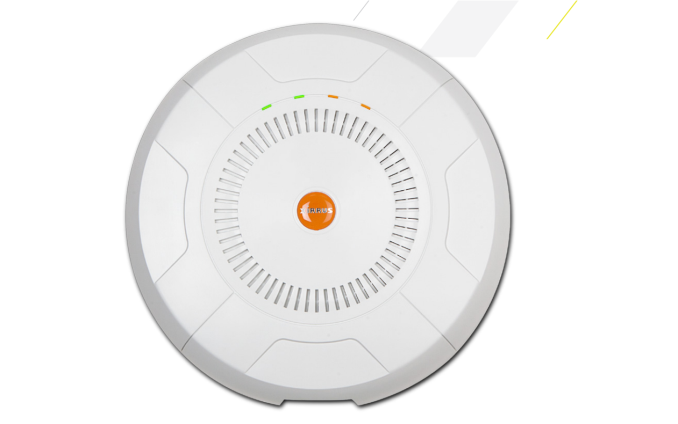
The main product Xirrus got in contact with us about is the new XR-620 Access Point, designed to be the lowest-cost 2x2 802.11ac enterprise solution on the market. This system is based off a Qualcomm Atheros SoC, and due to the dual stream nature the device is capable of 867 Mbps per radio. This is compared to Xirrus’ 3x3 XR-630 that can manage 1.3 Gbps per radio. The AP will have dual radios for 2.4 GHz/5GHz or dual 5 GHz operation, and be suitable for up to 240 concurrent users with four integrated antennas. While there are two gigabit Ethernet points (802.3ad / link aggregation compatible), cloud based management comes part of the solution as well. The XR-600 series comes with intruder detection and prevention systems with zero touch provisioning.

Xirrus are bringing the XR-620 into the market at $675, with availability in March.
Source: Xirrus
Read More ...
CeBIT 2014: MSI Shows New Intel Motherboards, R9 270X Gaming ITX


Also on display are some images of upcoming Intel motherboards. These might be related to the release of the Haswell CPU refresh we reported on recently:


Source: MSI


Read More ...
HTC One Leaks: LED Smart Cover, Carrier Models, Google Play Ed.
HTC looks to be making a fairly ambitious update to its One smartphone
Read More ...
Tesla Motors Calls New Jersey Out on New Rule Against Its Direct Sales Model
Tesla said Governor Christie’s administration has "gone back on its word"
Read More ...
Audi Traffic Light Recognition System Hopes to Save Fuel
System uses in car internet to connect with traffic lights
Read More ...
"Bitcoin COO" Explains Bitcoin to Conan O'Brien in Layman's Terms
Funny video highlights serious issues with the world's most popular cryptocurrency.
Read More ...
New HTC One Camera Details Revealed via Leaked Ad
Ad tips off contract price in Australia at AUD 840
Read More ...
Comcast Paying Millions to Congress to Solidify Time Warner Cable Acquisition
Democrats and Republicans alike are getting paid via lobbying and donations
Read More ...
Sprint Chairman Says Carrier Still Interested in T-Mobile Purchase
He wants a fair fight with Verizon and AT&T
Read More ...
Available Tags:Valve , MSI , Intel , Gaming , HTC , Google , Audi , via ,


No comments:
Post a Comment