

An Update to Kingston SSDNow V300: A Switch to Slower Micron NAND
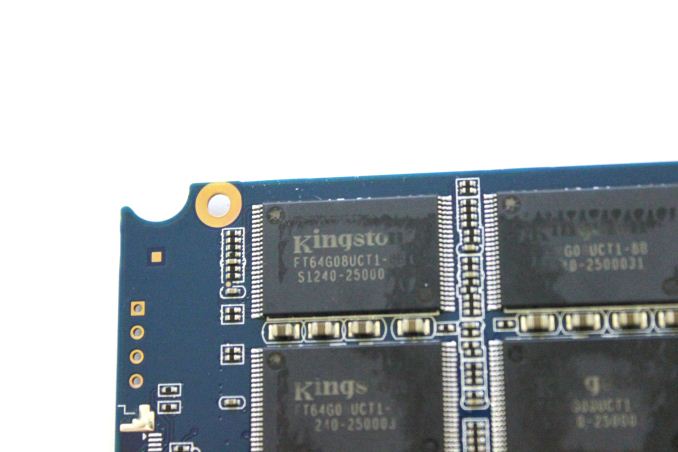
Like many SSD OEMs, Kingston buys its NAND in wafers and does its own validation and packaging. As a result figuring out the original manufacturer is not possible without the help of Kingston because there are no public data sheets or part number decoders to be found. I've never been a big fan of OEM-packaged NAND because OEMs tend to be more tight-lipped about the specifics of the NAND and it's easier to silently switch suppliers, although I do see the economical reasons (NAND is cheaper to buy in wafers).
So far there's not been much harm from this but I've been fairly certain that someone would sooner or later play dirty and use NAND packaging as a way to mask inferior NAND. Unfortunately that day has come, and as you can guess the OEM in question is Kingston and the product is their mainstream V300 SSD.
The first generation V300 (which was sampled to media) used Toshiba's 19nm Toggle-Mode 2.0 NAND but some time ago Kingston silently switched to Micron's 20nm asynchronous NAND. The difference between the two is that the Toggle-Mode 2.0 interface in the Toshiba NAND is good for up to 200MB/s, whereas the asynchronous interface is usually only good for only ~50MB/s. The reason I say usually is that Kingston wasn't willing to go into details about the speed of the asynchronous NAND they use and the ONFI spec doesn't list maximum bandwidth for the single data rate (i.e. asynchronous) NAND. However, even though we lack the specifics of the asynchronous NAND, it's certain that we are dealing with slower NAND here and Kingston admitted that the Micron NAND isn't capable of the same performance as the older Toshiba NAND.
Comparison of Kingston V300 Revisions |
||
Revision |
Original (no longer available) |
New (currently available) |
Pre-Istalled Firmware |
505A |
506A |
NAND |
Toshiba 19nm Toggle-Mode 2.0 |
Micron 20nm asynchronous |
NAND Interface Bandwidth |
200MB/s |
~ 50MB/s (?) |
AS-SSD Incompressible Sequential Read |
~ 475MB/s |
~ 170MB/s |
AS-SSD Incompressible Sequential Write |
~ 150MB/s |
~ 85MB/s |
AS-SSD Incompressible 4K Read |
~ 20MB/s |
~ 15MB/s |
AS-SSD Incompressible 4K Write |
~ 110MB/s |
~ 65MB/s |
* AS-SSD performance data based on screenshots provided by a reader
I
have to say I'm disappointed. I thought the industry had already
learned from its mistakes and that a switch in NAND supplier shouldn't
be done silently (remember the hullabaloo OCZ caused when they silently
switched from 34nm to 25nm NAND in Vertex 2?).
Kingston assured me that this wasn't an intentional attempt to screw
customers but a strategy decision made in order to stay within the bill
of materials. Kingston was aware that they would have to switch
suppliers at some point and in fact they are now looking for yet another
supplier (likely Toshiba again). Frankly, I don't see the supplier
change as an issue; the problem is that it was done without any notice
and there's no public indication of what sort of NAND you'll get.Kingston did say that they considered updating the name to V305 or similar to distinguish the two but in the end decided against that. In our talks we agreed that it wasn't a very good decision. It's not fair to sample media with one thing and then later start selling something else. Not everyone reads reviews but the buyers who do expect a certain level of performance and it's obvious that they will feel cheated if their unit performs significantly worse. I hope this is just a one-time occasion because that's perhaps excusable, but if this becomes a habit things will start to be fishy. Ultimately, the V300 wasn't a particularly fast SF-2281 SSD when it launched, but with the NAND update it's become quite a bit slower than other alternatives.
Read More ...
Color Gamut in Smartphones: Why Bigger isn't Always Better
Of course, even in the PC display space, good displays were incredibly rare because of the race to the bottom for cost. Because reviewers simply didn’t highlight display quality/calibration quality in any objective manner, PC OEMs could cut costs by not calibrating displays and using cheaper panels because people adapted to the color, whether it was accurate or not. The end result was that the early days of the smartphone display race were filled with misinformation, and it has only been recently that smartphone OEMs have started to prioritize more than just contrast and resolution.
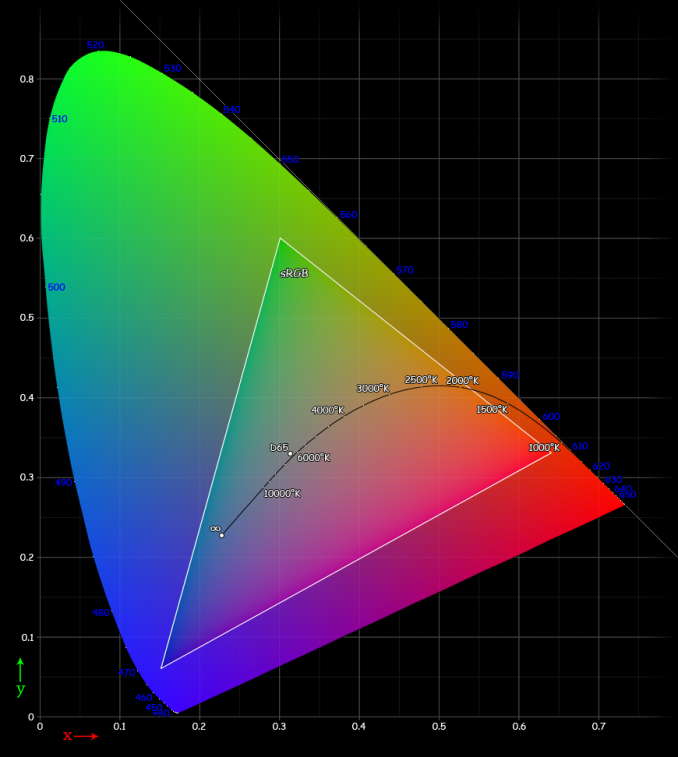
Perhaps one of the greatest misconceptions in evaluating display quality is gamut. Many people associate larger gamut with better display quality, but taking this logic to the extreme results in extremely unrealistic colors. The truth, as always, lies somewhere in between. Too large or too small of a gamut makes for inaccurate color reproduction. This is where a great deal of the complexity lies, as many people can be confused as to why too large of a display gamut is a bad thing. This certainly isn't helped by marketing, which pushes the idea of greater gamut equating to better display quality.
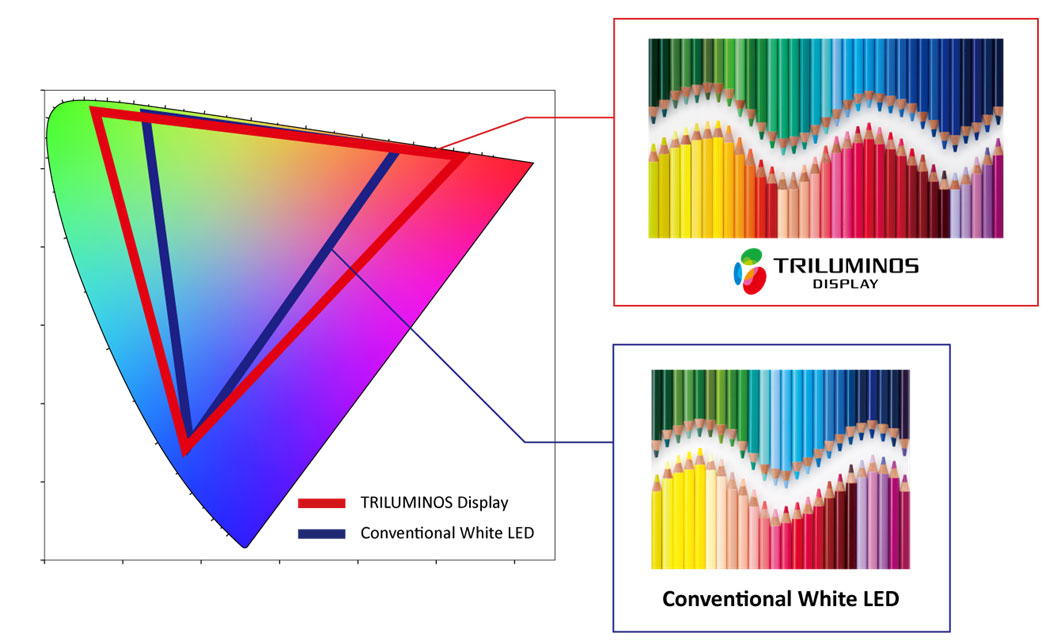
Reading carefully, it’s obvious that at no point in the past paragraph is there any reference to the distribution of said colors. This is a huge problem, because displays can have differing peaks for red, green, and blue. This can cause strange effects, as what appears to be pure blue on one display can be a cyan or turquoise on another display. That’s where standards come in, and that’s why quality of calibration can distinguish one display from another. For mobile displays and PC displays, the standard gamut is sRGB. While there’s plenty to be said of wider color gamuts such as Adobe RGB and Rec. 2020’s color space standards for UHDTV, the vast majority of content simply isn’t made for such wide gamuts. Almost everything assumes sRGB due to its sheer ubiquity.
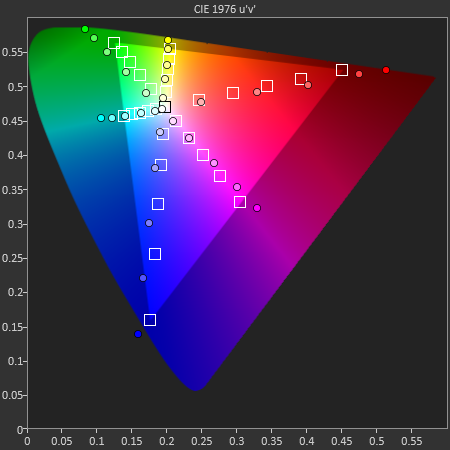
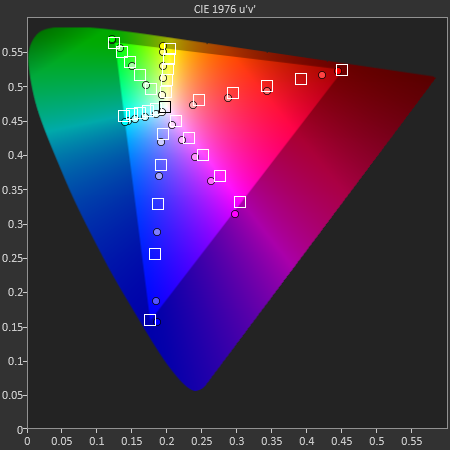
While it may seem that a display with color gamut larger than sRGB would simply mean that sRGB colors were covered without oversaturation, the OS’ lack of colorspace awareness means that this isn’t true. Because the display is simply given commands for color from 0 to 255, the resulting image would have an extra saturation effect. Assuming that the saturation curve from 0 to 255 is linear, not a single color in the image would actually be the original color intended within the color space, and that’s true even within the color space. This is best exemplified by the saturation sweep test as seen below. Despite the relatively even spacing, many of the saturations aren't correct for a target color space.
Read More ...
Apple Announces CarPlay: iOS in the Car Arriving in 2014
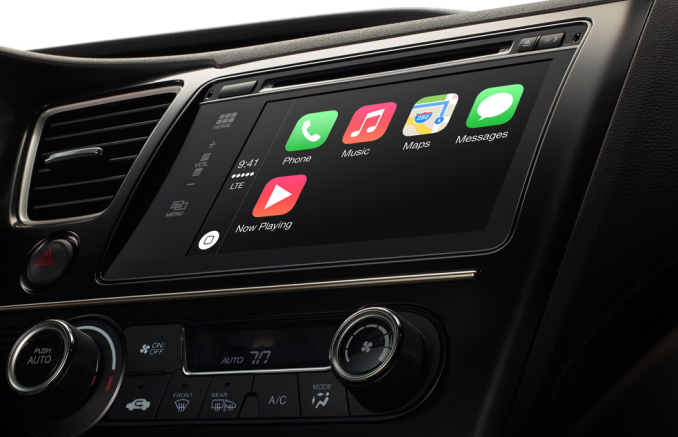
Interacting with CarPlay can be done via buttons/knobs or directly by touch (if available). It's important to note that CarPlay likely won't replace the need for checking an expensive box on your car's option list. The OEM still needs to provide the underlying hardware/interface, CarPlay simply leverages the display and communicates over Apple's Lightning cable.
The technology will show up in select new vehicles arriving this year. Ferrari, Honda, Hyundai, Jaguar, Mercedes-Benz and Volvo are launch partners, with the first cars likely being shown off at this year's Geneva Motor Show later this week.


Read More ...
AMD updates driver and programming tools roadmap for supporting HSA features in Kaveri

Today AMD is expected to release a beta driver for Windows that exposes some shared memory extensions to OpenCL. Currently, AMD ships an OpenCL 1.2 implementation for Kaveri. OpenCL 1.2 standard by itself does not really expose shared memory features properly but OpenCL 2.0 will have more robust support. AMD does not have a full OpenCL 2.0 driver yet, but today they will be providing some of the 2.0 functionality as extensions in their current OpenCL 1.2 driver. I don't have the details on the exact extensions supported, and I will update the article when I do.
However, OpenCL is only part of the story. Kaveri's promise is that it will provide driver support for HSA software stack which includes components such as a compiler for HSAIL and a HSA runtime. HSA software stack will enable high-level languages and simplified programming models and the exciting HSA developments appear to be happening on Linux first. In Q2 2014, AMD will release a beta HSA software stack for Linux. The Linux HSA stack release will be around the same time as release of Berlin APU for servers and Bald Eagle APU for embedded applications. These are both variations of Kaveri for different markets and in both of these markets Linux plays a very important role.
The HSA runtime stack for Linux will enable compiler writers and low-level library developers to start developing for HSA. The official HSA runtime API specifications are not finalized yet, and this release will be based upon prototype specifications. However, I think the prototype driver will be close enough to the final specifications that it will not matter much to developers.
Most developers are not interested in the base HSA stack and instead will prefer higher-level languages and tools. Several programming languages and tools will be released this year for targeting HSA. First, AMD will release an HSA-enabled version of their Java Aparapi library. Currently Aparapi targets OpenCL 1.2 for all OpenCL capable systems, and the mentioned release will include optimizations specific to HSA enabled systems. The HSA-enabled release of Aparapi is already under development and testing and should be released soon after the HSA stack release.
At some point this year, Multicoreware is expected to release the HSA backend for their C++ AMP implementation for Linux. Finally, AMD also mentioned that an extension of GCC is being worked on with SUSE that compiles C/C++/Fortran OpenMP code to generate code for HSA. I am not sure about the version of GCC and the version of OpenMP supported, or whether this will depend on non-standard directives and I will update the article if I get this information.
To summarize, AMD is continuing to work on exposing Kaveri's differentiating hardware features such as hUMA and hQ to various programming languages and tools. This year we should see the HSA stack and associated tools and languages stabilizing and becoming very usable for Linux developers, especially for server and embedded markets. For Windows, at least applications using OpenCL will be able to tap into some of Kaveri's new hardware features and more options should be coming down the pipeline.
UPDATE: The new Windows driver with preview support for some OpenCL 2.0 type functionality is now downloadable from here. The driver has very specific hardware requirements, such as requiring a A10-7850K in an Asus A88X-PRO motherboard and 8GB of RAM. More details about the requirements and the OpenCL extensions supported can be found in the OpenCL 2.0 preview driver download.
Read More ...
Interacting with HTPCs: IOGEAR and SIIG Options Reviewed
There are many options in the market for users wanting to interact with HTPCs and media streamers. In this short piece, we review the keyboard / trackball / touchpad options from IOGEAR and SIIG and look at how they stack up against one of the most popular products in the category, the Logitech K400.
Read More ...
Twitch Plays Pokémon beats Pokémon
Aside from issues such as taking six hours to navigate a ledge and accidentally releasing 12 Pokémon in a single day, the extraordinary happened: millions of users at millions of keyboards managed to beat the final sequence. After 22 attempts at the Elite Four, that combination of users powered though. Not only this, but the fear of accidentally starting a new game after the end sequence came to naught.
The final moment was captured in all its glory:

Many thanks to James Croft for the image
The
task took 16 days 7 hours 45 minutes, or 391 hours in total. This is
compared to my individual personal best of 13 hours, to put it into
perspective. The final team of Pokémon were as follows:Omastar, Level 51
Pidgeot, Level 69
Venomoth, Level 39
Zapdos, Level 81
Lapras, Level 30
Nidoking, Level 53
For a brief update of the adventure, this Google document was maintained throughout the journey.
No news as to the next quest in the ‘Twitch Plays’ series, however the channel states that the next journey should start around midday Sunday GMT.
Read More ...
Seasonic S12G 650W Power Supply Review
It has been 16 months since our last power supply review, but the long wait is finally over. We have a new PSU and cases editor, and this is the first of many new PSU reviews to come. The first PSU to hit our new testing lab is the S12G 650W from Seasonic. Seasonic is a company that hardly requires any introduction; they are one of the oldest and most reputable computer PSU designers, manufacturers and retailers. Read on to see how their S12G performs in our updated testing suite.
Read More ...
How We Test PSUs - 2014

Effective testing of a power supply requires far more than just connecting it to a PC and using a $10 multimeter to check the voltage rails. At the very least, it requires specialized (and very expensive) equipment. At this point, most people that actually know a few things about PSUs would say, "Yes, OK, you need an adjustable load and an oscilloscope." While it's true you need those items, you can't simply grab any old adjustable load and oscilloscope. What you really need is very precise, programmable electronic loads with transient testing built-in and an oscilloscope that should comply with exact specifications, among other meters and equipment. Then of course you need to know what you are doing, as it's not simply a matter of connecting a PSU to the equipment and pressing a few buttons; there are exact loading and testing procedures, described in technical papers and guides, that need to be followed.
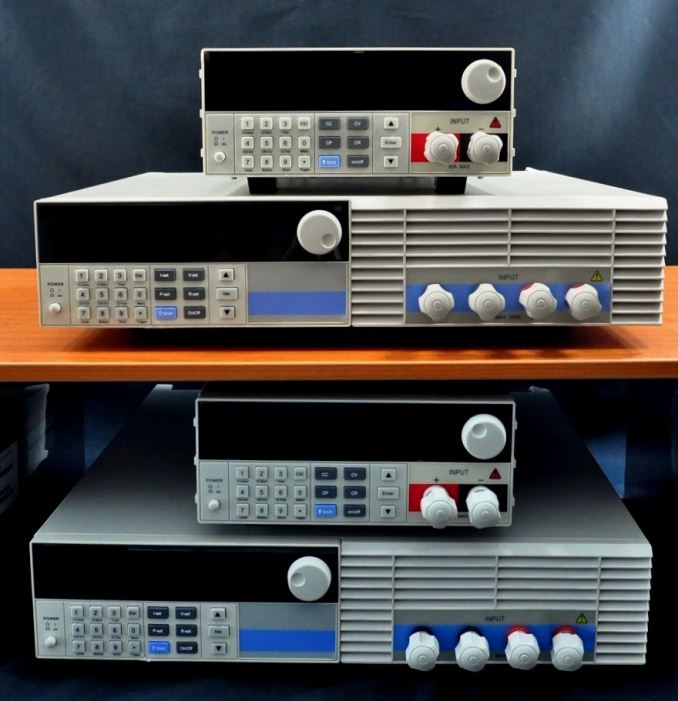
Programmable DC loads are an absolute necessity if you want to test a power supply. To that end, we acquired two high precision Maynuo M9714 1200 Watt and two Maynuo M9711 150 Watt electronic loads, which will allow us to draw up to 2400 Watts from 12 Volt lines and up to 150 Watts from each of the 3.3 Volt and 5 Volt lines. As these are quick-response programmable models, they will also allow us to perform transient tests in the future.
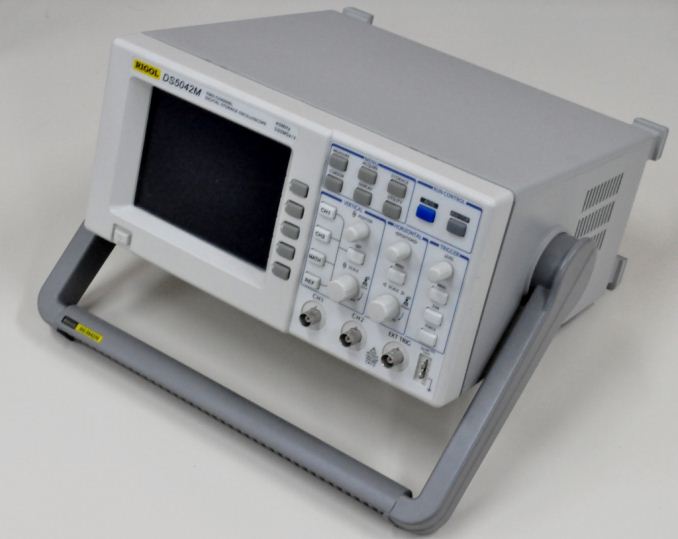
There are of course many other minor details but we will not bore you with those. It should suffice to say that for the time being we are using a Rigol DS5042M oscilloscope, which has a bandwidth of 40MHz and a real time sampling rate of 500 MSa/s. Although that sounds impressive, actually even this device is not good enough if you want to perform transient tests properly and it cannot resolve noise out of the ripple of a signal; these are tests we plan to add in the future.
Compared to the above items, testing the efficiency of a PSU is relatively simple, once you know exactly how much power you are drawing from it. Our electronic loads tell us exactly how much power is being drawn at a given time; therefore, we only need a good AC power analyzer to tell us how much power the unit is drawing from the AC outlet. Note the "good" part, as you need a power analyzer capable of displaying true RMS values, as PSUs can generate a great deal of harmonics.
Our Extech 380803 power analyzer does a very good job at reporting the level of power that our PSU requires at any given time. We should note that all testing is being performed with a 230V/50Hz input, delivered by a 3000VA VARIAC for the perfect adjustment of the input voltage. Unfortunately, we cannot perform tests at 110V/60Hz at the moment, as that requires a high output, programmable AC power source. As a rough estimate, conversion efficiency drops by 1% to 1.5% when the input voltage is lowered to 110V/ 60Hz.
One of the basics of the scientific method is that you isolate the problem from a system and resolve it on its own. In other words, instead of trying to do the impossible and measure the noise of a power supply while we are testing it, there is nothing keeping us from using a non-intrusive laser tachometer to record the speed of the fan instead. Then, we can simply test the unit on its own, with the fan hotwired to a small fanless, adjustable DC PSU that we fabricated, taking noise readings with our Extech HD600 for the RPM range of the fan and cross-referencing the two tables. Not quite that difficult, was it? There is a catch however; as the unit will not be powered at the time of sound level testing, the meter cannot record any coil whine noise. Coil whine is clearly audible during testing though and we will make sure to report it if (when) we encounter a PSU whose coils could have used a little bit more lacquer. The background noise of our testing environment is about 30.4 dB(A), which figure resembles a quiet room at night. Equipment noise usually becomes audible when our instrumentation reads above 33.5 dB(A).
In order to facilitate testing power supplies more effectively, we created a test fixture for the connection between the PSU and the testing equipment, as well as a proprietary hot box. The hot box is not much more than a closed case with an air-heating device, which is controlled via a DAQ and our software. It is imperative to heat the air inside the box, not the box itself, in order to create good testing conditions. Admittedly, this self-made contraption is not perfect as it is small and has a very slow reaction rate, but it does work well for the means of simulating the environment inside a computer case. Therefore, testing will be performed at room temperature (maintained at 25 °C) and inside the hotbox (at 45-50 °C). Remember that efficiency certifications are performed at room temperature (25 °C) and a power supply can easily fail to meet its efficiency certification standards inside the hotbox!
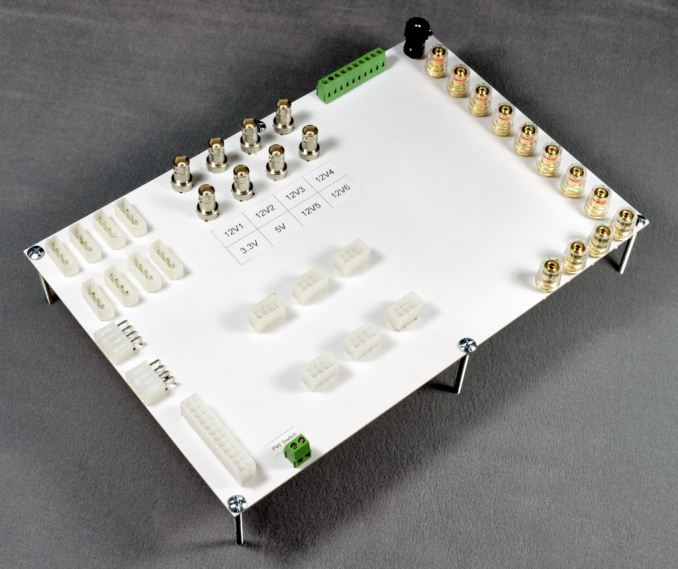
There are no guidelines on how transient tests should be performed and the momentary power-up cross load testing that Intel recommends is far too lenient. Intel recommends that the 12V line should be loaded to < 0.1A and the 3.3V/5V lines up to just 5A. We also perform two cross load tests of our own design. In test CL1, we load the 12V line up to 80% of its maximum capacity and the 3.3V/5V lines with 2A each. In test CL2, we load the 12V line with 2A and the 3.3V/5V lines up to 80% of their maximum combined capacity.
Furthermore, it has been suggested that efficiency testing needs to be performed at specific load intervals (20% - 50% - 100%), which is considered to be the normal operating range of a PSU. However, modern systems can easily have their energy demand drop dramatically while idling, which is why we will be testing power supplies starting at 5% of their rated capacity, not 20%. Note that the conversion efficiency of all switching PSUs literally takes a dive when the load is very low, so large drops of >10% are expected and natural.
Any questions or comments on our PSU testing procedures are welcome, and as noted earlier we plan to add and/or improve some of the testing over the coming months with some additional hardware. We will provide an updated article when/if such changes are required.
Read More ...
Intel SSD 730 (480GB) Review: Bringing Enterprise to the Consumers
The days of Intel being the dominant player in the client SSD business are long gone. A few years ago Intel shifted its focus from client SSDs to the more profitable and hence more alluring enterprise market. As a result of the move to SandForce silicon, Intel's client SSD lineup became more generic and lost the Intel vibe of the the X-25M series. With the SSD 730 Intel finally provides an in-house designed consumer drive after a hiatus of a few years. Based on the S3500/S3700 platform, the SSD 730 adopts many enterprise features and brings them to the hands of consumers. Does Intel retake the crown with the SSD 730? Read on and find out!
Read More ...
Modular Smartphone Project Ara from Google to Start Development Conferences
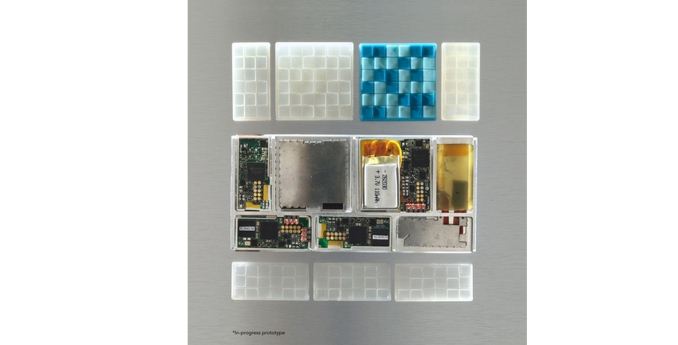
Headed under the Advanced Technology and Projects (ATAP) division, the platform is meant to be a single hub onto which the user can place their own hardware. This means CPUs, cameras, sensors, screens, baseband, modems, connectivity, storage – the whole gamut. The issue with such a device compounds the effects of going from a managed ecosystem (Apple and several hardware combinations) to a free ecosystem (Android and every hardware combination). Project Ara takes this complexity one stage further, and there has to be a fundamental software base to solve this. Hence ATAP is going to be doing three developers’ conferences in 2014, starting on April 15-16 at the Computer History Museum in Mountain View, California.

The other two conferences for 2014 are yet to be announced. Further info on the conference is found at the website projectara.com, to be updated over the next few weeks with more details.
To quote the website:
We plan a series of three Ara Developers’ Conferences throughout 2014. The first of these, scheduled for April 15-16, will focus on the alpha release of the Ara Module Developers’ Kit (MDK). The MDK is a free and open platform specification and reference implementation that contains everything you need to develop an Ara module. We expect that the MDK will be released online in early April.
The Developers’ Conference will consist of a detailed walk-through of existing and planned features of the Ara platform, a briefing and community feedback sessions on the alpha MDK, and an announcement of a series of prize challenges for module developers. The complete Developers’ Conference agenda will be out in the next few weeks.
This first version of the MDK relies on a prototype implementation of the Ara on-device network using the MIPI UniPro protocol implemented on FPGA and running over an LVDS physical layer. Subsequent versions will soon be built around a much more efficient and higher performance ASIC implementation of UniPro, running over a capacitive M-PHY physical layer.
The Developers’ Conference, as the name suggests, is a forum targeted at developers so priority for on-site attendance will reflect this. For others--non-developers and Ara enthusiasts--we welcome you to join us via the live webstream. That said, we invite developers of all shapes and sizes: from major OEMs to innovative component suppliers to startups and new entrants into the mobile space.
Read More ...
Low Level Graphics API Developments @ GDC 2014?

The session descriptions only offer a limited amount of information on their respective contents, so we don’t know whether anything here is a hard product announcement or whether it’s being presented for software research & development purposes, but at a minimum it would give us an idea into what both Microsoft and the OpenGL hardware members are looking into as far as API efficiency is concerned. The subject has become an item of significant interest over the past couple of years, first with AMD’s general clamoring for low level APIs, and more recently with the launch of their Mantle API. And with the console space now generally aligned with the PC space (x86 CPUs + D3D11 GPUs), now is apparently as good a time as any to put together a low level API that can reach into the PC space.
With GDC taking place next month we’ll know soon enough just what Microsoft and its hardware partners are planning. In the meantime let’s take a quick look at the 3 sessions.
DirectX: Evolving Microsoft's Graphics Platform
Presented by: Microsoft; Anuj Gosalia, Development Manager, Windows GraphicsFor nearly 20 years, DirectX has been the platform used by game developers to create the fastest, most visually impressive games on the planet.
However, you asked us to do more. You asked us to bring you even closer to the metal and to do so on an unparalleled assortment of hardware. You also asked us for better tools so that you can squeeze every last drop of performance out of your PC, tablet, phone and console.
Come learn our plans to deliver.
Direct3D Futures
Presented by: Microsoft; Max McMullen, Development Lead, Windows GraphicsCome learn how future changes to Direct3D will enable next generation games to run faster than ever before!
In this session we will discuss future improvements in Direct3D that will allow developers an unprecedented level of hardware control and reduced CPU rendering overhead across a broad ecosystem of hardware.
If you use cutting-edge 3D graphics in your games, middleware, or engines and want to efficiently build rich and immersive visuals, you don't want to miss this talk.
Approaching Zero Driver Overhead in OpenGL
Presented By: NVIDIA; Cass Everitt, OpenGL Engineer, NVIDIA; Tim Foley, Advanced Rendering Technology Team Lead, Intel; John McDonald, Senior Software Engineer, NVIDIA; Graham Sellers, Senior Manager and Software Architect, AMDDriver overhead has been a frustrating reality for game developers for the entire life of the PC game industry. On desktop systems, driver overhead can decrease frame rate, while on mobile devices driver overhead is more insidious--robbing both battery life and frame rate. In this unprecedented sponsored session, Graham Sellers (AMD), Tim Foley (Intel), Cass Everitt (NVIDIA) and John McDonald (NVIDIA) will present high-level concepts available in today's OpenGL implementations that radically reduce driver overhead--by up to 10x or more. The techniques presented will apply to all major vendors and are suitable for use across multiple platforms. Additionally, they will demonstrate practical demos of the techniques in action in an extensible, open source comparison framework.
Read More ...
Elop to Lead Devices and Studios at Microsoft: This Means Xbox

Elop replaces Julie Larson-Green who is taking on a new role as Chief Experience Officer for the Applications and Services group, which includes user experiences on Office, Skype and Bing.
No current timeline as to the handover, although the wording would seem to suggest it is almost immediate, with a short period while Elop moves into the role.
Read More ...
A3Cube develop Extreme Parallel Storage Fabric, 7x Infiniband

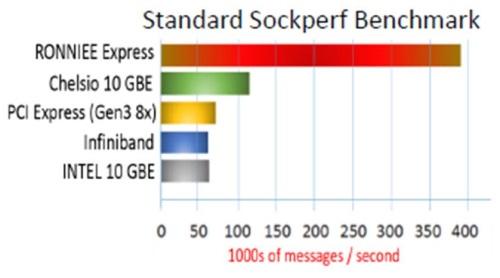
In the Sockperf benchmark, numbers from A3Cube put performance at around 7x that of Infiniband and PCIe 3.0 x8, and thus claim that the approach beats the top alternatives. The PCIe support of the device at the physical layer enables quality-of-service features, and A3Cube claim the fabric enables a cluster of 10000 nodes to be represented in a single image without congestion.
The new IP from A3Cube is kept hidden away, but the logic points towards device enumeration and the extension of the PCIe root complex of a cluster of systems. This is based on the quote regarding PCIe 3.0 incompatibility based on the different device enumeration in that specification. The plan is to build a solid platform on PCIe 4.0, which puts the technology several years away in terms of non-specialized deployment.
As many startups, the process for A3Cube is to now secure venture funding. The approach to Ronniee Express is different to that of PLX who are developing a direct PCIe interconnect for computer racks.
A3Cube’s webpage on the technology states the fabric uses a combination of hardware and software, while remaining application transparent. The product combines multiple 20 or 40 Gbit/s channels, with the aim at petabyte-scale Big Data and HPC storage systems.
Information from Willem Ter Harmsel puts the Ronniee NIC system as a global shared memory container, with an in-memory network between nodes. CPU/Memory/IO are directly connected, with 800-900 nanosecond latencies, and the ‘memory windows’ facilitates low latency traffic.
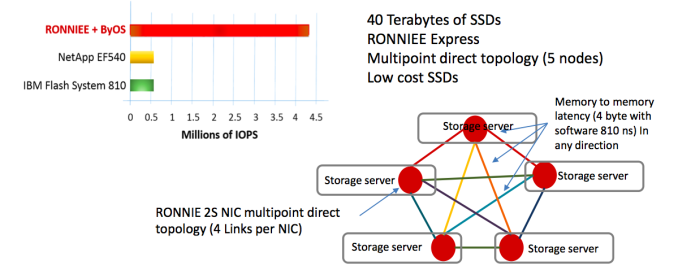
Further, in interview by Willem and Anontella Rubicco shows that “Ronniee is designed to build massively parallel storage and analytics machines; not to be used as an “interconnection” as Infiniband or Ethernet. It is designed to accelerate applications and create parallel storage and analytics architecture.”
Source: EETimes, A3Cube, willemterharmsel.nl.
Read More ...
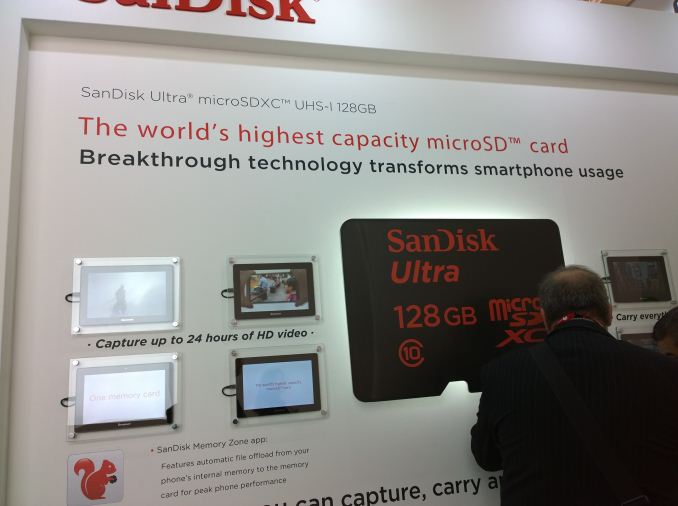
SanDisk launches 128GB microSD at MWC
Read More ...
NVIDIA's Tegra Note 7 LTE and Tegra 4i Devices: Hands On
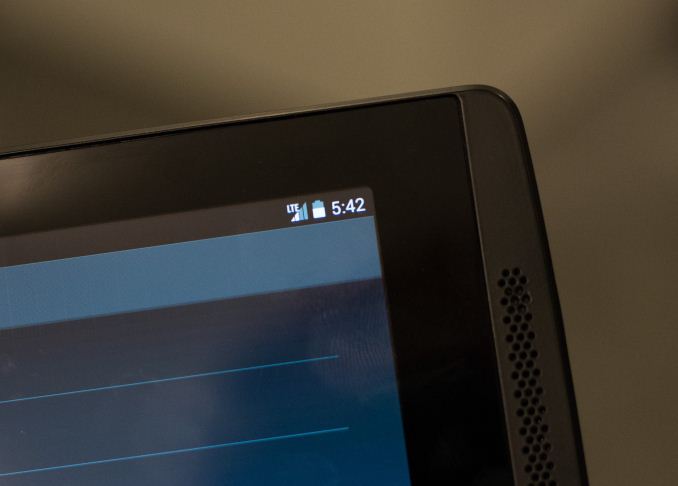
As many of you noticed in our announcement post of the Tegra Note 7 LTE, there is an increase in weight for the LTE version. It turns out the added weight is because the Note 7 LTE actually gets a slightly redesigned chassis that's a bit more structurally sound. The main visual change is on the back cover which now looks more 2013 Nexus 7-like.
The Tegra Note 7 LTE was able to connect and transact data on a live LTE network. NVIDIA tells me that devices will be available sometime in Q2 and will ship fully unlocked. NVIDIA did add that the final list of bands supported might change.

Read More ...
Western Digital My Cloud EX4 and LenovoEMC ix4-300d Home NAS Units Review
The consumer Network Attached Storage (NAS) market has seen tremendous growth over the past few years. As the amount of digital media generated by the average household increases, the standard 2-bay NAS is no longer sufficient. Today, we are going to take a look at two different 4-bay solutions, the Western Digital My Cloud EX4 and the LenovoEMC ix4-300d. Both of them use ARM-based Marvell SoC platforms and target the home consumer / SOHO markets. Read on to find out how these products stack up against each other.
Read More ...
Samsung's Exynos 5422 & The Ideal big.LITTLE: Exynos 5 Hexa (5260)

The 5422 supports HMP (Heterogeneous Multi-Processing), and Samsung LSI tells us that unlike the 5420 we may actually see this one used with HMP enabled. HMP refers to the ability for the OS to use and schedule threads on all 8 cores at the same time, putting those threads with low performance requirements on the little cores and high performance threads on the big cores.
The GPU is still the same ARM Mali-T628 MP6 from the 5420, running at the same frequency. Samsung does expect the 5422 to ship with updated software (drivers perhaps?) that will improve GPU performance over the 5420.
Exynos 5 Comparison |
||||||||
SoC |
5250 |
5260 |
5410 |
5420 |
5422 |
|||
Max Number of Active Cores |
2 |
6 |
4 |
4 (?) |
8 |
|||
CPU Configuration |
2 x Cortex A15 |
2 x Cortex A15 + 4 x Cortex A7 |
4 x Cortex A15 + 4 x Cortex A7 |
4 x Cortex A15 + 4 x Cortex A7 |
4 x Cortex A15 + 4 x Cortex A7 |
|||
A15 Max Clock |
1.7 GHz |
1.7GHz |
1.6GHz |
1.8GHz |
2.1GHz |
|||
A7 Max Clock |
- |
1.3GHz |
1.2GHz |
1.3GHz |
1.5GHz |
|||
GPU |
ARM Mali-T604 MP4 |
ARM Mali-T624 (?) |
Imagination PowerVR SGX544MP3 |
ARM Mali-T628 MP6 |
ARM Mali-T628 MP6 |
|||
Memory Interface |
2 x 32-bit LPDDR3-1600 |
2 x 32-bit LPDDR3-1600 (?) |
2 x 32-bit LPDDR3-1600 |
2 x 32-bit LPDDR3-1866 |
2 x 32-bit LPDDR3-1866 |
|||
Process |
32nm HK+MG |
28nm HK+MG (?) |
28nm HK+MG |
28nm HK+MG |
28nm HK+MG |
|||

The 5260 feels like the ideal big.LITTLE implemention. I'm not expecting to find the 5260 in many devices, but I absolutely want to test a platform with one in it. If there was ever a real way to evaluate the impact of big.LITTLE, it's Samsung's Exynos 5260.
Samsung didn't announce cache sizes, process node or GPU IP for the 5260. Earlier leaks hinted at an ARM Mali T624 GPU. Samsung's release quotes up to 12.8GB/s of memory bandwidth, which implies a 64-bit wide LPDDR3-1600 interface.
Read More ...
Motorola Press Event at MWC: New Watch and Moto X Coming
Also, for the briefest of moments, the panel was asked regarding the next version of the Moto X. The answer was simply ‘sometime in the summer’.
Read More ...
MWC 2014: Motorola Press Event Live Blog
Ian and I are currently sitting here waiting for the start of the event, stay tuned!
Read More ...
AMD Catalyst 14.2 Beta Drivers Now Available
As far as Thief is concerned, Thief is one of AMD’s showcase titles for their GCN marquee features, designed to showcase both Mantle and TrueAudio. Unfortunately, in something that’s becoming a trend with AMD joint projects, the actual GCN features aren’t in the launch version of Thief. Instead they will be added in a patch in March (hopefully), which this driver lays the groundwork for by enabling TrueAudio and providing the Mantle functionality Thief will need. In the meantime these are still the recommended drivers for Thief’s Direct3D renderer, serving as the validated launch drivers for that game along with the first driver set to provide a complete Crossfire profile.
Meanwhile for bug fixes, the focus is primarily on Mantle bugs, though a few Direct3D/OpenGL bugs are also covered.
Hangs and stuttering resolved for the Mantle codepath in Battlefield 4; users are now encouraged to try mGPU
Multi-GPU frame pacing in Battlefield 3 and Battlefield 4 is now enabled for non-XDMA configurations running resolutions >1600p.
Mantle: Multi-GPU configurations (up to 4 GPUs) running Battlefield 4 are now supported
We fixed Minecraft! Sorry about that, builders.
Intermittent hangs and crashes should be resolved in 3D applications
Thief: Crossfire Profile update and performance improvements for single GPU configurations
Dual graphics DirectX 9 application issues have been resolved
Resolves corruption issues seen in X-plane
Video Compression Engine (VCE) enabled for compatible GPU and APU products (e.g. GCN-based SKUs). Hardware-accelerated encode of H.264 now possible for 1080p60 content
Video decode (UVD) performance and efficiency improvements for the AMD R9 290/290X, R9 260X, “Kaveri” and “Kabini”
X-Video hardware video acceleration via the GLAMOR library now supported
2D acceleration via the GLAMOR library now enabled by default
Substantial improvements to overall video transcode times for hardware-accelerated transcoding apps
Tiling support now enabled on all GCN-based products
Substantial OpenGL feature level upgrade to v4.3
Major contributions to the Linux kernel 3.14 to improve dynamic power management, DisplayPort robustness and power efficiency on all GCN-based hardware
New programming guides and register specifications released for HD 5000, 6000, 7000 and R9/R7 Series GPUs. This will enable volunteer and professional developers to contribute to the X.ORG OSS Radeon driver, and can facilitate porting to other non-Linux platforms.
As always, you can grab the Catalyst 14.2 beta driver from AMD’s driver download page. The driver weighs in at 287MB.
Read More ...
The AnandTech Podcast: Episode 28 - MWC 2014 Mobile Show
After popular demand, here is our Mobile World Congress 2014 Mobile Show in podcast form.
Recorded live from Mobile World Congress 2014, on this episode Anand Shimpi & Brian Klug discuss all things mobile. Anand & Brian kick things off with a discussion recapping our recent expose on Imagination's PowerVR Rogue architecture, before segueing with a discussion of SoC core counts and core wars on both the CPU and GPU side. Anand and Brian then get into the ARM Coretex-A53 and its adoption in high core count designs, Qualcomm's Snapdragon 600 series, and then what Intel is up to at MWC, including their Merrifield SoC announcements. Anand and Brian then wrap things up with a discussion of Samsung's just-announced flagship smartphone, the Galaxy S5, and their brief impressions on various aspects of it, including the sensors, UI, and the use of both Qualcomm and in-house Exynos SoCs in various S5 models.
Featuring Anand Shimpi & Brian Klug
iTunes
RSS - mp3, m4a
Direct Links - mp3, m4a
Total Time: 38 minutes 51 seconds
Outline h:mm
Imagination PowerVR Rogue Architecture Discussion - 0:00
SoC Core Count Wars - 05:50
ARM Cortex-A53 & Qualcomm Snapdragon 600 Series - 06:35
Intel Merrifield & Moorefield - 11:45
Reference platforms, top to bottom? - 17:20
LTE Modems - 19:12
Samsung Galaxy S5 - 21:54
Samsung Touchwiz - 31:10
Fingerprint & Heartbeat Sensors - 34:35
S5 Exynos 5 Version - 38:03
SoC Core Count Wars - 05:50
ARM Cortex-A53 & Qualcomm Snapdragon 600 Series - 06:35
Intel Merrifield & Moorefield - 11:45
Reference platforms, top to bottom? - 17:20
LTE Modems - 19:12
Samsung Galaxy S5 - 21:54
Samsung Touchwiz - 31:10
Fingerprint & Heartbeat Sensors - 34:35
S5 Exynos 5 Version - 38:03
Read More ...
The AnandTech Mobile Show - MWC 2014 Edition
Earlier this morning (Barcelona time) Brian and I sat down in front of a camera and recapped some of the major news at MWC. We talked about the new Snapdragon 610/615, IMG's Series 6XT architecture disclosure, Intel's Merrifield and Moorefield as well as our hands on experience with Samsung's Galaxy S 5.
Check it all out in the video below!
Read More ...
Western Digital Targets Surveillance Storage Market with Purple Hard Drives
Background
All SATA hard drives fulfill the same basic functionality of storing data on platters. Most hard drives use the same hardware circuitry (except for enterprise drives which have features such as RAFF - Rotary Accelerated Feed Forward - that require extra sensors on the drive to better handle vibrations in storage arrays). The scope for differentiation boils down to the firmware. The SATA protocol has a number of optional features intended to improve performance for specific scenarios. One example is NCQ (Native Command Queuing), which allows for reordering of commands to improve efficiency. Another example is the ATA Streaming Command Set, which targets A/V setups by providing features targeting video payloads. Drives targeting the A/V and surveillance markets can optimize the firmware around this optional specification.History
Western Digital has been serving the DVR / STB / surveillance storage market with the WD-AV GP product line for quite some time now. Hardware-wise, these drives happen to be the same as the Green drives, but the difference happens to be in the firmware. WD's ATA Streaming Command Set implementation under the SilkStream tag supports up to 12 simultaneous HD streams.Most NVRs are based off NAS platforms in RAIDed environments. Since the WD-AV-GP drives were not specifically geared for use in NAS devices, it makes sense for WD to develop firmware optimized for video surveillance storage using the Red drives as the hardware base. The result is the WD Purple lineup.
Features and Specifications
The Purple hard drives (WDxxPURX) are dedicated to service the surveillance market. Similar to the WD-AV GP lineup, these are also built for 24x7 operation. The SilkStream tag for the optimized firmware in the WD-AV GP lineup is replaced by AllFrame in the WD Purple. The optimizations work with the ATA Streaming Command Set to improve playback performance and reduce errors / frame loss. While SilkStream was advertised to support up to 12 simultaneous HD streams, AllFrame is designed to support up to 32 HD cameras / channels. Obviously, advantage of the AllFrame technology is possible only with the host controller support. It goes without saying that the appliance vendor must be in the compatibility list provided by WD in order to take advantage of the surveillance-specific features in the Purple drives.Similar to the Red drives, these come with the IntelliPower feature (rotational speed of 5400 rpm) and TLER enabled. IntelliPower enables WD to provide best-in-class power consumption numbers with the Purple drives. There is no RAFF support on-board, though, as these are meant for table-top appliances with 1 to 8-bays. The drives are rated for workloads up to 60 TB/yr. For reference, recording 4 x 1080p30 streams for 365 days requires 200 TB of storage. SD streams come with lower storage cost. In any case, putting the WD Purples in RAID with multiple drives should easily keep workloads for each drive under 60 TB/yr. For SMB / SME surveillance setups requiring up to 64 cameras, WD suggests the use of Se drives, while mission-critical applications are advised to utilize the more powerful Re drives.

In other news, Seagate also announced the Surveillance HDD yesterday, targeting the surveillance market. Unfortunately, we weren't briefed extensively about it, but the specs seem similar to that of the Purple lineup (except for the addition of RV - rotational vibration - sensors for operating in multi-drive environments, which seems similar to RAFF technology).
Read More ...
MWC 2014: Wilocity brings WiGig 802.11ad to Smartphones with Wil6300 Chipset
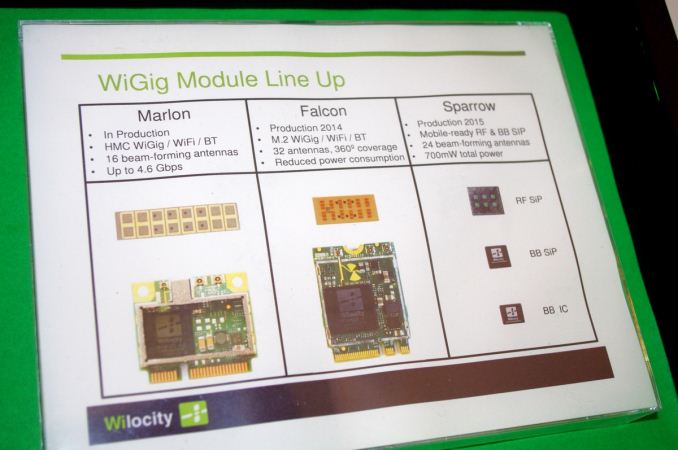
Wilocity has a history of WiGig development – we covered their desktop PC 802.11ad development back at Computex 2012 and sales figures for Wilocity number more than a million since February 2013. In the mobile space, this new chipset is built on a 28nm process and power use is expected in the 200-300mW range in use. While idle, power consumption is rated at sub 1mW, and the 700mW total power quoted above is for pure file transfer.
I had a chance to pop by the Wilocity booth at MWC2014. Its 802.11ad demo was working with devices from their partners, namely a Dell tablet streaming to a box with 2K content and showing file transfer between two 802.11ad enabled tablets:


Wilocity’s development cycle puts mobile based 802.11ad in the 2015 space. They are working with ‘the usual players’ in the market. The module we were shown implemented 802.11n and 802.11ad in the same device, and I was quoted that with economies of scale the price of the 802.11ad module could be brought down to that of 802.11ac. Wilocity is also using beamforming to help improve quality at extended ranges, with up to 50 meters being tested and confirmed, albeit at lower speeds. The main issue is walls, which they are working on.
Read More ...
Nokia launches the X, X+, and XL at MWC
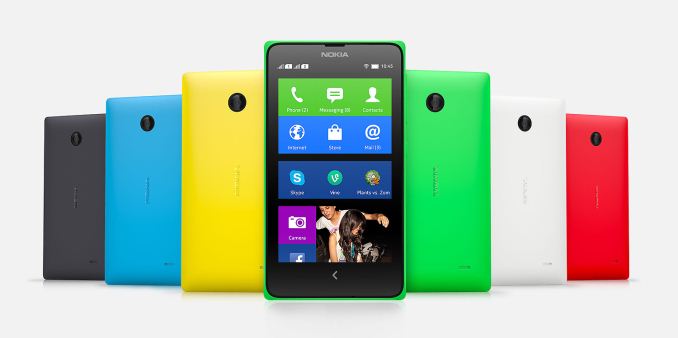
Nokia X
Nokia
has finally launched the long-rumored Nokia X running Android, and it's
well worth going over Nokia's first Android phones. The first phone is
the Nokia X, which is an MSM8225-platform device, with a dual core 1 GHz
Cortex A5 inside and Adreno 203 GPU. There's 4GB of internal storage
and 512 MB of RAM. The display is a WVGA IPS panel at 4" in size, and
there's a 1500 mAh, 3.7V battery inside of the phone. The camera is a
3MP, fixed focus unit with a 1/5" sensor size and F/2.8 aperture, and
video recording is limited to FWVGA. Needless to say, this is a budget
device, and at 89 EUR or so, it could be an interesting device.On the software side, the Nokia X runs Android 4.1.2 with Nokia's skin on top that makes it look like Windows Phone.
Nokia X+
The
Nokia X+ is effectively identical to the Nokia X, the sole difference
that I have seen is that the X+ has 768MB of RAM, and will go on sale
for 99 EUR.
Nokia XL
The
Nokia XL is slightly different from either the X or the X+. Battery
capacity goes up to 2000 mAh, the camera is upgraded to a 5MP module
with 1/4" sensor and adjustable (auto) focus. The display is also made
to 5", but it remains the same WVGA resolution with IPS display
technology. It will cost 109 EUR.All of these phones also have Dual SIM capabilities, and will have Nokia's suite of applications at launch.
Nokia X Development
In
the Nokia Developer Keynote today, the platform for Nokia X was
explained at a high level in order to answer a number of questions that
were asked since the recent announcement. Simply put, the extra Nokia
layer over the base modifiable Android system should not interfere with
Android mobile development. App developers will have to submit their
apps to the Nokia X store, but Nokia expects 99% of all apps to work
straight away. A system is set up such that any developer APK can be
checked online in a few minutes – upload and get an answer if it will
work. Nokia Store validation will take a little longer when the app is
submitted (Lunagames stated that Highway Hei$t took a day). Also of note
was the discussion regarding strategy.
Read More ...
LG G Pro 2 and G2 Mini launched: Analysis and Hands-On
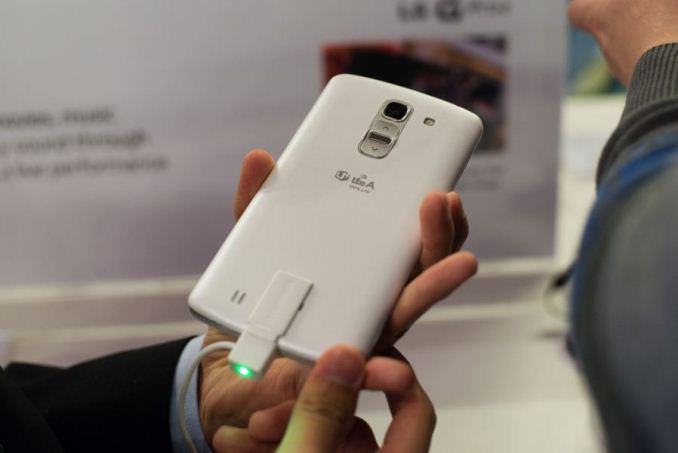
LG G Pro 2
At
MWC, LG has also announced a few new devices, some that fit in with
their previous cadence of releases, and others that are something new.
To start with the expected, the successor to the LG G Pro was announced,
and it's a worthy successor to the G Pro and a close cousin to the LG
G2. It uses a mildly updated version of the Snapdragon 800, the
Snapdragon 800 (8974AB), and shares much of the industrial design and
material feel with the LG G2, which includes the back-side mounted
buttons, the curved back cover, and the same 13MP camera module with OIS
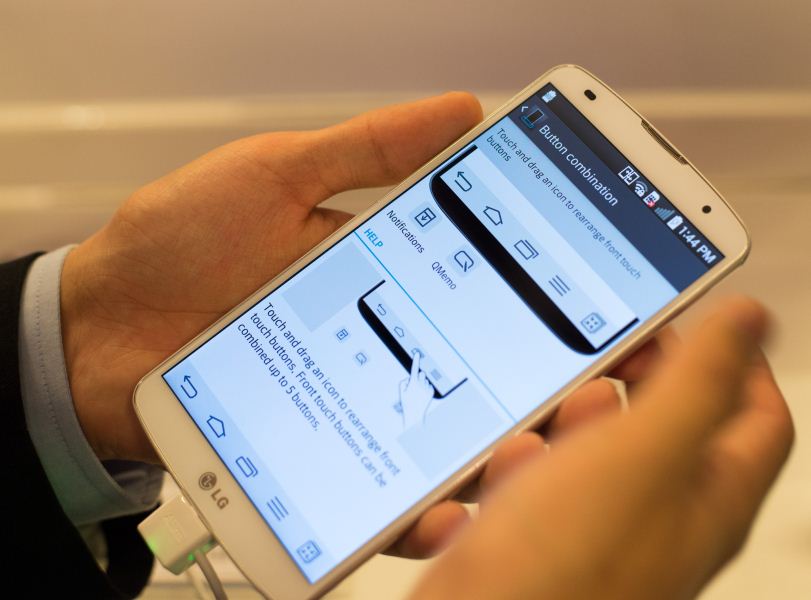
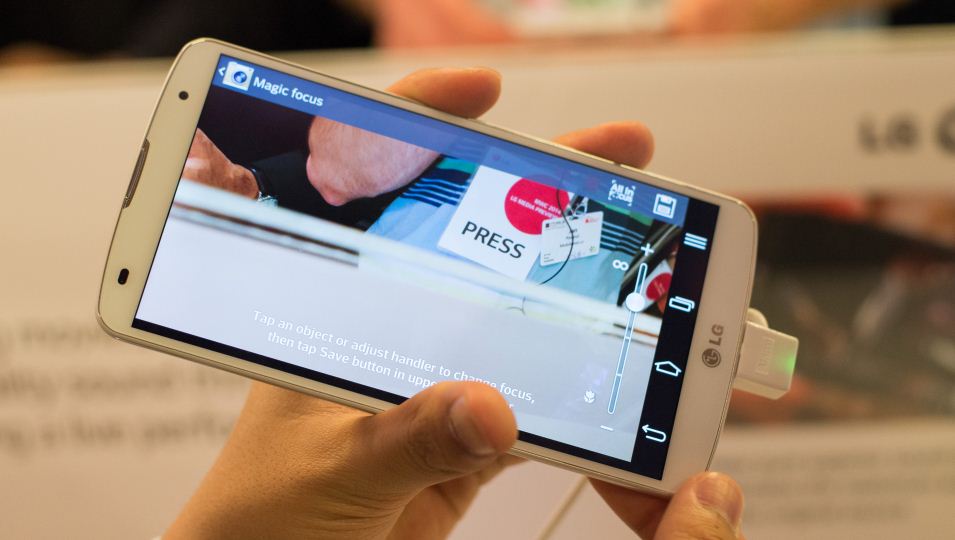
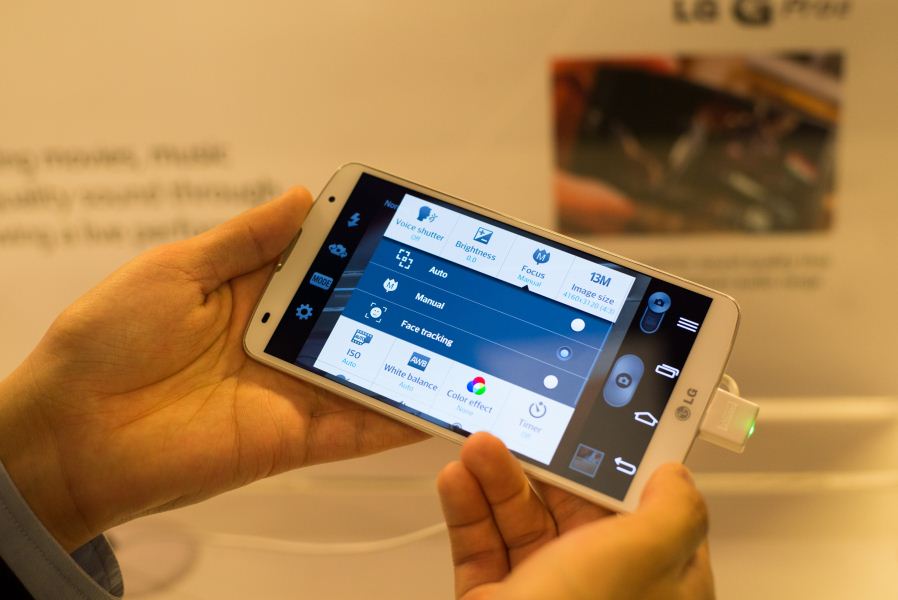
for better low light shots.Of course, there's also plenty that has changed. The display, while still the same 1080p resolution and IPS technology, is now a 5.9" size, which puts it firmly in phablet territory. While it may be large, LG is also claiming a 77.2% screen to frame ratio, which means that it isn't quite as big as a One max in the hand, and more in line with the Note 3. It's also well worth saying that the G Pro 2 has a matted texture that immensely improves in hand feel. The G Pro 2 also continues the G Pro's hardware line with a removable battery and microSD slot, which is why there isn't a curved battery, which is definitely a big reason why the G Pro 2 doesn't have a significantly larger battery than the G2 despite its much larger size, as seen below.

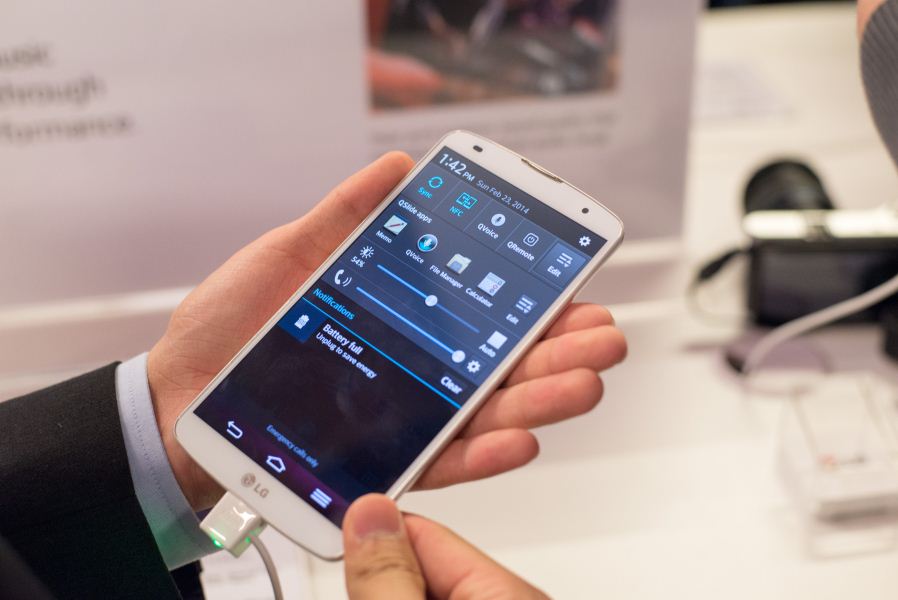
LG G2 Mini


Read More ...
AMD Announces Embedded Radeon E8860 GPU
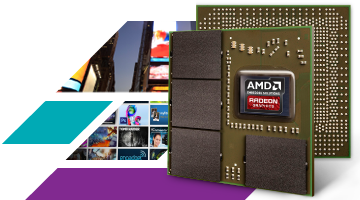
The E8860 is a 37W multi-chip-module FCBGA part, with the package measuring 37.5mm x 37.5mm. The GPU has a PCIe 3.0 interface and implements 640 SPs at 625 MHz. The GPU uses GCN similar to the HD7000 series, and is paired with 2GB of GDDR5 at 1125 MHz (4.5 GHz effective). Aside from the usual DX11.1, OpenCL 1.2 and OpenGL 4.2 compatibility we normally see with this GCN, AMD offer a variety of SKUs to cater for the following display output requirements:
AMD E8860 MXM 3.0 (A) + 5 DisplayPort
AMD E8860 PCIe + 2x DVI + mDP
AMD E8860 PCIe + 5x mDP
AMD E8860 PCIe + 4x mDP LPX
Performance is officially listed as achieving P2689 in 3DMark-11 when paired with an AMD R-464L APU. So the big question here is if the E8860 can be paired with either a BGA or socketed APU in dual graphics mode. On the consumer side at least, this could result in some nice GPU performance if an APU could be paired with something like this, leaving a PCIe x8 slot for other devices. It could even act as a mid-range part in the laptop space, although 37W will need to be catered for, or a mini-ITX motherboard where the other PCIe lanes are used for SATA controllers for extra storage.
Due to the use in the embedded market, interested parties will need to contact their local AMD representative for pricing and information.
Source: AMD
Read More ...
Samsung Announces Galaxy S5: Initial Thoughts
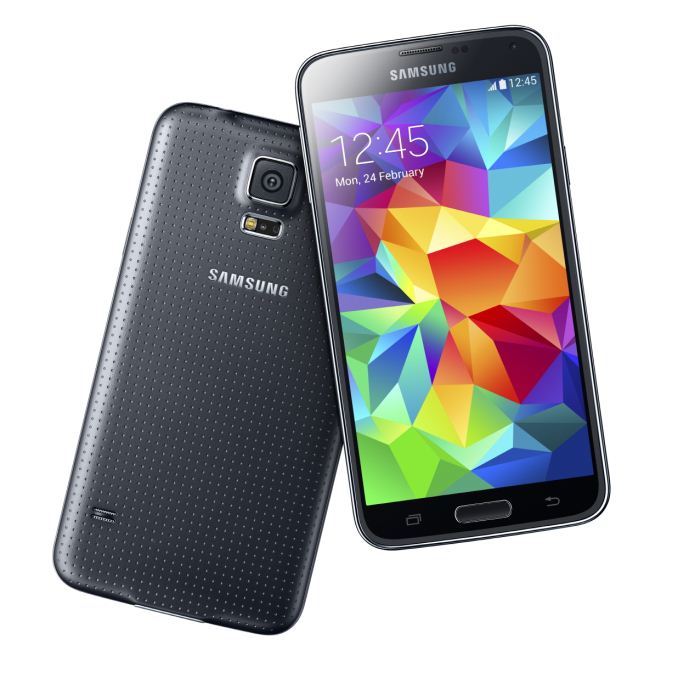

The Galaxy S5 has 2GB of RAM, also not too surprising given the 32-bit ARMv7 architecture of the 8974AC.
The display is a 1080p 5.1” panel, which makes this phone around the same size as the LG G2. Samsung has definitely improved AMOLED, but first impressions are unlikely to tell much when it comes to the quality of calibration and other characteristics of the device. In all likelihood, this will continue to use an RGBG pixel layout in order to improve aging characteristics as the various subpixels age at differing rates. I would expect max brightness to increase, although this may only show in very specific conditions such as extended sunlight exposure and low APL scenarios.

The fingerprint sensor is a swipe-based one, and Brian has voiced displeasure over swipe sensors like those found in the One max. I personally think that there could be some issues with ergonomics, as Samsung places the home button very close to the edge of the phone, which would make it rather difficult to swipe correctly over the home button, especially if the device is being used with one hand.
As always, Samsung has included removable battery and a microSD slot for those that need such capabilities, although now that Samsung is following Google guidelines regarding read/write permissions, the utility of the microSD slot could be much less than previously expected. For the battery, things are noticeably different as Samsung has gone with a 3.85V chemistry compared to the 3.8V chemistry previously used by the Galaxy S4. With a battery capacity of 10.78 WHr, this means that it has 2800 mAh. For reference, the Galaxy S4 had a 9.88 WHr battery with 2600 mAh.

There might be a trend here in the paragraphs, and while some may see it as a tic, it’s probably more representative of the consistency that Samsung is bringing to the table. “As always” means that people know what to expect, and while it may not be nearly as exciting to the tech press, average people live and die by what’s relatively familiar, not what’s new and exciting. The addition of new features and consistent improvements to performance without compromise relative to the previous generation is definitely something to be applauded, and with review units, hopefully it will be possible to see how the GS5 stacks up against the competition.
At any rate, the phone will launch with blue, black, white, and gold colors. It launches April 11 in 150 countries.
Read More ...
GIGABYTE G1.Sniper Z87 Review
The G1 series from GIGABYTE has seen a recent expansion of late – from the previous socket to new chipset releases, GIGABYTE is now attempting to provide a model at almost every reasonable price point in the market. The purpose of this is to provide a gaming platform for any budget, using gaming features such as OP-AMP, USB-DAC.UP and Gain Boost. At the mid-point of the spectrum is the G1.Sniper Z87, which we are reviewing today.
Read More ...
HTC Launches Desire 816 at MWC

Of course, specs are effectively the most important part of midrange phones when it comes to placing the kind of value that they have, so I made a table to summarize the key points:
HTC Desire 816 |
|
Display |
5.5" 720p LCD |
SoC |
MSM8928, Snapdragon 400, 1.6 GHz quad Cortex A7 |
RAM |
1.5 GB |
Rear Camera |
13MP f/2.2, 1080p HD recording |
Front Camera |
5MP f/2.8 720p HD recording |
WiFi |
802.11 b/g/n |
Storage |
8GB + microSD |
Battery |
2600 mAh, 3.8V, 9.88 WHr |
WCDMA Bands |
850/900/2100 MHz (Band 5, 8, 1) |
LTE Bands |
EMEA: 800/900/1800/2600 MHz (Band 20, 8, 3, 7) Asia: 900/1800/2100/2600 MHz (Band 8, 3, 1, 7) 700 MHz (Band 28) for Taiwan, Australia |
SIM Size |
NanoSIM |


Read More ...
Two More Microsoft Executives Leaving the Company
Tony Bates and Tami Reller are next to go
Read More ...
India's Karbonn to Add Android Split Personality to Windows Phone
New devices will be targeted at the Indian, Middle Easter, and Southeast Asian developing markets
Read More ...
UPDATE: Apple's iOS Comes to Your Car via CarPlay Infotainment System, iPhone 5 and up Supported
Apple brings iOS to your dashboard
Read More ...
Apple Hopes to Up Device Launches with Hiring Binge in Asia
Apple is hiring engineers and managers from its competition in Asia
Read More ...
Samsung Adds Faux Leather to Its $399 New Chromebook 2
Samsung announces new 13.3", 11.6" Chromebooks
Read More ...
Cortana Voice Assistant Coming to Windows Phone in New 8.1 Update
She'll be represented as a circle that asks, "Need Something?"
Read More ...
Microsoft Launches Site to Tell Clueless Customers if They're Running XP
Site functions as advertised, is built on Metro
Read More ...
Four U.S. States Fighting Over Tesla Motors' Gigafactory Location
All four states want the factory in their respective borders
Read More ...
Video Leak Confirms 3D Camera, Larger Screen Coming to HTC One M8
3D camera and Sense 6.0 are onboard, camera app crashes make a troubling return
Read More ...
With Windows XP Support Ending Soon, Microsoft Uses Pop-ups to Encourage Upgrades
Microsoft REALLY wants you to upgrade to Windows 8.1
Read More ...
Ellen DeGeneres' Star-studded "Selfie" Briefly Crashes Twitter During Oscar Broadcast
Ellen crashes Twitter thanks to a gaggle of friends and some crafty product placement
Read More ...
Facebook Kills Popular Messenger App for PCs
Android and iPhone are Facebook's priorities, other platforms are second class citizens
Read More ...
Mt. Gox Bitcoin CEO Can't Stifle Grin as he Bows in Apology for Bankruptcy
"We have to let it go. And then we'll buy more." says a Japanese investor after losing a tenth of his Bitcoins
Read More ...
Now That It's Done, Who Profits Off the Vodafone/Verizon Deal?
UK and U.S. taxmen collect a cut of the proceeds, as do the banks
Read More ...
Report: Microsoft Considering Offering Free “Windows 8.1 with Bing”
New version of Windows 8.1 would be free or "very low cost"
Read More ...
British Surveillance Agency GCHQ Bulk Collects, Stores Yahoo Webcam Images
About 3 percent to 11 percent of images contained nudity or other graphic images
Read More ...
Ford: We're "Not Married to Microsoft" for Sync Gen. 3
Gen. 3 OS choice will be critical given beating Sync 2 led to in quality rankings
Read More ...
Google Plans to Launch Modular Smartphone via "Project Ara" Early Next Year
It should have a working prototype in weeks
Read More ...
2/27/2014 Daily Hardware Reviews
DailyTech's roundup of hardware reviews from around the web for Wednesday
Read More ...
Tesla Motors' Gigafactory to Help Push Out Half Million EVs/Year in 2020
The giant Gigafactory will span 500-1000 acres of land
Read More ...
"Boeing Black" Secure, Self-Destructing Android Smartphone Gets Official
Boeing offers details on its new secure Android smartphone
Read More ...
Drone Ships May Replace Manned Standard Cargo Ships in the Future
Crewless ships would be able to carry more cargo and burn less fuel
Read More ...
China's BYD Auto CEO Says Tesla's Model S a "Rich Man's Toy"
The Model S will sell for $121,300 USD in China
Read More ...
Microsoft Reportedly Keeping Nokia, Lumia Brands
Nokia logos will continue making their way onto phones despite the acquisition
Read More ...
Woman Claims She Was Assaulted, Robbed for Wearing Google Glasses
Some dispute her account, while others say that patrons of the "punk bar" were justified if they assaulted her
Read More ...
Apple Patches Serious SSL Exploit That Could Have Exposed OS X, iOS Users to NSA Snooping
SSL-breaking bug was present for the last year and a half, but is fortunately finally fixed on both platforms
Read More ...
BlackBerry CEO Says He'd Sell BBM for $19B --- But He's Not Crazy
Laughs aside, John Chen is making smart and critical moves to save his company
Read More ...
2/26/2014 Daily Hardware Reviews
DailyTech's roundup of hardware reviews from around the web for Wednesday
Read More ...
After Being Pummeled by Toyota's Prius for Years, Honda to End Insight Hybrid Production
Honda finally throws in the towel on the Insight
Read More ...
Security Researchers Discover Way to Log Touch Input on iOS Devices
No fix from Apple for this issue yet
Read More ...
Available Tags:Kingston , Apple , iOS , AMD , driver , Intel , SSD , Smartphone , Google , Xbox , Western Digital , Motorola , Catalyst , AnandTech , Western Digital , Nokia , LG , Radeon , GPU , Samsung , Galaxy , GIGABYTE , HTC , Microsoft , Windows Phone , Android , Windows , iPhone 5 , via , iPhone , Samsung , Windows Phone , Windows , Microsoft , 3D , HTC , Windows , Microsoft , Twitter , Facebook , CEO , Profits , Windows 8 , Microsoft , Yahoo , via , Hardware , Android , CEO , Microsoft , BlackBerry , CEO , Hardware , Security ,


No comments:
Post a Comment