

Hey, Presto! Foxtel's Netflix rival launching March 13

Months after it was officially announced, Foxtel's movie streaming service Presto has finally been given a proper launch date.
From March 13, Australians will be able to stream Foxtel's complete suite of movie channels via PC, Mac and compatible iPads for $20 a month, with no lock in contract.
The service offers both a live stream of Foxtel Movies Premiere, Foxtel Movies Comedy, Foxtel Movies Romance, Foxtel Movies Thriller, Foxtel Movies Action, Foxtel Movies Family, and Foxtel Movies Masterpiece, as well as on demand movies from these channels.
Anyone want to Play?
Presto is being offered alongside Foxtel's other streaming service, Foxtel Play, which means that anyone hoping for a true Netflix experience of movies and TV shows is likely to be disappointed with the Presto lineup.To counter this, Foxtel also announced today its plans to offer some special pricing on its movie package on Play, adding the Showcase channel for HBO programming at a discounted price.
Whether this appeases Game of Thrones fans disappointed by the pay TV operator's plans to block competitors like Quickflix and Apple TV streaming the program when season 4 launches in April, is yet to be seen.
- Hey Presto! It's a Foxtel Play review for you to read!

     |
Read More ...
Hands-on review: MWC 2014: LG G Pro 2

Big is beautiful, or at least that appears to be the case in the smartphone market as every manufacturer seems to be pushing supersized devices on us at a rate of knots, and the LG G Pro 2 is no exception.
The main feature on the G Pro 2 is its 5.9-inch full HD display, making it bigger than the phablet of choice, the Samsung Galaxy Note 3, but smaller than HTC One Max and the huge Sony Xperia Z Ultra.
There's currently no word on price (spoiler: it won't be cheap) or whether the G Pro 2 will actually make it out of Asia, but we're keeping our fingers crossed that it will considering the success of Samsung's Note series.
As well as the big screen the G Pro 2 also has some other decent specs, including the 2.26GHz quad-core processor it's borrowed from the LG G2, 3GB of RAM, 16/32GB of internal storage and the latest version of Google's mobile platform, Android 4.4 KitKat.

LG has stuck its own overlay on top of KitKat, but it's a relatively inoffensive offering adding some useful extra features to the handset.
The main addition is Mini View - a feature which sees the phone's screen shrink and shift to one side of the display, making it easier to use the G Pro 2 with one hand.
A quick swipe either left or right across the navigation bar and the screen minimises into a smaller area, allowing your thumb to reach all areas - you can even adjust the size of the Mini View window to suit your digits.

You can still see the faded full size operating system running in the area of the screen which isn't taken up by Mini View.
Impressively there was no lag experienced during my play with Mini View, which is surprising as the G Pro 2 was rendering the same thing twice - once in Mini View and once in the full size faded area.
I can see this being a very useful feature and it trumps other phablets which may provide a keyboard floated left or right, but none shrink the whole user interface like the G Pro 2.

That said, those with smaller hands will still struggle with the G Pro 2 as there's no getting away from the fact that it's a big handset and more often than not you'll probably want to use both mitts to steady the ship.
As with the G2 Mini, the G Pro 2 has inherited the rear volume and power/lock keys from the G2, and they are still pretty tricky to hit, especially here as you need to shuffle the phone slightly to get your fingers in the right place.
LG does offer a solution to this issue with its Knockon screen wake function, allowing you to wake up and lock the handset with a double tap of the screen (or notification bar if you want to lock it).

The G Pro 2 takes things a step further though with Knockcode, allowing you to not only wake the screen by tapping it, but also unlock the handset in just a few finger presses.
Knockcode requires you to tap out a pattern of between 2 and 8 knocks in length, reducing your reliance on the rear keys while also improving security on your device.
I did find that the G Pro 2 didn't always register my knocks, which forced me at times to have two or three attempts at unlocking the smartphone.

These errors could well fade with time as you adapt to the new functionality, or the system may be a little flawed. You'll have to wait until the in-depth LG G Pro 2 review to find out the answer to that one.
Even though the LG G Pro 2 is all plastic it still has a premium look and feel to it, although it's never going to match the all metal body of the One Max.
The metal mesh pattern applied to the rear of the G Pro 2 does provide some much needed grip, ensuring you have a tight grip of the mammoth mobile.

The screen is bright and full of detail, making text easy to read and videos standout - this is a device you could easily watch a movie on, or play some intense Real Racing 3.
There wasn't a moment when the G Pro 2 appeared to struggle and it still performed perfectly when I opened up pretty much every app on it.
This performance also finds its way into the web browsing, loading mobile sites in a flash, while content heavy desktop websites appeared in just a few seconds over a decent Wi-Fi connection.

You can also split the browser into two windows - with each taking up half the screen - in much the same way as Multi-Window does on the Galaxy Note 3, allowing you to view two websites at the same time.
This function isn't available with any other applications and I struggle to see the real appeal of this particular feature.
When held in two hands the G Pro 2 is easy to type on, if not a little top heavy, and if you've only got one hand free Mini View provides a handy way of tapping out a missive with relative ease.

LG has done a lot of work on the G Pro 2's 13MP rear camera, which not only features the firm's new OIS+ (optical image stabilisation) technology, but also allows you to record in Ultra HD 4K quality.
If slow motion is more your thing then you can also record at 120fps with a full HD resolution, and the G Pro 2 will give you three slow motion speeds to choose from in post-production.
The new OIS+ tech means images will still come out crisp and clear even if you're on a bumpy bus ride, or just walking down the street.

It also allows for better low light images, although I was unable to put this to the test in the brightly light demo area.
A clever camera feature you'll find on the LG G Pro 2 is something called "Magic Focus", which allows you to choose the depth of focus after taking a picture.
Want to focus on something in the foreground? No problem, just use the slider on screen to ensure the object in question is in focus, while the rest of the image is blurred.

For all you selfie fans out there the G Pro 2 also has you covered, with a smaller viewfinder on screen when using the front facing camera allowing for a bright background to illuminate your face - smashing.
Early verdict
The LG G Pro 2 is a decent supersized smartphone and if it does manage to make it out of Asia then it will give the current crop of phablets a real run for their money.The various camera enhancements will attract a certain crowd, while we could see the innovative Mini View crop up on rival devices as manufacturers look to squeeze every last bit of usability from their smartphones.
The LG G Pro 2 is definitely one to watch, and one to hope for.

| |
Read More ...
Updated: Mobile World Congress 2014: Live business coverage from TechRadar Pro

TechRadar Pro brings you the latest enterprise and business news, titbits and interviews from the world's biggest mobile-related event.
Mobile World Congress is taking place in Barcelona and kickstarts on Monday 24, spanning over four days.
We are onsite from Saturday to cover the traditional MWC press day which happens the following day, just before MWC opens and will keep this page updated till Thursday evening.
We will be covering the likes of Microsoft, Intel, Qualcomm, Huawei, HP, Samsung , Fujitsu, Panasonic, NEC and a lot more.
You can also follow TechRadar's running MWC 2014 thread to find out more about the latest smartphones and tablets that will be launched over the next few days.
The freshest content will be chronologically published below and times will be GMT. Don't forget to follow us on Twitter @techradarpro.
23 February 2014, 2120
A long and exhausting day comes to an end. Sundays have never been so fun. Went to meet Mediatek ahead of a busy week for them with a couple of key announcements. That was followed by a trip to the Fira Gran Via to collect my MWC badge and witness how mighty Samsung was. The vicinity of the main building is kitted in such a way that you'd think MWC was just a big Samsung event.
The next trip was to Pepcom's Mobile Focus Global where dozens of big and smaller companies get to show their gears ahead of the official start of MWC. We met up with HP which has announced new phablets for EMEA market plus a mainstream convertible laptop, ZTE, Salesforce, Newegg (who confirmed that it will coming to the UK).

We also chatted with a small company called Tensorcom, which is currently working on a new hardware solution that offers gigabit speeds (as part of the 802.11ad protocol)
23 February 2014, 1435
We're now at the somptuous Hotel Arts of Barcelona (which is just yards away from the beach) to hear, in a few minutes about Mozilla and its operating system, Firefox OS. The not-for-profit organisation will talk about the future of Firefox OS, demo a number of new devices and provide with more details regarding the current Firefox Marketplace.
23 February 2014, 1330
Microsoft's event is now off and I'm off now to Mozilla to check out what it is going to announce. Big news is that there will be a Windows 8.1 update (which has yet to be named) which will offer a number of small but still significant updates. More on that here.23 February 2014, 1200
We're at Hotel Rey Juan Carlos to hear from top Microsoft executives who will discuss the progress the company made with the Windows Phone platform in the past year and how that has solidified its position among the top three smartphone platforms plus its plans to "propel growth even more."The event will also see Microsoft share insights into how Windows is evolving and its commitment to continuous improvement and innovation for its partners, enterprise customers and consumers.

23 February 2014, 0930
Samsung is all over Barcelona's airport with the electronics giant pimping its KNOX range of entreprise ready services. The advert below says that the product is available on the Galaxy S4, S4 Mini, Note 3 and Note 10.1. Surely the Galaxy S5 will be added to that list soon.
Oh and the cheapest and most effective way to travel from the airport to the city centre is surely the train which costs a mere 10.30 Euros for 10 trips in zone 1. Two were needed to reach my destination, still a massive bargain compared to the average 50 Euros that would have cost otherwise.

22 February 2014, 1710

We also had our first infographics sent to us courtesy of PR firm Waggener Edstrom. Cheekily entitled "We know Mobile World Congress", it narrates the funny and often embarrassing side of MWC. From ginormous sum spent on booking hotel rooms to the abnormally high model attendance at the show, those who have been there before will remember many awkward moments. Click here to view the infographic.
22 February 2014, 1600

Cisco will share its vision of an interconnected world at Mobile World Congress next week and explore the possibilities offered. Subtle but important differentiation, the networking giant calls it the Internet of Everything rather than the more generic, Internet of Things, a more widely used and adopted term.
21 February 2014, 1213
If you've ever wondered why MWC is held in Barcelona and why the Catalan city is such a great place to organise this event, check out the interview we had with Aleix Valls, head of entrepreneurship and innovation at Mobile World Capital.Should you want the OTHER tech event that will take place in Barcelona, then, we've got free tickets to give away for that gig to. 4 Years from now is probably the most imaginative name for an event ever and targets developers, entrepreneurs and investors operating in the mobile market and you can find more about it here.
Oh, and for those planning to attend MWC 2014, we've put together a shortlist of essential tips for you.

| |
Read More ...
MWC 2014: Lenovo Yoga Tablet 10 HD+ bends and twists but doesn't come with KitKat

Lenovo's latest tablet continues its flexible approach with the Lenovo Yoga Tablet 10 HD+ bringing a Full HD screen to the repositionable slate.
Landing today at MWC 2014, the tablet comes with a 10.1-inch display that rocks Full HD 1920 x 1200 resolution, and the cylindrical battery means you'll be able to use it in the same 'hold', 'tilt' and 'stand' modes as its predecessor, the Lenovo Yoga Tablet 10.
Under the hood we're looking at a quad-core Snapdragon 400 processor backed up by 2GB of memory and 32GB of storage.
Disappointingly, the tablet only runs Android 4.3 rather than the more up-to-date KitKat. Lenovo promises that there'll be an over-the-air update to 4.4 but doesn't say when to expect that.
Media
As for multimedia and connectivity tools, the device rocks an HD 8MP rear-mounted snapper, a 1.6MP front-facing camera, Bluetooth 4.0 a micro USB port and Dolby audio know-how.Lenovo's promising 18 hours of battery life from the tablet, although we'll reserve judgement on that until we get a chance to put it properly through its paces.
In the meantime, we'll be grabbing a Lenovo Yoga Tablet 10 HD+ at MWC so stay tuned for our hands on review.
The Yoga Tablet 10 HD+ will be available in April with models starting at $349 (around £210 or AU$390).

| |
Read More ...
Hands-on review: MWC 2014: LG G2 Mini

The LG G2 Mini rocks up a little late to the "mini smartphone" party, and it looks like someone at the Korean firm has forgotten what mini actually means.
To be fair, the likes of the HTC One Mini, Samsung Galaxy S4 Mini and Sony Xperia Z1 Compact aren't exactly the smallest phones on the market, but with its 4.7-inch display the G2 Mini is a similar size to the flagship HTC One.
It also means there isn't a whole lot of difference between it and the 5.2-inch LG G2, and I'd still recommend the latter over the Mini if your budget can stretch that far.
The price of the LG G2 Mini is currently unknown, but I'd expect it to land around the same point as the Galaxy S4 Mini and One Mini.

Unlike the Xperia Z1 Compact, LG hasn't kept the same internal components of its bigger brother, meaning you'll have to make do with a 1.2GHz quad-core processor, 1GB of RAM, 8GB of internal storage, microSD slot, 8MP rear camera and a 1.3MP front camera.
The good news is that the LG G2 Mini comes running Android 4.4 KitKat out of the box - the G2 is still stuck on Jelly Bean for now - although LG has put its own skin over the top.
Another feature the G2 Mini has over its larger namesake is LG's new Knockcode security system, allowing you to tap out a pattern to wake and unlock you handset without having to touch any buttons.
Your pattern can consist of anything from two to eight knocks, but I found that the system wasn't always overly responsive.

Sometimes I'd tap out the code and it simply wouldn't register, while at other times there was a good two second delay before the screen turned on - something I'm sure will grate after extended use.
The handset itself is relatively lightweight (121g), and that makes it comfortable to hold in one hand.
I almost didn't realise the additional depth of the G2 Mini thanks to the rounded sides of the device, but if you're worried about pocket budge it protrudes 9.8mm compared to 8.9mm G2.
The rear of the G2 Mini has a textured effect which supplies a suitable level of grip, and LG's rear button setup is present here.

Sadly they are the same size and shape as the ones found on the G2, rather than the enlarged, easier to hit buttons on the LG G Flex.
The Knockcode and Knockon features means you'll require these keys less than on a standard smartphone, but they can still be tricky to hit unsighted when you do need to use them.
I found that the G2 Mini also looks and feels noticeably less premium than the full size G2, and that's a little bit of a shame considering the One Mini's metal chassis.
A handy feature which doesn't often make its way into non-flagship devices is the inclusion of an IR (infra-red) blaster on top of the LG G2 Mini, allowing you to control TVs, DVD players, Hi-Fi systems and set top boxes from the phone.

I'd have preferred it located on the back next to the camera - as it is on the G Flex - but this isn't a huge issue.
The 4.7-inch screen may not be full HD, but the 540 x 960 resolution is still good enough to provide a decent level of detail and I found reading text and viewing images pleasing enough.
If you study the screen closely enough, or hold a full HD phone (or even a One Mini) beside the G2 Mini, you'll notice the poorer resolution, but in isolation it shouldn't give you any trouble.
Moving around the Android KitKat operating system was generally pretty smooth, but the LG G2 Mini does lack the additional zip of its higher powered bigger brother.

There is still enough power under the hood to play intensive games and I can't foresee anything giving the G2 Mini too much of a problem.
Browsing the web on the G2 Mini was enjoyable as web pages loaded swiftly - the desktop version of TechRadar for example took less than five seconds to fully load over a decent Wi-Fi connection.
That browsing speed should follow you outdoors and onto the open road, as LG has equipped the G2 Mini with CAT 4 LTE, giving you access to superfast 4G speeds.
The large screen on the G2 Mini also makes browsing websites more comfortable, plus it allows for a decently spaced keyboard complete with next word prediction.

LG has toned down the camera application on the G2 Mini, but it still keeps a few of the features from the firm's flagship device including Beauty shot, HDR, panorama, Time catch shot and sports mode.
Shutter speed is acceptable, but it's not the quickest I've experienced at this level and my pictures taken of the oddly lit demo area came out pretty well.
The LG G2 Mini also packs in a big 2440mAh battery, considerably larger than its rivals, which should hopefully result in some decent battery life and I'll be sure to put that to the test in the in-depth review.
If you fancy getting your hands on one then the LG G2 Mini release date is slated for March in some regions, with Europe following shortly after.

Early verdict
The LG G2 Mini is a decent smartphone, but it may have arrived a bit too late to really make the same sort of impact as the S4 Mini or One Mini.If the G2 Mini does rock a similar price tag to its rivals then perhaps its larger screen and big battery will help it get some grounding in the market - but we're just going to have to wait and see.

| |
Read More ...
MWC 2014: Mozilla unveils new Firefox OS phones, adds LTE abilities
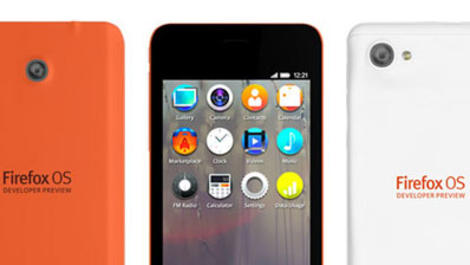
A quartet of new Firefox OS devices have been unveiled at MWC 2014 as Mozilla ups its low-end game.
The ZTE Open C, ZTE Open II, Alcatel Fire C, Fire E and Fire S are all handsets, while the Alcatel Fire 7 is a tablet. Huawei is also releasing its first Firefox phone, the Huawei Y300.
All the new devices rock Qualcomm Snapdragon processors, and the Fire S actually has a half-decent spec sheet: 4.5-inch screen, 4G connectivity, quad-core processor and an 8MP 1080p camera.
Firefox futures
As well as announcing the new hardware, Mozilla spoke about the future of the Firefox platform. The company promises universal search, LTE support, NFC support and the ability to handle dual SIM cards are all coming in the near future.There's also news of the first chipset for a $25 smartphone which was shown off on a reference device, and Mozilla is also trying to encourage higher-spec phones with 4.5-inch dual-core reference hardware for devs to test Firefox OS apps on.

| |
Read More ...
MWC 2014: Huawei's TalkBand is a smartwatch with a Bluetooth headset built-in

Huawei has unveiled the TalkBand B1 over at MWC 2014 - a wristband with a 1.4-inch flexible OLED display.
Its main focus is fitness, and it promises to track sleep patterns as well as steps taken, calories burned and so on.
As well as the wrist-based business, the TalkBand B1 comes with a detachable Bluetooth earpiece that you can use for taking calls.
The device supports Android 2.3 and up, and iOS 5.0 and up.
It should hit shop shelves in parts of Europe, China, Russia, the Middle East, Japan and Latin America from March 2014.

| |
Read More ...
MWC 2014: Huawei makes 4G affordable with new tablets and smartphone

Huawei is back in the tablet game after an absence of over a year, and it's bringing CAT 4 4G connectivity to the masses with its two news slates.
The 8-inch MediPad M1 sports a 1280 x 800 display, 1.6GHz quad-core processor, 768MB of RAM, 8/16GB of internal storage, 4800mAh battery and Android 4.2.2 Jelly Bean - and of course 4G connectivity.
Those specs are hardly blockbuster, but the MediaPad M1 will set you back about £250 (around $415, AU$460) when it goes on sale in May.
The more interesting of the two tablets is the MediaPad X1, which sports the same resolution, full HD display as the Nexus 7, 1.6GHz quad-core processor, 2GB of RAM, 16GB of internal storage, 13MP rear camera, 5MP front camera, 4G support and a huge 5000mAh battery.
We currently do not know the price of the MediaPad X1, and Huawei could only tell us that it'll be available in the second half of 2014.
Phoning it in
The Huawei Ascend G6 meanwhile is a more affordable variant of the Ascend P6, sharing the same design ethos as its bigger brother.We've been told that the Ascend G6 will come in at under £200, and for that you'll get a 1.2GHz quad-core processor, 4.5-inch qHD display, 1GB of RAM, 8GB of internal storage, microSD slot and sizeable 2000mAh battery. Oh, and 4G too.

| |
Read More ...
Hands-on review: MWC 2014: Huawei MediaPad X1

The Huawei MediaPad X1 is one of two tablets the Chinese firm has launched at MWC 2014, but this 7-inch slate has much more going for it than its 8-inch brother the MediaPad M1.
A quick flick through the spec sheet for the MediaPad X1 and it looks to be a strong contender against the likes of the Nexus 7 and Amazon Kindle Fire HDX who currently dominate the small form factor tablet market.
The MediaPad X1 packs in a 1.6GHz quad-core processor, 2GB of RAM, 16GB of internal storage, microSD slot, 4G connectivity and a 5000mAh battery - far bigger than the 3950mAh offering in the Nexus 7.
Even the IPS screen is up to scratch, boasting a full HD 1200 x 1920 resolution with 322ppi pixel density keeping it in line with the competition.

A slight sticking point for the MediaPad X1 could be its price, as Huawei was unable to give me an idea of how much it will set you back.
Considering the MediaPad X1 is slated for release in the second half of 2014 the likes of Google and Amazon may have already refreshed their tablets offerings, which may leave the X1 feeling rather dated.
I was pleased to see a slender bezel surrounding the 7-inch display making the MediaPad X1 smaller than the Nexus 7 and Kinde Fire HDX, and in turn this means it's easier to grasp in one hand.

With measurements of 183.5 x 103.9 x 7.18mm it's one of the smallest 7-inch tablets out there, increasing its portability and I found it sat very comfortably in my palm
The centralised power/lock key located on the right (in portrait mode) is easy to hit, as too is the volume rocker switch just above it, while the top of the tablet plays host to a headphone jack and the base houses the microUSB port.
Those buttons do feel a little loose in their sockets and when I shook the tablet they both rattled, raising questions over the durability of certain aspects of the device.

The MediaPad X1 looks more premium than its bigger brother - the M1 - with a silver band running round the circumference and metal plate on the rear making the tablet feel like the real deal.
While the screen does have a full HD resolution, I didn't find it as sharp as the Nexus or Kindle Fire - with noticeable blurring around app icons, due in part to Huawei's Emotion 2.0 UI overlay.
The MediaPad X1 runs Android 4.2.2 at its heart, but the Huawei overlay stifles that somewhat, and its style makes the on-screen experience feel like a child's toy.

This is a shame as the X1 does look relatively premium in terms of hardware, but the icons Huawei forces upon you are disappointing.
A nice touch is the ability to hide the navigation bar at the bottom of the screen, allowing you to take advantage of the full 7 inches, and a simple swipe up from the base sees it return.
Moving around the MediaPad X1 things seem to flow pretty well, but it does lack the zip of other tablets I've used - but Hauwei reckons that's down to the fact the unit I got hands on with wasn't running final software.

The Chinese firm is making a big deal about photography on the MediaPad X1, as it's equipped it with a 13MP rear camera and a 5MP front facing snapper.
That does seem rather excessive for a tablet, and rarely do manufacturers go above 5MP rear lenses for their slates, but to be fair to Hauwei the small size of the MediaPad X1 makes it a slightly less ridiculous device to take photos with.
Even though there's a decent camera of the rear I wasn't impressed with the snaps I managed to take during my time with the tablet, with photos appearing very grainy - even at the highest resolution.

Shutter speed was also sluggish, but hopefully these are software related issues which can be fixed before the MediaPad X1 hits stores.
A cleaver feature in the Media Pad M1 is the ability to charge another device (such as your smartphone) via the microUSB port on the base of the tablet.
You'll need to buy a special charging cable, but I can see this being a useful feature if your smartphone is nearly dead, yet your tablet still has plenty left in the tank.

Early verdict
If Huawei can sort out the lag in the interface and improve the image quality from the camera the MediaPad X1 is set up to be a serious contender in the 7-inch tablet market.Its Achilles heel however could be its time to market, as by the time it's managed to get into stores the competition may have introduced their next-generation tablets - putting the Media Pad X1 out of contention before it's even started.

| |
Read More ...
Hands-on review: MWC 2014: Huawei Ascend G6

Last year Huawei launched its flagship Ascend P6 smartphone, and now at MWC 2014 the Chinese firm has added to the range with the Huawei Ascend G6.
As you may have guessed the G6 isn't a replacement to the P6, rather it's a more affordable option which shares the same design ethos as its bigger brother.
The key facts about the Ascend G6 are its price and connectivity. While Huawei was unable to give me a firm price, I was told that it will come in at under £200.
Not bad for a handset which is sporting the latest version of 4G technology - CAT 4 - giving you a super speedy internet connection.

What else does the Ascend G6 provide? Well you get a 1.2GHz quad-core processor, 4.5-inch qHD display, 1GB of RAM, 8GB of internal storage, microSD slot and a sizeable 2000mAh battery.
The Ascend G6 comes running Android 4.3 Jelly Bean out of the box, which is acceptable considering its price tag and the fact Android 4.4 is the only set up it could possible make at this time.
Hauwei hasn't just left Android at its stock version though, feeling the need to slaver its Emotion UI 2.0 over the top - something which I haven't particularly enjoyed on previous handsets.

It still looks relatively childish and that detracts from the overall user experience as the Ascend G6 looks and feels like a toy.
The Emotion UI removes the application list that we're used to on all other Android handsets, although this isn't necessarily a bad thing as it means all your apps are in one place - no confusion for first users when they see the same app on a homescreen and in the app list.
Huawei's all-in-one widget which combines features such a gallery, weather and contacts into one, dominating block is present on the Ascend G6, but I'd recommend you delete it as its functionality is limited.

To aid the first time smartphone audience further Huawei has also enabled a Simple UI, which removes all the widgets and myriad of small app icons for a large, tile based interface. It's rather reminiscent of the Windows Phone homescreen setup.
While this mode won't interest power users, it has clear advantages for certain segments of the smartphone market.
Unsurprisingly for a phone which is going to come in at under £200 the Huawei Ascend G6 sports an all plastic construction, although it is solid and the thick, faux-metal band which runs round the circumference keeps everything together nicely.

The Ascend G6 sits well in the hand, the volume and power/lock keys are easy to hit and the rear cover provides a decent level of grip while also being removable.
This gives you access to the SIM and microSD slots, but the battery is sealed in so you won't be able to swap it out.
Front on the Ascend G6 is a little bezel heavy, with a rounded bump protruding below the navigation touch keys beneath the display.

The 960 x 540 4.5-inch display isn't going to win any awards, but it's perfectly acceptable on the Ascend G6 and everything is easily visible.
Huawei has avoided filling the Ascend G6 with bloatware, which probably helps it maintain its fluid performance as you move around the handset.
It's not blazingly fast, but we didn't experience any lag during our brief time with the Ascend G6.

Round the back of the Huawei Ascend G6 you'll find a 8MP camera with a single LED flash and the ability to record full HD video.
The camera app is passable, but features such as HDR are absent and the shutter speed isn't the fastest I've witnessed on handsets at this price range.
However from the handful of test shots I fired off the Ascend G6 appeared to perform well and it should be a decent little snapper.

That's just half the story though, as Huawei has also thrown in a 5MP front facing camera in an attempt to appeal to the growing selfie trend.
Coupled with the superfast 4G capabilities and quick access to social networks, Huawei is hoping the Ascend G6 will appeal to those dedicated to the likes of Facebook and Twitter.
The keyboard also stands up pretty well, allowing you to type a witty comment to go with your latest snap with reasonable next word prediction and spell checking.
The Huawei Ascend G6 release date is set for April in the UK, and you'll be able to pick it up in either black or white.
Early verdict
The Huawei Ascend G6 offers up a decent package of features and specs, but it's got tough competition with the cheaper Moto G and Nokia Lumia 520 offering better interfaces.
| |
Read More ...
Hands-on review: MWC 2014: Huawei MediaPad M1

Huawei hasn't really been in the tablet game for the past 18 months, but it's now looking to take on the budget end of the market.
The Chinese firm has been holding back on its tablet assault, waiting for 4G to take hold in more countries, and now that it has we're getting the MediaPad M1 as well as the 7-inch MediaPad X1.
Back to the MediaPad M1 and the 8-inch tablet is set to arrive in stores in May (with the choice of white or grey), featuring a not-too-shabby price tag of around £250 (about $415, AU$460).
For that you're treated to a relatively average 1280 x 800 display, 1.6GHz quad-core processor and a surprisingly lowly 768MB of RAM.

I'm used to seeing a minimum of 1GB in tablets these days, so I'm a little surprised Huawei has opted for less than that with the M1 and fear it may struggle to run more demanding applications.
There's also a 4800mAh battery, microSD slot and SIM card tray squashed into a slender 7.9mm frame and the MediaPad M1 weights a manageable 329g, making it easy to hold and lighter than the iPad Mini 2 and Samsung Galaxy Note 8.0.
Huawei reckons that battery will give you up to 150 hours of music playback, or enough juice to watch eight movies back to back - although I was unable to put this to the test.
Look out for our in-depth Huawei MediaPad M1 review in the coming months for the full low-down on battery performance.

As I've already hinted, the Huawei MediaPad M1 comes with CAT 4, 4G connectivity - the latest version - meaning you'll be able to get some super fast internet speeds if you're in a coverage area (and have a data SIM installed - which will require an additional monthly outlay).
The MediaPad M1 also lets you make and receive phone calls and text messages, if you so desire.
You'll be able to pick up the MediaPad M1 in a Wi-Fi only guise, and I'd expect this to be the tablet which hovers around the £250 mark, with the 4G version coming in slightly dearer.
In terms of storage they'll be a choice of 8GB or 16GB, but considering the Android 4.2.2 Jelly Bean operating system and Emotion 2.0 UI take up 3GB you'll probably want to plump for the latter.

I'm not a huge fan of the slightly childish appearance of Huawei's Emotion UI, and while it does keep things simple by completely removing the app draw, the whole experience doesn't exactly scream premium device.
Looking at the MediaPad M1's design there's an air of the HTC One about it, with familiar looking, front facing speaker grilles laid out in the same fashion as the smartphone.
Behind the drilled holes of the grilles the dual speakers are enhanced with DTS surround sound, although I was unable to test their quality during my hands on time.

Huawei has managed to get an impressive screen-to-bezel ratio of 82%, meaning there's not a huge about of plastic surrounding the display - but there is enough to hold on to without fingers encroaching on the viewing area.
The power/lock and volume keys are on the right of the M1 (when held in portrait), and are easy to hit, but don't be fooled by that metal looking rear - unlike the LG G Pad 8.3 the MediaPad M1 is all plastic.
You can remove the bottom strip of plastic on the rear of the tablet to gain access to the microSD and microSIM ports, but that battery is locked away out of sight.

The screen is passable, but the MediaPad M1 doesn't come close to the iPad Mini 2 in terms of detail or brightness, with colours appearing rather washed out.
A short video clip I viewed on the tablet was watchable, but it's not going to blow you away with amazing graphics.
The MediaPad M1 was sluggish as I moved around, opened and closed apps and fired up multi-tasking, but Huawei was keen to stress it wasn't running final software, so I'll reserve proper judgement for now.

I also found the screen to be a little unresponsive at times, but hopefully that too will be ironed out before the final product goes on sale.
I'm very much against people using tablets as cameras (you know who you are), but the MediaPad M1 comes with a 5MP rear snapper and a front facing 1MP lens.
Neither will set the world alight, but they may come in handy on the odd occasion - especially the front option as it opens up the world of video calls.

A cleaver trick the Media Pad M1 has up its sleeve is the ability to charge another device (such as your smartphone) via the microUSB port on the base of the tablet.
You'll need to fork out for a special charging cable - the price of which is currently unknown - but I can see this being a helpful feature if your smartphone is on its last legs, yet the tablet in your bag still has plenty left in the tank.

Early verdict
The Huawei MediaPad M1 is a solid 8-inch tablet, but it doesn't exactly excel at anything - if you want a cheap tablet the feature packed Nexus 7 would be a better option, although it does sport a smaller screen.Of course if you fancy a bit more screen real estate check out the G Pad 8.3, iPad Mini 2 and Galaxy Note 8.0.
If those are out of your price range the Huawei MediaPad M1 is shaping up to be a decent affordable alternative - plus the option of 4G is a nice one to have.

| |
Read More ...
MWC 2014: Windows Phone 8.1 update brings dual-SIM, Facebook Messenger to the party

Microsoft is releasing an update to Windows Phone later this year, which should allow phone makers to create cheaper phones as it ups its fight against Android.
Although Microsoft is being cagey about giving it an official name, we're expecting the software to be known as Windows Phone 8.1 and it should be released at some point this spring.
The company is lessening its vice-like control over Windows Phone hardware by allowing the use of lower-end Qualcomm processors, and letting manufacturers do away with physical buttons if they want to.
Until now, Microsoft had demanded three standard keys on the front of the handset, plus a camera shutter button too.
Remote control
After the update, phones will also be able to store apps on the SD card for the first time, and manufacturers can make dual-SIM Windows Phones too. Microsoft is even letting phone makers reuse their Android designs for Windows Phone, which is a pretty big move for the control-freaks over in Redmond.There'll also be some new faces in the Windows Phone game - Lenovo and Foxconn will be making devices, while LG is also returning to the WP fold.
These updates add up to cheaper phones as Microsoft goes after emerging markets like India where many people are yet to buy their first smartphone.
Finally, a treat for existing Windows Phone users: Facebook Messenger will be hitting the OS in a matter of weeks.
The Windows Phone 8.1 update is 'technically' compatible with existing Windows Phone 8 devices, but it sounds as though carriers will have the final say in whether you get it or not. Stay tuned.

| |
Read More ...
MWC 2014: Microsoft details Windows 8.1 update, comes in Spring

A new update to Windows 8.1 will be released within weeks and will bring a number of tweaks made to the user interface for mouse and keyboard users as well as the underlying core.
That what Microsoft's VP of Operating System, Joe Belfiore, announced during a special event held ahead of the official launch of Mobile World Congress tomorrow.
Windows 8.1 was only launched a few months ago but it seems that Microsoft has been fast-tracking a set of features based on user feedback. The updat will be available for x86 (Windows 8.1) and ARM platforms (Windows RT).
These include a discoverable search, power, settings buttons on the start screen, title bars at the top of full screen apps, a new mouse user interface for right click (start) and close (apps), easy app launching and switching va the taskbar. This confirms what a number of leaks have revealed over the past few weeks.
The making of the best Windows OS ever?
Belfiore confirmed that form factors other than the traditional 5 (smartphone, tablet, convertible, AIO/ desktop, TV and gaming) are being evaluated by Microsoft and that there will be an IE8 compatibility mode for IE11, a much sought-after and highly demanded feature from entreprise customers who have developed customised applications for Windows 7.Investing in a few UI changes will help improve experience for non-touch users while more hardware options will bring much more flexibility in order to lower price points. Improved compatibility for the education and entreprise markets will allow businesses to offer more compatibility with legacy solutions.
Windows 8.1, he said, has been the platform's fastest upgrade ever. 200 million licenses have been shipped with a big increase (five fold) in number of developers signing up for Windows 8.1. Windows 8 and Windows 8.1 have a bigger marketeshare than all versions of OS X combined.
An intriguing feature of the new update is that it will lower the hardware requirement for Windows, down to 1GB of RAM and 16GB of storage, which is essentially netbook-level. Expect a lot of Windows-powered devices using Intel's Atom processor to hit the £150 levels pretty soon.
- Check out our review of Windows 8.1 and check out the TechRadar Pro Mobile World Congress 2014 live coverage.

| |
Read More ...
In Depth: Appy shopper: the mobile apps that are changing the way we shop

"If a woman sees her friend wearing a dress she must have, there is no longer a cool-off period during which the purchase can be reconsidered," says Dominik Mazur, CEO of Image Searcher, co-developer of the CamFind app for iPhone and Android.
"She can take a picture of it, have it up on screen within seconds and then instantly order through her favourite retailer."
A visual search engine that allows users to snap anything they see and choose where to buy for the best price, CamFind is just one of a new generation of mobile apps that pounce on our impulses, aspirations and temporarily lowered inhibitions in order to liberate us of our income.
While Britain's high street stores struggle to emerge from an apparently never-ending slump, the likes of Wanelo, Fancy, Etsy, eBay and Amazon are constantly working on new tools designed to ensure everything we've ever wanted (and plenty of stuff we didn't know we wanted) sits front and centre on those conjoined twins we've come to call smartphones.
"We are all visual beings, so searching visually makes the most sense in my opinion and the trend will only grow," says Mazur, whose app has already processed 12m image searches in six months.

The multi-talented CamFind, (think of it as a far superior and more useful version of Google Goggles) racked up a million downloads on iOS prior to its recent Android launch. You can snap a cup of coffee and it'll tell you where you can get a mid-morning Java thanks to Yelp integration, or a movie poster to get a screen time. There's also a barcode scanner for direct price comparisons, but that's old hat in this age.
Image search apps like CamFind have been so successful that Amazon has just adopted its own interpretation. Called 'Flow', the feature uses augmented reality to scan objects and text. If a match is spotted within the inventory, the Amazon listing will appear. The idea is to give consumers an opportunity to get a better price. The execution isn't quite there yet, but the potential is.
It's one of a series of ploys from the world's biggest etailer to ensure that even when the product is in the user's hand, they'll choose to buy it online. Free next-day delivery is already in place through Prime (two days in the US), and next it wants to send us items in half an hour via drones. After that it'll start sending us items we haven't even ordered yet thanks to predictive marketing data. If it was up and running now in rain-soaked Britain, we'd all be getting new wellies in the mail.

However, Amazon and CamFind's current play still relies completely on the user already knowing what they want. Other apps are taking every opportunity to show us what we don't know we want.
"There's a inspirational and aspirational aspect to shopping now," says Paul Rourke, founder of PRWD, a Manchester-based ecommerce agency specialising in 'conversion rate optimisation,' which turns browsing into buys for the likes of TopShop, Vans, The North Face. (http://www.prwd.co.uk/)
"Visitors don't have any particular items in mind, but are very open minded. They're saying, 'I've got a bit of money to spend, show me what you've got, inspire me'."
Want, Need, Love
One app that captures the very essence of smartphone shopping is Wanelo (that's Want, Need, Love, for those keeping score at home).Part social network, part 'window shopping on steroids,' it is one of the most popular apps on iOS and Android, and a chart-topper on both platforms.
Users follow their favourite stores, brands, influencers and friends to customise a shopping experience in which 9.5m products from over 200,000 stores are purchasable from within the app. It has a constant-scroll feed of interesting items, making it the perfect app for loafing at home or on the train.
"People are the best shortcuts we have in terms of finding things that are most relevant to us," says founder and CEO Deena Varshavskaya.
"Twitter is a really wonderful example of this, it has organised all of the world's news around people. Depending on which accounts you follow, you can create your own personalised feed of news through people.
"What we do at Wanelo runs parallel to that. You follow stores and users, creating a custom feed and filtering down what's suitable and relevant to for you."
The app centres on "organising shopping around people," rather than the other way around. With this app, and others like Fancy and Etsy, users can always be shopping, rather than having to make a trip into town.
Meanwhile, on the High Street
But what do these mobile experiences, which have the advantage of reams of data on user habits, do for the poor old High Street, still focused on intent rather than discovery? Well, the prognosis might not be as severe as it appears on the surface."We know that we have a really big impact. Our users have spent so much time on our app browsing products that by the time they come into the store, they already know the inventory," said Varshavskaya, who hopes to eventually connect the Wanolo app with physical retailers.
"They might come in looking for a particular item so they can try it on, or just buy it directly. They're now coming into the stores with a lot of knowledge. I think it is making a significant impact in a way that retailers are not yet aware."
Indeed, where there is extra pressure to stay relevant and attractive to shoppers in the mobile age, there is also opportunity.
Natural retail selection
While online giants such as Amazon may have played a role in the demise of smaller, physical retailers, the best ones will adapt and thrive, according to Chris Parry, Senior Lecturer in the Accounting and Finance department at Cardiff Metropolitan University."Shopping apps aren't a way to kill the High Street, they're advantageous to the High Street, providing they're managed properly," he told us.
"It's not the 1960s. The High Street must evolve and use these apps as an opportunity. If a small high street store in South Wales is able to sell to someone in South Florida then that's excellent. There's a way to maintain the individuality and links with the local community, while spreading the net wider."
Serbian-born Varshavskaya puts it in plainer terms: "They have no choice, but to adapt."
Indeed, the most successful retailers are finding ways to marry the two worlds. Some are offering in-store pickup within 30 minutes for items purchased online, and price-matching schemes that can keep price comparison apps that ensure we always get the best deal at bay.
"The holy grail for the most advanced price comparison apps is never having to overpay for anything," says CamFind's Mazur.
"This is helping a transfer of power to the customer and I'm all for it," adds Parry.
When it comes down to brass tacks, mobile-savvy shoppers aren't mourning the demise of the bricks-and-mortar High Street. Instead, they're voting with their fingers and thumbs on apps and optimised websites. We're more focused on what we want, and more open to what we might want than ever before.
Those retailers who can react to the change will survive, flourish and remain part of our lives. Those who don't? Well, we're sorry for their loss. May they rest in peace.

| |
Read More ...
In Depth: Samsung Gear 2: release date, news and features

The Samsung Gear 2 is a surprising addition to the MWC 2014 party, not just because it's predecessor has been on sale for such a short amount of time but because it's been joined by a little brother: the Gear 2 Neo.
It's also dropped the Galaxy part of its name for the update, presumably as the range is based on Tizen OS rather than Android.
If you read our initial Galaxy Gear review, you'd see why Samsung has rebooted this so quickly. A smartwatch may be cool, but if it costs too much, has too short of a battery life and is filled with useless gimmicks, it's not going to sell well – and that's precisely what we found with Samsung's first effort.
The Gear 2's got the same 512MB of RAM as the first iteration, but with a dual-core 1GHz processor, which is much needed over the original.
So now we have the rebooted version, and it's likely to be tied in heavily with the Samsung Galaxy S5 – read on to find out all about the two new watches as Samsung battens down the hatches ahead of the iWatch release.
Gear 2 design
When it comes to the new look of the Gear, it's pretty much business as usual. The screen is precisely the same (a 1.63-inch 320 x 320 Super AMOLED option) and the surround looks pretty similar to the original as well.We actually liked the design of the first Gear, as it combined industrial-looking materials with sleek lines – but combined with the camera it was just too large.
Rumors it would be up to 20% thinner are unfounded – it's actually closer to 9% - so The Samsung Gear 2 doesn't deviate a huge amount from the first iteration, coming in with 36.9 x 58.4x 10.0 mm, and weighting 68g. That's not a lot different from the Gear 2 Neo, which clocks in at 37.9 x 58.8 x 10.0mm, but is 20% lighter at 55g, which will make a fairly big difference.
It's not the major redesign we were hoping for, but at the same time, there are some tweaks we like: moving all the sensors onto the watch face means you can now change the straps rather than having to have the same lurid rubber option, which will appeal to those who want a genuine watch replacement.
There's also a home button now, which will make it easier to navigate around the device when you just want to know the time.
Gear 2 vs Gear 2 Neo
The two devices differ very little in actual fact – the main change is the dimensions listed above, with the Neo coming in a lot lighter than its better-specced brother.In terms of actually being better on the spec front, it's only the camera that's missing – both still have the all-new infra red blaster to control TVs and DVD players, but the same 1.9MP camera pervades on the Gear 2.
Both are also dustproof and water resistant to IP67, which is pretty impressive given the last model could barely look at rain before deciding to curl up into a technoball and hibernate for the winter.
All new OS
We've heard loads about Tizen in the run up to MWC 2014, where Samsung is supposed to be showing off phones using the new operating system.But here's an interesting one: the new Gear range are running the OS as well. There are a number of reasons for this, but one that could have legs is it would make the watch a lot more enticing for developers.
The reasons for the switch to Tizen are unclear, but Samsung is touting the fact that the OS will work widely with other devices, and TVs from the South Korean brand are tipped to switch to the OS soon too, which would make sense from a brand unity point of view.
The apps already developed for the Gear on Android should be pretty easy to move over to Tizen, given the OS is set up to allow this to happen without too much fuss – and it seems to be kinder on the battery too, offering 2-3 days' use in normal situations (up to six with 'low usage') which is a big jump from the 25 hours thrown out for the original Gear.
Pricey as before?
The new Gear needs to be cheaper than the original, coming as it did for £299 or $299 (around AU$333) off the shelf.We sadly don't know the official price just yet, but Samsung was rumoured to have chopped the cost to make sure the Gear 2 is competitive in the face of the iWatch.
We can imagine a situation where the Gear 2 will cost the same as the first version (which makes sense given the amount of extra technology shoved in there) and the Neo option being about 15% cheaper.
Samsung knows that it wouldn't fare well if it pitted its watch against the premium quality of Apple's (just look at some of the high end tablets Samsung offers for the same cost as the iPad Air) and should look to offer a lower cost as well as the enhanced feature set.
With that in mind, the Gear 2 is a crucial device for the South Korean brand – it's already had one bite with the first option, and if the next iteration fails to ignite then it could be handing the keys to the wearable kingdom to Apple before it's even brought anything out.
Gear 2 release date
The Samsung Gear 2 launch date s now upon us, and as expected it's at MWC 2014 (well, the day before if you're being picky).But it will be a while before it actually reaches the shop shelves, as the release date is set for April, and will begin worldwide.
We'll be betting that the Galaxy S5 and the Gear 2 will be launched onto shop shelves as a joint deal in a number of retailers, so its probable the two will have the same release date, if not very close together.
Fitness tracking
One of the big changes with the Gear 2 set is the added fitness ability – the pedometer from the first model remains, but now comes with a lot more nous when it comes to making you fitter.One of the biggest changes is hidden away: there's now an optical sensor on the back of the device to monitor your heart rate as you run or walk around. Those are the two inbuilt exercises from the start, although it can function as 'companion' to cycling and hiking. It'll even track your sleeping patterns.
There are a number of apps from launch that can help with the fitness too, such as Map My Fitness, so you'll be able to use the Gear 2 freely as a general exercise tool.
Bluetooth streaming of music stored on the Gear 2's inbuilt 4GB is a welcome addition too, making the device more autonomous and something genuinely useful to have on a run when you don't want to carry your phone.

| |
Read More ...
Inflame: Text pest: why Facebook buying WhatsApp has caused web rage

We haven't seen so many billions of dollars in the news since the banking crisis. The revelation that Facebook paid $19bn to buy chat app WhatsApp was definitely Tech Shock of the Week, as Zuckerberg's plan to build his own self-contained internet moved up a gear.
There were two comments that appeared to be compulsory in every online response thread about the buy - people joking "Ah, but I downloaded WhatsApp for free!" then pausing for the applause and upvotes that never came, plus commenters who instantly claimed they'd be abandoning WhatsApp immediately because they're so super-anti-corporate and edgy.
It also brought out the financial analyst in everyone, as every bloke-with-a-phone did the maths and worked out how much Facebook paid to acquire each existing WhatsApp user, then offered a variety of reasons why it's the stupidest business move since the last time anyone agreed to be bought out by Yahoo.
Zuckerberg invited you to play Casino Banking
One such maths-doer was CNBC commenter Marc Tinkleneberg, who calculated: "...it would probably cost less than 100m to reinvent it. 16bn to buy a 500m user base does not make sense either, as one can suspect that this user base already overlaps more than 80% with FB's existing user base."More interesting than the vague sums was his anecdote about what his teenage daughter is up to nowadays (steady on), with Marc claiming: "My 15-year-old daughter and her classmates already moved on, from WhatsApp to Viber."
Hope you're not reading her messages, Marc. Sounds like you might be sneaking glances at what she's doing over her shoulder at least, which can only lead to misery.
A little further down, reader Donna_Summer offered a cynical take on the purchase of a virtual asset being funded mainly by shares, saying: "A website comprised of lines of computer code, which manufactures nothing, blows 16 billion dollars on another website comprised of more computer code, which also manufactures nothing. It's like Farmville for the elites."
59 STABS to my HEART
For the opinion of the common man not overly familiar with complicated concepts like maths, we popped over to the Daily Mail. Reader Mutal was busy RAGING about the HIDDEN COST of using WhatsApp, moaning furiously: "On principal, I will not use WhatsApp because they charge for their app in very fine small print when you download their app. The charges come at the end of a year use. And practically everyone I know who uses this app when asked if they know they will be charged for it, ALL have looked clueless or dumbfounded until I get them to check the terms and conditions FINE print."Dude, it's only 59p/99c. 59p/99c a year. Exactly how hard did the recession hit you if that's such an enormous deal breaker? And who's dumbfounded? Give us their email addresses because we don't believe you.
He's not the Messiah, he's a very wealthy boy
The best story to come out of the acquisition was the fact that newly minted WhatsApp boss Brian Acton moaned on Twitter that be'd been rejected by both Twitter and Facebook for something, presumably an early WhatsApp concept or just a job, way back in 2009.The fact that Acton is a podgy gentleman in his 40s unlikely to fit in with the self-conscious Silicon Valley set was pulled out as one possible reason for his earlier rejection by some commenters, although being a "normal" man won him some respect over at the Guardian, where Losing_Haringey said: "I'd rather see relatively normal people get obscenely rich than the money-hungry corporate-minded drones that file over the Thames every morning. They've made a program that millions of people use and get pleasure/convenience out of. They deserve the money."
One of us got lucky. Now share the money around a bit, Brian.
Tech Bubble 2.0
We did find one interesting comment that probed a bit deeper than feigned outrage and righteous claims of WhatsApp uninstallation. Over on TechCrunch, reader Daniel Roizman asked: "Interesting to see software eating the world. How is it that the companies that build the phones, cell towers and fibre optic cables that are the infrastructure of the billion+ connected users are worth a fraction of the software layer on top of them? Who's investing in the hardware that will help WhatsApp reach the next billion?"Vad Dzhabaraov replied with: "Because a bunch of lemming investors give it value by equating 'big with lots of users' to 'has a valid business model and can make money.'"
- Inflame is TechRadar's weekly look beyond the fold - if you see a great comment let us know

| |
Read More ...
In Depth: Samsung Galaxy S4 vs iPhone 5S

The Samsung Galaxy S4 and the iPhone 5S are devices that highlight the best of two of the largest tech companies at the height of their powers, so which one should you choose?
Each handset has its own strengths, from amazing screens to epic cameras and a whole raft of different features that give each device its own personality.
We've given each our thorough run through in our in-depth reviews, but if you're still a little unsure quite which of these exceptional devices is for you, then this guide is pretty much tailor-made for you.

Design
Gone are the days that the Samsung Galaxy range is accused of being iPhone-esque, with the Galaxy S4 looking quite a lot different than its Apple counterpart.The most noticeable difference between the Korean and American offerings is the size. The Samsung towers over the iPhone, measuring in at 136.6 x 69.8 x 7.9mm yet weighing only 130g. This dwarfs the iPhone at 123.8 x 58.6 x 7.6mm, but makes it 18g heavier than the 112g Apple.
It is this smaller stature that makes the iPhone sit in the hand a lot easier, making one handed operation simpler on top of making it sit nicer in small skinny jeans pockets.
Apple has followed a seemingly industrial style design with the iPhone 5S, the all glass black (or white) front is almost unbroken, with a subtle hints of the home button/Touch ID sensor, front camera and speaker.
If you opt for the black front, space grey aluminium wraps around the side and the back, with more hints of the black glass present at the top and bottom. The white front options offer the choice of a silver or gold back, as well as a matching ring around the home button.
Samsung, on the other hand, has produced a curvier handset, which also comes in black or white. A silver band around the home button, a silver speaker grille and silver Samsung branding help to break up the front, with the black and white front/back also coming with a faint textured look.
A faux chrome band wraps around both versions of the Galaxy S4's plastic chassis. This construction aids in weight reduction and allows users to access the battery and microSD port, allowing heavy users that like to keep extra battery packs with them to swap them in and out, as well as able to keep multiple SD cards.
Both the iPhone 5S and the Galaxy S4 come with the home button at the base, something that led to numerous comparisons between the original Samsung Galaxy S and the iPhone 3GS. Soft keys sit either side of the elongated home button of the Samsung, whereas, home button aside, Apple relies entirely on on-screen controls.

Screen
Part of the reason for the size differences is just how heavily the screen dominates each handset. As with nigh-on all modern smartphones, the screen is very much the focal feature.The iPhone 5S comes with a 4-inch Retina display; a 1136 x 640 resolution resulting in 326ppi. Opting for a 'bigger is better' mantra, the Galaxy S4 comes with a 5-inch Full HD Super AMOLED display meaning a 1920 x 1080 resolution and a massive 441ppi.
This added screen real estate means that it perfect for watching movies, or for playing one of the many games that grace the Google Play Store. Being Super AMOLED as well means that colours come highly saturated, although this can be toned down within the settings menu.
There are many that continue to mock Apple for not (yet at least) building a larger iPhone, but equally there are many that feel larger devices are less suited to making phone calls and also doing things like browsing the web more easily with one hand.
Whilst those looking or serious mobile gaming devices might assume the Galaxy S4 is the better choice, they shouldn't completely write off the iPhone, as even the smaller screen size doesn't spoil the fact it's excellent at graphical reproduction.

OS
The fight between Android and iOS is one that has been raging for a while, and is likely to continue for a long time into the future.Android is an open source OS, allowing users to customise to their hearts content. Don't like the keyboard? Download a new one. Don't like the home screen? Download a new one. Don't like the messaging app? Yes, you've got it, download a new one.
- Still not sure, check out our Android Jelly Bean and iOS7 reviews
Navigation is done on screen, as well as through the two soft keys that sit either side. This aids the on-screen navigation, although at times makes the whole experience seem a little more convoluted.
iOS is far more locked down, opting for a simpler icon experience. This means that iOS is easy to grasp right from the start, with navigation between screens and settings all done on screen. The only physical navigation button is the home button.
Apple has also thrown in a Control Center, allowing you to control settings like screen brightness, Wi-Fi, Bluetooth and the torch with a simple swipe up from the base. This is very similar to Samsung's quick toggles that live in the notification bar, but is arguably more useful in some cases (well, just the torch really, but it's still a crucial part).

Performance
One of the biggest selling points of the iPhone 5S has to be the 64-bit A7 chip that Apple has included. It stole all the headlines at the launch of the 5S, and has sparked many a debate amongst mobile enthusiasts.In the Galaxy S4, Samsung has included Qualcomm's quad-core 1.9GHz Snapdragon 600 chip, backed up with twice as much RAM as the iPhone, coming with 2GB.
When using the Galaxy S4 and the iPhone 5S side by side, there is little to choose between the two. We found that both devices booted up in a very similar time frame, and moving between screens was also slick and smooth.
Loading up apps such as the Calendar/S Planner, Phone and Messaging app were also done almost simultaneously. There did seem to be a more noticeable gap in loading larger apps, with the iPhone loading Youtube a little faster and leaving the Galaxy S4 standing when loading Sonic Dash, so it's worth noting that if you're after a more stable app experience.

Camera
If you're buying a new mobile, the camera is also likely to play a very important role. Whilst not able to entirely replace compact cameras, modern smartphones can produce some spectacular images and are always to hand.Samsung has fitted the Galaxy S4 with a 13MP sensor, whilst Apple has fitted an 8MP sensor to the iPhone 5S. One word of warning though, we found that the Galaxy S4 defaulted to 16:9 photography meaning that the pictures captured were only 9.6MP, rather than the full 13MP captured in 4:3.
This has some advantages. The majority of mobile screens are now 16:9, as are the televisions and monitors that grace our living rooms and offices.
With mobile photos generally ending up on PCs and social media sites, this ratio would seem more appropriate to those looking to share their images, rather than those looking to create the perfect composition.
Samsung has included some added functions to help create a perfect composition however, making it slightly more useful for amateur photographers and professionals alike.
Within the settings menu it is possible to change ISO levels, white balance, exposure, as well as enabling the use of guidelines that break the screen into 9.
More novelty settings include a range of modes, including Beauty Face, Sound and Shot and Animated photo. These allow toggling to certain presets, whilst allowing the S4 to capture a verbal message with an image, or create a moving GIF.
With all this, it might seem a wonder why Apple iPhones are currently the top 4 camera devices used on Flickr. This is because the iSight cameras are stereotypically Apple; accomplished and simple to use, removing the extra settings that often get ignored. This leaves the camera app very uncluttered.
Within the settings menu of the iPhone, it is possible to change two settings; the 3 by 3 grid and whether to keep the normal photo alongside HDR images captured. Apple also offers 8 different filters, allowing for the addition of Instagram-esque effects .

The flash on the iPhone 5S appears brighter than on the Galaxy S4, however colours appear more washed out with much higher contrast levels appearing on the Samsung.

The iPhone 5S is able to capture much more detail in extreme low light situations, with much more detail from the car and of the houses opposite.

Colours appear far more vibrant on the Galaxy S4, with the image also looking a lot brighter and sharper - although the iPhone 5S does have a more natural image.

Colours are more contrasted on the Galaxy S4, with the more detail also being captured in the brighter areas. Galaxy S4 image feels sharper, with the added pixels helping produce a crisper image.

Storage and Extras
In battle of pure numbers, the Galaxy S4 beats the iPhone 5S hands down in one simple way; microSD support. Both handsets come in 16, 32 and 64GB variants, although the Samsung supports up to a further 64GB.These cards are also hot swappable, allowing potential storage to be infinite (well, you know what we mean). Those with extremely large music and movie collections are only limited by the amount of microSD cards that they can fit in their pockets.
We will always recommend getting a larger storage option if you can on either device, with many HD apps and games now commanding over 1GB of space each.
Both the Samsung Galaxy S4 and iPhone 5S come with some level of voice activated personal assistant in the form of S Voice and Siri. The latter is obviously more well known and in our tests performed slightly better, if not 100% accurate.
The iPhone 5S also comes with a feature that sets it apart from almost every other handset on the market; Touch ID. Building a fingerprint scanner into the iPhone 5S' home button means that it is easy to hit, and it makes unlocking your iPhone simpler and quicker.
Apple has also included an M7 chip that constantly gathers data from accelerometers, gyroscopes, and compasses without needing to engage the A7 CPU. This enables more accurate tracking of work outs, as the chip can track your movements and distinguish between different journeys.
To make use of this extra chip, you will have to find a compatible app on the App store.
The Galaxy S4 might not come with a built in co-processor, but it does come with the S Health app preinstalled. This makes use of the in-built thermometer and barometer to measure comfort levels, as well as tracking your runs and your daily calorie intake.
A glance view also allows users to swipe their hands over the screen to get a quick glance at the time, notifications and battery charge status, as well as coming with a notifications light.

Verdict
Both the Samsung Galaxy S4 and the iPhone 5S are outstanding devices in their own rights, with very distinct personalities. Where the Samsung seems big and brash, the Apple seems calmer and more refined.Having Android as the OS of the Galaxy S4 allows for levels of customisation that many iPhone owners dream of, with more control than just being able to change the wallpaper. It also allows for the addition of widgets, although this can sometimes make the UI feel cluttered where the iPhone 5S seems a lot simpler.
The added real estate, Full HD resolution of the 5-inch display coupled with expandable storage make the Samsung Galaxy S4 ideal for those that love to watch movies on the go, as well as those that have adapted to using both hands whist texting.
It also makes mobile gaming easier, with less of the screen being taken up with on screen thumbs.
Those looking to play more casual games may be more suited to the iPhone, although the 64-bit chip makes it slightly quicker to load the more graphic intensive games. Apple's iPhone 5S also comes with the added advantage of hooking up to iCloud, making it easy to sync between multiple iDevices.

| |
Read More ...
In Depth: Samsung Gear 2 vs Gear 2 Neo vs Galaxy Gear
Design, camera, IR and OS
Samsung's had another stab at owning the wrist – but what's the difference between the two?We all expected Samsung to launch a new Galaxy Gear at MWC 2014, but to have two come along at the same time is a little odd.
If there was a vast difference between the spec sheets, we'd understand the logic, but there are many similarities between the two watches, which will make it hard for the prospective buyer.
There are key upgrades on offer though from the original, which will make it hugely more popular if the price is right - plus, thanks to being based on Tizen, it's dropped the Galaxy part of its name.

So check out our gallery of the new watches, and let us run you through some of the key specs so you can tell which is right for you.
Design
This is the main area where the two differ, and we can see this will be partly where the two are sold against one another.The Samsung Gear 2 doesn't deviate a huge amount from the first iteration, coming in with 36.9 x 58.4x 10.0 mm, and weighting 68g. That's not a lot different from the Gear 2 Neo, which clocks in at 37.9 x 58.8 x 10.0mm, but is 20% lighter at 55g, which will make a fairly big difference.

However, both are thinner than the original, which came in at 37.9 x 58.8 x 10.0mm and weighed a whopping 74g in comparison.
The main upgrade between the new two and the original is the band – Samsung is going to allow users to change the strap on their Gear 2.

This is partly allowed by the moving of all the new sensors into the head of the watch, which means you can customise it without having to be stuck with one colour, which users had to do with the original Gear to allow for the camera.
Sadly the charging block still exists for the Gear 2 and Gear 2 Neo – any hopes of being able to connect the watch straight into a standard phone charger are scuppered here.
Camera and infra red
The camera has been kept for the Gear 2, but it's another missing feature for the Gear 2 Neo.It's barely been changed from the whopping sensor on the original Gear (a 1.9MP offering), but has been moved into the main head of the watch to allow for the aforementioned straps.

The camera still isn't facing forward, so any hopes of a Dick Tracy-style video call have been scuppered.

A new addition for both the Gear 2 and Gear 2 Neo is the infra red blaster, which Samsung already has on its flagship phones and most tablets.
This is pretty cool, as it will allow you to control the TV or DVD player with a touch of your finger right from your wrist – although it's likely this will appear cool simply because most of us hankered for that digital watch that could act as a remote from childhood.
OS
Now this is a surprise: the new Gear range will run on Tizen rather than Android. This is a bold move from Samsung, as while it has put a lot of effort into the new OS it's co-creating with others (with Intel a big partner) it's yet to make it to the big time.Given that in the press release Samsung was crowing about the fact the Gear 2 will be able to connect with a range of devices, it looks likely we'll be seeing TVs and other gadgets running the OS too so Samsung can offer real interoperability.

Those worried about the apps already made for the original Gear shouldn't – and not just because there are far more pressing things to get upset about. The Tizen OS is set up to port over Android apps pretty easily, and given there weren't a huge amount made in the first place chances are the Gear 2 will offer a decent suite and backwards compatibility.
There are also quite a lot of launch partners as well, with the likes of Banjo, BMW, CNN , Conde Nast, Expedia, eBay, Evernote, Feedly, Garmin and Glympse all playing the game.
Fitness, battery and verdict
Fitness
From that list above you'll see that the fitness apps are missing – well, don't worry, as Samsung is making a big play into the fitness space (and there should be a couple on the way from third parties too.The move is likely triggered by the impending iWatch, but the new Gear 2 range comes with some huge new hardware: an optical heart rate monitor, like that seen in the Adidas SmartRun MiCoach watch.

This is a really killer feature as it will allow for more of a controlled fitness program, one that can really help you improve as you monitor via the heart rate. On top of that Samsung has allowed for running and walking and as a cycling and hiking companion.
Although hiking does sound a lot like walking.
There's sadly no GPS on board as rumoured, which makes the running apps a little redundant, but being able to fill the 4GB of storage on the Gear 2 and Gear 2 Neo will help a lot as the device can function as a standalone music player on your runs.
There's even a sleep and stress sensor package to download – although it begs the question of when you're going to charge it.
Battery life
This is an odd one: while Samsung has shrunk the Gear 2 and Gear 2 Neo over the original and in doing so dropped the battery capacity from 315mAh to 300mAh, it now reckons you'll get 2-3 days of power from a single charge – six if you use it in 'low usage' mode.
Compare that to the 25 hours quoted for the original, and you can see that Tizen must be kinder to the power pack – with that extra heart rate sensing too the Gear 2 must be pretty efficient.
Verdict
We sadly don't know the price of the Gear 2 range as yet, but we'd wager that the Neo will be around 15% - 20% cheaper than the main Gear 2.Both need to cost a lot less than the original, which was one of the main problems that consumers had with a largely pointless device.
The new range is definitely a step forward, and brings a new flavour in the shape of fitness abilities that put it head and shoulders above the other smartwatches on the market – although that's still not enough to entice most people.
The price is key here – if it's the same as before, Samsung is going to have a really hard sell. At least there's a degree of autonomy on offer, allowing you to wander away from a phone from time to time.
In terms of recommendation, the Gear 2 Neo seems like a much better option out of the two new devices. Shorn of the pointless camera and being a little lighter, there's a lot more to love if you're after a new watch.
They're still not perfect, but the Gear 2 brothers are a big step forward over the original, and could be just enough to keep Samsung relevant in the impending war with Apple.

| |
Read More ...
Hands-on review: Huawei Ascend Y530

The Huawei Ascend Y530 was announced ahead of MWC 2014, and while the handset will be displayed at the Barcelona show I managed to get hands on with it ahead of time.
Following on from last year's Ascend G510, the Ascend Y530 builds modestly on its predecessor while keeping a low SIM-free price tag of around £150.
That price is expected to drop to around the £100 mark when the Ascend Y530 becomes available on PAYG in March.
Featuring a 4.5-inch, 480 x 854 display, 1.2GHz dual-core processor, 512MB of RAM, 4GB of internal storage and a microSD slot, the Ascend Y530 finds itself firmly placed in the budget market.

With that in mind it's got quite a challenge on its hands with the excellently priced Moto G and the Nokia Lumia 520 for company.
Huawei has stuck Android 4.3 Jelly Bean onto the Ascend Y530, and while this may not be the latest version of Google's platform a possibility of an upgrade to Android 4.4. KitKat isn't out of the question - although it is unconfirmed for now.
It's not stock Android aboard the Ascend Y530 though, with Huawei sticking its own Emotion 2.0 UI on top - a bit of a marmite feature, and something I'm not overly keen on.
Icons and general style lack professionalism, and the interface ends up looking a little bit childish.

For those out there who love Android you'll be better off going for the Moto G which runs a near stock version of the software, while the Ascend Y530's adaptation completely removes the app list in favour of keeping everything on your homescreens.
If Huawei's take on Android is still too much then the Ascend Y530 has a trick up its sleeve which can help you out.
Head to the settings menu and select "Home screen style" and you'll see there's a second option listed as "Simple."

This removes the cluttered homescreens with big coloured tiles, providing a very simple interface more accustomed to featurephones rather than smartphones.
There are clear advantages here for first time smartphne users, or those who are a little less tech savvy.
You can have up to eight tiles on screen, and they can all be moved around, removed and added, allowing you to have only the features you want visible.

The simple interface is only surface deep, tap a tile to open up an app and for the most part you'll get the same layout as you would in standard mode. That's not a huge issue, but it does make for a slight disconnect in the user experience.
The settings menu and text message app have slightly altered displays, with larger buttons to make things easier to use - but they are unrelated in terms of style to the tiles on the homescreen.
I found that the screen on the Ascend Y530 was responsive and while the resolution might not be at the HD level of the Moto G, it's certainly good enough for day to day messaging, calling and web browsing.

Those wanting to play games or watch movies on the Y530 will be less impressed, but with it's average power setup these aren't the type of activities the handset is targeting.
In terms of design the Huawei Ascend Y530 doesn't break any new ground, but it's a solid, well constructed device which feels like it could stand up to various bumps along the way.
The textured back provides a decent amount of grip and the rounded edges means the Ascend Y530 sits comfortably in the palm.

I'm used to seeing the power/lock key and volume rocker switch on the top/right hand side of devices, so their position on the left of the Ascend Y530 did feel a bit unnatural.
Saying that I'm sure that after a short while owning the phone you'll quickly adjust, and the keys are easy to hit for both left and right handed users.
Up top lies the headphone jack, while on the base of the all-plastic Y530 you'll find the microUSB port.
The back cover peels off easily, revealing microSIM and microSD slots as well as the Y530's 1750mAh removable battery.

A slight frustration here is the need to remove the battery to access the SIM slot, so if you're someone who likes to swap their SIMs every now and the Ascend Y530 may be rather annoying. The microSD slot, thankfully, can be accessed without disturbing the power pack.
On the rear of the Ascend Y530 you'll find a 5MP camera - the going rate for cameras at this price range - while on the front there's a VGA offering for the odd video chat or cheeky selfie.
The camera application is relatively basic offering a small selection of effects, but things such as white balance and brightness controls are out of the question.

I found shutter speed was acceptable, browsing around the Ascend Y530 in general was pretty smooth and I didn't experience any real lag or slowness, something I was fearing with just 512MB of RAM to play with.
The keyboard on the Huawei Ascend Y530 is actually not a bad offering and I found it easy to tap out a message at speed, plus there's spell check and next work prediction to help you compose your missive.
Early verdict
Huawei has a pretty decent history of churning out affordable, well built budget devices and the Ascend Y530 is more of the same from the Chinese firm.The problem for the Y530 is the incredibly well priced Moto G, which offers up a better set of specs and features, a lower price tag and almost stock Android.
That said, the simple UI mode on the Ascend Y530 means it could be a hit for the older generation of mobile user, as well as anyone looking to pick up their first smartphone, but who doesn't want anything overly complicated.

| |
Read More ...
Samsung's wrist reboot: Gear 2 and Gear 2 Neo unveiled

Samsung has decided that even though the first Galaxy Gear launched just a few months ago, it's time for a new version - and on top of that, a cut down option as well.
Update: Samsung has removed the 'Galaxy' part of the new smartwatches' moniker, presumably as it's running Tizen rather than Android. At least it's made our headlines look a little cleaner.
They've arrived in the shape of the Samsung Gear 2 and the Samsung Gear 2 Neo - and come with some nifty technology that actually looks like it might give them a chance of being more impressive at launch.
Let's start with the differences though - and design aside (as you can see in the picture above) there's not a lot of change between the Neo and standard versions.
The Neo basically is shorn of the 2MP camera which (still) adorns the main version of Samsung's smartwatch, and is a little larger in dimensions but lower in weight (Gear 2 : 36.9 x 58.4x 10.0 mm, 68g, Gear 2 Neo : 37.9 x 58.8 x 10.0mm, 55g).
For the rest of it, the two are identical. And the biggest surprise of the lot: they're both running Tizen instead of Android, which seems to have dramatically improved battery life, with Samsung claiming 2-3 days (or up to six if you don't use the watch very much) compared to the 25 hours it previously quoted.
Samsung is touting this Tizen integration as allowing the watches to connect to a wider range of devices, which could mean TVs in the near future. This will certainly be helped by the fact both come with an infra-red blaster, which means you can control your telly as well as hark back to the nostalgic days of digital watches that could do the same thing.

However, some things are staying the same. The screen is still a Super AMOLED option, with a 1.63-inch display powering 320 x 320 pixels. Given this was enough for us last time, we're fine with it being the same here - and there's now an extra home button to make it easier to return to the main screen.
And finally - can you smell the fear of the incoming iWatch? Samsung certainly is emanating some worried pheromones at the rumours of Apple's fitness band / smartwatch, as the new Gear 2 and Neo can track your heartrate with the inbuilt optical sensor. On top of that you've got a range of exercise modes, a plethora of exercise apps on offer from launch and a sleep monitor too - although it begs the question of when you'd actually charge the thing.
There will be loads of colours to choose from, and there's 4GB of internal memory to go with the 512MB of RAM (which is combined with the upgraded 1GHz dual core processor) to keep things ticking along much better than before.
We've sadly not got word on price yet, but the new watches will be available from April around the world - given we're guessing they're going to be sold as a bundle with the Galaxy S5, we'd bet that's the date of the release of that handset too.

| |
Read More ...
Updated: Android 4.4 KitKat release date: when can I get it?

If you hadn't heard Android 4.4 KitKat is out in the wild on the Google Nexus 5, where have you been? It's been over 3 months since the launch of KitKat, leaving many owners wondering when their handset is set to get the update.
Unfortunately with different OEMs all adding their own skins and networks having to certify these updates, the roll out of any new Android OS is less than smooth.
With MWC 2014 just around the corner we might be set to see a whole glut of update announcements but here's our guide to what handsets can currently get their hands on the chocolatey goodness, those set for the new software and those that will miss out.
- If you're wondering about the next generation of Android handsets that will run KitKat, we've seen* the Galaxy S5 running it through a leaked* video. (*not seen, not leaked. This is TechRadar's concept for Samsung's next flagship).
Hopefully we will see the latest Android update land on a much wider range of devices this time, with KitKat supporting devices with as little as 512MB RAM.
This will mean we should see it on new budget devices, and we can hold a little hope that older budget handsets will get a refresh - although it's unlikely manufacturers will revisit their older, cheaper smartphones.
- Read our Android 4.4 KitKat review
Here's our guide to whether or not you're going to get the update to Google's latest iteration of Android, and when those updates should land.
Google Nexus
Android is Google's mobile OS, so the Android 4.4 KitKat update was always bound to land on certain Nexus devices. Unfortunately, the word 'certain' is key.Google is only supporting the Nexus 4, Nexus 7 (both editions) and Nexus 10, with the updates for the tablets now finally here - although shorn of the Google Experience launcher, which seems to be something to do with the larger devices being unable to handle the transparent bar at the bottom of the screen.
This is taking a while though - not everyone has got the update yet, but it is rolling out slowly, so stay tuned to the 'System updates' section of your menu to see when it arrives.

The certain devices getting the KitKat update also include the Play editions of the Samsung Galaxy S4 and HTC One, but not the Samsung-made Galaxy Nexus.
Reasons touted are that it doesn't fit in Google's 18-month update window, and that Texas Instruments no longer make mobile chips, so is unable to provide support.
Samsung
Updated: Samsung has outlined a few handsets that it will be pushing to the new level of software, but as expected the OS update is being pushed out to its latest flagships first.Both the Samsung Galaxy Note 3 and Samsung Galaxy S4 are currently receiving the updates in Poland and South Korea, with other territories currently being prepped to receive KitKat. With any luck it shouldn't be too long until the update is passed over to the rest of globe.
Alongside these flagships other devices set to receive the update sometime in the coming months include the Galaxy S3, Galaxy S3 Mini, Galaxy Note 8.0, Galaxy Note 2 and Galaxy Mega. Both the Galaxy S4 Zoom and Galaxy S4 Active are also set, as well as the Galaxy Tab 3 7.0.
HTC
Updated: According to HTC's official update page (UK, US), all UK models of the HTC One, One Mini and One Max are in the integration stage meaning networks have yet to get their hands on the software to certify it.Its a different story in the US where the unlocked, developer edition, Google Play edition as well as Sprint and Verizon branded handsets have all received the updates. AT&T, T-Mobile are still running their own test.
Owners of the HTC One Max on Verizon should also be in line soon as the carrier is in testing, with Sprint still awaiting the updated OS from HTC. AT&T are also waiting for HTC to pass on the update for the One Mini.
Older handsets including the One X and One X+ will miss out on the update - although we're keeping an eye on that one, as things can change... don't hold your breath though.
Sony
Updated: Sony has confirmed that Android 4.4 KitKat will be coming to the Xperia Z, Xperia ZL, Xperia Tablet Z, Xperia Z Ultra, Xperia Z1 and Xperia Z1 Compact although there is currently no word on exactly when this is going to happen.Current rumours put Sony's KitKat launch towards the end of February or the beginning of March.
LG
Updated: The good news is that the LG G2 Android 4.4 KitKat update is real. Given that LG built the past two Nexus devices, we were a little hopeful. It has even started the roll out in its native South Korea.
The bad, but not so bad, news is that there is still no official word on when we are likely to see the update land but current rumours have it pegged to launch at MWC next week. Here's hoping.
Rumours surrounding the LG G Pad 8.3 also have tablet set to receive the update making the jump direct from Android 4.1.
Motorola
Updated: Owners of the European Moto G have been able to the Android 4.4 KitKat update since mid-January. In the US those that purchased the budget handset through Amazon, direct from Motorola or on Boost will also be able to gain the download.Android 4.4 KitKat is also available from launch in the UK on the Moto X, with US owners now also able to grab the download. Other handsets in the US are also receiving the KitKat update including Verizon's Droid Ultra, Droid Maxx, and Droid Mini.
In line for the update but without any time frame includes AT&T's Atrix HD, US Cellular's Electrify M and Verizon's Razr HD and Razr Maxx HD.
Over in Australia updates are a little more sparse. Currently the Motorola Razr HD is listed for updating with the decision on the Razr M having yet to be made.
Huawei
When it comes to devices, Huawei may be famed for its budget offerings. This sometimes means that software updates can be a little hard to come by.The Huawei Ascend P2 and Ascend P6 both have a lot to shout about, though, so we might well see Huawei Android 4.4 KitKat with the Emotion UI landing on both devices.
Updated: According to the Huawei Ascend P6 Facebook page the handset started receiving the update to Android 4.4 KitKat in January.
ZTE
Alongside Huawei, its Chinese compatriot ZTE is another firm famed for lower end devices.Both the cheaper quad-core ZTE Blade V, now on the market toting 1GB RAM, as well as the 512MB RAM ZTE Blade 3, both technically support KitKat.
Although ZTE currently has no word on planned updates, we could see an Android 4.4 KitKat upgrade land on these devices if there proves to be enough of a clamour.
Acer
Acer isn't necessarily a brand that many will associate with Google's mobile OS, however it does have a few devices out there running Android software.With tablets such as the Iconia A1, and Liquid branded smartphones like the Acer Liquid S1, we might well see some Android 4.4 KitKat update love being shared to the Taiwanese firm's devices.
As with every other manufacturer, we have contacted Acer to find out more.

| |
Read More ...
UPDATED: WhatsApp suffers major outage, just days after Facebook acquisition

UPDATE: According to WhatsApp, normal service has been resumed. The company tweeted: "WhatsApp service has been restored. We are so sorry for the downtime..."
Original report continues below...
$19 billion can buy you a lot of things, but it can't buy you a messaging application that's completely immune to ocassional server issues.
Just days after being snapped up by Facebook, WhatsApp fell over on Saturday and, at the time of writing (10pm UK time, 5pm EST, 9am ACT) has been out of commission for over two hours.
The company took to Twitter to confirm the service-wide outage, which is its first major issue since December 2013.
It wrote: "Sorry [we're] currently experiencing server issues. We hope to be back up and recovered shortly."
Not what Facebook had in mind
While it's likely the service will be up and running again before too much longer, it's probably not what Facebook envisioned when it announced one of the largest acquisitions in tech history on Wednesday.As a result of the WhatsApp outage, rival service Telegram Messenger is reporting record registrations and has been unable to cope with the demand.
"This is crazy. We're getting 100 new registrations every second. Trying hard to prevent connection issues in Europe," the company tweeted.

| |
Read More ...
Not one, but two Samsung Galaxy Gear 2 smartwatches leaked

We've seen various rumours claiming the Samsung Galaxy Gear 2 smartwatch may launch at MWC 2014, but a new leak suggests it might come as part of a double act.
The information comes via @evleaks - a prominent Twitter leaker - who posted a blurry image of two watches along with the message "Samsung Galaxy Gear 2 and Galaxy Gear 2 Neo."
This was then followed by another, clearer image of the watches, which appear to sport a more slender design over the original Galaxy Gear - and no camera bulge, although it appears a lens is still present on top of both devices.
No specs were offered with the photos, but going by the icons on the screens the watches will sport notifications, cameras and possibly fitness features (if that is a running shoe we see).

No more Galaxy?
A later tweet from the same source then suggested that Samsung will actually drop the Galaxy brand for the devices, making them the Samsung Gear 2 and Samsung Gear 2 Neo.Of course there's no way to verify the images, and they could well be renders chucked together in PhotoShop, but hopefully we'll find out what Samsung is hiding on February 24.

| |
Read More ...
In Depth: Moore's Law: how long will it last?
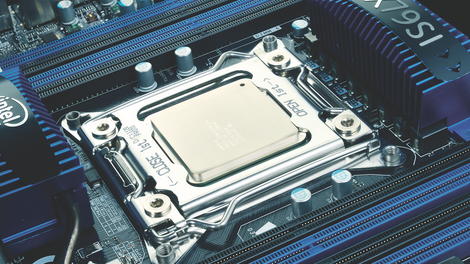
In 1965, future Intel co-founder Gordon E. Moore published a paper entitled 'Cramming more components onto integrated circuits'.
In it, he made an historic technology prediction, which you can boil down to a simple statement: 'The number of transistors incorporated in a chip will approximately double every 24 months'.
Moore could only guess at the impact of this transistor-doubling. In his original paper, written in an age of cabinet-sized mainframes and $16,000 mini computers, he suggested that new transistor-based integrated circuits would lead to "such wonders as home computers - or at least terminals connected to a central computer - automatic controls for automobiles, and personal portable communications equipment."
Fast-forward to today and we have powerful desktop PCs and ultra-thin laptops, self-driving cars (almost), smartphones and tablets.
For the first 30 years of microprocessor development, speeds ramped up from 1MHz to 5GHz - a 3,500 fold increase. But Moore's Law isn't strictly about performance.
Show me the money
It's about economics. "What I was trying to do [in the paper]," Moore explained in 2005, "was to get across the idea that this was the way electronics was going to become cheap… you could see the changes that were coming, make the yields go up, and get the cost per transistors down dramatically."Amazingly, Moore's Law has remained applicable to the semiconductor industry for almost 50 years, from the 2,300 transistors in Intel's 10-micron (10,000nm) 4004 microprocessor to the billions of 3D Tri-Gate transistors crammed into its 22nm Ivy Bridge chips.

Of course, There have been obstacles along the way, such as limits imposed by lithographic technology (the process for transferring circuit patterns onto silicon wafers) and transistor gate power leakage. But engineers have always found ways to overcome them - using shorter lithographic wavelengths, double patterning, optical proximity correction, and high-K/metal gate innovations, to name only a few.
Moore's Law is alive and kicking
The immediate future of Moore's Law isn't in doubt. At the 2013 Intel Developer Forum (IDF), Intel CEO Brian Krzanich showed off its next-generation Broadwell SOC chip. "This is it, folks," Krzanich exclaimed on stage. "14nm is here, it's working and we'll be shipping by the end of this year." Although dial down your excitement a bit, as manufacturing issues pushed Broadwell back into 2014.Nevertheless, Intel seems confident that Moore's Law is alive and kicking as it moves to a 14nm process node, the next stop on a technology roadmap that scales down to 5nm. But while it might be possible to fabricate chips at 5nm and below, the technological challenges involved and the new equipment required surely won't make it cost-effective to do so.
So the question now is: how long does Moore's Law have left before silicon can't be pushed any further? Five years? Ten?
"I pick about 2020 as the earliest we could call [Moore's Law] dead," said DARPA Director and Pentium processor architect Robert Colwell, when he spoke at the Hot Chips conference in 2013. "And I'm picking 7nm. You could talk me into 2022. You might even be able to talk me into 5nm. But you're not going to talk me into 1nm. I think physics dictates against that."
From Silicon to Graphene
In the short term, Moore's Law will continue to hold true as engineers find new ways to push existing CMOS technology to its limit.There's the promise of performance gains using new materials, such as indium gallium arsenide (InGaAs), indium phosphide (InP) and silicon germanium (SiGe). These have a higher electron mobility and support lower voltages, thereby reducing power consumption.
And keep an eye out for graphene nanoribbons, developed by researchers at the University of California in Berkeley - molecular-scale wires designed to carry data thousands of times faster than traditional copper interconnects.
"These nanoribbons might be a key to keeping up with Moore's Law," said Felix Fischer, a chemist working on the project at Berkeley. Use them in integrated circuits and these one atom-thick, 15 atom-wide graphene strips could potentially increase the number of transistors on a chip by more than 10,000.
Chip-stacking and extreme lithography
In addition to new materials, new processes could extend the influence of Moore's Law for 10 years or more. Chip-stacking (etching multiple layers onto a single wafer or by bonding two or more wafers together) will enable manufacturers to introduce a higher transistor count in the same footprint, while taking advantage of improved I/O performance.
Extreme ultraviolet (EUV) lithography (should it ever arrive) promises a dramatic improvement to current immersion lithography techniques, which still use deep-ultraviolet lithography (DUV) to laser-etch circuit patterns onto a substrate. EUV's shorter light wavelength means a finer resolution, which in turn enables more transistors to be transferred onto a silicon wafer. EUV lithography aims to better the current 193nm DUV wavelength and it could be ready by 2015.
But even if solutions like these can defy Colwell's 5nm barrier and eke out Moore's Law still further, Broadcom CTO Henry Samueli believes that it will be a challenge to shrink processors beyond this size. "As of yet, we have not seen a viable replacement for the CMOS transistor as we've known it for the last 50 years," he told reporters. "You can't build a transistor with one atom."
Moore's Law vs the law of physics
Or perhaps you can. Researchers at the University of New South Wales, Purdue University and the University of Melbourne, created a 0.1 nanometer transistor from a single phosphorus atom in 2012. "To me, this is the physical limit of Moore's Law," said Gerhard Kilmeck, Director of the Network for Computational Nanotechnology at Purdue and a Professor of Electrical and Computer Engineering. "We can't make it smaller than this."There's plenty of scope to improve tomorrow's processors that we haven't talked about - parallelism offers ways of scaling up processing power without the need for new chips, while it can be argued that raw processing power is now less important than power efficiency. Software can be rewritten, I/O and memory can be tweaked. Further into the future, there's the prospect of tunnel transistors, photonics and quantum computing.
By then, perhaps Moore's Law will be adjusted to fit a new technology landscape. Or we may never see its like again. We'll leave the last word to DARPA's Robert Colwell, who points out that "when Moore's Law stops, it will be economics that stops it, not physics. So keep your eye on the money."

| |
Read More ...
Available Tags:LG , TechRadar , Lenovo , Tablet , Mozilla , Firefox , 4G , smartphone , Windows Phone , Windows Phone 8 , Windows , Facebook , Windows 8 , Microsoft , Samsung , iPhone 5 , Galaxy , iPhone , Android ,


No comments:
Post a Comment