

AMD Gaming Evolved app adds rewards, all you have to do is play

AMD's latest incentive program is being interwoven into its existing app, which promises to reward PC gamers for some of the tasks they likely already perform when playing games.
The AMD Gaming Evolved app doles out points and eventually prizes for using AMD Radeon and AMD APU-based hardware and completing actions like optimizing the image quality of a game and playing a game identified by the client.
The Gaming Evolved dashboard also recommends optimal game settings tailored to a gamers' rig, keeps drivers up to date and adds tools like chat and live streaming.
The Windows-based app can be downloaded from the graphics company and social gaming-based network Raptr starting today.
Johnny, tell them what they've won
The most notable AMD Rewards include Sapphire Radeon R9 Series GPUs, Astro gaming headsets, GameFly subscriptions, Gunnar gaming eyewear and of course free games.In total, the company says that the AMD-exclusive store has more than $5 million (about £3m, AU$5.5m) worth of merchandise on hand.
AMD isn't a stranger to offering incentives for using its hardware over its chief rival, Nvidia. The company has been running bundle programs that offer free games with graphics card purchases for several years.

     |
Read More ...
Multiple Samsung Galaxy Gear 2s tipped for next week, including one with Tizen

When Samsung likely pulls the wraps off of the next Galaxy Gear during MWC 2014, it might have more than one version on stage. What's more, it may have an OS shock for consumers watching eagerly.
According to an in-the-know source of The Verge, Samsung may unveil multiple Galaxy Gear 2s at the Barcelona show. The report doesn't go into what will be different about each smartwatch, though word is circulating Samsung could have some non-Android plans in store as well.
A separate report by USA Today suggests a version of the Galaxy Gear 2 will run a new HTML 5 version of Tizen. Rather than using Android, Samsung may slap on the Linux-based OS it built in conjunction with Intel as a carrier-friendly mobile operating system.
On top of being a custom software package, the lighter HTML 5 base would make it easier for third-party developers to write apps that will run on the new Galaxy Gear.
Teasing Tizen
In one form or another Samsung is more than likely planning to make a public showing of its new OS at next week's mega mobile show.While Samsung's new flagship Galaxy S5 is unlikely to come sporting the untested operating system, the Zeq 9000 and ZTE Geek have been leaked as Tizen-touting Tizen smartphones. If Tizen were to show up on a new Galaxy Gear, Samsung could prove its OS works on phones as well as wearable devices in one fell swoop.
Whatever happens it remains certain that the Korean device maker will present its OS as interested device makers and carriers wait in the wings. Tizen recently attracted the attention of 15 new partners on top of companies including Huawei, LG and Panasonic and carriers Orange, Vodafone and SK Telecom.
- There's no shortage of wearable devices these days. To help you cut through all the chaff, here's the best of the smartwatch crop.

| |
Read More ...
Ouch! GDC poll reveals only 4% of game developers care about the Wii U
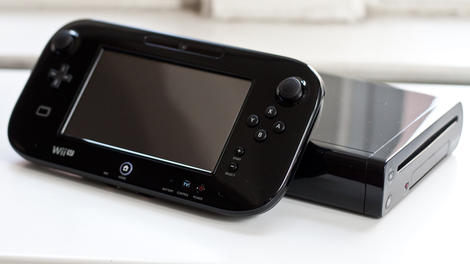
The 2014 Game Developers Conference is about a month away and the organizers have released the results of an industry poll where it looks like the Wii U isn't doing so hot.
Only 4% of game developers stated they had games intended for a Wii U release, and only 4% have Wii U games currently in production.
To be fair, the GDC organizers noted that just over 2,600 people who attended GDC 2013 or previous dev conferences were polled.
But the numbers still provide a decent glimpse into the developer world by revealing interesting trends - namely that PC and smartphone and tablet gaming seem to hold the highest interest for developers.
Let the numbers do the talking
Fifty-one percent of devs surveyed plan to make their next game for mobile devices, while 52% anticipate releasing their next game on PCs and Macs.These numbers are higher than the 20% of intended releases for the PlayStation 4 and 17% for the Xbox One.
Games currently in the works reflect the same trend: 14% of devs are working on games for the PS4 right now and 12% for the Xbox One. As for PCs and Macs, 53% of developers have games in the works for the hardware. Another 52% are working on titles for mobile devices.
Does this mean we can expect to see more games coming out for the PC and mobile in 2014? Probably, considering those are the platforms indie devs gravitate towards. Triple A titles for consoles are dished out by larger companies but see a greater time gap between each release.
Regardless, we're hoping to hear about more games for all platforms when GDC kicks off in March.

| |
Read More ...
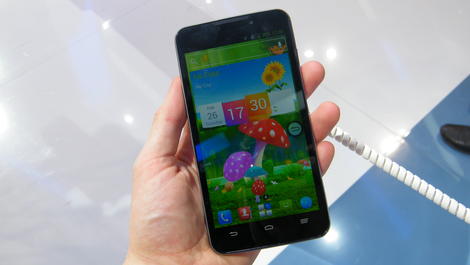
ZTE bringing another 6" Android beast, new Firefox phone to MWC
The mist is beginning to lift in smartphone world, and we're starting to see an ever-clearing picture of which devices will and won't be on show at next week's MWC 2014 in Barcelona.
With seemingly nailed-on launches from Nokia, Samsung and LG, it's now ZTE's turn to show its hand ahead of the biggest mobile event on the calendar.
The Chinese manufacturer plans to showcase an 'ultra-slim' 6-inch Grand Memo II LTE handset, a successor to the original device launched at the event in 2013.
Details are thin on the ground, but the company did say a new version of the MiFavor UI it users to paint over Android will sit within the device.
Fox on deck
Also on deck for an MWC launch is the company's latest handset running the open source Firefox OS from Mozilla. ZTE launched the Firefox-running Open last year.The Open C will make its bow running v1.3 of the software and is likely to be another budget effort from the company, aimed at emerging markets.
We're likely to get the full skinny on both devices when MWC kicks off on February 24. Team TechRadar is raring to go and will be on the floor to have a nose at ZTE's offerings.

| |
Read More ...
Have Google Glass? Google says don't be a Glasshole

Google is out with its own Google Glass etiquette guide, and while it's chalk full of funny lines, it may just serve as an important piece to turning the wacky wearable into mainstream must-have.
The don'ts are pretty hilarious - avoiding high-impact sports like cage fighting is highly recommended. It's best not to "Glass-out" because "[i]f you find yourself staring off into the prism for long periods of time you're probably looking pretty weird to the people around you."
Explorers are encouraged to be patient and develop their own etiquette for those times a passerby or fellow restaurant goer just has to ask them about their Glass.
Finally, and this may be the crux of Google's whole list, wearers are prodded not to be Glassholes. Being creepy, rude, snappy and using Glass where cell phones aren't allowed will only turn people and businesses against Glass, plus ruin it for other Explorers, Google observed.
Sounds fair to us.
As for the dos
The guidelines, a collection of advice from long-time Explorers, contains plenty of positive dos.Google Glass wearers are encouraged to explore the world around them, something facilitated by design since users can look up and engage with what's going on, not look down and be distracted.
Taking full advantage of voice commands and using screen lock make the "dos" cut, as does being active in the Glass Explorer Community.
Last and important for both Explorers and those of us still itching to own a pair, Glass wearers are advised to ask permission before taking photos and videos of others.
"Standing alone in the corner of a room staring at people while recording them through Glass is not going to win you any friends ... The Glass camera function is no different from a cell phone so behave as you would with your phone and ask permission before taking photos or videos of others."
True that.
- Speaking of wearables, you may want to check out our Fitbit Force review!

| |
Read More ...
Windows Phone may be MIA at MWC 2014

New handsets running Windows Phone will be conspicuous by their absence at next week's MWC 2014 expo in Barcelona, according to reports.
Recode sources claim there will be zero new devices at the show packing Microsoft's slow-growing mobile operating system, despite MWC's status as the biggest show in the mobile calendar.
That's no Windows Phone from Nokia, HTC, Samsung or anyone. Microsoft-owned Nokia is likely to make an appearance, but with its first Android phone, the Nokia X.
Microsoft seems to be planning on saving itself for the big Windows Phone 8.1 reveal at its annual Build conference in the beginning of April.
Holding court
Despite the lack of new phones reportedly slated for the event, Microsoft will hold court with the media on Sunday night, prior to the commencement of MWC, where it plans to discuss some of its future plans in mobile.However, at an event notorious for setting the smartphone stage for the year, will the absence of a fresh crop of handsets running Windows Phone affect Microsoft's ability to make an impact in 2014?
Time will tell.
- Microsoft does have one hit on its hands in the form of the Xbox One.

| |
Read More ...
Forget the wrist: Apple has plans to bring fitness trackers to your ears

Apple has outlined plans for a fitness tracker system within a pair of sports earphones or headphones.
In a patent application granted and revealed for the first time today, the company discusses how skin-sensing technology could monitor a user's heart rate, body temperature and perspiration levels.
The application, which was actually filed in 2008, also mentions how gestures like head-tilting could be used to control volume. The built-in accelerometers would also assist with the activity tracking, presumably sending data back to an iOS device.
There's also a vague mention of psychological sensors, although the parent does not go into detail on how they would be deployed. It is possible the idea is to decipher some indication of the user's mental state during exercise, which could then be analysed after the fact in the same way some apps use user-inputted feelings as part of their data.
iFit?
Of course, given the filing was made somewhere between five and six years ago, it's difficult to interpret how far along Apple is on this project and whether it is even working on it at all.It'd be a great time for the company to jump on board with wellness trackers, given the tech's current popularity and how useful they appear to be compared to smartwatch efforts from tech's big hitters.
Apple is widely expected to release its iWatch sometime in 2014, with recent speculation suggesting it will be fitness-focussed.
Earlier this month, a job posting requiring "Good understanding of physiological monitoring equipment, measurement techniques and interpretation of results" appeared on the company's website.
Should Apple ditch iWatch and go all-in on iFit (or earFit)?

| |
Read More ...
Interview: From spin-off to 1 million streamers: How Twitch became a live streaming giant

Twitch's small beginnings
Twitch recently revealed it reached a heady milestone; one million active broadcasters streaming their gaming sessions to the masses.That's not the only number to take notice of. The site now attracts over 45 million unique visitors a month. They come to watch six million different streams and consume 13 billion minutes of internet video every month.
News of the broadcaster numbers came on the heels of a report putting Twitch in fourth place during US peak internet traffic. According to a Deep Field analytics study published in the Wall Street Journal, Twitch came in just behind web titans Netflix, Google and Apple to capture 1.8% of all US web user interest during prime time web browsing
The unprecedented popularity of game live streaming on Twitch and at large has been partially aided by the rise of eSports. What's more, the inclusion of PlayStation 4 users accounts for an additional 200,000 new Twitch streaming accounts.
The site has come a long way since its humble beginnings just three years ago. To get the inside scoop of Twitch's meteoric rise, we sat down with Matthew DiPietro, vice president of marketing, for the story of how the small Justin.tv spin-off became the official brand of video game broadcasting.
Catching lightening in a bottle

Despite Twitch's prevalence today, its creation was actually an afterthought spun out of Justin.tv, the live video streaming startup. Originally Justin.tv launched out of Y Combinator in 2007 as a place for anyone to share a live video experience from sports to music. Within a few years though, the gaming community began popping up with a vengeance. Broadcasters hooked up their consoles and gaming PCs to the web, sharing live footage over Justin.tv.
"The gamers was just emergent behavior that nobody had considered," DiPietro said. "We just noticed lots and lots of gamers come into Justin.tv and at first it was just new and interesting and novel and we weren't quite sure what to do with it."
Luckily Emmett Shear, then chief technology officer and now CEO at Twitch, was a hardcore StarCraft II player who saw the rising community as a business opportunity. Shortly after, Shear began leading the charge for more gaming oriented content.
"We started building features for gamers [and] reaching out to game broadcasters to ask them what they want, and that was all a run-away success," DiPietro explained. "At some point it became an oversized piece of the content of the site at any given time and the features became very specific for the gaming experience."
It became obvious that gaming had to be rolled out into its own brand. This spin-off would become Twitch as we know it.
Starting anew
TwitchTV, as it was called then, launched on June 6, 2011 during E3. In launching, TwitchTV ported over 3.2 million users, including combined viewers and broadcasters, from Justin.tv. Along with the new space, Twitch provided game broadcasters with tools for streaming their games.Despite being side-loaded to a new site, TwitchTV thrived as the online network saw immense growth in only one month. By the beginning of August that year, unique monthly visitors coming to the site jumped from 3.2 million to eight million. Viewership went from 4.5 hours per user every month to one billion minutes across the site.
DiPietro explained that soon after launch, TwitchTV was out to find every game broadcaster it could, a task as these streamers were scattered across the web.

"[We] gave them a home that was entirely dedicated to the video game experience and the natural evolution of that outreach became the partner program," DiPietro expounded. "The way we envisioned it was to take the very best cream of the crop game broadcasters out in the world and give them a way to make a living at what they were doing."
The partner program launched towards the end of July 2011, which enabled some broadcasters to earn money from their live streams.
Through a mix of advertising and channel subscriptions, broadcasters could create by running their streams. This shake up would bring on a new wave of live streamers to the already established community of internet celebrities including Jayson Love, Sean "Day[9]" Plott, and Marcus "djWHEAT" Graham.
eSports and next-gen consoles
The video game broadcasting company
TwitchTV originally launched with a very PC-centric lineup, including League of Legends, Dota 2, StarCraft and other big eSports types. It was a natural progression then for the online videogame broadcasting company to go after exclusive eSports streaming rights.TwitchTV signed partnerships with the Electronic Sports League, Major League Gaming, and various teams on October 31, 2011. Over the years, Twitch signed more contracts with companies, including CBS Interactive and Xfire. These partnerships would eventually allow the company to set new records during eSports events with viewership in the many millions.
"The League of Legends championship series not that long ago sold out the Staples Center in Los Angeles, and that's just on site," DiPietro said. "It generated many millions of unique viewers on that content which has an audience size that legitimately eclipses broadcast and cable size television audiences."
Twitch broke its own record again during the International Dota tournament held last August, which boasted over five million viewers in just one day. By September 30, 2013, Twitch reported that it reached a milestone of 45 million unique visitors per month.
"Those two are standout examples but the broader point is that eSports have expanded so far beyond the large marquee events," DiPietro said of the record-setting events.
"What we're seeing is where there used to be very large spikes in traffic based on a couple of huge events," he continued. "Now we're seeing that become just a 24/7, 365 day schedule of many, many different seasons of competitive gaming content that goes on all the time."
Beyond eSports, DiPietro explained that "out of those million broadcasters, the vast majority - 99-plus% - are sort of casual individual and independent gamers that are just doing this as a way to share their gameplay."

In the same way some might use Facebook, Twitter or Reddit, Twitch has become a form of social media network for sharing the hobby of gaming.
It's also turned into a home for live streaming experiments. Just a few weeks ago, an anonymous Australian programmer streamed live footage of Pokemon Red in an emulator that was slowly played by thousands of spectators. It was a spectacle of technology and community involvement that drew in over 10 million viewers.
"Whereas it used to be very shaky in terms of audiences, it just this rapidly growing plateau all the time," DiPietro said with a bit of glee. "It is really exciting for us because its just goes to show the way broadcasting live gameplay online has become ubiquitous."
New platforms
At E3 2012, TwitchTV was rebranded as Twitch. At the same gaming expo, it announced Paradox Interactive's The Showdown Effect would be the first game to feature its broadcasting SDK. It would be the first in a long series of games - and later consoles - enabling gamers to start streaming their gameplay sessions by clicking on the option in-game.Soon after a live streaming tool was also built inside PlanetSide 2, and more notably, Call of Duty: Black Ops II for both the PS3 and Xbox 360 versions of the title.
The next bump of broadcasters would come from next-gen consoles. Microsoft debuted the Xbox One at E3 2013 complete with a Twitch demonstration of Killer Instinct. Although Twitch promised broadcasting and viewing would be integrated on the console level, it's a feature users are still waiting on.

As for the PS4, Twitch functionality debuted at Gamescom in August 2013. Sony kept its promise and streaming was available from launch albeit with a required patch download and a crackdown following a few Playroom-related abuses. Within a month of the PS4's launch, Twitch counted more than 100,000 new broadcasters thanks to Sony's popular new console.
"PS4 launched with one button broadcasting functionality, now [it] represents 20% of our broadcasters every month," DiPietro said. "It's really exciting to see broadcasting become a central piece of the broad gamer experience outside of the really hardcore gamers that were the genesis of Twitch."
With Xbox One Twitch integration still on the horizon, it seems the video game broadcasting company has nowhere to go but up from here. Twitch, once just an offshoot of the young Justin.tv, is now the umbrella name for the entire company. On February 10, the live streaming site announced its two sites would now be under the Twitch Interactive moniker with Justin.tv carrying on as a "mature product."
"Early on we were very ambitious, we knew we had something people wanted to use and we knew there was a business model there [with] an audience and user base," DiPietro recalled. "I think that the success we've seen over the few years has really floored even the most ambitious of folks that created the concept of Twitch originally.
"We're now built into the PS4 and Xbox One ... and we have these kind of viewers and over a million broadcasters is just amazing. [It's] something that just suprises all of us."
- You can Twitch live stream on both the Xbox One and PS4, but which is the better console? Find out in our reviews!

| |
Read More ...
Swype-like keyboard spotted for Windows Phone 8.1

Windows Phone 8.1 is shaping up to be a real shake up for the mobile OS as it's looking like we're in for changes all the way down to the keyboard.
Unleash the Phones posted a new video demoing a new Swype-like keyboard complete with a new emoticon-filled text prediction engine.
Similar to Android's Swype keyboard, users can slide their finger across the screen, linking letters together with a thin line while the handset predicts what they want to type. The video also shows how certain words will bring up suggested emoticons such as a smiley face for "happy."
While the video might lack some validity, The Verge confirmed with sources in the know that Microsoft is indeed building a Swype-like keyboard directly into Windows Phone 8.1.
It's a big change up for Microsoft to include an additional option over the old hunt and peck-style typing, but users can also disable the feature for traditional keyboard input.
Big changes are coming
Last week a developer on Reddit revealed an almost complete overhaul is on deck for Microsoft's mobile OS. The recent leak revealed the smartphone OS would begin a merger with Windows RT.Along with a more unified mobile OS, Windows Phone 8.1 will also supposedly reassign the back button to slip apps in the background rather than closing them outright. Meanwhile, WP8.1 users will have their hands on new apps for separate video and music, podcasts, a new layout for the default camera, and the recently rebranded OneDrive.
The most visible shakeups however will be the additions of a new notification center to match Android KitKat and iOS 7, plus a Siri-like voice assistant called (and voiced by) Cortana.
If it all turns out to be true Windows Phone 8.1 might be the most well-rounded mobile OS Microsoft has released. We'll be able to check out all the features when it likely shows up at Build 2014.
- Microsoft is giving all their OSes a makeover. Check out what's new on the desktop with Windows 8.1.

| |
Read More ...
Review: Acer C720P Chromebook

Introduction and Specifications
Since their introduction several years ago, Chromebooks have redefined our understanding of affordable laptops. They're the new netbooks, using Google's operating system based on its Chrome browser, pared down to the bare necessities – low-power processors, low-resolution screens and a minimum amount of memory and storage. By stripping the laptops of extraneous features, manufacturers can keep their price down to $250 or less.As a result, however, many Chromebooks seem almost indistinguishable from one another. Because they lack defining features and are so affordable, it can be difficult to choose one Chromebook over another.
Acer aims to change that with the C720P Chromebook. This 11-inch laptop sports a fast Intel Celeron processor, a comfortable keyboard and impressive battery life, all wrapped in an attractive and lightweight chassis. But the C720P's standout feature is its touchscreen – in fact, it's one of the few Chromebooks to use a touch panel. Of course, that begs the question: Is touch control on Chrome worth spending an extra $100?

Same lightweight design and port selection
With the C720P, Acer hasn't substantively updated the design of its lauded, $200 C720 Chromebook. Like its predecessor, the C720P still features a slim, all-plastic design that feels surprisingly sturdy and light. My review unit sported Acer's Moonstone White finish that proved resistant to smudges – Acer also offers the C720P in a Granite Gray, too. Unsurprisingly, the C720P isn't particularly flashy. Small Acer and Chrome logos on the left side of the lid are the only adornments on an otherwise plain shell.One noticeable difference is the weight of this machine. Where the C720 clocks in at a respectable 2.76 pounds, the C720P weighs 2.97 pounds. Both machines are substantially beefier than the HP Chromebook 11 and Asus X102BA (a budget Windows 8 laptop), which weigh 2.29 pounds and 2.4 pounds, respectively. Nevertheless, the C720P isn't much heavier than even the slimmest Ultrabook. When I carried the Chromebook and its tiny power adapter around Manhattan in my bag, I barely noticed the weight.
The port selection remains the same here: HDMI, one USB 3.0 port and a headphone/mic jack on the left side of the machine, and one USB 2.0 port and SD card reader on the right. USB peripherals will work correctly as long as they don't require software installation. When I plugged in a WD My Passport external drive, for instance, I could browse the files almost instantly, but Windows-specific features, like WD Drive Utilities, can't run on Google's OS.

Plenty of power under the hood
Like its predecessor, the C720P houses a dual-core, 1.4GHz Intel Celeron 2955U processor with a 2MB cache, 2GB of DDR3 RAM, and Intel HD Graphics with 128MB of RAM. That's plenty of power for a notebook that's designed solely to browse the web. Acer also upped the storage capacity from a 16GB solid-state drive to a 32GB SSD. While this might not sound like a major improvement, you'll be glad to have the extra storage when you download apps or work on documents offline.HP's Chromebook 11 packs a weaker dual-core Exynos ARM processor, 2GB of RAM and 16GB of flash storage (though, in truth, that machine performed smoothly during everyday use). The X102BA uses a 1GHz AMD Temash APU, 4GB of RAM and a slower 500GB mechanical hard drive – an understandable cost-saving choice given Windows' reliance on local storage.

With only a 32GB SSD on the C720P, you'll rely heavily on online storage and services. Thankfully, Google provides 100GB of free Google Drive cloud storage with the purchase of the C720P, as well as a 30-day trial of Google Play Music All Access (Google's answer to Spotify). You can store anything in Google Drive, though you can only create documents, presentations, spreadsheets, forms or drawings.
There's just one drawback: While you can edit Microsoft Office files after they've been converted into Google Drive format, some features such as comments and tracked changes in programs like Word don't appear in the Drive version. This limitation will prove frustrating if your classmates or colleagues frequently use Word or Excel.
Performance
Although the C720P can only browse the web, its Intel Celeron processor proved more than capable of handling heavy browsing. I experienced almost no stuttering or hang ups even with almost two dozen tabs open across multiple windows, while streaming music on Amazon. I did notice a few problems, like images loading slowly on YouTube, but I expected much worse performance given the laptop's components.However, like all Chromebooks, the C720P is limited in utility. Anything that you can't do in Chrome on your PC, you won't be able to to do on the C720P. That includes actions as mundane as connecting to a printer that doesn't support Google Cloud Print, or installing applications like iTunes or Microsoft Office.

Touchscreen: not worth the price
The major difference between the C720 and the C720P – and the main reason the C720P costs $100 more – is the 11.6-inch touchscreen. The display's 1366 x 768 resolution, limited viewing angles and slightly washed-out colors all remain. Unfortunately, the inclusion of touch sensitivity doesn't justify the bump in price.Using touch to navigate Chrome OS felt like a gimmick. Google's OS lacks large, finger-friendly elements in its user interface like Windows 8's Live Tiles. Like desktop mode in Microsoft's split-personality OS, icons and other clickable elements of the UI have clearly been designed with the mouse in mind. In other words, they're small and hard to touch accurately. I didn't discover a single element of Chrome that was easier to use with my fingers than with the touchpad.

Decent speakers for the dollars
The C720P's downward-facing speakers delivered surprisingly good audio, given the price of the machine. High notes don't suffer from excessive tinniness, although the bass seemed nonexistent at the low end. When I turned up the volume to the maximum, the speakers easily filled my apartment with sound.Because of the speakers' placement, however, audio was muffled when I used the C720P on my lap. Placing the laptop on a flat surface fixed the issue, but I imagine that most users will be using this notebook on the go due to its thin and light form factor.

Excellent keyboard and touchpad
The keyboard and touchpad on the C720P feel significantly improved over those on the C720. The chiclet-style keys enjoy plenty of vertical travel and spacing, and I didn't notice any flex in the keyboard. I especially like that Acer included discrete keys for volume and brightness, as well as Chrome-specific keys like Backward, Forward and Refresh.The spacious touchpad still lacks a right-mouse button, but this won't feel too awkward for anyone who has used a Mac before. Tapping with two fingers causes the right-click menu to appear. Unlike many cheap touchpads we've used in the past, this performed reliably.

Seven hours of battery life
Despite using a touchscreen, the C720P boasts impressively long battery life. With the brightness at 50 percent, more than a dozen tabs open and streaming music to headphones, the laptop lasted 7 hours and 3 minutes – just shy of the 7-and-a-half-hours promised by Acer. Under similar conditions, the HP Chromebook 11 lasted 5 hours, while the Asus X102BA ran out of juice in just 3 hours and 14 minutes.Verdict
Before buying any Chromebook, figure out whether you can survive in a browser-only environment. Compared to the dual UI of Windows 8, Chrome OS is wonderfully minimalist. However, tasks that users take for granted, like connecting a printer via Wi-Fi or installing programs, are absent. (Chrome OS has its own apps, but the selection is quite limited.)Another consideration is whether a touchscreen is an upgrade that's worth an extra $100. If you wish that you could just use your fingers to scroll through a page in Chrome, the C720P is the Chromebook for you. If not, the touch-less Acer C720 Chromebook or HP Chromebook 11 might be better, more affordable choices.
We liked
One of the main appeals of Chromebooks is their eminent affordability, and this laptop is no exception. Even at $300, the C720P costs significantly less than most budget laptops, and looks as good as a notebook twice its price.I also appreciated the laptop's thin and light design. I loved toting the C720P around the city in my bag; in fact, I hardly noticed that I was carrying it at all. With its understated white shell, you'll be the one thinking differently in a coffee shop full of aluminum MacBooks.
The notebook's dual-core processor provided more than enough horsepower for heavy-duty browsing. I had no problem streaming music while browsing the web with dozens of tabs open simultaneously. Best of all, you can browse, write and stream to your heart's content, thanks to the laptop's seven-hour battery life. This easily outlasts both HP's Chromebook and the X102BA.
We disliked
The limitations of Chrome OS take some getting used to. I found it frustrating that I couldn't open Microsoft Office documents or connect to my old-fashioned, Wi-Fi only printer. What's more, losing your Internet connection can make the entire experience a futile exercise in frustration.More importantly, the touchscreen adds nothing to Chomebooks other than the price tag. Unlike Windows 8, Chrome was never designed with touch in mind. It's much more efficient to just use the touchpad to navigate the browser than the screen.
Final verdict
As an affordable laptop, the Acer C720P Chromebook has a lot to offer: A thin and light design, an excellent keyboard and touchpad, and impressively endurance. As a Chromebook, however, the C720P fails to justify its above-average price tag. The gimmicky touchscreen bumps the cost up to $300, without adding real value to the system.The HP Chromebook 11, by comparison, provides an almost flawless Chrome OS experience without a touchscreen. And if you absolutely must have a touch-sensitive display, the Asus X102BA offers a much more satisfying touchscreen experience for $50 less.
Nevertheless, if you're looking for laptop with a touchscreen and don't use your computer for much more than streaming movies, composing documents and browsing the web, the C720P is a fine choice.

| |
Read More ...
Samsung promises better Galaxy S5 camera thanks to fancy new flash LED

The Samsung Galaxy S5 will have quite the camera, if all the rumors turn out true.
And the most recent tidbit isn't even a rumor - Samsung itself has confirmed that its next Galaxy flagship will feature a new "reflector-integrated flash LED" that will lend it some specific perks.
The new Galaxy S5 LED flash will grant the phone's camera a wider field of view, even in small spaces, and better daylight and nighttime photos, Samsung has claimed.
It will also reportedly ensure that every person in a photo, not just those in the center, is illuminated by the flash.
Say cheese
Samsung recently revealed a whole host of new handset camera LEDs, though the one with the reflector built in (called the 3432 1.8t (FH341A)) appears to provide the most benefit to devices.It reportedly features its own optics and diffusion features.
The new LED flash will hit devices starting in March, after Samsung introduces the Galaxy S5 to the masses at MWC 2014.
After enjoying a brief head start Samsung will then sell the new camera component on the open market in the second quarter of 2014.
Galaxy S5 rumors
The Galaxy S5 was previously said to have a 16-megapixel camera, based on rumors dating back to August 2013.Other Galaxy S5 rumors include a fingerprint sensor - like the iPhone 5S.
But some reports show that the Galaxy S5's specs might actually be not all that impressive - though we won't know for sure until next week.
- Don't forget about the Samsung Galaxy S4 - here's TechRadar's review!

| |
Read More ...
BioShock Infinite studio shutting down, Ken Levine isn't done making games

Irrational Games, the house that brought us BioShock Infinite, is shuttering its doors.
Ken Levine, co-founder and creative director at the studio, wrote in a note that his passion "has turned to making a different kind of game than we've done before."
To meet this new challenge, Levine is "winding down Irrational Games" as we know it, bringing a scant 15 employees over to a new venture that will focus on "making games for the core gaming audience." The new venture will stay within publisher Take-Two's walls.
Levine noted that in time "we will announce a new endeavor with a new goal: To make narrative-driven games for the core gamer that are highly replayable."
"To foster the most direct relationship with our fans possible, we will focus exclusively on content delivered digitally," he revealed.
2K, a subsidiary of Take-Two, will takeover BioShock.
- We chatted with Ken Levine in 2013 - read the full interview here!
- How Rockstar created the world of GTA 5
- Which is better: Xbox One vs PS4

| |
Read More ...
Samsung Galaxy S5 price may come in lower than previous Galaxies

You certainly can't fault Samsung for trying to throw everything but the kitchen sink into last year's flagship smartphone, but this year's model may try to compete on price as well as specs.
Bloomberg reported that Samsung may be feeling pressure to lower pricing on its next flagship Android smartphone, which an unnamed source credits to "encouragement" from one or more of its wireless carriers.
The current-generation Samsung Galaxy S4 can be found for as little as $0 down plus 24 equal monthly payments of $26 on T-Mobile US ($624 in total) and is also available SIM-free in the UK for £629 (AU$899).
After last year's so-called "life companion" fell short of analysts' expectations, it may take lower prices to satisfy analysts, who appear to be as underwhelmed by the sheer quantity of questionably useful features introduced with the Galaxy S4 as consumers were.
Specs unpacked
The report also notes Samsung is planning a larger, sharper 5.2-inch display for the Galaxy S5, which is expected to be unveiled early next week at the company's "Unpacked 5" event during MWC 2014.According to the usual "person with direct knowledge of the matter," Samsung plans to improve the camera and battery life on the handset as well, which will reportedly be introduced alongside a refreshed Galaxy Gear smartwatch.
Samsung has been widely rumored to introduce technology to unlock the Galaxy S5 using a fingerprint or even retinal scanner, particularly after sales of the Galaxy S4 reportedly suffered a noticeable setback in the wake of Apple's latest iPhone 5S last September.
We'll all know soon enough, as Samsung has scheduled its main event for next Monday.
- Keep tabs on the latest iPhone 6 rumors to see what Apple might be up to!

| |
Read More ...
Updated: MWC 2014: what to expect

Think the world can't possibly accommodate any more smartphones? You think wrongly.
Despite the fact that our planet currently contains more unique designs of mobile phone than there are visually identifiable snowflake forms, we're about to be hit by a deluge of new mobiles. Make a date in your diary for February 24, 2014, when the plastic-formers and die-casters of the world will unleash their next-generation models at Mobile World Congress 2014.
This year non other than Mark Zuckerberg will grace the stage a MWC 2014, highlighting the show's importance even further - possibly pushing it above CES.
MWC is the annual mobile tech event where pretty much every major phone hardware company shows off its new flagship models for the following spring/summer contract renewal market.
MWC 2014 no-shows
There have been a few exceptions, though. Samsung opted to demonstrate its Galaxy S4 at a separate event in 2013, while Sony tried to get a head start on the competition by unveiling its Xperia Z at January's CES tech show last year instead.The MWC 2013 event was all about larger displays and quad-core hardware. This year will be about even bigger displays and, as we've already seen from the LG G Flex and Samsung Galaxy Round, there may be some interesting new tech on display in the form of bendable screens and yet more takes on the emerging smartwatch trend.
All of the major manufacturers featured below are down to attend (with the exception of Apple) and, thanks to the recent Big Bang explosion of Android, previously modest handset makers like ZTE and Huawei look set to compete with the big boys by offering low-cost handsets that still offer up a massive spec list.
Samsung at MWC 2014
So - it's very different to how we expected things to be for Samsung at MWC 2014. Far from having a separate event, the South Korean brand is 99.9% certain to be launching the Galaxy S5 at the event.The invites for the event were sent out a couple of weeks before the start of MWC and it's covered in little number 5s, which means you don't need to be a brain rocket scientist surgeon to work out what may appear at 8PM in Barcelona.

Here's something you might not know: the Galaxy S5 will almost certainly appear in two variants, encompassing a metal frame with high-res screen and a polycarbonate version that sticks with the traditional 1080p display. There's a chance those two could be switched as the metal version is reportedly hard to make on a grand scale, so we're intrigued to see how Samsung plays this.
The brand is also widely tipped to bring the Galaxy Gear sequel to the masses at MWC, a strong sidekick to the Galaxy S5 that will help it in the battle against the iWatch, which will come later in the year.
Samsung already jumped the MWC 2014 gun by announcing the Samsung Galaxy Tab 3 Lite ahead of show, although Barcelona will probably be the first time we're able to get hands on with the slate - we've also heard a lot of rumours of a Galaxy Tab 4 range too.

The Korean firm has also confirmed the existence of the Samsung Galaxy Note 3 Neo (rumored as the Galaxy Note 3 Lite) - and we expect to see this for the first time at MWC as well.
Another smartphone on our radar is the Galaxy Grand Neo - a mid-range handset with lower specs than the rumored Galaxy Grand 2.
We saw several Samsung tablets arrive at CES 2014, but there's still talk of a 13.3-inch monster slate with Android and Windows dual-boot abilities like the Ativ Q, as well as a range of Android only devices.
Samsung looks set to go big on its in-house mobile platform Tizen - finally - at MWC 2014, with reports revealing invites have been sent out for a Tizen-only event at the show.
Nokia at MWC 2014
Windows Phone has had a pretty triumphant few months, with Microsoft's partnership with Nokia finally bearing fruit and WP's market share slowly increasing. IDC's recent numbers put it at 3.6% (Q3 2013), compared to 2% in Q3 2012 - a healthy 156% increase.
People seem to be remembering that they used to like Nokia, and although the company has released the likes of the Lumia 1520 and Lumia 2520 tablet in recent weeks, there may be more to come. Recently, the Lumia 1820 and Lumia 2020 have been rumored, with the latter likely to be a new flagship 8-inch tablet.
The big news however is the mystery around the Nokia Normandy (aka Nokia X) handset - a smartphone apparently running a heavily skinned version of Android which would see the Finnish firm stepping away from its Windows Phone-or-bust rule.
Nokia is making a big deal about trees and monkeys for its MWC activities, which we literally cannot decipher. Does the monkey mean Android, and the tree stand for Microsoft? Where does the DNA pattern come in? Either way, Nokia is up to something.

On top of that we're expecting to see something that pushes the envelope in the Windows Phone game, in the shape of the Lumia 930. This will bring the same specs as the powerful Lumia 1520 but in a smaller form factor - possibly even as tiny as a 4.5-inch screen, while still offering a 1080p screen and quad-core processor.
We should also see the first hardware set to launch with the Windows Phone 8.1 Blue software pre-loaded at MWC 2014, an OS update that's expected to massively overhaul WP's notification system, boost the multitasking options and incorporate a voice-based personal assistant feature. Because everyone's got to have a Siri function, even if no one ever uses it.
HTC at MWC 2014
HTC used to be Mobile World Congress banker, using the event to launch its newest models. In 2012 it gave us the HTC One X and One S, but in 2013 even HTC turned its back on the Barcelona show, launching its flagship HTC One ahead of time.
In 2014 we expect HTC to launch a new flagship, thought to be currently going under the development name of HTC M8, which rumors suggest will be a device with a 5-inch 1080p display, quad-core Snapdragon 800 processor and Android 4.4 as its launch OS beneath an updated HTC Sense 6.0 user interface.
This sounds rather like... most phones nowadays. Still, if HTC can whack in the same sort of top-drawer speakers and camera as the HTC One, we'll be buying it and eBaying last year's model, as ever.
Sad news though for Barcelona fans: HTC won't be chucking it out at the annual phone trade show, preferring a simulcast event between London and New York on March 25.

But it's not forgetting about its yearly sojourn to the Spanish city: there will still be the Desire 8 on show, which is set to be a larger-screened phablet dubbed the Desire 8 with some pretty decent specs for a mid-range model.
This was promoted in China by HTC already, which means it could be a device with a more Asian slant, but it should still get a decent Western push.
LG at MWC 2014
LG is back on the smartphone A-list thanks to its successes with the excellent Nexus 4 and Nexus 5, both of which have encouraged people to consider its own-brand efforts like the LG G2 more than they perhaps might have done before Google salvaged its reputation.
Last year LG revealed the Optimus G Pro and the updated affordable L series range at MWC 2013, and true to form its announced successors to both of these. The LG G Pro 2 (just to confuse us with the naming game) packs a larger 5.9-inch full HD display (1920 x 1080), the same 2.26GHz quad-core processor you'll find in the LG G2, 3GB of RAM, 16GB/32GB of storage and the addition of a microSD slot, and will be on show at the... well, show.
On top of that we've also been told that the third-generation L Series phones will land with KitKat at MWC 2014 as the other South Korean player tries to make a splash at the low- to mid-range of the smartphone game - predictably these all run Android and come in a range of sizes.
And we're pretty certain that the LG G2 Mini is going to be appearing as well after a mystifying Facebook post - it shows a smaller phone next to the G2, but LG also posted pictures of a starfish, cupcake and shoe, so we're not sure what to make of that.

We're going to guess a 4.7-inch-screened version of the G2 will emerge, and yet again we'll be getting our hands on it in Barcelona.
There are a few key LG rumors that may be resolved at MWC 2014 too. LG is said to be Google's hardware partner for an updated Nexus 10 tablet, plus it's also recently registered the trademark "Glasstic" -- which may be some sort of Google Glass competitor.
Sony at MWC 2014
With the Xperia Z1 only just launched, we wouldn't forgive Sony for taking it easy and just bringing along a couple of those for people to play on and some t-shirts to give away. Surely it can't be preparing to release another flagship smartphone already.
Wrong. It seems the Japanese firm is going big, and going hard at MWC this year despite its Vegas-based exploits.
First up it seems almost certain that we're going to see a new flagship from the firm, which is going to irk Z1 owners who just shelled out loads for what was supposedly 'the best of Sony in a smartphone'.
Well, it looks like it will be outshone by the handset most are (understandably) dubbing the Xperia Z2, which will run Android KitKat according to the leaked video of the 'Sirius D6503' - which seems to be a better Z1.
A new UI, 4K recording and Background defocus which will "take photos with beautiful background blur like a DSLR camera" according to leaker Rimas Flyil.

A comparison photo of it and the Z1 show that it's a little taller than the Z1, which means it's probably got a larger display too - we're really hoping that we get something in a higher res too.
What else? Seems a refresh of the tablet as well, which means the Tablet Z will be getting a refresh - according to @evleaks, this will be the Sony XperiaTablet Z2, which means we're apparently looking at a powerful tablet wrapped up in a tiny 6.4mm frame.

Sat inside that impossibly thin frame is said to be a fairly standard 2.3GHz quad-core Snapdragon 800 processor as well as 3GB RAM and 16GB of internal storage. Thankfully microSD support is also thrown in - making it very similar to what we've seen before but with some good spec bumps.
None of this is confirmed as yet, but if it does happen, Sony is in for a bumper time at this year's premium mobile phone-a-thon.
Google at MWC 2014
Google is on the list of MWC 2014 exhibitors, although it's likely to spend most of its time and square footage pushing the general Android ethos and giving away stickers than actually revealing any new Nexus hardware.That said, we're expecting a new Nexus 10 to appear any day now, so if that one doesn't pop before Christmas, perhaps it could be saved as an MWC headline-stealer to detract from the stacks of enhanced tablets that Samsung is bound to show up with.
There's also some suggestions of an 8-inch Nexus 8 tablet sneaking out at MWC, with an Intel chip inside.
ZTE at MWC 2014
ZTE polarized phone fans at MWC 2013, revealing the flashy 5.7-inch Grand Memo and the weird little ZTE Open, running the Firefox OS.
It's recently announced the small and affordable Nubia Z5S and Z5S mini models, but rumors suggest it has a secret higher tier on the way - a 6.44-inch ZTE Nubia Z7 could be its forthcoming "phablet" flagship and the one it wants to shout about at MWC 2014
Samsung isn't the only manufacturer linked to a Tizen device either, with the ZTE Geek device appearing on the Tizen website listing for its presence at MWC.
ZTE is also said to be planning a smartwatch for release in 2014, but then so is everyone, so that's hardly news.
Huawei at MWC 2014
The Chinese phone maker is rumored to be preparing an update to the decent Huawei Ascend P6 and is, rather unsurprisingly, sticking the fashionable letter "S" on the end of the model name to signify that it's newer and better.The Ascend P6S is said to arrive running a full octa-core processor supplied by MediaTek, which ought to get the core enthusiasts happy.

Panasonic at MWC 2014
We last saw Panasonic at MWC back in 2012, where it was flaunting the Eluga and Eluga Power. Unfortunately neither handset really made a splash and led to Panasonic pulling out of the mobile game in 2013.It may not be gone for long though, as there's new reports suggesting it's working on a new rugged smartphone. Watch this space.

| |
Read More ...
Video: Everything we've heard about the Sony Xperia Z2

Sony isn't one to stick around: less than six months after launching the Xperia Z1 - which itself was released just seven months after the Xperia Z made its debut - the Japanese tech giant is once again prepping a new flagship phone.
The Xperia Z2 has seen its fair share of leaks recently, most notably the bare-all video uploaded to YouTube earlier this week. Said clip seems to confirms a couple of the rumours we'd be hearing about the device, but what else does Sony have in store?
Well, for starters we reckon it's inbound for MWC 2014, and could be bringing a 5.2-inch 2K QHD screen in tow. For everything else we know – or at least, think we know – about the Sony Xperia Z2 so far, check out our roundup video below.

| |
Read More ...
Is this the HTC One 2 in all its glory?

Someone reckons they've got hold of the HTC One 2, and has posted the pictures online to (apparently) prove it.
The leakster took to Google+ to show pictures of both the front and rear of a metallic, HTC One-looking handset.
It's difficult to tell with the less-than-brilliant lighting, but it looks as if we could be looking at a gold variant of the device here. While on the front, the lack of physical buttons come as no surprise given what we're seen and heard so far.
The images were also captioned with some specs – 4.7-inch 1080p display, 2GB RAM, dual camera on the rear and a 5MP snapper on the front - which also fall in line with previous leaks and rumours.
Mini debate
 The
person who posted this claims it's the HTC M8, and while Redditors have
been speculating that the smaller speaker grills suggest it's actually
the HTC M8 mini, we still think there's a good chance we're looking at
the flagship.
The
person who posted this claims it's the HTC M8, and while Redditors have
been speculating that the smaller speaker grills suggest it's actually
the HTC M8 mini, we still think there's a good chance we're looking at
the flagship.For one, we think the M8 will have smaller grills anyway, but it also seems far too early for us to be seeing the Mini - we'd expect HTC to leave a few months for the the M8 dust settle.

| |
Read More ...
X marks the spot for Nokia's MWC 2014 reveal

While most phone companies tend to keep their invites and teasers fairly straightforward, Nokia has decided to make us work by posting a treasure map and two similarly cryptic accompanying images to its Chinese Weibo page.
First up there's an image of two monkeys, one in a tree, one on the ground. The fact that there's two of them could mean Nokia plans to reveal two phones, but that's pure guess work.
The one in the tree also seems as though it could be a person in a monkey costume. Perhaps that's an obscure reference to Android? With a person that resembles a monkey rather than a robot that resembles a person.

It's definitely a stretch but the next image also points towards Android.
Cracking the clues
The second image is of the same tree, without the monkeys, but with its DNA-like roots visible. We're not sure what relevance the DNA has, but a section of root is clearly highlighted in green, making an X shape, which could surely mean nothing other than the long rumoured Nokia X is on its way.
Finally the third image features the aforementioned treasure map, which again features an X. While there's no tree on the last image, it does have a tag in Chinese which translates roughly to 'What is hidden under the tree? Lets find out together on February 24!'.
So clearly the X is the focus, which means Nokia's Android phone is almost here as we expected. But is there anything else to be deciphered in these cryptic pictures? All will presumably be revealed on February 24 at MWC 2014.
- The Nokia X / Normandy might not be the only Android phone we see from Nokia this year.

| |
Read More ...
industry voice: Business and personal emails: Not the same privacy game

I love email. I use email every day for communication and collaboration in every aspect of my work and private life. It has been a feature of my life for decades. A personal email between me and someone else is just that, personal and therefore private – sacrosanct.
No ifs or buts. But my work email is a different matter. I appreciate that my business and personal email don't operate within the same standards of privacy. More to the point - I shouldn't expect them to. That's why I have two different email addresses.
Organisations carry a serious responsibility for reporting, governance and legal or regulatory compliance.
Every communication is part of a chain of evidence an organisation is expected to be able to report on if needed, and email is the archive where the majority of this information exists. It is where we all do business.
But all too often we bring expectations of freedom and privacy from our private lives into the workplace. We are uncomfortable about the idea that our employer can enforce 'appropriate use' policies or archive email with the right to review it if needs be.
Well, we shouldn't need to be concerned about this, because our employer should help ensure that we don't need to put anything personal in corporate email.
Understanding the Inside and the Outside
First of all, business email is nearly always operated by or for the business, as a dedicated domain with a clearly defined "inside" and "outside," bounded by a gateway. Inside the boundary, the company has rights and expectations of control over the information, while anything can happen outside.Consumer email, for example, may be viewed as "always outside" in this formulation. Business email that crosses the gateway, in either direction, can be subject to a variety of checks, restrictions, and other processing, which is not the case for consumer email.
In theory, a company has complete control over any information that passes through its gateway. Among the likely jobs of this gateway are:
• Spam filtering. This is usually done in both directions: to prevent outside spam from getting in and to prevent internal machines (perhaps hijacked by a virus) from sending out spam and tarnishing the company's reputation.
• Data Loss Prevention (DLP). Whatever the business, it is not uncommon for employees to send sensitive information outside the company, whether intentionally or by accident. However, if a company can define the characteristics of sensitive information, which could be as simple as the words "Do Not Redistribute", then the gateway can automatically enforce restrictions against sending such information outside the company.
• Large file modification. Internet email operates with size limitations that seem small by today's standards and, vary from site to site. Email messages that total more than ten megabytes are highly likely not to be delivered. As an alternative, gateways can replace large file attachments with simple links and make the files available from a web server, with or without some kind of user authentication requirement.
Internal Complications
While these external gateways may seem complicated, business email is further enriched with more complexities inside the gateway, none of which are concerns for consumer email.• Security. Most computer security failures come from within the company, most often because an employee has unintentionally allowed malware to infect their machine. This can happen even with the most secure gateway in the world, as users can be tricked into downloading the malware, most often via the web or a USB storage device.
Once a machine is weakened, it can easily be used to disrupt all communication-related security. While consumer email can also be compromised, the consumer depends on a service provider to deal with the problem, while a business, and especially the IT manager, needs to worry about it for its internal network. Such disruptions can wholly or partially shut down a company's email system, or can even cause critical information leaks.
• Privacy. Although all corporate email characteristically belongs to the corporation, it is generally considered important to isolate the mail for each user, so that they can't all read email to Human Resources or the CEO. This requires a certain amount of effort for account maintenance and administration.
Legal and Regulatory Issues
Finally, most businesses operate under legal and regulatory restraints that are simply not relevant to consumers. Here are a few examples:• Archiving. There is a strong and highly specific business need for archiving. Some companies want to keep all their information forever, while others want assurance that it is completely removed after a certain amount of time. (Legal requirements can strongly constrain such policies.) Both of these are tricky to do right; keeping information forever requires disaster-proof practices, while complete purging has to account for such pitfalls as back-up tapes.
• Compliance. In many industries, legal or regulatory requirements place considerable burdens on corporate communication. Beyond archiving, which is often mandated, there are often regulations (such as HIPAA in healthcare in the USA) regarding the treatment of sensitive information. For a company that is not in the communication or compliance business, it can be hard to know what regulations apply, let alone how to comply with them all.
So when all is said and done, if we want to continue to benefit from the power of email in our business life we need to recognise it is a different tool at work than home.
Our business email has to operate under different standards of privacy, much like other forms of business communication. Once we take these concerns into account, we might even find we use email more effectively and create less risk or problems for our businesses in the process.
Of course, all of this depends on employers maintaining reasonable policies about occasional use of personal email while at work. If you expect me to accept the rules about corporate email, you should give me a way to occasionally access my personal email from work when it really matters.
Otherwise, you're forcing me to use corporate email to talk to my kids' doctor, and I'm far less likely to view the privacy limitations of corporate email so benignly.
- Nathaniel Borenstein is Chief Scientist at Mimecast

| |
Read More ...
Interview: How tech made latest Antarctic expedition 'psychologically harder'

Two British explorers who recently completed Robert Falcon Scott's ill-fated 1,795-mile Terra Nova route for the first time have spoken about how technology made the Polar expedition "psychologically harder" because it lent them an escape route.
Ben Saunders and Tarka L'Herpiniere traversed testing Antartic conditions on foot for 105 days, covering the equivalent of 69 marathons and losing a combined 85 kilograms in weight in the process.
Saunders wrote daily blog posts using a Haswell-powered Sony Vaio Pro ultrabook customised by Intel to withstand conditions of -45C. Other equipment included an Iridium satellite phone for handling calls and messages and an always-on GPS tracker that transmitted hourly coordinates back to a UK-based support team.

Escape route
Speaking at a homecoming event, L'Herpiniere said: "Technology made the trip harder in some psychological respect as we had the capability to call it a day at any time. We had a phone so if we said enough was enough we could have been sent a plane to go home."Even 20 years ago Robert Swan had to commit to finishing his expedition to Antarctica. For us, voluntarily choosing to suffer said a lot of our general state of mind."
Saunders added: "I would describe the death Falcoln Scott faced as courageous. If we had died it would have been stupid - there was no need to push ourselves that far."

Solar powered
Speaking to TRPro, Saunders said that the duo laid folded solar panels over the top of their tent at night to charge three lithium-polymer battery packs used to power up their electronic devices.He said: "Power was never really an issue. At times the weather was cloudy and it was cold so we had to be quite disciplined about how we budgeted it never restricted us. In fact, hardly a single bit of equipment got worn out or needed repairing."
Saunders added that the decision to post online updates detailing the duo's journey gave him an "affinity" with fellow British explorer Robert Falcon Scott who, along with his team of explorers, died attempting the same expedition 100 years earlier.
He said: "It was hard work and a commitment, but it was a real joy to know that so many people were following, asking questions and finding inspiration from what we were doing."

| |
Read More ...
Gary Marshall: Sony's favourite gadget has to be Kinect

What's black, rectangular and really good at selling PS4s? Yep: Microsoft's Kinect. Microsoft's marvellous motion-sensing device is doing really good work for Sony, helping the PS4 outsell the Xbox One in the US and rocketing it to the top of the world's console sales charts.
Today, Sony confirmed that it has sold over 5.3 million PS4 consoles, and that's before it even goes on sale on its home turf of Japan.
I'm pretty sure it's Kinect, anyway. To my eyes it's the most obvious difference between the two otherwise very similar consoles, and unless Microsoft has found a way of making Kinect sensors for 67p it's also the explanation for the huge difference in price between the rival platforms - a difference that's now reached a tidy £100 per console thanks to tentative retailer discounting.
That kind of money makes a huge difference, and I wonder: if Microsoft had kept the Kinect as an optional add-on, which we all know it should be, would the Xbox One be much more attractive?
It certainly would be for me.
One Kinect is more than enough
I think I'm a fairly typical console owner. I'm not a hardcore gamer - my Xbox 360 spends more time catering to my daughter's faintly frightening Skylanders obsession than it spends with me - and I don't have much spare cash.As a result I don't want to spend money on things I don't need, and Kinect falls into that category. I've already got a first-gen Kinect, and it's a purchase I regret: the few games that support it don't support it very well, and usually end abruptly with an irritated child and an even more irritated me. I want to like it, I really do, but in my house it's hopeless. I'm not the only one, either. Writing on Polygon, Ben Kuchera describes a peripheral that "is one of the most hated pieces of equipment in current use."
The lack of backwards compatibility means I'm starting from a clean slate here, comparing the two consoles on three crucial areas: price, performance and games. The Xbox One fails massively on the first criteria, and from what I've seen so far it fails on the next two too.
Games such as Metal Gear Solid 5, Call of Duty and Battlefield 4 run better on PS4 than on Xbox One, and while Microsoft does have some Xbox One exclusives lined up the prospect of another Halo game, like any other sequel, grows less exciting with each successive release.
I appreciate that Xbox fans won't agree with me on the pros and cons of the rival consoles, but I suspect there are many more relatively skint occasional gamers like me than there are hardcore platform fans these days. For people like me the new-console question starts with price, moves onto games and then onto performance - and while the Xbox One is charging a premium price, it isn't offering a premium catalogue or premium performance.
Microsoft says a cheaper Xbox One isn't on the cards, and that has to be music to Sony's ears: for as long as Microsoft insists on bundling an expensive peripheral few people want and even fewer need, the PS4 is going to look like the better deal.

| |
Read More ...
Industry voice: The new equation for faster IT problem-solving

Organisations are increasingly dependent on the performance of their business applications – which, in turn, depend on the performance of their network.
The traditional approach has been to monitor the performance of network and applications separately, but their increasing interdependency and the high cost of downtime makes this inefficient and increases the time required to solve problems.
It's no longer sufficient to say: "it's not the network" or "my servers are fine". IT teams need to work together using correlated data to find root cause and solve problems quickly before they impact the business.
Application Aware Network Performance Management
The solution that has emerged is termed Application Aware Network Performance Management (AANPM). It takes an application-centric view of everything that happens across the network, helping engineers overcome the visibility challenges provided by virtualisation, BYOD and cloud services.By providing end-to-end visibility across Layers 1-7, from data centre to branch office, AANPM enables network engineers to identify problems anywhere along the network path.
Using application performance data they can identify when a user is experiencing poor response times and what application component is contributing to the delay – data they can share with the application team to ensure a rapid solution.
Key Benefits
- End-to-end infrastructure visibility - it brings together key data points from network management systems (NMS) and application performance management systems, providing a single dashboard view and helping engineers monitor KPIs and track device performance and usage.
- Faster problem-solving – different IT teams can work together using common tools to resolve issues.
- Improved user experience – applications can exist in many different places and different infrastructure tiers, making it difficult to discover root cause of problems, but AANPM enables teams to monitor all levels of the user experience and address issues before they become serious.
- Enhanced productivity – by speeding up MTTR (mean time to resolution), AANPM reduces expensive downtime and improves overall quality of service.
- Cost savings – an AANPM solution eliminates the need to use multiple tools to monitor the network and application infrastructure. Additionally, Gartner advise that, because poor network and application performance impact infrastructure costs as well as productivity, organisations need to focus on the user experience and capture data that enables them to fix the "right" problem first – which AANPM enables them to do.
- Improved infrastructure optimisation – AANPM enables engineers to identify poor performance and prioritise projects such as server upgrades, make the business case for approval and verify the results. It also provides data to support capacity planning.
- Better business understanding of IT - AANPM helps executives understand the cost of running critical applications and the impact if they go offline, as well as the dependencies between critical applications and the supporting infrastructure.
We're extending this across the WLAN and to remote locations, providing comprehensive visibility from user device to data centre. However you implement it, AANPM is something we can expect to hear a lot more about in 2014.
- Roger Holder is Fluke Networks field marketing manager for network and application performance solutions for the enterprise with 20 years' experience helping organisations design and manage the performance of mission critical business applications.

| |
Read More ...
Updated: Chromecast UK release date, news and features

Chromecast is Google's nifty little HDMI-dongle media streamer.
Giving you the power to stream media and surf the web even on non-Smart TVs, it's a low-cast way to get content from your computer or mobile device up onto your big screen.
Chromecast is currently available in the US, with no Chromecast UK release date yet announced.
Here are the latest Chromecast UK news stories and rumours to keep you up to date:
Google to launch Chromecast UK in March?
Speaking to The Next Web in February, a representative from retailer Currys said that the Chromecast dongle will be sold starting March 1. However, Google told us that this is incorrect and that there are currently no plans for a Chromecast UK release date.Chromecast to bust out of the USA
There have been a number of hints over the last few months that Chromecast would break out of the US. With rumours of an imminent and major Apple TV update, it could get here just in time.- Will it be worth picking up? Check out our Chromecast review to find out.

| |
Read More ...
Opinion: The HTC One 2 is in trouble - it's going to have an awful name

Two years ago HTC was in a bit of a quagmire. After the success of the original Desire, its handsets had gone off the boil and consumers were rapidly forgetting about HTC - it needed to re-invigorate its brand.
It dropped it's rather odd logo for a cleaner, smarter trio of letters and reordered its pack with the introduction of the "One" range.
While the One X, One S and One V didn't set the world alight, HTC did at least have a brand name it could build upon, and that was brought to the fore with the launch of the excellent HTC One last year.
So all is well in the HTC camp again, right? Well, no. There's now the small issue of what it'll call the successor to its best smartphone to date - and when I say small, I mean huge.
That's not my name
HTC is so heavily invested in the "HTC One" brand it simply cannot afford to reinvent itself again - this is a crucial time for the Taiwanese firm and if it gets the HTC M8 wrong it could be in serious trouble.That rules out the "HTC Two" early on then.
Dubbed the "HTC One 2" in initial rumours, the likelihood of that being the final name is pretty low. It's untidy, clunky and just doesn't sing premium smartphone.
People will make jokes about checking sound quality while pretending to speak into a mic (hilarious, guys), but at least you'll know what you're getting and it's probably the most logical option.
The numbers game has worked a charm for Samsung - one look at the sales of the Galaxy S2, S3 and S4 tells you all you need to know - but it has the advantage of only one digit in the name.
No one wants to say they have the One 3 or One 4 in a few years time - it just sounds stupid.
Go Apple
HTC could always take a leaf out of Apple's book - we have the iPad, the iPod, the MacBook - no numbers, no versions. Just a new device with the same name.Keeping the name for the One's successor would mean people will be immediately drawn to it - but that gives us a problem with the current model.
When a new flagship phone goes on sale its predecessor doesn't disappear, usually it gets a price drop. You can still pick up the Galaxy S3, and even the iPhone 4S - so how would stores differentiate between the old and the new HTC One?
TechRadar's Phones and Tablets Editor Gareth Beavis reckons HTC might rename the 2013 model the "One Classic", but I can't see that working out particularly well.
While it may make sense in the short term, come the third iteration of the HTC One what happens then - does the M8 then suddenly become the One Classic 2?
Give me a break.
Plus one
Something we have seen HTC do is add a suffix in the shape of a symbol or additional letter to the end of a name to signal a new product.We've had the One X+ and One SV - so what's stopping us seeing the HTC One+ launched in the next few months?
I'm hoping HTC will blow us away again with the M8 - but the One+ moniker suggests an incremental upgrade on last year's flagship, rather than an entirely new device.
HTC has backed itself into a corner and I can't see an easy way out for it without losing a chunk of dignity.
I hope you know what you're doing HTC, because I can't think of a single name that fits a truly decent successor to the all-conquering One.
- My fingers are crossed for something special on March 25

| |
Read More ...
Nvidia announces a new generation of graphics with Maxwell

Today Nvidia released its first product using the GM107 Maxwell Architecture, the Geforce GTX 750 TI which will sell for £115 ($149, about AU$165).
Nvidia claims that the card can match the performance of its flagship GPU from four years ago, the GeForce GTX 480, but with only a 60W TDP, that's a fourth of the power dissipated.
However, the GTX 750 TI is less interesting than the architecture. Maxwell design is mostly about power efficiency per watt consumed with the GPU targeted for use in power-limited environments like notebooks and small form factor PCs.
The graphics market is becoming more vital as the likes of Steam want to serve up games on lower spec machines.
At the heart of Maxwell is an all-new design for the streaming multiprocessor that improves performance per watt. This is an improvement on Kepler and was managed through improvements to control logic partitioning, workload balancing, clock-gating granularity, compiler-based scheduling and number of instructions issued per clock cycle.
Nvidia has also increased the number of SMs to five, compared to two in GK107. Maxwell also has a larger L2 cache design of 2048KB instead of 256KB. With more cache on the chip, fewer requests to the graphics card DRAM are needed.
Maxwell power
On the graphics side, Maxwell has a similar structure to Kepler. It also uses several streaming multiprocessor units within a Graphics Processing Cluster. Each streaming multiprocessor includes a polymorph engine and texture units, while each GPC includes a raster engine.The GM107 GPU contains one GPC, five Maxwell streaming multiprocessors and two 64-bit memory controllers which means 128-bit in total.
Nvidia claims that Maxwell delivers 35% more performance per Cuda core on shader-limited workloads and needed some heavy work on scheduler architecture. Some algorithms had to be rewritten to avoid stalls and cut power loss.
Each SM is partitioned into four separate processing blocks, each with its own instruction buffer, scheduler and 32 Cuda cores. This partitioning simplifies the design and scheduling logic, saving area and power, and reduces latency.
On the video front, Maxwell has an improved NVENC block that promises a faster encode speed of 6-8X real-time for H.264 and 8-10X faster decode, and thanks to a new local decoder cache, higher memory efficiency per stream for video decoding, resulting in lower power for video decode.
Maxwell features a new GC5 power state that has been tailored to reduce the GPU's power consumption for light workload cases like video playback.

| |
Read More ...
Available Tags:AMD , Gaming , Samsung , Galaxy , ZTE , Android , Firefox , Google , Google , Windows Phone , Windows , Apple , Windows Phone , Windows Phone 8 , keyboard , Acer , Everything , Sony , HTC , Kinect , UK , HTC , Nvidia ,


No comments:
Post a Comment