

CES 2014: LG bringing slew of giant 4K screens to CES, but webOS set to take centre stage

LG has confirmed a wide array of giant 4K Ultra HD televisions will be on show when CES gets underway this week, but they may be playing second fiddle to screens hosting the company's webOS software.
LG said its curved 105-inch, cinematic 21:9, 5120 x 2160 screen (it's calling it 5K) will be joined by flatscreen 65-, 79-, 84- and 98-inch 4K models all boasting a retina-rocking resolution of 3,840 x 2,160.
Those screens will utilise LG's own Tru-ULTRA HD Engine Pro processor which promises to upscale standard definition or high definition content, which should make up for the distinct lack of 4K content.
The flagship 105-inch model will also see the debut of LG's new, front-facing 7.2 multi-channel ULTRA Surround, designed in collaboration with Harman Kardon.
LG said the immersive new audio tech "takes the viewer deeper into the onscreen environment."
Spotlight on webOS once again
However, as we mentioned above, the giant Ultra HD sets may be a mere understudy to the screens running LG's webOS software, the former smartphone and tablet OS it purchased from HP last February.The Verge is showing photos from the show floor in Las Vegas where LG is currently setting up its booth and the webOS branding appears to feature very prominently.
Alongside the new webOS logo are various promises of "easy navigation," "fun setup," and "simple connection," but we'll have to wait until early next week to find out exactly what that means.
After dying a death in recent years, following its promising arrival on the scene five years ago, all of a sudden webOS is one of the more intriguing stories going into this year's show. We're pretty excited to see what LG has up its sleeve for the repurposed software. Could a Smart TV revolution be on the horizon?

     |
Read More ...
Apple reportedly snaps-up SnappyCam app to boost rapid fire iPhone photography

Apple has reportedly purchased the company behind the photography app SnappyCam, which enables the iPhone to take continuous, full-res pictures at higher speeds than the native camera
Following the app's recent disappearance from the App Store, TechCrunch brings word that the one-man SnappyLabs operation is now under Apple's command.
The SnappyCam app, made it possible for the iPhone's camera to snap full resolution shots at between 20-30 frames per second, depending on the iPhone model and up to 60fps at lower resolution
Naturally, that's significantly faster than Apple's own iSight camera software, and allowed the app to become a hit among iPhone users in many countries.
Interest from the big guns
According to TechCrunch's sources, the SnappyCam app had attracted interest from "most of the major players," but it appears that Apple has won the day.The likelihood now is that Apple will fold SnappyCam's functionality into the iOS camera at some point, or will have the developer work on future iPhone camera tech.
Terms of the deal have not been confirmed and Apple has not commented on the reports. However, the girlfriend of founder John Papandriopoulos, posted on Facebook to congratulate her partner, which, we suppose is as close to confirmation as it comes.
Papandriopoulos is reportedly an electrical engineering phD at the University of Melbourne, but student or not, the Fosters will probably be on him tonight.

| |
Read More ...
Lenovo takes a swing at the MacBook Pro Retina, introduces the Ultra HD 4K Y50

Lenovo is entering MacBook Pro Retina territory with its new Y50 and Y40, a disk drive-less additions set of notebooks featuring Ultra HD 4K displays.
Featuring an optional Ultra HD 3840x2160 screen, the 15.6-inch Lenovo Y50 is all set to be your lightweight Ultra HD 4K gaming laptop. The Lenovo Y50 can be optioned up to a 4th generation Haswell Intel Core i7-4702HQ processor as well as one of the latest NVIDIA GeForce GTX graphics card.
Of course the biggest change from Lenovo Y500 other than that one less zero, is Lenovo scrapping the disk drive to make the new laptop just 23.9mm (0.94in) thin. The Y50 also comes with 16GB of DDR3L memory stock. Customers will have options to swap out the 1TB HDD for an 1TB hybrid drive with 8GB of SSD cache or a 512GB SSD with Windows 8.1 preloaded.
The Y50's 14-inch little brother, the Lenovo Y40 is similarly specced except it will come with a 4GB AMD Radeon R9 M270 dedicated graphics card. Both the notebooks also have a 720p HD webcam, USB 2.0 and USB 3.0 ports, HDMI-out, as well as a 2-in-1 card reader.
Lenovo slates the new ultra-portables will enter the market beginning in May starting at $999 (about £608/AUS $1,115).
Thin and light

Keeping in line with staying mobile, Lenovo also introduced two other lightweight notebooks, the Z40 and Z50.
The 15.6-inch Lenovo Z50 features a 16:9 inch widescreen with an optional maximum resolution of 1920x1080. Underneath the processor can be bumped up to a Haswell Intel Core i7-4500U processor, a 4GB Nvidia GeForce 840M for graphics, and 16GB DDR3L memory.
Windows 8.1 comes preloaded on the Z50 and Z40's 1TB HDD or a 1TB Hybrid Drive with 8GB of SSD cache. Lenovo promises the its Z-line of notebook will have a battery life of five hours when it comes out later this March for $599 (about £365/AUS $668).
Space saving All-in-Ones

In the last line of lightweight designs, Lenovo also brought out the C560, an All-in-One desktop bringing 23-inch touchscreen interactivity to the family.
With a 1920 x 1080 multitouch display, the C560 will swipe quickly through animation as it comes powered with an Intel Core i3-4130T processor and 1GB Nvidia 705A graphics card. On board, there's also 8GBs of RAM and a 2TB 7200rpm HDD with Windows 8.1 preloaded.
Another ringer in the AIO line up, Lenovo also added the A740. The biggest thing about the A740 is, of course it's honking 27-inch, WQHD 2560X1440 desktop screen. There's also more than a handful internals to gawk at too including the Haswell Intel Core i7-4558U processor, Nvidia GeForce GTX graphics card, and 8GBs or RAM.

Moving Android to the big screen, the Lenovo N308 is perhaps the first time we've seen Jelly Bean blown up on a 19.5-inch touchscreen. Like a beefed up tablet, it's powered by the Nvidia Tegra quad-core processor and an integrated 72-core GPU, as well as 2GB DDR3 memory. We doubt it's for carrying around at 4.6 pounds and a battery life of 3 hours, but at least it comes with a 320GBs of base storage.
Lenovo has priced and scheduled the C560 to arrive in February for $659 (About £401/AUS $735), A740 AIO this June at $1,499 (about £913/AUS $1673), and the $450 (about £274/AUS $502) Lenovo N308 in February.
It's a lot of AIOs and Laptops to take in, but soon we'll get our hands on them and suss out the keepers in Lenovo's lineup.

| |
Read More ...
BLIP: Microsoft considered making Xbox One download-only as late as June 2013

Well here's an interesting little tidbit to distract from the mundaneness of the who's selling more consoles tales: Microsoft seriously considered ditching the Xbox One's optical drive as late as 6 months ago.
Long after its initial reveal and the poop storm of ill-will that followed the E3 announcements, the company took a long, hard look at making its new console download-only.
"There was a real discussion about whether we should have an optical disc drive in Xbox One or if we could get away with a purely disc-less console, but when you start looking at bandwidth and game size, it does create issues," Microsoft studios chief Phil Spencer told OXM.
If folks thought that backlash over DRM was bad, imagine the response if Microsoft had completely removed the option to buy and play physical discs? Thankfully calmer heads prevailed.
More Blips!
You don't need an optical drive to take these blips for a spin...- Samsung outs a fancy new pebble-shaped Smart Control remote
- Paw for thought? Dog-to-English translator reaches funding goal
- BlackBerry pulls buggy Twitter update for BB10

| |
Read More ...
Week in gaming: Gabe Newell talks Half-Life 3, DayZ explodes, PS4 looks forward to the past

2014 is going to be a big one for gaming. Like, super big.
This is the year that the PS4 and Xbox One will go from being black boxes of potential to truly earning their "next-gen" console title. But it's also the year they risk being toppled by new ideas. The Steam Machines and Oculus Rift have their own visions for "next-gen" - one that's driven by PC gaming, hardware customisation and the rebirth of virtual reality.
Hey, maybe we'll even see Spy Party get a proper release before the year is out. Either way, come Christmas 2014 things are going to be very different. Hold onto your hats.
Signs of life?
Unfortunately, one thing we probably won't see this year is Half-Life 3. Again.Gabe Newell, normally not one to say much about anything to anyone, recently told The Washington Post why Valve chose not to pursue the Half-Life series after the second game.
"When we started out we were a single-player video game company that could have been really successful just doing Half-Life sequel after Half-Life sequel," he said. "But we collectively said let's try to make multi-player games even though there's never been a commercial successful multi-player game."

In conclusion, it's all our fault. The success of Team Fortress 2, Dota 2 and other multiplayer games has kept Valve moving in that direction.
Could a Half-Life with a multiplayer element (perhaps a Portal 2-style co-op) be the answer? Perhaps. Or perhaps it's time to just accept that it's not in the cards for the time being.
PlayStation forecast: cloudy
Sony hasn't yet launched its Gaikai cloud gaming network - it's coming later this year - but there might be a lot more to it than we initially thought.If a patent filed in 2013 is a reflection of anything, Sony has been considering the idea of breathing new life into classing titles by adding new content to old games streamed via the cloud.

It's a neat idea that could have interesting applications - completing a level with new limitations to earn a special trophy would be a good way of finding new longevity in older titles. But that's just one idea we're throwing out there. We can't wait to see if and how Sony may use this technology to its advantage. [CVG]
Day(Z)light robbery
If you haven't played/heard of DayZ, it goes a little something like this: you're thrown into a 225 km2 environment with nothing more than a flashlight, and must use your wits to survive, explore, fight off the undead and choose to team up with (or turn on) others.The game, originally an ARMA 2 mod, went on sale on December 16 in a standalone early alpha form, and the development team revealed that sales rocketed past 400,000 in the first week.
The game is obviously in the very early stages for now, but there's a lot of potential here. This time next year, DayZ could be a truly magnificent MMO.
Here's the friendliest DayZ robbery we've seen so far. Proof that there's hope for humanity even in its darkest, most desperate hour.
Game of the generation?
CVG has spent the last two weeks furiously debating the cream of the last console generation, but who was crowned as number one? We'll let you find out below...
| |
Read More ...
HTC One range will probably get Android 4.4 KitKat boost sometime in February

The indomitable march, well the zombie-esque stumble, towards Android KitKat updates continues with news that owners of the HTC One range will get the newest version of Android by the end of February.
According to prolific HTC mole @LlabTooFer, the HTC One (and its dual-sim brother), the HTC One Max and the HTC One Mini have been fast-tracked, sorry, put on the waiting list for the update.
"All new devices such as One, One DualSIM, One max, One mini will get 4.4.2 update in time frame January-February," he tweeted on Friday. The Google Play Edition already has the update.
The leak artist also pointed out there'd be no update for the 18-month old HTC One X device, much to the chagrin of his followers.
There's no Sense in that
It also appears that HTC doesn't plan on dropping the Sense 6 user interface with the Android 4.4.2 update."Forget about Sense 6 for now, such update for previous devices might appear in late Autumn," LlanTooFer tweeted in response to a question.
That new UI is likely to make its debut on the next flagship handset rumoured to be donned the HTC One Two. That device could make an appearance at Mobile World Congress in February.
- HTC has attempted to demystify that mysterious and, quite frankly infuriating, Android update cycle.

| |
Read More ...
Samsung's next 10.1-inch tablet set to go octa-core with super hi-res display

Samsung's next 10.1-inch tablet could be its most impressive yet, if the latest benchmarking reports prove to be accurate.
The tablet, which is said to go by the model name SM-T520, was reportedly shown to have a super hi-res 2560 x 1600 display and the company's octa-core Exynos 5420 processor under the hood.
That big.LITTLE architecture deploys four high-power cores and four more to take care of less important tasks. While it's not true octa-core in terms of having all eight chips firing on all cylinders, the system on a chip does dramatically improve efficiency.
According to AtTuTu's benchmarking report, the SM-T520 will also boast 2GB of RAM and up to 32GB of internal storage.
Note's for show, Tabs for a Pro?
It's not yet entirely clear where the SM-T520 will sit within Samsung's complex naming conventions, but recent reports have suggested it'll be called the Galaxy Tab 10.1 Pro.Those specs would certainly befit the 'Pro' suffix and would likely represent Samsung's best shot at rivalling the iPad Air in 2014.
It now seems likely that Samsung will lift the lid on its new slate at Mobile World Congress in February where, rumour has it, the Galaxy S5 will make an earlier-than-expected debut.

| |
Read More ...
Join the Q: Polaroid outs three new Android KitKat tablets ahead of CES 2014

Former imaging giant Polaroid has announced a new series of affordable Android tablets, that'll go on show at CES 2014 next week.
The 7-inch Q7, 8-inch Q8 and 10.1-inch Q10 will arrive packing the new Android 4.4 KitKat operating system and cost between $129 (around £78, AU$144) and $179 (about £109, AU$200).
The new Q series will be Wi-Fi enabled (there was no mention of mobile data in Polaroid's press literature) and will feature an unspecified quad-core processor.
The devices all have front and rear cameras, Bluetooth, an HDMI out, "extended battery life" (whatever that means) and access to the wealth of the Google Play Store.
Photobombing the tablet picture
Polaroid already has the low profile 7-inch M7 and 10-inch M10, and is selling a $20 tablet in the Middle East.Solid spec details are still thin on the ground, so we'll swing by the Polaroid stand at CES and be sure to get the full skinny. The Q Series will go on sale in the spring.
Can Polaroid photobomb the cheap tablet scene? Let us know your thoughts.

| |
Read More ...
Corning preps 3D-shaped Gorilla Glass as iWatch rumors persist
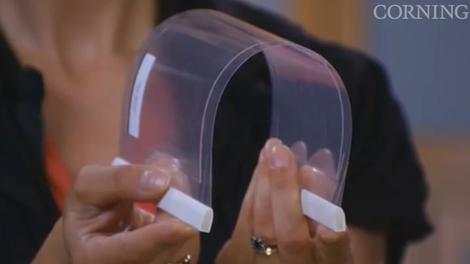
Smartphone manufacturers are experimenting with new phone designs and entering completely fresh product categories like smartwatches, so glass makers have to follow their literal bend.
That's why Corning announced that it's ready to manufacture 3D glass-forming technology to shape its patented Gorilla Glass for curved devices in 2014.
"We can now take Gorilla Glass all the way from flat sheet to a finished 3D-shaped product in Asia, expediting turnaround times and minimizing logistical complexity," said James R. Steiner, Corning senior vice president and general manager, in a press release.
Steiner called this a win for customers, but it's also a boon for Corning. More than half of the top 10 smartphone manufacturers already market devices with subtle curves to their cover glass.
Corning could come to wrists via iWatch
Buried in Corning's press release is the mention of "wearable applications," something that its 3D-forming technology promises to wrap around in a protective manner.That immediately brings to mind that Corning is the tough-as-nails glass supplier for Apple's iOS devices. Gorilla Glass is thought to be found in everything from the iPhone 5S to the new iPad Air.
Apple could use Corning's thin, but resilient glass if it unveils the iWatch later this year. A wrist-mounted wearable could be susceptible to just as many bumps and bruises as a smartphone.
The Cupertino company could also make use of 3D-shaped Gorilla Glass if it decides to launch a curved iPhone like some reports suggest for the iPhone 6.
Flat-shaped Gorilla Glass protects more than one billion devices worldwide, so Corning should be able to meet the 3D-shaped glass demands of at least one company's wearable. We should know exactly which later this year.

| |
Read More ...
Updated: The best media player for performance 2014

Introduction & software
Our best media player article has been fully updated for 2014.Some media players are bloated monsters, packed with unnecessary features. You've seen the results: open an HD video and they'll keep you waiting while your hard drive thrashes, your RAM is gobbled up and your CPU utilisation reaches new highs.
You don't have to put up with this, though. Other media players launch in a flash, and then make minimal demands on your system resources, allowing smooth HD video playback even on the most under-powered of PC hardware.
There's a problem, of course. You need to figure out which players fall into each category. And that's not easy, because everyone claims their own products are fast, efficient and great performers, whether they are or not.
The answer was obvious, then. We had to benchmark the players ourselves. So we took 15 of the top contenders from around the web, measured the time it took them to load and begin playing (largely) HD videos in five common formats (MP4-based AVI, H.264 MOV, MPEG-2, MP4, and OGG), and monitored their average CPU utilisation and RAM requirements.
And it turned out there were major differences in launch time and resource use between some of the programs – so let's find out which one came out on top and can be proclaimed as the best media player for 2014...
The contenders
We selected the following 15 popular media players for our tests.BS Player 2.66

Daum PotPlayer 1.5.40688

DivX Player 10

GOM Media Player 2.2.53.5169

jetAudio 8.1.0 Basic

Kantaris 0.7.9

KMPlayer 3.7.0.113

Media Player Classic Home Cinema 1.7.0

MPCSTAR 5.4

RealPlayer 16.0.3.51

SMPlayer 0.8.6

Snow Player 1.19

VLC Media Player 2.1.0

Windows Media Player 12

Zoom Player Free 8.6.1

How we tested
The benchmark process started by selecting our test videos, and we opted for five versions of the Creative Commons-licensed animation, Big Buck Bunny.These included an AVI movie with MP4 video and AC3 surround sound, a MOV file with H.264 video and AAC surround sound, and an OGG Theora video with Vorbis stereo sound, all of which were full 1080p resolution.
For good measure we also grabbed a copy of the Apple iPod 5G versions (at 320x180 pixels), before downloading the PAL DVD ISO to test MPEG-2 playback.
We chose a reasonably powerful test PC, equipped with Windows 8, 16GB of RAM and an Intel Core i5-4440 CPU, utilising its onboard Intel HD 4000 graphics. We also removed each program using Revo Uninstaller Free to see how much detritus each one left behind.
We then opened the test videos in each of our media players, noting the time it took for them to begin playback.
As the players worked, we used Process Explorer to access the average CPU utilisation and maximum physical RAM they required. We didn't try to optimise the player's settings to improve any results, so our figures relate to the default settings only. It's possible that some players may work faster or use fewer resources if you spend time fiddling with their settings.
The results
The best media player for performance is…As we took a closer look at the figures, it was again obvious just how important your choice of media player can be, particularly if you're running a lesser-powered PC.
Opening a file using JetAudio Basic, for example, could take up to nine times longer than VLC Media Player. The maximum memory demands of Windows Media Player were around four-and-a-half times that of SMPlayer or Snow Player.
We also carefully recorded the average CPU demands for each video format played, because it was obvious some formats were much more demanding than others. OGG files tended to ask the most of our media players, while the iPod and MPEG-2 versions of the file were the least demanding – unsurprising when you consider that their resolutions were sub-HD.
Having said this, some media players worked better with certain formats than others. Having taken so long to open files, JetAudio Basic excelled at playing back the HD MOV format, averaging a paltry 2% CPU usage – by contrast RealPlayer topped out its demands with 19%. If you're wedded to a particular format, the graphs below should help you pick the perfect media player for your specific requirements.
One thing that did surprise us in these tests is the relatively poor performance of VLC Media Player, our 2011 winner. Yes, it was the quickest to load files – and its format support is second-to-none, making it an excellent all-round choice where performance isn't an issue. But its average CPU utilisation left it in the bottom half of our list, although things were slightly improved by its relatively lean memory demands.
So which player won out in the end? In third place was GOM Media Player. It played all five video formats and averaged under 10% CPU utilisation across the board. But it lost out due to its memory demands, which peaked at 183MB.
In second spot was MPCSTAR. It matched GOM's CPU demands, but weighed in with a lighter memory footprint, peaking at just over 100MB. One possible black mark against it is a lack of OGG support.
The winner of our roundup was SMPlayer. It wasn't the quickest player to launch and load files, but it never took more than two seconds, which we think is an acceptable wait. It excelled where it mattered though - in CPU and memory performance. Thanks to a maximum memory footprint of just 80MB, and average CPU utilisation just that little bit more efficient than the other two players on the podium, SMPlayer emerges as the best performing media player for 2014.

Click here for full size

Click here for full size

Click here for full size

Click here for full size
* Couldn't play all our test files. Included for reference only.

| |
Read More ...
In Depth: Can a Mac be a gaming PC? How the world is changing for Mac gamers

For years, Mac gaming has been almost an oxymoron - not really worth considering if your love of games extends beyond Football Manager. But things are changing. Big games are coming to Mac quicker and quicker, instead of arriving three years later or not at all.
Perhaps more excitingly, new indie games tend to hit Mac at the same time as everything else thanks to improved engine support, with Humble Bundles seeing major uptakes from Apple users, and most Steam Early Access games eager for them, too.
More than that, the hardware is looking better and better for gaming. There are iMacs that take up little desk space, but pack in quad-core processors and good Nvidia GPUs. The MacBook Pro range offers Intel Iris graphics at the low end, and strong dedicated graphics as you get to the top - and most models have brilliant super high-res screens to show it off, too.
There's the Mac Pro, boasting a Xeon processor and two GPUs in a near-silent, eight-inch-tall enclosure (okay, it really isn't for gaming, but it's gorgeous). Even the MacBook Air is making the most of Haswell, with brand new processors and Intel's decent HD 5000 graphics in a tiny machine that gets 12 hours of battery life.
The hardware is still pretty pricey, of course (especially the new Mac Pro), but some things never really change. The thing is, it's higher quality than just about everything out there, and it's difficult to find anything that actually rivals Apple's laptops for size, weight and specs for the same price.
That's great, because with SteamPlay, you only need to buy a game once on Steam to get it on both platforms. Cloud saves usually work on both versions, so you could grab a MacBook for playing the go, and have a big gaming rig at home. And even if you want games that aren't available on Mac, you can use Apple's Boot Camp utility to dual-boot Windows on Apple hardware.
The redheaded stepchild of PC gaming has become an aluminium fox, and that's great for the growth of the industry. It's time to stop looking down on Mac gaming, and welcome it like a long-lost brother - albeit, one who got really into his music and art while he was away.
It's hard for a lot of gamers to remember now, but there was a time when the Mac was fertile ground for great games.
Maxis brought the dozens of Sim-something games it did every month to Mac; Bungie grew big as a Mac-exclusive developer, getting to the point where it announced Halo for Mac and Windows (before being promptly snapped up by Microsoft); and Myst, one of the biggest games of all time, was built in the Mac's 'make your own app!' programming tool HyperCard before being ported to every electronic platform with a screen.
This time passed, though. Windows pulled further and further ahead in sheer number of games, in providing affordable and decent graphics, and ultimately in performance.
Of course, there were companies that kept the end up, porting what games they could, but Mac gamers mostly had to be content with the likes of The Sims, and occasional scraps like Stubbs the Zombie and Age of Empires tossed their way. If you played a variety of games, you didn't do it on your Mac, or even probably in the same room as it, just to avoid being insensitive and stuff.
Turning point

But in the space of a year, Apple did two things that started the road to a gaming renaissance. In 2006, it switched to using Intel CPUs, bringing its hardware more into line with Windows machines, and in 2007, it introduced the iPhone. The first of these two points certainly made life easier for porting, since Apple's PowerPC processors were a completely different architecture to x86. It wasn't the kind of thing that made an overnight difference, of course, because of games' continued reliance on DirectX, but it was a big step for Apple.
The iPhone was perhaps the more important element, though. Once the SDK was released, gaming absolutely blew up on the iOS App Store. Suddenly, Apple and gaming weren't just being mentioned in the same sentence, but extra phrases like 'future of handheld consoles' were also being thrown in. Big developers started jumping on board and, crucially, made a bunch of money, too.
During this time, Mac sales were ticking up as most of the PC industry slowed and started contracting. At the same time, the Apple audience had showed that it did, in fact, like games, and was willing to pay for them. It was only a matter of time until Steam showed up, and where Steam goes, so go the games. In 2010, sure enough, Valve launched its store and many of its Source games for Mac as well.
The goods

Although the Mac is still a second-class citizen compared to Windows, receiving big titles after a delay of several months, it is getting them. The likes of XCOM: Enemy Unknown, SimCity, BioShock Infinite and Metro: Last Light all arrived on Mac within a few months of their original release - SimCity even had launch issues, as if to prove that we're all equals.
For Feral Interactive, responsible for porting Tomb Raider, the Total War series and XCOM, among others, strategy games tend to be the best sellers. It's no surprise, then, that XCOM: Enemy Within is due to release on Mac on the same day as Windows.
It's easy to look down on having to wait a few months for games, but in this, Windows and Mac users aren't so different. Too often, the PC finds itself getting the short end of the joystick, getting console ports that are often delayed or badly done. Now spare a thought for your Mac-playing brothers. Windows is the console to them.
Console yourself
As with console games coming to PC, the problem for Mac games is the effort involved in getting the ports working well. The Direct3D elements used to power the graphics in Windows games must become OpenGL elements for Macs, and the whole thing needs to run on the different software platform."In the past we have found that some new graphics effects available in the latest version of DirectX are not easily reproduced on the Mac using OpenGL," says David Stephen, managing director of Feral Interactive. "In such cases, we look for the best way to create those effects with the minimum hit on performance, but there is usually a trade-off involved. However, Apple's support for OpenGL 4.0 and 4.1 in Mavericks means that more processing can now be done natively on the graphics card, and that will definitely help with the performance side of things."
The technical effort of porting is just one element, though. "Delays are principally due to the Mac developer/publisher (in this case Feral) not receiving the assets they need to start the porting process until after the Windows version of the game has been released," explains David Stephen. Even this step of starting ports can only come after business negotiations between all the companies involved, which can be complicated.
"We have been working with our partners so that we can commence on the port while the original game is still in development," adds Stephen, but this carries its own potential issues. If the game is being ported while still in active development, changes made by the main development team can have a knock-on effect on the port. The Mac version also needs its own separate QA testing, and then even once it's finished, it can be delayed further while awaiting final approval from the publisher.
There have also been delays on Mac games released on specific stores - they might hit the Mac App Store before Steam for example. Steam and SteamPlay can cause business headaches in the case of ports, and that also takes time to sort out. On top of that, if it's on the App Store, it'll need Apple's Game Center adding, and other multiplayer/achievement code removing or suppressing.
Maybe it's no surprise, then, that Aspyr Media, one of the biggest Mac games companies - responsible for the BioShock Infinite port, among others - employs more staff in QA, sales and marketing than it does in engineering duties.
Going native

Life gets a lot easier for developers if there's no porting required in the first place, of course. Engine changes to allow easy cross-platform development are already happening, with smaller, nimbler games seeing the benefits currently. Unity supports everything going, meaning that games such as Gone Home and the alpha for Sir, You Are Being Hunted arrived on Mac at the same time as everything else - including Linux.
The iPhone helped Apple overall in cross-platform support, getting engine developers interested in making it easy for game devs to put their products on Apple-powered devices (for example, the iPhone's iOS is based on OS X).
SteamOS could be the next platform that helps Mac owners. Linux and OS X are far from identical as operating systems, but are close enough that some games run on both in a single binary. Basically, if developers put in the effort to make their games work on Linux, it's not a big step to Mac, and Valve's attempt to get as many games as possible to go cross-platform could be the final step that puts the Mac on pretty much level pegging with Windows for games support in the future.
You might ask, very fairly, why it would take Valve throwing its weight around to make this happen when Apple is pretty hefty itself. The thing is, Apple just never cared about gaming before it became a key selling point in the iPhone, and even now is much better at saying it's doing great things for gamers than actually doing them.
While games companies have been making the moves to get their products on Macs, Apple itself has been slow to help. The problem is partly technical, but partly it's just a failure to engage with what's expected of PC games.
Steam's presence on Mac brings all the usual goodies, like cloud saves, social features and achievements. Not long after Steam arrived, Apple launched its own Mac App Store, and the hope was that it would be another good platform to discover and buy games, especially for people who wouldn't have heard of Steam. To a degree it succeeded, but only for people who aren't used to the kind of features offered by Steam. There's nothing like the ubiquity of Steam Cloud for online saves, and the social features are tied into Apple's Game Center service, which is barely used.
Most irritating of all is the requirement that all Mac App Store games be sandboxed, meaning that developers can't include any ways to tie games into your Steam account so you can see your friends for multiplayer there. The Mac App Store is convenient, but as a gaming platform, it just doesn't compare.
Dem graphics
Then there's the state of graphics support in OS X. It hasn't been the best. Because all of its hardware is so slimline, Apple is loathe to use very large, hot GPUs, so it tends to go for mobile cards, even in desktops. That's still okay - there's great gaming to be had in a Nvidia 750M or Iris Pro - but the drivers often seem to be inferior to their Windows counterparts, and can vary from card to card.Apple can also be well behind the latest OpenGL versions at times, though its most recent update brought things in line. The problem used to be that Apple only updated OpenGL when it updated the whole OS, and until now that was a paid upgrade, so not every user would get the better features that developers needed to progress. This went for any drivers, too. Funnily, this is very similar to Microsoft's attitude with DirectX, but it's even worse for developers.
Overall, many games perform considerably worse on Macs than Windows PCs - SimCity, for example, can run perfectly smoothly on Intel HD 4000 graphics at 1080p on low settings on Windows, but on a Mac with an AMD 6750M GPU, those settings are barely playable. As David Stephen suggested earlier, though, that could change with the more advanced APIs available in the latest operating system.
The performance problems aren't the case with all games, though. "I've had some instances of performance hits, but often my ports will have performance increases, depending on the hardware. There have definitely been some OpenGL bugs/ bottlenecks, but that's something that can often be addressed in my code," says Ethan Lee, a developer on the MonoGame framework for porting XNA games to Mac/Linux, and who ported Fez to these very platforms as well.
Put the boot in

When games don't run as well on OS X, there's always one solution: run Windows instead. Apple's Boot Camp software enables you to easily partition your disk drive, and provides all the drivers necessary to get Windows working natively on your Mac.
We recommend replacing the graphics drivers provided by Apple, unsurprisingly, but the odd thing is that Macs tend to be consistently some of the best-performing Windows machines you can buy. Everything works brilliantly, any SteamPlay games you've bought will play on Windows (with your saves brought in over the cloud where supported), and you can play Windows-exclusive games.
You get storage issues if you dual-boot one of the lower-end laptops with small amounts of solid state storage, but with Intel HD 5000 graphics, even something like the MacBook Air is a viable portable gaming machine for smaller indie titles.
Macs don't represent a great deal for someone who wants high-end gaming, but they shouldn't be dismissed because of that. The range of games is already strong, and is only going to grow further - and you can run Windows for the rest.
In a balance of gaming power and size/weight, there's not a lot that can touch the MacBook line. Dear readers, it's time to embrace the Mac and its users to the PC gaming fold. They are our brothers in arms (which was a game released on Mac as well, incidentally).
- Now why not read our Hands on: Mac Pro review

| |
Read More ...
Interview: Up close with computer programmer Robert 'r0ml' Lefkowitz

Robert Lefkowitz, who is nearly always referred to as 'r0ml', is an old skool hacker, programmer and thinker who switched from studying nuclear physics to computer programming in the 1970s.
He met up with our sister magazine Linux Format for a wide-ranging conversation.
Linux Format: Do you think computers and programming languages should be easier to understand?
Robert Lefkowitz: So Charlemagne was concerned, in 789, he has this capitulary called The Adminitio Generalis, in which he reasons that monks learn how to read, so that they can read the word of God, so that they can follow God's law more effectively. If that's the case, why wouldn't you want every boy to learn to read? In fact, in this capitulary he says we will establish schools to teach every boy to read, freeman and serf. That, as near as I know, is the first aspiration to universal literacy.
The other one is what the Scandinavians did a couple of hundred years later, if the emperor in those times puts out a capitulary, how is everyone in the empire going to follow it effectively - at least one person in every village has to know how to read it so that everybody will have roughly the same interpretation. So it's a way of creating cohesion for the empire.
But the difficulty was that the technology was so bad that it was very difficult to read and required a lot of effort and training. My personal favourite is one of the things Alcuin (of York) shortly after invents is spaces between words.
LXF: Why weren't we taught this in school!
RL: It's one of those things that everyone takes for granted, "Obviously you're going to have spaces between words." But especially in Latin, there are a lot of phrases and a lot of mistranslations because if you look at the sequence of letters, you could break it in any one of two places and get two different things - and which one is correct?
That's why they illuminated manuscripts because reading was so complicated. You needed pictorial hints so you knew what it was about.
LXF: They added images before spaces?
RL: And every scriptorium, since these things were hand-done, they each had their own hand, so there was no standard font. So, York comes down and he comes up with this standard font that's called the Carolingian minuscule to which all modern fonts trace their ancestry. He invents things like standard height ascenders, standard height descenders lengths, and then you add spaces between words and all of a sudden you have this ability to see the whole words as shapes. There's a whole number of innovations around making it possible for people to read that Alcuin kicked off.
The next fifty years or so is called the Carolingian renaissance. This mini renaissance happens before the big famous renaissance later. I argue we're at that cusp where we're starting to say. 'Oh, we should teach everybody how to code,' but it's so complicated and difficult, and there's a thing like spaces between words which in retrospect will be so obvious; that makes it so much easier that we haven't thought of yet - we need an Alcuin of York.
LXF: We're waiting for the spaces between words… it's not Python then?
RL: (laughs) Well, I gave this talk out of PyCon, in fact, where I said a big revolution is to make spaces significant. So the Python audience can certainly relate to the concept that maybe that's the thing. But it was more than just the spaces between words. So maybe Python is that thing, but it's one of those things that's difficult to know except in perhaps a 100 years later when we look back…
LXF: It's the concepts, conditional statements, the effort of constructing a solution to a problem that stays with you. This is what non-programmers are missing. It's the demystification of the process that means a lot of people go through the world thinking computers are magic. How do we tackle that?
RL: I certainly think it's a more conceptual kind of education. I had set out about a year ago to write a book on this topic. And I had this thesis around what we've just been talking about - around Charlemagne, and this kind of cusp when you make it easy enough, universal literacy, and how universal literacy for computers is sort of analogous to universal phonetic literacy and what should we do to move that forward.
But doing my research, my thinking evolved. I came across some other interesting stuff that I read which made my thinking evolve to the point where I don't believe my thesis holds water!
LXF: What about the book!
RL: There's still going to be a book! But I'll delay the schedule now because what I have to do is think about it some more and come up with a new thesis that I think holds water better, and that would be more effective. Fundamentally, the idea that literacy, from Charlemagne, and sort of subsequent revolutions of it throughout history, there were two main drivers for literacy and education, and literacy and education was all around reading.
The reason it was all around reading was for these two societal myths; the first one was the Christian myth: in order to know the word of God you had to read the word of God. To read was to become better. You read in order to become good, and that was kind of the societal driving force. If it's going to make people better then obviously everyone should listen.
And then the second myth, for us in colonial America, but also throughout the world, in order to have an effective democratic society, or any society, you need an informed citizenry. We felt we needed this because they needed to vote. In the non-democratic societies you needed to have an informed citizenry because they needed to know which laws to obey without getting in trouble. But in order to have an informed citizenry they needed to know how to read, and therefore, you have to teach them all how to read. Ta da! Because it will make them better citizens.
Reading, is in Deborah Brandt's [professor emerita of English at the University of Wisconsin-Madison] words, 'for good' not 'a good'. Writing, however, was 'a good'. You wrote, and it was a product, and then you could sell it. You didn't improve yourself by writing…
That's the myth. And if you look at computing science in the 1980s, Donald Knuth's Literate Programming, they call talk about 'Yes, you have to write programs that can be readable so that other people can read them'. It's all informed by the underlying cultural sensibility that says 'Oh yes, reading is a good thing'. What I'm saying is something different.
The second piece of the puzzle is the thesis that I'm developing now. In the beginning nobody reads and writes because we haven't invented that stuff, or it exists but it's only for bookkeeping. It doesn't have any societal impact because its all scribes in the royal treasury. Then, and we'll take this from Plato, Socrates believed writing was a bad idea. Plato agrees with Socrates but he writes down The Republic to explain why it's a bad idea.

LXF: We're covering a lot of ground here… from the 1980s to 400BC.
RL: (much laughter) Then from Aristotle, Plato, on, you have few readers but it's a societal thing, and few writers. A smaller number of people read, a smaller number of people write. This holds true roughly until Gutenberg - the printing press.
They call that manuscript culture. In manuscript culture you don't have the notions of copyright, originality, plagiarism, because there's so few readers that it doesn't matter. The idea is that you couldn't possibly come up with a text all on your own anyway, because that's such a complicated thing, and you're pretty much pulling together from other texts and recombining stuff that's already there and you don't have to do attributions - none of that stuff, none of it exists.
LXF: These texts would be amended as they were copied?
RL: Either on purpose, or accidentally, yes, both. Sometimes there would be transcription errors - and there's some fascinating stuff when you read up about it. Sometimes it was anthologising, you'd be saying 'this is a good thing', and this one and you'd put them together. Sometimes you'd bother to mention the original source was and sometimes you wouldn't - what difference did it make?
LXF: When no one could Google the source…
RL: Right. So you have this notion of intertextuality. That means texts come from other texts. You can't really create a text from scratch. So you have that manuscript ethos and since there are really no readers, there's no commercial interest in writing or reading.
Then you have the printing press and now you have a mass readership. This is what turns writing in 'a good' and reading into 'for good'. You still have a small number of writers because you have machinery in order to do the distribution, access and expense.
But there is also now commercial gain. If you write something you can make money, and if somebody else 'steals it', that's where you have the notions of copyright, plagiarism, authorship - even the idea of authorship. Like who's the author of this scroll, you wouldn't even write your name down, because why would anybody else care? You didn't care, they didn't care, nobody cares.
LXF: The writer isn't even thinking about it.
RL: …So now what I'm suggesting is that there's a fourth age. The fourth age is Dave Winer, right, blogging happens, texting happens, Twitter happens. We're all writing more. Most people today write more than Dickens did in his lifetime. Not as good as Dickens, but more than Dickens! It's the volume.
People say you can't make the comparison, because people write mostly lolcats and crap stuff and Dickens was awesome. But if the volume increases one thousand fold. If the average quality drops 50%. You've still got way more high quality than you used to. The level rises. We had this big ratio of readers to writers and now it's reverting back to its [dramatic pause for effect] medieval ratio.
It was few and few but now it's many and many. When that ratio goes back, what should happen? And this is where I haven't thought this through, but in some ways it's going to revert to the medieval sensibility, and maybe that's why you see the weakening of the ideas of copyright, and it's not just happening with software, it's happening with music and journalism. You have this sort of disruption, not just in the business, but in whole societal/ethical framework around what's right and what's wrong. And that's being challenged.
But the second thing that happened, and this is the one that's specific to code, which I think changes it so that's it's not just a reprise of the medieval era with the bar moved up, and that is - and I got that from Project Euler.
Project Euler was a spin-off of a math learning site, it got very popular, and it got about 450 problems which are all math problems, because it started out to be math education, but they were the sort where you could only sort them with a computer. So the first problem is very simple - what's the sum of all of the numbers less than a million that are easily divisible by 3 and 5? You could do it with paper and pencil, but you write a computer program to do this, and the idea is that they get progressively harder.
The thing that triggered this for me is that a FAQ on the website says: "Oh, I've figured out a really great solution in my favourite programming language to this problem, can I post it on the internet?" The response is, "You've answered your own question."
You know that feeling you get that you're so proud of yourself because of a great solution you've figured out - don't steal that from everybody else. Don't post your code. Here what we have - and granted it's a very specific and narrow case, but I'm thinking from Aristotle on so I've got a thousand years forward to play with here, this is a case where somebody is saying, "To publish your source code would be wrong. Ethically wrong."
Combining this with what we were talking about literacy, it's the writing in this case. When you go to Project Euler, you don't learn by reading, because you could - that's the old style of education, I'll just read up on these algorithms and that will make me a better person: no, no, no, no. The way you're going to figure these out is you're going to sit down and you're going to try to write solutions, because the thing that the computer does, the difference in terms of literacy, is that if you write something, how do you know if it's crappy or not? You have to get somebody to read to get any kind of feedback.
When you write a programme, the computer will give you feedback. That might not be in a legible style for other humans but we're getting that medieval holdover stuff going on here. It will tell you the algorithm is more efficient or less efficient than that other thing you tried, and it will tell you whether you're getting the right answer or the wrong answer. So there's some set of feedback that you get by writing it and by writing it again only differently.
Just you, just by writing, you become good at that. In this case, writing is 'a good'. Then you see the same thing popping up for Twitter, and Facebook, the cultural push is to say 'You should post, the writing is the good.' Those drivers that said everybody had to learn how to read, and then we start to teach programming, and then when you think about it, how do you teach programming?
By teaching people to write a program and they don't teach them to read other people's programs. Is that because of the ethical sensibilities around that, or the practical sensibilities around that? If there were a canon of code, would it be useful for people to read it, and I think not. The cognitive dissonance for me was if I follow this thing through logically, what programming education would look like, open source would be bad in that world.

LXF: But this is only at a formative stage!
RL: But it was sufficient cognitive dissonance for me to say that I have to think about this some more. The question that kicked this off, and I'm sorry for such a long answer, is this notion of what does programming education look like going forward? I think it's more writing driven than reading driven, so it differs from other literacy education.
LXF: Writing the code should happen at the very beginning?
RL: That's the long-term thinking. Short term, my thinking had been, and I haven't re-evaluated this, had been we shouldn't start with writing because, following a thought experiment - take somebody that you know that doesn't know anything about computers, adults or kids, and give them a program that has already been written in the favourite programming language of your choice, Python, Java, Smalltalk.
LXF: Perl?
RL: Or even Perl, it doesn't matter. Give them a program that is already written. Can they actually run it? Or pass it parameters if it needs parameters? And be able to tell if they need it or not and then be able to figure out how to get the output? Could they actually take an already written program and use it, read it? And I think the answer to that is mostly 'no'. This may be the spaces between words part, which is the 'why is it so hard to just figure out what to do with a program once it's written?'
And maybe we should start there. If you're teaching people to write code, even after it's been written they don't know what to do with it, isn't that the cart before the horse? Maybe the first steps ought to be, and this is where open source is a good, 'Go to this website, search for the thing you want to do because somebody's done something that mostly does that, and install it and run it'.
You want to do a program that has a blog, you could just go to blogger.com and get an account, but if you want to think like a programmer, you have to go get the code that does that, install it and run it. The programmer would actually write the code, install it and run it, but let's just skip the writing part and see if we can do the rest of it, and which is the harder part? And what does a citizen need to know who's not going to be a professional programmer?
LXF: It should be about equipping ordinary people with the tools to demystify what tools are doing. Does it need this great arc, which is a great thing if you're into computers and you want to learn.
RL: That's exactly right. I agree with you 100%. The demystification so that people understand roughly how an automobile works, so they know it's not going to fly. This idea of just being able to take already written code and see how quick it runs; how it gets used. Something in that space, and writing code is going to be part of that. I don't know if it's necessarily the first part of that, and we always seem to start there.
LXF: That is all we've got, and it's how the people who are teaching were taught.
RL: A large part of what's driving, and this is a holdover I think from the previous age … when you see people teaching people programming, it's always couched in the terms of you needing to teach people to do this in order to be economically competitive. Nobody says you need to read in order to be economically competitive. You learn to read to be a better functioning citizen.
If you approach it from the, "I'm not going to grow up to be a programmer. I want to be a journalist. I want to be a ballet dancer." I wanted to start the book, something along the lines of, because my wife and kids are very much into the arts. I met my wife when she was teaching the circus arts, tightrope walking and so forth.
And so, for her job does she need to know how to read? The answer is no. Why should we teach these people how to read? Because you have to know how to read to be able to function in society, right? But it's got nothing to do with their jobs.
We don't teach people to read because it will make them more competitive in their jobs, if it's about demystifying computers so that the common man can live in a world that's heavily influenced by automata, they need to understand how it works but they're not going to use it for their jobs. They're going to use it for their daily lives, and how do they do that? I don't know.

| |
Read More ...
Vine launches web profiles, planting seeds for six second satisfaction

Twitter-owned video sharing service Vine has rolled out its web profiles, allowing users to browse their feeds and visit the profiles of other users.
After announcing the plans, and inviting users to sign up for vanity URLs last month, the company has wasted little time in launching its take on profiles.
Users can now log in at the Vine.co page, where the experience is much the same as it is within the mobile apps for Android, iOS and Windows Phone.
However, there is one major difference; a new TV Mode, which allows users to browse through Vines in a neat full screen view. Within TV Mode the videos will play in sequence, meaning no loops and no endless scrolling and stopping.
First step
Vine's online launch comes after Instagram made the leap with photos and then videos in 2012. Like Instagram, Vine users will be unable to upload videos directly to the website, with that feature remaining mobile only.The company said the roll out of web profiles is just the "first step" so perhaps uploads shouldn't be completely ruled out?
"This release is just a first step toward bringing you a richer, more enjoyable web experience. We look forward to introducing more improvements in 2014," Vine wrote on its company blog.

| |
Read More ...
Tobii and SteelSeries team up to make eye-tracking game peripherals

Eye-tracking specialists Tobii and video game accessory makers SteelSeries have announced a new partnership to make gaming peripherals that will track players' eye movements.
The companies believe that eye-tracking has the potential to enrich games and "create true immersion," and together they'll release what they say is the world's first mass market eye-tracking peripheral for gamers.
They provide examples like characters in games reacting to your gaze, or being able to move a mini map around without having to take your mouse cursor off the battlefield.
Details on the actual device that will result from this partnership are scarce, but SteelSeries plans to announce more "over the next several months." Unfortunately it doesn't look like we'll see the new tech at CES next week.
X marks the Eye
However, we're not totally in the dark about how the companies' eye-tracking peripherals might eventually take shape.Tobii said its Tobii EyeX Controller, unveiled in December and being showcased at CES 2014, is a good example of what future eye-tracking products might look like.
The EyeX is a small black peripheral available to developers for $195 (about £118, AU$217) along with a software kit, development framework and working example of eye-tracking software and games.
Tobii has revealed that the full EyeX kit will be available for $95 (about £57, AU$105) at CES or with the coupon code "CES2014."
A focused gaze
Tobii has been hacking away at eye-tracking for a long time.In 2011 Tobii and Lenovo created a prototype laptop with eye-tracking built in; the same year they revealed the first eye-tracking game, EyeAsteroids.
More recently, it released the first eye-controlled tablet, the Tobii EyeMobile, in 2013.
And at CES last year Tobii unveiled Rex, an eye-tracking add-on for Windows 8.
We'll definitely be keeping an eye on this one. Ha.

| |
Read More ...
Galaxy S5 set for MWC launch? Samsung designer drops biggest hint yet
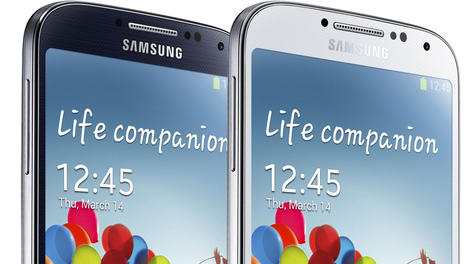
Samsung's last major appearance at Mobile World Congress was in 2011, when it launched the Galaxy S2. Since then, the company has gone it alone with glamorous events and debatable success.
After the largely mocked Broadway-style Galaxy S4 introduction in New York last May, Samsung may be about to rejoin the chasing pack by revealing the Galaxy S5 at February's tech expo in Barcelona.
The rumour has been around for a while now, but it just a little more credence thanks to a hint from Samsung design director Dong-hoon Chang.
In an interview with reporters in Samsung's Korean homeland, Chang intimated that the handset will arrive with a new build material, while the possibility of a flexible display was "under review."
Stealing the show
Speculation has suggested Samsung will move forward the launch of the Galaxy S5 to counteract disappointing sales of the Galaxy S4.Should Samsung head back to Barcelona in February, the Galaxy S5 would undoubtedly steal the show.
MWC has lost some of its lustre in recent years as more and more manufacturers choose their own standalone events to launch their hero phones, but perhaps Samsung can bring a little glamor back.

| |
Read More ...
Samsung New Year's directive: ditch hardware focus, innovate non-stop

Samsung has been successful with record-breaking smartphones sales and a reported 95% of Android profits, but its chairman still wants to shake up the company's concentration on hardware.
To do this, it has to "get rid of business models and strategies from five, 10 years ago and hardware-focused ways," said Lee Kun-hee, according to the Wall Street Journal.
His annual speech at the start of the year is the latest indication that Samsung wants to improve its own software and reduce its dependency on Android.
Right now, the company has its TouchWiz interface and a number of homegrown apps available on Google-powered devices like the Samsung Galaxy S4 and Galaxy Note 3. Clearly, the chairman wants more.
Teasin' Tizen
As Android users get accustomed to Samsung's pre-installed software and sign up for its new services, the company's developers continue to work on the Tizen operating system.Tizen is Samsung's Linux-based operating system that's being prepped for its smartphone debut later this year. It's already powering one Samsung camera in South Korea.
With HTC and LG trying to muscle in on Samsung's Android territory and relative newcomers like Huawei threatening to do the same, Lee asked his employees for constant innovation.
"Research and development center[s] should work around the clock, non-stop," said the chairman.
That could bring us a Tizen-equipped smartphone sooner than ever, or at least the Samsung Galaxy S5 and Galaxy Note 4 launches a little more quickly.

| |
Read More ...
Acer's Android-powered AIO offers pick-up-and-go portablility

Acer has outed its second all-in-one (AIO) device in the run up to the CES trade expo in Los Angeles, a 21-inch Android-powered machine.
Hot on the heels of the previously announced TA272 HUL, Acer's new DA223 HQL AIO features a 10-point full capacitive touchscreen with a pixel density of 105ppi and a native pixel resolution of 1920 x 1080.
Designed to "bring the Android experience from mobile devices to daily computing", the DA223 HQL AIO has a seamless edge-to-edge glass design, creating a borderless display.
The AIO also offers wide-viewing angles and features an adjustable tilt stand that permits the frame to be placed flat on a surface. MHL connectivity allows the DA223 HQL to connect to mobile devices and be used as an external monitor. Additionally, Windows 8 certification allows the HQL to be used to project devices with a Windows OS.
Jelly Beans and Snapdragons
Outfitted with Android Jelly Bean, the DA223 HQL has a Qualcomm Snapdragon 600 1.7GHz quad-core processor under the hood, and a built-in battery means that the device can be operated unplugged and moved from room to room.As with all Acer PCs, the DA223 HQL features Build Your Own Cloud, which enables users to build a cloud on their device to store music, video, pictures and other cloud platforms.
The Acer DA223 HQL AIO is shipping worldwide with a recommended retail price of $699 (£424, AU$778).

| |
Read More ...
Acer Aspire V5 brings the optical drive back from the dead

Acer has gone back to the future with its new Haswell-powered Aspire V5 range of ultrabooks by equipping them with an inbuilt optical media drive.
But before you begin to scoff and make jokes about Betamax, MiniDisks and Zip drives, it should be noted that the Aspire V5-561P's drive is M-DISCTM enabled.
Compatible M-DISCs are capable of storing up to 4.78GB of data permanently thanks to containing a layer that doesn't deteriorate when files are copied or transferred, unlike regular rewritable CDs, and their robustness is so that they are used by the US Department of Defense.
Bonding time
The Aspire V5-561P also features a 15.6-inch HD LED-backlit display with 10-point multi touch with what Acer calls Direct Bonding technology, which apparently increases contrast ratio and improves the viewing experience.It houses up to 16GB of RAM alongside AMD's Radeon R7 or R5 discrete graphics card, and Dolby Digital PlusTM Home Theater surround sound is onboard to help turn your living room into a local M-DISC-oteque.
Connectivity options include HDMI and VGA for hooking up the laptop to external displays, alongside a USB 3.0 port and SD card slot.
The Acer Aspire V5-5561P is available now starting €599 (around £496/USD$906).

| |
Read More ...
Looks like the Samsung Galaxy Note 3 Lite will downgrade to a 720p display

The Samsung Galaxy Note 3 Lite, believed to be arriving in a matter of weeks, looks set to downgrade from a full HD to a 720p display.
"Hey, it's called the Lite for a reason, what did you expect?" we hear you cry. Well no, we're not exactly surprised by the information, which was spotted in a user agent profile for what is allegedly the non-LTE version of the phone.
The phone will still remain at the 5.7-inch size but the same profile says it won't be upgraded to Android 4.4 KitKat – still 4.3 for now. That may change when the phone actually launches, however.
Notable difference
The screen will also be switched from AMOLED to LCD, according to other reports, and will be bringing its 13MP camera down to an 8MP affair.Let's hope it also gets a really tempting price tag to make the reductions worth it. If it does, Apple should probably hurry up and get a bigger iPhone out the door.
CES 2014 is just around the corner, but all rumours so far suggest the Note 3 Lite is holding off an appearance until MWC.

| |
Read More ...
Revamped Aspire S3 gets aluminium design, Haswell and Nvidia GPU

Acer has unveiled an updated Aspire S3 ultrabook that features a smoother design, packs more features and is now available in Europe, the Middle East and Africa for the first time.
Starting at £999 ($1644, AU$1829), the S3 has inherited the design and innovation of the Aspire S7, making it an "impressively stylish and productive notebook", according to Acer. The newer S3 has gained dual-hinge designs enabling the laptop lid to be lifted to 180 degrees, another feature of its sibling the S7.
Instead of the S7's Gorilla Glass back, the new S3 cover is made from aluminium and sprayed white with a mirror-polish, while the operation area of the laptop is made from anodized aluminium throughout. The ultrabook is 17.8mm thin and only weighs about 1.67kg, making it accessible and easy to carry, though still heavier than the S7.
GeForce and Haswell
Like the S7, it also has a 13.3 inch 1080 display, but is more of a workhorse with Nvidia GeForce GT735M graphics and a larger non-SSD 1TB hard drive option.The S3 will also include the latest fourth-generation Intel Core i-series Haswell CPUs, offering up to 15% better performance and twice as much graphics processing power. Specific models included with the laptop haven't been specified. The S3 also features a fast sub-1 second wake-from-sleep mode.
The display of the S3 renders movies, photos and games with IPS touchscreen technology and a 170 degree viewing angle. WiDi technology also enables users to share their content onto a larger screen like a TV or monitor with ease. The microphone within the ultrabook has also been tweaked with Acer 'Purified Voice' technology for clearer sound.
The S3 is available for the first time in all three EMEA areas at prices starting from £999 ($1644, AU$1829).

| |
Read More ...
Acer breaks out the eye candy for Android-powered all-in-one

Acer has announced the launch of new TA272 HUL Android All-in-one desktop ahead of next week's CES 2014 trade expo in Las Vegas.
Boasting a 27-inch WQHD display with a maximum pixel-resolution of 2560x1440, the new system offers 10-point capacitive touch support and wide viewing angles, according to Acer.
The TA272 HUL comes fitted with an NVIDIA Tegra quad-core processor that clocks up to 1.8GHz, 16GB internal memory and dual-band 802.11a/g/b/n wireless. It runs Android OS 4.2 Jellybean that looks to deliver the Android experience on the big screen and also includes Windows 8 certification.
Modern and minimalist
Its design features a transparent base and asymmetric stand that goes for a modern and minimalist look. The stand allows the frame to be positioned from 30 to 80 degrees tilt, and the machine itself features two front-facing Dolby surround sound speakers and a 2MP webcam.On the connectivity front, the TA272 HUL offers a USB 3.0 port, HDMI and DisplayPort, allowing it to be connected up to other monitors.
Acer said that machine gives owners access to its cloud-building service, called Acer Open Platform, which lets people create their own clouds to access music, photos and other types of content on multiple devices.
The Acer TA272 HUL all-in-one is shipping worldwide with a retail price of $1,099 (£668, AU$1222).

| |
Read More ...
Analysis: Can a Chromebook really replace your Windows machine?

Many view Chromebooks as Google's attempt to pass off a glorified web browsing machine as a workable replacement for a Windows PC.
But with the steady maturation of ChromeOS and Google cloud services, Chromebooks look like they may be finally ready to take a chunk out of Microsoft's share.
Perhaps you haven't taken notice of Google's other mobile OS, but a host of top PC manufacturers have. They're not just re-purposed notebooks either: the HP Chromebook 11.
Samsung Chromebook and Acer C7 Chromebook are the tip of an incoming Chromebook armada, with Google's own Google Chromebook Pixel leading the charge with gorgeous design and better specs than the rest, but at a MacBook-esque price.
Sales are still modest, with the IDC (International Data Corporation) recently suggesting Chromebooks only make up 1% of the combined PC and tablet market. But the pace is finally starting to pick up, eating into the lower crust of the laptop market, where netbooks once reigned supreme. Thanks in part to the onward march of tablets, the netbook sector has been somewhat hijacked by Chromebooks to become that device with 'just enough' functionality to keep lightweight users happy, with an enticing price to boot.
It all seems like unfortunate timing for Microsoft, who are now undergoing a three-pronged attack from strong competition in tablets, drowning in an armada of Android, with Chromebooks now arriving to deal further blows as they ride a revolt against the costly licensing fee that Windows ownership incurs.
Despite budget pricing, are Chromebooks ready to replace Windows for those looking to produce as well as consume? Here's a roundup of apps that will fill the gaps in Chromebook's functionality to make it a viable Windows alternative…
Office replacement
For a whole raft of users, being productive on their Windows machines boils down to one piece of software - Microsoft Office. Pulling yourself away from Microsoft's renowned productivity software can seem almost impossible, but if you're not making use of some of the more complex capabilities that Excel, Powerpoint and Word can provide, then Google Apps is a perfectly safe alternative.With almost every piece of the Microsoft Office puzzle, there's a Google alternative, though some such as Keep (for note taking) is nowhere near as comprehensive as Microsoft's OneNote, while Google's plethora of apps and services still can't offer anything resembling the power of MS Access. However, how many people still actively use Access is debatable, and they're certainly not likely to be the kind of audience Google is aiming the Chromebook at.
There are loads of other features and categories in Google Apps that are similar to Office 365 - mobile apps and connectivity, document sharing, instant messenger tie-ins, and dozens of other topics. As long as you can survive being tied to services that only offer full functionality with a network connection, Google Docs and its siblings are surprisingly powerful.
Beyond Google's office offerings, there's plenty more to keep you productive at home or even in business. Evernote's Chrome extension and app allow you to easily keep together ideas, research projects and inspirations as well as entire web pages for future use. Other apps worth checking out for presentations and spreadsheets include SlideRocket and Zoho Shee respectively.

Get creative
One of the big ties to a desktop for creative types is Adobe's Creative Suite - king of which is still Photoshop. It's long been heralded as the de facto image editor and moving away from it just doesn't seem to be a pill some are prepared to swallow.Enter web-based alternatives, the most popular being Pixlr Editor. This powerful editor borrows an awful lot from Photoshop and in some cases does it with less fuss. Due to its Flash underpinnings, processing isn't quite as snappy as Photoshop and things can get a little sluggish on the ARM-based processors that adorn most Chromebooks.
Handily, Pixlr Editor is integrated directly into Google Drive, making it easily accessible from Drive's web interface or the Chrome OS file explorer.
It doesn't just stop at Pixlr though - there's plenty of apps to get creative with. Audiotool is a fantastically straightforward music production studio that allows you to make melodies, play with drum machines or synthesisers and much more.
For video, Stupeflix Video Maker is a simple editing suite that costs absolutely nothing if your videos are less than 60 seconds and can produce some reasonably professional results with the right footage.

Media moguls
Chromebooks aren't necessarily targeted at media addicts. The limited built-in storage means you're unlikely to want to load it up with gigabytes of music or video. Fortunately Google provides an obvious alternative to a local media player in the form of Google Music. Not only is big G rather generous with the free storage capacity of up to 20,000 songs, but the entire service makes listening to and purchasing music incredibly easy. Google Music also syncs with Android phones to give you plenty of opportunities to keep some music stored locally.The search giant hasn't quite got the market cornered in music services for Chrome - there's plenty of streaming services out there such as Grooveshark and Soundtracker, which can fulfil the needs of less picky music tastes.
Video falls into the same kind of streaming groove as music. You're unlikely to have the capacity to store everything locally. Luckily there are now apps available from all the big providers including Netflix, Lovefilm, Blinkbox, YouTube/Google Play and Vdio, all of which offer ways to get your movie or TV fix. And let's not forget the likes of BBC iPlayer, ITV Player and 4oD which work from their own respective websites.

Gaming
Unless you're buying a Chromebook for a child, gaming is unlikely to be at the forefront of your mind when pondering this OS for your next laptop. The lack of high-power machines means that gaming is purely limited to time-killing apps and will likely only keep kids or young teens content. There's no Steam, no big-budget games, and there's unlikely to be any support in the near future for anything other than ports of Android or basic Linux games.
Should you ditch Windows?
Whether you can sling that aging Windows machine in favour of a sleek new Chromebook entirely depends on whether you're prepared to move from potentially pricey software you're already comfortable with, and on to pastures new that rely more on internet connectivity.Then there's the issue of versatility when multitasking with multiple windows. Microsoft built Windows around being able to quickly switch between program windows, offering a sensible file structure that scales from beginner to pro quite comfortably. ChromeOS is still limited to its browser-based underpinnings, so managing multiple tasks or programs at the same time is more restrictive, limiting you to whatever tasks you can fit in to the browser's tabs.
Chromebooks are clearly marketed towards a different audience than Windows OS users. If anything, the direct competition would have come from the ARM-powered Windows RT. However with the general failure of the Surface RT, the dumbed-down OS has been swept under the rug in favour of fully fledged x86 machines. Meanwhile manufacturers who did dabble in RT have since reverted to full-fat Windows, or else looked to Chrome to fill the entry-level market segment instead.
Chromebooks for business presents an interesting proposition. If you're managing a team collaborating on work, want everything backed up without a thought and kept secure, then the combination of ChromeOS and Google's Apps can be a relatively powerful, if slightly more limited combination.
One of Google's biggest hurdles in convincing people to switch concerns the very subject Microsoft is currently mocking in their latest marketing campaign - privacy. Google has had a bad image when it comes to privacy. After all, its business is in personalising your internet experience and targeted advertising based on your browsing habits.
The more of your life and work you give to Google, the less private you may feel. But you'd be wrong if you think everything you use a Chromebook for will be pored over by Google. The company wants to make money from advertising, not stealing your work.
- Now why not read Who's who at Microsoft (and what they're doing next)

| |
Read More ...
Acer announces Iconia W4 release date

If you're on the hunt for a full-fat Windows 8.1 tablet to lift your January blues, Acer has one about to hit the shelves.
The Taiwain-based tech giant has confirmed ahead of the CES trade expo in Las Vegas that its Iconia W4 tablet will be available from the end of January starting at €299 (around £247/US$407/AUS$452).
For that, you'll bag 8 inches of pocket-sized (deep ones, natch) tablet that houses Intel's Atom Bay Trail CPU, clocked at 1.8GHz, which Acer claims gives it the legs to go for 10 hours on a single charge.
That's not so hard to believe: the Iconia W3 that came before suffered from a poor display with terrible viewing angles and its comparatively weaker Clover Trail CPU struggled to get much done, but its battery life impressed thanks to Intel's low-voltage chip.
Wide boy
It looks like Acer has corrected the Iconia W3's display misgivings with the Iconia W4, fitting it with an IPS variant with a 1280x800 pixel-resolution panel that provides 170-degree viewing angles. Other specs of note include a 2MP 1080p front camera, and a 5MP rear camera that shoots videos in 1080p.As with its predecessor, Acer's Iconia W4 comes Microsoft Office Home and Student 2013 pre-installed and arrives with a dedicated keyboard accessory in tow. The Acer Crunch Keyboard is made of leather, measures 5.33mm thick and folds out while being used as a tablet stand. It connects via Bluetooth 3.0 and is rechargable via micro-USB.
That can be twinned with the Acer Crunch Cover that apparently adapts to multiple angles depending on how you want to use the device. Finally, Acer has outed a Power Bank, which can charge the device for up to four hours.

| |
Read More ...
Acer Liquid Z5 budget smartphone goes official ahead of CES

CES 2014 is just a matter of hours away and Acer has outed a bunch of devices that we'll be able to get our hands on at the Vegas show.
Included in the mix is its new budget smartphone, the Liquid Z5, which comes with a 5-inch screen, 5MP rear camera, dual-core 1,3GHz Cortex-A7 processor and 4GB of internal storage.
The Z5 will come running Android 4.2.2 Jelly Bean and packs a bunch of software feature such as AcerFloat for multitasking and AcerRapid for one-handed control.
Don't break the bank
The Z5 also brings dual-SIM support, 3G with HSPA+ and a 2,000mAh battery.Meanwhile Acer's singing the praises of that rear camera, which is designed to offer high quality pictures in low light environments.
And at a price of €169 (about £140) you certainly won't be breaking the bank for what looks like an ok successor to the Liquid Z3, though it's certainly not one to conquer the Moto G.
The exciting part is that the phone will come in two vibrant colour options - white and grey. Calm yourselves down, ok?

| |
Read More ...
Available Tags:LG , webOS , Apple , iPhone , Lenovo , MacBook , Microsoft , Xbox , PS4 , HTC , Android , tablet , rumors , Mac , gaming , Mac , gamers , Galaxy , Samsung , Samsung , hardware , Acer , Samsung , Nvidia , GPU , Acer , Windows , Acer , Acer , smartphone ,


No comments:
Post a Comment