

Synology DSM 5.0 Teaser, Disaster-Resistant ioSafe 1513+ and Egnyte Hybrid Cloud at CES

First off, we looked into the new features of the upcoming DSM 5.0. Ease of use and a streamlined interface were put forward as the main points. It appears that the version will have a mobile-app like interface in addition to the standard desktop in a browser UI that we have grown accustomed to. This seems more like the Asustor ADM interface. We are pretty much ambivalent on this change. DSM 5.0 also updates the QuickConnect feature to enable it to work without port forwarding. These changes are welcome ones for the average consumer.
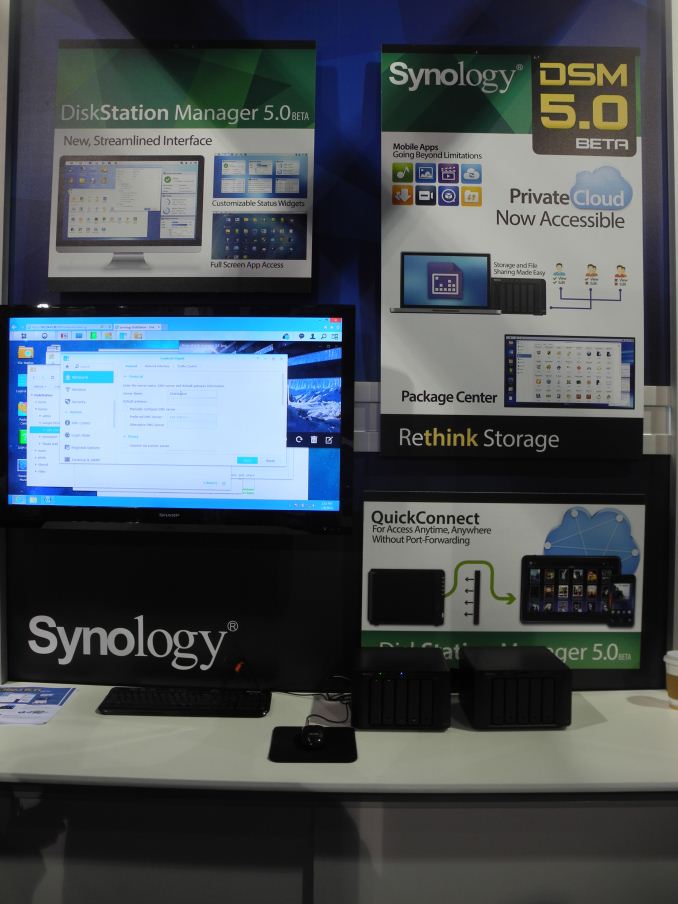
Synology was also demonstrating the Evansport-based DS214play transcoding media for playback using DS Video while utilizing very little CPU cycles. We already know quite a bit about how Evansport enables these sorts of scenarios, so I won't go much into detail on this product and demo.
ioSafe 1513+
ioSafe and Synology started joint demonstrations at CES in 2013. While the ioSafe N2 (DS213 in a disaster-resistant package) was launched last year, ioSafe has moved on to an Atom-based DS1513+ this time around. Dubbed the ioSafe 1513+ (PDF specifications), the unit sports a 2.13 GHz Atom D2701 CPU, four 1 GbE LAN ports and 2 GB of RAM. Performance numbers for a 5-disk RAID-5 volume are in the range of 202 MBps writes and 350 MBps reads.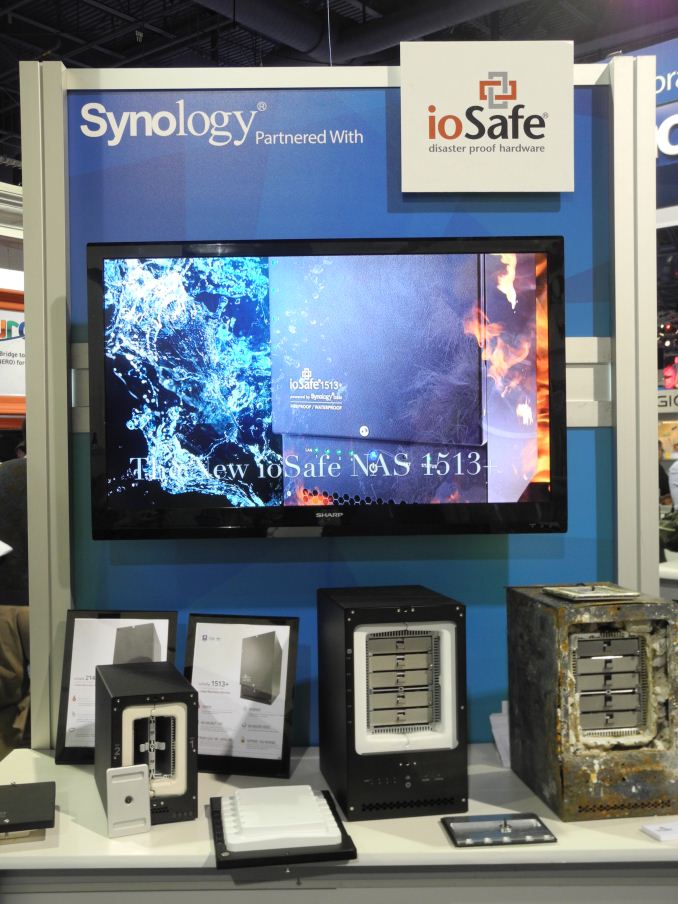
Keeping with ioSafe traditions, the unit protects data from fire up to 1550°F, 30 minutes per ASTM E-119, and from complete submersion in floods up to 10 foot deep for 3 days. ioSafe also plans to launch the ioSafe N513X expansion chassis (two of which can be connected to each ioSafe 1513+). This allows up to 90 TB of disaster-resistant storage mounted on one NAS server.
Egnyte Hybrid Cloud
Synology's new partner at CES was Egnyte, a cloud storage company respected by many enterprises. Cloud storage has been a thorn in the back for many SMBs / SMEs. The prospect of opening up sensitive data to hacking on external servers has prevented many companies from trusting the cloud. Egnyte is tackling this issue by providing a combination of local storage and also cloud access. While the former is reserved for secure and confidential information, the cloud servers can be used for other data. However, both data are accessible from one interface.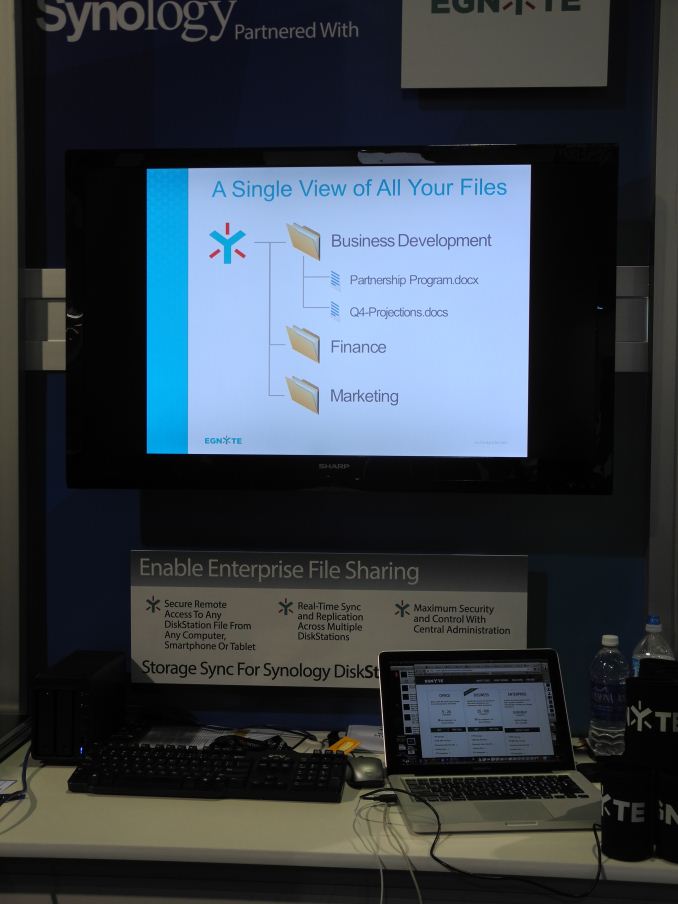
In summary, Synology and its partners had exciting announcements and demonstrations at CES. This bodes well for the NAS market. As competition heats up, more and more enterprise features are getting into affordable NAS units, and this is a definite win for consumers.

     |
Read More ...
QNAP at CES: Fanless NAS, mSATA SSD Caching, Home Automation and More...

QNAP had already sent out a detailed invitation last month, and I had already formed some opinions about the products prior to the show. The one that I was most wrong about was the fanless NAS, HS-210. So, we are going to discuss that first.
HS-210 Audiophile NAS
The HS-210 is a standard 2-bay Marvell SoC-based NAS marketed as being completely silent and fanless. This NAS is not going to win any performance records (only one GbE port, a 1.6 GHz ARM SoC etc.), but the market it is targeting doesn't need high performance. Personally, I would never have a NAS in full view in my entertainment center for two reasons - they don't blend well with the existing equipment and the noise from the installed hard drives would be a distraction in certain scenarios.
TS-EC2480U-RP
The TS-EC2480U-RP is a 24-bay 4U NAS based on the Intel Xeon E3-1245 v3 (belonging to the Haswell family). The standout feature of the system is the four mSATA slots which can be used for SSD caching. Products such as these will continue to serve mSATA well even as the consumer focused products turn to M.2 and PCIe-based solutions. QNAP also stressed the fact that the SATA ports are not fed through cables, but have the connectors wired directly on the PCB. Of course, with support for 24-bays, a 'cable-management' solution on this scale had to be implemented.The unit comes with four 1 GbE ports directly from the board, and there are two PCIe expansion slots available for adding up to four extra 10GbE ports. The mSATA SSD caching feature frees up the main bays for participation in the storage pool.


TVS-x70
The TVS-x70 class of products is the first that I have seen in this NAS market segment with an in-built hypervisor. This allows end-users to run virtual machines on their Turbo NAS units. QNAP had convincing demonstrations, running Windows 8, Ubuntu and other operating systems on top of their Turbo NAS unit. Essentially, it provides all functionality of a VM host. This feature is available for free with a QTS upgrade. However, QNAP is marketing specific units with the TVS tag for this purpose. These units have more RAM than usual to accommodate the memory requirements of the virtual machines.This feature allows users to utilize their Turbo NAS unit as a server for storage as well as virtual machines. Another advantage of running VMs on top of the NAS is the fact that storage requests are routed internally, and don't clog up the external network bandwidth. This type of feature could turn out to be very effective and useful in certain usage scenarios.
Integration with Control4
QNAP also had a demonstration of their integration with the Control4 home automation system. A NAS is an essential aspect of the home automation scene, and QNAP claims that they are the only NAS vendor to be officially certified by / integrated with the Control4 system. The demonstration involved using the Control4 hub to access and navigate the NAS contents.In summary, QNAP seems to be making great progress on the home as well as business consumers front. QTS 4.x, which we have already covered before, resolves many outstanding bugs from the previous releases and adds storage pool features to prepare onslaught into the higher-end storage manufacturers' domains. Hypervisor features only tend to add to the attractiveness. That said, there are still a few UX issues (responsiveness, in particular) that I faced with QTS when using it early last month. QNAP assured us that it was being looked into. All said, QNAP was presenting its best foot forward at CES 2014 and we hope the NAS market will continue to benefit from their strong showing.

| |
Read More ...
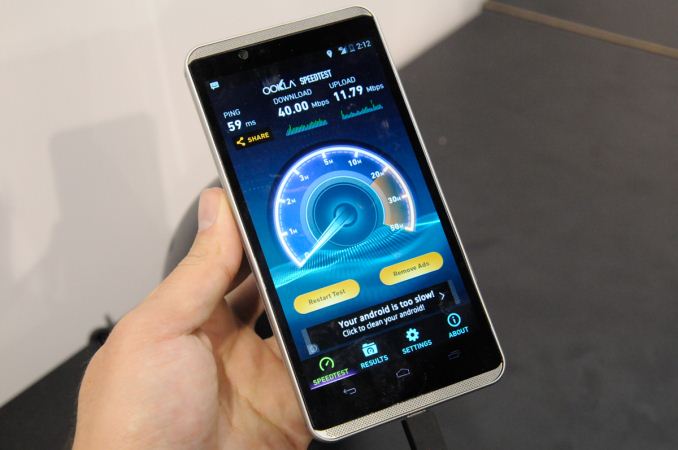
Broadcom Teases Upcoming Cat 6 LTE Multimode Modem, M320 SoC with LTE


| |
Read More ...
A Look at Sequans Single Mode LTE Baseband
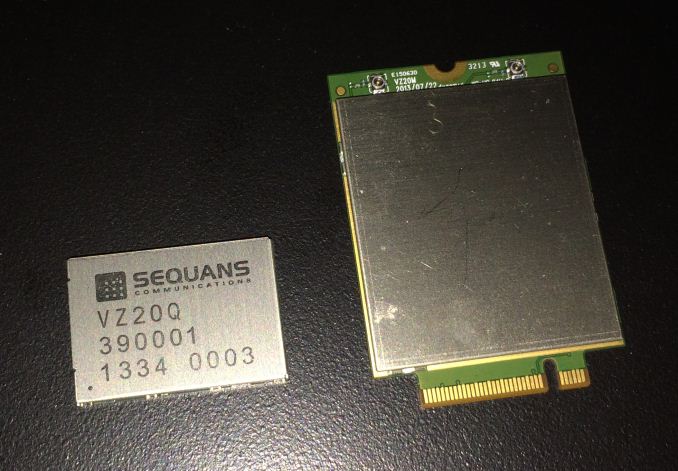
Both are based on Sequans Mont Blanc LTE baseband, which is 3GPP Release 9 capable, supports up to Category 4 speeds (150 Mbps on the downlink), and is built on a 40nm process. In addition the two modules support both Band 13 and 4 on Verizon. The transceiver has 6 ports, so there's room for adding even more bands as well.
The VZ20Q will provide LTE in Verizon's upcoming kid-oriented Kurio 7x LTE tablet, in addition to a few more upcoming tablets. Sequans told me the price for both modules is already sub $30, and the goal is to get price down to under $20 eventually.


| |
Read More ...
A Look At Altair's Single Mode LTE Modem in the Ellipsis 7
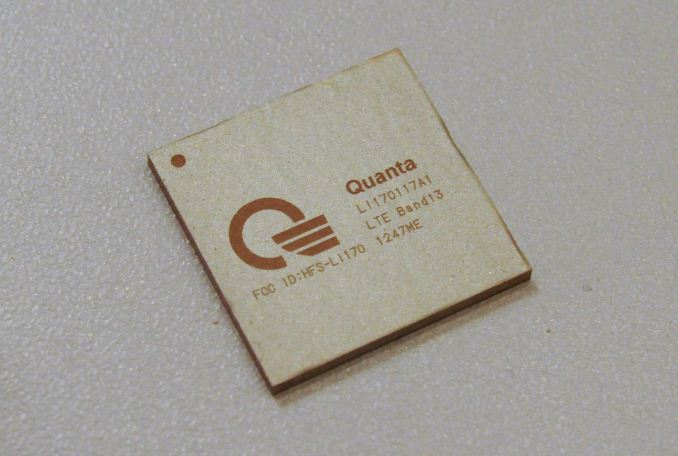

Altair noted it has another major design win with the same module which is slated for imminent arrival in the USA.


Verizon completed its LTE coverage rollout and achieved nearly parity with its 3G EVDO coverage in 2013, in addition to green-lighting LTE-only devices with its newest RFPs. It's already looking like 2014 will be the year we see many more single mode LTE devices start arriving in the USA, bringing faster speeds to the masses for lower cost.


| |
Read More ...
Buffalo Technology Updates Networking Lineup at CES

While most of the products were the standard upgrades (for example, the AirStation Extreme AC 1900 WXR1900DHP is the 3x3 802.11ac solution combined with a N600 solution that every other router manufacturer has added to their lineup and the travel router, WMR 433, is a 802.11ac variant), two products caught my eye. The first was the MiniStation Air HDD, a wireless portable hard drive with a USB 3.0 interface. The unit provides up to 1 TB of storage space for mobile devices while sporting a battery capable of 10 hours of operation on a single charge. The product is very similar to the Seagate Wireless Plus that was introduced last year. The differentiation provided by the Buffalo unit is the fact that there is a dedicated port to charge up a mobile device using the internal battery (i.e, the unit can act as a power bank too).


Buffalo also had their NAS lineup on display. The important announcement in that area was the tie-up with Axis for a NVR device. Based on a 2-bay Marvell SoC sporting NAS, the unit takes advantage of the AXIS Camera Companion (ACC) software to record the feeds automatically to the NAS. With this software, the user doesn't even need to login into the Buffalo NAS. The company claims that recording up to eight 1 MP streams can be guaranteed without any storage bottlenecks (this includes viewing those recorded streams simultaneously). More number of streams are supported (i.e, there is no separate video surveillance license necessary to add new cameras). The downside is that the management part through ACC is available only for AXIS cameras (but, ACC comes free with any AXIS camera purchase).


DELA - High Resolution Audio NAS
Buffalo also had on display a new branded solution in the NAS space for audiophiles. Under the DELA brand, Buffalo has been selling audiophile-grade NAS units in Japan for some time now. Apparently, they are popular enough in Japan to warrant their introduction in the US market. Put simply, these are passively cooled NAS units with a heavy aluminum metal chassis.Optimized firmware eliminates network jitter so that the audio data is streamed over the network without packet loss to the digital receiver. Personally, I don't believe that the way digital bits are transported to the receiver has any bearing on audio quality (since the digital audio data is most probably going to be buffered in the receiver's local memory before playback anyway), but many audiophiles have been spending thousands of dollars on such equipment, and Buffalo is getting ready to cater to them with the DELA brand.


| |
Read More ...
TRENDnet Launches HPAV2-based Gigabit Powerline Adapter at CES
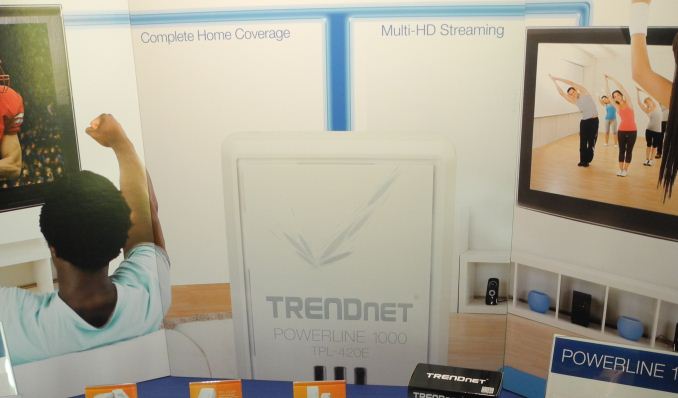
The announcement which caught my eye, however, was the TPL-E420E2K, a 1 Gbps powerline adapter kit. This seems to be one of the first products to be announced based on the MIMO-capable QCA7500 from Qualcomm Atheros. Since the public announcement of the chip was only in October 2013, it is not surprising that the TPL-E420E2K is expected to ship only in June 2014. The MSRP will be $170. Considering that TRENDnet was confident enough to announce as well as display the product (in its non-final form) at CES, it is likely that the product bringup is going smoothly on schedule.
Other announcements include IP cameras (a couple of the models come with 802.11ac radios), new USB wireless adapters and new powerline adapters.


| |
Read More ...
Lenovo Digital Home, AIOs, etc.

Ganesh already covered the Lenovo Beacon, so I’ll skip that and move on to the N308 All-in-One, a desktop alternative sporting a Tegra 4 SoC, 19.5” display, 500GB of storage, and an optional keyboard and running Android 4.2. It has a fully functional battery rated at three hours of battery life, so if you want to turn some eyes, try pulling out your “19-inch tablet” next time you’re in a meeting – and don’t worry, as the 10.14 lbs/4.61kg weight can serve as an excellent upper body workout when lugging this bad boy around! Seriously, it’s a bit of an odd device to place, but if you want a lot of storage (say, for video playback) on a large Android device, the N308 has you covered. Pricing starts at $450, with availability starting any time now.
And wrapping up with “more things Jarred didn’t properly photograph”, we have the ThinkVision Pro 2840M display and the ThinkVision 28 AIO (which Ian covered remotely several days back). Both feature 4K displays, with the main difference being that the 28 AIO features a “next-gen NVIDIA Tegra processor” (presumably Tegra K1) with Android 4.4. There weren’t many other details given that we haven’t covered already, but this is basically the next-generation version of the N308 discussed above. As for the display, it looked beautiful, as you might guess, with 10-bit color, 300 nit brightness, and 157 PPI – but as I’ve mentioned elsewhere, high-DPI support under Windows is still not all it’s cracked up to be (mostly thanks to the lack of proper support by the software vendors). Impressively, the 28” 4K display is targeting a price point of $800.
And with that, I'm boarding my flight so I will have to continue coverage over the coming days! CES may be over, but there's still a lot to discuss (and not enough time to do it).


| |
Read More ...
Lenovo: Yoga, Miix 2, and ThinkPad Tablets; Vibe Z and K900 Smartphones

The Miix 2 line of tablets takes a slightly different approach, going the detachable tablet route. I didn’t get many (usable) pictures of the Miix 2 tablets, but there are three models available: Miix 2 8” has an 8” 1280x800 display, the Miix 2 10” has a 10.1” 1920x1200 display, and the Miix 2 11” bumps the display size up to 11.6” while keeping the 1920x1200 resolution; both feature IPS displays. The Miix 2 tablets are also Windows 8.1 tablets, using Intel’s Bay Trail Atom platform. The 8” model starts at $299 for 32GB eMMC and offers up to seven hours of battery life and it’s available now. I didn’t get pricing or availability on the 10” and 11” models, but I suspect both will be priced a bit higher ($350-$400?) and should be available in the next month or so; they’re rated at up to eight hours of battery life. Besides the multimodal (TM!) functionality, the keyboards were reasonably comfortable but do not add any additional battery capacity.
Also on display (but not photographed properly by yours truly) is the new ThinkPad 8 tablet. It has an 8.3” IPS display, weighs 409g, and provides up to 8 hours of battery life. Higher-end features include a micro USB 3.0 port with an optional USB 3.0 dock and a 1920x1200 IPS display. Availability is scheduled for later this month, and the ThinkPad 8 Tablet comes with an Intel Atom Z3770 SoC (Bay Trail) and 2GB RAM, with up to 128GB of eMMC storage. The chassis is also constructed of aluminum, giving this a higher-end feel, the 8MP camera is slightly better than competing tablets, and 4G connectivity is optional. Pricing starts at $399, presumably for the 32GB eMMC model without 4G.
Moving over to the smartphone side of things, Lenovo had two phones on display: the Vibe Z and the K900. The K900 was launched last year and features a Clover Trail+ SoC (Z2760 2.0GHz) with a 5.5” 1080p display with Android 4.2; don’t get too excited, though, as it’s not for the North American market. As for the Vibe Z, again it’s not available in the US market (boo!), but if you live in a supported market it comes with a Qualcomm Snapdragon 800 2.2GHz quad-core SoC, Android 4.3, a 13MP rear-facing camera (and 5MP front-facing), a 5.5” 1080p display, and 2GB RAM/16GB eMMC storage. It felt pretty good in hand, and at 145g it’s pretty light, so it might be something for our non-US readers to keep a lookout for.


| |
Read More ...
OWC to Bring Aftermarket SF3700 PCIe SSD Upgrades to 2013 Macs
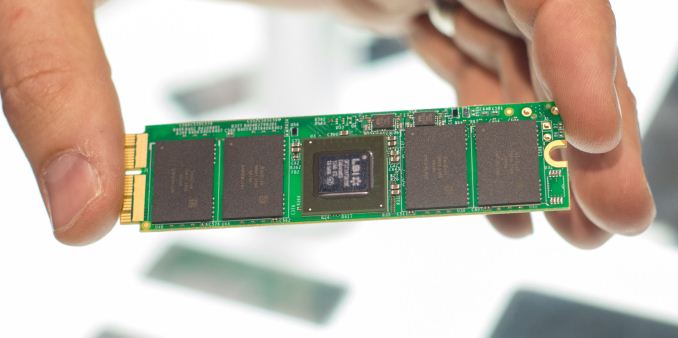
OWC will be producing these drives with the right proprietary connector for all of Apple's 2013 Macs with PCIe SSDs. We'll see x2 and x4 versions, just like what Apple offers today. As with other SF3700 vendors, we'll likely see Toshiba 19nm NAND used although OWC reminded me that they still buy some Micron NAND.
It's too early to talk about pricing, but I'd expect something a bit cheaper than Apple's upgrade costs (plus the fact that you get to keep the drive you bought your machine with).

The bad news is you'll have to wait until sometime in Q3 of this year to get the drives. OWC has historically been able to deliver SandForce based SSDs very quickly, so as soon as the firmware is production worthy I'm sure we'll see these drives on the market.

| |
Read More ...
Patriot @ CES 2014: USB OTG Expansion for Android & More Mobile Power Solutions
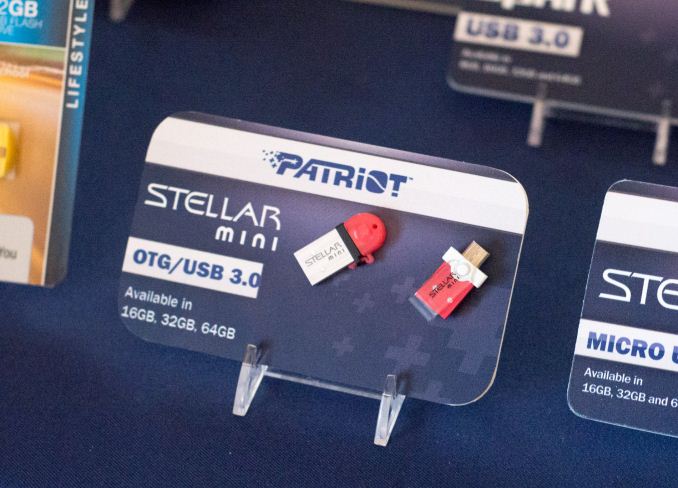
Pictured above is Patriot's Stellar mini USB OTG drive (also available in a larger version). The design is pretty simple: you're looking at a small USB stick with a micro USB connector. The intended use case is for Android devices that don't have a microSD card slot, allowing for expansion using the micro USB connector. Your device needs to support USB OTG obviously, but it's a unique solution for those users who want external storage expansion but prefer the form factor/battery capacity/etc of a fully sealed device with no microSD slot.

The Patriot Magnum USB 3.0 SSD gets a capacity update this year. The new M2 USB 3.0 drive will be available in 512GB and 1TB capacities. I believe there's a Phison controller inside.

Patriot also had its entire lineup of FUEL+ external batteries on display. First up are the new FUEL active products. Patriot is offering two options (2000mA and 6000mA), both with integrated LED flashlights and styled for users with a more active lifestyle. The 6000mA model features both 1A and 2.5A USB outputs, although I don't know what charging specs are supported (I'm assuming USB BC 1.2, not sure about proprietary ones though).

The standard FUEL+ offerings are now available in a variety of colors in an attempt to make them a little more consumer friendly:

Patriot is also introducing two iPhone 5/5s accessories. A FUEL+ case:

As well as a new "lighter" form factor:

This one is designed to go on your keychain and kept around in the event of an emergency.
Last, but not least, Patriot reminded us that it is working with its suppliers on devices that use flexible batteries:


| |
Read More ...
Lenovo: New ThinkPad X1 Carbon, Yoga, IdeaPad, and Flex Laptops

On the laptop front, the big news is the new ThinkPad X1 Carbon, which has been updated with Haswell, a thinner and lighter design, a redesigned keyboard, a new display, and last but not least a new external dock. The X1 Carbon uses a 14” display and still manages to pack all of this into a 2.8 pound laptop weight, with a promised nine hours of battery life.
Starting with the keyboard, the layout has been modified quite a bit. Gone is the row of function keys, along with seldom (never) used keys like Scroll Lock, Pause/Break, Caps Lock, and Insert. The cursor cluster gets dedicated PgUp/PgDn keys while the Home/End keys are moved to the former Caps Lock location. Caps Lock, if you’re wondering, is still available by double-tapping the left Shift key. As for the function keys, the entire row has been replaced with an adaptive LCD panel that can detect and change the available keys based on your currently running application. By default it shows the normal multimedia keys (volume control, LCD brightness, Search, and a few others); load Internet Explorer and you get refresh, new tab, and back keys. You can also cycle to normal function keys or disable the adaptive feature entirely.
The trackpad is also larger this round, with a fully hinged design (i.e. hinges on the top and bottom of the touchpad); the TrackPoint is still present and the top of the touchpad becomes the usual left/right buttons if the system detects use of the TrackPoint. As for the OneLink Dock Pro, it provides two USB 3.0 ports, two USB 2.0 ports, Gigabit Ethernet, DisplayPort, and DVI through a single cable. Pricing for the new X1 Carbon starts at $1299 with availability scheduled for the end up January; the OneLink Dock Pro is available now for $179.
Moving over to the Yoga side of things, there are a couple new laptops to announce: the Yoga 2 Pro and Yoga 2 (with some Yoga tablets as well, but we’ll cover those separately). Similar to Microsoft’s Surface products, the Yoga 2 targets a lower price and has less advanced features while the Yoga 2 Pro goes “all-in”. Besides supporting up to Core i7 Haswell processors (the U-series parts), the Yoga 2 Pro adds a high-DPI qHD+ (3200x1800) touchscreen IPS display and the keys on the keyboard now “lock” when in tablet mode. Availability appears to be “now”, with pricing starting at $949. As for the Yoga 2, there will be two models available, one with an 11.6” 1366x768 display and one with a 13.3” 1080p display. The Yoga 2 13” will support up to Core i7 Y-series parts and should last up to eight hours on a charge, while the Yoga 2 11” targets a more budget-friendly feature set with up to Pentium Y-series CPUs and eight hours of battery life. The Yoga 2 11” is available now starting at $599 while the Yoga 2 13” will be available later this month, also starting at $599.
Other laptops were also on display, though I didn’t have as much time to look at them. I know there are new IdeaPad Y40/Y50 laptops, with a 4K touchscreen panel available on the Y50. Both models are supposed to be quite a bit thinner and lighter than the previous generation as well. Also shown were a few Flex laptops, including the Flex 15D shown at AMD’s press event that has an AMD A6 APU and 300 degree hinge (so not quite a Yoga). There’s an Intel Flex 15 available as well, starting at the same $499 as the Flex 15D but going up to Core i7 processors on higher-end models, and a Flex 14 Intel as well starting at $499. All three Flex laptops are available “now”.


| |
Read More ...
CES 2014: EagleTech and Nanoxia

We’ve reviewed a couple of Nanoxia’s cases like the Deep Silence 1 and Deep Silence 2, and the review of the Deep Silence 6 is in the works and should post in the near future. The cases tend to be attractive minimalist designs that perform well without making a lot of noise. There’s only one issue that we’ve had in the past: getting the cases in the US market has been difficult. EagleTech is working to address that problem, as they have acquired the exclusive rights to sell Nanoxia’s cases in the US market. They already have at least one retail partner, and it sounds like they’re working to get the cases listed on Amazon and Newegg, which should definitely boost sales. Better availability of good cases is never a bad thing, so if you’ve been purchased or are looking to purchase a Nanoxia case here in the US, you can thank EagleTech.


| |
Read More ...
Kingston @ CES 2014: LSI SF3700 PCIe SSD Benchmarked and More
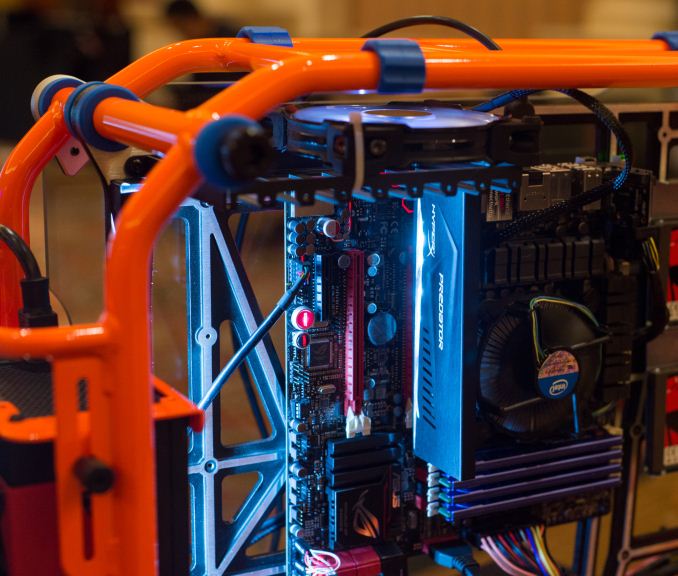
The HyperX Predator is a half-height PCIe x4 card that implements LSI's SF3700 controller running in PCIe mode. LSI kept all of its partners on a short leash at the show, allowing limited public demonstrations. Kingston was among the few partners allowed to show performance, but only sequential read speeds. LSI seems quite concerned about showing incompressible write performance, I was escorted away from the test system while the Kingston demo operators prepared Iometer (which required 10GB of incompressible writes).

Peak sequential reads of 1800MB/s for a high-end desktop drive is just awesome. There's clearly a lot more to performance than peak sequential reads, but I figure at least one of the native PCIe controller makers is going to get it right this generation.
LSI's caution on talking about write performance is understandable, especially when you consider that SF3700 drives won't be shipping until the middle of the year (early Q3 I'm told). I'd expect more performance details closer to Computex in June.

The HyperX Predator is particularly exciting because it will be among the first native PCIe SSDs truly aimed at the desktop enthusiast. Previous PCIe designs used silly on-board RAID with multiple SATA controllers, and generally offered no price (or performance) benefit over multiple SATA drives. Native PCIe makes a lot more sense and it can deliver an incredible amount of performance.
The Predator will ship in AHCI mode. Kingston expects to deliver NVMe support (lower overhead communication protocol rather than just running the SATA protocol over PCIe) via a firmware update before the end of the year. The upcoming Haswell E platform (due out around September) may coincide with NVMe driver availability.

Kingston expects to have 240GB, 480GB, 960GB and 1.92TB versions available at launch. The drives will feature Toshiba's 19nm 2bpc MLC NAND. We've seen many 3rd party SSD makers transition to Toshiba's 19nm MLC NAND given the short supply of Micron/Samsung NAND, and Hynix's insistence on bundling controller + NAND together. The Micron/Samsung NAND seems to be used by Micron and Samsung for their respective 1st party SSDs.

Kingston will also be building a 2.5" SATA drive using the SF3700. Obviously performance will be far more limited in this version. We will also see M.2 PCIe versions, although it's unclear whether they will be x2 or x4.


| |
Read More ...
Eyes On With the Oculus Crystal Cove Prototype
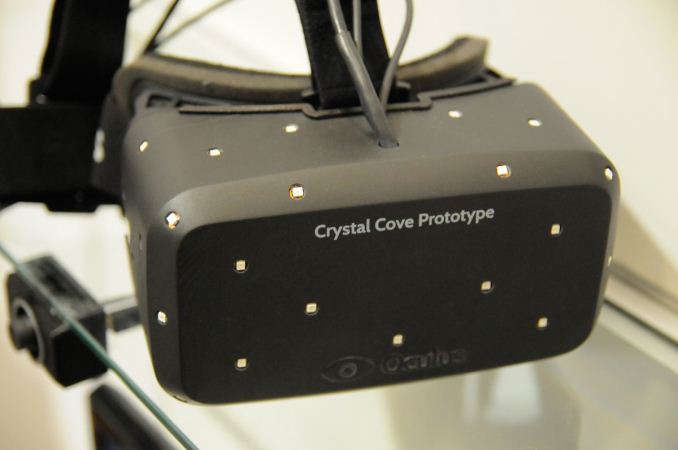

The positional tracking system was impressively robust, correctly tracking subtle movement of the goggles even with my head facing nearly opposite the camera. It's clear that Oculus has provided enough target LEDs for tracking the goggles in a robust fashion. In addition, the the demos I tested failed gracefully when the system finally lost positional tracking, de-saturating the scene to signal to the viewer that tracking was lost and only the inputs from the IMU persisted for movement. Tracking was smooth and range was impressive as well, I could lean all the way forwards and left and right without moving out of range.

The display resolution itself has increased since last I saw it, from (1280x800) WVGA to 1080p. In addition, the panel type has changed from LCD to OLED, which has much faster pixel response time (~20 ms for a typical backlit LCD compared to as low as 1/1000 ms for OLED) and minimal image retention. Oculus seems to still be constrained by the current status of the mobile display market, given the 5-6 inch size of the display and desired resolution, but it's obvious that eventually they'll move their own custom panels given adequate volume. While the OLED display does have minimal smear and excellent response time, I did notice the presence of a non-RGB subpixel matrix, PenTile (RG,BG), which was distracting. I still want higher resolution, and I'm sure Oculus does as well.
Oculus also has a low persistence mode that flashes the incoming frame briefly and blanks the display in-between, which results in smoother movement without the human visual system perceiving judder from the frame being displayed continually until a new one appears. The brain fills in the gaps between frames and the result is an increased perception of smoothness. Oculus demonstrated the system with this low persistence mode enabled and disabled, I wouldn't say the effect is dramatic but definitely improves the experience when you're moving your head quickly.
In addition the Crystal Cove has a new optical system and correspondingly better glass and viewing angles, which improve peripheral vision considerably.
Oculus showed off two games, the first was a space-based dog fighting game called EVE Valkyrie, built by the same developers and set in the same universe as EVE Online. The second was a tower defense game demo from the Unreal Engine 4 development kit (UDK). Both performed very well and integrated natively with positional tracking.
Oculus remains the most compelling virtual reality experience I've experienced to date and a product to watch. The addition of positional tracking dramatically improves the experience, and lower image retention from using OLED both work together to dramatically reduce the disorientation that was common with earlier development kit units.


| |
Read More ...
ASUS P9X79-E WS Review: Xeon meets PLX for 7x
Alongside their line of channel and ROG motherboards, ASUS also has business (B/Q chipset) and Workstation (WS) lines for professional markets. The goal of these products is compatibility and stability – the desire to be a rock solid product in the face of any computational conundrum. Today we are reviewing hopefully the first of many ASUS WS motherboards – the P9X79-E WS, for the socket 2011 / performance Xeon market. This is an upgrade over the P9X79 WS, featuring a PLX chip giving seven full length PCIe slots.

| |
Read More ...
NVIDIA Announces Winter 2014 Game Bundle: Assassin’s Creed IV: Black Flag
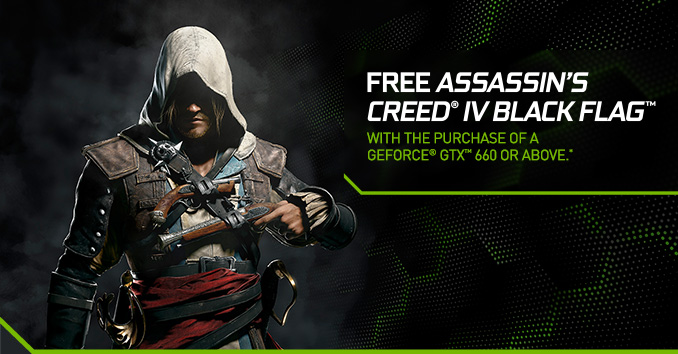
The new bundle will be a simpler bundle, composed of Assassin’s Creed IV: Black Flag and a SHIELD discount. With the winter game release lull upon us, Assassin’s Creed IV remains NVIDIA’s flagship game under The Way It’s Meant To Be Played program. This bundle will be for the GTX 660 and above, and is scheduled to run until February 28th.
Meanwhile the SHIELD discount is similar to the discount that was in NVIDIA’s holiday bundle, with NVIDIA offering a $50 discount on SHIELD when purchased with a qualifying GeForce card. After a series of temporary price cuts, SHIELD itself has now had its price permanently reduced to $249, which brings the final price down to $199 when purchased as part of NVIDIA’s latest promotion.
| NVIDIA Winter 2014 Game Bundles | |||||
| Video Card | Bundle | Shield Discount | |||
| GeForce GTX 760/770/780/780Ti/Titan | Assassin's Creed IV | $50 | |||
| GeForce GTX 660/660Ti/670/680 | Assassin's Creed IV | $50 | |||
| GeForce GTX 650 Series | None | None | |||
| GeForce GT 640 (& Below) | None | None | |||

| |
Read More ...
GIGABYTE at CES 2014: BRIX MAX SFF NAS, running Android
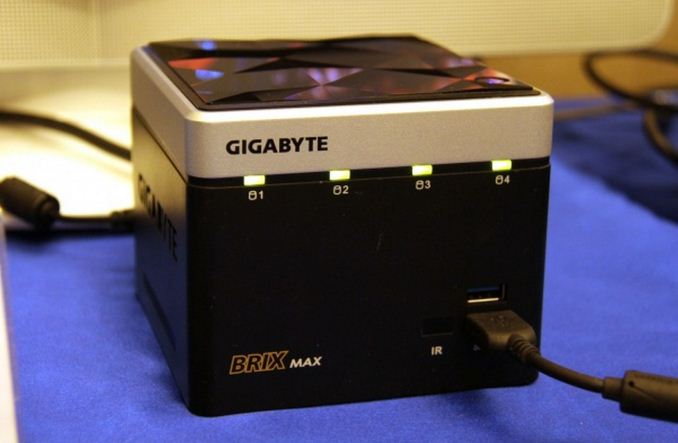
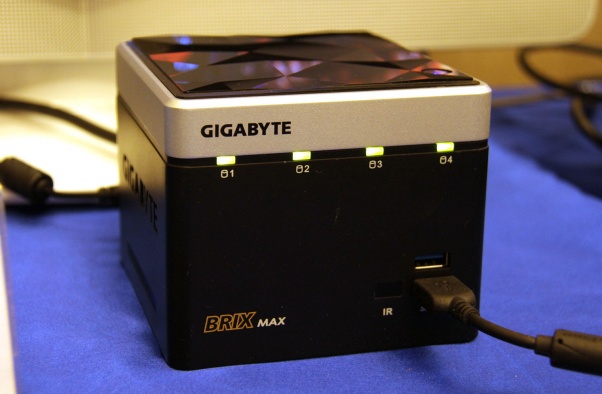
Image courtesy of PC Perspective
The
BRIX MAX is a large BRIX, with space adjustable for four 2.5” drives.
Colin from GIGABYTE stated that the BRIX can enable four 1TB drives,
although 2.5” drives now come in 2TB versions, so I would be interested
if it can fit the larger size drives. Reports vary on what CPUs are
going to be available inside, but GIGABYTE is saying they will come
equipped with IRIS Pro graphics solutions. Interestingly enough, the
chipset is also a discussion here, as in order for GIGABYTE to fit four
drives in they would have to be using either SATA ports on board or a
backplane to fit the drives into, similar to what some chassis do.From other images we can see an IR receiver on the front, gigabit Ethernet and HDMI on the back, as well as a variety of USB ports. The fact that GIGABYTE are quoting Iris Pro graphics means that the system seems overly powerful for what it needs to do, which can suggest many things: users can install another OS and use the device as a normal PC, users can use the BRIX to transcode if needed, there is scope for HTPC duties and so on. Along with Ethernet, the unit is quoted as supporting 802.11n, although I might imagine that could be bumped up to dual band 802.11ac by the time it hits the market.
GIGABYTE is using this initial demo model at CES to gauge the reaction of media and of readers alike, and are welcome to suggestions/opinions and requirements that any AnandTech readers have. I know Ganesh mentioned something about making the drives hot-swappable would be good, which I can see the point of! Personally I would make sure that it is able to fit the slightly taller 2TB 2.5” drives, and RAID 5 and 6 should be standard options in my opinion. Perhaps an eSATA with port multiplication should be here as well. GIGABYTE would love to hear your comments!

| |
Read More ...
The AnandTech Podcast: Episode 27 - CES 2014 Mobile Show
Recorded live from CES 2014, on this episode Anand Shimpi & Brian Klug discuss Intel's mobile product launch with the VP & GM of Intel's Mobile Comm. group, Hermann Eul. Anand & Brian also discuss the recently launched Mac Pro, Qualcomm's Toq and other smartwatches, Asus's ZenFone smartphones, Brian's switch from AT&T to T-Mobile, Sony's latest smartphones, NVIDIA's Tegra K1 & Project Denver, and the fluctuating CPU core counts in CPUs.
Featuring Anand Shimpi, Brian Klug, & special guest Hermann Eul
iTunes
RSS - mp3, m4a
Direct Links - mp3, m4a
Total Time: 47 minutes 30 seconds
Outline h:mm
Interview: Intel's Hermann Eul - 0:00
Mac Pro - 6:42
Smartwatches - 12:36
Asus ZenFone and other Asus smartphones - 21:54
Brian Switches To T-Mobile - 28:11
Sony Smartphones - 33:10
Motorola Smartphones - 36:18
NVIDIA's Tegra K1 & Project Denver - 38:04
Mobile SoC CPU Core Counts - 46:04
Mac Pro - 6:42
Smartwatches - 12:36
Asus ZenFone and other Asus smartphones - 21:54
Brian Switches To T-Mobile - 28:11
Sony Smartphones - 33:10
Motorola Smartphones - 36:18
NVIDIA's Tegra K1 & Project Denver - 38:04
Mobile SoC CPU Core Counts - 46:04

| |
Read More ...
AnandTech Mobile Show at CES 2014 Video Live Now

I had hoped to get this up right away, but getting access to enough bandwidth to download the 3GB source and then put it on YouTube in between meetings was far more difficult than I expected (particularly during the day when available bandwidth at CES was beyond limited).
The video is embedded below, I hope you all enjoy it!

| |
Read More ...
Samsung SSD 840 EVO mSATA (120GB, 250GB, 500GB & 1TB) Review
Samsung is in a unique position in the SSD market. It’s the only company in the consumer SSD business with a fully vertically integrated business model and zero reliance on other companies. The controller, NAND, DRAM, firmware and software are all designed and produced by Samsung, whereas other companies only focus on their core strengths and outsource the rest. The strength of Samsung's business model has been time to market and the 840 EVO mSATA is yet another fruit of that. Read on to find out more!

| |
Read More ...
Swiftech: Enhanced Liquid-Cooling Options

The H220X comes with a compact 2x120mm radiator and fans with an integrated high power pump, reservoir, and CPU waterblock. There’s a window as well to show the current coolant level and LED lighting. It’s shipped in a ready-to-install state with the coolant pre-filled. If you want to add to the list of liquid-cooled devices, you're able to disconnect the tubing and add GPU and chipset waterblocks to the loop. The expected delivery date is March 2014, with an MSRP of around $150. Prototype models with 1x140mm and 2x140mm form factors were also present but not yet ready for launch.
Swiftech had several other items on display as well, including a new Swiftech designed ultra-high pressure pump, the MCP50X. Swiftech had the new pump and their current MCP35X set up in a demonstration showing that the new pump provides roughly 20% more pressure. I also noticed that the new pump runs cooler to the touch than the existing pump. Swiftech didn’t want to provide an MSRP yet, but it’s also expected to ship at the end of March. There is also a new Apogee XL waterblock for Ivy Bridge and Haswell that features a higher flow rate than previous Apogee blocks, and going with the LED lighting on the H220X there’s now LED lighting on the waterblock that pulses “like a heartbeat”. Continuing the theme, new Komodo GPU cooling blocks are available for AMD’s R9 290/290X GPUs and NVIDIA’s GTX 780 Ti. Both blocks feature a large window to show the coolant and LED lighting (that can be changed through the use of colored plastic strips to red, blue, or green along with white).
Wrapping things up, there’s a new Maelstrom V2 5.25” bay reservoir (again with LED lighting) that’s paired with the new MCP50X pump. You can see a shot of this in the gallery where it was hooked up to a couple of R9 290X cards with the Komodo coolers, an Apogee XL CPU cooler, and three 3x120mm radiators. Also on display are quick disconnect fittings with a new black chrome finish that some users are certain to love. While most people will never use liquid-cooling on their PCs, the segment of the market that wants to improve cooling and lower noise – and maybe add some visual flair to their PC in the process – will always appreciate new liquid-cooling solutions and that’s what Swiftech is delivering.


| |
Read More ...
2015 Ford F-150 Loses 700 Pounds, 93% of Body Structure is Made of Aluminum Alloys
Ford's new F-150 also brings with it a new 2.7-liter EcoBoost four-cylinder engine

| |
Read More ...
CES 2014 Wrapup: Keep Bakbone's Laptop Holder Away From Smeagol
Rings attach via powerful neodymium magnets, can be branded for colleges, weddings, or corporate events

| |
Read More ...
Jelly Bean Accounts for 54% of Android Installations, KitKat Rises Slightly to 1.4%
Meanwhile, 78 percent of Apple's mobile users are on iOS 7

| |
Read More ...
Audi Debuts Allroad Shooting Brake Concept, Likely Previews Upcoming TT
Audi drops some hints on what to expect from the next TT

| |
Read More ...
CES 2014 Odds and Ends: Kingston, Patriot
Mobile was big at this year's show

| |
Read More ...
CES 2014: Ford's Says Solar is Serious, Can Provide 75% of an EVs' Juice
High tech metal-backed, lens-concentrated panels deliver 8 kw of daily charge to an Energi PHEV

| |
Read More ...
Samsung Exec: OLEDs Not Ready for Prime Time
UHDs, on the other hand, seem to be more promising for right now

| |
Read More ...
Yelp Court-Ordered to Reveal Identities of 7 Reviewers
Yelp has already appealed the decision

| |
Read More ...
Google+ Invades Gmail, Allows Users to Email Without Email Addresses
Google is integrating Google+ into Gmail so that users of the social network can email you, even if they're complete strangers that don't have your email address

| |
Read More ...
Global PC Shipments Decline 6.9% in Q4 2013 says Gartner
IDC shows a smaller 5.6% decline in the global PC market

| |
Read More ...
Quick Note: Target Data Breach Affected 70 Million Customers
Previous reports said 40 million

| |
Read More ...
DISH Ponders Pulling Out of Controversial LightSquared LTE Bid
LightSquared claims DISH CEO fraudulently purchases $1B USD in debt to drive a sale at a lower price

| |
Read More ...
Cyber Security Experts Boycott, Refuse to Speak at RSA Conference After NSA Deal
NSA entered into a $10 million contract with RSA to place a flawed formula within encryption software

| |
Read More ...
Nissan Leaf Gets Slight Price Hike for 2014 as CEO Wants to Double EV Sales
Leaf gets modest $180 price increase for 2014

| |
Read More ...
Gigabyte Announces U21MD 11.6" 3-in-1 Laptop, Desktop Dock
Gigabyte's U21MD will be available with a docking station

| |
Read More ...
CES 2014: How BMW Taught Me to Stop Worrying and Love the EV
If the i3 Coupe can enamor a jaded EV observer, imagine how the throngs of hybrid vehicle drivers will react

| |
Read More ...
IBM Betting $1 Billion on Watson Supercomputer with New Business Unit
The new unit will be located in New York City and will have 2,000 employees

| |
Read More ...
Microsoft's New CEO Likely to be Internal Candidate
Ford CEO Alan Mulally is seemingly out of the running

| |
Read More ...
Samsung Galaxy S5 Due in April, Will Launch with New Galaxy Gear Smartwatch
Samsung is also looking at eye scanning technology

| |
Read More ...
Mazda Delays Skyactiv-D Engine Launch in the U.S. (Again)
No word on when the launch might happen

| |
Read More ...
Apple, Samsung to Meet for Mediation Over U.S. Patents, Discuss Settlement Opportunities
Could this be the end of the U.S. patent war? It's a start

| |
Read More ...
Available Tags:SSD , Lenovo , USB , Android , Kingston , ASUS , Xeon , NVIDIA , GIGABYTE , AnandTech , Samsung , Ford , Audi , Google+ , Security , Nissan , CEO , BMW , IBM , Galaxy , Galaxy ,


No comments:
Post a Comment