

INTERVIEW: Fox: 'We want Digital HD to be the new Blu-ray'

Like music and books before it, movies are making the move from physical to digital ownership and figures show that things are starting to speed up. In the UK, digital downloading is still slight with just 2% of movie purchases being for a digital copy but, according to Twentieth Century Fox, this is increasing.
"Consumer spending on digital is up 50% versus the year before and we are seeing that with new movies between 10% and 20% of all purchases are now digital," Keith Feldman, President International Home Entertainment, explained to TechRadar when we met up with him at Fox's offices in London.
Fox is seeing this shift towards digital as a massive opportunity to make its mark in this area, hoping that its Digital HD offerings will tempt more to buy more movies online and store them in the cloud.
Digital HD is the movie industry's push to make digital downloads mainstream. Announced a year ago for the US, they are as cheap as DVDs, and launched earlier than discs because they don't fall within the conventional (and artificial) release window.
It is a gamble for an industry usually slow to react to a consumer's changing habits.
Digital HD, for Fox, is seen as much more of a rebranding exercise, and it is something that much of the movie industry is behind. While many online stores offer digital downloads, there wasn't a name the industry could truly get behind until Digital HD was coined. And it is hoped that this term will do what Blu-ray did for high definition – offer up a format that when seen movie buyers know just what they are getting.

"Some digital consumers are worried about whether or not what they are getting online is legitimate so we are hoping that Digital HD will stand for quality, affordability, authenticity and all the benefits this offers," notes Feldman.
"Digital HD should be seen like Blu-ray. When you buy a movie digitally that should be Digital HD. And we eventually want this to be reduced to DHD."
Digital love
While this sounds straightforward, the digital movie landscape in the UK is anything but. If content is king, then when it comes to online there are a lot of palaces it can reside.Digital HD downloads can be found in eight places so far – BlinkBox, iTunes, PlayStation, Google Play, Xbox, KnowHow, Vdio and WuakiTV – but Feldman is expecting online movie download stores to at least double by the middle of next year, with Amazon being one of these.
It is critical then, for Fox, that Digital HD becomes a viable choice. This is why it is now ramping up its marketing push in the UK – a year on from when the first Digital HD titles were launched in the US.
Epic launch
"We did a soft launch [in the UK] with Taken 2 and then with Life of Pi and now we are really pushing DHD," says Feldman."Where we have been allowed we have gone early with DHD. Epic was recently launched and DHD was available three weeks before the DVD or Blu-ray was released."
This three-week window is one of the big USPs for Fox when it comes to DHD, as is the price, notes Feldman: "We want to make the Digital HD the first home entertainment release – and it's a high-definition file for the same price as you would pay for the DVD."

For half this price you can now stream unlimited movies and TV shows, though. With the likes of Netflix and Lovefilm offering burgeoning platforms to get your flick fix, is the movie industry too late in its digital offerings?
Feldman doesn't think so, believing that the UK is a place full of collectors and that streaming is a stepping stone into digital.
"The UK has always been our most developed ownership market in the world with half of all UK paying individuals buying discs. But subscription streaming services offer a great digital experience. And that is just a good thing to get people digitally comfortable.
"People buy DHD because they want the latest movies fast and they want to collect them. Streaming tends to be for television series so we think that both can co-exist."
DHD isn't the only digital initiative Fox and other distributors have been pushing. UltraViolet, which was subject to a many a delay, offers what film companies believe is a solution to sharing of movies.
It is a service mired in convolution, though. One look at its FAQ page and you can see that simplicity has taken a backseat – there's 54 questions to plough through if you have issues with the service.
Feldman was quick to note that UltraViolet was not to be confused with what was being offered this time around.

"We don't see Ultraviolet as a brand, we see Ultraviolet as a feature – a feature that comes with Digital HD," says Feldman.
"So if you buy DHD at a retailer that is UV capable, then you have your file in a retail digital locker and in a UV digital locker. But we believe that the consumer big brand for ownership is Digital HD. All of the studios have aligned around Digital HD."
Infinite shelf space
While Fox is pushing price and early release as the biggest merits of Digital HD, one of the biggest draws for a collector may well be breadth of choice. And while Feldman was giving nothing away, it looks like we may see some forgotten gems come to DHD – ones that never even made it to disc."The platforms we are on now are focused on getting access to the most amount of content that they possibly can," said Feldman.
"Many of them are saying that they want our entire library, even stuff that we haven't released before on DVD because their view is that they have infinite shelf space.
"The digital store can be the place to store that breadth of offering that we could never offer on the high street."
- Want to watch digital downloads on the best TV? Then check out the Panasonic TX-L65WT600

     |
Read More ...
Nexus 5 caught on camera again, this time in Russia

Pictures of the supposed Google Nexus 5 are popping up all over the place at the moment, and the latest set of snaps have winged their way onto the web from Russia.
The images appeared on the search giant's very own social network, Google+, courtesy of Anton Kunzentsov from Russia, although they're not actually his photographs.
It's unclear where our man Anton picked them up from, but one thing is for sure - the handset in question looks very similar to previous leaked images also claiming to be the Nexus 5.
More of the same
What these photos provide us with is a quick look round the handset, with the same rubberised back and camera layout as the new Nexus 7, while on the front there's clearly no buttons in sight and a relatively large display.Rumours suggest the Nexus 5 will pack a 2.3GHz quad-core processor, 2GB of RAM, 13MP rear camera, wireless charging, NFC and Google's latest software - Android 4.4 KitKat.
As to when we'll actually see the Nexus 5 for real, that's still a little up in the air. Some reports suggest sometime this week, while others point towards the end of the month for Google's announcement.

| |
Read More ...
Android KitKat wants to give you more choice when it comes to texting

Android KitKat will let users decide what app to use for sending and receiving text messages rather than automatically defaulting to the classic Android Messaging app.
Once KitKat lands on Android handsets, users will be able to choose a default SMS app for themselves from within system settings.
The upshot for devs is that they need to adjust their hidden SMS APIs, for which full instructions are given in the blog post itself.

Getting set
In the post, Android reps outline what devs need to do to ensure their SMS apps are ready for the KitKat release, whenever that may be.Previously apps were able to handle text messages in this way, but now that task will be set to one default app in the settings.
While it doesn't contain any concrete information about when KitKat is likely to launch further than "later this year", the post does "encourage" devs to update apps "as soon as possible" which suggests that the Android 4.4 launch will be soon.
Indeed, we're expecting KitKat to be unveiled this week alongside a new Nexus 5 handset.
- What's that? You want to know everything there is to know about the new Nexus 5?

| |
Read More ...
Google Glass 2 is already on its way

Will the Google Glass that hits the market actually be more enhanced than the Explorer edition we're seeing at the moment? It's a solid theory, and might be backed by word from Google that it's already working on the next generation of Glass.
Glass isn't set to launch until next year but according to Technology Review, Mary Lou Jepsen, head of Display Division at the Google X lab, said that she and the team are busy working on preparing the next step.
Jepsen spilled the beans at a MIT's EmTech conference, telling the audience that the team was "maybe sleeping three hours a night to bring the technology forward."
What's (s)he building in there?
She also said that we may see what they're working on next year. Wait, the same year that Google Glass is suppose to be made available? Hmmm.We actually saw hints of a new Google Glass earlier this year when a patent surfaced pointing to a product that was designed more like an actual pair of glasses.
Before then we're expecting Google's smartwatch to touch down and we reckon it might be getting a heavy dose of Google Now.
Meanwhile, get some sleep Jepsen.

| |
Read More ...
iPad mini 2 tipped again to shun Retina display
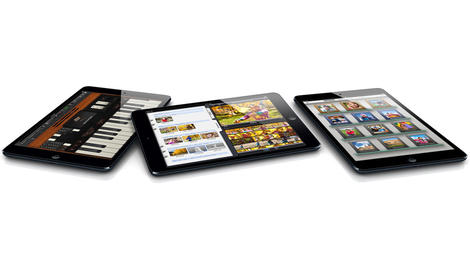
Despite the fact that a Retina display is far and away the most needed addition to the iPad Mini 2, there's more suggestions that it might not have one.
According to BGR, that's Cantor Fitzgerald analyst Brian White's thoughts. As he apparently claimed that while a Retina display toting version of the tablet was in the works it wouldn't arrive until early next year.
In the meantime an iPad Mini with minor updates, such as a faster processor, would be announced as a stopgap along side the iPad 5.
Display dismay
White didn't specify why this would be, simply stating that some of his contacts at trade shows believed that a true successor to the iPad Mini wouldn't arrive until Quarter 1 of next year.If this is the case it could be because of supply chain shortages, which were rumored earlier in the year, or perhaps it's simply being done to keep the focus on the iPad 5.
Even if this is true, a proper iPad Mini 2 (or 3?) complete with a Retina display shouldn't be far behind, but we'd take the rumor with a pinch of salt, as White has been wrong before.
Either way, we should know soon enough as Apple's iPad event is set for October 22.
- We've got more news and rumors on the iPad Mini 2 right here.

| |
Read More ...
Twitter adds option to get DMs from any old follower

If you're a friendly, sociable type, you may be pleased to hear that Twitter is adding the option to receive direct messages from anyone who follows you.
At the moment, only people you follow can send you private messages over Twitter, and you can only DM people who follow you.
However, one eagle-eyed settings lover reports that there's a new option in his settings: "Receive direct messages from any follower."
Big news
Although it doesn't seem to have made an appearance in every Twitter user's options yet, the tick-box affair seems to default to un-ticked, meaning you'll have to opt-in if you want strangers to be able to contact you privately.
While some are concerned that enabling this option will see their inboxes inundated with spam, it may actually encourage us all to report spammy followers instead of quietly letting them boost our follower numbers.
We've asked Twitter if this is just a quick experiment or a feature that will be rolling out to all users over the coming weeks.
Have you got the new option? Are you likely to enable it or would you rather keep control over who can contact you? Let us know in the comments below or - hey! - on Twitter.

| |
Read More ...
Xbox One and PC may play together, hints Microsoft

As PC and console gaming edge closer together, the question of cross-platform play between Xbox One and PC has been brought up a few times. Now it's been posed to Microsoft's Phil Spencer, who hinted that it could be possible.
Speaking to Ausgamer, Spencer said that while there are some technical issues around input and control, there's logic in the idea of an interconnected ecosystem.
"I'm not allowed to leak things," he said, apparently with a cheeky smile. "But I think what you're talking about makes a lot of sense."
All together now
Spencer drew on the example of Shadow Run on the Xbox 360 which supported cross-platform gaming with the PC, and while it wasn't a massive success, Spencer said they all "learnt a lot from it."
More happenings from the world of gaming:David Cage on what Beyond: Two Souls learned from the PS4
Link to the rescue - Wii U sees a 685% UK sales bump
See the Steam Controller in action
"This
connected ecosystem across all the different devices is definitely
where I think the future of gaming is going; you don't have to do it as a
developer," he said.Link to the rescue - Wii U sees a 685% UK sales bump
See the Steam Controller in action
"But you have the capability and I think a system like Xbox Live across all those screens where you know who someone is and who their friends are, what their Achievements are and their progression is really critical to that."
Given the increased reliability on the cloud, and with Gamer For Windows closing doors, now would seem the perfect time for Microsoft to tie things together. Hold tight, folks.
- Is Microsoft about to hit a winner? Find out in our Xbox One hands on review

| |
Read More ...
Samsung Galaxy S5 ready to pack Apple-beating next-gen chip
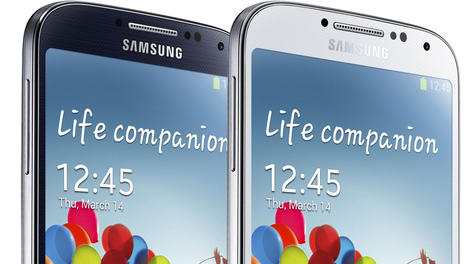
It looks like Samsung might be working on a smaller, much faster and much more efficient chip for the Samsung Galaxy S5, using its Exynos technology to bring out a chip to rival Apple's powerful A7 found at the heart of the iPhone 5S.
Samsung is said to be working on a 14nm (or 14 nanometre) chip for its new flagship, which would be half the size of the 28nm chip in the Samsung Galaxy S4, according to South Korean site DDaily, which is reporting that according to 'industry sources' Samsung is the tentatively-titled Exynos 6.
The smaller size should cut the power consumption of the chip by a large amount, and by using less power it also produces less heat, minimising the chance of the Samsung Galaxy S5 overheating.
Smaller chips have the transistors packed closer together, which means that they can work faster and more efficiently, using less power.
Most smartphones at the moment, including Samsung's, use 28nm chips and the next logical step down in size would be to 20nm, but Samsung seems to be skipping that altogether and jumping straight down to 14nm chips.
Out-doing Apple
This follows on from previous rumours that the Samsung Galaxy S5 might use a powerful 64-bit chip. The move to 64-bits holds advantages of its own, as it will be able to work with more memory at once, allowing for devices with more than 4GB of RAM.It's also better able to multitask and can better tackle demanding apps and processes than a 32-bit chip, improving performance in the process.
If all this is true then it then the Exynos 6 should be enough to out-do Apple, which recently made waves with the move to a 64-bit chip in the iPhone 5S.
Samsung will not only be able to match Apple with a 64-bit chip of its own, but actually one-up the Cupertino company with a chip that's faster, cooler and smaller.
The move to 64-bit architecture also opens the floodgates for more powerful Android handsets with a theoretically almost unlimited amount of RAM in the future.
- Looking for more Samsung Galaxy S5 news? We've got all the rumours in one place.

| |
Read More ...
Security flaw could allow attackers to take control of D-Link routers

A backdoor security vulnerability has been discovered in several D-Link routers that could allow an attacker to take control of devices and spy on users' browsing activity.
The issue was discovered and reported by Craig Heffner, a vulnerability researcher with Tactical Network Solutions, who writes in a blog post that an attacker could gain remote access to a router when using a string of letters in the right order.
Heffner, who discovered the flaw hidden deep within D-Link's firmware code, writes: "If your browser's user agent string is 'xmlset_roodkcableoj28840ybtide' (no quotes), you can access the web interface without any authentication and view/change the device settings."
Heffner says affected models likely include D-Link's DIR-100, DI-524, DI-524UP, DI-604S, DI-604UP, DI-604+, TM-G5240 and the DIR-615. He also points out that Planex Communication's BRL-04UR and BRL-04CW models may be affected as they appear to use the same firmware.
Updated firmware
D-Link has responded to the claim in a note on its website, writing: "We are proactively working with the sources of these reports as well as continuing to review across the complete product line to ensure that the vulnerabilities discovered are addressed."We will continue to update this page to include the relevant product firmware updates addressing these concern."
The company added that users should check that their wireless network is secure, disable remote access to the router if not required (this is the default setting) and ignore unsolicited emails related to security vulnerabilities.

| |
Read More ...
HTC Desire 601 heading exclusively to Vodafone

While the new HTC One Max may be the talk of the town at the moment, the smartphone maker has also today announced that the super-fast but affordable HTC Desire 601 will be available exclusively from Vodafone.
You'll be able to pick up the Desire 601 with no monthly handset repayments on Vodafone's 24-month plans starting from $40 per month.
The Desire 601 will attract $5 handset repayments on the lowest 24-month $30 plan, while 12-month contract prices start from $68 total per month.
HTC boasts the phone as "blazing fast data speeds" with its Category 3 LTE, which can give you up to 100Mbps download speeds on Vodafone's 4G network.
Desire less specs
With the HTC One moniker the new premium brand, the Desire brand has been reallocated to the mid-range space, but with its sleek HTC design and mid-range price tag, it'll be an attractive buy touting some decent specs.Powered by HTC Sense UI and Android 4.2 Jelly Bean, at the higher-end, it has Cat 3 LTE connectivity as mentioned above, as well as premium in-house features in the form of HTC Zoe, BlinkFeed and BoomSound.
However, the 4.5-inch screen has a mid-range qHD display, as well as middling 1GB RAM and dual-core 1.4GHz Snapdragon 400 processor.
Thankfully, though it only has 8GB on board, it does sport a microSD. A good thing as, though it only has a 5MP camera without the Ultrapixel sensor found on the One, it does shoot 1080p video – and coupled with Zoe, it'll take up quite a bit of space.
- Here's our review of the HTC Desire 601.

| |
Read More ...
NSA collects 250 million global email contact lists a year

According to a new report, the US National Security Agency has been gathering address books from emails and instant messenger accounts from around the world.
Figures described as typical intake for a single day from 2012 points to a rate of more than 250 million accounts a year that the NSA collected contact lists from, the Washington Post reported.
The data is collected from all over the world, purportedly to help the NSA identify and map relationships and connections of "foreign intelligence targets".
The report states that typical, single day last year, the NSA collected 105,068 contact lists from Hotmail/Outlook accounts, 82,857 from Facebook, 33,697 from Gmail and 22,881 from unspecified other providers like other IM services.
The largest number by far is from Yahoo, which had 444,743 accounts targeted in a day.
Yahoo adding HTTPS
Interestingly, the news comes just a day after Yahoo spokesperson Suzanne Philion told the Washington Post that they will be implementing default SSL encryption for Yahoo Mail in January 2014 – making it nearly 4 years late to the party.Gmail has been using default SSL encryption since 2010, while Microsoft implemented the encryption by default during the global Outlook.com shift in 2012.
Facebook only deployed it by default in February this year in the US, with global implementation following in July.
Of course, SSL encryption may not help at all, as according to the report, the NSA has arrangements with foreign telecommunications companies or allied intelligence services to collect data from facilities that direct traffic on main internet routes.
Facebook, Google and Microsoft spokespeople all denied helping the NSA with their data collection.
- While it might still be in line to get SSL encryption, Yahoo Mail got a makeover on October 8 - but it's riddled with problems.

| |
Read More ...
Kickstarter opens its doors to Aussies and Kiwis today

After announcing back in August that the crowd-funding platform would make its way Down Under and across the Tasman, Kickstarter has finally opened up for Aussies and New Zealanders today.
You can start building campaigns for next Occulus Rift or Ouya console competitor, but they won't go live for funding support until November 13.
Kickstarter has put together a short FAQ section for a quick run through on how things will work, stating: "We thought the month-long gap would give everyone plenty of time to build and tweak their projects before launching."
Global support
Thankfully, all campaigns originating from Australia and New Zealand will be listed alongside international campaigns, so people from all over the globe will able to chip in for your campaigns.Local campaigns will have currencies listed in either Australian or New Zealand dollars, and those pledging will have to "enter their payment information directly on Kickstarter rather than through Amazon Payments".
While unsuccessful campaigns won't attract any fees, like with UK and Canadian platforms, payment processing fees will be charged in the local currency at 5% for pledges under $10 and 3% for pledges of $10 or more.
To help educate locals further, there will be Kickstarter workshops held in Brisbane, Sydney, Melbourne and Auckland late this month and early November.
Kickstarter has also set up a form where you can requests online help or other events, including meet-ups with Kickstarter staff and workshops, as well as register for news and updates.
- Before you start building, check out our guide on how to use crowd funding...

| |
Read More ...
Now Argos jumps on the tablet Android tablet bandwagon with £99 MyTablet

High street store Argos has announced it'll commence selling an own-branded Android tablet later this week for the rather modest expenditure of £99.99.
Following last month's launch of the £119.99 Tesco Hudl, the catalogue store has responded with the 7-inch MyTablet, which it hopes will snare tablet-hungry shoppers in the run up to Christmas.
The slate will come with 8GB of storage (compared with the Hudl's 16GB), run on Android Jelly Bean 4.2.2 and arrive with apps like Angry Birds, Facebook, Twitter and the BBC iPlayer built in.
As one would expect for such a low cost device, the rest of the specs are pretty modest. There's a 1024 x 600 LCD display and a 1.6GHz dual core processor doing the hard labour. Battery life is listed at 5-hours.
The camera specs aren't anything to write home about either, but at a penny under £100 there are few who'll care about the 0.3-megapixel front-facing camera and the 2-megapixel rear snapper.
Feeding the tablet-less
Argos will hope the MyTablet, which also features its own shopping app as standard, enjoys the same success as the supermarket's Hudl tablet.Tesco shifted 35,000 units in the first two days on sale, which may not be up to iPad or Nexus 7 standards, but it's certainly noteworthy.
John Walden, Argos' managing director, said: "Millions of people have bought tablets during the last year but there is still around 75% of the UK population without one. We know that tablets will feature heavily on Christmas lists this year."
Despite beating Tesco on price, Argos' machine will have to go some to out-hustle the Hudl, which earned a very respectable four-star review in our recent test.

| |
Read More ...
Blip: Spotify has 20 million songs, but 20% have never been played

Spotify has some pretty impressive numbers, including a huge 24 million monthly user-base (minus Thom Yorke), and a large music catalogue.
The internet music streaming company turned five last week and spouted off some highlights including the fact that 80% of its music - over 20 million songs - have been played at least once.
But within its millions, there's a surprising 20% (or 4 million songs) that have never graced any eardrums. At all. Sad.
Hey, maybe now with all the curiosity about what the songs are, they might get a play-through.
More blips!
Listen up, these blips are seriously spectacular.- Everyone on the internet is turning into Eric Schmidt
- Desks be gone! 55-inch monitors new norm at Fox News
- iPhones 5S goes all Windows PC with blue screen of death

| |
Read More ...
iPad mini 2 with Retina could be a bit thicker thanks to a bigger battery

The iPad mini 2 is said to upgrade Apple's smaller tablet line with a much-needed Retina display, but the trade-off may be that this "thinner" device is actually a bit thicker than last year.
The size difference is said to be a negligible .02mm increase in the width, from 7.2mm to an unconfirmed 7.5mm, according to 9to5Mac.
It's literally a fraction of an inch, and for the extra space, we're hearing that the new iPad mini 2 will boast a bigger battery to support that high-resolution Retina display.
Concerned about the stigma of having a "thicker" iPad mini 2 when the whole point of owning a device with a 7.9 inch display is its compactness?
It sure didn't stop people from ordering the iPad 3, which was 0.6mm thicker than Apple's previous generation iPad 2.
More junk in the trunk?
The iPad mini 2 may need more room for a thicker Retina-display-ready battery, but it could also be making room for an intensive 64-bit processor.The iPhone 5S launched last month with Apple's new A7 processor, and despite some now-retracted claims that it's just a gimmick, the company is moving full steam ahead with the powerful 64-bit chip.
That would be a major upgrade over the current iPad mini's aged A5 processor.
So would the 1GB of RAM that is expected to be in the iPad mini 2, doubling the 512GB of the current model.
All of a sudden the rumored extra girth is making a little more sense.
We're likely to find out whether or not Apple's iPad mini 2 requires a new notch on it's belt after the October 22 launch event.

| |
Read More ...
BLIP: Zelda to the rescue again as Nintendo touts 685 per cent UK sales bump

Nintendo's over-reliance on the heroes of yesteryear has been well documented of late, but when the launch of a new Zelda game can result in a whopping surge in console sales, who can blame it?
The gaming giant told MCV the launch of the The Legend of Zelda: Wind Waker HD for the Wii U last week, saw sales of the much-maligned next-gen device surge by 685 per cent.
While the company didn't offer any specific figures to illustrate its case, it does offer some indication that there's still life in old dogs like Link and co. despite repeated calls for Nintendo to create new stars.
TechRadar was unable to confirm scurrilous internet rumours that the boost saw Wii U sales rise from one to... erm... 685.
More blips!
- Fujitsu's fan-powered tablet sinks below the depths
- Real-life Iron Man will put Tony Stark out of a job
- Have a hug, have a plush Android KitKat toy

| |
Read More ...
Sony queues up as first major studio to produce a Netflix original series

It's Netflix's world, and we're just living in it. Or that's how it can feel these days, what with its recent first Emmy win and staggering Breaking Bad series finale numbers.
Now the streaming video service has gained its first major studio partner to create another original TV show.
Sony Pictures Television revealed today that it's on tap to whip up a psychological thriller just for Netflix. It will be made by the creators of FX's "Damages," a legal drama starring Glenn Close, and is due to start production early next year.
Sony's TV division is behind Breaking Bad, produced for AMC, and the new NBC show The Blacklist. Netflix's other original shows include House of Cards and Orange is the New Black, neither of which is made by a major studio.
Sony sides with Netflix
The entertainment business has alternately embraced Netflix (licensing deals don't hurt) and kept a wary eye on the platform that's established itself as a very real threat to traditional media.For its part Sony seems to have liked what it's seen from Netflix, especially with the international sales of House of Cards, which it managed.
"We're willing to do different things and bet on the future," Steve Mosko, president of Sony Pictures Television, told the Wall Street Journal. "We're pumped up - it's a challenge to show a major studio can be in business with one of these services."
As part of the arrangement, Netflix will be able to premiere the show in all international territories it's available. Most often studios sell shows separately to US and international distributors, which can lead to staggered premieres and tears/rants over spoilers.
The one-hour Sony show looks to be a family drama that explores "the complex bonds between parents and children, brothers and sisters, and the rivalries, jealousies, and betrayals at the core of every family."
We'd invite the creators to our Thanksgiving dinner, but that might get a little too real.

| |
Read More ...
Updated: Google confirms reward scheme for mobile users who agree to be tracked
Update: Google has just clarified that this is an existing program, rather than something in development.
It reached out The Verge to explain that existing participants are the only group who'll be taking part, so those still seeking to profit from a spot of Google snooping are out of luck.
And so much for that "rumor and speculation" line.
Original story continues below...
Google is reportedly preparing to offer a bounty of 'rewards' for smartphone users willing to sign up for a scheme that'll track their web and app usage.
According to Engadget's sources, a so-called Mobile Meter app for Android and iOS devices will encourage folks to opt in for the initiative, which would see harvested data sent back to Google for analysis.
The report said Google will 'compensate' those users who take part in the voluntary program, but did not offer any insight into what participants might receive for their troubles.
Naturally, Google has so far refused to comment on the report, calling it "rumour and speculation."
Do Not Track in reverse?
Giving users the opportunity to opt in for a tracking scheme rather than requiring them to opt out, would be somewhat of a turn up given Google's recent history.Users are required to wade through the Chrome web browser settings and make adjustments if they don't wish their activity to be tracked by advertisers. That's just one example.
Late last week the company also announced it was changing its terms of service, allowing it to use your face, name and reviews within ads on Google, unless you go to the trouble of opting out.

| |
Read More ...
Android 4.4 KitKat update seen on a Nexus 7, gives Nexus 5 a break

The Android 4.4 KitKat update is expected to this month, but not before leakers fit in at least one more sneak peek at Google's newest operating system.
This time KitKat is running on a new Nexus 7 tablet, according to the leaked photos from ZDNet.
This gives all of those still unannounced Nexus 5 smartphone prototypes running Android 4.4 a well-deserved Kit Kat themed-break, just before its rumored unveiling at the end of the month.
Interestingly, the screenshots for this particular version of KitKat also contain hints of Key Lime Pie, the previous name for Google's 4.4 update.
Minor feature changes
The Android logo is clearly in the style of the Kit Kat candy bar, but tapping the screen a couple of times is said to display Key Lime Pie text.Beyond the competing Android Kit Kat and Key Lime Pie insignia, Google is said to have created an animated mosaic of all of Android's past sugary treat names.

This colorful Easter egg can reportedly be accessed by holding down the red KitKat logo, and they're all here, from Cupcake 1.5 to Jelly Bean 4.2.
Other minor changes include rounded off icons for apps like Google Search, Google Settings and Voice Search. Quickoffice may also become a default app now that it's free to use.
The remaining tweaks involve easier cloud printing, a "Tap and Pay" settings menu thought to be for NFC payments, and the elimination of the off-putting bold first digit in the timer and clock apps.
Whether we see these minor design changes or any of the Key Lime Pie-related Easter eggs when Android 4.4 launches remains to be seen.
But this latest recipe is certainly a good indication for Nexus 7 owners hoping to experience the KitKat update without having to upgrade their phone for immediate access.

| |
Read More ...
New Yahoo Mail is riddled with issues, user feedback page catches fire

That brand new WordArt-inspired logo isn't the only thing that's changed at Yahoo.
Yahoo Mail received a full redesign for its recent Sweet Sixteen birthday on October 8. But like a spoiled teenager, Mail quickly turned into a nightmare and now users are complaining about much more than its new look in giant internet droves.
In just six days, thousands of Yahoo Mail users have taken to the Yahoo Voice feedback page highlighting a myriad of issues.
On a 2,133-page-long user forum, there are entries for everything from complaints about new emails no longer showing up in bold to a petition to bring back tabs, which at last check had 27,626 votes.
Mail incompetency
A large part of the issues seem to include basic functions that are slow and in most cases simply don't work, including the ability to open folders without having to exit the inbox. Others are poor design choices such as how the delete button can be easily clicked when hovering the cursor over messages in the inbox.There are also a number of user reports saying Mail is breaking down to the point where it's unable to auto-save, delete drafts or send email through the secure SSL channel. What's more concerning is that at least one person reported losing emails stored in folders (we actually ran into this bug ourselves) and Yahoo is automatically removing contacts from people's address books.
TechCrunch also reported that Yahoo Mail has been automatically forwarding emails to users' alternate, external email addresses through a setting that was switched on without users' permission.
There's hope yet
In total, there are around 42,660 complaints hovering around the Yahoo Voice page. Meanwhile, the Yahoo Mail community has come up with 4,596 ideas to fix the client's bugs and errors.Thankfully Yahoo started addressing user complaints not long after concerns were registered. Product support admins have been responding to a number of complaints with the following statement, plus offering a fix to some. It's bland, but it's something:
"The recent design changes in Yahoo Mail are important steps to building a more modern and personalized version. We recognize that this is a lot of change and are actively listening to user feedback so we can continuously make improvements."
Yahoo has starting alleviating some of the issues, possibly through background updates. We noticed that new emails are starting to show up in bold and folders are becoming accessible from the inbox. It is possible to even send some emails out which, we know, is pretty mind-blowing.
Let's just hope the purported new Yahoo homepage redesign goes a lot smoother.

| |
Read More ...
BlackBerry pens letter reminding the faithful that it's still here

BlackBerry published an open letter to customers and partners today in an attempt to curb the public perception that it's struggling to stick around.
"You've no doubt seen the headlines about BlackBerry," the letter opened.
"You're probably wondering what they mean for you as one of the tens of millions of users who count on BlackBerry every single day. We have one important message for you: You can continue to count on BlackBerry."
The letter continued to claim that BlackBerry has "extensive cash on hand and a balance sheet that is debt free," and that the company is restructuring to cut expenses by 50% "in order to run a very efficient, customer-oriented organization."
A lot of talk
BlackBerry's letter to customers and partners was published on social media today and will appear in 30 newspapers in nine countries, including the Washington Post and the Wall Street Journal, around the world starting on Tuesday.The company has faced troubles recently as Android and iOS claim more and more market share. The BlackBerry PlayBook tablet was a failure, and BlackBerry 10 is seen by many as too little, far too late.
But it's not all bad; the company recently agreed to a deal to go private, and its original founders are considering buying it back.
"These are no doubt challenging times for us and we don't underestimate the situation or ignore the challenges," today's letter read. "We are making the difficult changes necessary to strengthen BlackBerry.
"One thing we will never change is our commitment to those of you who helped build BlackBerry into the most trusted tool for the world's business professional."
It goes on to boast of BlackBerry's "best in class" productivity tools (BlackBerry 10), security, enterprise mobility management, and "mobile social network" in the still-unreleased BBM for iOS and Android.
"We believe in BlackBerry," the letter said toward the end. But does anyone else?

| |
Read More ...
Review: Sonos Play:1

The Sonos Play:1 has big ambitions for its size.
Slipping in as the smallest, most affordable of the Sonos family, the diminutive speaker might fool you into thinking it's making big compromises in order to get below the premium bracket. The reality is quite different.
We were really impressed with the Play:3 but price has always been an issue with Sonos products. The Play:1 at £169 ($200, AU tbc), however, goes some way to convince us that you don't need the big bucks to get in on the Sonos love.
There's no Bluetooth to be found on the Play:1 and no battery either. This is totally about high quality streaming around the house that's only limited by your Wi-Fi capabilities. Well, that and the location of your power sockets.

Design
The Play:1 arrives in black and white variations. Everyone will have their favorite but we found the white suited a bookshelf nicely while the black looked good plonked on the corner of a desk.The grated design spills around the entire tin the speaker, which goes for the taller and slimmer look over the Play:3's wider angles. It's not the most exciting design you'll come across but it blends in nicely with its surroundings.
On the top of the speaker, the mute button has now transformed into a play/pause button instead, which is an intuitive move by Sonos. Double tap it and you'll skip to the next track too - extra useful.

There's also the volume rocker and status light. You may only use these for set up and never again, but it's handy to have them there nonetheless.
The design of the Play:1 is robust and premium though it's also really quite heavy, which makes us more hesitant to take advantage of the optional wall mount. These might be wireless, but we wouldn't really call them "portable" speakers.

Sound and streaming
Setting it up is nice and straightforward and those familiar with the Sonos way of things aren't in for any surprises. While you can plug the Play:1 directly into your router via Ethernet cable, you're really going to want a bridge to be doing that part so you can place the Play:1 somewhere else in your house. Once you've done that, it's a case of using the app to make sure everything's communicating.If you're worried that one speaker won't be loud enough on its own, fear not - the Play:1 kicks surprisingly hard. No, it's not quite hitting the Play:3 or Playbar, but that's hardly a startling revelation. On the inside is a midrange woofer and a tweeter, and while you'll only be getting the mono experience with one can, it's enough to easily fill a room with crisp sound.
The question is: do you want to fill a room or fill a house? If it's the latter, and you're already using Sonos audio at home, then these are excellent sonic limbs to cast into a bedroom, kitchen or even a bathroom.

And if you're using this as your main living room music source, you're going to want to add a second one in for stereo sound, which obviously doubles the price. The Play:1 kicks up a decent amount of bass though it won't be quite enough for, so we'd recommend pairing with a Sonos Sub if you're serious about getting the most out of the Play:1.
It could easily become a "just one more and then I'm through" kind of addiction. But if you do decide to take another hit, adding more speakers to your system is certainly easy, as we found. Once set up, you can pair your speakers together easily via the app to create that stereo sound.

You can also connect any other Sonos speaker to your Sonos bridge, so the whole family will play nicely together. And lucky for you, the bridge is available for free with with all Sonos Play:1 speaker purchases before Christmas. Not that this is going to help your Sonos drug addiction in any way.
Once you're all bridged up, you can sync music across the house or have different music playing on different speakers. Controlling the Play:1 is extremely easy too. With the Sonos app you have access to the local content on your controlling but you're also able to stream services such as Spotify, Rdio and Napster. You can also do it via desktop software on your PC or Mac.

There are limitations: iTunes Radio, Xbox Music and Google Music All Access are among the big services not supported. If you're big on any of these, you'll be lost without Bluetooth or AirPlay support - better start thinking about that Spotify subscription.
If you're using a Windows Phone, the bad news is that you're still left out for now with no official Sonos Windows Phone app available just yet. Let's hope that changes very soon.
Verdict
Sonos has delivered again with the Play:1. We're hugely impressed with what it offers for its size, but perhaps more importantly, we're impressed with what it offers for the price. Sonos has cooked up a superb quality speaker at a more affordable entry point, meaning it's no longer just one for the upper earners – let's hope we see more of this attitude.
| |
Read More ...
Ex-Valvers' augmented reality glasses just hit Kickstarter

The augmented reality headset from former Valve employees Jeri Ellsworth and Rick Johnson, called castAR, hit Kickstarter today with some intriguing new features.
The AR glasses, which were originally in development at Valve, were revealed earlier this year when the two were laid off and received permission to keep working on the project independently.
Their new company, called Technical Illusions, launched a Kickstarter for the eyewear today. They're seeking $400,000 (about £250K, AU$422K).
More importantly, castAR appeared on Kickstarter with a surprise: an attachment that can turn the glasses into a virtual reality device akin to the Oculus Rift.
The specs
The final castAR glasses are comprised of two small LCD projectors, a bridge-mounted camera, and lightweight plastic films in place of the heavy glass found on prototype models.The camera looks for LED markers on a separate retroreflective surface and uses them for head tracking.
However, an attachment announced today with the Kickstarter can turn the castAR into proper augmented reality glasses that don't require the separate surface to function, or a full-on virtual reality display like the Oculus Rift.
There's also a controller, called the Magic Wand, with 3D input capabilities, buttons, a joystick, a trigger, and a removable extension piece. The full applications of the Wand are unclear, but it looks like it would mostly be used for gaming.
To that end Ellsworth told Engadget that "Oculus-style games" will be easy to port to castAR.
The Kickstarter also describes tabletop games that work with users' existing miniatures, like a virtual Dungeons & Dragons game that could be played using the headset and an included RFID Tracking Grid.
The castAR's display comes in at 720p, higher than the test models seen earlier this year, and unlike Oculus Rift it's designed to fit over users' prescription glasses.
Right now Google Glass comparisons aren't quite apt, since castAR must be tethered via HDMI and USB to send and receive video and images. But communication with mobile devices could reportedly be in the headset's future.
What's it cost?
There are numerous packages, including separate accessory purchases for under $100 (about £62, AU$105).Full bundles with everything described here range from $189 (about £118, AU$199) to $355 (about £222, AU$374), depending on the size of the retroreflective surface you want and other variables.
Then of course there are the typical ridiculous Kickstarter options, including a $10,000 (about £6,253, AU$10,554) prototype model.
At the time of publication, the castAR Kickstarter has reached $167,000 (about £104K, AU$176K) and it's rising every second.

| |
Read More ...
Available Tags:Blu-ray , Android , Google , iPad , Twitter , Xbox , Microsoft , Samsung , Galaxy , Security , HTC , tablet , tablet , Nintendo , UK , Sony , Yahoo , BlackBerry ,


No comments:
Post a Comment