

California law allows minors to 'scrub' online photos, posts

Turning 18 years old gives U.S. teenagers their first chance to legally make adult decisions, but before that happens, California teens are going to be entitled to a second chance at reshaping their online personas.
That's because Governor Jerry Brown just signed the Privacy Rights for California Minors in the Digital World, or more commonly being called "the eraser law."
It requires online sites take down posts when California minors request it, meaning all of their embarrassing photos on Facebook, Twitter, and Google could be gone in a flash.
"We're all young," said California state senator Darrell Steinberg in an interview with local TV station KCRA. "You're fooling around and you post something that you don't mean to be derogatory or embarrassing.
"Well, little do you know that your college application could hinge on something that you didn't intend to be hurtful or harmful, but it turns out it was and is."
Not so fat, junior
Privacy Rights for California Minors in the Digital World was signed into law this week, but it doesn't go into effect until Jan. 2015.So, not only is the law not retroactive, it won't cover 16 and 17 year olds who turn 18 before businesses have to comply with the new rules.
It applies only to content posted by the minor and doesn't extend to third parties. That means embarrassing photos shared by another friend, for example, don't fall under the guise of the new law.
Working with Facebook, other companies
Ahead of the Jan. 2015 roll out of the law, legislators are working with online businesses willing to help teens better control their identity."We worked with Facebook. We worked with the companies," said Steinberg.
"Some of these companies are already doing this. They call it the 'eraser button.' And we just mandate that you have an eraser button."

     |
Read More ...
Updated: Valve Steam Box release date, news and features

Once there was a world where PC gaming was at the desk, console gaming was in the living room and never the two shall meet. That's all coming to a close now, as Valve prepares to bring Steam to your HDTV thanks to the Steam Box.
If you're unfamiliar with Steam, think of it as iTunes for video games, with a buddy list and chat for joining your friend's games. It started off on Windows PCs, but now has a healthy number of titles for Mac, too.
Valve's rumored Steam Box is a bit more ethereal. It's still unclear whether Valve, the Washington-based gaming mogul behind game series like Half-Life and Portal, will be designing the hardware, or simply create the means via software and let third-parties do the assembling and hawking of physical tech.

Theories now lean toward the latter as Valve has unveiled plans for the SteamOS. As the name suggests, SteamOS will be a sort of operating system for running Steam, and it will be based on Linux. This is all detailed on Valve's official SteamOS page.
Valve already took a big step into the living room with Steam's Big Picture mode, but that still required putting a computer in your entertainment center, or running a really long HDMI cable, at the very least.
Perhaps because of that, a lot of the phrasing in Valve's SteamOS reveal treats Steam and the upcoming OS interchangeably. Therefore it's unclear which features will be integrated into Steam as we now know it, and which will be part of an upcoming release.

Still, Valve's goals with Steam Box and SteamOS are clear. Give PC gaming the ease and accessibility that console jockeys already enjoy, and do so in a way that lets OEMs make the hardware and compete. And put Steam right at the center of it, ready to vacuum up the cash like it's the Steam summer sale all year long.
Wait, how will a Linux-based Steam Box play my Windows games?
Through streaming, at least that's how Valve describes it. There aren't a lot of specifics here, but we've seen gaming products side step OS restrictions using WiFi streaming before. The Nvidia Shield does just that, allowing you to stream a Windows game from your PC to an Android device.
We're assuming that the Steam Box and SteamOS will work similarly. On Valve's SteamOS site it says, "Just turn on your existing computer and run Steam as you always have."
Of course, having the Steam Box be dependent on the PC we assume you own is not without its faults. First off, it's tying up that machine, so no one else can use it. Second, you're still caught in the expensive upgrade cycle of PC gaming. Of course, this may not be the only Steam Box in town. Some could be capable of running a games all on its own.
So there will be Steam Boxes, plural?
Yes. Valve's open SteamOS will be available to whoever will have it, and they can create whatever sort of machine they like to run. At least Valve hasn't publicized any planned restrictions.It won't be like the PlayStation 4 and the Xbox One, where you have the Sony system and the Microsoft system with their own libraries. Multiple configurations mean competition, which will hopefully drive innovation and keep things affordable.
It will also means a lot of different models all claiming to be the best Steam Box for your money, so picking one won't be as simple as deciding if you like Uncharted better than Halo.
Hopefully you'll check back with us for some Steam Box reviews when deciding on which model to go for. Wink, wink, nudge, nudge.
But what will be in the(se) Steam Box(es)?
It's really hard to say. Because Valve plans to be open with the SteamOS, companies can slap together any sort of compatible configuration they like and put it to market. It could be a lot like Android, where you have devices of varying sizes, internal power and price.We expect to see two, maybe three types of Steam Box. First, a high-end beefy machine capable of running games locally. The second would be a less expensive configuration that relies entirely on streaming for gaming. A third would be somewhere in the middle.
Emulating Windows or running Android on either system could be a possibility, although that may not be officially sanctioned and could be the realm of hackers and modders, like playing Nintendo games on the Ouya.
Music and movies on the Steam Box
Watching football and Netflix are a part of the console experience, and not something that Valve will be leaving out of its Steam Box. On the SteamOS site it says, "We're working with many of the media services you know an love. Soon we will begin bringing them online, allowing you to access your favorite music and video with Steam and SteamOS."Valve doesn't name any names, but we expect the usual suspects to assemble. Netflix, Amazon, Hulu, basically anything you can get at right now on your Xbox 360 right now is almost guaranteed. NFL Sunday Ticket and cable apps like Xfinity seem like a remote possibility, as cable companies and traditional media conglomerates tend to move slowly and cautiously. iTunes is right out, since it never shows up on a device without an Apple logo.
The Steam Box will have family sharing and account controls
Placing a machine in the living room means everyone in the house is welcome to it. This isn't a personal device like a cell phone or even a tablet; this is something everyone can log into. Of course, the Steam Box is guaranteed to be more nuanced than grandpa's VCR.Valve has made that clear on its site, saying, " Soon, families will have more control over what titles get seen by whom, and more features to allow everyone in the house to get the most out of their Steam libraries."

It seems plans are in place for multiple users on a Steam Box. Whether or not those will all be linked to one Steam account is now the question that arises. Having it all on once account might be best, since that way everyone can share all the games the family has purchased, and mom and dad can keep little Johnny from playing GTA V by altering permissions, while still having it on tap for themselves.
Of course, moving games between multiple Steam accounts might not even be a big deal. Valve's SteamOS site details plans for a family sharing plan. Valve says, "Family Sharing allows you to take turns playing one another's games while earning your own Steam achievements and saving your individual game progress to the Steam cloud."
It's not terribly dissimilar to what Microsoft had planned for the Xbox One. Don't worry Xbox fans, that feature may actually make a comeback.
But when is the Steam Box release date, and the SteamOS release date for that matter?
That's also pretty unclear, but we're confident it will be before the end of 2014, likely sooner. Valve has said requested the public to, "Watch for announcements in the coming weeks about all the AAA titles coming natively to SteamOS in 2014."
That's the closest to a release date we can give. It'll be really interesting to how and when Valve does get the Steam Box and the SteamOS out there, as the new console generation will be in full swing by then. Cue the Michael Jackson eating popcorn gif, cause we can't wait to watch.

| |
Read More ...
Android finally gets some love as FIFA 14 hits mobile app stores

With the Premier League season well underway, the only thing missing has been a new version of the celebrated FIFA franchise from EA Sports, with new rosters for the 2013/14 season.
As of right now, the wait is over with FIFA 14 now available to download from the Apple App Store, Google Play and the Amazon Appstore.
Interestingly, the app is now free to download for all platforms, with EA hoping to recoup the coinage by tempting users buying the full game through a "Premium Unlock" in-app purchase.
As a continuation of EA's aim to make gamers spend more on in-app purchases than Real Madrid forked over for Gareth Bale, FIFA 14 owners can buy different game modes and purchase FIFA Points to boost their stature in the transfer market.
Simultaneous
The simultaneous launch is a big boost for the Android and Amazon platforms as both were completely passed over when FIFA 13 arrived last year.As usual, the game is fully licensed and brings 33 leagues, over 600 licensed teams, more than 16,000 players and 34 authentic stadiums.
In terms of new features, the developer promises new touch controls, that allow players to be dragged around the field, while tap to pass and swipe to shoot has also been added into the mix.
We're intrigued to give the new FIFA control method a try as, in the past, the game has suffered slightly from the hit-and-miss touchscreen D-pad and buttons.

| |
Read More ...
YouTube wants to take out the comment trash with help of Google+

Silence, fanboi666. You and your idiotic, vitriolic comment-leaving cohorts will no longer occupy the top spot in the YouTube comment stream, even if you were the last person to post.
The Google-owned video site announced today that major changes are afoot for the way comments populate and are moderated.
"When it comes to conversations happening on YouTube, recent does not necessarily mean relevant," an official blog post read, setting the stage for the updates it plans to roll out fully in the coming months.
As everyone from YouTube stars to the occasional viewer knows, the site's comment sections can be a cesspools of racist, homophobic, sexist and down-right mean content. Posts are currently organized with the most recent at the top, so no matter what's said, the last-left comment will appear just below the video information section.
The changes coming to YouTube aim to turn the whole system on its head.
What's new?
To make sure more relevant content occupies a higher place in the comment totem pole, YouTube is teaming up with Google+. Beginning this week, comments powered by Google+ will appear on channel discussion tabs.The feature will come to all comments as the year progresses.
Comments from people in your Google+ Circles will be joined at the top by those from video creators, "popular personalities," and people who are having "engaged discussions about the video."

A YouTube spokesperson told us that while there'll be a more personal feel thanks to users seeing people they know or may have heard of, popular conversations, including from random people, will also rank highly.
In addition to the rearranged comments, YouTube visitors will have control over how widely their onsite conversations are broadcast.
"You can choose to start a conversation so that it is seen by everyone on YouTube and Google+, only people in your Circles or just your bestie," the post read.
Replies will be threaded, just like in Gmail.
Finally, YouTube is handing content creators the reigns to control comments, giving them new tools to review pre-posted comments, block certain words and enabling auto-approval for certain fans.
Push for Google+?
Now, Google+ has seen a growth spurt, though it's far form the most widely used social network.It stands to reason that those without a Google+ account, and those who don't want one, could feel miffed about being stuck in the current commenting culture, while those who have one see comments with a more personal feel.
The solution? Open a Google+ account, of course.
We'll see how it shakes out as time goes on and the changes go into effect, but for those concerned about having their real name appear on the site, the same YouTube spokesperson told us that pseudonymity isn't going anywhere.
To keep or use a new pseudonym, users can create a new Google+ Page, and connect their YouTube accounts to the Page, the spokesperson said.
And if you don't like the new comment arrangement, you can always go back to the chronological way things were.

| |
Read More ...
AMD teases at new tools to improve game development

This week in Hawaii, AMD flew dozens of journalists from around the world to the island of Oahu where they're set to make an announcement that they believe will revolutionize the world of game development.
Before getting started, AMD was pleased to introduce their own prodigal son, Raja Koduri, as the new corporate vice president of visual computing. Koduri has recently returned to AMD after spending four years at Apple where he was the director of graphics and architecture.

Sampling Apple's 'secret sauce' at AMD
In a short, casual talk from the crater at Diamond Head, Koduri spoke about his belief in software and his ultimate goal to bring software and hardware development under one umbrella.Having spent the past four years at the most valuable company in the world, one who's specialty is the very thing that Koduri spoke about, "bringing software and hardware development under one umbrella," he seems poised to bring some of that Cupertino-based "secret sauce" back to AMD.

While hardware has historically been the bread and butter for a company like AMD, according to Koduri, the ratio of software engineers to hardware engineers has increased over the years. Something that highlights the importance of software, according to Korduri.

"The key to my coming back to AMD is to bring hardware and software together under one umbrella," Kordori said.
What's more, Koduri contends that he and AMD are committed to making both Crossfire and Eyefinity "much better," as well as "making Linux users much happier."
AMD is scheduled to spill the beans tomorrow in an event that they will live stream, and Koduri has hinted at new tools that should greatly simplify game development on consoles and PCs that use AMD hardware - specifically their next generation graphics architecture.
Be sure to return to TechRadar tomorrow for the full story.

| |
Read More ...
HTC One tipped for octa-core update, but it's all Greek to us

HTC is working on an octa-core variant of its flagship HTC One handset, according to a new report
Greek site TechCommunity.gr [Google translation] is under the impression that a One refresh is on the way, and with the new processor the critically acclaimed handset will also see its memory bumped up to 3GB RAM.
The report features a purported screenshot from the phone's hardware settings, apparently showing the improved specifications, but it's hard to verify its authenticity.
According to the site, the updated version of the handset will bring 'Clear Audio' tech for improved call and music quality, but aside from that the rest of the handset's features will remain the same.

Successor or update?
HTC is no stranger to updating its phones throughout the annual cycle, but to give the HTC One a processing bump at this stage would be a pretty big surprise.If the company is indeed working on an octa-core device to rival the Samsung Galaxy S4 (in some regions) then it would appear more likely that HTC will save it up for the One's successor.
Image credit: TechCommunity.gr
It would give HTC a top-line spec improvement to hang the new handset on and would avoid annoying owners of the current handset, who may wonder why an update arrived after just six months on sale.
Oh, and while we're on the subject of the One's successor, if it isn't called the HTC One-Two then its a missed opportunity.

| |
Read More ...
Sony Xperia Z2 specs rumored to have bigger display, extra RAM in 2014

Sony's new Xperia smartphones are waterproof and dust-proof, but they sure aren't leakproof. Today's Xperia Z2 rumors reportedly reveal the still unconfirmed phone's specs and release date.
The sequel to the recently released Xperia Z1 smartphone is said to smart its predecessor with a 5.2-inch display and 1080p full HD, giving it 506 pixels per inch, according to AndroidSas.
That would be a slight improvement over the current Z1's 5-inch screen and 441 pixels per inch.
Underneath the display, a familiar processor in the form of a quad-core Snapdragon S800 System-on-a-Chip is said to be at the heart of the Xperia Z2. On the back, the Z2 will reportedly have the same 20.7MP camera as its predecessor.
This time around, however, the Sony G camera lens is supposed to be accompanied by a Xenon flash instead of the typical and less powerful LED flash.
More RAM and Android 4.4
Previous rumors by the same site pegged the Sony Xperia Z2 as having 3GB of RAM, literally one-upping the 2GB of RAM of the Xperia Z1.The software is said to be incrementally improved, too, with Android 4.4 KitKat at launch instead of the Android 4.2.2 Jelly Bean we have now.
The question remains: When will the Sony Xperia Z2 launch? For now, it's rumored to happen in April 2014, later than a previously thought CES 2014 unveiling.
From Xperience, take these Xperia Z2 rumors with a grain of salt, as the specs could be untrue or, more likely, change over the next seven months.
- In between, we may see an Xperia Z1 Mini with a smaller screen.

| |
Read More ...
Blip: Popular Science kills online comments because they're 'bad for science'

The 141-year-old magazine Popular Science will no longer have a comments section on its website as of today - in the name of science, the publication claimed.
Popular Science Online Content Director Suzanne LaBarre wrote in a blog post that the free speech free-for-all the internet incubates harms the publication's ability to inform its readers.
LaBarre cited research showing that negative comments can severely alter readers' perceptions of an article's content, often unfairly - which obstructs the magazine's goal of educating its readers.
"The cynical work of undermining bedrock scientific doctrine is now being done beneath our own stories, within a website devoted to championing science," she wrote.
However, Popular Science readers are encouraged to keep the discussion going on Twitter, Facebook, Google+, Pinterest, live-chats, email and even select articles for which the comments will be re-opened. Just stay civil and scientifically accurate, alright?
More blips!
Read more blips - for science!- Archos GamePad 2 gets a sultry makeover in leaked shots
- Photoshop Elements 12 will fix your dog's red eye
- Sky Go adds Film4 and E4 live channels to its line-up

| |
Read More ...
Blip: Archos GamePad 2 gets a sultry makeover in leaked shots

The Archos GamePad 2 has popped up on two separate sites - with an official-looking picture, no less - indicating that Archos could be on the verge of an announcement.
The FCC posted about the second-gen handheld Android gaming tablet first, and then the online retailer HKTDC reportedly pushed out the above photo before taking the listing down again.
The GamePad 2 looks like a follow-up to the original Archos GamePad, but with a beefed-up 1.6GHz quad-core processor, a higher-res 1280 x 800 7-inch display, 2GB of RAM, an optional storage increase to 16GB, and a sexy coat of black paint.
TechRadar wasn't crazy about the original Archos GamePad during our hands-on time with the gadget, but a next-gen successor might be just the thing - even with stiff competition from the Nvidia Shield.
Via Engadget
More blips!
You can't wrap your hands around the Archos GamePad 2 yet, but you can get them clicking on more blips!- Photoshop Elements 12 will fix your dog's red eye
- Sky Go adds Film4 and E4 live channels to its line-up
- Apple refunds Breaking Bad final season pass holders on iTunes

| |
Read More ...
Troublesome case causing HTC One mini supply shortage?

HTC may not be able to supply enough HTC One Minis to meet consumer demand, according to a report.
Problems in HTC's supply chain, particularly with the HTC One Mini's casing, will soon cause shortages, Reuters reported today.
The HTC One Mini's chassis is reportedly in short supply thanks to "design difficulties," the exact nature of which are unknown.
Another source told the site that demand for HTC's miniaturized flagship can't currently be met, despite analysts' expectations that the company plans to ship just 200,000 of them per month.
Mini and max
In TechRadar's HTC One Mini review we gave the smaller HTC One a well-earned 4.5 out of 5 stars, calling it "a cutting edge smartphone that takes all the great elements from the world's best handset and crams them into a smaller frame."We reached out to HTC for comment about any supply chain difficulties, but a company representative informed us that they have nothing to add.
The HTC One Mini isn't the only HTC One spin-off up the company's sleeve, if all the recent HTC One Max rumors are any indication.
That enlarged version of the HTC One is said to be a phablet with a fingerprint scanner, but there's been no official reveal yet.

| |
Read More ...
Blame Sept. 23 Gmail jam on double network failure, says Google

Google claims Gmail is available 99.9% of the time, but when that .1% failure rate occurs, users notice.
Such was the case Sept. 23 when a dual network failure affected hordes of Gmail messages. Today, Google is out with some explanation as to what went wrong and how it plans to prevent a similar situation from happening again.
According to an Official Gmail Blog post, two separate, redundant network paths stopped working simultaneously. Though unrelated, the double down networks put the squeeze on message delivery, and emails started piling up at 5:54 a.m. PT/1:54 p.m. BT/11:54 p.m. AEST.
Most message backlog was cleared by 1 p.m. PT, when Google restored and repurposed network capacity, with the rest heading out the virtual door just before 4 p.m. PT.
While 71% of messages weren't affected, Google said the remaining 29% were delayed on average by 2.6 seconds. A blink really, but a small population of messages, about 1.5%, were stalled by about two hours.
Users who tried to download large attachments from affected messages also experienced errors, the blog post acknowledged. Other Gmail functions, such as logging in and reading delivered messages, continued unperturbed.
Future proofing
Google announced in June that Gmail has 425 million users, so an interruption in service of any size is going to impact quite a few people.To make sure something like this has a slimmer chance of happening again, Google said it's has some solution irons in the fire.
First order of business is ensuring the search giant has sufficient capacity, including enough backup capacity for Gmail.
The firm didn't lay out specifics, but Google also said it plans to make Gmail message delivery more resilient to future network capacity shortfalls.
Finally, it will update its internal practices with the aim of developer quicker and more effective responses to network failures.
Work on these improvements and others will get going over the coming weeks.

| |
Read More ...
Nokia event set for Oct. 22 in Abu Dhabi, Lumia 1520 probably dropping in

The sand dune teaser image from a Tweet last week was just a sliver of a hint, as today Nokia confirmed it's hosting a Nokia World event Oct. 22 in Abu Dhabi, capital of the United Arab Eremites.
Aside from naming the city, event details are still sparse. It's likely, however, that the rumored 6-inch screened Lumia 1520 will finally be unveiled.
The phablet would be the first from the Finnish firm, along with the first to reportedly hold a full HD display and quad-core processor.
The 1520 would also be the first release since Microsoft bought Nokia's device division, a reality that may be hinted at with the hashtag "wayforward."
Tablets also on the horizon?
A Nokia tablet codenamed "Sirius" is also making the rumor rounds with details claiming the tablet will boast a 10.1-inch full HD IPS display, 2GB of RAM, up to 10 hours of battery life and come with 32GB of native storage expandable via microSD.Perhaps we'll see the Sirius join the Lumia 1520 in the Nokia World announcements. It sounds like a long shot, but it could also be a big day of firsts for Nokia.
- Microsoft has announced the Surface 2 and Surface Pro 2.

| |
Read More ...
In Depth: Surface Touch Cover 2: What's next for Microsoft's refreshed tablet accessory?

It's a new day and Microsoft has launched a new salvo of products into the tablet market with Surface Pro 2 and its RT little brother, the Surface 2. While the two upgraded units headlined Microsoft's Sept. 23 event in New York City, arguably one of the more interesting bits of tech to come out of the Surface shindig was the Touch Cover 2.
The new Touch Cover is basically one giant, felt covered touchpad that can track your finger movements with no less than 1,092 touch sensors. It's a remarkable upgrade compared to the 80 sensors found in the original version's low-power, super-fast film multi-touch digitizer.
To get a peek at the technology behind the Touch Cover 2 we got a chance to speak with its head creator, Stevie Bathiche, director of research at the Microsoft Applied Sciences Group.
Bathiche said he and his team have been working on the tech inside the Touch Cover 2 as soon as the first Cover made it out the door.

The end result is a new touch sensor array that blankets a much larger map, ensuring users won't miss any keys. On top of preventing typos, the new Cover can also detect how hard you're pressing by sensing pressure as velocity.
"Capacitive touchscreens have tried to do the same thing by looking at the pad of your finger," Bathiche explained. "But it can only go so far because there's glass."
Covering new ground
Other than typing, the new touch sensor matrix is a reconfigurable "platform-level technology." Bathiche said they could literally throw on a new piece of fabric, tweak the SDK, and they would have a new type of Cover beyond the touch keyboard and Music Cover.There could be a Wacom-like art pad, something designed for commerce with a calculator, or even game controllers. The potential applications are nearly limitless.

Hitting the right notes
We also managed to snag some time with Bryson Gordon, a marketing director on the Surface team spearheading the Remix Project, which has already created a modified Touch Cover for Garage Band-style DJ apps."What we are trying to show with the Surface Remix Project is that you can go think about being productive with a tablet in a entirely new way," Gordon said. "Productivity does not just need to be about Microsoft Office. Clicking in does not just need to be about a keyboard. You can actually be productive, which in this case means being creative."
After the Music Cover was developed by Microsoft, the team ushered it to students at the Art Center College in Pasadena and presented them with the challenge of developing their own usage ideas. Over the course of three days, Microsoft all but locked the students into a room as they came up with applications for new Surface Covers.

Gordon said the students' ideas led to questions such as, "Why can't this be a piano keyboard? Why couldn't this be a drum pad? Or why couldn't this be a game controller, where the harder I push down something else happens? There are a lot of things you could do with it."
The Music Cover is just the start. Microsoft wants to hear more ideas from customers and application partners about what they want to "click in," the company's catch phrase for connecting to peripherals.
Gordon explained that the bottom of the Surface was really designed to be an open edge for users to add functionality.
"It's a starting point for a new interactive platform on the Surface," he said. "What's next is figuring out the next set of Covers that can take advantage of the technology. You'll probably see it before you know it."
- We've got our hands on reviews of the Surface Pro 2 and Surface 2 for you. Come on, what are you waiting for?

| |
Read More ...
Dell unveils slim and tough Inspiron laptops with Haswell

Dell has revealed new slimmed down Inspiron laptops with improved battery life thanks to the inclusion of Intel's fourth generation Haswell processor.
The company describes its Inspiron 7000 Series laptops, which come in 14-, 15- and 17-inch sizes, as its 'thinnest and strongest' Inspiron line ever.
They're being offered with an Intel Core i5 or i7 CPU and optional SSD drive (in the Inspiron 15 and Inspiron 17). Dell says the laptops will provide almost nine hours of battery life before giving up the ghost.
Touch ready
The 14- and 15-inch models can be fitted with an optional full HD touchscreen that offers 160-degree viewing angles, 10-finger touch and tough durability due to being constructed of Corning's Gorilla Glass NBT.There's a smaller Inspiron laptop on the way too in the form of the Inspiron 11 3000 Series, which features an 11.6-inch display with 10-finger touc that measures 21.2mm thick and weighs 3.15 pounds.
PC brigade
Last but not least, Dell has introduced the Inspiron 23, an all-in-one PC with a "razor thin" design that totes 10-point touchscreen for interacting with Windows 8.Dell's Inspiron 7000 Series laptops start at £519 (US$830) for the Inspiron 15, rising to £760 (US$1,125) for the Inspiron 17. Both will be available from 26 September.
The Inspiron 23 will be available to buy from Dell's website from 31 October, with pricing to be revealed over the "coming weeks".
- Want to know how to optimise your PC's performance? Try this

| |
Read More ...
Review: Western Digital My Passport Ultra review

Western Digital continues to impress us with its 'My Passport' range of external hard drives, with the Western Digital My Passport Essential being a very good all-rounder and the recently released Western Digital My Passport Slim being an excellent slim and portable device with fantastic read and write speeds.
The Western Digital My Passport Ultra has some tough acts to follow, then, with the 'Ultra' part of the name being a particularly bold statement. Can it deliver?
The body of the Western Digital My Passport Ultra is small, light and nicely designed. It's slightly larger and heavier than the My Passport Slim, but also a bit smaller than the My Passport Essential. It lacks the sturdy design of the My Passport Slim, trading the metal case of the smaller hard drive for an all-plastic body. It's certainly not flimsy or cheap-feeling, but we much prefer th
e feel of the Slim's body, which also gives the drive a bit more protection. The Western Digital My Passport Ultra also comes with a cloth bag that can be used to carry the drive around in. As with other Western Digital external hard drives there are a number of programs that come included with the hard drive that you can click on to install on your PC.
The WD SmartWare Pro software helps you configure the Western Digital My Passport Ultra to automatically back up all of your important files and folders. It can also be set to back up your files to Dropbox as well, which is a nice, though not particularly helpful, feature – especially if you only have the free 2GB Dropbox account.
The Western Digital My Passport Ultra is USB 3.0 compatible, and in our benchmark tests it managed 115.2MB/s read and 115MB/s write speeds, both very good, though slightly slower than the My Passport Slim's 120.9MB/s read and 120.8 MB/s write speeds.
However, in our real-world tests we copied over a 1GB file in just 9.5 seconds, a whole half a second quicker than the My Passport Slim. Whilst we tested the 1TB version, which offers more than enough space for most people, there is also a 2TB version which is especially useful for people with large photo and video collections – especially considering the fast transfer speeds.
Final verdict
So is the Western Digital My Passport Ultra the ultimate external hard drive? Not really. Its speeds are around the same as the Western Digital My Passport Slim – which of course is no bad thing – but because of the Slim's sturdy and small case, we much prefer it to the Western Digital My Passport Ultra.It's by no means a bad external hard drive, however, and it's a testament to the quality of Western Digital's external hard drives that even if the My Passport Ultra isn't its best, it's still a damn good external hard drive anyway.

| |
Read More ...
New iMacs outed - packing Haswell chips and faster Fusion Drive

Apple has revealed its new range of iMacs which promise to be 50% faster than previous incarnations.
This is because Apple has opted to add PCle-based Flash storage to the series, which can be be configured to a whopping 1TB or 3TB Fusion Drive, depending on which iMac option you go for.
If you are looking for an entry level iMac, then the 21.5-inch version comes equipped with a 2.7 GHz quad-core Intel Core i5 processor and new Iris Pro graphics.
If you want to splash the cash and go for the higher end, then 21.5-inch model and both 27-inch models feature quad-core Intel Core i5 processors up to 3.4 GHz and NVIDIA GeForce 700 series graphics with twice the video memory.
Port of call
All iMacs come with 8GB memory as standard, as well as a 1TB hard drive, but as always with Apple this can be expanded to 32GB of memory and a 3TB hard drive.Ports-wise, you get two Thunderbolt and four USB 3.0 ports and you will obviously get OS X Mountain Lion as well.
When it comes to new iMac pricing, the 21.5 inch range starts at £1,149 ($1,299). The 27.5-inch iMac pricing begins at £1,599 ($1,999).

| |
Read More ...
Blip: Photoshop Elements 12 will fix your dog's red eye

Adobe has released the latest versions of its lower cost image and video editing Photoshop Elements and Premiere Elements software packages.
Photoshop Elements 12 adds a slew of effects, including the ability to fix 'red eye' caused when camera flash reflects in animals' peepers. Other features include simplified editing on mobile devices and 64-bit support to up performance on Macs.
Premiere Elements 12 now includes a Guided Edit mode that takes you through creating and adding music to videos, with more than 50 built-in soundtracks and 250 sound effects on hand.
You can download the Windows and Mac versions of Photoshop Elements 12 and Premiere Elements from Adobe's website now for £78.15 each (around US$124) (or £63.49 - around US$101) to upgrade from version 11). Both are available in a bundle for £117.22 (around US$187) (or £96.71 - around US$155 - to upgrade).
More Blips!
For more bite-sized news nuggets, just click here.- Sky Go adds Film4 and E4 live channels to its line up
- Apple refunds Breaking Bad final season pass holders on iTunes
- Grand Theft Auto V continues to make big bucks three days after launch

| |
Read More ...
LG and Samsung put aside OLED patent problems for the good of displays

LG and Samsung are to stop bickering over OLED and LCD patents and work together to produce the next generation of displays.
Samsung Display and LG Display, subsidiaries of the two Korean technology giants, have been 'courting' each other for a while now, with lawsuits surrounding LCD patents.
But this bickering is expected to end now both companies have revealed that they want to look to cooperate rather than continually hauling themselves through court case after court case.
A statement by Samsung Display explained that this change of tack was all about being more globally competitive.
"It was agreed that we two should focus more on cementing our leadership in the global market by cooperation, instead of engaging in all-consuming patent disputes," noted the statement.
LG's statement echoed these sentiments, explaining: "What's most important for both of us is upgrading our competitiveness globally."
Ahead of the curve
Over the last few years IFA and CES have proven to be brilliant battlegrounds for Samsung and LG. This year, both companies showed off curved OLED displays, while there has always been oneupmanship over bigger, thinner and brighter screens.While we expect this to continue, it will be interesting to see Samsung and LG allowing technological advancements, rather than hindering them with patent trials.
Samsung and LG are currently number one and two respectively in the TV market, as well as being two companies that offer up OLED technology for smartphones.

| |
Read More ...
Opinion: Motion control in laptops? A leap too far

Tempted by HP's new Envy 17 laptop? Fancy yourself some Leap Motion controls on the go? That's fine - so long as you know what you're getting yourself into.
Though I'm yet to put the Envy 17 Leap Motion SE through its paces, word on the street is that the integrated Leap Motion sensor, which lets you interact with the OS by swiping and pinching in the air, behaves identical to the original box version that sits in front of a display.
That's bad news. Leap Motion's controls are finicky and inconsistent at best, and downright infuriating at worst.
They make it difficult to "click" on things - particularly precise browser elements such as links - and using it to navigate Google Earth is like watching a toddler play with a globe after downing a packet of blue Smarties.
Sure, the company isn't pitching it as a replacement for a keyboard and mouse, but considering Leap Motion's Airspace store is both sparse and devoid of useful apps, what exactly is it for?
Motion sickness
If HP is integrating Leap Motion into its products on the basis that the technology is in its infancy and will improve in time, that doesn't wash with me.From the original Wii to Kinect and now the Leap, we've have had to put up with second-rate motion controls on the basis that we tolerate its faults because it's "new" and "innovative".
If the tech isn't ready to be embedded into laptops, it should go back to the labs to mature for another year or two. Are you listening, Asus?
Spending £70 (US$80, AU$82) on a Leap Motion device to scratch a curious itch is one thing, but if you end up shelling out more than £800 (US$700, AU$1,900) for the experience, the disappointment could be a hard pill to stomach.
There's a side effect too: releasing half-baked tech into the wild before it's ready could even hamper adoption of motion controls on PCs in the future.
The original Kinect is a case in point. It was so hobbled by input lag that many aren't even prepared to give Kinect 2 a chance. It may be just as well that Microsoft isn't giving gamers a choice as to whether they want it or not.
Big novelty
The main problem is that motion controls, like touchscreens, will never be anything more than a novelty when it comes to navigating the desktop.Neither help by requiring you to lift your arm off the desk, which is one of the reasons why the keyboard and mouse will reign for some time to come. Of course, apps can be designed around specific input methods and result in better experiences.
So what's the answer? It would be churlish of me to bash HP's decision without suggesting an alternative, and Leap Motion is at least trying to bring something new to the PC party.
For me, the biggest contribution to desktop navigation in recent years has come from Apple and its innovation around OS X's multi-touch trackpad gestures.
Whether it's using three fingers to swipe through spaces set up in Mission Control, showing Safari tabs with a diagonal pinch or bringing up Launchpad by moving three fingers and a thumb in opposite directions, the feature is genuinely useful. And your arm stays flat on the desk, which helps during lengthy sessions.
It's about time that manufacturers began looking at how Windows 8 devices can introduce similar functionality.
Ironically, HP has done exactly this with its new Spectre 13 laptop, unveiled alongside the Envy 17 SE, which features a wide HP Control Zone trackpad for navigating Windows 8 and activating its charms. And for desktop PCs, peripherals like Logitech's TK820 are looking to provide similar functionality.
Perhaps PC input is back on track after all.

| |
Read More ...
Blip: Sky Go adds Film4 and E4 live channels to its line-up
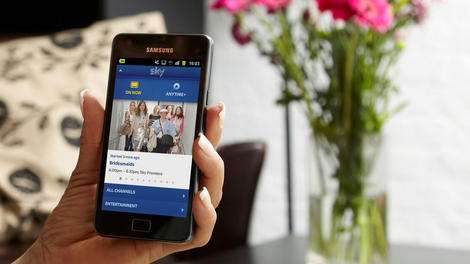
Sky has announced that it has added two new channels to its Sky Go streaming service, with Film4 and E4 now available through the mobile platform.
It looks like you will only be able to view the channels as they air, though. But Sky does say that some E4 content is available on-demand through the service - with shows including Peep Show, Misfits and Black Books available to watch whenever and wherever you want.
More blips
On the lookout for more blips? We have channeled four for you below:- Apple refunds Breaking Bad final season pass holders on iTunes
- Netflix wins its first Emmy, creeps up on HBO
- BitTorrent and Madonna join forces to stick it to the man
- Apple CEO Tim Cook arrives fashionably late to the Twitter party

| |
Read More ...
Businesses slow to migrate from XP, BYOD partially to blame

Organisations have until April 8 2014 to upgrade their operating systems and enterprise applications before Microsoft pulls the plug on Windows XP support.
But according to a recent study conducted by market watcher IDC sponsored by Flexera Software, many still have a significant way to go, with some yet to begin the migration process altogether.
Of the 750 executives and IT professionals from software Independent Software Vendors (ISVs) surveyed, almost a third (28%) indicated that they are yet to migrate half of their application estates to Windows 7, and 3.7% are yet to begin the process altogether. A further 3.7% of respondents plan to migrate directly to Windows 8.
Virtually there
According to the report, many organisations are beginning to migrate desktops to virtual environments to support new Mobile Device Management (MDM) applications necessary to manage the influx of 'bring your own device' (BYOD) smartphones and tablets entering organisations.This means that there are fewer IT resources to dedicate to Windows 7 migration projects, IDC says.
According to the survey, 20% of organisations will be virtualising between 26-100% of their desktops over the next 12-24 months. An additional 23% will be virtualising between 11-25% of desktops over the same time period.
Moreover, 28% of organizations surveyed will be virtualising between 26-100% of their applications over the next 12-24 months. An additional 23% will be virtualising between 11-25% of their applications over that same time period.
Six steps
To prepare for application migrations, IDC has outlined six steps for 'Application Readiness' best practice process to make sure the transition runs smoothly. They are:- Step 1: Identify what's being used (an accurate view of the apps being deployed)
- Step 2: Application Rationalization: Determine what software isn't being used before migrating
- Step 3: Assess Compatibility: Test applications for compatibility before migrating
- Step 4: Migration Planning: Plan how time consuming migrating will be and identify applications that need to be fixed in order to run on the new platform
- Step 5: Fix compatibility issues: Fix apps and package them in accordance with IT standards before migrating
- Step 6: Deploy Packaged Applications Quickly and Cost-Effectively: Deploy applications to users through a configuration management system or via a self-service enterprise app store

| |
Read More ...
In Depth: Why AMD's new GPU will be the fastest graphics chip ever

AMD's new uber-GPU, codenamed Hawaii and likely to be known as the Radeon R9-290X when it launches next month, might just be the fastest graphics chip the world has ever seen.
That's the latest from the inevitable pre-launch rumour mill.
But even if Hawaii doesn't turn out to be faster than Nvidia's mighty GTX Titan, the fact that it's arriving at all is very good news. It underlines that the race is still on between AMD and Nvidia for the crown of fastest graphics chip and makes the lack of competition in the CPU market even more crushingly obvious than it already was.
The story so far
For the record, what we know about Hawaii goes like this. A senior AMD suit recently revealed that it remains on the 28nm production process from TSMC. Apparently the new 20nm node isn't ready for full-scale production. Certainly not full-scale production of a very large enthusiast-class GPU.That same suit also revealed that Nvidia's Titan is still around 30 per cent than Hawaii. If that sounds like advantage Nvidia,well, it still leaves space for a significantly larger and more complex GPU than Tahiti.
That's AMD's incumbent bad-boy GPU as found in the Radeon HD 7970. Do the maths and Hawaii should come in well above 400mm2. As for how many stream shaders that equates to, the latest rumours suggest 2,816. AMD's 7970 sports 2,048.
Again, extrapolate out from that shader count, bung in a few further tweaks, maybe a small clockspeed bump, and Bob's your pixel-pumping blood relative on your mother's side. You've got a GPU faster than Titan and nothing imminent due from Nvidia.
Value is relative
What's more, while Hawaii won't be cheap, I doubt it will be priced anywhere near the £800 Nvidia continues to charge for Titans. Go AMD?Indeed, and like I said it's not actually terribly critical that it actually beats Titan. As long as it's close while being a lot cheaper it will give gamers looking for the best performance a great new alternative.
And that, folks, is the benefit of actual competition in the graphics market. Progress in both performance and bang-per-bang terms.
While all this is going on, Intel has just rolled out its latest so-called flagship CPU, the Core i7-4960X, and it's such a massive disappointment, it probably deserves a stand alone rant of it's own. So, that's what I'll give. Keep your scanners peeled.
- Now why not check out our guide to Intel Haswell: everything you need to know about Intel's latest Core processors

| |
Read More ...
Amazon Cloud Player heads to Sonos systems

Amazon Cloud Player has found itself a new home on Sonos multiroom speaker systems.
The streaming deal means that anyone who buys Amazons MP3s will be able to instantly stream them on their Sonos hi-fi systems.
Given that Amazon announced the arrival of AutoRip in the UK back in June, it means that anyone who buys CDs or vinyl through the online retailer they will be able to stream this music as soon as they click 'purchase', which will be a definite plus for many.
Cloud and proud
For Amazon, the addition of Sonos is another string to its rather musical bow. Alongside Sonos systems, the Amazon Cloud Player is now available through Kindle Fire devices, Android, iOS, Mac and PC.As for Sonos, the list of compatible services is looking very healthy at around 15 - including Spotify, 7 Digital, Deezer and last.fm.
In the UK, Amazon's Cloud Player is in direct competition with iTunes and its Match service and Google Play Music All Access. All of which offer streaming alongside a mountain of storage for your own music.
- What cloud service should you choose? Find out here.

| |
Read More ...
In Depth: Android in 2020: the future of Google's mobile OS explored

Cast your mind back to late 2008, when the first Android-powered handset saw the light of day. Obama won his first Presidential election, Apple launched its App Store (the iPhone had appeared the year before), Google announced its own Chrome browser and we got our first look at the company's new mobile OS on the T-Mobile G1.
The Android of 2013 is a world away from that 2008 version, where the Android Market was in its infancy, there were no native video playback capabilities and the G1 had no multi-touch support. But Google is going to have to keep innovating and improving its mobile OS to keep the lion's share of the smartphone market.
We've taken a peek into the future to consider what Android might look like in the year 2020. With new Android monikers now appearing about once a year, its codename should start with an "R" - Rhubarb Pie, Rocky Road or Rice Pudding, perhaps? Or maybe even Rolos, given the tie-up deals Google is putting in place these days?
Here are the four key features we think could play the biggest part in Android's ongoing evolution over the next seven years:
1. Maps in Android in 2020
Apple's Maps app may not have set the world alight when it launched, but it's here now (alongside Nokia's offering), and that means Google needs to up its game to stay ahead. The 2013 Google Maps refresh brought with it a greater level of customisation based on your personal searches, and this will only increase in the future.With Google Now and Google Latitude tracking your every move, you'll see directions to your favourite pub appear on-screen every Friday lunchtime. If the pub in question has an Android-powered bar installed, you might even find your tipple of choice waiting for you when you arrive.

As for all of the services hanging off Maps, Google is already hiring out the Street View cameras and enabling you to peek inside buildings - you can expect Android 2020 to offer better imagery of most public buildings, as well as tappable info as you move around.
There might even be an option to enable Google to anonymously augment its Street View data with the snaps you take on your phone to provide an even more up-to-date view of the world.
2. Android messaging in 2020
Google has already made its intentions clear with the Hangouts upgrade we got at I/O this year. With Facebook, WhatsApp, FaceTime, Snapchat, Skype et al to battle against, there's no doubt we'll see Google push further into the universal messaging game, covering SMS, email, instant messaging and video calling with tools that are baked into Android.You won't have to have separate apps for each of these, as the UI will be unified in a way that makes it easy to seamlessly slip between each method of calling.
We might even get Google Voice in the UK by the time 2020 rolls around, though don't hold your breath.

How far Google can go depends on the networks and its competitors in the field - it's already launched an ultra-fast internet service in the US, so telecoms could be next. And the company has been sniffing around unused wireless spectrum frequencies, too.
Don't be surprised to see free 5G video calling and texting between Android devices by 2020, with all of your conversations grouped by person rather than platform, and archived and searchable in Gmail.
Eric Schmidt has already predicted that every human will be online by 2020 (no doubt hoping that we'll all have a Google+ page too), and the more people his company can help get connected the better for Google's bottom line.
3. Android payments and security in 2020
Over the next few years our phones will become even more important for making payments, transferring money and verifying our identity (everything from getting through the door at work to logging into Facebook).The Google Authenticator app of 2020 could work with your device's NFC chip to automatically log you into Gmail when you sit down at your laptop, for example, or pay for your flight when you step on a plane. Apple has Passbook, and Google will want an equivalent in place too.

We've seen tattoos and pills shown off as possible authentication triggers of the future, and Android 2020 will play a big part in proving you are who you say you are, whether it's at a coffee shop or Google I/O.
Basic face recognition is already available, but in the years to come it has the potential to get much more accurate. It might even be joined by fingerprint or retina scanning built into Android's camera app, or at least part of the phone, now that Apple has shown that fingerprint scanning is a viable option with its new Touch ID technology.
4. Android hardware in 2020
Hardware innovations are going to play a big part in Android's roadmap. Besides the obvious smaller, thinner, faster improvements for our phones, bendable screens should be in place in the near future - the likes of Samsung have the tech already in production, and Android will change to adapt itself through scrolling rivers of news, status updates and other notifications.Ever-changing, ever-optimising displays will be the order of the day, and the batteries and mobile processors of 2020 should be able to keep up.

Google Glass has of course generated plenty of buzz this year, good and bad, as has the rumour of an Apple iWatch to compete with the Galaxy Gear. It looks like the wearable tech revolution is about to take off, and by the time 2020 rolls around this could mean miniature devices on our glasses, wrists and clothing, ready to capture every moment and record every movement.
You won't need to take photos any more, since Google will simply pick out the best pictures from the unedited stream of the day's events. Nor will you need to decide what to eat for dinner - Android 2020 will know what you've been doing today (and what you're probably doing tonight), and can pick out the most suitable foods for you.
Android: the 2020 edition
The only certainty about Android's future is that it has a fight on its hands to stay competitive. Apple's new-look iOS 7 has given Google plenty to think about, not least with its tie-ins with Facebook, Twitter, Bing, Flickr and Vimeo.Android's continuing integration with Chrome and the desktop/laptop will make for an interesting story too - they're both run by the same man, Sundar Pichai, remember - and perhaps Google's biggest challenge will be to convince us that we can trust it with more and more information about where we are, who we communicate with and the way we live our lives.

| |
Read More ...
HTC One to get Android 4.3 soon
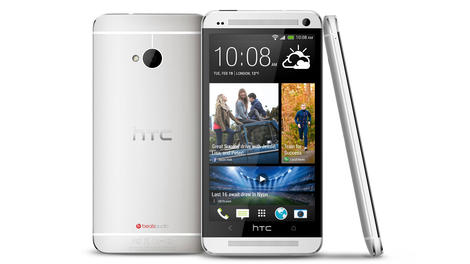
HTC's flagship smartphone, the HTC One, will soon be brought bang up to date with the addition of Android 4.3.
That's come straight from the mouth of Jason Mackenzie, President of HTC America, who announced via Twitter that the update will be pushed to HTC One Developer Edition owners this week.
That's largely just confirming what we already knew, as he'd previously stated that it should arrive with Dev Edition owners by the end of September.
However this time he went one better and said that Canadian customers with a standard HTC One should have the update by the end of the month.
Mackenzie also stated that Android 4.3 for HTC One comes with 'the latest Sense experience', so expect changes beyond those found in stock Android, though what exactly that will entail has yet to be revealed.
Date unknown
He went on to say that HTC was working hard to get the update certified with US networks, but unfortunately there's no word on when Android 4.3 will make its way to HTC One handsets in Europe.We've had a word with HTC to see if they have any word on a potential timeframe but are yet to hear back. Fear not though, as we'll update you as soon as we hear anything.
At this rate Android 4.4 KitKat will be out by the time the HTC One gets Android 4.3, if the October release date rumours are to be believed. Still, it's better late than never and if it does come with some juicy new Sense features it should be worth the wait.
- You've read about the update, now read about the phone in our HTC One review.

| |
Read More ...
Available Tags:Valve , Steam , Android , YouTube , Google+ , AMD , HTC , Sony , Gmail , Google , Nokia , tablet , Dell , Western Digital , Fusion , LG , Samsung , Motion , GPU , Amazon ,


No comments:
Post a Comment