

Updated: IDF 2013: all the latest from this year's conference

IDF 2013 is off and running, with the company lifting the lid on the products it wants to take it into the future. Below you'll find the all the latest coming out of the San Francisco conference, taking place through Sept. 12.
The biggest news so far is the introduction of the Atom chips previously known as "Bay Trail." The Atom Z3000 series is looking straight at tablets and the low-power computing market.
Transformer Book T100 hands on review
What if I told you there was a convertible ultrabook with Windows 8.1 and 11-hours of Bay Trail battery life on the way from Asus? What if I told you it has microSD support and starts at just $349?Well that's the Transformer Book T100, which Asus pulled out of its sleeve behind closed doors here at IDF. We had some hands on time with it, and while it wasn't without its flaws, it's looking like a great value.
Google, Intel announce new Haswell Chromebooks
Who knew Chrome would make an appearance at IDF? Google certainly did as it unveiled three new Chromebooks from Toshiba, HP and Acer plus a Chromebox by Asus. All run Chrome, all are powered by Haswell.The new machines are light on details, but you can be sure they have long-lasting battery.
Look for them in the coming months.
Venue makes a Dell comeback
What's old is now new as Dell is reviving the Venue name, this time sticking it on a tablet running Windows 8.1 instead of a handset.The new device comes with an 8-inch screen and the conference darling Bay Trail processor, but other than that little details are known about the Venue.
ThinkPad T440s hands on review
A full HD display, 12-hour battery life and a Haswell i7 chip - Lenovo has really pulled out all the stops.The ThinkPad T440s is the luxury model in Lenovo's new ultrabook line. We took it for a spin on the show floor, and now we're waiting in anticipation to give it a full review.
Bay Trail: how it performs
Sorry - we mean the Z300 series Atom processors, as Bay Trail was just a codename. We got the chance to test out Intel's new chips for tablets, finding that indeed the company's performance claims live up to the self-imposed hype.But can Bay Trail bond with Windows 8 (and Windows 8.1)? That is indeed the question.
ThinkPad T440 hands on review
Does Lenovo's Haswell packing ThinkPad laptop really last for 17 hours on a single battery charge? Yes, but only if you get a second charging cell. Even without, the ThinkPad T440 can claim 12 hours of battery life, which is none too shabby.Besides a chunky frame, the T440 has some high points, but Lenovo has a lot of work left to do to cut it in the Ultrabook world.
Lenovo's new laptops
Lenovo is really making a splash at IDF, specially for the business set. The company announced seven new ThinkPads specifically geared towards its commercial customers. Haswell is found humming along, as are claims of better battery.Wearables, future handsets and more on Day One
Intel came out roaring on Day One of IDF 2013. The company announced a new SoC family called Quark, designed to fit into tiny machines such as wearables. Though the company has no plans to build its own wearable tech, it floating Quark out to partners. The company also has a prototype bracelet to show Quark in action.Intel also showed off a 22nm handset prototype, one that creates a 50% power boost and better battery life.
CEO Brian Krzanich also talked up the advancement of its 14nm manufacturing process, which will deliver devices with a 30% power improvement over Haswell-type Core chis. Devices with 14nm are due to start rolling out in 2014.
Finally, Krzanich announced that the company will have tablets below $100 (about £63, AU$107) by the holidays, so look for less power pull and more performance on the cheap come Christmas time.
Below you'll find out what we expected from Intel before the conference officially started:
We anticipate a conference close to Build 2013, though perhaps with a bit more focus on hardware. There will, of course, be plenty of time spent on the nitty gritty.
Does that a boring conference make? Not in the slightest. Intel had a bustling first half of the year, and we expected that trajectory to continue through IDF.
We're sure to hear plenty on Haswell, plus where PCs fit (or don't) next to mobile devices. There's Intel TV to talk about, and potentially some words on wearables. We're gearing up for it, so read on to find out what we think you should expect from this year's proceedings.
1. Intel TV time
Perhaps the most intriguing, out-of-box product cooking at Intel right now is its internet TV service.It was way back in February that the company confirmed it was indeed working on a web TV product, with Corporate Vice President at Intel Media Erik Huggers offering this as to why the chip maker wanted to get into the TV biz:
"[You] need to control everything - the chip, the operating system, app layers, the sensors. That's sort of the reason why we're there. If there were platforms that could deliver exactly what we had in mind, we would work with that."

However, things have been fairly quiet since. The last real news related to ITV came at the end of July, when it was revealed in a Wall Street Journal report that an accompanying set-top box won't have facial recognition capabilities.
We hope, and fully expect, Intel TV (or whatever it's called) to be laid on the table during IDF. In announcing the service, Huggers said the group working on it was comprised of people from Apple, Netflix and Google. Add Intel's own tech savvy to the mix, and this sounds like a product with a lot of potential.
Like all good ecosystems, developers will need to be at Intel TV's heart, so look for some courting and coursing on how to develop for the platform at the Forum.

2. PCs make room tablets and smartphones
In case you haven't heard, PC sales are flagging, while sales of tablets and other mobile, not-quite-traditional computing devices are going strong. With that in mind, expect tablets, smartphones and the like to grab some spotlight time at this year's IDF.Mobile devices have already gotten some billing in IDF's schedule of technical sessions, including a "Extending PCI Express Architecture to Smartphone and Tablet Devices" talk. What we'd really like to see is some news regarding fanless 4.5W Haswell variant that Intel has teased as becoming available in the coming months. After what Haswell did for the MacBook Air, imagine what it could do for the iPad.
3. Walking into wearables
There's no way around it: Wearables have sunk into the collective tech conscious. We need only turn to Google Glass, the rumored iWatch and recently trademarked "Galaxy Gear" to see this is the case.For its part, Intel has confirmed its experimenting with "novel display devices," with Intel CTO Justin Rattner talking about a situation where you could look to your wrist to read a text message instead of yanking out your phone back in June. Intel is aware of the potential need to change silicon to match new types of tech, Rattner said, so the company's mental cogs are already turning on that conundrum.

Will we see a new smartwatch at IDF? The chances are slim. However, with Genevieve Bell, an Intel Fellow at Intel Labs and Director of Interaction and Experience Research is heading the Day 3 keynote, we could hear plenty about the future tech.
Bell leads a team of social scientists, interaction designers and others in researching "new computing experiences that are centered on people's needs and desires," according to her IDF bio. Could she hold the key to the wearable conversation?
4. State of the Thunderbolt address
The introduction of Thunderbolt promised a universal port with amazing data transfer speeds, and the recent bump up to Thunderbolt 2 pushed it to rates of 20GBps. Now that we're entering the age of 4K video, those transfer speeds actually have a practical use, besides trying to trump USB on a spec sheet.Despite its raw power, Thunderbolt hasn't taken the world by storm. It's not on a lot of everyday devices, but Intel has managed to sell Apple on it. The Mac maker has been one of its biggest proponents, putting the little port that can on its MacBook Air, and six of them on the dramatically redesigned Mac Pro (the one that looks like a shiny black cylinder).
Still, Intel has more selling to do, which is likely it has multiple sessions of its "Thunderbolt 2 Technology: New Capabilities and Features" talk scheduled. Godspeed little port, godspeed.
5. Unmasking more with Ultrabooks
Ultrabooks are sure to be a focus of this year's IDF. There are a few, not-so-subtle clues pointing us toward this expectation.For one, on IDF's homepage, there's a dedicated link to the wonderful world of the two-in-one device. In a series of short clips, we see why Ultrabooks trounce traditional laptops. OK, it's a hokey marketing ploy, but every 'book shown is running Windows 8. Perhaps IDF holds a new Windows 8.1 product for expectant consumers? The timing would line up with W8.1's anticipated fall release.

What's more, Kirk Skaugen, a senior vice president and general manager of the PC Client Group, is due to speak during Day One's keynote. According to his bio, Skaugen is "leading Intel's efforts in once again transforming the personal computer industry with the Ultrabook."
Once again? Transforming? Sounds like there's some product-related potential here, and we wouldn't be surprised if Haswell chips are leading the charge.
6. Haswell in the house
Speaking of Haswell - as if we haven't touched on it enough already - Intel can't let IDF pass without spending plenty of time on its latest and greatest chip.Sure we'll hear about it's power saving prowess, but in a world where chips are sprouting more cores and competitors are nipping at its heels, how does Intel intend to keep Haswell competing for the long haul?
Part of that equation centers around new devices, such as the fanless tablets we discussed earlier. Intel teased these would be ready by year's end - could we get our first taste during IDF?

7. Hitting the Bay Trail
Haswell likely won't be the only processor pony hitching up at IDF. Intel's "Bay Trail" Atom chip stands a very good chance of making its debut.Bay Trail is the company's next-gen 22nm quad-core tablet platform, supporting both Windows and Android. We heard about it at CES 2013,and it's due in devices by the holidays. Early September sounds just about right for some veil lifting.
Boasting double the computing performance of the existing Medfield Atom Processor Z2760 platform, Bay Trail should user in devices as thin as 8mm.
Intel has high-hopes for Bay Trail: "We believe what [Bay Trail] really does [is that] it allows us to get into these markets that we're not in, in a big way today," CEO Brian Krzanich said last month, as reported by PC World.
We'll keep our eyes on the Trail at the Forum.

     |
Read More ...
Hands-on review: IDF 2013: Transformer Book T100

Couldn't Asus have given us just one more zero for a nice round Terminator reference? The T100 isn't made of liquid metal, but it can transform all right. Just unveiled by Asus at IDF 2013, the Transformer Book T100 is a slate and keyboard dock combo that's powered by Intel's new "Bay Trail" Atom processor and Windows 8.1.
At the surprisingly low price point of $349.99, it just might give pricier options like the ThinkPad Tablet 2, Acer Iconia W510 and even the Surface Pro a reason to sweat. That's really all Asus is asking for the 32GB model, and it's just $399.99 for the 64GB version. No word on British and Australian pricing just yet.

We had the opportunity to go hands on with the new convertible ultrabook, and while some corners have been cut in the keyboard and trackpad department, there's a lot to like about this Asus offering, especially at this price.
First off, the Transformer Book T100 is a manageable 10-inches. It's easy to hold at that size, and quite light. It weighs in at just 2.2 lbs/1kg, so it's it's actually lighter than an iPad 4.

While 10-inches is very nice for a tablet, it's a bit small for laptop. The keyboard has obviously been shrunk a bit to fit this form factor. The keys are small, and it's not hard to make a typing mistake.
We also weren't crazy about the touchpad, which is the only part of the T100 that came off as cheap. It lets out a hefty ka-chunk when you click, and threatens the already precarious balance of this somewhat top-heavy system.

Issues with the dock aside, the tablet itself feels pretty nice. It is plastic, but it doesn't feel too slick. It has just enough grip to it, although it does attract fingerprints like moths to a flame.

Asus has made some interesting choices with the tablet's buttons as well. In addition to your typical volume rocker and sleep/wake switch, there's a Windows home button for returning to the tiles or the desktop.

That's a step away from the usual Windows 8 design, which puts a physical or software button on the tablet's face. This way you don't have to move your hands from the sides, and there's less risk of smudging the screen or dropping the tablet. It was a little hard to press, which disappointed us, but it's a good idea.
There are a surprising number of ports here. The dock has one USB 3.0 port that's powered, so you can charge your phone or other USB connected devices with it.

The tablet itself has microUSB, mini-HDMI, and even microSD. Yes, this is a device with removable storage, up to 64GB of it, but the lack of an LTE option is too bad on such a light and nimble device.
All that extra space will make it a real media performer, and so will that 1366 x 768 720p display. Now that's not nearly as nice of a screen as Asus put in its Google collaboration the new Nexus 7, and it's below iPad 4 standards as well.

It's a real get what you pay for situation, but it's by no means ugly. Color reproduction seemed solid, and the viewing angles should be good enough for sharing some Netflix with a friend.
Internally, the Asus sports the latest Atom processor. This is the "Bay Trail" chip everyone is talking about, which Intel's answer to Haswell for the tablet market.

Asus is claiming 11-hours of battery life on the T100. That's practically MacBook Air territory, and a claiming we're itching to test.
The T100 we demoed was clocked at 1.34Ghz and packed 2GB of RAM. It was running Windows 8.1, and didn't do a bad job with it either.

We flicked through multiple open apps with ease, and the T100 boot up in less than thirty seconds. That last bit might disappoint tablet users and SSD diehards, but not bad for a sub $400 machine.
Early verdict
It's too early to say, but the Transformer Book T100 could be a winner. That low price tag is going to please a lot of people, and Asus made a lot of solid design choices on the tablet side of things.MicroSD is a big win, and so is the clever Windows button placement. There's also no arguing with 11-hours of battery life, if that claim comes through.
It's as a laptop that the T100 shows its flaws. It's a little bit tippy, and the keyboard is nothing we'd want to write a ten-page essay on.
Asus has produced a very promising transforming ultrabook. We're really looking forward to giving it a full review when we get closer to the October 18 release date.

| |
Read More ...
IDF 2013: Asus trots out Transformer Book T100 with Bay Trail and Windows 8.1

Asus already had a little Chrome news at IDF earlier today, and now it's out with a brand new convertible to boot.
The Transformer Book T100 stows a Bay Trail Z3740 quad-core processor from Intel inside its 10.1-inch frame. Running Windows 8.1, the T100 weighs a slim 2.4 pounds in "ultraportable" mode (or as a notebook) and 1.2 pounds as a tablet.
According to Asus Chairman Jonney Shih in a statement, the T100 brings "enough battery for all-day computing," a hallmark of Intel's latest line of processors. In numbers, the machine can purportedly last up to 11 hours.
The touchscreen is detachable from the keyboard dock, providing the portability of a tablet when users want to switch out of laptop mode.
T100's Xs and Os
The new Asus device also features USB 3.0 on the dock, microUSB, microHDMI and microSD.Asus has packed 2GB of RAM in the T100, and users will be able to choose between a 32GB and 64GB version. The IPS display hits 720p with a 1366 x 768 resolution.
U.S. customers can start taking the T100 to task on Oct. 18 at a price of $349 and $399 for each storage model. Asus didn't provide availability for other markets, but converted the prices amount to about £220/£252 and AU$373/AU$427.

| |
Read More ...
Updated: iPhone 5C release date: where can I get it?

After months of guesswork, the iPhone 5C is official and it's basically an iPhone 5 in plastic coating.
But that won't stop you (or perhaps your kids) wanting one when you see the colourful array of finishes the handset comes in - green! yellow! white! pink! etc.
The good news is that there isn't long to wait: the iPhone 5C release date is September 20 while pre-orders open on September 13. We've had a quiet word with all the networks to find out who's stocking what, but we'll update this page when we get more info on plans and pricing. Let's do this:
- But wait! First decide if the new handset is worth your money with our hands on iPhone 5C review
Optus
Yes, Optus will be stocking the iPhone 5C and it will be running on its 4G network (and probably on its dual-mode TD-LTE network). No word on contract prices yet, but you can pre-register your interest.Telstra
Telstra will also have the phone available: but on which plans is currently anyone's guess. Eager beavers can pre-register interest for the phone.Virgin
The big red confirmed that it will be taking pre-orders from Friday, September 13, and said that it will be stocking the phone come September 20. Again, no word on prices or plans yet.Virgin Mobile
Virgin Mobile has also committed to selling the handset, but we haven't heard anything official just yet.Apple
If you're ready to shell out $739 for the 16GB iPhone 5C or $869 for the 32GB model off-contract, you can buy directly from Apple.- Find out everything there is to know about the iPhone 5C and check out what the TechRadar team makes of it too

| |
Read More ...
Apple puts finger on iPhone 5S Touch ID privacy concerns, flaws

When Apple unveiled the iPhone 5S Sept. 10, the standout feature was undoubtedly its Touch ID fingerprint sensor that unlocks the smartphone through biometrics.
It's inevitably led to those concerned with privacy to start poking at the company's tech, and not in order to test out the smartphone's scanner.
Apple, anticipating conspiracy theories, reiterated today that the iPhone 5S won't actually store users' fingerprint images on the device, according to the Wall Street Journal.
Instead, Touch ID keeps fingerprint data encrypted within its A7 processor. It's locked away on the device itself, not on Apple's servers or iCloud.
Touch ID data encryption
Fingerprint data, according to the Sept. 10 presentation, includes a fingerprint's arch, loop or whorl classification and individual ridge details smaller that the human eye can see.The Touch ID system goes as far as capturing minor variations in ridge direction caused by pores and edge structures.
Because there isn't a stored fingerprint image on the device, it's unlikely someone could reverse engineer your fingerprint even if they cracked the the A7 system-on-a-chip, according Journal's report.
Apple also reiterated that third-party applications are not able to make use of the fingerprint scanner right now.
Fingerprint sensor flaws
The other fear is that the iPhone 5S fingerprint sensor won't work consistently or at all for people with impairments.Apple admitted to the paper that testers with sweat and moisture-laden digits were incompatible with the Touch ID system in some cases.
Likewise, the fingerprint sensor may be unable to pick up on fingers scarred by accidents or surgery.
The solution here is to use the still-available four-digit passcode - the other kind of digits. The passcode isn't going anywhere, according to Apple.
In fact, setting up a backup passcode is required when enabling Touch ID and only this code works after a reboot or 48 hours of inactivity, preventing hackers from buying time to find a way to circumvent the fingerprint scanner.
Even if Apple hasn't put to rest these two chief fingerprint sensor concerns for you, it's always possible to opt for the plastic iPhone 5C. It has just as much Touch ID technology as aluminum in its body. Meaning none at all.
- Check out the iPhone 5S vs iPhone 5C comparison.

| |
Read More ...
Mark Zuckerberg on gov's handling of NSA scandal: 'I think they blew it'

Facebook CEO Mark Zuckerberg minced few words in saying that the U.S. government did a "really bad job" balancing its responsibility to maintain national security while protecting the freedoms of citizens, the economy and companies.
"I think the government blew it," he said on stage at TechCrunch Disrupt in reference to the information that's come to light since Edward Snowden began releasing NSA documents. "I think they blew it on communicating what they were - basically the balance of what they were going for here with this."
Facebook was among a number of tech companies implicated when details of the NSA's Prism program started to spill, but the social network has denied giving the government direct access to user information.
"We take our role really seriously," Zuckerberg said today. "I think it's my job, and our job, to protect everyone who uses Facebook and all the information that they share with us."
Poking back
Zuckerberg said Facebook has worked behind the scenes to push for greater transparency, "and I think we've made a big difference."It's through these efforts that Facebook could reveal it's received about 9,000 government requests in the last half a year, though the company hasn't been allowed to reveal how many requests have been granted.
Zuckerberg's ended with one more plea.
"I wish the government would be more proactive about communicating," he said.

| |
Read More ...
Updated: iPhone 5S release date: where can I get it?

The anticipation is over - Apple has unveiled the iPhone 5S to the world and announced it will be available September 20. But now we're onto the next question: where can we actually pick one of these up and which 4G networks is it compatible with?
Well, we have the inside information on who will be stocking the new iPhone and when you'll be able to grab it. Here's the 411 - and though no plans have yet been released, we'll update this page as we get more info.
- Want more deets on the iPhone 5S? Right this way then. Or perhaps you'd like to read our hands on review?
Apple Store
If you're looking to pick up the iPhone 5S SIM-free, the Apple store has the handset available for $869 for the 16GB version, $999 for the 32GB and $1129 for the 64GB.Optus
Optus will be stocking the iPhone 5S and will have the handset available from September 20, though you can register you're interest for the phone from now.As Apple has a TD-LTE compatible iPhone 5S variant, we assume that the multi-band handset will be available to customers to use on Optus' TD-LTE network.
But as Optus has indicated that it will be looking to use its 700MHz spectrum band allocation to further develop its 4G, it may effect the iPhone model in the future from 2015 as Apple has not included 700MHz compatibility in the handsets.
Telstra
Telstra has also put up a registration page for the iPhone 5S and has confirmed that it will have the iPhone available from September 20.The iPhone 5S will be compatible with Telstra's current 4G FD-LTE network, as well as with its developing LTE-Advanced network.
However, as Telstra has also said that it will be using its 700MHz allocation to develop its LTE-A network, it may face similar issues as Optus with the 700MHz band not included in the iPhone 5S and 5C.
Vodafone
Vodafone told us that you can pre-register your interest from them now too.Vodafone will have the phone available from September 20 as well, and it will also be available on its 4G network.
Virgin Mobile
We haven't heard from Optus subsidiary Virgin Mobile yet, but Apple has confirmed that it will be available through the telco.As Virgin Mobile uses Optus' FD-LTE network, all the iPhone variants will work through Virgin Mobile just fine.

| |
Read More ...
Updated: O2 customers face wait for 4G on iPhone 5S and iPhone 5C

When announcing its new iPhone 5S and iPhone 5C handsets on Tuesday, Apple confirmed that both would be compatible with EE and Vodafone's 4G networks, but strangely there was zero mention O2.
Shortly thereafter the bubbly network eased the panic by assuring customers the new iPhones would work on its newly-launched next-gen network, with more details forthcoming.
Some of those details have emerged on Wednesday and, unfortunately for the network and its customers, the new iPhones won't work on O2's new 4G network for 'weeks' after the September 20 release date.
'Within the coming weeks'
In its 'The Blue' blog, O2 admitted that it wouldn't be able to get 4G up and running on phones straight away, due to a settings issue.We got hold of an O2 spokesperson, who gave TechRadar the following statement: "The iPhone 5C and 5S will ultimately work on O2's 4G network, but we are currently waiting for Apple to enable the carrier bundle for our network.
"We've been advised this will be in the coming weeks.
"We want to be transparent about this with customers, so we are giving £5 off, and clearly they'll still have 3G connectivity until the carrier bundle is enabled to allow 4G [for the new iPhones] on our network."
The mention of 'weeks' will surely have some users worried that this 4G shortage on their new device will last longer than a month, meaning the £5 reduction will rankle.
Other network sources have claimed the delay could be longer to TechRadar, but O2 apparently isn't worried, telling us 4G will certainly be enabled on its 5C and 5S models within a month.
In slightly better news, the network has confirmed that the iPhone 5S will be available on its O2 Refresh tariffs, which enable users to pay slightly more upfront to get a new phone mid-contract. The Refresh deals will start at £119 for the 16GB handset.

| |
Read More ...
Blip: Instagram, 'other social content' headed to Facebook Home lockscreen
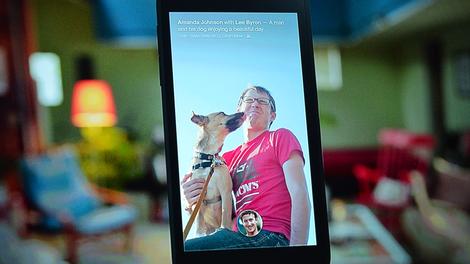
The Facebook Home lockscreen is due for a makeover, though when is still up in the air.
Speaking at the TechCrunch Disrupt conference today, Facebook founder Mark Zuckerberg revealed that more content beyond feed of Facebook is on the way.
One of the software's monthly update will at some point bring with it Instagram and "other social content," presumably from third-party sources, to the Home lockscreen.
Zuckerberg also admitted that Home hasn't been adopted as fast as he would have thought, though he "fully believes that people will want it over time."
More blips!
We've got plenty more blip content, no update required.- Facebook flavored ice cream is a thing that exists now
- Elon Musk demos gesture-based design tech
- Did Yahoo make its new logo in WordArt?

| |
Read More ...
Kindle Fire HD 2 might be showing its curvy, buttoned backside in new pics

The Amazon Kindle Fire HD tablet line is expected to be updated this year in order to take on the new Nexus 7, and it looks like we're getting our first look at the smaller of two slates.
The Kindle Fire HD 2 is said to be pictured in seven less-than-clear photos obtained by BGR, one showing off the normal-looking front of the 7-inch tablet and the rest focusing on its unique backside.
The face of the tablet has a front camera and what looks to be plenty of bezel, something the first-generation Kindle Fire HD and even the Google Nexus 7 have in common.
The more interesting rear of the alleged Kindle Fire HD takes on an angular design that remains flat in the center and then dramatically slopes near the sides of the tablet. It looks like an old-fashioned projection television.

Back pushers
Tucked away in the sloped frame of the supposed Kindle Fire HD 2013 are the volume buttons on the left side, power button on the right side and speakers at the top, all on the non-front facing side of the deviceMaybe the LG G2 smartphone with its back volume buttons has started a trend.
BGR mentioned that portions of Amazon's Kindle Fire HD tablet have been covered up in the photos to mask identifiable marks, so we certainly don't have the full picture.
Kindle Fire HD 2013 specs
The 7-inch Kindle Fire HD specs are rumored to include a 1920 x 1200 resolution screen, a Qualcomm Snapdragon 800 processor and 2GB of RAM.That would certainly be an improvement over last year's 1280 x 800 screen resolution and 1GB of memory.
This is just the smaller 7-inch version, as Amazon is reported to have a Kindle Fire HD 8.9-inch in the pipeline with the same angular design but bumped up specs.
However, the launch of the two Kindle Fire HD 2013 tablets may be staggered. That was the case last year when the 7-inch model came out in September and Amazon held off on releasing its 8.9-inch tablet until mid-November.
That just leaves time for more leaks of the MIA 8.9-inch Kindle Fire HD in the weeks head.
- See video of the alleged iPad 5, a prime competitor for the Kindle Fire HD with less bezel.

| |
Read More ...
Yahoo hits 800 million monthly active users, up 20% since Mayer took over

Marissa Mayer's ultimate goal at Yahoo is to get the company back to growth, a vision she shared on stage at TechCrunch Disrupt this afternoon. It'll take three or so years to get to a positive place, she added, but Mayer appears up to the challenge.
After defending the company's new logo as a design that came from "a very authentic place," Mayer laid out a few company highs. Chief among them was an announcement that Yahoo has passed 800 million monthly active global users, and that figure doesn't include Tumblr.
That's a 20% boost since Mayer joined Yahoo in July 2012 as CEO. She didn't specify what constitutes a monthly active user or provide context in relation to competitors.
Mayer said growth is multi-pronged, but mobile sees over 350 million monthly users while its core properties, like the Yahoo homepage and search, pick up the rest. The mobile team has grown by a factor of 10 since she took over, she said.
Though she misses some of the features found in Gmail, the email client of her former employer, she said Yahoo Mail loads faster than Google's email.
"It's just email. It doesn't have video chat and a lot of these other things, which we may experiment with but I think can ultimately can get in the way in terms of using mail every single day and wanting to be really fast and efficient with it," she said.
Mayer on Microsoft
Mayer was pushed about her thoughts on Steve Ballmer's impending exit from Microsoft and whom she thinks should take over at the Windows maker.She noted her admiration for the work done by Ballmer and Bill Gates, and pointed to Microsoft's strength in the enterprise space.
"I think consumer executives and enterprise executives have different traits and different instincts," she said.
"So I would hope that they are looking for someone with strength on the enterprise side of the business. A strong Microsoft is good for the industry overall and I think that's really helping to build on their strengths and core competencies."
- Mayer's company is kicking, but can Apple keep going with its doors closed?

| |
Read More ...
Motorola CEO hints at return of tablets, other Moto X-inspired form factors

Motorola's been out of the tablet game for a few years now, but according to a new report the Illinois-based company might be preparing a new contender.
According to Engadget, Motorola CEO Dennis Woodside hinted during an interview at the company's Fort Worth facility that the company is working on tablets.
"That's something we are working on, but [there's] nothing specific to talk about right now," Woodside said.
That's pretty thin, but it's all we've got.
Moto Maker tablet?
Engadget proposed that whatever new tablets Motorola announces might be offered through its Moto Maker application.The Moto Maker allows buyers of the Moto X on AT&T's network to customize the phone with a variety of options, and it stands to reason that a Motorola tablet would benefit from the same perks.
That's pure speculation, however, as there have been no official hints to that effect.
The Moto X is available through a variety of carriers, but currently only AT&T customers have access to the Moto Maker.
It's worth mentioning that Woodside said the company will look into other form factors that take design cues and technologies from the Moto X phone.
Goodbye Xoom, hello something?
We weren't betting big on Motorola's future tablet prospects when the company officially killed the "Xoom" line last month.The Xoom and Xoom 2 both dropped in 2011, but a trademark dispute put the line on hold and this year Motorola finally put it to bed for good.
With the Motorola betting on the flagship Moto X to resuscitate its mobile business, a similar tablet could soon follow.

| |
Read More ...
IDF 2013: Google hitches Haswell to 3 new Chromebooks and a Chromebox

Intel and Google unveiled a new line of Chromebooks today at IDF 2013, and it sounds like they'll pack something of a punch.
With the Haswell chip on board, the next-generation Chromebooks offer better battery life and improved performance, according to Intel.
The Haswell microarchitecture uses less power, which according to a Google blog post effectively doubles the new Chromebooks' battery life.
This generation of Chrome-based computers is pouring in from a variety of manufacturers, with Chromebooks coming from Acer, HP, and Toshiba, with Asus putting out a Chromebox. Specific hardware details weren't squeezed out, but the devices should be available in the coming months.
New challengers approach
Unlike Acer and HP, Toshiba and Asus are new to Chrome hardware manufacturing.With those two in the mix, six top laptop manufacturers will soon be offering Chrome-based hardware, Google noted.

The search company offered descriptions for each new entry, as well. The Acer Chromebook is "light and portable," for example, while the HP Chromebook 14 has a large display and comes in a variety of colors.
The Toshiba Chromebook is versatile and portable, Google effused, while the Asus Chromebox is "suitable anywhere you need a computer," whatever that means.
It's all coming up Chromebooks
Google also offered some figures from NPD. According to the research firm Chromebooks represent 20% to 25% of all computers that are $300 (about £189, AU$321) or less.In addition, over 5,000 schools, representing more than a fifth of all U.S. school districts, have adopted Chromebooks for their students.
Google's hub pages for the new Acer Chromebook and the HP Chromebook 14 say that the laptops will be available in select countries. HP revealed in a separate announcement that it expects to ship the Chromebook 14 for $299 (about £188, AU$320) before the holidays.
TechRadar asked Asus, Acer, Toshiba and Google fore more about the other new Chromebooks' availability, and we'll update this story when we hear back.

| |
Read More ...
IDF 2013: Dell brings Venue back into the building with new Windows 8.1 tablet

Dell has a new Venue on the way, though the name is resurrecting in an all-new form.
Once reserved for and then dropped when Dell stopped shipping smartphones, Venue is making a comeback as a Windows 8.1-running tablet. Dell made the announcement at IDF today.
The tablet, as reported by Computer World, will sport an 8-inch screen and Intel's just-announced Atom Bay Trail chip.
Both Average Joes and commercial customers can look forward to the Venue bringing better battery life and cellular connectivity.
A new day for Dell?
Dell plans to offer up more details about the Venue during an event on Oct. 2. The New York City shindig may bring more mobile devices beyond the Venue as well.The company currently produces the Windows 8 Latitude 10, XPS 18 tablet/all-in-one and Windows RT XPS 10 hybrid, all intended for business use.
With Venue, Dell will turn to consumers once again, carrying Windows 8.1 - the anticipated update to Microsoft's freshest OS - along the way.

| |
Read More ...
Windows Phone 8.1 leak hints at notification centre, multi-tile select tool

Pictures claiming to show a leaked build of the as-yet-unreleased Windows Phone 8.1 update have appeared online, bringing word of potential new features.
The shots, posted by Windows-Phone.pl show a Notifications Live Tile on the homescreen of a Windows Phone handset, suggesting an Apple-style Notifications Centre is in the works.
The leaked shot also showcases ticks applied to multiple Live Tiles at the same time, which suggests users will have the power to move around more than one app at a time, or perhaps even group them into folders.
The folks at WPCentral reckon it's the former rather than the later, as multi-tile selection is a feature launching on the Windows 8.1 and Windows 8.1 RT desktop updates coming next month.
But before we get to that...
However, it's not the first Windows Phone update we've stumbled upon in the last few days. Just this weekend screenshots of the GDR3 update - likely to predate the launch of WP8.1 - leaked onto the web.Judging by the screenshots, that update will bring a new driving mode to mute all calls and alerts when a Bluetooth headset is connected. It'll also enable users to close apps from the multitasking view and allow users to choose whether they want their screen to appear in portrait or landscape mode.
That final feature is said to be designed with the rumoured 6-inch Nokia Lumia 1520 (codenamed Bandit) specifically in mind.
We've no word yet on when either of these new OS updates are liable to drop, but we'll have the latest when anything official turns up.

| |
Read More ...
Opinion: Innovation is one thing, but how about some openness from Apple?

Apple's inflated ego shown bright yesterday, brighter than the gold iPhone 5S.
The company's new iPhone and iPhone 5C announcement was as boring and uninspired as they come. It was the same song, punctuated by droning commentary from a taped Jony Ive and a visit from Elvis Costello.
Apple's decision not to live stream its iPhone keynote was particularly puzzling. The lack of an immediate, "I'm there" connection to these new major products that Apple is taking into the holiday season (primetime in the consumer tech world) was off-putting.
It stands in direct contrast – and perfectly highlights – a key difference between the two kings of the mobile operating system, iOS and Android.
Closed orchard
Android is (all together now) open, inclusive and growing globally at breakneck speed. iOS is far less open, plenty would say difficult, exclusive and stalling in many markets.Apple's always had an aloofness about it, an attitude that's kept it interesting from the sheer fact that no one is quite sure what's going on behind its IL doors.
Not in Apple's innermost circle? Wait with bated breath like the rest of the world to see what we have to wow you.
There's a certain cache that comes with that, but increasingly that approach is not only out of touch but alienating.
Even during its most recent event – the announcement of Android 4.3 and the new Nexus 7 – Google kept it intimate but still streamed it to the masses. The information was immediate, unfiltered and ready for consumer digestion.
Yesterday, those not sitting in Apple's conference room or at a Berlin store or locations in Tokyo or Beijing – where Apple reportedly just replayed the Cupertino event - were left to find their information elsewhere. Not that there aren't plenty of news resources (shameless TechRadar plug) and Twitter to glean what's going on at Apple, but doesn't that do even more to take message control away from the company?
Straight talk
Apple operates servers galore and more technical resources than I can count, and yet it couldn't be bothered to throw up a video on its Events page? It couldn't create a stream to bring information directly to customers, the people who are going to buy these products and will keep Apple's coffers and investors fat and happy?Message control is hugely important to Apple, and perhaps there were copyright issues or embedding concerns that it factored in its decision not to broadcast the keynote.
Mitigating factors and control freak-ness aside, there are a zillion avenues for people to get the latest, so why not eliminate the question of authenticity, look square in the camera and say, "Hey consumers of the world, here are our new iPhones. What do you think?"
In creating a limited, exclusive viewing experience, Apple isn't only creating a self-imposed mystique around its product launches. It's creating a barrier, a wall between it and consumers.
Adjustment needed
Perhaps Apple was trying to capture the allure stolen by the infinite leaks it can't seem (or isn't trying) to stymie.I can't blame Apple entirely for much of the air being sucked out of yesterday's event thanks to slips, but I do point a finger at the narrow scope through which it insists it must be viewed.
My colleague John McCann astutely wrote about the glimmer of innovation we see in the iPhone 5S' Touch ID, but argued "Apple is still plugging a handset design which arrived over three years ago...it's pretty poor it couldn't come up with anything more than an updated camera and quicker processor."
I couldn't agree more. Apple no longer warrants the exclusiveness it imposes.
Other phone makers are still up and coming compared to Cupertino, and therefore have a stake in being accessible. However, in a quickly saturating market, being closed off isn't going to do Apple any favors in winning more customers. Instead, it will look as lame as it did yesterday, where it peddled a tiresome attitude over real innovation.
With a new iPad announcement expected in October, I hope for its own sake Apple decides to open up its virtual doors. Even more so, I hope it delivers something that at least starts to justify its aloofness. Because that approach is rapidly wearing thin.

| |
Read More ...
Hands-on review: IDF 2013: ThinkPad T440s

Haswell changed everything in the ultrabook world, and Lenovo has risen to meet the challenge.
It's already reworked the design of its ThinkPad line, giving them sleeker bodies and lighter builds. Now it's embracing the marathon battery life that Intel's fourth generation chip provides.

At IDF 2013, Lenovo is showing several new ultrabooks in the T440 line. The vanilla ThinkPad T440 is a meat and potatoes productivity machine, chocked full of functionality with ports a plenty, an i5 processor and up to a 1TB of space.
If the ThinkPad T440 is a basic sedan, then the T440s is the luxury model. You'll know it the moment you look at that 1920 x 1080 full HD display. At our IDF demo, it showed superb viewing angles and rich colors. It also has the option of an i7 processor, up 12GB of DDR3 RAM and Intel HD 4400 graphics.

You can get a T440s with or without touch. The touch option adds about a pound to the system's weight, and as well as some bulk to the asking price, which starts at $1,149. We're waiting to hear back on British and Australian pricing.
At 21mm thick, the T440s may not be as sleek as Apple's MacBook Air, but it's no clunker. As with many of the ThinkPads we've been seeing lately, Lenovo has taken pains to streamline the design.

Volume and other controls have been integrated into the keyboard, and the "sweater catchers" that secured the lid on older models are gone.
It's a sleeker design, but ThinkPad die hards may miss the old trackpad design. At least they still have the trackpoint mouse to fall back on.
One place where ThinkPad ultrabooks continually best the MacBook Air is in ports. The T440s has three USB ports, plus VGA, Ethernet and an SD card reader. That should go over well with the enterprise crowd, or anyone who's desperately searched for a dongle when trying to plug into a projector.

Lenovo is already claiming battery life at the 12-hour gold standard set by the MacBook Air. It can actually get beyond that, 17-hours according to Lenovo, if you pony up for a larger extended cell.
Like the T440, the T440s has two batteries. One is internal and locked in place, the other is removable and can be hot swapped without shutting down the machine. That's where the extended battery will go, but be warned that it's large, and will change the angle at which the laptop sits.

The T440s has a very solid build, with the excellent typing experience you often find on a ThinkPad. While hinges on the T440s were strong and smooth, the lid didn't open as nicely as we'd like. We had to hold onto the lower portion while pulling open the screen, which is not the case on the MacBook Air and a lot of other ultrabooks.
Early verdict
As we said, this is Lenovo's luxury ultrabook. The display is excellent, and might attract customers who were disappointed that Apple didn't put a retina display on the new Haswell air.The i7 option is really nice as well, especially since it can be complimented with up to 12GB of RAM. That could make a tricked out T440s into a serious workhorse. If it can pull off 10-hours or better with that intense display and i7 processor, then it'll cast some serious shade on Apple's Air.
We were disappointed that we couldn't open the lid without holding onto the lower portion. It could be that Lenovo's display model has taken some showroom abuse, but it's certainly something we'll be watching for in our full review.

| |
Read More ...
HTC One Max rumored to get large and in charge at Sprint

Despite continued fiscal troubles at the corporate level, almost everyone seems to agree the HTC One is a fine handset - so could an even bigger model win the hearts and minds of Sprint customers in the U.S.?
That seem to be the case, judging from a Twitter post on Monday from the @evleaks account, a frequent source of solid information on the latest handsets and when they might arrive on carriers worldwide.
"HTC One max is Sprint-bound," the exceptionally brief tweet reads, offering no further clues as to when the giant-sized phablet might actually stomp its way into the nation's third-placed wireless carrier.
Previously known under the codename "T6," the HTC One Max began popping up on the radar back in June, first with blueprint designs and later with a number of up close and personal photos of its mammoth 5.9-inch 1080p HD display.
Go, go, Godzilla
For readers who follow the exploits of super-sized smartphones, the HTC One Max display size matches up nicely against the Samsung Galaxy Note 3, which the rival manufacturer confirmed earlier this month.Rumored to be powered by a quad-core, 2.3GHz Qualcomm Snapdragon 800 processor, the HTC One Max could also harken back to days of the ill-fated HTC Flyer by including a stylus.
Sadly, one of HTC's most highly-anticipated One Max features may have been overshadowed by Apple's iPhone 5S announcement on Tuesday: A rumored fingerprint scanner may wind up looking like a "me too" feature by the time the handset finally arrives.
Assuming Sprint gets first dibs on the HTC One Max, Americans who favor Verizon Wireless, AT&T or T-Mobile may have a bit of a wait ahead of them until any carrier exclusivity deal expires.
- Catch all the latest news on Apple's iPhone 5s!

| |
Read More ...
IDF 2013: Sony's Tap 11 to feature the pseudo 6W Intel Haswell chip

Power is a relative term when you've got a 6W Haswell-generation Intel Core architecture humming away inside your tablet. It's all at once low-power and high-powered.
Amid all the benchmarking fun in Santa Clara with Intel's new Bay Trail Atom tablet processor at the Intel Developer Forum (IDF), the engineers casually brought out this slim, unassuming black tablet, the Sony Vaio Tap 11.
We've already covered the top-end, silly-money version of the Sony Tap 11 with its i7 CPU and 2,880 x 1,600 display. This is a much more sensible option that could nevertheless give the Surface Pro a good run for its money.
It's still got the same chassis and dockable keyboard, which gives it a slimline design and a weight equivalent to that of the latest iPad, but it's running a 1080p screen and that pseudo 6W Haswell CPU, the Intel Core i5-4210Y.
But what do we mean by pseudo 6W?
Well, it all comes down to what Intel calls the Scenario Design Point (SDP) versus the more standard Thermal Design Point (TDP).
The SDP is the lowest level of cooling a manufacturer needs to fit into their devices to run a given processor - but it also means the CPU will run at a slower speed.
Thermal Design Power (TDP), refers to the maximum amount of power that a PC's cooling system needs to dissipate.
The actual TDP of the i5-4210Y, running at its stated 1.5GHz is 11.5W. That's still lower than the 13W of the previous lowest Ivy Bridge generation, so kudos for that.
And if it allows for some seriously exciting tablets like this Sony Tap 11, then we're all for it. Hopefully the lower-res screen and low-power CPU can mean we get a little more than the touted six hours of battery life the top-end Sony Tap 11 is sporting too.
Intel still wouldn't be drawn on exactly when we'd see this new tablet with the low-power Haswell, or how much it would be. But given that they're running Windows 8 rather than waiting for Windows 8.1, we'd guess they're ready right now, just waiting for Sony to give them the green light to ship.
And the question of cost? Well, all Intel would say was that they would be "significantly under $1,000. It's not going to kill you..."
Obviously it depends on Intel's definition of "significantly", so that could be anywhere from $20 to $200, but this is shaping up to be an impressive tablet.
- Also check out IDF 2013: all the latest from this year's conference

| |
Read More ...
Three names 46 cities in line for 4G LTE roll-out by end of 2014

Three has served up a few more details regarding its impending 4G network launch, adding a new city for 2013 and listing 42 more it plans to add before the end of next year
The network, which is the last of the major UK networks to go live with the next-gen speeds, has revealed a launch in Manchester, London and Birmingham in December, but has now added Reading to those plans.
However, it's not just those city dwellers who'll receive the enhanced mobile connectivity. It'll also stretch to surrounding areas like Oldham, Wolverhampton, Dudley and West Bromwich.
Then, next year it'll be upgrading its network in 42 more cities around the UK, a list of which can be found on the network's website.
Unlimited data and no price bump
Despite its later launch, Three is already winning the battle for hearts and mind by automatically moving existing customers with 4G-ready devices on to the 4G LTE plans at no extra cost.The company is also refusing to cap data for its customers and will not insist on them signing a new contact. Indeed, the wait looks like it'll be worth it for Three subscribers.
In a post on its website, the company wrote: "We think everyone should enjoy the wonders of 4G, with no catches. So when we start rolling out 4G, we'll nudge up our customers who have a 4G Ready device at no extra cost. No hefty price tag. No extra charges. No expensive new phones or contracts. And no fuss. Great news."

| |
Read More ...
IDF 2013: Intel's new Atom for tablets: how it performs

Twice the speed of the previous generation - that's the familiar cry from Intel regarding its latest Atom processor, codenamed Bay Trail.
It's the big thing coming out of this year's mobile-focused Intel Developer Forum and so we found ourselves in Intel's Santa Clara offices with a reference design tablet to play with.
And, to be fair, Intel might have been a little conservative with this "twice the speed" business.
The tablet I had was a reference design device, with a lovely - though occasionally flickery - 2,560 x 1,440 screen. That's the same resolution as my 27-inch IPS screen back home and it looked great on a 10-inch tablet screen.
It was also a Windows 8.1 machine, which meant I could grab any of my usual benchmarking suite and really punish the new Atom CPU architecture.
Except it wasn't really punished.
With a proper 22nm quad-core design and the switch to an out-of-order CPU setup, it's much more in line with the Core processors we've been used to on the desktop and in modern Intel laptops. And so it's far more capable of dealing with the sort of CPU benchmarks that made the previous Clover Trail chips weep silicon tears.

Feel the power
When we're talking single-threaded performance, Intel's performance claims hold true. The Atom Z3770 chip that was in my reference tablet was running at a solid 1.46GHz - that's a good chunk slower than the 1.8GHz of the Atom Z2760 of the previous generation.And yet I'm still seeing it delivering twice the performance in my Cinebench R11.5 benchmark.
But that's the single-threaded test and the chip I'm running is a bone fide quad-core chip as opposed to the dual-core, HyperThreaded Z2760. And when we take another two proper cores into the equation we're looking at nearly triple the performance in the multi-threaded Cinebench test. That's also backed up by my X264 HD video encoding test too.
Both those benchmarks are serious, CPU-intensive beasts and it was impressive to see a tablet chip running them to that extent.
In fact the 4W Atom Z3770 is on par with the performance of the 15W quad-core AMD Kabini A4-5000 we've seen in laptops. You know, those same Kabini cores that make up both the PS4 and Xbox One's processor component.
I also saw some impressive power testing results too.
Compared with a Bay Trail tablet with a lower-res screen and only two physical cores, the Bay Trail reference design is capable of running the same workloads, be they CPU tests or 3D gaming, quicker but at the same sort of power levels. And that's counting both CPU and GPU parts using that hefty 2,560 x 1,440 display.
But what about other tablets?
The WebXPRT benchmark tests general tablet usage via different HTML5 and JavaScript-based workloads. Compared with the Qualcomm Snapdragon S4 in the Nexus 7, and the Apple A6X chip in the 4th gen iPad, the Bay Trail Atom Z3770 offers around 200% extra performance.

Backing the wrong horse?
That all bodes pretty well for Intel's latest tablet architecture. But, to be fair, the problem for Intel's tablet program has never been the performance. Intel has generally always been able to claim performance leads over the silicon competition.The big issue then is the fact that Intel is tying Bay Trail in with Windows, and the market for Windows tablets is a lot smaller than for Android devices. Despite being announced here in San Francisco this week, Bay Trail is going to make its first appearance once Windows 8.1 has finally been released. According to Intel sources it should be the same day.
Where the latest Atom has a chance though is in the fact that it will run Android too, although not at launch. It's looking like it's going to be a little after the Windows launch for Android-based Bay Trail tablets.
Intel says it knows how to work its silicon for Windows, but Android takes a little longer to get right.
Still, it's a shame Intel has chosen to focus Bay Trail on the failing Windows tablet ecosystem when it's actually got a really impressive architecture for the Android tablet market.
- Why not check out Windows 8.1 release date, news and features?

| |
Read More ...
IDF 2013: Intel intros new Atoms – but can it break into the tablet market?

Intel has officially launched its Intel Atom Z3000 series of procesors, aimed squarely at the tablet and low-power computing market.
But the question remains – can it really break into a segment where ARM is dominant and Intel is just a tiny player?
The corporation is holding the Intel Developer Forum (IDF) this week in San Francisco, where TechRadar is in attendance. The new 22nm silicon supports Windows 8 (including Windows 8.1, of course) as well as Android.
But Intel needs Bay Trail to actually appear in a decent number of tablets, and that's what we're hoping to see this week at IDF.
The Z3700 Series are quad-core SoCs for Windows and Android, while the dual-core Z3600 series are for Android-only devices. All the new parts feature Silvermont cores as well as integrated Intel HD graphics. Both will butt up against AMD's Jaguar-based Kabini APUs.

Intel is claiming But there are concerns over the performance of Bay Trail – early experiences of the Bay Trail-toting 8-inch Toshiba Encore tablet at IFA 2013 weren't brilliant, while Intel admitted in its conference call to the press that there would only be 32-bit solutions for Windows available this side of Christmas, with the performance boost of 64-bit to follow in the first part of 2014.
In a briefing with TechRadar Chris Walker, Intel's head of tablets explained: "Basically it comes down to what the market needs - the priority was to deliver a 32-bit [experience] for holiday [Christmas] and to deliver a full 64-bit experience in Q1" Intel says this will fulfil consumer orientated pricing for the holiday season.
"Bay Trail is our first ground up reengineering of Atom, the whole package has been redesigned for tablets."
In terms of battery life on a tablet, Intel is talking about 8 plus hours of video and web playback on both Windows 8.1 and Android from launch, while Intel is also talking up LTE performance, too.
Intel has favoured multi-core over multi-threading with Atom. Principal engineer Rajesh Patel explained why. "The key decision for us was to accelerate single thread performance because most apps use single thread.
"We've been waiting for multi-threading to come along but it's taking some time. Multi-threading is here to stay in the mobility space, but it's come in the form of multi-cores. For multi-threaded apps we can deliver the [same] performance at lower power."
Bay Trail performance
Toshiba's Encore features the Atom Z3770 clocked at 1.5GHz but at IFA last week ExtremeTech found Windows 8.1 slow on the device. Toshiba said the tablet needed further optimisation, but as the site points out, the HD 4000 graphics is a "fairly well-known entity".Intel's Francois Piednoel did tweet a healthy 1.47 pts score in Cinebench 11.5 – that backs up Intel's claim that Bay Trail has twice the performance of the previous Clover Trail Atom. Intel also claims a 3x improvement in graphics power.
As for its market position, Bay Trail will obviously slot in underneath the Haswell-generation Core i3, i5 and i7.
"Haswell plays at $599 and above, Bay Trail will play at $199 and above," says Walker. "This also extends to [business]. We're ready for business with Windows in a way that no other device can do. These play together. Atom comes in as a great solution."
"You still need a Core for an Ultrabook. For 2 in 1 devices (like convertibles) we feel it's about Core for more performance headroom and Atom for mobility."
- Now why not check out The future of AMD: consoles, tablets and hybrids

| |
Read More ...
Sharp unveils new browser and wifi-equipped MX printers

It may be a stretch to say that printers are becoming fully-fledged PCs, but Sharp's latest multi-function systems go one step closer by providing a 10.1-inch display for managing print jobs and browsing websites.
It makes sense, then, that the company's MX-5141N, MX5140N, MX-4141N and MX-4140N multi-function printers (MFPs) can connect to both internal networks and the internet to let employees access and print documents.
The new MFPs feature output speeds of up to 51 pages per minute in colour and black and white and are also capable of printing documents from smartphones or tablets using wireless connectivity.
Custom apps
Services included with the printers are Sharp's Open System Architecture (OSA), which allows third-party software developers to create custom applications that link the MFPs to software programmes on a server or PC, and Adobe's PostScript 3.That's in addition to a document reader, an internal network-accessible hard drive and a paper supply that holds up to 6,600 sheets of paper.
Security features include user authentication, and secure data encryption and erasure, which sit alongside a number of eco modes.
Aimed squarely at mid-market organisations looking to splash out on a more capable MDF, the new sytems start at £14,995 for the MX4140NFK and rise to £17,995 for the top-end MX5141NFK model.
- Not got that sort of cash for a printer? You might want to check out our top 16 inkjet and laser printers.

| |
Read More ...
Asus PadFone Infinity to take off on September 17

Asus sure loves to confuse us all with its naming schemes, but fans of the PadFone Infinity are in for a treat with the company announcing that the phone-cum-tablet is getting an update next week.
In Taipei on Tuesday Asus will make the new PadFone Infinity official, it announced today, and we're expecting the new vessel to come with a 5-inch full HD display, Qualcomm Snapdragon 800 SoC and the option of an all-white version.
For those unfamiliar with the PadFone's hybrid concept, it's essentially a smartphone that tucks inside a tablet to form an extension of the screen. It seems to be proving a winner for Asus too given that it's pushing ahead with the device.
And beyond?
Asus has posted a teaser video showing the phone rocketing out of the tablet, just in case you're still puzzled by how this all works. There's also a website up featuring a countdown to launch.Aside from the spec upgrades we've already mentioned, the overall design looks set to stay much the same.
Oddly, Asus chose not make the announcement at its IFA press conference last week. But then it did have about a gazillion other things on the bill to get through, including the new Transformer Pad.
- Check out our hands on review with the most recent Padfone Infinity

| |
Read More ...
Available Tags:Windows 8 , Asus , Windows , iPhone 5 , iPhone , iPhone 5 , Apple , iPhone 5 , iPhone 5 , 4G , other , Facebook , Kindle , Yahoo , Motorola , CEO , Google , Windows 8 , Dell , tablet , Windows Phone , Windows Phone 8 , HTC , Intel , Intel , tablet , Sharp ,


No comments:
Post a Comment