

Nissan shifts into wearables with car-connecting Nismo Watch

"Be one with your car" is a mantra often muttered by motorheads, but Nissan is taking syncing with your vehicle to a whole new level with the introduction of the Nismo Watch.
Billed as the first smartwatch to connect car and driver, this concept wrist-warmer comes on the heels of the Samsung Galaxy Gear and Qualcomm Toq's reveals.
Clearly, it's time to settle in for a deluge of techy tickers.
Nissan called the new smartwatch its first step into wearable tech, foreshadowing more developments down the line. The Nismo Watch offers a mix of biometric data and car performance stats, and it's specifically designed for drivers of its Nismo performance line of vehicles, which include the Juke Nismo and 370Z Nismo.
Wearable stats
The biometric data coming from the Nismo Watch is sent in real time, keeping a finger on a wearer's internals through a heart rate monitor and ideally leading to an increase in performance and efficiency.There's plenty more to look at on the car side of things, too. The Nismo Watch connects to a vehicle using a smartphone app and Bluetooth Low Energy, creating a flow of data between car and wearable.
The watch can keep track of a car's efficiency by monitoring its average speed and fuel use, and according to a promo video, the Nismo Watch can warn you to slow down if your heart rate gets too high, give a heads up on road conditions and send you alerts when it's time to schedule car maintenance, among other tailored car messages.
While it's not going to count your calories like a Nike Fuelband or snap a picture like the Galaxy Gear, for those whose livelihoods, thrills and gas bills rest in the drivers seat, the Nismo Watch could prove worth wearing.

Unsurprisingly, there's a social element at play as well. Nissan said the watch keeps an eye on and rates how a user performs across Facebook, Twitter, Pinterest and Instagram through its Social Speed software. Alerts for a new message and back-patting messages like "You tweet like a pro" are apparently part of the package.
Nissan is offering the watch in three colors - black, white and "flagship" black and red. Its design is seamless and features two buttons to control the UI. According to the carmaker, the watch's lithium battery can last more than seven days with normal use. A micro-USB port will juice the Nismo Watch when it needs to fill up.
The Nissan watch should be available globally, though we have no word yet on pricing.
Racing into the future
Attendees of the Frankfurt Motor Show can sneak a peak at the Nismo Watch between Sept. 10 and Sept. 22, but bear in mind that this is part of a larger Nissan scheme to get performance-enhancing wearables out to the public at large.According to the company, it's currently investigating heart and brain monitoring tools for use in future wearables. It hopes to take tech developed for the Nismo Lab, a performance analysis tool, beyond the racetrack and into the hands (or wrists, rather) of non-racing athletes and regular Nissan owners alike.
It's pinpointed three areas for future work; electrocardiogram to measure intervals of R-R heart rhythms and identify early fatigue, electroencephalogram brainwave to monitor drivers' levels of concentration and emotions, and skin temperature to keep track of body temp and hydration.
Nissan looks to be heading full throttle into wearables, which should make for one hell of a ride.

     |
Read More ...
Week in Gaming: But do we want our Xbox One on a tablet?

Week in Gaming comes to you a day later than usual. But don't worry, that only means we're older and much, much wiser. IFA has dominated the news wires for the better part of the last seven days and TechRadar has been frantically running around Berlin to bring you our first impressions of everything new and interesting.
But the world of gaming didn't halt so Samsung could tell us about its new smartwatch. Not at all. This week has been all about secret weapons; if you thought we'd seen everything the PS4 and Xbox One had to offer, think again.
Through the SmartGlass
The Xbox One will be getting an updated version of Microsoft's SmartGlass app before Christmas. We chatted to Xbox Live general manager Ron Pessner about the second screen experience and how it will improve on what we've seen so far. We're told it's three and a half times faster than the Xbox 360 and can match 16 devices to a single Xbox One.Cool. But what are we going to do with it?
The second screen experience is a difficult fish to fry. It still feels like developers are treating it as an afterthought. Xbox isn't the only one - the PS3 is also doing it with games like Beyond: Two Souls, and that torch will be passed to the PS4, while the Wii U has been doing it from the start.

But I've always felt that "second screening" only works well when the TV experience is passive. Watching sports is perhaps the best example how this interaction can feel valuable. Or an even more basic example would be when I simply want to check IMDB to find out where I've seen that actor before...
When you've got a game controller clutched in your hands, using another device alongside still feels awkward and clunky. Just because we're a generation of tablet and smartphone addicts doesn't mean they have to bleed into everything we do. You want to show me maps and inventory on my iPad while I play? Boring!
When second screens veer into something more integral is in multiplayer. Take Fable Legends - the single player SmartGlass stuff sounds a bit mundane but multiplayer uses it to allow one person to play the villain and control hoardes of enemies through the touchscreen interface. Ok, it's not mind blowing, but its more of a step in the right direction.
This was the Wii U's manifesto when Nintendo showed it off back in 2011. Two years later and those experiences are yet to really take off.
So when it comes to interacting with the Xbox One's TV features and general UI, I don't doubt for a second that SmartGlass will prove an integral, useful and relevant addition to the experience. But until I see it used for something truly powerful in terms of gaming, I remain skeptical that the second screen will tempt me to put down the controller. Prove me wrong, guys.
PSMore
So the Xbox One has SmartGlass, what's Sony's response? Well the final piece of the PS4 puzzle may be a virtual reality headset, rumoured to be shown off at the Tokyo Game show.Is it a coincidence that it comes the same week that Sony announced its updated 3D headset, the HMZ-T3W? We strapped it on at IFA and found that while great at creating that "real cinema" experience, it required a lot of faff to get there.

The other difference is that the image is fixed and follows your eyes when you turn your head. The dedicated PS4 version sounds like more of an Oculus Rift deal with full field of view perspective. Let's hope this is the case and that it arrives without any of the concerns we have with the MHZ-T3W.
But hey, maybe this isn't the PS4's secret weapon at all. Maybe the killer app will be pure nostalgia, with news that Crytek has given its blessing for TimeSplitters Rewind on the PC - and that a PS4 version is likely to arrive alongside.
Stuff your SmartGlass and virtual reality, I'll take monkeys with miniguns any day of the week.

| |
Read More ...
Hands-on review: IFA 2013: 3Doodler

3Doodler may not yet be a household name but those familiar to Kickstarter will certainly know of the device.
It has been one of the highlights of the crowd-funding site so far: a 3D printer pen that allows you to bring your own plastic toys to life. It was so in demand that its maker Wobbleworks initially asked for $30,000 in funding and by the end of its Kickstarter journey in March this year, the company raised $2.34 million.
IFA 2013 marks the first time that 3Doodler has been seen outside of a YouTube video and we have to admit that the results are impressive - even if the pen does take some time to master.

WobbleWorks parked the 3D pen on a small stand in IFA's start-up hall and when we arrived it was mobbed, the desk area littered with every permeation of plastic objects that budding model makers had created.
There were stacks of ABS plastic strips, too, and these are what are needed to power the pen. They are the same biodegradable material used in the more expensive 3D printers around at the moment. You simply feed one of the coloured sticks into the top of the pen and it will make its way through the device, quickly pushing the melted plastic through the tip.

The 3Doodler pen is chunky and noisy. It looks like a cumbersome prototype device that gets the job done but it isn't exactly pretty while doing it. It weighs a reasonable 200g and is 180mm by 24mm in size.
When we were passed the 3Doodler, we were given three simple instructions: one button is for slow, one is for fast and definitely don't touch the nib.
Not wanting hot plastic over our delicate journalist fingers that haven't seen a day's hard graft in their life, we went nowhere near the nib.

Now, holding pens doesn't come easily to this left-handed journalist. Ink usually smudges, writing is spider like and, did we mention about the smudges? Lucky, the 3Doodler is adept in both hands because you aren't using it to write but to build up an object. The paper is only there to touch the tip on at the beginning, then you raise the pen and start creating your plastic masterwork.
It does take some getting used to. We tried it first on slow and ended up with a big plastic blob on the paper before we even started creating anything. If we had wanted to create a blob then we would have succeeded but we wanted to create a cat.

Flip the speed and things seemed a little easier, the plastic came out quicker and we could control the flow a lot more. Still, our cat did not look like a cat. It did have a tail though. This was because when you stop making your model, you have to flick the pen away quick. Otherwise, you are left with an unsightly wispy tail.
A few more goes and the fun starts to flow. You do need to be a touch creative and know what you are trying to make before you put pen to paper but you will have a lot of fun doing it. And, even if you don't have a creative bone in your body there are stencils you can use to make things such as an Eiffel Tower.

3D printing has made the transition from dream to reality, but it still won't be a household thing for many years. We are sorry to break it to you but you will have to still by your iPhone cases and not print them from home for a good few years yet, unless you find access to a cash printer first.
But 3Doodler is a great 3D modelling go-between.
We can understand its over-whelming pre-release publicity because it is so unique - both adults and children will want to play with it and see what they can create. According to WobbleWorks, the pen is not a toy, though - there is a 12+ age restriction on the device.
This rating does mean that there is a slight concern with safety. You are working with hot plastic (the nib can get as hot as 270C) but it is no worse than any of the implements you would come across in a design and technology lesson - only a whole lot more fun.

The 3Doodler release date is this month for the lucky ones who backed the Kickstarter project. If you pre-order now, then the $99 device will arrive in February. Head over to the3Doodler.com for more information.

| |
Read More ...
Want an unlocked Galaxy Note 3 and Galaxy Gear combo? It'll cost you £848

Samsung has stuck an official price tag on its unlocked Galaxy Note 3 smartphone, ahead of its release in the UK later this month.
On its UK website, the company has priced the SIM-free version at a lofty £649 with interested parties able to pre-order the device in black or white ahead of the September 25 on-sale date.
Pre-orders are also open for the Galaxy Gear smartwatch, also announced at the IFA tech show in Berlin last week, for £299.
If both devices are bought together, Samsung will knock £100 off, for a total cost of £848. How kind.
Trade-in option
Samsung is also offering the first 500 customers who pre-order to pick up from the fancy Samsung store at the Westfield shopping centre in Stratford, London £50 off when they trade in an old smartphone.The Galaxy Note 3 packs a 5.7-inch screen, Android 4.3 Jelly Bean and a Full HD Super AMOLED screen with a 1920 x 1080 resolution.
Check our hands on video below

| |
Read More ...
IFA 2013: LG's 77-inch curved OLED TV brightens up IFA 2013

The OLED battle for the most is a two-horse race. Both LG and Samsung are famous for bringing this technology to the big screen and their rivalry showed no signs of letting up at IFA 2013.
The two Korean companies showed off their impressively expensive 55-inch curved OLED panels on their impressively expansive stands. But it was LG who went one further, announcing the biggest 4K OLED display yet - the LG 77-inch curved OLED TV.
This television was kept under wraps so well that, according to AV journalist Steve May, some LG executives didn't even know it was going to be shown off at the show.
Writing on Inside CI he notes that the prototype was kept behind the scenes for VIPs to gawp at, then got its own surprise spot on the show. It's a good job too - this sort of technology advancement should not be hidden from view.

With OLED displays creeping up in size, OLED technology is slowly making its way to stores. But, for many, this is technology to gawp at in a showroom and admire from afar.
LG really didn't need to do much of a job to garner gawpers, with its 77-inch screen one of the standout bits of tech at the show.

Colours were, as you can imagine, rich, deep, textured and rounded with a clarity that simply can't be achieved with an LED panel. There was a superb realness to the footage shown off - as real as the threat of the ever-present bouncer whose job it was to make sure no prying hands got near the screen.
While the sadly inevitable 'booth babe' didn't look impressed to be told to hang around continuously near the screen, the quality of the TV was jaw dropping.

Taking its inspiration from LG's newly released 55-inch TV, the screen was curved too. A gimmick, yes, but with this size of screen the light curvature does make a modicum of sense.
On a 55-inch set, a curve isn't really going to offer the type cinematic experience LG is currently claiming - it may be trying to align these televisions with an IMAX-style viewing angle but this simply isn't the case.

But those extra 22 inches do benefit from a slight curve. Of course, the curve is really just there because OLED can be manipulated to bend without breaking, so it is as much as showing off what this technology can achieve with any real benefits to the viewer a happy side effect of this.
Then there is also the fact that this is a 4K panel. Both Samsung and LG are currently only selling Full HD OLEDs.
At IFA 2013, TechRadar spotted a prototype 4G OLED on Samsung's stand and one on Sony's too - the AV innovation train is showing no signs of slowing down.

The LG 77-inch OLED TV was a show piece at IFA 2013. It was a gorgeous glimpse into how televisions in the home can look if money was no option and, because of this, no on-sale date or price was given.
This is probably a good thing, as knowing it could be bought by anyone would immediately bring pangs of jealousy.

| |
Read More ...
New Windows Phone 8 features leaked, multitasking gets an upgrade

The next update to Windows Phone 8 - known commonly as GDR3 - will incorporate a host of new features, including the ability to close apps within the multi-tasking view, it has been revealed.
The word comes from a WPCentral message board user who claims to have purchased a device from Craigslist running the as-yet-unreleased update that's scheduled to land later this year.
The heavily-requested multitasking boost will make it easier for Windows Phone users to manage open apps on their device.
Also part of the update, there'll also be a new Driving Mode, which will mute calls and texts when paired with a bluetooth headset, either automatically, or manually through the phone's options.
Textual orientation
More tidbits from GDR3 (General Distribution Release 3) include the option to control screen orientation, as well as create custom alerts for emails, messages, social networking notifications etc.The update will also enable backups to be restored to phones over Wi-Fi, rather than USB, during the phone's initial set-up.
The software bump is likely to arrive alongside the rumoured Nokia 1520 (codenamed 'Bandit') 6-inch phablet, which is set to arrive before 2013 is out.

| |
Read More ...
In Depth: Think Android KitKat's bad? 10 worst tech tie-ins revealed

Worst tech tie-ins: 1-5
To widespread disbelief, Google announced this week that the next version of Android would be called KitKat - a decision that's all the more surprising because it means that don't-be-evil Google is teaming up with Nestlé, make of that what you will.But KitKat isn't the only example of marketers' 'synergies' producing hellish or hopeless results. Remember these horrors?
1 Acer Ferrari One

If there's one word that screams high performance, it's netbook. Er, what? Acer's Ferrari One 201 was a great example of Ferrari's licensing programme in full effect, a programme whose sole criteria for approving products appears to be "will they pay us money?"
According to the blurb, the 201 was "driven by a seriously powerful AMD Athlon X2" alongside "2GB RAM, putting it streets ahead of any other netbook out there in terms of performance. You won't have to put your foot on the accelerator, because the Ferrari One always runs at top speed."
The only way it was streets ahead was in the price stakes, where you would have to pay as much for the netbook as you would a decent mid-rage laptop.
2 Lady Gaga's Polaroid Printers

Lady Gaga "has spent a lot of time working with the research and development guys, and has always had a great love of Polaroid," Polaroid told us with a poker face . There's nothing a pop star loves more than designing a new printer, and when you look at the GL10 you can see that Gaga's really revolutionised the way we think about industrial design.
We're shocked - shocked! - to discover that the more interesting GL20 camera glasses Gaga designed never made it to market, most likely because they looked stupid.
3 Bentley Ego Laptop

We try hard not to judge people, we really do. But if you were willing to spend $19,943 on a Bentley-branded Windows Vista laptop that looks like an old iBook that's been covered in upholstery by somebody's grandmother, you really shouldn't be allowed out of the house by yourself.
"Winner of the Microsoft Fashion PC Award", the website says proudly. Because we all know, there's no finer judge of fashion than Microsoft.
4 Asus Lamborghini laptops

We'd love to have been flies on the wall when this one was dreamed up. "We need to team up with a car brand!" Asus must have said. "Which one's famous for the sheer brutality and utter vulgarity of its designs, for making vehicles that even a Middle Eastern billionaire might think is too vulgar? WE NEED THOSE GUYS!"
The result was a triumph, if by "triumph" you mean "looks like it was designed by a 14-year-old, has a ridiculously large chassis and doesn't feel particularly well screwed together." Charging £1,850 for it didn't help either.
5 U2 iPod

In 2004, U2 joined forces with Apple: Apple made a custom iPod with all U2's music on it, and U2 made an ad for it. "The synergy was so obvious," said bassist Adam Clayton, presumably meaning that Apple got a nice tune and U2 got millions of dollars of free publicity for their new album - a trick U2 tried again in 2009 with a lesser song for a less cool brand, RIM's BlackBerry.
As for the U2 iPod, it was a black 20GB iPod with an odd-looking red scroll wheel, a money-off coupon for the U2 digital box set and a free poster. Rock and roll!
Worst tech tie-ins: 6-10
6 LG Prada

If you've ever suspected that many designers will sign off any old toss, the LG Prada may well confirm those suspicions: three generations of the smartphone appear to have prized form over function, with fiddly, mysterious buttons and a spec that feels a little behind the times.
Never mind that, though: there's a great big Prada logo on it, and for some that's the most important spec of all.
7 Canon EOS 550D Jackie Chan Edition

We like digital SLRs. We like Jackie Chan. But do we want the two together? The question's actually academic, because the limited edition EOS 500D was a China-only product. It differed from the stock 550D in several key areas: it had a different neck strap, a better lens, a leather case and the ability to kill a man with a single punch.
Okay, maybe not that last one. We wonder - who would win in a fight between the EOS 550D Jackie Chan Edition and the Nokia N96 Bruce Lee Edition?
8 Jerry Seinfeld and Windows Vista
In 2008, Microsoft's marketers had a genius idea: they would hire someone whose TV show ended a decade previously to make weird adverts featuring BIll Gates.
This, somehow, would make everybody want to buy Windows Vista. Amazingly, the plan didn't work: the three adverts featuring Gates and Jerry Seinfeld were described as among the very worst adverts ever screened.
9 Will.I.Am and Intel

We have a soft spot for anybody who thinks the internet is a trumpet, but what exactly is it that Will.I.Am does in his Intel job? You'd think the director of creative innovation might have some products to show by now, given that he took on the role back in 2011.
As far as we can tell, all he's doing is lugging an ultrabook around and recording music. It's as if the whole appointment was just marketing bol.l.ocks.
10 David Beckham's Motorola Aura
In 2009 Motorola spent a fortune on turning David Beckham into a terminator to promote its £1,400 Aura luxury smartphone - so it was probably rather miffed when just weeks later he was snapped in a Milan cafe talking on his mobile, which was quite obviously an iPhone 3G rather than a Moto Aura.
But Beckham isn't alone: tennis pro David Ferrer sent his sponsor-pleasing Samsung-promoting tweets from his iPhone, BlackBerry brand ambassador Alicia Keys was busted using her iPhone instead of her BlackBerry, and late last year Oprah Winfrey's Surface-plugging tweet was sent from her iPad.

| |
Read More ...
Microsoft's first act of business as Nokia owner? Cut the Lumia 1020 price

The headline-making Nokia Lumia 1020 smartphone-cum-camera is now available for $100 less in the United States, potentially a sign that Microsoft is already ringing the changes at Nokia.
The Microsoft Store stateside is now selling the 41-megapixel Windows Phone 8 handset for $199 (around £127, AU$216) on a two-year contract, compared with Nokia's lofty $299 (around £191, AU$325) launch price.
The price is being matched by the AT&T network, but Microsoft is going one better (for a limited time) and chucking in the camera grip accessory for everyone who picks up the device.
Early indications are that the heavily-hyped Lumia 1020 hasn't been flying off the shelves, so perhaps this price cut can offer Microsoft a boost in the early stages of its Nokia stewardship.
Unrelated to sale?
The device is yet to enjoy a full launch in the UK, despite being on sale since late July in the United States.So far, the device is only on sale in Britain through the independent Expansys site, for the not-insignificant SIM-only price of £599, and there is little support from networks as yet.
It is, of course, entirely possible that the price cut is unrelated to Microsoft's buyout of Nokia's devices and services unit, but the timing is rather convenient. Let us know your thoughts in the comments section.

| |
Read More ...
Purported iPhone 5S retail box leak shows silver ring around Home button

The new iPhone won't be revealed for another 48 hours or so, but if you need a fix in the meantime, here are some alleged pictures of the retail box it'll arrive in.
Chinese site C Tech posted the photos this weekend, sent by an unnamed tipster, claiming to showing the iPhone 5S name and the device in all its glory, running the new iOS 7 software.
If the pics are real - and we have our doubts - it would confirm the expected iPhone 5S as the naming convention for the new handset.
However, perhaps more interesting is the depiction of a silver ring around the iPhone's classic Home button, which has been rumoured in recent weeks.
Integral
It has long been speculated that the iPhone 5S' Home button will have an integrated fingerprint sensor, allowing users to unlock the device by placing a digit on the button rather than using a passcode.Previous reports have suggested the silver ring is simply there to distinguish those iPhones with the security tech and those without.
However, an AppleInsider report this weekend speculated that the ring's addition is integral to the workings of the fingerprint sensor rather than an aesthetic choice.
All will be revealed at the iPhone 5S launch event on Tuesday at Apple's Cupertino campus. In the meantime, do you reckon those photos are legit? Let us know your thoughts in the comments section below.

| |
Read More ...
INFLAME: Who's giving Android's KitKat the finger?

The carefully laid SEO plans of thousands of tech sites were shredded by Google and Nestle this week, as the Android creator and the chocolate company formed an unlikely alliance to change the name of the next version of Android from 'Key Lime Pie' to 'KitKat'.
When it was announced, amazement turned into... more amazement. Feelings then stayed as amazement. Everyone is still amazed. It's amazing. It's also completely ludicrous, as Google has now turned its world-beating mobile OS and covert advert delivery mechanism into one huge, very obvious ad for an admittedly quite nice chocolate bar.
Apparently no money changed hands, although both will be expecting some serious returns thanks to the vast amount of marketing cash that'll be blown on promoting the name change, the competitions, the future phone updates and more.
But did the internet give the shock Android name change one big chunky thumbs up, or did the commenters of the world hold up some slightly smaller fingers in response?
Class action
Opinion has not been mixed on the matter. Virtually everyone is aghast. Google may as well have announced that the 'S' iteration of Android will be known as Sarin. Even on AdWeek, a site devoted to the marketing world, commenters were baffled. Michael Barnathan echoed the thoughts of many, saying: "I kept refreshing the page expecting the date to change to April 1."But it remains September. We've just, for the tenth time, refreshed it to make sure. And if you're planning on criticising the plan, make sure you keep the confectionery experts out there happy as well as the phone nerds, as Al Shaw on AdWeek complains that the site's report was an: "Awful bit of US centric reporting given that Kit-Kat is owned by Nestle and only produced under license in the US by Hershey. Do your research!" And you do yours as well, Al, as you have incorrectly hyphenated KitKat there.
Wave the finger
Over on Wired, which rather led its readers down a certain path by having "WTF?" in its own headline, reader The Gnome wasn't happy with the new corporate dream team either, saying: "Good to see Google innovating on things like... er... more stupid Android names and even more fragmentation. I guess the fat chocolate eating nerds that buy their phones will eat this up though."A comment which was rightfully pulled up as being a bit dumb by ElyasM, who responded with: "As opposed to the gullible, elitist hipsters that buy iPhones? I'm not sure which stereotype is worse..."
Eh? to Z
It also didn't take more than 30 seconds after the announcement for the history of Nestle to be called into question, a company which, alongside its joyous range of sugary snacks and convenience foods, has battled complaints about darker ethical dilemmas faced by some of its practises.But for fear of lawyers, they won't be repeated here. But there was on of the more baffling comment made by TechCrunch reader ElleryFamili who complained thusly: "I hate Google's decision to formally name their Android OS versions. How am I supposed to remember if eclair came before cupcake when dealing with QA issues."
You'd think a QA person would be a bit more on the ball than that, as user KunalBhat politely and gently pointed out that: "It's alphabetical... 'e' comes after 'c'."
Totally broken
Some people found it funny, though. In the minefield of YouTube comments, where no opinion is left unhad no matter how wrong or embarrassing, user Michael Atia revealed he enjoyed it and totally got the references in KitKat's satirical video, saying: "LOL... this is like the Apple keynote when the English guy (John Ive) is talking, similar music too!" to which Eric Santos responded with the classic "Thank you, Captain Obvious."- Inflame is TechRadar's weekly look at the web's wierdest and wonderful comments. If you want more, check out what the internet said about the Hyperloop, Steve Ballmer's retirement and the PS4 and Xbox One.

| |
Read More ...
In Depth: Google at 15: from the Garage to Glass

Google at 15: the early years
As Larry Page and Sergey Brin celebrate Google's 15-year existence this month, even they must be pinching themselves at the thought of just how far their company has come.Google permeates our everyday digital lives in a way many thought unimaginable, even when its humble web indexing algorithm became a verb used in common speech around a decade ago.
This is us, but the format will be familiar to many: before 10am this morning we'd checked Gmail, watched a YouTube clip, accessed a Google Drive document, checked the location of a gig venue on Google Maps, amended our Google Calendar and put some last-minute research into this very article using Google Search.
All on a tablet running, you guessed it, the Google Android OS.
Make no mistake, Google as we know it today is arguably the world's most important and influential company. How, after just 15 years, did it reach such stratospheric heights? Grab a slice of birthday cake and relax as we explain.
When Sergey met Larry
It all started back in 1995 when prospective Stanford University PhD student Sergey Brin encountered computer science scholar Larry Page on a campus visit. According to Google's own website, the pair fondly recall how they disagreed about practically everything they discussed that day.In 1996 the pair began collaborating on Page's 'BackRub' search engine, which by August that year had indexed 75 million URLs and eventually became too big for Stanford's servers to handle.

BackRub became Google (a play on the mathematical term Googol meaning 1 and 100 zeros), the pair garnered some investment, moved into a friend's garage and, on September 4 1998, the company was officially incorporated in California.
The company's name was inspired by its desire to organise the infinity of the web in a logical way and from an early stage it seemed Sergey and Larry's secretive algorithms had a leg up on the competition.
By the end of 1999 it had gained massive investment from Sequoia Capital, moved to Mountain View, got a dog and hired a chef. A year later it was pulling April fools pranks, launching in 10 new languages and becoming Yahoo's default search provider.
Perhaps more importantly, though, the company began selling ads based around search keywords. It was the fruitfulness of this venture - where competitors floundered - that gave Google the financial clout to expand beyond search.
Broadening its scope and going public
The hire of Eric Schmidt as chairman and then CEO of the company in 2001, allowed Page and Brin to focus their attentions on broadening the company's product offerings. By this time, Google Search was indexing over 3 billion pages on the web and had established dominance. 'Google it' was slowly becoming the default term for search.So the company launched Google News, an aggregator that initially served up 4,000 news sources, and Google Labs, a place where web users could try out experimental tech developed in the company's R&D department like voice controlled search, keyboard shortcuts and browser toolbars.
In 2003, it acquired Pyra Labs, the creators of Blogger. In 2004, it launched Gmail, powered by Google Search and bought Keyhole, which would eventually become Google Earth.

A year later it launched Google Maps, soon adding satellite imagery and step-by-step directions, as well as Gtalk and the now dearly departed RSS reader Google Reader. Calendar, Picasa and Documents (following the acquisition of web-based word processing firm Writely) arrived in 2006, Street View arrived to complement Google Maps in 2007 and the Chrome web browser made its debut in 2008.
Google's suite of apps was growing
Naturally, a hugely significant landmark was its heavily-hyped stock market floatation in 2004, by which time the company had commandeered 85 per cent of all web searches.With its IPO Google secured a value of $27 billion, making Larry and Sergey very rich men indeed. Believe it or not, some thought the company had been overvalued based on Yahoo and Microsoft's ongoing efforts to build rival search engines.
With the cash flowing in from Wall Street in 2006, Google moved for its largest acquisition to date by snapping up the YouTube video-sharing site for $1.65 billion in stock and began selling ads on videos.

Since then, Google has continued to cherry pick companies and start-ups with fervent regularity. Over the last year it averaged one acquisition a week, with notable examples including Motorola's mobile unit ($12.5 billion), smartwatch manufacturer WIMM and community sourced navigation application Waze for the small matter of $1.3 billion.
Android revolution
Getting all its ducks in a row on the web allowed Google to line-up an assault on the mobile world with the Android operating system, which has undoubtedly proved to be the company's biggest success outside of search.Set up in 2003 by Andy Rubin and co, Android was acquired by Google in 2005 and pitched as an open source operating system for a new breed of smartphone devices.
It'd be another three years before the first devices would emerge (we'll always have a soft spot for the HTC T-Mobile G1 and especially the follow up HTC Hero), setting the industry on a path to the Android / iOS duopoly as Symbian, Windows Phone and BlackBerry fell by the wayside.

The arrival of Android and its subsequent success through eager manufacturers like HTC, Motorola, Samsung and LG may have ruined Google's cosy relationship with Apple - Steve Jobs threatened to go "thermonuclear" on Android and accusing Google of "wholesale ripping off" iOS - but by this point it didn't matter.
Google had made itself indispensable to iPhone users, while regular dessert-themed software updates (you'll see statues of each strewn across the front lawn at Mountain View) continued to push Android towards fulfilling its potential. Custom skins from its manufacturing partners also provided innovative new twists and nuances.
During the early days of the Android era, Google launched its first piece of branded hardware, the Nexus One made by HTC.
The buggy device proved a bit of a disaster with Google selling through its own fledgling store, rather than through networks, meaning limited customer support for buyers. Google learned a valuable lesson and devices like the Nexus 4 smartphone and Nexus 7 tablets have proved huge hits.
Smartphone dominance (globally, it currently boasts around 80 per cent of the market) and its increasing tablet share has allowed Google to push itself as an all-things-to-all-people entertainment content company too.

There are even dedicated games consoles like Ouya and the Nvidia Shield running Android, while smartwatches, televisions and cameras boasting Google's software are becoming more and more prominent.
Next up? Google Glass, but more on that later.
Google at 15: the failures and the future
Google Fail
However, it's not like everything Google touches turns to gold. For every success the company has enjoyed down the years, there's been a failure.As much as Mountain View endeavours to make the Google+ social network the centre of its ecosystem, users just aren't biting.
Its previous social experiments, Buzz and Wave were not well received. It also bought mobile social network Dodgeball in 2005, before the founder Dennis Crowley got frustrated with Google and left to start Foursquare.

Jaiku, a microblogging platform Google purchased in 2007, went the way of the dodo, while Google Latitude, a Google Maps tool that broadcasts the users location, was met with trepidation.
The iGoogle personalised homepage, which has been re-imagined on Android as Google Now, was another casualty on the web.

More recently, the cloud-based Chrome operating system, which features a suite of web apps and appears on Chromebook devices with little or no local storage, hasn't been around quite long enough to be deemed a failure, but it can't be deemed a success either.
Google TV, the company's effort to bring its search expertise to the TV world, allowing live television and on-demand video platforms to be seamlessly integrated and joined by high-powered Android apps and games seemed like a good idea in principal. It somehow snatched failure from the jaws of success and now the tech world is simply waiting for Apple to jump on board.
Controversies
Google's company motto 'Don't Be Evil' is a commitment to doing right by the world with the idea that it'll prove beneficial from a business standpoint in the long run.It's a noble and rare ethos for a company with a market cap of around $300 billion, and although the world is probably a better place thanks to Google, the motto has left the company open to criticism when it is deemed to fall short.
Rivals and competition regulators in the EU and US have accused Google of manipulating its search results to ensure its own products, such as Google Play apps, are ranked higher than more popular iPhone apps.
And Google has been in trouble in multiple countries, including the UK, for harvesting date from public Wi-Fi networks while driving around in its Street View cars. This was dismissed by Google as a simple mistake.
Then there was a consolidation of 60 privacy policies from its various products (YouTube, Gmail, Chrome etc) into a single document in 2012 which didn't give users the opportunity to opt out.
Google is also good at putting people in their place over their data. In August this year the company said its 425m Gmail users should have "no reasonable expectation" of privacy.
Then in same month, the company claimed UK privacy laws have "no jurisdiction" over the company, amid allegations it by-passed do-not-track software within Apple's Safari browser in order to provide personalised ads for users.
And then there's the small matter of tax. The incredibly small matter of tax, as far as Google is concerned. The company generated £11.5 billion in revenue from the UK between 2006 and 2011 and only paid £7m in corporation tax, claiming it pays the tax that is required of it by law.
And don't get us started on Android KitKat.

'Don't Be Evil,' is seems, has proved more of a guideline than a rule over the last 15 years.
The Future
However, the positives far outweigh the negatives. It's been an incredible 15 years for Google, during which those two lads from Stanford University have genuinely changed the world.But could the next 15 years be even bigger?
In the immediate future, the potential for Android to invade every sector of the tech industry is limitless, while the cheap Chromecast dongle, which allows mobile content to be beamed to a television is arguably a more exciting prospect than the rumoured Apple iTV set.
Google Glass is also in our sights, with the company's futuristic, Android-packing AR specs expect to launch publicly in 2014.

The headgear, packing a camera and an eye-level display and powerful applications has the opportunity to kickstart a science fiction-style wearable technology revolution, which is also likely to feature the arrival of a Google smartwatch.
Glass is just one of the projects to emerge from the secretive Google X Labs. The unit, described as "moonshot factory of Peter Pans with PhDs kind of running amok" is plotting self-driving cars and balloon-powered Wi-Fi for remote areas as well as a wind power green energy project that could replace the need for massive steel turbines, by using specifically designed tethers.
Could Google save the world? Why don't you just Google it?

| |
Read More ...
Twitter UK boss steps down following trolling controversy
Twitter UK's general manager Tony Wang is stepping down from the role, just weeks after issuing an apology to woman who'd suffered threats and abuse from trolls on the social network.
Wang, who promised Twitter would do more to protect those who have endured vile taunts, will hand over to ex-Google employee Bruce Daisley who has been working as Twitter's UK sales director.
There is no indication the recent trolling controversy, which led groups to arrange a 24-hour Twitter boycott last month, was responsible for the management shift at the social networks UK office.
Announcing the move, Wang tweeted on Friday: "2+ years, 15MM users in UK, teams in 6 EU countries, excited to return to HQ and home. Proud to hand off to incredible European leadership!"
Rough end
Wang's tenure at Twitter UK had been relatively quiet until the trolling scandal reared its head this summer, prompted by a rape threat to Caroline Criado-Perez, who'd campaigned to put Jane Austen on the £10 note.In his apology Wang said: "I personally apologize to the women who have experienced abuse on Twitter and for what they have gone through. The abuse they've received is simply not acceptable. It's not acceptable in the real world, and it's not acceptable on Twitter.
"There is more we can and will be doing to protect our users against abuse. That is our commitment."
He will now return to the US to work on new projects with the company.

| |
Read More ...
Profile: The outspoken chief exec who engineered Microsoft's Nokia takeover

Even before Microsoft announced that it was buying Nokia's phone business, Nokia CEO Stephen Elop was a favourite to replace Ballmer, at least on the betting sites. For many people that's because of his bold approach at Nokia, from his "burning platform" memo to mocking Samsung at the Lumia 920 announcement for announcing a phone they couldn't even demonstrate.
He can be outspoken: back in 2009 he called the idea of putting everything in the cloud instead of using software on a device "hogwash." But his record on predicting trends is generally better than that statement suggests: at the same time he talked about consumer technology and social networks arriving inside companies, and both are commonplace now.
He's certainly pragmatic. Faced with operator complaints about Skype undermining call revenue, he cleverly turned it into a way of working with the networks: "Instead of them just complaining about Skype, we can have a conversation. Some operators are looking at bundling Lumia, Skype and their own services with higher-bandwidth allotments to actually charge the consumer more and generate more revenue."
But he also managed to turn around Nokia's culture, which ranged from paranoid (a Nokia developer once told me the company couldn't open source its LifeBlog software because people hated Nokia and wouldn't participate) to stodgy.
In 2011, Elop described Nokia as "reliable, durable, trustworthy. We comb our hair neatly each morning, we pick you up after school when we say we will, we always send you a birthday card." He managed to get the reserved Finns to speak up in meetings and to make firm commitments, and there's a new excitement among even long-time Nokia employees.

Nokia has lost the massive market share it used to have; that was a trend that started long before he arrived there, and while selling the phone business to Microsoft can't have been what the Nokia board originally hoped for, you have to give Elop and Nokia credit for most of the success for Windows Phone 8 (since over 80% of all Windows Phones sold are from Nokia).
When Nokia head-hunted him in September 2010, he was running Microsoft's Business division; that included Office and unified communications – Exchange, SharePoint, Lync, Project and Dynamics, as well as the Office applications. He was running Office when Office 2010 and the Office Web apps launched, and Office 365 was still in development.
The Office Web apps weren't an immediate hit, but they were an important step in putting Office tools on more platforms than just Windows and Mac. At the time, Elop said the danger for Microsoft wasn't competition from free tools like Google Docs but resting on its laurels and not innovating enough. "We have to be out innovating the competition; at the end of the day if we provide more value we'll win."
Elop's team has gone on to success
Other products were definitely successful. SharePoint 2010 was one of the key milestones for the product and Exchange 2010 was also a significant launch, especially as it was followed by both Google and Apple (and indeed Nokia) licensing the Exchange ActiveSync protocol. At that point, the Exchange team was run by someone who's worked with Elop a lot since then: former Windows Phone head Terry Myerson, who is now in charge of all operating system development at Microsoft.In fact, a number of people who worked for Elop in the Business division have gone on to senior positions inside Microsoft.
Kirill Tatarinov now runs Dynamics, Microsoft's software for running businesses (that's what Delta is using to power the Lumia handsets that cabin crew now use for all on-board sales). Antoine Leblonde is a Corporate Vice President in the Windows division (looking after the development of Windows) and Amy Hood recently took over from Peter Klein as Microsoft CFO. It's not clear how much of a mentor he could have been in a little under two years, but it certainly emphasizes how important the Microsoft Business division has been as a place for key Microsoft leaders to prove themselves.

Microsoft recruited Elop from network hardware vendor Juniper; he only stayed there for a year as Chief Operating Officer, but it was good enterprise experience. Before that he ran Adobe's sales, support and marketing groups, a job he took after successfully negotiating the merger of his company Macromedia with Adobe (he had spent seven years working his way up to CEO, earning the nickname 'The General' for his no-nonsense approach).
Macromedia brought Adobe both the Flash player that made them ubiquitous (which Elop had pushed macromedia to develop for early mobile phones) and the expertise in web development tools that will allow Adobe to replace Flash with HTML5. Before that he had a tastier job; CIO at Boston Chicken and Einstein Brothers Bagels (now the US fast food chain Boston Market).
Despite the way he killed off projects like Meego that many at Nokia had pinned the company's hopes on, Elop has few detractors. Perhaps it's his down-to-earth attitude and the way he's seen as a steady pair of hands. Tributes to him are usually along the lines of 'very smart' or 'very hardworking'; when Elop left Microsoft, Ballmer called him "a good steward of the [Office] brand." Or perhaps it's the way he tends to roll up his sleeves and join in; at university he helped lay 22km of Ethernet cable to create one of Canada's first Internet-connected networks.
With Windows Phone a solid number three in the phone market and Surface sales languishing, he's going to have to roll up his sleeves and get down to work again now he's back at Microsoft.
- Why not read: Ballmer leaves Microsoft. But in what shape?

| |
Read More ...
Microsoft Surface Pro 2 dock accessory to enable external displays?
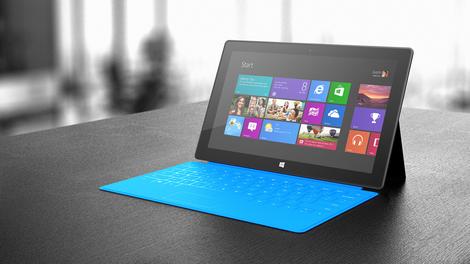
Microsoft's heavily-rumoured Surface Pro 2 device will reportedly launch with a new dock accessory, allowing users the opportunity to connect more devices, including external displays.
The Neowin site has received word that the dock will feature three USB ports, making it easier to connect external keyboards, mice, storage devices.
The Surface Dock, according to the report, will also enable users to hook up their external desktop monitors.
Effectively, the site speculates, the accessory would enable the Surface Pro to become a true desktop PC replacement as well as super-portable Windows 8 laptop and touchscreen tablet device.
Power Cover
The news comes just says after Neowin the Surface Pro 2 will feature a new keyboard cover called the Power Cover that will boast an additional battery to keep the device ticking along for a little longer.This latest revelation is another part of an increasingly clearer picture for the next-gen Surface Pro tablet, running full-fat Windows 8.
Earlier this week it was claimed the device will run Intel's new Haswell processors, include a two-stage kick stand and offer 8GB of RAM.
No news yet on when Microsoft will launch the device, but it would make sense for the company to out the device when the Windows 8.1 update drops in October.

| |
Read More ...
Google now encrypting data to deter NSA snoops
Technologies biggest companies are now in an 'arms race' with government surveillance agencies, according to Google, which is now encrypting its own data to ward off prying eyes.
For the past year Google has been working to encrypt the information flowing between its data centres, but the operation was stepped up significantly following the Edward Snowden revelations in June.
The company's reputation took a battering over the perception it had willingly complied with the PRISM initiative, which has harvested the personal communications of citizens on a massive scale, according to the now-infamous whistleblower.
Google denies willing participating in any such scheme and is now beefing up its own internal security to keep out unwanted intrusion.
Counter measures
Google's vice president for security engineering Eric Grosse told the Washington Post: "It's an arms race. We see these government agencies as among the most skilled players in this game."The encryption efforts will make it much harder for the government agencies to decode any information they intercept, with Google confident it's counter measures will prove successful.
Grosse added: "This is a just a point of personal honour. It will not happen here."
The data encryption will not have any effect on Google's obligation to comply with reasonable security requests from the NSA or other government agencies.

| |
Read More ...
BBM for iPhone submitted two weeks ago, awaiting App Store approval

BlackBerry has revealed its new Messenger app for iPhone was submitted for Apple's approval two weeks ago, indicating the app could arrive at any time.
The news comes from the Twitter account of BlackBerry's Alex Kinsella who, on Friday afternoon, admitted the company was now playing the waiting game as Apple takes a peek at the completed app.
He wrote: "Just in case we forgot to mention, BBM for iPhone was submitted for review 2 weeks ago. #waiting #BBM4ALL"
An online app tracker from Shiny Development claims the average review time for iOS apps is currently only four days, so perhaps Apple is making its old rival sweat before offering a thumbs up.
Before September ends
BBM, which helped BlackBerry handsets stay popular long after the decline set in at Waterloo, is coming to Android and iOS as part of an effort to make the app a universal tool for for all.The company announced the expansion plans at its BlackBerry World event back in May and all indications suggest the app will drop on both platforms by the end of September. In the case of the iPhone app, maybe sooner.

| |
Read More ...
Review Roundup: This week's hottest reviews on TechRadar

The first week of September is always chock-full of awesome tech and this year is no exception.
With IFA powering us along towards the Christmas buying bonanza, we've been playing with the most sought-after gadgets on the planet.
Top of the list has to be the Galaxy Gear – the much-mooted and long-awaited smart watch from Samsung. The Korean kings have been working on smart watch technology for yonks, and the fruit of that labour is finally here. But is it everything you hoped it would be?
Also on TechRadar's slab of lust this week have been a variety of 4K TVs, 3D headsets, mobile phones, tablets and more. So have a browse and start making your list for Santa!
1. Samsung Galaxy Gear

Samsung has got some things really right on the Galaxy Gear: the styling is great and the interface is nifty. We like the way the camera works (although we're not sure you'd want it, even for the likes of Vine or Instagram) and the idea of Smart Relay appeals to our geekier nature.
But we were a little shocked at how laggy and slow the interface was on the watch – it instantly felt like every other sub-par smartwatch we'd encountered in the past.
Samsung could still turn this one around, but there needs to be a big step forward to make the Galaxy Gear worth anywhere near the money that's likely to be asked. Hands on: Samsung Galaxy Gear review
2. Sony Smartwatch 2

The Sony Smartwatch 2 is the ideal foil to your Sony, or any Android Ice Cream Sandwich or above, smartphone, making it a much more universally appealing device.
It's got sleek lines, a lower price and a decent range of apps available at launch, making it a toy you can legitimately ask for at Christmas and then spend all day playing with.
It's not got the lag we've seen with so many other smartwatches, and a long battery life makes it much more of a proposition for the charging-naysayer compared to the Galaxy Gear.
Technologically speaking, it doesn't have the specs to match up to the Gear, nor does it have the functionality. But to some people, those looking for a simple device that quietly alerts them to text, call and Facebook updates, this could be an ideal candidate to replace the Timex. Hands on: Sony Smartwatch 2 review
3. Sony Xperia Z1

The Sony Xperia Z1 is definitely another step forward from the brand that's going from strength to strength in the smartphone market.
It's an impressive phone that packs so much technology inside you can't help but enjoy all the treats on offer - and it's well packaged in a way that makes us love to try all the different features.
It's a chunky beast, which may put some people off, but the metallic chassis is one we really like and pushes the premium message even further, and the addition of a microSD card slot is one we always love to see.
Given it's not likely to command the mega cost of the Lumia 1020, the Z1 is a decent phone that will rival the Galaxy S4 on the shop shelves - so if you can get over the bulk, it's one of the most exciting smartphones to check out this year. Hands on: Sony Xperia Z1 review
4. Samsung Galaxy Note 3

The Galaxy Note 3 is very much an evolution, with the specs starting to top out. The 3GB of RAM, the 13MP camera and octa-core processor are all nice additions, as well as things like superfast 4G on board.
It's excellent sonically, can display superbly crisp images, and has a number of tweaks to the camera that mean it can take decent snaps. Those are the things we want to judge the Note 3 on, not the ability to click the S Pen in a different manner.
We're not sold on the design of the back, nor the high price - but there still seems to be an appetite for the Note range, so perhaps this is just the handset Samsung needs. Hands on: Samsung Galaxy Note 3 review
5. Samsung Galaxy Note 10.1 2014

Samsung has been a little all over the place when it comes to is tablet strategy in the past so we're relieved to see it finding some focus, at least at the higher-end.
The Galaxy Note 10.1 is the tablet that finds all the best bits of Samsung and pops them neatly under the hood of a well-packaged device, and can be called a real companion for the Note 3 thanks to the extra power.
The price is likely to put some people off - but until we see what that is, we'll reserve judgement. Unless you're desperate to play with an S Pen all the time, then you might want to consider some of the excellent rivals too. Hands on: Samsung Galaxy Note 10.1 2014 review
6. LG G Pad 8.3

LG has actually done much better than we expected with the G Pad 8.3. When we saw the release and read about the specs, we didn't expect a huge amount as some things listed didn't really get our pulses racing.
However the design was actually much more premium than we expected, and the overall feel of the tablet worked well in the hand - with the lower bezel allowing for the larger screen to have a comfortable hold.
The only real downsides we can see are with regards to the LG G Pad 8.3 release date and price, as we don't even know if it's coming to the UK and the price remains to be seen. It should be a little cheaper than the likes of the Galaxy Note 8.0, and could even undercut the iPad mini (or at least theiPad mini 2) which would be a real coup for the manufacturer.
We're looking forward to getting this device in for a proper review in the near future, so stay tuned to see if LG has managed to find a backdoor entrance into the tablet market. Hands on: LG G Pad 8.3 review
7. Toshiba Encore

We're still not sure that 8 inches is really deserving of Windows 8.1. Just because you can do it doesn't mean you should and it'll be interesting to see whether or not this can convince the market, as Acer doesn't seem to be doing the trick right now.
But if you're still holding onto the belief that there's a device that can do it all then the Encore ticks most of the boxes and - assuming nothing goes wrong before it arrives - will most likely be your best 'everything' tablet option when it hits the market.
It's an intriguing proposition, we're just not convinced that even Toshiba has quite nailed it yet. Hands on: Toshiba Encore review
8. Sony HMZ-T3W

When you've nailed that sweet spot, the HMZ-T3W is a neat bit of kit. But even after the adjustments Sony has made it still feels like this is just a luxury product, especially considering the price.
But if Sony really has been working on a dedicated PS4 version then this is a promising sign of what could be about to come. As it stands, the T3W by itself probably won't start any revolution in the way we watch. Hands on: Sony HMZ-T3W review
9. New Asus Transformer Pad

Those who have been holding out for Asus to unleash its new Transformer for some time shouldn't be disappointed by what's on offer here. Tegra 4 was the only logical next leap and now we've seen it in action it feels like this will really rock it when it hits market.
If you weren't sold on the design of the Transformer Prime then the bad news is that not much has changed in that department. But with that rich HD screen and smoother user experience you might find yourself forgetting the these flaws. Let's just hope it comes in at the right price. Hands on: New Asus Transformer Pad review
10. Philips 65PFL9708 Ultra HD TV

There are much bigger Ultra HD TVs on show at IFA 2013, but don't underestimate the impact of a 65-inch screen with eight million pixels. As big as four 32-inch screens, Philips' 65PFL9708 is, at £4,500 reasonably priced when compared to the competition; Panasonic's 65-inch TX-L65WT600 unveiled at IFA will sell for £6,300. Hands on: Philips 65PFL9708 review
11. LG 55LA9700 Ultra HD TV

There's certainly nothing retro about the 55-inch 55LA9700 we spent some time with. Despite the extra pixels on show, this is all about audio. It's got a small subwoofer embedded in the TV's rear that can be glimpsed from behind, but the 55LA9700's star turn is unquestionably its drop-down Sliding Speaker. Hands on: LG 55LA9700 review
12. LG 55EA9800 Curved OLED TV

That richness of colour, the domination of pure – as in, total – black and awesome contrast is often underplayed by commentators, but OLED remains the best thing we have in flat telly. That's underlined by a silky, life-like smoothness to motion that's a big advance even on high-end LED TVs. But why would you buy a curved one? Hands on: LG 55EA9800 review
And the rest of the week's reviews...
13. TomTom Go 6000

The TomTom Go 6000 is an exceptional sat nav. Kudos to TomTom for rethinking the device from the ground up to produce an even more-compelling companion to your journeys. The experience you'll enjoy when using this compared to what you'll get from a smartphone or even an older sat nav is incredible. You won't be second guessing what's around the corner or waiting for the signal to catch up - and while that will cost you, it's money well spent. TomTom Go 6000 review
14. ZTE Blade V

The ZTE Blade V is a phone that will both perplex and amaze you in equal measure; it's not the most auspicious opening for a new handset, but it's one that had us scratching our heads a little. For on the one hand, you're looking at a phone that can be had for as little as a shade over £70 in the UK, and it comes with a, frankly unbelievable, quad core Qualcomm processor, clocked at 1.2GHz and backed by a solid 1GB of RAM too, which means it should fare pretty well in the speed stakes. Hands on: ZTE Blade V review
15. HTC Desire 601

It's hard to see which consumers will plump for the Desire 601 unless it gets a huge marketing boost – there's still not enough appetite for 4G speeds on a mobile to make it the reason to buy a phone and that seems to be HTC's ploy. It's certainly one that resonates with networks, and may serve to bring enough carrier spending to push the 601, but with so many similar phones on the market this could be a tough sell. Hands on: HTC Desire 601 review
16. Sony QX10

Sony's focus at the moment seems to be innovation, and it's done it once again with the QX range. For some time, camera manufacturers have struggled to keep up with camera phones in terms of instant connectivity and ease of use. This is the first time we've seen something designed to work with your phone, rather than beat it. Hands on: Sony QX10 review
17. Sony QX100


| |
Read More ...
Hands-on review: IFA 2013: Asus Fonepad Note 6

There's nothing better than a bit of healthy competition, and Asus jumped ahead of Samsung's Galaxy Note 3 IFA reveal with its own 6-inch alternative - the Asus Fonepad Note 6.
Don't get bogged down with the (typically) confusing Asus naming - this is more of a tablet and aims to mimic what Samsung has done with its own Note series.
The Fonepad Note 6 is certainly strong on the specs. Inside is a dual-core Intel Atom Z2580 processor clocked at 2Ghz offering 2GB of RAM and running Android 4.2. There's also 16GB or 32GB of storage, with an 8MP camera on the rear and 1.2MP camera on the front.

One of the first big positives to immediately stand out about the Note 6 is the sharpness of the screen. The full HD 1920 x 1080 Super IPS display makes the Note 6 nice and vibrant, especially noticeable during video playback.
Like the HTC One, the Fonepad Note 6 also rocks stereo speakers on the front for a fuller, richer sound, although we'll have to wait until our full review to really test the quality here. From what we did see, we were happy enough.

Asus is also slotting in an S Pen-like stylus that feels and acts almost identically to Samsung's. It even has its own version of Air View that lets you interact by hovering the pen above the screen.
As soon as you take the stylus out of its slot holder it boots up the note-specific applications. We found that doodling on the Note 6 was smooth and accurate during our time with it although Asus is yet to confirm whether the tablet stylus has the same levels of pressure precision as the Galaxy Note 3.

But the comparisons end when it comes to overall body design. At 10.3mm thick and weighing 210g, the Asus Fonepad Note 6 is bulkier than its Samsung rival and we found that holding it in one hand wasn't as comfortable, though still manageable.
And while we think the black version looks nicer than the white, it also suffers from being eye-blindingly glossy, which only reflects the cheaper build quality here. With that in mind, we hope that Asus is planning a lower price point for the device, and so far all signs look good.
For those who want to make use of the "Fone" side of things, the Note 6 comes with HSPA 3G and noise cancellation.

Early verdict
Asus takes a hefty swing at the Galaxy Note 3 but doesn't quite land a KO. The Padfone Note 6 is strong on the spec sheet but falls down in some of its mid-range design.Still, with a mid-range price to match we can see a lot of Samsung would-bes might be tempted over to the Asus side. We'll have to wait to put them head to head in our full reviews to know for sure.

| |
Read More ...
Galaxy Gear smartwatch reportedly the first of many models and price points

Even if you thought the Galaxy Gear smartwatch looked fashionably acceptable when it was unveiled at IFA 2013 this week, chances are its high price point gave you sticker shock.
We noted in our Galaxy Gear review that the company's first smartwatch is going to be very expensive at $299 in the U.S. and likely £299 in the U.K. (around AU$325), potentially putting off a far number of wearers.
The good news is that Samsung is said to be planning a family of Galaxy Gear watches with a range of models to fit different customers' wrists, according to SlashGear.
That means you can expect a variety of new sizes, added and subtracted features and, most importantly, multiple price points.
New Galaxy 'sub brand'
Samsung explained that "Galaxy Gear" is supposed to be a sub-brand name akin to its Galaxy smartphone line, reported SlashGear.The company is said to have gone through hundreds of different designs before it selected the look of the first Galaxy Gear smartwatch, which is set to launch in 149 countries starting on Sept. 25 and in the U.S. in October.
However, a variety of price points won't solve all of Samsung's hurdles in its attempt to be one of the first companies to launch a truly desirable smartwatch. Initially the device will only work for its Galaxy Note 3 phablet and Galaxy Note 10.1 2014 tablet.
That's a problem when, combined, the phone and Galaxy Gear will cost early adopters at least $500 (about £320, AU$545) up front, and customers still be on the hook for monthly contract payments for the smartphone. In fact, U.S. carrier Verizon is bundling the two for a pocket-punching$599.98.
Galaxy Gear will be compatible the Galaxy S4 smartphone when Samsung rolls out Android 4.3 with low-powered Bluetooth 4.0 in October, but when smartphone owners receive the update really depends on their carrier.
- Apps are important to most every piece of new hardware. Check out the first 12 coming to the Galaxy Gear.

| |
Read More ...
Updated: Amazon phone release date, news and rumors

Release dates, rumors, and more
With the runaway success of Amazon's Kindle Fire tablet - the media-happy device owns over half the Android tablet market - it seems only natural that the company would turn to smartphones next.Amazon's strategy of putting all its media content directly into consumers' hands has worked out well so far, so wouldn't the Seattle company take the next logical step?
Like the Kindle Fire, an Amazon smartphone would be a veritable home-shopping network - replete with Kindle books, Android apps and Amazon Prime video - only as a phone, so it would be the only device users would really need.
Given the anticipation that's built up around a product that's not even certain to exist, we figured it wise to compile all the rumors and speculation in one place.
Get this: Amazon will give the phone away for free
We've heard of free shipping and low-priced phones on a two-year contract, but this is ridiculous. The latest rumor says Amazon will give its handset away for free.Could it be true? Well, possibly. Amazon has a history of pricing its hardware dirt cheap, expecting to clean up on apps rather than the initial investment. It's not a bad plan, especially if the retail behemoth can get people signed up for Amazon Prime using the deal.
Amazon working on two phones, one of them 3D
We've debated whether it will be called the Kindle phone, Amazon phone or something else, but now it seems that Amazon is working on more than one device. That's the latest rumor coming in over the wire.Beyond that, apparently one of the handsets will have 3D projection capabilities, sans glasses. That sort of technology has been a success for the Nintendo 3DS, but remember the LG Optimus 3D and HTC Evo 3D? We hardly do either, which makes us wonder what the online retail giant is planning.
Evi to be the Amazon Phone's Siri?
Back in January, Amazon acquired the startup behind a natural voice search engine similar to the Apple's Siri. Now the scent on the wind is that Amazon will be putting a chat-to app called Evi on its Amazon Phone .It sounds logical, because Amazon would need this technology to be competitive, and it would be great on Kindle devices, too. Imagine yelling at those lock screen ads that you don't want Fifty Shades of Grey.
Amazon hires Windows Phone 7 head honcho
Amazon has added Microsoft's ex-Windows Phone General Manager to its stable of talent. Could this be a big name hire for developing the Amazon Kindle phone?The former Microsoft man is named Kindel, Charlie Kindel, so we'd say he has the proper pedigree to help Amazon break into the market with an Amazon Phone or Kindle Phone, whatever the name ends up being. And despite the naming coincidence and the news breaking on April 1, we're confident there's nothing phony about this story.
"I'm building a new team going after a totally new area for Amazon. I'm hiring cloud and mobile developers and testers, program managers, and product managers," Kindel commented, immediately sending the internet into a flurry of rumors and sidelong interpretations.
Amazon phone to hedge its bets with a reasonable 4.7-inch display
According to Digitimes, so called "industry supply chain sources" have put a ruler to the Amazon Phone. They say the handset will have a 4.7-inch display, which would put it in between an iPhone 5 and a Galaxy S4 when it comes to visual real estate.This supposed fact, combined with a rumored low asking price, suggests that Amazon is going for the casual smartphone user, one who does not want to spend a fortune and would like to be able to carry the phone in their pocket with ease.
Amazon phone will miss rumored Q2 2013 release date, still looking like a Foxconn product
It's all still the stuff of rumors, but previous rumblings pegged the Amazon Phone (or maybe Kindle Phone) as arriving in the second quarter of 2013. Now it looks as though that deadline will make a delightful whooshing noise as it blows past.Somewhat infamous manufacturing mogul Foxconn is said to be on deck to produce the dirt cheap device. Its subsidiary Ensky Tech made the original Kindle Fire and now produces the Kindle Fire HD and the Kindle Paperwhite, so it would be no shock at all to see the two collaborate on the project.
As far as what's causing the delay, a report at Digitimes blames the "engineering verification test period due to issues related to its mobile platform," saying that the process, "has not been as smooth as expected."
This is surprising, given the great deal of experience Foxconn and its partners have in this field. It has us wondering what Amazon could have up its sleeve that's making the phone such a bother. As always, rumors are like cheap takeout; they just leaving you hungry for more.
Foxconn to manufacture Amazon phone for summer 2013 release date
This might be the most concrete rumor yet regarding the Amazon phone. Supposedly the online retail giant has inked a deal with Foxconn to manufacture its first smartphone. Industry insiders also expect a summer 2013 release.According to the reports, the phone may also have a dirt-cheap asking price of $100-200 (around £60-120/AU$95-190). This would fall in step with Amazon's strategy with its Kindle Fire HD and Kindle Paperwhite line, devices sold at highly competitive prices in order to get customers investing in Amazon's media library.
While the involvement of Foxconn is not surprising, since the company has become a prolific manufacturer of all things electronic, it is somewhat troubling given its reputation for overworked, striking employees. Maybe the Amazon phone will be one of the first devices assembled in American Foxconn factories?
Amazon Phone rumors catch fire
Rumors of an Amazon Phone started to catch on in late 2011, when analysts began predicting the Amazon Phone's existence, despite a lack of hard evidence.That hard evidence, by the way, still hasn't made an appearance, but that hasn't stopped the rumor mill from churning away.
Kicking things off, analyst firm CitiGroup reported that it discovered the existence of the then-unheard of Amazon Phone through its "supply chain channel checks in Asia."
Analyst Mark Mahaney led the Amazon Phone charge, proclaiming that the bookseller was in cahoots with infamous Taiwanese manufacturer Foxconn to build the device.
Other analysts agreed: "A smartphone would be a logical next step for Amazon," ABI Research's Aapo Markkanen told Wired in May.
"The lock-in effect of a great content ecosystem shouldn't be under-estimated," he continued.
Bloomberg fed more fuel to the Amazon Phone fire in July, when its anonymous sources ("people with knowledge of the matter") confirmed that Amazon and Foxconn remained hard at work on the smartphone.
Further, the same report claimed that Amazon is busy hoarding as many wireless patents as possible to defend itself from the inevitable infringement suits that follow any modicum of success in the market.
Windows Phone executives board the good ship Amazon
The summer heat must have helped the Amazon Phone fires spread, as July gave birth to yet another bout of speculation when two Windows Phone vets joined Amazon.First Brandon Watson left the Windows Phone team to become Amazon's director of Kindle cross platform, then Robert Williams, previously Windows Phone's senior director of business development, joined Amazon as its app store director.
Of course, the mere fact that the two previously worked on Windows Phone in no way proved that Amazon had brought them on to work on its own phone - but then again, it's not that far of a stretch, is it?
To further stoke the flames, it appeared toward the end of July that Amazon's innovation center - Lab 126 - had been hiring workers to develop new mobile devices that would run on wireless carriers' networks.
In other words: an Amazon Phone. Imagine that.
Amazon Phone release date
In CitiGroup's original 2011 report, the firm predicted that the Amazon Phone release date would fall in Q4 2012, though that's looking less and less likely the more time passes without a peep from Amazon.That doesn't mean it's not going to happen, of course, but other rumors since then have been somewhat less optimistic about the Amazon Phone release date.
Less than a week after Bloomberg's report that Amazon and Foxconn still had their collective noses to the grindstone, another source (this one from Amazon's component suppliers) told the Wall Street Journal that the bookseller was already testing Amazon Phone prototypes.
That report claimed that the device could go into production during the second half of 2012, and that the Amazon phone release could fall in late 2012 or early 2013.
Amazon Phone price
From the beginning, speculators foretold that an Amazon Phone would hit the low end of the price spectrum.In part, it's assumed that Amazon would sell the device wholesale (or maybe even at a loss) in order to further expand its digital content distribution.
Every pair of hands holding an Amazon Phone comes with eyes, ears and a wallet, after all.
CitiGroup analyst Kevin Chang said in 2011, "For a normal brand like HTC, they need to price the product at $243 to make 30 percent gross margin. If Amazon is actually willing to lose some money on the device, the price gap could be even bigger."
That means the Amazon Phone price could sink as low as $170 or even $150, though Amazon would surely make up the difference somehow - just like it does with the Kindle Fire.
Amazon Phone specs
There's been little speculation about the Amazon Phone's specific hardware features, considering there's yet to be any official word - or even a measly leaked prototype image - to go off of.But the WSJ's source claimed that the Amazon Phone's screen size would fall somewhere between 4 inches and 5 inches, placing it right in line with top Android phones such as the Samsung Galaxy S3 andHTC One X.
The Amazon Phone would at least need to perform well enough to reliably stream content and be integrated with Amazon's various media and cloud services, and the better the resolution, the more attractive the device would be for streaming video.
Battery life will be another important factor, as nothing will turn the average consumer off faster than being interrupted in the middle of "Real Housewives" by a pesky low power warning.
Will the Amazon Phone run Android?
An Amazon Phone is almost dead certain to run on some variation of Android, as Google and Amazon, despite occasionally finding themselves at one another's throats, can just as often be found sitting snugly in one another's pockets.According to some reports, the retail giant has even considered stocking Google tablets like the Nexus 7 in its stores, indicating that their rivalry can't really be all that heated.
Besides, Windows Phone is sat firmly in Nokia's camp, at least for the lifespan of Windows Phone 8 - Microsoft's not about to throw away years of build-up just to hop in bed with Amazon.
That leaves BlackBerry maker Research in Motion, who - to be fair - is rumored to be shopping the BlackBerry 10 OS around for a licensing deal.
But there's a chance BB10 will be more or less dead on arrival, and either way, an OS swap at this point would just be too risky for Amazon, who'll already be tossing the dice with a smartphone gambit in the first place.
Furthermore, Citigroup's initial Amazon Phone report from 2011 claimed that the bookseller would have to pay royalties to Microsoft, all but spelling out that the phone would be another Android device.
Amazon phone: 10 things we want to see
TechRadar's Amazon Phone wish list
We at TechRadar aren't immune to the charms of an Amazon Phone, even if it does only exist in the imaginations of analysts and tech bloggers at the moment.That's where this wish list of Amazon Phone features came from, as well, after all.
On the list are such far-fetched notions as an at-cost Amazon Phone price point, something that's basically been assumed all along, as well as slick cloud and streaming integration, a refreshed app store, exclusive shopping discounts, and killer hardware features like NFC.
Whether any of that will actually come to fruition - or whether the Amazon truly even exists or really is just a figment of a thousand overactive imaginations - will be seen only when Amazon decides to step out of the shadows and into the firelight.
Here are 10 things we'd like to see in the Amazon phone, in order for it to make a dent in the smartphone space.
1. Discount the Amazon phone price
Amazon was willing to sell Kindles at a loss in order to grow the device's base from zero to hero.Just how far is the online retail giant willing to go to cut the Amazon phone price in order to entice customers?
It's hard to justify a brand-new smartphone purchase at non-contract prices. What can Amazon do to sweeten the deal for upgraders and off-upgraders alike?
2. Tie in services
It goes without saying, but Amazon's going to have to do a superb job integrating its cloud storage, web-based MP3 service, and streaming video collection into a phone.
These service gems all sound like familiar offerings from Google, Apple, or Microsoft: To be different, Amazon has to raise the bar with what it offers (more storage!) or how it allows users to interact with its other services.
3. Play nice
We get it. Amazon wants to use Google's operating system as the base for its phone (or so the rumors go), but Amazon doesn't want to allow users to easily tap into Google's goods and services.Competition is fair.
But, please, for the sake of usability - don't just throw the baby out with the bathwater.

Amazon might not like Google Play, but that doesn't mean it has to ditch every Google-branded app out there, especially if they exist in a market that Amazon doesn't play in (Maps?)
4. Update the appstore for Android
Sorry, Amazon. Your appstore leaves a lot to be desired.
Refresh the interface, quicken it up, allow users to more easily navigate through apps that they might want to try out, and consider adding some social features to help one's friends recommend diamond apps in the rough.
Or, feature weekly rotating lists of must-have apps that are worth downloading based on editor feedback, not just because they're inexpensive.
5. Integrated discounts
Free apps. Amazon's Gold Box. Shipping discounts for Amazon Prime members. Affiliates.There's a lot of magic surrounding many of Amazon's core services and cold, hard cash.
Amazon, extend these options to your phone.
Court larger developers to offer better free applications.
Offer rolling discounts for apps (people actually want to use) in special time-limited sales that you tease throughout the week.
Allow users to make money by recommending apps to their friends, colleagues, and peers.
Bring the mercantile magic of Amazon dot com into Amazon Phone (or whatever it'll be called).
6. Primed for Prime
Here's the big one: What benefit do Prime subscribers get if they pick up an Amazon phone?Big discount? Increased access to services (like streaming video)? More storage space?
Prime is Amazon's big change to sell its phone on the cheap and incentivize owners to pay more, annually, for a more exclusive slice of Amazon's pie.
Make the bonuses killer, and you've just locked in a user for an extra $160 (or so) over the course of a two-year contract.
7. Ignore exclusivity, choose and stick to a release date
Well, for carriers at least. Nothing would hurt Amazon more in its quest to establish a foothold in the smartphone market than allying itself with a single carrier - worse, a carrier that isn't the top in the market for good ol' 4G LTE service.Amazon needs to capitalize on its brand recognition and, as the saying goes, "go big or go home."

Pick one chip that supports GSM and CDMA for non-4G LTE service and allow customers to switch carriers without hassle (unlock that phone!)
And as far as a Amazon phone release date, pick one and stick to it. Don't keep it pushing it back like other carriers.
Think worldly, Amazon.
8. Consider prepaid plans
The big buzzword today is "prepaid" smartphones, but the concept does come with a bit of hassle – the smartphones cost a bit more, might not be as good as some of the top-shelf items you can purchase, and prepaid providers just don't have as good of a reach as the cellular industry's big guns.If Amazon were to somehow flex its clout and get the main carriers to work more harmoniously with prepaid service plans (or the smaller carriers that support them)… that would be quite an eye-opener, wouldn't it?
9. Amazon phone specs need killer hardware
It goes without saying (again), but Amazon might not want to slink into the smartphone market with a low- to medium-powered device.You can't just Kindle Fire your way into the market from absolutely nothing. To make a dent, Amazon will have to make a splash.
It's unclear how Amazon would go up against some of the market's leading manufactures and their speedier, faster, larger, and more feature-packed devices (that release on a more consistent timeframe).
But there's a little thing called the iPhone 5 that's going to start capturing a lot of attention as we inch closer to the end of the year.
Amazon needs to capture the buzz with, quite simply, a "cooler" phone.
10. NFC for you and me
Amazon's an online shopping powerhouse.So, turn the phone into a powerhouse shopping device: Give users a super-easy method for comparing what they're looking at against products in Amazon's database to determine whether they're getting the best possible deal.
Or, better yet, incentivize users who price match with their devices by giving them a small discount on Amazon.com purchases itself.

Help users remember what to buy and where to buy it (if not from Amazon).
Tie in Amazon's reviewing service so users can recommend, on the fly, Amazon-hosted alternatives for items they might want to buy.
And then there's the biggie: Tie NFC payments to one's Amazon account and allow users to pay for products using their phones, not their wallets.
Transform the offline shopping experience with a smartphone the same way you transformed the online shopping experience with Amazon's.

| |
Read More ...
Don't expect a new Apple TV during next week's iPhone 5S event
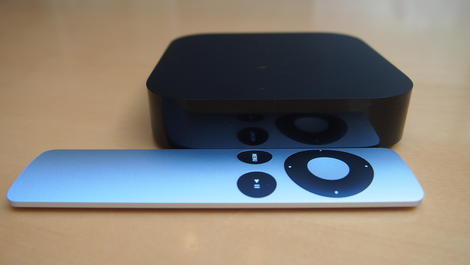
We are looking forward to a phone-tastic event from Apple come Tuesday, a welcoming party fit for the iPhone 5S and cheap iPhone 5C.
While the world will be watching Apple's global fetes that day, one product that very likely won't make an appearance in the physical sense is a new Apple TV set-top box. The word comes from AllThingsD, and gives us one item to check off our "one more thing" possibility list.
According to "people familiar with the company's plans," Apple will talk about changes it's making to the Apple TV software. There will not, however, be new TV hardware to show.
Reports have swirled that Apple plans to talk about a new TV during its event at its Cupertino headquarters next week, but today's report shoots down that speculation.
Many more things
Apple has of late added new TV channels, including two from Disney, Vevo and the Weather Channel. It also purchased Match.tv, a video recommendations site, and plans to add iTunes Radio support at some point.One potential new feature we could hear about is the ability to let users play content they've paid for on Apple TVs that belong to someone else. Using AirPlay, a user could pull up a TV show or movie on their iPhone, then stream that content on another person's Apple TV without having to change log-in information, according to AllThingsD.
Apple is also rumored to be developing a premium TV offering that would let users skip commercials during live and on-demand programming.
With a new Apple TV out, other possibilities for Apple's famous "one more thing" announcements are a new iPad, such as the iPad 5 or iPad mini 2 (neither are likely until October), the iWatch (a particularly timely reveal given the Galaxy Gear) or new Macs.
We'll know plenty come Tuesday at 10 a.m. PT/6 p.m. BT and 4 a.m. in Australia on Sept. 11. Tune back into TechRadar for complete coverage.

| |
Read More ...
Cheap iPhone bound for China Mobile, according to new report

Add China to the list of words that the C in iPhone 5C could stand for - right next to color and cheap.
Apple is readying a shipment of the less-expensive iPhone to China Mobile, the world's largest wireless carrier, according to a Wall Street Journal report today.
The company is said to have asked its overseas device manufacturer Foxconn to add China Mobile to the list of iPhone 5C carriers, reported the paper citing unnamed sources.
While the official agreement between the companies is thought to be complete, the release date for the cheap iPhone in China is still unknown.
Staggering numbers
The deal would open Apple up to China's state-owned carrier and its nearly 745 million customers.To put that into perspective, the China Mobile customer base is seven times larger than the No. 1 U.S. carrier, Verizon.
Not even the U.K.'s Vodafone, the world's second-largest carrier, touches China Mobile, which surpasses its subscriber totals by more than 300 million.
Leveling the playing ground
The iPhone 5C, expected to be announced on Sept. 10 alongside the iPhone 5S, may be made of cheaper plastic instead of aluminum. But that's okay for the majority of the customers in Greater China.That leads to another staggering number: the iPhone 5 is selling for about 5,000 yuan, or $815 (about £521, AU$887) without a contract, according to the Wall Street Journal.
Apple needs to bring the price down in the neighborhood of $200 (about £128, AU$218), which is how much a majority of smartphones cost in China.
If Apple is indeed making headway into the country with a China Mobile deal, it could help stem the worldwide domination that has Android devices controlling a whopping 79 percent of the market.
- Speaking of China, Apple is facing fresh labor abuse allegations

| |
Read More ...
Reports out Microsoft Surface 'Power Cover' with extra battery

Yesterday a slew of alleged Surface Pro 2 news reached us by way of a report that claimed the next Surface tablet will sport a Haswell chip, a two stage kickstand, and upgraded specs.
Now the same site that brought us that report brings news of an upgraded keyboard cover that it says Microsoft will release as the "Power Cover."
According to Neowin, in addition to a keyboard the new cover has a battery built in to lend the Surface tablet extra power when its reserves run dry.
The Surface Pro 2 could drop at any time, given the recent Surface price drops, but that doesn't mean the Power Cover will arrive at the same time.
Another angle
Neowin reports that the Power Cover might not drop at the same time as the Surface Pro 2, but could come at a later date.The site also says that the Power Cover will not work with the existing Surface RT, though it may be compatible with the current Surface Pro.
Paul Thurrott's Windows Supersite posted some additional details, confirming that the Power Cover actually will work with the existing Surface Pro but not the RT.
Thurrott also corroborates Neowin's claim that the Power Cover will launch after the Surface 2 and the Surface Pro 2. He says all three items will be out by the end of the year.
TechRadar's own tests of the existing Surface Pro deemed the battery life more than adequate, so it's a good thing that the Power Cover will reportedly be an optional accessory like the Type Cover - many users probably won't need one.
Then again, who's to say what the Surface 2 and Surface Pro 2 will be rocking in terms of battery - maybe they'll need the extra juice.
Either way it sounds like we'll be hearing more about it this year.

| |
Read More ...
Will the Amazon smartphone come to customers free of charge?

The Amazon phone is the device everyone knows is coming - it's just a matter of the etailer confirming the darn thing exists.
While we are no closer to Jeff Bezos admitting his company has a handset cooking, new details out today reveal that when the handset does launch, Amazon may offer it free of charge.
In a report on Jessica Lessin's blog, she and fellow former Wall Street Journal reporter Amir Efrati reveal that according to people familiar with the matter, Amazon is looking into launching its phone for free, though details of how this would work are still very murky.
One catch to this unprecedented move could be a requirement to sign up for an Amazon Prime membership.
While sources are unsure Amazon could pull off a free device, the company apparently wants consumers to have access to the phone regardless if they sign up for a new wireless plan concurrently. Carriers will often discount phones when customers opt for a new agreement.
Holy free-joles
Amazon has reportedly spoken with carriers about offering its handset, however it stands to reason it would also sell the device via its own online retail channel.A free Amazon phone is far from a done deal, and a number of factors, including working out financial Xs and Os with hardware partners, could affect the plan.
Reports of the Amazon phone stretch as far back as two years ago, but the company has reportedly had a time of it finding hardware partners not already committed to pumping out Android devices.
Amazon has a line of tablets and ereaders, and is expected to launch a refreshed Kindle Fire HD 2, among other products, before the holidays. The Amazon phone release date remains a mystery, but it will likely run a forked version of Android, much like Kindle tablets.
If Amazon does successfully launch a free device, it could severely undercut hardware giants like Apple and Samsung. Apple is expected to launch a "cheap" iPhone 5C on Sept. 10, but Amazon's free phone could potentially snare that market share.
Like Google, Amazon's primary profits come not from hardware but from another core business (e-commerce for Amazon, online ads for Google). Unlike Apple and Samsung, Amazon can take a hit from a free phone in order to grab customers, especially in developing countries.

| |
Read More ...
Mac OS X Mavericks release date tipped for late October

It looks as if Mac OS X Mavericks won't be as nonconformist as its name suggests. The Mac operating system update is reportedly being readied for an October release date as the crowd widely expects.
Apple plans to release OS X 10.9 at the end of next month, according to 9to5Mac citing unnamed sources "with knowledge of the launch plans."
This would be in line with the previous two Mac OS X updates, Lion and Mountain Lion, which released the day following an Apple earning results release in the summer of 2012 and 2011.
Apple's fourth quarter numbers are expected in the second half of October.
OS X 10.9 alongside iPads?
The October OS X Mavericks release date report dispels previous far-fetched rumors that it was going to launch alongside iOS 7 and the likely debut of iPhone 5S and iPhone 5C next week.It looks like Sept. 10 will be all about the new iPhone handsets.
Instead, OS X 10.9 may share the stage with the announcements of the iPad 5 and iPad mini 2. The tablets are expected to be refreshed next month with tighter dimensions and a Retina display, respectively.
A MacBook Pro with Haswell's all-day battery life is also thought to be due out in October, meaning Apple employees and fans might be in for a busy holiday season.
OS X Mavericks beta
OS X 10.9 is shaping up to be an update that Mac power users are going to benefit from the most, especially in the area of controlling multiple displays.They'll also appreciate the ability to open multiple tabs in Finder windows, apply tags to file for easier organization and reply within notifications.
Everyone will see improvements in the way full-screen apps work and be able to experience new applications like Maps and iBooks on the computer.
The latest beta, Developer Preview 7, was seeded to testers earlier this week, as the expected October release date nears.
- Check out the OS X Mavericks system requirements.

| |
Read More ...
Available Tags:Nissan , Xbox , Galaxy , Galaxy , TV , Windows Phone , Windows Phone 8 , Windows , Android , Nokia , iPhone 5 , iPhone , Google , Twitter , UK , Microsoft , TechRadar , Asus , Amazon , rumors , Apple TV , iPhone 5 , Apple , Amazon , smartphone , Mac ,


No comments:
Post a Comment