

DeepCool Intros Pangu ATX Mid-Tower Case
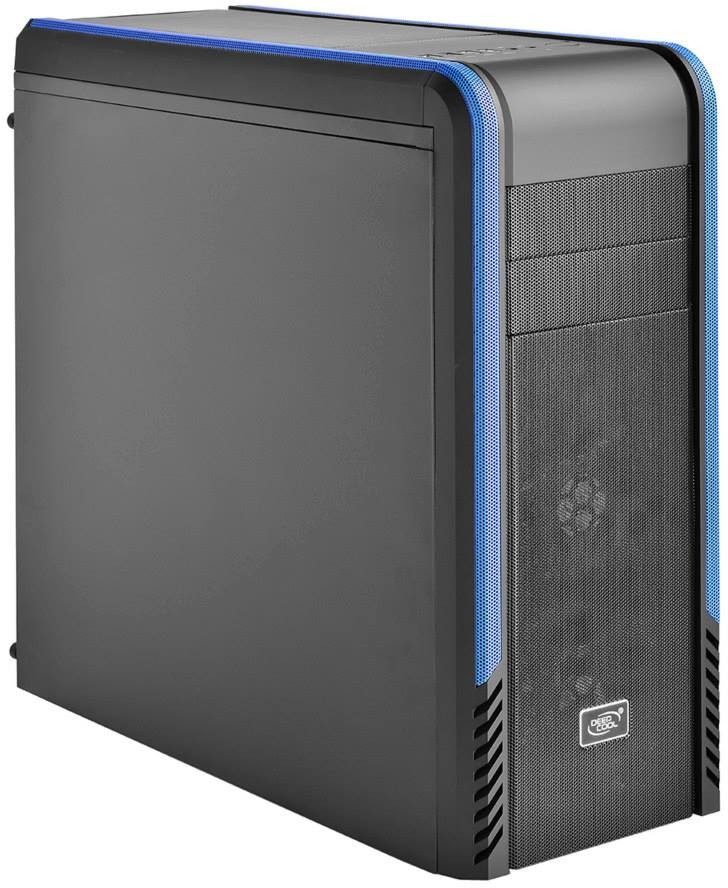
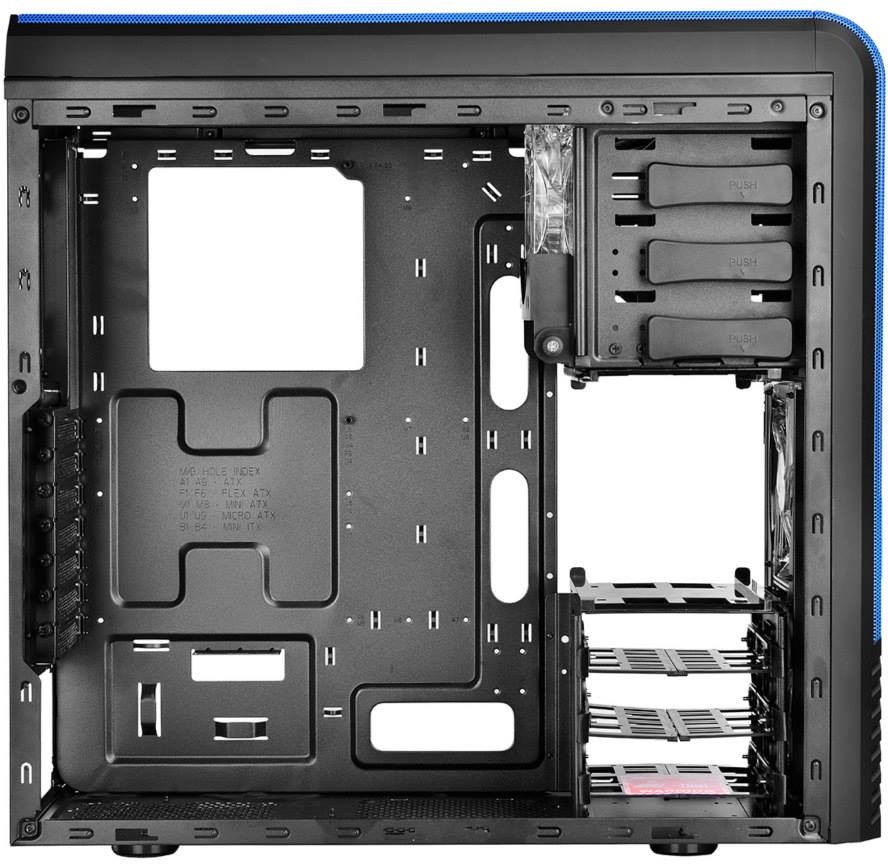
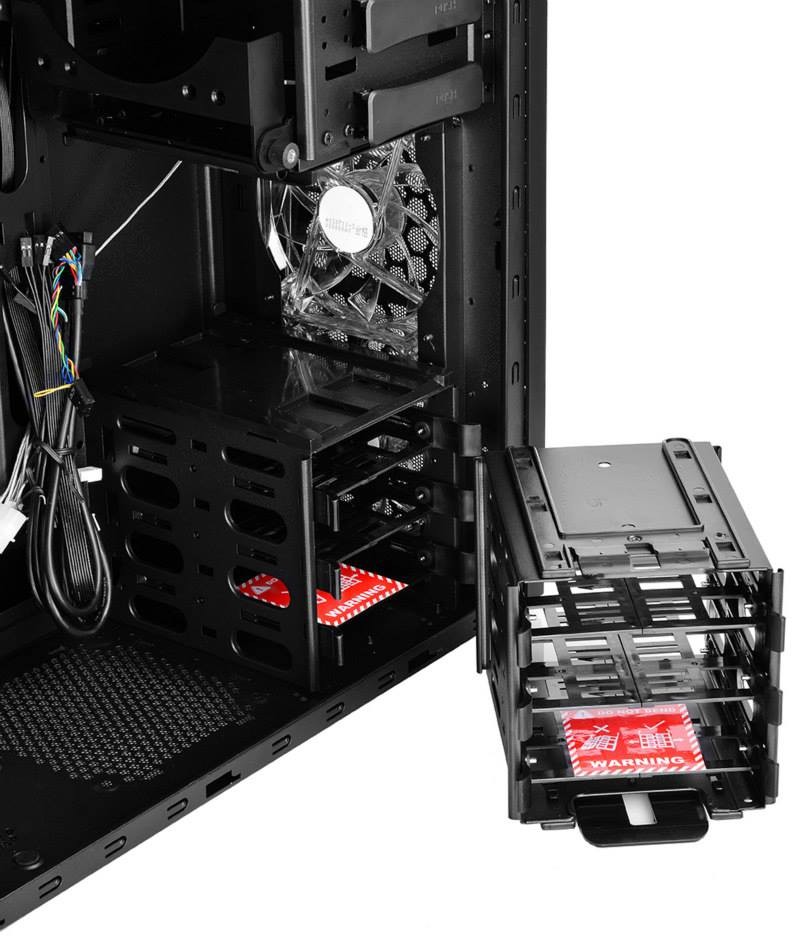
DeepCool announced its Pangu ATX mid-tower case. It's characterised by a wider than normal body, letting you install tall graphics cards, and manage your cable spaghetti behind the motherboard tray better, since there's 2 cm of gap between the motherboard tray and the right panel. The case seats standard ATX motherboard types, with cutouts for CPU cooler and cable management. The drive storage area includes three 5.25-inch drive bays, and six 3.5/2.5-inch bays split between two detachable 3-bay cages. The drive cages, and expansion slot covers are tool-free.
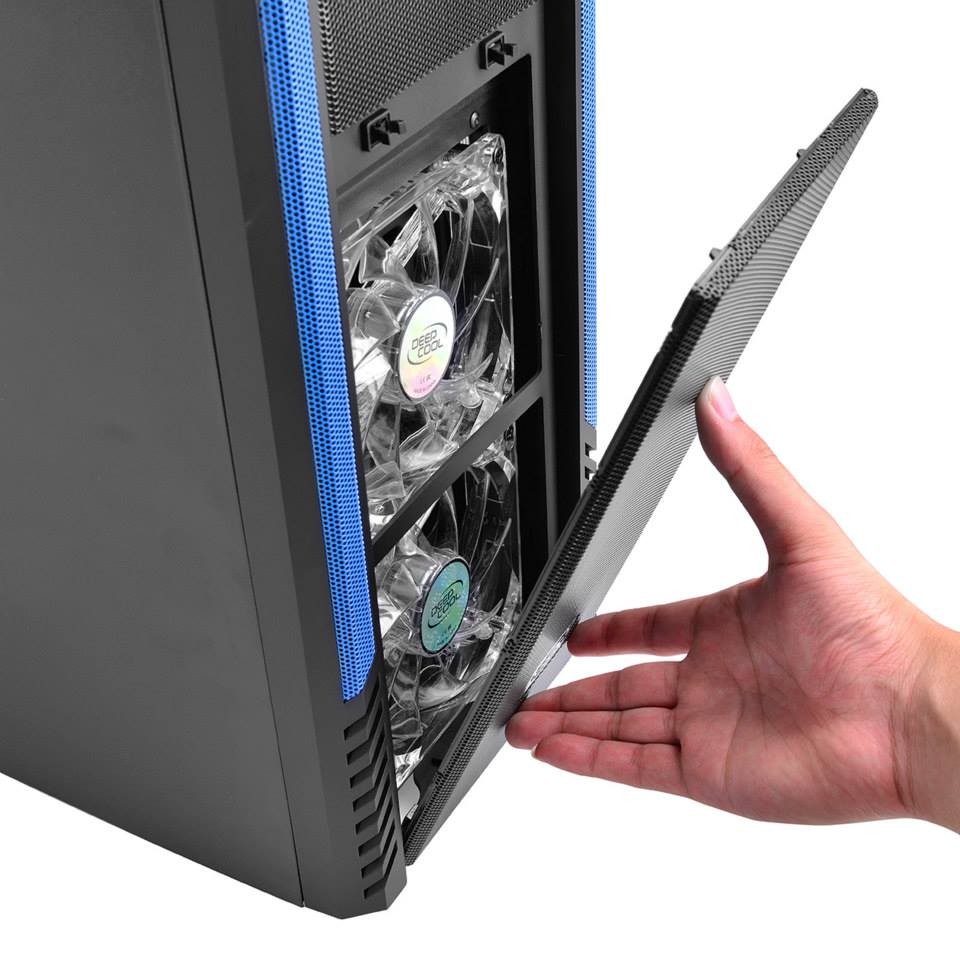
Moving on to the cooling area, the case features two 120 mm front intakes, with which you can make room for a 120 x 240 mm radiator by detaching the 3.5/2.5-inch cages; two 120 mm top exhausts, which can accommodate another radiator, a unique 120 mm conveyor behind the 5.25-inch drive cage, one 120 mm bottom intake, and a 120 mm rear exhaust. The perforated steel panels covering the front and top vents can be detached without any tools. Front panel connectivity includes two each of USB 3.0 and USB 2.0/1.1 ports, and HD audio jacks. The case is made of SECC steel and ABS plastic. It's available in black with deep blue, and white with hints of blue. DeepCool didn't announce pricing.


Read More ...
(PR) SteelSeries and Team Natus Vincere Introduce the Sensei RAW Na'Vi Edition
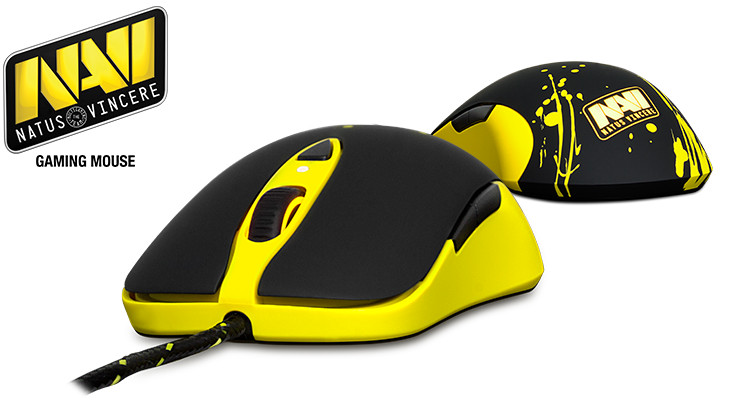
SteelSeries, the leading global manufacturer of gaming peripherals and supporter of eSports, today announced the new Sensei RAW Na'Vi Edition gaming mouse. With best-in-class switches and a pro-grade laser sensor, the SteelSeries Sensei RAW is designed to deliver the best in gaming performance. Its ambidextrous, all-grip design features the teams black and yellow colors and bright-yellow LED illumination in 3 zones - on the team logo, scroll wheel and CPI indicator, all of which can be configured for multiple levels of pulsation and brightness. As the mouse of choice for the Ukrainian e-Sports powerhouse, SteelSeries and the team designed this new edition Sensei RAW together along with feedback from their community.
"SteelSeries' Sensei RAW is the mouse that most of our players use to practice and win with in tournaments." Said Alexander Kokhanovskyy, Na'Vi's CEO and Managing Director "We have been working with SteelSeries as our sponsor for quite some time now and are thrilled to offer our fans a mouse that we not only use, but that has our own modern Na'Vi colors and style. I really hope all of our fans will like it!"


Read More ...
Valve Announces Steam OS
People looking forward to the big "Steambox" announcement were met by an anticlimax. Valve announced its own operating system for PC gamers, which turns any PC into a "Steambox." Simply named Steam OS, the operating system is a highly modified Debian Linux stripped to bare, with all its non-essentials tossed out, and proprietary multimedia CODECs added, along with fonts, runtime environments, and in-built drivers for popular GPU, sound card, and gaming-peripheral brands. In essence, there's everything in the operating system for PC gamers, and then some.
Steam diversified from distributing PC games to non-gaming PC software, and Valve plans to take that further by doing groundwork for its very own living room content-delivery platform to compete with the likes of Xbox One. Since Steam OS can be deployed onto x86-based PCs as tiny as an Intel NUC, it stands more than a half chance. Its baby-steps are taken with In-home Streaming, a feature that lets you stream content off a PC or Mac in your house. You can share games in your account with others in your family, and close friends, using the recently-announced Family Sharing feature. You get content-blocking features and restricted-accounts. You also get media-player software that lets you organize and play back music and videos in most open- and proprietary formats. You should be able to install popular web-browsers like Google Chrome. Steam OS is competitively priced against Windows 8.1 and OS X 10.9, at $0. Did we tell you that some of its icons look like companion cubes? Just kidding.

Read More ...
(PR) VESA Refreshes DisplayID Standard to Support Higher Resolutions and Tiled Displa
The Video Electronics Standards Association (VESA) today announced the publication of VESA's Display Identification Data Standard (DisplayID) version 1.3. Delivering on the Association's promise to create standards that address emerging trends in display technology--including higher resolutions and pixels per inch (PPI)--the latest version of DisplayID now includes support for resolutions at 4K and beyond, tiled display topologies, stereo 3D formats and additional timing standards.
"Every day, increasing transmission rates, video resolutions, PPI and processing capabilities are making new display capabilities available to consumers. Our vision for DisplayID was to define a standard that can easily keep pace with a rapidly expanding universe of display options," said Syed Athar Hussain, display domain architect for Advanced Micro Devices (AMD) and VESA vice-chairman. "With DisplayID, video sources-like computers, game consoles, cable boxes and video players-can easily discover the capabilities of the monitors they are connected to, enabling an automatic and seamless user experience between devices."
Read More ...
Radeon R7 260X Pictured, Too
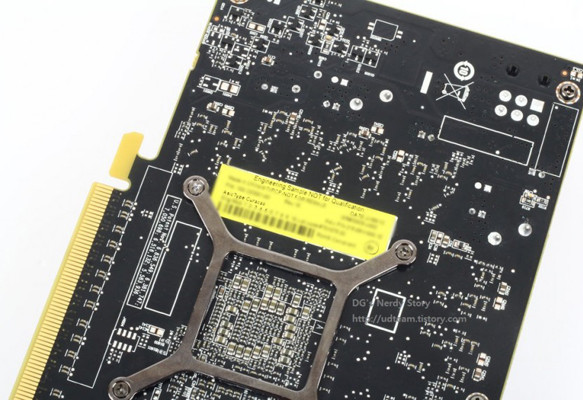
In addition to the Radeon R9 290X pictured earlier today, AMD will also be unveiling the Radeon R7 260X upper mid-range graphics card. Pictures of the card were leaked to the web. At the moment, we have no clue as to what chip the card is based on, but we're hearing two codenames, "Curacao" and "Bonaire XTX." "Curacao," in our best guess, is a variant of "Pitcairn." "Bonaire XTX" could be a higher-performing variant of the "Bonaire" silicon AMD launched the Radeon HD 7790 with. Given the way components are arranged behind the GPU, we're inclined to believe the card pictured below is based on "Curacao." Gotta give AMD marks for trying out something different with the cooler shroud design.


Read More ...
(PR) ASRock Fatal1ty Killer Series Motherboards Unveiled
If you consider online gaming as a fundamental belief, pwning opponents online as a religion that fulfils your life, and the pursuit of a fast and stable internet connection as one of your core values, then ASRock has the answers to probably not all but at least most of your life's questions: ASRock Fatal1ty Z87 Killer Series motherboards! With the integrated Killer LAN chip, serious players may game carelessly with no lag, just frag!
No Lag, Just Frag with Killer LAN!
What makes ASRock Fatal1ty Z87 Killer Series motherboards so special is that it adopts Killer E2200 Intelligent Networking Platform, which boosts the performance of online games, high quality streaming media and other time sensitive UDP (User Datagram Protocol) based applications up to 5 times! Experiments at our lab have proven that Killer LAN is especially good at reducing the latency in online games, for instance the latency in League of Legends can be reduced by 136%, and the latency in Diablo 3 is reduced by 60% and DOTA2 by 47%. When it comes to professional gaming, even millisecond decisions may turn the tides of war, either you kill LAG, or be killed by LAG. Hence with the onboard Killer E2200 LAN solution, LAG will never be an excuse for losing anymore.


Read More ...
(PR) Sonnet Releases Combination USB 3.0/FireWire 800 Adapter
Sonnet today introduced the Tango 3.0 PCIe, a combination USB 3.0 and FireWire 800 PCIe adapter card. The Tango card provides users with a simple way to add USB 3.0 and FireWire 800 connectivity to Mac Pro and Windows computers with PCIe slots, and to Thunderbolt-to-PCI Express expansion chassis. This Sonnet adapter can run bus-powered devices such as hard drives through each of its ports, and it is also backward-compatible with USB 2.0 and FireWire 400 devices.
USB 3.0, which offers a tenfold increase in data transfer speeds over USB 2.0, has become a standard interface on Mac systems and most Windows PCs, as well as external storage devices. The iconic, but now discontinued, Mac Pro tower never included native USB 3.0 ports, and many perfectly functional PCs were built with only USB 2.0 ports. Therefore, users wanting to take advantage of the new fast interface have to rely on third-party expansion cards. The Sonnet adapter provides four USB 3.0 ports: two external USB 3.0 ports and a 20-pin header for two internal USB 3.0 ports. The internal ports support panel-mount connector kits (sold separately).

Read More ...
Radeon R9 290X Pictured, Tested, Beats Titan
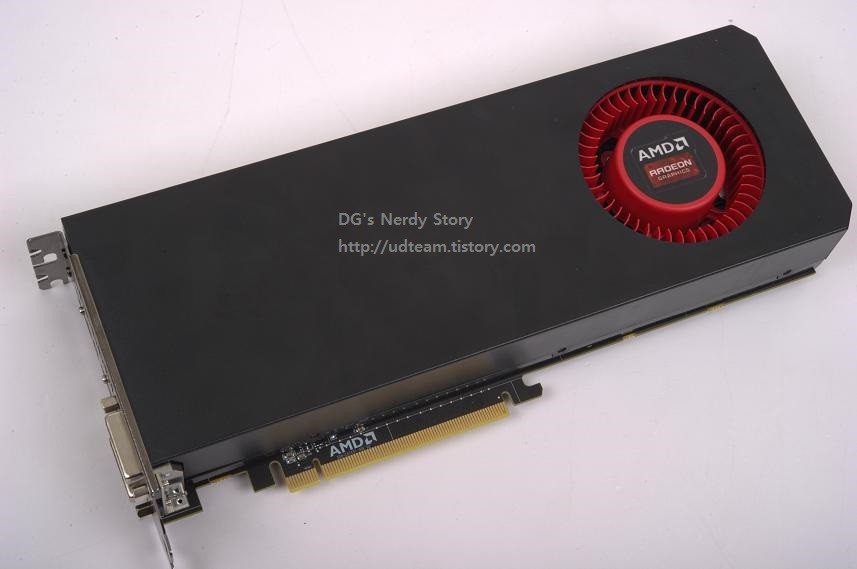
Here are the first pictures of AMD's next-generation flagship graphics card, the Radeon R9 290X. If the naming caught you off-guard, our older article on AMD's new nomenclature could help. Pictured below is the AMD reference-design board of the R9 290X. It's big, and doesn't have too much going on with its design. At least it doesn't look Fisher Price like its predecessor. This reference design card is all that you'll be able to buy initially, and non-reference design cards could launch much later.
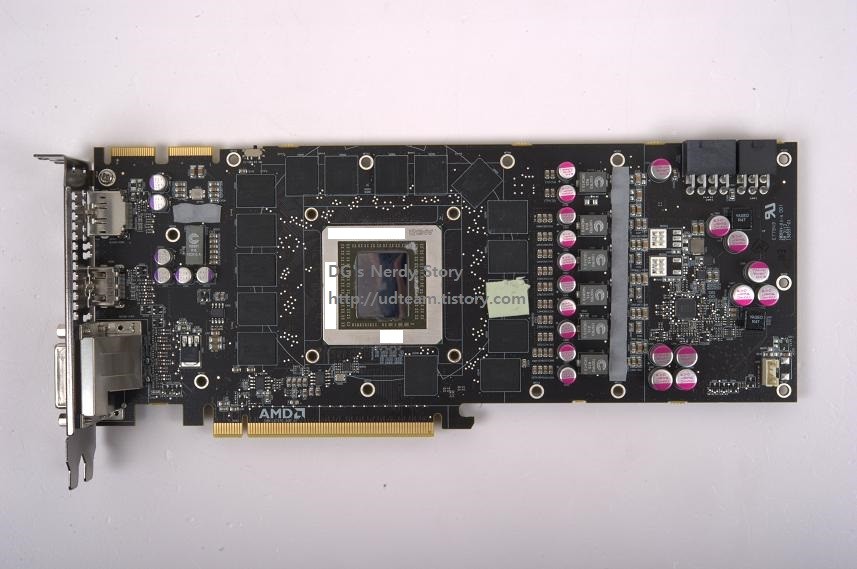
With its cooler taken apart, the PCB is signature AMD, you find digital-PWM voltage regulation, Volterra and CPL (Cooperbusmann) chippery, and, well, the more obvious components, the GPU and memory. The GPU, which many sources point at being built on the existing 28 nm silicon fab process, and looks significantly bigger than "Tahiti." The chip is surrounded by not twelve, but sixteen memory chips, which could indicate a 512-bit wide memory interface. At 6.00 GHz, we're talking about 384 GB/s of memory bandwidth. Other rumored specifications include 2,816 stream processors, four independent tessellation units, 176 TMUs, and anywhere between 32 and 64 ROPs. There's talk of DirectX 11.2 support.
Read More ...
(PR) PLX Showcases External Box-to-Box PCI Express Connectivity Over Optical Cabling
PLX Technology, Inc., the global leader in PCI Express (PCIe) silicon and software connectivity solutions enabling emerging data center architectures, and FCI, a leading manufacturer of connectors and interconnect systems, today announced collaboration on a live demonstration of PCIe over optical cabling at the 39th European Conference on Optical Communications (ECOC) event, held from 23-25 September in London, U.K.
PLX and FCI are demonstrating the use of FCI's new mini-SAS high-density (MSHD) active optical cable (AOC) to provide 32Gbps (PCIe Gen3, x4) optical connectivity in a small-form-factor solution. The demonstration highlights how a PLX PCIe switch card connects to a PLX five-bay PCIe expansion card through the use of a standard MSHD connector and FCI's new MSHD AOC. The expansion card allows any devices connected (such as PCIe adaptors, solid-state drives and NIC cards) to interact with the main motherboard/server as if it were a device installed inside the chassis. The demonstration platform can be used by those interested in developing system solutions for PCIe over non-standard PCIe cabling.
Read More ...
(PR) HighPoint RocketU 1144C Now Shipping
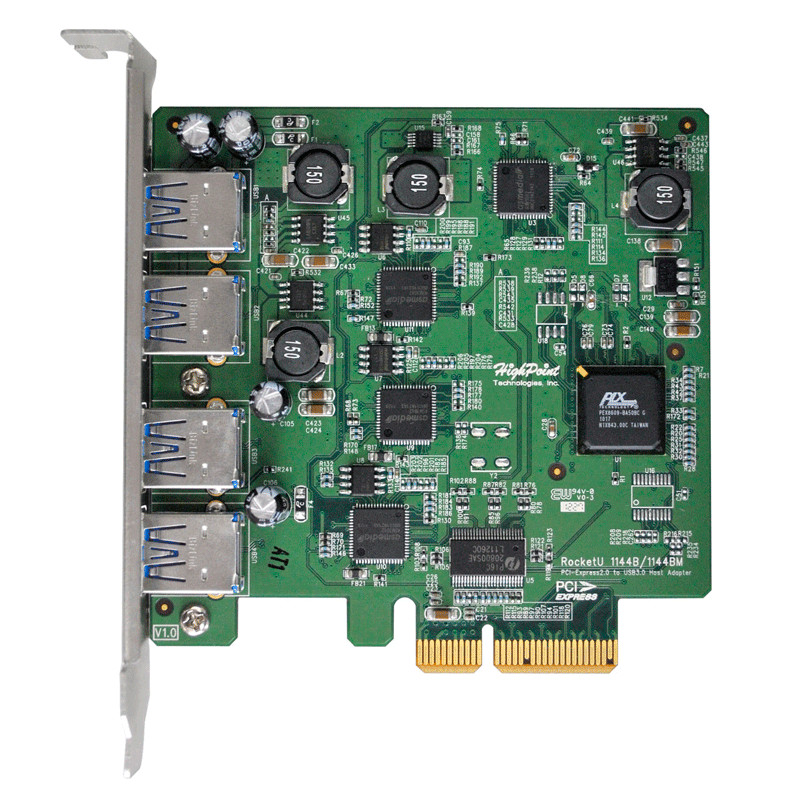
HighPoint, an industry leading Storage HBA and solutions manufacturer, is now shipping the world's fastest USB 3.0 controller - the RocketU 1144C. Powered by HighPoint's award winning per-port performance architecture, blazing fast PCI-E 2.0x4 host interface and UAS technology, the RocketU 1144C is the world's fastest USB 3.0 storage controller! The RocketU 1144C is an all-in-one, high-performance USB 3.0 connectivity solution for any PCIe capable desktop and workstation PC. In addition to high-performance storage devices, the 3rd generation RocketU 1144C supports all industry standard USB 2.0 and 3.0 peripherals, such as device hubs, card readers and interface devices.
Read More ...
Corsair Announces Obsidian 750D Enthusiast PC Case
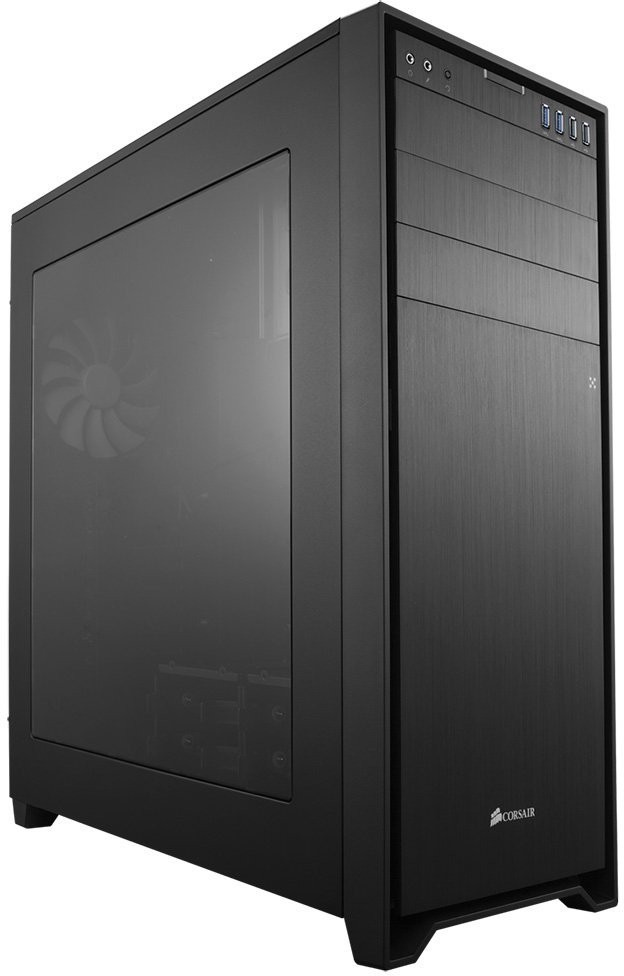
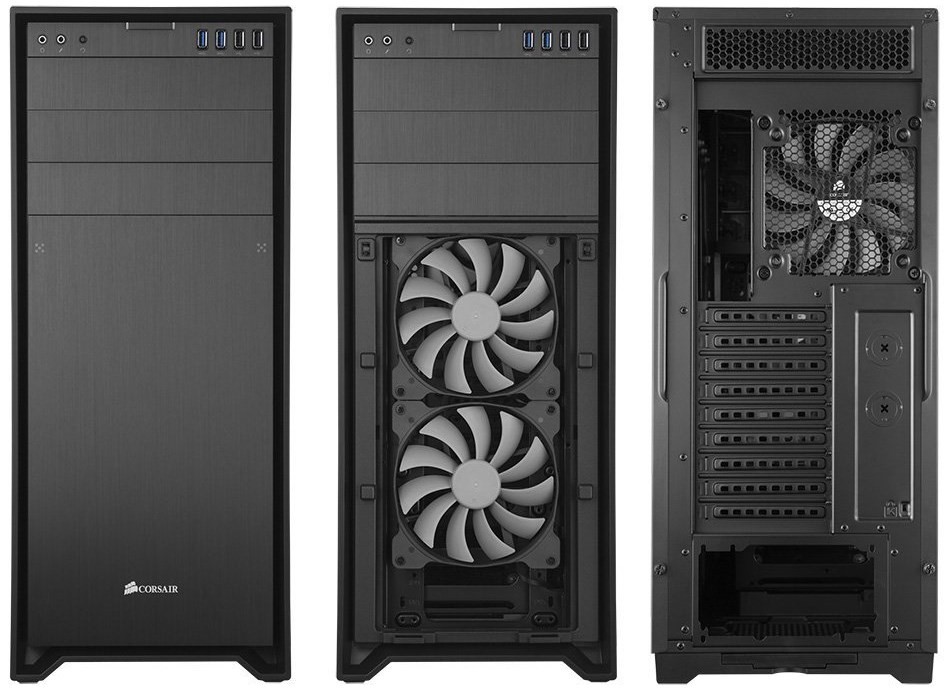
Corsair announced its much-anticipated Obsidian 750D ATX full-tower case (model: CC-9011035-WW). Positioned between the Obsidian 800D the company debuted its case lineup with, and the Obsidian 650D, the case is designed to provide oodles of room for storage devices, long expansion cards, and enthusiast cooling solutions. To begin with, it measures 235 x 560 x 546 mm (WxHxD), dry-weighing about 9.5 kg. The primary material is steel, with brushed aluminium for the front-panel, and ABS for drive cages and other novelties.
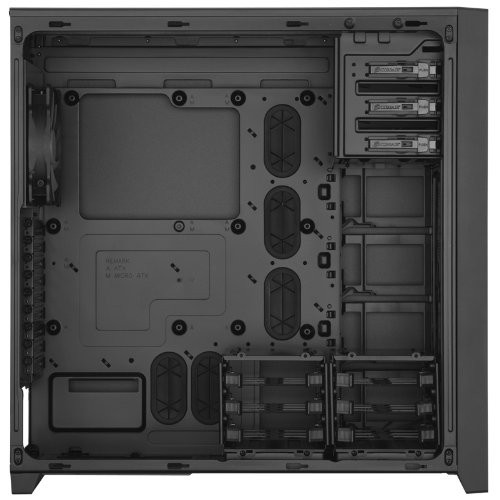
The Obsidian 750D can house XL-ATX, EATX, and HPTX motherboard form-factors, in addition to common ATX types. The motherboard tray has valved cutouts for cabling/tubing at the right places, and a cutout around the CPU socket area, to help manage coolers better. The drive storage area is pretty modular. There are three fixed 5.25-inch drive bays, and two detachable 3.5/2.5-inch bay cages, which can either be arranged along the floor of the case to create more room for long expansion cards, or just below the 5.25-inch cage, to create room for longer PSUs, and fixed-cable spaghetti. Each 3.5/2.5-inch detachable cage can hold three drives. There are four other 2.5-inch bays along the plane of the motherboard tray, which can be access through the right panel.
Read More ...
Available Tags:Valve , Steam , Radeon , ASRock , Motherboards , USB 3.0 , USB ,


No comments:
Post a Comment