

Apple MacBook Pro set for Haswell's all-day battery life boost this October?

The expected Haswell refresh of Apple's MacBook Pro notebook range will happen in October this year, according to our old friends Mr & Mrs Supply Chain Source.
The China Times reported on Friday that Apple is gearing up for a launch before the Christmas season, with the paper's insiders claiming there'll be no price bump as a result of the inclusion of Intel's new chips.
Apple has already fitted its MacBook Air devices with the new generation i5 and i7 core processors and the results have been widely lauded.
Thanks to much-improved power efficiency, Haswell chips have granted laptops and notebooks that elusive Holy Grail of near all-day battery life, with double the life-span of the previous generation models.
Surprises?
Earlier this week Apple promised 'exciting products' would be coming "this fall," with new iPhone and iPad models expected by the end of the year, along with the arrival of iOS 7 and Mac OS X 10.9 Mavericks?With the MacBook Pro refresh also on the horizon, what else could Apple have in store? Could it surprise us with the earlier-than-expected iWatch launch? Or perhaps some major developments with Apple TV?

     |
Read More ...
Sony Xperia Honami's new camera UI may enable Facebook live streaming

Sony will debut its brand new, feature-packed camera interface to harness the rumoured 20-megapixel camera on its next flagship 'Honami' phone, leaked snaps seem to confirm.
The Gadget Helpline site, which brought us leaked snaps of the device (aka Xperia 1i) last week, has now posted pics of the new camera UI, previously outed by XDA developers earlier this month, running on the device.
The new pics showcase the new Timeshift Burst mode, which enables users to select 'the best moment' from a selection of pictures, while there's also a new Effects & Filters post-production screen.
The AR Effect mode, which will could enable Augmented Reality images to be superimposed onto pictures, is also pictured running on the device. The example pictured above showcases a dinosaur walking across the frame. Scary.
Live streaming to Facebook
Another significant new feature mentioned, but not pictured, is Social Live which, TGH claimed, will facilitate live video streaming to Facebook.There's also another look at a second AR feature called Info-Eye, which will enable users to discover more about their surroundings by using the device's camera.
Sony is yet to officially confirm 'Honami' or 'Xperia 1i' or whatever it decides to call it, but the device is likely to succeed the impressive Xperia Z phone.
Recent speculation has pointed to a 5-inch Full HD display, 2.2GHz quad-core Snapdragon 800 chip, Qualcomm Adreno 330 graphics, 2GB of memory, 16GB of storage, microSD, LTE and NFC support.

| |
Read More ...
Instagram hackers on a health kick with fruit-based posts to user profiles

We're used to seeing gratuitous #FoodPorn pictures posted to Instagram on a daily basis, but some users are claiming their accounts have been commandeered, with unsolicited fruit-based posts appearing on their profiles.
A significant number of users have taken to Twitter claiming shots of fruit and smoothies have been posted without their knowledge, forcing some to reset their passwords, while locking others out completely.
The photos feature text encouraging users to try out a new diet, while broken web links (made to look like they emanate from the BBC) have been added to affected users' bios.
It's the second time in as many months some users have come under attack in this way, following a similar incident in June, and the motives of the hackers remain unclear.
Big breach
Google Ventures filmmaker Graeme Hancock was among those affected, tweeting: "Big security breach definitely happening on Instagram. This is the third hacked account I've seen including mine."Instagram is yet to comment on the breach and it's unclear whether passwords of more users have been harvested by the hackers for future use.
Unless you want your Instagram account acting all fruity too, we'd recommend a quick password change.

| |
Read More ...
Trouble in paradise? Nokia blasts Microsoft for Windows Phone app failings

Nokia has expressed frustration with Microsoft's failure to give smartphone users a convincing reason to switch to Windows Phone, in comments representing the public first signs of strain in the pair's relationship.
The Finnish company's vice president Bryan Biniak said Microsoft has not held up its end of the bargain because essential, frontline apps are still missing from the Windows Phone store.
In an interview with the IBTimes, Biniak said smartphone users are unwilling to compromise their mobile lives by switching to the platform, regardless of how impressive recent hardware releases have been.
He said Nokia is trying to 'change the culture' at Microsoft' in order to stress that the battle to overhaul iOS and Android cannot wait any longer.
Give me a reason
He said: "To give you a reason to switch, I need to make sure the apps that you care about on your device are not only on our phones, but are better. I also need to provide you unique experiences that you can't get on your other devices.""People rely on applications for their day-to-day life and if you don't have something which I use in my day-to-day life I'm not going to switch [operating systems] because I don't want to compromise the way I live my life just to switch to a phone.
"It's not just about the hardware, it's about the tools that are on the hardware. You can't sell a phone without the apps, you just can't."
No time to waste
Nokia's recent launches have included the impressive Lumia 925 and the soon to be released 41-megapixel Lumia 1020 cameraphone.However, the Finns are concerned these great handsets will stay under the radar for potential buyers due to Microsoft's lack of haste in attracting top developers to the platform
Biniak added: "We are releasing new devices frequently and for every new device, if there is an app that somebody cares about that's not there that's a missed opportunity of a sale.
"We are trying to evolve the cultural thinking [at Microsoft] to say 'time is of the essence.' Waiting until the end of your fiscal year when you need to close your targets, doesn't do us any good when I have phones to sell today."
If you want a job doing well...
Although the app gulf between Windows Phone and iOS and Android isn't as large as it was, Microsoft's platform is still missing apps like Instagram, a Facebook app worthy of the name, and of course, Google's impressive suite.Nokia has attempted to take matters into its own hands, campaigning for the launch of Instagram on Windows Phone, while also securing an exclusive deal to bring FIFA '13 to Lumia Phones.
On that note, Biniak saved his most scathing comment until last. He said: "As a company we don't want to rely on somebody else and sit and wait for them to get it right."
Will Biniak's comments jar Microsoft into caring as much about Windows Phone as it does about Windows 8 and Xbox? Let us know your thoughts in the comments section below.

| |
Read More ...
Updated: PS4 vs Xbox One: which is better?

The launches of Xbox One and PS4 are a few short months away, as both consoles are about to go toe-to-toe this holiday season.
Gamers are putting their pre-order money down as if it's an expensive bet on which video game system will deliver the best performance over the next decade.
Both systems are evenly matched in many respects and should be able to usher in the next generation of gaming that the Wii U hasn't been able to deliver.
With E3 2013 in the books, we can finally get a better perspective as in a PS4 vs Xbox One comparison about their finer differences.
- Pre-order Xbox One now from: Amazon | Zavvi | Tesco | GAME
- Pre-order PS4 now from: Amazon | Zavvi | Tesco | GAME
Xbox One DRM out the door
Sony was clearly in command following E3 when Microsoft announced its strict DRM policy that barred used game sales and required Xbox One consoles to connect to the internet once every 24 hours.The backlash was immediate. Gamers made it clear that physical copies of games should be theirs to own and resell as before.
Likewise, they felt as if offline gaming should be possible, especially if ISPs or Microsoft's servers go down. It has happened before and will likely happen again.
That's why Microsoft reverted its policy, sticking to the Xbox 360 method of handling DRM while also getting rid of benefits like the ability to share your Xbox One games with other consoles.
PS4 and Xbox One will function like they did in the PS3 and Xbox 360 era, which is the one area in which gamers are happy to hear hasn't been "upgraded."
Console design
Both Microsoft and Sony went with very box-like designs for their next-generation consoles.The Xbox One literally put the box in Xbox, with a large black rectangular shape that has been compared to an oversized 80s VCR unit.
The only thing adoring the front is a slot-loading Blu-ray disc drive, while almost all of the cable hookups are in the back, including the HDMI input port for Live TV, something the PS4 doesn't have.
When Sony finally unveiled what the PS4 looked like at E3, it reminded everyone in the audience of the PS2 design. The stand - not included - really drove that point home.
PS4 is smaller in size compared to the Xbox One and a little bit sleeker thanks to its angular shape and two-halves design.
The Xbox One and PS4 console designs aren't game changers, especially compared to the more dynamic-looking previous generation of consoles.
But as a teacher may have once told you, beauty is on the inside.
The price
While Microsoft amended its always-online policy, the company has yet to backtrack on its other controversial E3-timed announcement: the higher Xbox One price.Xbox One will cost $499 in the U.S., £429 in the U.K. and $599 in Australia, a premium because it comes with the 1080p Kinect camera out of the box.
The PS4 will cost $399 in the U.S., £349 in the U.K., €399 in Europe and $549 in Australia sans the PS4 camera, previously known as the PlayStation 4 Eye.
Separately, the PS4 camera will cost $59 in the U.S., £54 in the U.K., and $99 in Australia, so PlayStation 4 is still cheaper even when the console and camera are combined.
With wallets tighter than ever, Sony may have a distinct advantage this holiday season.
Release date
The Xbox One and PS4 release dates remain a mystery - both companies seem skittish about announcing the exact dates for their respective launches.As it stands, Xbox One is scheduled to release in November, so gamers throughout the U.S. and Europe should expect to see the system on store shelves within that 30-day window.
Sony hasn't announced a PS4 release date beyond "holiday 2013," but its console is still likely to come out in November.
November been the preferred month for the last six console launches, and Xbox One would bring that number to seven.
Agreeing on an AMD CPU
As much as the two warring systems are different, the heart of the Xbox One and the PS4 remain very similar.That's because they're both running x86 octa-core CPUs, and these eight-core processors are built by the same chipmaker, AMD.
The use of AMD in the Xbox One and PS4 is certainly a switch for both companies.
Previously, Microsoft had used an IBM PowerPC processor, while Sony partnered with Toshiba and IBM on its own complicated Cell processor that developers didn't warm up to.
While the Xbox One will run a heavily modified eight-core AMD processor, PS4 will utilize a x86-64 "Jaguar" CPU.

AMD's Graphics Core Next
Both console makers are also relying on AMD to design their next graphics processors that will produce the next-generation visuals that differentiate console games from the emerging smartphone market.The Xbox One marries its GPU to the CPU in a system-on-a-chip design, according to Wired, with DirectX 11.1 support.
The single 40-nanometer SoC really contrasts with the two dedicated 90-nm chips found in the Xbox 360.
However, it only marginally contrasts with the PS4, which also combines its AMD CPU with the chip maker's GPU.
In the case of PS4, the graphics processor is described as semi-custom AMD Radeon that runs at 1.8 TFLOPS.

Does Sony really scores 8GB GDDR5 RAM?
One of the most impressive things about the PS4 specs has been its use of 8GB GDDR5 RAM.Microsoft unveiled the Xbox One to have 8GB RAM as well, but it's DDR3 memory variety.
That may mean more to game developers in the long run as opposed to gamers themselves right now, but it's still an interesting choice for the Xbox One.
Further complicating this memory game is the fact that each console requires a portion of the RAM to run the operating system.
PS4 reserves up to 3.5GB of memory for the OS, leaving developers with 4.5GB, according to documentation. They can sometimes access an extra 1GB of "flexible" memory when it's available, but it's not guaranteed.
Xbox One's "guaranteed memory" amounts to a slightly higher 5GB for developers, as the OS takes up 3GB, which probably doesn't make up for the DDR3 memory usage for most developers.

Which has the better controller?
The Xbox One controller vs the PS4 DualShock 4 controller is a debate that won't be won anytime soon, mostly because gamers' already have a locked-in preference.The reason for this is that neither Sony nor Microsoft have radically changed their respective controllers over the years - they're more like evolutions from 2000 and 2001.
The DualShock 4 is a little bigger in the next-generation thanks to its unique front-and-center touchpad. Sony stuck with the dual analog sticks down in front, but at least have a central divot recess for easier gripping.
Microsoft also didn't mess with success, only slightly modifying its controller in the jump to the Xbox One. It's 40 design innovations are subtle, including the tweaked D-Pad on the bottom-left of the game pad and extra rumble features.
In testing the two controllers at E3 2013, Sony's DualShock 4 felt leaps-and-bounds better than the PS3 DualShock 3 controller, however, it was only catching up to comfort already provided by the Xbox 360 and now Xbox One gamepads.

Xbox One Kinect vs PS4 Eye
While Xbox One and PlayStation 4 will appeal to "core" gamers with mature launch titles, as evidenced by the strictly motion-less E3 lineup from Microsoft and Sony.However, behind-the-scenes, the two companies are charging forward with motion-sensing games thanks to the Xbox One Kinect and PS4 Camera.
Microsoft designed the 1080p Kinect to track up to six skeletons for immerse video game effects that the company says is "human control for a human experience."
Expanding on that motto, the packed-in Kinect 2.0 will be able to process 2GB of data per second, analyzing more joints, the slight rotation of a wrist or shoulder and your heartbeat.
The PlayStation Eye, which will not come with the PS4 system, features two 1280×800px cameras inside a similarly shaped camera bar.
In addition to human interaction, the DualShock 4 controller will come into play with the PS4 camera thanks to its multi-colored light bar. It will also be compatible with those PS4 Move motion controllers that have gone unused.
Xbox One Launch Games
More than the subtle differences in specs, the games that result from those specs is what will determine which console gamers choose this fall.Xbox One launch games include exclusives like Ryse: Son of Rome, Dead Rising 3, Forza Motorsport 5, Killer Instinct, LocoCycle and Kinect Sports Rivals.
Also on day one is Call of Duty: Ghosts. It's not exclusive to Xbox One, but the downloadable content (DLC) is going to be a timed-exclusive (likely a month) for Xbox One gamers.
Further out, notable Xbox One launch windows games are Titanfall (likely another timed-exclusive for a year) , Project Spark, and Minecraft: Xbox One Edition.
PS4 Launch Games
Sony is also stacking its PS4 launch game lineup with Killzone Shadow Fall, DriveClub, Knack and Diablo 3, all exclusives releasing on day one.Joining those games whenever the PS4 launch date happens to be will be Watch Dogs and Assassin's Creed 4: Black Flag from Ubisoft.
Yes, both of these highly anticipated games are also releasing on Xbox One , but PS4 (and PS3) gamers are going to see an extra hour of gameplay for each.
Sony was also showing off PS4 games like inFamous: Second Son, The Witness and The Order 1886 at E3.
Really, though, everyone is waiting to see what Naughty Dog has in store - possibly Uncharted 4 - and its stable of other first-party developers like SCE London Studio and Media Molecule.

Indie games
Here's another split decision: Sony got out in front by supporting independent game developers, attracting names like Supergiant Games, Red Barrels Studio, and Young Horses at the time of its E3 press conference.At first, Microsoft maintained that Xbox One games would require be fronted by a publisher. That changed recently when he company did another 180, announcing that not only would it allow self-publishing, every console acts as a dev kit.
A free dev kit sounds appealing, especially when PS4 developer kits cost thousands of dollars.
Sony has the indie developer crowd right now, but such pricey technology for tomorrow's basement-run teams could decrease the company's indie following over time.
Other differences
The look of the console, the feel of the controller and the way the games make you feel make up the main differences from which consumers will decide.However, there are smaller factors potential PS4 and Xbox One buyers should consider when going to the store this holiday season.
It's a good idea to converse with friends to know which system they're going to buy. Since there's no such thing as cross-platform multiplayer, you may be split up when playing Call of Duty on PS4 when all of your friends own it for Xbox One.
Both Microsoft and Sony are charging for multiplayer this generation, whereas PS3 gamers got to log into matches scott-free.
However, only Microsoft is going to lock apps behind its Xbox Live paywall. Sony has confirmed that streaming video content like Netflix, Hulu Plus and MLB.TV on PS4 won't require a PlayStation Plus subscription.
Next-generation console buyers who don't plan on paying the yearly fee and do plan on using the system for entertainment purposes may want to weigh that into their final decision.

| |
Read More ...
Week in Science: Cheating death? That's science play

This Week in Science our collective health gets a possible boost because we might have found a way to actually cheat death, as well as a new weapon against the scourge of Anthrax and MRSA to stop us dying in the first place.
If that wasn't enough we've also gotten an eyeful of Earth from Saturn, plus we've developed carbon dioxide batteries that'll produce power from our waste gases without further wrecking the planet. All that and more in another week of exciting scientific progress.
We may have a new weapon against the superbugs that can even kill Anthrax

Anthracimycin, as the new compound is called, could be refined into a viable antibiotic for our war against superbugs and other anti-biotic resistant species of bacteria. Discoveries of truly novel antibiotic chemicals such as anthracimycin are few and far between, ramming home how much of a resource the un-explored ocean depths could be, with their ecologically and chemically distinct environments and species. [Angewandte Chemie]
It looks like your Y chromosome isn't the be-all and end-all its manliness was cracked up to be
It was thought for many years, ever since we determined that there were two types of chromosomes that dictated sex in mammals, that the Y chromosome was solely responsible for all male-specific characteristics. That's because it's the one that all males have but females possess. It turns out, that's not quite true.It seems the X chromosome leads a double life. While present in a female, a whole series of genes contained within it lay dormant. But when present in a male in an XY pairing, the swath of genes is activated, and play important roles in all sorts of male-specific features, like the development of sperm. It also seems that these genes are some of the most recently evolved since the diversion of mammal species. Now that we know human evolution has focussed, at least in part, on the X chromosome, it's time we discovered what this library of unique genes actually do, as they could play an important role in both body function and disease. [Nature]
This tiny blue speck is Earth, all the way from Saturn

NASA's released this incredible image from its Cassini spacecraft that shows the Earth and if you squint a lot, the Moon, all the way from Saturn.
Cassini was in the process of capturing a detailed portrait mosaic of Saturn, which allows astrophysicists studying the planet's beautiful rings a better view of the more diffuse or faint ones though backlighting by the Sun. Earth just happened to photobomb the shot. It just goes to show how insignificant out little planet is in the whole grand scheme of things. [NASA]
Carbon dioxide batteries? Now why didn't I think of that?

Coal and gas power stations, as well as a load of other industrial burning systems produce a load of CO2. It's a by-product we currently don't really have a use for, and which contributes to climate change. But now scientists have come up with an ingenious use for it that'll produce even more electricity without spitting out any more carbon.
The system essentially uses the carbon dioxide to create bicarbonate ions, which are produced when CO2 is bubbled through water. The ions are combined into what is essentially an electrochemical cell, or a two-stage battery. Combined with hydrogen ions, you get a potential difference when the bicarbonate ions are created in the water, driving the ions to their respective electrodes. Once the electrodes are saturated, air-bubbled water can then be pumped through the system to release the potential energy and produce electricity. By alternating the two stages of the process you have the potential to generate vast amounts of electricity without adding any more carbon into the atmosphere, from what is essentially waste gas. [ESTL]
Dolphins call each other names

Those high-pitch screeches we can barely hear are, as you might expect, the language of the dolphins, or at least a rudimentary method of communication between the animals. However, it seems they're more than just grunts or expressions of basic feelings. Some of them are actually names.
Bottlenose dolphins have been found to respond to specific bursts of sound, or 'signature whistles', corresponding to something akin to a name or individual demarcation. Each dolphin develops its own whistle, broadcasting it to others. Researchers found that individual animals will recognise their own whistle and blast it back at a recording, indicating recognition of their name. Apart from humans, dolphins are the only known mammals to name individuals, possibly showing a much more evolved self-awareness than first thought. [PNAS]
We're easily seduced by shiny cigarette packages
We might have put the plan to force cigarette manufacturers into using plain packages on hold, but the Australians haven't. Since December last year, cigarettes have been sold in plain packages and the results are surprising.Despite the "these will kill you warnings" the colourful and rich-looking packets affect the taste and satisfaction of the smokes inside. Smokers deemed the cigarettes in plain packages of poorer quality despite the brand staying the same, and thought about quitting more often, which is a major win for health advocates. Now that the evidence is clear, it shouldn't be long before the same legislation comes into force in the UK and elsewhere, as long as the tobacco industry's lobbying can be overcome, of course. [BMJ Open]
Death isn't quite as instantaneous as we first thought

A new study on cell death has shown that, rather than an instant cross-body cessation of life, death propagates throughout an organism much more slowly than you might assume.
The signal for cell death, which terminates cell function, moves through an organism, in this case a worm, like a wave. Calcium signalling passes from one cell to the next, triggering necrosis and therefore death. Now that we know the mechanisms behind the cell death signal's movement through an organism, there's a possibility that we'll be able to halt it, effectively cheating death, at least in limited cases. Researchers were able to prevent death from infection-induced stress by blocking the signal in worms, but not death related to age. Maybe one day paramedics will come equipped with death-halting drugs to help injured patients survive trauma. [PLoS Biology]

| |
Read More ...
In Depth: Apple iTV: how Apple's television will really work

We all have our own idea about what an Apple-branded television would, or perhaps should, look like. And those of us who have spent more time thinking about it than is strictly necessary, given that it's still a rumour, also have an idea of the features it will have and what we'll be able to do with it besides watch TV.
We put our heads together in the office, and after a long, and only occasionally rancorous, discussion came up with our idea of what the Apple iTV will be like. We threw out some lovely ideas because, while they'd be fun, they're either not practical or the technology isn't quite right yet.
We included others which may be unlikely but are technically possible. (What's the purpose of an exercise like this if not to have some fun and dream a little?) We've even worked out how the remote control could work and how the successor to the existing Apple TV could solve that perennial flat-screen TV problem: poor audio quality.
- Apple Mac mini review
- 21-inch iMac review
- 27-inch iMac review
- 11-inch MacBook Air review
- 13-inch MacBook Air review
- 13-inch MacBook Pro review
- 15-inch MacBook Pro review
- MacBook Pro 13-inch with Retina display review
- MacBook Pro 15-inch with Retina display review
- New MacPro
Introducing Apple iTV
Remote control

At least in terms of interaction, the remote control is perhaps the most important part of the TV, and we think there are a couple of possible options for it. One is a slim aluminium remote similar to the one Apple uses for Apple TV. If it went down this route, we think the remote would have a mic for Siri and connect with Bluetooth low energy.
The other option would be a new iPod touch. It would have a touchscreen interface, allowing you to swipe, tap, and type to control the Apple TV. It too would have a microphone for Siri. Putting the Siri mic in the remote rather than the TV would mean that only one person could control the television at a time, which is essential in our view.
Finally, in keeping with Apple's focus on simplicity, the remote would also have an infra-red transmitter so that it could also be used as a universal remote for other devices you may own.
Channels

In our view, Apple's television won't have channels in the traditional sense. Apple's purpose in producing a TV is selling content and services, so it will want to ensure you use it to watch and listen to content it provides.
For that reason, we envisage channels as apps. In the same way that Apple TV currently has apps for Major League Baseball, The Wall Street Journal, and Netflix, so the Apple television will have apps for BBC, ITV, and so on. Those apps will either be made by Apple in partnership with content providers, or by the providers themselves, in the same way as they develop apps for iOS.
We think the former is more likely; consistency is even more important on a television than it is on a tablet. Expect to see apps for major channels and for catch-up and on-demand services. You will also, of course, be able to buy and rent movies and TV programmes from the iTunes Store.
As with the second- and third-generation Apple TV, you won't be able to download those movies and programmes to the television, you'll have to stream them from Apple. You'll also be able to connect a Sky+, Virgin Media, Freeview, or YouView set-top box to the television, allowing you to watch those channels to which you subscribe or which are free-to-air.
Of course, Apple will want you to stay within its universe, but preventing you from accessing your Sky or Virgin Media content would be sheer madness. Finally, the television will have AirPlay support, so you'll be able to mirror iOS apps from your device.
Audio

If recent tweaks to Apple's Mac line-up are anything to go by, audio quality is increasingly important to Apple. And we think it will be a key feature in an Apple television.
One possibility is that it could incorporate the downward firing speakers in the current iMac line-uip - check out our iMac review. These are really rather good, and loud enough to fill a decent-sized living room. They rely on the screen being only a few inches above a flat surface, however, in order to reflect the sound.
Given the number of people who wall-mount televisions, that would be a problem. We pondered the idea of a wireless sound bar with a separate sub-woofer and it's an attractive proposition. In the end, however, we decided Apple was more likely to go for an all-singing, alldancing, cinematic surround-sound setup.
Being Apple, of course, it would have to be wireless. That would mean a new version of AirPlay with support for a wireless 5.1 channel audio codec, something which may prove too much of a challenge initially. But even if wireless surround-sound speakers aren't available at launch, we think they'll arrive in a future version.
Our proposed line-up

Apple Home TV 42-inch: £999
The 'budget' end of the range will have the smallest (though still huge) screen and no separate speakers.
Apple Home TV 55-inch: £1599
If 42-inches isn't enough for you, check out this baby. A full 55-inches of 1080p TV, but without separate speakers.

Apple Cinema TV 42-inch: £1299
This will have the same-sized screen as the 'budget' model but include 5.1 channel AirPlay speakers in the package.
Apple Cinema TV 55-inch: £1899
The daddy of the range, this packages has the monster 55-inches screen and those lovely 5.1 channel AirPlay speakers.

| |
Read More ...
In depth: Driving Audi's awesome electric R8 eTron supercar

If the future of motoring is all-electric, Audi's awesome R8 eTron supercar is the shape of things to come. And it's just one part of Audi's tech-tastic Tron range of next-gen alternative-energy vehicles.
We've been out to Berlin where Audi laid on a mix of prototypes and real production cars for us to drive, at least some of which are coming to the UK. There's a bit of something for everyone.
Pure electric super cars, sporty hybrids, micro EVs with funky rotary engines stuck in the boot, even a hatchback powered by carbon neutral synthetic natural gas.
All-electric ubercar
Let's kick off with the best bit, a hot lap in the R8 e-tron. It's a pure electric respin of Audi's mid-engine super car, packed with a pair of 190hp electric motors and truly massive lithium battery pack - more on that in a moment.Oh, and if you're wondering, sorry, they're not going to sell it after all. So, this is a million-euro prototype we're abusing...all in the name of science and progress, of course.
Let's have a look at what makes the R8 e-tron tick. Audi started with the existing R8 supercar and then pretty much chucked it all out. The body goes from pure aluminium to an impossibly clever mix of alloy and carbon fibre.

That includes carbon fibre springs and anti roll bars. Then there's the rear brakes which are brake-by-wire, definitely an interesting innovation.
Big ol' battery
But the big news in every sense is the lithium-ion battery pack. It weighs in at a preposterous 577kg and pretty deftly illustrates the problem with current electric car technology. The batteries are big.It adds complexity to the R8 e-tron too - there are multple circuit boards and ECUs looking after the pack and the whole shebang needs a high-tech heat management system, too.

The R8 e-tron isn't quite as quick as its petrol-powered siblings. But it still hits 62mph in 4.2 seconds. And the sense of immediate, seamless thrust is something even the mighty new R8 V10 Plus can't quite match.
And if you thought electric cars weren't fun, just check out the video. The R8 e-tron is a riot.

Although Audi originally intended to sell the R8 e-tron, that plan has now been ditched. As fun as it is to drive and as wonderful it is as a technical achievement, that's probably the correct call.
With a realistic operating range of around 125 miles, this pure EV is like all the others – only really suitable as a town car. And that doesn't make sense in the context of a supercar.
What a Wankel
Next up is the first of two Audi e-tron models that are coming soon to the UK. It's the A1 e-tron, a range-extended electric car. The electric bits are pretty straight forward.There's a 13.3kwh lithium pack and a 115hp motor. That's enough to hit 60mph in under 10 seconds, so the A1 e-tron is no slouch.

But the really interesting bit is the tiny rotary range-extending petrol engine they've stuck in the boot. It's a single-rotor Wankel design (yup, the same basic design Mazda sports car are famous for), but it's small enough to squeeze into the spare wheel well.
Anyway, it boosts the A1 e-tron range from 50km in pure electric mode to 250km. Scampering around Berlin with the Wankel engine running, the drone is a little bit annoying.
But there's a good chance that wind and road roar at motorway speeds could drown it out. It'll be interesting to find out.
Plug-in power
On to the A3 Sportback e-tron. Yup, they just keep coming. This is the second Audi Tron model destined for the UK. Rather than a range extended electric car like the A1, this is a plug-in Hybrid.
Headline specs here include Audi's 1.4TFSI petrol engine in 150hp trim, an 8.8kwh lithium pack, a 100hp electric motor and a total system power of 204hp.
Audi says the big deal with the A3 e-tron, apart from the puny 35g/km CO2 output (not including grid emissions from charging obviously) is that it's properly sporty to drive.

It wasn't quite ready for testing out in Berlin, so we'll have to wait and see.
'G' is for gas
And finally, it's the A3 g-tron. Yup, 'g' as in gas. It doesn't look anything special, but it's a bi-fuelled car that can run on both natural gas and petrol. Except the gas in this case isn't exactly natural. It's synthetised using renewable energy.It's a bit complicated, but the basics involve splitting hydrogen from water using wind-farm power, reclaiming CO2 from biomass, and cooking the whole lot up into a carbon neutral fuel that you can burn with impunity.

Audi has even built a pilot manufacturing plant to produce the gas for Germany. This one isn't coming to the UK, but the idea of carbon neutral synthetic fuels could be very big in future. It's possible to synthesise pretty much any liquid fuel. Maybe combustion cars aren't dead after all.
Audacious stuff
That's a wrap from Audi's Tron event in Berlin. Impressive stuff? Absolutely, especially given Audi is just a single brand within the mighty Volkswagen group empire.It's also a glimpse of just how much choice car buyers are going to have over the next few years. Things are going to be exciting - and just a little bit complicated!
The Audi A1 e-tron and A3 e-tron are coming to the UK in 2014. Pricing has yet to be announced.

| |
Read More ...
Review Roundup: This week's hottest reviews on TechRadar

It's been another baffling week in the TechRadar office.
We're still reeling from the news that the royal bundle of joy is not, as was rumoured on tech sites for months, to be called the William Mini.
He has no rear-facing camera, either, can you believe it? Instead, in an apparent affront to the BBC, the Royals felt it prudent to fit him with two front-facing sensors, enabling 3D vision functionality.
Given that leaked photography of the royal baby prior to his birth showed him measuring 12 inches diagonally across, many trusted thinkers surmised that the final name would be the Royal Prince 12. But it has since come to light that in fact these images were of Chinese knock-off prototypes of the royal baby and so everyone feels very stupid.
None of this is true of course. But one thing that is true, is that we've been testing some very cool tech products this week, and here they all are:

Samsung UE40F6400
Apps a-plenty and with both touch-sensitive remote control and voice interaction onboard, the Samsung UE40F6400 is a hugely likable TV with ambitions above its station. Crucially, however, it conducts its core duties of impressive pictures and sound with little fuss. Samsung UE40F6400 review
LG 55LA740V
On paper, the LG 55LA740V seems tailor-made to make a big impact on the mid-range of the big screen TV market. Its £1,500 (around US$2,290 / AU$2,485) price isn't by any means unreasonable for a well-specified 55-inch TV, and its design offers an exciting twist on the super-slim designs that are currently all the rage. LG 55LA740V review
Sony KDL-40W905A review
Although we love its local dimming, its NFC linking and its clean interface, we can't help but think Sony is slightly behind the curve with its W9 Series KDL-40W905A. Although we totally agree with its firm focus on picture quality over everything else, we feel a bit short-changed by its rather dreary selection of apps and its single TV tuners - it's just too expensive as a result. Sony KDL-40W905A review
Toshiba BDX2400
The Toshiba BDX2400 is a budget Blu-ray player with BBC iPlayer, Netflix and YouTube. It's otherwise as basic as it gets, and can be a pain to use, but if you're after as low cost an option as possible, this unobtrusive deck is just about capable of dragging your living room into the smart era. Toshiba BDX2400 review
Samsung BD-F7500
The Samsung BD-F7500 is a fabulously featured product that's so much more than a highly capable 2D and 3D Blu-ray player. Obviously designed as a special future-proof component for those with a home cinema, the Samsung BD-F7500 is also aimed at those within that niche who are the current or near future owners of Ultra HD/4K TVs. Samsung BD-F7500 review
Now TV Box
If you are prepared to put up with registering for Now TV (but not necessarily paying for any of the content), you have a spare HDMI in port on your television and a broadband connection then this is a fantastic low-cost way of putting Smart functionality and catchup on your TV. Sky Now TV Box review
Nokia Lumia 625
We walked away from playing with the Nokia Lumia 625 feeling distinctly underwhelmed. In a vacuum, this would be an interesting device, with a larger screen and low price point for Windows Phone. Hands on: Nokia Lumia 625 review
Lenovo ThinkPad X1 Carbon Touch
The Lenovo ThinkPad X1 Carbon Touch is a wonderful piece of design and engineering that offers a fearsome performance in a sleek and classy chassis. However, the staggering price and underwhelming battery life make the touchscreen Ultrabook hard to recommend. Lenovo ThinkPad X1 Carbon Touch review
Samsung 840 EVO 1TB SSD
Regardless of the EVO's software bundle offering though, the performance of the hardware on its own is enough for us to be rather excited about the new range. As well as the new drive capacities (debuting 750GB and 1TB drives) and the aggressive pricing (the 120GB EVO is only £87) it's that random performance which really puts the icing on this solid state cake. Samsung 840 EVO 1TB review
Fuji X-M1
There's plenty to like about the Fuji X-M1, and it's good to see Fuji thinking about a more mass market audience by introducing a more affordable model. That said, this is only more affordable by Fuji's terms, so you're still looking at an entry-level model with not much change from £700 / US$800 / AU$1,000 - significantly more than the price of its competitors such as the excellent Sony NEX-3N, which you can now pick up for around £330 / US$500 / AU$500. Fuji X-M1 review
| |
Read More ...
Ballmer reportedly admits to building 'a few' too many Surface RT tablets

Microsoft CEO Steve Ballmer reportedly conceded that the company overestimated its Windows RT expectations and made too many of the tablets.
"We built a few more devices than we could sell," said Ballmer at an internal town hall meeting this week, according to sources who spoke to The Verge.
"A few" might be an understatement considering Microsoft's disclosure that it had to make an inventory write-down of $900 million (about £585m, AU$971m) due to Surface RT.
Ballmer is said to have admitted that the nearly $1 billion loss was a huge hit for the company, but one that was necessary to sell its Surface RT tablets.
Sour on Windows 8 sales, too
Surface RT wasn't the town hall meeting's only whipping boy. Ballmer also mentioned his disappointment in Windows sales as a whole, according to the sources."We're not selling as many Windows devices as we want to," he said, according to the report.
Ballmer was reportedly referring to Windows PCs as well as smartphones and tablets with the company's operating system on them.
Ballmer hints at Surface 2?
The townhall meeting sounds like it wasn't all bad news for Microsoft.Ballmer is said to have confirmed new devices being tested with incremental improvements, which could of course mean that the Surface 2 tablet is on its way.
The company is speculated to update its Surface Pro tablet with a Qualcomm's Snapdragon 800 processor and better battery life.
Then there's the constant speculation that a Surface mini tablet will join the fray to compete against Apple's 7.9-inch iPad mini.
When it comes to solutions for Windows, the report mentions that Microsoft is hedging its bets on "back to school" sales and the holidays to move more Windows 8 and Windows 8.1 hardware.
- Read how to get the new Nexus 7 early starting today, a.k.a. more trouble for Microsoft's tablet line.

| |
Read More ...
Blip: Hungry coders wage table wars for best restaurant seats

Noticed a lack of available seats in San Francisco restaurants lately? Sneaky, ravenous coders may be to blame.
Creating custom programs known as "bots," coders covertly unleash these to spy and snag open reservations in high-end restaurants from underneath our sluggish human hands.
Coder Diogo Monica unwittingly discovered this phenomena. He had his own program but it only emailed notifications about open tables, but eventually realized seats were being snatched up at lightning speeds:
"... as soon as reservations became available on the website at 4:00 am (PST), all the good times were immediately taken and were gone by 4:01 am (PST). It quickly became obvious that these were reservation bots at work."
Monica decided enough was enough and created his own reservation bot to seek revenge: "Expect future posts on how I will adapt my strategies as the arms race continues to heat up."
Since he made the code available on his blog, we're sure things are going to get dicey when dinnertime rolls around.
More blips!
Hungry for more blips? We've got plenty to spare.- Barnaby Jack, hacker famous for 'jackpotting' ATMs, found dead
- Sony confirms Gran Turismo zooming to the silver screen at a later date
- Google cuts the cord on free Netflix Chromecast promo

| |
Read More ...
Blip: Barnaby Jack, hacker famous for 'jackpotting' ATMs, found dead

It's been seven months since Reddit Co-Founder and internet activist Aaron Swartz died, and today news is spreading that another young hacker has passed away.
Barnaby Jack, famous for making ATMs gush cash and exposing flaws in things like medical devices, was found dead Thursday in San Francisco. Police are ruling out foul play. His sister told Reuters that he was 35.
"Lost but never forgotten our beloved pirate, Barnaby Jack has passed," tweeted IOActive Inc., Jack's most recent employer. "He was a master hacker and dear friend. Here's to you Barnes!"
Jack was due to give a presentation demonstrating his ability to hack into pacemakers and implanted defibrillators at the Black Hat convention next week, Reuters reported. Speaking with the publication last week, Jack said he could kill a man from 30-feet away by hacking an implanted heart device.
He was working with the unnamed device manufacturer to devise ways to prevent malicious attacks.
More blips
There's more news for you right here in our blips section.- Sony confirms Gran Turismo zooming to the silver screen at a later date
- Google Translate gets handier with translating tool
- Google cuts the cord on free Netflix Chromecast promo

| |
Read More ...
Blip: Sony confirms Gran Turismo zooming to the silver screen at a later date

Days of Thunder, The Fast and the Furious, Talladega Nights and now, unbelievably, a racing video game will be added to this track of movies.
BBC Newsbeat states that Sony has verified a film based on Playstation racing game Gran Turismo is in production.
The company has remained mum on the actual plot points, and did not provide an estimated release date either.
Oddly enough, producers Michael De Luca and Dana Brunetti who both previously worked on The Social Network and Fifty Shades of Grey are reportedly attached to Turismo.
Honestly, we can't even begin to imagine a story line with that information - too many awkward images floating around the kettle.
Speeding along to something our brains can handle, the latest installment in the series, Gran Turismo 6, will be released later this holiday season for the PS3. Here's hoping we'll see it on the PS4 soon after, a topic Sony may discuss at the upcoming Gamescom in Germany.
More blips!
These lightning-quick blips aren't that awkward, we promise.- Google Translate gets handier with a handwriting tool
- Google Play Games goes retro with Konami Code Easter Egg
- Revealed: how Netflix lets you live the stream dream

| |
Read More ...
Tired of stubborn app permissions? Android 4.3 has a fix for that

It can be hard for Android users to keep track of what exactly their apps are doing, but it looks like that's about to change with Android 4.3.
Android Police caught wind of a function called "App Ops" in the latest Android update that lets you control exactly what apps can access, be that navigation, data, phone calls or something else.
That way if specific apps are acting up and, for example, using your phone's GPS while you don't want to turn navigation off system-wide, you can go into App Ops and restrict the problematic app's permissions.
It seems the feature isn't fully ready yet, but there are a number of ways for adventurous Android users to activate it.
You have my permission to die
TechRadar asked Google to clarify whether users were meant to access these controls and whether the App Ops feature will ever be implemented more fully in the OS. We haven't heard back from the company yet, but we'll keep you posted.In the meantime, it seems the easiest way to access individual apps' permissions on Android 4.3 is to open the app and navigate through the settings menu to "App Ops."
But to get the full App Ops experience you can download a third party called Permission Manager app from Google Play.
The app was launched yesterday, though it looks like these functions weren't yet meant to be accessed in this way, so use at your own risk.
But if you do boot it up, it should display a list of all your apps with the specific functions each use and a timestamp showing the last time they used them. It's divided into four categories based on permissions related to "messaging," "location," "personal" and "device."
Selecting an app shows a full list of permissions for it with easy on/off toggles, though it seems those permissions won't show up there until the app has tried to use them at least once.
That means at this point you'll never know if the list is complete, since location permissions for Facebook won't show up there until Facebook has tried to use location services at least once. It's a slight annoyance that may be part of the reason this feature isn't 100 percent there yet.
In addition, if you turn off location services for, say, Facebook, then forget that you did so, the system won't remind you if you try to use geotags in Facebook and the app can't access the GPS. It simply won't work.
So again, use at your own risk, and hopefully "App Ops" will get more official in a future Android update.

| |
Read More ...
Ashton Kutcher and director break down 'Jobs,' talk man behind the curtain

"It only takes one person to start a revolution," and after a special screening of the Jobs biopic, it's evident that Ashton Kutcher, the actor portraying the iconic Apple founder, believes in the credo.
On Thursday, film studio Open Road invited the press to a pre-release screening of Jobs in San Francisco. The film will open in U.S. theaters Aug. 16.
While we can't divulge on the film, a post-credits Q&A with direct Joshua Michael Stern and Kutcher gave us plenty of writing fodder.
The theater was packed with press and rather annoyingly, many had Google Glass in tow.
However, sporting the gaudy gear seemed appropriate for a film about the limitless boundaries of innovation, where during the question and answer session Kutcher eloquently addressed the importance of failing, and the need to encourage entrepreneurs in the breakneck world of tech.
Dissecting Jobs
Jobs' life was filled with troublesome relationships caused by his "prickly personality," which is putting it rather mildly.Stern addressed how Jobs never lived in the past, rather relying on the present and focusing on future endeavors. For Stern, Jobs was loyal to his achievements first, and that required boxed up emotions and a lack of sentimentality.

When asked what his thoughts were on Jobs' mercurial cruelty, Kutcher explained that after much research, he believed the continued rejection in Jobs' life from his parents, people around him and the betrayal from his own company played a huge role in creating the famous, dysfunctional personality.
Kutcher said the result of Jobs' erratic, anti-social tendencies only pushed him harder to create products that people would love - because in loving the product, they essentially love its creator, an emotional process that Kutcher described as "very human."
The baseball hat-donned actor also added that despite Jobs' genius, there's clearly a kinder way to treat employees, and people in general - reassuring since Kutcher himself co-founded a media company and created a venture capital fund.
Kutcher walks the walk and talks the talk
When asked about the type of preparations he took on for the role, the infamous Steve Jobs gait was brought up.With three months to prep, Kutcher said he tried to digest all of the books Jobs read (Edison, Ansel Adams, etc.), while researching Bauhaus and numerous other design concepts.
He even had hours of Jobs audio on a Soundcloud full of speeches he'd listen to while driving or walking, and even fall asleep to, in order to get the perplexing role right.

Because Jobs often liked to be outside walking and hiking, and even having meetings in the fresh air, Kutcher did the same - which is when he would practice the peculiar hunched hop Jobs was known for.
Kutcher had his own speculations about this particular walking style. He felt Jobs' barefoot days in the 70s during college made him lift his feet higher to avoid stubbing his toes, a step he then simply carried on for the rest of his life.
The dedication of Kutcher's research to show us the man behind the curtain seems quite obsessive in nature (heck, it even put him in the hospital as reported earlier this year), and interestingly, provides another parallel to Jobs' own obsessive personality.
Kutcher catches fire
Personality and mop-top makeup aside, the tall bean-pole actor shares other similarities with Jobs: the ability to convey idealistic soliloquies with extreme passion as if his life depended on it.Though his topics of discussion almost sounded like a valedictorian speech, Kutcher still won over the audience by expressing what appeared like genuine, articulate thoughts on the need for more never-give-up type of entrepreneurs in the tech sphere:
"We need entrepreneurs more than ever … the great innovation that happens in the world is happening around technology … we're doing an incredible job leading the world - the United States is building technology and we need to inspire people."

It seems like he's taking a page right of Jobs' book with his desire to tell others to rise up and be more, and to be better. Kutcher's zeal for tech is so transparent, he went on to mention Elon Musk or even one of the entrepreneurs he works with every day as being the next "god" to revolutionize tech.
Regardless of who it is, Kutcher adamantly stated that the formula for the next Jobs will require someone who is "driven, focused and works hard and fearlessly approaches failure, and falls down and gets back up."
For Kutcher, failing repeatedly will birth the next great pioneer in technology: "I guarantee you the next person who innovates that way will be someone who's failed many times in their lifetime."
Inaccuracies, schminaccuracies
Thought a lot more was said (as if there wasn't enough here already) about the portrayal of the iconic Apple founder, one issue raised were the discrepancies with reality present in the film.Steve Wozniak has been vocal about this by telling Gizmodo how it was actually him trying to convince Jobs about the democratization of technology - Jobs apparently only wanted to make a quick buck and his lofty speeches seen in the trailers, "came much further down the line."
However, Stern claims Jobs always had an aura of mystery that no one could or would be able to unravel and that the film wasn't an exact science in terms of real events, but was as close as the filmmakers could get.
For Kutcher, near-perfect authenticity was also important, evident in his countless hours of research. But what mattered most to him occurred after a private screening held for the original Apple gang - a member strode up to Kutcher and said, "Thank you for giving me back two hours with Steve."
And really, that's all we can hope from the film.

| |
Read More ...
Google is evidently working on real-time mobile translation tech

Google has its sights set on the future with projects like Google Fiber and Google Glass, and now it's adding real time voice-to-voice translation to that list as well.
Google's Vice President of Android Hugo Barra said this week that Google is now in the early stages of creating real time translation software that it hopes to perfect within the next "several years," according to The UK Times.
The company already has prototype phones that can translate speech in real time, so that a user speaks into the device in one language and the person on the other end hears it in a different one, like the fictional Babel fish in 'The Hitchhiker's Guide to the Galaxy' or the TARDIS in Doctor Who.
"That is where we're headed," Barra told the publication. "We've got tons of prototypes of that sort of interaction, and I've played with it every other week to see how much progress we've made."
Same old hurdles
Google's speech-to-speech translation project is reportedly being developed as part of Google Now, Google services suite that's being designed to predict your needs before you know them.The real-time translation is reportedly better for certain language pairs, such as Portuguese and English, but accuracy remains an issue.
Anyone who's tried to use Apple's Siri or Android's voice-to-text services knows that a little background noise can cause a lot of inaccuracies, and that's something Google is wrestling with still.

The groundwork for real time voice-to-voice translation certainly exists, though, between that speech recognition software and Google's online Google Translate service.
Google said that on that service alone it translates a billion entries per day in 71 languages, and it just added new languages from places like the Philippines, South East Asia and Indonesia.
Don't stop me now
Google discussed voice translation software back in 2010, when Google Distinguished Research Scientist and head of machine translation Franz Och offered this:"We think speech-to-speech translation should be possible and work reasonably well in a few years' time. Clearly, for it to work smoothly, you need a combination of high-accuracy machine translation and high-accuracy voice recognition, and that's what we're working on.
"If you look at the progress in machine translation and corresponding advances in voice recognition, there has been huge progress recently."
It would have been nice if he was right - we'd probably have real time voice translation on our Galaxy S4 right now. But at least we know they're still working on it.
- TechRadar spent a week with Google's newest search tool and wrote about what it's like living with Google Now.

| |
Read More ...
Nexus 7 2 on sale early at retailers, Google Play starts taking pre-orders

The new Nexus 7 is on sale at select retailers today despite the fact that Google's own store won't ship the tablet until early next week.
Best Buy, GameStop, and Wal-mart are confirmed to be selling the 7-inch slate, with customers walking into stores and able to pick up the device right now.
"They're going really fast," a Best Buy employee told TechRadar an hour into the store's opening this morning.
"The new Nexus 7 tablet and the little Chromecast are going to sell out quickly."
Amazon is also selling the Nexus 7 2, but that of course doesn't include in-store pick-up. The leading online retailer is offering Saturday delivery, however.

Google Play Store pre-orders begin
While Google is waiting until June 30 to start shipping its stock of new Nexi, it has opened the floodgates on pre-orders.This morning, the Google Plays store began allowing customers to add the 16GB and 32GB versions of the tablet to their carts and checkout.
Whichever capacity these tablet buyers go with, they'll have an Android 4.3 Jelly Bean device with 2.3 million pixels, and may be lucky to have snagged an order.
In the past, both the original Nexus 7 tablet and Nexus 4 smartphone sold out for an extended period of time on the Google Plays store and were backordered for several weeks.

| |
Read More ...
Interview: Ubuntu may do it better, but Canonical head sees merits of Windows 8 efforts

Canonical is heading into the weekend with about $6.6 million (about £4.29m, AU$7.14m) raised for the Ubuntu Edge, not a shabby number for the superphone's 5-day old Indiegogo campaign.
We chatted with Mark Shuttleworth, the software company's founder, on the day Edge was announced, discussing this "concept car" device and the potential of crowdfunding as a mechanism for spurring innovation. We also dived into converging computing, which the Edge aims to accomplish by having serving as the "brain" of a PC.
The Edge dual-boots Android and Ubuntu for smartphones, but when users plug into a monitor, Ubuntu for desktop kicks in. The Edge's proposed specs - 4GB of RAM, a multi-core processor and 128GB of storage - are built to take on the task of transforming into a PC manageable and seamless.
Having a shared thread among various devices draws comparisons to Microsoft's Windows 8, but Shuttleworth said there are some important distinctions.
"I think our story scales a bit more smoothly from phone to tablet to PC," he said, drawing up Ubuntu's strengths over the Softies' offering.
"I think we have an advantage in that our core OS is much lighter in a way. Because it works on phones it makes it to the PC faster - we're stripping out all the fat on the phone."
Still...
Canonical is clearly trying to draw its own path with Ubuntu and the Edge, but Shuttleworth wasn't without a degree of deference for Microsoft's efforts."Microsoft has clearly articulated a design vision that's designed to expand across platforms," he said. "As much criticism as the [Windows 8] has taken, I have to agree with them. It recognizes it needs to make a bold foundation. It's very difficult to make bold transitions like that without tickling somebody's nose hairs."
Ubuntu is in its early mobile device days - the Edge won't even be out until May 2014 - but we could be in for an interesting OS war that's for once not Android and iOS.
- Speaking of Android, had a gander at Android 4.3 yet?

| |
Read More ...
Cut the cable with the new Sky+ HD Wi-Fi box, coming in September

Sky has announced a new version of its Sky+ HD box will arrive later this year, bringing built-in Wi-Fi connectivity for the first time.
The broadcaster currently brings on-demand access to a wealth of on-demand content and apps, but the current set-top box requires users to be tethered to their broadband connection via an Ethernet cable.
The new boxes, which will be issued as standard to new customers from September should end the hassle of positioning the mobile router close to the set-top box or trailing unsightly cables across the living room.
"This will ensure every new customer will be connected automatically, and we'll also roll out this box selectively to existing customers who don't yet have an HD box," said Sky's Jeremy Darroch.
Low-cost adapter
Existing customers won't miss out on the wireless goodness as Sky also a Wi-Fi adapter, similar to the Xbox 360 accessory that allows connected viewers to cut the cable.The company intends to make that device more available to subscribers with a "low cost" price tag, in a bid to get more customers connected via their broadband.
The connector is currently available for £21.99 from the Sky website, but given the company just launched a fully-functional Now TV set-top box for just a tenner, we expect that price to come down.

| |
Read More ...
Porn filters? 'Move to North Korea and be done with it,' blasts UK ISP
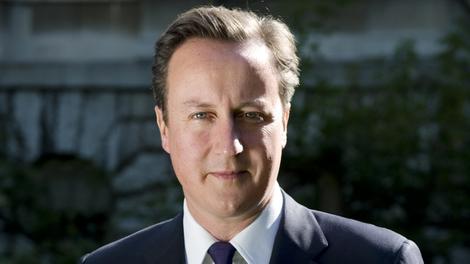
British Internet Service Provider Andrews & Arnold Ltd has told potential customers to 'move to North Korea' or pick a different ISP if they want online content to be filtered by the government.
The company said it will reject David Cameron's plans to require internet users to actively opt-in if they wish to view adult content over their home broadband connection.
Cameron's proclamation, which has drawn anger and derision in almost equal measures, would see porn sites and other content unsuitable for younger users, blocked by default.
A&A says it will not abide by the PM's plans and in its angry and somewhat humorous statement, promises it will never censor its customers access to the internet.
Pick a different ISP
The company wrote on its website: "Sorry, for a censored internet you will have to pick a different ISP or move to North Korea. Our services are all unfiltered. Is that a good enough active choice for you Mr Cameron?"The statement continued: "It is not our role to try and censor what you do with the internet. We do not try and log or limit what you are accessing. It is your responsibility to stick to the laws that apply to you. We have no intention of putting in place any censorship systems or using censored transit feeds."
The plans, which saw the PM labelled 'Kim Jong Cameron' by one British musician this week, have been presented under the guise of 'protecting our children's innocence.' However, A&A advised parents to combat the problems of easy access to adult content at home rather than relying on the nanny state.
It added: "Many of us at A&A have children and we understand that parents have concerns over what their children may find on the Internet. It is important to consider the best way to tackle this at home, just like any of the other risks that face children as they grow up. Just as you do not expect the highways agency to stop any cars coming down your road so you can let your children play on the tarmac unsupervised, please don't expect us to try and block unsavoury content on the Internet - we could not do that even if we wanted to - just look at how ineffective blocks on the pirate bay have become, and that is just trying to block one web site!"
Are you concerned about the potential for Cameron's proposed adult content firework or convinced there's no way to enforce it effectively? Let us know your views below.

| |
Read More ...
Fighting Talk: 'Siri, why do I hate you so much?'

You know what I hate about iPhone owners? Siri.
I can't stand them for it. I have this notion that they're all sitting around in bars, screaming into their phone that they want to know what the weather is like (have you looked out the window?), or asking if they have emails from Mum.
They're probably not, as I've never actually seen anyone use Siri in real life. Nobody has. We've all heard the double-plunk of it being fired up, only to be followed by an under-the-breath "balls", and then the sad sound of it being switched off.
But, real or imaginary, you know why I don't like these people? Ask Siri - I'm sure she'll tell you (or he, depending on what country you're in). It's because I really want it, and I can't believe more people aren't desperate for a proper voice recognition app in their phone.
Google, not Now
I'm an Android user at the moment – flitting between the consumers' pet, the Galaxy S4 and the enthusiasts' grail (and TechRadar's best phone in the world), the HTC One like some kind of demented tech-addict yoyo. Both ultra-smooth. Both ultra-capable. Both Android devices.And yet, both lacking one thing: A decent digital assistant.
A couple of years ago, when Ice Cream Sandwich was all the rage, and Jelly Bean was simply a sweet-tasting pie in the sky, we got whisperings that Google was working on an ultra cool digital assistant that would make Siri look rubbish.
That may have been the case at one time, but right now we're still left wandering around trying to get Google Now to do all the things that it's supposed to do - I've yet to hear of anyone getting relevant flight or sports details, despite their best efforts.
Google's attempt isn't meant to be a Siri challenger. It's what Google calls 'intelligent' and is meant to be different. We all know how the cards system works and that it learns from us as we browse the web or travel between locations.
And yet, it seems to bring up information that isn't relevant to millions of people (like stocks and shares) whilst making it impossible to carry out the simplest of tasks – like play music.
The impossible dream
OK, so I admit it, Android-fans. I have cheated in the past. I'm not wedded to Android and have enjoyed owning and using every iPhone iteration there has been. And this is where I can tell you that Apple wipes the floor with Android.
There is so much to be said for driving and being able to tell your phone to play a particular song and have it just do the damn thing. Siri is brilliant, and while it's a little limited, it does what it's supposed to do better than anything out there. If you've not tried it properly on your iPhone or iPad, at least to see if you can use it more often, you're an idiot.
And don't tell me you look stupid talking to your phone. That's what they were designed for - it's just you being embarrassed because you're unsure about what might happen.
Google Now is supposed to do something similar, but it fails miserably at searching local content when I just want it to play a song I have stored in my memory card. Forums littered with complaints will attest to my frustration.
Samsung tried to convince us that it had solved the problem when it unveiled the Galaxy S3 last year, announcing S-Voice. You'd think it could wipe out third world debt, the way Samsung sold it. Unfortunately, it can barely do the simplest of tasks. Nailed the industry, this has not. It can't even set a timer properly.
Do it yourself?
Theoretically, one of Android's strong points is the fact you can customise it so well. If you don't like the gallery, download a replacement version. Hate the keyboard? No problem, tap away on a third party one that you installed.But this goes to show how so many people are trying to cash in on the digital PA biz and failing miserably – with dozens of options from Skyvi and Sherpa, to Robin and Jeannie, with Iris and others in between. And all are as bad as each other, with Speaktoit Assistant having the highest success rate, albeit with its own flaws, when ordered to do something.
I don't want witty conversation with a piece of code, I just want the flaming thing to play Bonnie Tyler when it's told to.
Maybe this is something that Google will sort out with Key Lime Pie – but I doubt it. Android's motivation is to drive you towards the internet. Which is why Google Now is brilliant at web searching and not so brilliant at simpler tasks.
Until then, keep shouting at Siri. See if I care. (I do.)
I've reviewed dozens of phones and tablets for TechRadar over the years - each time putting them through their paces in the most unbiased, rigorous way possible.
But as well as being a professional, I have a love/hate relationship with tech, and that's what these columns are all about: the passionate howlings of a true fanboy. Tell me why I'm right, wrong or a hopeless idiot in the comments below or by tweeting @techradar or @phillavelle.

| |
Read More ...
Microsoft and Azul to put OpenJDK on Azure

Microsoft Open Technologies (MOT) and Azul Systems are joining forces to develop an open source implementation of Java for use on Windows Server on the Windows Azure cloud platform.
California-based Azul Systems, which has been building Java Virtual Machines (JVM) since 2002, will take the lead on developing the open source Java Development Kit (OpenJDK) before distributing it under the GNU GPLv2 free software licence.
Microsoft will provide Java as a hosted service on the Windows Azure cloud as an alternative to Oracle's own Java offering on the platform, which has been the leading force in the field.
MOT, the software giant's department that focuses on bridging Microsoft technologies with those of other companies, said the partnership will serve the growing number of Java applications used by businesses of all sizes.
Open environment
Scott Sellers, Azul Systems president and CEO, said the initiative would provide a fully open Java environment with a choice of third party stacks for developers and applications deployed on Windows Azure.Jean Paoli, president of MOT, added that the partnership will allow developers and IT professionals to make sure that mission critical apps can deploy and run smoothly on Windows Azure in an open source Java environment.
Azul said the new offering will be available to developers later this year.

| |
Read More ...
Review: Mini Review: Apple Time Capsule 802.11ac

The Apple Time Capsule gets a new case design and support for the new 802.11ac Wi-Fi standard, but other than that it's almost identical to its predecessor.
Like the fourth-generation Time Capsule, it has a 2TB or 3TB hard disk inside, and makes it easy to back up multiple Macs at the same time over Wi-Fi or Ethernet. It doesn't improve on its predecessor's arguably stingy three Gigabit Ethernet ports.
Also similarly, it has simultaneous dual-band 2.4GHz and 5GHz wireless - so that a slower, older device joining the network doesn't slow it down. There's still a USB port through which you can share a printer or hard disk, and support for guest internet access. It's set up with an easy OS X or iOS utility.
The new design and extra antennas are meant to eke out better performance, and if you're connecting 802.11ac devices wirelessly, it can shape the signal better to target them.
Verdict
In our real-world testing scenario, the increase was less noticeable than promised. Transfer speeds are fractionally better when using 802.11n than the last generation, but even with the 802.11ac MacBook Air, the write speed to disk only doubled to a little over 10MB/sec in our deliberately tough testing.The 3TB model is now cheaper. But you can also get all this with a new AirPort Extreme, if you attach a hard disk to its USB port.

| |
Read More ...
Review: Olympus SZ-15

Introduction
Beneath its serious design, the Olympus Stylus SZ-15 has many of the key features that will appeal to those wanting a travel compact camera on a budget. The £179.99 / US$199.99 (around AU$300) full price tag for the Olympus SZ-15 gets you a 16 million pixel 1/2.3-inch CCD sensor and 24x optical zoom, which is the equivalent of a 25-600mm lens on a 35mm/full frame camera.The Olympus SZ-15 can also shoot video at a resolution of 720p for 30fps. While this may not match full 1080p HD resolution, given the price of the camera this shouldn't really be expected. Video footage is saved as AVI files using Motion JPEG compression, while still images can be saved as normal or fine JPEG files. There is no raw shooting on the Olympus SZ-15.
As a consumer camera there is little in the way of manual exposure control, with the P setting offering the ability to change the exposure compensation and the ISO sensitivity, which has what is now considered a fairly small range from ISO 100-1600. White Balance and flash compensation can also be adjusted in this mode.

For those who just want to point and shoot there is an iAuto mode, a Beauty mode that 'Brings your subjects to life to create dynamic portrait images', Super Macro mode, a panorama mode and a variety of different scene modes.
Switching the camera to Magic mode offers access to 11 different art filter effects, including the standard Dramatic Tone, Miniature, Pop Art and Toy Camera effects.
The effects of these art filters can be viewed on the Olympus SZ-15's rear 3-inch 460k dot TFT LCD screen, which we found to be fairly poor in terms of colour rendition and contrast range.

Build quality and handling
The plastic body of the Olympus Stylus SZ-15 is styled almost like a miniature DSLR, with a hump above the lens that houses the small pop-up flash, and quite a large handgrip for a camera of this size. In the hand the Olympus SZ-15 feels well built, if a little plasticky. It also has the minimum range of controls, which, given the limited features than you can change on this camera, is no bad thing.To house the 24x zoom lens, the Olympus SZ-15 is larger than most other cameras at this price, such as the much smaller zoomed Canon IXUS 140/ELPH 130 and Nikon Coolpix S5200. However, it's also about the only camera is this corner of the market that offers a lens with such a long focal length - unless you look at an entry-level bridge camera, which will be even larger still.

The on-screen controls are straightforward to use, and the main menu has a nice clear design and layout, and a limited range of settings to change, such as being able to switch from evaluative to centre weighted metering. Usefully there is a single line of text at the bottom of the menu screen that explains what the currently selected setting does.
We found that CCD bleed, which creates purple streaks gravitating out from strong highlight areas, is sometimes visible on-screen when composing images in bright conditions. Fortunately, it doesn't affect the images taken, but it is something that isn't often seen in a digital camera these days, since the majority now use CMOS rather than CCD sensors.
Overall the Stylus SZ-15 is straightforward and simple to use. Those people after a straightforward camera with a high magnification zoom wont be overwhelmed with settings or complicated button arrangements.
Performance
There's only a choice of centre weighted or ESP (evaluative) metering, but most Olympus SZ-15 owners will be satisfied with the latter. Generally, we found that this produces good exposures, though it has a slight tendency to over-compensate in darker scenes, producing images that are far too bright with burnt out highlight details.Lost highlights are also due to the fact that the sensor seems to have a fairly restricted dynamic range. Using the exposure compensation feature, we were able to reduce exposures by between 0.3 and 0.7EV to darken the images, recover some highlights and make the over exposure more balanced.

The automatic white balance (AWB) setting works reasonably well, though some bright summer skies look a little cyan in colour. Shooting in woodland we also found that the AWB setting produces very cold results. Switching to sunlight or the overcast setting on the camera leaves some of the warmth of the brown woodland tones in images.
When shooting under tungsten light the AWB setting removed very little of the tungsten colour. We found that changing the Olympus SZ-15 to tungsten worked very well, reducing almost all hint of the tungsten amber glow and producing good neutral images. We would recommend taking the time to switch between the preset white balance modes to get the best results from the camera.
Rather oddly, there are no variations on the default image colour style, for example a black and white or vivid colour setting. If you wish to change any of the characteristics of the image this must be done either via the Scene or Magic modes. In fact, if you wish to take black and white images you are out of luck completely, since there is no option at all on the Olympus SZ-15.

Images taken with the Olympus SZ-15 are a little disappointing. While the colour rendition is quite good, images seem to suffer from over processing, with the noise reduction and JPEG compression being very high, even at the lowest ISO 100 sensitivity setting. Also, although images may look good on a computer screen at normal viewing sizes, a quick look at 100% reveals a lack of detail.
As the sensitivity increases, the quality gets worse, with ISO 1600 images appearing smudged and blurred at 100%, as the noise reduction obliterates any luminance noise in the image. That said, there is no colour noise visible, though there is a slight purple tinge to high contrast edges, implying that some sort of purple fringing reduction has been applied.
Again, if you are only ever going to look at images on a computer screen or website, this won't be an issue, but if you'd like to make prints we would advise that the quality won't really be suitable for anything other than 6 x 4 prints.

The 25-600mm equivalent lens of the Olympus SZ-15 takes just under two seconds to make a full zoom, which is quite fast for a zoom of this size and a camera of this price. The much needed stabilisation works particularly well, and this can be witnessed by the sound of the stabilisation motors whirring away and the smooth image presented on the camera's rear screen.
There is a little curvilinear distortion from the lens, and we would imagine that this is automatically corrected in-camera. The only time when there is a slight curve at the edges is when shooting using the super macro mode, which has a minimum focus distance of around 2cm from the front of the lens.
Focusing in macro mode is a little slower than when taking a more standard macro or portrait shot, and in this mode the camera can sometimes hunt when trying to find focus.

When shooting landscapes the focus is fast and accurate. Switching from the standard mode to spot focusing makes the focusing a bit snappier, so we would generally advise using this mode. AF tracking is also available, and manages to keep up well with moderately moving subjects.
Once you have taken the image it takes the Olympus SZ-15 around three seconds to recover before you can take another image. There is a continuous shooting mode, but this only enables 200 full sizes images to be taken at 0.45fps. Faster 1.5fps and 15fps modes are also available, but image resolution drops dramatically, to just 3 million pixels.
Verdict
If you keep in mind that the Olympus SZ-15 is aimed at those who are happy to point and shoot and are only going to use their camera on a few occasions a year, then the Olympus Stylus SZ-15 is a suitable camera. It is uncomplicated, with few buttons, a basic design and it isn't bombarded with all the extra settings that may end up confusing rather than helping a point and shoot photographer.However, the Olympus SZ-15 is clearly built to a low price point, which is indicated by the use of a CCD sensor, plastic construction and lack of features such as GPS or Wi-Fi. The image quality is ok if you are only ever going to look at images on the camera's screen or on a computer, but a 100% view reveals that images throughout the sensitivity range lack detail and look very smudged. The noise reduction is simply too strong.
All of that said, there is very little competition for the Olympus SZ-15 in this price range, and to buy a camera with a zoom lens that can match the 24x zoom of the Olympus SZ-15 you would have to spend around another £100 or more for the Panasonic Lumix DMC-TZ40, Canon PowerShot SX280 HS, Nikon Coolpix S9500 or the Sony Cyber-Shot DSC-HX50.
We liked
The standout features of the Olympus SZ-15 are its impressive 24x zoom lens and a simple to use body and controls.We disliked
There are few options for more advanced photographers on the Olympus SZ-15, and image quality is poor on close inspection.Final verdict
If an easy to use compact camera, at a reasonable price, with a powerful zoom lens is your criteria, then the Olympus Stylus SZ-15 is a reasonable choice. However, there are few additional settings or features in this bare-bones camera, and the image quality and processing speed of the camera is slow.For the price, the Olympus SZ-15 is reasonable value, however for those wanting to make sure they get the best possible images, you should spend a bit more and purchase one of the more premium cameras.
Image quality and resolution
As part of our image quality testing for the Olympus SZ-15, we've shot our resolution chart.If you view our crops of the resolution chart's central section at 100% (or Actual Pixels) you will see that, for example, at ISO 100 the Olympus SZ-15 is capable of resolving up to around 22 (line widths per picture height x100) in its highest quality JPEG files.
For a full explanation of what our resolution charts mean, and how to read them, check out our full explanation of our camera testing resolution charts.
Examining images of the chart taken at each sensitivity setting reveals the following resolution scores in line widths per picture height x100:
JPEG

Full ISO 100 image, see the cropped (100%) versions below.

ISO 100, score: 22 (Click here to see the full resolution image)

ISO 200, score: 22 (Click here to see the full resolution image)

ISO 400, score: 20 (Click here to see the full resolution image)

ISO 800, score: 18 (Click here to see the full resolution image)

ISO 1600, score: 18 (Click here to see the full resolution image)
Sample images

Click here to see the full resolution image

Click here to see the full resolution image

Click here to see the full resolution image

Click here to see the full resolution image

Click here to see the full resolution image

Click here to see the full resolution image

Click here to see the full resolution image

Click here to see the full resolution image
Sensitivity and noise images
JPEG

Full ISO 100 image, see the cropped (100%) versions below.

ISO 100 (Click here to see the full resolution image)

ISO 200 (Click here to see the full resolution image)

ISO 400 (Click here to see the full resolution image)

ISO 800 (Click here to see the full resolution image)

ISO 1600 (Click here to see the full resolution image)

| |
Read More ...
Updated: HTC One Mini release date: Where can I get it?

The world's best mobile phone has been through the shrinker and out the other end has popped the HTC One Mini.
Classy and compact, the Mini houses a 4.3-inch 720p display, dual-core Qualcomm Snapdragon 400 processor with 1GB of RAM, and 16GB of internal storage.
Right now, the phone is expected to arrive on shelves in August and we've been told it will likely be available for free on contacts from £25-£27 per month.
But where can you expect to pick one up? Well, let us tell you...
Phones 4U - Old faithful Phones 4U confirmed that it will be making the HTC One Mini available when it lands later this year, although it isn't giving any details beyond that for the time being.
O2 - O2 took to Twitter to announce that it would also be stocking the HTC One Mini. "You WANT? We GOT. HTC One Mini, coming to O2 soon". That's solid confirmation, right there. It's yet to confirm pricing and tariffs, however.
Vodafone - The big red network told us that it will be getting the Mini, and we can expect it to be offered from August. Vodafone also confirmed this over on its blog, in case you needed any reassurance.
EE - As the HTC One Mini is 4G capable, it's good news that EE has said it will be offering the handset. It's currently not offering any details on pricing of date of availability - but hold tight, as we're sure to hear more soon.
Unlocked-Mobiles - The web retailer has revealed when it expects to have the HTC One Mini in stock and August 12 is the lucky date. Available in black and white, Unlocked Mobiles reckons the HTC One Mini price will be £364.98, SIM-free.
More to follow...

| |
Read More ...
Available Tags:Apple , MacBook , Sony , Facebook , Windows Phone , Nokia , Microsoft , Windows , PS4 , Xbox , TechRadar , Android , Google , Windows 8 , Ubuntu , UK , Olympus , HTC ,


No comments:
Post a Comment