

Google brings Play Music All Access subscription to Australia

Just two months after its initial launch at Google IO in June, Google's awkwardly named Play Music All Access subscription service has opened its digital doors to Australian music lovers.
The service offers music to a large catalogue of tracks and albums from all the major record companies, as well as Australian and indie labels.
If you can't find the music you love on the service, there's also the ability to upload and store 20,000 tracks for free online and access them through any Android device or the web.
Like most of the service's competitors, you can also pin albums and playlists to your device for offline access.
Cheaper than your average streaming service
While there's no free, ad-supported version of All Access like Spotify, Google is offering a month's free trial of the service for anyone keen on testing it out.And to drive those sign up numbers, Google is offering a special $9.99 price for anyone who subscribes before the end of August. Those who sign up after that date will pay $11.99 after a 30 day free trial.
It's also worth noting that Play Music continues to offer its free service which allows you to store 20,000 of your own tracks, although it doesn't include anything outside your personal library.
The launch also brings Google's Australian Play services largely into line with international stores, with the biggest hole being TV shows. Here's hoping the fill that gap next.

     |
Read More ...
Sony's Video Unlimited to be less limited with 4K movies in 'early fall'

Sony's Video Unlimited service is expanding to include 4K movie downloads this fall, solving the problem of distributing Ultra HD content to 4K-capable televisions.
"We will be first in the world with a native 4K downloading service," said Sony Electronics President and Chief Operating Officer Molyneux during the launch event, according to Mashable.
These movies will come from Sony Pictures and independent studio catalogues at first, as Video Unlimited begins to include content with four times the resolution in early fall.
"We're populating that now with 4K feature films, primarily from Sony Pictures, but there are other short-form films from other production houses."
Chicken and the egg
Right now, Sony's Video Unlimited service includes SD, HD, and 3D movie downloads.The addition of movies in 4K, also referred to as Ultra HD by every other TV manufacturer, would finally give the earliest adopters of the technology an on-demand source for content.
Right now, cutting-edge Ultra HD TV owners can only use the expensive Sony FMP-X1 4K media player with pre-loaded 4K video content to enjoy movies at the maximum resolution.
Might precede PS4 launch
Sony's PS4 console, which will play 4K movies but won't support 4K games, may be preceded by Video Unlimited's 4K movie expansion in early fall.PS4 is on a "different timeline," said Molyneux according to the Mashable report.
Sony has maintained a vague "holiday 2013" launch date for its next-generation console, while Microsoft is scheduled to deliver the 4K-capable Xbox One in November.
Video Unlimited becomes less DRM limited
Even if PS4 misses Video Unlimited's 4K launch, 4K movie buyers should still be able to share their downloads with multiple Sony devices, including the PlayStation 4 console.The company recently changed its DRM policies so that users can play downloaded content across multiple devices like PS3, PS Vita, and PSP, according to Shacknews.
"If you purchase a copy, the video or TV show download will be available infinitely and can be transferred to other enabled devices," reads Sony's new Video Unlimited Terms of Service.
Read about the expensive, but premium quality 4K televisions from Sony

| |
Read More ...
Foxtel's 'affordable' IPTV service Play coming in August

Getting access to Game of Thrones and Mad Men proving to be too expensive and don't want to be pritate? Foxtel may have the answer with its planned IPTV service called Foxtel Play set to be launched next month.
According to The Australian, Brian Walsh, Foxtel's executive director of television, said that the internet-delivered programming service will be launched in the middle of August.
As we reported earlier this year, working with Foxtel Go, Play will be a pay as you go service delivering up to 40 Foxtel channels on smartphones, tablets, PC and Mac, as well as some games consoles and TVs with internet connections.
Customers will be able to build their own subscription packages, and will include more than 2000 catch-up and video on demand titles.
The affordable Foxtel
The new Foxtel Play service will not require any lock-in contracts or installation, and will be based on month by month subscriptions."It will allow a lot of people who could not afford Foxtel before to get a Foxtel product over the net on to their PCs or on to their smart TVs," Walsh said, according to The Australian.
While no dates or pricing has been announced, Foxtel has said that the service will have a starting package price-point of $25.
It'll be a handy alternative service if you just want something for the kid's school holiday or have access to a short season of sports. Now all we need is faster internet connections and bigger data packages.

| |
Read More ...
Panasonic announces super slim compact

Panasonic has introduced the XS3 - a super slim compact camera which is just 14mm thick.
The XS3 incorporates a 14.1 million pixel MOS sensor, compared to its predecessor (the XS1), which had a CCD sensor. Panasonic claims that this will help the camera perform better in low light conditions.
It's also packed with a Venus Engine image processor to help with advanced noise reduction. This tiny camera is also capable of full-HD video recording and boasts Light Speed autofocus.
Lens
The XS3's lens comprises of six elements in five groups with three aspherical lenses with five aspherical surfaces and boasts an f/2.8 maximum aperture and 24mm wide angle. A 5x optical zoom offers an equivalent 24-120mm in 35mm terms.A wide array of creative functions have been included, such as a Creative Panorama function, enabling the use of digital filters. Those filters are also available in standard image ratios and include Retro, Expressive, Impressive Art and High Dynamic.
The Panasonic XS1 price is yet to be confirmed, but it will be available from September.

| |
Read More ...
Panasonic launches world's longest zoom bridge camera

Panasonic has introduced a new bridge camera to sit in its line-up of Lumix FZ cameras.
The FZ72 boasts the world's longest optical zoom with a 60x offering, making it an equivalent of 20-1200mm in 35mm terms. At the wide angle end of the lens, 20mm is approximately 140% wider than a standard 24mm lens provides.
Comprising 14 elements in 12 groups, including 6 aspherical lenses with 9 aspherical surfaces and 3 ED (Extra-Low Dispersion) lenses, the lens is small but Panasonic says it will still deliver superb results.
Intelligent Zoom and Intelligent Resolution are included to boost the zoom ratio up to 120x equivalent. A 1.7x tele conversion lens will also be sold separately to boost the lens up to 102x.
Specs
Other features include a new 16.1 million pixel MOS sensor, a Venus processing engine, Light Speed AF and Power OIS (Optical Image Stabliser) to provide correction for blur when shooting handheld or in low light.Of course, it wouldn't be a modern camera without Full HD video recording available in 60i, 50i and 25p.
Full manual control is available for advanced photographers, while a hotshot is also included for attaching a range of optional accessories.
The Panasonic Lumix FZ72 will be available from the end of August, a price is yet to be confirmed.

| |
Read More ...
Blip: New Google Maps beta now an open buffet for you

Remember the fancy new map system Google touted a couple months ago at their IO conference?
Well, if you didn't get a chance to sign up for their beta, don't fret - a brand new Google Maps system is now open for everyone to try.
The new UI is really quite something - the search bar picks up your query almost instantly and the map itself seamlessly flows to your desired destination thanks to the whole map being interactive.
"Clicking anywhere will focus the map on that location and show you helpful things, like related places and the best ways to get there," according to a statement on the site.

Speaking of destinations, flight directions have been added with the option to find ticket prices, flights and ETAs.
Since it's still in beta, the Google team will continue to take feedback to improve the map tools even more.
To experience the intuitive new interface, just visit Google Maps like you normally do when you're looking for that new pizza place and voila, it'll be ready for you to peruse away.
More blips
Try reading our blips for the shortest route to a quick read.- Google is treating press to breakfast July 24, will Android 4.3 be on the menu?
- Pee-powered smartphones could mean endless streaming
- Hear me now: stupid things you could have been shouting at Google Glass

| |
Read More ...
Blip: If HTC's 'little' news isn't the One Mini, we'll eat a shoe

HTC UK is teasing the announcement of a silver something that can fit in your pocket.
Yes, we know most phones can fit in your pocket, but the line "We have a 'little' bit of news tomorrow" that accompanies the photo you see above is a not-so-hard-to-read hint that we're likely in for the HTC One Mini.
The corner peeking out coyly is reminiscent of the phone from whence the Mini takes its name. Other leaks have indicated we're in for a black model too, but today's twit pic shows only a silver back.
Spec wise, the HTC One Mini is expected to house a 4.3-inch display with 720p, Android 4.2.2 and a Qualcomm-branded 1.4GHz Snapgragon processor, among other parts, of course.
The good news? We need only wait until tomorrow to see what HTC has in store.
More blips
Take a peek at our little bits of blips below- New Google Maps now an open buffet for you
- Samsung Galaxy Folder brings nostalgic flip phone style to Android
- Vine is suddenly swinging to Windows Phone 8

| |
Read More ...
Google Drive encryption being tested to drive out government spying

Google's cloud service contains everything you want - and sometimes what you don't want, like the U.S. government spying on you through its Prism surveillance program.
That's why the search engine giant is reportedly testing out encryption for all Google Drive files, according to a report by CNET.
Sources claim that only a small percentage of your cloud-based files stored on the Mountain View company's servers are currently encrypted. That could change in the future.
"Mechanisms like this could give people more confidence and allow them to start backing up potentially their whole device," said Electronic Frontier Foundation Senior Staff Technologist Seth Schoen in the report.
Driving at encryption
While a user's Google Drive contents are said to be transferred with encryption, most of it sits on the company's servers in unencrypted form.This is due to expense, time, and complexity of file indexing - hence why only a small portion of Drive files get the encryption treatment.
However, the immediate benefit of securing all of Drive is that Google would not have to turn over private files to spy agencies like the NSA.
The government may have to Google suspects the old-fashioned way. Or continue to use SkyDrive.
Tales from the encrypt keeper
Encrypting files in the cloud is something Microsoft reportedly tried to do with Outlook.com emails.The problem is that Microsoft is said to have still helped - or been compelled to help - the U.S. government seek the information it wanted, even though Outlook.com emails were protected.
Not so, said Microsoft, which disputed the account laid out by documents leaked by Edward Snowden. The documents called its Prism cooperation with the FBI a "team sport."
Microsoft claims that Outlook.com messages sit in an unencrypted state on its servers, which makes its emails and SkyDrive files just as vulnerable to government intrusion as Google Drive right now.
That means Google still has a chance to become the first major internet company to offer government-proof cloud storage service.
- Read how Google wants to divulge information about its PRISM activities, but the government won't let it.

| |
Read More ...
Take cover: The Nexus 7 2 is leaking all over the place

The follow up to the Nexus 7 is suddenly looking very real.
Leaks and rumors for the Nexus 7 2 litter our rear view mirror, but pricing, release details, photos and a video of the tablet have all suddenly materialized today.
Of course, nothing is official until Google gives the word, but let's explore the new information, shall we?
First up, release. According to internal Office Max documents sent to Engadget, "the new Google Nexus 7" is due to arrive in stores by July 20. The slate will be sold alongside the current version, and stores are instructed to only sell demo Nexus 7 1s when inventory runs out.
Google earlier announced it's hosting an event July 24, so the timing seems right for sales to start that day or soon after. In fact, we've heard about a July release for the tablet before, so the chips are certainly stacking up for a this-month debut.
Two timing
The Office Max materials talk about a 32GB version with no mention of a 16GB model, but we can turn to Android Central for more on that, plus some price points.In a leaked retail inventory listing, a device described as a Nexus 2 7" 16GB quad-core is priced at $229 (about £150, AU$248). The 32GB quad-core model rings up at $269 (about £176, AU$291), though another screen sent by Engadget's tipster shows the model costing $269.99.
The current 16GB version costs $199 (£159, AU$249) while the 32GB Wi-Fi only hits $249 (£199, AU$299). Add mobile data and the 32GB jumps to $299 (£239, AU$349).
Photo finish
We could have logged off as pretty happy campers with possible pricing and a release to look forward to, but then purported photos of the darn thing and a video went ahead and surfaced.A tipster sent what are supposedly Nexus 7 2 snaps to Android Central, though it's worth noting the slate shown could be a prototype/different from what we have when the product launches. Or a complete fake. Advice? Douse them with some salt.

Specs for the tablet are listed as a 7-inch LCD display, a 1.2MP camera on the front and a 15MP snapper on the back. The processor is pegged as a Qualcomm Snapdragon S4 Pro - not the Snapdragon 600 previously rumored - and the tablet looks to have dual speakers.
There is also apparently a jaw-dropping 4GB of RAM in this puppy, something we'll have to see to believe. You'll also notice that the back is a smooth matte finish, not the rippled rear of old.
Finally, the slate seen here is said to run Android 4.3, meaning next Wednesday could yield results on both the hardware and software front.

| |
Read More ...
EU says Google can do better on search antitrust concessions

Google is in hot water in Europe for allegedly blocking competitors' services and products in search engine results, and the European Competition Commission is not happy with the company's latest proposal to fix its antitrust problem.
European Competition Commissioner Joaquin Almunia today responded in a press conference to Google's proposed concessions, which were submitted in April.
He said the proposals "are not enough to overcome our concerns," and that Google needs to do better.
He didn't set a deadline, but he did say previously that he hopes to have the case wrapped up by the end of summer.
Do better, Google!
Google proposed concessions including clearly delineating its own products in search results and including links to at least three competitors' sites, as well as making it easier for advertisers to switch to Google's rivals, reported Reuters.But the European Commission and Google's competitors, including lobbying groups, agree that Google can do more.
Those lobbying groups are reportedly pressuring the Commission to penalize Google if it fails to offer better concessions.
Google, which research firm comScore says makes up 80 percent of the European search engine market, reportedly faces up to $5 billion (£3.27B, AU$5.4B) in fines if it doesn't get its act together.
A Google spokesperson reportedly told Reuters that the company will continue to work with the EU competition authority. TechRadar asked Google to provide its full statement, and we'll update this story when we receive it.
- The search giant was forced by the Federal Trade Commission to make some concessions in the U.S. as well last year.

| |
Read More ...
The iPhone 5S might be suffering from a, er, size problem
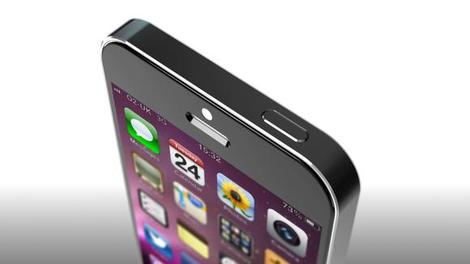
Apple upped the iPhone screen to 4 inches with the iPhone 5, and now it may enlarge it once again with the iPhone 5S.
A report from Taiwanese newspaper Commercial Times (via Bloomberg) this week claimed that the iPhone 5S will feature a display stretching...wait for it...4.3 inches.
It's not an earth shattering growth spurt, but that change has reportedly caused delays that could see the phone's launch pushed back to the end of the year.
This latest claim contradicts previous reports that the iPhone 5S will maintain the iPhone 5's 4-inch display and debut in September or October. Delays, it seems, are striking a few iDevices.
Cheap iPhone strikes again
 While we're eagerly awaiting more news of the next iPhone, whispers of Apple's rumored cheap iPhone continue to whir through the interwebs.
Today BGR published photos picked up by way of Sonny Dickson that purportedly show the chassis of a light green budget iPhone next to the iPhone 5.
The two devices appear to be of a similar size, though the cheaper, plastic iPhone shell looks slightly thicker.
The site claims that the cheap iPhone will launch alongside the iPhone 5S this fall, an assertion we've heard before.
But if the iPhone 5S really is delayed until the end of 2013, where does that leave the budget iPhone? Will Apple delay that too or will they launch the cheap version in the fall, giving it some breathing room before unleashing the 5S?
We're clearly facing an existential crisis over this, so please Apple, could you hurry up?
- The next iOS is almost here - check out TechRadar's iOS 7 hub for all the latest on new system.

| |
Read More ...
Are you there, Acer? If you refresh the Iconia W3, could you improve its screen?

We're used to refreshes, but it's fairly rare that word of a revamp comes so soon after a device is released, especially when it sprouts from a company source.
According to Dutch site Tweakers.net (via The Verge), Acer is planning to retool the Iconia W3, the very first 8.1-inch Windows 8 tablet, though certainly not the last.
The site looks to have it on the authority of Acer spokesperson Sterre Swank that a W3 2 (or whatever we want to call the slate's successor) is being developed.
The new W3 will be "thinner and lighter" than the original Iconia W3, trimming down on the considerable bulkiness of the current model. Acer will keep selling the tablet, Swank said, but retailers won't have stocks replenished.
Improvements welcome
Outed in June during Computex, the Iconia W3 is attractive in size, but not much else aesthetically.The display is, to put it delicately, awful, and while there's no hint from Swank or Tweakers that the new model will have an improved screen, we can't imagine Acer leaving it as is.
As for size, the device certainly has a lot of heft and a thickness that feels as though you're carrying a slab of lunch meat around. The machine has its charms, but would definitely benefit from a trim and a screen shine.
We've contacted Acer about the Tweakers story but were told that the company doesn't comment on future product plans.
- Speaking of refreshes, apparently the iPad mini is in for one before the iPad mini 2 comes out.

| |
Read More ...
4K for £4K: Samsung's latest Ultra HD televisions arriving in UK this month

Samsung has broadened its range of Ultra HD televisions available in the UK by confirming its 55-inch and 65-inch options will go on sale by the end of July.
The 55-inch UE55F9000 will be available for the relatively reasonable (emphasis on the relatively) price of £3,999, while the extra 10-inches offered by the 65-inch UE65F9000 pushes the price up for £5,999.
The pricing and screen size options set up a potential battle with Sony for the future of living room viewing, which has tagged its similarly sized offerings with like-minded RRPs.
The addition of 55 and 65-inch models complements Samsung's whopping 85-inch S9 set with the company claiming the new arrivals "strengthen its leadership in the UHD market with various sized TVs."
Anything else?
So, aside from a display resolution four times the size of a regular HD TV, what else can potential buyers expect from the next generation of Samsung tellies.Well, the company promises four-step upscaling for SD and HD content, powered by a quad-core processor. Considering the current void of 4K content the upscaling tech should come in quite handy.
Beyond that, Samsung's Smart TV platform is on board, complete with voice-powered content searches, while the 70W built-in speakers offer a "simulated surround sound" experience.

| |
Read More ...
No public interest in 3D? Virgin Media obviously didn't get the memo

Virgin Media has told customers to expect an influx of new, on-demand 3D content, with 50 hours of programming to be added this month
The cable TV provider will be supplementing its offering with new shows from the Discovery Channel, Sony and New Media Vision during the next couple of weeks.
In addition, the company is adding a host of 3D movies to rent on-demand, including The Hobbit, Oz: The Great and Powerful, Wreck-It Ralph and the visually spectacular Life of Pi.
Virgin's additions to its 3D line-up little over a week after BBC decided to abandon 3D content, citing a "lack of appetite" from a public who found it a "quite hassly."
Still breathtaking?
With today's supplements to its 3D library, Branson's company said that, although the technology hasn't taken off as anticipated, there's still an avenue to greater adoption.Kevin O'Neil, head of TV production management said: "3D offers a unique and often breathtaking experience and our customers are making the most of Virgin Media's 3D on demand line-up to sit down and try it for themselves.
"We offer our customers a wide choice of content and 3D at no extra cost is proving to be a valuable addition for many of our TV fans."
Disappointing
Earlier this month BBC put the creation of 3D content on hold indefinitely, with no plans to produce or broadcast content beyond the business end of the Wimbledon tennis championships"I have never seen a very big appetite for 3D television in the UK," claimed Kim Shillinglaw, the BBC's head of 3D at the time.
"I think when people watch TV they concentrate in a different way. When people go to the cinema they go and are used to doing one thing - I think that's one of the reasons that take up of 3D TV has been disappointing."
It's fair to point out that Virgin isn't investing in producing its own 3D content as the BBC was and what it is paying isn't from the license payer's back pocket. Virgin is simply picking up 3D content produced by others and making it available on demand, making its decision to persevere a relatively low risk strategy.

| |
Read More ...
Blip: Google is treating press to breakfast July 24, will Android 4.3 be on the menu?

Mmm, breakfast.
Google is shipping out press invites to a morning meal with Android and Chrome Chief Sundar Pinchai next Wednesday, or July 24 for you calendar nuts. While breaking bread with Mr. Pinchai sounds pleasant enough, we're honestly more interested in what Mountain View has in store.
We know you are too.
The convergence of circumstances point to the unveiling of Android 4.3, the next flavor of Jelly Bean. Everything we've heard about 4.3 says that it won't be a major update, but it sounds like we can expect serious camera app attention, extra Bluetooth support and a fluffing of the notifications system. Whoot.
There are plenty of hardware rumors humming around Google as well, and while it seems a little too early for the Moto X to take a bow, we won't rule out that possibility (or the Nexus 7 2) until we've finished our orange juice.
The 9 a.m. event will be streamed via YouTube, so grab a scone and munch along.
More blips!
Blips, they're what's for breakfast. And lunch. And dinner. And Fourth Meal.- Samsung Galaxy Folder brings nostalgic flip phone style to Android
- Pee-powered smartphones could mean endless streaming
- Hear me now: stupid things you could have been shouting at Google Glass

| |
Read More ...
iPhone graphics designer: photorealism on smartphones just a few years away
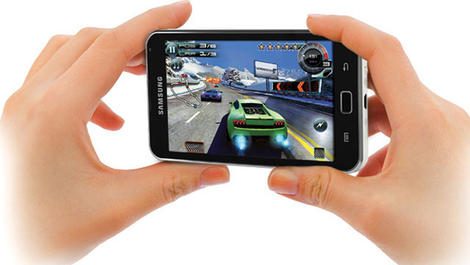
If photorealism is the ultimate goal for gaming, then we could be nearing end times. According to the head of Imagination Technologies, the company behind the iPhone 5's PowerVR GPU, ray tracing technology is about to completely revolutionise graphics in the mobile space.
Ray tracing is able to recognise and interpret the way light interacts with objects, calculating how much is absorbed by the surface, and resulting in a highly-defined level of realism.
"Ultimately this technology is destined for mobile," said Sir Hossein Yassaie. "I think you'll begin to see that technology in a couple of years.
"It will just go from here to higher performance, smaller and better [devices]."
Yassaie added that while we could be enjoying the benefits in two years, the technology may not reach its full potential for "three to five years". "Within five years it will be in everything that matters," he said.
Imagining the possibilities
Of course, it won't just be about mobile. Ray tracing will be huge across all areas, including tablets and games consoles where Yassaie believes the technology will take off first.Imagination acquired Caustic Graphics, the developer of real-time ray tracing technology, back in 2010, and has already started shipping the technology on chipsets.
Imagination's designs currently appear in a wide range of products on the consumer market, from phones and tablets to TVs and radios. You can read TechRadar's full interview with Sir Hossein Yassaie about ray tracing technology right here.

| |
Read More ...
Fingerprint reader for iPhone 5S, Liquidmetal for iPhone 6?

The leaks are picking up as we edge closer to the expected launch of the iPhone 5S, and some new leaked production shots, along with some juicy info, might start to give us a clearer idea of what's behind the veil.
While it doesn't look like there's a lot new happening on the outside of the phone, information provided alongside the pictures claims that the iPhone will have an NFC chip, a fingerprint reader, and a 4-inch 1136x640 Sharp IGZO display.
A 12-megapixel camera was also touted, alongside that dual LED flash that we clocked a little while ago. The new display should not only provide a sharper quality image but also be a lot less intense on the battery.
We wouldn't take any of this as gospel, of course, but nothing here is beyond what we're already been hearing about the phone.
"Pssht, we're over it. What about iPhone 6?"
And while we're on the subject, Apple might be looking to use Liquidmetal on future iPhones and iPads - or perhaps even an iWatch.
A patent awarded to Crucible Intellectual Property, the company that represents Apple's licensing deal with Liquidmetal Technologies, describes a new production approach that could see the material used to produce sheets up to 3 meters wide and between 0.1mm and 25mm thick.
Right now, the material has only been used in the SIM-ejector tool as its use for anything bigger has been restricted by production-based issues.
The iPhone 5S is rumoured to begin the production process this month, with an expectation that we might see it around the September/October time so long as no spanners get thrown in the works.
Via 9to5Mac and Engadget

| |
Read More ...
Salesforce.com launches Sales Performance Accelerator

CRM giant Salesforce.com is aiming to give sales teams a boost with a new tool that that pulls data from multiple sources.
Salesforce.com's Sales Performance Accelerator integrates the company's Sales Cloud CRM platform with targeted customer data from Data.com, and coaching and feedback tools from Work.com.
According to the company, Data.com provides sales teams with contact and business data that helps them uncover and qualify new leads, in addition to keeping data clean.
Motivation boost
It is pulled alongside data from Work.com, which is also available on mobile devices and is focused on increasing the performance of sales teams through coaching, motivation and feedback on how to close deals.It is being offered for US$90 (around £59, or AU$97) per user per month for the next 90 days as part of a promotional deal. The price is set to rise to US$110 per month (about £72, or AU$119) per user per month once the promotion ends.
According to Salesforce.com, early adopters include CareerBuilder, DocuSign and Enterasys.

| |
Read More ...
Brit Week: Why ray tracing will take graphics beyond your imagination

You might not have heard of Imagination Technologies but there's a good chance you're familiar with its work. Some of it could be in your pocket right now. There's even a chance that the display you're reading this on is powered by the technology Imagination designed.
Smartphones, tablets, laptops, TVs. The iPhone 5, the Samsung Galaxy S4, the PS Vita. Run through the list and it becomes more of a question of what Imagination isn't in.
Imagination Technologies, based in Hertfordshire, is as British as they come, and yet its global reach is phenomenal. Designing the architecture for graphical chips and microprocessor, the company is a competitor to ARM.
TechRadar is at Imagination HQ in Hertforshire and we've been taken into some sort of gadget funhouse. The walls are covered in phones, tablets and TVs, while radios scatter the benchtops. Everything with a screen is powering some sort of graphics demo, it's hypnotising. Of course, these are all products in which Imagination's handiwork can be found, and suddenly it's difficult to ignore the extent of Britain's technology reach.
We're not alone though. Imagination CEO Sir Hossein Yassaie, recently knighted for his work in technology and innovation, is with us. Admiring the number of products on display, we ask him how it feels to be such an integral part of so much consumer technology and yet be so relatively unknown. He humbly bats away any suggestions that ego plays a part, but then grins, "I certainly get a great kick," he says.
"You just look in the shops, or even walking around, people are using products that you've had big things to do with. I think that is satisfaction in itself."

But there's something sat in the corner of the room that's caught our eye - a computer displaying a 3D model of what looks like a red Porsche. This, we're told, is ray tracing in action.
Back in 2010, Imagination purchased Caustic Graphics, one of its most significant acquisitions ever. Caustic is the developer of real-time ray tracing technology, a whole new way for graphics to be rendered to a photorealistic level.
With ray tracing, light becomes a key part of the datatypes that can be understood, meaning that both lighting and shadows are detected automatically and every surface absorbs as much or as little as necessary to mimic reality.
Not only does it produce stunningly lifelike graphics, it does so at astonishing speeds. This increases the efficiency of graphics rendering by a significant magnitude, cutting costs as well as time. Tasks that once took fifteen minutes due to the requirement for manual input can now take fifteen seconds.
Ray of hope
TechRadar is given a demonstration of the technology in action using the car on screen. With just a click, the colour of the car's entire body is changed from red to green, yet even as the model is moved around, every part of the chassis reflected light in a way that made it look incredibly lifelike.When we start prodding at how Imagination has harnessed the technology, the team is cagey to divulge its secrets beyond how they've found better ways of bundling light together.
"This is the beginning," says Yassaie. "It's mark one...from the point of view of what is possible once everything is developed. But it's still a system that even in its current incarnation is several times faster than anything you can get and is a lot cheaper."
While the technology is already being shipped in some chipsets, things are set to pick up speed. "I think the real potential for ray tracing is going to come in the next three to five years," Yassaie tells us.
"Today's graphics, if you look around, they look very nice, some of them even look wonderful in terms of the realism, but it's all faked because the current technologies out there do not model light."
"If an artist wants to create a nice title, they have to spend a lot of time recalculating the fact of light from every potential scenario in the scene, says Yassaie. "But if the lighting is supported in the hardware, it's a bit like this room. You can define the spotlights, the window light etc, and everything else just works. So the content creation would be easier. It would look more beautiful."

Yassaie tells us that he expects to see ray tracing used in everything from games to Hollywood movies. The potential is huge. But it will also open up the process in a way that will make it more accessible for the less experienced designers.
"From a point of influence, what YouTube did for user-generated video, ray tracing will do for user-generated graphics," says Yassaie. "There will be a situation where there will be tools and things where ordinary people can create pretty nice looking graphics."
Yassaie believes that the technology will start making its way through more sizeable mediums before it shrinks down. "This technology is destined for mobile but you'll probably see it appearing in tablets and gaming consoles, and then eventually finding itself in mobile," says Yassaie.
The rebirth of AR?
Another potential interesting application of ray tracing is in augmented reality. While AR is still perceived as an awkward gimmick right now, ray tracing promises to make the idea practical. Specifically, Yassaie says, when it comes to online shopping."You could take a picture of your room with your camera and then you can get a nice model on the computer. You can drop the product there and walk around it," says Yassaie. "I think that will change the online experience of shopping."
And the even better news is that it might not be years before we see ray tracing used in consumer devices. In fact, it might not even be half a decade.
"I think you'll begin to see that technology in a couple of years," says Yassaie when we ask when we might start finding ray tracing in smartrphones. "I think within five years it will be in everything but along the way it will just promulgate."
However, getting Yassaie to talk about any specific future products is an impossible task. TechRadar drops the Apple bomb but he won't talk about his possible involvement in the next iPhone. He does say, though, that he thinks smartphones might have earned their "smart" title a little too early.
"They're not really that smart, and they actually have to live up to that name a little bit more," he says. "You've got all this information available to you but if they were a bit more intelligent, knew a little more about you, and presented the data in a more sensible fashion..."
Yassaie pauses to think for a moment. "I have no doubt the UIs will get better," he says. "That puts completely different requirements on the graphics." As the sports car demo sits just feet from Sir Yassaie, it looks like Britain has already found the solution.

| |
Read More ...
Brit Week: The technology of the Tumbler - how Britain made the Dark Knight mobile

"The brief we got [to create the Batmobile Tumbler] was for a vehicle that could do 60mph; we thought we'd give them a little bit more than that so we boosted it to 100mph, as we obviously wanted it to do some amazing things."
There's very little that doesn't sound incredible when talking to John Holmes, senior special effects technician on the team involved in creating the most recent iteration of the Batmobile. The Tumbler is one of the most iconic designs in cinematic history – no mean feat when it was replacing the original 'kitsch' Batmobile.
But what you don't know is that while you were seeing the Tumbler being thrown around Gotham City on the big screen, it was actually designed, built and mostly used in Britain, thanks to the 20-strong team working on the project.

It was conceived by Nathan Crowley and his team originally, but the difficulty in the project came from taking the Styrofoam model from a concept to actual reality – and required a lot of ingenuity when it came to the actual mechanics of making the Batmobile, according to Holmes:
"It's actually a bespoke vehicle, there's nothing on this that's already been seen [on another car] – people say 'oh, it's based on a Hummer, it's based on a Mercedes', but no, it's all bespoke. It is a Batmobile, there's no other made vehicle part on it."

That's true of most of the unit – although the tyres were off-the-shelf to a degree… if you can call super swamp tyres on the rear and racing boots on the front such a thing.

Even these were customised, with Holmes telling us that the team had to shave down the tyres to make sure the handling of the Tumbler was exact.
In terms of raw grunt, it's no surprise that the engine was a 5.7-litre Chevrolet unit, 350 cubic inches pumping out 400bhp to allow the Batmobile to roar around. Although there wasn't just the one car – there were multiple versions to allow for various scene set-ups.

That's not to say that each didn't drive, but each had a purpose. For instance, the interior of the 'race ready' Tumblers was just a steel frame with very little visibility; for filming a static, more luxurious interior was created to allow for cameras.
In fact, there were a number of versions that came together to create the cinematic effect of the new Batmobile. A smaller, 20 per cent size Tumbler was used to accurately film the flying scenes, but the jumps and speeds were all possible with the full-size version.
As Holmes tells us, the request was for "a car that could jump off a six foot ramp, travel 60 feet, land and drive off without cutting; [Director Christopher] Nolan didn't want another car needed, he wanted to use the one that does the jump."

The jet-engined version of the Tumbler was also real: multiple propane tanks were bolted into the vehicle to give the real jet effect, rather than adding it in post-processing.
Making the insane real
But how hard was it to take the Batmobile concept through to reality?"[The Tumbler] has a very odd suspension," admitted Holmes. "It's a tubular space frame chassis, with a 15mm section, with the front suspension being the trickiest part.
"The wheels actually go inward, where normally they would go outwards; in the same way the stub axles, instead of going outwards, they go inwards.

"That was a little bit tricky to create, so we had to make it all very beefy. If you think that the anti-roll bar on your car is very thin, the one on [the Tumbler] is like a girder."
But it wasn't just the bespoke suspension that caused problems: the braking of such a vehicle needed to allow it to turn around the tight corners of the city scene, something most stunt cars aren't great at doing.
Holmes said the Batmobile team needed to come up with some ingenious ways to make this happen:
"The brakes were somewhat… reluctant… to work, shall we say. The brief was for the Tumbler to be able to do handbrake turns and stuff like that, so we rigged up a separate hydraulic brake so you could lock the rears up."

Given that five full-size Tumblers were made, the speed with which they were created was impressive.
"The feeling was one of 'let's go" when making these things," said Holmes. "We made a working prototype in six weeks, and a further six months to build five cars.
"We had a bodywork department, working on the glass fibre stuff, but our first prototype was a shell, with no bodywork on it.
"We made five cars in total, although we've only got four left. We blew one up, there's one left in the States and the other three are in Britain. We made one black car, and the rest are all camouflage."
"One of our guys, Jim, designed the chassis, but the rest of the team took other elements: one guy worked on the suspension, one on the axle. We actually broke it several times during production to make sure it didn't break on the day… but then again we had five cars so there was always a backup!"
Although Holmes proudly states that none of the cars failed, broke or even refused to start, he did say they pushed it a little harder in testing to find the limits in other ways.

"We had to test the Tumblers to destruction, so we did blow an engine up; while doing a jump we broke the handling, so we beefed that up until finally we got a machine that would do what Nolan wanted it to do."
The great thing about the Batmobile project is that the finished products are actually driveable – although visibility is poor. The cars have even been used as pace cars in US NASCAR racing – and Holmes admitted that he and his team still try out the vehicles when they get the chance.

"You can't see much out of it when you're driving at speed, but when we're going to events with these cars I normally drive and Jim directs me.
"But on the track [the Tumbler] is very predictable, allowing you to oversteer in the wet for instance, so you can get the back to step out and it comes back in just fine. It's really good fun to test - I managed 90mph down the straight, but it will do over 100mph if you have the space."
Given that each of these Batmobiles costs nearly £200,000 to produce, and the whole project cost millions overall, it's impressive that the desire to create real, working cars was maintained through undoubted pressure to save money and use CGI.
But once you've heard the ear-splitting roar of the Tumbler engine, you can't help but feel more than a little glad that the Batmobile made it into real life… just make sure you're not standing too close to the back of it.

| |
Read More ...
Brit Week: Three and Vodafone's 4G ads branded 'confusing' and 'not the truth'

In a week where we're celebrating the great and good of British technology, warning shots have been fired by the boss of EE who fears consumers risk being confused about 4G.
At the end of June Vodafone and EE came to blows over the former's decision to brand McLaren F1 cars with "Ultrafast 4G" livery at the British Grand Prix - and TechRadar has spoken to Olaf Swantee, EE CEO about the whole shebang.
"It think it was very bad that Vodafone did that. Why would you put on a car that 4G has arrived? It's the British GP, they have 4G in some other places. It's really confusing customers if you do that," he said.
Who does that?
"I would not do that. I would not say today we have this, but it's only actually there in six months or a year from now. I would not do that."It's not just Vodafone who Swantee has a bone to pick with, as Three has also stepped into the EE boss' firing line.
"I think Vodafone's ad is confusing, it's frankly not the truth. It's confusing the customers, similar to the Three advertising. Have you seen the Three advertising? 3.9, blah blah blah, 3.9 it's close to 4G. What is that?"
There's a deeper ethical issue at play here and it's something that Swantee doesn't believe some of its rivals are considering.
Very, very, very unclear
"We have an obligation now to be authentic, you have to be in the UK market nowadays. You probably could've got away with it 10 years ago, but not today."Nowadays I think brands have to be authentic at what they do and I think Vodafone and Three have that obligation as well. I think they are, with their advertising, very, very, very unclear and they are not authentic and real to what they really have."
EE is obviously defending its position as the only carrier to offer 4G in the UK at the moment and it's eager to build up its superfast reputation as much as it can before its rivals launch their own LTE services in the coming months.

| |
Read More ...
Blip: Samsung Galaxy Folder brings nostalgic flip phone style to Android

One thing we miss here at TechRadar are flip phones. You know, the ones where you could angrily end a call by snapping your handset closed, or answer it with a quick flick of the wrist - it was pure, unadulterated satisfaction.
Sadly the clamshell design has faded into the ether thanks to the uprising of candy bar touchscreen devices, but the folks over at Samsung may be about to revive the flipper in the form of the Galaxy Folder.
According to reports the Galaxy Folder will run Android 4.2 Jelly Bean and will feature two 480 x 800 displays, dual-core processor, 8MP camera, 4G connectivity and that famous numerical keypad.
More blips
From flips to blips.- Pee-powered smartphones could mean endless streaming
- Hear me now: stupid things you could have been shouting at Google Glass
- Google wants to take you to the Eiffel Tower...and a car wash

| |
Read More ...
Egnyte integrates hybrid cloud with Google Drive

File sharing specialist Egnyte has launched the latest version of its hybrid cloud solution, bringing it together with Google Drive.
Egnyte provides a system that synchronises files and provides a single view of documents that are stored locally or in the cloud. Rajesh Ram, the company's VP Products and Customer Advocacy, told TRPro that this reflects the desire of most companies to opt for a hybrid cloud in which they keep some data within their own networks.
It has now extended its solution to include documents created in Google Drive, storing them inside Egnyte folders and making it possible to see them alongside those held locally. They can also be held alongside Microsoft Office files.
Users can share Google Drive documents through secure links that use single sign-on and do not require everybody to have a Gmail account.
Resolving conflicts
"As we see businesses adopt new tools we see some conflicts," Ram said. "They're adopting Google Drive and the cloud but don't want to give up local storage."With this they can use Google Drive, Windows file sharing and locally stored documents. It's putting a hybrid spin on Google Drive and making it more business friendly."
He said the service also includes an auditing function that makes it possible for a document's owner to see who has made any changes, and the ability to encrypt files for sharing with mobile devices.

| |
Read More ...
Brit Week: Build your first game using Scratch on the Raspberry Pi

You can use a wide range of programming languages with the Raspberry Pi, but here we're going to use Scratch. It's a great beginner's language, as it introduces many of the concepts of programming while at the same time being easy to use. It's especially good for creating graphical programs such as games.
If you've never programmed before, or if you're new to graphical programming, we'll ease you gently in, and hopefully have a little fun along the way. Without further ado, let's get started.
You'll find Scratch on the desktop in Raspbian, so there's no need to install anything - just click on the icon to get started. It's best to use Raspbian rather than one of the other distros for the Pi for this, since not many of the others support Scratch.
If you want to try this on other (non-Raspberry Pi) computers, Scratch is available for most systems, including Windows, Mac OS X and most flavours of Linux. Head to http://scratch.mit.edu for more information if you want to install Scratch on another computer.
The main window is split up into sections. Broadly speaking, the bits you can use to make your programs are on the left, you make your programs in the middle, and the programs run on the right. Each program is made up of a number of sprites (pictures) that contain a number of scripts. It's these scripts that control what happens when the program is running.

In the top-left hand corner, you'll see eight words (Motion, Looks, Sound, Pen, Control, Sensing, Operations and Variables). Each of these is a category that contains pieces that you can drag and drop into the scripts area to build programs. Good luck!
Variables and messages
Sooner or later, you're going to want to get your program to remember something. It might be a number, a piece of text, or anything. You can do this using variables.These are little pieces of the computer's memory that your program can place pieces of data in. In step 3, we created a pair of these to store some numbers in, although we could also have put text in them. Note that in some programming languages, you have to create different types of variables if you want to store different types of data, but you don't need to worry about that in Scratch.
Once you have created a variable, you can then use it in a few ways. Firstly, you have to set them to be a particular value, then you can use them to evaluate conditions (which we'll do in steps 6 and 11), or you can output them.
Messages
If you create a number of scripts, you may need to communicate between them. Sometimes you can do this with variables, but it is often better to use messages. These can be used to trigger scripts in the same way as key presses can. When one script broadcasts a message, it will then trigger all the scripts that start with When I Receive…Like variables, messages have names, so they have to be created first, and for a script to trigger it has to be linked to the same message as the broadcast.
Step by step
1. Create the mouse
Change the image from a cat to a mouse by going to Costumes > Import > Animals > Mouse 1. Then reduce the sprite size by clicking on the Shrink sprite icon (circled) and then the mouse. We set it to about the size of our thumbnail.
2. Set keys

Click on Scripts, and change When Right Arrow Key Pressed to When r Key Pressed. We'll use this to start a new game (r is for reset). Then drag Move 10 Steps off the bottom of the script. If you drop it back in the left side, it will be deleted.
3. Create and name variable

Click on Variables in the top-left (see above for more details on what they are). Click on Make A Variable and enter the variable name as score. Repeat the process to create a variable called over.
4. Reset the score

Under the script When r Key Presses, add the lines show (from Looks), Go To X:100, Y:100 (from Motion, don't forget to change the 0s to 100s), Set Score To 0 and Set Over to 0 (both from Variables).
5. Add Broadcast

Add the block Broadcast… to the bottom of the When r Key Pressed script. Once it's there, click on the drop-down menu and select New... and give the message the name 'start'. We'll use this to let the other sprite know that the game has started.
6. Create a loop

We can create loops that cycle through the same code many times. Continue the script with Repeat Until… (from Control), and then drag and drop … = … (from Operators), then drag Over (from Variables) into the left-hand side of the = and enter 1 on the right.
7. Add to your loop

Inside the Repeat Until Over = 1 block, add Change score By 1 (from Variables), Move 7 Steps (from Motion) and If On Edge, Bounce (also from Motion). These three pieces of code will be constantly repeated until the variable over gets set to 1.
8. Hide the mouse

Once the game has finished (and the cat has got the mouse), the Repeat Until loop will end and the program will continue underneath it. Drag Hide (from Looks) under the loop, so the mouse disappears when this happens.
9. Resize your cat

Select Choose New Sprite From File > Cat 4, and shrink the sprite down to an appropriate size, like we did with the mouse. Each sprite has its own set of scripts. You can swap between them by clicking on the appropriate icon in the bottom-right.
10. Move the cat

In the scripts for the new sprite, start a new script with When I Receive start (from Control), and Go To X:-100 Y:-100. This will move the cat to the opposite corner of the screen from the mouse. (0,0) is the middle.
11. Give the cat a loop

As with the mouse, the cat also needs a loop to keep things going. Add Repeat Until (from Control), and then in the blank space add Touching Sprite 1 (from Sensing). This will keep running until the cat (sprite 2) catches the mouse (sprite 1).
12. Set the difficulty

Inside the Repeat Until block, add Point Towards Sprite 1 (from Motion) and Move 4 Steps (also from Motion). The amount the cat and mouse move in each loop affects the difficulty of the game. We found 4 and 7, respectively, to work well.
13. Finish the loop

The loop will finish when the cat has caught the mouse - the game is over, so we need to stop the script on Sprite 1. We do this by adding Set over To 1 (from Variables) underneath the Repeat Until block. This will cause Sprite 1's main loop to finish.
14. Tell the player the game is over

We now want to let the player know that the game is over. We will do this in two ways: with audio, and on screen. Add Play Drum 1 for 1 Beats (from Sound), then Say Mmmm Tasty For 1 Secs (from Looks).
15. Display a score

Finally, we can let the player know their score. We increased the variable score by one every loop, so this will have continued to go up. Add Say You Scores … For 1 Secs, then drag another Say … for 1 Secs block and then drag score (from Variables) into the blank field.
16. Play your game!

Press r and play! You can use the up and down arrows to move the mouse around. You can make it easier or harder by changing the size of the sprites and the amount they move each loop. Good luck and happy gaming!

| |
Read More ...
Blip: Pee-powered smartphones could mean endless streaming

Sometimes an idea comes along that's just so brilliant you wonder why no one did it before you. And then there's wee-powered phones.
Yes, scientists at Bristol Robotics Laboratory in the UK have found a way to harness the power of the yellow stuff by passing it through microbial fuel cells that absorb its energy, which can then be used to juice your smartphone.
And if that wasn't enough to get you excited, urine luck - the team also wants to build a smart toilet that will recycle your pee and use it to power other household items. Because one great idea always inspires another.
More blips!
More wacky stories from the world of blips- Google turns magical with Harry Potter's Diagon Alley on Street View
- #Nofilter 'Jobs' trailer invades Instagram
- The Microsoft Points death march begins

| |
Read More ...
Available Tags:Google , Panasonic , iPhone 5 , iPhone , UK , Android , iPhone 5 , iPhone 6 , 4G , Samsung , Galaxy ,


No comments:
Post a Comment