

HTC One to get a new microphone, but won't face further delay

The HTC One smartphone launched for additional carriers today, but its current microphone will eventually be switched out due to a dispute with Nokia.
Controversy arose when HTC bought HDR microphone parts from STMicroelectronics, a European semiconductor company that had an exclusive contract to sell the parts to only Nokia.
This lead Nokia to file an injunction against STM in the Netherlands, which prohibits STM from selling certain microphones to any company other than Nokia for a limited period.
"HTC is disappointed in the decision," said a spokesperson for the Taiwanese manufacturer.
"We are consulting with STM and will decide whether it is necessary to explore alternative solutions in due course."
No HTC One delay
The good news for HTC is that this decision won't have any immediate impact on its handset sales, according to the spokesperson.The company noted that the judgment against STM states that "HTC can continue to use microphones already purchased from STM in its products."
"They were purchased in good-faith," claims HTC regarding the original microphones.
HTC was also quick to point out that it was not the target of the injunction and that "Nokia's attempt to obtain a recall of microphones already sold to HTC failed."
With HTC counting on this Android smartphone to boost its sales, not having another HTC One delay on its hands can only be seen as a good thing for the company.

     |
Read More ...
Blip: Game over: Zynga shutting 4 titles as users sign off

Zynga's health has been questionable as of late, and today the once-mighty social gaming platform announced its severing support for four once-popular games.
The Ville, Empires and Allies, Dream Zoo and Zynga City on Tencent are all getting the ax. One bright spot is that Zynga is launching Draw Something 2 today, a title it hopes will catapult to success in the wake of the original.
Though the company made money this past quarter, its daily active users were down 21 percent from the same time last year and down 8 percent from last quarter.
Monthly users numbers also took a significant hit, and as the company continues a "transition year" into mobile and as a platform for third-party games, we can only hope Zynga figures out a way to keep from going belly up.
More blips!
News is kind of a big deal, but we like to make it as easy to handle with our nibbly blips.- Touch webOS phone that could have been sees light of day
- Call of Duty: Ghosts leaks online
- Apple celebrates a decade of iTunes with nostalgic timeline

| |
Read More ...
Blip: Touch webOS phone that could have been light of day

It's 2011 and the team at webOS has a decision to make: delay the QWERTY-having Pre 3 or an all-touch phone called the WindsorNot?
webOS Nation, which recently spent some time with the WindsorNot in prototype form, narrates the history of the phone that lost and provides a thorough look at the phone that was only seen in a pulled promo video.
Spec-wise the phone is close to the Pre 3, down to the 1.4Ghz Qualcomm processor and 800 x 480 screen, though looking at the WindsorNot almost feels like seeing an ancient artifact for the first time, one that was chucked in the mobile grave yard and forgotten until someone decided to brush the dust off.
Not that the Pre 3 faired much better.
More blips!
A few things that aren't going extinct are our news nugget blips. Check 'em out.- Call of Duty: Ghosts leaks online
- Apple celebrates a decade of iTunes with nostalgic timeline
- Hackers target AP's Twitter, send message of White House explosions

| |
Read More ...
Is the best Windows laptop really a MacBook?
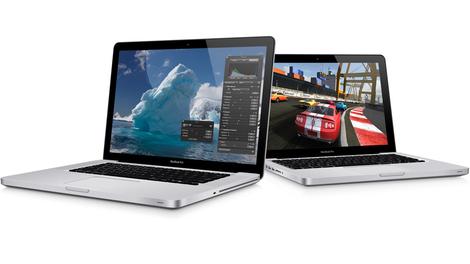
Anyone who owns a MacBook Pro knows that it's a fairly reliable machine for running Apple's Mac OS X operating system, but new research showed today that it's also a great choice for Windows users.
PC troubleshooting site Soluto published a list today of the most reliable Windows laptops, and somehow a non-Windows laptop, the mid-2012 13-inch MacBook Pro, made it to the very top.
Soluto collected data from 150,000 laptops beginning on January 1 of this year and analyzed each device looking for crashes, blue screens and other telltale issues.
The results showed that a MacBook Pro with Windows installed is the most reliable choice when it comes to avoiding those problems.
Getting Windows clutter-free
Soluto published its list of the most reliable Windows laptops in its April 2013 PC purchasing guide, according to PC World.The PC service firm even offered up a possible explanation as to why the MacBook Pro is so reliable when running Windows: users who install Windows on an Apple computer are getting a vanilla version of the operating system that isn't bogged down by manufacturers' own proprietary software and applications.
That just goes to show that all those shiny extras that OEMs throw in on factory-new computers really can harm a device's efficiency.
Acer Aspire V3 comes in second
The second-most reliable Windows laptop proved to be the Acer Aspire E1-571, which costs a third the price of the MacBook Pro, as PC World pointed out.After that came the Dell XPS 13, though Soluto did mention that almost a third of XPS 13 users wiped their hard drives and started from scratch with a clean version of Windows, which may help explain its high ranking.
Soluto reportedly took multiple objective factors into account when determining the most reliable Windows laptops, including the number of running processes on each machine and the number of crashes each week.
TechRadar asked Apple to comment on the MacBook Pro's efficiency at running Windows, but the company has yet to share anything with us.

| |
Read More ...
Google ups its security game by joining future-looking FIDO Alliance

Google has demonstrated its commitment to digital security by joining the Fast IDentity Online (FIDO) Alliance, the company announced yesterday.
Google's Product Management Director of Information Security Sam Srinivas joined FIDO's board of directors on Tuesday, saying in a press release, "Joining the FIDO Alliance is a great way to increase industry momentum around open standards for strong authentication."
The Alliance's goals include "developing specifications that define an open, scalable, interoperable set of mechanisms that supplant reliance on passwords to securely authenticate users of online services," according to FIDO's official site.
FIDO was founded in 2012 by companies like PayPal and Lenovo, and Google joins them as well as Nok Nok Labs, CrucialTec USA, NXP Semiconductors, and Validity Sensors Inc. in having executives on the Alliance's board.
Google stepping up
Earlier this year Google expressed its dissatisfaction with the common password-based user authentication process, so it's no surprise that the company's current security goals fall right in line with FIDO's."We're focused on making authentication more secure, and yet easier to manage," a Google spokesperson told TechRadar in January.
Google Joining the FIDO Alliance is a big step toward finally doing away with passwords and other unreliable security methods and finally making some progress when it comes to protecting our online identities.
Fingerprint scanners and facial recognition, oh my
According to Tuesday's press release, FIDO's two-factor authentication processes will ultimately include fingerprint scanners, voice and facial recognition devices, and less exciting, existing technologies like NFC, "One Time Passwords" and USB security tokens."The need for universal strong authentication has reached a tipping point," said FIDO technology working group chair and CTO of Validity Sensors, Inc. Sebastien Taveau in yesterday's press release.
"And the support of the many FIDO Alliance members will ensure the rapid global adoption of an interoperable standard that protects the consumer's many online identities," he continued.
FIDO encourages any and all interested companies and organizations to join and participate in its next members-only conference in May.

| |
Read More ...
Amazon eager to ape Apple with set-top box of its own?

First, there was the race to capitalize on the growing tablet market with devices like the Kindle Fire and Kindle Fire HD.
Then there were rumblings Amazon may soon be entering the rapidly expanding smartphone arena with a branded device all its own.
Now, reports indicate Amazon is about to make a foray into the living room, right beneath your HD television.
According to sources close to the project speaking with Business Week, Amazon is no longer content to just have its instant video service appear as an app on other products, and is developing a proprietary set-top box.
It's a jungle out there
Supposedly on track to arrive this fall, Amazon's streaming media box will provide access to the online retail giant's library of instant video and video on-demand options.Amazon Instant Video is already available on a wide variety of similar devices, including gaming consoles like the PlayStation 3.
With this new set-top box though, Amazon hopes to differentiate itself from competitors like Apple TV and Roku with the easy instant access having an Amazon Prime membership would provide.
The device is purportedly being developed by Amazon's Lab126 in Cupertino, CA, which has apparently worked on similar devices before, though those never saw the light of day.
It will be interesting to see if Amazon allows other services like Netflix and Hulu to appear on its streaming system, as those apps are readily available on the Kindle devices.
Competitive devices like Apple TV do allow for secondary apps like Netflix to exist in the same ecosystem, so it may not be to Amazon's advantage to shut out those services.
TechRadar has reached out to Amazon for comment, though we're not holding our breath for a response with any concrete details about the company's plans.

| |
Read More ...
Updated: Xbox 720 release date, news and rumours

Xbox 720 release date, news and rumours
The Xbox 720 is the internet's name for Microsoft's new Xbox console.While gossip surrounding this gaming machine has been churning around inside the rumour mill for a good few years now, we're only weeks away from learning some cold, hard facts.
We fully expect the Xbox 720 to launch in time for Christmas 2013. We know that Sony is launching the PS4 in at least one territory in time for 'Holiday 2013' and Microsoft will surely want to make sure it doesn't give away a head start.
What we do know for sure is that Microsoft has invited TechRadar to a launch event on the 21st May where it will unveil the new Xbox before the world.
Xbox 720 release date
Many industry experts predicted that we'd finally get some hard Xbox 720 info at GDC this year but Microsoft confirmed to TechRadar that this is definitely not the case.Instead, we can look forward to the launch event in May this year and then a full roster of launch excitement at E3 in June.
All indications are that the next Xbox will arrive in time for Christmas 2013. Microsoft briefly stated that the new Xbox is imminent in an interview with the Verge before swiftly backtracking and issuing a moderately embarrassing denial.
This is further backed up by a Microsoft job advert which confirms a new Xbox launch is imminent.
Further rumours of an Xbox 720 release date of pre-Christmas 2013 was backed up at the end of November 2012 by a Bloomberg report which cites sources at Microsoft and says we are likely to see the Xbox 720 make its debut at E3 2013.
But then! In January, a report from Game Informer suggested that we'd actually see Microsoft bust out an all-singing all-dancing event to launch the Xbox 720 around Game Developers Conference in March.
Why no E3 reveal? Because Microsoft wanted to make a splash away from the noise of the mega-show. Unfortunately, the report indicated that Sony had the same idea for the PS4...
Xbox 720 specs
If the Xbox 720 is to be as popular and last as long as the Xbox 360 – without the frankly appalling hardware failures which blighted its early days – it's going to need some reliable and powerful components.From what we can tell, the Xbox 720 will come packing very similar specifications to the already-announced PS4. However, it is rumoured strongly that the Xbox 720 will come with reduced graphics potency.
The Xbox 720's CPU will be an AMD Jaguar-based CPU clocked at 1.6GHz - possibly very similar to that of the PS4, possibly identical in every way. That would certainly be a boost for game developers as it would make cross-platform development much easier than it is currently.
Graphics-wise, rumours suggest that the console will contain a revision of AMD's 7000 series graphics, which is based on its 28nm Graphics Core Next (GCN) Southern Islands tech.
The PS4 graphics are provided by a bespoke AMD chip from this family somewhere along the lines of a Radeon 7850 card with 18 GCN processing clusters, each with 64 cores.
It is thought that the Xbox 720 will have just 12 processing clusters which could well mean that Microsoft is using a version of the (rumoured/forthcoming) AMD Radeon 7790 chip. That means less power and cheaper bits, basically, but it's not all doom and gloom.
The PS4 comes packing 8GB of unified GDDR5 memory which combines system and graphics memory for super-fast gaming. But the Xbox 720 is rumoured to contain 8GB of general system memory and separate graphics memory.
That means that the Xbox 720 might not be as potent a gaming rig as the PS4, but will be more efficient at other tasks, making the Xbox better and faster outside of gaming environments.
That certainly tallies with some gaming devs who say the Xbox 720 is a lot less about gaming than the PS4 is.
Xbox 720 controller?
Many rumours suggest that the second version of Kinect will sit at the heart of the Xbox 720 experience, and we reckon it's a no brainer. A console built around motion detection has lots of promise and it seems highly likely that this is the direction Microsoft is taking, given the way it's currently pushing Kinect hardware and software.However, you can be sure that the trusty control pad will remain a core component for hardcore gaming. The 360 control pad is wildly popular amongst both console and PC gamers so we can't see the design changing too radically, either.
Microsoft recently filed a patent relating to projecting augmented reality 3D images onto the walls of the room you're gaming in, in an effort to more fully immerse you in the experience.
The codename for this project is 'Fortaleza' and has Kinect at its heart. It is all supposed to work with wi-fi enabled Fortaleza glasses much like Google's Project Glass glasses. Who wouldn't want a Star Trek style holodeck in their front room?
Xbox 720: to Blu-ray or not to Blu-ray?
Will the Xbox 720 come with a Blu-ray drive or not? We've seen dozens of rumours pointing both ways and we're still no further to really finding out.One rumour says that the Xbox 720 will not have a BD drive. Other rumours say it WILL arrive packing a Blu-ray drive.
Microsoft was, if you remember, a staunch member of the HD DVD Promotion Group and went so far as to launch an external HD DVD drive for the 360. So it represents a bit turn-around for Microsoft to embrace Blu-ray, but it also makes perfect sense.
Read speeds from DVDs are still faster than from Blu-ray discs, but BDs can hold vastly more data. A standard dual-layer BD can contain 50GB of data compared to the Xbox 360's dual-layer DVDs which contain between 8 and 9GB.
Many current Xbox 360 titles come on two or three discs, and with the size of Xbox 720 games destined to dwarf current titles, that extra capacity is a fundamental requirement.
A document that leaked in June 2012 indicates that the Xbox 720 will come packing 1080p 3D support, Blu-ray player and DVR functionality. This would indicate that Microsoft is trying to position the Xbox 720 as the single does-it-all set-top box in your living room.
Xbox 720 games
It looks as though games developers are already playing with Xbox 720 hardware - a recent job advert from Peter Molyneux's Lionhead studio asks for developers with a background in DirectX 11 - a platform not used by any of the current consoles but is rumoured to be used in the AMD-powered Xbox 720.It's a bit of a no-brainer that titles are in development from all the big studios if you ask us.
Xbox 720 to be called Xbox?
Several leaks Microsoft documents have pointed to teh Xbox 720 being named simply Xbox.Will Microsoft kill the second-hand games market?
There have been rumours cicrulating that the new Xbox console will feature a system aimed at preventing owners playing used games. That would mean no trading-in of old titles in order to fund the purchase of new ones - a move that would not be warmly received by gamers or highstreet store.The rumours centre around the concept of the new Xbox demanding an always-on internet connection. That sounds like a horrifying idea to us – say it ain't so!
Xbox 720 price
That leaked document we mentioned earlier mentions a $299 (£190) price point which sounds gloriously ambitious to us. Expect the Xbox 720 price to be a bit more than that but assuming the PS4 launches around the same time, expect some competitive pricing.Xbox Mini
Strong rumours are building that Microsoft is planning a double assault on the console market. The new Xbox will allegedly be joined in the cabinet by an Xbox MIni - a small, Apple TV-like device based on Windows 8, with the ability to stream Xbox 360 games from the cloud.
| |
Read More ...
David Cameron: 'No pornography on public Wi-Fi please, we're British!'

Prime Minister David Cameron is fronting a government campaign to require providers of public Wi-Fi hotspots to block pornography and other adult content.
The PM will announce a proposed 'code of conduct' for ISPs following concerns from children's charities, that kids are inadvertently (or not) accessing porn on Wi-Fi in cafes, shops and other public areas.
Cameron told the Telegraph: "We are promoting good, clean, Wi-Fi in local cafes and elsewhere to make sure that people have confidence in public Wi-Fi systems so that they are not going to see things they shouldn't."
BT, the nation's biggest public Wi-Fi provider does offer content filtering options to its partners, meaning individual stores or restaurants can choose whether they want to allow adult content, but Cameron wants a blanket ban.
Taking the lead
On the other hand Sky, which owns public Wi-Fi provider The Cloud, said it has led the way on censoring inappropriate content.Users must go out of their way to override the default network settings in order access smut through the service. Too much hassle, man.
A Sky spokesperson told The Register: "The Cloud already automatically filters adult content in public places. This is something we are proud to have led the way on.
"We believe that parents want peace of mind that their children cannot inadvertently access adult material when out of home. That's why we were the first Wi-Fi provider to apply content filters as default across our entire network."
It's not the first time this government has launched a crusade against pornography. Up until very recently, it was in favour of a blanket pornography ban across all ISPs with customers having to opt-in to view adult websites.

| |
Read More ...
FSB and Intellect say small firms need IT help

Most small businesses don't have IT specialists, so they don't get involved in talking about it on a public platform or make it clear as a group what they want from the industry and government. But they still need to exploit it or they'll lose out in their markets.
The Federation of Small Businesses (FSB) has begun to provide a voice, and taken a step to making it louder, working with IT industry association Intellect to produce a report on how smaller firms are spending their money and using technology.
Titled The Digital Imperative: Small Businesses, Technology and Growth, it makes use of a survey of 2,200 FSB members carried out in January, and shows that while they take IT seriously many still need more support in getting the benefits from it.
The key facts in the report show that the respondents' investment in IT averaged £3,500 per business for the past year, with figures of £2,844 for micro-businesses of less than 10 people, and more than £10,000 for those with between 21 and 50 staff.
Software leads spending
The main areas of spending are predictable, with between 40-50% having invested in software, laptops, the company website, printers or desktop computers. Others rating between 20-35% were smartphones, hardware, tablets and cloud services.Most could see clear benefits from the investment, with more than 50% agreeing that new software and hardware had helped them in a range of areas: back office operations; targeting and communicating with potential customers; communicating with existing customers; and innovation within the business.
The figures for those seeing a direct return on investment in terms of profits and turnover were lower but still respectable: 36% for spending on hardware and 39% for software.
It is also encouraging that the great majority of businesses, 88%, spent money on IT last year. Of those that didn't 89% said it was because it wasn't needed or not a priority, but there were some who cited the cost, lack of skills to use the equipment or worries over security, and problems with their internet connections.
Causes for concern
The FSB and Intellect have raised the costs and skills factors as their main areas of concern.At the launch event, the former prompted a question as to whether the IT industry is packaging and selling its products and services in a way that may not make it easy for smaller firms. Anthony Walker, Intellect's Deputy Director General, said there is anecdotal evidence to suggest that is the case.
"The very small micro businesses will work with consumer products quite effectively, but to upgrade they need something that gives it more of a service wrap," he said. "My sense is that there is something of a gap, and IT firms could do more to take small businesses on that journey to using something more appropriate for a business."
George Freeman MP, who takes an active interest in IT issues, said this is particularly relevant to the way the big telcos sell their services, and linked it to the slow roll out of high speed broadband networks into rural areas.
It reflects one of the findings in the report, that 25% of respondents said that if internet service providers offered better packages for small firms it would encourage them to invest in technology.
But more of the respondents called for support from tax write-downs and capital allowances, (42%), improved digital infrastructure in their areas (40%), and said they need to increase the IT skills among their staff (25%).
Skills picture
The report shows a mixed picture on IT skills in different sectors. Unsurprisingly, more than 80% of IT firms are confident that their staff have excellent skills, but the figure is below 50% for all other sectors, and goes as low 22% for transport and 20% for restaurants, bars and catering."The sheer complexity of the skills needed is often confusing," Anthony Walker said. "But there are also concerns about weak leadership and management in the area."
The fact that a lot of small firms see it as being complex emerged as a big issue. Most are interested in the benefits rather than technology for its own sake, but the IT industry often sells it as technology without making the potential benefits clear.
Mike Cherry, National Policy Chairman for the FSB, said that small businesses want something simple, presented to them without jargon so they can quickly understand what it can do.
It raises the question of who should be helping to demystify it all, and it seems that Intellect and the FSB are ready to be more active in this respect.
"We've all sat around pointing at each other for too long, and there is an ingrained habit of pointing at government," Walker said. "We're at the point where organisations like the FSB and Intellect should be doing something about it."
This is one of the recommendations in the report: that the two organisations volunteer to play a more active role. But it doesn't let the government off the hook completely, saying it should set up a small business and tech taskforce with the industry to develop some practical support initiatives, and says the Office of National Statistics should include micro businesses in its ICT Activity of UK Businesses survey.
It also calls on Local Enterprise Partnerships to prioritise technology in their plans for local growth.
The recommendations for small business are predictable: make technology a priority, invest wisely and prioritise IT skills. But it backs this up with some guidance such as asking employees what can help, asking customers what they want, developing and wish list of services, starting small and setting a budget for investment.
While the FSB and Intellect seem ready for a more active role, Walker made it clear that ultimately, small businesses have to take responsibility themselves.
"The simple application of technology can often be the most effective," he said. "Any company that sits tight and thinks it doesn't need to drive technology forward is deluding itself."

| |
Read More ...
Adobe Social gets predictive publishing

Adobe has gone deeper into the world of social media with the launch of a new predictive publishing capability for its Adobe Social service.
It is currently in beta and is expected to become available during the summer, with an initial version offering integration with Facebook and functions for other social platforms to be added later in the year.
Adobe Social is part of the Adobe Marketing Cloud, which includes analytics, social, advertising, targeting and web management tools.
The company says the predictive publishing feature can make predictions on customer engagement and recommendations on when to post content, based on advanced sentiment analysis and predictive text mining algorithms. It claims this will help social media marketing teams to provide content that will resonate with their audience.
Bill Ingram, VP of Adobe Social and Adobe Analytics, said: "Social marketers have largely had to rely on instinct to uncover not only what resonates but what will maximise future engagement on social platforms. Now we can smarten up social by unlocking the power of predictive analytics."
The news comes on the day that Brad Rencher, Adobe's Senior VP and General Manager, told the Adobe Summit in London that the trend towards collecting data faster in social marketing may have to slow down.
"The more we get quickly the more we lose focus on what is critically important for us to meet the expectations of the customer," he said.
Rencher summed up the company's attitude to digital marketing as comprising four key steps: listen to the signals; make predictions based on data on what consumers are looking for; assemble the consumer experience; and deliver the experience.
The role of social data is becoming increasingly important in this, and the addition of the predictive publishing capability to Adobe Social is aimed at refining the process to take some of the heat off marketers making the decisions.

| |
Read More ...
Security pros to get cloud computing credential

(ISC)2 and the Cloud Security Alliance (CSA) have agreed to work together on a new professional certification for information security on cloud computing systems.
It will be based on existing certification offered by both organisations, including (ISC)2's Certified Information Systems Security Professional (CISSP) and CSA's Certificate of Cloud Security Knowledge.
The move reflects that fact that, while the take-up cloud services is increasing fast in most business sectors, there are still concerns about the level of information security they offer.
Jim Reavis, Executive Director of the CSA, said: "Businesses are moving vast amounts of data into the cloud, and consumers are gobbling up new, usually mobile services that emerge on a daily basis. It is incumbent upon us to make our collective experience as accessible as possible, and the further development of professional-level recognition is key to achieving this."
(ISC)2 will lead group of experts drawn from both organisations in drawing up the skills needed for the certification. The work will also determine a benchmark for the experience needed for someone to be competent in the field.
The first exams for the certificates are due to take place some time next year.
(ISC)2 is a worldwide information security professional organisation, and the CSA promotes best practice in security for cloud computing. Both are not-for-profit.

| |
Read More ...
Samsung mobile chief says Galaxy S4 core numbers a non-issue
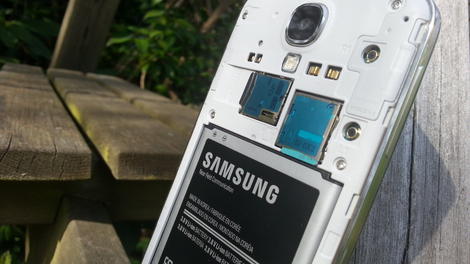
Prospective Samsung Galaxy S4 owners shouldn't be too bothered whether the handset has a quad-core or octa-core processor, according to the company's mobile boss J.K. Shin.
Samsung affronted European and US-based smartphone fans when it announced the regions would get a 1.9GHz quad-core version of the Galaxy S4 handset, rather than the new Exynos 5 octa-core processor.
However, despite the eight-core variant wiping the floor with the quad-core Snapdragon device in recent benchmarking tests, Samsung Mobile Head Shin said most folks on the street won't notice a difference.
Shin informed CNET that the average customer wouldn't be affected as Samsung had chosen an alternative chipset which would offer a similar experience.
It's a supply issue
Shin also shed light on why different versions of the devices would be launching with different processing units.Speculation had suggested a lack of 4G support in the Exynos 5 technology - which has since been rectified - was the reason for its exclusion in the UK and US models.
However, Shin says its simply a supply issue: "We use multiple different sources. It's a sourcing issue," he told CNET.

| |
Read More ...
Updated: Microsoft hosting May 21 Xbox event to reveal 'a new generation'

Microsoft is hosting an event May 21 that all but guarantees to show off the Xbox 720, as gleaned by an event invite sent out by the company today.
"A new generation revealed," the invitation, glittered with "Xbox," reads.
Don Mattrick, president of interactive entertainment business, and the Xbox team are hosting the "special unveiling," set to take place in Redmond, Wash. While there's no known name for the new console yet, most have tagged it as the Xbox 720 or Durango.
May 21 marks the beginning of a new generation of games, TV and entertainment, a Microsoft representative said in an email to TechRadar. The event will give a taste of the future while also letting Microsoft share its vision for the gaming console, the rep added.

You're all invited
Interested parties can tune into the event via Xbox.com, Xbox Live and Spike TV, so if you're free at 10 a.m. PDT/1 p.m. EDT/6 p.m. BST, pop some popcorn and pull up a chair on May 21.The date comes conspicuously before E3, an event where there was some speculation the new Xbox would meet the public, but the conference won't go without some Softie love.
According to the Microsoft representative and in a post on Major Nelson, the company will continue the conversation at E3 and plans to showcase its "full line-up of blockbuster games" then and there.
Hear that, PS4? There's a new console that's could come a' knockin'.
TechRadar will continue to bring you all the latest, so tune back in for more x-citing fun.

| |
Read More ...
Blip: Call of Duty: Ghosts leaks online

It's hardly a revelation that a new Call of Duty is on its way, but it looks like a couple of retailers - Tesco and Target - have inadvertently leaked information on what it will be called, and what the box art will look like.
The game will be titled Call of Duty: Ghosts, if we're to believe the leaked information (which we do, considering it's come from the retailers themselves)
According to Charlie Intel, who spoke to sources, the game will be announced "any day now". The title and artwork suggest that the game will be based around the Call of Duty character known as – yup – Ghost, with the skull balaclava known to be his signature accessory.
More blips!
Now fulfill your duty by checking out some more blips.- Hackers target AP's Twitter, send message of White House explosions
- Justice is served: Measly payday for 'Antennagate' finally in the mail
- iTunes finally lets you buy now, download later

| |
Read More ...
In Depth: iOS 7 release date, news and rumours

The last major iOS 6 update for Apple's mobile devices, the iPad, iPhone and iPod touch, was mostly hit, but there was a big Maps-shaped miss.
Lots of people were rightly angry about Apple ditching Google data, but beyond that mis-step there were things to like: a more useful Siri (App launching plus the recognition that a world exists outside of the USA), shared Photo Streams, handy Phone app controls such as 'send to voicemail', and major improvements to Mail, Safari, accessibility and the Camera app.
iOS 7 release date
it looks like the new operating system might be running a little behind schedule. John Gruber believes that iOS 7 is "running behind", with engineers being pulled from OS X 10.9 to work on it.We're expecting a September or October release date for iOS 7 in line with previous releases. We'll almost certainly see a reveal at WWDC in early June. Apple has promised to give devs "an in-depth look at what's next in iOS and OS X".

Find out what our TechRadar experts want to see from iOS 7 in the video below:
iOS 7 design
A
greater synergy between hardware and software design is something Apple
is looking to achieve as it moves towards iOS 7. That's according to
the Wall Street Journal in late March 2013, which also suggests that
Jonathan Ive is pushing for a starker and simpler design for iOS 7 -
that reminds us a little of what Microsoft has done to the desktop in Windows 8.
But
regardless of what Apple achieves, it's never really enough. As soon as
you've sat there playing with the latest iOS, ideas pop into your head
regarding what you'd like to see next. However, most changes will be "pretty conservative" according to the paper's sources.
The rest of this article explores a dozen of the features we're clamouring to see in iOS 7. (And by 'clamouring', we of course mean 'asking really nicely'. C'mon, Mr Cook - pretty please?)
1. Hide Apple apps
Pretty much everyone we know with an Apple device has a folder entitled 'Apple'. This isn't filled with must-have apps from the geniuses at Cupertino, but all the junk Apple installs that you can't get rid off. To be fair, what each individual considers junk is different, and these apps—Compass, Stocks, Voice Memos, Passbook, and so on—have their fans; but is it too much to ask for a switch in Settings that will hide those we don't use?
2. Better app management
Change for change's sake is rarely a good thing. Recognition is key to satisfying experiences with technology. That's why we're not yelling at Apple to change how iOS home screens work. What we would like to see is improvements to app management: more screens; by default saving app data on delete; and an alphabetical list of installed apps, perhaps accessible from Spotlight.3. Change app defaults
We're pretty certain this request would be met with wide-eyes from Apple CEO Tim Cook, swiftly followed by a full twenty minutes of belly laughing, but we want the ability to use non-default apps for important things like email and calendaring. Apple's own apps would remain the defaults, but you should also be able to pick your own in Settings.
4. Provide a guest account
It's extremely unlikely that Apple's ever going to enable multiple user accounts on iOS devices—they are, after all, designed as extremely personal computers. What is perhaps more realistic is some kind of guest account you could switch to when handing your device over to someone for a short while; something similar already exists on the Mac in OS X.5. Change Siri's voice
OS X is blessed with dozens of high-quality voices that witter away to you in various dulcet tones. By contrast, Siri is Siri. In the US, you get a slightly robotic woman; in the UK, Siri's that bloke who did The Weakest Link for a decade. It'd be great if you could choose the voice your device uses to speak. (Possible exception: Yoda voice.)6. Provide App Store demos
Apps and games might be cheap, but that doesn't figure cheapskates into the equation. Too often, people are unwilling to risk 69p on the latest release, forcing devs into irritating freemium models or making them clutter up the App Store with 'lite' versions of their output. Apple should just allow demos: 24 hours from first launch and then you buy or the app won't run. Boom.7. Power up 'Do Not Disturb'
Fed up of getting woken up in the middle of the night by the marketing efforts of [redacted, but quite possibly a well-known mobile network] or Game Center fanfares? Do Not Disturb is a great feature that enables you to time when your phone will quit bugging you. But you can define only a single schedule, and we want to see alternative options for weekends.
8. Make locking location-aware
Locking is a great thing on iOS devices, making it at least a little harder for some scallywag to get at your data if they pinch your shiny Apple joy. But it could be more intelligent, locking on a location-aware basis, and not when you're, say, happily sitting at home on the sofa.9. Improve the lock screen
There's something to be said for Apple's minimalism regarding the iOS lock screen, and it's mostly that it's too minimal. We're not sure we want to see Android-style widgets sprayed everywhere, but a little more functionality wouldn't go amiss. For example, artwork from a currently playing song is displayed on the lock screen, but there are no controls for pausing or skipping to the next track, until you double-press Home, which isn't hugely discoverable. And beyond notifications, nothing else shows up there at all.
10 Cut all iTunes ties
In recent years, Apple's made great leaps away from iTunes, and you can technically get away with never using the monstrous jukebox. However, there's still no way to easily get your existing music collection nor your photographs on to your device, and there should be. (Alas, with Apple wanting to push iTunes Match and the iTunes Store, there almost certainly never will be for the first of those.)11. Make more icons dynamic
We're hesitant at arguing Apple's home screen icons should be more like Windows 8 tiles, but there's something to be said for dynamic updates when such things work well. With iOS, you get update badges and a live calendar. It'd be nice at the least if Apple made its own Clock and Weather icons dynamic.
12. Enable cross-platform installs
On a device, you now often see iOS-style banners on websites that when tapped take you right to the equivalent App Store app. But if you're browsing elsewhere, you have to email yourself a reminder and then install later. How good would it be if you were surfing on your PC, saw a great app and could install it across your devices without going near them, nor even to iTunes?
| |
Read More ...
Camera update rolls out to Euro HTC One models

The HTC One has piled up a super-sized stack of good reviews since its introduction, and an update currently making the rounds in Europe may help squash one of the few downsides noted by critics.
SlashGear reported Tuesday that HTC has started rolling out an update for its flagship One smartphone, adding camera enhancements and improved system performance for international models of the handset.
While Android 4.1 Jelly Bean and HTC Sense remain untouched, the 1.29.401.13 update brings welcome changes to the camera software, which has been cited by many critics as one of the device's otherwise few shortcomings.
Unfortunately, there's no word on if or when this particular over-the-air update will land on AT&T-branded models arriving in the hands of eager U.S. customers this week.
Enhancements aplenty
According to the changelog, the HTC One update improves audio recording when using the handset's impressive Zoe feature, while also reducing noise for videos captured in slow-motion.Most welcome to HTC One buyers will be the update's promised improvements to color reproduction and dynamic range, which reduces overexposure in non-HDR images under certain conditions.
Finally, the update addresses a bug that caused user-altered ISO settings to now correctly display in embedded EXIF information.
The report notes that the update is rolling out in waves over the next week, so if your international HTC One model hasn't received it yet, sit tight and your patience will soon be rewarded.

| |
Read More ...
Acer spills details on Liquid E2

The slew of Android devices continues with the unveiling of the Acer Liquid E2, which is heading to Europe this May.
The Liquid E2 is similar to the E1 in specs, but has been given a design overhaul, improved camera and hefty new quad-core processor. It also has optional dual-SIM functionality if you fancy that.
The E2 tots a 4.5-inch 430x960 qHD display with dual front stereo speakers that will pump out the sounds from the Liquid's Moodagent - a feature that will create playlists based on your mood.
Liquid lunch
The rear 8MP camera, meanwhile, can shoot 1080p video at 30 fps, while a 2MP snapper can be found on the front.Wi-Fi, GPS, FM radio and a microSD card slot are also wrapped up in the package. The handset will go on sale in Europe in mid-May, and will be priced at €229 (about £195).
We contacted Acer to ask when a release of the handset in the US or elsewhere might happen, but they told us they were unable to provide such information at this time.

| |
Read More ...
In Depth: How wireless charging will change our devices

If you're anything like us, every time you leave the house you take an armful of cables, chargers and just-in-case batteries to fuel a camera, smartphone, tablet and laptop to amuse you between a constant hunt for the next recharge, the next top-up.
What a terrible way to travel.
Anyone who's 'upgraded' from an e-Ink e-reader like an original Kindle to the Kindle Fire HD or Kobo Arc only to miss the once-a-month quick charge of old will know exactly what we mean. And with wearable gadgets like smart watches and smart glass imminent, it's only going to get worse.
Luckily, some clever innovations are afoot including wireless charging and power-efficient displays that could help us at last enter an era of ubiquitous computing.
What is ubiquitous computing?
The concept of ubiquitous computing was popularised by Mark Weiser in 1988, and describes a world where people interact with computers that 'weave themselves into the fabric of everyday life until they are indistinguishable from it'."It's just another term for mobile or portable computing," says Kevin Curran, senior member at the Institute of Electrical and Electronics Engineers (IEEE). "The biggest barrier to ubiquitous computing has simply been the poor battery life on mobile devices."
What about solar power?
If you're going off-grid to hike or camp for a few days but still want to use your tablet-smartphone-Kindle-GPS there are options. If staying at home in a darkened room isn't one of them, you could invest in something like the Goal Zero Yeti 1250 for £914 (around $1,400 USD/£1363 AUD), a battery with a solar generator that stores an incredible 150W of power within.That's enough for about 20 laptop charges, though it does take 20 hours to recharge from light alone. It also weighs a hefty 54kg. Other options include the foldout, pocket-sized Freeloader Classic for £35 (around $54 USD/$53 AUD) that's good for a few hours charge of a phone, though does take eight hours doing it. The OffGrid Solar Backpack for £150 (around $229 USD/$223 AUD) is another option, its 2W solar panels on the outside good for a five hour charge for a 17-inch laptop stored within. Such blue-sky thinking, however, has its limits - and who wants to carry around extra gadgets?
Could we not just have a phone that uses less power?
Nail on head - especially with some smartphones now using power-hungry six-inch screens. Options here include the single AA battery-powered SpareOne for £65 (around $100), a GSM phone that can last for 15 years if unused, or for 10 hours talk time, but it's certainly not a smartphone. A more innovative attempt at efficiency is the YotaPhone, a dual-screen phone with a colour LCD on one side and an electronic paper display (EPD) on the other.
"I think many of us in the industry can remember where we were when we first heard of the concept and immediately went 'why did I not think of that!'," says Curran, who calls the use of e-Ink - which only uses power when it's refreshing the screen - a 'no brainer'. "I expect many smartphones, tablets and laptops to integrate similar displays." Smart watches, too, could use e-nk; the Pebble already does.
So is e-ink making a comeback?
E-Ink is just one manufacturer in the wider Electronic Paper Display (EPD) industry that's currently awash with power-saving innovations.Ubiquitous Energy uses a unique molecular power film across a screen that will ultimately charge a device while it's being used. "The film is transparent in the visible part of the light spectrum, and absorbs in the near-infrared to generate energy," says Curran, who expects to see the first batch of prototypes used on e-nk readers like the Kindle.

Such a display could have a colour screen, too, if Liquavista changes ownership from Samsung to Amazon. Don't forget Apple, either; as we reported back in 2011, Apple patented a method for displaying static content in e-ink while other sections of the screen appear using standard LCD technology.
Meanwhile, Cambridge, UK-based 'organic electronics' components manufacturer Plastic Logic has come up with a way of printing – even spraying – electronics on flexible plastic sheets. Such electro-plastic displays (EPD) can show simple Flash-based video animations at 12 frames per second, and in full colour, but they're really intended to complement an LCD screen, not replace it. The paper-thin screen technology could soon find its way into both high-end and entry-level devices such as bendable phones and wraparound smart watches, or as an extra, though largely weightless, second screen on a smartphone like YotaPhone.
Industrial designers have clearly got a lot of work to do; the 'death of e-ink' predicted a few years ago was a false dusk indeed.

What about wireless charging?
"When they come to write the history of computing, 2013 will be the year that they select for the arrival of wireless power," says Curran, who expects to see wireless chargers outselling standard ones very quickly. Wireless charging is achieved through a process of electromagnetic induction whereby a current is sent from a coil in a charging pad to a coil embedded in a gadget placed a few centimeters away. As the device has to be either laid down on, or a very short distance (about four centimeters) from its charging pad, it's also not that easy to use a smartphone or tablet while it's charging. The designers clearly have some work to do for those who like to use their smartphone or tablet while it charges.So far we've seen various devices under the umbrella of Duracell's Powermat, and Palm's magnetic Touchstone dock for its Palm Pre, which uses a proprietary wireless charging system, but more are coming. Many, many more.
Proprietary? That spells 'format war'!
Well spotted. Just like the Blu-ray Vs HD-DVD bore-fest, and lately the shenanigans between Panasonic's active shutter and LG's polarised systems that helped ruined the whole 3D TV idea, battery boffins at Duracell and Energizer have each come up with their own systems that they each believe is superior. Duracell's is based upon the Powermat idea it's been long developing, with supporters shielding behind the Power Matters Alliance (PMA). It's same the yearning for worldwide licensing royalties that causes every format war (isn't unrestricted capitalism awesome?).On the other side of the fence is the Qi standard created by Energizer, which is supported by the Wireless Power Consortium (WPC).

There are others, including PowerByProxi, a technology that can charge several devices simultaneously on the same charging pad, unlike Qi or Powermat. It also uses a 'loose coupling' array to enable a device to receive an equal charge anywhere on a charging mat. "Many systems like Qi only report peak efficiency, which occurs at such precise alignment and positioning on the pad that most users will never experience it," a spokesperson told TechRadar.
PowerByProxi's 'killer app' could be the freedom and ease of placement offered by its unique charging box idea. "Household devices can simply be put in the box when the batteries get low."

Who's in the PMA camp?
BlackBerry, LG, Google, NEC, Texas Instruments, AT&T, Starbucks, Otterbox, IDT, ZTE (the world's fourth-largest handset manufacturer) and wireless charging spot provider PowerKiss are on Duracell's side, among 57 members in total.The latter joined the PMA in February 2013, stating that it would deploy wireless power in select McDonald's restaurants in Europe. It already operates conventional charging points train stations including in London Paddington and the Gare de Lyon in Paris, 16 European airports (including Belfast, Birmingham, Bristol, Liverpool, Manchester and Newcastle). Expect wireless upgrades soon. "Our decision to become a PMA member was based on several factors," said Maija Itkonen, CMO and Founder of PowerKiss.
"The PMA system has a unique layer of telco-grade intelligence that allows venues to monitor the health, usage and policies of all their charging spots. Secondly, we believe the PMA now enjoys the momentum and the necessary investment from major industry players to bring wireless power to life for consumers."
Who's in the Qi camp?
HTC, Huawei, Hitachi, LG, Motorola Mobility, Nokia, Pentax, Philips, Samsung, Sony, Toshiba ... and 120 in total. About 15 million devices already have Qi technology inside, according to the WPC, most notably the new Samsung Galaxy S4. However, Qi isn't a native feature in the Galaxy S4, but rather an add-on accessory that comprises both charging pad and battery cover.Though LG is hedging its bets by belonging to both bodies (not an unusual stance in this kind of scenario), its Nexus 4 is fitted with Qi despite Google-love for Powermat.
Which format will win?
From a device perspective Qi stands a good chance if Samsung actively popularises it, though no doubt Apple has its own in-house plans for the iPhone 5S and next iPad/iPad Mini that could scupper any kind of universal cross-brand charging system. A third format? Yes, that's what we need.Don't rule out the PMA standard; as well as PowerKiss, it also finds favour with Starbucks. Could its tables and chairs be embedded with charging pads? Yes, they could, which suggests that the 'winning' format could be the one that creates the biggest and best charging infrastructure, and fast. After all, device makers don't operate on loyalty and will very quickly swap to whichever emerges as the industry standard. We'll drink to that.
What kind of wireless charging products can we look forward to?
Intel-powered ultrabooks that can 'beam' charge to a smartphone placed next to it, in-car charging cradles, and furniture with integral charging pads. Meanwhile, Apple has filed a patent application for wirelessly powering keyboards and mice without the need for batteries.Among a slew of new innovations at the Mobile World Congress 2013 was a demo of a smart wireless charging mat from NXP that used NFC to trigger wake-up, thereby allowing the charging pad to remain completely switched off when not in use. As well as a 'true-zero standby mode' the use of NFC could also mean a handshake to kick-start Bluetooth audio streaming without the need for pairing. Best of all, NXP's prototype supports multiple wireless charging standards, automatically detecting which standard the device is using.
We're in for some big changes in terms of product design, but there's bound to be a long interim period where gadgets come with optional wireless charging packs and cables, too. They might be a pain to travel with, but USB cables are on the cusp of becoming universal ... achieving the same with wireless induction charging mats could take a very long time.

| |
Read More ...
Blip: Selfridges will let you bag Blackberry Q10 from Friday

Selfridges will be the first to offer the Blackberry Q10 in its stores and online, exclusively stocking the device starting April 26 (that's this Friday).
You can go pre-order the phone over on Selfridge's website right now. And if you're unsure whether or not the Q10 is worth your money, you can check out our initial thoughts on the Qwerty keyboard-sporting handset over here.
If you'd rather not trek into central London then BlackBerry has informed us that it expects the Q10 to go on general sale on April 29 - so thank goodness for that.
More blips!
What's that? You want more blips? Oh go on then.- Hackers target AP's Twitter, send message of White House explosions
- Justice is served: Measly payday for 'Antennagate' finally in the mail
- iTunes finally lets you buy now, download later

| |
Read More ...
Buying Guide: Best monitor: 10 top displays reviewed and rated

Introduction
Affordable PC monitors are miles better today than just a few years ago. As painful as it is to admit, we've mostly got Apple to thank for at least part of that. Yes, really.In June 2010, Apple rolled out the iPhone 4 and made a huge noise about the new handset's IPS screen. Was it the first smartphone with an IPS screen? Google it if you care, because that detail doesn't matter.
The two things that do matter are that, first, IPS is a premium LCD panel technology that offers improved image quality over more commonly used TN tech. Second, Apple has massive traction with the mouth-breathing masses and dominates mindshare when it comes to consumer technology.
Suddenly, an IPS screen was something the average punter wasn't just aware of, but understood to be a good thing. After all, if the iPhone 4 had IPS, you want all your screens to be IPS. This effect can't be underestimated.
Just a few years ago, we spoke to a key monitor manufacturer, which told us that it would like to put better panels in its screens, but that customers weren't willing to pay for them. But now they are, and it's partly thanks to Apple.
Of course, that doesn't mean PC monitors have reached a state of perfection. We'd like to see more PVA panels (another type of premium LCD tech) on offer, and more choice in terms of resolution, too. It's not always easy to pick the good from the bad. Specs can be misleading and gimmicks, unfortunately, still abound. But we'll come to all that momentarily. In the meantime, suffice to say you can get more for your money than ever before. Shop on, people.
Here we go again, with another round-up of our favourite screens, and some things haven't changed since our last outing. That includes the general value proposition of a good PC monitor. It's the best long-term investment you can make. That's because a good monitor today will still be a good one for you two years down the road. You're not going to find yourself left gasping for a few extra frames by the latest shader-soaked gaming spectacular as you might do with a graphics card that's already got a few seasons of gaming under its belt.
For starters, screen technology develops at a slightly more leisurely pace. More than that, it's not performance critical in the same way as a graphics card, CPU or solid-state drive are to a system. But critical it most certainly is in terms of how much enjoyment you will get out of your PC. It's quite simply and literally your window into the computing experience so why skimp on it?
A lot of the time, it doesn't matter whether you're rocking a clappedout Celeron CPU or some crazy six-core monstrosity. That web page will look just the same. Not so for a monitor. If you're looking at it, it's making a difference.
Panel tech

With that little pep talk done and dusted, let's consider the current state of play in the PC monitor market. The biggest trend right now is the aforementioned renaissance in panel technology.
IPS (or In-Plane Switching) is nothing new, of course, but for a while it looked like it would disappear for good from PC screens. Apple's big push with IPS in the iPhone and iPad changed all that. Now IPS is de rigueur for phones and tablets.
Affordable IPS PC monitors then followed around a year ago, and prices have been slowly edging down every since. We're now at the point where it's possible to snag a 22-inch IPS panel for under £100. It's insane.
Some manufacturers offer alternative VA (Vertical Alignment) panel technology for similar prices. You can find out more about the various pros and cons of IPS, VA and TN (Twisted Nematic) tech on page 16, but it's worth bearing in mind that merely being IPS or VA is not a guarantee of great image quality. For starters, all these cheap IPS screens are 6-bit per channel in terms of colour fidelity, so they're not as accurate as premium IPS screens of old.
Making resolutions

Panel type aside, what else should you be worrying about? When it comes to resolution, unfortunately, there's not always a lot of choice. Nearly all panels in the 22- to 24-inch space are 1080p. That means 1,920 x 1,080 pixels. That's hardly a pitiful number of pixels, but when you consider that the latest high-end smartphones can match it and some tablets now outstrip it with 2,560 x 1,600 grids, it's hard to avoid the conclusion that PC monitors are lagging behind a little.
With any luck, it'll be IPS all over again, with high-resolution smartphones and tablets encouraging similar technology adoption in PC monitors. That said, there is a clear downside to higher resolutions in gaming PCs: the more pixels you're pumping, the greater the load on your graphics card. Moreover, arguably, there's not a huge benefit in terms of image quality in games in going beyond 1080p with a 22-, 23- or 24-inch monitor.
If you do want to have more pixels though, there are options. Dell, for instance, still does the 24-inch Ultrasharp U2412M with an old-school 1,920 x 1,200 grid. The extra 120 vertical pixels give you that little bit of additional elbow room for web browsing. The U2412M is listed for about £300 on the Dell website, but can be had from Amazon, among other etailers, for just over £200.
The next step up is a 27-inch panel with a 2,560 x 1,440 grid. Prices start around the £350 mark from online retailers and currently models are all premium panel technology of some kind, you don't need to worry about the choice between IPS and TN.
Look east

Then there's the old-school 30-inch option and a 2,560 x 1,600 grid. Prices typically start at £700. It's at this stage that the subject of Korean-sourced 27-inch IPS monitors pops up. As we go to press, there are suppliers on eBay who'll do you a 2,560 x 1,440 27-inch panel for as little as £220 including the cost of postage.
The drill here is obviously caveat emptor. You're getting a screen with a very cheap chassis and stand, and the panels are those rejected by the major manufacturers. But lots of people have had great success buying these kinds of panels, and they are very tempting indeed.
A compromise is to go for a 27-inch IPS or VA panel with a conventional 1080p pixel grid. It's a pretty nice overall solution for work and games, and one you can have with the peace of mind of a UK supplier and a brand name you've heard of. It's also worth noting that the latest TN panels are better than ever in terms of colours and contrast and even viewing angles. There's no longer any shame in TN.
Another trend that overlaps with cheap Korean panels is 120Hz refresh. Panels with high refresh rate support (standard LCD screens refresh at 60Hz) began popping up when Nvidia rolled out its 3D Vision technology. We've never been big fans of the 3D tech itself, but the higher refresh required for an active shutter 3D solution like 3D Vision comes with its own benefits.
In games it makes for much more responsive action. Even just juggling windows and scrolling web pages on the desktop is nicer. The only snag is that you currently can't have your 120Hz cake and eat your IPS panel - it's one or the other, with the possible exception, again, of those Korean 27-inch panels, some of which claim to have been modded to support high refresh.
This is something we've never tested and we'd recommend proceeding with caution. As for other technologies, like dynamic contrast and fancy colour modes, we've yet to see much benefi t. There's simply no substitute for a proper panel.
Reviews
1. AOC i2352VH

Price: £125 (around $191 USD/$186 AUD)
Screen size: 23-inch
Panel tech: IPS
For proof of the progress the PC monitor market has made in the past 12 months, look no further than the AOC i2352Vh. A surprising choice you may think, given the fact that the monitor looks very much like every other budget offering at first glance.
The chassis is composed of cheap, hard injection-moulded plastic. The stand is likewise hewn from low-rent plastic and offers only tilt adjustment, which allows the whole shebang to rock back and forth fairly alarmingly if you give it a little prod.
Then there's the 23-inch diagonal and 1,920 by 1,080 pixel grid. Frankly, we've seen it all before so many times, the prospect of yet another samey budget monitor is positively painful. But wait just a minute, because this AOC effort is different. And you realise the difference when you turn it on.
Read the full AOC i2352VH review
2. AOC i2757FM

Price: £235 (around $359 USD/$350 AUD)
Screen size: 27-inch
Panel tech: IPS
We're serious souls, and not whores for shallow gimmicks. So the AOC AOC i2757Fm is off to an immediate loser. After all, its main claim to fame is the pseudo-bezelless construction. And what the hell has bezel-width got to do with image quality or fitness for gaming or, frankly, anything that actually counts?
Making matters worse, the build quality of the i2757Fm isn't exactly stellar. The brushed aluminium panel at the bottom of the screen looks swish from a distance. But a prod reveals a rather passing acquaintance with the rest of the chassis. Solid it ain't.
Also, the slim-to-no-bezel feature somewhat evaporates when you turn the display on. The surface of the panel extends almost to the edge of the chassis. But once activated there's a black border getting on for a centimetre in width that's a lot like, well, a bezel.
Read the full AOC i2757FM review
3. Asus VG278HE

Price: £375 (around $573 USD/$558 AUD)
Screen size: 27-inch
Panel tech: TN
Say hello to the Asus VG278HE. It is to the Asus VG278H as the BenQ XL2420TX is to the BenQ XL2420T. Except the complete opposite. In other words, where the 'TX' BenQ adds an integrated IR emitter and a pair of comedy 3D shutter glasses, this 'HE' Asus spirits those glasses away. And that's just fine by us.
First, stereoscopic technology is silly and it's time we all faced up to that fact. Second, even if you think 3D is the shizzle and note that the price gap is slightly less than the cost of buying a Nvidia 3D Vision emitter and glasses kit, we'd still prefer to have the latter separately. You can then plug it in to other screens. You're not tied to this particular monitor.
Read the full Asus VG278HE review
4. Asus VS278Q
Price: £237 (around $362 USD/$353 AUD)
Screen size: 27-inch
Panel tech: TN
What if you woke up one day to find you've been transmogrified, Kafka-style, into a PC monitor? How to go about leading a fulfilling life? If you boil it right down you've really only got two options available.
Either you can wow the world with outstanding features, preferably something that's desirable but rare. Like, say, combining IPS and 120Hz technology. Or you can have a stab a being very good at doing something more mainstream.
The Asus VS278Q definitely falls into the latter category of being conventional-but-a-quality-product. It's a 27-inch model with a 1,920 by 1,080 pixel grid. It's TN panel. And it doesn't exactly leap off the specification sheet. Whether it's the 170° by 160° claimed viewing angles or the 300cm/2 brightness, we have seen its like before.
Read the full Asus VS278Q review
5. Benq GW2750HM

Price: £187 (around $286 USD/$278 AUD)
Screen size: 27-inch
Panel tech: VA
Thanks to Apple, the mouth-breathing masses have finally woken up to the delights of IPS screen technology. The downside of this development is, of course, that Joe Punter's salivating worship of all things Apple doesn't leave room for a more nuanced view. In that context, what's the point of offering an alternative premium panel technology?
There are good technical reasons for giving it a crack. And that's exactly what BenQ has decided to do with the GW2750HM. It's got a Vertical Alignment or VA type panel. Believe it or not, ladies and gentlemen, VA technology does have some advantages over IPS.
The most obvious of which is contrast. The best VA panels sport unbeatable contrast and black levels. They're better than TN in most regards and close to IPS for colour accuracy.
Read the full Benq GW2750HM review
6. Benq XL2420TX
Price: £370 (around $565 USD/$551 AUD)Screen size: 24-inch
Panel tech: TN

Possibly the best 3D monitor we've ever seen. That's what we said of the BenQ XL2420T. Yes, that's the BenQ XL2420T, not the BenQ XL2420TX as reviewed here. Hold that thought. Admittedly, we have mixed feelings about current 3D technology, but the 24-inch, 1080p XL2420T showed current 3D at its best.
In no small part that was down to full support for Nvidia's 3D Vision 2 technology including Lightboost. The latter significantly boosts visual punch and vibrancy, which has always been at a premium when it comes to 3D screens that rely upon polarised active shutter glasses.
But the basic image quality was also exceptional for a TN panel. Rich and vivid colours, strong contrast and little to no evidence of compression - it's not often you can say that of a TN panel. Okay, the vertical viewing angles are never going to scare an IPS screen, but it was very competitive by most other metrics.
Read the full Benq XL2420TX review
7. Iiyama Prolite G2773HS

Price: £295 (around $451 USD/$439 AUD)
Screen size: 27-inch
Panel tech: TN
Word from the show floor at CES in Las Vegas is that 3D's dead. Well, not exactly dead, but nobody cares any longer. It always felt like a gimmick so we're not particularly complaining. Especially when you consider that 3D's brief ascendancy had the happy side effect of raising awareness of the benefits of 120Hz refresh.
One result is the pretty little panel you see here, the Iiyama ProLite G2773HS. What's interesting about it is that Iiyama is pitching it as a pure 120Hz panel, not just a 3D trinket. For sure, the 120Hz capability means it'll jive with Nvidia's 3D Vision technology. But that's not the pitch. Instead, Iiyama wants you to buy it because 120Hz is smoother, slicker and more responsive in 2D mode.
To put it simply, we concur. But what about the rest of the G2773HS's talents? For starters, we're talking 27 inches of screen and a plain-old 1,920 by 1,080 pixel grid. There's no high density 2,560 by 1,440 action here.
8. Samsung Series 9 S27B970D
Price: £840 (around $1,282 USD/$1,250 AUD)Screen size: 27-inch
Panel tech: PLS
Back in 2005 when the first 30-inch panels with 2,560 by 1,600 pixel grids popped up, we thought it was only going to be a matter of time before big screens with resolutions to match trickled down to the mainstream audiences. Well, here we are nearly eight years later and this 27-inch Samsung screen with slightly fewer pixels is still an £800 item.
It's really quite disappointing, but let's put pricing to one side for a moment. Just how good is the Samsung Series 9 monitor?
One thing's for sure, it's designed a gorgeous panel. Samsung pitches it as PLS technology, but it's basically its take on IPS. Except it might actually be better. Samsung's version offers all the usual IPS refinements, such as epic viewing angles and fantastic colours, but you get some extras, too.
Read the full Samsung Series 9 S27B970D review
9. Viewsonic VX2370SMH-LED

Price: £130 (around $199 USD/$194 AUD)
Screen size: 23-INCH
Panel tech: IPS
Just 18 months ago, monitors like this wouldn't have seemed possible. Not only is it 23-inches in girth and endowed with a full-HD pixel grid (that development has actually been bog standard for a few years), but it's also got an LED backlight.
And here's the really sweet bit. It's an IPS panel to boot. Oh, and it's not just any old IPS technology either. Viewsonic has upgraded it from 6-bit as with the old VX2336s-LED to full 8-bit. Okay, some pro panels are now 10-bit. But you get all of this for a mere £130, which is ridiculous.
That's even before you take into account the fact that it's a sexy looking little number that also has a stylish chassis. So along with all those features it's got a distinctive and pleasingly modern and minimalist look, Even if it's not ultimately as sexy as the bigger 27-inch AOC i2757Fm - what more could you ask for?
Read the full Viewsonic VX2370SMH-LED review
10. Viewsonic VX2460H-LED

Price: £140
Screen size: 24-INCH
Panel tech: TN
What's an inch worth to you? That's essentially what it all comes down to for the Viewsonic VX2460HLED. For this is a 24-inch monitor, making it precisely one inch bigger than a, yes, 23-inch monitor. A blinding glimpse of the bleedin' obvious, you cry? Shut it, you slags, we were trying to make a point.
Which goes something like this. For less than the cost of this 24-incher you can have any number of 23-inch screens, such as Viewsonic's VX2370SMHLED. Except that's got a lovely IPS panel. And this is only a grotty TN screen. And thus the VX2460HLED's predicament begins to unfold.
Making matters worse, there's no DVI port, just HDMI and VGA ports. That said, it does have a few features going for it. The ultra-slim chassis has quite a natty design, for starters, even if it's pretty redundant.
Read the full Viewsonic VX2460H-LED review
Verdict
Picking the perfect panel
What to look out for when buying a screenAre PC monitors merely badge-engineered commodity items? It's certainly true that only a small handful of manufacturers actually make the LCD panels that go into them, which means there are recognisable levels of technological overlap.
Take, for instance, the fact many of the current crop of affordable IPS screens share panels. But occasionally a monitor manufacturer picks up a new panel before the competition. For example, Viewsonic seems to have stolen a march by upgrading its IPS 23-incher from 6-bit-per-channel colour to 8-bit. What's more, image processing electronics can make a difference, especially when it comes to colour dithering.
So, it's eyeballs out and pore over the details. We use the trusty Lagom LCD suite of test images and metrics to provide a common baseline. Handily, you can too, by popping over to www.lagom.nl. There are test images to help you assess everything from viewing angles to pixel response and colour fidelity.
If that's the more objective part of the equation, there's no substitute for some subjective immersion. That'll be games, movies and just flicking about on the desktop. Sometimes a screen that doesn't perform all that well in the objectives is still a very nice panel in practice.
1. Panel type
This is the biggy, the heart of your display machine, and you've basically three choices: TN, IPS and VA. TN is the cheapest and quickest in terms of pixel response. It's also the best for pure gaming. For everyone else, IPS is the affordable option - and offers superior viewing angles and colours to TN. Pixel response isn't that far behind either, making it a tough sell for the TN panels. VA is the odd one out. It's used fairly infrequently now, but offers better blacks and contrast than both TN and IPS along with colour fidelity and viewing angles that sit somewhere in between.2. Backlight technology
We've been waiting aeons for a dramatic change in panel technology, and yet it never seems to materialise. In the meantime, at least the backlight technology tree has been given a good shake.In the last few years, CCFL or cold cathode fluorescent backlights have been almost entirely replaced by LED backlights. Almost every PC monitor is now LED. But not all LEDs are made equal.
For starters, there's the choice between white and RGB LEDs (or red-green-blue LED) backlights. The latter produce purer, cleaner light and allow a broader colour space. But they're expensive and relatively rarely used. None of the screens tested here is RGB LED.
3. Image processing
Manufacturers know that big numbers make for impressive reading; numbers like 10,000 to one or even a million to one when it comes to contrast ratios, for instance. Little numbers work, too, like 1ms for pixel response. Many of these and more are made possible by image processing technology.Big contrast is achieved via backlight modulation, dimming the lights when dark images and video are displayed. Faster pixel response is done courtesy of overdrive algorithms that pump pixels with exaggerated voltages.
The thing is, none of them are a substitute for a good panel. Strong contrast with a static backlight is always better than the dynamic sort. And overdriving pixels can lead to nasty side effects, like inverse ghosting.
4. Refresh rate
Forget stereoscopic 3D, the next big thing in PC monitors is 120Hz refresh. At least we think it ought to be. As it happens, the faster 120Hz refresh standard (most LCD monitors are 60Hz) only came about because it was necessary for activeshutter 3D technology. But never mind, because it's here now and it's lovely.Until you've seen the added smoothness, felt the increased response, it's hard to really appreciate the benefits of 120Hz. But once you've seen it, you won't want to go back to 60Hz.
Unfortunately, however, 120Hz technology is currently limited to screens with TN panels. We're still waiting for ultimate combination of 120Hz and IPS or VA.
5. Video inputs
Now that we've all gone digital, surely video inputs don't matter? Up to a point, that's true. Indeed, the video signal used by DVI and HDMI is essentially shared, which is why those little DVI-to-HDMI adaptors are possible. But there are a few things worth factoring in.Screens with resolutions beyond 1,920 by 1,200 or with 120Hz refresh speed need dual-link DVI or an HDMI 1.4 port on your graphics card to pump all those pixels. And what about DisplayPort? It offers several theoretical advantages, including the ability to daisy chain multiple monitors in a serial setup. In reality, that's a fairly unlikely usage scenario. As things stand, we pay extra for DisplayPort.
And the winner is…
Viewsonic VX2370Smh-LED
First the good news. There are no truly awful monitors in this group test. In isolation, they're all proper panels. If there is some bad news, on the other hand, it's that panel perfection still eludes us. What we want is the ability to mix and match our favourite features.
The list includes IPS and VA panel technology, high resolutions of 2,560 by 1,440 and beyond and 120Hz refresh technology. And we want it all for a reasonable price. At the moment, you can only have two of those at most in one monitor. But never mind, because there are still some wonderful screens here.
One screen that isn't as great and is the first to fall is the Asus VS278Q. It has no major weaknesses. But at over £200 for a 27-inch TN screen without 120Hz support makes it redundant. Unfortunately for Asus, it takes next from bottom, too, with the VG278HE. The problem here is simple. It's much, much too expensive at £375 for a 27-inch TN screen, even factoring in the 144Hz refresh ability.
Then there's the Viewsonic VX2460H-LED. Three and a half stars is a tough score for what is a perfectly good 24-inch TN screen at a competitive price. But the competition is simply too strong. And that's why from here on in it gets much, much tighter.
You could make an argument for choosing pretty much any of the remaining seven panels. But shake them really hard and you can get some to drop out. In fact, we'd make it a five-way tie between the two AOC screens, the BenQ XL2420TX, the Iiyama ProLite G2773HS and the Samsung Series 9 S27B970D. Together they offer an amazing array of options including cheap IPS visuals, affordable 120Hz action, the best 3D solution around and high-res gorgeous if at a price.
If we had to pull one of the five out for special praise, we'd give the nod to the AOC i2757Fm. With its sexy zero bezel vibe and IPS panel, it's massively desirable. It's the sort of screen you could easily end up buying despite the knowledge that it's not objectively the best option. But it's still not quite as impressive as our final screen pairing.
Choosing between the Viewsonic VX2370Smh-LED and BenQ GW2750HM ain't easy. In many ways, they're awfully similar. Neither is perfect, but both give you a premium panel at a low price.
The 27-inch BenQ and its lovely VA panel looks particularly bargainous when you consider that it's significantly cheaper than Asus' plain-Jane 27-inch TNer.
In the end, however, the spoils must go to Viewsonic's screentacular VX2370Smh-LED. For just £130, you get a 23-inch full-HD display with an 8-bit IPS panel and natty minimal-bezel styling. Okay, we'd probably prefer a 16:10 aspect ratio and 1,920 by 1,200 pixels. We'd absolutely love to give it a 120Hz upgrade. And more stand adjustability wouldn't go amiss. But in the here and now it's still a bonkers-good overall proposition given the price point.

| |
Read More ...
Android 5.0 Key Lime Pie a Google IO no-show?

Key Lime Pie may not make its debut at Google IO next month as 'inside sources' tip that Google wants to give phone makers time to catch up.
The word comes from Gadgetronica, not a site we've ever dealt with before, citing 'trusty internal sources' that we obviously have no way of verifying.
But if it is legit, we like the reasoning. Software moves at a much faster rate of knots than hardware, and the majority of Android phones still on Gingerbread (39.8 per cent) with Ice Cream Sandwich (29.3 per cent) and Jelly Bean (25 per cent) slowly catching up.
Although we're always hungry for the next big thing, there's no point in Google teasing us with software when we don't have the hardware to handle it.
Timing
If it hangs fire for four months Android 5.0 could land in September, pitting it in a straight fight against iOS 7 which we're expecting Apple to unveil at WWDC in June and launch in September with the iPhone 5S.Or it could all be nonsense made up for web hits and Google will reveal Key Lime Pie at IO in May, as expected. We shall see.

| |
Read More ...
Blip: Apple celebrates a decade of iTunes with nostalgic timeline

In celebration of ten years of its digital music service, Apple has launched an interactive timeline on its iTunes Store, taking us back through its landmark moments of the last ten years.
The first iTunes advert, the birth of the iPod Mini, the download of the 5 billionth song, the day that iTunes finally got The Beatles. All of which brings us up to the most recent big event – the release of Justin Timberlake's The 20/20 Experience.
Ah, good times. It's not quite a decade yet – that will officially happen this Sunday – but you can go check out the feature right now and remember a time when people knew who The Fray actually were.
More blips!
Why not check out a timeline of our blips while you're at it? They're quite tasty.- Hackers target AP's Twitter, send message of White House explosions
- Justice is served: Measly payday for 'Antennagate' finally in the mail
- iTunes finally lets you buy now, download later

| |
Read More ...
WWDC kicks off June 10 with Apple hinting at iOS 7 reveal

Get your diaries out: Apple has confirmed that WWDC 2013 will take place June 10-14 in San Francisco.
The annual Worldwide Developers Conference is aimed at developers but is often used to showcase new tech and, particularly, software.
This year's no exception, with Apple promising to give devs "an in-depth look at what's next in iOS and OS X" - we're hoping this means our first official glimpse at iOS 7.
A hard day's night
Whether we'll see any hardware at the conference keynote is another story; with the iPad 4 and iPad mini unveiled last October alongside the iPhone 5, we're not really expecting any mobile devices until later this year.Mac refreshes are a possibility though, and we're hoping to see the successor to Mountain Lion shown off too.
Hopes are high for iOS 7 as Apple's mobile software has long started to feel a little dated.
Can we glean anything from the company's small but perfectly formed new WWCD logo? Formed of wavy app-esque tabs in an array of eight bright colours, we can't tell much beyond the fact that it will take place in MMXIII (that's Roman for 2013, fact fans).
But wasn't there a rumour about the so-called budget iPhone coming in up to five colours? Okay, it's a stretch - but with Apple you just never know…
Tickets for the show go on sale to iOS and Mac developer programme members on April 25 at 10am PDT at $1599 (around £1050 or AU$1550) a pop.

| |
Read More ...
Samsung S9 Ultra HD TV hits Selfridges today

The Samsung S9 Ultra HD TV is now available to buy in the UK, and we're sure these £35,000 TVs will be flying off the shelf.
The 85-inch 4K TV was announced back at CES 2013 and impressed us with its super-sharp, sleekly-designed ways.
Selfridges is pretty excited about the "future-readiness" of the TV, which uses 'Smart Evolution technology' to 'meet the demands of current and future 4K technology' which all sounds very made up but apparently isn't.
Happily there's built-in upscaling, with Samsung's quad-detail enhancement proving essential for quality control.
Future gazing
It's just as well it's future-proofed, for that money and the fact that the amount of stuff you can actually watch in Ultra HD doesn't amount to much more than a hill of beans at the moment.Let us know if you're popping to Selfridges Bond Street or Birmingham to pick up a Samsung S9 today - we promise not to silently curse you. Much.

| |
Read More ...
LG's Google Glass rival wants video to follow you around the room

LG is looking to move further in on the head-mounted display action, patenting a device that promises you'll never lose sight of your video again.
Google Glass is more about offering convenient day-to-day functions than video content, so LG is looking to step in and fill that gap. Its patented glasses-style HMD will display content from an external device such as a tablet even when you're looking away.
The HMD will be dormant when you're watching video, but when you turn your head the content will appear in your lenses, following your view wherever it goes.
HMD 4 LG
According to the patent, which was published on the trusty USPTO website, the pause during the transition will be minimal and wearers will feel a buzz as the content jumps from device to glasses.Plenty of patents for head-mounted displays already exist, but we can see that LG's idea could have a fair amount of potential for passive 3D viewing if it ever comes to fruition.

| |
Read More ...
Available Tags:HTC , webOS , Windows , Google , security , Amazon , Apple , Xbox , Adobe , Samsung , Galaxy , Microsoft , iOS , Acer , wireless , Blackberry , Android , TV ,


3 comments:
This isn't a Pixel Gun 3D game audit. In this way, on the off chance that you have to find out about the 3D game look at the online stages that are devoted for checking on applications and games.
pixelgun3dgame.com/pixel-gun-3d-updates/
I?d have to check with you here. Which is not something I usually do! I enjoy reading a post that will make people think. Also, thanks for allowing me to comment!
latrobemassagecentre
The Sims 4 for PlayStation 4 is a reenactment game that gives you a chance to make recreated individuals, or sims, and place them together in houses in your very own little virtual world.
Latest The Sims 4 Relationship Cheats 2019 updated
Post a Comment