
 How the HTC One's Camera Bucks the Trend in Smartphone Imaging
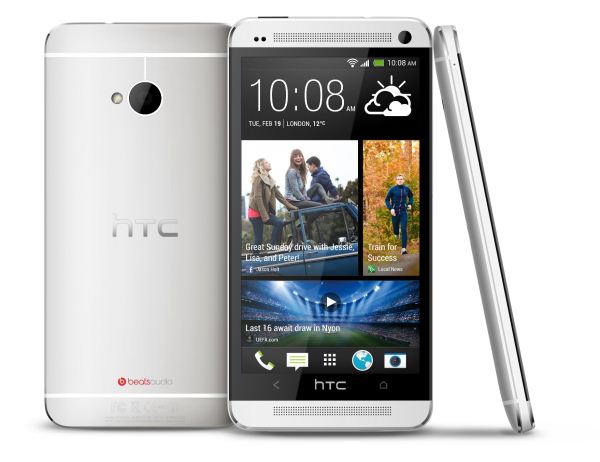
| HTC One Camera Specifications | ||||
| Device | HTC One | |||
| Sensor Size and Type | 1/3" BSI CMOS | |||
| Resolution | 4.0 MP 16:9 Aspect Ratio (2688 x 1520) | |||
| Focal Length | 3.82mm | |||
| F/# | F/2.0 | |||
| Optical System | 5P | |||
| OIS | 2-axis +/- 1 degree, 2 kHz sampling | |||
| Max Capture Rate | 8 FPS continual full res capture | |||
| Video Capture | 1080p30, 720p60, 720p30, 1080p28 HDR, 768x432 96FPS H.264 High Profile, 20 Mbps | |||


 |  |
Understanding Camera Optics & Smartphone Camera Trends, A Presentation by Brian Klug Recently I was asked to give a presentation about smartphone imaging and optics at a small industry event, and given my background I was more than willing to comply. At the time, there was no particular product or announcement that I crafted this presentation for, but I thought it worth sharing beyond just the event itself, especially in the recent context of the HTC One. The high level idea of the presentation was to provide a high level primer for both a discussion about camera optics and general smartphone imaging trends and catalyze some discussion.
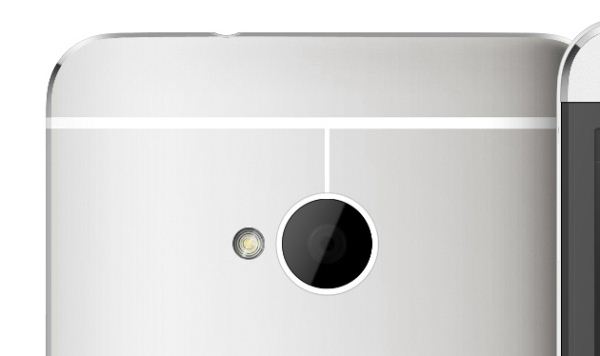 For readers here I think this is a great primer for what the state of things looks like if you’re not paying super close attention to smartphone cameras, and also the imaging chain at a high level on a mobile device.
Read on for the full presentation!
For readers here I think this is a great primer for what the state of things looks like if you’re not paying super close attention to smartphone cameras, and also the imaging chain at a high level on a mobile device.
Read on for the full presentation!

| |
Samsung's TV Discovery Service Enables TV to Smartphone/Tablet Streaming
I'm not entirely sure I understand the point of MWC this year if everyone is going to pre-empt the show with announcements of their own (or in the case of the Galaxy S 4, wait until after the show to announce). Samsung does join the list of companies that are unveiling announcements prior to the show with the disclosure of its TV Discovery service.
Samsung is in a very unique position in that it is not only a SoC, NAND, display and DRAM maker, but also a significant player in the smartphone, tablet and TV space. If any company is well positioned to understand the needs of the market, it's Samsung.
With its fingers in many pots, Samsung quickly recognized a strong relationship between smartphone/tablet usage in conjunction with simply watching TV. This lead to Samsung outfitting many of its devices with an IR emitter, like with the Galaxy Note 10.1. If your tablet is out while you're watching TV, you might as well use your tablet to control your TV as well.
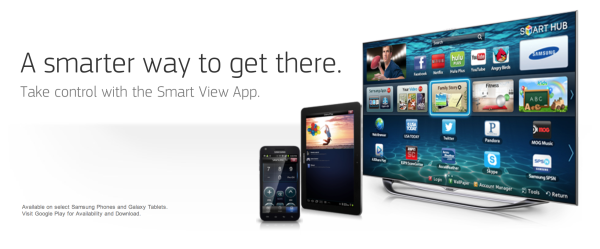
To increase available synergies between smartphone/tablet and TV, Samsung launched its TV Discovery service. Samsung's TV Discovery is a combination of software and hardware that simply lets you get a good feel for what content you have available to watch on TV as well as aggregated from online streaming sources such as Netflix and Blockbuster. Like many other attempts at TV/PC or TV/gadget convergence, TV Discovery attempts to solve the problem of having tons of content spread across many services by presenting it all in a single app on your smartphone or tablet.
TV Discovery will also have a personalization component as well, to suggest content for you to watch based on your preferences.
The software side isn't anything super unique, as we've seen many attempts at this before. I don't know that another software aggregation service is going to dramatically change anything, but before we reach perfection there are always many iterations of attempts that we have to live through.
Devices equipped with an IR emitter will be able to serve as universal remote controls, just as before.
What is most unique about Samsung's TV Discovery service however is the integration with Samsung TVs. With all 2013 SMART TVs, Samsung is promising the ability to stream content from your TV Discovery enabled smartphone/tablet to your TV and vice versa. Getting content from your smartphone or tablet onto your TV is nothing new, but we haven't had a good way of getting TV content onto your mobile device. Obviously you'll need a Samsung TV for this to work, as well as the Samsung smartphone/tablet, but it's an intriguing leverage of Samsung's broad device ecosystem.
You can expect to see the TV Discovery app ship on 2013 Samsung mobile devices as well as 2013 Samsung SMART TVs.


| |
GeForce Titan Pre-Order Available
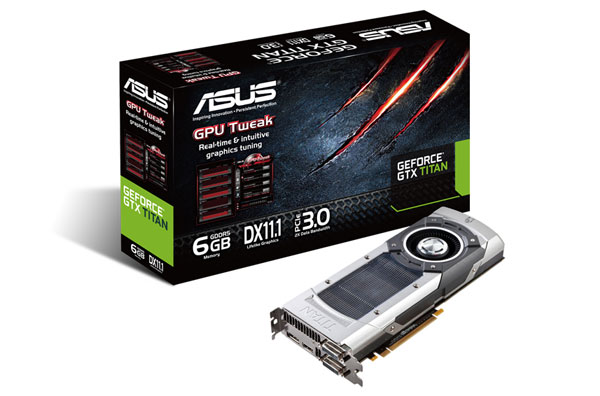
- AVADirect includes Titan as an option in many of their custom desktop systems, with a price of $1067 per GPU.
- Falcon Northwest has Titan available in their SFF Tiki that Anand previewed this week, as well as their full desktop Talon and Mach V desktops. Titan adds $1095 per GPU to the cost of a FNW system.
- iBUYPOWER currently has the Titan in their Revolt SFF, which Dustin recently reviewed. Pricing is $1111 per GPU, because that's such a cool number I guess. Titan is also available in their custom configured desktops
- Maingear has a variety of desktop systems now available for configuration with Titan, with the GPUs adding $1090 each to the cost of the system.
- OriginPC has both Genesis and Chronos systems with Titan; Ryan previewed the Genesis earlier this week while the Chronos goes after the SFF market. They appear to be charging $1156 per Titan GPU, but they're also one of the first (if not the only) vendor with liquid-cooled Titan availabe.

| |
The AnandTech Podcast: Episode 17

HTC One - 00:00
NVIDIA's GeForce GTX Titan - 00:20
NVIDIA's Tegra 4i - 00:42
Sony's PlayStation 4 - 00:52

| |
Dell XPS 12 Review: A Jack of All Trades Flipscreen Ultrabook Dell’s XPS line is for their premium consumer offerings, with some overlap between the consumer and professional users gravitating towards these systems. The XPS 12 Duo carries that “catering to a wider audience” mentality a step further with a flip screen display that allows you to transition between standard notebook and tablet modes.
_575px.jpg)

| |
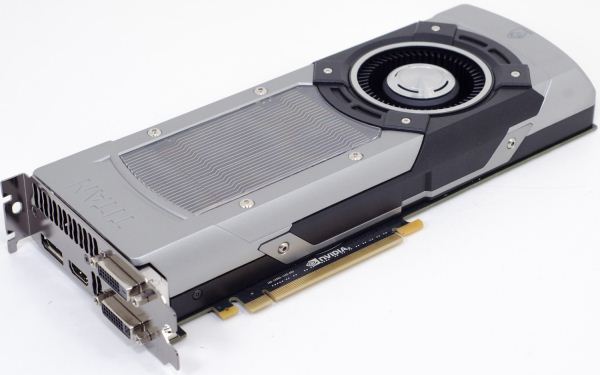
NVIDIA’s GeForce GTX Titan Review, Part 2: Titan's Performance Unveiled Earlier this week NVIDIA announced their new top-end single-GPU consumer card, the GeForce GTX Titan. Built on NVIDIA’s GK110 and named after the same supercomputer that GK110 first powered, the GTX Titan is in many ways the apex of the Kepler family of GPUs first introduced nearly one year ago. With anywhere between 25% and 50% more resources than NVIDIA’s GeForce GTX 680, Titan is intended to be the ultimate single-GPU card for this generation. Meanwhile with the launch of Titan NVIDIA has repositioned their traditional video card lineup to change who the ultimate video card will be chasing. With a price of $999 Titan is decidedly out of the price/performance race; Titan will be a luxury product, geared towards a mix of low-end compute customers and ultra-enthusiasts who can justify buying a luxury product to get their hands on a GK110 video card. So in many ways this is a different kind of launch than any other high performance consumer card that has come before it. So where does that leave us? On Tuesday we could talk about Titan’s specifications, construction, architecture, and features. But the all-important performance data would be withheld another two days until today. So with Thursday finally upon us, let’s finish our look at Titan with our collected performance data and our analysis.

| |
Microsoft Surface Pro mSATA SSD Upgrade: Dangerous but Successful
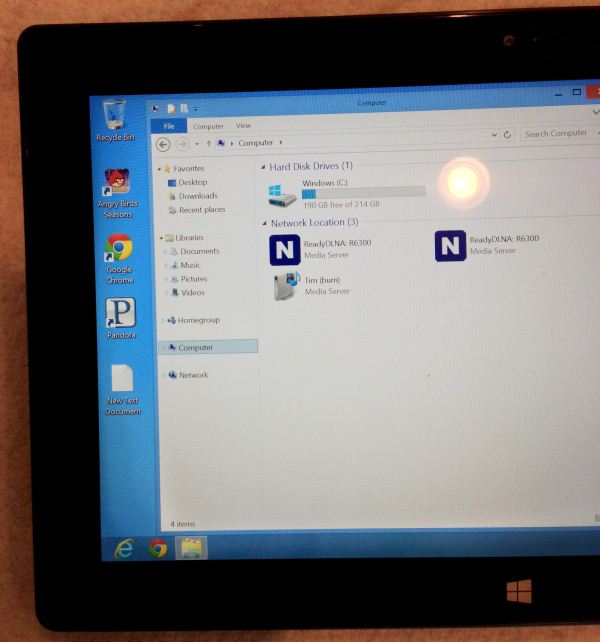
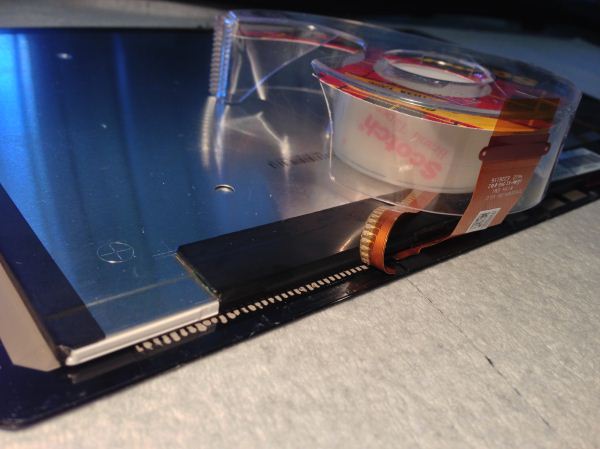 While he had no issues getting the drive working, his Surface Pro did sustain damage during the upgrade process. As we learned from iFixit's teardown of the tablet, there's a ton of adhesive everywhere and melting/breaking it is the only way to get inside Surface Pro. Unfortunately the cable that drives the touchscreen was pulled up when Tim separated the display from the VaporMg chassis. The tablet works as does the pen, but the display no longer functions as a capacitive touchscreen.
Tim tried to use a conductive pen to restore contact between the cable and the contacts on the back of the display but so far hasn't had any luck (if any MS engineers who worked on Surface Pro are reading this and have any suggestions feel free to comment here or email me). The process of disassembling the Surface Pro isn't easy. It took Tim roughly an hour and a half to get inside. With the knowledge that he now has, Tim believes that he'd be able to get in without damaging the unit but he cautions against anyone else looking to get into Surface Pro. I didn't want to risk tearing apart my Surface Pro review sample, so I'm grateful to Tim for going the distance to prove it works. He's also awesome enough to share photos of the aftermath with us and post a thread in the forums to help other folks brave enough to try this.
John566 over at the tabletpcreview forums managed to get into his Surface Pro safely (it looks like he didn't attempt a complete disassembly, but rather left the cable side of the display in place and just lifted up the other side). He was having issues getting the new SSD (a 256GB Micron C400) recognized however.
While he had no issues getting the drive working, his Surface Pro did sustain damage during the upgrade process. As we learned from iFixit's teardown of the tablet, there's a ton of adhesive everywhere and melting/breaking it is the only way to get inside Surface Pro. Unfortunately the cable that drives the touchscreen was pulled up when Tim separated the display from the VaporMg chassis. The tablet works as does the pen, but the display no longer functions as a capacitive touchscreen.
Tim tried to use a conductive pen to restore contact between the cable and the contacts on the back of the display but so far hasn't had any luck (if any MS engineers who worked on Surface Pro are reading this and have any suggestions feel free to comment here or email me). The process of disassembling the Surface Pro isn't easy. It took Tim roughly an hour and a half to get inside. With the knowledge that he now has, Tim believes that he'd be able to get in without damaging the unit but he cautions against anyone else looking to get into Surface Pro. I didn't want to risk tearing apart my Surface Pro review sample, so I'm grateful to Tim for going the distance to prove it works. He's also awesome enough to share photos of the aftermath with us and post a thread in the forums to help other folks brave enough to try this.
John566 over at the tabletpcreview forums managed to get into his Surface Pro safely (it looks like he didn't attempt a complete disassembly, but rather left the cable side of the display in place and just lifted up the other side). He was having issues getting the new SSD (a 256GB Micron C400) recognized however.


| |
The AnandTech Podcast: Episode 16

Microsoft's Surface Pro - 00:00
Setting Haswell Expectations - 00:24
Intel's TV Initiative - 00:31
The Pebble Smartwatch- 00:51
Nexus 4 Removal of LTE - 1:04
Broadcom LTE Baseband - 1:06
Controvery Surrounding Range Testing Tesla's Model S - 1:13

| |
iBuyPower Revolt System Review: Closing the Boutique and Opening the Store At CES 2013, the PC boutique iBuyPower announced a product that's in many ways much more than the sum of its parts. They announced the Revolt, a small form factor gaming PC that's riding the same wave of small gaming PCs that includes Alienware's X51, DigitalStorm's Bolt, and the review pending Steiger Dynamics LEET. These products are essentially about the move of PC gaming into the living room, something arguably predicated by the continued miniaturization of PC hardware, a very mature gaming platform that's had time to sand off its harsh edges just as gaming consoles continue to develop more and more of their own, and the convergence of games for all three main gaming platforms.
.jpg)

| |
Available Tags:HTC , Smartphone , TV , TV , GeForce , AnandTech , Dell , GTX , Microsoft , SSD ,


No comments:
Post a Comment