 The Making of NVIDIA's Project SHIELD
NVIDIA put up a blog post recently that goes into some of the details of
how Project SHIELD came together. There's plenty of marketing hyperbole in the blog post, but if you've ever wondered what it would be like to be one of the top engineers at a company like NVIDIA, this will give you some ideas. 14-hour work days for weeks or even months? Yup, it sounds like that's exactly what some of the people were doing, but that's what passion looks like I suppose.
The jury is still out on whether or not Project SHIELD will be a success, but you have to give credit to NVIDIA for at least trying something different. Plus, the blog post is an entertaining read, and if you need one more reason to like the idea: Project SHIELD can play Crysis (by proxy).


 Read More ...
Intel Releases 180GB SSD 335
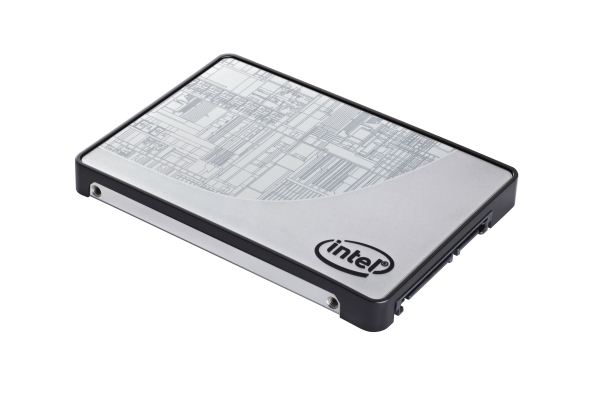
Intel released the SSD 335 in October last year but the initial launch included only the 240GB version. Today Intel is adding a 180GB model to the SSD 335 lineup. If you recall from
our SSD 335 review, the SSD 335 is essentially just SSD 330 but with smaller lithography NAND (20nm vs 25nm). It's still based on SandForce's SF-2281 controller but with customized Intel firmware. The SSD 335 will also be sporting a new case design (see the picture above) later this quarter; drives available today will still have the old plain metal design.
| Intel SSD 335 Specifications (180GB & 240GB) |
| Controller | SandForce SF-2281 |
| NAND | Intel 20nm MLC |
| Sequential Read | 500MB/s |
| Sequential Write | 450MB/s |
| 4KB Random Read | 42K IOPS |
| 4KB Random Write | 52K IOPS |
Intel is reporting similar performance at both capacities, although I should note that Intel has always been fairly conservative when it comes to published performance specs (for example, most SandForce OEMs claim up to 90K random write). NewEgg is already listing the 180GB SSD 335 and it's currently priced at
$180, which is actually $10 more than
180GB SSD 330 (although I would expect the price to drop once more resellers get the SSD 335 in stock).


 Read More ...
Fractal Design Launches Core 3000 USB 3.0
Last year, we looked at
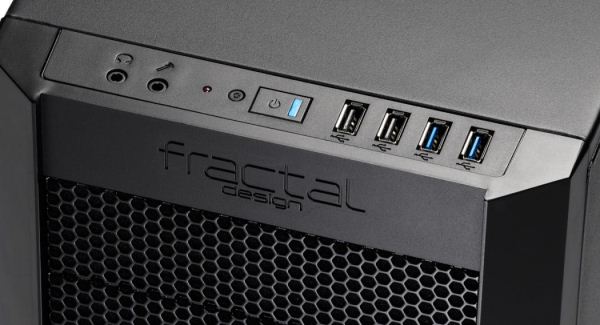
Fractal Design’s Core 1000, their entry level chassis that can be had for under $40. It performed “okay”, which is about all you can expect from a budget case. The newly redesigned Core 3000 looks to change more than a few elements of the Core 1000, and in fact other than the “Core” branding it bears little in common with the Core 1000. It’s bigger and heavier for one, measuring 200mm x 444mm x 480mm (7.87” x 17.48” x 18.90”), so this is no longer intended as a small PC box. It also comes with three fans standard: a 140mm fan in front, 120mm fan in back, and 120mm fan up top. Here’s the full list of specifications.
| Fractal Design Core 3000 USB 3.0 Specifications |
| Motherboard Form Factor | Micro ATX, ATX, DTX |
| Drive Bays | External | 2 x 5.25” (one adapter for external 3.5”) |
| Internal | 6 x 3.5"/2.5" |
| Cooling | Front | 1 x 140mm (provided)
1 x 120mm |
| Rear | 1 x 120mm fan mount (provided) |
| Top | 2 x 120mm (one provided) |
| Side | 1 x 120/140mm |
| Bottom | 1 x 120mm |
| Expansion Slots | 7 (ventilated covers) |
| I/O Port | 2 x USB 3.0 (with internal connector)
2 x USB 2.0
1 x Headphone
1 x Microphone |
| Power Supply Size | 160mm with bottom fan
250mm without bottom fan |
| Weight | 17.4 lbs.
7.9kg |
| Dimensions | 7.87” x 17.48” x 18.90”
200mm x 444mm x 480mm |
| Special Features | Silicone grommets for drive cage
Adaptor plate and cage for mounting a 3.5" drive in a 5.25" bay |
| Price | $75 MSRP |
Other items not specifically listed in the above table include an upper HDD cage that can be rotated or removed, allowing the installation of even the largest GPUs (Fractal Design lists GPU clearance as 270mm with the cage or 420mm without—I’m not sure any GPU will ever need 420mm of clearance again, or at least I hope not). Dust covers are also included for the PSU and front fan positions, and the HDD/SSD trays are equipped with silicon vibration dampening grommets.
The Core 3000 USB 3.0 is currently available in some markets, but the US does not appear to be among them. We expect that to change within the coming weeks, and given the popularity of Fractal Design that will likely be sooner rather than later. Of course, the other big change is the doubling of the MSRP, which was inevitable given the improved features, but it looks like the Core 3000 should be competitive with other similarly priced offerings.


 Read More ...
Closing the Loop II: New Liquid Coolers from Corsair and Swiftech
When we visited CES 2013, it became increasingly clear that not only were closed loop liquid coolers here to stay, but that they are in fact "the next big thing" in desktop system cooling. There are good reasons to go for them, too. While you may have to deal with some mild pump noise depending on which model you go with, closed loop coolers are capable of providing excellent performance without creating a racket or placing too much stress on the motherboard (the way a heavy air cooler might).
.jpg)
That we have three new closed loop coolers available for review not long after the last roundup should tell you that the closed loop cooler market is, if you'll forgive the expression, heating up. On the heels of NZXT's Kraken X40 and X60, Corsair has their own H90 and H110 coolers based on the same Asetek 140mm and 280mm radiators. Our newer, potentially even more exciting competitor comes from Swiftech in the form of the 240mm H220. Unlike conventional closed loop coolers, Swiftech's entry uses high quality brass tubing and copper fins in the radiator along with their own specially designed pump and extra thick (yet still flexible hoses). Is it enough to shore up the difference between traditional 240mm radiators and monstrous 280mm ones?


 Read More ...
Three Months with Microsoft's Office 365
Windows and Office. It’s a duo that has made up the core of Microsoft’s business since before I was born, and remains the cornerstone upon which the rest of the company is built. And so it has gone, for as long as I can remember: with each new version of Windows, a refreshed edition of Office to go along with it.
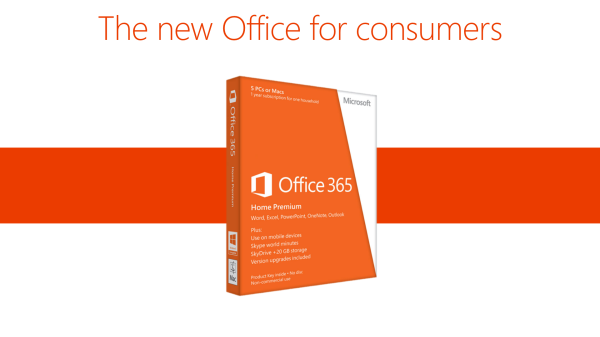
This year, we’ve got Office 2013. We’ve obviously had some experience with it in Windows RT form, and I spent a fair amount of time using the Office 15 Consumer Preview last year (in fact, I wrote my Masters thesis in Word 2013 Preview). In the grand scheme of things, it’s a pretty major change, with the biggest probably being the move towards a subscription-based model, though you can still buy Office in a traditional retail boxed edition with a standalone license. The interesting part is Office 365, which involves paying on a yearly basis for multi-device licensing and cloud storage. It’s worth clarifying the naming scheme here: Office 2013 refers to the latest version of the Office suite, while Office 365 refers to a subscription service that provides Office 2013 applications.
It’s a pretty sleek system, with all of Microsoft’s cloud services leveraged to provide a seamless experience. Obviously, this isn’t the first time we’re seeing cloud-based document storage and backup, but the SkyDrive integration in Office 365 is much deeper than we’ve seen in the past. How does it work in day-to-day use? Read on for our impressions.


 Read More ...
Cineca’s Tesla K20-Based “Eurora” Supercomputer Unveiled; Water Cooling Unlocks Extra Efficiency
We typically don’t cover a lot of supercomputing news outside of the major Top500/Green500 announcements due to the fact that the launches of so many supercomputers are clustered around the official updates to those lists, but the following came across our desk earlier this afternoon from NVIDIA and caught our attention.
Italy’s Cineca computing center has unveiled their latest supercomputer today, a Eurotech created system built on a combination of Intel’s Xeon E5 CPUs and NVIDIA’s Tesla K20 GPUs. While the supercomputer itself is still considered a prototype and is fairly modest overall – its 110 TFLOPS would be good for roughly #250 on the most recent Top500 list – what makes this latest supercomputer particularly interesting (and just a bit snark-worthy) is not its peak performance, but rather its energy efficiency and cooling mechanism. In short, someone has finally paired a K20-based supercomputer with water cooling, with some interesting results.
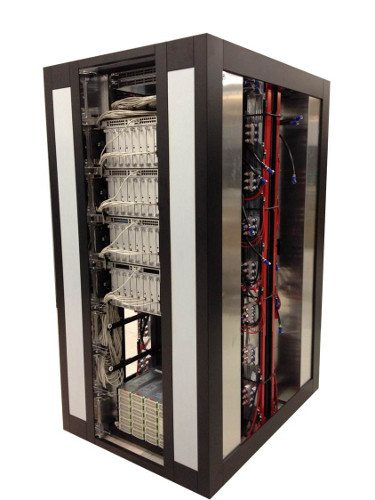 Cineca's and Eurotech's Water Cooled Eurora Supercomputer
By using water cooling, Eurotech and Cineca have been able to capture the waste heat off of Eurora in a far more dense and more useful manner than air would allow, in turn allowing them to put that waste heat to productive use. By using that heat to not only heat their buildings but also to drive absorption chillers, they’ve been able to reduce the amount of heat that ultimately needs to be removed from the system, and consequently the amount of energy that is spent on cooling.
Adding an extra facet to this is the fact that due to the much greater heat capacity of water over air, using water for cooling – even warm-to-hot water as in the case of Eurora – results in lower processor temperatures than chilled air. In turn, thanks to the positive relationship in semiconductors between temperature and power consumption, these lower temperature processors consume less electricity and thereby produce less heat in the first place.
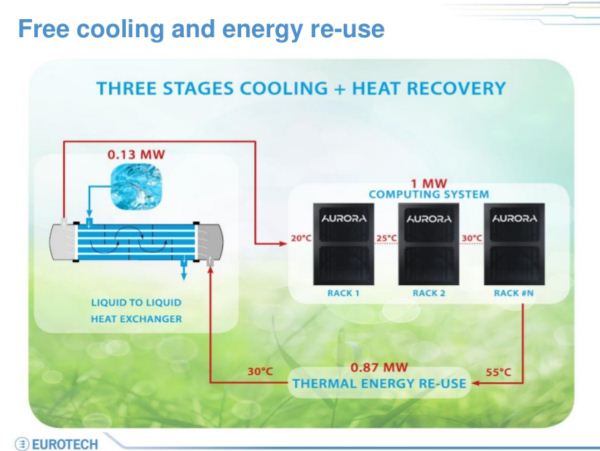
The end result is that between the use the water cooling and various other optimizations made by Eurotech, they’ve been able to produce a supercomputer significantly more power efficient than other K20 supercomputers, or any other supercomputer for that matter. At 110 TFLOPS performance for 34.7KW electricity consumption, Eurora has an energy efficiency of 3,150 MFLOPS/watt, almost 25% better than the current #1 system on the
Green500 supercomputer list, a Xeon Phi system that operates at 2,500 MFLOPS/watt. This makes Eurora the most energy efficient supercomputer available by a wide margin for the moment, and while the next Green500 list won’t be published until June, if Eurora is accepted then will be a likely contender for the top spot on that list.
We won’t dwell on this too much more, but if you would like some more details there’s an interesting slide deck from Eurotech published over on
NVIDIA’s website. Ultimately using waste heat for productive use is something of a one-trick pony – there aren’t too many productive ways to use that heat due to its relatively low temperature – but nevertheless it offers an interesting alternative into improving supercomputer performance within a fixed power envelope, particularly at a time where we’re beginning to see diminishing returns from smaller semiconductor manufacturing processes.


 Read More ...
From Mango to Apollo: The HTC Windows Phone 8X on the Daily
While almost all of the AnandTech editors are using Android or iOS smartphones as their daily driver due to the relative maturity of those platforms (and oftentimes bleeding edge hardware within), Brian learned I'd been using the Windows Phone 7.5-equipped Dell Venue Pro as my daily driver for almost a year. 2-year contract plans in the United States amount to highway robbery, but a no contract deal from T-Mobile is actually very reasonable. As someone attracted to Windows Phone's UI and someone who preferred the physical keyboard, the Venue Pro turned out to be a perfect fit.
.jpg)
Unfortunately, time has revealed Windows Phone 7 for what it was: a transitional offering that was practically end-of-life when it left the gate. Windows Phone 8 is Microsoft's real long haul darling, and when Brian discovered I was looking to replace my Venue Pro with something more robust, he asked HTC to send me their flagship Windows Phone 8 handset, the Windows Phone 8X. He's already run performance and battery tests, but we haven't really talked about what Windows Phone offers that Android and iOS don't, and how effective it can be as a daily driver. That changes today.


 Read More ...
Available Tags:
Intel ,
SSD ,
USB 3.0 ,
USB ,
Windows Phone ,
Windows Phone 8 ,
HTC ,
Windows ,





No comments:
Post a Comment