 LeakedTT: Details on Intel's next-gen Atom tablet chips, Bay Trail-T and Valley View-T
Some leaked roadmaps of Intel's next-gen Atom tablet chips have been made available, teasing the new chips that will be baked into tablets in early 2014. The new chips sport quad-core CPUs, and DirectX 11-capable GPUs. All of this is built on a 22nm process, named Valley View-T.
Bay Trail-T should arrive before hand, and will be given out to OEMs to bake into their tablets. We should see these new Bay Trail-T-based devices teased at CES 2014 (we're already talking about CES 2014!!) and the main competitors should be working with ARM Cortex-A15 architecture SoCs, or NVIDIA Tegra 3 SoCs. Intel's new Bay Trail-T, when compared to its predecessor, Clover Trail, is quite impressive. Built on a 22nm process, it pushes new lower power consumption numbers, as well as increased performance. Clover Trail finds itself on the 32nm process, and its competition, the ARM Cortex-A15 being built on the 28nm process.
Moving on to Valley View-T, where we'll see Intel drop the hyper-threading capabilities, but increase the core count from two to four. Moving from a dual-core design, to a proper quad-core design should see performance improvements of around 50-60%. Backed up by a new GPU based on the HD 4000 series, as well as new LP DDR3-1067 RAM, we should expect performance to increase, big time.
Intel's upcoming Valley View-T SoC is also the first "out-of-order" chip based on the Intel Atom and Core Silvermont. We should see clocks of around 1.6GHz to 2GHz sporting 512KB of L2 cache each, providing us with 2MB of L2 cache in total. Considering the new mobile chip will sport Intel HD 4000 graphics, with DirectX 11 support, we should see some serious GPU horsepower, even decent games on the new Intel chip. Valley View-T will be capable of driving displays up to 2560x1600 - yes!
Bay Trail-T will offer the ability of stereoscopic cameras for shooting 1080p at 60fps, another great part of the new platform. Some of the details we'd like to hear about in the near future are prices, and most of all - battery life. Intel hopes to have Bay Trail-T consume just half of the juice that its predecessor does, where we should hope for 10-hour or more battery life on a tablet, finally.
 Read More ...
China will build the tallest building in the world, will only take 90 days to do it
Building mammoth skyscrapers these days just doesn't take anywhere near as long as it used to, but 90 days? Sheesh - that's nothing. Sky City will sport 220 floors and reach a dizzying 2,749 feet (838m) and will be built in Changsha City, near the Xiangjiang river in just 90 days - yes, just three months.
So, to have Sky City completed in just 90 days, we're looking at an amazing five floors being built, per day! The building has been designed by some of the same engineers who had a hand in building the Burj Khalifa, as well as the company that
built the 30-story hotel in just 15 days, which is still in perfect working condition. Foundation on the new building starts at the end of December, where they're just waiting on Chinese authorities to give the final nod to begin construction.
In order to get the construction done in the three-month period, prefabricated modular technology is used, and deployed by Broad Sustainable Building. This company has built 20 tall structures in China thus far, including the 30-story hotel. Ever since the hotel project was completed, they've been perfecting their prefabricated modular tech, which the company claims will turn their project into the world's tallest skyscraper in just three months. Senior Vice President of the Broad Group, Juliet Jiang, has said that they "will go on as planned with the completion of five storeys a day".
Sky City will amount to the use of 220,000 tons of steel, and will be capable of housing 31,400 people of both "high and low income communities". The company says that the residential area will use 83% of the building, with the remaining space used for offices, schools, hospitals, shops and restaurans. The building will feature 104 high-speed elevators.
The Burj cost $15,000 per square meter to build, and the new Sky City is set to break that cost by only setting them back $1,500 per square meter for construction. So you can really see the benefits of the prefab technology. On top of this, the company says that the building will be capable of sustaining a 9.0-magnitude earthquake, as well as being resistant to fire for "up to three hours", on top of being very energy efficient thanks to its thermal insulation, four-panned windows, and different air conditioning techniques used in previous constructions.
So, by March, we should see some seriously cool building technology being deployed in China - I just can't fathom the size of this thing. Schools, hospitals, all in a building? I'm from one of the smaller states in Australia, and we have entirely different structures for that - this is like a mini city, in a building, being built in 90 days - insane!
 Read More ...
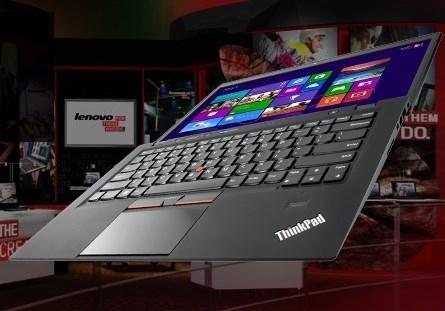
Lenovo updates the ThinkPad X1 Carbon with a touch screen and Windows 8
The Lenovo ThinkPad X1 Carbon has received an update. The new version of the Ultrabook that was originally launched in August of this year now comes with Windows 8. In order to make the most of the new operating system, Lenovo have fitted the slick Carbon Ultrabook with a multi-touch touch screen.
The system also received a screen-resolution that was marked as "HD+" which we believe will be 1600x900. No other details regarding system specifications were revealed, but it's unlikely that the specifications will be massively different from it's older sibling.
This means you can expect at least a Core i5 Ivy Bridge processor, GeForce graphics, and SSD/HDD storage options. The new X1 Carbon Ultrabook is set to launch in this coming December, just in time for last-minute holiday shopping. Too bad I won't be able to pick it up for a good deal on Black Friday.
 Read More ...
RumorTT: Samsung to unveil Galaxy S IV at MWC in February 2013
We all know it's coming, Samsung's next Galaxy smartphone, but when exactly will the South Korean device maker unveil their Galaxy S IV. Last year we saw the Galaxy S III unveiled at the Mobile World Congress event held in Barcelona, and it looks like we should see a repeat of this early next year.
Mobile Geeks have the scoop, with a "Samsung insider" whispering to them that Samsung wants to unveil the Galaxy S IV officially at MWC 2013. MWC is the world's largest wireless trade show, taking place between February 25-28. Samsung plans to reportedly hold a private launch event for the S IV, which could be part of MWC itself, or held separately, this isn't set in stone just yet.
Once announced, it shouldn't be too long until physical availability happens - which should be in Q2 2013, sometime around May. Rumor has it the Galaxy S IV will sport a Full HD 1920x1080 display, an ARM Cortex-A15 CPU in the form of Samsung's Exynos 5 series. Rumors of the iPhone 5S at the same time are also bubbling around, so it will definitely look like a clash of the titans come early 2013.
 Read More ...
NASA might have big news from the red planet but won't talk about it just yet
NPR ran a story this morning after talking with scientists at NASA. It seems as though the Curiosity rover has found something incredible on the surface of Mars while analyzing soil. The SAM instrument, which is a miniature chemistry lab, is capable of figuring out what a sample is made of.
Data from SAM is currently coming back to NASA and it "looks really interesting." Of course, the scientists don't want to jump the gun announcing something that later turns out to be false. They almost had this happen back when the rover detected methane. It turned out the methane had come from air Curiosity had brought from Florida.
John Grotzinger, the principal investigator for the rover mission: "We're getting data from SAM as we sit here and speak, and the data looks really interesting. The science team is busily chewing away on it as it comes down." He adds: "This data is gonna be one for the history books. It's looking really good."
We won't know the details of what Curiosity has potentially discovered until a few weeks have passed. Until then, look forward to some potentially big news coming out of NASA. Let's hope the discovery is enough to get congress to increase funding for the space group.
 Read More ...
GeIL EVO VELOCE PC3-17000 16GB Dual Channel Memory Kit Review
It's been a while since we've seen anything from GeIL, but last week we received not only one kit from them but two. The last kit we saw them was almost 12 months ago and was the Quad Channel
EVO Corsa PC3-19200 16GB kit for the X79 platform.
We haven't had a chance to look at any Dual Channel kits from GeIL so far, but that's going to change today with a look at the new EVO VELOCE kit that remains part of the higher end "EVO" series of memory from GeIL.
With the last GeIL kit we looked at we found ourselves impressed with what was on offer. The $399.99 price tag that was associated with the kit at launch, though, meant that it was clearly not for everyone. Today we're looking at a kit that comes in at the same size, but isn't as fast when it comes to the MHz side of things.
Before we get into the specifications of the kit, though, let's take a closer look at the kit itself. Looking below you can see the red heatsink which looks absolutely awesome. What doesn't look so awesome, though, is the green PCB that's present on the kit. One of our pet peeves when it comes to higher end RAM is companies who opt for the green PCB instead of the black; especially when you're dealing with a heatsink color like the red we've got here today.
The overall heatsink design, though, isn't anything too crazy. We've got a fairly typical fin setup and you can see they've done something a little different when it comes to the overall design. Flipping one of the modules over we can take a closer look with what exactly is going on with each side.
The overall heatsink design is identical on each side, but you can see on one side we've got the GeIL logo along with the EVO VELOCE logo. As for the other side you can see we've got a sticker which gives us a run down on the main information that helps us identify what exactly we're dealing with.
Moving in closer you can see we're dealing with an 8GB module which means we're dealing with a 16GB kit. The speed is PC3-17000 which translates to 2133MHz DDR and you can see the timings are set at a quite relaxed 11-11-11-36 that requires 1.65v to get up and running.
Considering we've tested memory faster than this we really expected no issue when it came to getting stock clocks and heading into the BIOS we loaded up the XMP profile, and as we expected, we got up and running in Windows straight away.
Under AIDA64 we ended up with Read / Write numbers of
21,079 MB/s / 20,382 MB/s, Copy speed of
23,401 MB/s and latency of
37.8ns. This is some good performance. It's not the fastest 2133MHz DDR kit we've tested as we've seen kits come with more aggressive timings. One of the biggest trade-offs to the timings, though, at this speed is as soon as we start becoming more aggressive, the price can start to jump quite quickly.
With everything running it was time to head back into the BIOS to see just what we could get out of the kit. Letting our GIGABYTE Z77X-UP7 take care of the timings we started to move the memory multiplier. We decided to skip 2200MHz DDR and jump straight to 2400MHz DDR.
We got into Windows without a problem so it was time to head back into the BIOS to see how much more we could get out of the kit. We moved to the next memory divider which was 2600MHz DDR. While we booted up with no issue as soon as we got into Windows and tried to open AIDA64, our system instantly froze. This wasn't a huge surprise considering this is quite a high overclock from the stock 2133MHz DDR that is offered.
So we knew that we'd end up with something between 2400MHz DDR and 2600MHz DDR. We figured that since we could boot and get into Windows at 2600MHz DDR we'd be closer to that figure than the 2400MHz DDR one. Back in the BIOS we moved to the 2400MHz DDR divider and then proceeded to adjust the BCLK to increase the memory speed.
We eventually ended up in Windows with a 105.5 BCLK while running the 2400MHz DDR divider. This resulted in a memory speed of 2533MHz DDR which is a solid 400MHz DDR over the default clock. With the timings on auto we saw the GIGABYTE board relax them out too 11-13-13-36-2T.
Under AIDA64 we ended up with Read / Write numbers of
22,712 MB/s / 21,799 MB/s, Copy speed of
25,550 MB/s and latency of
33.5ns. Compared to the out of the box speed we can see a nice boost in our overall performance with decent bumps across the board. The most impressive improvement probably comes in the overall latency side of things as we gain more than 4ns.
With the maximum overclock found on the kit it's time to head back into the BIOS and adjust the CPU speed to see just what kind of numbers we're able to get out of the kit. Normally we'd just move the multiplier up to the 46x mark to get around 4.6GHz, but that wasn't an option as we've pushed the BCLK up quite high.
In the end we pushed the multiplier up to 42x. With the 105.5 BCLK that is present that means our CPU came in at just over 4.4GHz as you can see below. As for the memory side of things you can see that remains the same at 2533MHz DDR with an 11-13-13-36-2T setup.
Under AIDA64 we ended up with Read / Write numbers of
23,607 MB/s / 23,765 MB/s, Copy speed of
27,118 MB/s and latency of
32.6ns. Again across the board we've got a nice bump in performance and compared to the normal out of the box performance you can see we've got quite the performance bump with solid gains being seen across the board.
The AUTO timing option on motherboards these days are very good and you can see by letting the motherboard take care of the timings we're able to get quite the boost when it comes to raw MHz. Today is a prime example as the EVO VELOCE kit gains 400MHz DDR.
Overall GeIL have put together a really nice kit with what we find to have only one flaw. The decision to skip on the black PCB is disappointing, especially when you've got this great looking red heatsink. Against a black PCB the whole kit from an aesthetics point of view would have been awesome.
In the end, though, it's purely cosmetic and if you don't have a case with a window, the chances are you're not even going to see the memory. From a performance point of view, the kit is great. While it's a little more relaxed on the timings side of things when it comes to the out of the box speed, the benefit of this is the price.
At $129.99 this is a well-priced memory kit that offers a good out of the box speed. The other good thing is that 2133MHz DDR is a speed that most CPU's shouldn't have an issue with. Of course getting over 2500MHz DDR is a different story. As soon as we start to move past the 2400MHz DDR mark the ability to gain speeds higher very much comes down to the CPU and its Internal Memory Controller strength.
The GeIL EVO VELOCE really does a good job of ticking all the right boxes when it comes to buying RAM. At 16GB we're dealing with a good size kit. With a stock speed of 2133MHz DDR we've got a speed that should run on any CPU with no issue. If you want to loosen the timings a bit more, you can see there's some good headroom when it comes to overclocking, especially if you're fortunate enough to have a CPU that carries with it a strong Internal Memory Controller like we just mentioned.
Of course we would've liked to have seen GeIL opt for a black PCB just to complete the look, but outside of something which is purely aesthetic, we've got a really good kit of RAM here that comes in at a good price. If you're looking for a good quality 16GB kit that isn't going to bust the bank, while still offering strong raw MHz, this is a really nice option from GeIL.
...
Read the rest in your browser!
 Read More ...
Razer Game Booster Opens The Door To Public Beta Test
Razer, the world leader in high-performance gaming hardware and software, today announced the Open Beta release of Razer Game Booster, an award-winning optimization software that streamlines PC gaming performance. Razer Game Booster is the latest evolution of the CNET Editor five-star-rated IObit Game Booster software, an immensely popular precursor that has been downloaded more than 100 million times. Users can try the Open Beta at no charge
here.
Tens of thousands of users were granted closed beta access to Razer Game Booster in September and much of the submitted feedback was incorporated into the latest version. Among its many features, the program now supports several additional languages, allowing for users around the world to give their games a boost.
The software includes the following features:
Game Mode
Focus in on your game by temporarily shutting down unnecessary functions and applications, concentrating all of your resources purely on gaming. Applications shut down prior to gaming are restored when user exits the game.
Calibrate Mode
Simplify the process of setting up your PC's performance by conveniently providing you with the option to tweak, defrag, or update any outdated drivers.
Share Mode
A bonus feature where you can show off your skills, create tutorials, and more, with the ability to record real-time audio/video and capture screenshots.
Razer did extensive research and testing in partnership with IObit during the development of Razer Game Booster, improving and updating features to bring about the most intuitive and powerful application possible. The software conveniently stores all games under one hub, and provides a unique boosting feature that enhances the functions of a PC for maximum game performance.
"We got tremendously positive feedback from our initial Razer Game Booster testers and we're happy to welcome everyone to experience the award-winning software to optimize their systems and enhance gameplay," said Robert "RazerGuy" Krakoff, president of Razer USA. "This is just another step in providing the best gaming experience possible to the community and our dedicated fans."
 Read More ...
PROMISE Announces Shipping of Versatile & Flexible Pegasus J4 Thunderbolt Storage
PROMISE Technology Inc., a leader in providing high-performance storage solutions for the rich media market and the leader in designing cutting-edge Thunderbolt enabled devices, today announced the availability of the PROMISE Pegasus J4, the first Thunderbolt enabled storage solution supporting four 2.5" hard disks and SSDs. Designed from the ground up for creative professionals and multimedia enthusiasts, the Pegasus J4 benefits from its incredible flexibility, amazing transfer speeds, and compact design which makes it stackable with a Mac mini. This makes the Pegasus J4 perfect for videographers, graphic artists, photographers and content creators for instantly backing up and editing content and moving high resolution video and graphic files that take up a lot of space at stunningly high speeds.

"There are more creative professionals and digital users storing, editing and protecting high resolution files than ever before, and they are looking for storage solutions that offer the ideal combination of flexibility, speed, versatility, and reliability," said James Lee, CEO, PROMISE Technology. "PROMISE is the first company worldwide to ship Thunderbolt enabled storage devices, and we are very proud to offer the most comprehensive and dynamic range of storage solutions featuring Thunderbolt technology, including the new Pegasus J4, which offer a powerful way to meet these demands. Our customers will love the Pegasus J4's smart design, the flexibility to customize the solution with SSDs or hard disks, and its impressive performance that will power them through the creative process."
THE PERFECT COMPANION
The Pegasus J4 is the perfect stackable companion for a Mac mini to create a cost effective server-storage solution. Small businesses can meet office demands for external storage and super-fast and secure backups. In addition, users can easily add several Pegasus devices for additional capacity.
INCREASE PRODUCTIVITY
The Pegasus J4 is perfect for audio/video production as it provides creative professionals with the versatility to work remotely with a laptop to backup footage & start editing on-site without having to go back to the office. Additionally, since the Pegasus J4's dual thunderbolt ports support daisy chaining, users can conveniently connect Thunderbolt enabled displays or Pegasus storage devices to boost overall transfer speeds.
PROMISE Technology continues its commitment to reshaping content creation workflow with the new Pegasus J4, the latest addition to PROMISE's industry leading line of Thunderbolt storage solutions, which include the ultra-portable Pegasus J2, the lightning fast Pegasus R4/R6, and the SANLink Thunderbolt to Fibre Channel adapter. The revolutionary Pegasus series of Thunderbolt storage solutions from PROMISE have been recognized worldwide with several awards, including "Editor's Choice" award by Digital Reviews Network, "Pick Hit Award" at IBC, the prestigious "Taiwan Excellence Award," and also being named "Best External Storage Partner of Apple" and receiving the "Storage Gold Medal" at Macworld Asia. The industry's most comprehensive line of Thunderbolt enabled storage solutions deliver unbelievable mobility, versatility and performance, ensuring there is a PROMISE device for every step of the creative process, no matter the price range or application.
AVAILABILITY
The PROMISE Pegasus J4 comes in a 2TB model with 4x 500GB 2.5" HDDs pre-installed. Additionally, a diskless Pegasus J4 enclosure is available for purchase, enabling users to install the compatible drives of their choice to meet the requirements of their application.
The Pegasus J4 JBOD units will be available for order starting November 20th through the PROMISE global network of distributors and value added resellers.
 Read More ...
Razer Announces Updated DeathAdder Gaming Mouse
Razer, the world leader in high-performance gaming hardware, announced that its immensely popular DeathAdder mouse is upgraded and set for launch. Originally released in 2006, the Razer DeathAdder has become legendary for its combination of ergonomics and precision. It remains the world's best-selling gaming mouse, used by countless pro gamers in the circuit as their preferred weapon of annihilation.
The new Razer DeathAdder's optical sensor was upgraded from 3.5G to a cutting-edge 4G infrared sensor with improved performance and precision. It is the world's most powerful optical sensor, achieving up to 6400 dpi resolution without sacrificing the natural tracking feel of an optical sensor or yielding the robotic sensation of a comparable laser option.
The iconic right-handed ergonomic shape that gamers have come to love in the DeathAdder has been retained; however, it has been further enhanced with built-in textured rubber side grips for better mouse control and grip.
Like its predecessor, the new Razer DeathAdder will feature Synapse 2.0 support for effortless synching of settings and profiles automatically with the cloud. Razer Synapse 2.0 is an innovative proprietary software that intuitively functions as the Razer DeathAdder's brain - automatically syncing the gaming mouse to a remote server to download driver and firmware updates, as well as save individual game settings.
"We didn't want to fix anything that wasn't broken," said Robert "RazerGuy" Krakoff, president of Razer USA. "We focused instead on enhancing and optimizing the proven merits of the Razer DeathAdder, utilizing next generation technologies and further ergonomics tweaks to make a perfect gaming mouse even better."
About the New Razer DeathAdder
The Razer DeathAdder was released in 2006 and is still to-date the world's best-selling gaming mouse, used by countless pro gamers in the circuit as their de facto gaming mouse. The new DeathAdder iteration focuses on improving power, performance and control through hardware tweaks and software upgrades.
Price:
U.S. $69.99 / EU €69.99
Availability:
Razerzone.com - Available now
Worldwide - Available now
Product features:
- 6400 dpi 4G Optical Sensor
- Ergonomic right-handed design with textured rubber side grips
- Five independently programmable Hyperesponse buttons
- Razer Synapse 2.0 enabled
- 1000 Hz Ultrapolling/1 ms response
- On-The-Fly Sensitivity adjustment
- Always-On mode
- 200 in. per sec. and 50 G of acceleration
- Zero-acoustic Ultraslick mouse feet
- Gold-plated USB connector
- Seven-foot, lightweight, braided fiber cable
- Approximate size: 5.00 in./127 mm (Length) x 2.76 in. / 70 mm (Width) x 1.73 in. / 44 mm (Height)
- Approximate weight : 0.23 lbs./105 g
For more information about the RazerDeathAdder, please visit
http://www.razerzone.com/deathadder.
 Read More ...
ASUS Unveils Server with Intel Xeon Phi and NVIDIA Tesla K20/K20X
ASUS servers have proven their capabilities as part of the MOGON supercomputer project, which was co-developed by ASUS and Megware for Johannes Gutenberg University Mainz and ranked 81 on the prestigious TOP500 supercomputer list in June 2012. ASUS now presents one of the world's first servers to support the Intel Xeon Phi 5110P coprocessor and NVIDIA next-gen Kepler-based Tesla K20/K20X GPUs, unveiled at the 2012 Supercomputing Conference, held November 10-16 in Salt Lake City, Utah.
The ASUS ESC4000 G2 Series provides up to 4TFLOPS peak computing power, delivering extreme hybrid performance as demanded by HPC customers. ASUS also offers ESC2000 G2 and ESC1000 G2 Series servers and workstations with ASUS SSD technology that accelerates storage by up to three times in workstation-related tasks.
Hybrid computing power with high-density 2U servers for HPC
A demand for extreme computing power exists in fields such as energy, climate modeling, weather simulation, financial analysis, life sciences, and digital content creation. The 2U ESC4000 G2 Series enables 4TFLOPS peak computing power with up to four coprocessors/GPUs. It is compatible with Intel Xeon Phi 5110P coprocessors based on Intel Many Integrated Core (MIC) architecture and further works with NVIDIA Tesla K20/K20X GPU accelerators, which are tailored for parallel computing applications. Quad coprocessor/GPU support on the ESC4000 G2 Series translates into truly extreme hybrid computing power, added to by eight PCI Express 3.0 slots for flexible expandability and InfiniBand to enable 56 Gb/s cross-node data transfer. Dual 1620W 80 PLUS Platinum power supplies offer great stability, reduced downtime, and easier maintenance.
Accessible workstations with smart storage
ASUS also offers 5U tower servers and workstations in the ESC2000 G2 and ESC1000 G2 Series, which focus on parallel processing power and energy efficiency. ESC2000 G2 Series GPU servers and workstations can accommodate dual CPUs and quad GPUs. They have seven PCI Express 3.0 slots, ASUS SSD Caching technology for up to three times faster storage, and a 1350W 80 PLUS Platinum power supply to lower electricity bills with cumulative savings over prolonged usage. The ESC1000 G2 workstation series shares many of the above features, delivering efficient power and six PCI Express 3.0 slots for better expandability.
 Read More ...
OWC Mercury On-The-Go Pro Portable Drive Now Up To 1.5 TB Capacity
Other World Computing (OWC)
http://www.macsales.com, a leading zero emissions Mac and PC technology company, announced today its award-winning OWC Mercury On-The-Go Pro bus-powered portable storage solution has expanded its storage and back up capacity by 50% to a massive 1.5 TB. That's enough space to hold up to 1.5 million JPEG photos, 750 DVD movies, 115 hours of digital video, or 526,000 MP3 songs in your back pocket.
The new Mercury On-The-Go Pro 1.5 TB model is available in two interface configurations:
With its USB 3.0 'SuperSpeed' interface, a Mercury On-The-Go Pro equipped with an OWC Mercury Electra 6G Solid State Drive up to 480 GB capacity can deliver real-world, benchmark-proven data transfer speeds up to 285 MB/s.
For more information on the complete Mercury On-The-Go Pro line, visit:
http://eshop.macsales.com/shop/firewire/on-the-go
Pocket-Sized and Bus Powered - Ideal for the Mobile Office
Designed for the active "On-The-Go" computer user who needs the highest capacity and fastest portable storage solution available on the market, the Mercury On-The-Go Pro measures a compact 3.5" x 5.5" x 1" in size. Stylishly engineered in a sleek, shock-resistant acrylic enclosure, the Mercury On-The-Go Pro is bus-powered, so it doesn't require an AC adapter, which makes it ideal for presentations, multimedia, law enforcement, surveyors, and other "mobile office" uses. Additionally, notebook users with internal 5400 RPM drives will find that using the Mercury On-The-Go Pro 7200 RPM and SSD models as a start-up disk offers faster system boot-up and overall system performance.
Works with Macs, PCs, and Digital Devices
Featuring a variety of the latest and backward compatible FireWire and USB interfaces, the Plug-and-Play ready Mercury On-The-Go Pro can be used with current and legacy Macs and PCs for additional storage capacity, transporting large files between multiple computers and real-time A/V editing. The drive can also be used with storage capable digital cameras and camcorders with FireWire and/or USB data ports for quick, convenient backups of images and video while on the road.
Backed by the Best Support in the Industry
The best product warranty is one a consumer should never have to use, but should the need occur, OWC's stellar reputation for support offers peace of mind ownership. All OWC Mercury On-The-Go Pro storage solutions come fully backed by free lifetime US-based 24/7 technical support and a three-year warranty which includes a 48-hour repair turnaround time with up to one year of complimentary Level 1 data recovery service.
"The Mercury On-The-Go Pro has been the undisputed leader in portable drive performance since the first model was introduced 11 years ago," said Larry O'Connor, Founder and CEO, Other World Computing. "Expanding its capacity by 50% underscores our commitment to providing a best-in class portable solution."
Key Mercury On-The-Go Pro Features:
- Mac and PC compatible
- Compact size: 3.5"(W) x 5.5"(D) x 1"(H)
- Lightweight: 2.5 lbs
- Bus-powered or may be powered with AC adapter
- Uses 2.5" Serial ATA (SATA) hard drive or SSD
- Up to 16 MB hard drive data cache
- Real-world data transfer speeds up to 285 MB/s
- Super quiet, fanless operation (completely silent with SSD)
- Clear, shock-resistant polycarbonate acrylic case design
- Includes carrying case, all interface connection cables, and a $100 retail value disk utility software bundle
 Read More ...
Available Tags:
tablet ,
Windows 8 ,
Lenovo ,
Windows ,
Samsung ,
Galaxy ,
NASA ,
Thunderbolt ,
Gaming ,
ASUS ,
Server ,
Intel ,
Xeon ,
NVIDIA ,




No comments:
Post a Comment