 The AnandTech Podcast: Episode 9
This past month has been insane thanks to many of our travel schedules. With things finally settling down I was able to get together with Brian and Vivek to record a mobile-update podcast going over all of the announcements we've been covering on the site lately. This is a long one, we go over all of the new Microsoft releases (Surface, Windows 8/RT, Windows Phone 8), the new Google releases (Chromebook, Nexus 4/10) and the new Apple releases (iPad mini, iPad 4, 13-inch rMBP), and more.
The AnandTech Podcast - Episode 9
featuring Anand Shimpi, Brian Klug, Vivek Gowri
iTunes
RSS - mp3, m4a
Direct Links - mp3, m4a
Total Time: 2 hours 8 minutes
Outline - hh:mm
Windows R/RT - 00:00
Surface - 00:05
Samsung Ativ Smart PC - 00:10
Windows Phone 8 - 00:24
Windows Phone 8X by HTC - 00:39
New Chromebook - 00:42
Nexus 4/10 Performance - 00:49
Nexus 10 - 00:52
Nexus 4 - 1:01
Android 4.2 - 1:24
iPad mini - 1:29
iPad 4 - 1:41
13-inch rMBP - 1:47
Element Case - 1:53
Base Station Emulator - 2:00
As always, comments are welcome and appreciated.


 Read More ...
Rescheduling the Intel SSD DC S3700 Review
This is a rare situation so I thought I'd post a quick explanation here. There was a miscommunication relating to the exact date and time of the embargo lift on performance data for Intel's SSD DC S3700. As a gesture of good faith to all involved I've pulled the review for now. We'll repost it when the final embargo date/time is determined (I should have that later today). There's nothing wrong with the content, just a misunderstanding about when we're allowed to post it.
If you read the review, nothing will change when we repost it, if you didn't, you'll have to wait a little while longer. The drive is pretty cool, it's just not exactly time to talk about it yet.
Sorry for the confusion.


 Read More ...
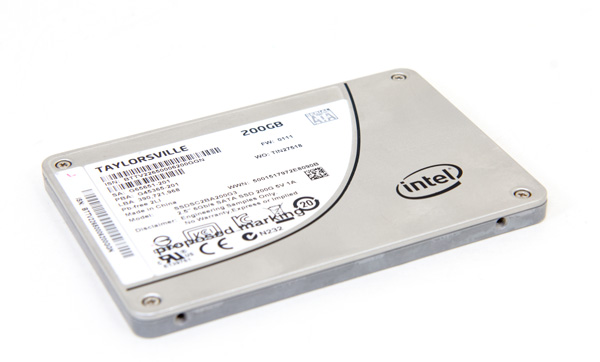
The Intel SSD DC S3700 (200GB) Review
When Intel arrived on the scene with its first SSD, it touted superiority in controller, firmware and NAND as the reason it was able to so significantly outperform the competition. Slow but steady improvements to the design followed over the next year and until 2010 Intel held our recommendation for best SSD on the market. The long awaited X25-M G3 ended up being based on the same 3Gbps SATA controller as the previous two drives, just sold under a new brand. Intel changed its tune, claiming that the controller (or who made it) wasn't as important as firmware and NAND.
Then came the 510, Intel's first 6Gbps SATA drive...based on a Marvell controller. Its follow-on, the Intel SSD 520 used a SandForce controller. With the release of the Intel SSD 330, Intel had almost completely moved to third party SSD controllers. Intel still claimed proprietary firmware, however in the case of the SandForce based drives Intel never seemed to have access to firmware source code - but rather its custom firmware was the result of Intel validation, and SandForce integrating changes into a custom branch made specifically for Intel. Intel increasingly looked like a NAND and validation house, giving it a small edge over the competition. Meanwhile, Samsung aggressively went after Intel's consumer SSD business with the SSD 830/840 Pro, while others attempted to pursue Intel's enterprise customers.
This is hardly a fall from grace, but Intel hasn't been able to lead the market it helped establish in 2008 - 2009. The SSD division at Intel is a growing one. Unlike the CPU architecture group, the NAND solutions group just hasn't been around for that long. Growing pains are still evident, and Intel management isn't too keen on investing heavily there. Despite the extremely positive impact on the industry, storage has always been a greatly commoditized market. Just as Intel is in no rush to sell $20 smartphone SoCs, it's similarly in no hurry to dominate the consumer storage market.
I had heard rumors of an Intel designed 6Gbps SATA controller for a while now. Work on the project began years ago, but the scope of Intel's true next-generation SATA SSD controller changed many times over the years. What started as a client focused controller eventually morphed into an enterprise specific design, with its scope and feature set reinvented many times over. It's typical of any new company or group. Often times the only way to learn focus is to pay the penalty for not being focused. It usually happens when you're really late with a product. Intel's NSG had yet to come into its own, it hadn't yet found its perfect development/validation/release cadence. If you look at how long it took the CPU folks to get to tick-tock, it's still very early to expect the same from NSG.
Today all of that becomes moot as Intel releases its first brand new SSD controller in 5 years. This controller has been built from the ground up rather than as an evolution of a previous generation. It corrects a lot of the flaws of the original design and removes many constraints. Finally, this new controller marks the era of a completely new performance focus. For the past couple of years we've seen controllers quickly saturate 6Gbps SATA, and slowly raise the bar for random IO performance. With its first 6Gbps SATA controller, Intel does significantly improve performance along both traditional vectors but it adds a new one entirely: performance consistency. All SSDs see their performance degrade over time, but with its new controller Intel wanted to deliver steady state performance that's far more consistent than the competition.
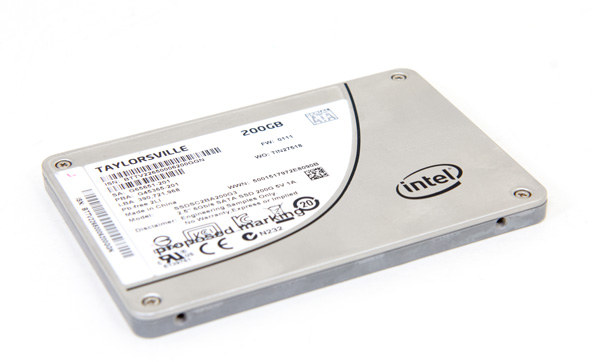
I originally thought that we wouldn't see much innovation in the non-PCIe SSD space until SATA Express. It turns out I was wrong. Codenamed Taylorsville, it's time to review Intel's SSD DC S3700. Read on!


 Read More ...
Imagination Technologies Acquires MIPS Technologies
Imagination Technologies (ImgTec) announced their intent to acquire Sunnyvale-based MIPS Technologies for $60 million in cash. This price includes the operating business as well as ownership of 82 patents relevant to the MIPS architecture. The 482 remaining patents in the MIPS portfolio have been sold for $350 million to Bridge Crossing LLC, but Imagination Tech retains a royalty-free, perpetual license to them. The acquisition is expected to close in Q1 2013.
The deal brings together 2 of the top 5 semiconductor design IP vendors and strengthens ImgTec's position and opportunities in the TV/set-top-box and networking markets. While ImgTec does have its own embedded Meta 32-bit CPU core, the MIPS cores complement this lineup with the popular 32-bit and 64-bit CPU applications processors.
While the ImgTec acquisition is straightforward, the acquisition of patents by Bridge Crossing LLC seems to be worthy of further analysis. While ImgTec and MIPS don't go into the details of the companies behind Bridge Crossing LLC, ARM has come out with a
press release indicating that they are a leading member of the consortium. Out of the $350 million being shelled out, ARM is contributing $167.5 million. Bridge Crossing LLC expects to license out the patents to companies who aren't part of the consortium. The acquisition of the patents by a licensing authority is more of a defensive move to prevent valuable MIPS patents from being picked up by patent trolls. While we don't have the full list of companies behind the LLC, it appears that most of them are affiliated to the Allied Security Trust, whose members include Hewlett-Packard, IBM and Intel.
MIPS has also been making a little bit of headway into the mobile space (mainly in the Chinese market), but this deal cuts down the number of players in the mobile space from three (ARM, Intel and MIPS) to just ARM and Intel now. We usually don't comment too much on the financial aspects of such acquisitions, but it does appear as if ImgTec got itself a
good deal in the process.


 Read More ...
Gigabyte H77N-WiFi Review – First Look at Ivy Bridge with mITX
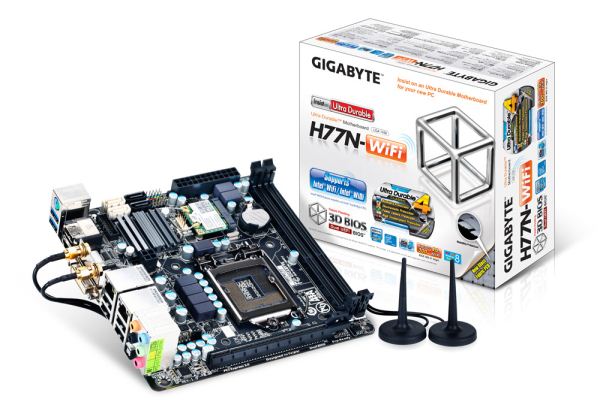
Reviews of the Ivy Bridge platform at AnandTech have focused solely on the primary chipset supplied to most desktop users – Z77. In a twist, today we are reviewing both the H77 platform, but also a mITX product in the form of the Gigabyte H77N-WiFi. Gigabyte has released two mITX motherboards for use with Ivy Bridge processors – both the H77 and Z77 variants, and they see the H77 as the one to focus on. This makes sense as mITX builds are not often overclocked, and are limited to a single PCIe slot, making two of the main benefits of Z77 void and pointing to H77 as the answer. Read on for the full review.


 Read More ...
The Intel SSD DC S3700: Intel's 3rd Generation Controller Analyzed
Today Intel is announcing its first SSD based on its own custom 6Gbps SATA controller. This new controller completely abandons the architecture of the old X25-M/320/710 SSDs and adopts an all new design with one major goal: delivering consistent IO latency.
All SSDs tend to fluctuate in performance as they alternate between writing to clean blocks and triggering defrag/garbage collection routines with each write. Under sequential workloads the penalty isn't all that significant, however under heavy random IO it can be a real problem. The occasional high latency blip can be annoying on a client machine (OS X doesn't respond particularly well to random high IO latency), but it's typically nothing more than a rare hiccup. Users who operate their drives closer to full capacity will find these hiccups to be more frequent. In a many-drive RAID array however, blips of high latency from each drive can destructively work together to reduce the overall performance of the array. In very large RAID arrays (think dozens of drives) this can be an even bigger problem.
In the past, we've recommended simply increasing the amount of spare area on your drive to combat these issues - a sort of bandaid that would allow the SSD controller to better do its job. With its latest controller, Intel tried to solve the root cause of the problem.
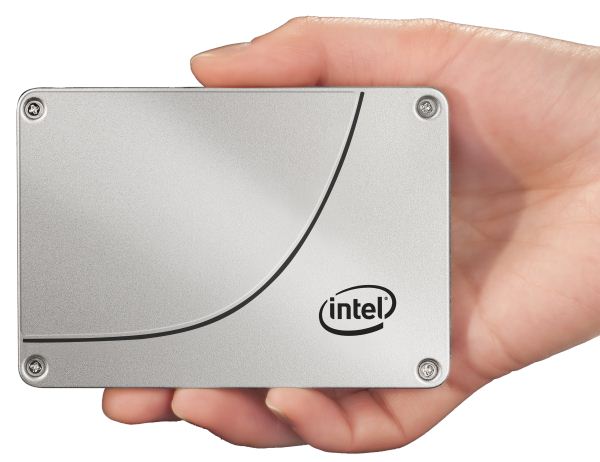
The launch vehicle for Intel's first 6Gbps SATA controller is unsurprisingly a high-end enterprise drive. Since the 2008 introduction of the X25-M, Intel has shifted towards prioritizing the enterprise market. All divisions of Intel have to be profitable and with high margins. The NAND Solutions Group (NSG) is no exception to the rule. With consumer SSDs in a race to the bottom in terms of pricing, Intel's NSG was forced to focus on an area that wouldn't cause mother Intel to pull the plug on its little experiment. The enterprise SSD market is willing to pay a premium for quality, and thus it became Intel's primary focus.
The first drive to use the new controller also carries a new naming system: the Intel SSD DC S3700. The DC stands for data center, which bluntly states the target market for this drive. Read on for our analysis of Intel's first 6Gbps SATA controller.


 Read More ...
AMD Launches Opteron 6300 series with "Piledriver" cores
Today AMD unveiled its new Opteron 6300 series server processors, code name "Abu Dhabi". The Opteron 6300 contains the new Piledriver cores, an evolutionary improvement of the Bulldozer cores.
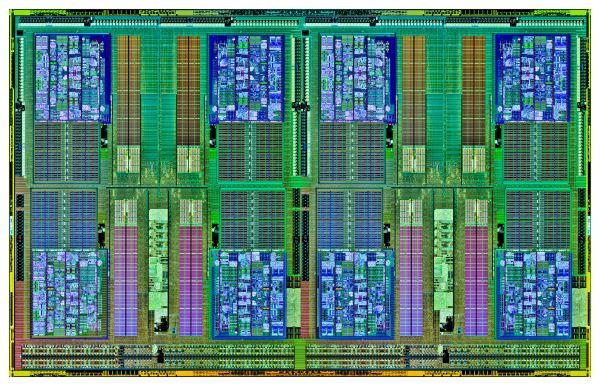 We talked
 about the long list of small improvements that were made in the "Piledriver" core. Just to recap, it has higher clockspeeds at the same TDP, a "smarter" L2 with more effective bandwidth, smarter prefetching, a perceptron branch predictor that supplements the primary BPU, a larger L1 TLB, schedulers that free up tokens more quickly, faster FP and integer dividers and SYSCALL/RET (kernel/System call instructions), and faster Store-to-Load forwarding. Finally, the new Opteron 6300 can now support one DDR3 DIMM per channel at 1866MHz. With 2 DIMMs per channel, you get a 1600MHz at 1.5V. We are still working with AMD to get you our independent real-world benchmarks, but until then we discuss the SKUs and AMD's own benchmarks.
 Read More ...
Available Tags:
AnandTech ,
Intel ,
SSD ,
Ivy Bridge ,
Gigabyte ,
AMD ,






No comments:
Post a Comment