

Group: New eBay terms of service update is a bid for anti-class action clause

eBay's "connecting buyers and sellers globally" motto may not have the same ring to it next week when its new user policy goes into effect.
In the section titled, "Legal Disputes," eBay informs users that "any claim or dispute at law or equity...will be resolved in accordance with the provisions set for in this Legal Disputes Section."
It goes on to lay out how legal disputes will be resolved:
"[Any] and all disputes or claims that have arisen or may arise between you and eBay shall be resolved exclusively through final and binding arbitration, rather than in court, except that you may assert claims in small claims court, if your claims qualify."
It's this point that has the online auction website facing petitions from rights groups like Public Citizen, which said the terms of service force users to give up their ability to joining together and taking eBay to court.
"Companies that respect and value their consumers don't trick them into giving up their rights," said Public Citizen President Robert Weissman in a statement on the rights group's website.
"Most eBay users accept the take-it-or-leave-it contract language without reviewing it, and most don't understand that the forced arbitration clause means they will be shut out of court if they are harmed by company misconduct, particularly when large numbers of users each suffer small-dollar losses," he added.
The solution, according to Weissman in an open letter, is for eBay to "drop its plans to keep aggrieved users from banding together and bringing their claims in court."
Opt-out is possible, but not easy
It is possible to opt out of eBay's forced arbitration clause, but as Public Citizen pointed out, the method is rather archaic."The only way people can opt out is by signing and sending a letter by traditional snail-mail - a strange requirement for a company whose entire business platform is online."
"To put it charitably," Weissman said, "eBay's requirement that opt-outs be submitted through traditional mail raises questions about the sincerity of its commitment to permitting users to protect themselves."
For its part, eBay told CNET that "the arbitration provision encourages swift and reasonable resolution as opposed to litigation that can be protracted, expensive and often dissatisfying to customers.
"We believe this approach will benefit both eBay Inc. and our customers."
All of a sudden, the online website's ban on spells and potions doesn't seem like that big of blow to its users' freedoms anymore.

 |  |
Read More ...
Developer reports seeing unknown iPad in app analytics

Evidence of a new iPad has reportedly surfaced, though it's not the one everyone's been talking about.
According to MacRumors, a developer spotted a device referred to as the "iPad3,6" in his app analytics.
Presumably a tablet, the device sports a processor that targets the ARMv7 architecture currently supporting the iPhone 5's A6 system-on-a-chip.
While it could mean the tablet supports the same chip, which Apple custom constructed for its 4-inch handset, it could also mean the tablet supports a variation of the current SoC.
Not the Mini
Though the iPad Mini has gotten all the press lately, with Apple rumored to be sending out invites for its unveiling soon, the "iPad3,6" doesn't appear to be the 7.85-inch slate.That device is said to come as an evolutionary step of the iPad 2, which runs a cheaper A5.
The Mini has also evidently showed up as "iPad2,5" as "iPad 2,6" in developer logs.
The "iPad3,6" falls in line with the newest iPad on the market, which has a designation of "iPad3,1," "iPad3,2," and "iPad3,3."
Each number represents different Wi-Fi and cellular models.
According to MacRumors, speculation has circulated that Apple is planning a slightly different iPad 3 that accommodates the company's new Lightning dock connector, among other internal changes.
The "iPad3,6" could also represent next year's iOS tab, hence justifying a processor upgrade to an A6. A hang-up with that theory, however, is that the model would likely fall into an "iPad4,x" categorization.
This developer's report could simply be smoke with no fire, but Apple's a company to keep us guessing, so we won't be surprised if this isn't the last we hear of "iPad3,6."

| |
Read More ...
Alcatel reveals One Touch T10 Android tablet

Alcatel is throwing its hat in the tablet ring with the One Touch T10 Android tablet.
The budget tablet sports a 7-inch 800x480 display along with Android 4.0.3: Ice Cream Sandwich, a 1GHz Cortex A8 CPU, 1GB of RAM, and 4GB of flash storage expandable with a microSD card slot.
It will have further expandability through a micro USB 2.0 port and 802.11 b/g/n WiFi, rounded out by a front-facing 0.3-megapixel camera.
Android on a budget
The One Touch T10's low-end specs clearly aren't meant to compete with flagship Android tablets like Google's Nexus 7, but Alcatel is hoping it will still find a place in the overcrowded Android market as a budget tablet.Or at least, it's assumed that Alcatel is targeting a budget price point, though no official pricing has been announced for the U.S. yet. It's expected to retail for around £97 in Europe, which comes out to an estimated $156 ($153 AUD).
There is no release date for the Alcatel One Touch T10 yet, but budget-conscious users in need of a 7-inch Ice Cream Sandwich tablet may want to keep their eyes peeled for more launch details as they become available.

| |
Read More ...
Report: Nexus by Google, LG coming end of October

The rumor floodgates are open this week as more information on a possible Google/LG Nexus collab continues to pour out.
The latest news comes from someone "briefed on the matter" and speaking with CNET.
According to the source, LG will release a Nexus of its own based on the Optimus G.
The phone, of which there is no official name, will be announced at the end of October, the source said.
This goes against an earlier report that the phone, potentially called the LG Optimus G Nexus, would see the light of day in November, alongside Android 4.2.
Information overload
According to CNET, the handset will have many of the same specifications as the Optimus G, though it will be modified to fit Google's Nexus program.Leaked specs from earlier Friday show the device's possible potential, including carrying Android 4.2 and packing a quad-core Snapdragon S4 processor.
Memory is said to come in at 2GB while its screen would run a 1280x768 True-HD IPS display.
As for the device's picture-taker, an 8MP camera is reportedly onboard.
Though these specs, and the fact it might come with onboard wireless charging, are impressive the phone also apparently lacks a removable battery and a microSD slot.
It also looks like it will come in 8GB and 16GB iterations only.
Despite these reported shortcomings, the phone would be good news for LG, which has struggled to see a silver lining in its smartphone business.
However, according to CNET's source, LG might not be the only manufacturer being welcomed into the Nexus family, which either spells potential allies or direct competition for the South Korean company.
TechRadar reached out to LG and Google for comment on the various reports and will update this story if and when we receive information from the companies.

| |
Read More ...
Thousands of Foxconn employees go on strike

Unrest has returned to Foxconn's Zhengzhou factory as thousands of workers went on strike Friday.
About 3,000 to 4,000 employees began the strike at 1 p.m.(UTC), paralyzing production of iPhones for much of the day and night shifts, according to non-profit China Labor Watch (CLW).
The factory in the capital of the Henan Province reportedly employs 130,000 workers who assemble an estimated 70 percent of all iPhones.
CLW said it blames overly strict quality control demands, lack of necessary training and denied vacation time as contributing factors to the strike.
Over worked and under paid
Work conditions in Foxconn factories are notoriously bad, as workers have often complained about poor working conditions and extremely long hours.Experts say the main culprit is added pressure put on workers by Apple's iPhone 5. With such great demand for the new iPhone, workers were pushed to work longer hours and forgo holiday leave.
However, assembly line workers weren't given the proper training to create the complex devices, contributing to quality control problems.
After complaints from consumers about out-of-the-box iPhone 5 scratches, Apple and factory management increased quality demands on employees, according to CLW.
Without the proper training, fabricators couldn't produce iPhones that met quality standards. This pressure lead to physical fights between on-site quality control inspectors and factory workers.
These altercations damaged several QC inspection rooms, injured employees and landed some in the hospital.
Managers ignored the violence, even after QC inspectors complained to factory bosses. This prompted inspectors to strike, leading to work stoppages on production lines.
"This strike is a result of the fact that these workers just have too much pressure," Li Qiang, executive director of CLW, said in a press release.
Boiling over
It's hard to tell how this will affect production of the iPhone 5 in the near future.QC inspectors make up a majority of striking workers. The number of striking workers is only a fraction of the people employed by the factory, but it was still enough to stop much of the day's production.
Riots temporarily stopped work in late September due to clashes between assembly line workers and security guards.
Experts warned at the time that if the underlying problems, such as overextending the work force, weren't resolved it would cause more problems.
Friday, those problems have bubbled to the surface once again.
Apple has yet to respond to TechRadar's request for comment.

| |
Read More ...
US digital music sales increase 15% over last year

The music industry is continuing to boom in the digital market, and according to the latest numbers, digital sales are on a record-setting pace.
Based on research data gathered by Nielsen - the information and measurement firm - 1.3 billion digital tracks were sold in 2011, making it the strongest year for digital music at that time.
However, Nielsen's latest sales telemetry revealed that as of August 2012 digital sales have already reached one billion tracks.
That's a 15 percent increase over the same time last year, which also means with still a few months left until New Year's Day 2013, 2011's record may not last much longer.
More devices equals more downloads
Nielsen's data points to an increase in the amount of electronic devices that can play digital music as a major contributing factor in the massive sales growth."As we look ahead, it's clear that digital music purchases - and consumption through streaming sources - will continue to grow, and that consumers' appetites for digital music will change at the speed of technology," said David Bakula, senior vice president of client development at Nielsen.
With more and more consumers adopting smartphones like the iPhone 5 and Galaxy S3 in addition to media devices like the new iPod touch and Google's Nexus 7, there's no shortage of ways to listen to digital music.
"These trends will no doubt continue to shape the way that music is discovered, marketed, consumed and sold," Bakula added.
Even with music streaming services like Spotify and Pandora also seeing record numbers, and the coming of Xbox Music rumored on Oct. 26, as well as rumors of an Apple streaming music service, digital sales should continue to see tremendous growth.
It will be interesting to see Nielsen's updated numbers later this year, and learn if 2012 can be another banner year for digital music.

| |
Read More ...
Users reporting new iPod touch shipment confirmation
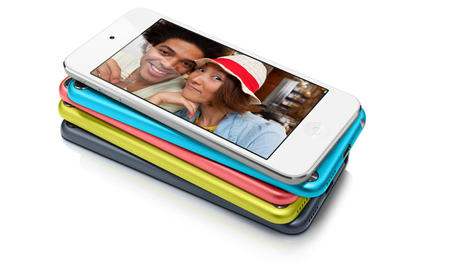
Customers who pre-ordered the 5th generation iPod touch are beginning to see signs that their devices might ship soon, according to reports.
A number of users on the MacRumor forums noted that they received notifications that their order is "preparing for shipment."
Another user claimed that their credit card has been charged for the pre-order payment, a step which only happens once an item is ready to ship.
Apple's listing for the new iPod touch in the U.S. still offers the nebulous "October" shipping date for the device.
Meanwhile, Australia has seen some movement with the Apple online store shipping date changed to read "three weeks."
Japan may see the new iPod touch first though, as the Macotakara blog is reporting a concrete release date of Oct. 9.
A slim harvest
While Apple announced the new iPod touch, along with a redesigned iPod nano, on the same day as the iPhone 5, tracking down an arrival date for the music players proved more than difficult for customers.Even with the iPhone 5 official launched Sept 21., many users are still experiencing delays as shipments slipped by three to four weeks.
That trend is not expected to let up anytime soon with Apple's newest devices. Suppliers are reportedly already frustrated with the much-rumored iPad Mini's low yield, which will lead to even more retail shortages and shipment delays.
However, some customers are being rewarded for their patience, as they are finally receiving shipment notifications from Apple.
That brief solace doesn't make the extra three week wait any shorter, though.

| |
Read More ...
Japanese company to produce new 5-inch smartphone screens
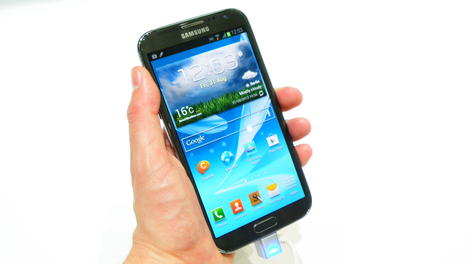
The 5-inch screen may become the industry standard for smartphones in 2013.
Though Sharp is already manufacturing 5-inch 1080p LCD screens, the company could have a bit of competition from Japan Display Inc. (JDI).
Starting this month, JDI plans to begin full-scale production of its own 1080p LCD screens, with a 443 PPI ratio identical to that of the screens Sharp's shipping out.
JDI's production is part of a joint-venture between the company, Sony, Toshiba and Hitachi, with the latter three contributing manufacturing expertise in crafting the full-HD (1920 x 1080) phone-fronts.
Five is the new four
With companies like HTC reportedly working on new 5-inch phablets, and others phones like LG's Intuition and Samsung's Galaxy Note 2 in production, the shift to bigger screens is already happening.That said, both Sharp and JDI's new HD screens will have a drastically better pixel density than anything currently on the market, or soon shipping.
For comparison, the Galaxy Note 2's Super AMOLED screen provides just 267 PPI, while other potential competitor screens, like that in the iPhone 5 (326 PPI) and the Galaxy S3 (306 PPI), are both smaller and less sharp.
The new screens will also have a 1,000:1 contrast ratio, and be a razor-thin 1.4 millimeters (.05 inches) thick.
JDI will have the screens on display for the first time at FPD International 2012 in Yokohama, Japan starting on Oct. 31.

| |
Read More ...
32GB Nexus 7 could ship Oct. 24

Google's flagship Nexus 7 tablet has so far only been released in 8GB and 16GB iterations, but that could soon change.
A series of recent leaks all point to the same thing: a 32GB Nexus 7.
First, a snapshot on Thursday of an inventory screen from U.K.-based Carphone Warehouse listed the Asus-made Nexus 7 tablet in a 32GB flavor, alongside a Samsung Galaxy 2, though it provided no hint at a possible release date for either device.
Then, on Friday, the 32GB Nexus 7 began to pop up in all kinds of places, and one retailer even provided a tentative ship date.
32GB Nexus 7 gets a release date?
An anonymous tip on Friday revealed to Droid-Life that at least one other retailer listed the 32GB Nexus 7 for sale, and this one came with an expected ship date: Oct. 24.Following this revelation, Android Community reported that sending the 32GB Nexus 7's product number through Google produced multiple other listings for a 32GB version.
Most don't list a release date, though, simply stating "coming soon" or "out of stock."
To be fair, though, these listings could be old - back from before Google revealed there would only be 8GB and 16GB models - or they could be reactionary, created after the initial Carphone Warehouse leak on Thursday.
Carphone Warehouse strikes again
TechRadar has reached out to Google to find out if the Mountain View company has anything to add, but so far there's been no response.This wouldn't be the first time Carphone Warehouse inadvertently leaked a new device; in August, for example, a black version of Samsung's Galaxy S3 was revealed in the same way.
The black Galaxy S3 was later confirmed by Samsung, and the same could happen with the 32GB Nexus 7.
If Google is going to announce a 32GB Nexus 7, they'd better do it fast, especially if it's really going to meet that Oct. 24 deadline.
Besides, Apple's iPad Mini could soon steal the tablet show, with invites to its announcement rumored to arrive next week.

| |
Read More ...
Review: Samsung Series 7 Gamer

Overview and Specifications
With its blue backlit keyboard and i7 processor, Samsung's Series 7 Gamer laptop is a big shiny box of power. At 17 inches and 9 pounds, it's more of a semi-portable desktop replacement than a truly portable laptop. Still, this is a gaming computer, and with great power generally comes some serious bulk and a hefty down payment.The first thing you'll notice about the Series 7 Gamer are all the blue lights, and a silver dial on the right side, near the monitor. This lets you cycle the computer into one of four modes: Gaming, Balanced, Library and Green Mode.

With an MSRP of $1,899 (note: Amazon is currently selling it for $1,742.98/£1,349.97), the Series 7 Gamer isn't cheap, but it's also not the priciest mobile gaming solution on the market (just look at the $2500 Razer Blade). A little under two grand is pretty much par for the course with any machine that's (partially) portable and capable of running Skyrim at a respectable resolution.
Specifications
Let's get down to brass tacks: how much horsepower are you getting for your money? Quite a bit, we're happy to say. Here are the hard and fast specs for the Series 7:Intel Core i7-3610QM @ 2.3GHz
w/ 6MB L3 cache
16GB DDR3 RAM
NVIDIA GeForce GTX 675M Graphics
1.5TB Hitachi Hard Drive
8GB SanDisk SSD
17.3" display with 1920x1080 resolution

The Samsung Series 7 Gamer also sports 4 USB ports (2x USB 3.0, 2x USB 2.0), a Blu-Ray drive, 4 stereo speakers, plus built-in webcam and microphone. Our review unit had Windows 7 Home Premium installed.
The Series 7 is not customizable, this is the only configuration that Samsung currently offers.
Benchmarks, Design and Performance
With an i7 processor and a whopping 16GB of DDR3 RAM, the Samsung Series 7 Gamer laptop has the stats (and the price tag) that scream performance. The system boots up in about 35 seconds, thanks to the SSD that assists with vital system functions. We really enjoyed how the Series 7 could come out of sleep mode almost instantly. As soon as we popped open the lid, it was ready to go.
In Gaming mode, the Series 7 is impossible to miss. Everything from the keyboard to the mouse pad to the power button to a superfluous "Turbo" icon below the monitor glows a bright blue. It's rather gaudy, and not the sort of aesthetic we gravitate toward. We welcomed the laptop's Library mode, which keeps the fans running low and quiet, and turns off all illumination. It's a great option for the college bound gamer who needs to hit the books once in awhile.
Not that the thing is very loud. The fans are certainly audible when gaming, but they don't scream or whine, and the system remains surprisingly cool. It seemed to get warm, but not hot.

Samsung's custom UI, which plays flashy animations when shifting into Gaming mode, is gimmicky, and seemed to be fighting with the vanilla Windows 7. We would change the screen saver by right clicking on the desktop, like any good Windows user would do, and Samsung's UI would change it right back after shifting in and out of gaming mode. We found it had to be disabled using Samsung's software. Not exactly a deal breaker, but frustrating nonetheless. It would be great if Windows 7 and the UI played nicer together.
The UI did offer one or two tweaks we actually liked, such as being able to toggle power to the USB ports when the laptop is asleep (for charging gadgets via USB), and disabling the Windows keys and trackpad when in a game. These are redeeming features, but we wished the UI was more customizable. If we could have four power modes of our own design to toggle through, that would be a worthwhile. Overall, this software came off as tacky and annoying.

We also weren't big fans of the keyboard. Pushing one key tended to make those around it shift, giving the whole thing the feeling of a big cheap slab of plastic. Also, the touch buttons above the keyboard, which control the volume and toggle WiFi, are easy to accidentally activate.
The Series 7 does have a full numpad, which is not common for laptops, and we did appreciate that. It also has a very responsive touchpad. If wasn't for the inherent carpal tunnel risk, we'd say you could almost play Diablo 3 on this thing. Instead, we'll say it's great for casual web browsing.

Benchmarks
The Series 7 has some beefy specs, and the benchmarks prove that it's ready to game.
3DMark Performance score: 3576
Batman: Arkham City (1920x1080, anti-aliasing FXAA high, detail level Very High, DX11 features disabled) average FPS: 53
Dirt 3 (1920x1080 multisampling, 4x MSAA, detail High, post processing Medium) average FPS: 89
Borderlands 2 (1920x1080, texture quality and game detail High, anisotropic filtering 4x, physx effects Low, FXAA Off) average FPS: 62
At these settings, the Series 7 was leaps and bounds above the 30 frames per second that most gamers consider the minimum for playability. Running at the display's maximum resolution of 1920x1080, the rain slick world of Gotham City looked pretty enough to make the Dark Knight himself crack a smile, and the reflective sheen of the hard driving racer cars in Dirt 3 was impressive. Even the brand new, system pushing Borderlands 2 ran butter-smooth. However, when we really turned up the specs, Samsung's laptop began to show some modest limitations.

Batman: Arkham City (1920x1080, anti-aliasing FXAA High, detail level Very High, DX11 features Enabled, DX11 tessellation Normal) average FPS: 29
Dirt 3 (1920x1080, multisampling 8x QCSAA, detail High, post process High) average FPS: 76
Borderlands 2 (1920x1080, texture quality and game detail High, anisotropic filtering 16x, physx effects High, FXAA On) average FPS: 30
While the DX11 features had Gotham City looking extra gritty, the frame rate dipped just south of what we'd consider optimal. Dirt 3 still performed admirably, providing enough responsiveness to execute those hairpin turns. Finally, the Borderlands 2 results, with the Physx turned up all the way, still maintained a playable framerate, during benchmarking, at least. Actually playing the game we found that setting too hot for the Series 7 to handle, but turning it down just a tad gave an impressive balance of power and playability.
Verdict
The Samsung Series 7 Gamer laptop is a bit of a gilded lily. It's got the hardware and performance that gamers care about, and a price tag that we'd deem fair. Samsung's custom UI, however, doesn't add much to the experience. Short of one or two niceties, like being able to disable the trackpad and Windows keys, it mostly detracts from the overall experience.Can the Series 7 still be recommended in light of its hardware, annoying software notwithstanding? We think so.

We liked
The hardware. The Series 7 Gamer has got it going on where it counts: inside. Its i7-3610QM processor is no longer the new, fastest kid on the block (we're looking at you, i7-3632QM debuting in the Razer Blade) but it's no slouch. It honestly blew us away with its Borderlands 2 Physx performance. We're sure that generous 16GBs of RAM had a something to do with it as well.It's also pretty cool and quiet, which you don't often find with a powerful gaming machine. Sure, it gets warm, but it's no space heater like the Toshiba Qosmio X870. Even its brick of a power supply doesn't get that hot.
We disliked
Samsung's UI. At its worst, it was tacky and a little annoying. It gets out of the way once you disable it, but we just didn't want to deal with it. We found the case lights ridiculous and always wanted to disable them.The lack of 3D support is a little disappointing, only because you can get a 3D capable machine with the comparably priced Toshiba Qosmio X870. We also found the keyboard to be slightly subpar, and while the touch button toggles for volume, WiFi, mute and case lights are nice in theory, in practice it was a little too easy to accidentally trigger them.

Verdict
From a purely processor to pennies perspective, the Series 7 Gamer is worth the money. Its a gaming machine capable of playing the latest titles at respectable settings. With all its case lights and fancy UI, its a bit like a party guest who arrives overdressed. You're glad they showed up, but the bow tie they're wearing just makes them look silly.At 9 pounds, the Series 7 isn't the heaviest gaming laptop we've ever encountered, but you wouldn't want to be hauling it to and from work everyday. It's a great option for the occasional LAN party or gaming session at a friends house. To get something easier to haul, you'd have to spend quite a bit more, and we think most gamers would rather save their wallet then their back. After all, you've got to leave some money for your Steam wallet.

| |
Read More ...
Pay for Starbucks with Square this November

In a match made in caffeine heaven, Starbucks and mobile payment system Square announced a partnership that will let customers use Square Wallet to pay for their beverages, pastries and more at the coffee chain's retail locations.
The news, which included a $25 million investment into Square by Starbucks, came in August, and Friday the companies revealed when the partnership will take off.
According to a Starbucks press release, Square payments will get underway in early November.
The service will get support at company-run retail locations in the U.S.
Tips are next
The Square/Starbucks partnership also gives coffee-fiends access to the Square directory, which will help anyone in need of a Sbux fix track down one of the company's more than 7,000 U.S. locations.Starbucks also said in the release that, starting next summer, it will enable digital tipping on its existing mobile payment app as well as through Square Wallet.
As if it wasn't stepping far enough into the digital payment game, Starbucks has also integrated with Apple's Passbook service, the release said.
OK, coffee addicts, you can rejoice now.

| |
Read More ...
Intel targets consumers, small biz with new cloud storage solutions

Personal cloud storage is experiencing explosive growth, and chipmaker Intel is ready to carve out a piece of the market for itself with new Atom-powered solutions.
Aimed at small business users as well as consumers, Intel is providing network-attached storage solutions starting at $299 (UK£185, AU$293), powered by the company's Atom D2550 or D2500 processors.
With OEM partners Asustor, QNAP, and Thecus already shipping NAS systems powered by Intel's architecture, the chip provider's plans are to keep up with the rapidly expanding cloud storage needs of regular users.
Cloud storage on the rise
"Ballooning data is a fact of life," Intel Storage Group General Manager David Tuhy remarked while introducing the company's new cloud storage platform at a media briefing Thursday.Intel, citing figures from the Aberdeen Group, a research firm, said small business cloud storage needs are increasing by 30 percent each year.
Consumer cloud use is expected to grow from 329 exabytes to a whopping 4.1 zettabytes, a figure that blows gigabytes out of the water.
Tuhy cited protection and privacy as the biggest concern of the consumer and SMB customers they're targeting with the new products.
Intel's solution uses an login-secured, exposed HTML IP address which can be accessed from a web browser or appear as a mounted volume on a desktop computer.
In addition to sharing devices on a local area network, Intel's NAS products include RAID data protection, integrated support for digital displays, hardware acceleration, multiple OS support with up to 4GB of memory and USB 3.0 connectivity.

| |
Read More ...
Asus Padfone 2 specs leak ahead of Oct. 16 unveil

Asus will officially unveil the Padfone 2 Oct. 16, however information on the three-in-one device is already slowly beginning to trickle out.
The most recent leak comes from Italian website eeepc.it.
The site got ahold of specs for the Padfone 2 thanks to information picked up from the Japanese government's wireless device oversight agency for a product with that name.
According to the leak, the Padfone 2's packing a 1.5GHz quad-core Qualcomm processor, which duplicates the chip specs found inside the original Padfone.
However, this time around the smartphone/tablet/notebook might run a Snapdragon S4 Pro version, according to a report on Digital Trends.
Two times the charm
The Padfone 2, which uses the smartphone component to power the other devices it becomes, will host 2GB of RAM, a 13MP camera and a 2,140mAh battery.The last detail is based off an eBay listing for an Asus A68 battery pack, and although A68 is reportedly the model number for the Padfone 2, the battery's validity is still questionable.
As for the display, it looks as if this time around Asus is endowing the smartphone component with a 4.7-inch, 1280 x 720 resolution display, bumping up the original's dimensions of 4.3 inches and 540 x 960.
There's also word of cellular data at GSM 1900/850 MHz and WCDMA 2100 MHz, while it'll also support Wi-Fi, Bluetooth and NFC.
We won't know for a few weeks just what Asus is going to throw at us (the original Padfone was enough of a curveball), but TechRadar will bring all the latest out of the company's simultaneous Milan/Taipei event to light.

| |
Read More ...
More info on LG Nexus leaks, including wireless charging
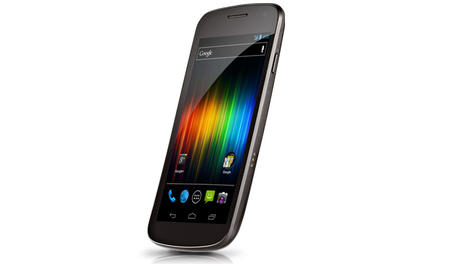
Rumors have popped up recently that LG will launch its very own Nexus device, possibly called the LG Optimus G Nexus (though maybe not).
On Thursday, unnamed sources claimed that the new LG Nexus will launch alongside a new version of Google's Jelly Bean OS, Android 4.2, in November.
Then, on Friday, even more details emerged - in addition to a supposed hands-on report with the unannounced LG Nexus device, a slew of specs have reportedly arrived at MoDaCo via "various sources."
The LG Nexus phone, or whatever it ends up being called, will pack a punch, but in some areas it will fall woefully short, according to these latest sources.
The good
According to Thursday's rumors, Google will loosen its grip on the Nexus branding, allowing any phone maker to take its stab at creating a Nexus device as long as it lives up to Google's standards.LG's Nexus phone will reportedly be a spiritual successor of sorts to the LG Optimus G, though it will look more like Samsung's Galaxy Nexus.
According to the most recent rumors, the LG Nexus device will run Android 4.2 out of the box and sport a quad-core Snapdragon S4 processor, a hefty 2GB of memory, a 1280x768 True-HD IPS display, and an 8-megapixel rear camera.
In addition, the LG Nexus will reportedly have onboard wireless charging, a welcome feature that's been hyped up recently due to its inclusion in Nokia's Lumia 920.
The bad, and the ugly
On the other hand, according to Friday's report LG's new Nexus phone will suffer from a few drawbacks that might have Android fans wondering what the Korean phone maker is thinking.For one thing, the LG Nexus will reportedly not come with a microSD slot.
To make that worse, its storage capacity will be capped at 16GB, at least to start, with an 8GB model available as well, according to the rumors.
It would be one thing if there were larger versions available, but to limit the storage to 16GB and then not allow for expansion seems somewhat daft.
Finally, the report also claimed that the LG Nexus' battery will not be removable.
It remains to be seen whether any of these claims actually turn out to be true. TechRadar has reached out to LG to comment on the rumors, but the company has yet to respond.

| |
Read More ...
News in Brief: One More Thing: Zynga admits Draw Something defeat

OMGfizzle - In a move that will surprise approximately no one, Zynga is having to write-off most of the money it spent on OMGPOP, the company behind the once-popular Draw Something app. [TNW]
Old school - Remember Hipstamatic? It was Instagram before Instagram was Instagram, and the app has just had an update to make it compatible with the iPhone 5; it's now iOS 6 and longer Retina display-ready and lets you shoot multiple exposures, which is pretty nice. [Cult of Mac]
Vroom - Are electric cars actually worse for the environment than petrol-powered ones? The Guardian investigates and concludes that only time will tell. Still worth a read at the source link though. [Guardian]
Whippersnapper - Happy 20th birthday to the Lenovo ThinkPad, the first laptop to come with an integrated CD-ROM and the only laptop certified for use on the International Space Station. [Lenovo]
Sky Go-lf - As you might expect with a tense sporting event where many people would be keen to keep watching but not distrub their other halves, Sky Go had a bumper weekend due to the Ryder Cup. Apparently 200,000 people were watching at its peak, although many more were no doubt watching birdies on the internet. [PR]
Remake-able? - You might say that Netflix is launching the US version of the hit BBC political thriller House of Cards as an exclusive on February 1 2013 but we couldn't possibly comment. You also might want to leap to the assumption that it stars the awesome Kevin Spacey and the first two episodes are directed by David Fincher. [Slashgear]

| |
Read More ...
Apple posts Steve Jobs tribute video on 1-year anniversary of his death
-470-75.jpg)
On the one-year anniversary of his death, Apple has posted a tribute video on its homepage to the man whom many credit with revolutionizing the personal computing landscape.
In poignant black and white photos, Steve Jobs is seen holding and heard extolling Apple products from the iMac to the iPod to the iPhone as Bach's Cello Suite No. 1 plays gently in the background.
"It's in Apple's DNA that technology alone is not enough," a recording of Jobs said.
"It's technology married with liberal arts, married with the humanities that yields us the result that makes our heart sing."
He even quoted hockey great Wayne Gretzky.
Check out the video below:
Cook's message
Tim Cook, who took over for Jobs after he left the company in August 2011, months before Jobs' death from pancreatic cancer, also posted a message that follows the video.Calling his death "a sad and difficult time for all of us," Cook wrote he hopes Friday will be a day of reflection on what Jobs' life held and "the many ways he made the world a better place."
"One of the greatest gifts Steve gave to the world is Apple," the message read. "No company has ever inspired such creativity or set such high standards for itself.
"Our values originated from Steve and his spirit will forever be the foundation of Apple."

| |
Read More ...
Court backs Motorola in Microsoft patent case

A German court has ruled that Motorola hasn't ripped off a major Microsoft radio patent, scoring one for Google in the great tech patent war.
The patent in question relates to radio interfaces, formally known as "Method and radio interface layer comprising a set of application programming interfaces (APIs)".
Microsoft alleged that the way Motorola's Android handsets accessed contacts infringed on the patent, but the German courts disagreed.
Wheels and deals
Motorola is one of the few Android manufacturers not to have cut a licensing deal with Microsoft.Microsoft makes a fair amount of cash from Android-makers, taking a cut from most handsets sold.
This isn't something Google is particularly pumped about, and it is keen to keep Motorola, a company it paid billions of dollars for, off that list.

| |
Read More ...
New Bluetooth speaker tech promises 100 hours playback on one charge

British company HiWave has developed new speaker technology that it reckons can ensure 100 hours of wireless music from a single charge.
The Endfire unit pairs to tablets, smartphones or laptops over Bluetooth with stereo playback through two 15W speakers.
The whole thing sounds incredible because it runs off three 2200mAh Li-ion batteries – that's the equivalent of 2 AA batteries - and uses microUSB for charging purposes.
Power saver
The low-power status is thanks, in part, to the HiAS2002, also known as the world's most efficient stereo amplifier, which can switch voltage rails to reproduce peaks without any detectable artefacts.The Endfire also saves power by automatically entering standby when not in use.
"Endfire highlights what's possible using our DyadBA3 module and BMR speaker drivers," said James Lewis, CEO of HiWave.
"It lets speaker manufacturers rapidly develop high-power wireless speakers that exceed users' playback time requirements."
Although just a reference device at the moment, HiWave reckons it can handle high-volume requests immediately so it shouldn't be too long before we start seeing the power-friendly wireless speakers hit the market.
We'll be keeping our eyes peeled, that's for sure.

| |
Read More ...
Sony Xperia Tablet S sales suspended over water damage fears
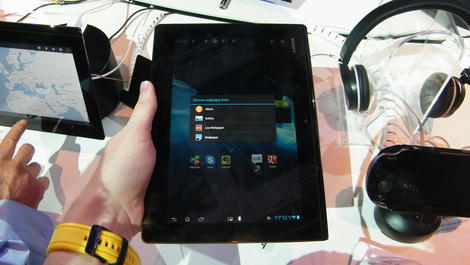
Sony has had to stop selling the Xperia Tablet S because gaps between the screen and the case make it vulnerable to water damage.
That's a pretty big problem for a tablet that is supposed to be splash-proof and has already shipped over 100,000 units.
The problem comes down to a manufacturing flaw with Sony placing the blame on the Chinese factory that puts the tablets together.
Splash canyon
The tablet went on sale in September, so Sony has promised to replace or repair any tablets that have already been bought.We're yet to spend some serious time with the Xperia Tablet S but our first impressions weren't bad; we're talking to Sony to try and find out more about the situation.
The company hasn't said when it expects to see the tablet back on the market yet though, so if the Xperia Tablet takes your fancy, you could be in for a bit of a wait.

| |
Read More ...
Buying Guide: Nikon D800 vs Nikon D600

This year has been a very exciting year for those lusting after a full-frame DSLR, with several new cameras either being announced or becoming available in 2012.
Nikon has introduced two full-frame cameras, the first being the 36 million pixel Nikon D800, which was revealed in the early part of the year.
More recently, the company unveiled the Nikon D600, which at the time of launch was claimed to be the world's smallest and lightest full-frame DSLR.
Featuring 12 fewer megapixels than its older sibling, the Nikon D600 has significantly lower recommended retail price. So, the question on many people's minds will be which camera to invest in. Here we take a look at the key differences between the two to help you make that decision.
Nikon D800 vs Nikon D600: sensor

While both are full frame CMOS sensors, only the Nikon D800 offers a whopping 36 million pixels. It's important to remember that more pixels isn't necessarily a good thing, however.
More pixels increases the chance of noise, and our lab tests show that the Nikon D600 is actually a better performer in terms of signal to noise ratio and dynamic range.
At the lowest sensitivity settings those extra pixels really come in handy, though, if you're looking to crop into the image and still retain quality. Or if you're shooting landscape or studio shots where low light isn't generally an issue.
Nikon D800 vs Nikon D600: autofocus

Both the Nikon D800 and the Nikon D600 use phase detection autofocusing when images are composed in the viewfinder, but the D800 offers an extra 12 autofocus points. Because on both cameras these autofocus points are all clustered towards the centre of the frame, it's likely that the average user won't feel disappointed by fewer points.
Nikon D600 vs Nikon D800: memory
Dual memory card slots is something we're used to seeing in high-end DSLRs. Whereas the Nikon D800 uses one CF card slot and one SD card slot, the Nikon D600 features dual SD slots.Although CF cards generally perform better than SD cards, it's likely that those upgrading to a Nikon D600 from DX (APS-C) format cameras in Nikon's line will already have a stash of SD cards ready to go.
Nikon D600 vs Nikon D800: Wi-Fi connectivity

Unlike the Canon EOS 6D, neither the Nikon D800 nor Nikon D600 have inbuilt Wi-Fi connectivity. However, this is one area where the D600 trumps the D800, since it is compatible with the low-cost Wu-1b Wi-Fi transmitter that can pair the camera with a smartphone for internet access and remote control.
Nikon D600 vs Nikon D800: construction
As you might expect from the more expensive model, the Nikon D800 has a more premium construction, having an all-metal body. The Nikon D600, meanwhile, uses a magnesium alloy for the top and back panel, with plastic elsewhere. Both the cameras will be fairly rugged, but the D800 is likely to be just that little bit better protected.Nikon D600 vs Nikon D800: weight
Both the latest full-frame offerings from Canon and Nikon claim to be the world's lightest DSLRs. The Nikon D600 does indeed weigh significantly less than the Nikon D800, at just 760g (850g with battery and memory card), compared with 900g (1kg with battery and memory card). It may not sound like a huge difference, but if you're looking for a relatively light camera that still offers high quality images, the D600 would probably be the best option.Nikon D600 vs D800: verdict

Choosing between these two cameras can be a little tricky, especially since the now established Nikon D800 has been around for a while and the price difference isn't too marked. However, as the Nikon D600 settles into the market and the price drops, it will be a much more significant difference.
In some respects, probably due to the lower resolution, the D600 performs better in our lab tests, so it may come down to what you wish to shoot with your camera. It's also worth bearing in mind that you need to tighten up your shooting technique - use a tripod and mirror lock-up for example - to get the benefit from the D800's extra resolution.
If you're looking for a general camera for shooting a wide variety of subjects, and are looking to save a little money, the D600 is probably the more sensible choice.
However, if you're looking to step into the professional arena, have a particular hankering for that high resolution or need a slightly more rugged camera, the D800 wins out.

| |
Read More ...
Android 'has won the war of the operating systems'

One of the leading experts on mobile phones in emerging markets has suggested that Google's Android operating system has already won the war of the operating systems.
Jana co-founder and CEO Nathan Eagle, speaking at Google's ThinkMobile conference with TechRadar in attendance, explained that Android was perfectly aligned to become a dominant force, and not just in phones.
This is down to the plethora of affordable smartphones that are set to sweep through emerging and developing markets in places like Africa.
Winning
"I would say that Android has already won the battle of the operating systems," said Eagle."That's not necessarily because it's the best, just that it's given away for free and you are starting to see the rise of these [$50 phones] from China."
Eagle's presentation "Engaging the next billion" suggested that 2013 would see Android overtake Windows, with predictions that 1.3 billion will be using Microsoft's OS and 1.5 billion Android.
It's clear that mobile technology is a huge boon to countries without the telecomms infrastructure of many developed markets.
And the rise and rise of the smartphone – enabling things like internet access, GPS and, not to forget, phone calls – means that mobile platforms are increasingly powerful.

| |
Read More ...
Gary Marshall: Steve Jobs didn't just dream. He delivered

Marcel Brown's timing is wonderful. Just days before the first anniversary of Steve Jobs' death, Brown cleaned up and uploaded his recording of Jobs in fine form from 1983.
It's fun, forward-thinking stuff, covering everything from how Apple wants to "put an incredibly great computer in a book that you can carry around with you and that you can learn how to use in 20 minutes" - a device that is, of course, "magical" - to the dangers of letting technology put people out of work.
At a time when many sites are doing the "If Steve were alive today, he'd hate/do/think X" thing, it's a nice reminder of Jobs the man, not the traffic magnet.
It's also a nice reminder of how much things have changed. Brown's blog post is illustrated by a photo of the cassette he'd recorded the Q&A on, and as I was listening to the recording my young daughter came in, pointed at the image and asked what it was. She's a child of the iPod and iPad generation, and cassettes are as alien to her as wax cylinders were to me. Steve Jobs played a big part in that.
Part of the family
Would Steve have done X, thought Y, bollocked Z? I've no idea, and neither has anybody else. What I do know, though, is that products he imagined, oversaw or obsessed about have been a huge part of my life.My various i-devices have accompanied me on big trips and little ones, epic adventures and emotional events, sharing good news, bad news, births and deaths. I've used countless bits of Apple kit for writing words, making music, forming new friendships and alienating enemies. My daughter dances across endless iPhone photos and iPhoto uploads, soundtracked by songs she's heard in iTunes or on iPods or that she's ad-libbed into the iPad, and my videos of her stream from iMac to our Apple TV.
Steve Jobs played a part in all of those things. Not necessarily a big part - he didn't take the photos, sing the songs or write the code - but a part nevertheless: the things that mean so much to me are often directly connected to products Apple made or technologies it popularised.
The world we live in now is uncannily like the one Jobs described back in 1983. That's one of the reasons the tech industry misses him so badly: Steve Jobs didn't just dream. He delivered.

| |
Read More ...
Review: Sony KDL-26EX553

Introduction
By adding the likes of BBC iPlayer, LED backlighting and nifty ultra-slim designs, the last few years have seen some mightily impressive bigscreen TVs for the living room, but what about the bedrooms and kitchen?We've been longing for a do-it-all smart TV that can stream from a PC just as easily as playing a Blu-ray or handling music, and the 26-inch Sony KDL-26EX553 - with a full price of £429 (around AU677/US$694) - is very nearly that product.

There's no built-in DVD or Blu-ray player, and nor is there enough sonic power to act as a bedroom stereo, but this Edge LED-backlit television is otherwise ripe for a night's entertainment.
A key component in its arsenal is a suite of Wi-Fi-fueled Sony Entertainment Network smart TV apps, including BBC iPlayer. And many will also love its design; an 'easel' type that sees two small silver pegs jutting out from underneath a screen that sits back a few degrees.

The effect is subtle, though any notion of luxe good looks won't last much beyond a feel of the rather industrial gloss black plastic used in the bezel.
That won't matter too much in the bedroom, and if it does, consider the white version, because the Sony KDL-26EX553 is the most advanced 26-inch TV around.

Two HDMI inputs should be enough for most simple setups (we're thinking a games console and a Blu-ray player) since there's a Freeview HD tuner inside, while its USB port enables both simple recordings and digital file playback.
There's also a hook-up for a PC, albeit the old 15-pin D-sub VGA option.

One technical shortcoming of the Sony KDL-26EX553 is its HD-ready resolution, but we're not at all bothered by this.
We do realise that Full HD starts to become a factor at the 26-inch size, and also that many PC monitors a lot smaller than this TV have such a resolution, but we prefer HD-ready on a Sony TV.

The excellent up-rezzing circuitry in Sony's X-Reality has long impressed us, and here it chums up with the HD-ready panel to help make dodgy YouTube videos or downloaded AVI files look almost as clean as a Blu-ray disc.
In our test we managed to play AVI, MPEG, MPEG4, AVC and WMV videos from a USB flashdrive - and in excellent quality - though that does leave MKV and MOV files unsupported, which is a real shame.

The 26-inch Sony KDL-26EX553 is joined by smaller brother the 22-inch Sony KDL-22EX553, which also boasts a HD-ready resolution and has a full price of £349 (around AU$550/US$565).
Beyond that, you're into 32-inch TV territory, and looking at models such as the Haier LET32C80, Panasonic TX-L32X5 and Sony KDL-32HX753.

Performance
Apps
Although the Sony KDL-26EX553 has core quality, its apps are its ace-cards. A king among fools is BBC iPlayer, as usual, though it does have its brethren, BBC Sport and BBC News, for company, as well as YouTube, Demand 5, Sky News and, err, Muzu.tv.In terms of movies, you get Lovefilm, Netflix and Sony's own Video Unlimited. Not a bad haul, though there are many, many other apps that aren't worth listing.

The user interface generally works well, though Sony's services - Video and Music Unlimited, as well as newcomer PlayMemories (a cloud photo storage service) - are siphoned off on their own, away from other apps.
There are also a couple of different ways that apps are displayed (Twitter and Facebook are separate, too), which might confuse some.

One final gripe is that installing firmware updates - a very regular occurrence on smart TVs - is a rather manual experience; the GUI informs us of the update and what we should do/where we should go to install it, when it should be completely automatic and invisible.
While we're on 'new media' we ought to mention the excellent Sony Media Remote app. We tested the Sony Media Remote iPhone app, though a Sony Media Remote Android app is also available.

Picture quality
We really rate the Sony KDL-26EX553 on the pictures front; pictures from Andrew Marr's History of the World on BBC HD are perfectly judged in terms of colour, and certainly had enough detail at this size. The purity of black areas of the image is also noticeable, even at wide viewing angles, and though there's scant fine shadow detailing on show, that's really not critical on a 26-inch TV.Switch to a DVD of The Last Emperor and the Sony KDL-26EX553 does a fine job of upscaling, though its smooth ways even better suit the likes of YouTube, where some archive footage of Pele's best goals appeared clean and highly watchable.

Wall-E on Blu-ray looks simply fabulous, with strong colours and just enough detail, and though we did notice the odd blur during fast camera pans, this was cured by engaging the mild Film Mode - the oft-irritating frame interpolation feature that, for once, gets rid of blur and judder but doesn't introduce nasty side-effects.
The Sony KDL-26EX553 never produces an in-yer-face, ultra-bright image, but the nuanced, refined and slightly muted treatment of all sources makes this a surprisingly cinematic and versatile performer.

Sound quality
Audio is merely average for a small TV, but since it's so ambitious elsewhere, its weedy sound comes as a disappointment.Dialogue is very sharp - it's clearly been optimised for this type of audio - but other effects very obviously come from underneath the screen.
Verdict
Though one of few smart TVs at the 26-inch size, it's nevertheless the Sony KDL-26EX553's picture quality, not its apps, that most impress us.Still, any TV this size with Wi-Fi, Freeview HD and some semblance of (albeit not perfect) digital file support and networking was always going to impress.
We liked
In terms of picture quality, the Sony KDL-26EX553 is a great all-rounder, with contrast and colours its key strengths. The HD-ready resolution proves a help, not a hindrance, at this size, helping to make disparate sources clean and watchable.We like the wide choice of apps available, too. Meanwhile, the Media Remote app is effective, as is the hard button version, while the 'easel' design looks great - at least from afar.
We disliked
The chance to indulge in USB playback, apps and home networking on the small screen is welcome and long overdue - surely in the bedroom is where one is most likely to have the time and patience to scroll through apps, or watch digital video files - though without MKV support, it's a chance missed.Audio is relatively poor, ruling out the KDL-26EX553 as an all-in-one solution for music, too (even though it hosts radio channels on Freeview and plays MP3s via USB and networking), and it hasn't got the wow factor in terms of build quality that have graced previous Sony efforts of this size.
Final verdict
Smart TVs for a second room are rare, and this 26-inch effort from Sony canters to victory by sporting a good array of apps and a great all-round picture that's helped by its 'kind to YouTube rubbish' HD-ready resolution.If Sony hadn't skimped on sound and build quality it could have been on to a real winner, but we'd still recommend the Sony KDL-26EX553 as one of the most capable 'second screens' around.

| |
Read More ...
Samsung reports record profits thanks to Galaxy S3

Good times over at Samsung HQ where record profits for the company have just been confirmed; its mobile phone business raked in 93% more for the three months ending in September 2012 than a year ago.
The dazzling company figures come in at 8.10 trillion won operating profit (that's around £4.5 billion, AU$7.1 billion, US$7.3 billion), comfortably beating analysts' estimates.
That ridiculous bank balance is largely thanks to the Samsung Galaxy S3, launched in May, and Samsung Galaxy Note which both had a strong quarters.
It comes as no great surprise that the Galaxy S3 raked in so much cash; it hit 20 million sales in under 100 days with Europe leading the S3 way by scooping up 6 million of them.
Trouble ahead
It's not all champagne and diamond necklaces for the company though; other areas of the business are struggling as the effects of reduced orders for chips and screen displays are felt.One big customer, at least, is cutting back: Apple. The two companies are slowly but surely severing ties after a year's worth of vicious patent battles and sniping adverts around the world.
Another Apple-effect that Samsung will have to account for in the future is the $1 billion court payout that it is currently appealing against. But hey, what's $1 billion when you have another $6.3 billion burning a hole in your bank vault?

| |
Read More ...
Week in Tech: 4G frenzy, tempting tablets and your next PC

Wheeeeeee! Wheeeeee! That's the sound data makes when it's whooshing across a 4G network - or at least, that's what our chums across the Atlantic tell us, because of course the UK doesn't actually have 4G yet.
But it will, and it's coming sooner than we feared: thanks to a network peace treaty the 4G spectrum auction's being brought forward and the main networks will all be offering 4G next summer, not next Christmas.
We know what you're thinking: what about EE, whose 1800MHz network is ready to go right now? We've got news on that front too: EE's 4G goes live on the 30th of October, although initially it'll be limited to 16 cities. You might need a new phone too: EE's network works with the iPhone 5, HTC One XL, Huawei Ascend P1 LTE and the Samsung Galaxy S3 LTE, as well as the incoming Samsung Galaxy Note 2 LTE.
EE's list might get a new entry on 17 October: the long rumoured iPad mini has gone into production, with an expected reveal date two weeks from now. There's a nanoSIM tray so it's 3G-capable at least, but given that the iPhone 5 does 4G it'd be a bit odd if the iPad mini didn't.
Moving towards Windows 8
With the iPad mini almost here, we're already thinking about the iPad 4 - and we've been looking at the iPhone 5 to see whether it offers any clues. Of course it does: you're going to need a different dock, it'll have a thinner screen, it'll have proper 4G and we think it might even have a different form factor. One thing will remain the same, however: lots of people are waiting for Apple to fail.As TechRadar's own Gary Marshall says, "If the iPad 4 merely turns out to be a better version of what we've already got, expect a chorus of disappointment and disapproval."
Blackberry season
BlackBerry's in the coming-soon department too: while it rolled out an update to the PlayBook OS this week, that isn't the OS every BlackBerry fan is waiting for.The good news is that BlackBerry OS 10 is nearly finished, and that it has a "slick interface" and plenty of "features that are exciting"; the bad is that instead of the predicted late-2012 launch, it's not going to be out until early 2013.
With just weeks to go before Windows 8 ships, many PC owners will be thinking about upgrading - and Jeremy Laird says that if they don't consider AMD PCs, they're great big ninnies. He didn't put it quite like that, but he did make a strong argument in AMD's favour: while AMD's processors can't quite match Intel's ones in sheer horsepower, "raw performance is gradually becoming less critical. It's now just one part of a broader package and in that context, AMD is much, much more competitive."
The word "competitive" is being used about Ultrabooks too, and if you're thinking you've heard that before you're right: Ultrabooks were supposed to be cheap and thin, but to date manufacturers have concentrated only on thin.
According to DigiTimes, though, PC manufacturers are gearing up to launch much cheaper Ultrabooks early next year. Essentially we'll end up with two kinds of Ultrabook: premium ones with Lithium Polymer batteries, SSDs, touchscreens and aluminium or carbon fibre unibody construction and $1,000-ish price tags, and cheaper $699 ones with hard disks, normal screens, traditional batteries and plastic or plastic-hybrid bodies.
If the OEMs need a new name for this exciting new sub-category, we've got it covered: why not call them "laptops"?

| |
Read More ...
Available Tags:eBay , iPad , Android , tablet , LG , iPod , smartphone , Samsung , Intel , Asus , wireless , Apple , his , Motorola , Microsoft , Sony , Nikon , Nikon , profits , Galaxy , 4G ,


No comments:
Post a Comment