

Motorola RAZRi now on sale in the UK

Good news if you've been waiting for Motorola's first Intel-powered handset to go on sale - it's now available from Phones4U, both online and in-store.
The Motorola RAZRi is available for free on contracts starting at £21.50 a month, though only on O2 from Phones4U. Other operators have announced pricing plans for the handset too though, so don't worry if you're on another network.
If you're one of the first 500 to order from Phones4U, you'll get a free pair of MOTOROKR S305 Wireless Stereo Headphones into the bargain. Neat.
Edge-to-edge
The RAZRi features a 4.3-inch Super AMOLED 'edge-to-edge' screen - that means the border is almost non-existent, making the phone front practically all screen.Inside is a fast 2GHz Intel processor - that's a first for a smartphone. So swapping between applications should be a breeze. It'll also start up that 8-megapixel camera on the back in under a second, which will mean fewer missed photo opportunities.
The RAZRi also has 1GB of RAM, 8GB internal storage, and Android Ice Cream Sandwich. It'll get the jump to Jelly Bean soon as well, which is good news if you want to use new features like Google Now and Google's Advanced Voice Search.
It scored a very respectable four out of five in our review. Just a word of warning when trying to get your SIM inside: it's very fiddly, so you may find yourself swearing in frustration. A lot.

 |  |
Read More ...
Apple looking at Australian fingerprint technology for NFC mobile payments
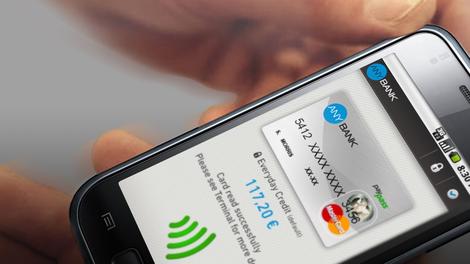
Just as disappointment over the lack of NFC in the iPhone 5 is finally settling down, reports that Cupertino is working on including biosecurity in future iPhones for NFC payments is already making the current generation of Apple smartphone look dated.
According to a report in The Australian, biosecurity firm Microlatch is in discussions with Apple to include its fingerprint technology in future versions of the iPhone.
The technology, which uses patented fingerprint recognition "without the need for central processing or storage", meets stringent banking security standards and is set to work in conjunction with NFC payments for a safer digital wallet experience.
The revelation of Apple's plans comes courtesy of former Commonwealth Bank of Australia boss, David Murray, who is a lead investor in the Australian biosecurity startup.
Security is key
This announcement about Apple's focus on mobile security follows the company's acquisition of mobile security company Authentec in July for $US356 million.With a focus on fingerprint security through both the Authentec and Microlatch deals, it seems evident that Cupertino is destined to incorporate some form of biometric security on future iOS devices, a decision that is sure to win it popularity in the corporate world.
It also shows that NFC is clearly seen as a mobile payments solution, with technology like fingerprint authentication overcoming the security fears surrounding smartphone payments.
Whether the technology will arrive in the iPhone 5S or the iPhone 6 is anyone's guess though.
Via: The Australian (paywall)

| |
Read More ...
Rumor: Microsoft-branded Windows 8 smartphone on the way

Microsoft's lineup of OEM partners for Windows Phone 8 devices launching in October include Nokia, Samsung, and HTC, but the software giant may again be getting in on the hardware game.
Introducing a Microsoft-branded smartphone could be a way to jumpstart Windows Phone 8 in a crowded mobile OS marketplace, though it wouldn't necessarily represent a takeover of the hardware business enjoyed by the company's partners.
The move, first reported by BGR care of unnamed sources, would be along the lines of Microsoft's Surface launch. In a lead-by-example approach, the company is releasing its own Windows RT-running tablet later this month.
Adding to the speculation, a separate source has reportedly told China Times that Microsoft is planning to launch a "Surface" branded smartphone.
Analyst: Microsoft smartphone approach mirrors Google
A Microsoft-branded smartphone running Windows Phone 8 is still unconfirmed, but the strategy rang a few bells for analysts like Wayne Lam."Microsoft diving into this really makes sense," Lam, a senior analyst at IHS iSupply, told TechRadar. "We've seen Google take an interest in creating Nexus devices. They're there to create a new example, a new device, and new form factor."
However, Lam agreed with the popular sentiment that Microsoft's hardware interests stop there.
"They wouldn't be doing it to steal market share away from Samsung or HTC," he added. "They'd be doing it to showcase what the platform can do."
"Microsoft has traditionally not been a hardware company," Lam said of the company's 37-year history. "But they're getting into a space where they have to set a hardware agenda."
Speculation points to 2013 release date
It looks as if Microsoft's "hardware agenda" won't be fully realized until next year, though. The Microsoft smartphone isn't expected in the first round of Windows Phone 8 devices, a second source told BGR.Instead, there'll be five phone running the mobile OS at launch, and all are by key Microsoft partners: Nokia Lumia 920, Nokia Lumia 820, HTC Windows Phone 8X, HTC Windows Phone 8S, and Samsung Ativ S.
This gives Microsoft's OEM partners ample time - and the holiday season - to introduce their own Windows Phone 8 hardware.

| |
Read More ...
Non-game software now available on Steam

Steam's plans for digital software distribution domination continue apace, with Valve officially bringing its first non-game titles to the Steam storefront today.
Perhaps unsurprisingly given the audience, the first titles to be made available have a heavy developer slant, targeting Steam users and creators wanting to make their own games for the Steam platform.
Included in the lineup of software available at launch of the service are ArtRage Studio Pro, CameraBag 2, GameMaker: Studio, 3D-Coat, 3DMark Vantage and 3DMark 11.
Originally slated to launch in September, the software is initially only available to PC-based Steam users, although undoubtedly Mac users will get some non-game Steam content eventually.
Cooking with Steam
For Steam developers, the first selection of non-game software will be a welcome addition to the store, given many of the programs will take advantage of popular Steamworks features like easy installation and auto updating.And as with games on Steam, the software available through the platform will also enjoy the benefits of Steam sales, and strangely, Steam achievements.

| |
Read More ...
Microsoft holiday stores set to pop for Surface launch

Microsoft will stand up 32 brick and mortar stores in North America this holiday season to help sell its new Surface tablet.
The pop-up stores are scheduled to open on Oct. 26 in cities across the U.S. and Canada as special locations open only during the holiday season.
"We can't wait for you to take home Surface," Microsoft said on its official store site. "You'll find it and a curated selection of the latest Microsoft products at any of our Holiday Stores."
The 32 temporary locations include new stores in New York City, San Francisco, Denver, Miami, Indianapolis, Las Vegas, Nashville, Oklahoma City, Atlanta, Pittsburg, Charlotte, San Antonio, Toronto, and Vancouver.
Countdown to launch
The Surface tablet will launch on Oct. 26 alongside the pop-up store openings, with a launch event scheduled the day before in New York.Surface will have competition right out of the gate, as the Lenovo ThinkPad Tablet 2, Dell XPS 10, and Dell Latitude 10 will mark the first run of OEM Windows 8 tablets on the same day.
The pop-up stores will act as one-stop shops for anything Windows 8 related this holiday season, including a selection of laptops and desktops on display in addition to tablets.
Microsoft co-founder Paul Allen recently put the new OS through its paces and gave it his blessing, though called it confusing in some respects.
Early user impressions were more mixed, with more than half of Windows 8 users saying they still prefer Windows 7 in a recent survey.
Those still on the fence about Windows 8 and Surface are running out of time to make up their mind, with the imminent launch only three short weeks away.

| |
Read More ...
EE unleashes 4G ready smartphone ahead of network launch

Want to know which phones will be 4G-ready in the UK first? EE has spilled the beans on the new line up.
The list comprises of: the Samsung Galaxy S3 LTE, the HTC One XL and the Huawei Ascend P1 LTE, which are available today from Orange or T-Mobile.
As the EE network is not yet ready, customers will be able to buy the phones on the subsidiary brands and then upgrade to 4G plans when they become available.
It's a similar scenario to the iPhone 5, which has seen users on iOS 6 already noting an EE logo in the corner of their new Apple smartphone.
EE has also confirmed the launch of the Samsung Galaxy Note 2 LTE to its 4G-ready range although it will be a little longer before getting their hands on it, as it won't be ready until October 15.
Marketing chat
Pippa Dunn, chief marketing officer for EE, ruminated: "We're delighted to now be offering our customers a range of 4G ready smartphones to choose from."Not only can they use their phones straight away on the UK's biggest 3G network, but they can also have the opportunity to be amongst the first to benefit from superfast 4G mobile speeds when we launch our EE brand".
The exact launch date of said brand is unclear, with a timescale of 'in the coming weeks' being mooted. We're still nowhere near getting an idea of how much this data will cost, but word is the plans won't be much more than 3G is now as EE looks to aggressively gain customers to the new network.

| |
Read More ...
Analyst: RIM sell-off could be more trouble than it's worth

With speculation continuing to mount over RIM's ability to continue operating, analysts have cast doubt over whether the company could attract buyers in the event of a sale.
The launch of the BB10 operating system is widely seen as the last chance for the BlackBerry brand to re-establish itself among the smartphone elite, before RIM decides if it should sell or break up the company.
However, even if RIM decided to shift all or part of itself, potential buyers might not be too enthralled by the prospect of taking on a myriad of problems, according to Credit Suisse analyst Kulbinder Garcha.
Garcha said that even the most resourceful buyer may struggle to turn RIM, which is currently engaging in wholesale job cuts amid falling sales and floundering share prices, into a winner once again.
High effort for little reward?
"Any deal for [the] company is highly complex in our view, requiring simultaneous management of a declining business, as well significant restructuring, and as such an acquirer maybe be best advised to wait for [the company] to shrink meaningfully before making any potential move," Garcha wrote in a note to investors."A break up is possible," he added.
"[But] we question the quality of the underlying patent portfolio and also believe that converting RIM's existing network operations center for other OS platforms may require a high level of effort for minimal functionality improvement."
Garcha noted that BB10 may come too late to re-engage the dwindling BlackBerry user base and added that RIM's market share may drop as low as 2.5 per cent next year, further denting any sell-on value.
In a call-in with investors last Thursday, RIM revealed its built a revenue of $2.9 billion (UK £1.78, AU $2.78) this past fiscal quarter, up from $2.8 billion (UK £1.72, AU $2.68) during the previous quarter.
However, this figure is 31 per cent below what the company brought home during the same quarter last year, when that number landed at $4.2 billion (UK £2.58, AU $4.03).
TechRadar has reached out for a second opinion from the financial community and will update this story if and when we receive further analysis.
Do you there's still a chance that RIM can turn things around with BB10? Let us know your thoughts in the comments section below.

| |
Read More ...
Google Wallet enters microtransaction market

Google's entering the micropayment game thanks to a new service aimed at providers of written content, the company confirmed to TechRadar.
The new program, which launched Tuesday, allows users to buy individual web articles from $0.25 (UK£0.15, AU$0.24) to $0.99 (UK£0.61, AU$0.94) each.
Once a reader purchases the content they will keep it forever, according to Google.
The program uses Google's existing digital wallet service, Google Wallet, which stores credit card info and loyalty cards for users to shop with on or offline.
Service specifications
Publishers can give readers a preview of an article, while the rest of the material will be opaque to give readers a sense of how long the rest of the story is.Then, users can press the Google Wallet button to unlock the rest of the content. All publishers have to do is install a code on their servers to enable Google Wallet.
If a user is unhappy with his or her purchase, then they are able to get an "instant refund" within 30 minutes of the buy. However, Google will guard against excessive refund abuse.
Google's new partners
Google has been a little choosey with its first dance partners. So far, it's teaming up with Pearson and Oxford University Press, which will both post 80,000 total reference articles for purchase.Google's also working with DK Publishing and technical book publisher Peachpit.
If things go well with the pilot sites, other publishers are sure to get in the game. Google will soon create plug-ins for popular web publishing platforms to help facilitate the service.
Google Wallet has so far mainly been used to buy physical good, whether or not it was purchased in store or online.
It uses NFC terminals to allow users to shop physically at many stores such as Macy's, Jamba Juice, OfficeMax, and Old Navy.
Online shoppers can also use the Google Wallet button on sites such as Buy.com, TigerDirect.com, or to buy movie tickets from Fandango's mobile movie service.
This isn't Google's first foray into facilitating the trade of purely digital goods. Wallet is already used to help gamers buy digital items in the virtual world.
However, its digital gaming trade doesn't offer any instant refund functionality.
The hardships of digital economics
Many services have tried to create systems where buying content online is easy and safe. But attempts by companies such as CyberCash, DigiCash, and Bitcoin to create such digital microtransaction economies haven't had much success.Experts theorized many micropayment systems have failed because they require users to install software and deal with complex interfaces.
Users have also been skittish about handing over their credit card info to companies they don't really know and buying content without a safety net.
But Google Wallet may solve those problems: Google Wallet has been around for a while now and users trust the brand more and more.
After setting up an account, users can just press a button to buy content. And if users are unhappy with their purchase, they can get an easy refund.
What Google Wallet might do
It's hard to predict the impact Google Wallet will have on the market, but it may just be the solution to the ailing newspaper industry.Media companies have had problems selling online content to consumers ever since the internet began. A quick and easy way to buy articles may be just the tool they need to become solvent in an environment where pirating their content is as easy as copy and paste.
But Google says this isn't the silver bullet for monetizing Internet content, according to a post on its Commerce blog:
"Users love free content, and so we expect that advertising will remain the most effective monetization model for most content on the Web," the post said.
"However we know that there is more great content that creators could bring to the Web if they had an effective way to sell individual articles that users can find with search."
This might be the first step to creating a ubiquitous internet economy, with a safe, standardized method of payment across the digital environment.
Buying something with the press of a button from a website you've never visited may replace the arduous process of entering in credit card info with every internet vender.
Google Wallet may even one day replace real wallets, and buying something online or in a store may become similar. But that's all in the tea leaves, and Google Wallet's success depends on how many venders and consumers it can get to start using the entire service.
Google has yet to announce how it'll make money off the service, though presumably it'll take a cut of the transaction. But Google may just receive the gold doubloon for slaying content providers' white whale.

| |
Read More ...
Lenovo readying U.S. production plant

Guilford County, N.C. will get a new resident next year in the form of a PC production plant owned and operated by Lenovo.
The plant, set to open in the city of Whitsett, will only house 115 manufacturing employees when it starts making Think-brand notebooks, laptops, and tablets, according to the News Observer.
Lenovo, based in China, already has a Whitsett order fulfillment and distribution center, which it opened in 2008.
The move, based on a solid education and employment infrastructure in the area, is a sign of faith that P.C.'s will prosper stateside, David Schmook, president of Lenovo's North American business, told the Observer.
"[The plant] reflects our confidence in the U.S. PC market," he said.
Raising Lenovo's profile
Though U.S. production costs are typically higher than other parts of the world, the Whitsett plant gives Lenovo the opportunity to build up its U.S. profile while also delivering "products to customers even more quickly and reliably in many situations."The company only really entered the U.S. market in 2005 after picking up IBM's PC business.
It currently holds the No. 2 PC maker position though this move could push it over the edge to overtake HP in first place.
Although it's second internationally, Lenovo only occupies the No. 4 spot in the U.S. PC market.
According to executives, the Carolina move isn't just a one-off publicity stunt, pointing to more plants, jobs, and a larger American presence further down the road.
North Carolina currently has an unemployment rate of 9.7 percent, making the new jobs - and potential future positions - more than welcome in the community.

| |
Read More ...
Apple patents universal wireless iDevice dock
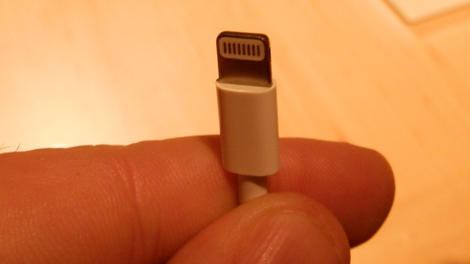
Apple Tuesday was granted a patent for a universal wireless dock that could help ease the minds of users who have accumulated their fair share of iDevice accessories over the years.
Filed as U.S. patent number 8,280,456, the universal dock appears to feature a single media player connector, presumably a Lightning connector, with an adapter for 30-pin iDevices and even non-Apple media players.
"For various reasons, these media players may have different sized connectors. For example, the media players may be made by different manufacturers," the patent stated.
"Also, they may be made by one manufacturer, but a newer media player may have a more advanced, smaller sized connector receptacle."
The key to the dock is a wireless transmitter, which will send a signal to a receiver plugged into any existing iDevice accessory to solve the current incompatibility problem.
Incompatibility abound
Apple drew the ire of many fans when it introduced the Lightning connector with iPhone 5, iPod touch, and iPod nano.The smaller, reversible 8-pin connector replaces the 30-pin connector of legacy iDevices, making the new tech incompatible with existing accessories.
Apple already sells an adapter for $29 (UK£25, AU$35), but the newly patented dock could offer a more elegant solution by wirelessly connecting any iPhone or iPod to compatible speakers regardless of whether it uses a 30-pin or Lightning port.
The patent seems to contradict comments made recently by Apple's Senior Vice President of Marketing Phil Schiller, who said that there were no plans to make an iPhone 5 dock in the works.
It's possible that Apple is just covering its bases against a potential third-party dock, but with the number of 30-pin accessories out there it certainly wouldn't hurt for the wireless dock to surface as an actual product.

| |
Read More ...
Global bank recommends Nokia be split and sold

Global bank Credit Suisse downgraded Nokia from "neutral" to "underperform" on Monday, underscoring the Finnish phone maker's recent difficulty making a mark in an industry currently dominated by the likes of Apple and Samsung.
Despite Microsoft's backing with the Windows Phone platform, Nokia's devices have yet to have the impact of Android and iOS phones.
And though Nokia's current view is that "things are about to change," that change may not be for the better, according to Credit Suisse.
The bank has suggested that, in the long run, it might be best for Nokia if the company were divided up and sold to various buyers.
How much for that Nokia in the window?
Credit Suisse suggested as part of its forecast that Apple in particular may be interested in snatching up Nokia's considerable portfolio of patents and other intellectual property.The bank also noted that Ericsson, Huawai, and ZTE may well have interests in Nokia Siemens Networks and other parts of the company.
Adding insult to injury, Credit Suisse pointed out the slim likelihood that any company would want to buy Nokia whole, explaining that breaking the company up and selling its various divisions separately may be the right long-term choice.
On the other hand, research and analysis firm Recon Analytics' analyst Roger Entner told TechRadar in an email on Tuesday that breaking up and selling Nokia would actually be "the worst case scenario" for the company, adding that he considers it "quite unlikely," though "not unprecedented."
Entner suggested that buyers snatching up disparate pieces of Nokia's business likely wouldn't come out on top anyway.
What about maps and Windows Phone 8?
Of course, Nokia's been stirring plenty of other pots, not least among them its considerable maps data, which the phone maker has openly claimed is superior to Apple's much-maligned Maps apps.And the Finnish company just revealed two new Windows Phone 8 handsets, the Lumia 920 and Lumia 820, in September.
Combined, the new Windows Phone 8 devices could help alter Nokia's fortunes.
On the other hand, HTC's latest device announcement, the Windows Phone 8X, is being touted as the new flagship Windows Phone 8 smartphone, indicating that even Microsoft may be losing faith in Nokia.
But Entner reminded TechRadar that phones don't sell solely on being a "flagship" device.
"Look how much 'flagship device' did for the Nokia 800 in the US," he wrote.
He added that Microsoft is unlikely to let Nokia be broken up and sold, as Nokia's failure would be "devastating" to Microsoft's business.

| |
Read More ...
Report shows Samsung US market share stymied while Apple's grew

Though Samsung has dominated the U.S. cellphone market for most of 2012, new numbers reveal Apple is closing in on the No. 1 spot.
Using data from more than 30,000 subscribers, comScore's latest market share report revealed Samsung has leveled off, while Apple continues to add more and more users.
Samsung devices are used by 25.7 percent of the censused consumers, according to the August 2012 numbers, but that percentile hasn't changed one iota since May.
Apple on the other hand saw its consumer base grow to 17.1 percent last month, which is a 2.1 percent increase over May's 15 percent stake.
What's even more telling is that Apple saw the only significant increase of all smartphone providers, and this was before the iPhone 5 was even announced.
Forward thinking
Despite Apple's improving numbers, the company's actually still in third place overall in the U.S.LG, though No. 2 on the list, has seen its grasp on the second spot become more tenuous based on this latest report.
Previously holding onto 19.1 percent of the market, LG lost .9 percent of its consumer numbers from May through August.
With Apple breathing down LG's neck even before the iPhone 5 was revealed, the next three months don't bode well for the South Korean manufacturer, despite the infusion of devices like the Optimus G onto the market.
HTC was the only other company to see an improvement in its numbers, but the .2 percent increase in consumer handsets was hardly enough to lift HTC out of last place.
Whether the arrival of the HTC One X+ will make a difference remains to be seen, but its release is unlikely to bolster HTC's numbers the same way the iPhone 5 could improve Apple's.
Android's still the dominant OS
Even if Apple is somehow able to overcome Samsung's stranglehold on consumers, Google's Android OS will still be used in more phones than iOS.Android and iOS sit atop the operating system standings with 52.6 and 32.3 percent shares, respectively.
Even iOS 6 is still only available on iPhones, whereas Google's Android OS is available on dozens of smartphones, making it rather difficult for Apple to catch up.
Research in Motion's BlackBerry OS, currently in third place, fell 3.1 percent in the three-month period between May and August, and now rests at a paltry 8.3 percent.
Microsoft didn't have quite as bad a quarter, falling only .3 percent, but the Windows Phone OS is barely making a dent at 3.6 percent of the market.
Even with Nokia launching an all out assault with Windows Phone 8 very shortly, the additional boost Microsoft will get over Symbian's .7 percent share may only be enough to surpass declining RIM.
When the next set of comScore numbers arriving this November, it will be interesting to see just how much a difference the iPhone 5 makes for Apple, and whether or not Microsoft can overtake RIM with Windows Phone 8.

| |
Read More ...
Skype teams up with Wicoms to offer free Wi-Fi in UK

Skype is bringing free Wi-Fi hotspots to stores, cafes and restaurants across the UK and Ireland after hooking up with wireless provider Wicoms.
Users will be able to access the hotspots through the existing Skype Wi-Fi app and will be able to sign in using their Skype ID without paying for access as they may have to when using Skype Wi-Fi at airports.
Businesses will have to pay to offer the connectivity at a flat rate of £9.99 a month, along with the cost of a £49 Wi-Fi router. Companies signing up in October will get a free month and a free router.
Skype Wi-Fi will be powered by the established Wicoms wireless network with businesses able to register with immediate effect.
Universally accessible
Shadi Mahassel, programme manager for Skype Access said: "Simplicity is at the heart of everything Skype does. We believe that internet access should be available to everyone in a simple and affordable way."Our partnership with Wicoms enhances our ability to make Skype universally accessible and expands on our WiFi strategy, which today provides paid WiFi access at over one million locations worldwide."
Wicoms says the accord will help physical shops to compete with their online counterparts by engaging with customers through their smartphones.
Owen Geddes, MD of Wicoms said: "We're helping brick and mortar retailers effectively compete with online retailers.
"By working with a globally trusted partner like Skype to provide Free Skype Wi-Fi on-premise, business owners and high street retailers can open a dialogue with potential customers and encourage sales conversion with the power of the mobile phone."

| |
Read More ...
Apple avoids Motorola trouble, gets hit with Passbook patent suit

In August, Motorola filed a complaint with the U.S. International Trade Commission (ITC) against Apple, accusing the company of violating seven of its patents.
Nearly all Apple devices currently on the market figured into the complaint, including the iPod touch, several iPhones (including the iPhone 4S ), the iPad 2 and new iPad, as well as MacBook Pros and the MacBook Air.
The ITC was scheduled to look into the filings, but Tuesday Motorola withdrew the complaint, giving Apple somewhat of a reprieve from its recent litigious predicaments.
Had the ITC found Apple in violation of Motorola's patents, it could have imposed a U.S. sales ban on some or all of the products.
However, that brief moment of relief was soon lost when Apple was named in another new suit, this time from a developer alleging Passbook blatantly infringes on several of its patents.
Why Motorola's change of heart?
It's entirely possible Motorola and Apple could've come to some sort of an arrangement or settlement on the patent issue.However, as Foss Patent pointed out, the motion to dismiss the charges made no mention of a deal between Apple or Motorola over the issue.
Foss Patent's Florian Mueller said the recent appointment of Judge Theodore Essex to the case may have influenced Motorola's decision.
As Mueller noted, Essex "doesn't make things easy for complainants," adding, "[m]aybe it's not just a coincidence that Motorola withdrew its complaint shortly after his appointment."
Earlier this year, HTC withdrew its patent infringement claim against Apple, though in that instance HTC's case was thought to have little merit.
TechRadar has reached out to Motorola, and will update this story if and when a request for comment is returned.
Passbook problems
Despite dodging the proverbial patent bullet from Motorola, Apple now faces a potential suit from yet another company.Ameranth, a gaming and hospitality software developer, has filed a complaint with the ITC claiming Passbook violates four of its patents.
Introduced in iOS 6, Passbook stores information like boarding passes, coupons, and customer loyalty cards in one convenient location for ease of use.
The patents in question also deal with information storage and management, and to Ameranth, the way Passbook synchronizes that data is a bit too similar.
In the suit, Ameranth not only claimed Apple was aware of the patent violations, but also that one patent in particular (6,384,850) was "cited as a prior art reference in two Apple iPhone patents issued to named inventors Bas Ording and Steven P. Jobs."
Ameranth is looking to recover three times the amount of damages suffered as a result of Apple's infringements.
TechRadar has reached out to Ameranth and Apple, and will update this story if and when a request for comment is returned.

| |
Read More ...
UK network peace treaty will bring nationwide 4G in summer 2013

Customers on Vodafone and O2 will be able to join EE users on 4G LTE networks by the end of summer 2013 thanks to a new peace agreement between the carriers.
Following crunch talks with culture secretary Maria Miller on Tuesday, the networks have put legal differences aside to ensure that EE cannot get too far ahead in the race for faster mobile connectivity.
EE, which owns Orange and T-Mobile, plans to launch its 4G LTE network next month and will offer next generation speeds for devices like the Apple iPhone 5 and maybe a 4G version of the Samsung Galaxy S3.
The new agreement between the remaining networks comes following a failure to prevent EE getting the jump-start, and will mean the long-awaited spectrum auction can now be brought forward to January.
'Hugely beneficial for UK'
Ofcom, the UK's communications regulator, had initially planned to hold the auction in February or March, but now all parties will be able to press on with establishing the infrastructure once the spectrum has been allocated.Following the agreement, Miller, who recently took over from Jeremy Hunt as culture secretary, said: "Delivering 4G quickly is a key part of our economic growth strategy.
"I am grateful to the mobile operators for their co-operation in bringing forward vital 4G services. The open and collaborative approach taken between the government and the mobile companies will have hugely beneficial results for UK business and investment.
"We anticipate that 4G services will boost the UK's economy by around £2-3bn."
Clearing TV signals
Once the spectrum has been allocated, it will be up to mast company Arqiva to clear the spectrum, which was being used for digital TV services, so it can be replaced by 4G connectivity.Ofcom has now brought the deadline forward to May for that task to be completed. This will then enable the networks to roll out the 4G LTE networks months ahead of schedule.
O2 CEO Ronan Dunne said expressed frustration at the delay, but pointed towards the future.
"Everyone is pleased that we've made this progress," he said. "it's just a little bit frustrating that it's taken so long. Before our various interventions we didn't have a genuine level playing field and we risked a 4G digital divide."

| |
Read More ...
iOS 6 adoption booming despite Apple Maps troubles
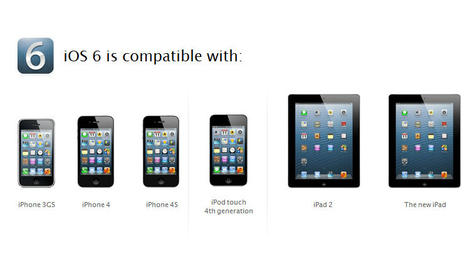
Apple's most recent OS release, the divisive iOS 6, hasn't gone off without a hitch, but the update's issues haven't stopped tons of Apple fans from upgrading their devices during the last half of September.
iOS 6 was pushed out to compatible versions of the iPhone, iPad, and iPod touch on Sept. 19, and within one day, 15 percent of those devices were running the new OS, according to data from advertising and research firm Chitika.
The most contentious aspect of Apple's new iOS 6 is easily the Apple Maps app that replaced Google Maps. It's been criticized for its inaccurate data and generally sloppiness.
Nevertheless, iOS 6 adoption during the new OS's first two days of availability reportedly occurred 122 percent faster than iOS 5 upgrades when that OS version was released in 2011.
iPhone vs. iPad vs. iPod touch
According to Chitika's figures, which the firm deduced by tracking millions of users' mobile ad data from Sept. 18 to Oct. 1, iPhone users are the leaders in iOS 6 adoption.Up to 60 percent of iPhone users have already upgraded to the new iOS 6, while that number falls to 45 percent for iPad users and 39 percent for iPod touch users.
As Slashgear pointed out, though, more hardware versions of the iPhone are compatible with iOS 6 when compared with the various iPad and iPod touch models, which may explain the higher upgrade rate for iPhone users.
iOS 6 is compatible with the iPhone 3GS, iPhone 4, and iPhone 4S, and comes standard on the iPhone 5, though some features - like Siri - may be missing on older devices.
On the other hand, any iPod touch released prior to the 4th gen iPod Touch won't vibe with iOS 6, and even the original iPad can't be upgraded to the new OS. So those lower adoption rates shouldn't come as a surprise.
The loyalty of Apple fans
Apple's switch to its own internal maps app has caused quite a controversy, with Apple CEO Tim Cook publicly apologizing and even suggesting that iOS 6 users go with a competing maps app - like one from Microsoft or Google - for now.In fact, it seems based on some data that 24 out of 25 users took that advice to heart.
But it's already been posited that iPhone users feel more brand loyalty than users of other smartphones, which may explain why they're choosing to upgrade their devices to iOS 6 despite the uproar over sloppy maps data.
Then again, maybe they just can't stand the little red badge on their settings app that won't go away until they upgrade to the new OS.

| |
Read More ...
Available Tags:Motorola , UK , Apple , Windows 8 , Windows , smartphone , Steam , Microsoft , 4G , Google , Lenovo , wireless , Nokia , Market Share , Samsung , Skype , iOS ,


No comments:
Post a Comment