

Samsung producing the first 2GB LPDDR3 RAM for next-gen mobile devices

Samsung is ushering in the next generation of mobile memory with the mass production of the first-ever 2GB LPDDR3 RAM.
The new mobile chips run at a total of 12.8 gigabytes per second and 1600 Mbps per pin. That translates to the 2GB LPDDR3 being approximately 50% faster than a single LPDDR2 chip.
Practically, this higher data transfer rate allows the chip to support high resolution 3D graphics and full HD video playback on screens larger than the standard four inches. Tablets and extra large smartphones are what Samsung is going after here.
The 30nm class 2GB LPDDR3 RAM is the first such chip available in one space-saving package, according to Samsung, which held its Mobile Solution Forum in Taiwan today.
Samsung doubles its LPDDR2 RAM in 10 months
Besting Moore's law, Samsung took just 10 months to double the speed of the LPDDR2, which went into mass production in October 2011.In that time, Samsung was able to put its LPDDR2 RAM into several devices including the Motorola Droid 4 and iPad 3. Although Apple hasn't officially confirmed the RAM specs for the iPhone 5, the forthcoming phone is also expected to be utilizing 1GB of LPDDR2.
Devices packing next-generation LPDDR3 chips are expected to hit the market in 2013.
"[Samsung is] helping to accelerate growth of the mobile memory market," said Samsung Executive VP of Memory Sales & Marketing Wanhoon Hong. "With this rapid introduction of 2GB LPDDR3, we are moving very assertively to expand our global leadership on the premium side of our extensive memory portfolio."
This dominance is no doubt aided by the fact that Apple has relied on Samsung for manufacturing so many iOS device components, from RAM, to displays to CPU chips. Considering the stellar iPhone 5 sales, that "global leadership" isn't about to stop, even in the face of the Samsung vs. Apple lawsuit outcome.

 |  |
Read More ...
Net neutrality groups give notice to file FCC complaint against AT&T

Net neutrality public interest groups have announced plans to file a complaint against AT&T for blocking the iPhone's popular FaceTime application for some customers. The groups claim the new policy violates FCC Open internet rules.
Free Press, Public Knowledge and the New American Foundation's Open Technology Institute released a letter stating their intentions to file a formal complaint with the FCC.
It says by baring the video-calling service, AT&T violates a FCC rule the prohibits providers "from blocking any application that competes with the provider's voice or video telephony services."
FaceTime is a feature on the iPad, as well as the iPhone 4, 4S, and the new iPhone 5, which allows users to call each other using video. When the app first appeared it was restricted to use only over Wi-Fi. But with the release of iOS 6, the feature can now be used over mobile networks.
AT&T harming customers?
The groups claim AT&T is harming its customers with the new policy, especially the deaf and those who rely on the service to communicate with overseas relatives.AT&T announced last month that only users who subscribe to the carrier's new Mobile Share data plan can use FaceTime over cellular.
The plan gives customers a single bucket of data that can be used by up to 10 devices. The block doesn't affect the application if used over Wi-Fi, only AT&T's network.
Joel Kelsey, legislative director for Free Press, said the move goes against the principles of Net Neutrality, which says internet providers shouldn't favor some types of data over others. Kelsey likens the policy to an internet provider that bars users from streaming Netflix unless they also buy a TV cable subscription.
Kelsey says if AT&T is allowed to block FaceTime, there is no telling what other apps it can block.
"If they are going to block different sub-sections of subscribers to certain applications, there is no limit to what they can do," he said. "There is no stopping them to decide which apps fall in their plans and which fall outside their plans."
Though AT&T wasn't able to provide TechRadar with a statement at the time of publication, the company did respond to FaceTime criticism on its public policy blog.
It said Public Knowledge's criticisms are a "knee jerk reaction" and doesn't violate any of the FFC's net neutrality requirements about transparency or blocking:
"The FCC's net neutrality rules do not regulate the availability to customers of applications that are preloaded on phones. Indeed, the rules do not require that providers make available any preloaded apps.
Rather, they address whether customers are able to download apps that compete with our voice or video telephony services.
AT&T does not restrict customers from downloading any such lawful applications, and there are several video chat apps available in the various app stores serving particular operating systems."
We'll see how the FFC handle's the situation in 10 days when the advocacy groups are allowed to file a complaint after today's notice.
There is no guarantee the FCC will enforce the Open Internet rules, which have had pretty mild penalties in the past.
TechRadar will update this article if and when we receive comment from AT&T.

| |
Read More ...
Apple EarPod headphones 'more durable' but still 'throw away'

A teardown of Apple's new EarPod headphones show them to be more durable than their predecessors, with greater resistance to water and sweat.
The new $29 (£25) buds, launched alongside and shipping with the iPhone 5 and new iPod touch, were unleashed last week promising a better fit and improved sound, by pumping tunes directly into the ear canal.
Apple promised that the EarPods, which feature two small speakers instead of one larger speaker, were like "nothing you've ever seen" but scored a disappointing 2.5 out of 5 in a TechRadar review.
Now the guys at iFixit have placed the new highfalutin earphones under the knife to see whether the innards are really that different beyond the new cone-shaped design.
Paper beats plastic
The site used a scalpel and a guitar pick to prise open the EarPods, which Apple says it spent three years perfecting.The precise surgical procedure found Apple is now using a paper diaphram for the speakers rather than the plastic used in previous models, which makes it more resistant to tearing.
It also found that the remote is sealed better, making it less prone to water or sweat damage, but aside from those two items the innards are pretty similar, the site says.
To that end iFixit says that, if the headphones falter, then there's no point attempting to salvage them.
"Unfortunately, these products are still of the throw-away kind," the site concluded.
"Sourcing parts is next to impossible, and it would be a tough sell to convince someone to take apart their earbuds in stead of buying a new pair. They will never be the same once taken apart."
Best buds? Not quite
Our review, posted last weekend, cast doubt on Apple's assertions that the new EarPods offer as much of an improvement as it would have us believe, over the ghastly previous model.With iFixit's teardown proving, significantly, that the innards are extremely similar, it appears that Apple has a bit of a cheek asking 25 bones for, essentially, an unrepairable pair of earphones.
Although, they'll come as standards with the new iPhone and iPod range, it seems you'd need to be an all-out Apple freak to spend your hard-earned on these buds, as a standalone purchase.

| |
Read More ...
HTC teases 9/19 event with Facebook post

We are hours away from HTC "see what's next" event and the company, playing coy, posted an official teaser on its Facebook page Tuesday afternoon to whet our whistles.
Just the corner of a phone is visible, though what we can see what appears to be the clock of a Windows Phone, giving enough of a hint as to what we can expect Wednesday morning.
The picture is also accompanied by the caption: "When beautiful hardware meets stunning software."
Could HTC not only be playing up its new design but also what we'll find inside?
HTC Accord/HTC 8X?
A leaked image purportedly of the HTC Accord (also known as the HTC 8X), a Windows Phone 8 handset, also emerged Tuesday.Whether this device, if authentic, and the Facebook teaser are one in the same, we won't know until Wednesday, Sept. 19.
TechRadar will be at the New York City event live, bringing you all the latest from HTC as it happens.

| |
Read More ...
Facebook further embraces mobile with updated Pages Manager, off-site ads

Facebook CEO and founder Mark Zuckerberg wasn't kidding when he reportedly said "mobile is everything" during the TechCrunch Disrupt conference last week.
The social network on Tuesday announced two new fronts to its mobile ad strategy: a new version of Pages Manager and the beginnings of an off-site ad network.
Pages Manager now allows administrators to promote their pages via an iPhone or iPad app.
For a fee, admins - ostensibly business owners - can choose which posts they'd like to promote directly from their iOS mobile devices.
Small businesses had reportedly been asking for the mobile ad-buying capability for some time.
Seeds of an off-site ad network
The company also announced Tuesday that it has entered a test period for an off-site ad network that puts Facebook ads on non-Facebook mobile apps and web pages.The ads are similar to ones already found on Facebook, just optimized for other sites and the mobile web.
Zuck's team is currently working with a select number of ad exchanges with existing publisher relationships, according to a published report.
The plan is for those publishers to turn around and sell the Facebook-styled ads to third-party applications and websites.
"Right now we're testing to see how these ads perform, whether people find them relevant. They could be an interesting way to discover new mobile apps and see relevant ads off of Facebook," Facebook told TechCrunch's Josh Constine.
From an advertiser's perspective, they have access - for a price - to all the data Facebook has gathered on its users. That data allows them to get the most bang for their advertising buck.
"With Facebook you have really great targeting," the company said to Constine. "They'll be able to reach people that are more likely to engage with the ads they see."
Developers who place ads on third-party apps and sites that direct users to app download stores like Apple's App Store and Google Play are likely looking forward to the network, as are marketers who can now produce uber-honed ads.
Facebook assured Constine no identifiable data would be shared with advertisers...just accept the possibility highly personalized ads will pop up on your screens when you're not logged into your profile page.

| |
Read More ...
Nintendo won't sell standalone Wii U GamePads - unless you break yours

Nintendo's Wii U is set to launch on Nov. 18, and pre-orders are already selling out, according to some reports.
But some troubling news arrived this week when Nintendo announced that it won't sell standalone Wii U GamePads - the tablet-like controllers - in the west for some time.
That's because games that actually require two GamePads won't come out until next year, which makes quite a bit of sense.
But what is one to do if that GamePad gets accidentally sat on or chucked at the TV screen in frustration?
Nintendo's got you covered
The news today is that Nintendo will in fact offer replacement GamePads to those who require one.But it's not going to do it for free - a new Wii U GamePad will cost "a fee," according to Nintendo, and there are some guesses as to what that fee could be.
Nintendo hasn't confirmed what it will charge for replacement GamePads, but the standalone tablet controllers will cost ¥13,400 in Japan, or around $172 (£106).
Nintendo may not charge full price for a GamePad to those whose controllers have been lost, stolen or broken, but chances are it won't come cheap.
Wii controllers' destructive history
Keep in mind that Nintendo is the company that in 2007 began offering free protective rubber cases for its previous generation of Wii controllers when reports of damage to living rooms began flooding in.Granted, those Wii Remotes themselves proved quite durable.
The Wii U is launching Nov. 18 and starting at $299, with a $349 version bringing more storage, stands for the console and GamePad, and more.
With more than 50 titles expected during the console's launch window, including potential heavy hitters like New Super Mario Bros. Wii, Mass Effect 3: Special Edition, and ZombiU, the Wii U could prove a major boon to Nintendo's business.

| |
Read More ...
Analyst: Apple to produce new CPU every two years

When Apple's iPhone 5 arrives in consumer hands, it will come complete with a 1.2GHz dual-core A6 CPU.
Unique to Apple, the custom designed chip was built from the ground-up completely in-house utilizing architecture licensed from ARM.
Though the history of the A6 chip is pretty interesting in and of itself, it's the future of Apple's CPU development that has some analysts excited for 2014.
According to Linley Gwennap, head of the Linley Group, he predicts Apple will introduce a new CPU every two years, starting with the A7 in 2014.
New every two
Linley, who authored the report detailing the history of the A6, believes Apple will continue to develop their own chips in-house from now on.In his report, Linley stated, "To keep pace with competitors using ARM's own cores, the company will have to crank out a new CPU design every couple of years."
"We believe Apple is already working on a next-generation CPU, which will likely implement the 64-bit ARMv8 instruction set."
Since he thinks 2014 is the target for the A7, Linley suggested, "for its 2013 products, Apple will have to rely on the same CPU design, perhaps in a quad-core configuration and with a higher-performance GPU."
Whether this slight upgrade to an A6X chip means there will be a slightly upgraded iPhone 5 in 2013 is unclear, but it wouldn't be outside the realm of possibility given Apple's previous release history.
$500 million investment
Linley's report estimates Apple has spent upwards of $500 million to create the A6 chip over the past four years.This of course was in an effort to deliver their chip three months before rival Samsung, which gives Apple a pretty decent head start going into the holiday of 2012.
With the Linley Group estimating some $25 billion in profits generated by sales from the iPhone 5 this year alone, that investment could pay off nicely.
The same could be said about future endeavors, and is why Linley believes Apple will continue on their current CPU development path over the next few years.

| |
Read More ...
Samsung: Galaxy S4 release rumors aren't true
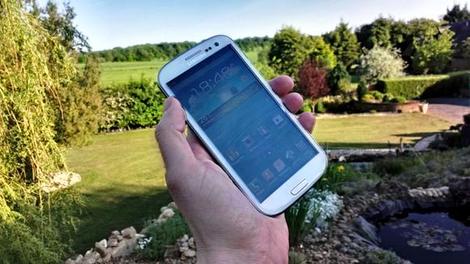
Samsung is playing the part of killjoy today, attempting to squash rumors that the Galaxy S4 could arrive as early as next March.
The Korean firm took to Twitter to discredit the rumors saying (roughly translated from Korean), "Please note that some media reported speculation that the Galaxy S Ⅲ subsequent models will be released is a simple rumor is not true. [If] not doing anything, why spread these rumors?"
A Monday leak suggesting a March launch for the Galaxy S4 came from the Korea Times, citing an unnamed Samsung representative.
The smartphone would allegedly sport a larger 5-inch display, LTE compatibility, and a quad-core processor with a hypothetical unveiling at MWC 2013 in Barcelona.
Too soon?
March 2013 is admittedly a fairly tight timeline to launch a new Galaxy S4 smartphone. The Galaxy S3 was only just announced this past June, with a launch the following month.Analysts have suggested that Samsung could be aiming to get a new Galaxy smartphone out sooner rather than later to compete with the iPhone 5, however, nine months between flagship devices seems too soon even for that consideration.
Stranger things have happened though, so we won't rule out a mid-2013 Galaxy S4 launch as a possibility.
For now though, Samsung is adamant that March is too early, as speculating eyes shift to the summer.

| |
Read More ...
Is this the iPad Mini?

The iPad Mini may not be ready for prime time yet, but that isn't stopping leaked images and purported mockups from hitting the web.
Though the authenticity of photos that surfaced Tuesday remains questionable, they perhaps offer some insight into what the 7.85-inch slate will look like fully assembled.
This is definitely not a working model, as the device emits no backlight, pointing to its display possibly being a paper cutout.
The model itself seems to be based on previous leaks, which include images of cases containing a mystery hole at the top and center on the device's back plate.

Information on storage capacity, model specifications and governmental certifications are also visible.
Apple's leak problem
Though the front is clearly non-functioning, the bezel does resemble previous leaks.Two cameras - one on the rear and a slightly off-centered front-facing camera - are also visible in this mockup. Several other highly suspect parts, like volume controls, power buttons, and a hold switch, are also part of this model.
There's even appears to be a space for Apple's 8-pin Lightning dock connector, the same compatible for the iPhone 5.

A steady stream of leaks for the iPhone 5 dimmed the surprise of the unit, which debuted Sept. 12.
If these images and other leaks of the Mini turn out to be accurate, we won't have much in the way of shock come October. Even if they are off, they probably provide a pretty good idea of what we can expect during Apple's next big to-do.
Until we have set-in-stone confirmation from the Cupertino firm itself, check out TechRadar's complete iPad Mini rumor round up.

| |
Read More ...
Microsoft, RIM agree to exFAT licensing deal

Microsoft released a statement detailing the agreement they've made with Research in Motion (RIM) to license exFAT to the BlackBerry makers.
exFAT (Extended File Allocation Table) technology allows for devices which utilize flash memory to handle files fives times larger than the previous FAT system.
In addition to allowing for better interchange abilities between mobile devices and PCs, exFAT will also "[facilitate] large files for audiovisual media and enables seamless data portability."
The licensing agreement allows RIM to utilize exFAT in "certain BlackBerry devices."
Modern times call for modern tech
In regards to the deal between Microsoft and RIM, David Kaefer, general manager of Intellectual Property Licensing at Microsoft shared why this was a good deal for both companies."Today's smartphones and tablets require the capacity to display richer images and data than traditional cellular phones," Kaefer said.
"This agreement with RIM highlights how a modern file system, such as exFAT can help directly address the specific needs of customers in the mobile industry."
It's not quite the collaboration rumored to be happening between Microsoft and RIM, but it certainly shows RIM is serious about getting back on competitive track once again.
The terms of the deal were not disclosed, however Microsoft has entered into previous similar arrangements with companies like Panasonic, Sony, and Canon.

| |
Read More ...
Ebook price war could kill industry, says authors' group

Massive discounts on ebooks from the likes of Sony and Amazon could have long term effects on the publishing industry, author's groups have claimed.
Promotions from both companies have offered titles at a 97 per cent discount on some top titles, offering them for just 20 pence, as they seek to push their respective stores and reader devices.
Bestselling books from authors like Jeffrey Archer, James Herbert, Kate Grenville, Chris Pavone and Alice Peterson among others have all been promoted at the 20p cover price this summer.
While authors have currently been receiving full royalties, the likelihood of the public getting used to the low prices will inevitably lead to those profits coming down in proportion, reports the Guardian.
This would put the livelihood of writers and the survival of independent bookstores at risk according to author's rights groups.
Books will have no value
Kate Pool of the Society of Authors advocacy groups says: "Since before the inception of the Society 128 year ago, authors have fought long and hard to ensure that copyright properly protects their fundamental right to control and profit from their creations."If books are perceived to have almost no value, that fight seems pyrrhic indeed, as are the chances of professional authors, of even the most sought-after books, let alone those which are highly researched or costly to produce, making a living from their writing."
Lindsey Davis, a historical novelist and the Society's chair, added that she was "very opposed to the 20p book trend. Authors should be able to make a living."
So, even though digital book sales were revealed to be up 188 per cent in the UK in the first half of 2012, vastly increased sales as a result of heavily discounted books may be bad news for authors in the long run.

| |
Read More ...
US trade agency to investigate Apple devices

A new development in an ongoing patent quarrel between Apple and Motorola Mobility broke Tuesday, with the U.S. International Trade Commission (ITC) deciding it will take a magnified look at some of Apple's signature products.
Those include "certain Apple iPhones, iPods, iPads, and Apple personal computers," according to an ITC press release.
The investigation was prompted by a complaint filed by Motorola against Apple on Aug. 17, 2012.
"The complaint alleges violations of section 337 of the Tariff Act of 1930 in the importation into the United States and sale of certain wireless communication devices, portable music and data processing devices, computers, and components thereof that infringe patents asserted by the complainants," the release reads.
Motorola is requesting the ITC issue an exclusion order and a cease and desist order.
Step by step
Although an investigation has been launched, the ITC was quick to point out that it hasn't made a decision on the merits of the case.A multi-step process must occur before any ban is instated.
The next move is for the organization's chief administrative law judge to assign the case to one of the ITC's six administrative law judges (ALJ). It falls on that judge to schedule and hold an evidentiary hearing.
Following the hearing, the ALJ will make an determination as to whether this is a violation of section 337. That ruling is then subject to review by the ITC.
Before any action is taken, the ITC will make a final determination as to whether Apple is guilty of patent infringement or not.
The ITC has 45 days from the institution of the investigation to set a target end date, according to the release.
Any remedial order issued in this case is effective "when issued and become final 60 days after issuance unless disapproved for policy reasons by the U.S. Trade Representative within that 60-day period."
Ongoing process
This is just the latest in a disagreement spanning international boundaries.A German court ruled last week that Apple could pursue a ban of Motorola products that violate its patents in that country.
The ITC also issued a ruling Aug. 24 that Apple didn't violate three Motorola patents covering 3G wireless technology.
According to CNET, this latest contest could take over a year to complete, and even then the judgement will need to be reviewed by the ITC.
Meanwhile, Apple has a pending Dec. 6 court date with Samsung to wrap up loose ends in the firm's $1.05 billion win against the South Korean company.
Stay tuned to TechRadar for all the latest in this developing patent war.

| |
Read More ...
Rumor: HTC 8X, aka HTC Accord, leaked before Wed. event

HTC says it'll be going all-in on Windows Phone 8 and the first of potentially three devices, expected to be announced Wednesday, has reportedly appeared online.
A snap of the long-rumoured device, alternately called the HTC Accord and HTC 8X, was acquired by PhoneArena, showcasing a handset boasting the logo of U.S. carrier Verizon Wireless.
The navy-blue styled handset looks a lot like the recently announced Nokia Lumia 920, which also features a square-edged candy bar form-factor.
Beats on board?
HTC's first venture into the new version of Microsoft's smartphone operating system is widely expected to include an 8-megapixel camera and a 1.2GHz dual-core Qualcomm Snapdragon CPU.According to the report, there's no room for a microSD card for expandable storage, but previous leaks have suggested both 16GB and 32GB models will hit the market.
Also rumoured to be laying within the Accord/8X is a 4.3-inch touchscreen, built-in Beats Audio technology, NFC connectivity, 1080p HD video recording, and 1GB of RAM.
Stiff competition
HTC is holding a media event in New York Wednesday, which kicks off at 4pm UK time (11am EDT), where it is expected to unleash a trio of Windows Phone 8 devices.Keep it locked to TechRadar for full coverage of the launch, which HTC hopes will reinvigorate its smartphone challenge following an underwhelming couple of years.
HTC is likely be going head-to-head with Nokia - Microsoft's preferred partner - as both companies look to put a dent in the gargantuan lead held by iOS and Android.
Samsung also has a fleet of WP8 devices on the way, while LG says it is starting to look at developing for the platform once again, after swearing off the OS earlier this year.

| |
Read More ...
Rumor: HTC Accord smartphone with Windows Phone 8 leaked
HTC says it will be going all-in on Windows Phone 8 and the first of potentially three devices, expected to be announced Wednesday, has reportedly appeared online.
A snap of the long-rumoured device, also known as the HTC 8X, was acquired by the PhonesArena website, showcasing a handset boasting the logo of U.S. carrier Verizon Wireless.
The navy-blue styled handset looks a lot like the recently announced Nokia Lumia 920, which also features a square-edged candy bar form-factor.
Beats on board?
HTC's first venture into the new version of Microsoft's smartphone operating system is widely expected to include an 8-megapixel camera and a 1.2GHz dual-core Qualcomm Snapdragon CPU.According to the report there's no room for a microSD card for expandable storage, but previous leaks have suggested 16GB and 32GB models.
Also rumoured to be laying within the Accord/8X is a 4.3-inch touchscreen, Beats Audio technology built in, NFC connectivity, 1080p HD video recording and 1GB of RAM.
Stiff competition
HTC is holding a media event in New York tomorrow, which kicks off at 4pm UK time (11am EST), where it is expected to unleash a trio of Windows Phone 8 devices.Keep it locked to TechRadar.com for full coverage of the launch, which HTC hopes will reinvigorate its smartphone challenge following an underwhelming couple of years.
HTC is likely be going head-to-head with Nokia - Microsoft's preferred partner - as both companies look to put a dent in the gargantuan lead held by iOS and Android.
Samsung also has a fleet of WP8 devices on the way, while LG says it is starting to look at developing for the platform once again, after swearing off the OS earlier this year.

| |
Read More ...
Updated: Samsung loses bid to lift Galaxy Tab 10.1 ban

Samsung was dealt another blow in its recent lawsuit loss to Apple as U.S. District judge Lucy Koh, who presided over the $1.05 (£665 million) billion case, ruled not to lift a sales injunction on the Galaxy Tab 10.1.
The injunction covers sales of the tablet in the U.S. and was implemented by Koh on June 26.
The nine-member jury who ruled against Samsung in the trial didn't find the Tab 10.1 to violate Apple design patents, prompting Samsung to fight Koh's initial order.
However, the judge said it would be inappropriate for her to lift the ban since the issue is now at the appeals court level and therefore outside her jurisdiction.
Not over yet
In response to Koh's ruling, a Samsung spokesperson issued this statement to TechRadar:"We are disappointed by the court's decision," the spokesperson said. "We will continue to take all appropriate measures to ensure consumer access to our innovative products."
Just what those measures are the spokesperson didn't specify.
According to Koh's official court order, Samsung is also requesting to retain a $2.6 million (£1.6) bond posted by Apple pending the determination of how much Samsung has lost due to the injunction.
Despite the continuation of a sales ban for one of its "innocent" products, Koh included in her ruling a statement that Samsung's motion raises "substantial issues."
From an appeals court perspective, her statement could influence a decision, potentially sending the ban back into her chambers.
Koh and attorneys for both sides will take up other post-trial motions during a Dec. 6 court date. A Sept. 20 hearing was set for Samsung's motion on the tablet ban, but that date was vacated, according to the court order.
TechRadar reached out to Apple for comment and will update this story if and when we receive information from them.

| |
Read More ...
News in Brief: One More Thing: Jonathan Ive and Leica sitting in a tree...

iMagine that – Jony Ive famously likes to stick to Rams' ten principles of good design and it seems he will be putting these to good use when he designs a limited edition version of the Leica M camera. Unfortunately, if you want to get your grubby iMitts on the thing, then you will have to pay good money to charity – with the camera set to sell for at least $7,000. [TechCrunch]
Vision on – BBC presenter Jake Humphries has been revealed as the new face of BT Vision's Premier League football show, which has prompted Gary Lineker to ask the departing Humphries whether he can sort out his broadband for him. Bet he's laughing all the way to the bank. [Twitter]
Logo ago-go – eBay has decided to have a bit of a spring clean, announcing a brand new logo and, well, that's it. According to the online auction site: "Our refreshed logo is rooted in our proud history and reflects a dynamic future". What they said. [eBay]
Holo man – So, Mr Fox News – the iPhone 5 has a holographic projector and a laser keyboard does it? Really? Really? No, it doesn't but your recent news piece on the iDevice clearly states that it does. That sound you hear is the slap of a P45 on to the desk of Fox's news researcher. [Cnet]
Making the cut – With the iPhone 5 on such a severe diet that the only thing it can consume is 4G signal and a Nano SIM, it means that there is a gap in the market for a Nano SIM cutter. And that gap has been filled with QQTech seemingly the first to market with its SIM slicer. [Amazon]
Virgin on the ridiculous – Want to know what future Britain will look like in 2025 according to Virgin? Nope, us either but there's a video doing the rounds that shows just that. Apparently technology will nag us to do things. Sounds horrible. [Gizmodo UK]
Warped imagination – Nasa is looking into new technologies that will eventually send its space craft into warp drive. It's just a lab experiment at the moment but even the mere fact that Nasa is looking into it has made Star Wars and Star Trek lovers hyperventilate. [Register]
Worth Big-ging up – LittleBigPlanet has arrived for the PS Vita and by all accounts it is a superb game. To celebrate its arrival, T3 has created a level dedicated to its magazine and website and the result is fantastic. [T3]

| |
Read More ...
The mobile card terminal market hots up with the arrival of SumUp

Mobile card payment service SumUp has launched its free mobile point-of-sale technology in the UK, Ireland, Germany, and Austria and opens with a standard 2.75% per transaction fee.
The new service will compete with UK service mPowa for the estimated 1.5 million small businesses looking for an alternative to the standard point of sale terminals, which are often rented on expensive fixed-term contracts from the payment service providers.
With SumUp, merchants use a free app and a free card reader to turn their mobile devices into tills capable of processing payments from debit or credit cards. The merchants are then charged a standard 2.75% of every transaction made using its app and card reader.
Daniel Klein, CEO of SumUp, commented: "A lot of small businesses are operating on very tight margins, and can't afford to lose out on making a sale because they can't process a card payment. However, they are all too often discouraged from partnering up with banks and renting conventional payment terminals because of the expense and difficulty inherent in doing so. Our mission is to reduce the expense, remove the difficulty, and make it possible for every merchant—no matter how small, unique, or mobile their business—to accept card payments. We're taking the pain out of taking payments, and we're helping small merchants to build stronger relationships with their customers."
The SumUp payment systems are available for Android and iOS devices and fit any smartphone with a standard headphone jack. Merchants simply open the free SumUp app, and enter the amount to be transferred. The customer is then prompted to insert their card and authorise the transfer by signing with their finger on the touchscreen of the device. The app confirms the transaction on screen immediately and offers to send a receipt to the customer via email or SMS.
The SumUp app has been launched after the successful completion of a thorough four-month test period, where it has been tested with the Europay, Mastercard, and Visa (EMV) specifications and has full PCI-DSS certification – the highest security standard for card payments.
The launch also follows an eight-digit Euro Series A funding round, with investors including b-to-v Partners, Shortcut Ventures, Tengelmann Ventures and renowned technology investor Klaus Hommels. It can only be a matter of time before Twitter founder Jack Dorsey's mobile payment service Square which recently received a £125 million injection of cash follows with a UK launch.

| |
Read More ...
Hands-on review: LG Optimus G

The LG Optimus G has arrived, and comes complete with a whole new level of smartphone technology.
It's another evolution for the Korean brand, with the new handset the second quad core option the firm has released. However, it's the first to use Qualcomm's S4 Pro chip, which will bring an LTE-ready quad core handset to the masses for the first time.
When you pick up the Optimus G, you can tell it's a handset that's worthy of being dubbed a flagship by LG. There's a real weight to it (well, only 145g, but it's much heavier than the Samsung Galaxy S3) but that adds to the premium feel rather than feeling overly heavy.

The design language is impressive, if a little bland. The plastic casing feels a little slippery in the hand, and while the white casing with silver inlets looks impressive, the front of the phone is still the faceless black slab we've come to expect from most handsets these days.
It's not LG's fault, as there's only so much you can do to innovate on the design front, but with the Optimus G its definitely decided that minimalism is best, with a silhouette that mimics the iPhone 4S.

The layout of the buttons is familiar too, as it mirrors the Galaxy S3 almost perfectly in terms of button placement. LG has moved the power button to the top right-hand side, to make it easier to hit with the thumb, and the volume keys, headphone jack and microUSB port are all in the same place.
In fairness, there are only so many places you can put these elements, and placing the phones side by side you'd definitely not think much in the way of copying had gone on.

There is one big difference though: the 13MP camera sensor (which may only arrive on Korean models, according to hints dropped by LG) juts out slightly at the rear, which led us to worry it may get slightly scratched. There's an extra lip to help protect the lens though, so it may survive a fight with the desk every day.

There's no removable battery, no expandable memory through a MicroSD slot – although at least there's 32GB of internal storage to help out on the media front, which should be more than enough for most people.
To summarise: it's a well-designed phone with plenty to be proud of from an aesthetic standpoint. However, while it doesn't come under the same 'cheap-feeling' category as the Galaxy S3, it doesn't have the premium feel of the HTC One S or the iPhone 5 in our opinion.

Add to that it's pretty anonymous when viewed straight on, and you have to wonder how LG plans to make this leap of the shelves when placed next to the competition.
However, if you do pick up the phone from the melee, you'll be in for a nice surprise, as it's one of the fastest we've encountered so far. That's not surprising when you consider it's got one of Qualcomm's most advanced CPUs inside, which has been teamed with 2GB of RAM.
This meant that no matter what we threw at it, the LG Optimus G was able to open and flick between apps with aplomb. This is down to Cross Tasking, as LG calls it, which means each core is able to operate at different speeds to enable more efficient multi-tasking.

We know it's been said before with phones like this that speeds are mind-blowing, but it seems the LG Optimus G was able to beat all the benchmarks out there too, so there's more than a little hope that this is one of the world's quickest handsets.
LG has been hard at work refining its UX overlay as it, like so many, works to create differentiation in a saturated market. We'll state our case now: we're definitely not fans of LG's Android overlay, as it's still similar (especially in layout and font) to the less-than-successful earlier smartphones and the irritating S-Class handsets.
But beyond the iconography and general feel of the system, with its overly colourful widgets and geometric design, there are so many little tweaks that make it a joy to use.
These same tweaks will probably annoy those that love simplicity, but then again, they're generally happy with a six year-old iOS platform.
Opening the lock screen is the early winner, with a little dew bubble revealing what lies below as you unlock. There are four icons along the bottom of the phone which allow you to activate quick apps too, which makes it handy when loading the camera.

From there, it's pretty standard Android 4.0, which is a good thing for those that are upgrading from another Google-powered phone.
There's no word on when we'll be seeing Android Jelly Bean for the Optimus G, although LG has hinted it may drop by the end of the year (read: some point in 2013).
But there are several other neat touches on top that we really like, and will help differentiate the LG Optimus G if people actually give it a decent play in the shop.
For instance, being able to pinch outwards on the home screen to just look at your wallpaper will please those looking to show off their cat, and a new feature called Q-Slide really takes Samsung's Pop Up Play to the next level.
Q-Slide allows you to be watching a video or using the internet (as LG puts it: any app it can control) and place any other on top. This may sound slightly pointless as it's nigh-on impossible to concentrate on more than one task on a smartphone, but it stops the video getting in the way as it does on Samsung's option.
The other, more useful, trick is the ability to resize or personalise icons. This means that if you drag an icon around the home screen, if it has a widget attached it will grow larger to offer things like bookmarks or media. And if it doesn't have a larger option, you can place any picture you like as the app instead, making it a really personal experience.

The rest of the phone is mostly impressive, so we can almost whip through it. The browser is pretty much stock Android Ice Cream Sandwich, but is pretty fast over 4G – although not as quick as some out there, it's important to note this isn't final software and such things often get optimised for launch.
The keyboard is still pretty poor though – while the lag we saw on the Optimus 4X HD has disappeared, it's still pretty inaccurate at predicting what words were trying to tap out.
We often try to see how long we can last before installing something like Swiftkey in these scenarios, but it was only a couple of hours with the Optimus G.
The final thing we'll look at is the screen (well, it's the first thing you'll probably look at) as LG is touting both its clarity and power efficiency.
We saw tests that compared it to Samsung's Super AMOLED HD screen, which showed that it was able to use less power at higher brightness, as well as offering more natural colours thanks to a full matrix of RGB colouring.
In truth, it's a screen that looks great and is as sharp as a pin, but doesn't have the same 'wow' factor as the AMOLED, which offers better contrast ratio and brightness. There are many display snobs out there that don't believe Samsung's favourite screen type offers 'true' images, but in our eyes its still the more impressive.
That's not to say LG's is poor by any means – but we do prefer watching movies on the S3, and not just because we can pop them over on a microSD card.
Early verdict
Is the LG Optimus G the phone of the year? It's too early to say, for a number of reasons: the first being that we won't see it in the US until later in 2012 and may never see it on European shores at all.Then there's the issue of price, or lack of one. While LG usually undercuts its competitors, it will need to do so pretty strongly here to make sure it stands out of the throng of top-end smartphones available today.
It's a well-designed handset with plenty of interesting features we can't wait to get our teeth into, as well as more grunt than most other phones out there. We're not sure it will be the phone to propel LG back to the front (there needs to be a phone that takes the user by surprise with a new UI or fantastic design to achieve that) but it's one of the best the Lucky Group have come up with in a long while.

| |
Read More ...
Hands-on review: Photokina 2012: Canon PowerShot S110

When Canon first showed us the PowerShot S100, we were very pleased to see a thin rubber strip on its front to give it a little extra purchase. So when we saw that this is missing from the Canon PowerShot S110 that replaces the S100, we were a bit disappointed.
To be fair though, the Canon S110 is a very light, compact camera, and holding it in one hand isn't exactly difficult. But its smooth surface is a little on the slippery side.

Inside the Canon S110 is the same 12.1 million pixel sensor and Digic 5 processor as in is in the larger Canon G15, announced alongside it at Photokina 2012. We have yet to fully test either camera, but going on past experience with the Canon G12 and Canon S100, the results should be pretty decent.
Smart camera
Although it is smaller than the Canon G15, the Canon S110 has a couple of features that we would have liked to have seen in the bigger camera - namely Wi-Fi and GPS via mobile technology.
The first enables you to upload and share images via the internet without the need to tether the camera to a computer, while the latter enables the camera to use a smartphone GPS system to tag images with their shooting location.
Neither of these is exactly essential, but they are useful, fun additions that we take for granted with smartphones.

We also like the fact that the Canon S110 has a capacitive 3-inch 460,000-dot touchscreen that can be used for making settings selections or, when using the touch shutter option, to select the focus point, focus the lens and fire the shutter.
It seemed pretty responsive and effective when we used it for a short while among the Photokina 2012 trade show stands.
Manual controls
As on the Canon S100, the ring around the Canon S110's lens can be used for changing key settings.A button on the back of the camera provides access to the nine options, including aspects such as exposure mode, exposure compensation, white balance and sensitivity, and then rotating the ring changes the settings. It's a very quick and easy approach.

The Canon PowerShot S110 HS has a full price of £429.99 in the UK and $449.99 in the US, and will be available from late October, putting it up against its sibling the Canon SX50 HS and rivals including the Nikon P7700 and Panasonic LX7.
Early verdict
In many respects the Canon S110 is a relatively minor upgrade of the Canon S100, with the addition of a touchscreen, Wi-Fi connectivity and GPS technology.
As before, images can be recorded in raw format and a mode dial enables you to choose between user-friendly scene modes and the more advanced program, shutter priority, aperture priority and manual mode.
The loss of the rubber strip on the front of the camera is a shame, but the Canon S110 is a very attractive, pocketable camera for enthusiast photographers, and we anticipate a heated debate about who tests the final production sample when it comes into the office for our full review.

| |
Read More ...
Exclusive: Motorola explains future 4G plans

Motorola is looking to roll out its 4G dominance in the US to other LTE markets next year.
The Google-owned firm is number one in the US for LTE handsets, and currently ships the most LTE devices in the States than any of its competitors.
Speaking to TechRadar Mark Notton, Motorola's Product Marketing Manager said: "LTE as a technology is very core to our business. We've historically been very focused on innovation and engineering and we believe our LTE position in terms of development is second to none."
One and only
Notton continued: "You would expect as we go into next year that we would take the leadership we have in the US and deploy that in other markets around the world when the time is right."Although specific details surrounding a UK onslaught have yet to materialise, we can probably expect Motorola to stroll onto the 4G scene in Britain sooner rather than later, especially after EE announced its 4G network would be rolling out soon.
So are we ready to equip ourselves with the latest Moto 4G handset in 2013, or is it all talk and no walk from the great grandfather of the mobile industry?

| |
Read More ...
Explained: Why Motorola hasn't gone with vanilla Android

Motorola has explained why it's not stuck with the stock version of Android Ice Cream Sandwich on its latest handset, the Motorola Razr i.
After Google acquired Motorola Mobility earlier this year, you'd be forgiven for thinking that the handset manufacturer would become a puppet for the search giant's mobile plans, but instead it's still trying to keep its identity.
TechRadar spoke to Mark Notton, Motorola's Product Marketing Manager who said: "Moving to an open OS for the first time can be quite a daunting experience as there is a whole lot more you can do with the device.
"We want to bring people on board and make it as easy as possible to setup the simple things."
Simplicity is the key
To address this easy-of-use challenge, Motorola has implemented its 'Circles' widgets on the homescreen of the Razr i, which gives users instant access to the clock, weather and battery info, as well as the settings menu and new message notifications.Motorola also implemented a new Quick Settings page, which it hopes will make it easier for the consumer to turn key features, such as Wi-Fi, on and off, plus it also offers homepage templates with pre-installed apps on them to aid in the setup of the Razr i.
This means Motorola has had to stray slightly from the stock Ice Cream Sandwich offering, which is a breeze for experienced users to handle, but can still be a little tricky for those less in the know.
Notton concluded: "We're focussing on fewer devices and less on the software and more on what the user wants."
It's clear that Motorola is determined to continue to be its own brand and with the launch of the Razr i, and the large advertising campaign behind it, hopes are it will be able to get back on the consumer's radar as a top mobile brand once again.
Take a look at our hands on Motorola Razr i review for more information and our thoughts on the handset.

| |
Read More ...
Updated: Photokina 2012 highlights: what you need to know

Photokina 2012 highlights
Updated: Now with Photokina 2012 news from Nikon, Leica and HasselbladPhotokina only takes place once every two years, so there's been much excitement and speculation around the cameras, lenses, photo printers and other photographic tools and accessories announced at Photokina 2012 in Cologne.
The show opened to the press yesterday, so TechRadar was of course there to cover all the breaking news and get a first peek at the newest cameras and imaging technology on offer.
Here is our constantly updated roundup of some of the key announcements we've seen at Photokina 2012 so far.
Canon at Photokina 2012

Canon used Photokina as a chance to reveal the Canon EOS 6D DSLR and Canon S110, Canon G15 and Canon SX50 compact cameras.
The Canon EOS 6D is similar in size and weight to the EOS 60D, making it the world's lightest DSLR to feature a full-frame CMOS sensor. The 20.2 megapixel camera is also the first Canon DSLR to feature Wi-Fi and GPS connectivity, for easy photo sharing.
The Canon PowerShot G15 boasts a new, brighter f/1.8-2.8 lens with an extra-wide aperture, while the Canon PowerShot SX50 HS sports an impressive 50x optical zoom. Both high-end compact cameras feature full manual controls and raw image capture.
Proving that wireless camera connectivity is a big deal in Canon world, the 12.1MP Canon PowerShot S110 also has Wi-Fi and GPS. Plus it has a new 3-inch PureColor II G capacitive touchscreen with Touch AF for easy focusing when shooting stills or videos, and pinching to zoom in on captured images.
Canon also unveiled Project 1709, a new image sharing service that makes it easy to store and access images, regardless of where they have been saved, using the cloud.
Photos from the new cameras can be printed on any of the six new photo printers that Canon also revealed at Photokina 2012.
- Hands on: Canon EOS 6D review
- Hands on: Canon PowerShot G15 review
- Hands on: Canon PowerShot SX50 HS review
- Hands on: Canon PowerShot S110 review
- Canon launches new image management platform
- Canon Selphy CP900 offers wireless printing
- New A3+ printers update Canon Pixma Pro range
- Canon reveals three design-focused Pixma printers
Olympus at Photokina 2012

Olympus introduced two new PEN compact system cameras (CSCs) at Photokina 2012, which both use the sensor from the Olympus OM-D. The new Olympus PEN Lite E-PL5 and new Olympus PEN Mini E-PM2 will sit in the middle and bottom of the PEN lineup, and combine the 16.1 million pixel sensor from the Olympus OM-D with a True Pic VI image processor. They both also feature touchscreens, for easy control.
Olympus also announced it has replaced its high-end premium compact camera, the Olympus XZ-1, with the Olympus XZ-2, a new flagship camera for the new range of Stylus compact cameras, which again features a tilting touchscreen. It has a bright zoom lens with a maximum aperture of f/1.8 at the 28mm wide angle end of the lens. It also has a 12.3 million pixel backlit 1/1.7-inch BSI CMOS sensor and 4x optical zoom.
- Hands on: Olympus PEN Mini E-PM2 review
- Hands on: Olympus PEN Lite E-PL5 review
- Hands on: Olympus XZ-2 review
Fujifilm at Photokina 2012

Hot on the heels of the Fuji X-E1, announced less than two weeks ago, Fuji revealed a second new premium X series compact camera at Photokina 2012 - the Fuji X-F1.
The Fuji X-F1 features the same 2/3-inch EXR-CMOS sensor as the Fuji FinePix X10, plus a newly developed f/1.8 4x optical zoom Fujinon lens, which retracts into the body to give a super-sleek external appearance.
Nikon at Photokina 2012

Although Nikon didn't use Photokina 2012 to launch any new cameras or lenses, the show was the first chance the public had to see the new Nikon D600, announced last week. The new 24.3MP DSLR sits below the Nikon D800 in the manufacturer's lineup, and features a newly designed 24.3MP FX format CMOS sensor and the same Expeed 3 processing engine as the one in the top-of the-range Nikon D4.
We also got a chance to try out the Nikon P7700, a premium compact camera that features a large 1/1.7-inch 12 million pixel CMOS sensor, a 7.1x optical zoom lens and a fully articulating screen.
Leica at Photokina 2012

Leica has decided to omit product numbers on its Leica S and Leica M ranges, announced at Photokina 2012 alongside the Leica V-Lux 4 and Leica D-Lux 6.
The Leica S is a medium format camera with a 37.5 megapixel low noise CCD sensor with microlenses and microlens shift. It has an increased buffer memory for increased continuous shooting, upgraded AF, new lenses and is the only Leica camera to feature GPS. It's also very expensive, as Leica cameras tend to be, at £16,000 (around $26,000).
New Leica lenses were also announced at Photokina 2012, to accompany the Leica S.
The new Leica M boasts a new 24 megapixel full-frame 35mm CMOS sensor, and is the first Leica M camera to include Live View and Full HD video recording. Leica says that the new system is the most versatile Leica M camera to date, while it also accepts classic Leica R lenses.

The Leica M-E rangefinder camera includes a full-frame 35mm CCD sensor, boasting 18 million pixels, plus a 230,000 dot 2.5-inch TFT screen and a new leather-style trim.
Pitched to the Photokina 2012 audience as an alternative to a DSLR, the Leica V-Lux 4 is a bridge camera with an impressive 24x optical zoom. The compact camera maintains an f/2.8 constant aperture, throughout this zoom range, for shooting in low light conditions. An integrated optical image stabiliser also helps to reduce blur caused by camera shake.
Leica's D-Lux 6 is basically Leica's rebadged version of the Panasonic LX7, a compact camera with a wide maximum aperture of f/1.4. Announced at Photokina 2012, a newly developed 1/1.7-inch CMOS sensor is joined by a wide range of features, including fully automatic mode, manual setting modes and Full HD video recording.
- In pictures: Leica S
- In pictures: Leica M and Leica M-E
- Leica D-Lux 6 revealed
- Leica V-Lux 4 superzoom unveiled
Samsung at Photokina 2012

Samsung used Photokina 2012 to announce two new lenses in its NX range of compact system cameras (CSCs) and accessories, to fit the NX20, NX210 and NX1000, expanding the number of NX lenses up to 11.
The 12-24mm f/4-5.6 ED ultra-wide zoom lens and 45mm f/1.8 mid-telephoto prime lens are extremely lightweight, and are compatible with Samsung's i-Function system, which enables you to easily adjust shutter speed, aperture and ISO settings.
Samsung was also keen to talk about its Galaxy Camera, launched at IFA 2012 in August, with Nick White, head of digital imaging, saying: "By announcing two new NX lenses and the innovative GALAXY Camera, Samsung has continued its commitment to both innovation and capturing high quality photographs".
Sigma at Photokina 2012

Sigma told the crowd at Photokina 2012 that it's released new lenses and reorganised its lens lineup.
The Sigma 17-70 f/2.8-4 DC Macro OS HSM lens is the first new lens for the Contemporary category. Mainly designed for general purpose photography, the lens gives equivalent focal lengths of 25.5-105mm on a 35mm camera.
A new lens in the Art category is a 35mm f/1.4 DG HSM. An FLD glass lens and four SLD glass lenses are included to correct chromatic aberration, while Sigma's multi-layer coating was designed to reduce flare and ghosting.
In the Sports category, there's a new Sigma 120-300mm f/2.8 DG OSM lens, which is dust and moisture-resistant, for use in harsh shooting conditions. Multi-layer coating again reduces flare and ghosting and provides high contrast images even in backlit conditions.
Hasselblad at Photokina 2012

Hasselblad unveiled plans for its Lunar compact system camera (CSC) at Photokina 2012, which currently exists in around 30 different versions. As yet the company doesn't know exactly which ones will make it to market as the final production version.
We do that the camera has a 24.3MP APS-C format sensor, 25 AF points and is able to capture both still imagess and video. Images can also be shot at up to 10fps, with sensitivity settings running from ISO 100-16000.
So now you know what we've seen so far, take a look at the next page to see the cameras we were hoping and expecting to see at Photokina 2012.
And if you want to have your say on the photography treats revealed so far - and those not announced yet - hit us up on Twitter (@TR_Cameras) or Facebook and let us know what's on your wishlist.

| |
Read More ...
Photokina 2012: In pictures: Leica S

Leica has decided to omit product numbers on its Leica S and Leica M range, so its new camera, announced at Photokina 2012, is simply called the Leica S.
The medium format camera offers a 37.5 million pixel low noise CCD sensor with microlenses and microlens shift.
Leica has upgraded the camera's sensor, along with the image processor, which it says makes it a better performer in low light situations, as well as producing better colour and white balance.

A new White Balance function has been included to enable you to manually set the white balance via a neutral area in the photo, such as a grey card.
The Leica S was announced at Photokina 2012, alongside the Leica V-Lux 4, Leica D-Lux 6, Leica M and Leica M-E, and new lenses.
Upgrades
The Leica S's sensitivity ranges from ISO 100, up to ISO 1600, while a new increased buffer memory enables continuous shooting of up to 32 images in raw format, all at a full 37.5 megapixel resolution.The number of JPEG image that can be shot continuously is only limited by the size of the memory card.
An upgraded autofocus module is also included. This not only promises faster speeds, but also greater precision. Predictive autofocus is available, which compares past movements of the subject to compute the location of the subject at the time of exposure.
GPS on a Leica
Currently, the Leica S is the only Leica camera to include an integrated GPS module, which can add the geographic positioning of the exposure location to the EXIF data of the image, while also enabling precise synchronisation of the onboard clock.
The monitor on the back of the camera is a large, 3-inch 920k pixel device, made from tough, scratch-resistant glass. A viewfinder is also included, which covers a 98 per cent field of view.
New lenses
New lenses, which include a 24mm f/3.5, 30-90mm f/3.5-5.6, 120mm f/5.6 tilt shift lens and a 180mm f/3.5 close-up lens, have also been announced.Price and availability
This camera is not for those on a budget, whatsoever - the Leica S price will be £16,000 (around $26,000), with a release date of December 2012.
| |
Read More ...
Twitter gets a massive facelift, becomes more Facebook like

Twitter has revealed that it is getting a new look, with the micro-blog redesigning its profile pages.
Now, and this may sound familiar to Facebook users, Twitter allows users to upload a new header photo which will appear whether you view a profile on the web or through the service's myriad apps.
So far so Facebook Timeline, but Twitter reckons the new design is all about bringing meaning to Twitter profiles.
Bringing meaning
"Starting today you can make your presence on Twitter more meaningful with new Twitter profiles," explained the blog."New profiles help you get to know people better through their pictures. Photo streams now appear below anyone's most recent Tweets on iPhone, Android and iPad.
"Swipe through the stream to see the photos other users have shared or tap any thumbnail to view their photos in fullscreen."
If you want to see these new profiles in action then head over to @todayshow where they have already made use of the new look.

| |
Read More ...
Available Tags:Samsung , Apple , HTC , Facebook , Nintendo , CPU , Galaxy , rumors , iPad , Windows Phone , Windows Phone 8 , smartphone , Windows , Galaxy Tab , LG , Canon , Motorola , 4G , Android , Twitter ,


No comments:
Post a Comment