

Hands-on review: Updated: Sony Xperia Tipo

The Sony Xperia Tipo slides in right at the bottom of the Xperia handset range, which has grown rapidly since the firm officially divorced from Ericsson at the start of the year.
We've got the handset in for a full review, so we've put the Xperia Tipo through our photo studio - check out our new hands on pics ahead of our in-depth analysis.
Expected to arrive in the next few weeks, the Xperia Tipo (also known as the ST21i) is coming in with a price tag of around £130, putting it in direct competition with LG Optimus L3, Huawei Ascend G300 and Samsung Galaxy Y.

You won't be parting with too much cash if you opt for the Xperia Tipo, so what does a hundred notes get you these days? Well, Sony reckons it's an 800MHz single-core processor, 512MB of RAM, 2.5GB of internal storage, 3.2-inch 320x480 display, Android 4.0 Ice Cream Sandwich, 3.2MP camera and microSD card slot.

Measuring up at 13mm in depth, the Tipo is a little chunkier than a lot of smartphones currently on the market, but the curved, pebbled shaped design, along with the small 57mm width and 103mm height means it fits in the hand well.

Sony has coated the Xperia Tipo in what it's calling "premium rubber", for the white version at least, which has been specially designed to wipe clean with a damp cloth – even stuff like ink should come straight off.
The dinky dimensions allow the Xperia Tipo to weigh in at a shade under 100g grams, which means it won't pull your pants down when you stick it in your pocket but does provide a reassuring weight in the hand.

The Tipo sports a minimalist design with just three touch keys located below the 3.2-inch display and a small speaker grill above the only additions on the front of the handset.
Round the back is the 3.2MP camera, speaker grill and the word Xperia with the Sony Ericsson bubble logo above it. On top there's a 3.5mm headphone jack and power/lock key, with a volume rocker switch located on the right.

Take the back cover off the Xperia Tipo and you'll find a standard SIM card slot, microSD card port (supporting up to 32GB cards) and a removable 1,460mAh battery – which Sony claims to offer five hours of talk time and 470 hours of standby.
Turn the Tipo on and the QVGA display wakes, providing an adequate image at the low price range, comparable with the likes of the Galaxy Y and Optimus L3, although the Ascend G300 does boast a slightly bigger and better screen.

The Tipo lacks the Sony Bravia engine support we've witnessed on the higher end handsets in the range, such as the Xperia U, but seeing as this is a budget device that's no shock.
It's pleasing to see Ice Cream Sandwich running on an entry level handset, something else the Xperia Tipo has over its Samsung, LG and Huawei rivals.

Sony has stuck its own custom overlay onto the Xperia Tipo, and although it has no official name, it's reminiscent of the Sony Ericsson Timescape Android overlay of old – although cleaner and simpler.
The 800MHz processor manages to provide a relatively smooth user experience, allowing us to sweep through the five home screens on offer and various app lists and menus without too much slow down or lag.
Pinch any home screen and you are greeted with an exploded view of all the widgets on all screens – allowing you to quickly jump to the one you want, instead of having to sweep through all five screens.
We did find the touchscreen wasn't the slickest, with our finger encountering a little bit of resistance, which we found slightly frustrating.

All the standard Android functions are present, from contacts and calling to messaging and email.
Sony has tweaked the default Android keyboard, making the key a little taller, improving travel, but typing on such a small screen is challenging at the best of times and we found ourselves still hitting a lot of wrong keys.

You can turn the Sony Xperia Tipo landscape, offering up a better spaced board, and as the handset is daintily sized and nicely rounded, it's easy to type in this elongated position – Swype is also installed if you prefer a more gesture-based form of input.
The Xperia Tipo sports Sony's xLoud technology, which increases the volume of the music by up to 30% when played out of the rear speaker, and Sony claims this boost does not produce distortion - it doesn't work with headphones though.

In the music player app you can also choose from a range of preset equaliser settings, allowing you to add more bass, treble or jazz etc to your tunes – although there's no manual option for fine tuning.
Sony's also added its TrackID application to the Xperia Tipo – which is the company's own version of the popular Shazam and SoundHound apps. The free service (data plan permitting) will allow you to identify any song playing in your favourite club, car radio or supermarket.

Another new service from Sony is its Liveware Manager application, which allows users to program the Xperia Tipo to perform certain functions when the phone it plugged into a particular thing, be that a charger, headphones on in-car Bluetooth system for example.
The idea being you can connect to a charger and the phone jumping to the alarm settings, as you'll obviously want to charge your phone before going to bed, but we all need to set an alarm. You'll be able to set this up how you want it of course.

The camera application offers a decent enough array of options for a budget phone, but there's no flash next to the 3.2MP sensor, meaning shooting in the dark or low light is out of the question with the Xperia Tipo.
You do get a 4x digital zoom and the ability to record VGA quality video, but there's no front facing camera for video calling shenanigans.

Connectivity wise the Xperia Tipo packs Wi-Fi b/g/n with hotspot functionality, Bluetooth, DLNA streaming support and a microUSB socket on the left side – no NFC, but remember this phone is at the budget end of the scale.
Early Verdict
The Sony Xperia Tipo is an attractive little handset offering a relatively decent array of features for its low price point.The Ascend G300 does offer slightly superior specifications, but doesn't quite match the style and simplicity of the Xperia Tipo.
If you're looking for an easy to use, well designed budget handset you won't go wrong with a Sony Xperia Tipo. Make sure you keep an eye our for our full, in-depth review, coming soon.

 |  |
Read More ...
Time management for bosses

Business people often feel that there's not enough time in the day to do what they need, or want to. The result is they can feel under pressure throughout their working day, be forced to work late into the evening and at weekends, and become irritated by people who take time away from them.
Time management skills are essential for people to be more productive in their working day, and whilst some of it is down to discipline and good practices, there are also tools and technologies available to help.
Creating a to do list
Firstly, procrastination and focus can be a problem for some people. To-do lists can really help here, and they can be as simple or as complicated as you want them to be. For example, you can group activities into themes, projects, deadlines and different categories. Placing the list in a prominent place in the office or at home can help to keep these things in mind, and it can also act as a visual encouragement to see things crossed off over time.However, making lists is not always sufficient, and time management experts say that one of the biggest mistakes people make in using to-do lists is they don't set a hard date for completing something, or even for starting it. The consequence is they just get overwhelmed by to-do lists.
Microsoft Outlook, and other productivity suites, have their own task creation tools, but there are also a number of popular web-based applications that can help to prioritise tasks, and assign levels of completion and deadlines to them. One of these is Remember the Milk, which is a free online tool that can be accessed via the desktop, mobile or tablet computer, and can help to manage tasks and to-do lists. With tools like this, you can set it to send reminders by email, SMS or instant message, and the list of tasks can be accessed by phone and lists synchronised with Google Calendar.
Another effective web-based to-do list organiser is Toodledo which works along similar lines. This tool is easy to use and provides several criteria to classify tasks, such as folders, subtasks, due-dates, priorities, tags, contexts, goals, notes, and time estimates. Other web-based tools include Todoist, ccToDo and Task Freak.
One thing worth noting about to-do lists is that it's important not just to move a particular task into tomorrow or next month, but instead, to break down the list and assign each task to a particular date. That way, you can help yourself to complete, or at least begin a task within an achievable timeframe. More importantly, it helps you to beat the problem of procrastination by making the list look less formidable.
Planning and scheduling
When combined with calendaring tools such as Google Calendar or Microsoft Outlook, you can more effectively work through your tasks. But the key thing is to make sure you look at your planner on a daily basis. Whether you use a paper-based or PC-based scheduler, it will only be effective if you check and update it regularly.As well as knowing how and when to start a task, effective time management is also about knowing when and how to stop a particular task, and move to another.
For some people this means knowing how to finish a meeting or even a conversation in a timely manner. And with more and more ways to communicate, for example instant messaging, social networking, e-mail, voice and video conferencing, and online collaboration, all of these technologies can be useful, but they can also be massive time stealers.
Scheduling software, such as Outlook, can help to put aside time in your diary for a range of activities, not just meetings with people. For example, you could put in a block of time for sorting through paperwork, doing personal tasks that have built up over time, fixing computer-related issues, or reading through a stack of industry magazines. Remember to schedule in some relaxation time as well.
By doing this, you can indicate to people, who use a shared diary with you, that you are otherwise occupied and not to be disturbed, and it also reminds you that these tasks are important, because if they don't get done during office hours, you will be doing them at night or the weekend.

| |
Read More ...
Broken Sword sequel hoping to get its kicks from Kickstarter

The new Broken Sword sequel may be without publisher as Virgin and THQ are no longer on board, but that hasn't stopped its makers looking to self-publish the game through Kickstarter.
Revolution Studios is hoping that this new method of funding will mean it can release the latest instalment of Broken Sword on all manner of platforms – including PC, Mac, Apple iPhone/iPad, Android & Linux formats.
If successful, the studio has confirmed that there will also be console versions of the game.
"For the first time in our history, we will be funding an original adventure game: Broken Sword - the Serpent's Curse," explained Revolution.
"This will give us full creative freedom, and let us work with you. We promise to keep you up to date with all aspects of development and we will value your support."
Achieving ambition
Its Kickstarter campaign goes on to note: "Development of the game is going well – we hope that you like what you see."Kickstarter funding will allow us to proceed at a faster rate, and ensure the game achieves its ambitious design. Without this funding we will risk having to cut back features and delay the game's release."
To entice fans to part with their money, there are a number of incentives to sign up. You can pledge anything from $15 to $10,000 – with the top lot giving you a ticket to the wrap party, a tour of the studios, some original storyboards and other goodies.
We can't help but think that if Revolution Studios are successful, many more games will go down the crowd-funding route.

| |
Read More ...
Gary Marshall: Hey, hardware firms! Cut the crap!
Imagine. You've saved up for years, and at last you can afford the car of your dreams.
You've done your homework, chosen the best specs, picked the best colour combinations and haggled for the best deal.
It's tasteful. Subtle. Classy. And when you turn up to collect it there are plastic eyelashes on the headlights, green fur covers on the seat and LOOK AT ME I AMS FAST down the side in luminous green letters.
"What the hell's happened?" you ask the salesman.
"We've improved it!"
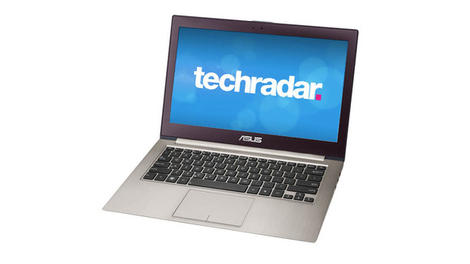
A friend of mine bought an Asus Zenbook this week. It's a nice bit of kit, a sleek and sophisticated ultrabook for power users, and it came absolutely stuffed with crap.
Notebook Heavy has the full list, which includes not just the usual suspects - an Office trial, the Windows Live programs, anti-virus stuff and so on - but a whole bunch of Asus software too. There's FaceLogon, and LifeFrame3, and PowerWiz, and of course Splendid Video Enhancement. Getting shot of it all took many hours and even more expletives.
What the hell happened?
Asus improved it!
Tim Cook says "tee-hee"
As my esteemed colleague Richard Cobbett points out, unwanted software is a real problem. "There is no excuse for new PCs to come piled up with antivirus trials, built-in helper apps and all that other nonsense," he says.There's an argument for third party apps at the very bottom of the market - they pay a few pennies that the manufacturer can then lop off the sticker price - but increasingly it's the manufacturer's own software that's the problem. Unless Apple's paying them to put it on - and I can imagine Tim Cook going "they've agreed to the Splendid Video Enhancement one! Hoo boy!" - then they really need to stop.
The problem isn't just limited to traditional computers, either. It's in tablets, and phones, and even printers. Time and time again, manufacturers add their own software and make an arse of it.
I experienced it myself this week. In a triumph of optimism over experience, I bought a wireless printer this week. In its infinite wisdom, HP decided that the best way to connect it to a wireless network - nothing else, just to get it to find an open Wi-Fi network - was to install software that wasn't compatible with my system, navigate a hopeless support site to find a version that was compatible, install it, let it set up its own ad-hoc wireless network, break my internet connection, fail to set up the wireless printer properly and ultimately force me into the advanced settings of my router to increase the DHCP lease time.
This is a printer aimed at average punters.
I understand what the firms are trying to do: they're trying to make things simpler, to make our PC experiences happier, to make their products more fun than their rivals'.
But all too often, I'm reminded of the elderly lady who attempted to restore a painting of Jesus, turning it into what the BBC describes as "a crayon sketch of a very hairy monkey in an ill-fitting tunic".
Just because you mean well doesn't mean you're any good at it.

| |
Read More ...
How to trademark your ideas and products?

Your business and product names are essential parts of your business. They're the way you differentiate your business and products and they're a guarantee to your customers that they're getting a certain level of quality, so it's important that you keep them to yourself. One way of doing this is to trademark them.
What is a trademark?
A trademark is a way for your business to differentiate itself from others in its market sector. Trademarks tend to be logos or specific groupings of letters and numbers that consumers associate with particular goods or services. As trademarks can form a very important component of your business' brand it is vital that this is protected. For example RIM makers of the BlackBerry phone have their business name and their logo registered, as well as the BlackBerry name and logo and the Curve, Bold, Storm, Playbook and App World extensions, while Coca-Cola has trademarked nearly everything about their products from the name, to the logo, through to the distinctive hour-glass shaped bottle and their advertising messages like "Always Coca Cola".Trademarks can be registered with the Intellectual Property Office (IPO). However, not all logos or other distinguishing designs can be registered as trademarks. As the IPO states, trademarks are not registrable if they:
- Describe your goods or services or any characteristics of them, for example, marks, which show the quality, quantity, purpose, value or geographical origin of your goods or services.
- Have become customary in your line of trade.
- Are not distinctive.
- Are three-dimensional shapes, if the shape is typical of the goods you are interested in (or part of them), has a function or adds value to the goods.
- Are specially protected emblems [see later].
- Are offensive.
- Are against the law, for example, promoting illegal drugs.
- Are deceptive. There should be nothing in the mark, which would lead the public to think that your goods and services have a quality, which they do not.
- Armorial bearings (coat of arms)
- Flags and other State emblems
- Official signs
- Hallmarks
- And the catchall other emblems
- Abbreviations and names of international inter-governmental organisations
How to register a trademark
Note that your business doesn't have to register its trademark. As the IPO states: "If you use an unregistered trademark, you will have certain rights under common law and you can use the TM symbol. However, it is easier to enforce your rights if you register your mark and use the ® symbol to indicate that it is registered. You need to pay a renewal fee every ten years."If you decide that registration would be useful for your business, the process is straightforward. If you apply for registration online your business will be able to claim a discount on the standard fee of £30. Note, you can't alter your application after you have made your application, without making a new application and paying the fee again.
Once registered, your business then has the right to use your mark on the goods and services in the classes for which it is registered. You also have the legal right to take action against anyone who uses your mark or a similar mark on the same, or similar goods and services to those that are set out in the registration.
How to check your trademark against trademarks already registered
The trademark that your business is applying for will be checked against the existing database of trademarks for any that are similar. You can quickly search trademarks worldwide using the free TMview service which contains data on over seven million trademarks from 27 trademark bodies worldwide.
Your trademark could also be challenged by other businesses if they feel your mark is too close to theirs. If you continue with your application, and lose the case against your registration, your business would be liable for all costs.
In addition, the IPO also offers this advice about protecting trademarks in other parts of the world:
If you want to register your mark in countries other than or as well as the UK you can protect it in more than one country using a single application.
- To register in Europe, you can apply for a European Community trademark with the Office for Harmonisation in the Internal Market (OHIM).
- You can also register your trademark in certain countries by applying to the World Intellectual Property Organisation (WIPO).
- For certain countries, you cannot apply to WIPO. In these cases you will need to apply separately in each country where protection is required.
When your trademark has been granted your business must then protect this component of its intellectual property. You can do this via the IPO with what is called a caveat. Your business can use a caveat to check the progress of its trademark application that could take several months to complete, and also use the caveat to check whether another business has objected to your application. More detailed information can be supplied, but your business would have to use the paid caveat service for this.
Trademarks can be an essential component of your company's branding. Your business doesn't have to register its trademark, but without registration it would be more difficult to defend your trademark against any other trademarks that are going through registration that your business thinks are too close to yours.
Always take legal advice from an intellectual property solicitor if you are unsure of your legal standing regarding the trademarks your business uses, and whether any litigation would be successful if your business disputed a new trademark registration that the IPO have made your business aware of.

| |
Read More ...
Sony to launch 84-inch 4K TV at IFA 2012?

Sony may have an 84-inch 4K TV up its sizable sleeve, ready for an IFA 2012 reveal.
The European tech show kicks off next week and we'll be hightailing it to Sony's stand to see if the mythical 4096x3072 res tellybox is for real.
Rumours of the mega-TV come by way of an anonymous source speaking to CNET; he (or she) confirmed the 4K-ability of the LCD panel and the fact that it comes with removable speakers.
Retro modern
Looks-wise, the 4K TV is described as being in "a reimagined retro-style appearance with a modern twist".The rumour comes hot on the heels of speculation that the PS4 will feature 4K support; no doubt Sony is keen to start the consumer market on the road to 4K being a) the norm and b) affordable.
84 inches seems to be the 'in' size for 4K panels. LG announced earlier in the week that its 84-inch 4K television will be in shops worldwide come September. Price-wise, well if you have to ask then you can't afford it (unless you have $11,700 lying around).
Speaking of affordability, there's no word from CNET's source on a price tag for the television, but previous reports suggested somewhere significantly higher than 4K – around $30,000 (£18,900). We are expecting it to be considerable lower, however, considering LG's reported price.
TechRadar will be roaming the IFA 2012 show floor in force, so stay tuned for all the official Sony news starting August 29.

| |
Read More ...
Amazon to bolster games division with yet more hirings

Amazon is set to expand its social gaming division, hiring even more developers to work on its latest venture.
With Sony announcing the sad demise of one of its most well-known studios, Studio Liverpool, this week it's nice to see some expansion in the games arena – even if it is for fair-weather social gaming.
Amazon has already announced its first social game, Living Classics which is out now on Facebook, but its hiring of fresh blood shows that Amazon has bigger things in mind that just one game.
The social-gaming sector is one that's in a state of flux. PopCap, owned by EA, is shedding 12 per cent of its employees in the US, while Zynga is losing executives in a bid to make more money and business analysts are calling for the company to look for a buyer.
Play time
Amazon is expanding in this area, though, and is looking for employees in San Francisco – an interesting move as its headquarters are in Seattle, but an obvious one.The new job listings point to a mixture of social and casual gaming on the cards, so it seems Amazon will set its sights beyond Facebook, possibly into Google Play, the Apple App Store and its very own shop.
We are expecting some more news on this in Amazon's tight-lipped announcement this September, where it is hopefully set to unveil the Kindle Fire 2.
If you fancy working for Amazon Game Studios, then check out the company's dedicated jobs page. We've got a feeling Amazon is going to have to sift through a mountain of CVs.

| |
Read More ...
Week in Tech: Windows 8 reviewed plus a right old kerfuffle over 4G

It's here: the biggest, in-depthiest review of Windows 8 you could possibly imagine. We've given it four and a half stars out of five, because on the right hardware it's brilliant, though it still requires anybody coming to it afresh to keep an open mind; it is different.
Much more Windows 8-optimised hardware is on the way though; according to Dell, there are "heaps" of Windows 8 tablets and laptops coming.
Speaking to investors, Dell's senior VP Brian Gladden promised that "You'll see new Windows 8 Ultrabooks, all-in-one tablets and converged devices in the fourth quarter and headed into next year."
Microsoft will be hoping that Windows 8 taps into the trend known as BYOD, short for Bring Your Own Device: rather than put up with the hardware and software choices of IT departments, many users are opting to bring in their own kit instead.
That flexibility seems to have a downside, though: it's "creating a generation of workaholics". According to the latest Mobile Workforce report, BYOD often leads to people working up to 20 extra hours per week, with some people finding themselves unable to disconnect even when they're on holiday, racking up enormous data bills in the process.

4G given the green light
Did someone say "enormous data bills"? Say hello to 4G mobile broadband, which we just know isn't going to be cheap. There's some good news, though: telecoms watchdog Ofcom has given UK 4G broadband a boost, and it's coming to the UK much sooner than we expected.Everything Everywhere, owner of Orange and T-Mobile, has been given the green light to reassign some of its existing infrastructure for 4G use - which means it'll have 4G available long before the other UK networks, which have to wait for next year's 4G auction.
Our very own Gary Marshall had some fun with the possibilities. "Everything Everywhere gets the green light on 11 September... and guess what's probably being announced on 12 September? Here's a clue: it rhymes with 'skyphone' - and it'll probably be 4G."
As Marshall admits, that's entirely speculation - while we expect the iPhone 5 to have 4G, that isn't definite, and if it does have 4G it might not work on the frequency Everything Everywhere will be using - but if the next iPhone can use Everything Everywhere's 4G network, that's bad news for rival firms. "Who's going to spend [huge sums] on an iPhone 5 that doesn't work properly?" Marshall asks.
With just weeks to go before its launch, the iPhone 5 leaks are flying faster than Leaky Pete's Fantastical Flying Leeks. We've got LG making the screens. We've got red-hot shots of, er, its USB charging cable! We have rumours of supply shortages that may well be red herrings! We'll have even more next week!
As with most big tech rumours, it's important to take most iPhone rumours with a pinch of salt: as Chris Smith points out, we've heard some of them before. Take the supply-shortage one, for example: while "any shortcoming in the amount of handsets available would make the usual mad dash during launch week that little bit madder," something that would boost Apple's sales even further, such rumours "usually fly around prior to the launch of a new Apple product" and often don't amount to anything.
The one thing we do know about the iPhone 5 is that it'll have a new design - but will it be as iconic as, say, Sony's Walkman? This week, we investigated the most influential gadgets of all time, devices that were "truly transformative, leaders rather than followers, blazing trails that the rest of the tech industry would soon follow".
The original iPhone's in there, of course, but we gave Apple a single spot in our list; if we hadn't, we'd have been banging on about Macs and i-devices for ages. We'd love to know your nominations (tweet us at @techradar), especially if they've got names as good as the Electro Gyro-Cator - and while you're at it, our friends at Tap! would like your votes on the greatest apps ever made.

| |
Read More ...
Nokia Phi Windows 8 phone confirmed by new patent?

Nokia and Microsoft have a joint press conference planned for September 5, and this could very well be what they'll announce: the Finnish firm's first Windows 8 handset, the Nokia Phi.
The sketch was unearthed by LiveSide in a design patent issued earlier this week. It looks a lot like the Lumia 800 or 900, Nokia's Windows 7 handsets, but there are some differences.
The bezel is thinner for a start, and the speaker is different. The sketch also squares with the picture of a Phi prototype that leaked earlier this month.
According to rumours, the Phi has a 4.7-inch curved screen, is made of polycarbonate, and has a dual-core processor. It'll be expandable thanks to an SD slot, and will have support for NFC, too.
It could be US only to start, but seeing as it's a flagship, we'd expect to see it hit these shores before long.
Straight as an Arrow
Nokia is also said to be working on the Arrow, another Windows 8 handset to be announced on September 5.The Arrow is said to be a mid-range Windows 8 handset. But details are sparse, so we'll have to wait until September 5 to find out more. Expect it to be closer to the Lumia 710 in terms of specs.
IFA kicks off next week in Berlin as well, with plenty of Android devices coming courtesy of Samsung and the like (though fans of Bada will be out of luck). So expect to see a flurry of new phones coming your way soon.
Via The Verge

| |
Read More ...
TechRadar Deals: Today's deal: Logic-3 i-Station Tower for iPhone and iPod for just £24.50

The i-Station Tower from Logic-3 is a feature-packed three-piece micro stereo speaker system and alarm clock radio for iPhone or iPod, which also features internet radio, calendar, event reminders and weather information once you've downloaded the free Logic3 i-Station app.
The i-Station Tower is a multi-functional speaker system with a wealth of features and can be stacked into a convenient tower to save space or used as a traditional three-piece design to enhance the stereo sound.
The i-Station Tower app adds additional functions including an enhanced alarm clock with sleep mode, weather, voice message, calendar, EQ setting, music player, nature sounds, photo album, slideshow and internet radio.
Head over to TechRadar Deals to take advantage of this offer, but hurry as there are only 100 systems available.
About TechRadar deals
TechRadar Deals, powered by TechRadar.com, is a service for TechRadar readers.This exciting service, open to our UK users, is designed to bring you massive discounts on all sorts of products, services and events that are highly relevant to tech and gadget fans.
Here's how it works…
The TechRadar Deals site offers fantastic deals with discounts of 50% or more off exclusive technology-related deals.Once you're at our deals site you can get in on the deal by simply clicking 'Buy'. After your purchase, your voucher will be emailed to you within minutes or you can log into your account to locate your voucher. Simple and secure.
You can also sign up for our email newsletter and we will then email you regular deals that are at least 50% off goods and services from big name brands.
Visit TechRadarDeals.com to check out today's deal.

| |
Read More ...
Apple and Samsung copied each other, says South Korean court

In the ultimate fence-sitting move, a court in South Korea has ruled that Apple and Samsung copied each other's patents.
The punishment for all this sincere flattery seems harshest on the gadget fans of South Korea, given that it means a temporary sales ban on the iPhone 3GS, iPhone 4, iPad and iPad 2, as well as the Galaxy S, S2, Galaxy Tab and Galaxy Tab 10.1.
Samsung was cleared of any design imitations, but found guilty of infringing on Apple's patent relating to the little screen bounce you get when you scroll to the end of a page.
Apple's violations are more technical, based on Samsung-created telecom standards relating to data transmission.
Pay up
As a result, Apple comes out of the trial worse off, ordered to pay damages of 40m South Korean won (£22,000, $35,000) to Samsung. Samsung only has to pay Apple 25m won (£14,000, $22,000) in damages; so if Apple just pays Samsung 15m won, they can all call it quits.It's not quite quitting time in the US though, where the hard-fought trial between the two companies is currently under jury's deliberation.
Over in the US, Apple is looking for $2.5 billion (£1.6 billion) in damages from Samsung for its alleged copying; including what Apple reckons is some serious design homage.
We're not questioning the impartiality of the courts, but in South Korea Samsung had the home advantage – will Apple reap any benefits on its home turf in the US?

| |
Read More ...
Fuji X-E1 compact system camera leaks

Images have appeared online of a Fuji X-E1, which appears to be a more affordable version of the X Pro1 compact system camera.
The X Pro 1 has been on the market since the beginning of the year, and is an expensive option for mirrorless photographers, with the body price alone being around the £1500 mark.
Leaked images of the X-E1 show a body styling which is very similar to the X Pro 1, but with slightly fewer dials and an electronic viewfinder - the X Pro1 uses a hybrid electronic and optical device.
Kit lens
Also leaked is an image of an 18-55mm f/2.8 - 4 lens, likely to be bundled as a kit package with the X-E1. All current lenses for the X Pro system are prime optics, so it's clear that Fuji is chasing a different kind of market with this new addition.It has also been rumoured that an X Pro 2 could be on the cusp of launching. Although the X Pro1 proved very popular and was widely praised, there were some issues with the speed of autofocus which Fuji was thought to be working on improving.
With Photokina just around the corner, it would seem like a good time for any new announcements to be made, so watch this space.

| |
Read More ...
Samsung won't launch any more Bada or Tizen phones this year

Samsung's Bada operating system may be growing faster than Windows Phone, but the Korean company has shelved it along with the Tizen OS. For now, at least.
Samsung won't launch any phones running Bada or Tizen this year, according to a Samsung fan site. Instead, Samsung will focus on Windows Phone and Android. There's no word on where the info is coming from, but considering Samsung's recent activity, it wouldn't surprise us.
Samsung hasn't launched a Bada handset since IFA 2011, which was a year ago. These were the Wave 3, Wave M and Wave Y. Any Tizen handsets have also been put back until 2013, as Samsung focuses on the here and now of Android and Windows Phone.
Bye bye Bada?
While Tizen handsets are expected (none have launched so far), there's no word on any more Bada phones, so it could be the end of the operating system.The Bada OS was developed for entry-level phones. Despite a complete lack of marketing push, it actually has as much market share as Microsoft's Windows Phone OS, according to Gartner.
Samsung is yet to launch any devices running the Tizen OS. This is a project run by the Linux Foundation, which Samsung is a member of. So it looks like we'll have a bit of a wait to find out how the OS runs.
Instead, Samsung is going Android-heavy at IFA this year. The conference kicks off next week, and we're expecting to see the Galaxy Note 2, among other devices.
Via SamMobile

| |
Read More ...
New theory on iPad Mini release emerges

A new theory on when the could-it-be-or-not iPad Mini surfaced Thursday, with tech journalist John Gruber weighing in on why releasing the petite tab on the same day as the iPhone 5 would be a big blooper for Apple.
He also offered a tenable timeline for when the Cupertino company unleashes the 7.85-inch touchscreen slate on the world.
"I don't think Apple would want reviews of both a new iPhone and new-size iPad appearing at the same time," Gruber wrote on Daring Fireball.
"Why share the spotlight? Why have another Apple product battling with the iPhone for the top spots in news coverage?"
Gruber is notoriously well informed with inside sources, so he could very well know what he's talking about.
He goes on to call the iPhone "too big, too cool," taking up too much attention no matter how big a stage Apple sets for it. Any other device would not only get pushed to the sidelines, the glow around the handset itself would diminish.
"It's in Apple's interest to keep that attention undiluted."
Best-case scenario
It behooves Apple, Gruber continued, to hold two separate events for the next-gen iPhone's launch and the iPad Mini's delivery.In fact, Gruber even came up with a timeframe for the launches.
"First, an iPhone event, focused solely on the new iPhone and iOS 6," he envisioned. "Then, the iPhone ships nine days later, and there's another wave of iPhone-focused attention as the reviews come in.
"Then, in the first or second week of October, Apple holds its traditional 'music event,' exactly along the lines of the events at which they've been debuting new iPods for the last decade."
It's at the second event, Gruber postulates, that Apple will introduce the smaller iPad.
'iPad Air'
Interestingly, Gruber never called the "new-sized iPad" the "iPad Mini" in his post but refers to it as the iPad Air.This device, he wrote, would be a smaller, thinner and cheaper iPad. He hypothesized the tablet could debut at the music event (or, rather, an "iTunes event") next to a new iPod touch - "just an iPhone without the phone" - along with a new or updated iPod music players.
The thread that ties this event together, he wrote, could be consuming iTunes media content.
Backup
Apple journalist Jim Dalrymple, who reposted part of Gruber's theory on The Loop, gave the writer's theory a nod by responding, "Oh that Gruber is a smart fellow."Dalrymple's apparent approval of Gruber's guesswork is fueling even more speculation that Apple could indeed hold two events within a month or so of each other, giving ample attention to each without pulling the public and media in two different directions.
Whether Gruber and Dalrymple know something the rest of us don't is highly possible, so we wouldn't be surprised if, as the days unfold, we look back at Gruber's hypotheses and wonder if he had a crystal ball all along.

| |
Read More ...
New theory on iPad Mini release date emerges
A new theory on when the could-it-be-or-not iPad Mini surfaced Thursday, with tech journalist John Gruber weighing in on why releasing the Mini tab on the same day as the iPhone 5 would be a big blooper for Apple.
He also offered a tenable timeline for when the Cupertino company unleashes the 7.85-inch touchscreen slate on the world.
"I don't think Apple would want reviews of both a new iPhone and new-size iPad appearing at the same time," Gruber wrote on Daring Fireball.
"Why share the spotlight? Why have another Apple product battling with the iPhone for the top spots in news coverage?"
Gruber is notoriously in the know with well-placed sources, so he could very well know what he's talking about.
He goes on to call the iPhone "too big, too cool," taking up too much attention no matter how big a stage Apple sets for it. Any other device would not only get pushed to the sidelines, the glow around the handset itself would diminish.
"It's in Apple's interest to keep that attention undiluted."
Best-case scenario
It behooves Apple, Gruber continued, to hold two separate events for the next-gen iPhone's launch and the iPad Mini's.In fact, Gruber even came up with a timeframe for the launches.
"First, an iPhone event, focused solely on the new iPhone and iOS 6," he envisioned. "Then, the iPhone ships nine days later, and there's another wave of iPhone-focused attention as the reviews come in.
"Then, in the first or second week of October, Apple holds its traditional 'music event,' exactly along the lines of the events at which they've been debuting new iPods for the last decade."
It's at the second event, Gruber postulates, that Apple will introduce the smaller iPad.
'iPad Air'
Interestingly, Gruber never called the "new-sized iPad" the "iPad Mini" in his post, but refers to it as the iPad Air.This device, he wrote, would be a smaller, thinner and cheaper iPad. He hypothesized the tablet could debut at the music event (or, rather, "iTunes event") next to a new iPod touch - "just an iPhone without the phone" - along with a new or updated iPod music players.
The thread that ties this event together, he wrote, could be consuming iTunes media content.
Backup
Apple journalist Jim Dalrymple, who reposted part of Gruber's theory on The Loop, gave the writer a nod by responding, "Oh that Gruber is a smart fellow."Dalrymple's apparent approval of Gruber's guesswork is fueling even more speculation that Apple could indeed hold two events within a month or so of each other, giving ample attention to each without pulling the public and media in two different directions.
Whether Gruber and Dalrymple know something the rest of us don't is highly possible, so we wouldn't be surprised if, as the days unfold, we look back at Gruber's hypotheses and wonder if he had a crystal ball all along.

| |
Read More ...
FCC: Go ahead, Verizon, buy your spectrum

The Federal Communications Commission approved Verizon's bid to buy up AWS spectrum licenses Thursday, opening the door for the U.S.'s largest cellular carrier to further support its LTE capacity.
According to a company media release, the deal is between Verizon, SpectrumCo and Cox Communications.
The FCC also gave the thumbs up for Verizon to complete transactions with Leap Wireless, Savary Island Wireless and T-Mobile.
Price of greater connectivity
SpectrumCo, a joint venture between Comcast, Time Warner Cable and Bright House Networks, Cox and the various wireless carriers can now sell their unused spectrum to Verizon in a deal that'll cost $3.9 billion thanks to the FCC's approval."Verizon Wireless will use the spectrum it's acquiring in these transactions in conjunction with its 700 MHz upper C band spectrum to deploy additional LTE capacity," the company said in the release.
Calling the deal an industry "milestone," Verizon President and CEO Dan Mead praised the FCC's process and ultimate decision.
"We will work aggressively to ensure that we put this previously unused spectrum to use quickly to benefit customers," he said in the release.
That's not all
The deal also lets Verizon offload through sale its 700 MHz lower A and B block spectrum licenses.Mead said more than 65 parties expressed interest in these lower-end bands.
With the acquisition, Verizon said the improvements to its 4G LTE network can better meet the ever-growing data needs of its consumers.
TechRadar reported recently that 75 percent of the U.S. population falls under its 4G LTE network.
According to the release, the FCC estimates the industry demand for mobile data in 2015 will be 25 to 50 times greater than it was in 2010 as consumers use more data-intensive devices.
T-Mobile had initially lobbied the FCC in opposition of the deal, but quickly changed its tune once Verizon and it came to agreeable terms, part of which include allowing T-Mobile to trade spectrum bands with Verizon.

| |
Read More ...
Photo of HTC Proto leaks

TechRadar caught wind of a new HTC phone coming down the pipes a few weeks ago, but we didn't know much about the device except its placeholder name - "Proto" - and a few specifications.
Now, thanks to a leaked image, we might actually know what this thing is going to look like.
With a matte black frame and ample 4-inch screen, the Proto in many ways resembles the company's One V, though this model doesn't have that phone's protruding "chin," giving it a more seamless look.
One V redux
When TechRadar got a hold of the Proto's leaked specs, we learned it will likely run a dual-core 1GHz, contain 512MB of RAM and feature the aforementioned 4-inch WVGA SLCD screen.Four gigabytes of internal storage and a 5MP camera round out the Proto's proposed features. While the Proto will probably get its own flare and flavor, these specs point to a phone inline with the One V.

Thanks to this image, we know for sure it will carry Beats Audio music technology in its 9.62mm thick body.
Can we expect to see the Proto pronounced at the IFA tech show, which kicks off next week in Berlin? Or are we looking at a phantom of a phone not quite ready for primetime?

| |
Read More ...
Facebook and Pandora get Android updates with new features
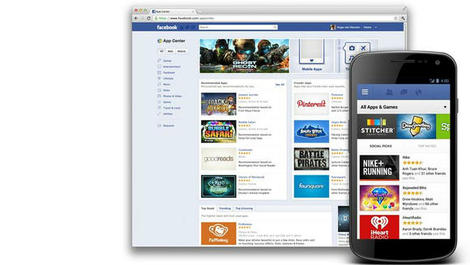
It's apparently official Android-update day for some big-name apps, with both Facebook and Pandora adding new features today.
Android users can more easily upload their photos to Facebook thanks to the latest app update.
Rather than ponderously uploading each photo one by one, the photo upload feature now allows users to select multiple images to upload in one fell swoop then tag and caption to your liking.
The Facebook app also adds the ability for users to create events right on their Android device, something still lacking from the iOS Facebook app.
Facebook messaging also gets an enhancement with the ability to now include emoji characters and photos in your messages.
Opening Pandora's app
Online radio app Pandora also sees an update today on Android, bringing it up to speed with the last month's updates to the iOS app.The update gives Pandora a revamped UI, improving app navigation and giving it a blue and white color scheme that bears a striking resemblance to Facebook's own.
In terms of actual features, the Pandora app also now lets users browse song lyrics and artist bios on their Android device.
Users can also rate and review songs that they have heard, as well as view similar tracks and artists to find new music.
Both the Pandora and Facebook app updates are free to all users, and can be downloaded straight from the Google Play store.

| |
Read More ...
J.D. Power ranks Verizon highest in network quality

J.D. Power and Associates released its latest rankings for U.S. wireless providers, placing Verizon at the top of the pack.
The survey questioned wireless users from across the country on overall network performance and key areas like dropped or lost calls, audio issues, failed text messages, and slow download speeds.
For purposes of the survey, the country was split into six regions represented by the Northeast, Mid-Atlantic, Southeast, North Central, Southwest, and West areas.
In five of those regions, Verizon consistently outperformed other wireless carriers with fewer customer complaints over dropped calls, connection issues, and transmission failures. This was the 16th consecutive report where Verizon ranked best in the Northeast region.
"This latest study once again speaks loudly and clearly to the outstanding performance of the Verizon Wireless network in terms of customer satisfaction," said Verizon chief technical officer Nicola Palmer.
"With our 4G LTE high-speed network's blazing fast speeds and superior nationwide coverage, Verizon Wireless remains committed to providing its customers with the best networks, devices and innovative services."
The Midwest disagrees
The one region keeping Verizon from a U.S. monopoly on network quality was the North Central region, which ranked US Cellular just slightly above Verizon.The North Central region consists of Illinois, Indiana, Michigan, Ohio, and Wisconsin.
US Cellular seems to be the local favorite for the Great Lakes states, with this marking the 14th consecutive top ranking for the carrier.
J.D. Power and Associates conducts its Wireless Network Quality Performance Study twice per year, surveying approximately 27,000 wireless users across the country.

| |
Read More ...
Amazon Kindle Fire 2 launch set for September 6?

In a cryptic note sent to members of the media, Amazon extended its hospitality to an airport hangar in Santa Monica, Calif. on September 6 where it may or may not unveil the Kindle Fire 2.
The text on the invitation is scant: "Please join us for an Amazon Press Conference."
The just-outside Los Angeles soiree could be for any number of things, but industry insiders anticipate a big announcement to echo through the hangar's halls.
Read between the lines
Though Amazon is cheekily keeping the details under wraps, the most obvious assumption would be the unveiling of a new generation of Kindle Fire tablets.TechRadar reported back in June that Amazon teased a new 7-inch and an unheard of 10-inch Kindle Fire 2 model, with a source reporting both could see the light of day sometime this summer.
The 10-inch tab is reportedly set to run a more powerful, "more competent" quad-core processor while both large-display devices are said to be made of higher-quality materials and sport more ergonomic designs.
More's been reported on the 10-incher than 7-inch, and it will reportedly come with a front-facing camera, microUSB ports and HDMI-out jacks.
However, the 7-inch tablet could come with a 1200 x 800 resolution screen and both tabs are supposedly slimmer and more akin to the first-gen Apple iPad than current Kindle Fire iterations.
TechRadar also published a report that the 7-inch tablet could cost $199, though we didn't have luck tracking down a 10-inch price.
Expect the unexpected
While our theories are only conjecture at this point and we really won't know anything for sure until September 6, we wouldn't put it past Amazon to pull the wool over everyone's eyes and deliver something completely out of left field.TechRadar did some investigating last week and discovered that a shell company for Amazon filed papers with the Federal Communications Commission that supposedly outlined a new Kindle Fire 2.
We discovered the filings were made by a group called Harpers LLC, a front created by CSC Entity Services. CSC is a legitimate business that Amazon hired for these exact purposes.
The filings were reportedly for a large screened, tablet device and quite possible for the next Kindle Fire 2.
Until we know exactly what Amazon's got planned for the first Thursday in September, check out TechRadar's Kindle Fire 2 rumors and news round up.

| |
Read More ...
Amazon announces mystery September 6 press event
In a cryptic note sent to members of the media, Amazon extended its hospitality to an airport hangar in Santa Monica, Calif. on September 6.
The text on the invitation is scant: "Please join us for an Amazon Press Conference."
The just-outside Los Angeles swaray could be for any number of things, but industry insiders anticipate a big announcement to echo through the hangar's halls.
Read between the lines
Though Amazon is cheekily keeping the details under wraps, the most obvious assumption would be the unveiling of a new generation of Kindle Fire tablets.TechRadar reported back in June that Amazon teased a new 7-inch and an unheard of 10-inch Kindle Fire 2 model, with a source reporting both could see the light of day sometime this summer.
The 10-inch tab is reportedly set to run a more powerful, "more competent" quad-core processor while both large-display devices are said to be made of higher-quality materials and sport more ergonomic designs.
More's been reported on the 10-incher than 7-inch, and it will reportedly come with a front-facing camera, microUSB ports and HDMI-out jacks.
However, the 7-inch tablet could come with a 1200 x 800 resolution screen and both tabs are supposedly slimmer and more akin to the first-gen Apple iPad than current Kindle Fire iterations.
TechRadar also published a report that the 7-inch tablet could cost $199, though we didn't have luck tracking down a 10-inch price.
Expect the unexpected
While our theories are only conjecture at this point and we really won't know anything for sure until September 6, we wouldn't put it past Amazon to pull the wool over everyone's eyes and deliver something completely out of left field.TechRadar did some investigating last week and discovered that a shell company for Amazon filed papers with the Federal Communications Commission that supposedly outlined a new Kindle Fire 2.
We discovered the filings were made by a group called Harpers LLC, a front created by CSC Entity Services. CSC is a legitimate business that Amazon hired for these exact purposes.
The filings were reportedly for a large screened, tablet device and quite possible for the next Kindle Fire 2.
Until we know exactly what Amazon's got planned for the first Thursday in September, check out TechRadar's Kindle Fire 2 rumors and news round up.

| |
Read More ...
Nokia, Samsung and 20 others create coalition to improve indoor location-based services
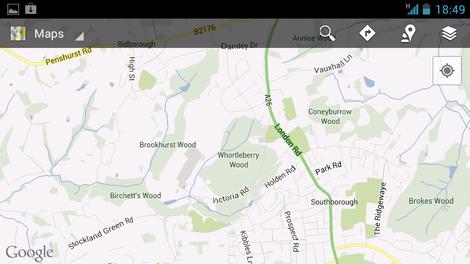
It's no secret that indoor positioning technology isn't ideal - anyone who's tried to pinpoint their location while inside an office, convention center or other large building can attest to that.
Now 22 tech companies, including Nokia, Samsung and Sony Mobile, have banded together to form the In-Location Alliance, a Justice League for the victims of poor indoor positioning everywhere.
The member companies forming the In-Location Alliance have vowed to make indoor positioning services more accurate, efficient, mobile, and easy to implement and use, according to a press release from Nokia.
Sony followed up with another press release, stating that the Alliance was formed "with the goal of driving the innovation and development of indoor positioning."
An indoor mapping dream team
The In-Location Alliance is comprised of companies that range from phone and other device manufacturers to mapmakers and semiconductor experts.In addition to Nokia, Samsung and Sony, here are the other participating companies:
- Broadcom
- CSR
- Dialog Semiconductor
- Eptisa
- Geomobile
- Indra
- Insiteo
- Nomadic Solutions
- Nordic Semiconductor
- Nordic Technology Group
- NowOn
- Primax Electronics
- Qualcomm
- RapidBlue Solutions
- Seolane Innovation
- TamperSeal AB
- Team Action Zone
- Visioglobe
Following pilots from Alliance member companies this year, the indoor location solutions could be implemented in some devices as soon as 2013, according to official reports.
The hero this industry needs
"The aim of the In-Location Alliance is to act as a pioneer opening up new business streams for indoor environments," reads a press release credited to the Alliance itself in Nokia's press release."Indoor positioning is the next frontier of mobile services, offering great opportunities to enhance consumer experiences."
There are certainly some high-profile firms involved, though it seems two of the companies who would have the most interest in improved indoor mapping tech - Google and Apple - are conspicuously missing.
TechRadar reached out to the Alliance to find out whether these companies were approached about joining up.
In the announcement, the Alliance does note that it's open to any company "who is ready to further investigate business opportunities in indoor location based services and see value and benefits in industry collaboration," so maybe it's not too late.

| |
Read More ...
Nokia, Samsung and many more create coalition to improve indoor location-based services
It's no secret that indoor positioning technology isn't ideal—anyone who's tried to pinpoint their location while inside an office, convention center or other large building can attest to that.
Now 22 tech companies, including Nokia, Samsung and Sony Mobile, have banded together to form the In-Location Alliance, a Justice League for the victims of poor indoor positioning everywhere.
The member companies forming the In-Location Alliance have vowed to make indoor positioning services more accurate, efficient, mobile, and easy to implement and use, according to a press release from Nokia.
Sony followed up with another press release, stating that the Alliance was formed "with the goal of driving the innovation and development of indoor positioning."
An indoor mapping dream team
The In-Location Alliance is comprised of companies that range from phone and other device manufacturers to mapmakers and semiconductor experts.Here's the complete list of participating companies:
- Nokia
- Samsung
- Sony Mobile
- Broadcom
- CSR
- Dialog Semiconductor
- Eptisa
- Geomobile
- Indra
- Insiteo
- Nomadic Solutions
- Nordic Semiconductor
- Nordic Technology Group
- NowOn
- Primax Electronics
- Qualcomm
- RapidBlue Solutions
- Seolane Innovation
- TamperSeal AB
- Team Action Zone
- Visioglobe
Following pilots from Alliance member companies this year, the indoor location solutions could be implemented in some devices as soon as 2013, according to official reports.
The hero this industry needs
"The aim of the In-Location Alliance is to act as a pioneer opening up new business streams for indoor environments," reads a press release credited to the Alliance itself in Nokia's press release."Indoor positioning is the next frontier of mobile services, offering great opportunities to enhance consumer experiences."
There are certainly some high-profile firms involved, though it seems two of the companies who would have the most interest in improved indoor mapping tech - Google and Apple - are conspicuously missing.
TechRadar has reached out to the Alliance to find out whether these companies were approached about joining up.
In the announcement, the Alliance does note that it's open to any company "who is ready to further investigate business opportunities in indoor location based services and see value and benefits in industry collaboration," so maybe it's not too late.

| |
Read More ...
Atlas to complete Nokia Windows Phone 8 trio

A third though not-so-different Nokia Window Phone 8 device is pegged for release soon.
Codenamed "Atlas," the phone is said to be virtually identical to the "Arrow," a mid-range device that AT&T and T-Mobile will pick up.
However, Arrow and a second device, the "Phi," have a tentative announcement date September 5 while the Atlas won't make it's debut until later this year.
Atlas is said to be a Verizon version of its straight shooting doppelgänger.
Tertiary device
Atlas completes the rumored trifecta of Nokia Windows 8 handsets that'll be announced in the coming weeks and months.The carrier's hero device, the Phi, is said to have a Lumia 800/900-esque large curved display and polycarbonate body. AT&T will carry this puppy exclusively.
Arrow is a Lumia device, too, sources say; and presumably the Atlas will be as well.
All device names are code names, by the way, though name changes at a later stage might be a miscue by Nokia.
When the carriers plan to unleash these phones on the world remains unknown, but TechRadar will keep you posted on any and all developments.

| |
Read More ...
Available Tags:Sony , hardware , TV , Amazon , Windows 8 , Windows , 4G , Windows 8 , Nokia , TechRadar , iPhone , iPod , Apple , Samsung , iPad , HTC , Facebook , Android , Kindle , Windows Phone , Windows Phone 8 ,


No comments:
Post a Comment