

Samsung Galaxy S III hands on: fast, thin, and a little bit cheap feeling

Samsung today launched its keenly-anticipated Galaxy S III flagship Android phone. We played around with it at Samsung's remarkably expensive and busy event in London's Earl's Court.
The hardware spec of the Galaxy S III is second to none. Quad-core 1.4 GHz Exynos 4 processor (a Cortex A9 design, so essentially the same CPU core as found in the NVIDIA Tegra 3, Texas Instruments' OMAP 4, and Apple's A5, among others) with an integrated ARM Mali GPU, paired with 1 GB RAM, 16, 32, or 64 GB of flash (though at launch only 16 and 32 GB models will be available), and a whopping 4.8" 1280×720 HD Super AMOLED screen. The phone sports a wealth of sensors; 8 MP rear camera with LED flash, front-facing 1.9 MP camera, accelerometer, GPS and GLONASS positioning, compass, gyroscope, and, rather weirdly, a barometer. If 64 GB isn't enough, you can add micro-SD storage, up to 64 GB SDXC.

Read the comments on this post
Read More ...
MI6 codebreaker attended U.S. security conference just before his death


A top British codebreaker who died a mysterious death in his flat two years ago had just returned from a computer security conference in the United States before his death, according to information disclosed during an inquest this week.
The body of Gareth Williams, a codebreaker with Britain’s MI6 spy agency, was discovered stuffed into a sports bag in his bathtub on Aug. 23, 2010, though he’s believed to have been killed Aug. 15.
Williams had just returned to London on Aug. 11 after spending six weeks in the United States, where he attended the annual Black Hat security conference in Las Vegas as part of a contingent of British spies, according to witnesses who spoke at the inquest. He attended Black Hat in 2008 as well.
It’s believed Williams may have also attended Black Hat’s companion hacker conference, DefCon, which follows Black Hat and draws many of the same attendees. In 2010, Black Hat was held July 24 to 29, while DefCon ran from July 30 to August 1.
Black Hat is one of the top security conferences in the world, targeting the professional security crowd, while DefCon is geared more specifically to hackers. Law enforcement agents, the military and undercover spies regularly attend both conferences—often undercover—to keep pace with the latest research and learn what hackers are up to. They also recruit hackers for professional work.
Read the comments on this post
Read More ...
Malicious apps hosted in Google store turn Android phones into zombies

Google has been caught hosting more than a dozen malicious titles in its official Android app market. Some had been downloaded tens of thousands of times and turn smartphones into zombies that await commands from their attacker overlords, security researchers said.
A stash of 17 malicious apps remained freely available in the Google Play store, according to a blog post published Thursday by researchers from antivirus provider Trend Micro. Six of those titles contained a highly stealthy code dubbed Plankton, which causes Android-based phones to connect to command and control servers and wait for commands. At least 10 Plankton-based apps found last year in the Android market collected users' browsing history, bookmarks, and device information and sent them to servers under the control of the attackers.
Read the comments on this post
Read More ...
Oracle v. Google judge asks for comment on EU court ruling

The copyright phase of the Oracle v. Google trial is winding down. While the world waits for a jury verdict on the facts, the judge overseeing the case is wrestling with the complexities of the law. Oracle has argued that the "structure, sequence and organization" of the Java API is eligible for copyright protection, while Google disagrees.
On Thursday, Judge William Alsup asked each party to submit a 20-page brief answering a series of 13 in-depth questions about the Java API and the relevant precedents. Among other things, he asked the parties to weigh in on the implications of this week's EU court decision that allowing functional characteristics of programming languages to be copyrighted would "monopolize" ideas.
Read the comments on this post
Read More ...
Has Walmart opened itself up to "Denial of inventory" attacks?

On April 26, Walmart's e-commerce site launched a pay-with-cash feature, allowing shoppers to reserve products for pickup at a local Walmart store. While the feature opens up e-commerce to a larger number of potential transactions—including purchases by teenagers and others without credit cards—it also has opened up the company to potential attacks against its inventory system, using the e-commerce site against the company.
The cash-based payment program, which among other things required millions of dollars worth of changes to Walmart's in-store point of sale systems, gives customers 48 hours to come into a Walmart store with an order number to pay for it. When the customer pays a Walmart "associate," a button on the point-of-sale system connects to the Walmart.com e-commerce site and completes the online transaction.
But as Evan Schuman of retail technology trade site StorefrontBacktalk has reported, that system could be used to jam up Walmart's logistics system—allowing a competitor or other party to perform a "denial of inventory" attack on items that may be in high demand and short supply (such as hot holiday gift items around Black Friday).
Such an attack could be launched through a botnet using "webinject" malware to make scripted Web requests, or via other more manual means, spreading out transactions geographically. An e-commerce competitor seeking an advantage during peak shopping days, for example, could try to limit the number of customers who could purchase a limited-availability item—reducing Walmart's sales.
In an interview with Ars, Schuman said that Walmart had considered the risks posed by the program—during the three-and-a-half years the program was under development—but decided it was not a major issue, based on the belief that such an attack would be easily picked up by fraud detection systems. He said that contacts at Walmart had told him the company anticipates 20 percent of online cash purchases will be abandoned—the customers will never come in to pay for them.
Ravi Jariwala, a Walmart spokesperson, told Ars in an e-mail that Walmart has "systems in place that allow us to closely monitor 'Pay with Cash' transactions and flag suspected fraudulent orders immediately." He added that Walmart can disable cash purchases for "specific items and events, such as the day after Thanksgiving," and will continue to tweak the service to reduce the threat of fraud.
Read the comments on this post
Read More ...
Apple hoards tablet share while market falls off a cliff for first quarter

The overall tablet market is suffering despite Apple's strong numbers when it comes to iPad sales. Released Thursday, IDC's quarterly report on the tablet market shows a steep decline in worldwide tablet shipments during the first quarter of 2012—a 38.4 percent unit decline to 17.4 million units from the previous quarter's 28.2 million units. This was actually lower than IDC's already pessimistic projection of a 34 percent decline. But when it comes to Apple, things are dandy. The company grew its market share from 54.7 percent in Q4 2011 to 68 percent in the most recent quarter.
The first quarter of the calendar year usually results in a decline in unit sales from the previous quarter due to the holiday season rush to buy gadgets. Apple wasn't completely immune to this market force—IDC says the company shipped 11.8 million iPads during the first quarter of the year, down from 15.4 million units over the holiday season. Despite this drop, Apple's share of the tablet market was able to shoot up more than 14 percentage points between quarters, largely because of the precipitous decline in tablet sales from the likes of Amazon. According to IDC, Amazon's share of the tablet market with the Kindle Fire was 16.8 percent in the fourth quarter of 2011, but fell to just 4 percent in the first quarter of 2012.
These numbers place Apple in first place, Samsung in second, and Amazon in third. Lenovo came in fourth place, while Barnes & Noble's Nook came in fifth.
"Apple's move to position the iPad as an all-purpose tablet, instead of just a content consumption device, is resonating with consumers as well as educational and commercial buyers. And its decision to keep a lower-priced iPad 2 in the market after it launched the new iPad in March seems to be paying off as well," IDC's Research Director of Mobile Connected Devices Tom Mainelli said in a statement. "It seems some of the mainstream Android vendors are finally beginning to grasp a fact that Amazon, B&N, and Pandigital figured out early on. Namely, to compete in the media tablet market with Apple, they must offer their products at notably lower price points."
Indeed, the Android tablet market has struggled for some time to find its place, only to be dominated by the $199 Kindle Fire upon its initial launch last year. But even those don't appear to be selling that well at the moment, according to IDC's own numbers. IDC seems optimistic, however, that there will be some bounce-back from both existing and new players. "The worldwide tablet market is entering a new phase in the second half of 2012 that will undoubtedly reshape the competitive landscape," IDC Vice President of Clients and Displays Bob O'Donnell said.
Read the comments on this post
Read More ...
Facebook announces initial IPO price range of $28 to $35
Facebook is slated to set its price range for its initial public offering (IPO) at $28 to $35, according to an amended filing with the Securities and Exchange Commission (SEC) first reported by the Wall Street Journal on Thursday. The company is expected to be publicly listed on the NASDAQ exchange on May 18 under the ticker symbol “FB.”
"Facebook, Inc. is offering 180,000,000 shares of its Class A common stock and the selling stockholders are offering 157,415,352 shares of Class A common stock," the company wrote in the S-1 filing.
"We will not receive any proceeds from the sale of shares by the selling stockholders. This is our initial public offering and no public market currently exists for our shares of Class A common stock. We anticipate that the initial public offering price will be between $28.00 and $35.00 per share."
However, one WSJ reporter also noted on Twitter that some investors, including Peter Thiel (founder of PayPal and venture capitalist), Microsoft, Greylock (another VC firm), and CEO Mark Zuckerberg himself are already looking to cash in to some degree before the IPO on non-public stock that they had held so far.
At the listed opening price range, the company is expected to raise over $13 billion, and would put its market capitalization, or estimated total worth, in the $77 to $96 billion range, just shy of Amazon’s current value and about twice that of HP’s. But that’s still relatively low compared to the Silicon Valley titans. By comparison, Google’s market cap is at about $200 billion, and Apple is hovering around $540 billion.
The filing also states that CEO Mark Zuckerberg "will hold or have the ability to control approximately 57.3 percent of the voting power of our outstanding capital stock following this offering."
In the S-1 filing, Facebook lists a number of perfunctory "risk factors" associated with the sale of its stock. Among those is: "there are changes in user sentiment about the quality or usefulness of our products or concerns related to privacy and sharing, safety, security, or other factors."
That comment couldn't come at a more opportune time, given Consumer Reports' new study on the social network. It included this gem of a statistic: "25 percent said they falsified information in their profiles to protect their identity, up from 10 percent two years ago."
As the New York Times aptly points out, that is in direct violation of Facebook's terms of service—and with the company's record on privacy not exactly being hiccup-free, privacy will certainly be an area that we all will be watching.
Read the comments on this post
Read More ...
Alleged "mastermind" of #Antisec added to indictment for Stratfor hack

Jeremy Hammond, the former LulzSec member alleged to have been at the center of the hacking of private intelligence company Stratfor, has now been formally indicted on that charge, as well as the hacking of the website of the Arizona Department of Public Safety. While he was arrested in March, the indictments unsealed in federal court on March 6 named, but did not charge, Hammond, known by the handle "Anarchaos" among others.
The new indictment, which amends the original, accuses Hammond of leading the attacks on Arizona DPS and Stratfor, and with the help of others, passing data to a server provided by former LulzSec leader Hector Xavier "Sabu" Monsegur (working as an FBI informant). The data included sensitive law enforcement documents, approximately 60,000 credit card numbers from Stratfor's servers, and the personal information of 860,000 Stratfor clients. Hammond and others are accused of making at least $700,000 in unauthorized charges on stolen credit card numbers as well.
Read the comments on this post
Read More ...
White spaces and happy faces: TV stations drop lawsuit against "super WiFi"

The National Association of Broadcasters has withdrawn its legal objection to the FCC's "white spaces" proposal, removing a key source of uncertainty about the technology's future.
White space devices can use prime spectrum in the television band that is not currently being used by TV stations, spectrum that varies by local market, and they can do so without a license. (Think "WiFi on steroids.") Until now, broadcasters have been "relentlessly hostile" to the proposal, pointing to the risk of interference with adjacent television broadcasts. And the NAB, which represents the broadcasters, has a lot of clout inside the beltway, so its objections carried a lot of weight.
Yet the technology progressed despite the NAB's objections. The FCC first gave its approval to the concept in 2008, but the first whitespaces device was not approved until late last year—and then only in Wilmington, NC.
The NAB sued the FCC in 2009 to stop the white spaces rollout, and the case has been working through the courts ever since. The trade group argued that white spaces technology "will have a direct adverse impact on... NAB's members because it will allow harmful interference with reception of their broadcast signals."
But on Thursday, the NAB filed a motion asking the courts to dismiss its own case. The organization said that the FCC addressed its concerns in a recent order, making the lawsuit unnecessary. We asked the NAB for more details, but they haven't gotten back to us yet.
"NAB should be congratulated for withdrawing its court challenge to the FCC's white space order," said the Wireless Innovation Alliance in a statement, calling the move a "major step forward."
Now the remaining obstacles to widespread adoption of white spaces technology are mostly technical. Art Brodsky of Public Knowledge told us that supporters of the technology are working on building the databases needed to track which television channels are available for use at any particular time and location. He said the databases are being set up on a "market-by-market basis. When they hit a critical mass of markets, or can accommodate multiple markets, this technology will take off much more strongly."
Read the comments on this post
Read More ...
Newest Kindle Fire update promises more parental control options

Amazon will be rolling out Kindle Fire Software Update Version 6.3.1 over the next several days. It is the company's second update within roughly a month (the last featured faster WiFi reconnect, increased sharing options, and moving rental timing tweaks). This latest update is highlighted by additional parental control options.
With version 6.3.1, Amazon is providing several methods to restrict content access for others (like kids who might accidentally start watching that violent movie you downloaded). Users can now password-protect purchases, disable access to specific content libraries, or block access to the Silk Web browser entirely. Particularly with purchasing, this should address a previous area of concern for Fire users.
The update comes as market research firm IDC estimated that Kindle Fire shipments fell from 4.8 million tablets in the fourth quarter of 2011 to fewer than 750,000 in the first quarter of this year.
This software update will be delivered automatically, over-the-air in the coming days. You can check if the update has already been installed by tapping the Quick Settings icon, tapping "More," and then finally "Device." If your System Version is "Current version: 6.3.1," you're ready to roll. If not, under Quick Settings tap "Sync." Amazon also provides instructions on downloading the software and manually transferring it to the device via USB.
Read the comments on this post
Read More ...
The on-again, off-again, on-again saga of EA's iOS Rock Band

It's been a short but confusing month so far for owners of the iOS version of rhythm game Rock Band. Those who tried to use the app on May 1 were greeted with a message saying that the $4.99 game "will no longer be playable on your device" as of May 31. "Thanks for rocking out with us!" the message said, somewhat tauntingly.
Read the comments on this post
Read More ...
Apple dominates global handset profits as smartphone sales shoot up
Samsung and Apple may be duking it out for the number one slot in smartphone sales (particularly due to the collapse of Nokia), but the two leaders have an astonishing combined 99 percent of global handset profits for Q1 2012. Of that, Apple took in 73 percent of global handset profits, despite having just 9 percent of global handset market share, according to new quarterly analysis from Canaccord.
That’s just one of the fascinating details that analysts have unearthed in the season of quarterly reports. According to IDC, in Q1 2012 Samsung shipped almost four times as many units—42.2 million—as it did in Q1 2011 (11.5 million). But while Apple may have shipped fewer units (after all, the company has less than 10 percent of global smartphone market share), Juniper Research reports that Apple’s Q1 2012 iPhone revenue was $22.7 billion, about a third higher than Samsung’s $16.7 billion from its entire mobile division. Naturally, profits always trump units shipped.
"Apple and Samsung compete on the high-end, where the money is made, and unlike some of their competitors, both don’t need to cut device prices to attain sufficient volume, which is what happened recently with Nokia and the Lumia," wrote Dexter Thillien, a mobile industry analyst at IHS Global Insight, in an e-mail to Ars on Thursday.
"It’s also worth bearing in mind that Google has revenues of around $2.5 billion a year from Android (overall is around $40 billion), and even though their business model is completely different, it further highlights the importance of hardware compared to software."
Other analysts have estimated that global smartphone shipments are set to rise significantly, and as such, will account for a bump in profits across the board.
In a recent report, IHS Global Insight also said that global smartphone shipments are poised to rise by 35 percent, and that "the smartphone segment will be single-handedly responsible for the overall cellphone business expansion of 7.4 percent in 2012. Next year, smartphone shipments will rise to account for more than half of all cellphones for the first time, at 52 percent, up from 43.5 percent in 2012."
"Smartphones now represent around 75 percent of postpaid sales in developed markets, and an increasing share in developing markets, with the proliferation of sub-$100 devices by Chinese vendors, with China leading the way in that market," Thillien added.
Read the comments on this post
Read More ...
Forget channel surfing: How Boxfish plans to revolutionize real-time TV search

Most of us, including Bruce Springsteen himself, have thought it: there’s nothing on TV. This is despite the fact that many people who pay for cable or satellite subscriptions have constant access to hundreds of channels. Many of us lament, or perhaps are overwhelmed by, choice. While channel-surfing and looking for something new, you could consult a paper TV Guide, or its modern-day equivalent, the on-screen "grid" interface.
But now, a new Silicon Valley startup wants to change all that by harnessing a feature that most channels already output—closed captioning. Boxfish captures all closed-captioning information, indexes it, then makes that data searchable in a Twitter-style interface. All in real-time.
The company was founded in January 2011 and launched its "beta" search interface in March.
"We thought that this is a fantastic way to discover television," said Eoin (pronounced like "Owen") Dowling, who hails from Ireland, in an interview with Ars on Tuesday.
"Most people discover television using this grid. We turned this basically TweetDeck-like feed for television into a remote control for TV. So you’re at home and you tell us what you’re interested in, and we pop what’s happening in real time and then you can control your TV with it."
Read the comments on this post
Read More ...
Samsung Galaxy S III packs 4.8-inch display, "S Voice" control

Samsung announced the Galaxy S III at its Mobile Unpacked event today in London. The phone has a large 4.8-inch HD Super AMOLED display and runs Android 4.0 Ice Cream Sandwich.
Complementing the large 1280x720-resolution screen are an 8-megapixel camera on the back and a 1.9-megapixel camera on the front. The phone will have a 2100mAh battery and come in 16GB and 32GB configurations, with a 64GB version "available soon." As announced earlier, the phone has a quad-core Exynos processor.


The Galaxy S III in Pebble Blue
The Samsung Galaxy S III is set to roll out in Europe on May 29, with 4G LTE and HSPA+ versions arriving in the USA in "summer 2012." Carriers have not yet been specified, though Samsung has said it plans to take the phone on a "10-city world tour."
The phone continues the successful Galaxy S line and immediately follows the Samsung Galaxy S II, which launched a year ago in Europe and last fall in the USA.
Our own Peter Bright is on the ground at the event, and will follow up with a hands-on of the hardware shortly.
Read the comments on this post
Read More ...
Mars Opportunity rover reaches Endeavour crater, finds signs of ancient Martian water

Over seven years into its (originally) 90-day mission, the Mars rover Opportunity arrived at the rim of Endeavour Crater. While the crater itself was formed from an ancient meteorite impact, the rocks at its rim show signs of a watery past. Chemical analysis found deposits typical of hydrothermal vents on Earth, along with features usually associated with evaporation. Together, these pieces of evidence suggest warm, shallow water formerly existed in the region of Endeavour.
In a new Science paper, S. W. Squyres and colleagues describe the process Opportunity used to obtain and analyze the rock samples. The landscape around Endeavour is very old, dating back to the era when Mars was under constant bombardment by meteorites, which is why it was chosen as a site for exploration by rover. If Mars' history parallels Earth's in any way, the early cataclysmic period gave way to calmer times, and water—possibly life—may have been present. Based both on the sedimentary and evaporative characteristics of the rocks around the crater, the researchers conclude the region may have been habitable for at least a short period of time.
Read the comments on this post
Read More ...
iOS Dropbox app kerfuffle ends, but highlights confusion about guidelines

Is Apple blanket-rejecting iOS apps that make use of Dropbox because of an evil plan to push developers toward iCloud? If you asked this question five days ago, the answer from the Internet at large might have been a resounding "yes!" But days later, as is often the case, details have come out that reveal the answer is probably "no."
As it turns out, Dropbox inadvertently put other developers using its SDK in violation of one of Apple's app guidelines, resulting in a string of rejections that looked as if apps using Dropbox were being banned. The Web flew into a fury over what is essentially an annoying but long-standing clause in Apple's guidelines. The problem has now been remedied and the fury has died down, but what, exactly, happened during this sordid drama and how did it end up being fixed?
Read the comments on this post
Read More ...
Feature: Exclusive: building native iOS apps with RubyMotion

In 2007, software developer Laurent Sansonetti launched an open source software project called MacRuby. It aimed to build a Ruby interpreter on top of the Objective-C runtime, providing a seamless bridge between Ruby and OS X "Cocoa" ecosystem—and it succeeded. Now Sansonetti hopes to do something similar for iOS.
Sansonetti recently left his job at Apple-where he has worked for the past seven years-to found his own startup, dubbed HipByte. He announced his first product today, a new software development kit called RubyMotion that will open the door for developers to build native iOS applications with the Ruby programming language.
Read the comments on this post
Read More ...
Elder Scrolls going online with MMO planned for 2013

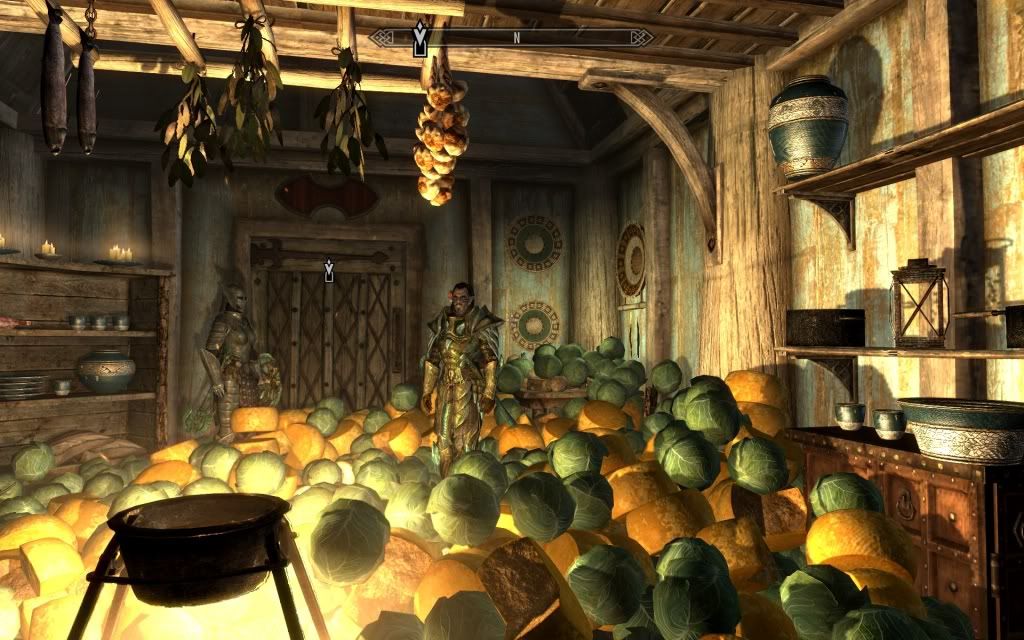
Tired of wandering around the world of Skyrim killing dragons and filling houses with cabbage all by yourself? You won't have to stay lonely for long, as Zenimax Media has announced The Elder Scrolls Online, which will take the franchise in a massively multiplayer direction for the first time, starting in 2013.
Game Informer managed to snag the exclusive reveal of the PC and Mac game, which will be featured in the magazine's June issue. The game will reportedly take place "a millennium before the events of Skyrim," and will feature three warring player factions that can quest alone or in groups and engage in player-vs-player combat. The magazine promises more details will be slowly dripped out through trailers, screenshots, and interviews with the team behind the game in the coming weeks.
The new MMO will be developed by Zenimax Online Studios, founded back in 2007 under the direction of Matt Firor, a Mythic Entertainment veteran known for his work on Dark Age of Camelot. The Maryland-based studio has yet to release a game, but last year announced it was looking to hire hundreds of people for an Ireland-based customer support center.
"It will be extremely rewarding finally to unveil what we have been developing the last several years," Firor told Game Informer. "The entire team is committed to creating the best MMO ever made—and one that is worthy of The Elder Scrolls franchise."
Read the comments on this post
Read More ...
"MacMan" or "iMac?" The creative director behind Apple's turnaround

Former ad agency creative director Ken Segall may not be the first person who comes to mind when considering who is responsible for Apple's success, but his influence is felt in many of Apple's major moves. More specifically, it was Segall's influence on Apple cofounder Steve Jobs—and Jobs's influence on him—that helped lead the company to a level of prosperity that was barely even thought possible in the dark days of the mid-1990s, making Segall and his team at TBWA\Chiat\Day some of the unsung heroes in Apple's success story.
Segall's recently published book, Insanely Simple, almost became one of those gimmicky mini-books filled with uplifting phrases that you see while waiting to check out at the supermarket. But perhaps due to the lessons he learned from Jobs, he pushed instead to write a more thorough book about the kind of thinking that led Apple to where it is today. And while the book itself is laid out differently than other books about Apple or Jobs—it's organized by concept, not as one long story about Apple—Segall's perspective on Jobs is a unique one, and his book is filled with all manner of amusing short stories about his experiences.
Read the comments on this post
Read More ...
The wait continues: No Valve product announcements planned for E3

Take down the streamers. Put away the noisemakers. Unqueue that copy of Kool & the Gang's "Celebration" you had loaded up and ready. Valve has confirmed to Joystiq that it will not be announcing any new products at next month's Electronic Entertainment Expo.
This isn't really a shocking turn of events for the company. Valve was a no-show at last year's E3, and used the 2010 event primarily to show off new footage of the previously announced Portal 2. The company's last major E3 reveal, 2009's unveiling of Left 4 Dead 2, almost immediately led to a substantial fan outcry that the company was rushing out a sequel before its time.
Still, the confirmation means fans' long wait for news on a new entry in the Half-Life series will continue for a little while longer at least, and that Valve is sticking to its policy of silence on the game, which it says is still going through a lot of developmental "twists and turns." It also means we shouldn't expect any official news on any of the many rumored hardware projects Valve seems to be hiring employees for.
That doesn't mean the show will be meaningless for Valve fans, though. The company will reportedly be presenting announced products like DOTA 2, Counterstrike: GO and Steam's upcoming, living-room-focused Big Picture Mode. And there's always a chance Valve could "pull a David Jaffe" with a surprise announcement of a game it swore it wouldn't be announcing (as Jaffe did with Twisted Metal in 2010). We wouldn't hold our breath, though...
Read the comments on this post
Read More ...
House pares NASA's 2013 spending back to 1959 levels, may force Europa mission

The Appropriations Committee of the US House of Representatives has set May 8 as the date they will begin debating an election year budget that pares NASA back to its lowest level as a percentage of the Federal budget since 1959, surpassing last year's record low of 0.48%. In absolute terms, it will roughly match the 2006 Bush levels, cutting money from the Space Technology and Commercial Crew program requests for a third year, while adding funds to the Space Launch System and the Orion Multi-Purpose Crew Vehicle, two Congressional favorites.
Read the comments on this post
Read More ...
Designer group Hermès gets $100M default judgment against alleged counterfeiters

This report is brought to you from Eric Goldman's Technology & Marketing Law Blog which covers aspects of Internet law, intellectual property, and advertising and marketing law. Balasubramani is a lawyer; Goldman is a law professor.
Hermès v. Does, 12-civ-1623 (S.D.N.Y.; Apr. 30, 2012)
We've blogged repeatedly about trademark owners obtaining ex parte orders that provide extraordinarily broad relief, ranging from domain name seizures to orders directing search engines and social networks to "delist" or "deindex" certain websites. In the run-up to SOPA's introduction and consideration, it seemed relevant to keep track of what relief courts were willing to order under current law that overlapped with SOPA. Hermès recently initiated just such a case. In a breathtakingly short amount of time, Hermès filed its complaint, obtained a temporary restraining order and then an injunction, and finally obtained a judgment—in the amount of $100 million. (!!)
Read the comments on this post
Read More ...
Feature: 1859's "Great Auroral Storm"—the week the Sun touched the earth

Noon approached on September 1, 1859, and British astronomer Richard Christopher Carrington was busy with his favorite pastime: tracking sunspots, those huge regions of the star darkened by shifts in its magnetic field. He projected the Sun's image from his viewing device onto a plate of glass stained a "pale straw colour," which gave him a picture of the fiery globe one inch shy of a foot in diameter.
The morning's work went as normal. Carrington patiently counted and charted spots, time-lining changes in their positions with a chronometer. Then he saw something unusual.
Read the comments on this post
Read More ...
Android users targeted in drive-by download attacks

Almost a dozen sites are actively targeting Android users with malware that could gain access to corporate networks and other protected systems, security researchers said. They note it's the first time compromised sites have been used to infect users of a mobile handset.
The malware, dubbed NotCompatible, is being transmitted by websites when they're accessed on smartphones running Google's Android operating system. This is according to a blog post published Tuesday by researchers from Android antivirus provider Lookout. An iframe tag included in the sites provides a link to malicious software that's automatically downloaded after the site is visited. The sites then provide notifications prompting end users to install the downloaded app. Installation is possible only on phones that have been configured to run apps acquired from sources other than the Google Play market.
"Hacked websites are frequently used to infect PCs with malware," Lookout researchers wrote in Wednesday's post. "However, today we have identified the first time hacked websites are being used to specifically target mobile devices." The company's security app automatically blocks installation of the software.
Google has long admonished users to download apps only from its official Play market. Most, but by no means all, malicious titles targeting Android are distributed through third-party channels. Lookout's discovery of sites that actively foist malicious installation apps only reinforces this advice. The security firm's claim that Android phones automatically download apps with no user prompting couldn't be immediately confirmed. If true, it's troubling behavior, even if users must change default settings to be able to install the programs.
Visiting the websites on non-Android devices returns an error message that prevents any malicious activity from taking place, Lookout said. But when a browser advertises it's running on an Android device, an HTML script automatically pushes the malicious software through a series of domains including gaoanalitics.info and androidonlinefix.info. A command and control server is hosted at notcompatibleapp.eu. About 10 websites compromised to include the malicious iframe have been identified, a Lookout spokeswoman said.
"Based on our current research, NotCompatible is a new Android trojan that appears to serve as a simple TCP relay/proxy while posing as a system update," the advisory stated. "This threat does not currently appear to cause any direct harm to a target device, but could potentially be used to gain illicit access to private networks by turning an infected Android device into a proxy."
Headline updated to make clear these aren't necessarily the first drive-by download attacks to target Android users. Lookout says they are the first time compromised sites have been used to target the OS.
Read the comments on this post
Read More ...
Google beefs up Apps Scripts for Docs

Google announced a slew of new features this afternoon for its Google Docs suite, hailing the addition of 450 new fonts for creating pamphlets and invitations in Docs, but also mentioning some new features for its application scripting language that will allow developers to build some interesting programs on top of the cloud service.
Google introduced a scripting language for Google Docs, Google Apps Script, in early 2010 so users could automate certain tasks in spreadsheets. Apps Scripts also permitted users to mesh certain third-party services with Google products to make sending e-mails and posting dates on a Google calendar automatic. Scripting is something that few other cloud services offer, and it puts Google ahead of the game in that respect.
Google's latest edition to Apps Script, called ScriptService, allows scripts to be published as a service program and provides control over when scripts run via timers and other "trigger" events—permitting Docs to perform automated functions. Another new feature of Apps Script integrates with Google Drive, allowing your script to find the root folder of someone else's Google Drive account so that published scripts can create and manipulate files in them. Finally, the revamped scripts now permit e-mail attachments of 25 MB (up from 5 MB), and can create docs up to 50 MB (up from a 2 MB limit).
Google has been aggressive in building out Apps Script's functionality—in early April, the company announced the ability to add HTML to a script's dialogue, and to program sheet protection in spreadsheets so a manager could control which collaborators see what.
Along with the font and scripting announcements, Google also said its service will allow importing photos into docs from Google Drive, and show bidirectional controls for people typing in right-to-left languages. Google Docs also has 60 new document templates in the template gallery.
Read the comments on this post
Read More ...
Available Tags:Samsung , Galaxy , security , his , Google , Android , Oracle , Apple , tablet , Facebook , hack , TV , Kindle , iOS , profits , smartphone , Valve , download ,


No comments:
Post a Comment