Monday, May 21, 2012

IT News Head Lines (AnandTech) 21/05/2012

AnandTech


NVIDIA Launches Fermi Based GeForce GT 610, GT 620, GT 630 Into Retail
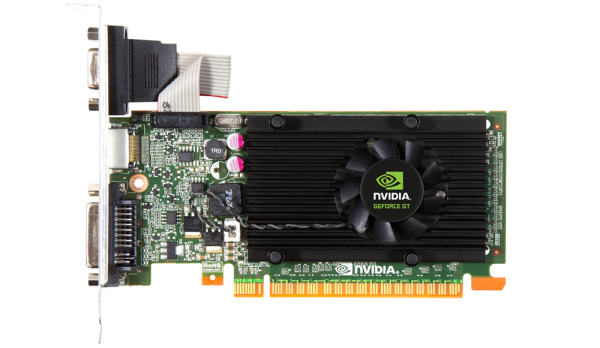
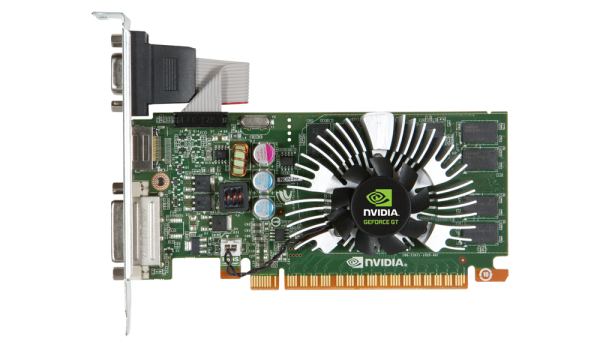
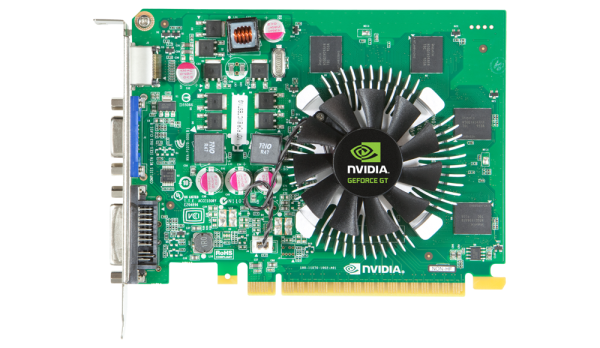
While we were off at NVIDIA’s GTC 2012 conference seeing NVIDIA’s latest professional products, NVIDIA’s GeForce group was busy with some launches of their own. The company has quietly launched the GeForce GT 610, GT 620, and GT 630 into the retail market. Unfortunately these are not the Kepler GeForce cards you were probably looking for.


GT 630 GDDR5

GT 630 DDR3

GT 620

GT 610

Previous Model Number

GT 440 GDDR5

GT 440 DDR3

N/A

GT 520

Stream Processors

96

96

96

48

Texture Units

16

16

16

8

ROPs

4

4

4

4

Core Clock

810MHz

810MHz

700MHz

810MHz

Shader Clock

1620MHz

1620MHz

1400MHz

1620MHz

Memory Clock

3.2GHz GDDR5

1.8GHz DDR3

1.8GHz DDR3

1.8GHz DDR3

Memory Bus Width

128-bit

128-bit

64-bit

64-bit

Frame Buffer

1GB

1GB

1GB

1GB

GPU

GF108

GF108

GF108/GF117?

GF119

TDP

65W

65W

49W

29W

Manufacturing Process

TSMC 40nm

TSMC 40nm

TSMC 40nm

TSMC 40nm
As NVIDIA was already reusing Fermi GPUs for GeForce 600 series parts for the OEM laptop and desktop market, it was only a matter of time until this came over to the retail market, and that’s exactly what has happened. The GT 610, GT 620, and GT 630 are all based on Fermi GPUs, and in fact 2 of them are straight-up rebadges of existing GeForce 400 and 500 series cards. Worse, they’re not even consistent with their OEM counterparts – the OEM GT 620 and GT 630 are based off of different chips and specs entirely.
At the bottom of the 600 series retail stack is the GeForce GT 610, which is a rebadge of the GT 520. This means it’s either a GF119 GPU or cut-down GF108 GPU featuring a meager 48 CUDA Cores and a 64bit memory bus, albeit with a low 29W TDP as a result. This is truly a rock bottom card meant to be a cheap as possible upgrade for older computers, as even an Ivy Bridge HD4000 iGPU should be able to handily surpass it.
The second card is the GT 620, which is a variant of the OEM-only GT 530. With 96 CUDA cores we’re not 100% sure that this is GF108 as opposed to the 28nm GK117, but as NVIDIA currently has a 28nm capacity bottleneck we can’t see them placing valuable 28nm chips in low-end retail cards. Furthermore the 49W TDP perfectly matches the GF108 based GT 530. Compared to the OEM GT 620 the retail model has twice as many CUDA cores, so it has twice as much shader performance on paper, but because of the 64bit memory bus it’s going to be significantly memory bandwidth starved.
The final new 600 series card is the GT 630, which is a rebadge of the GT 440. Like the GT 440 this card comes in two variants, a model with DDR3 and a model with GDDR5. Both models are based on GF108 and have all 96 CUDA cores enabled, and have the same core clock of 810MHz. At the same time this is going to be the card that deviates from its OEM counterpart the most. The OEM GT 630 was a Kepler GK107 card, so this rules out getting a Kepler based GT 630 retail card any time in the near future.
As always, rebadging doesn’t suddenly make a good card bad – or vice versa – but it’s disappointing to once again see this mess transition over to the retail market. We hold to our belief that previous generation products are perfectly acceptable as they were, and that the desire to have yearly product numbers in an industry that is approaching 2 year product cycles is silly at its best, and confusing at its worst.


Read More ...


PC Power & Cooling Silencer Mk III 400W
We have already reviewed quite a few PC Power & Cooling products on AnandTech, but this time we will be looking at their first series with modular cables and a white case. In contrast to older PSUs PC Power & Cooling delivered, this one provides a 120mm fan for cooling as well. The new Silencer MK III models are available in 400, 500 and 600W only. This is a good news for everybody who is interested in small power supplies as they deliver more than enough power for any common PC with one graphics card.
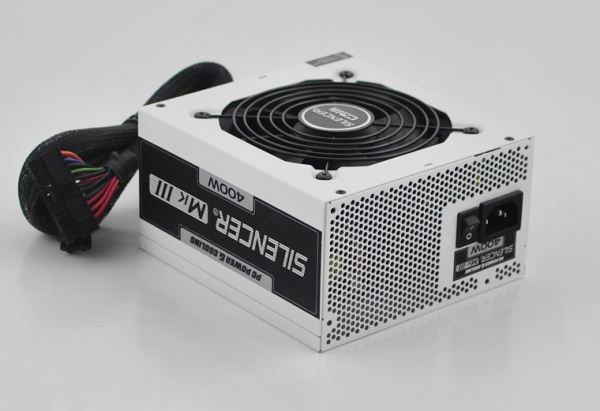
PC Power & Cooling uses Japanese capacitors, one powerful +12V output, a ball bearing fan from ADDA , and a partially modular cable management. With 80 Plus Bronze certification, the Silencer MK III seems to be an average product, but Seasonic is the company behind these products—and they're definitely a good choice. What about the internal design and components? On the following pages we will see if they meet one's expectations.


Read More ...


Quick Note: T-Mobile Disses Upcoming AT&T, Verizon Family Data Plans
T-Mobile's SVP of Marketing thinks that AT&T and Verizon are barking up the wrong tree with family data plans

Read More ...


Available Tags:NVIDIA , GeForce ,

No comments: