

The AMD Trinity Review (A10-4600M): A New Hope
AMD’s microprocessor history goes way back, predating even the now venerable x86 architecture. Their first foray into x86 territory came as a subcontractor to Intel, and from there AMD cut the ties and began making x86 compatible chips of their own design, starting in 1991 with the Am386. AMD went on to make the Am486 and Am5x86 before ditching the “86” part of the name with the launch of the K5. That’s where most of us started paying closer attention, and the K6/K6-2/K6-III and K7 were quite popular in their day. The real deal however came with the K8/Hammer family of processors—chips that not only competed with Intel offerings (Pentium 4 mostly) but actually outperformed them in the vast majority of benchmarks, and did so while using less power. It was a double whammy of performance and efficiency, and for several years AMD chips were the enthusiast’s CPU of choice.
Unfortunately for AMD, they’ve never quite managed to reclaim the glory of the Athlon 64/Opteron launch. It took Intel a few years—and a scrapped Tejas architecture—but when they finally got things straightened out they struck back with a vengeance. Intel’s Conroe (Core 2) architecture turned the tables on AMD with the same double whammy of increased performance and reduced power, and since the launch in mid-2006, Intel has managed to hold onto the CPU performance crown. In fact, earlier this year AMD almost seemed to throw in the towel as far a high-performance CPUs are concerned, with their future strategy focusing on mainstream and value-oriented APUs. We’ve already seen some of that with their first APUs, Brazos and Llano, and today AMD brings out their third APU architecture: Trinity.
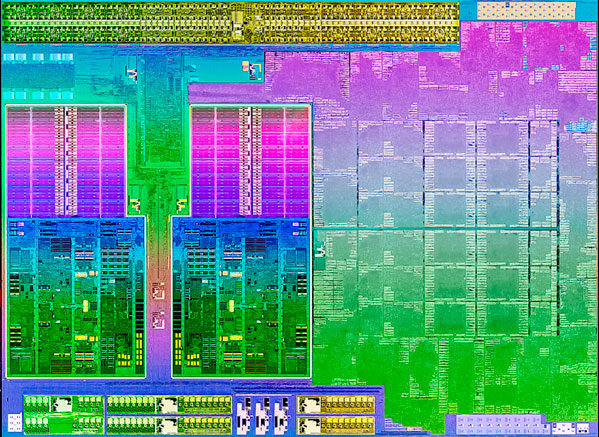
Read More ...
Ask the Experts: Heterogeneous and GPU Compute with AMD’s Manju Hegde
AMD’s Manju Hegde is one of the rare folks I get to interact with who has an extensive background working at both AMD and NVIDIA. He was one of the co-founders and CEO of Ageia, a company that originally tried to bring higher quality physics simulation to desktop PCs in the mid-2000s. In 2008, NVIDIA acquired Ageia and Manju went along, becoming NVIDIA’s VP of CUDA Technical Marketing. The CUDA fit was a natural one for Manju as he spent the previous three years working on non-graphics workloads for highly parallel processors. Two years later, Manju made his way to AMD to continue his vision for heterogeneous compute work on GPUs. His current role is as the Corporate VP of Heterogeneous Applications and Developer Solutions at AMD.
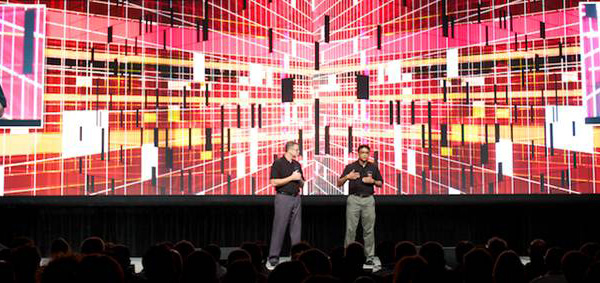
Given what we know about the new AMD and its goal of building a Heterogeneous Systems Architecture (HSA), Manju’s position is quite important. For those of you who don’t remember back to AMD’s 2012 Financial Analyst Day, the formalized AMD strategy is to exploit its GPU advantages on the APU front in as many markets as possible. AMD has a significant GPU performance advantage compared to Intel, but in order to capitalize on that it needs developer support for heterogeneous compute. A major struggle everyone in the GPGPU space faced was enabling applications that took advantage of the incredible horsepower these processor offered. With AMD’s strategy closely married to doing more (but not all, hence the heterogeneous prefix) compute on the GPU, it needs to succeed where others have failed.
The hardware strategy is clear: don’t just build discrete CPUs and GPUs, but instead transition to APUs. This is nothing new as both AMD and Intel were headed in this direction for years. Where AMD sets itself apart is that it is will to dedicate more transistors to the GPU than Intel. The CPU and GPU are treated almost as equal class citizens on AMD APUs, at least when it comes to die area.
The software strategy is what AMD is working on now. AMD’s Fusion12 Developer Summit (AFDS) in its second year, is where developers can go to learn more about AMD’s heterogeneous compute platform and strategy. Why would a developer attend? AMD argues that the speedups offered by heterogeneous compute can be substantial enough that they could enable new features, usage models or experiences that wouldn’t otherwise be possible. In other words, taking advantage of heterogeneous compute can enable differentiation for a developer.
That brings us to today. In advance of this year’s AFDS, Manju has agreed to directly answer your questions about heterogeneous compute, where the industry is headed and anything else AMD will be covering at AFDS. Manju has a BS in Electrical Engineering (IIT, Bombay) and a PhD in Computer Information and Control Engineering (UMich, Ann Arbor) so make the questions as tough as you can. He'll be answering them on May 21st so keep the submissions coming.
Read More ...
Engineer Looks to Create Real-Life USS Enterprise in 20 Years
The Star Trek-like Gen1 ship will be capable of reaching Mars in 90 days and the moon in three days
Read More ...
Game Over: LightSquared Goes Bankrupt
Death of satellite LTE project essentially sealed the firm's fate
Read More ...
Apple Gets Free Product Placement in TV Shows, Movies
Apple devices have made 891 appearances in TV shows in 2011, which is an increase from 613 appearances in 2009
Read More ...
Report: Apple Turns to Top Critic for Help With Malware Woes
Kaspersky recently published an analysis indicating that the Cupertino company was ten years behind Microsoft
Read More ...
Army's Laser Wagon Prepares to Roll Onto the Battlefield
Next-gen solution will supplement today's projectile-based auto-turrets
Read More ...
Available Tags:AMD , GPU , Apple , TV ,


No comments:
Post a Comment