
As the economy struggles to recover from the downturn that has marked
the past few years, many are focusing increased amounts of attention on
their personal finances, hoping to spend less, save more, and plan for
the future. The trouble is, the majority of young people have no idea
where to start. A 2011 survey
by Charles Schwab found that only 52% of high school students have
savings accounts, even though 75% of them claim to be knowledgeable
about money management. Somewhere along the line, students are missing
out on key pieces of financial education and many schools are starting
to take note.
Several states now require personal finance courses at the high school level, but colleges are getting in on the game as well, with some even making personal finance courses a requirement for graduation. Whatever the rules, it’s clear that young people need a bit of help when it comes to learning how to manage money, and these colleges are making sure that their students will be ahead of the game. Mark this year’s Financial Literacy Month by learning about just a few of the colleges and universities that are stressing financial education.
Several states now require personal finance courses at the high school level, but colleges are getting in on the game as well, with some even making personal finance courses a requirement for graduation. Whatever the rules, it’s clear that young people need a bit of help when it comes to learning how to manage money, and these colleges are making sure that their students will be ahead of the game. Mark this year’s Financial Literacy Month by learning about just a few of the colleges and universities that are stressing financial education.
-
Penn State Erie
 In
a partnership with National Educators Council, Penn State Erie is
taking part in the Financial EduNation Campaign. Starting in April 2012,
the college will be providing free personal finance programs to
students, parents, educators, and other organizations throughout the
state as their part of promoting the campaign. Aimed at teens and young
adults, the programs are completed online through a program that
features celebrities, business leaders, and sports stars. So far, the
school has reached out to more than 25,000 students in middle school
through college, but they hope to expand the program during the coming
month.
In
a partnership with National Educators Council, Penn State Erie is
taking part in the Financial EduNation Campaign. Starting in April 2012,
the college will be providing free personal finance programs to
students, parents, educators, and other organizations throughout the
state as their part of promoting the campaign. Aimed at teens and young
adults, the programs are completed online through a program that
features celebrities, business leaders, and sports stars. So far, the
school has reached out to more than 25,000 students in middle school
through college, but they hope to expand the program during the coming
month. -
Indiana University Kelley School of Business
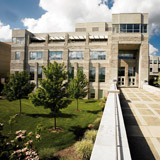 Students
at this business school can get a crash-course in financial education
in a sophomore course taught by Professor Brian Jbara. Jbara has
reported an increased interest in his course in recent years, as
students worried about a poor job market, student loan debt, and a
generally poor economy look to build real-world skills before
graduation. Jbara believes that helping students to learn more about
their financial lives is critical to their success in their first jobs
and beyond. His course has grown from just 25 students to 225 over the
past 10 years he has been teaching it, a testament to the growing
popularity of personal finance education on college campuses.
Students
at this business school can get a crash-course in financial education
in a sophomore course taught by Professor Brian Jbara. Jbara has
reported an increased interest in his course in recent years, as
students worried about a poor job market, student loan debt, and a
generally poor economy look to build real-world skills before
graduation. Jbara believes that helping students to learn more about
their financial lives is critical to their success in their first jobs
and beyond. His course has grown from just 25 students to 225 over the
past 10 years he has been teaching it, a testament to the growing
popularity of personal finance education on college campuses. -
NYU
 At
NYU’s School of Continuing and Professional Studies, there are a number
of personal finance courses students can take. While the courses may
have been largely ignored in past years, that isn’t the case anymore, as
students flock to the office to register for personal finance courses.
In fact, the courses were so popular and had so much interest from
students outside of professional fields that the school actually added
several other sections to their line-up. In addition, the school has
been approached by family members of students who want to learn more
about how to address their own financial situations, and the school may
branch out further in coming years to meet the needs of a community that
increasingly wants to build better personal finance skills.
At
NYU’s School of Continuing and Professional Studies, there are a number
of personal finance courses students can take. While the courses may
have been largely ignored in past years, that isn’t the case anymore, as
students flock to the office to register for personal finance courses.
In fact, the courses were so popular and had so much interest from
students outside of professional fields that the school actually added
several other sections to their line-up. In addition, the school has
been approached by family members of students who want to learn more
about how to address their own financial situations, and the school may
branch out further in coming years to meet the needs of a community that
increasingly wants to build better personal finance skills. -
Washington University, St. Louis
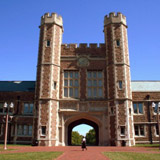 Professor
Michael Gordinier has taught a personal finance course at Wash U since
2003, open to any student at the school in their junior or senior year
of study. Over the past few years, the course has grown in popularity
and has become one of the better-attended and most-requested classes on
campus, boasting a class size of almost 200 students, up from just 80 a
decade ago. The course is often more full than that, however, as many
business students often audit the course (they cannot take it for
credit) just to get information. At the end of the semester, many
students thank Gordinier for helping them save more or get out of debt, a
big payoff for a semester of work. Gordinier thinks all schools should
offer similar programs, which are currently pretty uncommon, to students
so that they can learn practical skills in money management.
Professor
Michael Gordinier has taught a personal finance course at Wash U since
2003, open to any student at the school in their junior or senior year
of study. Over the past few years, the course has grown in popularity
and has become one of the better-attended and most-requested classes on
campus, boasting a class size of almost 200 students, up from just 80 a
decade ago. The course is often more full than that, however, as many
business students often audit the course (they cannot take it for
credit) just to get information. At the end of the semester, many
students thank Gordinier for helping them save more or get out of debt, a
big payoff for a semester of work. Gordinier thinks all schools should
offer similar programs, which are currently pretty uncommon, to students
so that they can learn practical skills in money management. -
Champlain College
 At
Champlain College, students don’t get a choice when it comes to taking
courses in finance; they’re required. Undergrads at Champlain must
attend two sessions on financial literacy during their time at the
school, a change that was made because administrators felt too many
students were graduating without basic financial skills. The courses
cover topics like credit scores, saving, budgeting, retirement, and
credit strategies, among others. Students learn fundamentals that will
help them get jobs, buy homes, and manage debt. In addition to the
required courses, students at Champlain can continue their financial
education through courses in student loans and employment benefits. The
school hopes to host a financial literacy conference in the coming
years.
At
Champlain College, students don’t get a choice when it comes to taking
courses in finance; they’re required. Undergrads at Champlain must
attend two sessions on financial literacy during their time at the
school, a change that was made because administrators felt too many
students were graduating without basic financial skills. The courses
cover topics like credit scores, saving, budgeting, retirement, and
credit strategies, among others. Students learn fundamentals that will
help them get jobs, buy homes, and manage debt. In addition to the
required courses, students at Champlain can continue their financial
education through courses in student loans and employment benefits. The
school hopes to host a financial literacy conference in the coming
years.
Read More...


No comments:
Post a Comment