

Measuring the Universe using motion of galaxy clusters

Galaxy clusters are the largest objects in the Universe that are held together by their own gravity. They're so big that the expansion rate and distribution of matter within the Universe affects their formation and evolution. As a result, their numbers, sizes, and motion record the history of the cosmos on its largest scales.
One of the places galaxy clusters leave their imprint is on the Universe's cosmic microwave background (CMB). As the CMB's photons scatter off hot gas in a cluster, its relative motion adds a very slight shift to the photon's wavelength, an effect known as the kinematic Sunyaev-Zel'dovich effect (kSZ). The kSZ effect has now been observed for the first time, as described in a forthcoming paper by Nick Hand et al.

Read the comments on this post
Read More ...
Europe moving 60 ms closer to Japan with new undersea cables

The climate change-induced retreat of Arctic ice has had one positive effect. The Arctic Ocean is now sufficiently navigable that cable-laying ships will be able to plant undersea cables directly linking London with Tokyo.
The first project to take advantage of this will be the Russian Trans-Arctic Cable System (RUTACS). This $1 billion scheme will run cable from the UK to Japan following Russia's northern coast, with connections to Russia and China along the way. 6 pairs of fibers with a 1.6 Tbit/s capacity per pair will be laid, and minimum latency between London and Tokyo will be 76.58 milliseconds. Construction is planned to begin in the second half of this year.
Arctic Fibre's connection will similarly join England with Japan, but this time following the North American coastline, with cable laid through the the Northwest Passage and several connections to Canada along the way. Total bandwidth between the countries will be 6.4 Tbit/s, with latencies between London and Tokyo of 168 ms.
A third cable project, the Arctic Cable Company's Arctic Link, which would have run a similar route to Arctic Fibre's project but with connections to Alaska rather than Canada, appears to have stalled after it failed to receive government loans that it hoped for.
Currently, Europe and Japan are connected via a mix of land and sea routes, with cables passing through a number of highly-trafficked chokepoints in the Middle East and Asia. A ship dragging its anchor in the wrong place could destroy many of the connections linking the globe.
The Arctic routes are both shorter and subject to far less shipping activity, making them faster and less prone to disruption. However, the presence of sea ice has made cable-laying impractical. Even with the retreat of the ice, the routes will still be hazardous. Normal cable ships tend to be built for warmer climates, so these projects will use ice-rated ships converted to lay cables and partnered with ice-breakers.
Read the comments on this post
Read More ...
HAMR time: Seagate demos terabit-per-inch hard disk technology
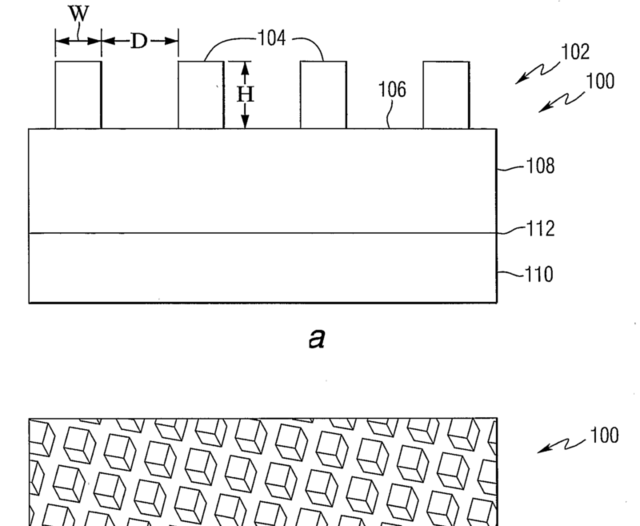
Seagate is preparing the first commercial hard disks capable of storing one trillion bits of data per square inch on its platters using a technology called heat assisted magnetic recording (HAMR). That means 3.5-inch hard drives with capacities of 6 terabytes could be just around the corner—and 60-terabyte drives are that much closer to becoming a reality.
Read the comments on this post
Read More ...
Ad-supported apps leave smartphones in high-power states, drain batteries

If you find your phone is often low on battery, the free apps you use may be to blame, according to a new study. Using a monitoring tool they developed, the authors of the study—two researchers from Purdue University and another from Microsoft—found that serving ads and collecting data inside an app results in excessive use of the hardware components inside a smartphone. These parts of free apps will turn on components like the 3G chip or GPS and cause them to stay on well after an information transaction has been completed, resulting in unnecessary power loss.
Most smartphones can show a basic breakdown of which resources are consuming the battery life (display, Wi-Fi, individual apps, etc.), but the way in which individual apps use that power is more opaque. To unpack the details at this level of power consumption, three researchers developed a tool called "eprof," a "fine-grained energy profiler." Eprof can track power used at the level of individual threads as well as routines running in an app, and can also track what the authors call "asynchronous power behavior."
Read the comments on this post
Read More ...
Surge in tech hubs give African startups a place to grow

When Startup Garage Nairobi opened its doors last month in the Kenyan capital, it became the latest such facility to launch in Africa. According to the crowdsourced BongoHive's "Hubs in Africa" map, there are 45 tech hubs, tech labs, business incubators and hacker spaces on the continent.
Although the Innovation Hub in Pretoria, South Africa opened in 2002 and the Botswana Innovation Hub opened in Gabarone, Botswana in 2006, the overwhelming majority of Africa's hubs have launched since 2010. Why this surge in hacking and the commensurate creation of support facilities for them? It's time.
Read the comments on this post
Read More ...
US Congressmen expand call for violence warning label on nearly all video games

Two US Congressmen Monday once again proposed a bill that would require the vast majority of video games to bear a warning label about content they consider "potentially damaging."
Under the one-page Violence in Video Games Labeling Act [PDF link], packaging for all video games except those rated "EC" for Early Childhood would be required to prominently display a message reading "WARNING: Exposure to violent video games has been linked to aggressive behavior." The proposed label would be required even if the video game in question is not violent.
Read the comments on this post
Read More ...
Pakistan backs away from proposed censorship system

Last week we reported on the controversy over Pakistan's Request for Proposals for a sophisticated Internet censorship system. The Pakistan Telecommunication Authority has vowed to stop the distribution of "blasphemous and objectionable content" over the Pakistani Internet, and was seeking a system capable of blocking up to 50 million URLs. Internet freedom activists rallied against the proposal and secured commitments from several major IT vendors not to bid for the project.
Now the Pakistani government appears to be backing away from the proposal. A member of the National Assembly, the lower house of Pakistan's legislature, told the Express Tribune that Pakistan's Ministry of Information Technology had withdrawn the project "due to the concern shown by various stakeholders."
Yet the Pakistani officials in charge of the proposal have yet to confirm the reports. A spokesman from the IT Ministry told the Express Tribune that it would release a statement on Tuesday, but Ars was unable to find such a statement on the agency's website.
Critics of the censorship scheme hailed the news, but warned the fight was far from over.
"While these reports are promising, there is still a possibility that the
Pakistani government could try to covertly implement a similar system," said Mike Rispoli, a spokesman for the advocacy group Access. His group collected more than 18,000 signatures opposing the scheme.
Rispoli called for new legislation prohibiting the Pakistani government from implementing such a censorship regime in the future.
Read the comments on this post
Read More ...
Study: alternative energy has barely displaced fossil fuels

In order to reduce the use of fossil fuels, we need to increase the use of renewable sources of energy. At least, so the theory goes. However, a new study published in Nature Climate Change challenges this assumption, demonstrating that, rather than displacing fossil fuels, alternative sources of energy barely outpaced increasing demand over the last 50 years.
Read the comments on this post
Read More ...
Blizzard producer attributes drop in WoW subscriptions to Star Wars: The Old Republic

In a rare moment of candor regarding the competition, a senior member of Blizzard Entertainment's World of Warcraft team has said that a recent dip in WoW subscriptions is partly attributable to last December's release of Electronic Arts' competing massively multiplayer role-playing game, Star Wars: The Old Republic.
In an interview with Eurogamer, WoW Senior Producer John Lagrave said a recent dip in subscriptions for World of Warcraft "certainly has to at least be attributable to The Old Republic." But he also said that some of the subscriber losses could be "attributable to people who want to wait and get [upcoming expansion] Mists of Pandaria, so it's not surprising."
"We certainly do look at [where WoW players go], and we have a very smart bunch of guys who do our analytics for us," Lagrave said in the interview. "Are they going elsewhere? Yes they are. We don't have a lock on all the best games in the world."
World of Warcraft has dominated the MMORPG market since its release seven years ago, shrugging off threats from competitors like Aion, Champions Online, and Age of Conan. In late 2010, Blizzard announced that WoW had hit a peak of 12 million paying subscribers surrounding the release of the Cataclysm expansion. That number had dropped to 10.3 million active players by November 2011—the company has not commented publicly on subscriber figures since then.
Leading up to its release last December, The Old Republic was considered the first major threat to WoW's dominance in the market in years, generating significant enthusiasm from MMORPG fans thanks largely to the involvement of highly lauded developer Bioware. SWTOR attracted its first million subscribers just two weeks after launch, according to EA, and swelled to 1.7 million players by the beginning of February. The game received high praise from critics upon its release, though it currently has an aggregate score of 85 on Metacritic, lower than WoW or any of its expansions.
While WoW's subscriber base remains much larger and more robust than that for SWTOR, the current trajectories for those numbers suggest that, after seven years of nearly undisputed dominance, WoW may finally have a tough, lasting competitor in the subscription MMORPG market.
Read the comments on this post
Read More ...
Microsoft patent points to head-mounted, laser-based display technology

Anyone who gets their hopes up every time a tech company files a new patent for some revolutionary dream device will get their heart broken more often than not. That said, we're unreasonably excited that a new Microsoft patent for a "laser-scanning virtual image display" could actually point to plans for the company to jump into the world of virtual reality gaming.
Read the comments on this post
Read More ...
Sen. Wyden demands vote on American copyright, patent treaties

Sen. Ron Wyden (D-OR) is a long-time opponent of the secretly negotiated Anti-Counterfeiting Trade Agreement (ACTA). Today he introduced an amendment to a Senate "jobs bill" that would force ACTA to come before Congress for approval. A second amendment would make the US Trade Representative, which negotiates US trade deals, drop the veil of secrecy around its copyright and patent negotiations.
USTR currently insists the president can ratify ACTA without the usual Senate sign-off on treaties. The current legal thinking seems to be that Congress delegated this authority to the executive branch by passing 2008's PRO-IP Act, which contained a general call to cut down on counterfeiting, etc.
That legal approach is contested; Wyden's amendment simply overrules it. "Notwithstanding section 303 of the Prioritizing Resources and Organization for Intellectual Property Act of 2008 (15 U.S.C. 8113) or any other provision of law," it says, "the President may not accept, or provide for the entry into force with respect to the United States of, any legally binding trade agreement that imposes obligations on the United States with respect to the enforcement of intellectual property rights, including the Anti-Counterfeiting Trade Agreement, without the formal and express approval of Congress."
His second amendment tries to force a change in how the whole process around such treaties is handled. Right now, the US attempts to keep its negotiating positions a secret. What vital national security interests could be at stake if the public knew USTR was promoting "graduated response" laws or proposing changes in ISP liability? Wyden doesn't believe there are any.
Even with ACTA, where the text was officially kept secret until it was too late to make major changes, unofficial leaks stirred public debate and ultimately removed many of the most odious provisions from the final text. The "next ACTA" is the Trans Pacific Partnership (TPP), a regional trade deal involving countries from around the Pacific Rim. Wyden wants to ensure the public doesn't have to rely on leaks to find out what's being proposed in its name.
He proposes a rule that would force USTR to release any negotiating proposals already shared with other nations in the TPP talks if they apply to "intellectual property, the Internet, or entities that use the Internet, including electronic commerce." In the future, USTR would have to post such documents from all trade negotiations within 24 hours of being shared with other countries.
Read the comments on this post
Read More ...
Data movement from Amazon to rival clouds hits speed bump
Moving large data volumes from the Amazon storage cloud to rivals Windows Azure and Rackspace takes ten times as long as it does to move data from Azure and Rackspace into Amazon, according to a series of tests conducted by storage vendor Nasuni.
Nasuni conducted five series of tests, in each case moving 12TB of data between two cloud services. The results, announced today, show that moving data from Amazon's Simple Storage Service (S3) to Azure or Rackspace takes far longer than it does to move data from the competing cloud services into Amazon. For example, moving 12TB from Amazon to Azure takes 40 hours, while moving the same amount from Azure to Amazon takes just four hours.
Further results: Rackspace to Amazon took five hours, Amazon to Rackspace took almost a week, and moving from one Amazon "bucket" to another Amazon bucket took four hours. The tests were a bit limited—they didn't measure the time it takes to move data from a user's data center to any of the cloud services, or from a cloud back to a private data center. The test results varied by time of day and the number of compute machines to transfer the data, but these numbers represent the minimum time it takes to move 12TB.
Nasuni concluded that "The biggest limiting factor appears to be the cloud’s write capability, as all transfers to Amazon S3 were between four to five hours, whereas writing to Microsoft Windows Azure and Rackspace was at least an order of magnitude longer."
We wrote about a previous test conducted by Nasuni, which showed Amazon outperforming Windows Azure and all other contenders in terms of uptime and error rates. Nasuni said it focused the new tests heavily on Amazon, because based on those previous results, it's the service Nasuni is most likely to use to move customer data.
UPDATE: Some details from the Nasuni report that we should have pointed out earlier—the limits in moving data out of Amazon have much to do with the ability of Azure and Rackspace to accept incoming data. For example, in describing the slow Amazon-to-Azure migration, Nasuni said its tests "hit the limits of Microsoft Azure to accept data. It is difficult to determine from the outside whether the limits are due to Azure's incoming network, or a technology limitation."
Nasuni said the cloud providers were not "forthcoming about why their performance would vary so greatly." However, "Nasuni did not experience the same behavior with Amazon S3, and this measurement probably further indicates limitations in Azure’s
architecture or bandwidth, as other customers using the system appear to be affecting our results to a large degree."
In the Amazon-to-Rackspace migration, Nasuni noted Rackspace's "poor transfer-in performance," and said it gave the company concerns about other clouds based on the OpenStack technology used by Rackspace.
Read the comments on this post
Read More ...
How to become a battery miser: tips for saving battery life on the iPad

It's no secret by now that the third-generation iPad's battery grew by 70 percent to accommodate the device's new retina display. But despite that capacity, the new iPad's battery life has remained just about the same as that of the iPad 2. This would suggest that battery life is not a significant concern, right? If you're anything like me, that assumption is still wrong. My own personal mission when using mobile devices is to conserve, covet, and hoard my battery life—almost to the point of obsession—which is why I'm slowly becoming known among my friends, family, and coworkers as a battery miser.
Read the comments on this post
Read More ...
Data breaches increasingly caused by hacks, malicious attacks

A new study of data breaches has found that criminal and malicious attacks accounted for 37 percent of corporate data breaches in 2011, a six percent rise from 2010. The study, performed by Ponemon Institute and sponsored by Symantec, also found that these attacks were much more costly to companies than breaches caused by software or hardware failures or by internal negligence.
The study followed 49 organizations over the course of 2011, surveying over 400 IT, compliance and security professionals associated with them. While the research showed that the average cost to companies per compromised customer record had dropped to its lowest point since 2006—$194 per record—the cost of records lost through criminal and malicious acts was much higher, averaging $222 per record.
This is the first time since 2007 that criminal activity has accounted for more than a third of data breaches in Ponemon Institute's survey. More than two-thirds of malicious attacks were achieved through some sort of electronic exploit—only 28 percent involved the physical theft of data storage devices. Trojans, botnets and other malware were at the root of half of criminal and malicious data breaches reported by the companies surveyed. Corporate websites were breached through SQL injection in 28 percent of the cases reported .
The study also found that 33 percent of criminal and malicious breaches involved insiders—meaning that at in at least five percent of criminal breaches, an employee or contractor either installed malware intentionally or otherwise purposely exposed corporate data. Those figures, the Institute's researchers wrote in their report, show that companies still need to pay greater attention to addressing the insider threat.
Read the comments on this post
Read More ...
Google says Hotfile is eligible for same DMCA protection as YouTube

With file sharing site Hotfile facing an attempt by film studios to shut it down, Google has argued in an amicus brief that Hotfile should be eligible for the same type of legal protection that allowed the Google-owned YouTube to fend off the famous copyright infringement lawsuit filed by Viacom.
Google's brief (via TorrentFreak) says the company is not taking a position on what the final outcome of the Hotfile case should be, but states that the movie studios' interpretation of the DMCA (Digital Millennium Copyright Act) would significantly weaken the DMCA's safe harbor protections that have protected many of the Internet's most popular and vital websites.
Read the comments on this post
Read More ...
Supreme Court saves medical profession from diagnostic patents

The Supreme Court today unanimously invalidated a broad patent covering a method for determining the proper dose of a drug used to treat autoimmune disorders, saving the medical profession from a new breed of patents on medical diagnostic tests.
The patent focused on the process of administering a class of drugs, called thiopurines, that are used to treat autoimmune disorders. Doctors adjust the dosage by measuring the concentration of a chemical called a metabolite in the patient's blood. The patent didn't cover the drugs themselves, nor any particular method for measuring metabolite levels—these were already widely used in the medical profession. Instead, the patent covered the concept that particular metabolite levels "indicate a need" to raise or lower drug dosage.
Read the comments on this post
Read More ...
AMD aims at the low-power market with single socket Opteron 3200
AMD has launched a new range of three processors aimed at the low-price, low-power market. The Opteron 3200 series is built for hosting companies and Internet service providers, for cheap, high-density Web servers.
The new processors use AMD's Bulldozer architecture. Two models sport two modules and four hardware threads, with a TDP of 45 W; the top model has four modules and eight threads and a higher TDP of 65 W. The processors combine server features such as memory scrubbing, full server validation, and longer lifecycles, with desktop features such as the AM3+ socket. It also has a low price, coming in at $99 and $125 for the 2.5GHz and 2.7GHz four-thread parts, and $229 for the 2.4GHz eight-thread unit. The processors can all be paired with up to 32GB RAM.
With the low-cost processors, AMD believes that hosting companies can build a respectable system (1TB hard disk, 8GB RAM) for $70 less than a comparable Xeon E3-1200 system ($573 for the AMD machine, $643 for the Intel one). In turn, AMD believes that servers using its processors will pay for themselves 14 percent faster than the Intel machines.
Read the comments on this post
Read More ...
Third-gen iPad "operating well within our thermal specifications," says Apple

The third-generation iPad's lower left-hand side tends to get warm when you use it, users have discovered, but exactly how warm? About 10°F warmer than the iPad 2, according to Tweakers.net. After seeing reports that the third-gen iPad was running hotter than its predecessor during normal usage, the site decided to run its own tests and measure the temperature changes between both the iPad 2 and iPad 3. Despite this discovery, however, Apple maintains that everything in the iPad 3 is operating as expected, and instructs customers to contact AppleCare with concerns.
We made note of the warmth of the iPad 3 when reviewing the device, but plenty of Ars readers and other users from around the Internet have chimed in on this phenomenon as well. Though none of us at Ars would describe the heat as scalding or painful, others have described it as "uncomfortable," and there's currently a 17-page (and growing) thread in the Apple Discussion Forums full of users discussing their experiences.
When the folks at Tweakers.net tested the problem, they ran GLBenchmark for five straight minutes on both the iPad 2 and iPad 3, then performed a thermal image comparison to see which one was running hotter and by how much. The result was that the iPad 2 measured at 28.3°C while the iPad 3's lower left side measured at 33.6°C—82.9°F and 92.48°F respectively.
92°F isn't enough to hurt your hand but it does definitely dabble on the warm-to-the-touch side. Apple, for its part, has largely remained mum on whether it considers the iPad 3's temperature to be an issue. When asked about the complaints, Apple spokesperson Trudy Muller told The Loop: "The new iPad delivers a stunning Retina display, A5X chip, support for 4G LTE plus 10 hours of battery life, all while operating well within our thermal specifications. If customers have any concerns they should contact AppleCare."
Update: Consumer Reports claims to have measured an iPad running at 116°F while playing Infinity Blade II.
Read the comments on this post
Read More ...
Environmental contribution of Tennessee's urban trees: $80 billion

A study published by the US Forest service values the State of Tennessee's urban forest at $80 billion thanks to its contributions to the environment. With an urban population of 284 million, that equates to a mean value of $282 per tree.
The total is based on a number of costs that are to some extent offset by the presence of Tennessee's urban forest (its urban tree population, in other words). These include $350 million-worth of carbon storage based on the current standing stock, over $204 million every year in pollution removal, $18.4 million per year in additional carbon sequestration, and $66 million per year in energy savings-"the most significant contribution" made by the urban forest, according to State Forester Steven G. Scott. But how are the environmental benefits of the trees evaluated?
Read the comments on this post
Read More ...
Windows 8 to debut on both x86 and ARM devices in October, report says
While Microsoft hasn't confirmed a release date for the next version of Windows, Bloomberg reported last night that Windows 8 will be finalized this summer, and sales of both Intel-based PCs and ARM devices will begin "around October."
More than 40 Intel-based PCs (including some tablets, presumably) will be available in the initial Windows 8 rollout, compared to "fewer than five ARM devices," Bloomberg reported, citing anonymous sources. The low number of ARM devices was attributed to the fact that "Microsoft has tightly controlled the number and set rigorous quality-control standards."
Microsoft will talk about its release strategy in April at an event for partners, according to Bloomberg. Given the reported timing, it's possible the Windows 8 RTM (release to manufacturing) could occur around the time of Microsoft's annual Worldwide Partner Conference in July.
In 2009, Windows 7 was debuted in a beta in January, released to manufacturing in July, and hit retail in October. With a Windows 8 "Consumer Preview" having been released at the end of February of this year, it would make sense for a final version to hit consumer devices by the end of 2012 at the latest.
Read the comments on this post
Read More ...
Rush Limbaugh and the revenge of old media

The great slugfest over Rush Limbaugh's infamous "slut" comment against law student Sandra Fluke has come and mostly gone. For anyone who has been in a coma over the last fortnight, here's a quick recap: On February 29, Limbaugh loudly denounced Fluke's congressional appearance supporting the Affordable Care Act's contraceptive coverage provisions.
"What does that make her?" he asked his audience. "It makes her a slut, right? It makes her a prostitute. She wants to be paid to have sex. She's having so much sex she can't afford the contraception. She wants you and me and the taxpayers to pay her to have sex."
Read the comments on this post
Read More ...
Available Tags:motion , galaxy , Seagate , WoW , Microsoft , Amazon , iPad , Google , YouTube , AMD , Apple , Windows 8 , Windows ,


No comments:
Post a Comment