

Amazon Kindle Touch 3G Review
Amazon announced three new Kindles back in September: the fourth generation Kindle, the Kindle Touch (and Kindle Touch 3G, both of which are identical aside from the 3G antenna), and the Kindle Fire. The Kindle 4 was available on the same day, and we've already taken a good look at it. Our Kindle Fire review is forthcoming. That leaves the Kindle Touch, which we're going to talk about today.

The Kindle Touch is Amazon's first touchscreen e-reader - past Kindles have used nothing but buttons for navigation, even as competing products like Barnes & Noble's Nook Simple Touch began to incorporate touchscreens. At $99 and $149 for the wi-fi and 3G versions ($139 and $189 for the ad-free Kindles), the Kindle Touch is priced competitively, but how does the touchscreen actually impact your reading experience? Read on for our thoughts.
Read More ...
Apple Seeds iOS 5.1 Beta to Developers
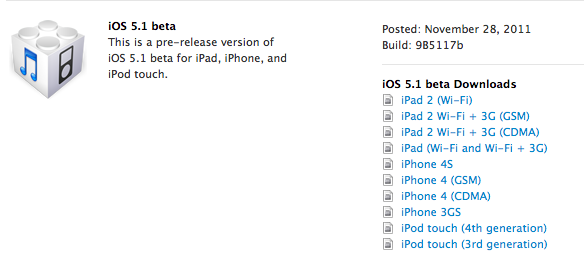
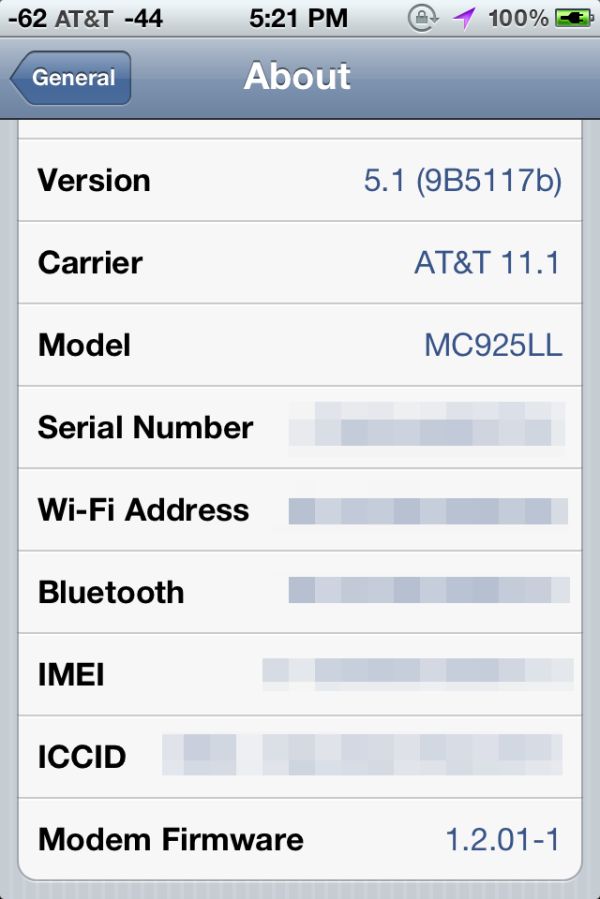
On supported devices, iOS automatically inserts recognized phrases into the current text view when the user has chosen dictation input. The new UIDictationPhrase class (declared in UITextInput.h) provides you with a string representing a phrase that a user has dictated. In the case of ambiguous dictation results, the new class provides an array containing alternative strings. New methods in the UITextInput protocol allow your app to respond to the completion of dictation.There's no word on whether iOS 5.1 mitigates power-related issues that iPhone 4S users are still complaining of. We'll update if we see anything major changed in 5.1.
Read More ...
Introducing AMD’s Memory Brand
We discussed the availability of AMD branded memory modules earlier this month, but today AMD is officially unveiling information on their memory platform. There are a few major questions many will have: why is AMD entering the memory market at all, and what do they hope to offer that we can’t already get from other vendors? Let’s take those in turns.
The reason for AMD’s entry into the memory market comes from two areas. First, AMD’s APUs are now shipping in large volumes and can definitely benefit from higher bandwidth memory modules. We’ve already shown the sort of performance scaling you can get from an A8-3850 with higher clocked DRAM, but many people buy A-series APUs as part of a prebuilt system, and right now lots of OEMs are still cutting corners on the RAM and using DDR3-1333. That’s the second aspect of the move: AMD wants to enable a [buzzword alert!] “holistic customer platform experience”, and they may be able to help drive down costs for AMD platforms. A final element AMD mentions is a desire to drive and enable future memory product developments.
The other item to discuss is what AMD offers that we may not already have. Here the distinction between AMD branded memory and other options isn’t quite so clear, but AMD will be doing testing and validation in their labs using AMD platforms. AMD also notes that they will not be using any ETT (Effectively TesTed) or gray market RAM. The latter is used as a term to collectively group hardware that may be less desirable; as an example, Intel unboxed CPUs are “gray market” because they are intended for OEM use but can still end up being sold at retail. Basically, gray market parts would cut out some of the supply channel (in the example just cited, gray box processors typically cut out AMD/Intel and only have a short warranty from the seller). ETT parts on the other hand are a way of cutting costs by skipping branding; the RAM is still tested and is supposed to be high quality, but without branding it’s one small way to reduce costs. Generally speaking, ETT memory is destined for value RAM modules, so basically AMD is saying is that their AMD RAM will start out a step above value RAM. AMD also states that they will take end-to-end ownership of the AMD Memory ecosystem, working with module manufacturers, memory partners, IC partners, distributors, and VARs (value added resellers).
With that out of the way, let’s discuss the specifics of what AMD Memory will be available and the target markets. Here’s a slide from AMD’s presentation summarizing things:
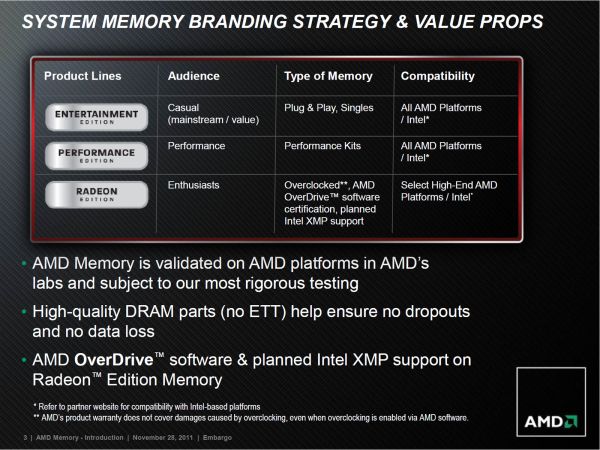
So what does all of this really mean? That’s the difficult part. If all AMD memory supported speeds of at least DDR3-1600, that would be a clear break from the current offerings, but the press release indicates that there will be both DDR3-1333 and DDR3-1600 parts. The upgrade to DDR3-1600 provides a significant performance increase; we linked our Llano A8-3850 article above showing some of our own results, but here are some charts of our testing along with AMD’s results:
AMD shows up to a 20% performance increase in their testing by upgrading from DDR3-1333 to DDR3-1600, while our own results show an average increase in performance of around 14% across seven tested games (with a range of improvement of around 8% to 41%). Should you choose to spring for faster DDR3-1866 memory (or just overclock some decent DDR3-1600 RAM), the average performance increase is around 20% and up to 40% in some cases (or as low as 8% in Civ5). This isn’t too surprising as the AMD Fusion GPUs are significantly faster than competing solutions and the combination of shared memory bandwidth with the rest of the platform along with generally slower memory speeds (compared to dedicated GPUs) is a double-whammy. So why would AMD continue to sell anything less than DDR3-1600? Your guess is as good as mine.


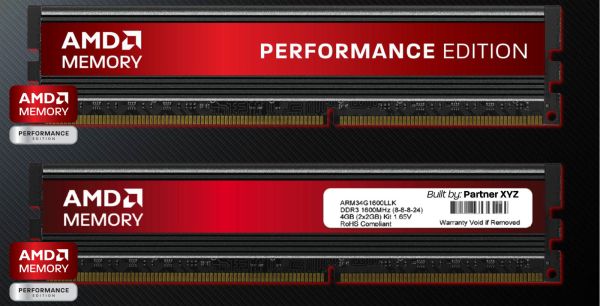
AMD’s first partners for their branded memory initiative are Patriot Memory and VisionTek, with Patriot being a familiar name to memory shoppers and VisionTek known for their graphics products. There’s nothing inherently wrong with AMD branded memory, but unless the price is lower than existing options (e.g. AMD mentions bundles as something we’re likely to see), there’s also not much that it adds to the market. For now, we’ll stick with recommending you buy RAM that will supports at least DDR3-1600 speeds if you’re buying a Llano (or future APU) system; whether that memory is AMD branded or otherwise will likely be far less important than how much the memory costs for the desired level of performance.
Read More ...
Skyrim 1.2 Patch Due on Nov. 30

Wednesday’s patch, which has already gone live for PlayStation 3 users, is dubbed “Skyrim 1.2” and aims to fix a whole host of actual bugs. Here’s the full list of changes, straight from Bethesda:
Improved occasional performance issues resulting from long term play (PlayStation 3)
Fixed issue where textures would not properly upgrade when installed to drive (Xbox 360)
Fixed crash on startup when audio is set to sample rate other than 44100Hz (PC)
Fixed issue where projectiles did not properly fade away
Fixed occasional issue where a guest would arrive to the player’s wedding dead
Dragon corpses now clean up properly
Fixed rare issue where dragons would not attack
Fixed rare NPC sleeping animation bug
Fixed rare issue with dead corpses being cleared up prematurely
Skeleton Key will now work properly if player has no lockpicks in their inventory
Fixed rare issue with renaming enchanted weapons and armor
Fixed rare issue with dragons not properly giving souls after death
ESC button can now be used to exit menus (PC)
Fixed occasional mouse sensitivity issues (PC)
General functionality fixes related to remapping buttons and controls (PC)
This likely won't be the last Skyrim patch, and future DLC packs will likely come with their own bugs and hiccups. But this should improve the game for scores of players (that texture bug on the 360 is a big one) just in time for the holidays.
Source: Bethesda via Giant Bomb
Read More ...
NVIDIA Posts 290.36 GeForce Beta Drivers

The new drivers' primary feature is the addition of the Ambient Occlusion lighting feature for Skyrim and Modern Warfare 3 in the NVIDIA Control Panel. The drivers also add NVIDIA Surround multi-monitor support for SLI-certified motherboards using Intel's X79 chipset, and is additionally "recommended for gamers diving into Batman: Arkham City," though the release notes don't say exactly why.
Other additions and fixes include: support for 3D Vision over a DisplayPort 1.1 connection (available for BenQ XL2420T and XL2420TX monitors), updated 3D Vision profiles for a number of games including Modern Warfare 3 and Diablo 3, PhysX System Software and HD Audio driver version updates, and a smattering of bug fixes.
You can read the full release notes below, and download the beta drivers from NVIDIA's web site. Based on past releases, expect to see a final, WHQL-certified version of these drivers at some point in December or January.
Source: NVIDIA
Read More ...
Seagate's 2nd Gen Momentus XT: More NAND, Larger Capacity
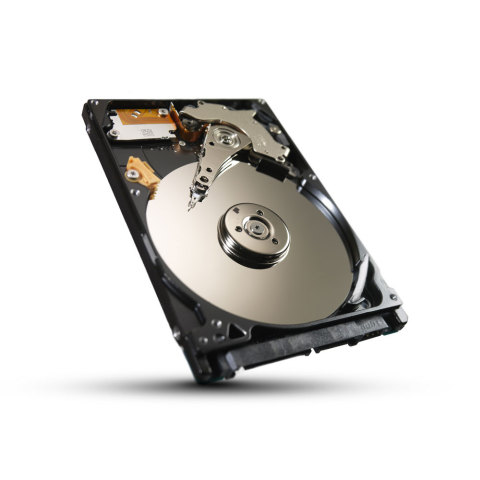
Since then Seagate hasn't updated or expanded its line of hybrid HDDs at all. I kept hearing rumors of new drives coming but nothing ever surfaced. More recently Seagate announced that the next version of the Barracuda XT will be a hybrid drive as well.
Today Seagate is announcing availability of its second generation Momentus XT. Now at 750GB with 8GB of SLC NAND (once again, as a read cache), the new Momentus XT is a definite evolution over its predecessor. With a larger NAND cache Seagate can be more aggressive with its caching, not to mention the improvements to the mechanical side of the drive as well. The entire package is still not nearly as fast a value SSD, but it's doing much better than mechanical (3.5" included) hard drives in our tests.
Write caching is still not enabled on the NAND, however Seagate is planning on enabling it via a firmware update sometime in 2012. I've seen results from an early version of the write caching firmware and the improvement is tangible.
The 750GB Momentus XT will be available at a MSRP of $245.
We're still hard at work on our review of the drive, expect to see it later this week!
Read More ...
Report: Compacts, Subcompacts to Overtake Midsize Cars in U.S. Sales by 2015
Drivers young and old are moving to smaller vehicles
Read More ...
Best Buy UK Stores to Close January 2012
It has already started marking down its products from 10 to 50 percent off
Read More ...
U.S. Consumers Warming up to Diesel Cars
Diesel cars are plentiful in Europe
Read More ...
11/28/2011 Daily Hardware Reviews
DailyTech's roundup of hardware reviews from around the web for Monday
Read More ...
Intel's HDCP DRM Scheme Defeated by a Single Sub-$300 FPGA
Researchers say pirates will likely use easier routes to crack the scheme, but that espionage risk is possible
Read More ...
Chevrolet Volt Flunks Two Out of Three Crash Tests, Triggers Formal Investigation
NHTSA says it is too soon to recall vehicles or parts
Read More ...
Investors Puzzle Over HTC: Biggest Winner in U.S., Big Loser Globally
Company's CFO says new flagship LTE models will launch globally in 2012, restore sales growth
Read More ...
NASA Mars Rover Curiosity: So Far, So Good
After launching Saturday, MSL is in good health and ready to continue its long journey to Mars
Read More ...
Droid 4 LTE Slider Specs, Pics Leak Ahead of Rumored 12/8 Launch
Droid 4 is essentially a Droid RAZR, shrunk and with a keyboard offers nice boost over Droid 3 specs
Read More ...
American Child, Over 200 lbs., is Seized by State of Ohio for Obesity Abuse
Medical experts say intervention is needed but disagree on implementation
Read More ...
Available Tags:Amazon , Kindle , Apple , iOS , NVIDIA , GeForce , UK , Hardware , Chevrolet , NASA ,


No comments:
Post a Comment