

Acer Iconia A500 - Honeycomb on a Budget
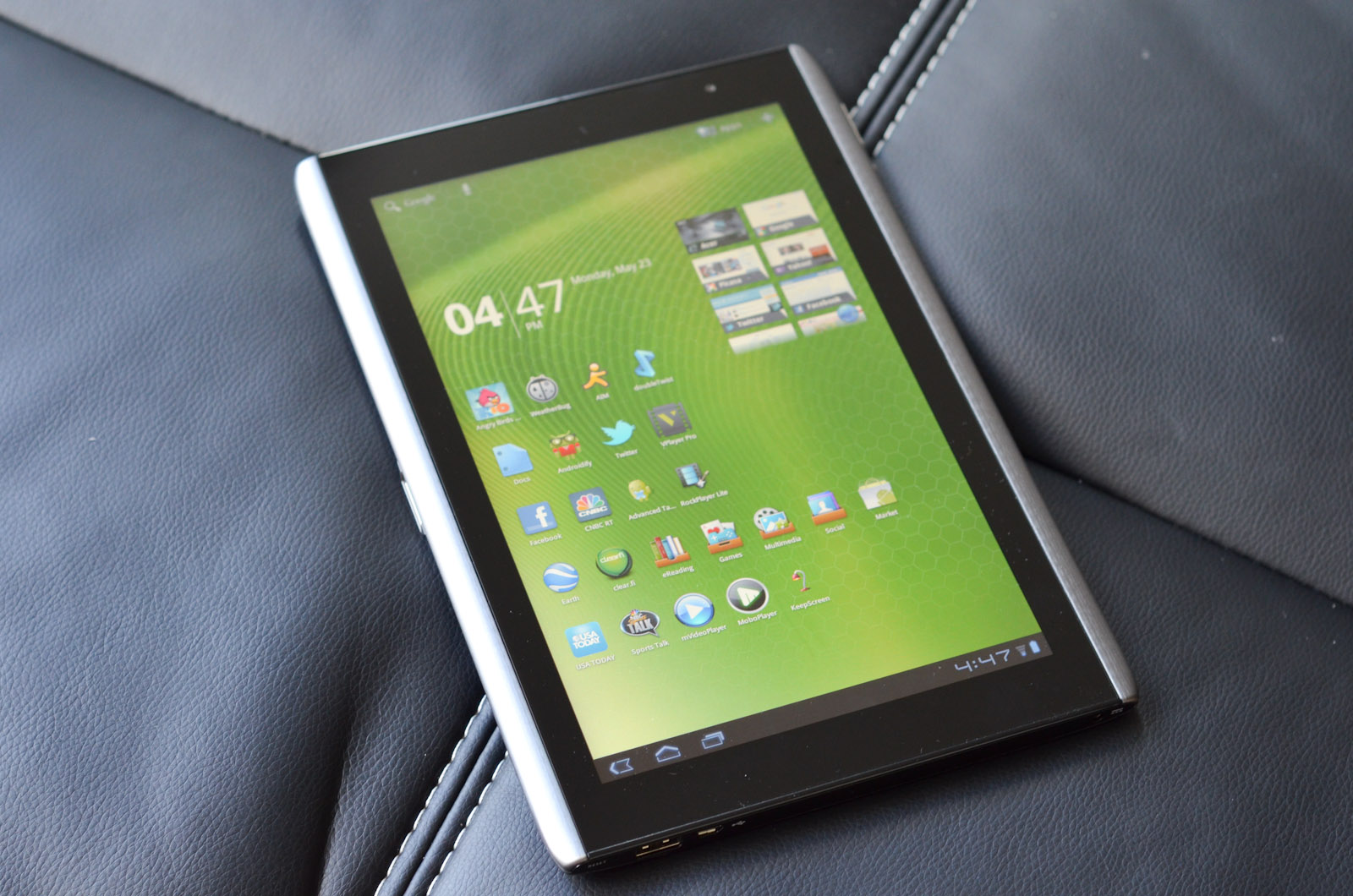
Next in our series of Honeycomb tablet reviews is the Acer Iconia Tab A500. The A500 was the second Honeycomb tablet to go on sale, and is one of four on the market at present, all of which are very similar. They share basic specs—10.1” 1280x800 displays, NVIDIA’s Tegra 2 underhood, 1GB LPDDR2 RAM, 16-64GB onboard NAND, front and rear facing cameras with HD video capture, basic wireless connectivity options, and stock versions of Android 3.0/3.1 Honeycomb (albeit with different preloaded software packages). The hardware similarities makes things like design and price that much more important, and the latter is where Acer seemed to have an edge.
Read More ...
G.Skill Summer Memory Giveaway, Round 1: 8GB DDR3-1600 Kit
Remember our Antec soundscience giveaway? reckert and OMGkragnor were the first two winners, however Antec was so pleased with the number of entries that it gave us an additional two units to give away! Silent_Rage and elessar25 were our two extra winners. Make sure you two respond to my email to claim your prize if you haven't already!
If you didn't win last time, never fear - it's contest time again. G.Skill is back with another pair of giveaways. Today we're giving away a G.Skill Sniper DDR3-1600 memory kit. G.Skill sent an 8GB kit (4GB x 2) rated for 9-9-9-24 operation at a low 1.25V. The kit is ideal for P55/P67 platforms:

Read on for entry rules!
Read More ...
Update: AMD Resigns from BAPCo Over SYSmark 2012 Concerns; NVIDIA & VIA Also Leave, BAPCo Responds
What’s in a Benchmark? This is a pertinent question that all users need to ask themselves, because if you don’t know what a benchmark actually tests and how that relates to the real world, the scores are meaningless. Today, AMD has announced that they are resigning from BAPCo over a long standing dispute over the weighting of scores within the SYSmark suite. AMD specifically references SYSmark 2012 (SM12), but there have been complaints in the past and the latest release is apparently the proverbial straw that broke the camel’s back.
You can read more about the decision on Cheif Marketing Officer (CMO) Nigel Dessau’s blog, but this announcement comes at an interesting time since BAPCo just shipped us copies of the final SM12 release. We haven’t had a chance to run the suite yet, and we’ll still have a look at the results and see how AMD and Intel platforms compare at some point, but it looks like we have a foregone conclusion: Intel will come out ahead. What we really need to examine is why Intel gets a better score.
If you’ve been reading AnandTech for any length of time, you’ll know that we place a lot more weight on real-world benchmarks rather than synthetic tests, but certain tasks can be very difficult to test in a meaningful way. How do you measure every day tasks like surfing the web in a meaningful way when most CPUs are 95% idle performing that task? When we really look at the market right now, in many cases we can conclude that just about any current computer will be fast enough for 90% of users. If you want to surf the Internet, write email, work in Office applications, watch some movies, listen to music, etc. you can do that on anything from a lowly AMD Brazos netbook to a hex-core monster system. Yes, we did leave out Atom, because there are certain areas where it falls short—specifically, certain movie formats prove to be too much for the current Atom platform, particularly if you’re looking at HD H.264 content (e.g. YouTube and Hulu).
Reading through AMD’s announcement and Nigel’s blog, it’s pretty clear what AMD is after: they want the GPU to play a more prominent role in measurements of overall system performance. On the one hand, we could say that AMD is simply trying to get benchmarks to favor their APUs, since Brazos and Llano easily surpass the Intel competition when it comes to graphics and video prowess. This would certainly be true, but then we also have to consider what users are actually doing with their PCs. SYSmark has always included a variety of tests, and certainly knowing how fast your computer is in regards to Excel performance can be useful. However, AMD claims that a disproportionate weight is given to some tests, with mention of optical character recognition and file compression activities in particular.
We don’t have the full SM12 whitepaper yet, but we can look at the list of applications that are tested, and a few things immediately stand out. There are two web browsers in the list, but both versions are now outdated. Internet Explorer 8 has been replaced by Internet Explorer 9, and Firefox 3.6 is replaced by Firefox 4.0—with Firefox 5 just around the corner. Without newer browsers, HTML5 is basically untested by SM12, and while we understand that SM12 has been in development for a while, for something calling itself 2012 to include mostly 2010 applications feels out of place. Considering IE9 and FF4 both shift to GPU-accelerated engines, AMD would certainly have benefited from the use of the latest versions. The remaining applications look reasonable, but again we have no information on weighting of scores, so we’ll have to see how the results pan out.
Ultimately, the main thing to take away from all of this is that, just like the PCMark, 3DMark, Cinebench, SunSpider, etc. benchmarks we routinely refer to, SYSmark 2012 is merely one more tool to analyze system performance. It will be interesting to see how other elements—like the presence or lack of an SSD—impact the score. In our opinion most users would benefit far more from running something like Llano with an SSD as opposed to Sandy Bridge with an HDD, so the CPU/GPU/APU are not the only factors, but it still depends on your intended use. If you’re running a server, obviously the demands placed on the system will be far different from the average home computer. Multimedia professionals that spend a lot of time in Adobe Photoshop and/or Premiere likewise have different needs.
Is AMD right? Is heterogeneous (e.g. CPU and GPU working together) computing more important now than raw CPU performance, or is SYSmark12 merely proving what we already know: Sandy Bridge is really fast? Let us know what you think, but as always remember that when you’re looking at benchmark charts, take a minute to think about what the bars actually represent. The full news release is below, but again you can find substantially more detail in Dessau’s blog.
Update: It turns out AMD is not the only party to have left the BAPCo consortium recently. We've just confirmed with NVIDIA that they have also left the BAPCo consortium. No reason was given.
Update 2: BAPCo has released a statement in return. The consortium notes that AMD approved 80% of the development milestones and that AMD was never threatened with expulsion. The full statement is attached below.
Update 3: We've finally gotten official confirmation (as rumored earlier) that VIA has also left the consortium. They have sent a short statement to SemiAccurate which we have included below. The basis of their complaints are much the same as AMD's: they don't consider SYSMark 2012 to reflect real world usage.
AMD Will Not Endorse SYSmark 2012 Benchmark
— AMD Separates from Association with Industry Group BAPCo —
SUNNYVALE, Calif. — 21, 2011 — AMD (NYSE: AMD) today announced that it will not endorse the SYSmark 2012 Benchmark (SM2012), which is published by BAPCo (Business Applications Performance Corporation). Along with the withdrawal of support, AMD has resigned from the BAPCo organization.
“Technology is evolving at an incredible pace, and customers need clear and reliable measurements to understand the expected performance and value of their systems,” said Nigel Dessau, senior vice president and Chief Marketing Officer at AMD. “AMD does not believe SM2012 achieves this objective. Hence AMD cannot endorse or support SM2012 or remain part of the BAPCo consortium.”
AMD will only endorse benchmarks based on real-world computing models and software applications, and which provide useful and relevant information. AMD believes benchmarks should be constructed to provide unbiased results and be transparent to customers making decisions based on those results. Currently, AMD is evaluating other benchmarking alternatives, including encouraging the creation of an industry consortium to establish an open benchmark to measure overall system performance.
AMD encourages anyone wanting more details about the construction and scoring methodology of the SM2012 benchmark to contact BAPCo. For more details on AMD’s decision to exit BAPCo, please read AMD’s Executive Blog authored by Nigel Dessau.
BAPCo® Reaffirms Open Development Process For SYSmark® 2012
SAN MATEO, Calif.—(BUSINESS WIRE)—Business Applications Performance Corporation (BAPCo®) is a non-profit consortium made up of many of the leaders in the high tech field, including Dell, Hewlett-Packard, Hitachi, Intel, Lenovo, Microsoft, Samsung, Seagate, Sony, Toshiba and ARCintuition. For nearly 20 years BAPCo has provided real world application based benchmarks which are used by organizations worldwide. SYSmark® 2012 is the latest release of the premiere application based performance benchmark. Applications used in SYSmark 2012 were selected based on market research and include Microsoft Office, Adobe Creative Suite, Adobe Acrobat, WinZip, Autodesk AutoCAD and 3ds Max, and others.
Advanced Micro Devices (AMD) was, until recently, a long standing member of BAPCo. We welcomed AMD’s full participation in the two year development cycle of SYSmark 2012, AMD’s leadership role in creating the development process that BAPCo uses today and in providing expert resources for developing the workload contents. Each member in BAPCo gets one vote on any proposals made by member companies. AMD voted in support of over 80% of the SYSmark 2012 development milestones, and were supported by BAPCo in 100% of the SYSmark 2012 proposals they put forward to the consortium.
BAPCo also notes for the record that, contrary to the false assertion by AMD, BAPCo never threatened AMD with expulsion from the consortium, despite previous violations of its obligations to BAPCo under the consortium member agreement.
BAPCo is disappointed that a former member of the consortium has chosen once more to violate the confidentiality agreement they signed, in an attempt to dissuade customers from using SYSmark to assess the performance of their systems. BAPCo believes the performance measured in each of the six scenarios in SYSmark 2012, which is based on the research of its membership, fairly reflects the performance that users will see when fully utilizing the included applications.
VIA's Statement About Leaving The BAPCo Consortium
VIA today confirmed reports that we have tendered our resignation to BAPCo. We strongly believe that the benchmarking applications tests developed for SYSmark 2012 and EEcoMark 2.0 do not accurately reflect real world PC usage
scenarios and workloads and therefore feel we can no longer remain as a member of the organization.
We hope that the industry can adopt a much more open and transparent process for developing fair and objective benchmarks that accurately measure real world PC performance and are committed to working with companies that share our vision.
Read More ...
Winklevoss Twins At It Again
After dropping the Supreme Court appeal yesterday, the Winklevosses took the case to federal court in Boston today
Read More ...
LulzSec Hacks Arizona Police in Retaliation for Racial Profiling
Emails, passwords, confidential documents, and more are all stolen from the state of Arizona
Read More ...
American Airlines First to Test Boeing 737-800 ecoDemonstrator Aircraft
The goal is to reduce noise and fuel consumption
Read More ...
MyFord Touch Drop Kicks Ford from 5th to 23rd in J.D. Power IQS Rankings
Ford and Lincoln take a steep drive in initial quality rankings due to MyFord Touch
Read More ...
Australian ISPs Voluntarily Censor Access to "Child Abuse" Materials
Critics say that there's not enough transparency and legitimate content could be blocked
Read More ...
Available Tags:Acer , AMD , NVIDIA , VIA , Ford ,


No comments:
Post a Comment