

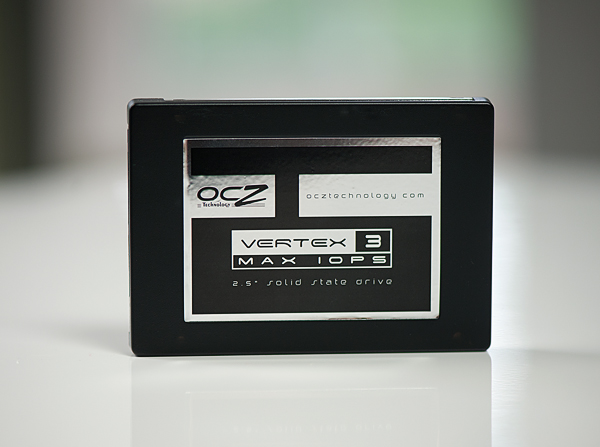
OCZ Vertex 3 MAX IOPS & Patriot Wildfire SSDs Reviewed
Not wanting to be completely married to Intel NAND production, OCZ wanted to introduce a version of the Vertex 3 that used 32nm Toshiba Toggle NAND - similar to what was used in the beta Vertex 3 Pro we previewed a few months ago. Rather than call the new drive a Vertex 3 with a slightly different model number, OCZ opted for a more pronounced suffix: MAX IOPS. By using 32nm NAND OCZ gets more die per channel and thus can get better performance through interleaving.
Read More ...
Google TV 2.0 Coming to Logitech Revue This Summer

For many, the deal breaker for the Logitech Revue and other Google TV products was two words: IR blaster. Opting to act as a supplement to your current home theater set-up rather than a replacement for a cable/satellite set-top box, the device was hamstrung by a somewhat complicated set-up process. But this was never about the hardware, the workhorse of this product was the Android-based OS behind it all. Bringing the web to the TV has been a concept bouncing around the consumer electronics industry for years, and Google’s effort leveraged the Chrome browser to bring any content to your living room. The execution, though solid, failed to meet expectations; primarily because there seemed to be so much left on the table. Like Apple TV, Google TV products had no access to the apps that made their respective OS’s so popular and full featured.

Google used I/O 2011 to announce that apps would be coming to Google TV during a reset that brings Honeycomb 3.1 to the table. First reported by GTV Source shortly after the conference, Google went so far as to invite some developers to participate in a beta of the new software under a project called ‘Fishtank.’ In recent days there’s been signs of progress in this program based on the appearance of device listings for Google TV devices under the Android Market’s settings menu. Though apps could not yet be sent to user devices, this was a good indicator.
Now, it appears that the changes to the Android Market may be tied to the Fishtank programs deployment. As reported by Geek.com’s Russel Holly, images and details of the hardware received by Fishtank developers have been revealed, and there's plenty to see. The hardware closely mirrors that of Logitech’s Revue, featuring the same Intel CE4100 SoC and even the same wireless keyboard. Port selection mirrors the Revue but is notable for the presence of a blanked out second HDMI-in port; a coaxial connection is noted but, based on its size and appearance, is likely to be used with a WiFi antenna.

Loaded in the device is what’s known as Google TV 2.0 beta, the Android 3.1 based OS we’ve been waiting for, complete with apps. Unfortunately the only apps presently available are a Clock app and Live TV app, whose source is the HDMI input on the device. The interface retains Honeycomb’s blue and black theme and shows plenty of effective optimizations for the big screen. Fishtank is supported by a private Groups message board, through which the main request from the 50 or so participants is the ability to overlay video with data from an application. This feature is apparently available while on the home screen, but not open for developers to use.
Fishtank isn’t the only testing ground for Google TV 2.0, though. We can confirm that Logitech is testing the new software on Revue units on their campus and working with in-house developers to prepare a suite of apps for its users. Current Revue owners can expect the new software to land late this summer, a broad window to be sure, but better than no window at all. Logitech would not comment on new hardware, though with such an upgrade in software it would be surprising to not see something new in hardware. It’s certainly comforting to see that GTV early adopters will not be left behind, as can so often be the case. More information on Google TV 2.0 as it becomes available.
Read More ...
Samsung Droid Charge Review - Droid Goes LTE
Samsung is doing something interesting lately. Instead of outright releasing Galaxy S 2 in the US, each carrier is getting a mid-cycle refresh of the Galaxy S with 4G compatibility and more recently Super AMOLED Plus. T-Mobile was first with the Samsung Galaxy S 4G, then came the Droid Charge on Verizon which we’re looking at now, and finally AT&T got the Samsung Infuse 4G. The latter two have Super AMOLED Plus displays and different basebands.

Read More ...
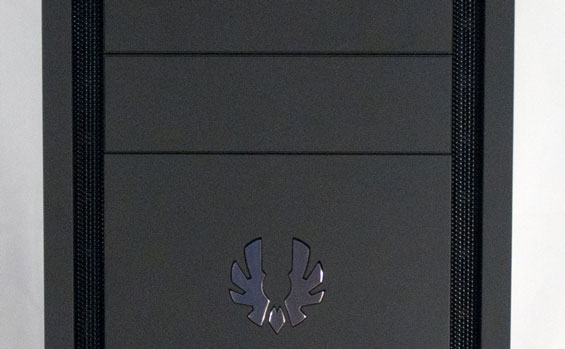
BitFenix Shinobi: The Budget Ninja
Compared to some of the vendors we've reviewed cases from thus far, BitFenix seems like a young pup. Antec and In-Win have been around for a long time, and Silverstone has established itself as a go-to for quality enclosures. But BitFenix has been making a lot of waves in a short period of time, producing attractive cases designed to appeal to consumers who are less about bling, be they a gamer or not. Today we're taking a look at BitFenix's Shinobi ATX enclosure (windowed version). With an MSRP of just $69.99, is it the budget ninja we've been looking for?
Read More ...
Update: AMD Resigns from BAPCo Over SYSmark 2012 Concerns, NVIDIA Also Leaves, BAPCo Responds
What’s in a Benchmark? This is a pertinent question that all users need to ask themselves, because if you don’t know what a benchmark actually tests and how that relates to the real world, the scores are meaningless. Today, AMD has announced that they are resigning from BAPCo over a long standing dispute over the weighting of scores within the SYSmark suite. AMD specifically references SYSmark 2012 (SM12), but there have been complaints in the past and the latest release is apparently the proverbial straw that broke the camel’s back.
You can read more about the decision on Cheif Marketing Officer (CMO) Nigel Dessau’s blog, but this announcement comes at an interesting time since BAPCo just shipped us copies of the final SM12 release. We haven’t had a chance to run the suite yet, and we’ll still have a look at the results and see how AMD and Intel platforms compare at some point, but it looks like we have a foregone conclusion: Intel will come out ahead. What we really need to examine is why Intel gets a better score.
If you’ve been reading AnandTech for any length of time, you’ll know that we place a lot more weight on real-world benchmarks rather than synthetic tests, but certain tasks can be very difficult to test in a meaningful way. How do you measure every day tasks like surfing the web in a meaningful way when most CPUs are 95% idle performing that task? When we really look at the market right now, in many cases we can conclude that just about any current computer will be fast enough for 90% of users. If you want to surf the Internet, write email, work in Office applications, watch some movies, listen to music, etc. you can do that on anything from a lowly AMD Brazos netbook to a hex-core monster system. Yes, we did leave out Atom, because there are certain areas where it falls short—specifically, certain movie formats prove to be too much for the current Atom platform, particularly if you’re looking at HD H.264 content (e.g. YouTube and Hulu).
Reading through AMD’s announcement and Nigel’s blog, it’s pretty clear what AMD is after: they want the GPU to play a more prominent role in measurements of overall system performance. On the one hand, we could say that AMD is simply trying to get benchmarks to favor their APUs, since Brazos and Llano easily surpass the Intel competition when it comes to graphics and video prowess. This would certainly be true, but then we also have to consider what users are actually doing with their PCs. SYSmark has always included a variety of tests, and certainly knowing how fast your computer is in regards to Excel performance can be useful. However, AMD claims that a disproportionate weight is given to some tests, with mention of optical character recognition and file compression activities in particular.
We don’t have the full SM12 whitepaper yet, but we can look at the list of applications that are tested, and a few things immediately stand out. There are two web browsers in the list, but both versions are now outdated. Internet Explorer 8 has been replaced by Internet Explorer 9, and Firefox 3.6 is replaced by Firefox 4.0—with Firefox 5 just around the corner. Without newer browsers, HTML5 is basically untested by SM12, and while we understand that SM12 has been in development for a while, for something calling itself 2012 to include mostly 2010 applications feels out of place. Considering IE9 and FF4 both shift to GPU-accelerated engines, AMD would certainly have benefited from the use of the latest versions. The remaining applications look reasonable, but again we have no information on weighting of scores, so we’ll have to see how the results pan out.
Ultimately, the main thing to take away from all of this is that, just like the PCMark, 3DMark, Cinebench, SunSpider, etc. benchmarks we routinely refer to, SYSmark 2012 is merely one more tool to analyze system performance. It will be interesting to see how other elements—like the presence or lack of an SSD—impact the score. In our opinion most users would benefit far more from running something like Llano with an SSD as opposed to Sandy Bridge with an HDD, so the CPU/GPU/APU are not the only factors, but it still depends on your intended use. If you’re running a server, obviously the demands placed on the system will be far different from the average home computer. Multimedia professionals that spend a lot of time in Adobe Photoshop and/or Premiere likewise have different needs.
Is AMD right? Is heterogeneous (e.g. CPU and GPU working together) computing more important now than raw CPU performance, or is SYSmark12 merely proving what we already know: Sandy Bridge is really fast? Let us know what you think, but as always remember that when you’re looking at benchmark charts, take a minute to think about what the bars actually represent. The full news release is below, but again you can find substantially more detail in Dessau’s blog.
Update: It turns out AMD is not the only party to have left the BAPCo consortium recently. We've just confirmed with NVIDIA that they have also left the BAPCo consortium. No reason was given.
Update 2: BAPCo has released a statement in return. The consortium notes that AMD approved 80% of the development milestones and that AMD was never threatened with expulsion. The full statement is attached below.
AMD Will Not Endorse SYSmark 2012 Benchmark
— AMD Separates from Association with Industry Group BAPCo —
SUNNYVALE, Calif. — 21, 2011 — AMD (NYSE: AMD) today announced that it will not endorse the SYSmark 2012 Benchmark (SM2012), which is published by BAPCo (Business Applications Performance Corporation). Along with the withdrawal of support, AMD has resigned from the BAPCo organization.
“Technology is evolving at an incredible pace, and customers need clear and reliable measurements to understand the expected performance and value of their systems,” said Nigel Dessau, senior vice president and Chief Marketing Officer at AMD. “AMD does not believe SM2012 achieves this objective. Hence AMD cannot endorse or support SM2012 or remain part of the BAPCo consortium.”
AMD will only endorse benchmarks based on real-world computing models and software applications, and which provide useful and relevant information. AMD believes benchmarks should be constructed to provide unbiased results and be transparent to customers making decisions based on those results. Currently, AMD is evaluating other benchmarking alternatives, including encouraging the creation of an industry consortium to establish an open benchmark to measure overall system performance.
AMD encourages anyone wanting more details about the construction and scoring methodology of the SM2012 benchmark to contact BAPCo. For more details on AMD’s decision to exit BAPCo, please read AMD’s Executive Blog authored by Nigel Dessau.
BAPCo® Reaffirms Open Development Process For SYSmark® 2012
SAN MATEO, Calif.—(BUSINESS WIRE)—Business Applications Performance Corporation (BAPCo®) is a non-profit consortium made up of many of the leaders in the high tech field, including Dell, Hewlett-Packard, Hitachi, Intel, Lenovo, Microsoft, Samsung, Seagate, Sony, Toshiba and ARCintuition. For nearly 20 years BAPCo has provided real world application based benchmarks which are used by organizations worldwide. SYSmark® 2012 is the latest release of the premiere application based performance benchmark. Applications used in SYSmark 2012 were selected based on market research and include Microsoft Office, Adobe Creative Suite, Adobe Acrobat, WinZip, Autodesk AutoCAD and 3ds Max, and others.
Advanced Micro Devices (AMD) was, until recently, a long standing member of BAPCo. We welcomed AMD’s full participation in the two year development cycle of SYSmark 2012, AMD’s leadership role in creating the development process that BAPCo uses today and in providing expert resources for developing the workload contents. Each member in BAPCo gets one vote on any proposals made by member companies. AMD voted in support of over 80% of the SYSmark 2012 development milestones, and were supported by BAPCo in 100% of the SYSmark 2012 proposals they put forward to the consortium.
BAPCo also notes for the record that, contrary to the false assertion by AMD, BAPCo never threatened AMD with expulsion from the consortium, despite previous violations of its obligations to BAPCo under the consortium member agreement.
BAPCo is disappointed that a former member of the consortium has chosen once more to violate the confidentiality agreement they signed, in an attempt to dissuade customers from using SYSmark to assess the performance of their systems. BAPCo believes the performance measured in each of the six scenarios in SYSmark 2012, which is based on the research of its membership, fairly reflects the performance that users will see when fully utilizing the included applications.
Read More ...
Hulu Up for Sale After Fox Renews Licensing Agreement; Hulu Plus Available in Android Market
Renewed licensing agreements increase Hulu's value, making it ready for potential buyers
Read More ...
Navy MH 60S Seahawk Becomes First Military Aircraft to Fly on Algae Derived Biofuel
Helicopter flew on 50/50 blend of jet fuel and algae-based biofuel
Read More ...
6/23/2011 Daily Hardware Reviews
DailyTech's roundup of hardware reviews from around the web for Tuesday
Read More ...
Microsoft Says Internet Security is In Its DNA; Vows to Protect Xbox Live Information
Microsoft says it isn't taking advantage of Sony's poor position, but is doing everything it can to up its security
Read More ...
Nokia's "Super-Confidential" Windows Phone Struts Into the Spotlight
Company's worse nightmare -- blogosphere mass exposure -- is realized
Read More ...
Apple's Legal Crusade to Kill Amazon "Appstore" is Going Nowhere Fast
Judge will "probably" kill a critical motion in the case
Read More ...
Amid Struggles, Nokia Revamps Services Again
Will incorporate Navteq into broader services business
Read More ...
Winklevoss Twins Decide Not to Seek Supreme Court Review in Facebook Settlement Case
The twins said that they reconsidered the matter and decided that they would not seek Supreme Court review in a filing in court today
Read More ...
Verizon's New Data Plans Detailed
July 7 launch confirmed, unlimited data will be grandfathered in
Read More ...
Toyota Prius v on Track for Fall Launch
Toyota prepares its 40 mpg "family" hatchback
Read More ...
Al Gore Lashes Out at Obama, Saying He "Failed" to Fight Warming
Wealthy investor-cum-advocate continues to be one of the global warming movement's noisiest voices
Read More ...
Ford Looks to Protect Customers Against Bad Drivers, Smartphones
Company unveiled a number of safety initiatives at a special press conference
Read More ...
6/22/2011 Daily Hardware Reviews
DailyTech's roundup of hardware reviews from around the web for Wednesday
Read More ...
Ex "Duke Nukem Forever" PR Firm Speaks Out About Threatening Tweet
Jim Redner explains what led to the tweet that got him fired from 2K Games
Read More ...
Bitcoin Giant Mt. Gox Promises to Change Post-Hack
Market still hasn't been reopened, three days later
Read More ...
EPA Drastically Cuts Cellulosic Ethanol Requirement in Fuel for 2012
This marks the third year in a row the mandated levels have been reduced
Read More ...
Yahoo Approaches Hulu; Hulu Unsure About Selling
Hulu has not moved forward with any conventional steps that would indicate selling, yet is undergoing restructuring
Read More ...
Best Buy Introduces "Music Cloud"
Best Buy's Music Cloud has not officially launched yet, but it can be demoed on the retailer's website
Read More ...
Apple Plans September iPhone 5 Launch, New iPad, and "Third World" Budget iPhone
Company struggles to stay competitive in the face of the Android army's onslaught
Read More ...
Canadians Get Pumped for Launch of Plastic Currency
America's northern neighbor is the latest to ditch the cotton-based paper money
Read More ...
Intel Airs New Low-Voltage Sandy Bridge Chips, Aimed at MacBook Air
New chips draw a mere 17 watts
Read More ...
LulzSec Fights Hacker Civil War as it Continues Gov't Takedowns
LulzSec's actions haven't pleased everyone in the hacking community
Read More ...
Hackers Kill 4,800 Australian Sites Thanks to Brutal Attack on Web Host
Web host says sites are unrecoverable
Read More ...
USC Researchers Switch Rat Memories On and Off
The use of pharmacological agents to block the normal interactions between the CA3 and CA1 internal divisions within the hippocampus made the long-term memory of rats switch on and off
Read More ...
Direct Injected Engines from Some Automakers are Seeing Reduced Performance
Reduced performance is blamed on carbon deposits
Read More ...
Source: Apple to Enter TV Display Business Late This Year
Company is reportedly teaming up with a major OEM to sell iOS-powered, Apple-branded displays
Read More ...
6/21/2011 Daily Hardware Reviews
DailyTech's roundup of hardware reviews from around the web for Tuesday
Read More ...
FDA Introduces Graphic Warning Labels for Cigarette Packages
Cigarette producers have until Fall 2012 to comply with the placement of the new labels
Read More ...
GAO Report: Pentagon Must Provide Better Training for New Cyber Command Security System
The new Cyber Command is being put in place at its base in Fort Meade in Maryland along with the National Security Agency
Read More ...
GM Talks About the Future of Plug-ins, EVs
GM plug-in hybrid SUV may show up next year
Read More ...
Available Tags:OCZ , Google TV , Google , TV , Logitech , Samsung , AMD , NVIDIA , Hulu , Hulu , Android , Hardware , Microsoft , Security , Xbox , Windows Phone , Windows , Amazon , Nokia , Facebook , Toyota , Ford , Yahoo , iPhone 5 , Apple , iPhone , iPhone , Sandy Bridge , Intel , MacBook , Apple , GM ,


No comments:
Post a Comment