

A Quick Look at a 22nm Ivy Bridge Wafer
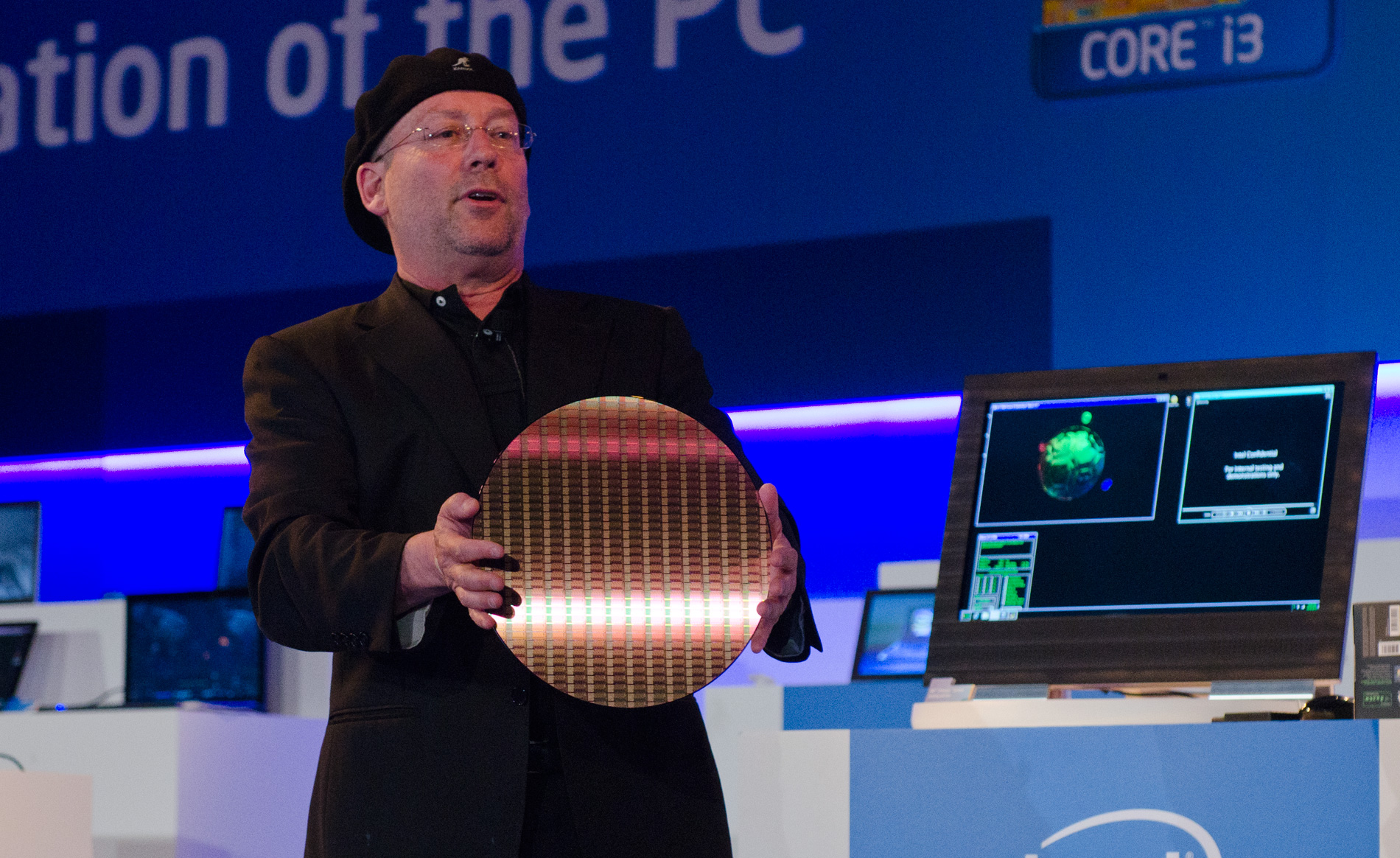
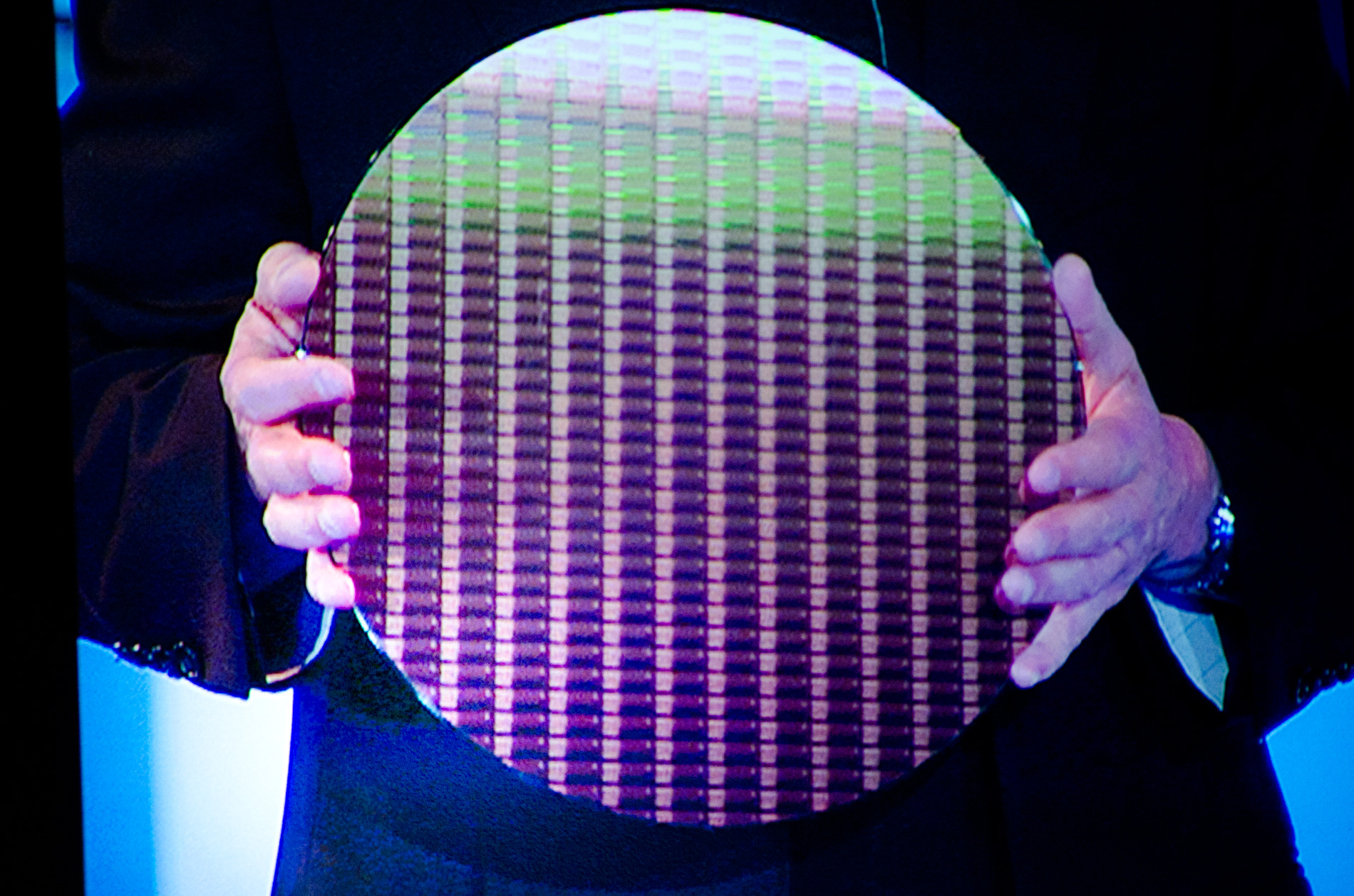
Just before a couple of key Ivy Bridge disclosures, Mooly Eden held up a wafer of 22nm Ivy Bridge CPUs. Presumably these are quad-core versions with 16 EUs, the largest version Intel will make at least at launch. Mooly mentioned that Ivy Bridge will have more than a billion transistors (obviously, SNB was 995M), but he wouldn't reveal the actual count.
Read More ...
The New Indilinx Everest SSD
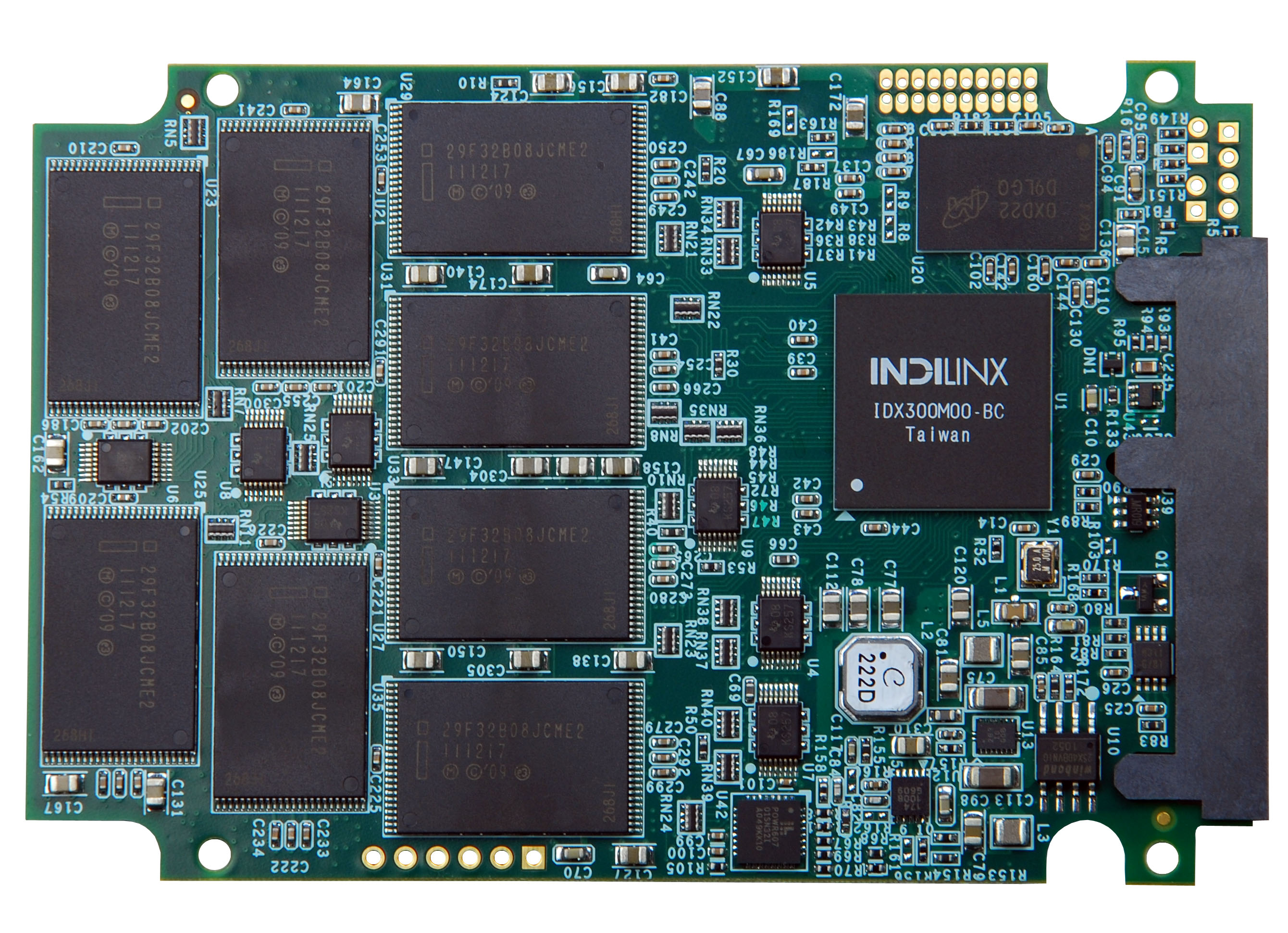
OCZ acquired Indilinx not too long ago and today we're seeing the first new controller from the company since 2009. OCZ calls it the Everest Platform, and it's an SSD targeted at the enterprise - at least for now.
It's Indilinx's first 6Gbps controller, good for up to 520MB/s reads and 410MB/s writes (but "only" 20K 4KB random write IOPS). The reference drive features two supercaps as its power loss protection circuitry. Everest will start at 64GB and be available in configurations of up to 1TB at customer request.
It's clear that Indilinx based drives aren't going to be outperforming SandForce anytime soon, but the question is whether or not they'll get good enough to be a value alternative.
{gallery 1102}
Read More ...
Computex 2011: OCZ's RevoDrive Hybrid, HDD & SSD on PCIe Card
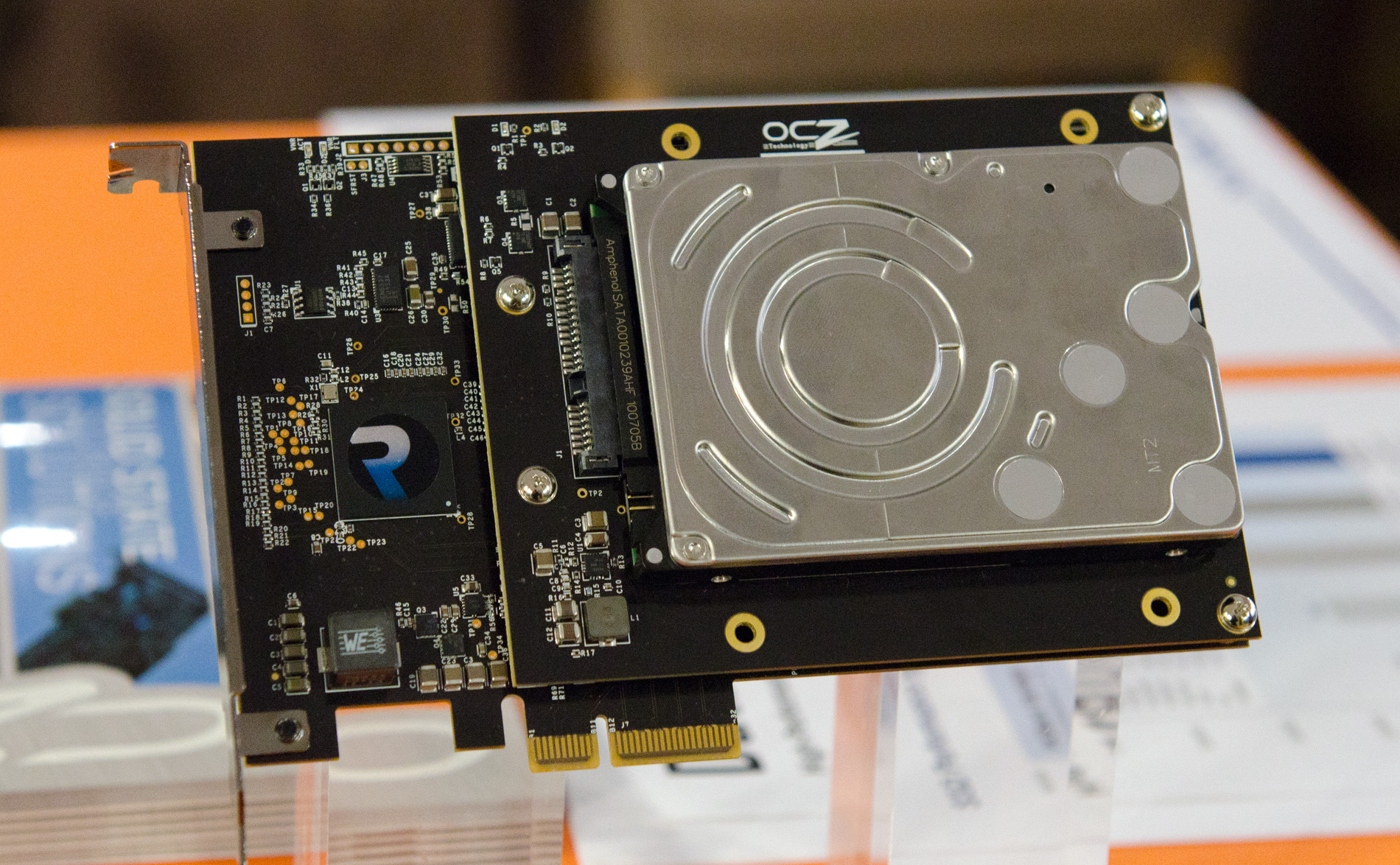
OCZ is feeling quite experimental these days as it has announced a hybrid RevoDrive. Take the new RevoDrive 3 and use it as a cache in front of a 2.5" HDD (either 500GB or 1TB capacity) and you've got the RevoDrive Hybrid.
{gallery 1101}
Read More ...
Computex 2011: OCZ Z-Drive R4 88, Eight SF-2281 Controllers in RAID-0
OCZ's consumer accessible PCIe SSD line is the RevoDrive, but if you're an enterprise customer and want a custom configuration OCZ will build you a Z-Drive. To show you how far OCZ is willing to go, it announced a brand new Z-Drive at Computex: the R4 88.
Take eight SF-2281 controllers, put them all in a RAID-0 on a PCIe x8 card with an as-of-yet unknown controller and you've got the Z-Drive R4 88:

OCZ had a 3U Colfax server with multiple Z-Drive R4 88s running an Iometer 4KB random read test, the end result was a single server that delivered more than 1 million IOPS. The drive is spec'd for up to 2.9GB/s reads and 2.7GB/s writes. Obviously as an 8-way RAID-0 there are reliability concerns and I'm not exactly sure the type of enterprise customer that would deploy such a thing, but it's a neat drive to look at nonetheless.
{gallery 1100}
Read More ...
Computex 2011: OCZ's RevoDrive 3 & RevoDrive 3 X2, Now With TRIM
There's a new PCIe SSD in town: the RevoDrive 3. Armed with two SF-2281 controllers and anywhere from 128 - 256GB of NAND (120/240GB capacities), the RevoDrive 3 is similar to its predecessors in that the two controllers are RAIDed on card. Here's where things start to change though.
In the past OCZ used a PCI-X RAID controller to keep costs down, but that's now gone. OCZ won't disclose the name of the controller vendor but a quick look at the card shows that it's native PCIe. The RevoDrive 3 itself is a PCIe 2.0 x4 card, however OCZ wouldn't confirm whether or not the controller was running at 2.0 or 1.0 speeds - just that the interface wasn't a bottleneck.
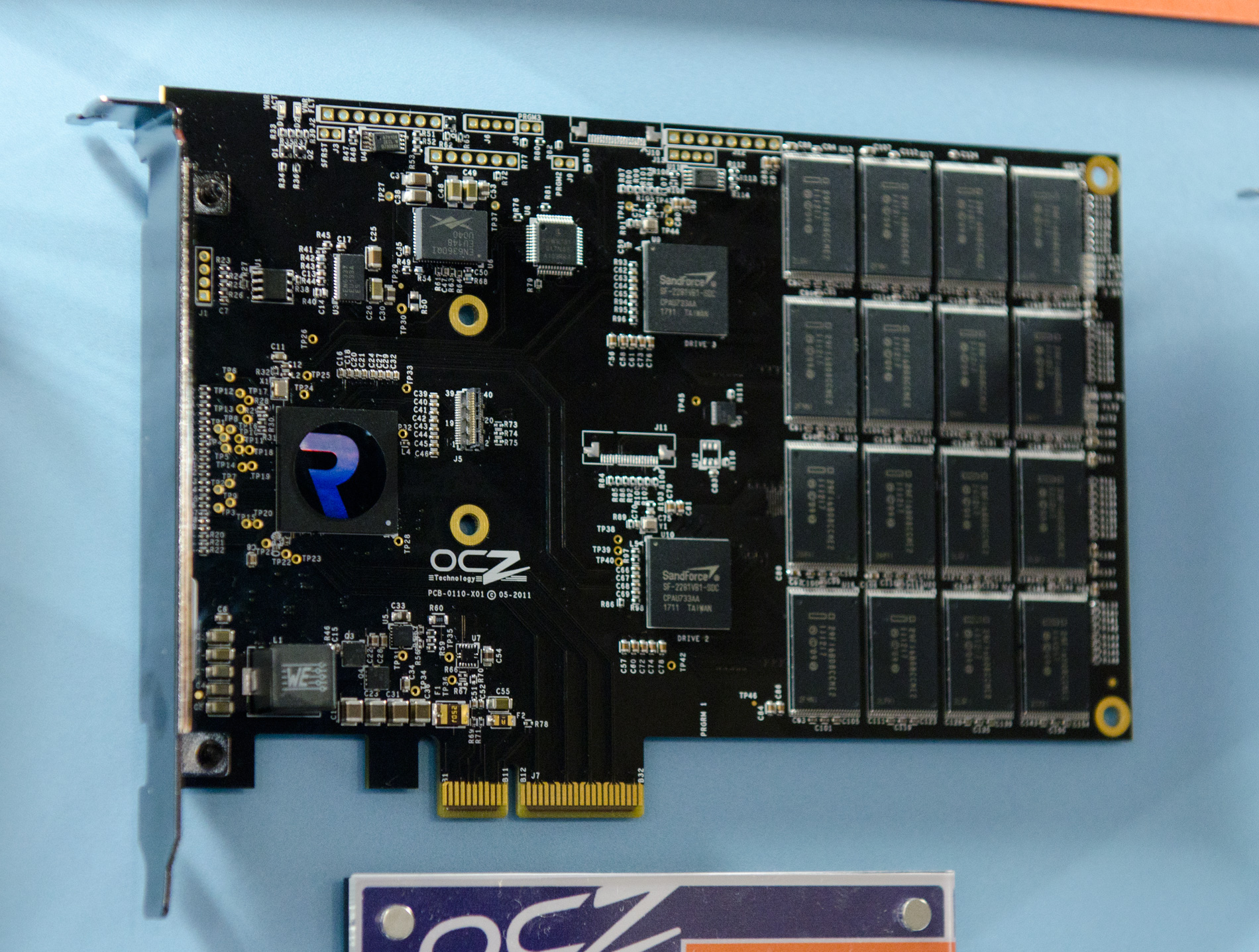
The other big improvement is that OCZ made some modifications to both the SandForce and on-board RAID controller firmware to allow everything from SMART data to TRIM to be passed through to the system host. In the past RevoDrive users were stuck with a PCIe card that couldn't be TRIMed, but with the 3 you get full TRIM support. Formatting the drive under Windows 7 or deleting files off of will result in those LBAs being TRIMed by the SF controllers.
OCZ is promising up to 900MB/s reads and 700MB/s writes (highly compressible of course). Random writes are spec'd at up to 120,000 for 4KB transfers. OCZ expects the 240GB capacity to sell for $599.
In addition to the standard RevoDrive there's an X2 version with twice the controllers:
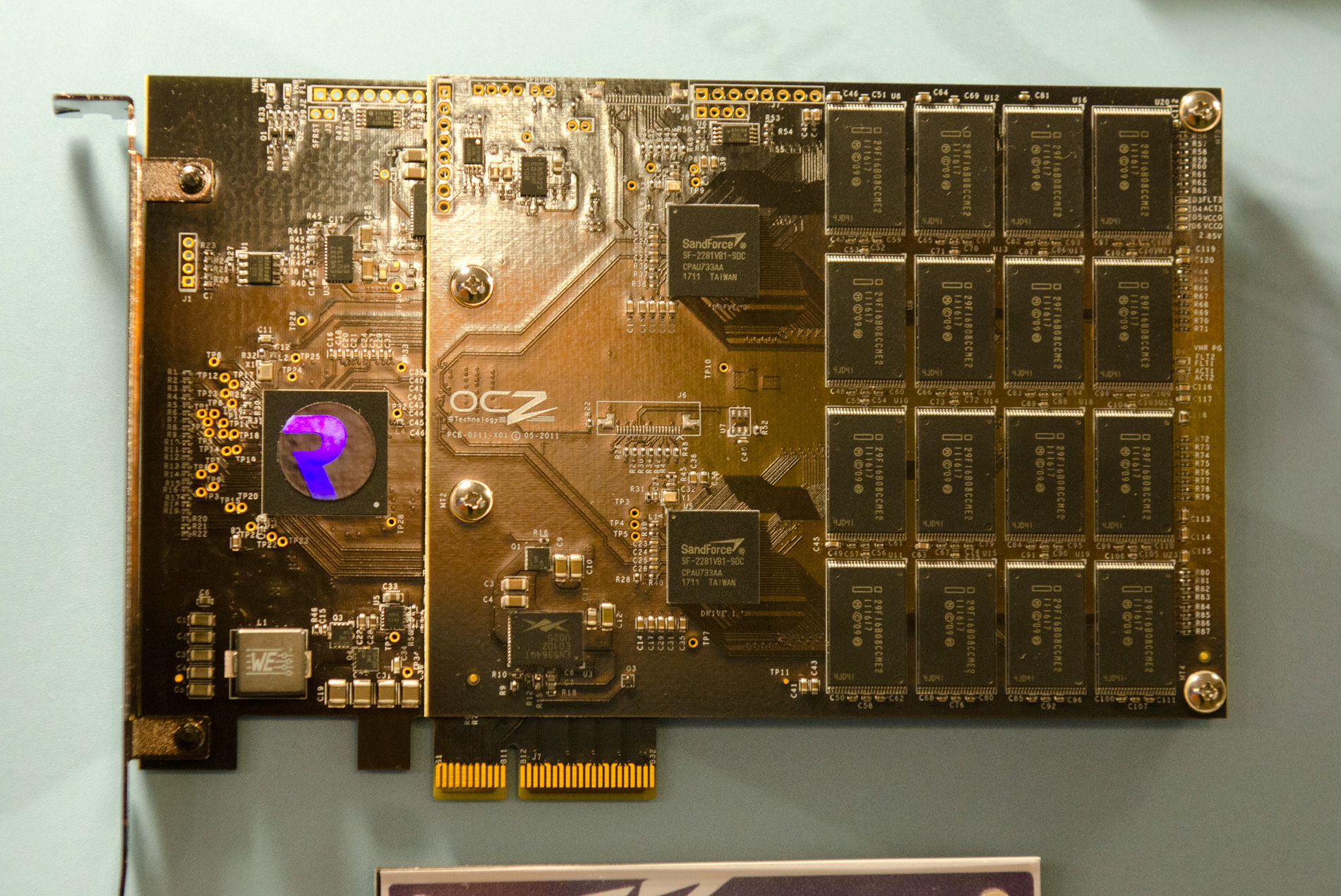
With four controllers the RevoDrive 3 X2 is good for up to 1.5GB/s reads and 1.2GB/s writes. OCZ is quoting up to 200,000 4KB random write IOPS. Again all of these figures are using highly compressible data. Just like the base RevoDrive 3, TRIM/SMART reporting are now supported on the x2.
Capacities start at 240GB ($699) and go all the way up to 960GB.
{gallery 1099}
Read More ...
Computex 2011: Up Close with ASUS UX Series with SanDisk's U100 SSD
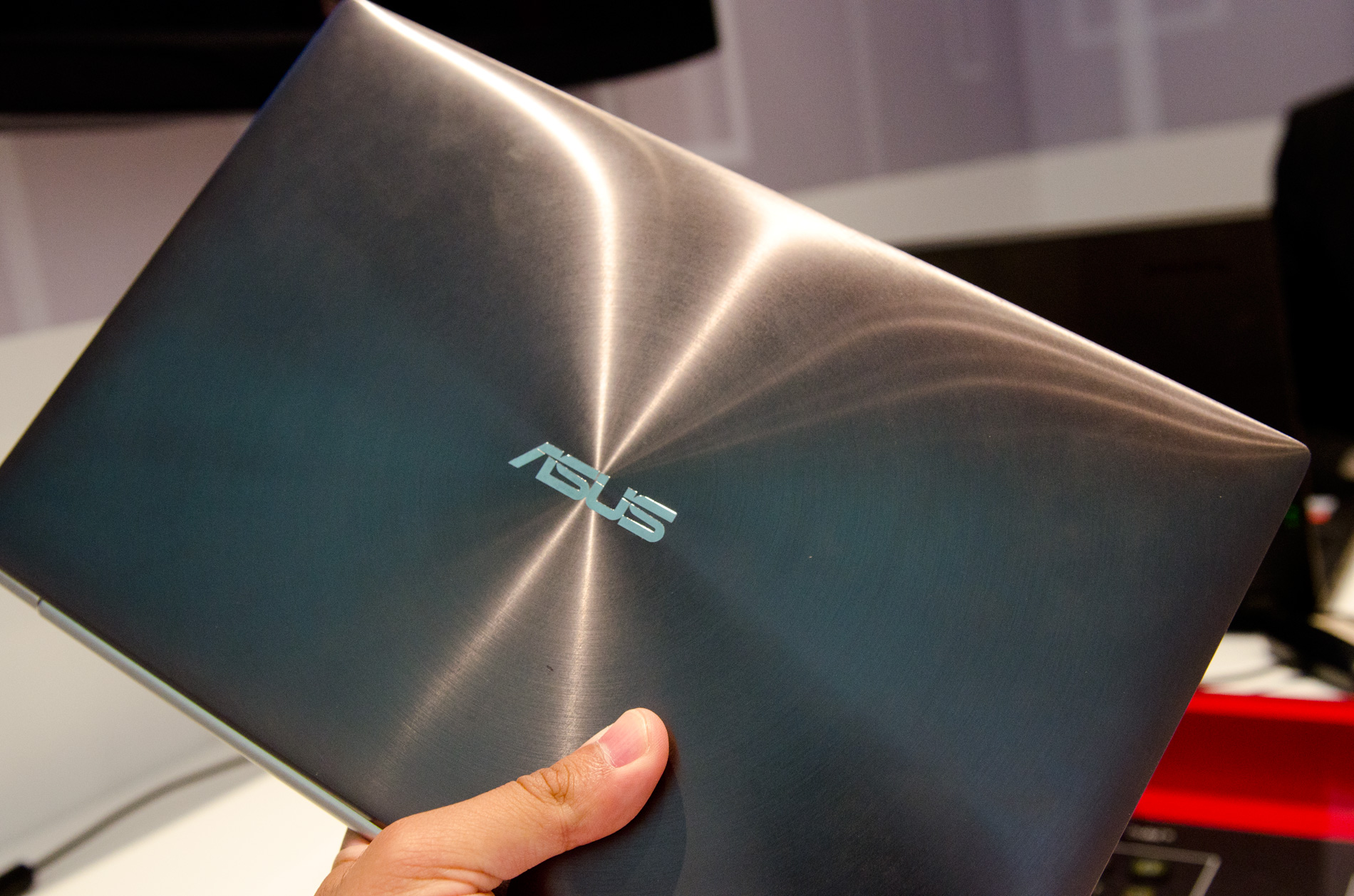
I met with SanDisk earlier today and to my surprise they had an ASUS UX Ultrabook in their meeting room. It turns out that at least one model in the UX Series will use SanDisk's brand new U100 SSD.
The U100 is SanDisk's first 6Gbps drive based on SanDisk's own controller. SanDisk's architecture is a little different than what we're used to. They claim to be doing some SandForce-like data reduction but they wouldn't give me any details on what they're actually doing. The controller doesn't have any DRAM to augment it, which lends credibility to some SF-like technology at work here.
SanDisk also uses a hybrid SLC/MLC setup where a small percentage of each MLC NAND die is actually configured as SLC NAND to act as a read/write cache in front of the rest of the die. This results in better random write performance and reliability.
The U100 in ASUS' UX Series notebook is a mSATA drive in a MacBook Air-like thin gumstick form factor. SanDisk is promising idle power usage of only 10mW, although peak load is 4W.
Overall performance isn't SandForce-like. Maximum sequential read speed is listed at 450MB/s, with 340MB/s writes. Random performance isn't that good, SanDisk quotes a burst speed of only 2300 IOPS. That's still a lot better than a hard drive but definitely not as good as what we're used to from high end SSDs. Keep in mind that the UX Series is more like a MacBook Air than a traditional notebook, and these are much better performance specs than what Apple currently ships in the MBA.
{gallery 1098}
Read More ...
Computex 2011: Intel Mentions Haswell Will Support "Multiple OSes", But Why?
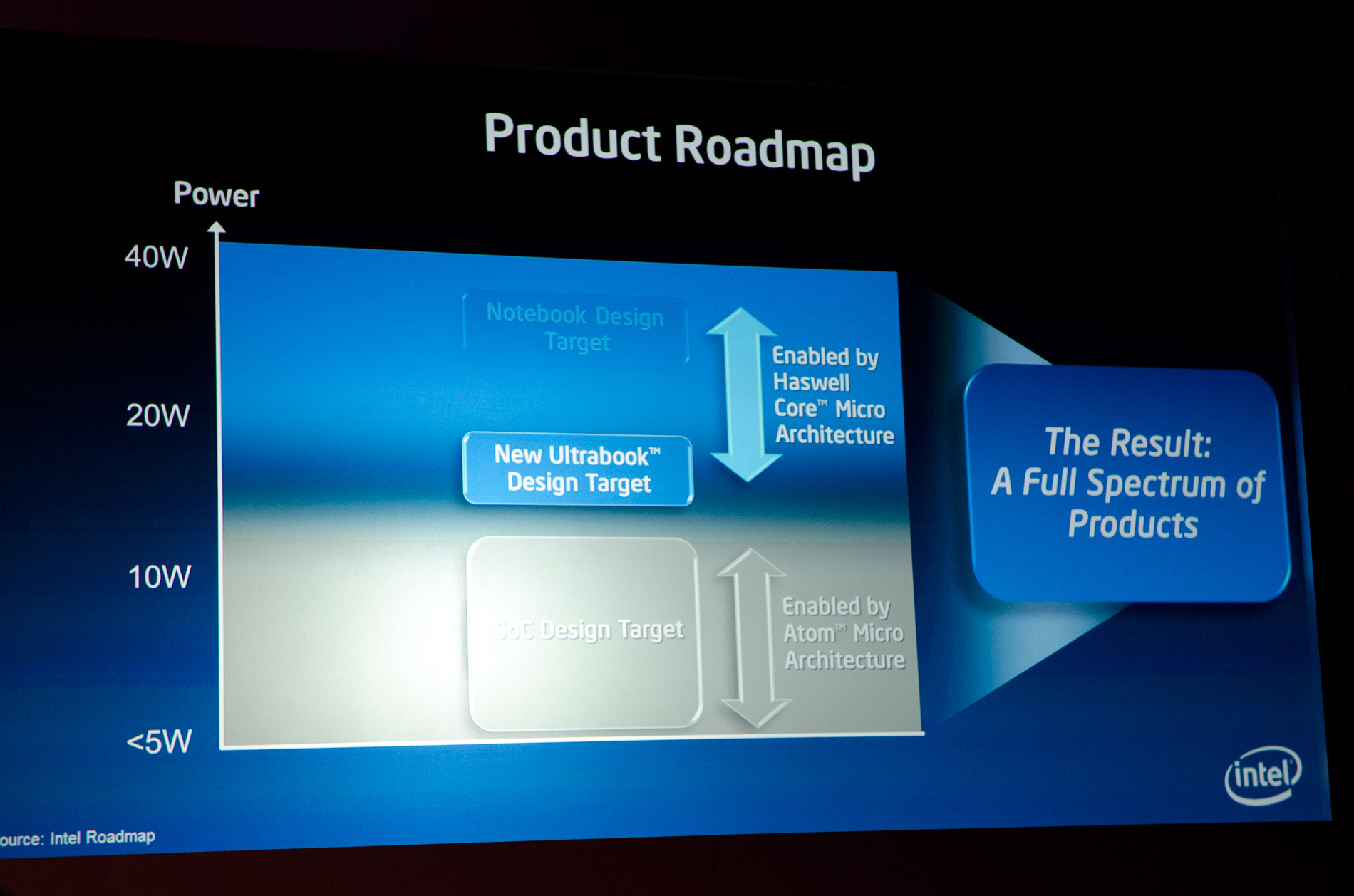
I hate that I didn't pull my camera out quick enough to catch this slide, but Intel's Mooly Eden just mentioned an interesting feature of Haswell. He stated that Haswell will support "multiple OSes". Clearly Sandy Bridge, Ivy Bridge and older Intel architectures have supported multiple OSes, but that was never listed as a feature until Haswell. I suppose this means more than it'll run both Windows and OS X, but what do you guys think Intel meant by it? I already asked Intel and of course I didn't get an answer, I was just told that it was an astute observation and something we'll have to talk about at a later point in time. I suspect this is a statement about the future of the OS space in mobile computing but I'm not entirely sure what Intel views will be different come 2013. Microsoft will obviously support ARM in Windows 8, but what will Intel support with Haswell that it didn't before? What do you all think?
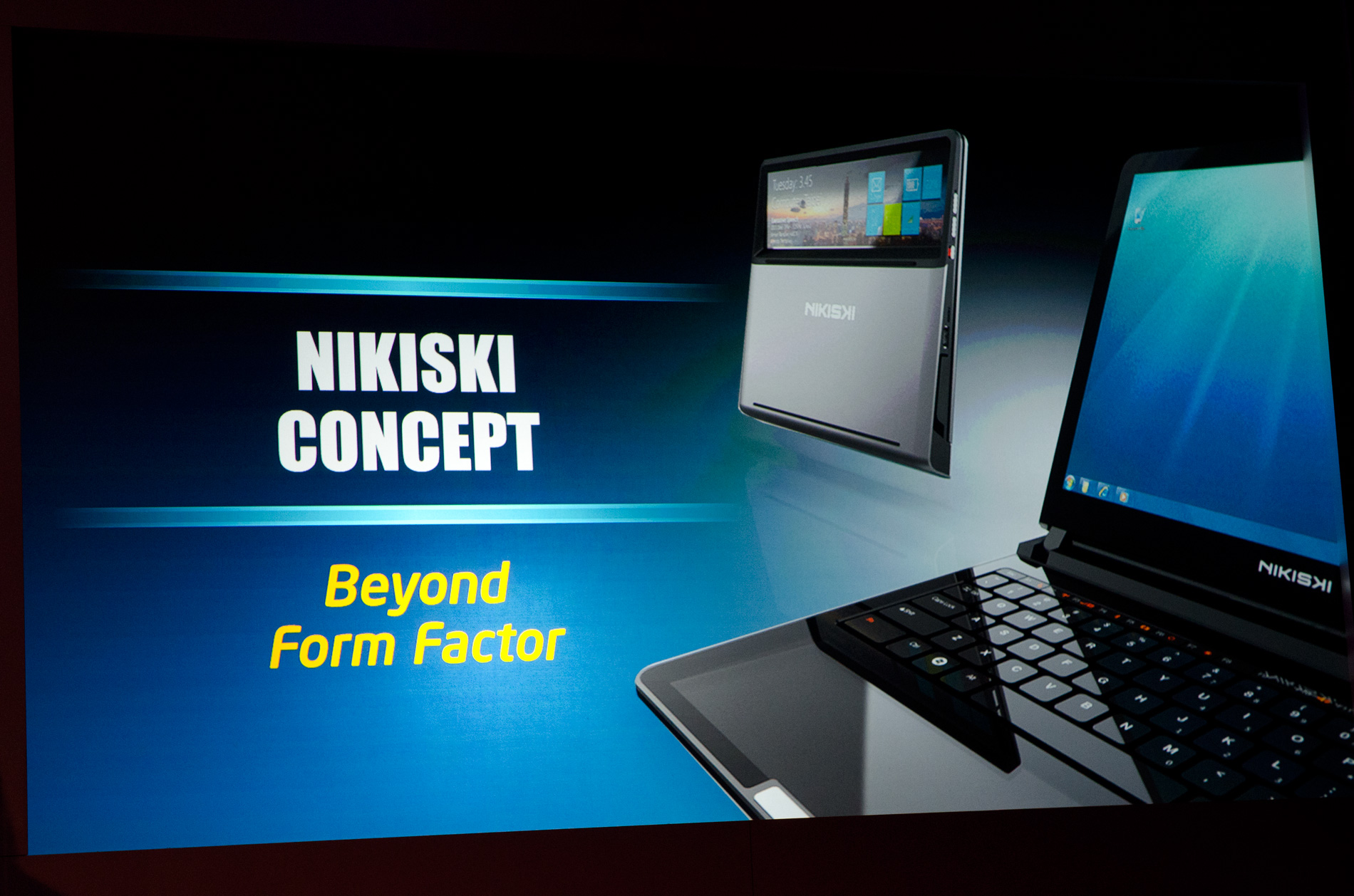
Mooly also showed off a concept Haswell PC called Nikiski. It's a notebook with a transparent touchpad area that lets you view part of your screen while the clamshell is closed. Check out pics of the concept in the gallery below.
{gallery 1097}
Read More ...
Ivy Bridge: A Tick+ With Configurable TDP
With Turbo boost and power gating we took a step towards configurable CPUs. It didn't matter whether you needed one core or four, with power gating and turbo you got the best combination of active cores and clock speed. It has enabled platforms like quad-core notebooks that don't sacrifice performance in lightly threaded applications.

With Haswell Intel already committed to dropping notebook TDPs from 35 - 45W down to the 10 - 20W range. As a result you get thinner notebooks, but you do sacrifice peak performance. Intel doesn't want to make that tradeoff, so Ivy Bridge will be the first Intel CPU to introduce configurable TDP.
Ivy Bridge turbo won't just run up to the hard limits of your TDP, but it'll be able to exceed that TDP significantly (Intel wouldn't comment on the exact numbers) until the CPU gets too hot. You can imagine a 15W TDP part that could turbo up to 35W TDP for a matter of seconds to make your system feel ultra snappy without requiring a thicker notebook.
{gallery 1096}
The ultra configurable TDP will also have support for a docked mode. So if you take your Ivy Bridge notebook, stick it on a docking station with better cooling you'll be able to exceed the system's TDP consistently. Now your 15W TDP part works like a 35W TDP part because you've given it more cooling.
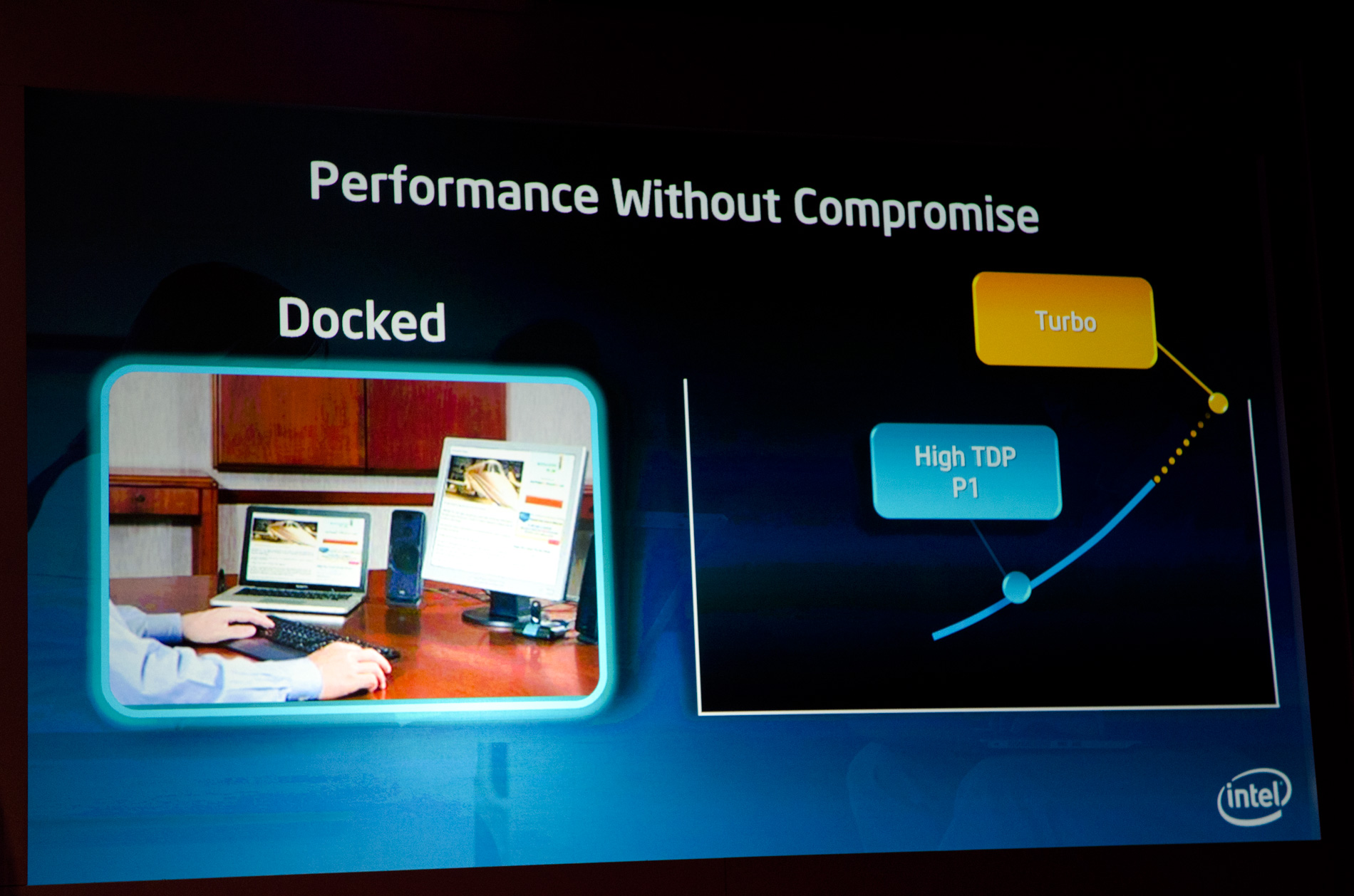
Configurable TDP will start with Ivy Bridge, but it'll be absolutely necessary (and likely much better) with Haswell. Look at what Turbo did from Nehalem to Lynnfield and I'm guessing we'll see the same sort of transition with Ivy Bridge to Haswell.
Ivy Bridge's configurable TDP will help OEMs build ultra thin notebooks without sacrificing performance - particularly when docked.

By the way, Intel views Ivy Bridge as more than just a process shrink as a result of all of this (and more apparently). It's still not a tock, but a Tick+.
Read More ...
Intel Integrates USB 3.0 and Thunderbolt into Ivy Bridge Platform

We knew about the first feature on this list (USB 3.0) would come with Ivy Bridge's 7-series chipset, but the second one was something I just heard about today. Ivy Bridge will integrate Thunderbolt into the chipset. Expect Thunderbolt adoption to skyrocket as a result in 2012.
Read More ...
Computex 2011: Intel's Thin miniITX Sandy Bridge Platform
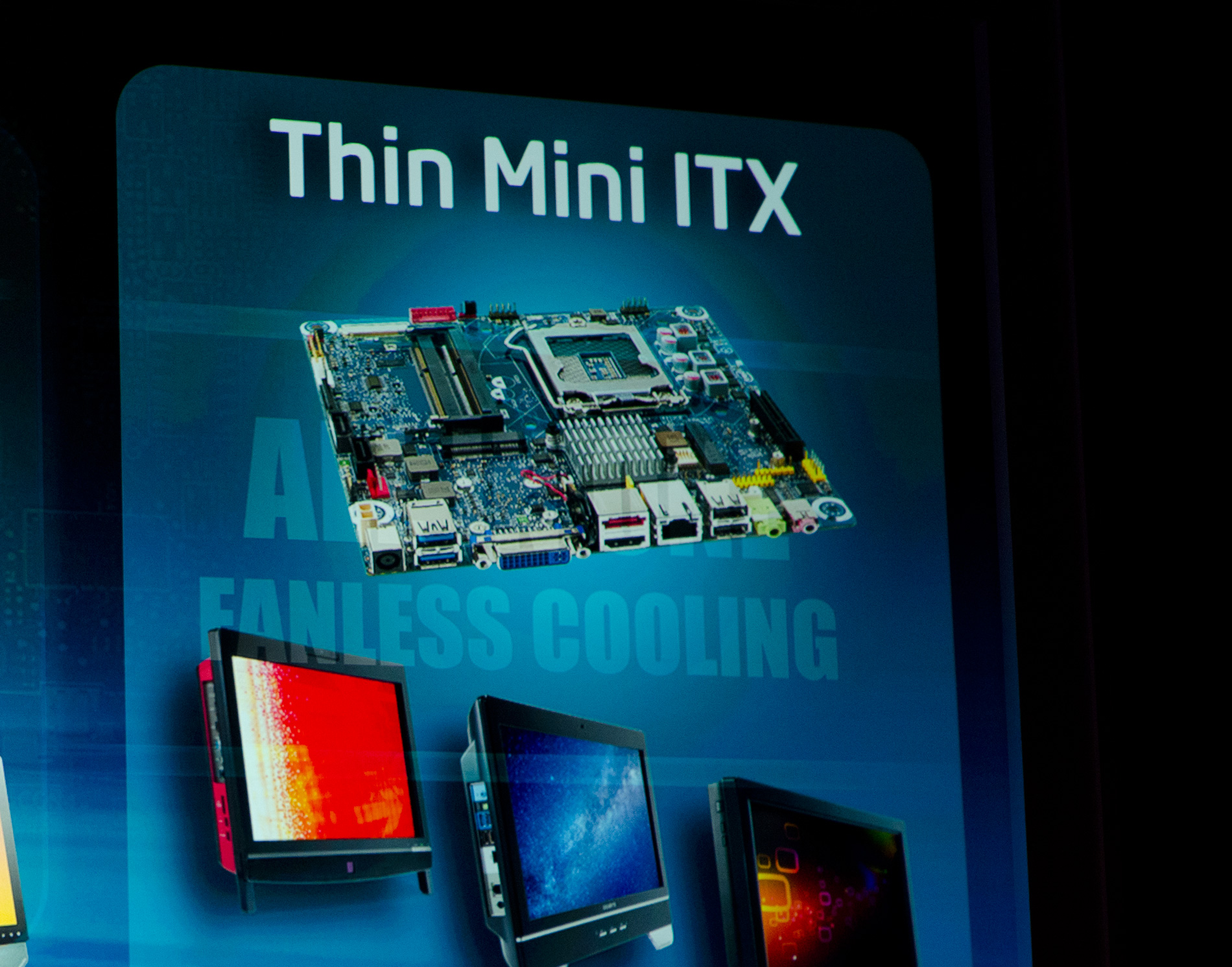
Intel's Mooly Eden just showed off its new thin mini ITX Sandy Bridge platform. The form factor is a standard mini ITX but with a low profile backplane so it can fit into thinner systems - particular all-in-ones.
{gallery 1095}
Read More ...
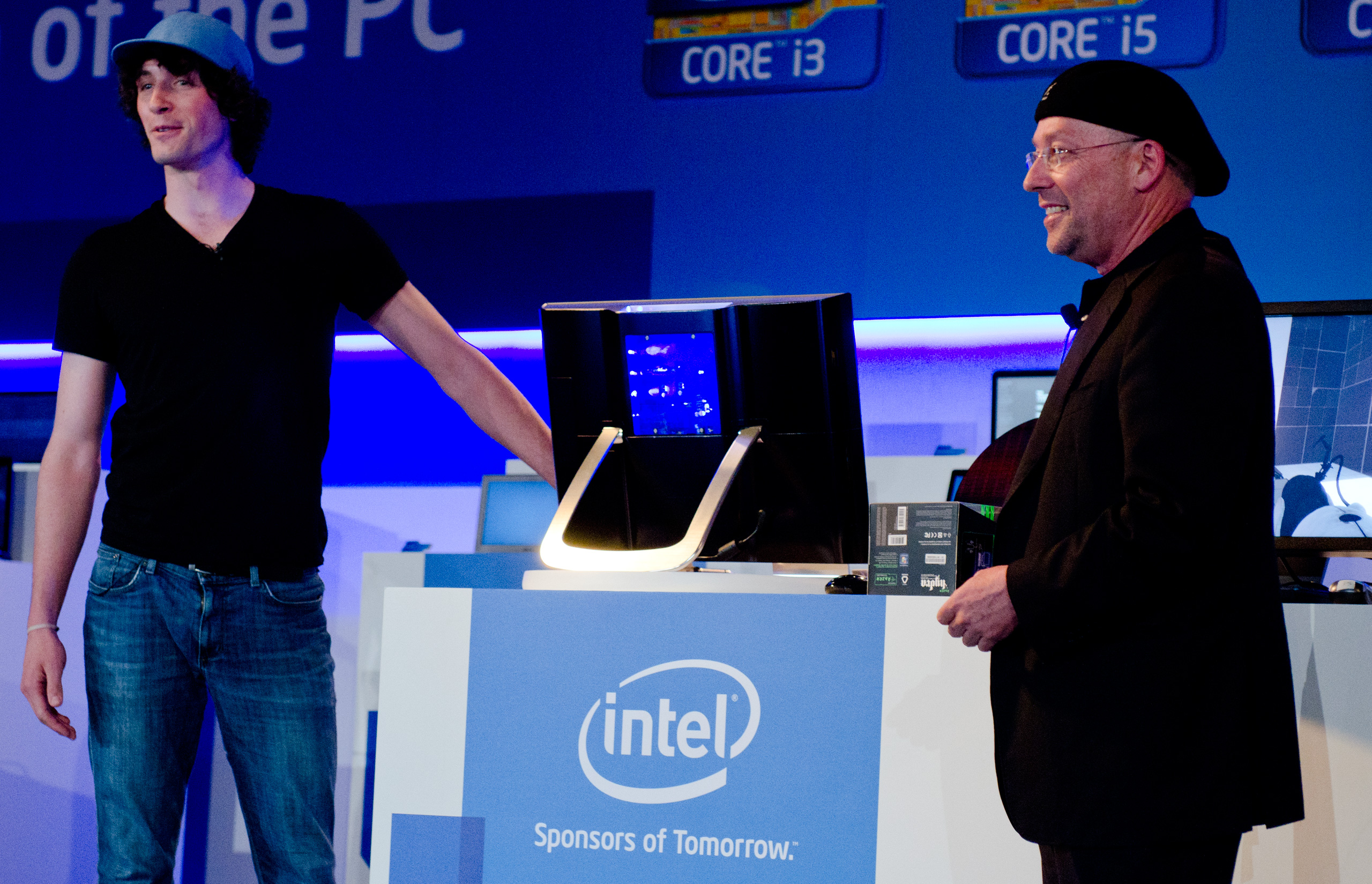
Computex 2011: Intel Demonstrates Fanless 95W TDP Sandy Bridge All-in-One System
Read More ...
Computex 2011: Zotac Z68 miniITX Motherboards
Zotac has two mini-ITX Z68 motherboards on display at Computex: the Zotac Z68-ITX WiFi A and B models (Z68ITX-A-E and Z68ITX-B-E). Both feature Intel’s Z68 chipset with all of the goodness that brings along with it (mainly SSD caching). The A model has a PCIe x16 slot for discrete graphics and uses standard DDR3 DIMMs. The B model features a GeForce GT 430 on-board and thus uses SO-DIMMs to save on space.
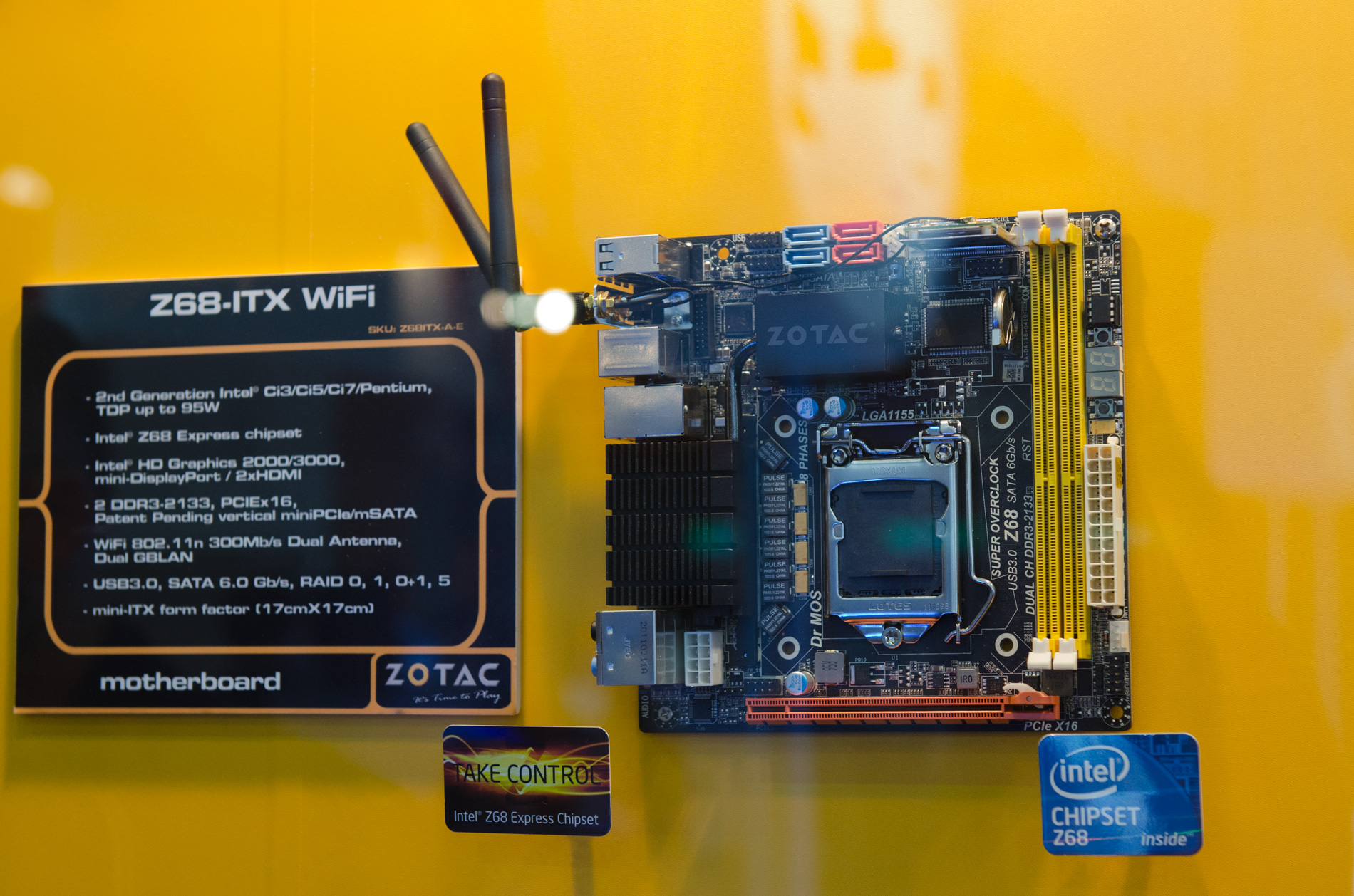
Both boards feature four SATA ports, WiFi and accept standard ATX power (4-pin 12V and 8-pin 12V connectors on the B and A models, respectively).
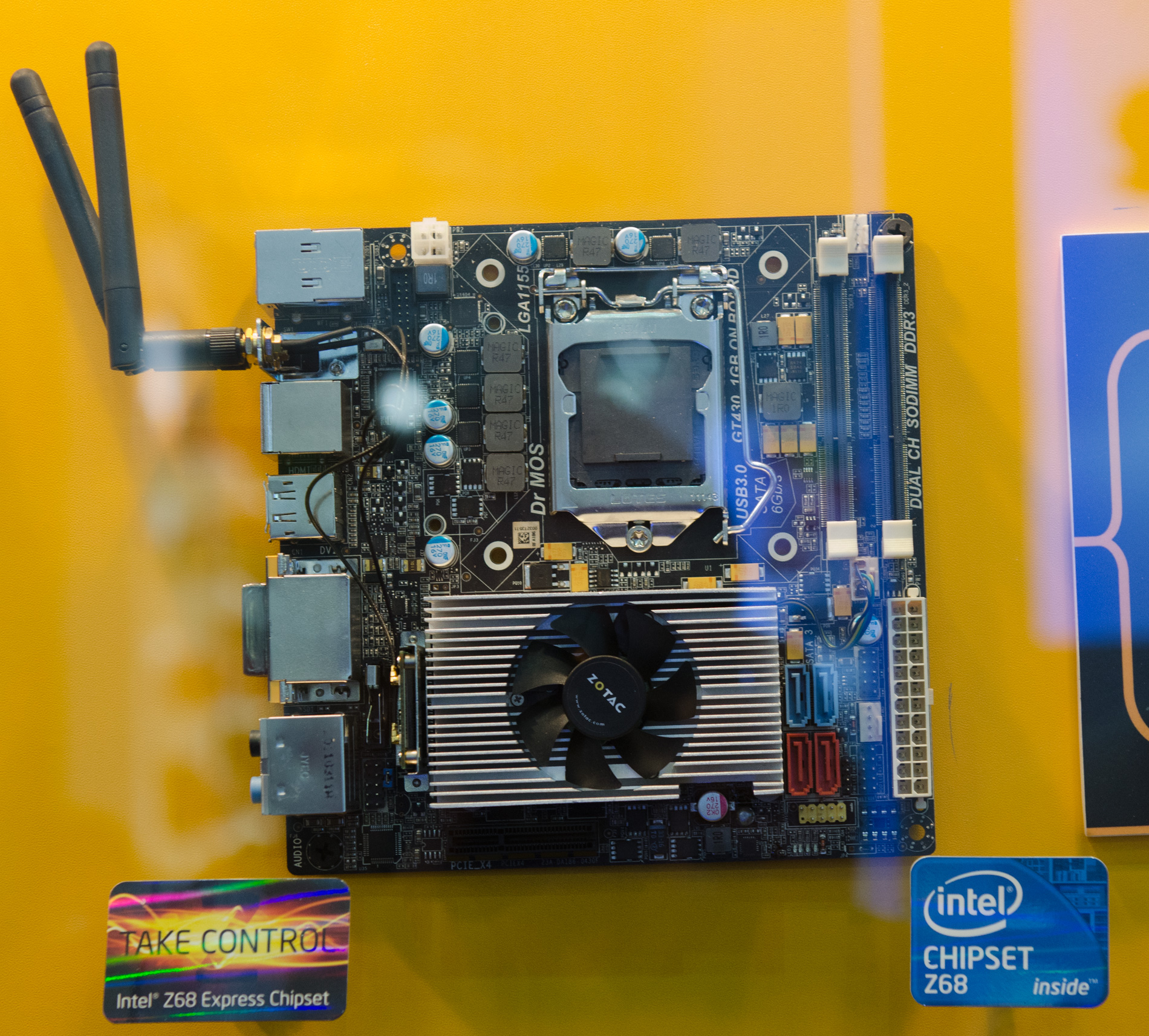
The A model has two HDMI outputs and one miniDP out, while the B model has two DVI, HDMI and one DP output thanks to the on-board GT 430.
{gallery 1093}
Read More ...
New Intel Marketing Terms: Smart Connect & Rapid Start Technology
In our Ultrabook article from earlier this evening I mentioned that Intel would be enabling a new technology with Ultrabooks that allows your applications that require real time updates (e.g. email, twitter) to keep receiving data even when your PC is asleep. In its opening keynote at Computex, Intel shed some more light on the technology.
It's called Intel's Smart Connect Technology. Using a software layer it'll periodically wake up your machine while in a sleep state to check for updates for things like email, Twitter, Facebook, etc... My guess is the software will just reactivate the network connection at a not-short interval so those applications can get updates. The result will be a machine that seems like it's been connected and constantly receiving updates while it was asleep.

The next technology is called Rapid Start. Rapid Start is simply hibernate to NAND, which allows your notebook to resume from a zero-power hibernate state in 5 - 6 seconds.

Read More ...
The Ultrabook: Meet the New Thin and Light Intel Notebook
It's too cliché to proclaim netbooks are dead. Perhaps the appropriate phrase is netbooks are no longer interesting to write about, but they do have a roadmap going forward. For years we heard about convergence in the PC and consumer electronics space. Convergence has finally reached mainstream, but the process isn't over yet. The smartphone revolution is the beginning of a much larger convergence. A melding of computing devices, convergence between the smartphone and tablet, or the tablet and notebook PC. The smartphone will become even more PC-like and the tablet will become even more notebook-like. But where does that leave PCs?

Read More ...
Computex 2011: ECS X79 and Llano Motherboards
I’ve been running around the Computex show floor all morning and finally managed to build enough of a lead ahead of my meetings to sit down and write up some of what I’ve seen.
Ian is going to be meeting with most of the motherboard makers at the show but I just stopped by ECS’ booth and got a look at its lineup of three Socket-FM1 Llano (A-series APU) motherboards and a Socket-2011 Intel X79 motherboard for use with Sandy Bridge-E due out later this year.
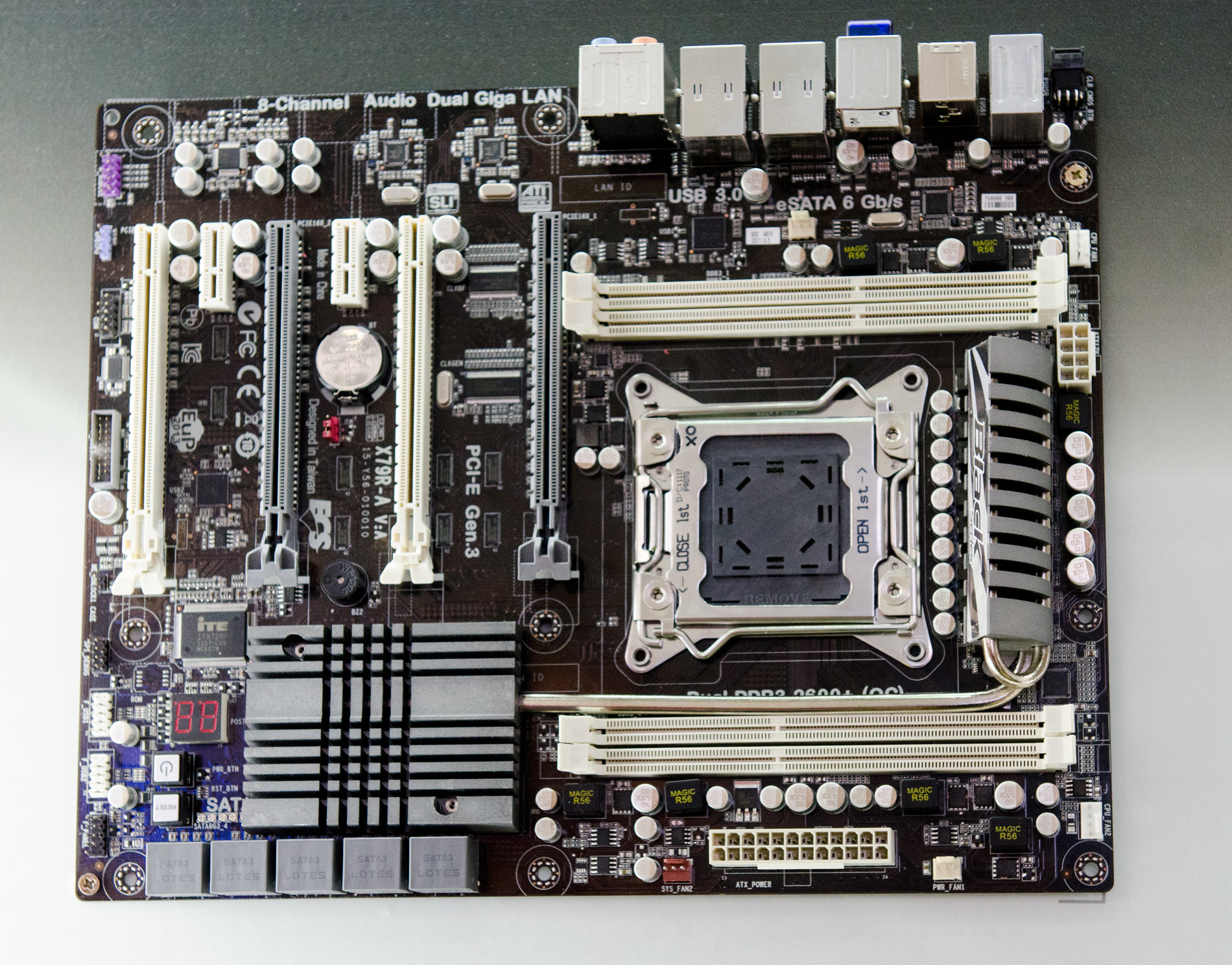 ,
,SNB-E has four 64-bit DDR3 memory channels which makes routing a pain. Motherboard manufacturers are dealing with the incredible number of traces by splitting the channels up and routing half of them on one side of the CPU and the other half on the other. LGA-1366 boards by comparison had all six slots on a single side of the CPU, but there were "only" three channels.
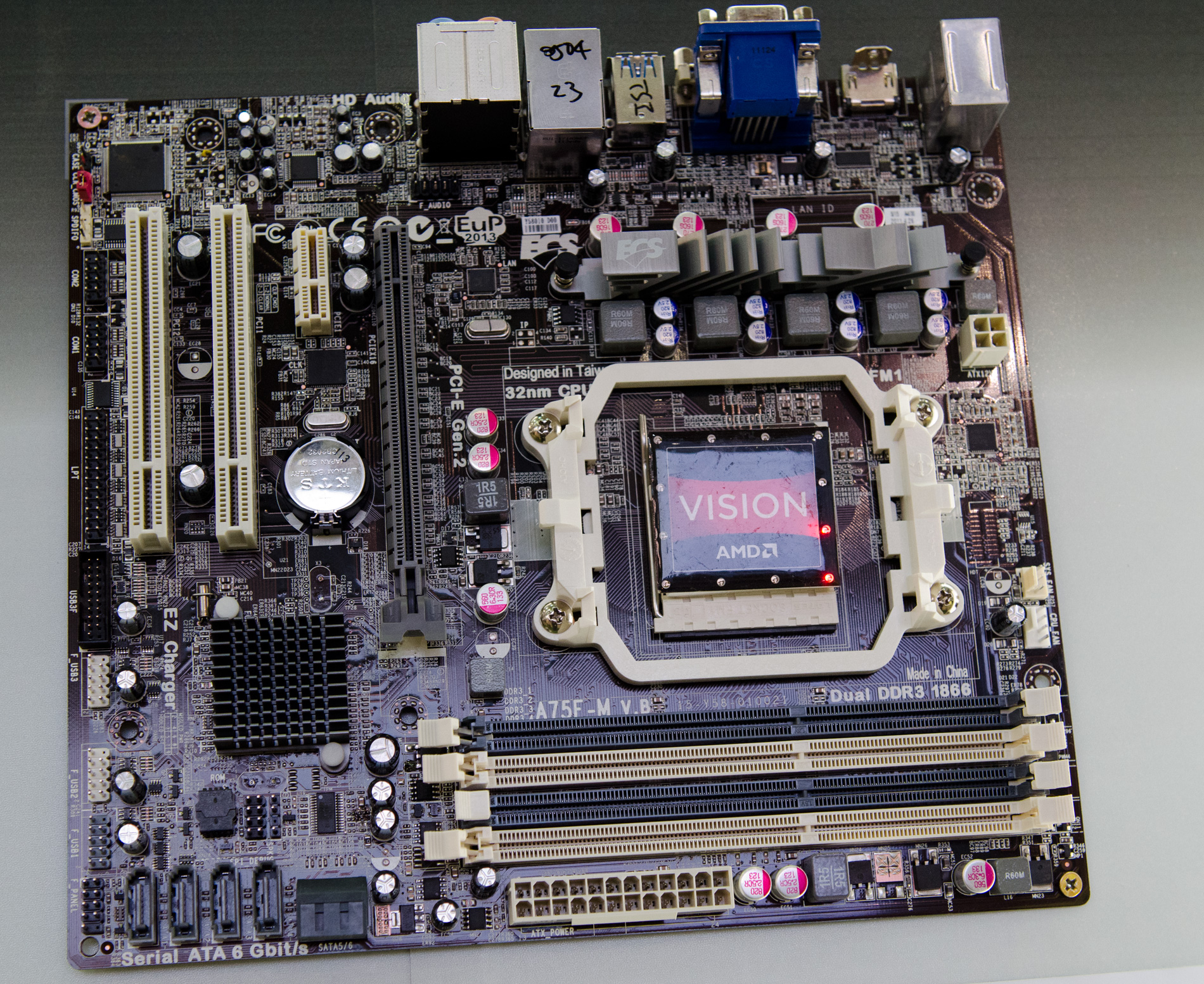
ECS is going to be shipping both ATX and microATX Llano boards later this summer. As I mentioned earlier, Llano will first launch as a quad-core mobile solution with dual-core and desktop versions following later.
{gallery 1092}
Read More ...
ASUS ET2700 All-In-One: Taking A Crack At the 27" iMac
Rounding out Asus’s Computex 2011 day one announcements is the ET2700, the company’s first 27 inch all-in-one PC.

However its defining feature will be the fact that the monitor is in fact a capacitive touchscreen, meaning the ET2700 is fully capable of utilizing Windows 7’s touch capabilities. Going with a touchscreen is a logical progression from what Apple has done with the iMac, but it’s also a bit risky since it evokes the well-known “gorilla arm” problem. So we’ll have to see what Asus has in mind to combat this.
We’ll have more information on this later today once Asus publishes the full specifications and the price.
{gallery 1088}
Read More ...
ASUS 2011 UX Series: Ultra Thin and Light Sandy Bridge
ASUS just unveiled its 2011 UX Series, which looks a lot like a MacBook Air:

The new UX comes with a 6Gbps SATA SSD, although ASUS didn’t reveal the manufacturer of the drive or the controller inside. The SSD enables what ASUS promises will be a 2 second wake time on the notebook, a trend that you’ll hear more about later this week.
{gallery 1090}
With the lid shut the new UX will last for up to 7 days in sleep mode.
Read More ...
The ASUS Padfone: A Smartphone That Docks into a Tablet
A number of you have asked for this innovation over the past few months: a smartphone that docks into a tablet. Given that the two platforms generally share the same hardware, it seems to make sense. ASUS has heard your calls and today announced its Padfone, and no, I'm not joking about the name.

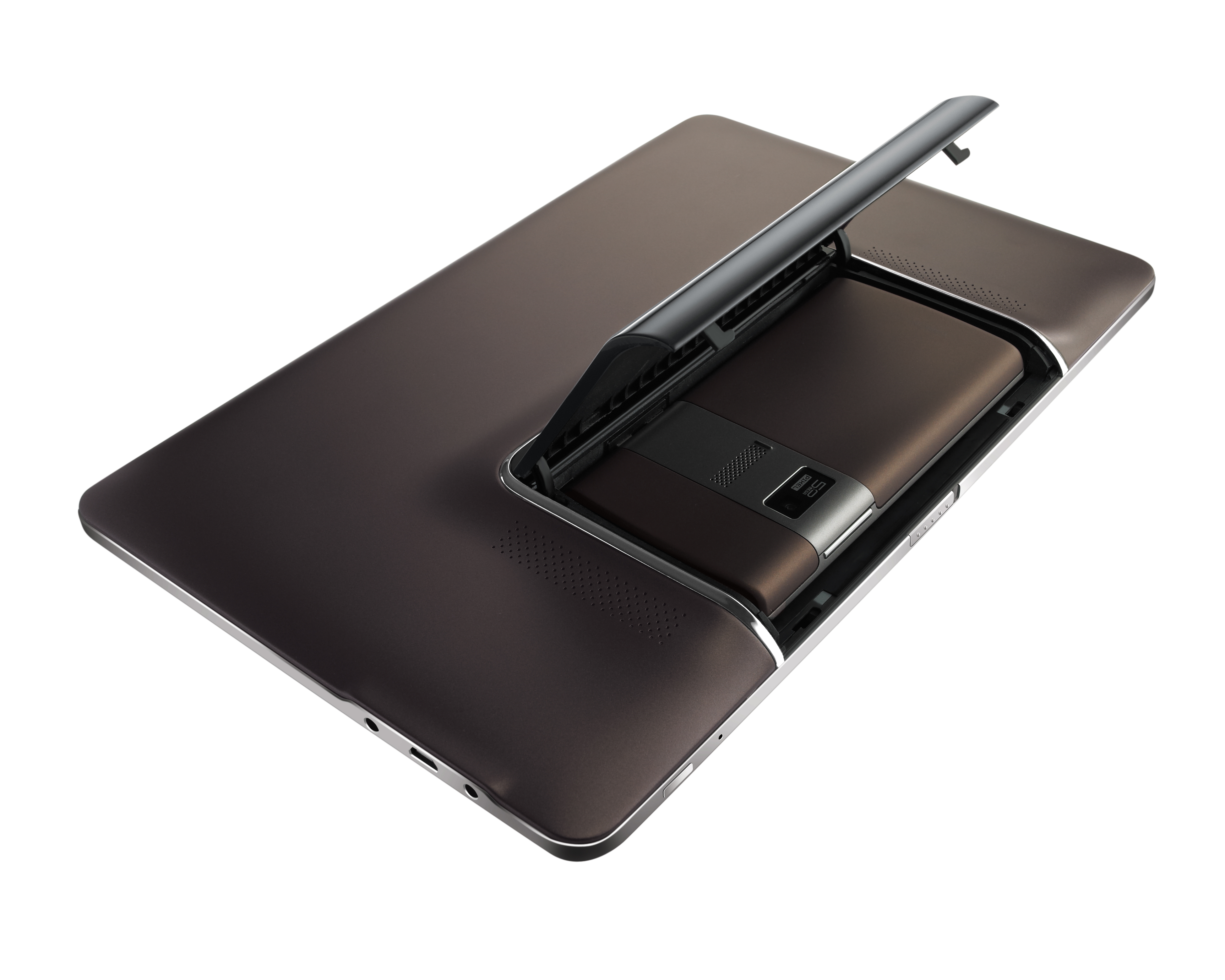
ASUS didn't announce anything on availability, internal specs or even what OS it would run. In one shot ASUS had a Windows interface and in another shot it had a Honeycomb interface. Clearly this is a work in progress but it's an interesting concept. Update: ASUS tells us that the Padfone will run Android and that the Windows interface was simply a mistake in the demo video.
{gallery 1091}
Read More ...
ASUS Eee PC X101: Running MeeGo, Windows Optional - Starting at $199
It wouldn't be Computex without another Eee PC announcement and today's is a big one. ASUS officially introduced the next-generation of Eee PC, the X101:

The X101 weighs under 950g and is only 17.6mm thick.
The X101 is presumably Atom based and it will be available either with a HDD or SSD. The default configuration will ship with MeeGo and start at $199.
{gallery 1089}
Read More ...
Computex 2011: SandForce mSATA Drives & No More Supercap
I haven't been to Computex since 2005. I felt that for a while there the show had lost some of its appeal. Motherboards alone weren't all that interesting and there was a lot of confusion in the market as to what to focus on next. These past couple of years I've seen a lot more news items of interest come out of Taiwan and after regretting not being at the show last year, I made it a point to show up this year.
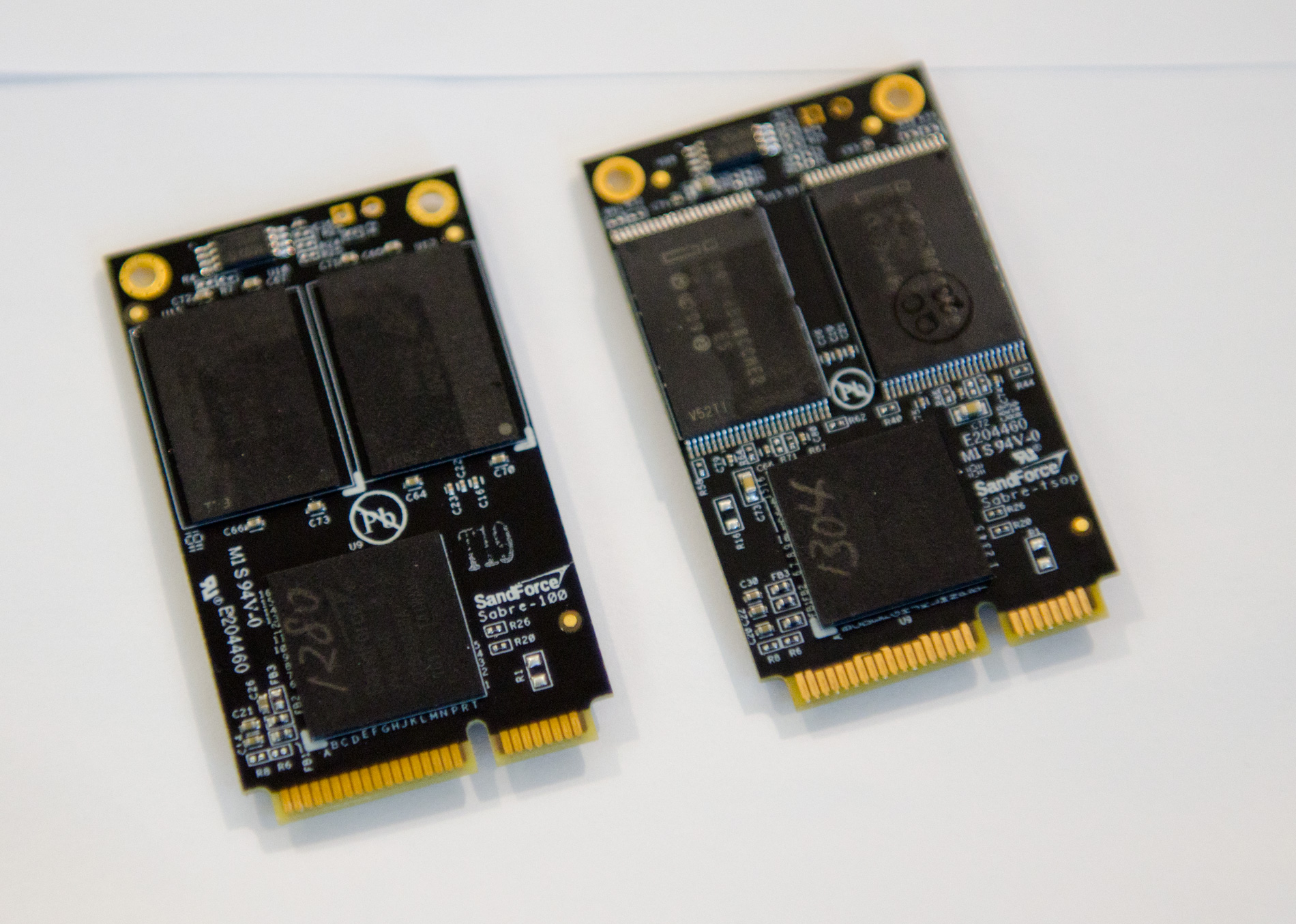
My first meeting actually took place at LAX last night, hours before my flight with a couple of guys from SandForce. Hot on the heels of the SF-2000 family release there's really not much new to talk about from a technology standpoint but SandForce did have a couple of updates to give me.
First is an mSATA reference design based around the SF-2281 controller we've seen used in drives like the Vertex 3 and Agility 3:

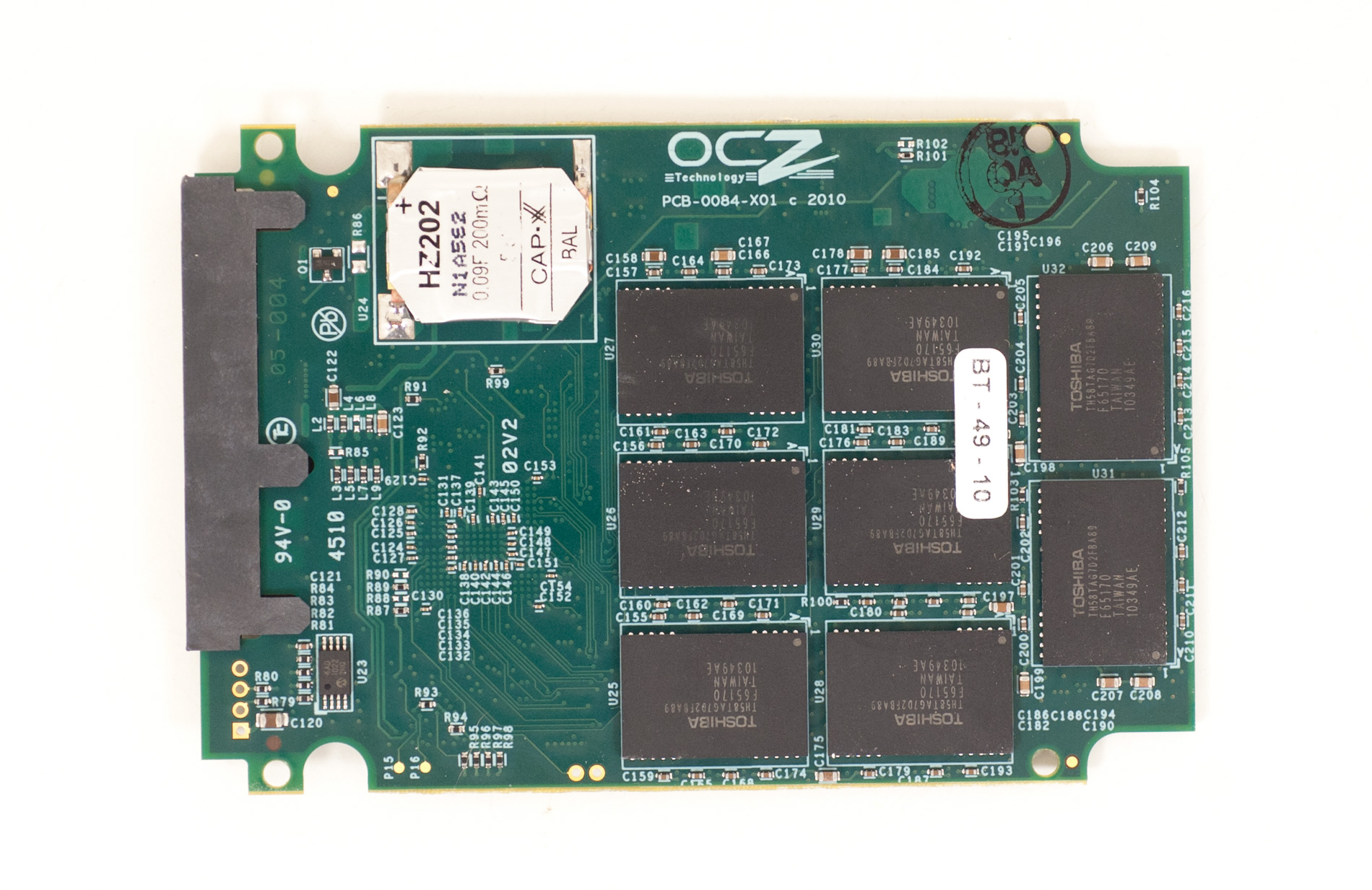
OCZ's Vertex 3 Pro pre-release sample with supercap
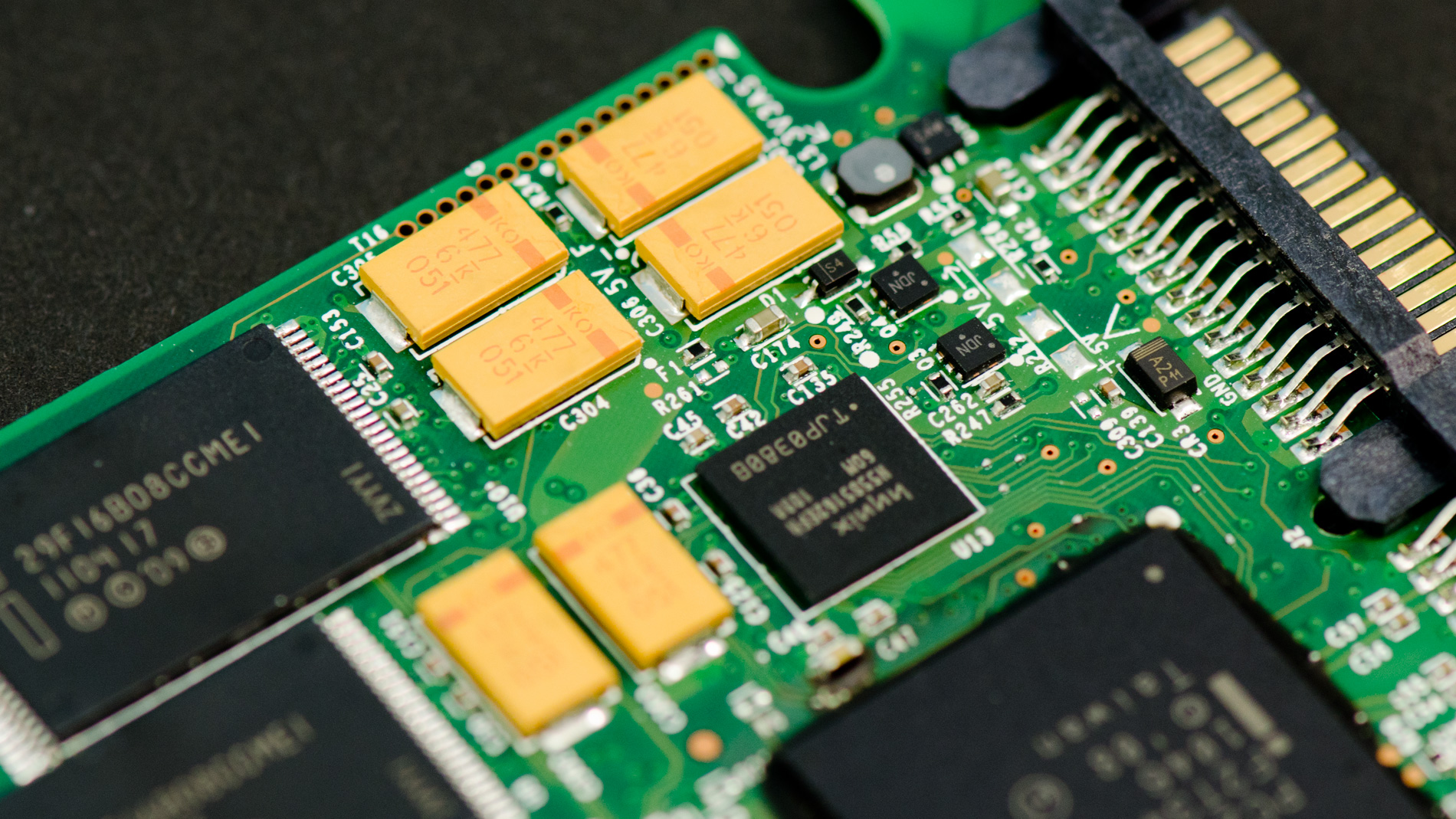
Intel's SSD 320
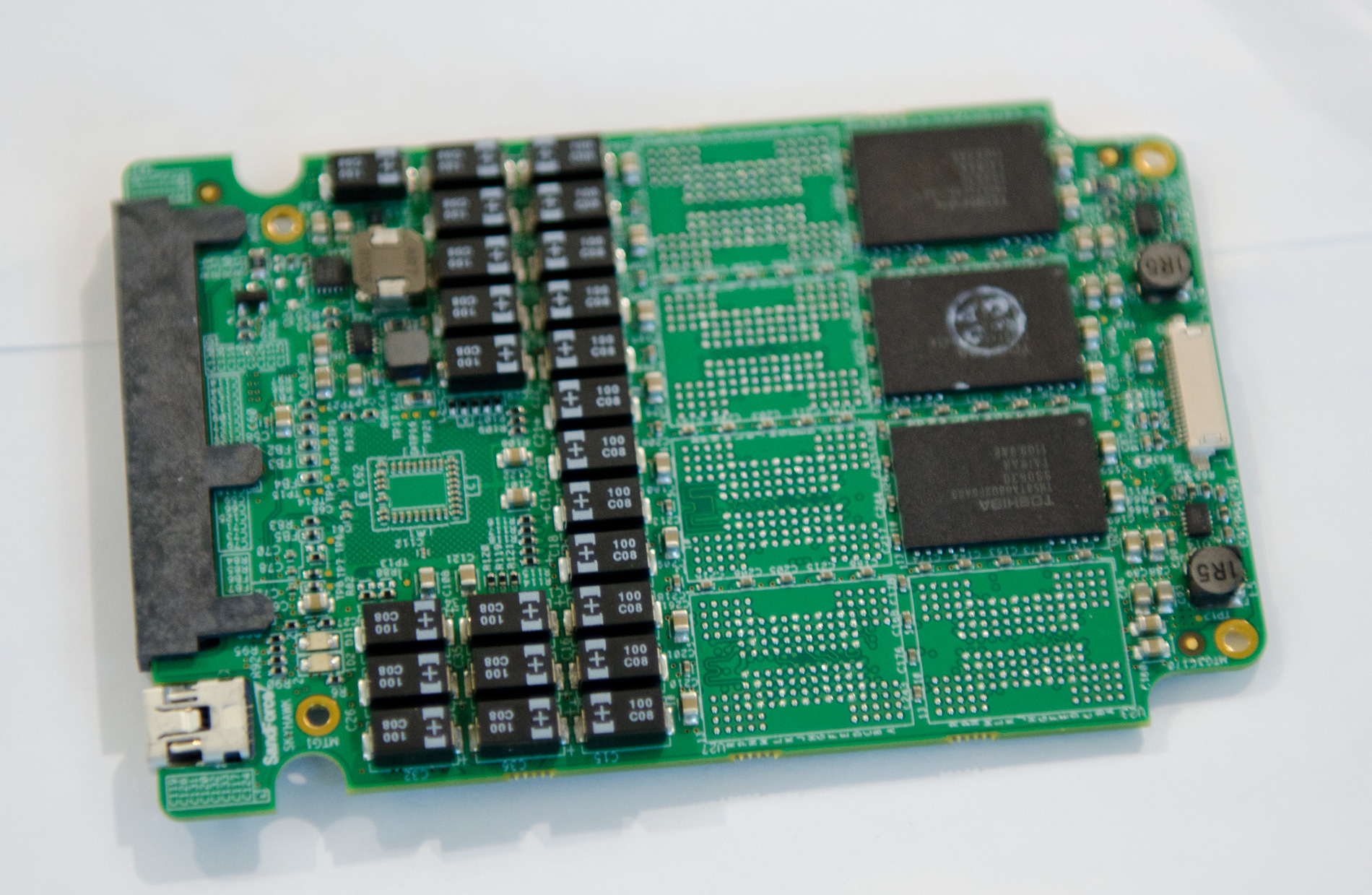
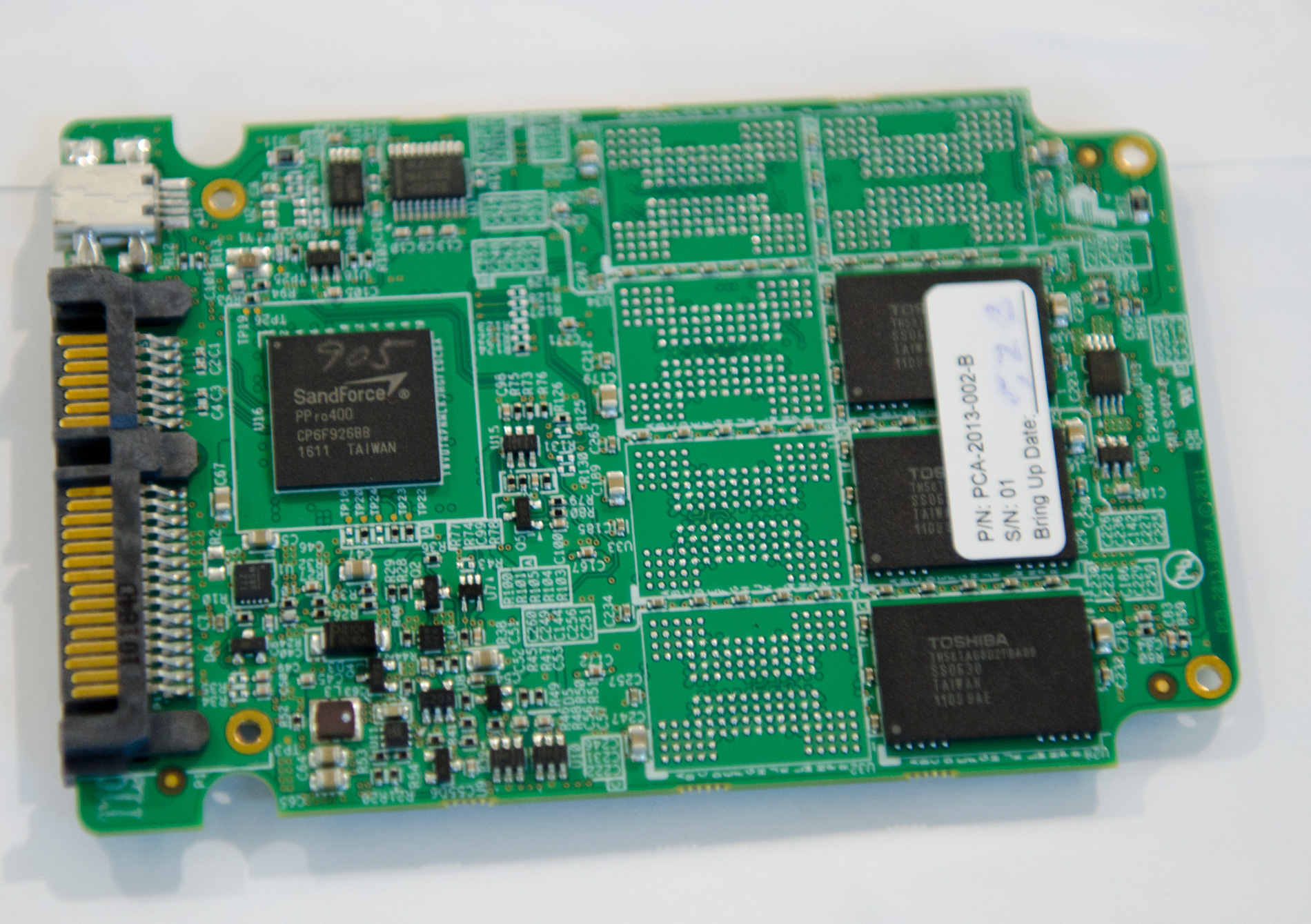
Read More ...
Computex 2011: ASRock Llano, 990FX and Z68 Motherboards
Computex 2011 is officially underway. Although technically it started yesterday with informal meetings at LAX, Ian and I kicked off our plethora of meetings at the show today with ASRock.
ASRock met with us this morning bearing goodies, three new motherboards to be specific.
First up was the A75 Extreme6, ASRock's Socket-FM1 motherboard designed to accept AMD's A-series Llano APUs. A number of leaks have already happened around Llano so if you want more details I'd suggest going to the source at this point. We're working on coverage of the platform but it'll be a little while longer before we can post on it.
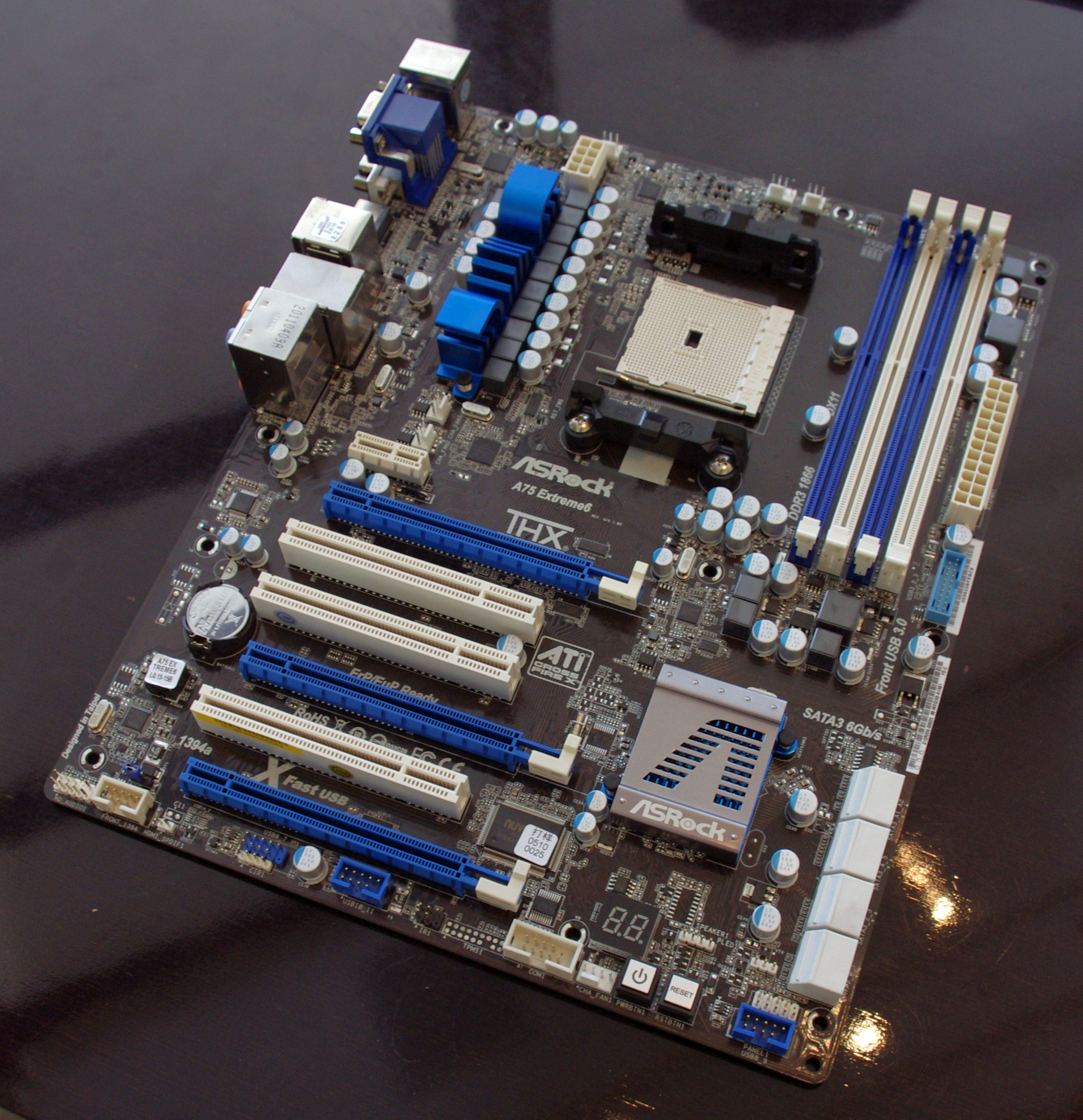
Just above Llano we will have the long awaited Bulldozer CPU. AMD originally wanted to launch Bulldozer at Computex but performance issues with its B0 and B1 stepping chips pushed back the launch. Now we're looking at a late July launch with B2 silicon, but performance today is a big unknown. Apparently the performance of B1 stepping silicon doesn't look too good.
Bulldozer will be mechanically compatible with Socket-AM3 motherboards but AMD will only officially support the CPU on AM3+ motherboards. To differentiate AM3+ from AM3 motherboards AMD is releasing a new chipset: the 9-series. Functionally the 9-series chipset is no different from the 8-series that it replaces; it'll simply be used on AM3+ boards exclusively.
{gallery 1087}
ASRock showed us its high-end 990FX motherboard: the Fatal1ty branded 990FX Professional:
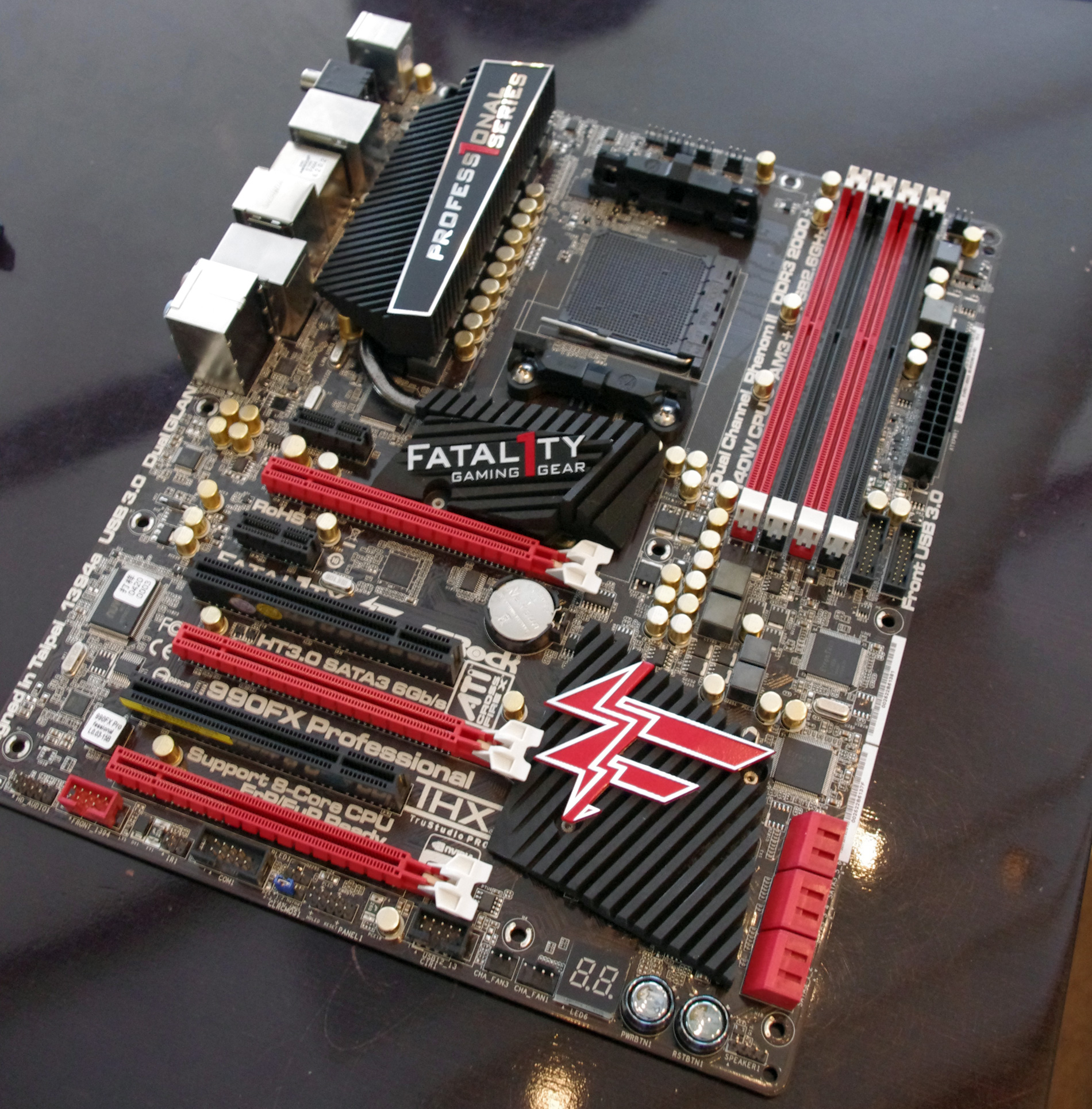
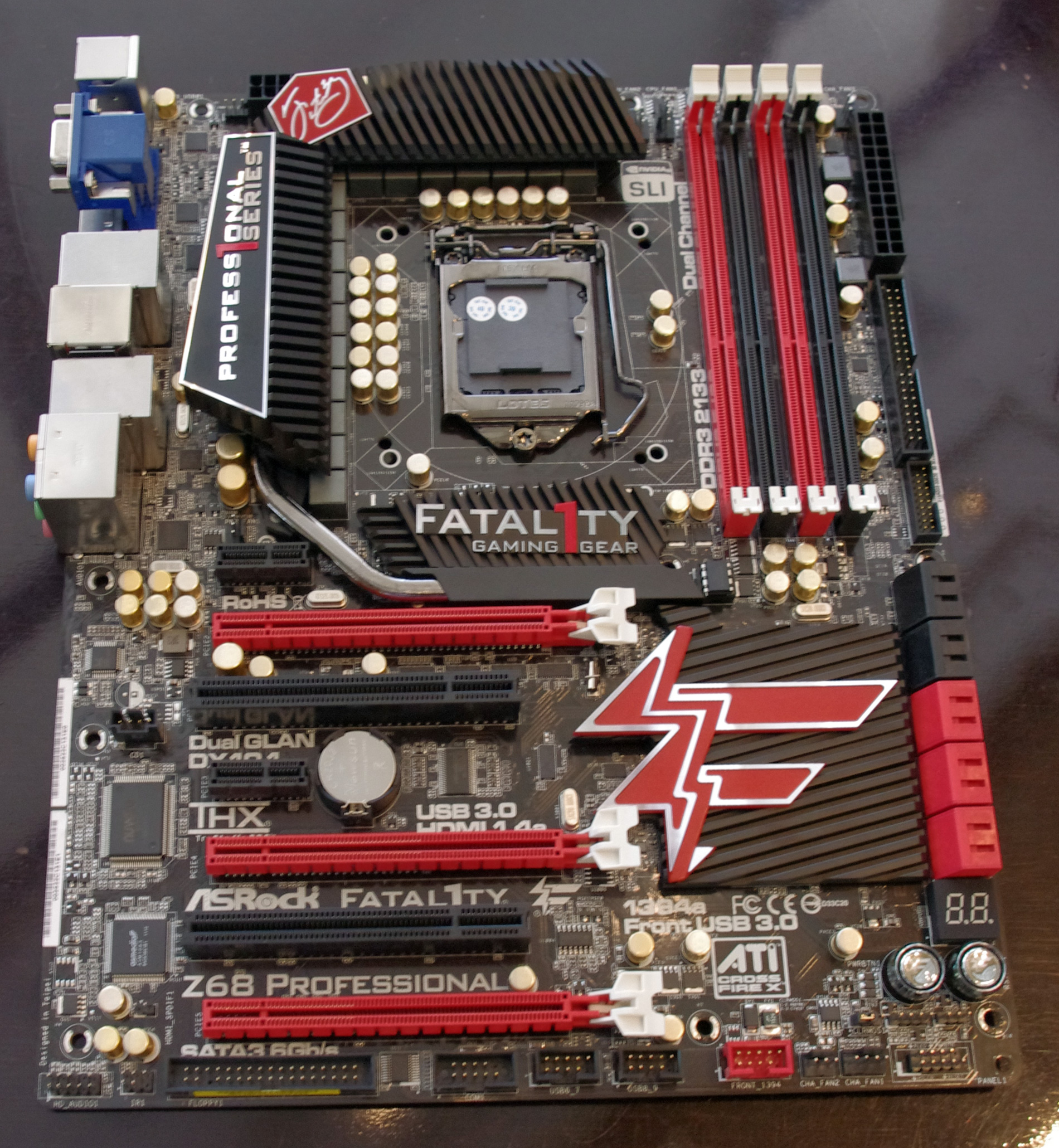
Finally we have ASRock's Z68 Professional motherboard, once again with Fatal1ty branding. At Jonathan Wendel's (Fatal1ty) request, the Z68 Professional includes an IDE port for optical drives and a floppy drive connector as well.
Read More ...
NVIDIA's Kal-El Glowball Shows off Dynamic Lighting & Quad-Core Physics on a Tablet
I've warned both Qualcomm and TI that the danger they have to face in the SoC space going forward isn't just NVIDIA engineering, but NVIDIA marketing. Although too aggressive for my tastes at times, NVIDIA does know how to take a simple product release and turn it into an extremely polished technology launch. Even down to the materials NVIDIA shares with the press, to-date none of its competitors have built such pretty slides that make their way all over the web.
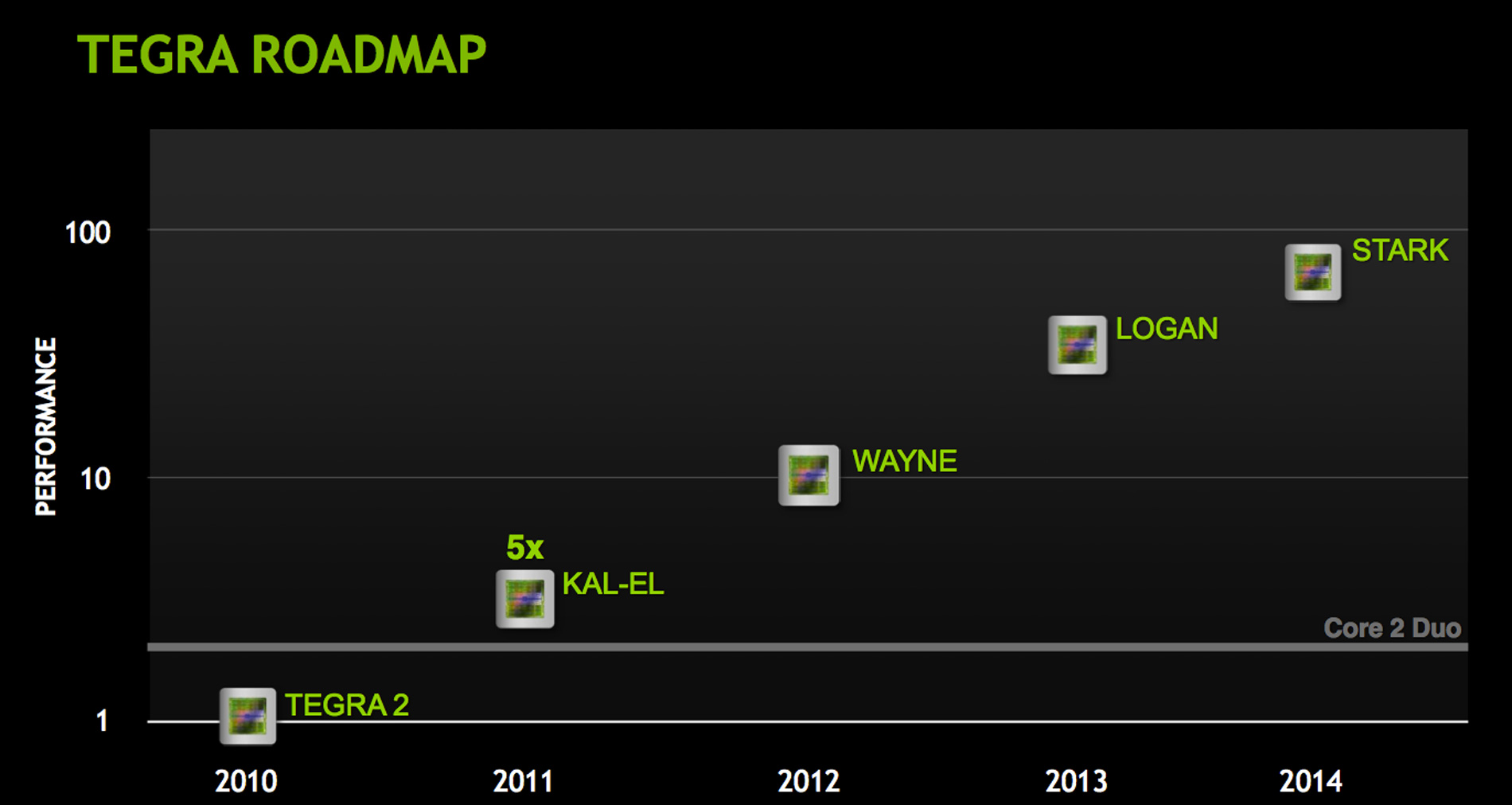
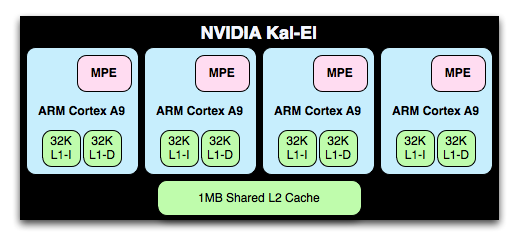
At MWC earlier this year NVIDIA announced its third applications processor, codenamed Kal-El. Kal-El will feature four ARM Cortex A9 cores with a shared 1MB L2 cache and MPE/NEON support (absent from Tegra 2). Kal-El will also fix the video decoder issue we've run into on Tegra 2 and should be able to play all high profile H.264 content with proper OS support. On top of all of that there's a faster GPU (12-core vs. 8-core plus higher throughput per core).
Read More ...
NVIDIA GeForce GTX 560M: High-End Mobile Graphics with Optimus
Our collective wishes have been granted by the fine folks at NVIDIA: you can now buy a notebook with high-end graphics that supports Optimus and thus is capable of offering excellent battery life. NVIDIA is refreshing their GeForce GTX 460M with the 560M. This will be a faster GPU, naturally, using the updated GF116 instead of the 460M's older GF106.

The impending ASUS G74Sx will be powered by the GeForce GTX 560M.
Notebooks using the new chip should be available in the near future, though keep in mind that not all notebooks will support all features. Read on for more details.Read More ...
Computex 2011: NVIDIA Announces Wired 3D Vision Glasses
Technically Computex 2011 doesn’t start for another day, but already companies are announcing new hardware right ahead of the event in order to try to beat the rush. NVIDIA is one of those companies; at Computex they’re announcing their new wired 3D Vision glasses.
As a bit of background, since the introduction of 3D Vision in 2009 the hardware has remained relatively unchanged. NVIDIA launched with their wireless 3D Vision glasses kit at $199; more recently they dropped the price down to $149, but other than a slightly tweaked revision of the glasses offering double the battery life, the glasses themselves haven’t changed. Meanwhile, though wireless glasses are generally going to be the best way to use an active shutter 3D system, it does have a couple of downfalls: there’s only so much cost cutting that can be done, the need to have batteries and USB connectors on-board dictates design to some degree, and $150 objects that are not tied down tend to grow legs and walk away.
As the market for 3D Vision expands, driven by declining prices for the necessary 120Hz LCD monitors, NVIDIA has finally had to deal with these problems, both to keep costs in-line with cheaper monitors and to build a set of glasses suitable for some new markets. The result is that we’ve come full-circle: 3D shutter glasses are now wired once again.
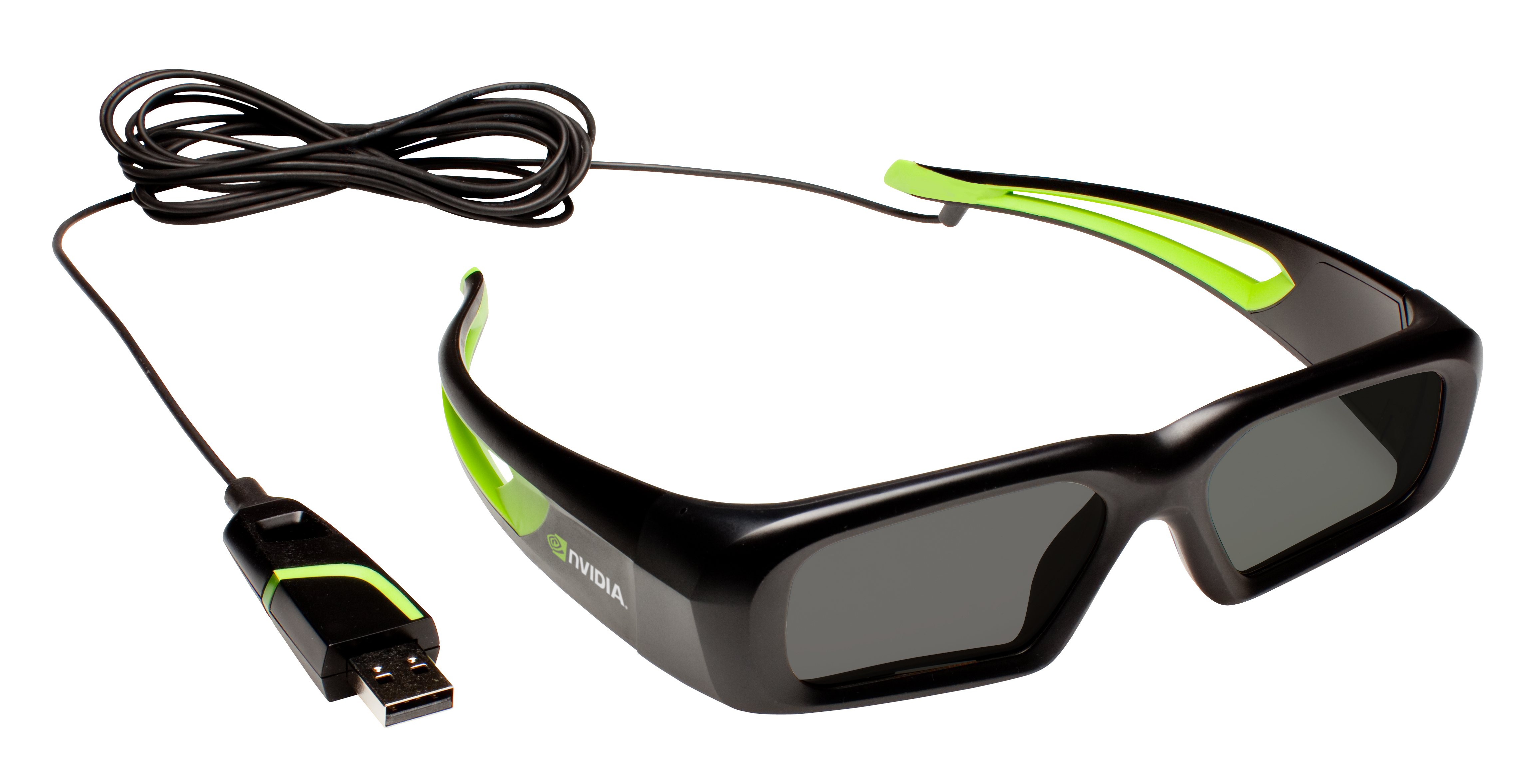
The wired glasses will also be serving as NVIDIA’s first official foray into LAN/cyber-café business. As wireless glasses can’t be easily secured and can be easily stolen, NVIDIA designed and will be pitching the wired glasses as a practical alternative to café owners that want to offer 3D Vision without their investments walking out the door. The wired glasses feature a Kensington lock slot in the USB connector/hub, which means the glasses can be locked down like the rest of a café’s hardware. We wouldn’t venture to guess just how many cafes are actually interested in offering 3D Vision right now, but clearly NVIDIA believes it’s a worthwhile market to chance.
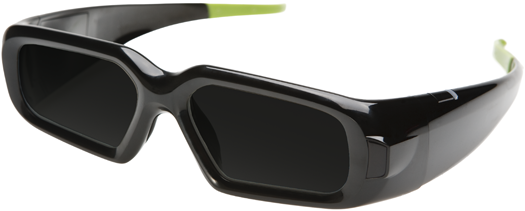
The existing wireless glasses
Wrapping things up, the wired glasses will cost $99 and be shipping in late June from NVIDIA and other retailers. NVIDIA hasn’t talked about any long-term plans for the wired glasses, but we wouldn’t rule out the possibility that they’re going to replace the wireless glasses in monitor bundles that already include glasses. A few manufacturers are building the IR transmitter directly into the monitor’s bezel these days, but for the rest this would be another way to bring down the price of a complete 3D Vision kit.
Read More ...
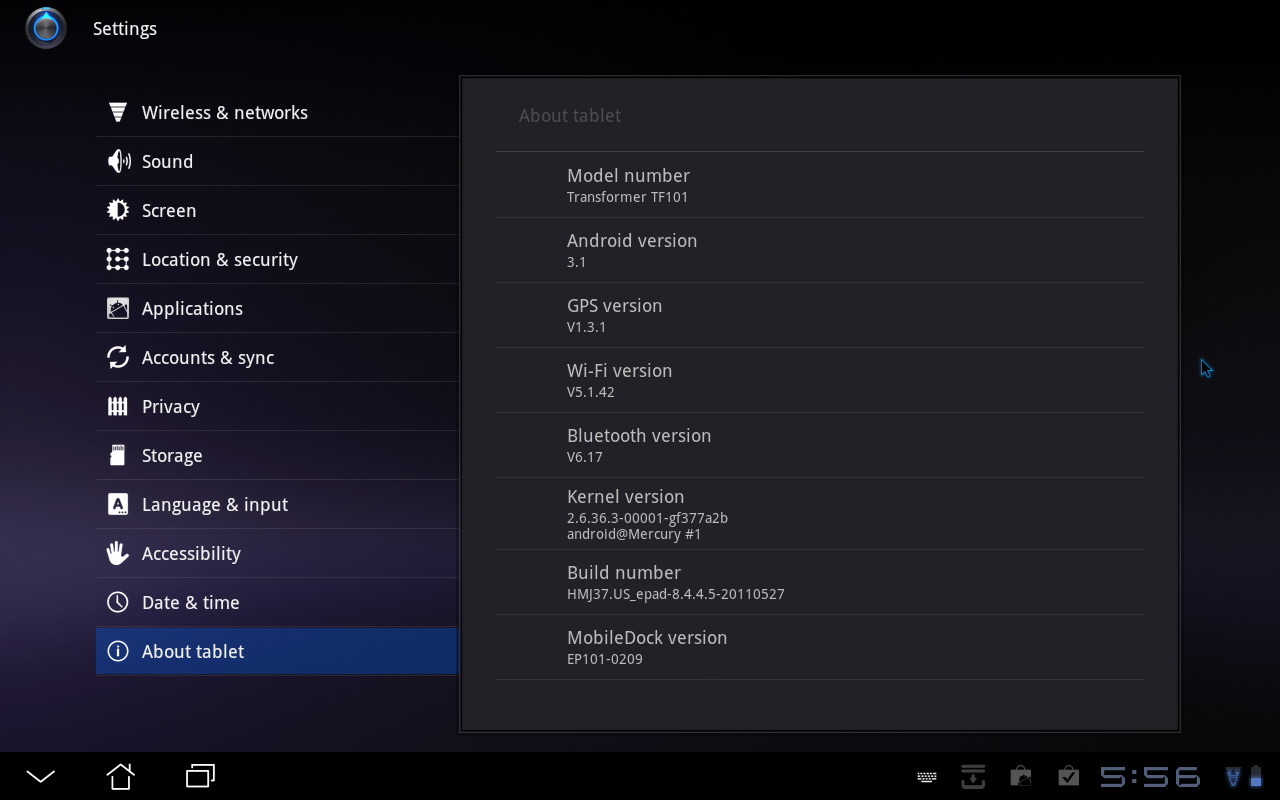
Android 3.1 on the ASUS Eee Pad Transformer
I ran into a number of hiccups in my review of the Eee Pad Transformer last month. Some of the issues were of course due to the early nature of Honeycomb, while others were just problems with ASUS' implementation. Just yesterday ASUS gave me a drop of the OTA (over the air) update that's coming to all Eee Pad users on Monday. This update will give the Eee Pad Android 3.1, the long-awaited point release to Honeycomb that is supposed to fix bugs, improve performance and even enable some new functionality. Xoom owners got access to the update earlier this month thanks to it being Google's launch device for Honeycomb, but ASUS isn't far behind.
Read More ...
Report: 250GB Xbox 360 Console/Kinect Bundle Dropping to $300
Target's website shows a 250GB Xbox 360 console with Kinect bundle for $300
Read More ...
FIC to Introduce Dual-Core Windows 7 Tablet at Computex
Tycoon+ tablet powered by an Intel Atom N550 dual-core processor
Read More ...
Intel Talks USB 3.0, Dramatically Accelerated Mobile Roadmap at Computex
Intel plans to hit 14 nm with Atom by 2014
Read More ...
Apple to Showcase OS X 10.7 "Lion", iOS 5, and iCloud on June 6
Apple is ready to overhaul its OS portfolio
Read More ...
Google Exec: Chrome Will Only Power Notebooks
Will not expand to tablets or merge with Android
Read More ...
Hackers Punish PBS for Wikileaks Story With Intrusion
Fake stories include one that claimed late-rapper Tupac Shakur was discovered to be living
Read More ...
AMD Fusion Emerges as Serious Threat to Intel in the Notebook Mid-Market
Company sold 5 million chips since the Fusion platform's launch at the start of 2011
Read More ...
Australia Says Cyber Threats Worsening, Urges Resource Corporations to Stay Alert
Outgoing Woodside Chief Executive Don Voelte said that no one in particular is to blame, and to stop "picking on the Chinese"
Read More ...
ViewSonic ViewPad 10Pro Runs Windows and Android
Is also one of the first devices powered by Intel's Oak Trail chipset
Read More ...
ARM Hopes to Rule Half of Mobile PCs by 2015
Intel hopes to cling to eroding market position
Read More ...
U.S. Receives First Digital Nuclear Power Plant
The Oconee Nuclear Station will receive digital upgrades on Reactor 1 within the next few weeks
Read More ...
NVIDIA Debuts GeForce GTX 560M, GT 520MX GPUs
NVIDIA launches two new GPUs in Taipei
Read More ...
Reports: Hackers Use Stolen RSA Information to Hack Lockheed Martin
Company claims fighter project schematics and hosted government information were not leaked
Read More ...
ASUS Brings Padfone, UX Ultraportable, MeeGo Notebook to Computex
ASUS brings out the big guns for Computex
Read More ...
Saudi Prince Calls for Lower Oil Prices to Stop Defections to Electrics, Hybrids
Saudi Prince Al-Waleed bin Talal wants oil prices in the $70 to $80/barrel range
Read More ...
NVIDIA Demos Quad-Core "Kal-El" Tablet Processor
NVIDIA's Kal-El features quad CPU cores, and 12 GPU cores
Read More ...
Study: Nuclear Radiation May Affect Gender of Babies
Researchers found that long-term nuclear radiation exposure led to either increased male births or decreased female births
Read More ...
Available Tags:Ivy Bridge , SSD , HDD , OCZ , ASUS , Intel , Ivy Bridge , Ivy Bridge , USB 3.0 , USB , Thunderbolt , Sandy Bridge , Sandy Bridge , Zotac , Motherboards , Notebook , Sandy Bridge , Smartphone , Tablet , Windows , ASRock , Tablet , NVIDIA , GeForce , GTX , NVIDIA , 3D , Android , Xbox , Windows 7 , Windows , Tablet , USB 3.0 , Apple , iOS , Google , Chrome , Wikileaks , AMD , Fusion , ViewSonic , Windows , Android , NVIDIA , GeForce , GTX , Hack , MeeGo , NVIDIA , Tablet ,


No comments:
Post a Comment