

1,000 workers walk out on Nokia after Microsoft announcement
 Nokia has had a day to end all days today, with news that the company announcing it is ditching Symbian in favour of Windows Phone 7 prompting 1,000 of its employees to walk out.
This is according to Finnish newspaper Helsingin Sanomat, which is reporting that workers are protesting with their feet at Nokia's Oulu and Tampere offices.
If the reports are accurate then this equates to a quarter of the workforce based at the two offices.
All change
The news that the company is ditching Symbian does point to major restructural changes in the company - and while the number is unknown, CEO Stephen Elop did confirm there would be worldwide cuts.
While the majority of the workers are said to have used the company's flexi-time system to stage the walkout, it does point to unrest at the news that Nokia is embracing Windows Phone 7.
The company's shares were down by 13 per cent today, and Google had no qualms making light of the Nokia situation, with one of its recruiters tweeting that jobs were available for devs within the company.

 |  |
Read More ...
Exclusive: INQ Cloud Touch to launch in blue variant too
 INQ's forthcoming Cloud Touch handset will be getting a blue makeover according to pictures obtained exclusively by TechRadar.
In a move that does nothing to disprove the theory that INQ's Cloud Touch is designed to be a 'Facebook phone', the new colour scheme seems eerily similar to that of Zuckerberg's creation.
While Facebook has denied it will be creating a 'Facebook phone', it has worked closely with INQ to create the Cloud Touch, which features deep social networking integration using the Social Graph API.
We just need something old and borrowed
We've got confirmation that the INQ Cloud Touch will be coming in both red and white, but this is the first time the blue variant will be shown off.
The new Cloud Touch will be shown off at Mobile World Congress 2011, along with the nascent INQ Cloud Q.
The phone is set to debut in Q2 2011 from The Carphone Warehouse and Best Buy, and will likely be tipped towards the budget end of the smartphone scale.

| |
Read More ...
Sony HDT1000 and HDT500 PVRs announced
 Sony has announced a double helping of PVR goodness this week, with the launch of the SVR-HDT1000 and SVR-HDT500 personal video recorders.
The PVRs have twin Freeview HD tuners built-in so you can record two programmes at once and watch another at either 576p, 720p, 1080i or 1080p picture quality.
Price details
When it comes to hard-drive size, the clue is in the name. The Sony HDT1000 has a massive 1TB at its disposal, while the HDT500 is a still-impressive 500GB.
There are also two USB 2.0 ports so you can use one to view photos, watch movies and listen to music – as long as it's in the JPEG, MPEG or JPEG format – and the other to expand the capacity of the PVRs with an external hard drive.
There's no UK release date for the HDT1000 and HDT500 PVRs as of yet (Play says they will be out in May) but price-wise you are looking at £330 for the HDT500 and £400 for the HDT1000.

| |
Read More ...
Samsung Galaxy S2, HTC Desire HD 2, Desire 2, Wildfire 2 specs leak
 Online retailer Expansys has posted full spec sheets supposedly for the HTC Desire HD2, HTC Desire 2, HTC Wildfire 2 and Samsung Galaxy S2 ahead of Mobile World Congress.
 Quite a spec haul there, but we wouldn't necessarily put money on these being the real deal.
For starters, we're fairly convinced that the HTC Wildfire and HTC Desire refreshes will be named the HTC Wildfire S and HTC Desire S, yet the retailer has them down with 2 as the suffix.
Core suspicions
Still, some sound about right; the Samsung Galaxy S2, for example, is certainly set to be a dual-core behemoth – but we're incredibly sceptical about the possibility of a dual-core HTC Desire HD2 being revealed any time soon.
So, basically, peruse these specifications at your leisure but don't be surprised if they turn out to be as real as a herd of unicorns grazing in the desert.
We'll bring you all the bona fide news of the Samsung Galaxy S2 and all the soon-to-be-announced HTC handsets from Mobile World Congress next week.

| |
Read More ...
Samsung Galaxy Tab 2: what you need to know
 The Samsung Galaxy Tab was the first real rival to Apple's iPad, so it's fitting that there'll be a Galaxy Tab 2 to take on the iPad 2.
Nothing has been officially released yet, but that hasn't stopped the internet from reading tea-leaves, looking for omens and spotting the odd accidentally leaked marketing slide. So what do we know about the Samsung Galaxy Tab 2 UK release date, specifications and price?
The Samsung Galaxy Tab 2 specification includes a dual-core processor
This one's a no-brainer: Samsung's mobile boss JK Shin said at CES: "in terms of dual-core applications, we already have a program, and next month at Mobile World Congress we will unveil it". Expect an official reveal on February the 13th.
The Galaxy Tab 2 probably has a 1.2GHz Orion processor
Mobile Fun appears to have leaked the Galaxy S2 smartphone specs, which give us a pretty good idea of the Galaxy Tab 2 specs: the site details a "powerful dual-core 1.2GHz Samsung Orion processor", Bluetooth 3.0, a rear-facing 8MP camera and a front-facing 1.3MP one. That's expected in March; the Galaxy Tab 2 UK release date is unlikely to be that early, unfortunately.
The leaked Samsung Galaxy Tab 2 specifications may be fake
Far be it for us to doubt news reports of the "Samsung Galaxy Tab 2 Specifications Britney Spears Katy Perry" variety, but they do tend to base their reports on the specifications typed by a 17-year-old called HOTTESTGADGET on a YouTube video that doesn't contain any actual information.
Anyone expecting the reported 3D, super AMOLED display with 2048x1200 resolution and a free horse is going to be gutted when the Tab 2 comes without a horse and with a plain old TFT LCD.
The Samsung Galaxy Tab 2 will run Android 3.0
Samsung didn't wait for an Android-optimised version of Android when it sold the original Galaxy Tab, so it's possible that the Galaxy Tab 2 software will be Android 2.3 Gingerbread if Honeycomb isn't ready in time.
But run Honeycomb it will: even Samsung would have to admit that Android 2.3 looks positively clunky next to the smoother, sexier Android 3.0 Honeycomb. By a happy coincidence Honeycomb expects to see a dual-core processor. Did we mention that the Samsung Galaxy Tab 2 specs include a dual core processor? We love it when a plan comes together.
The Galaxy Tab 2 specs might include a ten-inch screen
This one's a rumour, but it's a persistent one: Android 3.0 supports bigger resolutions and therefore bigger displays, and Samsung's rumoured to be taking advantage of that.
There's also a chance of a seven inch version too - so will we see two separate Samsung Galaxy Tab 2 models?
You'll be able to get your Samsung Galaxy Tab 2 from Vodafone
Was this a leak or just PR people linking to something interesting? On its official Facebook page Vodafone linked to an article speculating about an Android 3.0 Galaxy Tab 2. Let's face it, though: given Vodafone currently sells the Galaxy Tab, the odds on it selling the Galaxy Tab 2 are hardly dramatic.

| |
Read More ...
Review: Palit GeForce GTX 560 Ti Sonic
 Affordable and factory overclocked, Palit's GeForce GTX 560 Ti Sonic could be the ideal iteration of Nvidia's latest mid-range Fermi.
The GeForce GTX 560 Ti caused a bit of a stir last month when it first hit our test benches. We were, and still are, fans of the GTX 460 and were hoping for more of the same graphical goodness in this next generation.
Unfortunately though it doesn't hold as special a place in our heart as the GTX 460 though, but that's actually nothing to do with the card itself. It's still a speedy little daemon, and it's still coming in at the price/performance sweetspot of £200.
The issue here is that the market has moved onwards since the inception of the GTX 460, or more specifically the competition has moved on.
There was nothing to touch the original mid-range Fermi when it came out, only Nvidia cards were competing. Now the spectre of the Radeon HD 6950, with its dual-BIOS, almost risk-free, unlocking, looms large over the field.
One thing the GF 114 GPU can do though is overclock, and is another factory-assured overclocked card to give that chip a shot in the arm.

As you can tell from the benchmark results the Palit GTX 560 Ti Sonic is faster than its reference-designed brethren, but lacks the raw power of the Zotac GTX 560 Ti AMP! edition's extra 50MHz clock speed.
The Zotac card represents the same boost over the Palit card as that Sonic edition does over the reference design.
What isn't shown here though is the performance of the competing Radeon cards, especially at the high-end, tessellation-heavy DirectX 11 benchmarks. The Nvidia and AMD cards trade blows across most of the suite, but the dual-tessellation engines of the Cayman GPU gives it the edge in the likes of Heaven 2.0 and with Metro 2033's tessellated character models.
DirectX 11 tessellation performance

DirectX 11 gaming performance


One of the things that Palit brings to the overclocking market is the ability to not only drop superior cooling onto their cards, thanks to the scale of its operation it can redesign the reference PCB and produce its own versions of the cards rather than relying on rebadged, bin-sorted reference cards.
The first thing you'll notice about the Palit GeForce GTX 560 Ti Sonic is the fact that it is so very teeny-tiny.
Compared to the increased scale of Zotac's GeForce GTX 560 Ti AMP! card's redesigned PCB it looks for all the world like a low-end card with an unnecessary cooler strapped to it.
It's still a dual-slot card, but is significantly shorter than even the reference design. Still though Palit has managed to fit a dual-fan cooler onto it to give that stressed GPU some much-needed chilling.
It does come with a pretty healthy overclock on it too. Compared to the 822MHz core clock of the reference design you're looking at 900MHz straight out of the box.
That's not as crazy as the 128MHz boost you get on the Zotac GeForce GTX 560 Ti AMP! but it's still a pretty hefty performance hike.
That's born out by the increased performance in the benchmark tests.
You're looking at around a 10% increase on average across the suite, and considering the GTX 560 Ti Sonic is less than a tenner more expensive than the £199 MSRP of the reference designed cards that's pretty good.
We were hoping that the redesigned PCB and improved cooling solution might enable us to reach the sort of speeds the Zotac AMP! edition is capable of out of the box, unfortunately though the GTX 560 Ti Sonic while operates at 950MHz it is a trifle flaky.
That's a shame for Palit, but it does mean the Zotac card still rules the roost as the best example of the GTX 560 Ti, and almost justifies the price premium it is charging for the privilege.
The Radeon HD 6950 is still a fly in the GTX 560 Ti's overclocked ointment, and it's all down to the BIOS flash that gives the reference Radeon's a transformation into fully fledged HD 6970s.
I've got a feeling AMD might be starting to phase out the dual-BIOS on the Cayman cards to call a halt to the BIOS flashing, but for the moment it's still very much a possibility.
And one hell of a selling point.
We liked
The size of the Palit GeForce GTX 560 Ti Sonic is also a selling point. For those with a paucity of space in their chassis this reduced footprint could be a godsend, and should make a good base for a portable LAN rig too.
It's also a very competitive price for an overclocked version. If you can't afford to stretch for the HD 6950 this Sonic edition is a good bet.
We disliked
It was a bit of a disappointment that we couldn't push it to what seems to be the GTX 560 Ti's maximum of 950MHz, but realistically that's not a huge issue considering the relative price.
Final word
For just a little more than the price of the vanilla GTX 560 Ti the Palit Sonic edition represents good value and excellent performance. That said for another tenner you can pick up a Radeon HD 6950 that's ripe for a good ol' flashing.
Related Links

| |
Read More ...
Scientists track world's data at 295 exabytes
 In this information age, we already know there's a lot of data hanging around – but scientists have now quantified this, saying that until 2007 there were 295 exabytes of data.
 An exabyte is a billion gigabytes and 295 of them equates to more data than it's worth comprehending.
The figure will only have increased since the '07 cut-off date, given that the researchers reckon the storage capacity of the world's computers doubles every month.
Information overload
Researchers Martin Hilbert and Priscila Lopez of the University of Southern California came up with the figure by estimating the amount of information held in books, PCs, DVDs, micro chips, X-ray films and paper adverts, among other things,
The survey looked at the years between 1986 and 2007, and pinpoints 2002 as the year that worldwide digital storage became greater than analog storage.
According to the survey, 94 per cent of memory was in digital form by 2007 but even these great reams of digital memory are dwarfed by the information stored in the DNA of a single human.

| |
Read More ...
Nokia hints at new tablet strategy with Microsoft
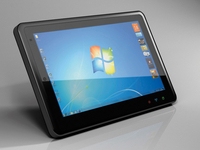 Nokia has hinted that tablets could play a big part in its future by confirming it is free to pursue its own strategy in that area.
At the recent investor press conference to announce the tie-up with Windows Phone 7, Nokia CEO Stephen Elop confirmed that Nokia has some tablet plans in the works:
"When it comes to this platform, we reserve the right to introduce tablets on other platforms.
"Whether that be internal projects or we could take advantage of what Microsoft is innovating with, we've nothing to announce on that today."
MeeGo gone?
Elop did downplay the chance of that being a MeeGo tablet though, as when questioned about the point of launching a tablet with a dead OS, he said 'You've answered your own question there."
It seems that MeeGo is going to transition into an 'exploratory tool' for Microsoft, with Elop stating that it will be used to 'anticipate the next disruption' in the tablet or smartphone markets.
However, he did also confirm that there will still be a MeeGo product shipping this year, which is likely to be a netbook given what we saw at CES.

| |
Read More ...
Hands on: INQ Cloud Touch review
 If you were studying the budget end of the UK feature phone market a couple of years ago, you'd have seen the INQ Chat 3G and INQ Mini 3G make an appearance, with much more promised.
Well, fast forward to now and we've finally got the next level of INQ device - an Android 2.2-powered smartphone called the INQ Cloud Touch.
The new phone is an innovative beast - with a very light plastic chassis you could call it a cheap-feeling device, but with the cost likely to be towards the lower end of the scale, that would be a fair assessment.
The 3.5-inch HVGA screen isn't much to write home about either, with the lightness of the phone making it a little bit of a hollow experience wiping across the display - but then again, with the price range in mind, it's to be expected.

The rear of the phone sports a 5MP camera without a flash - it features a decent level of autofocus though, and will likely do for the majority of the photos you'll be posting onto Facebook directly from the camera application.

Another little feature we like is the addition of the information key - simply give it a press within easy reach of the thumb and it will show you all kinds of useful information.
From turning Wi-Fi on and off to checking the time or weather, we're big fans of physical keys and this delivers a boatload of info.

The rest of the phone is pretty standard: a multitude of colours will be available at launch, and if you can see past the fact the plastic chassis has a semi 'my first phone' feel, you'll be impressed with the construction.
But the design of the device isn't what INQ thinks will make it big: it's the innovative overlay it's put together with Facebook.

Rather that just offering a set of widgets to help you log in to the social service, it's a visual collection of profile pictures and uploaded snaps drifting across the page, as well as thumbnails of links and videos too.
At the top of the screen is a customisable set of large widgets to let you decide what to do with the Facebook experience - from Places to certain friends, you can choose what the main function of the INQ Cloud Touch.

INQ has worked closely with Facebook to create the Cloud Touch and Cloud Q devices, and part of that is the use of the social graph API.
This means that your five most commonly looked at friends will be ported directly across to their own page on your phone, where you can message, poke and interact with them as you like.

The Facebook integration means you don't have to jump out to another application to get things moving - it's a neat idea and in our first play it worked as fast as we could expect, with an easy skip to the messaging screen from a contact page.
However, it will be interesting to note whether the INQ Cloud Touch can continue that performance when reams of Facebook data is streaming in - the Chat 3G nearly fell apart when you decided to update your feeds.

INQ Type is another new feature for the device, allowing you to simply start typing and then use it to save to a contact, search Google with or share to a social network. INQ was really talking this feature up to us in the demo, and while it is pretty cool, it's no more impressive than the usual Google search bar on most Android phones.

We were, however, impressed by the Spotify media integration direct from the side media key - it looks and works in exactly the same way as the Spotify application on other Android devices, except the functionality to search and stream music via the cloud doesn't work.

You can add a Premium subscription to alter this, but the main media player is still pretty good - large icons are easy to press and don't suffer from slowdown, and playlist management on your computer via your phone is a nice touch too.
The rest of the device is a pretty much just basic Android - the internet browser didn't do much for us at the lower HVGA resolution, although it was pretty nippy (although we didn't get to test if Flash video was supported - we don't think it is though).

Android 2.2 is a pretty good operating system in its own right, despite all the customisation - things like pinching in the home screen to see an exploded view of all your displays at once is still a cool feature,

Plus we love the lock screen - break through the 'membrane' with the padlock to open the phone, or use the INQ Type or camera icons in the same way to instantly access those applications.

The INQ Cloud Touch looks and feels pretty refreshing when you play with it for the first time - the Facebook overlay is likely to impress even the most cynical social networker (although we were disappointed to hear that Twitter integration isn't going to be coming too).
The Spotify integration might be a boon - it's better than the normal Android media browser, although it won't be long before you're wistfully staring at the Premium subscription and working out whether it will be worth the cash.
But a note of caution: this refreshing feeling is something we experienced before with the INQ Chat and Mini 3G devices, and they turned out to be a really poor handset in real life, with awful processors unable to deal with the mountain of data coming their way.

But with a real emphasis on Wi-Fi connectivity, coupled with an upgrade to the more powerful and less battery-hungry Gingerbread OS in the future, we're a little bit more hopeful than we were with previous devices - we're just looking forward to giving it a good going over in our proper INQ Cloud Touch review.
Oh, and we also got a chance to take a quick look at the INQ Cloud Q as well - a QWERTY device with a 2.6-inch touchscreen too.

We didn't get to play with it properly, as it was very early software running, but the overall feel is a little bit more premium and the keys felt nice under the fingers - we'll look to get our hands properly on that one soon too.

If you want to see a video of the phone in action, check out the one we've popped in below from T3 best tech videos for a deep look through the myriad screens and options.

| |
Read More ...
INQ Cloud Touch offers Facebook-powered Android
 INQ has announced a new Android device with a new Facebook overlay and an automatic connection to Spotify: the INQ Cloud Touch.
With a 3.5-inch HVGA capacitive screen on top of Android 2.2, the Cloud Touch also offers a 5MP AF camera and 4GB microSD card.
However, it only comes with a 600MHz processor from Qualcomm, as well as a meagre 4MB of internal memory - perhaps to be expected given it's going to be aimed more at the budget end of the market.
More exciting is the new overlay - from an innovative drag-to-unlock action to a complete redesign of the Android home screen, the INQ Cloud Touch is designed to stand out a little from the smartphone crowd.
Facing up to Facebook
Facebook integration is rife through the phone, with a large, customisable widget and a chance to choose your five favourite friends to 'properly' follow by using Facebook's social graph API.
Facebook Single Sign On is activated across the phones and people can check in to their favourite shops, restaurants and clubs with Facebook Places, which is also active on the homescreen. Facebook Events fully integrates with the Google Calendar on the device too, making it a one-stop Facebook spot.
The Cloud Touch is also the first phone to feature a non-premium version of Spotify Mobile. This means that you can access and manage your playlists on the device as you would with the computer, but unless you pay the Premium subscription fee there's no access to streamed music.
We're itching to know the INQ Cloud Touch UK price, as this could be a real contender at the budget end of the smartphone market when it launches at The Carphone Warehouse and Best Buy.
At least we get a UK release date: the UK will get the INQ Cloud Touch first in April.
Also announced is the INQ Cloud Q - a QWERTY device with a 2.6-inch touchscreen built in. It runs the same Facebook and Spotify overlay, but with a Q3 UK release date, specs are pretty sparse at this point.
If you want to see more on this phone, check out our hands on: INQ Cloud Touch review now and work out whether light and plastic chassis are something you can learn to love.

| |
Read More ...
Nokia: we want our competitors to succeed
 Nokia has confirmed that its relationship with Microsoft is non-exclusive, but stated that it wants the likes of Samsung and HTC to prosper in the market too.
At the investor conference TechRadar was invited down to, Stephen Elop, Nokia's new CEO, said he hoped the announcement would help see a boost in sales across all devices:
"Our number one priority now is the evolution of the [Windows Phone 7] ecosystem - and that includes work done by our competitors.
"We see this as a good thing as it will help Windows Phone 7 thrive."
Android attack
When quizzed about the possibility of Nokia joining the Android platform, Elop said that explorations with Google had taken place, and that Android has some 'attractive elements'.
"We spent time with our colleagues at Google [over the possibility of bringing Android on board].
"It's an attractive ecosystem, but we have a fundamental belief that it would have been difficult to differentiate ourselves within it.
"The value is going to become commoditised as a number of devices rush in, and eventually that's going to push all the value to Google.
"The Microsoft option gave us the best opportunity to fight with a new ecosystem, and that allows us to offer customers the best choice."

| |
Read More ...
Nokia: we want our competitors to succeed
Nokia has confirmed that its relationship with Microsoft is non-exclusive, but stated that it wants the likes of Samsung and HTC to prosper in the market too.At the investor conference TechRadar was invited down to, Stephen Elop, Nokia's new CEO, said he hoped the announcement would help see a boost in sales across all devices:
"Our number one priority now is the evolution of the [Windows Phone 7] ecosystem - and that includes work done by our competitors.
"We see this as a good thing as it will help Windows Phone 7 thrive."
Android attack
When quizzed about the possibility of Nokia joining the Android platform, Elop said that explorations with Google had taken place, and that Android has some 'attractive elements'.
"We spent time with our colleagues at Google [over the possibility of bringing Android on board].
"It's an attractive ecosystem, but we have a fundamental belief that it would have been difficult to differentiate ourselves within it.
"The value is going to become commoditised as a number of devices rush in, and eventually that's going to push all the value to Google.
"The Microsoft option gave us the best opportunity to fight with a new ecosystem, and that allows us to offer customers the best choice."

| |
Read More ...
Facebook Pages get redesign
 Facebook has announced upgrades to its Facebook Pages including a redesign in line with the recent profile update.
Facebook Pages can now display recent photos along the top of the page, as well as allowing admins to highlight who is running the Page.
Meanwhile, tabs have been moved to a column under the Page profile picture.
One nifty new move is to allow Pages to post comments and 'like' other Pages as their own Page, rather than as the person managing the page.
That's confusing
For example, TechRadar could now comment on another company's Facebook Page as TechRadar; this wasn't previously possible.
Other improvements include the filtering technology on the Page Wall, which will display the most interesting posts first (presumably based on number of comments and 'likes').
Developers may also be pleased to hear that the Pages now support iframe based tabs for more design flexibility, while Page owners may enjoy opting to receive email notifications when people post comments on the Page.
Within four weeks, the new format will be rolled out to all Pages on Facebook; personal profiles won't be affected.

| |
Read More ...
Review: Sapphire Radeon HD 5750
 The HD 5750 is not a rampaging powerhouse. It can run games at 1,680 x1,050, but don't expect searing frame rates, especially when anti-aliasing and anisotropic filtering are on the cards.
Moreover, DX11 effects, such as Tessellation and Multi-thread Rendering, require the kind of resource budgets the 5750 simply can't raise. With its narrow memory bus and a GPU that pales in comparison to AMD's other offerings, it struggles in these tests.
Market changes mean that things have got a little better for the HD 5750, however. Just a month or so back, it was priced similarly to Nvidia's GTS 450, the raw grunt of which it simply can't match.
It's come down a bit in price now though, and can be found for around £15 cheaper than the GTS 450, and its bigger brother, the HD 5770. But still that £15 makes the difference between decent and average gaming at 1,680 x 1,050.
At 1,680 x 1,050, with 4x AA, the HD 5750 runs DX10 games at reasonable speeds of 30 to 40fps, and even has a tickle at competence when cranked up to 1,920 x 1,080.
Throw some DX11 tessellation on top, though, and it struggles to even produce playable frame rates.
With the HD 5750, you can forget any dreams of DX11 gaming on the cheap; the API's routines are simply too demanding on hardware to give this card a shot at providing smooth playability.
More powerful mid-range cards struggle to produce acceptable speeds in this environment, and sadly for the 5750, it isn't one of those. It handles older DX10 games okay – as evidenced by its 1,680 x 1,050 performance in Far Cry 2 – but anything newer is a chugfest.
No place
Part of the problem is its pricing. Given that much better cards are just a little more expensive, the poor little thing doesn't really have a place in the world, and the only way we'd condone owning one is if it came in an off-the-peg PC.
We simply cannot recommend that you part with £85 for one, when £15 more gets you decent midrange performance with the HD 5770, or Nvidia's GTS 450, both of which are considerably more competent players at 1,680 x 1,050.
Likewise, if you want a media centre card, there are way cheaper options available – such as AMD's own HD 5570, examples of which can be found for £50. Or, if you fancy something a little newer and gruntier, there's also Nvidia's Fermi-based GT 430, for around £55.
The HD 5750 is too ambitious in price to be a cheap-and-cheerful media centre card, too weedy to perform competently in DX11 and completely overshadowed by more powerful cards that are just a shade more expensive.
Related Links

| |
Read More ...
Review: PNY GeForce GTS 450 1GB
 The GTS 450 offers mainstream gaming at an affordable price-point. This tiny powerhouse (well, it's still dual-width, but pleasingly short) is capable of feats beyond its £100 price tag.
 What's more, in SLI, you'll see massive performance gains of 80 to 90 per cent, making the dual-card upgrade path a realistic and rewarding option for budget systems.
It bears architectural similarities to its bigger brother, the GTS 460, but with half the memory bandwidth and half the CUDA cores. What's impressive is that it doesn't offer half the performance in DX10 games, which it's perfectly happy with.
Start throwing DX11 at it though, and it begins to run out of puff in fairly short order. The market has moved around the GTS 450. Initially priced against AMD's HD 5750 (which it beats into a cocked hat), price-drops on the AMD side mean it now squares off directly with the HD 5770. Now that's a tough fight.
DX10 performance at the mainstream resolution of 1680 x 1050 is where the GTS 450 really excels. It starts to run low on poke when you up the ante to 1,920 x 1,080, and under the long shadow of DX11, it really feels the pinch.
If you want to get the most out of the best and brightest new games, you're going to need a bigger boat.
We've been consistently impressed with the GTS 450 since it launched. A combination of pricing, midrange performance and the current ease-and-excellence of SLI dual-card setups has made it an attractive prospect all-round for gaming on a budget.
Gaming excellence
DirectX 10 gaming is really where it excels, though. When you start adding DX11 routines such as tessellation into the mix, it feels the pressure, and performance drops as a result.
All our tests were run with 4x AA applied, both at 1,680 x 1,050 and 1,920 x 1,080, which the GTS 450 was quite happy with in DX10. Dropping this improves DX11 performance, but not by an awful amount.
What's more, AMD price drops have put it slap-bang beside the HD 5770. There's really not a lot to choose between them. And thanks to price drops for the GTX 460, it's becoming harder to call the GTS 450 the mainstream card of choice.
Inexpensive examples of the 1GB GTX 460 can be had for just £30 more than the standard GTS 450, and it's safe to say that the former is way more than £30 more powerful.
The GTS 450's position, then, is weakening over time. It struggles with DX11, making it a poor choice for future-proofing, and price drops from the competition – both friend and foe – mean that it's not quite the bargain powerhouse it once was.
Related Links

| |
Read More ...
Rumour: Apple developing budget iPhone 5
 Apple could be developing a budget iPhone in order to ward off competition from Google Android handsets.
A prototype version of a smaller, cheaper Apple handset than the iPhone 4 is said to exist, although this is no guarantee such an iPhone will ever make it to market.
The mysterious little iPhone is apparently a third smaller than the iPhone 4, with no home button on the front of the handset, which certainly sits well with rumours that Apple is aiming to do away with the button on all iOS devices.
iPhone nano
The person who claims to have seen the prototype device says that Apple has considered selling it at around $200 (about £130); you can currently get an iPhone 4 for around that price, but you'll be locked in to an expensive two-year contract for your trouble.
Another price cutting measure is to take advantage of drops in component pricing. The new budget iPhone could use parts currently used in the iPhone 4 – processor, display etc. – leaving new, pricier elements to the as-yet unannounced 'big' iPhone 5.
Apple for the people
The reasoning behind Apple's potential downmarket move is to widen the handset's appeal and combat the effects of Android, which currently offers a huge range of price points.
A lower-cost iPhone could also see Apple get a foothold in the huge Chinese and Indian markets where price is a real factor.
Although very few people in the company know of the project, Bloomberg's source says that Apple was aiming to reveal the budget iPhone in the summer.
Could this mean two new iPhones this year? Be still our beating hearts.

| |
Read More ...
Review: XFX Radeon HD 5770
 AMD's pokey little mid ranger, the HD 5770, has been around for some time now. AMD is in the process of refreshing its range with the new 6-series cards, so we have to ask: is there still a place in the world for this little fellow?
 The answer is a resounding yes. At £100, the 5770 offers pretty decent value for money. And while this example from XFX trades HDMI for DisplayPort and a single DVI-D connection to keep the costs down, it's also a more elegant solution than most 5770s due to its single-slot nature and compact heatsink.
The 5770 always did run cool and quiet – so who needs a chunky lump of copper on there taking up space and weight?
When a card is this cheap, the upgrade path that Crossfire represents is an option too. Priced to compete with Nvidia's GTS 450, can it match it in the performance stakes?
On a smaller scale to AMD's beefier cards, the 5770 demonstrates the company's ability to build GPUs which tail off less, performance-wise, than Nvidia's, when it comes to rising resolutions in DX11. Not that you'd want to crank your games past 1,680 x 1,050 with the HD 5770.
But broadly speaking, it trades win-some-lose-some blows with Nvidia's GTS 450, depending on the game in question. If you have £100 in your pocket and you're desperate for a competent midrange card, it comes down to this choice: the GTS 450 or the HD 5770.
There's really very little to choose between them, as they take turns outperforming each other, depending upon which game you run. So which way do you turn? There's only one answer, and it's really another question: what else does the card do?
Multi-screen
The HD 5770 can utilise AMD's EyeFinity multi-screen technology. Is that any use to you? Do you have three panels on your desk? Let's be honest, most people don't.
Then there's the DisplayPort; handy for HD TVs. If you're combining media consumption with gaming potential, the HD 5770 isn't a bad choice. All that said, most people, we suspect, would choose on brand loyalty.
If you're a fan of their cards, with that elegant architecture, cooler temperatures and quieter operation, it'd be hard to say no to the HD 5770.
However, AMD is right in the middle of a range-refresh with its 6-series cards, and you can bet your boots that there'll be a direct replacement for the HD 5770 along soon enough.
Whether that's worth waiting for is anybody's guess, but in the meantime, the 5770 does the business if you don't give it too much real-estate to tool around in.
Related Links

| |
Read More ...
Review: MSI GeForce GTX 470 Twin Frozr II
 As with every generation of cards, the flagship sets sail before the hanky-waving crowds, and the slimmed down versions with slightly less capable GPUs follow in their wake. The GTX 470 came hot on the heels of the GTX 480, and with only marginally reduced architecture.
 It first launched at £290, in what seemed like a direct attack on AMD's excellent HD 5870. That's proper, high-end, enthusiast pricing, and you'd expect pretty hefty performance for that kind of outlay. But price cuts happen, and never more explosively than with the GTX 470.
While you can plump for enhanced, 1.5GB versions with higher clockspeeds, this overclocked model from MSI offers sterling performance for just a shade over £200. Incredible!
To put things into perspective, that's almost a ton cheaper than its May launch price which, at this present moment, puts it right in the ring with ATI's new HD 6870, and makes it a much more attractive upper-mid range price prospect.
Under DX11, the GTX 470 happily trades blows with AMD's newer (and similarly priced) HD 6870, and comes away with a few more points under its belt.
It's an absolute monster in the DX10 stakes, happily cracking out awesome frame rates across the board, and it's happy as Larry at 1,920 x 1,080.
Price performer
If the GTX 470 was still squatting at £290, it would be no kind of contender. Competition breeds success, of course, but success also breeds competition, and this card competes – extremely hard – on price.
It's easily the most all-round powerful model in our ten-card test, handling DX10 awesomely and DX11 well, and it's now price-matched with AMD's latest upper-mid range card… which it outperformed in most games in our tests.
There's also the fact that you can actually pick up vanilla versions of the GTX 470 for far less than the cost of this overclocked card. We found stock GTX 470s for as little as £175 and if you're seriously considering plumping for a 1GB GTX 460 – and hey, who wouldn't? – we'd actually ask you to think very hard about investing an extra £35 for one of these instead.
It's not a great premium, when you consider the performance increase you're getting. In all honesty, the GTX 470 is closer to high-end than midrange, which makes it an enormously attractive prospect.
But if you do buy one, make sure you've got a nice, free-flowing chassis, because this fellow can get a little hot under the collar.
Related Links

| |
Read More ...
Review: HIS Radeon HD 6850
 Take any card by either manufacturer and benchmark it next to its direct competitor from the other camp and there's at least one very clear conclusion to draw. Nvidia has the grunt, while AMD has the elegance.
 But another factor soon becomes apparent. When DX11 is added to the mix, AMD's performance doesn't tail off quite so quickly at the higher resolutions, and it's a point the HD 6850 makes very well indeed.
This card represents a bit of an odd mixture. It seems to be built specifically to tackle DX11, and yet it still lacks the raw power to contend with its closest competitor in the price-range, the GTX 460 1GB, in DX10 applications.
And of course, in DX11 games it outperforms the card it was designed to replace: AMD's own HD 5850. What's odd is that the HD 5850 hasn't dropped in price as a result. Which, in all honesty, would seem to make it a prime contender for midrange future-proofing.
Let's take a look at the benchmarks. As evidenced by its Heaven 2.0 and Metro 2033 scores, the HD 6850 handles tessellation quite nicely compared to other cards in its price-category. What's interesting is that its closest competitor overall is really the GTX 460 768MB.
For sheer frames-per-second across DX10 and DX11 at 4X AA, and between 1,680 x 1,050 and 1,920 x 1080, there's little to choose between them.
The HD 6850, though, is an odd beast. In close competition with the GTX 460 768MB, it also outperforms the card it was designed to replace, the HD 5850, in DX11, but receives admonitions from the same predecessor in DX10 environments.
Mixed bag
It's a muddy puddle and no mistake. But what it really amounts to is generous midrange performance, an element of future-proofing, and a card that purrs away in your system with now trademark AMD quietness.
It's a tough call between this and the 768MB version of the GTX 460, however. Overall, the 460 comes out on top, but only by a few frames per second – generally not a noticeable amount to the human eye.
And if you're in competition with the 768MB GTX 460, you're in slightly less competition with its 1GB iteration, which is tough on the HD 6850, as it's the same price.
One can't help but feel the HD 6850's day will come, but it isn't here yet. Every card is subject to price drops over time, and when that process brings the HD 6850 down below the GTX 460 line, it'll hit the absolute sweet spot.
For now, however, the HD 6850 is a strong mid range contender with decent DX11 potential.
Related Links

| |
Read More ...
BlackBerry PlayBook to get Android app support this year?
 RIM could be planning to allow Android applications to run on its BlackBerry Playbook and implementing this in the latter half of the year,according to Bloomberg.
 The news outlet, which cites three people familiar with the matter, says that RIM plans to piggyback Android's 130,000+ apps using software it is developing internally, lending credence to previous rumours.
The PlayBook itself runs BlackBerry's proprietary QNX-based OS, but if the rumours are to be believed, support for Android applications could be ready as early as the second half of this year, possibly using the Dalvik Java virtual machine.
Clever RIM
Although it's not clear how the Android Marketplace would integrate with BlackBerry's own App World, if at all, it certainly would be a quick and easy route to a successful app store for the new tablet, particularly as BlackBerry has fallen behind in the apps arms race.
Google has yet to comment on the rumours, making it unclear whether or not this is a move that's been sanctioned by the Android owner.
The sources also say we could see Android apps running on the RIM tablet as early as the second half of 2011.
The BlackBerry Playbook should be available in the UK in late Spring, something we're pretty excited about after our glowing hands on BlackBerry PlayBook review.

| |
Read More ...
BlackBerry PlayBook to get Android app support this year?
RIM could be planning to allow Android applications to run on its BlackBerry Playbook and implementing this in the latter half of the year,according to Bloomberg. The news outlet, which cites three people familiar with the matter, says that RIM plans to piggyback Android's 130,000+ apps using software it is developing internally, lending credence to previous rumours.
The PlayBook itself runs BlackBerry's proprietary QNX-based OS, but if the rumours are to be believed, support for Android applications could be ready as early as the second half of this year, possibly using the Dalvik Java virtual machine.
Clever RIM
Although it's not clear how the Android Marketplace would integrate with BlackBerry's own App World, if at all, it certainly would be a quick and easy route to a successful app store for the new tablet, particularly as BlackBerry has fallen behind in the apps arms race.
Google has yet to comment on the rumours, making it unclear whether or not this is a move that's been sanctioned by the Android owner.
The sources also say we could see Android apps running on the RIM tablet as early as the second half of 2011.
The BlackBerry Playbook should be available in the UK in late Spring, something we're pretty excited about after our glowing hands on BlackBerry PlayBook review.

| |
Read More ...
Weird Tech: Get a head. A robot head
 The world of tech has been tablet crazy this week, but the world of Weird Tech has its mind on more interesting things, such as terrifying robot baby heads.
It's Robot Baby Head!
Here's one for the 'Things We'll Have Terrible Nightmares About For Weeks On End' file: Robot Baby Head! As CNet reports, "Japanese engineers have created yet another robot baby, because, you know, you can't have enough of a good thing."
The head in question is called Affetto, and it's designed to mimic human facial expressions and movement and to "stimulate attachment in a caregiver". Presumably "giving tech writers the screaming heebie-jeebies" wasn't part of the original spec.
ROBOT BABY: A classic case of the Uncanny Valley in action: it's so realistic it's creepy
If you're feeling brave, watch the video after the embedded one: it shows you what Affetto looks like after he's been skinned.
It's Disembodied Man Head!
The world of tech has a new superhero: Disembodied Man Head! The poorly lit face of Google 'Rapid Evaluator' Johnny Chung Lee appears on a laptop, whizzing around your kitchen to fight any villains it encounters before its battery runs out. And you thought The Dark Knight was awesome.
Okay, not really. Lee wanted to create a telepresence video-chat robot "that I could use to drive around the house remotely". The two main components are a $250 iRobot Create and a $250 netbook; Lee wrote the software and has published it on his blog.
GET A HEAD: We can't make up our minds whether this is awesome or just silly. Both? Yes, both
How d'you like them apples?
If you've ever wished technology would free you from the misery of scanning apples in the supermarket, we've got good news for you: Toshiba is working on technology that can identify pretty much any kind of fruit, cutting out those all-important milliseconds of input before the till starts shouting "UNRECOGNISED ITEM IN THE BAGGING AREA!" at the top of its stupid metallic voice.
 APPLE TOO: We can't wait for technology to end the misery of supermarket apple scanning (Image credit: Muffet - Calliope on Flickr)
The system uses a webcam, image recognition and machine-learning software to identify fruit. In our supermarket, they just put stickers on them. Did you think of that, Toshiba? Eh? EH?
Confessing? There's no app for that
There was much excitement this week over Confession: A Roman Catholic App. "Confession? There's an app for that", The Guardian chortled, explaining that "Catholics can unburden themselves on their iPhones or iPads instead of in church".

BLESS YOU: The Confession app can't absolve your sins, but it can give your morality an MOT
The Vatican disagrees: according to Father Federico Lombardi, "One cannot speak in any way of confessing via iPhone... this cannot be substituted by any IT application." Instead, the app provides "a personalised examination of conscience". Yours for $1.99.
Robots get their own internet
We've been telling the world about the rise of the robots for ages, but nobody's heeded our warnings – and now, they've only gone and built SKYNET.
It's not called SKYNET, because the robots are too devious for that. They've called it RoboEarth to make it sound less scary, but it's pretty much the same thing: a World Wide Web designed for robots, not people, to use. As I-Programmer explains, "If a robot learns how to complete a task, it can share this knowledge with other robots".
We're not the only ones making the SKYNET connection: I-Programmer's Mike James is too. "[It] might be a worry for the future, but at the moment RoboEarth is just a knowledge base and it doesn't have any central intelligence, artificial or otherwise." Mike! Mike! That's what the robots want us to think!

SORTA SKYNET: We're pretty sure robots didn't talk to filing cabinets in the Terminator movies
-----------------------------------------------------------------------------------------------------

| |
Read More ...
Review: HIS Radeon HD 5850
 Have a scoot around the online retailers for the Radeon HD 5850, and you're not so much opening a can of worms as stripping naked, upending the can on your head, and running off down the streets with a hoot and a gibber, twig and berries flapping in the breeze.
 Ranging from £150 to £250 for identical cards, the pricing is nothing short of crackers. Which speaks volumes about the unfortunate state of affairs for AMD's first-gen DX11 mid ranger. Nobody knows what it's really worth any more, and to be quite frank, that's nobody's fault but AMD's.
Retail turmoil
After all, AMD had to go and launch the HD 6850, which strode in, cape flung aside, at a cavalier and almost attractive price-point. Retailers who bought heavily into the 5850 must be in turmoil. How are they going to shift that stock now?
But it's your welfare we care about round here, so let's have a look at the benchmarks and work out whether the HD 5850 still has a place in your PC.
An interesting state of affairs: the HD 5850 is pretty close to the HD 6850 in performance terms. It pips it in our DX10 tests, though the tables are turned in DX11, which is where the 6850 pulls ahead. But the HD 5850's real competitor is none other than the GTX 460 1GB.
For slightly less than the asking price of the cheapest HD 5850, you can bag yourself a GTX 460 1GB, which outperforms it in DX10 and DX11 games alike... but only by a hair's breadth.
The model we tested, made by AMD board partner HIS, still retails for around £200, which is incredibly hard to recommend in the current climate, and with such alternatives on offer.
None of which means the HD 5850 is a bad card; far from it. This is an incredibly competent mid-ranger. Let's face it, who can argue with 70fps in Far Cry 2, at 1,680 x 1,050, with x4 AA applied, and 65fps at 1,920 x 1,080? A pedant, that's who. And nobody likes a pedant.
The problem is the recommended retail price. It's like some retailers have realised they need to shift the stock for a card that has, apparently if not accurately, gone out of date very quickly... and others haven't. I mean, who on earth's going to fork out £250 for one of these, when you can purchase a GTX 470 for a measly £175?
Great DX10 performance and competent DX11 abilities make this an attractive card whichever way you slice it, but the old adage of 'buyer beware' has never been more appropriate. Shop around, folks, and look for the etailers who are driving prices down to shift their stock.
Related Links

| |
Read More ...
Gary Marshall: Nokia and Microsoft: a partnership made in heaven?
You can't accuse Nokia of lacking guts. By throwing its lot in with Microsoft it's going to annoy many of its loyal developers, and if it doesn't create something new and exciting very quickly it's essentially just told the world: "Don't buy our phones! They're crap!"The share price has already dropped, which suggests the markets aren't convinced. But it's a big brave move that could really reap rewards.
In mobile, Microsoft and Nokia are more similar than they might seem. Both firms have been in the phone business for a very long time, and both firms have made a lot of money from that business - so much money that they were more interested in prolonging the status quo than creating something genuinely innovative.
If it weren't for those pesky Apple and Android kids, they'd have gotten away with it.
The big problem with Nokia is that it's primarily a hardware company, and smartphones are all about software.
We've all heard the stories of Nokia's software guys setting out the necessary specs for Symbian, only for the hardware guys to go "Mwah hah hahhhhhhhh!" and ignore them completely. The result: brilliant hardware and not so brilliant software.
That matters because the mobile market is changing, and changing fast. Soon, most phones will be smartphones. To compete in that space, Nokia needs a decent smartphone OS. With Windows Phone 7, it might just have found it.
History isn't repeating
This isn't history repeating. Yes, Palm adopted a similar tactic a few years back when it embraced Windows Mobile - a strategy that worked so well Palm doesn't exist any more (it was bought over by HP). What's different here is that WIndows Mobile was a bit of a donkey, and Windows Phone 7 isn't.
So what's in it for Microsoft? Money, surely, but much more importantly Windows Phone 7 gets an enormous boost in market share. If this were a school disco Microsoft has gone from slouching at the back of the hall to jigging around in the spotlight with the cool kids.
It gives Bing more of the mobile search market, it gives Windows Phone a global payment platform, it makes Microsoft Marketplace a much bigger deal and it means Microsoft can flog more copies of its developer tools. It also brings some seriously big hardware brains into the Windows Phone camp, which is never a bad thing.
Nothing in tech is certain, of course, and the whole partnership could end in disaster. But I'm really excited about this. Nokia makes stunning hardware, and Windows Phone 7 is a really nice mobile OS.
Bringing the two together should result in some really smart smartphones, and I can't wait to see what the combined brains of Microsoft and Nokia come up with in the near future.
Here's to a beautiful new friendship.

| |
Read More ...


No comments:
Post a Comment