

Philips | O'Neill Headphones shown off

Philips and extreme lifestyle brand O'Neill have joined forces to unveil a new line of extreme headphones, including The Stretch range which are inspired by the heavy-duty materials and styling of wetsuits.
The intriguing Philips | O'Neil headphones are designed to: "to withstand the rigors of an active lifestyle."
To that end, The Stretch – the 'toughest in the new line-up'- is impact and high-stress crack resistant and made of TR55LX which is apparently 6 times harder than polycarbonate.
"The Stretch maintains its toughness and durability, whether you're in the most extreme conditions – be it the hottest place on earth or the coldest climate down to -25C temperatures," adds Philips release.
Snug, Covert and Specked
The Stretch is not the only part of the new range, with Philips also offering The Snug model – flat folding headphones "that deliver flawless fit and sound with bold graphics."

Next up is The Covert "a discreet bud with deceptively powerful sound impact and iPhone control and last but not least is The Specked, which includes a range of three striking coloured in-ear buds.

We can testify to the toughness as we've been (web) surfing with our set of The Stretch for nearly 15 minutes now and they are working fine. Radical.

Synergies
Nick Andrews, Senior Manager, Consumer Marketing at Philips, comments: "This range realises the synergies of Philips simplicity and innovation and O'Neill's set of core values based around the concept of innovation in style and technology.
"Our new headphones are totally uncompromising in their durability – because they've been tested on our test animals: the toughest O'Neill riders, the most uncompromising and daring boarders around."
Eppo van Berckelaer, Global Marketing Director at O'Neill, said: "O'Neill and Philips share a long and successful history of product innovation, working to create products that allow people to get the most out of their lives.
"Knowing how important music is to the lives of our consumers, I now encourage everyone to get out there and test the headphones for themselves."

 |  |
Read More ...
IFA 2010: Hands on: Philips Cinema 21:9 Platinum Series review
 Philips' Cinema 21:9 LCD TV was certainly unique. As it was the only telly with a 21:9 aspect ratio, for (rich) people wanting a true in-home cinema experience from a TV it has been the obvious choice.
However, it wasn't perfect. It used old-school CCFL backlighting, which meant contrast levels and the handling of motion did not match up to Panasonic's plasmas or even Philips' own 'LED Pro' Direct LED TVs.
And of course, it wasn't 3D capable.
This has all changed though, with the launch of the 58-inch Philips Cinema 21:9 Platinum Series TV. It's a couple of inches bigger than last year's 56-inch model, although due to the bezel being slimmer, the actual size of the TV has not changed.
It also incorporates full-blown 'LED Pro' Direct LED backlighting, 400Hz and Perfect Pixel HD Engine picture processing as well as top-and-sides Ambilight.
Over 1,500 LED's are used as a backlight behind the LCD panel, meaning it's much brighter than the first 21:9 model, while also massively improving the contrast ratio.
Behind the scenes it's also packing Philips' new 'Bright Pro' tech which helps to boost light output in the bright sections of the screen, while the dark areas remain dark. Combined with localised dimming, it has to be seen to be believed.
Away from the eyes of the public, Philips was showing the new 21:9 screen next to the older model and it made it look fairly ordinary in terms of motion smoothing, brightness, contrast, colour reproduction and sharpness.

We're always slightly amused by the way TV manufacturers like to talk about their new TVs being the best available, and then a year later when they have new products they start talking about the flaws in the older products and why the new ones are much better.
3D comes to Philips TVs
The Philips Cinema 21:9 Platinum Series is actually Philips' first 3D TV, and it uses the same active-shutter 3D tech as the likes of Panasonic and Sony.
The other forthcoming Philips 3D TVs will require external emitters for synchonisation with 3D glasses, but the 21:9 set, being the luxury item that it is, has four of these emitters built into its frame.
The 3D performance of the Platinum Series was excellent. Watching in the 21:9 aspect ratio seems a lot more comfortable on the eyes than traditional 16:9 sets – the added screen space really did add to the sense of depth.

However, while Philips says it has gone to great length to eliminate 3D's biggest weakness – cross-talk (where the two images bleed into each other) – we found this side of things to be a bit hit and miss.
The cross-talk seemed more pronounced than on the latest Panasonic VT20's for example. Is this down to the longer response time of LCD panels in comparison to plasma? Possibly.
All in all though, the Philips Cinema 21:9 Platinum Series is a breathtaking 2D and 3D TV. We really were impressed by it and are excited at the prospect of getting hold of a sample when we're back in the UK.
Now, if only we had a living room big enough to incorporate it and the money to buy one.
Expect a full TechRadar review to come your way in due course.

| |
Read More ...
IFA 2010: Hands on: LG 31-inch OLED TV review
 The big TV manufacturers have been talking about OLED technology for a long time now, and yet the largest screen size currently available is a somewhat pitiful 15-inches. And the price? An intestine-tangling £1,700. No, we can't afford one, either.
The superior picture quality of OLED (organic light emitting diode) TVs is achieved by passing an electric current through an emissive, electroluminescent film. This technique is thought to produce better colours and higher contrast and also enables screens to be extremely thin and flexible.

The main drawback is that the tech is in its infancy, and so yield-rates are very low. It's very difficult to create pixel-perfect OLED panels without any flaws, and that means the prices of producing and therefore buying them is prohibitively high.
However, LG has been tinkering with OLED tech for a while now and first showed off its 15-inch model, the LG 15EL9500 at IFA 2009. It went on sale only very recently and now we've been treated to a first look at the Korean company's stunning 31-inch effort.

The differences between this larger OLED screen and the LCD and plasma efforts around it are immediately obvious. It's just so bright and vibrant. Full HD source material looks simply stunning – TV company's carefully choose what pictures they display on which displays at shows like this, and the choice to display colourful footage of flowers and trees, as well as animations worked a treat.
3D pictures also looked extremely impressive, with the added brightness over LCD equivalents making it truly stand out from the crowd.
We can't praise OLED tech highly enough. It's just such a shame it's taking so long to make it into the homes of ordinary people.

| |
Read More ...
IFA 2010: Hands on: LG LEX8 review
 There are many exciting new TVs on display at IFA 2010, but none more impressive than LG's brand-spanking new LEX8 'nano LED' effort.
Using a new kind of LCD panel, the LEX8 has a super-thin film in front of the Direct LED backlighting. This film is covered in tiny pinpricks which are designed to disperse the light from the LEDs more evenly. This is designed to create a better viewing experience by making the screen brighter and more colourful.
It's the first TV of its kind, and LG has signs up at its stand proclaiming it to be the 'world's first nano LED TV'. While that is strictly true, it's unlikely that any other manufacturer would ever use the term 'nano LED'. Some of the big telly companies like to give their tech slightly different names to make them sound more special – LG calls its Direct LED TVs 'full LED', for example. Philips calls them 'LED Pro' TVs.

The LEX8 is certainly a striking set – it's just 8.8mm thick, which LG claims makes it the thinnest direct LED TV ever built. Until now, this kind of slimness has only been achieved using Edge LED technology, which places the LEDs around the edge of the screen, thus sacrificing brightness, contrast and colour reproduction.
The LEX8 is stunningly bright, even on the bright showroom floor of LG's IFA hall, with colours popping out of the screen.
The TV also includes a new anti-reflection panel which is designed to minimise the distraction of light bouncing off the TV's screen. It works, too – compared to a TV without such tech, it's a much more comfortable viewing experience. Most of the top-end TVs on display here have similar anti-reflection efforts.

The LEX8 also includes localised dimming – a de facto feature on Direct LED TVs these days, which means contrast levels are excellent. Blacks appear deep and rich, although it's hard to truly test this aspect of a TV's performance when viewing in such bright conditions.
And the other feature-of-note is the inclusion of LG's new 400Hz TruMotion tech, which smooths out fast-moving pictures to eliminate motion blur and judder. Again, it works a treat. The test footage being displayed looked breathtaking.
When it goes on sale, the LEX8 will include LG's NetCast IPTV service which will offer various web TV access, similar to the offerings of the other telly bigwigs. It also comes with what LG is calling the Magic Motion Remote which is able to control a cursor on the screen – thus making it easier to surf the IPTV services as well as play games etc.
We're genuinely excited about this 3D TV – it's certainly LG's best telly to date and we'll be giving it the full TechRadar review treatment in due course – stay tuned!

| |
Read More ...
Exclusive: Toshiba: Cell TV wasn't right for Europe
 Toshiba has exclusively spoken to TechRadar regarding its much publicised Cell TV, explaining that the television was just too powerful for the European market.
AV enthusiasts have been drooling over Cell TV for getting on two years now. Powered by the same chip that is in the PlayStation 3, the television is out in Japan where the country makes good use of its eight HD tuners, massive set-top box component with hard drive and 4k picture quality.
While this sort of technology, was teased and shown off in the UK it never actually arrived.
Then Toshiba chose IFA 2010 to announce that Europe would see the arrival of Cevo and not Cell – a modified chipset which will be built into Toshiba's next generation of TVs out Easter next year.
Cevo chip
"Cevo uses Cell DNA but has been modified for the European market," explained Andrew Line at Toshiba to TechRadar.
"The technology has been optimised to suit Europe, which doesn't need eight HD tuners but does need things like catch-up TV, access to the web."
When asked if would ever see Cell TV on UK soil again, Line noted: "At the moment it's not the right fit for Europe and we have to hit the right price point, which we will do with Cevo."
Easter 2011 is the proposed UK release date for Cevo TVs, but this may well change depending on market conditions.
From what we've seen, Cevo will bring a lot of what Cell TV does in Japan but without the accompanying set-top box and at a cheaper price, so we can't wait for CES 2011 where we will hopefully see some of the TVs in action.

| |
Read More ...
IFA 2010: Hands on: Viewsonic ViewPad 100
 We dropped by Viewsonic's IFA stand to have a look at the company's new ViewPad 100, announced this morning and teased before the show.
 It's a 10-inch tablet with dual-boot, so you can switch between Windows 7 Home Premium and Android 1.6.
Viewsonic uses Android 2.2 on the new Viewsonic ViewPad7, but newer versions of Android aren't (officially) supported by Intel's Atom processor – this unit uses a 1.66GHz N455 variant.

The dual-boot user experience isn't yet that refined – you need to log right out of Windows or Android to get to this basic OS-boot menu.


Derek Wright, Viewsonic's European product marketing manager said that the company was working to polish this experience up and possibly provide fast switching between both operating systems.
The tablet has a good complement of ports, with US and mini VGA and a SIM slot – though there will be no 3G version to start with. Micro SD means you can add to the existing 16GB SSD with up to 32GB of extra strorage. There's also a 1.3 megapixel webcam on the front.


As you'd expect there are built in Wi-Fi and Bluetooth connections as well as a 'G' Sensor that reorients the screen – again, this needed a little more work as the screen didn't re-orientate as immediately as it should have within Windows.


| |
Read More ...
Exclusive: Samsung to launch QWERTY Android phone in Q4
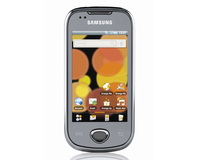 Samsung has confirmed to TechRadar that it will be bringing a slide-out QWERTY device running Android to the UK this year.
The new phone will sit below the Samsung Galaxy S in the Koreans' Android range, with Carey McGregor, senior product manager at Samsung, confirming the new product:
"We've got another device coming through this year, which will be a slider QWERTY device, with a landscape keyboard.
"It won't mirror the Galaxy S (in terms of specs), it will be more mid-range, more along the lines of the Galaxy Apollo."
Samsung Galaxy i5510?
McGregor didn't confirm which version of Android the phone will be running, but it's likely to be Android 2.2 given the release schedule.
As an Android device, it will also use the Galaxy moniker. We've seen the likes of the Samsung Galaxy S Pro and the Samsung Galaxy Q rumoured so far, both with QWERTY keyboards, but given both of these come with high end specs we doubt it will be one of these.
It's more likely to be the Samsung i5510 shown off by Vodafone recently - but it's good news it's coming to the UK soon.
Samsung has been betting big on Android this year, with the Samsung Galaxy Tab the latest to launch - but we're glad to see the Koreans are still fully behind Android phones too.

| |
Read More ...
Virgin Media launches 'unbeatable' BlackBerry deal
 Virgin Media has launched what is calling an 'unbeatable BlackBerry deal', slashing the cost of the BlackBerry Curve 8520 – and offering it free on a 24 month contract for £12 a month.
 As an increasingly prominent phone service provider, Virgin Media is keen to target students that want to get a BlackBerry on the cheap.
To that end, the company is backing its offer with a further 15 per cent off to holders of an NUS card.
Shaking up the mobile market
"Virgin Media is shaking up the mobile market by offering the most competitive pay monthly deal for a BlackBerry smartphone," states Virgin Media's release.
"Existing Virgin Media customers with home entertainment services also benefit from exclusive extras and a reduced price of £10 per month."
Jonathan Kini, director of mobile at Virgin Media said: "BlackBerry is no longer just for business users, and our exceptionally competitive deals can only help BlackBerry smartphones become an even bigger break-through device for consumers.
Popular
"Popular with families, students and teens loving its class-leading email, social networking and instant messaging features, our new unbeatable deal slashes the cost of this fantastic phone for anyone looking to stay connected," he added.
"We're also delighted to reward loyal Virgin Media customers with exclusive benefits, including free calls to Virgin Mobile from their home phones and unlimited Virgin Mobile to Virgin Mobile calls, and with our fantastic 15% discount for students, university halls will be buzzing with the bleep of the brilliant BlackBerry Messenger."

| |
Read More ...
Sony adds BBC iPlayer widget to Vaio laptops
 Sony has partnered with the BBC to add an iPlayer widget to its new Vaio laptops, making access to the iPlayer easier than ever.
Sony's new Vaio range will let you access your favourite BBC radio and TV content quickly and easily via its pre-installed iPlayer Desktop widget
On laptops and all-in-ones
"This will allow Sony Vaio customers to benefit from access to live and on-demand TV and Radio programmes directly through a desktop shortcut on laptops and all-in-one computers," reads Sony's announcement.
"The iPlayer Desktop service will be available as a pre–install from September and will allow users to watch downloaded content even when they are offline.
"The partnership between the two companies will make it easier than ever for entertainment fans to instantly watch TV and listen to radio."
Stock up on must-watch telly
The iPlayer widget will let you pre-book a whole series of upcoming shows to be automatically downloaded when available, which is great for commuters and travellers – just stock up your nice shiny new Vaio with all that must-watch telly that you previously never got round to viewing.
Edd Uzzell, Proposition Development Manager for Sony said of the new iPlayer widget: "We are delighted to be able to offer Sony VAIO customers this added entertainment functionality giving users the ability to watch and manage their favourite programmes at the click of a button.
"We are really excited to be partnering with the BBC to bring their fantastic iPlayer service to Sony's VAIO range".

| |
Read More ...
IFA 2010: ViewSonic ViewPad 100 with Windows and Android shown
 ViewSonic has formally announced the ViewPad 100, a 10 inch tablet that dual boots Android and Windows 7 Home Premium.
 The ViewSonic range has already been boosted by the arrival of the ViewPad 7, and that has now been joined by the 10 inch dual-booter that the company teased in its pre-IFA release.
The ViewPad 100's biggest selling point is, of course, the fact that it comes with both Android and Windows.
Combination
"The combination of operating systems means that users have the speed and portability of an Android-based OS without sacrificing the power and compatibility of a Windows powered system," explains ViewSonic.
"Users can quickly check their emails or browse the internet with Android while still being able to rely on the traditional PC experience that a full Windows environment provides, such as USB connectivity, video output via mini VGA, Adobe Flash support and the ability to create presentations and word documents from scratch.

Other details on the tablet include a 16GB solid state drive, aGPS chip and 1GB DDR3 memory with the beating heart of the ViePad 100 a 1.66Ghz Atom N455 processor.
"We want to supply users with a tablet computer that incorporates both Android and Windows as we believe in providing an open approach to mobile technology to users who may not wish to be tied to a specific operating system," says Derek Wright, European Product Marketing Manager.
"The ViewPad 100 is aimed at those who want the speed and portability of Android without losing the advantages of having a Windows-based system.
"We recognise many users may be transitioning from a netbook but will possibly struggle with the learning curve of a new OS, even for simple tasks as uploading photos or using a VPN. Eventually they may choose to favour one over the other, but they will always have the choice."
More specs
The screen resolution is 1024x600 and there are built in Wi-Fi and Bluetooth connections as well as a 'G' Sensor that reorients the screen.
The tablet's storage is boosted by the inclusion of a Micro SD slot, offering up to 32GB extra, and there is two USB connections along with a 1.3MP webcam.
We dont yet have UK release date details or pricing, but rest assured we are chasing.

| |
Read More ...
Weird Tech: Cyberwar declared on the Duke of Rutland
 We had an extremely rare case of Algerian hackers causing hilarity this week when they inadvertently hacked into and uploaded hate messages to the website of English stately home Belvoir Castle - the historic home of the Duke and Duchess of Rutland.
 Actually it wasn't that inadvertent, they just got the wrong web address, posting an "anti-Zionist rant" and images of the Algerian flag over the castle's usual adverts for weddings, corporate events and thoroughly nice family days out.
The hackers actual target was supposed to be the Belvoir Fortress, which has a long-standing religious significance we'll not attempt to go into here lest we offend people and bring in the Algerian hackers. According to The Register, the staff of the rather less incendiary Belvoir Castle assured the Telegraph that it has "nothing to do with the Middle-East".
Shutdown credit: £0.00
Microsoft has found another amazing way to make money - it's somehow managed to patent the very idea of turning something off. The specific patent that's been granted to Microsoft was discovered by Conceivably Tech, and is simply referred to in official documentation as "Operating system shut down" and appears to show that Microsoft has gained an exclusive on letting graphical user interfaces turn things off automatically.

SHUT OFF: It's also an extra 5p per hour if you want to leave it in hibernate
We'll report the facts now, for a change - the system is simply a method to override unresponsive applications and force them to shut down. It might stop you having to sit there, tutting away for two minutes, while Windows bravely tries to switch itself off. You won't have to pay 10p every time you reboot.
Very brief history of religion: It's all lies
Stephen Hawking has laboriously typed out another book, this time courting a bit of controversy by daring to suggest that God doesn't exist. His words, taken from his forthcoming co-written book The Grand Design, basically say that because of physics and gravity and all that, the Big Bang was an inevitability - and that there's no need for anyone to go mentioning God.

HISTORY OF SPACE: "...then Noah activated the Hadron Collider and turned the sinners to salt" (Image from here)
According to the Daily Mail, the fact that we're starting to find many other planets orbiting stars means Hawking thinks we're not as special as we once thought we were and that there's definitely no God. Which also means no Jesus and therefore no Christmas presents for Mr Hawking this year.
Pirates of the Scandanavian Region
Filmmaker Simon Klose is planning a documentary about long-running internet piracy hive The Pirate Bay - and apparently has over 200 hours of footage ready to go. We're not entirely sure there's a market for a documentary about men sitting around staring at computers laughing about email threats from major corporations, though.

THREE MEN AND A SERVER: The love interest will be provided by a scene in which they download photos of Megan Fox
According to Wired, the film's distribution method negates the option of making jokes about it being pirated - the plan is to release it for free via Bittorrent. Although there will be a DVD version, hopefully, for those who want to donate a bit of money to the Bay's dubious cause.

| |
Read More ...
Weird Tech: Cyberwar Declared on the Duke of Rutland
We had an extremely rare case of Algerian hackers causing hilarity this week when they inadvertently hacked into and uploaded hate messages to the website of English stately home Belvoir Castle - the historic home of the Duke and Duchess of Rutland. Actually it wasn't that inadvertent, they just got the wrong web address, posting an "anti-Zionist rant" and images of the Algerian flag over the castle's usual adverts for weddings, corporate events and thoroughly nice family days out.
The hackers actual target was supposed to be the Belvoir Fortress, which has a long-standing religious significance we'll not attempt to go into here lest we offend people and bring in the Algerian hackers. According to The Register, the staff of the rather less incendiary Belvoir Castle assured the Telegraph that it has "nothing to do with the Middle-East".
Shutdown credit: £0.00
Microsoft has found another amazing way to make money - it's somehow managed to patent the very idea of turning something off. The specific patent that's been granted to Microsoft was discovered by Conceivably Tech, and is simply referred to in official documentation as "Operating system shut down" and appears to show that Microsoft has gained an exclusive on letting graphical user interfaces turn things off automatically.
SHUT OFF: It's also an extra 5p per hour if you want to leave it in hibernate
We'll report the facts now, for a change - the system is simply a method to override unresponsive applications and force them to shut down. It might stop you having to sit there, tutting away for two minutes, while Windows bravely tries to switch itself off. You won't have to pay 10p every time you reboot.
Very brief history of religion: It's all lies
Stephen Hawking has laboriously typed out another book, this time courting a bit of controversy by daring to suggest that God doesn't exist. His words, taken from his forthcoming co-written book The Grand Design, basically shat because of physics and gravity and all that, the Big Bang was an inevitability - and that there's no need for anyone to go mentioning God.
HISTORY OF SPACE: "...then Noah activated the Hadron Collider and turned the sinners to salt" (Image from here)
According to the Daily Mail, the fact that we're starting to find many other planets orbiting stars means Hawking thinks we're not as special as we once thought we were and that there's definitely no God. Which also means no Jesus and therefore no Christmas presents for Mr Hawking this year.
Pirates of the Scandanavian Region
Filmmaker Simon Klose is planning a documentary about long-running internet piracy hive The Pirate Bay - and apparently has over 200 hours of footage ready to go. We're not entirely sure there's a market for a documentary about men sitting around staring at computers laughing about email threats from major corporations, though.
THREE MEN AND A SERVER: The love interest will be provided by a scene in which they download photos of Megan Fox
According to Wired, the film's distribution method negates the option of making jokes about it being pirated - the plan is to release it for free via Bittorrent. Although there will be a DVD version, hopefully, for those who want to donate a bit of money to the Bay's dubious cause.

| |
Read More ...
Royal Mail issues world's first 'intelligent' stamp
 The Royal Mail has issued what it is calling the "world's first intelligent stamp" this week, which is the first stamp to work with image recognition technology.
The new stamp is part of the Royal Mail's latest Great British Railways edition, and will launch content when used in conjunction with an iPhone or Android app.
Bernard Cribbins reads Auden
You merely have to place your phone's camera over the stamp which will trigger the online content, with some real treats available, including a superb reading of W.H. Auden's classic poem 'The Night Train' by Bernard Cribbins.
Cribbins says of the new initiative: "WH Auden wrote the Night Mail poem in 1936 for the Post Office's own blockbuster film of the same name, which has, for years, remained in the hearts and minds of many.
"I'm excited to be bringing it to a brand new audience, and to help take Royal Mail Stamps into a new era by using state of the art interactive technology."
The Royal Mail claims that these kinds of intelligent stamps "mark the next step in the evolution of our stamps, bringing them firmly into the 21st Century."
The Royal Mail's Philip Parker adds: "This is the first time a national postal service has used this kind of technology on their stamps and we're very excited to be bringing intelligent stamps to the nation's post.
"Royal Mail's special stamps mark key events and anniversaries in the UK's heritage through a programme which aims to be both educational and informative.
The future of stamp tech
"Through Intelligent Stamp technology, our stamps will open up to a whole new world of information, interest and fun to collectors and the millions of people who will receive them on letters in the coming months alike."
Users need to do is go to the app store on their smartphone and search for the free Junaio app. Why the Royal Mail chose to use a word that nobody can seem to pronounce is a different matter altogether…
For more on the latest stamp products available from the Royal Mail you can check out www.royalmail.com/stamps

| |
Read More ...
Review: Apple Magic Trackpad
 When picking through your snaps in iPhoto, do you wish you could zoom into or rotate your images with a pinching or twisting gesture? If so, Apple has answered your pleas. The Magic Trackpad brings the MacBook's trackpad technology to Apple's desktop range, and does so very well.
 The Magic Trackpad is styled to perfectly complement your Mac's keyboard. It's made from the same brushed aluminium and sits at the same angle on your desk.
It's a different experience to using a MacBook trackpad though. For a start, at around 13cm square, it's roughly 80% larger than a MacBook trackpad.
If you own an Apple notebook, or an iPhone or iPad, then the Trackpad's pointer control and gestures should be familiar. Drag a finger around the pad to move the cursor, and two fingers to scroll.
The whole surface of the pad acts as a mouse button, and you can set it up to replicate the functionality of a one-button or two button mouse as you wish.
Gesture control
But it's the gestures that really shine. Scrolling, pinching, swiping, app switching, screen zoom, double-click – it's all at your fingertips.
The Magic Trackpad is fully configurable via a new System Preferences pane installed with the latest software upgrade. Inertial scrolling, introduced to the MacBook Pro range this year, is also catered for. With this feature switched on, a scrolling window doesn't just stop when you lift your fingers from the Trackpad, but maintains a momentum depending on how fast you were moving it.
The Magic Trackpad can't replace a mouse for everything. Gamers in particular need the greater precision offered by a mouse, and a graphic artist would be better off with a proper pen-based tablet device, but for general productivity and day-today computing, the versatility offered by a trackpad is very welcome.
If you're running Snow Leopard on a desktop Mac, then the Magic Trackpad could become a permanent fixture on your desk, but next to – not instead of – your mouse.
Related Links

| |
Read More ...
Review: Freecom Mobile Drive CLS
 You might look at the Freecom Mobile Drive CLS hard drives and get all nostalgic for tapes and other old analogue media.
But the drives themselves are absolutely standard: bus-powered through their USB connection, and capable of a decent, respectable 28MB/sec write and 35MB/sec read for large contiguous files.
They are coated in velvety rubber and come in chunky translucent plastic boxes which are not only great for protection during transport, but also hold a handy index card – and a short USB cable so you can connect the drives wherever you go.
The drives themselves have a little slip of card along the edge, protected by a plastic fascia, that you can write on – handy, since hard disks are now sufficiently cheap that it's not out of the question to keep several drives for different areas of your life, even if you're using your Mac for fun rather than work. (Indeed, the drives' cases stack and lock together beautifully.)
Using hard disks with a standard mini USB interface is smarter than a cartridge system like the old Zip disks, as you don't need hardware to load them; USB is likely to hang around for a while, and the disk mechanisms ought to be robust enough to be reliable medium-term storage.
You can buy a cheap powered dock on which to mount three of the drives at once through a single USB port.
But if you add a drive with one or more already docked, it unmounts all drives before mounting the new ones, which causes OS X to complain.
Related Links

| |
Read More ...
Review: Altec Lansing MIX iMT800
 The 80s was a curious decade. The music was synthesised clicks and bleeps, the movies were violent and shallow, and the fashions made men look like women and the women look like discarded Christmas decorations.
 But even if its popular culture is best forgotten, its technology is fondly remembered. The 80s gave us the personal stereo and the ghetto blaster, and this unapologetically retro speaker system brings the descendants of these two concepts together, packing that most modern technology, the iPod dock, into an 80s-style boombox.
Portable power
The MIX iMT800 runs on batteries, as well as mains, and offers two auxiliary inputs alongside an iPod dock so you can connect up to three audio players.
It's loud enough to fill a decent-sized room and also has an FM radio with four presets.
Altec Lansing is known for speaker docks that sound bigger than they are, and this one's no exception. It gives a rounded sound, with its extensive driver set giving lots of top, middle and bottom.
As you'd expect from a boombox it's bass heavy, though if you find it swamps the mix, there's a user-controlled graphic equaliser.
Every instrument is defined, though the sound isn't shaped as well as it might be.
Not everyone will like the MIX iMT800's retro styling and bass-heavy sound, but if you miss your floorboard-shaking 80s ghetto blaster, you'll love it.
Related Links

| |
Read More ...
Skype adds video-calls for groups of 10 people
 Skype is a godsend for those families with members dotted all across the UK, or across the globe, in many cases, with the latest news that Skype is set to support video-calling for up to ten people at the same time sure to please many users.
The latest beta of Skype 5.0 for Windows introduces the new group vid-chat feature, with no word on when Mac users will get the same as yet.
"The second beta of Skype 5.0 brings a number of changes both outside and in – most importantly, you can now make group video calls with up to 10 people," the company announced on its website.
"It also welcomes in a fresh new look, as well as increased stability and better quality when making group video calls."
Sleeker, neater, crisper
The latest version of Skype is, we are informed, "sleeker, neater and crisper than before," and adds another new feature called Skype Home.
Skype Home lets you follow your contacts' mood messages, set your profile picture and mood message and receive account notifications and learn more about using Skype.
Fancy testing Skype 5.0 out? You can download it now.
Via: blogs.skype.com

| |
Read More ...
Google search shows difference between Liverpool and London
 If you compare your average Liverpudlian and Londoner's searches, you might end up thinking that Merseysiders are obsessed with shopping and capital dwellers are all about the celebrity, if Google's fastest rising search terms are to be believed.
 We all search for pretty much the same stuff on Google in the UK right? So it would make sense that a list of the fastest rising search terms in both Liverpool and London would have pretty much the same terms. Wrong.
Interestingly, the only two phrases that crop up in the top 20 terms supplied to us by search giant Google are 'Facebook' (login and home, respectively) and 'Sky Sports', continuing a sporting present that is definitely present in both sets of results.
Facebook, but not .com
Liverpool's fastest rising search term in the past week has been Facebook login – which is surely harder to type in than facebook.com? In London, Dutch footballer Rafeal van der Vaart's last ditch move to Spurs put him at the top of the list.
Big Bang Theory star Jim Parsons, second, and Man Men's Christina Hendricks were either side of Facebook in the London rankings and ahead of tennis tournament US Open, whereas Liverpool's top five searches included Natwest, Yahoo and the BBC iPlayer.
Over new arrivals of note include infamous bulletin board 4chan – responsible for some of the internet's most amusing recent japes – and Colombian bank Banco de Bogota, both in the London list.
In fact, if you could draw one overarching conclusion from the search terms it would appear that Liverpool tends to search for brands and sites, whereas London looks for events and people.
Liverpool
facebook login
sky sports
natwest
yahoo
bbc iplayer
bbc sport
youtube
liverpool fc
hsbc
hotmail
ebay
liverpool echo
tesco
easyjet
amazon
next
argos
orange
club penguin
London
van der vaart
jim parsons
facebook home
christina hendricks
us open
fiba
4chan
ac milan
gadget show
guns n roses
minecraft
notw
onpe
corinthians
notting hill carnival
transfer rumours
banco de bogota
formula 1
michael jackson
sky sports news

| |
Read More ...
Apple and Facebook in spat over Ping
 Apple and Facebook are not seeing eye-to-eye over the former's entry into social networking this week, with the announcement of Apple Ping.
Ping is available now, as part of the new Apple iTunes 10, although Facebook doesn't seem to want to get officially involved.
Apple CEO Steve Jobs informed reporters this week that the two companies had discussed how to work together to promote Ping, but that Facebook's terms were "onerous."
Ping causes 'issues'
Apple used some of Facebook's open programming interfaces to let users find their Facebook friends on Ping, although this stopped working earlier this week.
While Ping could well have directed considerable amounts of traffic to Facebook, sources claim that this would have caused site stability and infrastructure problems, hence Facebook pulling the Ping plug.
Following this, Facebook said in statement: "We're working with Apple to resolve this issue. We've worked together successfully in the past, and we look forward to doing so in the future."
Apple has not yet responded to the matter.
Facebook boss Mark Zuckerberg has already opened his own account on Ping.

| |
Read More ...
Twitter has over 145 million users
 Twitter CEO Evan Williams has revealed that Twitter now has over 145 million users and nearly 300,000 apps.
Williams posted on the Twitter blog this week about the state of Twitter on mobile phones, outlining the top ten apps.
Interestingly, Twitter for Android does not even make the top ten.
Twitter on the money
However, there are certainly plenty to choose from, with Williams stating that there are nearly 300,000 registered apps in the Twitter ecosystem, a number which has tripled since Twitter's 'Chirp' conference back in April.
Williams also outlined a few more interesting facts and figures about the current state of Twitter, revealing that mobile users have increased 62 per cent since mid-April and that 16 per cent of all new users to Twitter now start on mobile.
Additionally, he revealed that 46 per cent of active Twitter users use a mobile Twitter app and that 78 per cent of those who interact with Twitter do so through twitter.com, while m.twitter.com is the second most-used Twitter interface at 14 per cent.
The Twitter CEO also noted that Twitter's Promoted Products exceeded their expectations, but said nothing about how much money they are currently making.
No word on if that means Twitter has turned a profit, but that seems pretty unlikely. Still, revenues are undoubtedly growing.

| |
Read More ...
Sky and LG announce formal 3D partnership in UK
 LG and Sky have announced an extension to their 3D partnership, with the satellite giant formally endorsing LG's 3D televisions for its soon-to-be-launched Sky 3D channel./
 The partnership will see both LG and Sky launch a marketing campaign around the first 3D channel available to consumers in the UK, when it launches on October 1.
Stephen Gater, Head of Marketing LG Home Entertainment Company, commented: "Making 3D technology a genuine reality in people's homes relies on the pairing of great hardware and compelling content. Our partnership with Sky recognises just this.
"Together we are committed to educating consumers about our full 3D TV range and demonstrating how they can best view the new content that will available to them in the home."
Partnership
Hilary Perchard, Sky's Director of Product Management, adds: "We're delighted to have entered into this partnership with LG.
"We believe in giving customers choice and as the only manufacturer so far committed to both active and passive TVs, we believe LG has the breadth of product to offer a 3D TV experience for all Sky customers.
"We will work alongside LG in helping raise interest and awareness of 3D as we build up to and beyond the launch of Sky 3D."
Expect nationwide demonstrations of the technology and exclusive offers for Sky customers on getting hold of 3D kit from LG.

| |
Read More ...
Nvidia's new Fermi graphics chips unveiled
 Nvidia has announced its latest family of Fermi laptop graphics chips this week, balancing support for 3D with decent battery life.
Nvidia's new GeForce 400M series of graphics chips will be used by a number of major laptop manufacturers including Acer, Asus, Dell, Lenovo, Samsung and Toshiba.
Switchable graphics
All of those aforementioned brands will bring out laptops with Nvidia's 'switchable graphics' Optimus technology, to allow users to switch effortlessly (in the background) between the graphics chip on the motherboard and the more powerful discrete (but power-hungry) discrete graphics chip when needed.
A lot of new laptops from these manufacturers will also be supporting stereoscopic 3D under the Nvidia 3D Vision brand, with the likes of Asus and Toshiba already marketing such products.
Nvidia released seven new graphics chips today, with the GeForce GTX 470M and GTX 460M at the top of the range for hardcore gamers and power users.
The Fermi family
The chips are all based on Nvidia's Fermi architecture, with Nvidia claiming that they are 40 per cent faster than its previous GeForce 300M series chips.
Nvidia also says its new graphics chips for laptops are three times faster than Intel's integrated graphics chips for tasks such as editing and sharing high-definition video.
Look out for a number of new 3D Vision laptops on the way later this year, including the Asus G53Jw, with a GeForce GTX 460M graphics chip, and the Acer Aspire 5745DG with a GeForce GTX 425M chip. Asus is also set to launch its 3D all-in-one PC, the Asus ET2400XVT which will feature a GeForce GTX 460M graphics chip.
Via Nvidia

| |
Read More ...
Nvidia's new Fermi graphics chips unveiled
Nvidia has announced its latest family of Fermi laptop graphics chips this week, balancing support for 3D with decent battery life.Nvidia's new GeForce 400M series of graphics chips will be used by a number of major laptop manufacturers including Acer, Asus, Dell, Lenovo, Samsung and Toshiba.
Switchable graphics
All of those aforementioned brands will bring out laptops with Nvidia's 'switchable graphics' Optimus technology, to allow users to switch effortlessly (in the background) between the graphics chip on the motherboard and the more powerful discrete (but power-hungry) discrete graphics chip when needed.
A lot of new laptops from these manufacturers will also be supporting stereoscopic 3D under the Nvidia 3D Vision brand, with the likes of Asus and Toshiba already marketing such products.
Nvidia released seven new graphics chips today, with the GeForce GTX 470M and GTX 460M at the top of the range for hardcore gamers and power users.
The Fermi family
The chips are all based on Nvidia's Fermi architecture, with Nvidia claiming that they are 40 per cent faster than its previous GeForce 300M series chips.
Nvidia also says its new graphics chips for laptops are three times faster than Intel's integrated graphics chips for tasks such as editing and sharing high-definition video.
Look out for a number of new 3D Vision laptops on the way later this year, including the Asus G53Jw, with a GeForce GTX 460M graphics chip, and the Acer Aspire 5745DG with a GeForce GTX 425M chip. Asus is also set to launch its 3D all-in-one PC, the Asus ET2400XVT which will feature a GeForce GTX 460M graphics chip.
Via Nvidia

| |
Read More ...


No comments:
Post a Comment