

IFA 2010: Samsung SF series is unveiled

The Samsung SF series laptops have been announced, with the latest range bringing a funky new design and the latest Core i processors from Intel.
The SF series – which has been launched alongside the NF netbook series – has been given a UK release date in October and is pitched at 'style-conscious' users who are looking for the 'ultimate in mobility'.
The Samsung SF series consists of the 13.3-inch SF310, 14-inch SF410 and 15.6-inch SF510 and comes with a glossy ivory outside and matt black inside.
Core blimey
"Powered by Intel Core i3 / i5 dual-core processors, the SF series delivers performance as well as power efficiency, keeping users connected on the road," explains Samsung.
"The SF series comes with a hybrid graphics solution which uses 2 different graphic cards – one is from Intel and enables longer battery life while the other from Nvidia allows for enhanced multimedia performance.
"Battery life is essential for working on-the-go so Samsung has included a premium Lithium Polymer Battery that provides up to 7.5 hours of battery life (61Wh battery)."
New style
Seongwoo Nam, executive vice president and head of IT Solutions Business at Samsung Electronics, said, "Inspired and elegantly crafted, this new lineup is truly representative of our efforts to come up with a new style in mobile computers.
"I believe that Samsung's new mobile computer designs are fresh and will drive design trends across the computer industry and satisfy style-conscious users."

 |  |
Read More ...
Review: PlayStation Move review
 First announced at E3 2009, the PlayStation Move is Sony's motion-controlling answer to the Nintendo Wii-mote and the Microsoft Kinect.
We'll leave discussions of how much of the Move controller's design concept was 'borrowed' from Nintendo's Wii Remote and Nunchuk controllers to shouty forum types.
Sony itself credits Nintendo for its accomplishments with the Wii. But as with all technology, someone creates something good, and then competitors evolve it, make it better.
And that's exactly what Sony has done with the PlayStation Move wand and accompanying Navigation controller.
The glaring feature, quite literally, of this controller's exterior is that glowing orb.
This sphere is how the PlayStation Eye (the PS3's camera that's been on sale for some time now) sees the remote, and serves as one of multiple ways the PS3 detects its exact position (more on how else it does that on page 3).

While flimsy-looking, the orb on the PlayStation Move controller itself is actually just an empty rubber casing – there's nothing inside it, you can squish it completely flat with your fingers so dropping it isn't a worry at all (and it could even provide screen-saving cushioning for the inevitable few who'll accidentally fling it at their TV sets).
The glow actually comes from an RGB LED bulb housed in the controller's plastic casing.
What's really clever is that this bulb can glow any one of over 100 colours – all by the command of your PS3 which stops it from blending into the background.
So, for example, if your wallpaper was a vivid red, your PS3 would detect this and tell the controllers to glow a different colour so they can be easily tracked by the camera. It's also used as an identification tool when multiple controllers are in use – no two will glow the same colour.
Nintendo's minimalist approach to buttons caused problems for more hardcore Wii games that struggled to give players access to multiple commands.

Sony's Move suffers no such issues, with the four iconic PlayStation buttons sat around a new, larger 'Move' button which typically serves as the main 'action' button. These all reside comfortably under your thumb, with the PS Button (which brings up the PS3's system menu) just below those and sunken in to avoid being pressed accidentally.
On the underside is the T-trigger – a nicely curved analogue trigger in just the right place for your index finger.
Tucked into the left and right side of the controller are flat Start and Select buttons which, although seeming sufficiently hidden, we did hit accidentally with the inner ball of our index knuckle as our grip was too high on the controller. When more accustomed to it we held it slightly further down from the top and all was fine.
On the underside of the controller sits an expansion port and mini USB port, which is primarily used to charge the device's internal Lithium Ion battery on the Sony's sleek charge station while the PS3 is off, but we imagine could also be used to plug the Move into other devices Sony may choose to invent in future (including the gun attachment which was shown at E3).
Navigation controller
The Move will work alone for many of PS3's simpler games, but for more complex experiences you'll find yourself clutching the Navigation controller in the other hand.

This basically mimics the functionality you get from the left side of a normal DualShock 3 PS3 controller, and is much like Nintendo's Nunchuk expansion, but, again, with more buttons.
That said, it has an analogue stick, full D-pad, Circle and X buttons that sit under your thumb, along with another PS Button. And on the flipside you'll find another two triggers, one a regular clicky button and the other a full analogue trigger like the one on the main Move controller.
The Nav controller also has motion-sensing functionality although, without the glowing orb, it's not quite as advanced; more similar to that of the Wii Remote.
Sony's decision to completely ditch wires from the split-controller configuration originally designed by Nintendo (who connects its Wii Remote and Nunchuk with a short cable) really liberates your hands to let you move in a way that's comfortable for you. When punching out, you can really punch. When swinging a sword, you can really swing. You can lean right in without having to compensate for your other hand.
But like we said earlier, it's the pin-point accuracy and, equally as important, instantaneous response time of the main Move controller that really sets it apart from its comparatively clumsy competitors.

The PS Eye tracks the Move's glowing orb to within millimeters of its position. Not just on a 2D plane but in three-dimensions; the bigger the orb appears to the camera the closer it knows the controller is to the TV.
This accuracy is enhanced, bolstered and secured in stone by two further sensors housed inside the controller; three-axis accelerometer and angular rate sensors that can detect the controller's rotation and movement in any direction. These are the sort of sensors the Wii Remote relies on entirely.
But even that's not enough for Sony. It makes extra sure with an internal magnetometer – a digital compass, basically – which uses the Earth's gravitational pull to keep all those accelerometer readings in check.


While the Wii Remote has to be placed on a flat surface to be calibrated in accordance with gravity, the Move is calibrating itself constantly as you play.
Clever, that, and it also means the PS3 can accurately detect what the controller's doing even when the camera can't see that glowing orb (when it's behind your back or other arm, for example).
We've all become tolerant of the constant slip ups the Wii Remote makes in games, even since the introduction of the better-but-still-imperfect MotionPlus attachment; those times when your tennis racket swings early because you were merely pulling your arm back in preparation for a shot, or when your sword swings horizontally instead of vertically like you wanted, or when the calibration slowly notches out of whack and that Wii Sports Duel sword just isn't copying your movements at all.
Even Microsoft's Kinect hiccupped during our E3 playtests, as our car in racing game Joyride turned left instead of our intended right, and its repeated failure to detect our subtle (and then over exaggerated, just to be sure) attempts to put right-spin on our bowling ball. It was infuriating.
One of the games we played was the dedicated PS Move game The Fight: Lights Out, a fist-fighting sim that actually has you hold a Move controller in each hand (not a Nav controller).
The controls are simple – your fighter's fists do what your fists do. You just punch in any combination you please and witness your on-screen counterpart mimic you instantly.
We tried our best to confuse it. We span the controllers 360 degrees. No problem. We hid them behind our backs. The PS3 was un-phased. We punched as rapidly as we could, combining jabs with hooks and uppercuts in quick succession (with over six years of martial arts experience, we might add).
The PS3 tracked it all. We even crossed our arms over so the controllers were on the wrong side of our bodies. Our fighter just did the same – and looked as idiotic as us.
And how well does it cater to the hardcore? Well, if first-person shooters Killzone 3 and Socom 4 (which have the Move handle your aim while the Nav controller's analogue stick does movement) are anything to go by, this controller's potential is limited only by the abilities and imaginations of the developers making games for it.
Note: this review is based on time we spent with the PlayStation Move at the E3 games conference. We'll have a more in-depth review up in the next few days once we've had time to fully put the Move through its paces.
Related Links

| |
Read More ...
IFA 2010: Panasonic shows off full HD 3D home cinema ranges
 Panasonic has shown off its latest Full HD 3D Blu-ray Disc Home Cinema Systems – the SC-BTT755 and the SCBT350.
 The new Home Cinema systems bring a healthy dose of the latest 3D tech, and Panasonic is adamant that it brings 'lifelike sounds that make you feel like you are in a movie theatre'.
We're guessing the company doesn't mean the crunching of popcorn and the sounds of snogging from the back row.
Advanced image tech
"Both are equipped with advanced image technologies, like the PHL Reference Chroma Processor Plus and Full HD Upsampling, that have proven hugely popular with Panasonic Blu-ray Disc players," explains Panasonic's release.
"These technologies reproduce the ultimate in 3D images, rendering them extremely faithful to the original movies. 3D movie features allow users to experience powerful, dynamic worlds that they have never before encountered, such as exciting leaping effects and enhanced depth, lustre and texture."
The speakers include Advanced Bamboo Cone technology and Kelton Subwoofer with virtual 7.1 channel surround and, of course, the setups support Viera cast.
"The stylish, slim speaker box of the SC-BTT755 suppresses unwanted acoustic reflections to achieve pure, high-quality sound," adds Panasonic.

Wall-mountable
Also shown off is the Full HD 3D Blu-ray Disc Home Cinema System SC-BFT800 – a Slim, Wall-Mountable System.
It features "advanced image technologies, like the PHL Reference Chroma Processor Plus and Full HD upsampling".


| |
Read More ...
IFA 2010: Panasonic unveils Viera VT20, TX-P42GT20 3D TVS
 Panasonic has announced its new Viera television range, including what it calls 'industry-leading' 3D with the addition of the 42-inch 42VT20 and 46-inch 46VT20 alongside the TX-P42GT20 plasma.
 With IFA likely to be a launch pad for a plethora of major televisions, Panasonic is hoping that the addition of new VT20 series televisions and the latest TX GT20 will impress.
The latest VT20 Viera models bring Panasonic's high speed 3D drive technology along with '600Hz Sub-field Drive' which the company asserts will produce crisp and immersive 3D images.

Highest quality
"The VT20 models also promise to deliver the highest picture quality for 2D content, adds Panasonic's release.
"High Contrast Filter Pro delivers improved contrast in brighter environments and reduces light reflections, while THX Certified Display certification ensures that every Panasonic NeoPDP TV displays movies with exactly the quality and colour palette that the director has intended."
There is also 2D to 3D conversion via a built-in processor.
Viera TX-P42GT20
The other new offering is the 42-inch TX-P42GT20 which also offers 24p Smooth Film for 3D, 2D-3D conversion and 600Hz but does not come with any 3D glasses.
"With the addition of these new LED-LCD HDTVs to our existing line-up, Panasonic now offers consumers more options in terms of both screen sizes and technology than ever before," explains Fabien Roth, senior marketing manager at Panasonic.

| |
Read More ...
Opinion: The trouble with Linux: there's too much choice
 Those of you not familiar with Linux won't be familiar with the way it lets you install new software. After 12 years with Linux, neither am I.
 And I think this highlights a serious problem with the way that open-source software has developed and how it can grow. The problem is choice – one of the most touted and noble reasons for using Linux in the first place.
For general use, there's too much of it. It's often overwhelming, needlessly complicated and an easy excuse for change. Choice goes hand-in-hand with redundancy and duplicated effort.
Recently, the Fedora distribution decided to dump its long-standing photo manager application, F-Spot, in favour of an upstart called Shotwell. Shotwell doesn't have anywhere near the features, stability or stature of its precursor. But it doesn't use Mono either – the .NET-inspired framework that many people love to hate thanks to its third-party association with Microsoft.
As a result, thousands of new Fedora users are going to think that the best photo management application on Linux has about as much functionality as Microsoft's image preview.
Loss of freedom
The problem is that if the wider community can't decide for itself what a solution should look like, the power to make those decisions will be taken out of its hands. And losing the ability to make those decisions is a loss of freedom.
If we could all agree on what should be the default photo manager for a certain distro, it wouldn't matter whether it was initially inferior to its competitors. Everyone would work hard to make it the best, and the same is true of music players, word processors, image editors, text editors, desktops and even package management – the latter being a microcosm of all that's bad about choice.
Package management is the art of getting software onto your Linux box, and there are as many ways of getting software onto your Linux box as there are boxes. The easiest method is to trust in your distribution's package manager, and hope it has the application you need with the version number you're after. If not, things are going to get messy.
You might want to use a third-party package, created by a helpful member of your distribution's community. But this runs the risk of becoming a security nightmare if you don't completely trust the source.
Finally, you're left with the hardcore option – compiling your own binary. But when doing this, you'd also need to make sure you'd compiled the development libraries for all the other shared components your original binary required. This is a pain.
Utterly confused
Most of us are utterly confused by the options, and we'd just like a decision to be made on which is the best. It's inexcusable for an operating system that's hoping to take on some of the largest technology companies in the world with nothing but some free beer rhetoric and a penguin.
If there wasn't such confusion over package management, there wouldn't be any need for Google, Palm/HP or even Canonical to come up with their own solutions. They would have followed the standard, just like the rest of the Linux ecosystem. And in not forcing those decisions, we've lost the ability to decide how packages are going to work across all versions of Linux. But this might be just the beginning.
Mobile phones are the biggest growth market for Linux. In mid-June, Google's Eric Schmidt claimed that Google was activating 160,000 phones per day. Each one of those phones is running a locked-down version of Linux.
Thanks to Apple's approach to its own platform, where third-party development and even the launch icons for third-party applications are controlled with an iron fist, other manufacturers may start to equate control with future profit, and then we really will be left without any other choice.
Many Linux users might baulk at the idea that their distribution is sharing geolocation data with the world, just so the world can send you local ads, as with the new iPhone OS. But a recent report by SMobile Systems suggests that up to a fifth of Android phone applications perform all kinds of nefarious, privacy infringing tricks.
If we'd had a global package manager, and a way that we could all share and install the same software, this might not be such an issue.
We might have given up a little choice when it comes to how things are installed, but we'll have gained a whole lot more choice where it's important: the freedom to run secure, safe and supported software on whatever platform we choose.

| |
Read More ...
HP expands its Mini range
 HP has announced an update to its Mini range – with the company sticking to its policy of not using the word netbook to describe its popular 'mini-laptop' range.
 The new models are 'engineered to provide an unsurpassed customer experience' and include a redesigned HP Mini 210 (an affordable companion PC) in a broad range of colours including, wait for it, 'ocean drive' and 'luminous rose'.
There is also the HP Mini 5103 – the latest touch screen "mini-notebook" designed for "students and mobile professionals alike" which incorporates the latest Intel Atom processor and is available in red, blue or espresso (beige).
Educational
Next up is the Mini 100e Education Edition, which is designed with the classroom in mind and probably doesn't feature an inkwell and a secret compartment for notes.
"HP Mini's have no equal when it comes to industrial design, use of innovative materials and overall feature sets," said Charl Snyman, Vice President and General Manager, HP Personal Systems Group, Europe, Middle East and Africa (EMEA).
"With these additions to the HP Mini portfolio, customers have a broad choice of sleek companion PCs that allow them to stay more easily connected to the people and digital content that is important to them."
The HP Mini has a UK price of £299, the HP Mini 5103 costs £370 and the HP Mini 100e has yet to be given a price.

| |
Read More ...
Nokia N8 UK release date set at 27 September
 The Nokia N8 has been given a UK release date of 23 September, with Nokia Online getting the eagerly anticipated device a week before it goes on sale elsewhere.
 According to NokNok TV, Nokia leakes its own UK release date ahead of schedule with its purchase of Ad Word space.
The Nokia N8 is one of the most anticipated Nokia phones of 2010, bringing a greatly enhanced 12 MP camera and stylish design.
It is also, of course, the first handset to run the new Symbian^3 OS, and brings HD recording and a 3.5 inch AMOLED screen.
UK release date
The news that it has a UK release date in September will be well received by Nokia fans, who were dismayed when the original date in August came and went.
Nokia has slipped a little from public minds of late, with high-profile phones like the HTC Desire and Apple iPhone capturing the headlines.
But the Finnish company will no doubt be hoping that its long-established reputation and the feature packed N8 can end that trend.

| |
Read More ...
Nokia N8 give UK release date of 27 September
The Nokia N8 has been given a UK release date of 23 September, with Nokia Online getting the eagerly anticipated device a week before it goes on sale elsewhere. According to NokNok TV, Nokia leakes its own UK release date ahead of schedule with its purchase of Ad Word space.
The Nokia N8 is one of the most anticipated Nokia phones of 2010, bringing a greatly enhanced 12 MP camera and stylish design.
It is also, of course, the first handset to run the new Symbian^3 OS, and brings HD recording and a 3.5 inch AMOLED screen.
UK release date
The news that it has a UK release date in September will be well received by Nokia fans, who were dismayed when the original date in August came and went.
Nokia has slipped a little from public minds of late, with high-profile phones like the HTC Desire and Apple iPhone capturing the headlines.
But the Finnish company will no doubt be hoping that its long-established reputation and the feature packed N8 can end that trend.

| |
Read More ...
Advertising Standards Authority goes online
 The UK's advertising watchdog, the Advertising Standards Authority (ASA) is extending its remit to cover online advertising.
The ASA will soon be keeping a closer eye on web advertising and marketing campaigns on social networks such as Facebook and Twitter.
New powers to block online ads
From 1 March 2011, the organisation will be able to apply the same strict rules that it currently applies to traditional print media.
The ASA received no less than 3,500 complaints last year, but over half of those were outside of its remit.
"This is a massive step. Consumers don't differentiate between adverts on TV or online and this ensures that claims online will be subject to the same strict scrutiny of those in traditional media," an ASA spokesman told the BBC.
The ASA will also be given powers to remove paid-for search advertising and, in some circumstances, replace it with its own advertisements outlining an advertiser's non-compliance.

| |
Read More ...
UK's Novatech as reliable as Apple, says Which?
 British manufacturer Novatech has topped a Which? Reliability survey, with the PC maker scoring the same as giants Apple and Compaq.
 Novatech, a Portsmouth-based company, was behind Apple in the customer score getting 81 per cent compared to the latter's 94 per cent, but the manufacturer can hold its head up high.
Sarah Kidner, Editor, Which? Computing said: "It's great to see a smaller, home-grown brand beating giants like Dell for both reliability and customer satisfaction."
23 years
Novatech was founded back in 1987, and now employs over 150 people at its head office, with branches in Portishead and Reading.
"Our value is a combined measure of price, quality, performance and service," states the company. "Our aim is to provide our customers with the best value IT products with total customer satisfaction, first time, every time.
"We aim to deliver this by working as one team confidently, helpfully and honestly."
And, according to consumer bible Which?, the company is doing a decent job of it.

| |
Read More ...
Neal Stephenson develops new e-publishing model
 Sci-Fi writer Neal Stephenson has set up a new e-publishing venture to develop a new platform for creating and publishing digital novels.
Stephenson, perhaps most famous for his post-Cyberpunk 1992 novel Snow Crash is launching a new publishing operation called Subutai, based out of Seattle and San Francisco.
PULP Fiction
Subutai is developing what it calls the PULP platform for creating digital novels, offering authors the ability to augment their core text with images, video, music and background articles.
PULP also features social networking aspects, so readers can earn badges for activity on the site, interact with other readers, create their own profiles and so on.
Stephenson says of his latest venture: "I can remember reading Dune for the first time, and I started by reading the glossary. Any book that had that kind of extra stuff in it was always hugely fascinating to me."
The Mongoloid
Subutai is launching its first serialised story called The Mongoliad about the Mongol invasion of Europe, this week. Readers pay $5.99 (£3.90) for a six-month subscription fee or $9.99 (£6.50) for a year.
Subutai's co-founder and President Jeremy Bornstein hopes that readers will still be prepared to pay for content when "the experience is so much more rich, so much more involving."
Head over to The Mongoliad website for more. An iPad/iPhone/iPod Touch app and and Android app are both in the works and set to arrive very soon.

| |
Read More ...
In pictures: Motorola Defy
 Motorola's latest water resistant phone was on show today, and while we weren't allowed to submerge it, we did take a few photos to show you.
The phone has a fairly impressive 3.7-inch screen with WVGA resolution, and while it's only rocking Android 2.1, we still think there's a lot to love here if you're a serial phone in-toilet dropper.
It has a rubberised shell with locking mechanism to keep the back in place during underwater exploits, and the 5MP camera with flash seems a pretty good addition.
Take a look at the latest rugged handset from Motorola, and see whether you can envisage yourself wanting to pick it up out of a festival toilet.


| |
Read More ...
In pictures: Motorola Milestone 2
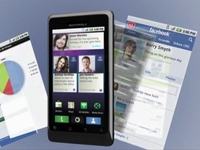 Motorola has announced its new Milestone 2, and TechRadar was on hand to get a good look at it and take one or two snaps.
With a slide-out QWERTY keyboard, high-res screen and 5MP camera, it's pretty similar to the original Milestone.
However, it's been beefed up with HD video recording, an overhauled D-pad system and Android 2.2, so take a look and see if it's a phone your pocket could learn to love.


| |
Read More ...
HP announces Envy 14 Beats edition and Envy 17 with 3D
 HP has announced improvements to its high-end HP Envy 14 and Envy 17 laptops, with the former getting a special 'Beats' edition and the latter gaining stereoscopic 3D support.
 The Envy range is HP's luxury laptop choice, and the 'enhanced features' are designed to please the 'discerning user'.
"With these new technology and design enhancements, we offer customers a better computing and entertainment experience," said Charl Snyman, Vice President and General Manager, HP Personal Systems Group, Europe, Middle East and Africa (EMEA).
"These new HP notebooks deliver breakthrough technology, power and advanced styling to satisfy the most discerning user."
Beats by Dr Dre (tm)
The HP Envy 14 Beats edition brings integrated Beats Audio – with HP pushing its 'exceptional' design and optimised audio features – and comes with a free pair of headphones.
"This special edition notebook includes Beats Audio, a unique, high-performance technology developed by HP and Beats by Dr Dre to provide the optimal sound experience – the way the artist intended it – when playing music or audio through headphones or external speakers," explains HP's release.
Dr Dre wasn't available for comment but we're guessing he would have said the Beats Audio technology would: "Ding ding dong ring-gading ding ding dong, keep the headz ringin."
To enhance this premium sound experience, HP has included a set of Beats Solo Headphones from Monster with ControlTalk, with each HP Envy 14 Beats Edition.
Envy 17
The HP Envy 17 with 3D also has Beats Audio and HP's Triple Bass Reflex subwoofer, but throws in (interestingly, ATI) 3D support and a pair of HP 3D Active Shutter glasses.
"Included content allows customers to experience instant 3D gratification," adds HP.
"Select models include a 3-D movie trailer for the upcoming animated film Megamind from DreamWorks Animation."
The HP Envy 14 Beats Edition has a UK price of £1,339 and the The HP Envy 17 with 3D has a UK release date of October with a starting price of £1,559.

| |
Read More ...
Canon LV-7590 is 'brightest' projector to date
 Canon has announced its 'brightest projector ever' with the LV-7590 rocking a 7000 lumen rating, 1800:1 contract and capable of displaying images of up to 813x610cm.
 Canon's LV-7590 also brings a new colour control device, but, although it is compatible with five optional interchangeable lenses, is supplied with none.
With a UK release date of Setpember, the LV-7590 is a replacement for the LV-&585 and offers what Canon terms the 'highest brightness of any Canon projector to date'.
Native XGA
"The ubiquitous native XGA resolution is supported by an increased brightness of 7000 lumens and a high contrast ratio of 1800:1, while the projector also features motorised horizontal and vertical lens shift, allowing the projected images to be positioned without the compromises associated with keystone correction," adds Canon.
"Powered zoom and focus are also included - and in line with Canon's stringent image quality standards, the range of features offered by the LV-7590 has been specifically designed to ensure the best possible viewing experience for audiences in large venues."
This is really a projector for big venues – as testified by the potential 400-inch (diagonal) display and a cost of £3,352.
And you'll need to add another £391 quid to that if you want the standard lens.

| |
Read More ...
IFA 2010: LG to show off Smart TV and 'magic' controller concepts
 LG has announced it will be showing of some concepts of its Smart TV service, its version of bringing web content to televisions.
It has chosen IFA 2010 to show of the service which is said to be based around the concepts of: Easy, Fun, More and Better.
So a bit like a date with Kelly Brook then.
LG's Smart TV will have its own Home Dashboard, where you can use applications and access a range of premium content all on a single screen – and you will also be able to add favourite websites here as well.
We're expecting the Smart TV concept to land on TVs like the company's recently announced LEX8.
Smart system
The Smart TV interface will be controlled by LG's Magic Motion Remote Control, which will be used in conjunction with the company's wand-like controller which was shown off back in CES 2010.
"With the introduction of our advanced SMART TV, LG is able to offer a 'Total Home Entertainment Solution' enabling consumers to enjoy practically any digital content on any smart device," explained Simon Kang, President and CEO of LG Home Entertainment Company.
"For consumers who want full control over how and where they get their entertainment with maximum ease and comfort, the LG Smart TV solution may be all they need."
LG's Smart TV will have a UK release date of early 2011.
3D monitor
LG will also be showing off its latest 3D gaming monitor at IFA - with the W63D boasting a 'more realistic' experience.
With 3D gaming beginning to get some purchase in the market – and the likes of Nvidia and Sony championing the move to an extra dimension, LG's W63D uses a much higher resolution than standard to improve the experience.
"LG's W63D 3D gaming monitor delivers a more realistic 3D experience with more than double the resolution of regular HD monitors," explained LG's release.
"The extremely high picture quality means longer periods of viewing without discomfort."
The monitor will be shown off at IFA in Berlin, where gamers will get the chance to see if the monitor truly enhances what many see as still a gimmick rather than must have technology.
But with gaming developers insistent that 3D is a, ahem, game changer, LG will be hoping that its higher resolution offering will provide a decent option.
TechRadar will be at IFA 2010 in full force, so expect a hands-on with LG Smart TV as soon as the curtains are raised.

| |
Read More ...
Logitech announees Z515 and Z305 speakers
 Logitech has announced two news speakers, the £90 Wireless Speaker Z515 and the £50 Laptop Speaker Z305.
 The peripherals specialist are now offering two new additions to its range, with the Laptop Speaker bringing an 'all-round sound' in a compact design and the more expensive Z305 working up to 15m away from your source.
"The speakers built into most laptops are tiny and can't always reproduce powerful audio," said Mark Schneider, vice president and general manager of Logitech's audio business unit.
MP3 Junkie?
"Whether you're an MP3 junkie or a movie lover, our two new laptop speakers make it easy to connect, turn the sound up and lose yourself in the things you love," explains Schneider
"There's no reason that you can't have quality audio while you're watching the latest YouTube sensation or the newest Hollywood release on your laptop."
Both speakers have a UK release date of September and the Logitech Wireless Speaker Z515 is priced at £89.99 with the Z305 at £49.99.

| |
Read More ...
IFA 2010: Sony set to reveal next-gen Reader ebooks
 Sony is set to reveal its next-generation range of Reader e-books at IFA in Berlin later this week.
Sony's new electronic readers are set to be slimmer than previous models, with a range of new features, including touchscreen control.
We expect to get some hands on time with the three new versions of the Sony Reader set to be revealed at IFA, with Sony claiming that it has made improvements to the screen to offer better clarity for readers.
Dictionaries, reader reviews, mobile apps
While Sony was first to market with its e-book range, it is now facing stiff competition from market leader Amazon, whose new Kindle e-reader recently launched in the UK, at £109 for the basic Wi-Fi only version.
Apple is also making serious inroads into the e-book market with the iPad, with apps such as iBooks (and Amazon's own Kindle app) proving to be popular on Apple's new tablet device.
Steve Haber, president of Sony's digital reading unit, told Reuters: "Lowering prices to get cheaper and cheaper -- that's not our direction. Our plan is not to race to the bottom."
Haber noted that Sony sold more of its higher-priced touchscreen Reader last Christmas than it did the cheaper, non-touchscreen version.
"People stepped up and spent another $100 to buy touch," said the Sony Reader boss.
Sony's new pocket version Reader will retail about $179 (£116) in the US, while Sony's larger 6-inch screen version with extra memory will cost US readers $229 (£149).
Sony is also planning to launch a $299.99 (£195) "Daily Edition" Reader later in November, which will feature 3G connectivity and a larger screen.
Sony will also offer dictionaries in its new Readers and, in addition to adding new titles to its e-book store, plans to include reader reviews via a partnership with social network site GoodReads.
Sony will also launch iPhone and Android Reader applications later in the year.

| |
Read More ...
In Depth: 20 handy Android 2.2 tips and tricks
 Google's Android 2.2 update, also commonly known under its development pseudonym of FroYo, is gradually finding its way onto more and more Android phones with every passing day.
Google and the networks of the world are slowly updating their handsets so the latest version of the mobile OS, with Android 2.2 bringing many new features - plus well known performance and battery life enhancements.
So now Android 2.2 is out and spreading, it's time to delve a little deeper under the bonnet and put together a few tips for getting the most out of your newly refreshed and invigorated phone.
What else can you do with it apart from send text messages and look at women applying their make-up on YouTube? This little lot, for a start. Read on for your top 20 Android 2.2 tips.
1. Edit your Android Search button settings
Google's Search box will, by default, search the internet and your phone for any text you enter. If you'd rather it just searched your phone, press the 'G' icon and change where Google looks for stuff. Also, under Menu > Settings > Search you're able to add or remove items and search locations from this list. Makes searching for apps by name much, much faster.

2. Stick a load of search widgets on a screen
If you're stuck for ideas on what to put on all your Home screens, why not build your own search super screen? One search bar for web, one for apps, one for contacts - easy.
3. Pull up for numeric Android keypad
If you're using the generic, unskinned Android 2.2, the keyboard now lets users swipe up to select numeric characters and apostrophes, rather than having to navigate to a separate screen. Not quite as intuitive as HTC's custom keyboard as found on the Sense-enabled HTC Desire version of Android 2.2, but a big improvement on the stock keyboard of old.
4. Power button ends calls
Under Settings > Accessibility there's a tiny new change - the option to use the power button to end a phone call. Very handy - if your phone doesn't already support that.

5. Enable Flash in your Android browser
The big selling point of Android 2.2 is it compatibility with Adobe's Flash 10.1 player. HTC has built the app into its Android 2.2 update, while the "vanilla" Nexus One FroYo requires Flash to be installed as a separate download from the Android Market. Just remember it'll need to be activated in the browser settings - if you want Flash, that is.
6. ...then turn Flash off again
Once the novelty has worn off, you may find Flash 10.1 to be a bit of a burden, what with the way it can slow down page scrolling on even the most modern of Android phones. The toggle option is found in the browser settings, where you can choose to have Flash plug-in content only activate "On Demand" when you click on it.

7. Enter a numeric pin
FroYo lets you specify a pin number to lock and unlock the phone, if you're not won over by the previous version's shape-based locking system. Stick in your choice of digits under Settings > Security > Set up screen lock.
8. Update your apps
Another of FroYo's big new additions is the option to save your apps to SD card. But remember this option is not universal - it requires the app developer to specifically add the option to their app. Don't blame yourself when you can't save something to SD card, it's the developer's fault.
9. Shuffle apps to SD card
Also, don't panic when you're not asked where to save an app when downloading it from the Android Market. That's not how it works. You can only install apps to your phone initially - then move them to SD card separately. Do this by going to Settings > Applications > Manage Applications and clicking on the app. If the developer has enabled it, now you can shuffle it to your memory card.

10. Install SDMove
SDMove is a tiny Android app that fills the above gap. It lists your apps, letting you see at a glance which ones can be moved to SD card and which can't. If you've got a heavily loaded phone, it could save many seconds of annoyed fiddling.
11. Don't install your most-used apps to SD card
Also worth remembering is that your SD card is not available to your phone while it's plugged in via USB - so any apps on your SD card won't be accessible while your phone's charging. So don't put anything too important on there, else you'll end up having to copy it back to use it while charging via USB.
12. Tether, don't hotspot
As cool as it may well be to use Android 2.2's network-hammering wireless hotspot facilities to share your 3G connection with your laptop, it'll guzzle the power out of your battery like a dog sucking the jelly out of a pork pie. So use the alternative Tethering option - and connect your laptop via USB. Not as futuristic, but works better - and means you don't have to mess about with WPA2 encryption settings on both devices.
13. Film something that happens at night
Android 2.2 lets you completely ruin your battery by keeping the camera's flash running constantly. HTC utilises this to provide a flashlight app, but it also means you're able to use your phone to record hedgehogs eating slugs at dusk.
14. Activate swearing recognition
You're now able to swear at your phone, and it'll know about it. Google's allowed rude words to be interpreted by its voice-to-text tools in Android 2.2. Go to Settings > Voice input & output, then deactivate the 'Block offensive words' checkbox. Handy if your late night web browsing requires explicit terminology and hands-free operation, for whatever reason.

15. Uninstall your Task Killers
There's no point bothering with a task killer of any sort on Android 2.2, as Google has changed its code to stop apps killing other apps. There's a manual override hidden in Settings > Applications > Manage Applications, where you're able to Force Stop a running app if you must. But it'll be easier and less stressful to simply surrender control and learn to trust Google.
16. Use Exchange ActiveSync
Android 2.2 now has enhanced auto-discovery options, making it possible to activate Exchange-based email systems by simply keying in your username and password - plus there's a remote wipe option for binning everything when you leave your phone and all your sensitive emails in a taxi or East End lapdancing club.
17. Enable Android auto app updates
Another milestone FroYo feature is the chance to have your downloaded apps update themselves. But the default option is to ask the user to update manually, for some odd reason. So no, your phone isn't broken - activate auto-updates by opening the Android Market and pressing Menu, Downloads, then opening up each installed app and ticking Allow Automatic Updating. It's a pain you have to do this for every app - but still easier than updating everything manually.

18. Turn off app update Notifications altogether
If you're happy with what you've got and would rather not be woken up at 4.35am to be told there's a minor incremental update to the Foursquare app now available, switch off app update notifications completely. From the Android Market home page, press Menu > Downloads > Menu and hit the Notifications toggle.
19. Manually update the stragglers
There's one quirk to this new auto-update feature that may appear like it's a bug - but it's not. Android 2.2 will refuse to automatically update any apps that have changed their permission settings, so you'll have to do those yourself. It's a security feature, so that the innocent wallpaper you installed can't suddenly request access to your location and web history without you first clicking the appropriate disclaimer.
20. Install Chrome to Phone
Google's new Android 2.2 exclusive feature is a clever, if slightly pointless, demo of Google's mobile powers. Install the app, install the Chrome extension, then hit the phone icon to ping URLs to your phone. Not sure what the point of it is when Android can do maps and internet perfectly well by itself, but it sure is impressive.

| |
Read More ...
Amazon plans 'all you can eat' web TV
 In what is becoming something of an industry trend, Amazon.com is reportedly approaching media companies with a proposal for an 'all-you-can-eat' style TV and movie streaming service.
 Amazon.com has approached Time Warner, CBS and Viacom, according to Reuters' sources. Talks are currently at an early stage, claim the same unnamed sources.
Amazon's US website already offers a number of TV shows and movies in its video-on-demand section at a cost of $1.99 and upwards
Amazon, Apple, Google, Sony
The proposed new Amazon subscription service would go up against the likes of Hulu and Netflix in the US.
One option that Amazon is offering its potential media partners is that of subscriptions bundled with the existing Amazon Prime service, which offers US consumers free two-day shipping on most of Amazon's products for $79 (£50) a year.
Apple is expected to unveil its latest plans for Apple TV at a press event in Cupertino later today, while both Google and Sony are also looking at ways of delivering (and monetising) TV and movie subscription and streaming services.
Amazon, CBS, Viacom Time Warner and NBC Universal have all so far declined to comment.
According to Adams Media Research online sales and streaming of movies were worth $300 million in the US in 2009, and $340 million for TV shows.

| |
Read More ...
Review: Sapphire HD 5670 Ultimate
 AMD has taken a bit of a battering in the last few months. Nvidia has finally delivered on the early promise of the Fermi GPU and has released a mid-range graphics card of 8800GT like proportions.
 That, though, is a card ranging from £150 to £200. And it still requires a bit of a meaty PSU to get the most out of this surprisingly powerful little card.
AMD, then, has still got the lower end of the graphics market sewn up. Sapphire is trying to tie that up even more now, with more versatile versions of these cheaper cards trying to offer a bit more for your cash. Step up the HD 5670 Ultimate.
This is a sub-£100 card with a full 1GB GDDR5 memory on board, with the multi-monitor EyeFinity goodness, but more importantly, no PCI-e power requirements and a completely passive cooling solution.
Passive cooling
Unfortunately, while the passive cooler does enough to allow the card to run quite happily, it does generate a massive amount of heat and runs the GPU at around the 100ºC mark. Which can't be good for it.
Still, for a small rig with decent airflow across it, the HD 5670 Ultimate wouldn't be a bad choice. At the fairly standard 1,680 x 1,050 res it manages quite respectable gaming frame rates at the top settings, batting around the 30fps mark in both DiRT 2 and Far Cry 2. Just Cause 2, though, is a mite more demanding, making the poor GPU groan under the strain.
The real fly in the ointment is that £99 price tag. For barely an extra tenner you can pick up the far superior and increasingly popular HD 5770. A stock version of that card will almost hit that 30fps line in Just Cause 2, making it the better budget gamer.
Still, the passive cooler in the HD 5670 is a definite draw, so long as your case is up to the thermal job.
Related Links

| |
Read More ...
IFA 2010: Epson: 3D projection market 'not ready'
 Epson hasn't unveiled a 3D projector at this year's IFA, saying the market isn't ready for an influx of 3D projection products yet.
 "We are not announcing a 3D projector," said Jean-Marie Lacroix, the Commerical Director of Epson Europe at a press conference this morning.
"The technology is not ready… LCD panel sales are only 3 per cent. Neither the market or content is ready but... watch this space."
Epson is the number one name in projectors worldwide and it will be a surprise to some that the company has held off. However, Lacroix suggested it wouldn't be long before Epson entered the 3D projection market.
"When the market is ready, when the content is ready and when the technology is ready we'll be there."
Instead of 3D kit, the company focused on its new 3LCD reflective projector tech with contrast ratios of 1,000,000:1, HQV processor and increased response time inside the EH-R200 and EH-R400 projectors.
The company also launched the 3LCD Epson EH-TW 3200 and EH-TW3600 Full HD projectors ideal for gaming, sports and the like.
Lacroix also hailed the strength of Epson's offering. "The reason we have been so successful is the sheer breadth of our product range. Today we are the only manufacturer with a product range [across the board] in projection." Epson has 29 per cent of the Epson home cinema projector market.
The company also announced it was spending 7 per cent of its $10.5 billion turnover in research and development.
Lacroix also tendered an interesting fact when talking about the company's reach into the print market - 50 per cent of the world's receipts are printed on an Epson printer.

| |
Read More ...
Motorola Defy – the 'life resistant' Android phone
 Motorola has announced a phone for those that constantly find themselves throwing their phone down a toilet – the Motorola Defy.
Dust proof and water resistant, the new phone has been IP67 standard tested to withstand moisture for up to 30 minutes when submerged – so plenty of time to beat the flush.
On the Android front we're looking at Android 2.1, but has a Flash Lite-enabled browser and a 3.7 WVGA screen.
Dropping into a Stream
There's a 5MP camera and a flash on the rear, as well as DLNA streaming to connect to your home network and share media.
Dual microphones help cancel noise, and the scratch resistant screen is supplement by Crystal Talk technology, for improved sound quality when actually using the phone as a phone.
Motorola is in discussions with networks to bring the Defy to UK markets, so we're unsure on UK pricing, but the UK release date has been set for 'some point' in Q4.

| |
Read More ...
Orange launches high-definition voice calling
 Orange has officially launched its HD Voice service in the UK, following trials of the service over the last few months.
Orange's new service aims to make voice calls sound more natural, clear and crisp, which means there should (hopefully) no longer be any need to SHOUT into your mobile while you are on the bus.
HD-enabled handsets
Users will need to have a HD voice-enabled handset from the likes of Samsung or Nokia and a 3G connection.
HD Voice works using a new codec - WideBand-Adaptive Multi Rate (or WB-AMR) which increases the bandwidth of the call from the current 300-3400MHz to 50-7000MHz.
It immediately reduces the background noise on mobile calls and eliminates those all-too-familiar hisses and crackles which too many of us have just come to accept as a given for mobile calling.
Other networks to follow suit
While Orange is leading the way, being first to market with HD Voice, it is expected that all the other major mobile operators will soon follow suit.
Right now, Orange customers will need a Nokia 5230, Nokia X6, Nokia E5 or Samsung Omnia Pro to take advantage of HD Voice.

| |
Read More ...
Motorola Milestone 2 lands: QWERTY Android 2.2
 Motorola has announced the new Milestone 2, a new phone packing Android 2.2 and a slide out QWERTY keyboard.
The new handset comes with a 3.7-inch WVGA screen, 8GB of internal storage and a 1GHz processor inside, packed into a slim 13.7mm frame.
MotoBlur is also included on the Motorola Milestone 2, an upgrade on the original Milestone. It's the same enhanced service as included on the Moto Flipout, allowing you to resize widgets and offering top ten lists of friends.
HD video recording
It has a 5MP camera with autofocus and face detection, like the original, and there's also HD video recording and a dual LED flash on the back - so the camera works nicely and offers a bevy of features.
The Motorola Milestone, being Android 2.2 enabled you can connect devices by Wi-Fi, with Moto claiming it can connect up to five devices, although that may be network dependant.
Flash 10.1 is included by Google, making it easy to watch online movies and Motorola has also included DLNA streaming, so home network connection is easy (in theory – we've seen such systems simply not work, so we'll wait until we get our hands on one.)
The UK release date will be some point in Q4, but whether it will be coming subsidised via networks or sold only SIM free through online retailers is yet to be seen – Motorola is claiming it is 'in discussions' with networks to stock the Moto Milestone 2, but given previous performance don't hold your breath to see this on Vodafone or O2.
We've no idea on UK pricing either, as Motorola wouldn't unveil that information – but given the higher-end specs, we wouldn't think this would come in at anything cheaper than £350-£400.

| |
Read More ...


No comments:
Post a Comment