

Matose Wins Gigabyte GO OC 2010
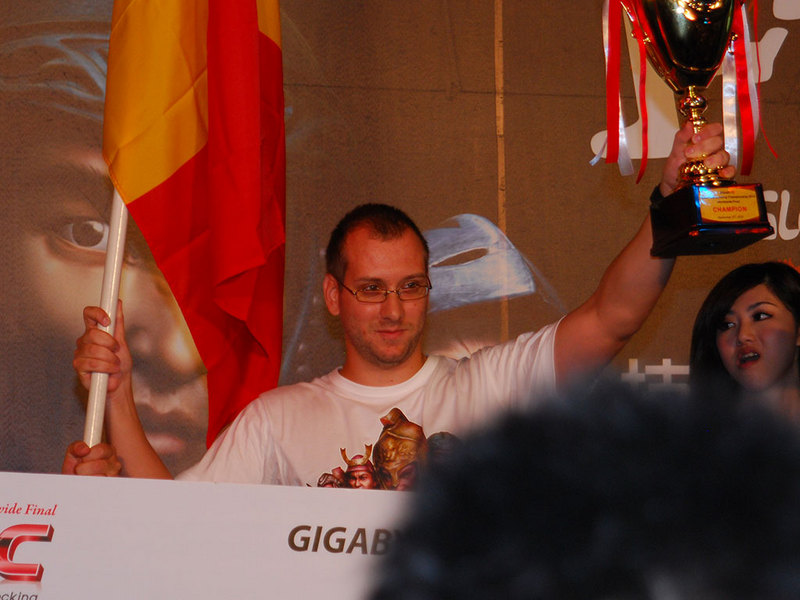
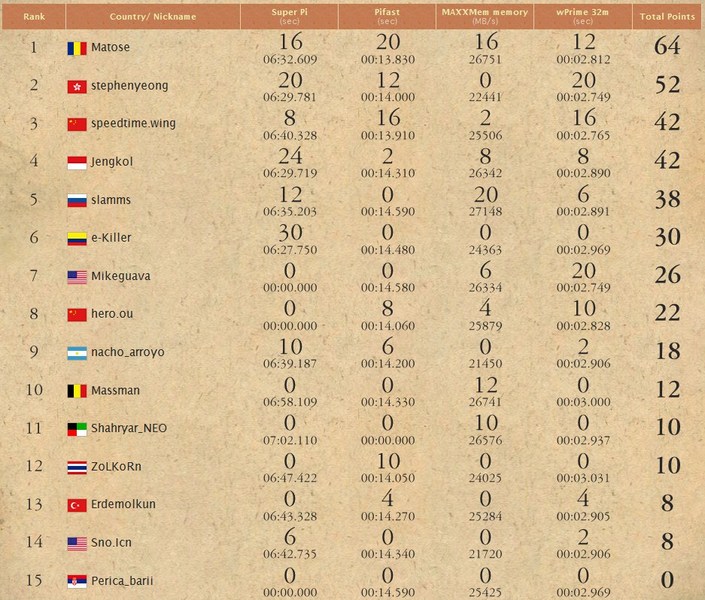
Matose from Romania has been crowned winner of the Gigabyte GO OC 2010 championships, at the world finals held in Taipei. The final scoreboard reveals that although Matose has not held too many top spots in individual benchmarks, his aggregate score has sailed him through to the top, thanks to maintaining a level of consistency with all the tests, importantly, not failing in any of the tests. He was trailed, rather closely at some points of the event, by stephenyeong from Hong Kong and Speedtime.wing from China (PRC).
This year's Gigabyte GO OC event covered 33 countries over five regions: North America, Europe, Asia & Africa, and [Greater] China. Top performers of each region got a chance to participate at the world finals held today. Today's event included a 4.5 hour run of overclockers using the same basic equipment and drivers, to use their skills and score the highest in a cocktail of CPU-intensive benchmarks. Their highest score among each tries affected their position on the scoreboard. The day's run started with Matose gaining initial lead with an aggregate score of 68 points, later he slipped to 50 points as Speedtime.wing caught up (around 14:00 local). Matose was able to stabilize and gradually increase his aggregate. e-Killer had the highest Super Pi score, Matose for PiFast, Slamms for Maxxmem, stephenyeong and Mikeguava for wPrime 32m. We will have a detailed article about the event posted a little later, that covers finer details about the event, and tons of pictures.


Read More ...
GO OC 2010 Finals: Matose Extends Aggregate Lead, Still Trails in Individual Tests
Matose, who has led today's contest for the most part, is pulling away from the rest by a going for the best accumulative score instead of individual program results. Matose is now ahead by eight points, but he is not the fastest in any single benchmark. The competition is ongoing, and things are heating up (quite literally). A little over 30 minutes left in the world finals of Gigabyte GO OC 2010.


Read More ...
GO OC 2010 World Finals: Speedtime.wing and Stephenyeong Close in on Lead
Speedtime.wing is closing the gap with Matose quickly by getting his system bench-stable and clearing Pifast in only 13.91 seconds. His WPrime time is also marginally better which means that the point difference between top three is only two points. Speedtime.wing and Stephenyeong are now tied at 48 points and Matose is in the lead but only by two points.


Read More ...
GO OC 2010 World Finals: Matose Maintains Steady Lead
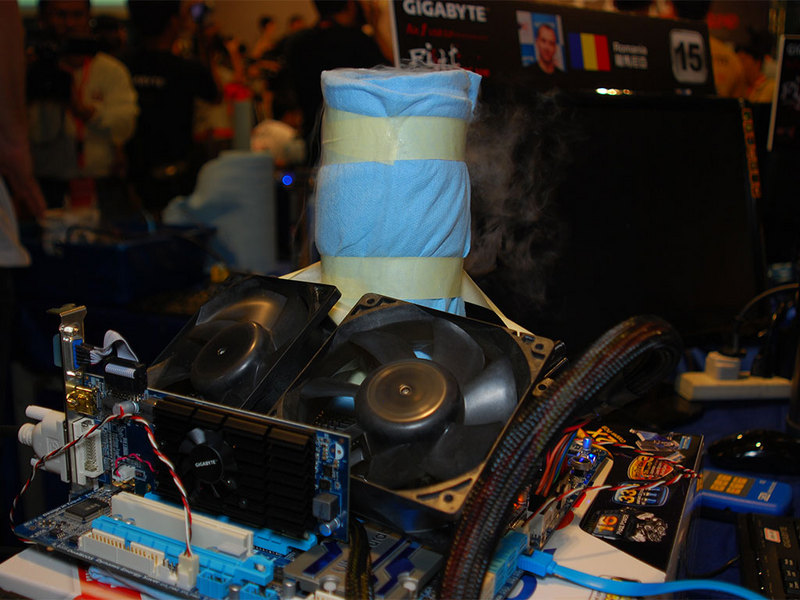
Two hours into the event, and seasoned overclocker Matose is staying ahead with an accumulate score of 68 points. He has had very few snags in reaching a clock speed of 6.08 GHz on his Core i7 980X Extreme Edition, cooled by liquid nitrogen. An impressive Pifast run clocked at 13.920 seconds along the way.

Read More ...
Oracle in Market for a Major Chipmaker
Oracle corporation is on a big buying spree after this year's acquisition of Sun Microsystems, a prominent server builder. Oracle wants to strengthen its enterprise IT business with the acquisition of a major chip-maker, right now AMD, IBM (its processor division), and NVIDIA are being named by prominent analysts. "You're going to see us buying chip companies," Ellison, 66, said yesterday at Oracle's annual meeting in San Francisco. Currently its subsidiary, Sun Microsystems has its own processor architecture, the SPARC. Gleacher & Co. analyst Doug Freedman predicts Oracle is chasing AMD, IBM (chip division) and NVIDIA. "You've got to think it's focused on enterprise hardware, on the server," he said. "AMD jumps off the screen."
Source: Bloomberg
Read More ...
AMD Orochi ''Bulldozer'' Die Holds 16 MB Cache
Documents related to the "Orochi" 8-core processor by AMD based on its next-generation Bulldozer architecture reveal its cache hierarchy that comes as a bit of a surprise. Earlier this month, at a GlobalFoundries hosted conference, AMD displayed the first die-shot of the Orochi die, which legibly showed key features including the four Bulldozer modules which hold two cores each, and large L2 caches. In coarse visual inspection, the L2 cache of each module seems to cover 35% of its area. L3 cache is located along the center of the die. The documents seen by X-bit Labs reveal that each Bulldozer module has its own 2 MB L2 cache shared between two cores, and an L3 cache shared between all four modules (8 cores) of 8 MB.
This takes the total cache count of Orochi all the way up to 16 MB. This hierarchy suggests that AMD wants to give individual cores access to a large amount of faster cache (that's a whopping 2048 KB compared to 512 KB per core on Phenom, and 256 KB per core on Core i7), which facilitates faster inter-core, intra-module communication. Inter-module communication is enhanced by the 8 MB L3 cache. Compared to the current "Istanbul" six-core K10-based die, that's a 77% increase in cache amount for a 33% core count increase, 300% increase in L2 cache per core. Orochi is built on a 32 nm GlobalFoundries process, it is sure to have a very high transistor count.
Source: Xbit Labs
Read More ...
AMD Readies Faster Phenom II X6 Models, New Fast Quad-Core Chip
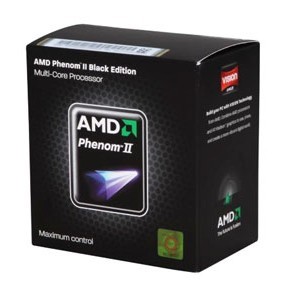
After AMD's recent mass-release of Athlon II and Phenom II series processors that included the Phenom II X6 1070T Black Edition priced at around $250, AMD is working on a new flagship processor that's even faster than the Phenom II X6 1090T Black Edition (the current flagship), given the model number Phenom II X6 1100T Black Edition (surprise!), and as always, it's yet another speed-bump. This chip is based on the 45 nm Thuban die, and is clocked a whole 100 MHz faster, at 3.30 GHz, with a Turbo Core frequency of 3.70 GHz. Surprisingly, it retains its TDP rating of 125W. As with every other chip based on this die, it features six cores with 128 KB L1, 512 KB L2 dedicated caches, and 6 MB L3 shared cache, it comes in the AM3 package and is backwards compatible with AM2+, supporting dual-channel DDR3-1333 and DDR2-1066 memory standards.
The 1100T Black Edition isn't the only new Phenom II series member down the line, there's the Phenom II X6 1065T (2.90 GHz, non-BE, 3.40 GHz Turbo); the slower Phenom II X6 1045T (2.50 GHz, non-BE, 3.20 GHz Turbo), and the company's next fastest quad-core chip, the Phenom II X4 975 (3.60 GHz, Deneb). It's not known whether the X4-975 is a Black Edition SKU.
Source: Xbit Labs
Read More ...
(PR) NVIDIA Adds GPU Acceleration for OpenCV Application Development
NVIDIA today announced CUDA support for OpenCV, the popular Computer Vision library used in developing advanced applications for the robotics, automotive, medical, consumer, security, manufacturing, and research fields.
With the addition of GPU acceleration to OpenCV, developers can run more accurate and sophisticated OpenCV algorithms in real-time on higher-resolution images while consuming less power. This will facilitate the development of scores of new, mainstream Computer Vision applications.
Read More ...
AMD Readies Two Fusion ''Zacate'' Models for Q1 2011
At least two new Fusion APU models based on the "Zacate" silicon are slated for Q1 2011. The Fusion "Zacate" processors are meant for ultra-portables, nettops, and SFF PCs, with a small TDP of 18W, an even lower-power version codenamed "Ontario" is being worked on, with a TDP of 9W. The first two Zacate chips include Fusion E240 single-core, and Fusion E350 dual-core. These chips are based on the Bobcat architecture, and pack DirectX 11 compliant IGPs with UVD 3.0, a single-channel DDR3 memory controller. The platform release will include the supportive Hudson D1 chipset.

Source: X-bit Labs, Image Courtesy: ComputerBase.de
Read More ...
(PR) Samsung Mass Producing 40nm-class 8GB DDR3 Module for Laptops and Mobile Workstations
Samsung Electronics Co., Ltd., the world leader in advanced memory technology, announced today that it is mass producing the highest density memory module for laptops and mobile workstations ' an eight gigabyte (GB) small outline dual inline memory module (SoDIMM) or unbuffered dual inline memory module (UDIMM), based on 4-gigabit (Gb), 40 nanometer (nm)-class* DDR3. High-density DDR3 will benefit chip designers, CAD/CAM engineers and other professionals who need to work with large data sets at significantly faster speeds.
Samsung is shipping 1G x64 (8GB) configurations of its new high-density, high-performance 40nm-class DDR3-based modules. Dell, first to market with the new module, is offering it in the 17 inch Dell Precision M6500 mobile workstation, which features 32GBs of Samsung 40nm-class DDR3, or four 8GB SoDIMMs.
Read More ...
(PR) Panasonic Unveils the Toughbook U1 Ultra Portable PC
Panasonic Solutions Company, provider of collaboration, information-sharing and decision-support solutions for government and commercial enterprises, today announced the newest member of its Toughbook U1 ultra-mobile PC product family, the Toughbook U1 Ultra. All Toughbook U1 products combine the portability of a handheld computer, the benefits of a full Windows OS, the durability needed for enterprise applications and a suite of available integrated features. The new Toughbook U1 Ultra is equipped with a TransflectivePlus display for up to 6000 nit viewability in direct sunlight, 64GB solid state hard drive, 2GB of memory, an Intel Atom Processor (Z530 1.6Ghz) and Windows 7. The device is ideal for highly mobile jobs such as direct store delivery (DSD), eCitation and vegetation management in markets like supply chain management, public safety and utilities.

Read More ...
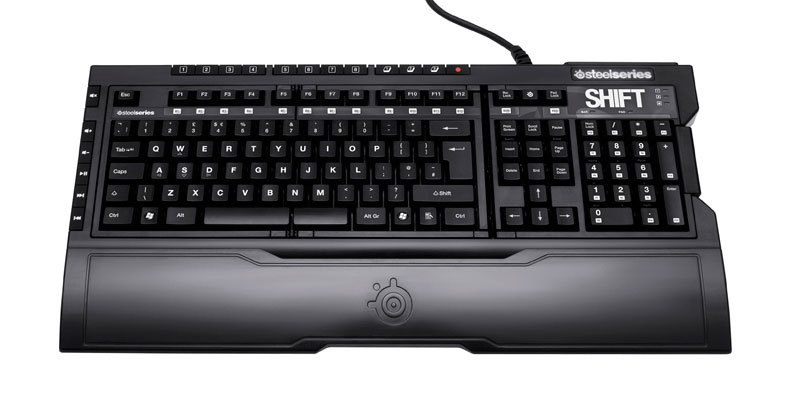
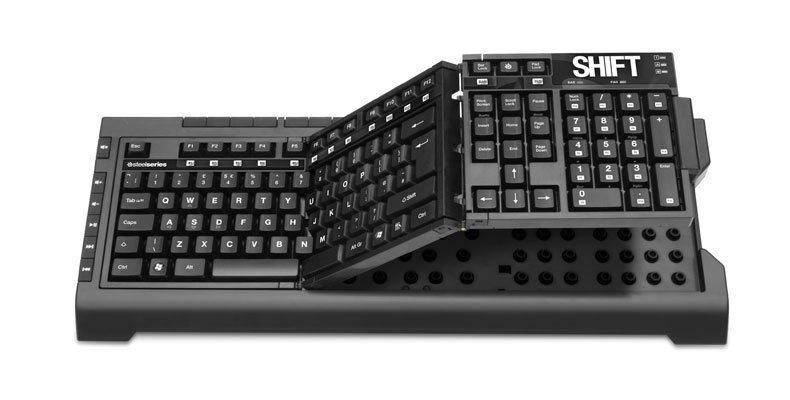
(PR) SteelSeries Introduces the Shift Gaming Keyboard
Today, as the leading manufacturer of gaming peripherals and accessories as well as product partner to some of the world's most successful game publishers, SteelSeries announced the new SteelSeries Shift gaming keyboard. Named for the ability to alter its appearance and functionality through interchangeable keysets, the SteelSeries Shift brings gamers advanced customization capabilities that improve the way they approach, experience, and master their game.
"With the introduction of the SteelSeries Shift, we're able to bring another unique and powerful gaming tool to consumers, said SteelSeries CEO, Bruce Hawver. "The Shift greatly expands the functionality and concept of the original Zboard, which joined our product line in 2008 as a result of our acquisition of Ideazon, with new SteelSeries features that will provide gamers with a keyboard experience that can be customized for all types of games. As we bring the SteelSeries Shift to market, we are continuing to work with the best developers and publishers in the games industry to offer player's unique layouts and functionalities that will enhance their entire gaming experience."

Read More ...


No comments:
Post a Comment