

Sky Sports News app arrives for iPhone and iPad

Sky has launched its official Sky Sports News application for iPhone, iPad and iPod Touch.
The Sky Sports News app offers, as you may expect, the latest news from the Sky Sports News room, along with streaming access to Sky Sports News Radio.
Also on offer are dedicated areas for Football, Cricket, Rugby League, Rugby Union, Golf, Tennis, F1 and Boxing as well as a customisable homescreen.

Ticker on
The company has also thrown in live results, fixture lists and league tables along with the Sky Sports News ticker.
Sky's apps have traditionally been great performers on the platform, with the Sky Sports scorecentres for football and cricket, the Sky remote recording app and Sky Mobile TV all well received.

 |  |
Read More ...
Report: Toshiba readying glasses-free 3D TV
 Toshiba is readying a glasses-free 3D TV, according to a Japanese newspaper.
 Yomiuri insists that Toshiba is working on the technology and will produce a television that does not need the much-maligned glasses required by most 3D technology.
The company has refused to comment on the specific report, but has confirmed to PS that work is continuing on glasses-free 3D.
Other examples
Philips has shown off a glasses-free 3D TV using the lenticular technology, and Nintendo's 3DS uses the same tech to bring 3D to the portable console.
So, it certainly makes sense that major television manufacturers would be working on the technology.
Glasses have always been seen as a major drawback to 3D on televisions, with the average consumer less than delighted to be burdened with eyewear.

| |
Read More ...
Review: ZTE Racer
 The world is going Android crazy, with Google currently registering 200,000 activations per day. Is that a reflection of the popularity of the operating system or the sheer number of phones now jumping on board?
 It's probably a mixture of both but, given those figures, we're going to see more and more phones like the ZTE Racer.
This sub-£100 Android 2.1-packing smartphone is the cheapest device to offer the Google operating system yet, and ZTE's first.
Affordable Android appears to be the order of the day. The T-Mobile Pulse Mini, Vodafone 845 and LG Optimus have all offered cheap alternatives to the blockbusting HTC, Samsung and Motorola Android phones, but can ZTE make an impression where those before have failed?

For a budget handset, the ZTE racer has quite a solid feel. Its smooth, matt plastic finish encases a 2.8-inch touchscreen, and below that are three touch-sensitive buttons: Home, Menu and Back.
Strangely, there's no search button. It's something we're used to seeing pretty on much every Android device, and it's missed here. If you want to access the phone's general search functionality, you'll need to do so through the Menu key.

Beneath those buttons sits a backlit plastic strip with a metallic finish, providing the Call and End call functionality. The strip lights up when any of the phone's keys pressed, while holding End call brings up the power menu. Overall it's quite an eye-catching feature.

The back of the device is also very pretty. We really like the matt finish; it gives the phone a pleasant feel, although it does get grubby pretty quickly. Everyone loves the Android robot, so it's nice to see him plastered on the back of the device.

Probably less welcome is the whopping great Three Mobile icon. The underdog network is again partnering with the Chinese manufacturer, as it has on many of its budget devices.
The silver-encased 3.2-megapixel camera's lens sits dead centre at the top of the handset. It's an interesting placement, but not an unwelcome one, because it keeps our paws out of the frame.

At 100g, the device has a reassuringly weighty feel, and most of the weight on this pocket-friendly 102 x 55 x 14.5mm device appears to sit at the thicker top half of the device, which becomes slimmer as it moves to the bottom.

This is a contrast to devices like the Vodafone 845, which serves up a rather flimsy-feeling symmetrical handset. The Racer is better.
The sides of the device are a stylish silver, the varying width of which reflects the shape of the handset. The left-hand side is clear of controls, while the right side has an uncovered micro-USB charging port and the volume bar. There's no hard camera button.
On top of the device is a 3.5mm jack and an extremely small power and screen-lock key. It's really too small and awkward to get at when using the device. Thankfully, you can wake the screen by pressing the touch-sensitive panel if the screen has timed out, rather than locking.

Overall, however, the candybar design feels comfortable to use and sits very nicely in the hand. The varying weight of the top and the bottom lends itself to quite a high grip.
Something that lets the phone down a little is how visible the edges of the touchscreen panel are. It goes a little way to cheapening what is definitely one of the most well designed budget handsets on the market.
Android is an open source operating system, meaning that manufacturers can do an awful lot with the bare bones interface to make it their own, or very little and still have an awesome OS.
Motoblur on the Motorola Dext is an excellent social networking UI, Sony Ericsson's Timescape on the Xperia X10 series is very attractive, while Sense on the HTC Desire et al sets the benchmark for everyone.
The lower-end Android devices have, understandably, not gone overboard on producing their own UIs. Indeed, there's a very real risk of a multitude of cheap identikit Android handsets, manufactured by any man and his dog.
It's incredibly simple to get an Android phone on the market with very little work, and even less thought.
The Acer Liquid E, Vodafone 845 and T-Mobile Pulse Mini have done very little with the OS. The ZTE Racer does even less. This is Android 2.1 in its most vanilla form.

There's no overlay whatsoever. But still, this is Android 2.1 for a penny shy of £100, which is an incredibly positive thing.
The Racer opts for the basic three Home screen approach, all of which are highly customisable.
Preloaded onto the interface is the indispensable Google search bar, which sadly lacks the speech-to-text functionality we've seen on most Android phones lately.
We've also got Messages, Contacts, Dialler and Market, as well as a couple of Three Mobile widgets, which are the only things that distinguish this handset from plain Android.

When we began using the device, the first thing that became apparent is just how resistive the 2.8-inch resistive really touchscreen is.
An iPhone 4-like flick of the thumb has about as much effect as attacking The Incredible Hulk with a Polo mint. It seems that the only thing this handset takes notice of is a bit of tough love because it takes a really solid press to achieve anything.
This is especially apparent when swiping through the Home screens and menus, but also when pushing the on-screen apps and widgets. Your thumb is going to get a real workout and it really gets to be a drag after a while.
The extra force you'll need to exert will leave the screen badly smeared, and littered with fingerprints.
At the foot of each is the grid icon to summon the main Android menu, which appears in the rather attractive conveyor belt system that showcases your apps in a rolling manner, but again it's hindered by the lack of responsiveness.

You almost have to press and hold the screen and scroll from there, which can often lead to inadvertently opening applications. It's nowhere near as smooth as on handsets like the Vodafone 845.
Dragging your finger down from the top of the screen brings forth the ever-useful notifications menu, which alerts you to new messages, emails or the progress of your app downloads.

As we mentioned before, you can search the phone's general functionality, which is much like Apple's Spotlight service on the iPhone. Typing in the box will search for apps and contacts, while tapping the magnifying glass will prompt a Google search.
Also on offer in this incarnation of Android are Live Wallpapers, such as Google Maps and the addictive Nexus tap-to-redirect-the-coloured-streams wallpaper, which shot to fame on the Google Nexus One.
They're a nice touch, but we're used to them now, so the novelty of playing with them has worn off.
Another familiar feature is the handy Android control bar, which allows functionality like brightness, Wi-Fi and GPS to be switched on and off without the need for delving deep into the OS.

The familiarity is not something we can hold against the ZTE Racer though, it's great to have it on such an affordable handset.
Apps launch quickly and we experienced very few glitches when using the phone. The Android Market crashed a couple of times, but it didn't affect the current download, which kept on ticking.
The 600Mhz processor and 256MB RAM on the device keeps everything moving at a pretty decent pace, as long as you're realistic about how many apps can run without it grinding to a halt.
Overall, the beauty of this interface is that the same functionality seen on a £500 handset can also be achieved in a £100 device. It's the ease and enjoyment of use that will decide which end of that spectrum you'll go for, and for anyone that has used the HTC Desire, you'll know where that extra dime went.
Once you've owned or used an Android phone, you never have to worry about the rigmarole of copying and transferring your contacts via SIM, ever again.
If this is your first time using an Android phone, you can easily import contacts from the SIM, but as soon as you've created your Google account, they'll all be backed up to the servers, syncing any new numbers you have, and you're good to go for life.
If you decide to upgrade from the Racer, next time you log in to a Google account on any smartphone, your contacts will be there for you within minutes.
The Contacts app, once again, offers nothing beyond the most basic Android functionality, but downloading the Facebook application and logging in enables you to sync Facebook contacts very simply. They will appear in your contacts book, but display pictures don't download.

Within the contact is the information they've chosen to display on their contacts page, so some will have phone numbers, while others just display email addresses and the option to view a profile.
The same applies to adding Twitter contacts. You can choose to sync with all of your Twitter feeds, or just the ones who're already in your phonebook. Sadly, this seems to be the only way of avoiding repeat contacts for Facebook and Twitter. There's no other means of merging on-board.
Within your basic phone contacts, we're limited to phone number, email, IM and postal address. Beyond that, you can add work information (although no-one is going to be using this as a business phone), notes and a nickname.
You can add a photo, although Google had randomly remembered some of the Facebook pictures of our pals from using previous handsets. Otherwise, you get the Android icon. It also remembered who we'd favourited before.
Opening a contact asks if you'd like to call or send a text, or send an email if an address is listed, which,if you think back only a couple of years, would have been a really high end feature, and one that saves a lot of time.
Calling
Making calls is, as you'd expect, extremely straightforward, if you look past the sticky touchscreen.
Launching the Dialler brings up your call log and enables you to start typing in the name of a contact using the alphanumeric keypad, but you can't access your contacts book directly from there.

Call quality is surprisingly good on the Three Mobile network, coming through crisp and clear, and the loud speaker, although quiet, is nowhere near as tinny as some of the other affordable Android contenders.
Sorry, Apple, but no amount of holding this phone, squeezing it, eating it or throwing it in a furnace caused us to lose mobile signal or drop calls. A £100 phone that works as a mobile should? Fancy that.
"And if you're taking your first worrying steps into button-less keyboards, we couldn't recommend this option more highly," we said of the HTC Desire back in March.
Well, if you're taking your first worrying steps into button-less keyboards, we couldn't recommend this option. Period.
Even sending a simple 10-15 word text message on the ZTE Racer will probably take you three times longer than it would on the current leader of the Android pack.

Using the Android keyboard to type out texts and emails requires the same amount of concentration and precision as throwing 180 every time you step up to the darts oche after the obligatory five-pint warm-up.
You really have to focus, and ensure you apply the right amount of pressure. We found that about 40-50 per cent of our key presses weren't recognised, or hit an adjacent number.
We found the best approach was to type as if you're trying to slightly smudge the keys while leading a little bit to the left of your target for a better success rate, but we came close to launching this phone against the wall so many times during this test. Maybe that's just our angry disposition, but still.
Typing in portrait mode is a practical no-go, but the swift accelerometer offers some relief in landscape mode.
If you insist on persevering with sending messages on the ZTE Racer, rather than finding new and intuitive ways to satisfy your rage, there are plenty of options on board.
As with every Android phone, Google talk is installed as standard, for IMing with your Gmail friends, as well as a dedicated Gmail app that remains streets ahead of the generic email application on Android devices.

This offers a great reproduction of the web-based experience with threaded emails, something that's not available on the multi-account app.
The email application does offer combined inboxes for Gmail, Hotmail, Exchange and any POP3 or IMAP-based servers. You can choose a default account and still view the accounts separately.

One pleasant touch is the default tone ZTE has chosen for incoming texts and emails. It's very soothing to the ear. When a new message comes through, you'll also be notified by a flashing green light which nestles in the right-hand side of the earpiece speaker.
We also downloaded Skype as our first port of call, while the new Vonage app allows free calls and IMs to our Facebook pals. Sadly there's nothing on the Android Market that offers a decent Windows Live Messenger service yet.

With a 2.8-inch screen, the Racer was always going to struggle as a browsing device. Add into the mix a resistive touchscreen that's hopeless to type on, with no multi-touch or pinch-to-zoom, and usability is going to be a problem.
While this is true, we have to remind ourselves that this is a £100 handset, and what we've come to expect and enjoy about Android phones to date isn't going to be forthcoming. It's about reassessing our expectations.
The WebKit Android browser is built into the device, which enables us to make the best of the situation with its easy navigation and simplistic design.

Despite the screen size, text is reformatted to fit the display very well and continues to do so when you use the on-screen zoom controls. Web pages, thankfully, load at a reasonable text size and ask you to navigate from there, rather than offering a full- page view.
The bookmarks bar next to the URL also offers easy access to your favourites, most visited pages and browsing history in easy to navigate menus.

We'd really like to have opportunity to copy and paste text from web pages into emails, but it's easy to copy and share URLs by pressing and holding within the bar. Naturally, there's no Flash support, so web video doesn't really stretch beyond the YouTube widget.
If you fancy a landscape view, the accelerometer is like Theo Walcott on route to the bathroom with a serious case of the squits. Quite fast, essentially.
WebKit isn't the only player on Android these days though. The Opera Mini browser is making headway and serves up a great alternative.
Using the Mobile View option transcodes the data through Opera's servers, filtering out the non-essential information for much quicker page loads.
The thumbnail bookmarks presented on the home page are also a really neat addition.

This handset also boasts the advantage of Three Mobile's UK best-performing 3G mobile broadband performance at 7.2Mbps to compensate with some seriously fast browsing.
802.11 Wi-Fi is also on-board, and as with all Android devices, it'll remember your favourite networks and shut down the 3G when you enter the wireless zone to save your data and speed up your progress.

The 3.2-megapixel auto-focus camera on the ZTE Racer is one of the major letdowns. We didn't have high hopes going in, but we were still really underwhelmed.
There's no hard shutter button, so that taking pictures has to be done on the resistive touchscreen, which means your chances of nailing any moment first time are slim to none.

We spent ages prodding away at the on-screen capture button, but with no real luck. There's also an exposure meter, which controls how bright your photographs are, but again we struggled to adjust this (and the zoom) effectively using the on-screen controls.
The results are as expected really. Colours are washed out, regardless of the exposure controls and any attempts at capturing moving targets ends in failure:

Click here to see the full res image

Click here to see the full res image

Click here to see the full res image

Click here to see the full res image
It's able to capture a modest amount of detail, but conditions have to be perfect for this:

Click here to see the full res image
Taking pictures close-up is an exercise in futility, producing grainy, out of focus results:

Click here to see the full res image

Click here to see the full res image
Recent Android phones have also provided an easy roll-out tab with access to the settings, but here you have to go into the menu to access this.
There you'll find white balance options as well as various colour modes and effects. Most of which are useless, with the auto setting providing the best option.
Video recording doesn't offer a better standard either, although the sharing via YouTube, Bluetooth, Messages and Gmail options are straightforward ways of distributing the content.

The ZTE Racer isn't a bad little music player. Sound quality is much better than we've heard on some of the lower-end Android contenders, such as the Acer Liquid E and the Vodafone 845.
Although lacking a little in the volume stakes, audio is of a good standard through a decent pair of headphones (the in-box cans aren't even worth unwrapping). The funky, sexual sounds of Rick James came pulsating into our brains at MP3 player-like quality.
We'd happily use this as an MP3 player in a forgot-my-iPod emergency, and with a 2GB microSD card in the box, you can add enough choice nuggets to get you through the day.

Adding music is very straightforward. Just mount the device as a storage device via the micro-USB cable and drag and drop onto the memory card. The phone will sort the organisation.
The music player is also pretty good and easy to use, segregating artists, albums, songs and playlists, while the playback screen has easy to access controls like repeat and random.
The only real drawback was how playback occasionally skips when the accelerometer kicks in. This makes it a little more difficult to use as a mobile music player, although you could turn the acclerometer off (we tried this, but when we used the phone normally again we got frustrated).
As with most of other aspects of this phone, having Android on board gives the phone a thousand times the functionality it would have with a manufacturer-built OS.
The Android Market offers access to the Amazon MP3 store, which enables you to download music to the device on the go.

The device plays MP3, WAV and iTunes-friendly AAC files if that's your preferred download portal.
Video
Video playback (H.264, H.263, and MPEG4) is a slightly different proposition. We're only talking about a 2.8-inch, 240x320, TFT screen here, which isn't the crispest in the world. The video app icon is slightly pixelated, as is the content within.
We tested the Rocky trailer on the device, and both Mick and Rocky's haggard mugs don't get much prettier on this screen.

The accelerometer lag also blights the video player, as well, which is a strange one. The processor doesn't struggle with loading or shifting from portrait to landscape view, so it's difficult to decipher where this bug originates.
The Android YouTube widget is as reliable as ever, and now benefits from an upgraded mobile YouTube player as well.

As for viewing your photographs, the nifty Gallery application, which we first saw on the Google Nexus One and is rumoured to be inspiring the design of Android 3.0, features on this device too.
The thumbnails are arranged neatly into albums, and expand in an eye-pleasing animation to a grid view. From here you can view and swipe through the photos individually, although they do take a while to fully render.

This is far from the best deployment of this application we've seen. Even the sub-par Acer Liquid E offered a mighty fine screen and albums separated by geographical location.
Battery life is a funny one on the ZTE Racer. It can appear to charge very quickly via the micro-USB port. We plugged it in while rocking the red zone, and within in an hour the meter was giving us the green light – before degenerating at pretty much the same rate.

These lights change colour more often than the Trafalgar Square traffic lights.
In saying that, we left this phone for two days without touching it and it was still hanging on for dear life so there is a little staying power in the 1100mAh battery.
So, it all comes down to frequency of use. During the test, the battery didn't hold out for more than about 4 hours while we constantly browsed the net, played media, took photos and generally took liberties with the little fella.
ZTE is claiming a modest 3 hours and 30 minutes of talk-time, and up to 200 hours in standby mode. The results aren't too far shy of that, but this isn't the phone you want to be taking to a festival. You'd be lucky to make it past the first 3am silent disco.
If you're a moderate user, you'll be able to get away with charging every evening, but if you're attached to your smartphone, it might be an idea to take the micro-USB cable to work.
Maps
The idea of a fully-functional mobile sat nav on a £100 phone was a pipedream as far back as a year ago. The only real option was to pay for something like TomTom for iPhone and Co-pilot for Android.
Now every new phone under the Android banner has Google Maps Navigation service and it doesn't cost a penny. This is the cheapest phone yet to boast the voice-enabled functionality, so how does it function?
Firstly you'll have to install the speech package, which is a very swift addition to the handset from the Android Market. Then, once you've searched for directions in Google Maps, just select the Navigation option and you're on your way.

However, it's not that straightforward. The phone often found it quite difficult to establish a reliable GPS signal and indoors it's a complete no-go.
Once you have a signal locked on, the map view quickly switches to a more familiar 3D view and there's a host of layers you can add including satellite view and traffic.
Voice instructions come through very clearly, but we could certainly use a little more volume from the speakers.
If you need to come out of the app, Google Maps will continue to run in the background and it's easy to access the "ongoing" service from the Notifications tab, which can be dragged down from the top of the Android interface.
Now we have to question the wisdom of housing Google Maps Navigation on a device with a 2.8-inch screen, and an unresponsive one at that - although we understand that it's included by default, and good to have as an option.
But for a start, there's no way that attaching this to your dashboard is going to cut it, unless you have telescopic vision. So, you're going to be holding this in your hand, and we can't say that it's much safer than texting on the go.
We reckon you're better off sticking to phones like the Dell Streak or Motorola Milestone for using this functionality, but it's still very handy to have.
When trying to find your way around a city on foot, the regular Google Maps functionality is obviously on board.
Google Maps also remembers your previous searches and in v4.1 there's the option of a Live Maps wallpaper, which follows your movements around with a little blue dot on your home screen.
There's also Google Latitude functionality added in, so you and your friends can track each other's progress around the globe.
Also on board is the new Places functionality, which enables you to list places of interest or your business on Google Maps, but also to discover nearby restaurants, bars and coffee houses. It's a really slick, fast loading interface that displayed accurate information very quickly.

Altogether, we were quite surprised at how rapid the Google Maps experience was on a phone of this ilk. The GPS signal is not always 100 per cent reliable but when it locks onto a signal, the phone's processor doesn't let you down with lagging loading times.
The phone has most of the connectivity options we've come to expect from the top-end smartphones.
Perhaps the highlight is the 7.2Mbps HSDPA mobile internet on the UK-best Three Mobile network. We were able to maintain internet connectivity in a range of locations, even on a long walk out into the Shropshire wilderness.
We've performed the same test with phones on all of the other networks. O2 and T-Mobile performed pretty well, but Orange and Vodafone struggle.
Of course, this test will vary depending on the area, but we've found that a test in a rural area is a good barometer for nationwide success.
For when you're indoors, the reliable 802.11 Wi-Fi takes over proceedings with no ill effects. There's also 2G connectivity on the EDGE network.
Switching to 2G networks in the wireless controls menu will also conserve valuable battery life, if you're less reliant on a fast, constant internet connection.
Bluetooth 2.0 with A2DP is on board, and we had no problems pairing our laptop with the device, enabling quick and easy file transfers.
The connectivity also enabled us to play back the phone's audio files and to use the computer as a loudspeaker to make calls. Strangely though, enabling this feature automatically calls your last number.

If you'd rather not use Bluetooth to transfer your files, it can be done by mounting the device via USB. There your media files can be easily transferred onto the 2GB microSD card, and the phone will automatically organise them into the corresponding areas on the handset.
Considering Three Mobile's broadband prowess, we'd have really appreciated being able to tether this device to our laptops for on-the-go connectivity. We had the Three Mobile software installed from a previous dongle and hoped to use it to connect, but without any joy.
The Vodafone 845 enabled this, so it's a bit of a minor disappointment.
Applications
One of the reasons why every manufacturer, aside from Apple and the ever-stubborn Nokia, is verging towards Android is the burgeoning App Market, which is now a credible second tier alternative to the App Store.
While the sheer amount of high quality apps still trails the iPhone's offering, there's more than enough to get by on here, many of which come pre-loaded on to the handset.
The Android 2.1 version of the Market is very nicely designed and a million miles ahead of the initial incarnations.
We've already spoken of the on-board Google awesomeness with Maps, Navigation, Mail, Latitude, Places and Talk, but there are other handy additions like Sound Recorder and Docs To Go, the latter of which enables you to read Microsoft Office documents.

There's an FM radio on board which works with the bundled-in headset acting as an antenna. Unfortunately, the quality of the headset is so shocking that, unless you use your own, the FM radio functionality is pretty pointless.
It's a pretty poorly designed interface too, in all fairness. Scanning for channels is a laborious and boring experience and once you get there, signal quality is generally poor.
In terms of social networking, there are the bog-standard official Facebook and Twitter widgets that display status updates and fields to update your own, while providing links to your feeds.
If you want to display them on your Home screen though, both of them combined will fill an entire screen. With the limited real estate offered by only three screens, there's a decision to be made.

This isn't the only budget Android phone in town, but it is the cheapest. Android 2.1 for under £100 is a real watershed that should see many other devices follow suit. In terms of competitors, it looks to undercut the likes of the HTC Wildfire, which is a scaled down version of the HTC Desire, available at about half of the price at £200.

It's not in a position to compete on any real level, so if you have the money to spare then this should be your option. It has Sense UI and a much better build and screen quality.
Mid-range devices like the Motorola Dext present a more realistic target, but it doesn't quite have the power and flexibility to compete there either.

This phone goes directly against the T-Mobile Pulse Mini and the Vodafone 845, and it does well against both. Granted both of those devices do slightly more with the Android OS, but the Racer is a well-designed phone with a more attractive price point.

The screen is better than on the 845, and it seems to have a little more grunt despite the identical processing power and RAM. The camera is nothing to shout about with any of them and here it performs worst, while the Music app produces some surprisingly good sounds.
If our money was going on any of the three, then we'd opt for the ZTE Racer.


The ZTE Racer is the first Android phone to dip beneath the hallowed £100 mark. What we expected to be a very low-end, budget handset, has surprised us in a few areas to stand tall as a decent alternative for hard-up Android lovers or first-time smartphone buyers.
It's smartly designed and doesn't feel like some of the cheap-looking handsets we've seen from the Chinese manufacturers, in recent years. Three Mobile, with its reasonably-priced pre and post-pay deals is the perfect partner for the device.
The functionality we've come to love from Google's open source operating system is present in most areas, but there's no skin to make the experience slightly more user friendly. To be honest, it would be unreasonable to expect one.
Social networkers will have their fixes taken care of, while the fast browsing experience kept us connected at all times. The ever broadening range of applications from the App Market is a real bonus.
The handset isn't without its flaws. The resistive touchscreen is very poor and typing messages and emails can be an absolute nightmare. You really have to apply a lot of pressure for your touch to be recognised and even then it's difficult to be accurate.
Cameras on Android devices have been traditionally weak, so there's no surprise that the 3.2-megapixel snapper does little to convince here either. The Music player produces some decent sounds and is a rather pleasant surprise.
All in all, however, we're impressed by the results here. If you're not a high-end Android snob and are looking for a cheap alternative, then this is the budget Android handset you definitely look at.
We liked
There's plenty to like here, including the sub-£100 price point. We enjoyed using this as a music player, while the processor seemed to handle most tasks with very little whining, stalling and complaining. The phone has a decent build and reasonable design, and Google Maps Navigation on a phone of this ilk is also a great bonus
We disiked
The touchscreen on the device did its best to resist our every whim and desire, and typing is a nightmare. Battery life can be a little dicky, while the issue with the buggy accelerometer can't be overlooked. The camera is very poor also.
The Verdict
For £100, the ZTE racer presents incredible value for first time Android users. It's better than its competitors and boasts the functionality only seen on much more expensive handsets until very recently. It's an ideal first smartphone, but be wary of that middle-ages touchscreen.
Related Links
- Phones@TechRadar - our new mobile phones channel
- TechRadar's Reviews Guarantee
- How much is your old mobile phone worth?
- Mobile phone reviews

| |
Read More ...
In pictures: Sony a33 and a55
 The new Sony a55 and a33 is the latest DSLR setup from Sony, which offers something completely new to the camera world – a translucent mirror.
Sony is calling this a game changer and it is easy to see why. The use of Translucent Mirror technology means you can do 10fps of continuous shooting for under a grand - a first for a DSLR.
The new mirror technology found in the camera readies the autofocus so that fast-moving shots are easily snapped up.This is because there is no synching of shutter and sensor in the camera, as the see-through tech does away with this.
Considering this is how SLRs have worked since 1985, it's brave of Sony to go in this new direction. But it does mean that it is the smallest camera of its class, with Sony managing to get reduce the size of the Alpha by 26 per cent. It also means that the a33 and a55 use an electronic viewfinder.
Sony has also introduced HD video to its Alpha range, in the form of 1080i. The camera shoots both to AVCHD and MP4, so there shouldn't be any compatibility issues when it comes to editing the footage.
Autofocus on the video is as good as on still images. You should be able to shoot objects that are moving as fast as 50km an hour and keep the shot in focus. Sony is calling this technology Phase Detection.
TechRadar managed to catch a glimpse of the a55 at an event in London this week and the system looks great.
Below are some pictures of the camera and some more information about the specs.

The variable angle tilt LCD is adjustable to 270 degrees. The viewfinder packs 1.15 million dots and is superbright, so should be good for low light shots.

Sweep Panorama mode is also on board and it is 3D compatible - so connect up your a55 to a 3D Ready TV and you will be able to play back your stills in the third dimension.

Inside the camera is a brand-new sensor. Called the Exmor APS HD CMOS (16.2MP for the a55 and 14.2MP for the a33) the sensor uses BIONZ high-speed image processing engine and brings a stupidly high ISO range of 100-12,800.

UK release date for the Sony a55 and a33 is September, with pricing as follows: an a33 with standard kit will cost between £600 and £700. Expect to pay £100 more for the a55.
TechRadar will get a hands-on with the cameras later today so stay tuned.

| |
Read More ...
Exclusive: Google's live search results is just a test
 Google has responded to the video of one of its search experiments, which shows results appear as a person types, insisting it is just one of a number of trials.
 An unofficial video has surfaced that shows what appears to be the next step in Google Suggest but rather than offering you what you might be searching for as you type this actually shows you the likely results.
But Google has quickly moved to say that this is just one of a number of experiments going on, and consumers should not necessarily expect this to be a change rolled into Google's main search engine.
"At any given time we are running between 50-200 search experiments," a spokesman told TechRadar.
Trials and tribulations
Google has spoken in the past about the way in which it trials changes, recently telling TechRadar how its popular Google Labs scheme allows the public to peek behind the curtain.
Back in 2006, VP Mariss Mayer blogged about the search experiments saying: "From time to time, we run live experiments on Google - tests visible to a relatively few people - to discover better ways to search.
"We do this because there's no good substitute for understanding how real people, in real-world situations, actually operate.
"Theories are fine, but 'improving the user experience' really happens best when we understand what people do online."

| |
Read More ...
Gary Marshall: Happy birthday, Windows 95 - the OS that changed it all
 Windows 95 is fifteen today. It's hard to imagine it now, but the launch was greeted with the sort of hype that only Apple generates today: the Empire State Building lit in Windows colours, midnight queues outside PC shops, wall-to-wall news coverage and that Rolling Stones riff.
 To some, the arrival of Windows 95 heralded a brave new world of personal computing; to others, it was the beginning of a long period of stagnation for the PC platform.
There's no doubt that if you were running Windows 3.1 or 3.11, Windows 95 was like a visitor from the planet Groovy. No, really. It looked great, and provided you treated the system requirements - a 386 with 4MB of RAM and 120MB of disk space - with the contempt they deserved then it ran great too.
Heavily targeted towards home users as well as the more traditional corporate users, it was the first stand-alone Windows (MS-DOS was part of it rather than a separate OS). It had an exciting new interface that's still visible in Windows 7, and it even had Microsoft's first go at a Web browser - albeit one that was initially tucked away on the optional-extra Plus pack.
The beginning of the big boots
Critics, however, would argue that Windows 95 was when Microsoft started throwing its weight around.
They argue that by bundling MS-DOS inside Windows, Microsoft killed the market for MS-DOS rivals; the arrival of Internet Explorer would become the Netscape-crushing browser war; and the US Department of Justice found that it used the "Windows Tax" - that is, offering manufacturers discounted prices if they promised to limit the number of non-Windows PCs they sold - to stifle competition.
In 1998 consumer advocate Ralph Nader wrote a devastating critique that accused Microsoft of "suffocating" the PC industry and argued that "the victims of Microsoft's monopolistic activities aren't just the companies that go belly-up; they are the consumers who pay high prices to use mediocre and unreliable products."
It's bleakly amusing to note that when the (then) Microsoft-owned Slate magazine responded to Nader, it argued that "in the browser wars, Microsoft faces a formidable array of opponents--Sun and Oracle, to name just two--and, after two years, it still lags behind Netscape even though IE generally gets better reviews than Navigator."
A force for good
Let's concentrate on the product itself, though, because when you do that Windows 95 was clearly a force for good too. It was a vast improvement over its predecessors. It revolutionised PC gaming. It made using computers - computers that we could actually afford to build or buy - much easier than before.
You may mock its primitive graphics, its press-Start-to-stop interface, its increasingly demented product names - Windows 95 OEM Service Release 2, anyone? - and its postie-crippling pile of installation floppies, but fifteen years ago Windows 95 was as cool as computing got.

| |
Read More ...
Monster announces 'world's first universal 3D eyewear'
 Monster has announced what it is calling the world's first universal 3D eyewear "shutter system" – claiming it will work with all brands of 3D televisions.
The AV accessories specialist insists that the Monster Vision Max 3D range is the "world's first and only universal wireless 3D eyewear "shutter system.
"Monster's exclusive Active 3D eyewear system is the only RF Shutter system that will work with all brands of 3D HDTVs, allowing users to experience a new level of power and 3-Dimensional visual immersion while watching Blu-ray movies or playing advanced video games," explains Monster.
Fatigue
"Monster Vision Max 3D glasses feature a stylish and lightweight high-gloss black design that allows users to wear them for hours without experiencing any fatigue."
Monster explains that the technology utilises 'leading-edge' RF technology, with 3D active sync based on BitCauldron's HeartBeat technology.
Monster Vision's eyeglasses and transmitter have a UK release date of late September and are priced at £165, with each extra pair of glasses costing £115.

| |
Read More ...
Five rejoins Project Canvas
 Channel Five has rejoined Project Canvas following its takeover by Northern & Shell.
 Five dropped out of Project Canvas a matter of weeks ago, with the BBC-backed IPTV scheme proving to be too expensive for the struggling broadcaster.
However, following the takeover of Five by Richard Desmond, the decision has been taken to jump back in.
Northern & Shell Chairman, Richard Desmond, said: "Project Canvas is set to shape the future of broadcasting and open up new and exciting possibilities for viewers.
"This is important to the future of Channel Five and having an open internet-connected TV platform fits closely with our plans to bring brilliant new content and interactive services to viewers.
"We're delighted to renew Channel Five's commitment to supporting Project Canvas following a review of our digital strategy."
Back on board
The decision was inevitably welcomed by Project Canvas director Richard Halton, who welcomed the broadcaster back on board.
"Channel Five has already made a major contribution to Project Canvas and we're delighted to have them back on board," he said.
"This is great recognition of how important Canvas is to the future of television."

| |
Read More ...
George Lucas in $5 million 'Jedi Mind' lawsuit
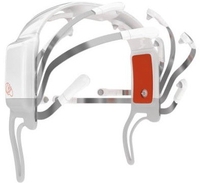 Star Wars creator George Lucas is suing a gaming peripherals company called Jedi Mind Inc. that is attempting to market a gaming controller which allows gamers to control games directly with their minds.
The Hollywood Reporter notes that Lucas has filed a $5 million trademark lawsuit against Jedi Mind, Inc.
JediMind is currently selling three products called Master Mind, Jedi Mouse and Think Tac Toe.
Thought-controlled gaming
For its part, the peripherals manufacturer claims that its wireless headset can detect brainwaves on both a conscious and non-conscious level, letting gamers control their on-screen actions by their thoughts.
Lucas' LucasFilm production company originally sent a cease-and-desist letter to Jedi Mind back in May 2009.
At the time, Jedi Mind Inc's CEO, Brent Fouch, responded saying that he would phase his company out of Jedi Mind marks, which was enough to placate LucasFilm.
However, now LucasFilm is claiming that Jedi Mind Inc. did not keep its promise. Hence it sent out a second cease-and-desist letter last September.
LucasFilm claims the alleged trademark infringement will confuse consumers and harm its business and reputation and is demanding injunctive relief and recovery of damages estimated at no less than $5 million.
LucasFilm claims ownership over "all characteristics associated with the Jedi knights not memorialized in a registered trademark ... (including) Jedi robes, the lightsaber weapon, the power to levitate objects, a telepathic oneness with other Jedi and the universe, and the ability to shoot energy beams called 'Force Lightning' from the fingertips."

| |
Read More ...
Google Goggles for iPhone landing this year
 Google Goggles will be arriving on the iPhone later this year according to engineer David Petrou.
 Google Goggles allows people to search by taking a photo – with Google's software identifying landmarks and objects.
Speaking at the Hot Chips conference, Petrou confirmed that work was ongoing on the iPhone version of the popular Android app, and that it would see the light of day before Christmas.
End of the year
"We're working on an iPhone version, and hope to have it out by the end of the year," said Petrou.
Goggles would be an immediate hit on the iPhone, with Google's apps always popular and the prospect of using the camera as a search tool an appealing one.
Goggles arrived though Google Labs, and the company has always insisted that it would not be making the technology proprietary for Android phones.

| |
Read More ...
Sony turns video star with a580 and a560 DSLRs
 Sony has announced the arrival of two new video-enabled DSLRs, the a580 and a560.
The range comes equipped with HD video shooting facilities, joining the recently revealed a33 and a55 cameras.
Video comes in the form of 1080i HD and is stored in either AVCHD or MP4 format. And for those who like to get arty with their movies, you will be pleased to know that you can do background defocus while shooting video with both the a580 and a560.
Speed demon
Both snappers come with Sony's latest sensor – a Exmor APS HD CMOS – and offer a number of new functions, including Speed Priority Continuous Advance mode.
This is where users can fire of seven frames in a second to capture fast-moving action.
The a580 and a560 have also been given the Quick AF Live View system, so the whole process from start-up to shot is speeded up.
The a580 is the more powerful imaging wise, with a 16.2MP sensor, but the a560 isn't far behind, bringing 14.2MP to the table.
Other than this, specs are very similar, including 15-point phase-detection autofocus, 3-inch LCD, 3D Sweep Panorama and multi-frame noise reduction.
UK release date for the Sony a580 and a560 is October, with pricing to be announced.

| |
Read More ...
Samsung promises OLED TV 'coming soon'
 Samsung has once again been making noises about OLED TV, and promised that it will be coming soon.
Samsung has also confirmed that it sees OLED display as an excellent option for 3D TV – with its fast response time and deep contrast ratios it would make sense for the two technologies to mix.
However, given that Samsung has long talked up how it is the only OLED producer in mass production at the moment, it's odd that it doesn't already have an OLED TV in the marketplace, especially given that Asian rivals Sony and LG have both launched a 14- and 15-inch display respectively.
No timeframe
Samsung once again wouldn't be drawn on a timeframe for a new OLED TV, but did say that 3D TVs with OLED technology will be 'a few years down the line' in an interview with bnet.

| |
Read More ...
Nokia 5250 finally confirmed as real
 Nokia has finally announced the new Nokia 5250 – a budget touchscreen phone designed to appeal to the lower end of the smartphone market.
Set to replace the popular Nokia 5230, the new handset (which we saw earlier this month) comes with remarkably similar feature set: namely 51MB of internal storage (expandable through microSD) and a 2MP snapper on the back with no flash.
However, the 2.8-inch screen is coming in at HVGA resolution (640x360) which means movie watching will be a slightly nicer experience, and 'selected territories' will get the Nokia 5250 with Ovi Music Unlimited, which means users can download as many tunes as they like on the go.
No 3G
Well, not really on the go, as this phone doesn't have 3G, nor does it appear to have Wi-Fi either – so if you're after unlimited music, it will be sideloading from your PC only.
But given the Nokia 5250 is coming at a sub-£100 price tag, has an 18-day battery life and with dimensions of 104mm x 49mm x 14mm, we can forgive it some of the foibles.
We're still awaiting more specs, but the Nokia 5250 has been given a Q4 UK release along with that ever-so-nice budget UK price tag.

| |
Read More ...
Xbox 360's new combined CPU-GPU explained
 The new Xbox 360 Slim comes packing a new combined CPU-GPU processor – code-name 'Vejle' - with details now emerging on what exactly makes up the sixth Xbox 360 chip configuration.
Vejle – named after a city in Denmark – was been created by Microsoft in association with IBM, specifically designed to let the new Xbox 360 Slim console operate on less power and run noticeably quieter than past versions of the console.
Cost and space savings
The chip combines the 360's microprocessor and its graphics chip on a single piece of silicon, which has enabled considerable cost and space savings, letting Microsoft add in new features to the console such as wireless networking.
Microsoft's new combined CPU-GPU chip has 372 million transistors. It is being manufactured by IBM and one other unnamed manufacturer in a 45 micron silicon-on-insulator manufacturing process.
It marks a considerable step forward from the chip design for the first iteration of the Xbox 360 back at launch in 2005, which had an IBM-designed processor and an AMD-designed graphics chip built using a 90-nanometer silicon-on-insulator process.
No more RROD
That particular model was predisposed to overheating, which became the PR nightmare known to gamers as the 'red ring of death' – essentially bricking your Xbox 360.
Microsoft's latest combined chip uses 60 per cent less power and 50 per cent less space than the original 2005 pair of chips from IBM and AMD.

| |
Read More ...
AMD shows off Bobcat and Bulldozer cores for 2011
 AMD believes that processor cores should be built to purpose, unveiling its plans for "Bulldozer" architecture offering performance and "Bobcat" cores that are built for smaller devices.
 AMD is keen to compete with Intel in the processor world, and believes that the best way to do this is with two defined core strategies.
Bulldozer
Chips with Bulldozer architecture, which will be manufactured with the latest 32nm SOI technology, will offer 'performance and scalability' and will be aimed at mainstream client and server markets.
The high performance processor core technology will be appearing in the company's chips in 2011 and is a completely new design.
It features what AMD describes as an 'innovative design that delivers true core functionality by pairing two integer execution cores with components that can be shared as needed."
There are instruction set extensions to increase capability and extensive new power efficiency innovations.
This, AMD believes, offers 33% more cores and an estimated 50 per cent increase in throughput 'in the same power envelope as Magny-Cours'.
Bobcat
Next up is "Bobcat" – a small efficient low power x86 core that is likely to be utilised in portable devices.
It is a sub-one-watt capable core which features an out-of-order execution engine, is easy to re-use and offers complete ISA support.
It will make its appearance in AMD's first APU "Ontario" next year, and the estimate is that it will offer "90 per cent of AMD's current mainstream notebook CPU in less than half the area and a fraction of the power".
Interesting stuff, and we will see if AMD reaps the benefit in 2011.

| |
Read More ...
LG confirms 31-inch OLED TV for IFA
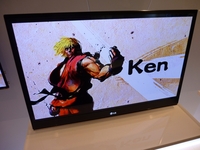 LG has finally confirmed that it will be showing a 31-inch OLED TV at IFA 2010, the largest from the company so far.
Although the likes of Sony and Samsung have both shown larger prototypes of OLED panels before, LG's effort may be different – in that it may actually make it to market, as LG told us last year.
OLED-display has confirmed with the Korean company that it will be bringing the new device to IFA 2010 in Berlin next month, so TechRadar will be there, cameras at the ready to bring you early snaps.
Where's the benefit?
It will be interesting to see how LG positions its OLED TV compared to the vast range of LCD panels; when OLED was first talked about as a competitor to the incumbent technology its advantages were a super thin frame, low motion blur and a ridiculously high contrast.
However, these days LCD manufacturers are able to make LCD TVs 7mm thin, have fixed the motion blur issue of early designs and thanks to localised LED backlighting, have made semi-comparable contrast ratios.
And of course there's the price – for a 15-inch OLED TV you'll be paying well over £1,000 (if you're lucky) so push that up to a 31-inch model and... well, best cancel that holiday. And the one after that. And a few more.

| |
Read More ...
Sony repositions PSP for "younger" gamers
 SCEE President Andrew House has revealed how Sony plans to reposition the PSP in the market, marketing the handheld at younger gamers than it has previously.
While many still hope for further announcements about new PSP hardware at next month's Tokyo Game Show (TGS), House explained to Edge this month how Sony plans to 'mine' its wealth of content it already has for PSP.
Deeper, more immersive content
"What is now a key emphasis for us is focusing on a younger audience who are the prime audience for a dedicated gaming device with deeper, more immersive content," said the SCEE President.
"They may have less disposable income, but they've got more time to play. We're looking to mine that content library which we've assembled over the last few years and restructure the value-proposition," added House, explaining how Sony has changed tack on PSP development.
"[The budget Essentials range] in its first couple of months since launch has been a phenomenal success on two fronts – not just in actual sales, but the uptake there has been on overall PSP software which has seen a knock-on effect," he continued.
"I would argue that we're starting to see what we originally intended – that it's helping to breath life into sales of the hardware as well."
What all of this sounds like is a slightly convoluted way of explaining why Sony is not pumping resources into developing major AAA-blockbusters for the current PSP. Whether or not this points towards an entirely new format in PSP 2, of course, remains to be seen.

| |
Read More ...
Sony a55 and a33 DSLRs feel the need for speed
 Sony unveiled the latest additions to its Alpha camera range this week - the super-speedy a55 and a33 DSLRs - at an exclusive event with TechRadar in attendance.
The cameras are being billed as the 'fastest DSLRs in the mid-range market' and bring a new piece of optical technology to the sector.
Called Translucent Mirror Technology, the new optical system bring fast autofocusing and it also means that the cameras can now boast of having the fastest high-speed shooting mode around – 10fps on the a55 and 7fps on the a33 when in Continuous Priority AE mode.
Sony is seeing the camera range (and this new-fangled tech) as a real development in the DSLR world with Paul Genge, Technical Marketing Manager, at Sony, saying: "The picture quality from these cameras are better than anything which is on the market, regardless of price."
Video star
When it comes to specs, both cameras use an Exmor CMOS – the a55 boasts 16.2MP, the a33 14.2MP – and they have an IOS range of 100-12,800, which can be extended all the way up 256,000 with the Multi Frame NR mode.
The a55 and a33 also come equipped with a 3-inch 'Tru-finder' viewfinder, which allows 100 per cent coverage of what you are shooting. It also tilts to 270 degrees, so you can do pretty much any crazy shot you want.
And for the first time on the Alpha range, there is hi-def video on board. This comes in the form of 1920x1080i HD when recorded in AVCHD.

The reason Sony hasn't brought video to the Alpha range before is because the company "doesn't do its R&D in public". This essentially means that Sony has been honing the quality to make sure it is top notch before it comes to market.
Sony is claiming that the video you can shoot looks cinematic – but unless you are George Lucas trying the camera, we're pretty sure that we won't see any of your home videos on the big screen.
There is also an MP4 option but this brings the video quality down to 1440x1080.
As with most of Sony's latest cameras, features include Sweep Panorama mode (which can be done in 3D) and seven scene modes.
Both cameras are fairly compact for DSLRs, with the a55 weighing in a 441g and the a33 just eight grammes lighter.
The a33 and a55 cameras will come as a relief to those who thought Sony was doing away with full-size DSLRs after the launch of its NEX range.
Sony has assured TechRadar that it is in it for the long run with the DSLR and that it is still committed to the format, noting: "We have continued to invest significant R&D resourses. We are innovating and delivering the best possible cameras to two different user groups."
UK release date for the a55 and a33 is September, with pricing still to be announced.

| |
Read More ...
Google overhauls YouTube Mobile in UK with HTML5
 Google has unveiled a new, faster YouTube site for mobile phones in the UK, using HTML5 to improve the user experience.
From faster loading times to an upgraded UI, the new version of the site promises to make video viewing on Android handsets, iPhones and other advanced smartphones as easy as on a PC.
Google has also announced an iPad-friendly UI for YouTube Mobile as well, with inline video watching allowing users to choose whether to view video in full-screen or not.
All the new things
There are also options to create playlists, the ability to designate "favourite," "like" or "unlike" videos directly from your device, as well as easy quality switching.
Facebook, Twitter and Google Buzz sharing have also been implement as standard too.
Andrey Doronichev, Product Manager for YouTube Mobile, promised this new upgrade would allow Google to roll out new features in real time, so when the desktop version of the platform gets a new feature, it can easily be ported to the mobile version as well.
If you want to check out the new site, head on over to m.youtube.com from within your phone browser.

| |
Read More ...
Motorola Milestone Android 2.2 coming later this year
 Motorola has laid out its Android update plans, and it seems there's some good news for Moto-lovers clamouring for Android 2.2.
The Motorola Milestone will be getting the 'Froyo' Android 2.2 update in Q4 - although given the fact it's 'beginning at the end of the year' this could mean anything up to March 2011 until the Milestone goes next-gen.
Given we're expecting the Milestone 2 any day now, Q1 2011 would be an awfully long time to wait to get to the next level of Android.
Not hitting the Dext
There's bad news served up by Motorola's roadmap too, as the Motorola Dext is now apparently not getting the Android 2.1 update, despite previous claims to the contrary.
This is doubly weird as Canada is getting the Dext Android 2.1 (well, it's under evaluation) so why not Europe?
But at least we can end on a pseudo-high note: the Motorola Motoroi, the more-attractive-monikered Asian cousin of the Motorola Milestone XT720, will be getting Froyo in Q45, so FINGERS CROSSED that happens over here too.
See the full rollout over on the Moto Support Forums if you want to update your Motorola Android scrapbook.

| |
Read More ...
Welcome to the Maximum PC blog
 Welcome to MaximumPC.com's TechRadar blog. We'll be bringing you regular news, reviews and round ups from the world of performance computing in the US. Bookmark us now or visit us today at MaximumPC.com, to find out more about us.
| |
Read More ...
Welcome to the MacLife blog
 Welcome to MacLife.com's TechRadar blog. We'll be bringing you regular news, reviews and round ups from the world of Apple in the US. Bookmark us now or visit us today at maclife.com, to find out more about us.
| |
Read More ...
Samsung Galaxy Tab spotted in the wild
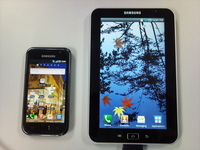 Now, we know it's hardly a secret, but the Samsung Galaxy Tab Android tablet has been spotted in the wild.
In a slightly intrusive video, Electronista spotted a chap on a train in Australia using the device, and quizzed him about it.
The most revealing information is that it's 'awesome' (not much help there, then) and the user rates it above the iPad.
iCkle iPad
The seven inch screen looks a lot more compact than an iPad, and could be attractive for users that see Apple's device as a bit too large.
Check out the video yourself if you want to see footage of an uncomfortable man on a train who is unable to talk about processors:

| |
Read More ...
Demon Internet offering Gamers broadband package
 Demon Internet has launched a special 'gamers broadband package' that will prioritise traffic to games servers.
 With controversy over the Google Verizon 'net neutrality' still raging, Demon Internet has offered a new package that puts gamers first.
Demon Internet head Matt Cantwell told the Daily Telegraph: "We know how important a good broadband connection is to the gaming community, and we are excited to be launching this product which has been designed to meet the specific needs of gamers.
Better gaming
"At Demon we appreciate that a better connection allows better gaming, and are confident that gamers will see the benefits that this service offers them."
The package is priced at £22 a month, with a 12 month contract and £30 a month, but some industry insiders have already asked if it's a gimmick rather than a particularly attractive package.
"There are already many things that customers can do to improve ping times on ADSL such as changing their line profile from InterLeaved to FastPath," said one anonymous industry source.
Video fail?
"However, prioritising gaming traffic at expense of other traffic could mean that customers with this kind of service may find things like video suffer as a result," they added.
Interestingly Virgin Media's tech guru Kevin Baughan talked to TechRadar about the potential for prioritising gaming traffic earlier in the summer, although its fibre optic network already gives the ISP a latency advantage.
"At the end of the day, on our architecture we can accelerate bits of the traffic if we need to or if we want to so you could prioritise this to make sure that the latency is absolutely superb," he said.
So, it remain to be seen if the improvement from prioritising gaming traffic will bring anything other than minor improvements, with the distance from the server still a major factor in ping.
But, should this offer tangible benefits it will certainly prove popular with gamers who have grown frustrated with their online performance.

| |
Read More ...


No comments:
Post a Comment