

Complete ban of internet for copyright infringers mooted

The New Zealand government has been advised to bring in a complete internet ban for persistent copyright infringers, which would take away their right to open up an account with another ISP when their original one is suspended.
This measure have been submitted by the New Zealand Law Society who believe that the current bill, which uses the three-strikes ruling, isn't tough enough and that the government should seriously think of banning offenders outright from using the web while under suspension from an ISP.
This would effectively close a loophole that allows infringers to continue infringing.
Power to suspend
Speaking about the proposed law change, Clive Elliott of the New Zealand Law Society, said: "The Bill proposes that District Courts be able to order a six month suspension of a person's Internet Services Provider (ISP) account for serious copyright infringement.
"However, during this period, it appears that there is nothing to stop that person from opening an account with another ISP and immediately continuing illegal file sharing.
"The Bill should include a power to allow the court to order that a person cannot open an account with another ISP during the period of the suspension."
Other proposals from different corporations seem to be a bit more lenient; with InternetNZ Policy Director Jordan Carter believing that cutting of a person's web connection is unnecessary.
Once all the submissions are in the government will report back its findings, with possible changes in the law.

 |  |
Read More ...
Samsung Galaxy S Android 2.2 update coming in September
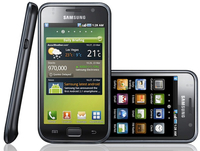 Samsung has announced the Galaxy S will be upgraded to Android 2.2 next month, and will land on all networks.
This means we won't see a repeat of the staggered firmware release that is currently plaguing the HTC Desire update.
The announcement came via Samsung Mobile UK's official Twitter feed, confirming the Korean brand is working on the update.
Coming soon
"We receive questions about the Android 2.2 update; it's currently in development & will be released for all networks at the end of September," confirmed the teeny message.
The Samsung Galaxy S already has hotspot capabilities and 720p video recording, so the main upgrade users will be getting with Android 2.2 is Flash 10.1 and improved operational speeds.
Battery life is likely to make a jump too with the upgraded efficiency, so we're looking forward to testing out the new firmware when it drops.

| |
Read More ...
Amazon Kindle UK store now open for business
 Amazon has announced the arrival of its Kindle store, bringing thousands of ebooks to the UK.
Amazon revealed last week it was introducing the Kindle to the UK for the first time, with a 3G and Wi-Fi version penned in for a September release.
The opening of the UK store means that users will be able to buy their bestsellers in pounds and pence, rather than logging onto the US version of the site to get content.
Book 'em
Amazon is boasting that there are 400,000 ebooks available on the site and these include 84 out of the 100 bestsellers in the UK.
Now that the store is open, you can actually pre-order your device and purchase media for it now, so it is there for you when the Kindle actually arrives.
As with the US store the ebooks on offer aren't just exclusive to Kindle users, they can be viewed on all manner of devices – including iPad, iPod touch, iPhone, Mac, PC, and those packing Android.
The Kindle UK release date is September and will be priced from £109.
Check out the store now at www.amazon.co.uk/kindlestore.

| |
Read More ...
Nokia's 5800 XpressMusic sequel rolls into view
 Nokia's next big touchscreen for the mid-range market, the Nokia C7, has been spotted in a Hong Kong magazine, packing the next generation OS.
The C7 looks to be a successor to the popular 5800 XpressMusic and X6, offering a 3.3-inch capacitive touchscreen with 'near HD' resolution of 640x360.
More importantly it will be rocking the Symbian^3 OS, with multiple widgets and Home screens as well as multi-touch web browsing and better memory management.
The Nokia C7 will have a slim 11mm profile, as well as similar specs to the Nokia N8 with an 8MP camera and 720p HD video recording.
Turning point
If the rumours turn out to be true, then this could be a real turning point in Nokia's fortunes at the mid-range of the market, as its current dominance was in danger of fading quickly if it didn't manage to pack better tech and an improved interface into its phones.
We've no idea on the important things like a UK release date or UK pricing, but stay tuned - we reckon we're going to be seeing a lot more from this phone in the near future.

| |
Read More ...
Exclusive Apple Store Covent Garden t-shirt unboxing
 The Apple Store Covent Garden t-shirt will be available to the first 4,000 people (plus a few journo stragglers) to walk through the door of the store on Saturday.
 As incentives come it is one of the best we have ever witnessed. We are sure that Apple thought long and hard about its marketing strategy, dismissing giving away iPads (too obvious), iPhone 4s (not enough bumpers) and Macs (too heavy), before deciding that everybody loves a t-shirt - especially one which has been woven by the hands of Steve Jobs*.
So to commemorate 'the best product Apple has ever produced' (our words), we have put together this unboxing for you.
Sit back, relax and take a deep breath as you witness history in the making.

The Apple Covent Gardent t-shirt was given to us in a fairly unassuming plastic Apple-branded bag. This is a clever strategy by the company, lowering our expectations that the t-shirt was going to be nothing special.
How wrong we were.

In the bag was a plain box, with a touch of Apple branding. The rakish angle of the Apple-tape is clearly a pastiche on the neo-feminist leanings of post-modern Columbian society. Or we ripped it.

Peel off the Apple-branded sticker and the box unfolds, the two sides opening up like a Chinese takeaway box. Oh, and that black thing poking out - THAT'S THE AWESOME, ONLY 4,000 IN THE WORLD, APPLE COVENT GARDEN T-SHIRT!!!

And now you can bathe your eyes in the glory of the whole of the t-shirt. We love that Apple has gone for a simple uni-body design, adding a smattering of colour to the logo while clearly eradicating any possibility of antenna problems by not including a phone.
The logo, we are guessing, represents the historic arches of Covent Garden, or an elaborate game of croquet. And it's so good we need to take a closer look.

Told you it was good.

We love that Apple has added its Apple logo in the last arch. "The design ethic was brought about by our team-wide excursion to Mozambique. We got back to Apple's BrainHive and sat on different styles of beanbag thinking of the best way to clarify what Covent Garden meant to us. Apple is the last thing you remember," Jonny Ives didn't say.

Flipping the t-shirt over and Apple has rewarded its followers with a personalised motif. We're sorry the picture is a touch blurry, but that's what happens when you get excited.
To make it clear it reads: Apple Store, Covent Garden. Underneath is the date: 07.08.2010. This is one to remember. Forever.

Now on to the label, which proves that Apple has thought long and hard about the t-shirt, deciding to rope in American Apparel - you know, the ones with the saucy ads - to help them produce this sumptious product.
Is this the first third-party link-up Apple has done for such a flagship product? We think it may well be.

And, finally, we are sorry to say this is the end of what is probably TechRadar's greatest journalistic achievement. Here you can see how the t-shirt looks on. See how it glows? We think there is magic woven into the fabric.
Apple magic.
*TechRadar cannot verify if Steve Jobs actually made these t-shirts himself.

| |
Read More ...
In Depth: Facebook: the hotbed of cybercrime?
 We meet Graham Cluley from Sophos – and occasional TechRadar columnist – in a central London hotel. We're here to talk about Sophos' new six-monthly report on the state of cybercrime across the globe, and social networks with people proliferating information are at the forefront of his mind – as well as international cybercrime and his wife's iPad.
"There's a new kind of cybercrime – for want of a better word – which is occurring on social networks," he says, talking about the recent rash of viral messages on Facebook that "your friend endorses, he's 'liked' it. There was one saying there was a secret message in Toy Story 3".
Usually, the link – which purports to be something of interest but just takes you to a survey – enables the originator to make a few cents.
Facebook's weak point remains security, believes Cluley. "You can't report an individual link. We see umpteens of these every day. Because Facebook's privacy settings are so rubbish, you can pick them up just by searching people's status updates."
It's ironic that security researchers take advantage of Facebook security lapses to search for these. Cluley searches for 'shocking' and 'video' – some more quickly appear from the last hour.
Platform agnostic
Rogue apps are also a problem: "Facebook apps aren't vetted, they just ask for a credit card or mobile phone number."
Cluley says that the proliferation of dodgy Facebook links is because the action of spreading them isn't strictly illegal and is a "grey area".
"The beauty of [these links] is that they're completely platform independent," says Cluley. "They don't need Windows and just run in the browser. There's 500 million people on [Facebook], many of whom are all too willing to click on a link."
Cluley believes the proliferation of non-Windows devices merely makes this social networking manipulation more attractive – not least on the iPad he bought for his wife.
"I think with touchscreen devices like the iPad, there's another contributing factor – you don't know where links are going. The whole concept of hovering over a link doesn't really exist with a touchscreen and people are just in the habit of clicking [on links].
Too much information
"We're seeing more activity on Facebook than we are on Twitter – there's a bigger pool of people. Obviously, there's still potential for the spreading of a link. There's also the issue of whether your Twitter client is secure, though I don't think we've actually seen that yet.
Again, people are sharing too much information, such as people's precise date of birth. There are issues regarding [geolocation] – the likes of Foursquare are beginning to rumble away and become more successful."
Cluley talks about the example of a woman in the States who got burgled and realised that the offender was one of her new friends on Facebook. Extreme perhaps, but Cluely is just indicating that people need to be more careful when posting location-related information.
State-sponsored cybercrime
We ask Cluley whether about the remainder of the threat landscape. "There are interesting things that happen from time to time, but normally they happen in an isolated way…Blackhats say they can hack the Nintendo Wii. Well, yes you could. Frankly, cybercriminals aren't very inventive. We continue to see SEO poisoning, identity theft, things like that."
Cluley brings up the issue of state-sponsored cybercrime – one of the key issues in the report where 63 per cent of people think it's okay for the UK to spy on other countries using hacking and malware. Although 40 per cent of them added the proviso 'only if we're at war with them'. the general consensus was that it's fine to use cyber-spying at the government level.
"There's an interesting endorsement of state-sponsored cybercrime among the general public. I think over the course of time we've seen more and more accusations of this kind of thing," says Cluley, referring to China being under the spotlight.
Cluley believes that we're entering the third era of cybercrime – economic, political and even militarily motivated. "First we had the hobbyists, and then there were the financially motivated [cybercriminals]" says Cluley.
"We're seeing more attacks [on individual companies] in the form of malformed Word documents or boobytrapped PDFs coming in to break into your company and steal information.
"There's been a real growth in that over the last 12 months. Is it all state sponsored? Probably not, but we'd be naïve to think that countries [don't indulge in this]. Secret services have used every trick in the book – why would the internet be different? Secondly, there's less physical danger. Thirdly, it's a cheap way to spy."
But surely it's ridiculously difficult to prove the origin of an attack? "Yes, extremely," says Cluley. "Google had evidence to say that [an attack] had come from China. It's very difficult to prove that it's state sponsored and very difficult to prove that it's of Chinese origin – spammers take over computers all over the world every day. But why wouldn't it be happening? It's easy, it's cheap and it's effective."

| |
Read More ...
PS3 Move creator suggests Kinect is limited
 The creator of Sony's PlayStation Move technology believes that having no controller at all – like rival Kinect technology from Microsoft – is 'limiting'.
 In an exclusive interview for T3, Dr Richard Marks insisted that Sony had considered doing away with the controller in the same way that Kinect does, but that ultimately it did not allow enough freedom for the gamer.
"I think it depends if you believe that controller-less is necessarily better which I don't believe," said Marks.
Not the be-all and end-all
"I created the technology for EyeToy which we made a controller-less device and it was really neat and it enabled new things but it is not the end-all, be-all in control; we entered limits with that and I think without a controller you run into limits of what you can enable.
"You can do things like track the whole body, you can have dancing and exercise but a lot of the core gameplay ideas that we want to see happen and want to enable just weren't possible with only a camera.
"We would have done that, we look at as much as we could do with just a camera but it wasn't the right choice we felt."
It's an interesting viewpoint from an influential figure, with both technologies due to go head-to-head at Christmas.

| |
Read More ...
Channel 4 in talks with Sony over 4oD for PS3
 Channel 4 is in talks with Sony to bring video on demand service 4oD to the PlayStation 3 and is also developing an iPad app.
A report in Broadcast magazine reveals that talks are already ongoing, suggesting that they are still in the early stages.
Although the BBC iPlayer has already been a huge hit on the PS3 Channel 4's service would be the first commercial arrival.
Anonymous source
"We're looking to launch on the PS3," a 'source at the broadcaster' told Broadcast.
"4oD is becoming a platform agnostic product and will be successful because of the quality of the content."
4oD content can already be found on many platform, including Virgin Media's highly rated on-demand service and YouTube – which screens full-length shows from Channel 4.
The Xbox is offering Sky Player (but not the iPlayer) and the PS3 would no doubt welcome the chance to bring another bit of value to the console.
There has also been suggestions that ITV is in talks with Sony over bringing the ITV Player to the PS3.

| |
Read More ...
Opinion: Game Center for iOS bombshell shows Apple still doesn't get gaming
 Apple was built on gaming foundations. Steve Wozniak's design decisions for the Apple II - adding colour, line-drawing and BASIC commands, sound, and paddle controls - were primarily driven by his desire to use the then-cutting-edge consumer hardware to create a version of Breakout to show off to his engineering chums.
Soon, though, Apple became a resolutely business-oriented company, and although Steve Jobs much later transformed Apple into a consumer-orientated powerhouse when he returned to the fold in 1996, two iOS shortcomings - one old, one new - show that the Cupertino giant still doesn't entirely get gaming.
This despite the fact iOS gaming is huge: games comprise the second-biggest block of iOS apps after books, and in response Apple has long since repositioned the iPod touch primarily as a games system.
The first problem is Apple's back-up process, which is user-friendly (back-up on sync, restore everything from a back-up if problems occur), but its global nature isn't gaming-friendly.
Delete a game from your iOS device and your progress vanishes, with no means of later restoring it bar a full restore from your most recent sync. This is closer to the experience you get with the cheapest Nintendo DS games, where progress disappears when the device is switched off, and not what you'd expect from Apple.
But as iOS games continue to grow in size, dedicated gamers with a big collection will increasingly be forced to delete some of them, because Apple offers no storage upgrades for its iOS devices.
Restoring game data
iOS and iTunes should work together to transparently save game data, and on reinstalling a game, you should be given the option of restoring data. This would also potentially enable you to transfer progress between devices, rather than finding yourself in the absurd situation of being halfway through a game on your iPhone but then having to start from scratch on your iPad or iPod touch.
Apple's Game Center could have been a simpler and global solution to such things. It's a social network for gaming, due for release with iOS 4.1, and offers achievements tracking and high-score leaderboards.
Adding game progress to games on your account could have added further value. But instead of solving more problems, Apple is heading in the other direction: reports now claim Apple has pulled Game Center support for the iPhone 3G and second-generation iPod touch.
This is a ludicrous decision. When it comes to iOS 4 multitasking, it's understandable that lower-powered devices are left out; but to remove Game Center support from the device most likely to be used as a games system - the lower-end iPod touch that's still being sold - shows Apple is too driven by a relentless desire to get users to upgrade, rather than making devices the best they can possibly be for a specific target market.
In killing Game Center for the second-generation iPod touch and iPhone 3G, Apple is dropping the ball and seriously hampering the continued success of iOS in the gaming world.
If Apple decides to not support older devices, developers won't feel any reason to shift from existing networks, destroying the ideal of a centralised iOS gaming network that could bring huge gaming advances regarding integration, social engagement and usability to the platform.

| |
Read More ...
In pictures: Apple Store Covent Garden
 Apple opened the door of its new Coven Garden store to journalists today to offer a sneak peak at what it is calling "the best store we have ever created".
Set in the historic confines of London's Covent Garden, Apple has a prime spot in the market area and is hoping that the store will bring in the same big numbers that its Regent Street branch does - reputedly the most profitable store in London.
Ron Johnson, Senior VIP of Retails Operations at Apple, explained a little bit about what setting a shop in Covent Garden means to the company, saying: "We are hopeful that the store in Covent Garden will have the same impact to the area as the Regent Street store has had.

"Every time we make a product, we try and better what came before it, we tried to do the same with our stores and this is what we have done here. It is our most historic store, we've spent a lot of time refurbishing the building, retaining its original features and giving it an Apple spin."

The store is Apple's 300th and there are more to come, with Apple hinting that it wants to expand in Western Europe and Asia.
In fact the company is putting the finishing touches to a store in Spain which will be opening "this Fall".
The Covent Garden branch is one which is opening simultaneously with stores in Paris, Chicago and Shanghai.

As to whether Covent Garden – its biggest-ever store – will become the flagship for the company, Apple explained that it wasn't one to label branches, saying: "As we have gone through the past 10 years we have learned a lot. Most companies have flagship stores, our best stores are the ones that the public like the most.
"The one that taught us the most was the Regent Street store. That was our first store in Europe – it was a big bet, one which has paid off.
"It is our most trafficked store, outranking even the one in New York."

To deal with the baying crowds, Apple is employing 300 people to staff the Covent Garden branch and it will also be introducing a new payment system, EasyPayTouch, which can check customers out anywhere in the store with credit card swiping technology connected to employees' iPod touches.

The Covent Garden branch is the 28th to open in the UK, which makes the country the most stocked with Apple stores outside of America.
And it may well be the most expensive store Apple has created, with the company hinting that it "spent the right amount of money on the store - it was expensive in part because we had to restore every little detail. It took a lot of time and effort to restore this location."

The branch is split into three levels – complete with two glass staircases – and the sheer amount of space on offer means that Apple can showcase its products in separate rooms.
This means there is a separate room dedicated to Macs, iPhone 4s and iPads. And when it comes to third-party accessories, the whole of the second floor is dedicated to add-ons for Apple products.
There is also a Genius Bar in the store for free technical support - one of the longest we have seen - and a new to the store is something called ProLabs.
This is where customers can get in-depth training on Apple's professional applications, which include things like Final Cut Pro. The store will also offer workshops and a number of youth-orientated programmes.
So, you will be able to learn how to get the best out of all your Apple goodies.

The Apple Store Covent Garden opens its doors to the public Saturday 7 August and if you are one of the first 4,000 people through the door you will EVEN get a special t-shirt.
Not only that, there will be more iPhones and iPads in this store this Saturday than anywhere else in the world.
And, before you ask, the store will be stocked well with 'bumpers'.

| |
Read More ...
Cloud gaming service OnLive valued at $1.1bn
 Cloud gaming service OnLive is said to be worth at least $1.1 billion (£692 million) according to a recent market valuation.
Not bad, for a recent start-up that has already had its fair share of criticism from gamers and industry pundits alike, many of whom believe that lag in the gaming experience will hamper the growth of cloud gaming services in the near future.
BT to roll out UK OnLive soon
BT has already invested around $30 million in the new gaming service (£18.88 million), as has Belgacom, each acquiring a 2.6 per cent stake in OnLive, which launched in the US back in June.
A new Delaware filing says that OnLive shares are valued at $7.50 each, with venture capital experts estimating that the entire company is now worth anything between $1.1 billion to $2.2 billion.
BT and Belgacom hope to launch the European versions of OnLive soon.
To date, OnLive is not commenting on the filing with the state of Delaware. Other investors in OnLive so far include AT&T, Warner Bros., Autodesk, Lauder Partners and Maverick Capital.

| |
Read More ...
In Depth: 11 tech innovations that refocused photography
 Taking a photo and then posting it online for everyone to see just wouldn't be possible without someone coming up with these inventions first.
1. Silver halides
In this instant digital age, it's easy to forget that taking a photo used to be a long-winded process - photo pioneer Joseph Nicéphore Niépce once spent eight hours taking the first permanent picture.
The key to taking a photo and then keeping it lie in the unique properties of silver, and its sensitivity to light. Modern photographic films rely on silver halides, a combination of silver with halogens (bromine, chlorine and iodine) that are suspended in a gelatin-based emulsion. This magic formula offers fast exposure times, high light sensitivity and stability.

2. Flash
Given that a key requisite of photography is exposure to light, the invention of flash guns was pretty much a necessity, especially if you wanted to shoot indoors. The first indoor photos were captured using limelight and electric arc lights, but photographers quickly switched to alternatives. These included magnesium, which let out the characteristic flash, along with a lot of smoke and ash. The first modern flash using a bulb appeared in 1927.

3. SLRs
First invented in 1884, the Single Lens Reflex camera uses a system of mirrors between the viewfinder and the lens to give you a true picture of what your photo will look like. Popularised in the 1930s with the first 35mm models, SLRs have given rise to a whole host of photography innovations, from auto focus to through-the-lens metering (TTL).

4. Auto focus
First developed by Leitz in the late 1970s, auto focus uses a series of sensors inside the camera lens to analyse a scene and determine which areas should be sharp - saving you the bother of using the lens ring to focus manually.
Modern Auto Focus systems are surprisingly sophisticated, using complex algorithms to focus on many objects within a frame, even if they are moving. Face detection and smile detection are just two innovations that are a result of the development of auto focus tech.

5. The Polaroid instant camera
If photography is all about the now - getting instant access to your photos and then sharing them, maybe it's Polaroid we have to thank. From 1947 onwards it gave us exactly that, enabling generations of party goers and bedroom lotharios the freedom to see their snaps without the embarrassment or hassle of sending them off to a photolab. Ironically the arrival of digital cameras pretty much killed off Polaroid, although its now going through a bit of a renaissance.

6. The digital camera
The biggest game-changing innovations take technical advances - like those outlined above - and them wrap them up into a convenient, user-friendly package. Which is what the digital camera does. Best of all, it's freed us from one of the biggest bugbears of photography: buying, using and then developing film only to see big chunks of your money and time go to waste if you got it wrong. Today, you can rattle off hundreds of shots and instantly review each one - making it easier to learn from your mistakes, while also leaving you free to experiment.

7. Adobe Photoshop
Propagandists, politicians and publishers have been manipulating photographs since Abraham Lincoln's head appeared on John Calhoun's body in 1860, but now anyone can do it, thanks in large part to Adobe Photoshop. Originally developed for the Apple Macintosh II, Photoshop is just as much a part of a photographer's toolkit as the camera, flash and tripod. The latest version for Mac and Windows includes tons of tools for tweaking your snaps, although it can be all too easy to take things too far.

8. Image sensors
Film camera enthusiasts are commonly greeted with a mixture of pity and derision, chiefly because digital photography is so ubiquitous - from pro-level DSLRs down to the crappy versions found in most mobile phones.
It's all due to the development of the image sensor, a piece of circuitry that processes light and converts it into an image without the need for film, silver halides or nasty chemical processes – a technology that was first used as far back as 1951. Today many cameras use CMOS image sensors rather than CCDs because they're cheaper and easier to make, as well as being a lot less power-hungry.

9. Lithium-ion batteries
Thanks to technologies like auto focus and motorised film winders, cameras have always needed a little oomph to make picture-taking a breeze. But the arrival of consumer digital camera in the mid-1990s put power needs through the roof. Sony came to the rescue with its first lithium-ion batteries in 1991 – cells which pack a lot of power into a very compact size.

10. Solid-state storage
When the first consumer consumer digital snappers appeared in the '90s, makers came up with all kinds of ways to store the resulting image files - from floppy disks to microdrives. Even then flash memory cards emerged the clear winners, even though they offered limited storage and cost a bomb to buy. Nearly two decades on and things have certainly changed - you can pick up most cards around £20 or less, although the price of SanDisk's Extreme Pro 64GB may still make your eyes water.

11. The internet
From Facebook to Flickr, it seems we now have an insatiable desire to document every minutes of our lives and then stick the results up online - often for complete strangers to see. None of this would be possible, of course, it it wasn't for the internet, the World Wide Web, computers, integrated circuits, silicon...

-------------------------------------------------------------------------------------------------------
Sponsored: Create stunning 3D scenes from your own photos - free
Try PhotoSynth now – view collections and make your own
-------------------------------------------------------------------------------------------------------

| |
Read More ...
Google acquires social gaming firm Slide
 Google has acquired social gaming company Slide for a reported $228 million.
The news was initially broken by the New York Times although TechCrunch is claiming that the sale is in the region of $182 million.
However, despite no official comment from Google or Slide on the matter right now, it is clear that it marks another important step in Google's move into social and casual gaming.
Sliding into gaming?
Slide makes popular Facebook apps such as SuperPoke and SPP Ranch. The acquisition follows Google's investments in social gaming giant Zynga, the FarmVille developer.
Google is expected to make an official announcement about the deal very shortly.
However, speaking at the Techonomy conference in Lake Tahoe this week, Google CEO Eric Schmidt commented on Google's overall social and social gaming strategies, telling reporters:
"There have been a whole bunch of leaks. Some have been correct, some not correct."
He added that Google is "not trying to do what Facebook does…The world does not need another Facebook," and, when asked specifically about Google's moves into casual and social gaming he added, teasingly:
"I would doubt that we'll get into significant gaming — but you never know."
You can watch the Google CEO discussing this further in the video below (around 1 minute 40 seconds in).

| |
Read More ...
Logitech shows off new G-series gaming kit
 Logitech has unveiled its latest G-series gaming peripherals, including the G930 headset, the G700 Wireless Gaming Mouse and the G510 Gaming Keyboard.
 Logitech's G-series have long been favourites for PC gamers and the new troika of peripherals will no doubt prove popular despite carrying hefty price tags.
The Wireless Gaming Headset G930 is available for a suggested retail price of £149. The Wireless Gaming Mouse G700 will cost £89.99 and the Logitech Gaming Keyboard G510 is available for £89.99.
Competitive advantage
"The new G-Series products give every gamer a competitive advantage," said Elliott Chin, Logitech's senior manager of product marketing for gaming.
"Whether it's a headset with 7.1 surround sound, a mouse with 13 controls, or a keyboard with an LCD that displays critical in-game stats, everything about the new G-Series line-up helps you win, no matter what game you love to play."

The Logitech Wireless Gaming Headset G930 brings what Logitech describes as Dolby 7.1 surround sound.
The headset has three programmable 'G' keys, memory foam headband and is wireless with a 10 hour battery life. Logitech also points out that you can charge the headset while still using it.
Next up is a Wireless Gaming Mouse G700, which may well test gamers' aversion to wireless kit.
It has 13 'precisely placed' controls and has a quick connect charging cable.

Last but not least the Gaming Keyboard G510 'delivers the tools you need to win' says Logitech.
The keyboard features 18 programmable G-keys with three mode states, giving you up to 54 possible macro settings per game.
It also includes the much-admired Logitech-exclusive GamePanel LCD to give you real-time game stats and PC performance data.
Add in customisable RGB backlighting and 3.5 mm audio jacks and you get a tasty bit of gaming kit.

| |
Read More ...
Review: Sharp TU-T2HR32
 Few Freeview+ HD recorders made it to shelves in time for the World Cup, but post-South Africa sees a swathe of new boxes – and, for now at least, this Sharp is on the front of the grid.
 Matching, and in some cases beating, its rivals on price, the TU-T2HR32 is fitted with a couple of Freeview HD tuners, holds a 320GB hard disk for recording and, crucially, is compatible with Freeview+. That means you can program recordings straight from its eight-day electronic programme guide, set series links, and get full recordings of programmes even if they over-run.
Handling the upscaling of SD channels as well as a full presentation of the likes of BBC HD and ITV 1 HD, the TU-T2HR32 sports a couple of Scarts and a USB port, though the latter is for software upgrades only.
If recording isn't high on your list, Sharp also makes a simple Freeview HD receiver, the TU-T2, and the mid-range TU-T1UR, a twin tuner box that records to an external USB drive.

The TU-T2HR32 produces excellent hi-def pictures from the key Freeview HD channels; a blast of the European Championships from Barcelona on BBC HD provide plenty of detail, colour and contrast, with recordings identical to the original broadcasts.
As well as testing it on a Full HD 1080p set, we also fed the TU-T2HR32 into a standard HD Ready plasma. Set the box to output at 1080i and both onscreen menus and live HD channels (even though they're broadcast in 1080i) do lose their edge; if your HD Ready TV can accept a 1080p signal, it's the best option.
Switch to SD channels and the TU-T2HR32 does a decent job at upscaling the picture, though a sheen of dotty picture noise is faintly evident. Edges remain taught though, and both colour and contrast remain intact.
The eight-day EPG is well presented in blues and grey hi-res graphics. The grid format is simple to read, containing eight channels across two hours of programming. Skipping around the schedules proves a breeze, though it's not the fastest in town.
Recordings can be made from the EPG simply; hit the record button on any present or future programme and the box gives you a choice to either record once, or set a series link (if available).
It's even possible to set the box to display how long its left on the hard drive in a number of useful ways; percentage of space left, or in hours for either SD or HD recordings. You can even set to box to ask whether you want to record in HD or SD when you choose to record from, say, BBC HD.
A Library shortcut from the remote brings up a list of recordings; hover over one and various options are provided to play a preview in a small screen in the corner, delete, password-protect, or play each recording.
Once playing, recordings can be skipped through at up to 64x speed, while even the chapter skip button can be configured to jump backwards or forwards from in 10, 20, 30, 40, 50 or 60-second chunks. As well as making recordings, the TU-T2HR32 can also pause (for either one or two hours) and rewind live TV.
These features are easy to control from the remote, though it's a basic and flimsy unit that suffers from overly small controls.
Sharp join the likes of Panasonic, Sagemcom and Digital Stream with the issue of its first such product.
However, with Toshiba, Humax, 3view, Philips and Icecrypt (the T2400 – an update to its excellent T2200) about to join the market, competition could get intense – and leave this Sharp's 320GB hard disk looking rather puny.
We liked:
Endlessly customisable, this box performs well with both SD and HD pictures. The onscreen menus are clear logical and well designed, with the box's potentially confusing features a joy to use.
We disliked:
The 320GB hard disk may prove a touch too small for some, while the bog standard remote control proves a disappointing counterpoint to the unit itself.
Verdict:
Sharp has made one of the finest Freeview HD recorders, though it's a one-trick pony; media playback and transfer of files from USB would be a nice addition, as would some kind of media streaming. It has an (presently unused) Ethernet LAN port, after all.
There's also a question mark over the size of the hard disk, with 500GB or more being our preferred option, but there's no doubt that this simple to operate and impressively designed box will suit many looking to add something extra to free digital TV broadcasts.
Related Links

| |
Read More ...
Vonage iPhone App lets you call Facebook Friends for free
 Vonage has released a new iPhone app that lets you call any of your Facebook Friends for free.
VoIP apps from the likes of Skype are already well established in the iPhone ecosystem, but this latest application from Vonage takes it one step further.
The only potential problem being – do you really want any of your 'friends' on Facebook to be able to contact you at any point on your mobile phone?
iPhone and Android
You can see a video demo of Vonage's new app over on the company's website, available right now for the Apple iPhone, iPod Touch, and iPad and Google Android devices.
The Vonage app integrates seamlessly with your Facebook network, populating your contacts list with your Facebook friends, letting you call them (if they have the app on their device) or IM them at any time.
You can grab the Vonage app from the Apple App Store and the Android Market right now, to test it out for yourself.

| |
Read More ...
Review: Sony Bravia KDL-46EX503
 As its 'Essentials' moniker suggests, Sony has put just enough tech on this 46in LCD TV for it to compete on both price and performance. You won't find cutting-edge direct or edge-mounted LED backlighting behind its LCD panel (both remain relatively high-end features in shorter supply than marketing suggests), but it hosts almost all other technology we consider imperative at this size and a few extras to boot.
 It's a risky strategy by Sony in some respects, because while a smaller TV's features can be added and removed to hit particular price points, once you get to this huge size every potentially fatal picture foible is visible.
Happily, it gets past this barrier by being built around one of the most impressive LCD panels around. Imbued with excellent contrast, colour and cleanness, this monster screen proves an excellent option for those after a good value pound-per-inch deal without making too many compromises.
Before we examine it in detail, it's worth knowing that other screen sizes available include 32 inch, 37 inch, 40 inch and 52 inch models, while either side of this model are cheaper EX403 (minus 100Hz) and pricier EX703 (plus edge LED backlighting) models. Sony also produces a host of very pricey models that build in both LED and 3D, such as the KDL-52HX903.
Steeped in the 'reassuringly expensive' philosophy, Sony would argue that the extra beans spent on the KDL-46EX503 gets you one of the most stylish sets around. We're not so sure about that. While its unusual design, which features a brushed metallic panel under the screen, is certainly striking, that initial impression is interrupted by an otherwise drab gloss black frame and an overall build quality that doesn't set it apart from other brands. Nor does its bulky frame, which leaves the depth of the TV at a shade over 10cm.
Sony's website is currently offering a £1,700.23 bundle that adds the brand's BDV-E370 Blu-ray home cinema, though – confusingly – it supports 3D Blu-ray discs, which can't be displayed on the KDL-46EX503's non-3D panel. The BDV-E370 is available for £500 as a standalone purchase; this 'deal' doesn't add-up in more ways than one.

Forget about LED backlighting and 3D compatibility and lose yourself in one of the most fully featured, best value bigscreen LCD TVs around.
What's probably piqued your interest is the KDL-46EX503's built-in Freeview HD tuner. Kitted-out with a DVB-T2 digital tuner, this set can tune into every analogue, Freeview and Freeview HD channel.
No doubt the provision of BBC HD, ITV 1 HD and Channel 4 HD (England), S4C Clirlan (Wales) or STV HD (Scotland) does add a few quid to the final price, but as Freeview HD becomes less of a novelty we expect premium prices to decline. To find out whether you're in a Freeview HD area (we all will be within two years), click here.

Away from free hi-def TV, this Sony hosts the brand's refreshed and reinvigorated online content hub that's now called the Bravia Internet Video platform. It's a massive improvement on 2009's severely limited AppliCast effort and now includes some genuinely useful apps such as Lovefilm, Eurosport and Demand Five as well as Daily Motion and the ubiquitous YouTube. The inclusion of Demand Five content hints that this platform, and others like it, will soon host the BBC iPlayer and ITV Player.
And to survive and thrive, platforms like this will have to – and fast – because for now it's something of a rogue's gallery (does anyone really want to watch 'how to' videos from the likes of FordModels, Howcast.com or GolfLink.com?). For now, the Lovefilm movie streaming and FIFA World Cup applications are by far the most impressive, while there's also a RSS reader for news sites, which can be fully customised.
For the full rundown head to our dedicated review of the service. Unfortunately, the KDL-46EX503 only hosts the basic service; other TVs higher up in the Bravia line-up add widgets for Facebook, Ebay and Twitter.
Away from the internet the KDL-46EX503 includes Sony's own MotionFlow 100Hz tech to make-up for LCD panels' inherent slow response, which often results in blur. Live Colour – so often the highlight on Sony's LCD TVs – is also in attendance as part of the Bravia Engine 3 suite of picture processing.

Also here is the usual MPEG noise reduction feature, an ambient light sensor and Advanced Contrast Enhancer (ACE).
Key to the KDL-46EX503's success as an all-rounder is the way it interacts with the user – and that's wholly down to its XrossMediaBar (XMB) interface.
Scanning from left to right brings up lists of live inputs, digital TV channels (including details on what's currently showing on each), internet video services, settings – the list goes on. It's incredibly intuitive and difficult to get confused once you've settled into its way of working.
Our only major criticism of XMB is that any video files must be accessed through the video axis, which seems logical, though with so many widgets displayed anything else – such as a USB stick – is shunted to the bottom of a very long list, which means you have to wade through a lot of (frankly pointless) video content to find it. If the user is connecting a USB stick, surely it should have top billing.
Meanwhile, the Bravia Internet Video platform is devilishly attractive and easy to use, with a similar grid-style interface given to each and every service.

Aside from the quality of the interface, what is very impressive about this platform is the video; stable and capable of displaying high-definition video very well, this system uses a seven-second buffer and dynamically changes the quality according to network availability.
Once again, though, there's no dedicated web browser fitted to Bravia Internet Video; we're certain this will come once someone comes up with an interface that doesn't require a keyboard.
While hardly a lesson in ergonomics, the remote control is an improvement on past generations. Slightly less cluttered and certainly more stylish (the battery compartment is initially totally invisible), it serves its master well.
A dedicated 'Theatre' button exists on the remote that puts the TV directly into a cinema-style picture preset, though oddly it brushes over the TV's other presets for 'Sports', 'Photo', 'Music', 'Game' and 'Graphics'.

In the remote's centre is a button labelled with a love-heart that brings up an otherwise inaccessible menu bar across the bottom of the screen. It shows information on what you're currently watching as well as previously visited channels, inputs and services.
Bravia Sync works independently; although there's a menu to set-up control of a Blu-ray player, in our tests the Sony remote automatically controlled the basic functions of a connected Panasonic Blu-ray player.
It did, however, confuse the remote; pressing the 'Home' button merely brings up the Blu-ray player's own internal menus, which makes it tricky to return to the TV's Freeview channels – perhaps the remote could do with a dedicated TV command. It's the one gap on an otherwise joined-up interface.
The KDL-46EX503 has pictures to cherish across all sources. It's been a while since we've been able to say that about a Sony LCD TV, so kudos to the company's engineers for developing such as versatile product.
In part that's down to the panel's shortfall in supreme sharpness; hi-def images from both Freeview HD and Blu-ray do appear a fraction softer than we've seen on full HD LCD panels in the past.
This, however, isn't the disaster it first appears, because it enables the KDL-46EX503 to construct some of the most pristine pictures around. Decontaminated by background picture noise, artefacts or much degree of blur, fast-moving sequences and ponderous landscapes stun principally because there's very little risky processing going on inside the KDL-46EX503.
And if that slight softness means crisper Blu-ray, imagine how it treats standard-definition digital TV and DVDs. Very cleanly is the answer – a refreshing change after seeing so many flatscreen TVs initially stun with HD only to then mess-up Freeview pictures.
The reputation of the LCD panel used in this TV further rises when it comes to contrast and colour. Blacks are remarkably deep and lifelike. Better still, there's enough detail within blocks of dark colours to lend dingy footage a cinematic edge, though don't confuse this with a high-end model; the KDL-46EX503 is best used in a living room where its ambient light sensor lessens the otherwise vivid brightness of its backlight.
Switch off the lights and blacks take on a blue hue, though there's no sign of any light leakage around the edges of the panel (unlike on some models we saw in 2009).

Taking its lead from the panel's impressive brightness, Live Colour pushes without over saturating, with plenty here for those that prefer more muted tones (can easily achieve a more cinematic look (switching on 'Theatre' mode is the quick way).
Enabling MotionFlow doesn't get rid of all blur, but it does make it less noticeable, while the judder we've seen permeate most LCD screens displaying Blu-ray movies is lessened – though not eliminated – by a very conservative frame insertion 'film' mode that, thankfully, doesn't introduce any flicker. It's typical of Sony's risk-free approach to picture processing on this set.
A touch shrill at high volumes, the KDL-46EX503 nevertheless puts in a reasonable performance with sound. The sheer size of the screen – and hence the speakers – obviously helps, though it's largely down to the set's S-Force Front Surround setting.
Designed to create quasi-5.1 effects it may be (it does nothing of the sort), but the expansive soundstage it creates is worth engaging for DVD and Blu-ray movie soundtracks. That said, Clear Voice does bring dialogue to the front of the mix, but it's at the cost of all other effects so is best ignored unless you're watching dialogue-heavy TV.
As a non-LED/3D model perhaps this screen's biggest competitor is Samsung's LE46C650, which similarly combines Freeview HD with some online content (Internet@TV platform), but is priced much lower – we spotted a price as small as £810, which is remarkably low for a 46in screen.
Other competitors include Sharp's LED-strung LC-46LE700E, Panasonic's TX-46G20B plasma and LG's low-priced 50PK990 plasma.
Further up the scale, Sony's KDL-46NX703 and Sharp's LC-46LE821E are considerably more expensive.
There are caveats, but the KDL-46EX503 is easily one of the most versatile – and good value – 46in LCD screens around. Its pros outweigh its cons and even the lack of bigscreen-centric tech, such as LED backlighting or 200Hz scanning, aren't missed too much.
We liked:
Boasting clear and concise picture quality, the KDL-46EX503 is kind to all sources.
The set's interface is among the finest around, with ease of use and a slick presentation combining to make its theoretically complex internet video platform as easy to use as its media playback from USB or DLNA networking.
Its picture quality is aided most by its stunning contrast.
We disliked:
While it's laudable that this TV hosts UK-only Freeview HD broadcasts, the US-centric (and largely uninteresting) content on the otherwise slick Bravia Internet Video platform is disappointing. Access to BBC iPlayer, and perhaps some British newspaper websites or TV guide services would be welcome.
The way it interacts with anything connected via HDMI also needs some attention, as does its media player's file support, while audio can always be improved on.
Its largely ineffective 'Film' mode could benefit from a stronger flavour.
Verdict:
Imbued with some excellent contrast and good colour, this LCD panel's good points make up for its slight lack of ultimate full HD sharpness.
The KDL-46EX503 is all about creating a comfortable, cinematic picture that never feels artificially processed or scarred with artefacts, and in that sense this is a conservative TV; there's little risky processing going on lest it introduces artefacts, as demonstrated by the rather weak frame insertion tech for Blu-ray.
Chuck in some believable black levels, above average contrast and colour that only needs minor tweaks and you've got one of the most versatile screens around that treats video or all origins with tactful care.
And at this giant size and relatively low price, that's an exceedingly rare skill indeed.
Related Links

| |
Read More ...
Latest IE9 build inches ahead of Safari 5
 Microsoft has declared that its next generation browser Internet Explorer 9 is faster than current builds of Firefox and Safari 5, with the final platform preview also posting an impressive Acid 3 test score of 95.
 IE9 is already causing a stir, with Microsoft throwing its significant weight behind the browser as it faces mounting competition from the likes of Google Chrome, Apple Safari and Mozilla's popular Firefox.
And changes under the bonnet have made Platform Preview 4, the final preview before the browser arrives in beta, a score of 95 in the industry-respected Acid 3 test and a significant hoik in the SunSpider benchmark as well.
Although Microsoft will not be chasing the extra five points – which would involve implementing two minor features that the software giant has already ruled out – Internet Explorer chief Ryan Gavin told TechRadar that IE9 was likely to offer stiff competition, pointing to its latest SunSpider chart.
Faster than Safari 5
"In addition to being faster than all current shipping versions of Firefox we are now faster than Safari 5," said Gavin, who is not a fan of using 'micro benchmarks'.
"Optimising for any one test causes unnatural outcomes," he added.
"People over-generalise around one single test that is not reflective of what web patterns developers are building.
"We have to get out of micro benchmarks and individual tests."
The latest chart, released by Microsoft, of the SunSpider scores show Chrome and Opera ahead of Explorer but only fractionally, with IE9 set to be 11 times faster than its predecessor.

| |
Read More ...
Google: 200,000 Android phones being sold a day
 Google CEO Eric Schmidt claims that 200,000 Google Android phones are currently being sold every day.
Market tracker NPD has also recently reported how around one-third of all smartphones sold in the US between April and June this year were Android phones, mostly Motorola Droids.
Schmidt sees revenues from mobile search set to overtake revenues from desktop and laptop PC searches soon, although will not be drawn on when he sees this 'tipping point' happening.
Incredibly phenomenal success
"It looks like Android is not just phenomenal but an incredibly phenomenal success in its growth rate," said Schmidt, speaking at the Techonomy conference in Lake Tahoe, California.
Commenting on rumours of Google's plans to take on Facebook and to move into the casual and social gaming markets, Schmidt added:
"There have been a whole bunch of leaks, some that have been correct, some that have not been correct. In general it's better to not talk about unannounced products."
"In general, we always believe that our products would be better with more social signals."
NPD noted that, in addition to one-third of all smartphones sold from April to June running Android, RIM's BlackBerry was pushed down into second place in the US smartphone sales charts for the first time since 2007, losing 9 per centage points of the market, down to 28 per cent. Apple's iPhone currently has 22 per cent of the US smartphone market.
The Android-powered Motorola Droid was the best-selling Android handset in the US over the quarter.

| |
Read More ...
Apple's new Game Center won't support iPhone 3G
Apple is not including iPhone 3G users in its latest mobile gaming network plans, taking the decision to not include Apple Game Center support for the iPhone 3G.Apple Game Center is the company's attempt to bring an Xbox Live style online gaming service to the iPhone, iPod touch and iPad.
Social gaming on iPhone
Apple is billing Game Centre as a "social gaming network" which will let players invite friends, create leader-boards, score achievements and match-make you with players at similar skill levels for online competitive play.
However, if, like many of us, you are still rocking an iPhone 3G or a second-gen iPod touch or older, then you are not going to get to enjoy all of this new Apple-endorsed multiplayer fun on Game Center.
iOS game developers that have been playing around with the new 4.1 beta 3 have noticed that Game Centre support is only available for iPhone 3GS and iPhone 4 (and the iPad and newer iPod touches, of course).
So if you do plan on keeping hold of your iPhone 3G for the foreseeable future then you are going to have to keep relying on third-party online play services from the likes of Openfeint, Plus+ and Crystal for the time being.

| |
Read More ...
In Depth: How IE9 is passing the Acid test
 The beta of IE9 is coming in September and the last platform preview adds in the final pieces of the rendering engine (along with fixes for over 100 bugs that have been reported so far).
That brings the Acid score for IE9 up to 95 – and that's where it's going to stop. That's because those last five points would involve implementing two features – SMIL and SVG fonts – that Microsoft has already said it won't (although, interestingly, there are suggestions that both features may move out of the SVG standard and that SVG Fonts might be dropped from the Acid test).
Instead, the new preview adds a demo showing hardware-accelerated animated SVG in a dice-rolling game.
Hardware acceleration
Hardware acceleration is one reason for the performance of Platform Preview 4, which gets an improved score on the SunSpider JavaScript benchmark; it's 11 times faster than IE8 and, notes senior director Ryan Gavin, "in addition to being faster than all current shipping versions of Firefox we are now faster than Safari 5".
The other reason is the new Chakra JavaScript engine, which is now integrated inside the browser rather than running separately and leaving it to Windows to pull the pieces together.

Unique fidelity level
Gavin says this further improves performance, as well as making it easier to program web apps because the browser can work with a description that covers the web page and the code inside it: "There's a clear benefit when you natively integrate the JavaScript engine.
"We're getting the translator out of the way and taking the JavaScript interpreter out of the conversation. In other browsers, this is bolted on and you have to go through the interpreter, and that takes time. By integrating it, we have a fidelity level that's going to be unique to IE."
Another new demo shows off the advantage of accelerating everything on the page using the GPU, rather than just pieces (the approach Firefox is taking). It's an impressive beatbox app, and when IE9 delivers the right number of beats per minute and Chrome doesn't, you can literally hear the difference.
Acid test
Despite the new high Acid 3 score, Microsoft remains quietly critical of the test.
"Optimising for any one test causes unnatural outcomes. People overgeneralise around one single test that's not reflective of what web patterns developers are building," Gavin added.
"We focus on what developers are building, where things are in the standards process, and by building against those you get the results developers and websites need."
He pointed out that Microsoft has now submitted over 2,000 tests to the W3C covering HTML5, CSS, JavaScript and the new ECMAScript 5 standard for JavaScript that can be used as part of a more comprehensive benchmark for HTML5.
"This is a chance for the W3C and standards bodies to fill a gap where people want to have a test to point to. We have to get out of micro benchmarks and individual tests."

| |
Read More ...
Say goodbye to Google Wave
 Google Wave, the realtime collaboration tool, has been axed as a standalone product.
Wave got its developer preview in May 2009 before a more public beta took place this year.
In a blog post, Hölzle, Senior Vice President, Google Operations says that despite "numerous loyal fans, Wave has not seen the user adoption we would have liked." No wonder; despite numerous attempts, Google itself couldn't explain a proper usage model for the system.
Set a high bar
However, it is surprising for Google to wield the cutting shears quite so early, suggesting that ongoing investment was needed to either make Wave into a fully-fledged product or keep it going full stop.
"We have always pursued innovative projects because we want to drive breakthroughs in computer science that dramatically improve our users' lives," said Hölzle. "[Wave] set a high bar for what was possible in a web browser. We showed character-by-character live typing, and the ability to drag-and-drop files from the desktop, even 'playback' the history of changes—all within a browser."
Hölzle adds that Google will maintain the site at least through the end of the year and extend the technology for use in other Google projects.
"The central parts of the code, as well as the protocols that have driven many of Wave's innovations, like drag-and-drop and character-by-character live typing, are already available as open source, so customers and partners can continue the innovation we began. In addition, we will work on tools so that users can easily 'liberate' their content from Wave."
"Wave has taught us a lot, and we are proud of the team for the ways in which they have pushed the boundaries of computer science. We are excited about what they will develop next as we continue to create innovations with the potential to advance technology and the wider web."

| |
Read More ...
Samsung wows with USB-toting PL90 compact camera
 Samsung has come up with a new concept for its latest compact range – instant connectivity with a USB plug built straight into the camera.
Compact camera innovation has been on the wane of late, so it is refreshing to see something a bit different to come out.
The Samsung PL90 is a 12.2MP camera that takes a leaf out of film shooters like the Flip Mino and gives you USB functionality, so no matter where you are you can plug it into a computer and upload your footage.
USB the key
Also on board is a 2.7-inch LCD, 4x optical zoom and movie functionality.
Okay, so the rest of the features don't exactly blow you away. But that's not the point: the PL90 offers something that's unique in the compact camera market at the moment and it seems to be doing it at a low price too.
The Samsung PL90 UK release date is September and it is expected to retail for £129.99.

| |
Read More ...
8 things to know about the BlackBerry Torch
 RIM's recent announcement of the BlackBerry Torch 9800 wasn't the biggest surprise we've ever encountered on the web – it was spotted months and months ago, and subsequently shown off in ever clearer pictures and greater depth.
But a few questions remained: is it any good? What features will RIM add to make this the equal of the iPhone 4?
So here are 10 things to know about the BlackBerry Torch; make up your own mind whether this is the phone to carry RIM into the next generation of smartphones.
1. It's running BlackBerry 6 OS
While this might not mean much to some people, it's a quantum leap in terms of BlackBerry functionality. Touchscreen tech is at the fore (although it can be used with non-touchscreen 'Berrys) and it's full of swipes and gestures to make navigation easier.
Elements like universal search make it easier to find content on your Torch, social networks and RSS feeds are integrated together and the web browser uses a completely rebuilt framework to offer iPhone- and Android-like speeds and efficiency.

2. It's got a 624MHz processor
A tricky one to define this one – RIM's BlackBerry Torch is massively underpowered compared to its smartphone brethren, as a 624MHz processor pales to the widespread 1GHz offerings.
However, it's not about the headline specs, it's how fast the phone works under the finger, and the Torch seems to suffer from little slowdown.
Lower processor speeds also mean better battery life, something RIM is very hot on, which is the same reason Apple (allegedly) underclocks its processor in the iPhone 4.
But there is still some lag on the BlackBerry Torch, and we'd much preferred a little bit more grunt to help things out.
3. It has a capacitive screen with half VGA resolution
Another set of facts that may not excite some people, but very important nonetheless. The BlackBerry Torch comes with a resolution of 360x480 pixels, far fewer than the iPhone 4, Samsung Galaxy S or HTC Desire.
This means that zooming into web pages will look a little ragged, and the video playback isn't in the same league as other smartphones on the market.

With most phones having not only top end resolution, but widescreen options too, this seems an oversight for the 3.2-inch screen.
4. The camera comes with Zero Shutter tech
Snapping fans have traditionally hidden from the BlackBerry range, as the phones didn't even have a camera on until recent years.
But RIM has been hard at work making sure the camera is up to speed with the BlackBerry Torch, with Zero Shutter reducing the time between shots dramatically.
It also features continuous auto-focus, a 5MP camera and LED flash, so you can see RIM has stepped up its snap-ability with the new Torch.
5. The web browser is sparkling and new
Although we alluded to it earlier as part of the BlackBerry 6 upgrade, the browser is a pivotal part of the BlackBerry Torch.
Last year RIM acquired Torch Mobile, a WebKit portable browser developer, in order to fix the poor performance on its mobile handsets, and the fruits of that purchase have given the Torch its name.

Elements like improved rendering mean the amount of data consumed is lower, the loading times are quicker and it can play back HTML 5 video – but not Flash.
However, Adobe is working hard with RIM to get a version of the player on devices, so it shouldn't be too long until this is fixed.
6. No need to connect to a PC
The BlackBerry Torch includes Wi-Fi Music Sync, allowing users to view their entire iTunes or Windows Media Player music libraries from their handset, create and edit playlists as well as select music for download.
When in range of their home Wi-Fi network (or via USB), the changes are synced with iTunes or Windows Media Player and the songs are automatically downloaded to the smartphone, making it much easier to keep the media you want on the phone with you at all times.
7. It's like a Bold and Storm had a baby
RIM has combined two decent smartphones in the BlackBerry Torch, and shed some unwanted tech too.
The backlit QWERTY keyboard is very similar to that seen on the Bold 9700, with fairly well-spaced keys, and the touchscreen tech is as responsive as that seen on the Storm range, minus the annoying click-screen tech used.

And it's got a trackpad too, making it easier to hold the phone as you don't have to keep moving it around in your palm to look through lists or menus.
8. Storage to play with
A common problem with BlackBerry phones – you only get a few hundred MB to play with when installing apps, which means they have to be pretty small and therefore not as fully formed.
With the BlackBerry Torch, you get 4GB of internal storage, which should also help stop crashes and the mandatory battery pulls to reset the phone which have plagued previous handsets.
The Torch also packs a 4GB microSD card, expandable up to 32GB, so media storage shouldn't be a problem either.
-------------------------------------------------------------------------------------------------------

| |
Read More ...
V Festival goers get access to 50Mbps broadband and 3D TV
 This year's V Festival will be the most tech savvy yet, with Virgin Media teaming up with Ovi by Nokia to bring The Mansion to the festival – an enclosure that's packed with all things technology.
The Mansion will be at both legs of the festival – Staffordshire and Chelmsford – and will give festival goers access to 50Mbps broadband and a sneak peak at Virgin Media's 3D TV offering.
Techno-logy
The Mansion has separate rooms, each offering a different experience but it is the Media room which will be of the most interest, due to its free Wi-Fi, 3D TV experience and also the chance to try out the new Nokia N8.
Speaking about The Mansion, Ashley Stockwell, executive director of brand and marketing at Virgin Media, said: "The Mansion is an exciting new addition to this year's Virgin Media V Festival and brings 'a home away from home' familiarity to both sites.
"We are confident this will be the place to check out the latest entertainment technology or simply to dance your wellies off!"
The V Festival is on 21 to 22 August, with headliners including Kings Of Leon and Kasabian.

| |
Read More ...


No comments:
Post a Comment