

Google asks for the help of 'bleeding-edge' Chrome users

Google is enlisting the help of its users to try out a new experimental build of Chrome, which it is calling "highly unstable".
The call of arms has appeared on the company's Chromium blog and is asking for those who aren't afraid to try out software that is more than a little temperamental.
"A few days ago, we released a new experimental version of Google Chrome called Google Chrome Canary Build," explains the blog.
Sing like a Canary
"We plan to update the Canary Build more frequently than the Dev channel, with riskier changes, and usually without a human being ever verifying that it works, so the Canary Build is only for users who want to help test Google Chrome and are comfortable using a highly unstable browser that will often break entirely."
The blog continues: "To enable you to continue using the same browser you love when the canary croaks, we've made it possible to install the Canary Build in addition to the Dev, Beta or Stable channel versions of Google Chrome."

 |  |
Read More ...
Breaking: RIM unveils new BlackBerry Torch 9800
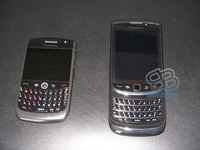 RIM has announced its first sliding handset - the BlackBerry Torch 9800, with a 3.2-inch half-VGA touchscreen.
The new phone, with a slide out QWERTY keyboard beneath the capacitive touchscreen, will run the new BlackBerry 6 OS.
It's a slightly chunky beast at 14.5mm thick, but with the QWERTY keyboard underneath you can see why.
However it's the first BlackBerry with the new WebKit browser from the Torch team, to overhaul the internet experience that has traditionally been fairly average on the BB range.
The phone will come with a 5MP camera and an LED flash, along with auto focus and geotagging through the built in GPS chip.
It will come with a 4GB microSD card, but can handle options up to 32GB through the storage expansion.
More to follow...

| |
Read More ...
Three announces HTC Hero and HTC Desire Android upgrade dates
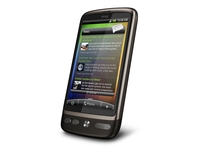 Three has issued a statement regarding the Android 2.1 and Android 2.2 updates to the HTC Hero and HTC Desire respectively.
The former handset - which was supposed to have been upgraded to the more advanced version of Android months ago - looks finally ready to drop later this month:
"Three has now tested and approved the 2.1 update for HTC Hero and it has been submitted to Google to get the final go-ahead.
"We're hoping that they can approve it within the next 2 weeks and then we can start updating Three customers with HTC Heros."
Much of the same
The HTC Desire statement is a little more in line with the other networks', stating that the same multi-week testing is in effect:
"Although the HTC Desire update was released for unlocked phones last week, HTC are building a specific version for Three which will take them a few weeks.
"Once we have this version it will be tested, approved by Google and then rolled out to customers.
"Although it goes without saying that we will get the update to customers ASAP, it's likely to be towards the end of summer until we can guarantee a problem free version for our customers."
So it looks like September for the much-vaunted HTC Desire Android 2.2 upgrade - and it's been so long since we started asking for a 2.1 update to the HTC Hero we're just glad that saga might finally be over soon.

| |
Read More ...
BlackBerry Torch 9800 slider gets officially outed
 The BlackBerry Torch 9800 slider phone has been mentioned in the rumour mills for months now, and it seems an announcement may be imminent.
The FCC in the US, which has to approve all phones to go on sale, has published details of a new BlackBerry handset, complete with sliding chassis.
The report names this phone as 'BlackBerry smartphone model RCY71UW', although references to the number '9800' are plentiful throughout the FCC document.
Hyper high-end
It's got all the necessary connectivity, meaning it will likely be a high-end handset, and word on the street for months has been that this will also pack the first showing of the new BB OS 6, which promises a lot of fancy smartphone upgrades.
This means in addition to the slide out QWERTY keyboard, the new BlackBerry Torch 9800 slider will have a full touchscreen too.
The BlackBerry Torch 9800 slider isn't shown in full glory, but Engadget is saying there will be an announcement at 4PM UK time, so not long to wait now to find out if this is true.

| |
Read More ...
Guide: Program won't open? Try this free download
 Discovering that a favourite program won't start is generally enough in itself to spoil your day, but unfortunately the real frustrations begin later, when you try to figure out why.
You shouldn't expect the application itself to offer much help. If you see an error message at all it'll generally be overly technical, or impossibly vague ("a module could not be found") - in most cases you'll be left on your own.
If you're a Windows expert then you could run something like Sysinternals Process Monitor, which will record everything your app is doing and may highlight the problem. But this requires some expertise. It might take a while. And there's a much more straightforward alternative that could point you in the right direction.
Just download, unzip and launch the free Microsoft Dependency Walker, then drag and drop an executable file onto it, and the program will immediately list all the DLLs and other supporting files it requires. If any particular files are missing or have other issues then they'll be highlighted at the top of the Module list - and these could be the cause of your problem.
We only say "could be the cause" here because diagnosing these errors is an uncertain business. Applications can run normally even when Dependency Walker reports a few apparent issues.
But just having a list of suspect files may provide the clues you need, and if you head off to Google and search for each file name in turn (focusing first on any files that aren't a Windows component) then you may find others reporting similar problems. And, with any luck, some answers.
Missing DLLs
You need to be careful about any solutions you might see recommended, though, because some can cause more issues than they solve. Don't start dragging and dropping DLLs around on your own PC, for instance - that can be dangerous. And it's also a bad idea to download a replacement DLL from some random website. Even if it's not infected with malware, there's no guarantee you'll be getting the version you need.
A better answer will explain how you can get this DLL (or other file) by installing some component from a trusted source: Microsoft's Visual C++ redistributable files, for instance.
If Dependency Walker doesn't provide any useful information from the initial drag and drop, then you could allow it to profile your application.
This runs the program and monitors what it's doing more closely, and can provide valuable extra details. These can also be extremely complicated, but if you'd like to give it a try, then drag and drop your program onto Dependency Walker, click Profile > Start Profiling > OK, and check its report for further information on your startup troubles.

| |
Read More ...
Review: LG 47LD950
 While seemingly millions of us are quite content to stick a pair of 3D glasses on our noses when we go to the cinema these days, it seems we're not so keen to wear them in our own living rooms.
Time and again we hear people saying they won't get into the technology until you don't have to wear glasses.
With this point of resistance in mind, it's hardly helpful that the specs in question cost around £100 each beyond the one or two pairs most manufacturers are including with their 3D sets.
Nor must it improve Joe Public's mood that one brand of alternate frame glasses isn't compatible with another brand's screens. So if you have a Samsung 3D TV and you want to go and watch something on your mate's Panasonic 3D TV, your glasses won't work.
The brand also does a range of active 3D sets: the 55-inch 55LX9900 and 47-inch 47LX9900 direct LED models, plus the 47-inch 47LX6900 and 42-inch 42LX6900 edge LED models. And if you're not interested in 3D, there's also a vast range of non-3D models, including most notably the LE8900 direct LED and LE7900 edge LED models.
The 47-inch 47LD950 boldly eschews the latest active shutter/alternate frame/frame sequential (take your pick of the terminology) technology and sticks with a passive, offset approach.
So while you do still have to wear glasses, these can be the cheap, electronics-free types that have been available for years, making it enthrallingly affordable to get as many pairs as you like.
In other words, the LG 47LD950 breakaway set is potentially the perfect solution for 3D fans with large families or who are prone to throwing big TV and film event parties. But is there a catch?

It's nice to find all the 47LD950's 3D tech all built into the TV and included within its (rather hefty) £2,500 asking price, rather than requiring any optional extra kit. And it's also nice to find LG ramming home the point about the cheapness of its glasses by including four with the TV – all of which come in cute little leather-like cases that feel more expensive than the green-framed glasses themselves.
However, before we go much further we need to get into the 'catch' hinted at earlier. For there's actually a very good reason why most of the AV world is pushing the less cost-effective active shutter 3D technology: resolution.
You don't have to be Einstein to figure out that if you adopt LG's approach, of effectively having two images slightly offset from each other on the screen at the same time, then clearly you have to share the screen's available pixels out between these two images.
So inevitably the resulting pictures aren't going to contain the same pixel resolution as active shutter images, where single, full HD frames are cycled alternately for each eye so fast that your brain runs them together to produce the illusion of three dimensions.
On the upside, LG's passive approach lends itself on paper quite nicely to the 'side by side' broadcast format delivered by Sky's 3D channel.
Turning to other features of the 47LD950, it's a 'traditional' liquid crystal screen in that it uses CCFL backlighting rather than the edge or direct LED systems favoured by all the other LCD-based 3D TVs we've seen to date.
It's also distinguished by 200Hz processing – actually 100Hz plus a scanning backlight – included to boost motion resolution and fluidity. This should hopefully prove helpful in keeping motion clear in a 3D environment.
Plenty of tweaks
In common with nearly every current LG TV, the 47LD950 is prodigiously stocked with picture fine-tuning options. These include a solid degree of colour management, as well as gamma settings, various noise reduction systems, contrast and black level boosters, the ability to adjust the potency of the motion processing and a processor for enhancing the edges of objects in low contrast images.
We'd suggest you handle some of these features – especially the edge enhancing and noise reducing systems – with kid gloves, as they can make pictures look worse, rather than better, if clumsily applied, especially where HD is concerned.
But overall the 47LD950's set up flexibility is commendable, to the extent that the TV has been endorsed by the independent Imaging Science Foundation (ISF) as a set that could be calibrated by one of its engineers.
Not that the 47LD950 has forgotten that most people aren't professional TV engineers; the set also includes a helpful picture wizard tool that guides you through the picture calibration process with a few basic, but useful, test signals.
The 47LD950's feature count is mostly impressive, though there are a couple of notable disappointments. The conspicuous absence of an Ethernet port immediately alerts you to the fact that it doesn't have a built-in Freeview HD tuner.
Instead you get just standard-definition Freeview – a surprising oversight on such an otherwise forward-thinking TV. We can only imagine it has something to do with the set's relatively long evolution from the passive sets LG used for Sky's 3D events in pubs and clubs back in April 2010.
The lack of an Ethernet port also means there's no DLNA PC connectivity, nor any means of jacking into LG's new NetCast online service – all things you might reasonably have expected to find on a 47in set costing £2,500.
The screen doesn't completely ignore multimedia, though, for it provides a D-Sub PC input, and a USB port capable of playing DivX HD video as well as the usual JPEG and MP3 suspects. Joining the USB and PC port are four v1.4 HDMI inputs, as well as an RS-232 port that will help you integrate the TV into a wider home AV network.
One final 'feature' of the 47LD950 we should comment on is its design. Its CCFL backlight means it's not as slim round the back as many of the current 3D generation, and its bezel is pretty chunky too by today's standards. Though the rich, polished finish of this bezel, together with a centimetre or so of transparency at the TV's outer 'wings', ensures that it's still a very attractive bit of kit.
If there was ever a TV for which the phrase 'game of two halves' was destined to be wheeled out, it's the 47LD950, especially where 3D is concerned.
We first tested the set out with Sky's 3D channel (channel 217 for Sky HD customers, in case you hadn't noticed). And we were truly startled by the results. For in many ways, the 47LD950 produces the most enjoyable 3D Sky picture we've seen so far.
The key to its success is how impressively natural it looks. The lack of any alternate frame technology reduces issues of flicker sometimes seen with that rival system, for a start. Colours also seem slightly more vibrant than tends to be the case with active shutter glasses and the picture's general brightness level is higher than we get with sequential frame sets.
Next, Sky 3D pictures look slightly crisper than usual. This might be partly down to the LG's passive 3D approach sitting so comfortably with Sky's side by side 3D broadcast approach, but it mostly has to do with the more or less total absence of the 3D crosstalk problem witnessed on all the other frame sequential 3D LCD TVs we've seen to date. It's just so refreshing to see the lines on a football pitch or the trees at the end of a golf fairway appearing just once, rather than with crosstalk's ghostly echoes to either side.
Not surprisingly, the lack of crosstalk and flicker makes watching Sky 3D on the LG a less fatiguing experience than we're used to. And we'd even say that the sheer crispness and unforced nature of the 3D image makes the 3D depth of field look more natural.
This is all pretty major news and should have the active sets quaking in their boots. But then we stuck the 3D Monsters Vs Aliens frame sequential Blu-ray into our 3D Blu-ray player, and things went rapidly downhill.

The 3D effect on the 47LD950 just wasn't nearly as convincing, and within moments our eyes were starting to feel tired and our brain was starting to hurt.
Breaking the image down into components to try and figure out where the 47LD950's Blu-ray performance is going wrong, the biggest problem seems to be that the natural depth of field noted with Sky is replaced with a more abrupt division between the foreground and the background, with less awareness of a sense of implied space between the two.
Emphasising this is the fact that the TV just doesn't seem able to resolve the foreground and background content simultaneously with normal levels of clarity. You can have the former looking crisp and believable while the latter looks somehow out of focus, or vice versa, depending on whether you've got the 3D output set to its left/right or right/left position.
Adding still further emphasis to this already troublesome phenomenon are some problems handling motion with 3D Blu-rays, as fast moving objects contribute further to the sense of lost clarity.
3D Blu-ray pictures don't look quite as detailed as they do on active 3D TVs, which is pretty much as we'd expect given that the LG can't deliver full HD to each eye. But we'd still say Blu-rays would look pleasantly crisp, bright and colourful were it not for the depth and motion issues.
In plain 2D mode, the 47LD950's mixed results continue. With HD it's rather good, packing impressive detail punch, rich but natural colours, and decent motion handling that suggests the 3D problems in that area are to do with the 3D translation engine rather than any inherent motion problems with the TV.
The 47LD950 is not as comfortable with 2D standard definition, though. Its upscaling engine doesn't work as effectively as those on some of LG's other TVs, leaving all but the very highest quality standard-def feeds looking a little soft and noisy. The occasional rogue colour tone creeps into standard-def playback, too.
We also found the set's black level response a little uninspiring, with more greyness around during dark scenes than we're starting to find with the best flatscreens.
With one or two notable exceptions, manufacturers have really struggled to deliver truly convincing audio from flat TVs.
And the 47LD950 falls into the usual traps for the most part, failing to underpin proceedings with satisfying amounts of bass, so that the mid-range feels a bit overloaded and the treble end feels exposed. That said, it's no worse than many of its rivals.
When we first heard about the 47LD950 we had visions of it being a great budget way into 3D. And it is, of course, true that it saves you a potential fortune on extra pairs of 3D glasses compared with active TVs.
But we can't help but find the £2,500 asking price rather steep - indeed, you can get LG's equivalent active 3D model, the 47LX9900, for pretty much the same price, complete with Freeview HD, online services, a much slicker designer, and very effective direct LED backlighting.
Ease of use
It would be very easy for a TV as feature-heavy and flexible as the 47LD950 to be a pig to use. But LG is to be congratulated on delivering arguably the best operating system of any TV manufacturer right now.
This starts with the set's excellent onscreen menus, which are easy on the eye, sensibly structured and well laid out, doing a good job of letting people with different levels of technical know-how delve to whatever depth they're comfortable with.
The remote control doesn't look quite as glamorous as the TV, but is comfortable to hold and the precisely responsive buttons are sensibly laid out.
Even the 3D menus, which have proven a headache with some TV brands, are about as foolproof as they could be.
The 47LD950 sets out an impressively defiant stall with its glossy looks and bold, anti-establishment favouring of passive 3D reproduction. And for a while it looks like it might just be able to turn the new 3D world on its head when it turns out arguably the most watchable Sky 3D performance we've seen to date.
But then the wheels come off rather alarmingly with 3D Blu-rays, which are as tiring to watch as Sky's 3D channel is relaxing.
If 3D doesn't interest you, the 47LD950's 2D efforts turn out to be pretty directly related to the quality of the sources you feed it. As in, it's great with HD or really pure standard-def feeds, but a bit troublesome with typical Freeview broadcasts.
We liked:
Despite being pretty chunky compared with most 3D TVs, the 47LD950 cuts an attractive figure in your living room. It's impressively flexible when it comes to setting it up too, carrying enough tweaks and adjustments to keep the most dedicated of tweakers happy. And provided you're careful with all the tools on offer, they really are capable of radically improving the set's picture quality.
LG is also to be congratulated on making the 47LD950 so superbly easy to use. Best of all, though, it's a revelation with Sky 3D footage, as well as being a mighty fine displayer of HD 2D fare.
We disliked:
The 47LD950's price seems at least £500 too high, despite partial redemption from the fact that you don't have to cough up loads of extra money for spare pairs of its 3D glasses.
It's also a pity that such a costly set lacks a Freeview HD tuner or any online features.
Its sound is pretty average, but probably no more so than the majority of its rivals. But the 47LD950 certainly does struggle compared with some rivals when it comes to playing full HD, frame sequential Blu-ray films.
Verdict:
There is most definitely a place in the world for the 47LD950. Its ability to make 3D the social, event- driven technology it ought to be, thanks to its freedom from expensive, brand-specific glasses, is bound to find it an audience.
The supremely natural way its passive 3D engine presents Sky's 3D channel is also quite thought provoking, making us wonder if the frame sequential approach is really worth all the trouble. But then the 47LD950's problems with frame sequential Blu-ray playback plays straight back in to the hands of all the active 3D proponents out there.
With a mixed 2D performance to its name too, in the end the 47LD950's price arguably becomes its biggest problem, as it's too expensive to appeal to the more 'casual' 3D/TV viewer we might have been inclined to recommend it to.
Related Links

| |
Read More ...
Virgin Media complains to Ofcom about Project Canvas
 Virgin Media has has made an official complaint to Ofcom regarding Project Canvas, the BBC-backed IPTV initiative, calling the service anti-competitive.
Virgin Media has been quite vocal about its reservations of Project Canvas, previously stating that it had the potential of "severely restricting competition and innovation in the UK's digital media landscape".
And this is the slant that it has taken with its complaint to Ofcom.
In a statement Virgin Media explained: "The Canvas partners have significantly exceeded their original claims to be creating a common set of open standards which could have been improved upon by others and are now intent on controlling every aspect of how people watch TV.
"The BBC Trust has already acknowledged, but then completely ignored, the impact that Canvas will have on so many different organisations; from consumer electronics firms to software developers and enterprising new technology manufacturers to independent programme makers."
Open platform
This comes after the BBC Trust approved Canvas as long as a number of conditions were met.
Virgin Media now believes that these conditions are not being met and the spec for Project Canvas – which is backed by BT, Channel 4, ITV and the BBC – is over-stepping the mark.
At the moment, Virgin Media is one of the forerunners of on-demand content in the UK. Project Canvas' arrival would be a massive rival for the service it offers, although the door is open for Virgin to offer content through the Canvas platform.
Virgin Media isn't the only opponent to Project Canvas. Sky also has major reservations, but it seems that as of yet no complaint has been lodged.
Speaking at an event with TechRadar in attendance recently, CTO Anthony Rose said that Project Canvas is set for a 2011 launch.
All about innovation
Rose believes that Canvas is an open platform, noting: "It's an open platform and that means anyone can come up with something for the platform."
"If you make it closed, then only you can provide innovation. When it's open, other people can collaborate to the success of the platform and come up with applications that you've never even dreamed of.
"Because of this, Canvas is a great proposition."
Project Canvas was recently delivered a blow with the news that Channel Five was pulling out of the venture, though Richard Halton said this wouldn't change the "strategic rationale".
When TechRadar spoke to Humax about Project Canvas – which is rumoured to be called YouView when it is made available to the public – it told us to expect the boxes when they do arrive in the UK to cost "a premium".
That's if Ofcom doesn't step in to scupper proceedings.

| |
Read More ...
Britain slumps in worldwide broadband speed chart
 Britain is falling behind the rest of the world when it comes to broadband internet speeds, according to a new report by Akamai.
Akamai's latest "State of the Internet" report puts the UK in 27th place, way behind countries such as Japan, South Korea and the US in terms of 'global average connection speeds'.
Asia leads the way
"Cities in Asia dominate the Global Average Connection speeds top 100 list," reads the report. "With 61 located in Japan, 12 more in South Korea, and Hong Kong.
"Fourteen cities from North America made it into the top 100, along with 12 cities in Europe," the report adds.
All of those European cities in the top 100 are in the Netherlands, Germany or Sweden. No UK cities made the cut. A damning indication of the state of British broadband.
Britain's broadband shame
The UK has an average broadband speed of 3.8Mbps, which is far less than the average speed reported by a recent Ofcom report which claimed that the average UK connection speed was 5.3Mbps.
This compares poorly with fast broadband nations such as South Korea which boasts the highest average connection speed of 12Mbps, and also recorded the highest average maximum connection speed of 33Mbps.
In terms of worldwide rankings, Hong Kong sits in second place with a 9Mbps average, closely followed by Japan. The US is only slightly better than the UK, languishing in 16th place with an average speed of 6.3Mbps.
Interestingly, sitting at fourth and fifth in the broadband speed chart are Romania and Latvia, both recording average speeds of 6.3Mbps.

| |
Read More ...
HTC Desire HD and Desire Z coming soon?
 HTC looks likely to be announcing two new handsets in the near future, with the Desire HD and Desire Z showing up on inventory lists.
The two new phones have surfaced on Vodafone Germany's inventory lists, with the Desire HD and the Desire Z being rebadged from the Ace and Vision codenames respectively.
The new phones would be different to the Desire, with the Desire HD mimicking the HTC Evo with a 4.3-inch screen and 720p video recording.
Packing the keys
The HTC Vision looks set to pack a QWERTY keyboard, and would therefore be HTC's first own-branded Android with a slide out set of buttons - something we've been seeing rumoured for ages.
Of course, it will be interested how the Desire HD will be positioned given that the Desire can now record 720p video with the Android 2.2 Froyo, but a massive screen is always welcome.
We're waiting to hear word on whether these phones will be making their way to the UK, but given Britain is a key market for HTC we'd imagine they would be.

| |
Read More ...
Apple to launch video-streaming site this year?
 Apple is set to launch a movie streaming service this year, which will mark the first time the company has embraced the cloud.
This is according to CNET, who has been speaking to an Apple insider about the company's situation with Lala – the music streaming service which was bought and subsequently closed down by Apple.
It doesn't take much to think that Apple have been busy picking at the flesh off LaLa's distribution system but most thought this was for a music-streaming service.
However, CNET is reporting that this doesn't seem to be the case at the moment, due to a lack of deals on the table from music labels.
This is worrying for Apple as it is a realm that Google is threatening to enter.
It seems, because of this, the music side of the streaming service has been put on the back burner with movies being the main focus for 2010.
The idea is that the streaming service would be a keychest initiative for movies, which would mean less strain on people's hard drives as all the content purchased would stay in the cloud.
The cloud has spoken
This isn't a new idea. Last month Acetrax, another video streaming outlet, signed a deal with Panasonic to offer this service through the company's TVs.
This deal was backed up this week with news that Acetrax will also be available through Samsung sets as of September.
It is also a similar to a service that Disney has been promising for a while and something Tesco is also prepping.
The idea makes sense for Apple. If it sees that the movie streaming is a lucrative venture then it will no doubt hurry iTunes for the cloud.
The only problem is that streaming puts a massive strain on portable devices not using Wi-Fi, so we could well see the service take off initially for those who use Apple TV.
But if it is a keychest initiative it will mean that you don't buy the format but the rights to the property – so you can watch the movies you have bought on a multitude of devices.
This is surely something which will suit the loyal Apple contingent.

| |
Read More ...
In Depth: Top 10 best iPhone 4 apps
 Apple's iPhone 4 introduced several significant hardware upgrades over previous models, specifically a much improved screen and a camera capable of HD video recording, LED flash, a second, forward-facing camera and a built-in gyroscope.
It was going to take developers a little while to start releasing apps that took advantage of these improvements, but now they're here let's look at the 10 best apps to showcase the iPhone 4's new functionality.
1. Zen Bound 2 - £1.79
(iPhone 4 hardware feature: Gyroscope)
Zen Bound 2 is one of the most unusual, but strangely satisfying, iPhone games you'll ever play. Essentially you have to wrap a rope around different 3D objects by rotating them as they float in space. Zen Bound 2 makes use of the iPhone 4's built-in gyro to add another level of control to your rotations.

2. Fring - free
(iPhone 4 hardware feature: Front facing camera)
We know the iPhone 4 has FaceTime for video chat, but it only works over Wi-Fi networks. If you want to break free of this restriction then install Fring and use that to video chat to your friends over 3G. It even works with phones running the Android operating system, not just other iPhone 4 users.

3. The Elements for iPhone 4 (UK version) - £5.99
(iPhone 4 hardware feature: Retina display)
The Elements for iPhone 4 is a special edition of the Theodore Gray's enticing guide to the periodic table of the elements, which has been specially created for the iPhone 4 to make use of the fabulous retina display. The beautiful high resolution graphics make science come to life in your hands.

4. TuneIn Radio - £1.19
(iPhone 4 software feature: Multitasking)
Before iOS 4 introduced Apple's take on multitasking, apps like TuneIn Radio, which enables you to listen to and record Internet radio (yes, including BBC 1, 2, 3 and 4) had a hard time getting by. But thanks to iOS 4 you can now listen to the radio in the background while doing other tasks, like email, web browsing or running other apps, which is exactly the way it should work.

5. You Gotta See This! - £1.19
(iPhone 4 hardware feature: Gyroscope)
You Gotta See This! makes innovative use of the iPhone 4's gyroscope. You simply start a recording, swipe the scene up, down and left and right with the iPhone 4's camera and it uses the gyroscope to determine the camera orientation, producing one large image, with the individual images you took positioned correctly. Check out #seethis on Twitter for examples.

6. N.O.V.A. - Near Orbit Vanguard Alliance - £2.99
(iPhone 4 hardware feature: Gyroscope)
Before the iPhone 4, N.O.V.A. was a damn good first person shooter. After the iPhone 4 it became an even better one because it uses the iPhone 4's gyroscope as a controller aid. The game itself is a sci-fi adventure reminiscent of the Xbox's Halo, but all you really need to know is that if it moves, you generally shoot it, and that's not a bad thing.

7. Rubik's Cube - £1.79
(iPhone 4 hardware feature: Gyroscope)
This is the only 'cube' app approved by Mr Rubik himself (his first name is Erno, in case you were wondering), so that's a real seal of approval, if ever we saw one. iPhone 4 owners can get a little extra from the app thanks to the new gyroscope controls. Now you can flick your wrist to make a move, and of course there are improved graphics for the iPhone 4's retina display.

8. Eliminate: GunRange Free - free
(iPhone 4 hardware feature: Gyroscope)
If you want a quick and dirty way to understand what the iPhone 4's gyroscope is all about then check out Eliminate: GunRange Free It's quick and dirty, but in a good way. In fact, we had this one demonstrated to us by staff in our local Apple Store, when showing off what the iPhone 4 can do. You aim your gun by moving the iPhone 4, and tap to fire. There's also a 59p paid-for version if you need more to shoot at than the free version offers.

9. iMovie - £2.99
(iPhone 4 hardware feature: HD video recording)
Now you've got a HD capable video recorder in your pocket you might as well make use of it. Apple's iMovie app enables you to turn your videos into mini masterpieces right on the iPhone 4 then upload them to YouTube. It's understandably limited compared to the full OS X version of iMovie, but it's still an essential app for the iPhone 4.

10. Torch for iPhone 4 - 59p
(New iPhone 4 hardware feature: LED flash)
Here's an app that does what it says on the tin: Torch for iPhone 4 It turns your iPhone 4 into a torch by utilising the LED flash. It's a simple idea, and works surprisingly well. You can even use it to send morse code messages, should you ever feel the need.


| |
Read More ...
ITV to put HD channels behind paywall on Sky
 ITV has announced its half-yearly results today, boasting of profits for the company and a new strategy to move back into pay TV.
According to the broadcaster, ITV made pre-tax profits of £118 million, which is all down to an 18 per cent year-on-year increase of ad revenue.
Alongside the figures, ITV also announced it has struck a deal with Sky to offer its ITV2, ITV3 and ITV4 HD channels through the subscription service.
This was something that was strongly rumoured to happen.
Sky subscribers will receive the high-definition versions of these channels for no extra cost in October.
Priority change
Speaking about the news, the newly instated chief executive of ITV, Adam Crozier, said: "For the past decade ITV has not faced up to the challenges presented by the rise of internet-based platforms, the continuing growth of pay TV and subscription services and the globalisation of content.
"Our priority for the next 18 months is to make ITV a creatively dynamic and fit-for-purpose organisation while maintaining strict financial controls.
"Over time we expect to move to a position whereby half of ITV's revenue base will be derived from non-television advertising sources and today we are announcing our move into pay television with the agreement to make HD versions of ITV 2, 3 and 4 pay channels on Sky."
It is also expected that ITV will broaden its online remit, focusing on delivering more content to its on-demand service.
This is significant, given that the company has seemingly spurned the advances of Hulu, effectively stopping the US streaming site's foray into the UK.

| |
Read More ...
Google Android phones more popular than iPhone
 Google Android Phones are outselling Apple iPhone so far in 2010, according to a new report of the US market by leading analyst group Nielsen.
Despite the fact that Apple seems to dominate the headlines with the recently-released iPhone 4, Nielsen's latest data shows that Google is so far winning the sales race this year.
Brand loyalty
Phones running Google's Android operating system made up 27 per cent of all smartphone sales in the first six months of this year, notably ahead of Apple, with the iPhone making up 23 per cent of sales.
"While the iPhone has been the headline grabber over the last few years in the smartphone market, Google's Android OS has shown the most significant expansion in market share among current subscribers," writes Nielsen on its blog.
Apple released the iPhone 4 on 24 June, although the initial launch month has been hampered by well-publicised technical problems with the mobile signal reception on the new device.
Meanwhile, new Google Android phones such as the Motorola Droid X and HTC Evo are quietly selling like hotcakes in the US.
The uptake is slightly lower in the UK and Europe, but Android is still proving a popular choice through the likes of the HTC Desire and Samsung Galaxy S.
RIM still leads the smartphone race in the US, with BlackBerries making up a third of all smartphones sold over the last six months.
Nielson's latest smarphone study shows that 13 per cent of US smartphone subscribers now have Android phones and 28 per cent have iPhones, with Apple's customers still remaining more loyal to the brand.
The study also shows that over a quarter of all phone owners in the US now have a smartphone, which has grown considerably from 16 per cent the same time last year.
But, and there is a big but, there are far more different Android handsets out in the market at the moment, compared to just a few models of the iPhone.
So while the majority is winning against the minority at the moment, it is still impressive that Apple's iPhone family is nearly holding its own against the entire Android spectrum.

| |
Read More ...
Google Android phones more popular than iPhone
Google Android Phones are outselling Apple iPhone so far in 2010, according to a new report of the US market by leading analyst group Nielsen.Despite the fact that Apple seems to dominate the headlines with the recently-released iPhone 4, Nielsen's latest data shows that Google is so far winning the sales race this year.
Brand loyalty
Phones running Google's Android operating system made up 27 per cent of all smartphone sales in the first six months of this year, notably ahead of Apple, with the iPhone making up 23 per cent of sales.
"While the iPhone has been the headline grabber over the last few years in the smartphone market, Google's Android OS has shown the most significant expansion in market share among current subscribers," writes Nielsen on its blog.
Apple released the iPhone 4 on 24 June, although the initial launch month has been hampered by well-publicised technical problems with the mobile signal reception on the new device.
Meanwhile, new Google Android phones such as the Motorola Droid X and HTC Evo are quietly selling like hotcakes in the US.
The uptake is slightly lower in the UK and Europe, but Android is still proving a popular choice through the likes of the HTC Desire and Samsung Galaxy S.
RIM still leads the smartphone race in the US, with BlackBerries making up a third of all smartphones sold over the last six months.
Nielson's latest smarphone study shows that 13 per cent of US smartphone subscribers now have Android phones and 28 per cent have iPhones, with Apple's customers still remaining more loyal to the brand.
The study also shows that over a quarter of all phone owners in the US now have a smartphone, which has grown considerably from 16 per cent the same time last year.
But, and there is a big but, there are far more different Android handsets out in the market at the moment, compared to just a few models of the iPhone.
So while the majority is winning against the minority at the moment, it is still impressive that Apple's iPhone family is nearly holding its own against the entire Android spectrum.

| |
Read More ...
Apple and Amazon slammed for ebook pricing
 Apple and Amazon are being taken to task by Conneticut's Attorney General over what he refers to as 'anti-competitive' ebook pricing deals with publishers.
Attorney General Richard Blumenthal has requested that representatives from Apple and Amazon attend meetings at his office to discuss the ebook pricing issue.
Blumenthal refers to their deals with major book publishers such as Macmillan and Simon & Schuster as "most favored nation" arrangements.
MFN deals and anti-competitiveness
"The net effect is fairly obvious," writes Blumenthal in an open letter to Amazon, "in that MFNs will reduce the publisher's incentive to offer a discount to Amazon if it would have to offer the same discount to Apple, leading to the establishment of a price floor for ebooks offered by the publisher."
Blumenthal hopes that through a discussion with the two tech giants that Amazon and Apple will find an acceptable way forward to "allay his concerns".
Apple's arrangement with publishers is to offer them a 70 per cent royalty while keeping 30 per cent to cover the costs of running its iBookstore, requiring publishers to guarantee that prices elsewhere will not be higher than those charged by Apple.
"MFN clauses - especially when they are offered to two of the largest e-book retail competitors in the United States - have the potential to impair horizontal competition by encouraging coordinated pricing and discouraging discounting," the Conneticut Attorney General wrote to Apple.
"Of course, the concerns are compounded, and hence potentially more troublesome, since this arrangement appears to be something that will be agreed to by the largest ebook publishers in the United States and two competitors who combined will likely command the greatest retail ebook market share."

| |
Read More ...
Apple and Amazon slammed for e-book pricing
Apple and Amazon are being taken to task byConneticut’s Attorney General over what he refers to as ‘anti-competitive’e-book pricing deals with publishers.Attorney General RichardBlumenthal hasrequested that representatives from Apple and Amazon attend meetings at hisoffice to discuss the e-book pricing issue.
Blumenthalrefers to their deals with major book publishers such as Macmillan and Simon& Schuster.as "most favored nation" arrangements.
MFN deals and anti-competitiveness
"Thenet effect is fairly obvious," writes Blumenthal in an open letter toAmazon, "in that MFNs will reduce the publisher's incentive to offer adiscount to Amazon if it would have to offer the same discount to Apple,leading to the establishment of a price floor for e-books offered by thepublisher."
Blumenthalhopes that through a discussion with the two tech giants that Amazon and Apple willfind an acceptable way forward to "allay his concerns."
Apple'sarrangement with publishers is to offer them a 70 per cent royalty whilekeeping 30 per cent to cover the costs of running its iBookstore, requiringpublishers to guarantee that prices elsewhere will not be higher than thosecharged by Apple.
"MFNclauses—especially when they are offered to two of the largest e-book retailcompetitors in the United States—have the potential to impair horizontalcompetition by encouraging coordinated pricing and discouragingdiscounting," the Conneticut Attorney General wrote to Apple.
"Ofcourse, the concerns are compounded, and hence potentially more troublesome,since this arrangement appears to be something that will be agreed to by thelargest e-book publishers in the United States and two competitors who combinedwill likely command the greatest retail e-book market share."
Via ArsTechnica

| |
Read More ...
EA announces Move-compatible 'Create'
 Watch out LittleBigPlanet, because EA has just announced a motion-controlled game called Create set for release on PS3, Wii, Xbox 360 and Mac in 2011.
EA is describing Create as a game that "rewards players for being creative" by presenting them with various challenges which require solutions "fuelled by the creativity of the player".
Just as in LittleBigPlanet, players will be able to design their own levels and environments using 'easy-to-use' brushes and tools presented within the game creator, which will also let you drop in textures, props and animated objects.
Create and share
Players will also be able to share their creations and levels with others online.
"Create uses families' imaginations to develop new ways to play together that are both fun and challenging," said Harvey Elliott, VP and General Manager at EA's UK studio Bright Light.
"We wanted to design a game where the entire family can explore, decorate, and solve challenges where no solution is wrong and the only limit is the imagination."
Create uses a simple drag-and-drop interface, letting you grab objects from a menu and then place them anywhere on the screen.
Producer Rod Humble says of the game: "On one hand you can just make 2D scenes. If you just want to paint a picture in your living room without any mess, you can do that. The next step is similar to the way paintings work in Harry Potter – you can make them a little bit alive and add a touch of interactivity,
"So for example, I like to draw landscapes in Create, and once I've added the clouds, I just give a little flick to create some wind and they drift across the screen.
"Or you can go all the way to a fully interactive 3D scene where you've decided you're going to put in a challenge where the player has to collect four objects to make X happen. You really can do anything with it on that spectrum. It's not a game maker it's not a 3D art tool, it's this lovely mush in between."
So far there is no Create UK release date, but we will keep you posted.

| |
Read More ...
Carphone Warehouse launches Music Anywhere
 The Carphone Warehouse has announced a new music-streaming service that promises to put you in control of your tunes on the go.
Instead of pulling songs from your home PC, the desktop application will scan your computer to see what songs you have - those that aren't named correctly will have a snippet of music listened to and identified in that manner.
You then install an application on your BlackBerry, iPhone or Android device and stream the music direct to your handset.
Streamed but not streamed
The music isn't streamed from your PC - it's matched to the Music Anywhere locker on the internet, so your machine doesn't have to be turned on to access the tracks.
Obviously, this will be a worry for those that have music obtained less than legitimately but the alliance states that not only will pirated music play fine, but because it has a licensing deal that sees the music labels get royalties every time the song is played, they're actually making money from a file that they wouldn't have usually.
Great news if you have stuff downloaded in low bit-rate formats, as you'll get the upgraded experience for free, but if you're a high-end encoder then you'll probably notice a dip in the music's sound.
Piracy never pays
However, this may not be the case in all situations, as the terms and conditions of the service state "in extreme cases where it becomes apparent that most of a person's music collection has been fact pirated, Music Anywhere reserves the right to terminate the service", according to Music Ally.
It's £29.99 per year to use the service, and users who buy the Samsung Galaxy Europa will get the service for free.
Carphone Warehouse users will also get 2GB free on the cloud to use the service without needing to sign up, and there's a movie version in the works as well.
But it will be interesting to see whether this Spotify semi-rival will succeed in a marketplace already becoming fairly flooded with streaming applications, or whether users will simply invest in a phone with more storage to carry their songs with them that way.

| |
Read More ...
Updated: IFA 2010: 3D, cool tablets and connected TVs
 3D TVs and connected TV looks set to dominate IFA 2010 – the biggest consumer technology show in Europe.
 Why does it matter? Because unlike Las Vegas' CES, where the focus is on the US market, all the major launches at IFA 2010 are likely to make their UK release dates very soon.
Highlights will likely emanate from the showcase stands from the likes of Sony, Panasonic, LG, Toshiba, Philips and Samsung. Each typically has a whole hall to themselves.
The show takes place at the huge Messe Berlin complex. There are a staggering 26 halls, plus other facilities, and it's all taken over by IFA for the first week of September.
While the show is traditionally AV-centric – there will be more new 3D TVs – recent years have seen more computing wares debut at the show. Last year Samsung took the opportunity to drop several new laptop ranges, while Toshiba showed off new laptops and its Journe Touch tablet.
We'd expect some tablets to make their debut at IFA 2010 – perhaps even running Google's new Chrome OS.
This year we're expecting plenty more 3D TVs and associated kit, including universal glasses you'll be able to use with 3D TVs from various brands.
Content providers may well get in on the act, too. We might hear some more news about Google TV, perhaps a LoveFilm tie-up or maybe even Hulu for Europe. Whatever the partnerships announced, connected TV will be big news.
As usual, IFA 2010 will attempt to cover the whole gamut of consumer electronics across its 121,000 square metres of showspace – mobile, home entertainment, computing, videogames, digital imaging, car audio and sat nav – as well as domestic appliances like high-tech cookers and fridges.

ZONE OF REFLECTION: Samsung's hall at IFA 2009
Nestled among the 1,164 exhibitor stands at IFA 2010 will be a brand new iZone, which will focus on the growing popularity of the Mac, iPhone, iPod and iPad with apps showcases and the latest iPhone 4 accessories – including Cinemizer glasses that will enable you to watch 3D movies anywhere.
Also new to IFA 2010 is the eLibrary – an area of the show dedicated to eBooks and tablet PCs, with content providers displaying their wares.
Last year there were also some new phone handsets, such as the Samsung Galaxy running Android. It's wholly possible we might see some Windows Phone 7 handsets at the show – perhaps even the Samsung Cetus running Microsoft's new mobile OS.
Like Las Vegas' CES, IFA has an enviable record when it comes to breaking new technologies with past highlights including colour television (1967), MP3 (1991) and 3D TV (1998). We expect this year – the exhibition's 50th – to be no different.

TOP LAP: We don't know the reason for this picture either
To make sure you stay up to date with all the brand new products, technologies and innovations being shown off at IFA 2010, make sure you follow TechRadar's in-depth coverage of events, both in the run-up to the show and on the show floor itself – we'll be there in force to bring you the very latest updates.
IFA 2010 runs from Friday 3 to Wednesday 8 September, though most of the major press conferences happen on Wednesday 1 and Thursday 2 September, so expect plenty of news right from the get-go.
You can find out more about the event and what's being shown there by visiting the official IFA 2010 website.

| |
Read More ...
Updated: IFA 2010: 3D, cool tablets and connected TVs
3D TVs and connected TV looks set to dominate IFA 2010 – the biggest consumer technology show in Europe. Why does it matter? Because unlike Las Vegas' CES, where the focus is on the US market, all the major launches at IFA 2010 are likely to make their UK release dates very soon.
Highlights will likely emanate from the showcase stands from the likes of Sony, Panasonic, LG, Toshiba, Philips and Samsung. Each typically has a whole hall to themselves.
The show takes place at the huge Messe Berlin complex. There are a staggering 26 halls, plus other facilities, and it's all taken over by IFA for the first week of September.
While the show is traditionally AV-centric – there will be more new 3D TVs – recent years have seen more computing wares debut at the show. Last year Samsung took the opportunity to drop several new laptop ranges, while Toshiba showed off new laptops and its Journe Touch tablet.
We'd expect some tablets to make their debut at IFA 2010 – perhaps even running Google's new Chrome OS.
This year we're expecting plenty more 3D TVs and associated kit, including universal glasses you'll be able to use with 3D TVs from various brands.
Content providers may well get in on the act, too. We might hear some more news about Google TV, perhaps a LoveFilm tie-up or maybe even Hulu for Europe. Whatever the partnerships announced, connected TV will be big news.
As usual, IFA 2010 will attempt to cover the whole gamut of consumer electronics across its 121,000 square metres of showspace – mobile, home entertainment, computing, videogames, digital imaging, car audio and sat nav – as well as domestic appliances like high-tech cookers and fridges.
ZONE OF REFLECTION: Samsung's hall at IFA 2009
Nestled among the 1,164 exhibitor stands at IFA 2010 will be a brand new iZone, which will focus on the growing popularity of the Mac, iPhone, iPod and iPad with apps showcases and the latest iPhone 4 accessories – including Cinemizer glasses that will enable you to watch 3D movies anywhere.
Also new to IFA 2010 is the eLibrary – an area of the show dedicated to eBooks and tablet PCs, with content providers displaying their wares.
Last year there were also some new phone handsets, such as the Samsung Galaxy running Android. It's wholly possible we might see some Windows Phone 7 handsets at the show – perhaps even the Samsung Cetus running Microsoft's new mobile OS.
Like Las Vegas' CES, IFA has an enviable record when it comes to breaking new technologies with past highlights including colour television (1967), MP3 (1991) and 3D TV (1998). We expect this year – the exhibition's 50th – to be no different.
TOP LAP: We don't know the reason for this picture either
To make sure you stay up to date with all the brand new products, technologies and innovations being shown off at IFA 2010, make sure you follow TechRadar's in-depth coverage of events, both in the run-up to the show and on the show floor itself – we'll be there in force to bring you the very latest updates.
IFA 2010 runs from Friday 3 to Wednesday 8 September, though most of the major press conferences happen on Wednesday 1 and Thursday 2 September, so expect plenty of news right from the get-go.
You can find out more about the event and what's being shown there by visiting the official IFA 2010 website.

| |
Read More ...
Acetrax movie downloads come to Samsung connected TVs
 Samsung is the latest TV manufacturer to announce a deal with Acetrax, which brings UK movie downloads to its connected televisions and Blu-ray players.
While Acetrax isn't the most well known of movie services, it's managed to bag deals with two of the biggest TV companies out there: Panasonic and Samsung.
The Panasonic deal was announced just last month and now it seems that Acetrax has also signed on the dotted line with Samsung.
Speaking about the link-up, Leslie Golding, CMO Acetrax, explained: "The music industry was transformed by a service connected to a device. We believe the same will happen with the movie industry and a connected TV service with no monthly subscription. Acetrax is dedicated to providing this together with Samsung, the world's largest TV manufacturer."
Movie time
Although the movies at the moment will be of a DVD and not HD standard, Acetrax is hoping to entice users into using its service with the sheer amount of movies on show – around 2,000 at the moment.
Most of the major film studios have given their content, so you will have movies like Star Trek and The Godfather on tap.
Samsung's latest Blu-ray players and LED TVs will benefit from Acetrax, although it does note that the service is not available on TVs under 32 inches.
Prices for films vary but you will be looking at £3.49 for a major rental and around £10.99 to buy a new title.
The service has a UK release date of Q4, so expect it to land some time in September.

| |
Read More ...
Windows Phone 7 release date confirmed as October by Microsoft
 The COO of Microsoft, Kevin Turner, has let slip that Windows Phone 7 handsets are set to ship in Europe this October, with the US getting its share in November.
The remarks were made on video (which Engadget has nabbed) at a recent conference, with Turner being rather candid about the mistakes Microsoft has made in the mobile space.
In his speech Turner explained: "[It] has been tough – this is a lowlight. For me, the company, it's tough. But, you know what, in the October, November timeframe – October likely across Europe, November in the US – we are back in the game."
Ch-ch-changes
"This game is not over," added Turner. "There's 200 [million] smartphones right now being sold. When you think about what is going to happen in the next three to five years, there will be 400 to 450 million sold. More than double the number.
"The opportunity we have is to really make change."
Talking about what to expect from Windows Phone 7, Turner noted: "When you look at this phone and see some of the UI, it is not like any phone you have seen from Microsoft.
"Ladies and gentlemen, I think that is a good thing."
The first Windows Phone 7 handset was outed last week and is set to be called the Samsung Cetus.

| |
Read More ...


No comments:
Post a Comment