

Hands on: Sony NEX-VG10E review

Sony's announcement that it had created the first consumer video camera with interchangeable lenses could well be the biggest thing to happen to the camcorder market this year.
Innovations like this don't come around that often, especially ones which are designed to give the user more options for shooting rather than less autonomy.
The idea of interchangeable lenses is one which has been in the consumer camera market since pretty much its inception, but it is something consumer video cameras have been crying out for.
Changing the lens on your camcorder to suit your shooting environment means that you have complete control of what your footage will look like.
It also means that the Sony NEX-VG10E is not a camcorder for the point-and-shoot parade.

It's not for the weak-armed either. The VG10 has a hulk of a chassis which has semi-pro written all over it (not literally as that would look silly).
The hand-grip on the side does mean that it can be used for handheld shots, but we aren't expecting you to do this that often, not unless you want your arm to look like Popeye's.
Despite its size, the shape of the camcorder is rather sleek. The on-board microphone (which offers sound from four separate omnidirectional microphone capsules) and the eye piece segue brilliantly together and the body seems more-than sturdy.

There's also both a hot shoe mount and cold shoe mount on board, so you can add external gubbins like extra mics and lights.
On-board is also a 3-inch LCD which has been given some high resolution imaging technology which means that you will be able to see what you are shooting even in bright sunlight.
Unfortunately there are no touchscreen capabilities on the LCD, but the controls on the side are easy enough to manoeuvre.

It's not the chassis, though, which is the most impressive thing about the NEX-VG10E – it's what is underneath in the form of the Exmor APS HD CMOS.
As it is 19x the size of what is in most camcorders at the moment, it is a brilliant technological feat which means that you can shoot 1080p video and shoot 14.2MP stills as well.
And as the camcorder deals in interchangeable lenses, there's a good bet that any stills photography you do will come out rather nice.
When it comes to the lens situation, Sony is trying to create an ecosystem with its NEX camera range.

You will be able to swap lenses between the NEX-3 and NEX-5 and if you have an additional adapter you can also add A-mount DSLR lenses to the camcorder.
In short – if you have a Sony DSLR now, then you will be able to swap lenses freely between camera and camcorder.
As this was a preview model we can't tell you about quality, but the potential of the NEX-VG10E is mouth-watering.

Not only do you have a number of program modes, an aperture priority mode and the chance of surround sound audio, the interchangeable lens system means that you should be able to create cinematic shots from something that is billing itself as semi-pro.

Although pricing hasn't been announced, Sony believes it will cost around £2,000. Yes it's expensive but it should make you movies look like they are worth a lot more.
The Sony NEX-VG10E has a UK release date of October.

 |  |
Read More ...
Audio: New Xbox 360 offers welcome noise reduction
 The snazzy new Xbox 360 250GB SKU goes on sale in the UK tomorrow, and TechRadar has been giving it the once-over for the last week or so. You can see the results over at our new Xbox 360 review.
One of the main complaints about the original 360 models was that to watch a DVD or play a game off a disc, you had to contend with tortuous levels of white noise.
You know the story - overheating components meant the cheap cooling fans went into overdrive, and the noise of the DVD drive itself could drown out a Chinook.
Has there ever been a more iconic sound in the gaming industry than the noise of an Xbox 360 firing up its DVD drive in the heat of summer? We think not.
The improvements
So, fast forward five years and probably the most desired hardware feature of the new redesigned Xbox 360 250GB is the slimmed-down 45nm CPU with integrated GPU.
The increased power efficiency of this new component, coupled with improved cooling and a quieter DVD drive, has resulted in a console that runs almost completely silently.
But don't take our word for it - hear for yourself in our side-by-side demonstration:
Sound recordings were made six inches from the front of each of the three consoles. Results should only be used by way of comparison.
Read more about the new Xbox 360 250GB in our full review

| |
Read More ...
Developers to keep core gamers happy with 3DS
 British Nintendo developers are adamant that the new glasses-free 3DS handheld, due for release early in 2011, is going to appeal to both hardcore and casual gamers alike.
So while debates in online gaming forums rage on about the relative 'hardcore' merits of new technologies such as Microsoft Kinect, Sony PlayStation Move and Nintendo 3DS, those that have played with the new Nintendo handheld and those that are making games for it seem sure that it will captivate "all sectors of the audience."
3DS developer poll
TechRadar recently polled all the publishers and developers working on 3DS games to find out their thoughts on the potential of Nintendo's new tech.
To be fair, most of the responses we got were along the lines of: "cannot really comment, under NDA [non-disclosure agreement]" but we did manage to squeeze a bit more information out of those that have seen the new tech.
Neil Long, Editor of Official Nintendo Magazine told us: "Nintendo have got form when it comes to industry-changing technology, but for me the 3DS has the potential to outstrip anything the company has achieved before.
"Picking up the handheld and looking into that 3D top screen is another 'wow' moment similar to playing Wii Sports for the first time – you get the very real sense that Nintendo have somehow nicked a time-travelling DeLorean and smuggled its new tech back from the far-flung future. Besides the headline-grabbing 3D screen, for me what's most interesting is how its other functionality will offer developers some really interesting toys to play with.
"The console's accelerometer and gyroscope open the door to tilt and motion-controlled games, and one augmented reality tech demo I saw offered up a genuinely jaw-dropping glimpse of what might be done in this space as well. Its ability to take (and, knowing Nintendo, play with) 3D photos is another feature that has been a little glossed-over."
First auto-stereoscopic 3D console
We also spoke with Blitz Games CTO and founder Andrew Oliver, who told TechRadar: "In addition to the Stereoscopic-3D-without-glasses capability and its upgraded processing power, the 3DS also already has some of the new technologies including a stereo camera, tilt sensors and a gyroscope.
"These will undoubtedly lead to some very interesting possibilities for future gameplay but are unlikely to be seen in the first wave of games."
"As far as the 3DS goes I think it will be welcomed by both core and casual gamers – not least because of the stellar line-up of games announced by Nintendo at E3.
"As the first 3D screen on the market which does not require glasses, and given the rapturous reaction from those people who have actually experienced 3DS gameplay, we expect a range of hugely exciting games to go down very well with all sectors of the audience."

| |
Read More ...
Exclusive: Sony: Expect more 3D Cybershot cameras
 Sony expects to be bringing out even more 3D enabled digital cameras, with the company telling TechRadar that the technology is here to stay.
 Speaking at a Sony event, a spokesperson told TechRadar that the company's latest Cybershot additions are only the first to give people the option of taking 3D photos.
"I think 3D is not going to go away as a technology so certainly Cybershot will want to be there to leverage any kind of interest from the consumer side," said the spokeperson.
End-to-end
Sony's dedication to 3D is clear, with the company aiming to provide end-to-end support and products for the technology.
That includes 3D films from Sony pictures and 3D support in the likes of Bravia televisions, the PlayStation 3 console and through the camera range.
"We're really trying to create a complete solution for the consumer and get them to able to enjoy 3D technology," added the spokesperson.
The announcement of the 3D ready WX5 and TX9 Cybershot cameras was only made yesterday – with both offering the 3D Sweep Panorama feature.

| |
Read More ...
CES 2011 registration opens
 Registration for CES 2011 is open, with the technology world already beginning to look ahead to a show which sets the tone for the year.
 CES 2010 did not disappoint, with a slew of new products and major announcements and the Consumer Electronics Association will be hoping that CES 2011 lives up to its predecessors.
"The energy and buzz surrounding the 2011 International CES is already in motion, as we prepare for dynamic new exhibit areas that reflect the vibrant CE industry," said Karen Chupka, senior vice president, events and conferences, CEA.
"The new Connected Home Appliances and Broadband Telecommunications TechZones are two of many new attractions at the 2011 CES, demonstrating why CES is the most powerful event in the world for conducting global technology business
Highlights from CES 2010 included Samsung's LED 9000 series which is still making waves and, of course, the Toshiba Regza Cell television.
3D staying
Those who doubted the staying power of the latest 3D revolution were shown that the entire electronics industry was putting its weight behind the latest TV tech and the beginning of the slate revolution was spotted ahead of Apple's iPad announcement.
So what will the highlights be for CES 2011? Expect a shed load more connected devices, with internet televisions, set top boxes and even white good likely to be given a cloud makeover.
And don't rule out a mass of Google Chrome OS-toting devices and Windows 7 tablets, as well as the latest Windows Phone 7 handsets.

| |
Read More ...
Review: New Xbox 360 250GB
The new Xbox 360 250GB (also known as the Xbox 360 Slim) is the highly anticipated redesign of the five year old Microsoft console. What's more, it's out in UK stores tomorrow.And what a transformation, eh?
If it wasn't for the prominent Xbox 360 insignia and that distinctive circular power button it would never guess that this is the younger brother of the round, matte white, Tomy-looking console that released almost five years ago.
It's certainly quite a change of image for Microsoft's HD console, but its arrival also finally turns over a new leaf for Microsoft's hardware and its woeful history of unreliability and clunky design. The earliest 360 adopters will know what we're talking about.
That's what makes this update more significant than most.
The Xbox 360 may be the most popular HD console on the market (and deservedly so given its incredible library of games) but its domination was certainly not down to its hardware design. On the contrary, early purchasers found themselves at the mercy of one of the most widely touted and controversial hardware faults in videogame history.
Launch-era console suffered a widespread fault that would see the hardware unexpectedly die – a fault that the hardware would make you aware of by making three of the four usually green lights surrounding the power button glow red. And so the feared and fabled Red Ring of Death was born.
Admittedly, that issue was mostly resolved in the original models thanks to a series of smaller internal changes over the years, and most significantly with the release of the overhauled Xbox 360 Elite SKU, but its reputation is more spit-and-polished than bleach clean.
Let the arrival of this new hardware wipe that slate completely clean. This is by far the best Xbox ever made and from its new quieter internals to its shiny, aggressive-looking outer case, Microsoft has certainly redeemed itself.

You'd think that the most significant change for the new widely touted 'Xbox 360 Slim' would be its size, but surprisingly, it's not.
At 270mm in height, it's sufficiently shorter than the 310mm tall old 360. But it's only a measly half-a-centimeter slimmer (and fatter than the PS3 Slim) and, would you believe, it's actually slightly deeper than the old 360, too.
Just to make it easier at a glance, here are its dimensions beside the older model, and the PS3 slim just for some extra comparison:
Console: Height/Width/Depth/weight
- Xbox 360 250GB: 270mm x 75mm x 264mm, 2.9kg
- Xbox 360 Elite: 310mm x 80mm x 260mm, 3.5kg
- PS3 Slim: 290mm × 65mm ×290mm, 3.5kg

As you can see, its profile is not much 'slim' but more 'light'. It's the lightest of the current-gen consoles by a fair amount, although it's worth noting right now that the PS3 Slim's extra heft also counts for the system's internal power supply, which disappointingly remains external (albeit smaller than the previous power brick) in the new Xbox.

Instead, the more significant changes are in the console's aesthetics and hardware configuration. First of all, that matte plastic has been swapped for a super sexy gloss black.

Where the old console's bubble-like roundness wouldn't look too out of place on the Tomy Toys page of your Argos catalogue, the new console dons sharp edges and harsh lines that almost resemble a stealth fighter (fittingly so given its new quieter operating volume, but more on that later).

And then there's that grill on the side – a surprisingly large and aggressive opening that's more like something you'd expect from a third-party case mod than the usually reserved standard skin. Consoles usually hide away their tightly-packed insides but the new Xbox flaunts it, giving you a good look at the system's case fan.
Touch-buttons
The power and disc eject buttons are no longer the clunky things they were before. In fact you don't press them at all – they're capacitive touch buttons that respond to no more than a gentle prod.

The console makes a funky beep sound to acknowledge your touch, but it's thankfully a more calming chime and not that horrible microwave-style bleep of the PS3.
The console's cleaner appearance is also partly thanks to the omission of the proprietary memory stick ports – MS updated the 360 recently to accept any USB stick as usable memory; a move which pretty much rendered the notoriously more expensive native memory cards redundant anyway.
The two front-loading USB ports remain, tucked neatly way behind a little flap which sits in line with the new bigger and more responsive controller sync button.
The console actually now has five USB ports total instead of the previous three, but those additional ones have been tucked away on the back of the console.
The new disc drive is considerably smoother and quieter than before. Now, we know some of you will, right off the bat, question MS' decision to stick with a disc tray rather than the admittedly sleeker slot-loading drive like on PS3 and Wii. Honestly speaking we would have preferred a slot loader too.
Anyhow, the new drive has none of that Aiwa tape deck-like clunkyness to it. We always wondered what part of the old Xbox could possibly make such a loud 'ker-chunk' sound as the drive closed – that teeth-gritting sound is no longer present here.
We tried moving the console while a disc was spinning inside – something that resulted in a severely scratched disc in the old console. The result? We're certain the result was even worse!
Clearly Microsoft has been unable to find a solution the intense centrifugal forces that bend the disc and make it touch harmful nearby surfaces in the drive. The console does in fact have a sticker on the front which warns against moving it while a disc is spinning. Does this make up for the flaw in our eyes? Not a chance.
On the backside
Flip the console round and you're greeted by a few new ports, too. As we said before, there are three USB ports back here instead of one. You'll now be able to plug a digital optical audio lead directly into the console for your 5.1 surround kits, instead of having to go through external ports on the AV lead.
 Click to enlarge
Most interesting though is the 'Aux' port, which is basically where Kinect, Microsoft's new motion-sensing gadget releasing in November, will be plugged in. This port will both operate and power the device. Users of the old console will plug Kinect in via a USB adapter and draw power from a wall socket.
Video is delivered to your TV either via standard HDMI or the proprietary Xbox AV port, which is the same size as before so all your old AV cables will work, which is handy for anyone upgrading from the old console because, ridiculously, the new Xbox comes with no HD video leads whatsoever.
All you get in the box is the standard composite lead, which only does SD – and poorly at that. Everyone else will otherwise have to add the cost of an HDMI lead to their bill before they can see the crisp HD resolutions this machine is capable of.
There's an Ethernet network port back here too, although we'd like to think anyone grabbing the new console will make use of the now built-in Wi-Fi capability.
Finally, Microsoft is no longer bending you over a table with its £70 proprietary Wi-Fi adapter necessary before. Just turn it on and you're wireless right out of the box.
Compare the noise of the new Xbox 360 to the Elite and the PS3 Slim:
Sound recordings were made six inches from the front of each of the three consoles. Results should only be used by way of comparison.
White noise
Perhaps the biggest improvement over the older console is actually an intangible one – the system's operating sound. The quieter disc drive is coupled with a single larger internal cooling fan instead of three smaller ones as before, resulting in a stealthier console.
This is made possible by using a slimmer, more power efficient 45nm CPU with integrated GPU. With less power being generated by the processing chip, the console is able to run cooler, with a quieter fan. The difference is night and day.
When there's no disc in the tray the console is totally inaudible. Fire up a game and the drive's rapid read speed still inevitably makes sound, but it's more of a gliding 'whoosh' than the whirring sound of the motor.
Take a look at the video clip above to get some idea of how the noise of the new Xbox 360 compares against the original model and also the PS3 Slim.
Storage
Instead of the fat top-loading hard drive of the old console, Microsoft has now hidden a more compact hard drive case in a slot accessed on the underside of the console (underside when stood vertically, that is).
To extract it you must remove the hatch covering and pull on a flimsy tag on the top of the drive, which does not seem like a good idea to us at all. If there's one thing on this new Xbox we can see breaking, it's this tag.

New controller
As with the other Xbox 360 consoles, the new 250GB model comes with one wireless controller. Aesthetically, it's slightly different to the one that shipped with the 360 Elite.

The grey trim is replaced with glossy black, while the round silver Xbox button is now glossy silver rather than matte and the thumbsticks are black instead of grey.

Now, for anyone who's upgrading or owned an Xbox before, you'll be completely at home with the interface of the new console because, quite simply, nothing's changed.
It's identical, the only minor difference here being the prompt to configure your internal wireless adaptor the first time you start up the console.
But if you're new to experience, we'll give you an overview of the console's dashboard menu and capabilities so you know what you're getting into.
The Xbox 360, as you are no doubt aware, is not just a games machine but a hub for digital content and entertainment, as everything seems to be nowadays.

It plays DVD movies (but not Blu-ray, we stress), movie files, music and displays photos. This is all arranged in a relatively sophisticated menu system that, to be honest, we sometimes find a little on the confusing side.
PS3 arranges its content in a stylish cross menu system (the Cross Media Bar, or XMB) with easily identifiable categories like Games, Music, Video, TV, Network, Settings and so on.
Microsoft instead chose to be a bit more unorthodox, categorising content into divisions not quite as obvious like, 'My Xbox', 'Welcome' and 'Inside Xbox', in addition to Video and Games Marketplace sections on the vertical options list – and each of those with sub-divisions that scroll horizontally.

You get used to it, but its just one of those times when being artsy and unique came at the expense of convenience and clarity. Not much of a surprise really, given that the original Xbox 360 came out the same year as the first Windows Vista beta.
Aside from the lack of a Blu-ray player, Xbox also currently doesn't support stereoscopic 3D, unlike the PS3 which was recently updated to support the flashy new tech along with a selection of games (and plenty more to come) that support it. Although it's worth noting that MS says Xbox is capable of 3D, and that support for it will come when it feels the time is right. Which isn't now, evidently.
Switching focus to the controller, everyone has their preferences and the PlayStation's DualShock controller is widely considered to be the most universally usable controller ever made – it works suitably with all games.
MS' controller has its positives and its issues: the analogue sticks are tighter and more accurate that the PS3's, perfect for first-person shooters, and the two sliding triggers on the back are more comfortable for racing games.

The one glaring issue though is the unfathomable inaccuracy of the d-pad, which is prone to mistakenly going in directions you don't intend. The controller that comes with the new Xbox is no different, we're afraid.
Anyone who's tried typing messages with it on the software keyboard will know what we mean. It's disastrous for fighting (Street Fighter!) fans who need a fast and effortlessly accurate d-pad to pull of complex moves. For those games, you'll need to buy an arcade stick.

For all the Xbox's shortfalls against PS3 in the hardware stakes, the console's ace card – and the only redeeming factor necessary for most - is Xbox Live, Microsoft's online service that pretty much pioneered online gaming on home consoles. And for good reason.
Despite Sony's equivalent PlayStation Network having almost much caught up feature-wise over the years, Xbox Live is still considered to be the most feature-packed and complete online package out of the big three consoles.
Compiling a friends list that's stored on the console makes keeping tabs on your gaming buddies easy.
Extensive and intuitive communication features such as the ability to send voice or text messages, private chat or set up chat parties to keep voice comms going no matter what game your friends are playing is what sets this service apart from PSN.
Sending an invite for a friend to join your game takes seconds and responding to an invite is even easier. For anyone who enjoys online gaming or intends to get into it, Xbox is the console of choice.
The cost
It's the premium online experience – but one you're forced to pay for to enjoy properly. Where PSN on PS3 is free to all users, Xbox's Live access is split into two categories: Silver lets you browse and download games and other content such as movies from the Marketplace, but to play online with friends and join chat parties you'll need a Gold account, which costs around £40 a year.
That's not a bank-snapping sum, but if you're someone who tries to avoid subscription services (some hate paying more than others), it's worth considering your options. As we said, PS3's free online gaming is almost on par nowadays.
Xbox Live isn't just about gaming though. Getting online gives you access to both disc games and Xbox Live Arcade games – typically smaller games that can't be found in the shops. You can also buy and rent movies and TV shows, stream game trailers and download playable demos to get a completely free taster of a game before you dish out your hard earned.
All of this pretty much lines up with services available on PS3 (with differing services and providers here and there), but is generally light years ahead of what's offered on Wii. If this is your first HD console, you're in for a multimedia treat.

We put our hands together for Microsoft on this one. It's not quite the super-slim machine you might expect, but the new Xbox improves over the previous one in just about every way.
We liked:
Every aspect of the new Xbox is a slicker, more refined console over the older model. The slick black case is shiny and stylish yet not in a tacky way. The touch buttons add that extra sheen to a previously clunky console, as does the smoother disc tray.
The new reduced decibel output of the quieter console is a godsend for everyone who never, even after five years, got used to how annoyingly loud the original 360s are. You can actually watch a movie on it now without the console constantly reminding you of its presence.
It's a treat to be able to enjoy wireless gaming on 360 now too without having to pay an extortionate price for a wireless adaptor that costs three times what it should – a price that stopped many gamers from ever going wireless with the machine.
We disliked:
Microsoft has done a great job on the new console, but it's not quite a dream console yet. It's disappointing that MS couldn't manage to engineer the power supply into the console and we still have to tuck that brick behind our TVs. It's smaller, but we wished it wasn't there at all.
The choice to stick with a standard disc tray was also a slight disappointment – we really like the cutting-edge feel of a smooth slot loader and it would have looked nice on the front of this machine. And the console still chews up discs if you move it while the disc is spinning. Shame.
You'll also want to handle the new console with gloves because that glossy black sheen is prone to fingerprints that stand out so much your new Xbox will look like you found it in a dustbin if you don't minimise handling – like the black Wii.
And we really wish someone at MS would just fix that damn d-pad. Have a word, guys, seriously.
Verdict:
New adopters get a great console for a great price at £189.99, and while we wouldn't tell current 360 owners to rush out and upgrade (especially if you've already invested in larger hard drives and wireless peripherals for the old console), it's definitely something to consider when you have few spare notes lying around.
If there's one thing the PS3 has always had over Xbox it's the build quality of its hardware. PS3 is slick, solid, silent and reliable. Xbox 360 was the opposite of all those. In many ways, Microsoft has basically played catch-up with this new hardware.
That's most significant in the addition of internal wireless support – something the PS3's had since launch - but also evident in the new slick black casing, the touch-sense buttons (as on the fatter PS3), the internally hidden hard drive, the USB ports and the more silent running volume. It's all PS3-esque.
We still think, purely in hardware terms, the PS3 remains superior. It's still quieter, it plays Blu-ray and the XMB menus are clearer and faster than Xbox's dashboard. But make no mistake; this is the best Xbox yet.
Related Links

| |
Read More ...
In Depth: Nintendo 3DS: what the future holds
 The Nintendo 3DS was undoubtedly the big news at this year's E3 in Los Angeles, somewhat overshadowing the Kinect and Move motion-control games on show from Microsoft and Sony.
While Nintendo is often accused of behind slightly behind the curve with its home console strategy, with the Wii still not embracing high definition gaming years after many of us have already invested in HD TVs, its handheld strategy continues to lead the way, with the new 3DS console offering 3D gaming without glasses on the go.

3DS: Will it prove to be appealing to the hardcore?
From talking to numerous developers and publishers that are working with Nintendo to create 3DS games, we expect that the new Nintendo 3DS will be released at some point around Easter 2011 in the UK.
Perhaps the most impressive news that we learned from E3 last month is that there are currently over 70 3DS games in development, including first-party Nintendo titles such as a new Mario Kart, Pilotwings, Animal Crossing, Paper Mario and Nintendogs and Cats.
Robust third-party support for 3DS
Not only that, but there seems to be pretty robust third-party publisher support for the 3DS, something that Nintendo has been criticised for in the past (in terms of giving far more development and marketing support to its own first-party games over and above third-party products from the likes of EA, Activision, Ubisoft and all the other major games publishers and developers in the market).
With 3DS games on the way in 2011 such as Capcom's Resident Evil and Super Street Fighter, Konami's Metal Gear Solid, Namco's Ridge Racer, Sega's Sonic, Ubisoft's Assassin's Creed and plenty more, it surely seems like Nintendo's latest venture would have to be completely borked to fail?
 3DS Hands-on: Everybody we've spoken to that's played it is impressed
TechRadar's Mike Jackson had plenty of hands-on time with the new Nintendo 3DS out at E3 this year and he was quick to inform us that as cool as Sony's PlayStation Move controller and Microsoft's Kinect systems surely are, Nintendo "totally stole the show at E3 2010 with the Nintendo 3DS – the true successor to its popular two-screen handheld that's able to display full stereoscopic 3D without the need for glasses."
But will Mr Miyamoto and co. seriously be able to create good enough 3D games to ensure that the 3DS is taken seriously six months and beyond after launch? This is surely the question that most Nintendo fans are secretly asking themselves…
Sony 3D vs Nintendo 3D
We know that Sony is embracing 3D TV with its PlayStation and Bravia brands, but 3D 'in the hand' is a very different proposition altogether.
And as we informed you in the Nintendo 3DS review from E3: "While the bottom screen is a normal 3.02-inch touch panel, the upper screen – a slightly larger 3.53-inch display – uses lenticular technology which, all babble aside, means that you get the same 3D effect as a 3DTV without having to don those hideous specs. And it works brilliantly."
 3DS in the hand: Nintendo takes the lead in portable 3D
Believe it or not (and, of course, you won't fully believe it until you try it) the 3DS really is "pin-sharp" and it also "never feels like its straining your eyes" and you don't get that annoying ghosting you now and then catch at the cinema when you are watching the latest Pixar or Disney 3D blockbuster.
As well as those games mentioned above, Nintendo CEO Satoru Iwata also revealed that there are some truly great hardcore and casual 3D games planned for 3DS, from the likes of Kid Icarus: Uprising through to Nintendogs and Cats. All this in mind, it really is hard to see how it could possibly fail.
But don't just take our word for it. TechRadar spoke with a number of devs working with the tech, as well as with specialist Nintendo editors that were lucky enough to spend some proper time with the new 3DS handheld at E3 this year to find out more.
One person that spent perhaps more time than most play-testing the new 3DS at E3 this year was Neil Long, Editor of Official Nintendo Magazine.
"Nintendo have got form when it comes to industry-changing technology, but for me the 3DS has the potential to outstrip anything the company has achieved before," Long told TechRadar.
"Picking up the handheld and looking into that 3D top screen is another 'wow' moment similar to playing Wii Sports for the first time – you get the very real sense that Nintendo have somehow nicked a time-travelling DeLorean and smuggled its new tech back from the far-flung future. Besides the headline-grabbing 3D screen, for me what's most interesting is how its other functionality will offer developers some really interesting toys to play with.

3DS AT E3: Nintendo won the PR battle at this year's trade event
"The console's accelerometer and gyroscope open the door to tilt and motion-controlled games, and one augmented reality tech demo I saw offered up a genuinely jaw-dropping glimpse of what might be done in this space as well. Its ability to take (and, knowing Nintendo, play with) 3D photos is another feature that has been a little glossed-over.
"And then there's its always-on Wi-Fi and 3D movies as well," adds the Nintendo magazine editor. Not to mention those aforementioned 70-odd new games in development. "Make no mistake, 3DS is going to be huge and I'm desperate to know when it's coming and how much it'll cost."
From NES to Virtual Boy to 3DS
Nintendo's platform producer of the Nintendo 3DS, Hideki Konno (perhaps best known as producer on Nintendogs and Mario Kart) is the man responsible for making sure that the new handheld is well-supported by plenty of games from the many other publishers and developers in the industry, something that Nintendo has been criticised for failing at in the past.
Konno originally started working for Nintendo back in 1988 on Super Mario Bros 2, and told Wired.com recently that Nintendo has been doing these 3D experiments, "for a very long time, starting from the NES era," adding that they had, "also tried with the Virtual Boy" and had even been considering making a 3D version of Luigi's Mansion for GameCube back in the early noughties.

NINTENDO'S VIRTUAL BOY: A failed attempt at 3D gaming from the 1990s
Interesting stuff, for sure (particularly for the Nintendo fanboys out there). But looking to the future how do British games developers think 3DS games might be incorporated or married with other new emerging technologies?
"Well, in addition to the Stereoscopic-3D-without-glasses capability and its upgraded processing power, the 3DS also already has some of the new technologies including a stereo camera, tilt sensors and a gyroscope," Blitz Games CTO and founder Andrew Oliver told TechRadar.
"These will undoubtedly lead to some very interesting possibilities for future gameplay but are unlikely to be seen in the first wave of games."
Core versus casual
One persistent theme that comes out in the gaming forum debates over the relative merits of new gaming control schemes and display technologies such as Microsoft Kinect, Sony PlayStation Move and Nintendo 3DS is this idea that the console companies are somehow pandering to the 'casual' market at the expense of the traditional hardcore gamer.
Since E3 back in June, there has been quite a lot of antipathy expressed from the more vociferous hardcore gamers in online forums towards Kinect/Move/3DS – suggesting these things are 'gimmicky' and something that only casual (i.e. not 'proper') gamers will value.
"On the contrary," argues Blitz's Andrew Oliver. "As far as the 3DS goes I think it will be welcomed by both core and casual gamers – not least because of the stellar line-up of games announced by Nintendo at E3.
"As the first 3D screen on the market which does not require glasses, and given the rapturous reaction from those people who have actually experienced 3DS gameplay, we expect a range of hugely exciting games to go down very well with all sectors of the audience."
We hope Oliver is correct in his predictions, as does Nintendo (obviously), and with lauded developers such as Kid Icarus director Masahiro Sakurai, who is bringing the vintage Nintendo hit to the 3DS for lauch on board, it is clear that the Japanese gaming giant is looking to keep its hardcore fans happy.

| |
Read More ...
Hands on: ZTE Racer review
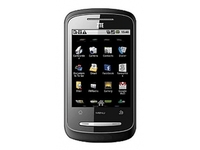 The ZTE Racer was officially launched on Three today, and TechRadar was there to check it out and see if it's worth the £99.99 price tag.
While we've all been going gaga for the high end smartphones, like the top 20 best mobile phone-topping HTC Desire, iPhone 4 and Samsung Galaxy S, there's still a huge clamour for all the smartphone power at a lower price point.
That's where the ZTE Racer comes in - but like so many before it, smartphones and low price tags aren't always the best of bedfellows (T-Mobile Pulse Mini, we're looking at you).

The ZTE Racer is a light handset and has a slight look of a budget phone about it. The plastic casing and lightweight feel don't make it feel any more premium, and any mobile with a resistive screen is always cause for concern.
However, while ZTE is keen for the Racer to be seen as a package and not based on specs, it holds its own in that department too: a 3.5mm headphone jack and 3.2MP camera are both welcome additions at this price point.

ZTE Racer: Design
But it's when you pick up the ZTE Racer for the first time you realise it's actually not a bad device at all - certainly not as slow as other budget Android phones.

ZTE won't tell us what processor it's packing, but whichever one it is, it makes things swish and swoop around the screen with very little slowdown.

The interface is vanilla Android 2.1, much like that seen on the Google Nexus One - we were pleased to see a slight 3D effect on the menu screen for instance.
The camera wasn't too bad either, as you can see in the picture we took using the device - sure, we don't think Nikon is quaking in its boots, but for a bit of light photography it's good enough.

The shutter speed was quite laggy - but we've come to expect that kind of thing at a phone at this price point, and there do have to be sacrifices somewhere along the way.
ZTE Racer: Screen
The resistive screen is such a place where the cost savings are apparent, and although for the most part it performs well with only a little bit more pressure needed to use it, things like messaging suffer.

We found ourselves making a lot of mistakes trying to type a simple message, and often it would hit another letter altogether. It's a system you very much have to get used to, but it might be a hurdle for some looking to pick up 'my first touchscreen'.

We didn't get a chance to fully put the ZTE Racer through it's paces when we had a few minutes to play with it, so we're not sure how that screen performs on the internet or how good the media player is.

But with a 2GB microSD card and a half-decent camera, if this is your first port of call in the Android seas then it seems you probably could do a lot worse.
Available for £99.99 on pay as you go and from £15 per month on contract, trot on over to Three to see if this is the handset for you.

| |
Read More ...
ZTE Racer: Android 2.1 for under £100
 Three and ZTE have finally officially announced the ZTE Racer on the network following speculation of an imminent deal.
The ZTE Racer will cost just £99.99, or from £15 a month on contract, making it a very affordable Android handset - especially as it's running Android 2.1.
It's got the basic 'vanilla' Android experience, and as you'd expect for this price, it comes with a resistive 2.8-inch QVGA touchscreen.
Big apps
However, it also has a 3.2MP camera, 2GB of storage through the supplied microSD card (up to 8GB) and includes Spotify, Facebook and Google Apps from the box.
PAYG users will get 150MB of data with every £5 top up, or can purchase an extra 1GB for a further fiver. Contract users get 500MB with their deal each month, and also can take advantage of the 1GB offer.
ZTE has told TechRadar that it intends to be one of the top-three handset manufacturers in the world by 2015 (under both its own brand and through carrier link-ups) so it will be interesting to see how this cheap-as-chips handset does in an increasingly congested touchscreen market.

| |
Read More ...
Opinion: Why Facebook was right to keep Raoul Moat fan page
 Facebook went against the wishes of Prime Minister David Cameron this week by deciding to keep a fan page dedicated to killer Raoul Moat on the site.
This in itself was the right thing to do. Whatever your opinion of the situation, Facebook was completely within its rights to keep the page up unless its terms have been violated.
It's not as if Facebook was forcing its users to become a fan, like it hasn't been forcing people to become a fan of the Hitler Rocks!!! fan page either.
Of course, Cameron disagreed and in his Prime Minister's questions he spoke of his dismay of the online tributes, saying he "cannot understand any wave, however small, of public sympathy for this man".
In a statement the social-networking site explained its stance, noting: "We have 26 million people on Facebook in the UK, each of which has their own opinion, and they are entitled to express their views on Facebook as long as their comments do not violate our terms.
"We believe that enabling people to have these different opinions and debate about a topic can help bring together lots of different views for a healthy discussion."
Technology to blame
This Facebook fracas is the very tip of the Raoul Moat media iceberg. The stand-off between Moat and Northumbria police was a very public affair, with 24-hour news outlets Sky News and BBC News relaying live every little bit of detail about the case.
Debating the media attention the case got, Mark Lawson writing in the Guardian, noted that is was because of technology we are now getting rolling media coverage on events such as this.
"Has the equation between broadcasting technique and editorial importance gone wrong? Brutally judged, Moat was a local crime story that would once never have claimed national attention on this scale," he explains.
"The BBC and ITV were perhaps worried about losing viewers to Sky News, which was mad for Moat, but the suspicion remains that they covered the story like this because, technologically, they now can. Yes, but should they?"
Trending topics
The media frenzy is something which has spilled over on to the web, with Raoul Moat becoming a trending topic on Twitter on numerous occasions and sites like YouTube awash with videos regarding the killer.
In one particular YouTube post, late night radio host Ian Collins speaks to the creator of the Facebook fan page, who calls Moat "a legend for giving the police the run around".
He retorts by asking his audience: "is that the stupidest woman you have ever heard on this radio show".
The less said about the interview with Raoul Moat's 'friend' Paul Gasgoine the better.
Freedom of speech
It's not just Facebook who has 'problems' with Raul Moat fans. A quick search on MySpace shows that Moat has his own page on the site, something which was put up nearly a week after his death.
The right to say what you want is something the UK prides itself on, whether it's is ill-judged or not.
While the Facebook page that caused the controversy has now disappeared, it wasn't Facebook who took it down but its creator. As the site told TechRadar: "Facebook did not remove the 'RIP Raoul Moat you Legend' Page. Facebook will remove content that violates our terms when reported to us."
"Any content on Facebook can be removed by the user who created it. For example if you upload a photo, you have the right to remove that at any time."
And there are still many similar pages on the site.
The internet has always had a inherent lack of opinion when it comes to sensitive issues. The mere fact that there is a Raoul Moat meme generator doing the rounds shows that regardless of how despicable the acts are that someone does, the web will find a way to make it into entertainment.

| |
Read More ...
Gary Marshall: Need more iPhone 4 signal? There's no app for that
 I think the iPhone 4 signal issues have been blown out of all proportion - but I also reckon Apple PR has gone completely crazy.
Instead of putting their hands up and saying "hey, it's possible to bridge the antennas at one particular point and that can make the signal drop, but that's the price you pay for the BEST RECEPTION ON AN IPHONE EVER!" they've said that the reason for disappearing bars is "both simple and surprising".
Presumably it's simple as in "let's make something up! Simple!" and surprising as in "we'll be surprised if anyone believes this". In Apple PR land an issue that can be fixed with nail polish, a rubber band or a different grip can also be fixed with… software!
I slept or daydreamed through science classes at school, but even I know that you can't fix software with a hammer and you can't fix hardware with software.
Sure, you can change how the hardware behaves with software - you can change its settings, turn features on and off and so on - but if your PC is on fire you can't put out the flames by typing WATER WATER WATER or recalibrating your How Flamey Is My PC readout.
And yet Apple is expecting us to believe that the iPhone signal problem, a problem that despite Apple's claims doesn't really occur on other people's phones or even other iPhones, a problem that only happens when you change how you physically hold the phone, is fixable with a formula.
Never mind the Reality Distortion Field. That's a Very Fabric Of The Universe Distortion Field.
Incorrect formula
As one bemused iPhone owner wrote to Apple (TechRadar was sent a copy too): "According to your findings the formula for the iPhone is incorrect, and displays too many signal bars. If this were correct then I must live in an area where there is no O2 reception at all, as my iPhone 4 loses all signal if held long enough (if not held I get full reception)."
I'm in the same boat: if Apple's formula shows two more bars than it should, my iPhone hasn't had a signal in two years and I've been imagining every phone call or email I've received since I unwrapped my 3G. Maybe the formula is wrong, but it's not what's making iPhone 4 signal bars drop.
What's particularly crazy about all of this is that it clearly can't be that big a problem or Apple Stores, O2 Shops and Carphone Warehouses would be packed with people returning their iPhones. They aren't.
But by dismissing the concerns of people who do have the problem - and worse, telling them to shell out an extra twenty-odd quid for an Apple-made case that fixes the problem - they're fanning the flames and ruining the iPhone's image.
Apple needs to 'fess up and offer a fix - if Apple hasn't got an alternative way to solve the problem, free bumpers wouldn't cost that much - and move on, because the reception issues are damaging the reputation of an incredibly clever bit of kit.
Even worse, if the public perception of the iPhone 4 is that it doesn't work properly, then it takes some of the cool factor away from being an iPhone owner - and the cool factor is one of the things that makes people buy iPhones over HTC Desires.
The original iPhone was dubbed the Jesus Phone. Apple can't afford version 4 to be seen as the Jesus, What A Crappy Phone.

| |
Read More ...
Exclusive: Spotify: UK broadband holding back lossless streaming
 Spotify has revealed its reasoning behind the lack of lossless streaming from the service, explaining that it is all to do with the UK's current broadband infrastructure.
There has been a lot of talk about the UK's broadband woes, with the BBC noting that it is going to cost billions to bring 2Mbps speeds to the UK by 2012.
Speaking to Hi-Fi Choice magazine, Gustav Söderström, VP of Products at Spotify, explained: "We get the files from the labels in lossless format, in FLAC. But we don't stream them in lossless formats.
"This has more to do with the user experience based on current broadband and mobile internet networks."
"Streaming lossless files would consume very large amounts of bandwidth for people. It would also make Spotify much more prone to a bad user experience, with problems such as stuttering and the like, which is something that we pride ourselves in not having at all.
"So we have to try to manage the best audio quality offering with the best user experience. Higher audio quality with a bad user experience is not an option for us."
All about user experiece
When asked if lossless streaming was something Spotify was looking to achieve in the near future, Söderström noted: "Currently we offer the option of listening at 320kbps on Spotify Premium and we use the Ogg Vorbis codec, which is considered to be very good amongst audiophiles.
"We are always looking at how we can improve the service. At the moment there are more external factors that put the hold on very high bandwidth streaming. So as networks and infrastructure improve, then we are certainly going to be looking at that."

| |
Read More ...
Microsoft: 'iPhone 4 might be Apple's Vista'
 Microsoft has labelled the iPhone 4 'like Vista', comparing it to one of the most derided operating systems in the company's history.
Microsoft's COO Kevin Turner said in a keynote speech at the software giant's Worldwide Developer Conference that he was 'okay' with the publicised iPhone 4 issues and that this snafu might help Microsoft's Windows Phone 7 launch.
"It looks like the iPhone 4 might be their Vista, and I'm okay with that," said Turner, according to Computer World.
"One of the things I want to make sure you know today is that you're going to be able to use a Windows Phone 7 and not have to worry about how you're holding it to make a phone call."
Ready for the reboot
Microsoft is set to reboot its mobile operating system in October this year, with new devices from HTC, Samsung and LG all being given a big marketing push by the Redmond brand.
Turner is still hopeful that this new build can turn things around for Microsoft, as the company has a history of poor mobile operating systems that valued function well ahead of form:
"We're back in the game. And this game is not over."

| |
Read More ...
Review: CoolerMaster HAF X case
 The clue's in the title really. CoolerMaster likes to keep things cool, and the CoolerMaster HAF X (the HAF stands for high air flow) is the coolest of cooling cases.
 This is a case you could store fresh fish in on a hot day. Only, please don't.
The HAF X is rammed with fans. There's scarcely an inch in the outer casing that isn't simply mesh hiding a fan behind it, and although the HAF X is actually very expansive, compared with Corsair's 700D the intensity of its visual design makes it seem quite compact.
CoolerMaster has made the HAF X for serious PC enthusiasts looking to build extremely powerful and thus extremely hot systems.
The design of the HAF X is almost entirely geared towards cooling, but CoolerMaster has made sure not to neglect aspects like build quality and functionality.

As soon as you turn on the HAF X, the front mounted, red LED backlit, 230mm fan announces itself.
If 230mm isn't big enough, there's a 240mm side mounted fan just below the top 200mm fan. The rear fan must feel very insecure at a mere 140mm.
Cooler Master has gone to town on this case.
Even the most daring overclockers will be more than happy with the stock cooling options inside this case. Should any lunatic feel the need for more however, there's a top-mounted grille to fit another 200mm fan.
Cooler Master has cooling covered with the HAF X then, predictably. But has it compromised in other design aspects on the way? Is it only HAF good? Sorry.
Anyway, truth is Cooler Master has rather overdesigned the inner gubbins of the HAF X. The 'advanced GPU holder' and air duct have been designed to keep your graphics card(s) in place and cooled, but in fact is just an unnecessary fiddle.
There's a power supply cable partition for 'neatness', but the plethora of cables that come from the case itself to power all the fans, LEDs and USB ports rather nullify that gesture.
Despite its ample proportions, the HAF X is still a slightly clumsy case to build your system in, and it's come at the cost of all that cooling.
We liked:
On the bright side, it looks like the Batmobile. There's a pleasing union of decoration and necessity in the aesthetic of the HAF X that save it from looking like a cheap toy.We disliked:
Cooler Master is pricing the HAF X to enthusiasts, and intends it to be the 'dream case' around which serious PC users build their dream systems.As such, it's not ideal. There are cases in the same price bracket that offer more versatility for building systems, such as Corsair's Obsidian Series 700D.
Final word:
If you've got a little dollar to play with and you're looking to build a powerful but more straightforward system (and you're obsessed with fans), Cooler Master has made the HAF X for you, sir.Related Links

| |
Read More ...
Review: Corsair 700D case
 There are PC cases, and then there are PC cases. In the 700D, Corsair has created a positively fearsome monolith of storage aimed at PC enthusiasts looking to build their dream systems.
 It might look unassuming at first glance compared with CoolerMaster's HAF X case, but the Corsair 700D has been designed to be crammed with the best gear.
We're talking grilles on the top panel for water cooler radiators, holes to lead cables out of the way behind the backplate… the kind of features modders might have experience of drilling and sawing out themselves.
But as standard.
Due to the 700D's aforementioned prerequisites for water cooling, one might imagine that airflow isn't something Corsair have lost sleep over, but like Thermaltake's Armor A90 fans are plenty.
The 700D has three separate airflow areas in fact, and two 140mm fans to keep chilled air running through each compartment.
A modders' case, but pre-made and waiting for high-end tech to fill its cavernous insides.

I can't stress quite what an imposing object the Corsair 700D is. It sits about as tall as a Rottweiler and looks no less menacing.
There's easily enough space inside to install towering CPU coolers of any description without fiddling around and losing screws that would otherwise, inevitably, end up rolling around just between the motherboard and backplate.
Three way SLI setups are easy for the 700D, and more than just being handy for installing parts, the space makes it easier to keep everything cool.
The routing holes for all your cables help maintain a strong airflow also, in addition to giving a reassuring pat on the back to the most fastidiously tidy PC enthusiasts.
The 700D's features may seem like bourgeois frills at first, but build up a system inside one and you'll be loathe to give them up in your next case.
Corsair has made a large removable backplate on the 700D for installing the rear mounted section of a CPU cooler, which once again eradicates fiddling. Many cases boast this feature now, but the 700D has certainly one of the biggest.
In terms of PC performance, it's rare to ever feel that your case is holding your system back, but if you ever have felt like this, Corsair has clearly read your mind.
In the 700D, one could really go to town with cooling options. The fans supplied with the case aren't in abundance and aren't as large or powerful as other cases on the market from cooling experts like Thermaltake, but Corsair has priced the 700D to a market that's unlikely to scrimp on cooling options and rely on stock case options anyway.
We liked:
Despite its rather dour visual appearance, Corsair's 700D is an extreme and open-minded case. The sheer space inside offers a lot of flexibility for system building and cooling options, and nice touches like cable routing take inspiration from the kind of features many case modders make for themselves.Unlike most homemade cases though, Corsair have exercised a lot of restraint in terms of LEDs, chrome, and windows.
We disliked:
If you consider this an oversight, this stern black obelisk will not excite you for your money.Final word:
For serious system builders looking to house their high-end systems in a perfectly functioning, subtle environment, it doesn't get much better than the 700D.Related Links

| |
Read More ...
PlayStation Minis clock in 1 million downloads
 Sony's push into low-priced games has been a little slow to start, with the company revealing that it has only clocked up 1 million downloads of Minis for PS3 and PSP.
The Minis don't exactly push Sony's games consoles to the limit, but they are extremely low in price so we would have expected more in the nine months since the launch of Minis.
Couple this with the fact that its PSP Go handheld only takes downloadable games, there should be a market there - but at the moment it is a small one.
Mini adventure
The figures show that the company has a long way to go before it takes on the might of the phone world with its games downloads.
A mere 1.7 per cent of PSP owners have bought a Mini game, compared to 51 per cent who have bought games for the iPhone and 54 per cent of those who have bought a title for their BlackBerry.
Just this week, the makers of Bejeweled announced that it sells a copy of the game every 4.3 seconds – which proves that downloadable gaming is one of the most burgeoning segments of the videogames market.
Sony will be hoping that the next nine months sees them tapping into this success.

| |
Read More ...
In Depth: 7 things Apple WON'T be saying on Friday
 Apple's very uncharacteristic decision to call an iPhone 4 press conference for Friday has, as you may imagine, sparked huge discussions about what exactly the company is going to say.
 With the growing derision over the 'death grip' reception problem that has blighted the phone, the general consensus is that the conference will probably revolve around the already announced 4.1 update to iOS which will at least mean the phone is reporting its network signal properly.
But, Apple has been known to throw the odd curve-ball, so breath will be bated and tenterhooks will be occupied until the conclusion of the press gathering.
There are, however, a few things that we can be fairly certain you WON'T be hearing from Cupertino on Friday.
1. We're recalling the iPhone 4
We've already heard analysts discussing how much it would cost for Apple to ask for every iPhone 4 back, but although Apple have been forced into confessing that there is actually a problem (with the caveat that every phone has it), and that it needs to make a change (but only because the software is wrong), don't expect to be offered a shiny new updated handset.
2. Come in Gizmodo
We doubt this is a time for mending old rifts, and with Gizmodo's whole prototype iPhone 4 reveal still fresh in the minds, don't expect to see the esteemed gadget blog lining up among the journalists at the conference.
3. We are ready to comment on rumour and speculation
Famous for stonewalling the press on anything that isn't direct from Steve Jobs' mouth, Apple will not comment on rumour and speculation... but don't quote us on that.
4. It's just a phone
One of Steve Jobs' most famous quirks is his personal replies to emails that are sent to his email address. Clearly he doesn't respond to everyone, but the occasional Jobs comment has become much appreciated by those starved of any other official comment. He was earlier (mis) quoted as saying 'it's only a phone' to one irate user - Jobs would never be so crass about his enchanted magical iPhone 4 wonder-device.
5. Sorry
Okay, we could be proved wrong here, but we think the chances of Apple actually apologising for a flaw in its hardware is highly unlikely. Past responses have sailed close to the apologetic breeze, but not actually used the word so hated by politicians (and journos) across the globe. Sorry.
6. Free bumpers for all
Apple has already insisted that those bumpers is showed off so proudly at launch will not be given out to all iPhone 4 users, and although this would solve the technical problem, it would also lead to Apple being accused of backtracking and of having to provide an ad hoc solution to a problem that it still insists is inherent in all mobile phones.
7. One more thing...here's our iPhone 5
Because that would be crazy.

| |
Read More ...
Review: Echofon Pro (iPad)
 The iPad has far fewer Twitter clients than the iPhone. While we wait for Tweetie to be released you can realistically choose between Twitterrific (pretty, focused), Twittelator (a bit too extravagant for some), Osfoora HD (a new contender winning lots of fans) and Echofon.
 Since Echofon has so many fans on the iPhone, it's a strong candidate. But although it's capable, its interface seems bleak to the point of actual ugliness.
It's not just about aesthetics either; the only-slightly heavier black line that separates old tweets from new, for example, makes it hard to glance at and see which tweets remain unread.
Still, there's lots to like. It supports proper API retweets and geotagging, and can group conversations into threads. Here, though, its behaviour is divisive; it's good that it gathers tweets that aren't in a strict thread, but it can be hard to tell who's replying to who.
It supports configurable push notifications, though their appearance seemed a little hit-and-miss. But as we write this review, it can't (unlike the iPhone version) sync read/unread tweets between the Mac/iPhone versions. Hopefully more to come.
Related Links

| |
Read More ...
Review: Thermaltake Armor A90 case
 If you're going to use a bunch of Thermaltake parts to build your system, it makes sense to start with a Thermaltake case. It's is a well-respected name among the high-performance PC crowd and its fans, PSUs and cooling equipment has earned it go-to-guy status for overclocking enthusiasts.
 The Armor A90, like Corsair's 700D and CoolerMaster's HAF X, is a case aimed squarely at the high-end gaming and modding market and features two 120mm fans at the front and rear and a gargantuan 200mm top-mounted fan, creating an airflow to rival a wind tunnel.
Such breezy delights are to be expected from a brand like Thermaltake, who made its name in cooling, but the Armor A90 is more than just a box of fans.
A case priced in the same mid-range bracket of the Armor A90 needs to impress on the basis of aesthetics performance and functionality to stand out from the crowd, and Thermaltake certainly hasn't made a wallflower of a case in the Armor A90.

First, all those fans. One might expect that a case crammed with as many huge fans as the Armor A90 will have compromised noise levels.
And one would be correct.
This is not the quietest case on the market, and that shouldn't be shocking. It's worth mentioning that it isn't the loudest either, and when stopping to ponder just how much air is whooshing through the thing, it's clear that Thermaltake has pitched the compromise correctly.
The A90 packs big fans, makes a big visual statement, but in its entirety it actually isn't that big.
The drive bays are pleasantly unobtrusive in the inner case, but if you're trying to fit two large graphics cards in an SLI setup there isn't much room for manoeuvre. There is a handy cutaway section in the backplate, however, for fitting those fiddly cradles for CPU coolers.
In terms of visual appeal, the Armor A90 pitches its tent unabashedly in the 'macho futuristic military equipment' camp.
It's the same combination of aggressive angles, LEDs and wire mesh we see from many manufacturers at this price range, and while the Armor A90 in particular shouldn't be lambasted for its aesthetic sensibilities, would there be anything wrong with, say, a white PC case?
Or a chassis that didn't look like there might conceivably be an Action Man living inside?
Its appearance is entirely subjective of course, and what you really have to ask yourself is: 'Do I spend all day dreaming I have the nanosuit from Crysis?'
If the answer's yes, you've found the PC chassis of your dreams in the Thermaltake Armor A90.
Actually, a less ridiculous question to ask yourself might be: 'What's more important – cooling or noise levels?' Because it's clearly the cooling crowd that Thermaltake have made the Armor A90 for.
We liked:
The price and build quality make the Armor A90 an attractive prospect for any PC enthusiast though, and it's really only those with particularly bulky or excessive components who could find cause for grumble here.The blue LED lighting has its charm, despite being vaguely silly, and it's reassuringly sturdy despite all its vents and mesh.
We disliked:
The uncompromising aesthetic may put some people off and the huge amount of fans might well drive the quiet crowd slightly mad.There's also not a lot of room for manoeuvre inside when you're sticking in those all-important components.
Final word:
Good quality build and serious cooling, affordable to more than just overclocking fanatics.Related Links

| |
Read More ...
In Depth: 10 weird places your data gets stored
 Cloud computing doesn't really mean storing your data in a cloud: it means your stuff's been stuck on a server in an enormous temperature-controlled room somewhere.
 That doesn't mean it has to be in a boring building, though: it could be down a mine, in something that looks like Dr Evil's control centre or even off the coast of Suffolk.
Here are 10 weird places that data can be, will be or has been stored in.
1. In a former nuclear fuel facility
1&1 Internet's data centre in Hanau, Germany - currently under construction - is in a facility called New MOX. The facility was originally built in the 1980s to produce mixed oxide rods from enriched uranium and plutonium, but it never became operational.

Image credit: 1&1 Internet
2. Underneath a cathedral
Never mind backups: wouldn't it be great if your data was protected not just by reinforced concrete, but by God too? That may have been the thinking behind Academica's data centre in Finland, which is located in a former World War II bomb shelter underneath the Uspenski Cathedral. Its waste heat will be pumped into the city's heating grid, which heats water in pipes to warm local homes.

Image credit: InvictaHOG on Wikimedia
3. In a car park
In a trend magnificently dubbed White Trash Data Centers by The Register, firms such as Sun Microsystems, HP and Microsoft have stuffed entire data centres into shipping containers that can be dropped off in a company's car park, hooked up and switched on.

4. In a nuclear bunker
Never mind mere bomb shelters: if you want to turn other ISPs green with envy, you need to follow Swedish ISP Bahnhof's lead and stick your data centre in a nuclear bunker. Not only that but you also need to add waterfalls, greenery and lighting that makes it look like something from a video game.

Image credit: Bahnhof
5. Six miles off the coast of Suffolk
Sealand - or the Principality of Sealand, to give it its full name - was built to defend British shores from the Nazis. Its owners, the Bates family, believe that it's a fully independent nation, although the British government would disagree. In 2000 it became a data haven for firms and individuals who wanted to keep their data away from the mainland's authorities. The Pirate Bay nearly bought it in 2007 but the deal fell through, and hosting firm HavenCo went offline in 2008.

Image credit: Octal on Flickr
6. In a shopping mall
Remember the shopping mall zombie game Dead Rising? Replace zombies with servers… that doesn't really work, does it? Never mind. Lifeline Data Centers turned the Eastgate Mall in Indianapolis into a data centre. It's no ordinary mall, though: thanks to tax credits for fallout shelters, the mall's designers made liberal use of reinforced concrete and dug hardened shelters underneath the shops.

Image credit: Lifeline Data Centers
7. In a chapel
Chapels appear to be great for data centres: the Barcelona Supercomputing Centre stuck its MareNostrum supercomputer in the 19th century Chapel Torre Girona, while Boston College stuck its own data centre in the empty St Clement's Chapel.

Image credit: Boston College
8. In an air base
Data centre provider Advanced Data Centers took on part of the McClellan Air Base in Sacramento, California, building an enormous and relatively environmentally friendly data centre that uses 38% less energy than traditional data centres.

Image credit: ADC
9. At the bottom of a coal mine
In 2007, Sun Microsystems announced plans to chuck 30 Blackbox self-contained computing facilities down a Japanese coal mine to create an underground data centre. Mines are cold, and that means no need for air-conditioning - so a 30,000 server core data centre would save $9 million a year on its electricity bills.

Image credit: Sun
10. In a Van De Graaf silo
Remember the Van De Graaf generators that made your hair stand on end in school? Imagine a truly enormous one, decommissioned and filled with servers. Compute Canada's CLUMEQ project has three floors of concentric rings, which hold server racks boasting some 12,000 processors.

Image credit: Compute Canada

| |
Read More ...
iPhone 4 problems: iOS 4.1 isn't the solution
 Apple's iOS 4.1 update doesn't manage to resolve the signal issues affecting the iPhone 4, according to early reports.
The new version of the Apple mobile operating system has been seeded to developers to they can start creating sparkly new apps, but it's given some a chance to test whether this is the fabled fix Apple has been hoping for.
Sadly, it seems not. A number of users have been playing around with the new OS and the signal strength bars are clearly bigger, and signal calculation appears to have been revised as well.
Bars down
According to MacStories, where the phone previously was showing five bars of signal it's now down to three - corroborating Apple's 'stunned' statement that it had been miscalculating signal for years.
But the left-handed grip signal issues are still very much present, which could be the reason for Apple's press conference on Friday - will Jobs be admitting fault?

| |
Read More ...
Review: Reeder for iPad
 While some hold up Pulse (£2.39) as the best way to access RSS feeds – stripped-down, automatically refreshed website content that you usually subscribe to for free – it's a little too lightweight for us.
 It's fine if you only have a dozen or so feeds coming in, but if you follow a lot more than that, Reeder is the app for you.
You might already be familiar with it on the iPhone, and the experience is similar here. A deceptively simple interface presents clean, well formatted and smartly laid-out content in both portrait and landscape format.
It hooks into the Google Reader service to keep read and unread items synced between your iPad and other Reader-aware apps such as NetNewsWire on the Mac.
The developer has really sweated the details. Never mind the extravagant Photos-on-iPad-style unpinch that lets you fan out folders of feeds to see which have stories; we love how the up and down arrows in the toolbar at the left side of the screen lets you advance through unread stories with a twitch of the thumb on the hand holding the iPad.
Stories that you like can be shared in a frankly bewildering variety of ways, including sending to the excellent Instapaper service, and we love how you can drag a story summary one way to star it, or another way to remark the entry as unread.
It supports Google Reader's notes, can show articles shared by friends you follow, and even caches images in RSS feeds so you can still read your feeds when you're not online.
It's terrifically configurable too. You can toggle off some of the many sharing options, change what grade of items is downloaded and much more.
Related Links

| |
Read More ...
Review: Black Pixel Bistromath
 The App Store is groaning under the weight of tip calculators, but they're of limited usefulness. Even beautifully finished apps like Tipulator just have you enter the total of a bill from a bar or restaurant, telling it how many people are in the group, then they add a tip and split it.
 But what if you had soup and your friend plumped for a rib-eye steak? Or if three of you had a soft drink each, but a couple shared a bottle of wine? And what if Sandra has the correct money, but Peter only has a fifty pound note? And the tip? Shall I just leave a tenner? Bistromath solves all this.
It only takes a few taps to enter the cost of the meals everyone's having – if you want to take the time, you can tap through and pick from a handful of configurable options to keep track of whether you're entering a drink, a main, a side or whatever – and the real genius comes when you realise that you can define anything as being shared among more than one person.
A bowl of chips that three of you stole from? Easy. The cost is split three ways and apportioned to each of the three. You can type people's names in manually, or hook into your Contacts app to pull them in, which also shows people's photos if you've tied them into the address book database. Or you can add them in Bistromath.
Once you're done, and have decided on a tip percentage, Bistromath shows you how much each person owes. Better still, you can tell it how much each person has put in the pot, and it will calculate how much change they need. You can even email receipts to the folks who were at the meal.
It's a little US-centric at the moment, but it works fine in the UK. And as if that wasn't enough, up to four other people can collaborate on a bill wirelessly with no complicated setup.
Related Links

| |
Read More ...
Logitech Z506 surround sound speakers unveiled
 Logitech has announced its latest 5.1 surround sound system, with the Logitech Z506 speakers designed for the living room.
 At a shade under £79.99, the Logitech Z506 speakers have been designed to be connected to 'nearly every entertainment device' including PC, PS3, Xbox 360, Wii, iPod or a DVD player.
The speakers offer 75 Watt (RMS), and can apparently connect to 'two devices simultaneously'.
Any room, or living room?
"We designed the Logitech Surround Sound Speakers Z506 so you can set them up the way you want to in any room of your home," said Mark Schneider, vice president and general manager of Logitech's audio business unit.
"The Logitech Z506 speakers can support nearly any home-entertainment configuration, letting you quickly connect to a game console using an RCA connection, a PC through its sound card, or a digital music player using the 3.5mm input."
Romain Cholat, VP of large markets, added: "After listening to our customers extensively, it was clear that they wanted a speaker system designed for the living room."
The Logitech Z506 speakers have a UK release date of August and are priced at £79.99.

| |
Read More ...
Review: Adobe Photoshop Lightroom 3
 Photographers on the Mac could be forgiven for feeling a little spoilt for choice at the moment. No sooner has Aperture 3 been released and awarded four and a half stars, than Adobe's workflow software, Lightroom 3, goes gold and presents users with a difficult choice.
The core concept of Lightroom is similar to Aperture's: manage your photographic workflow from the moment you plug in your camera to exporting your finished images to the web or print.
As with Aperture, the location of your images on your hard disk is unimportant – once pictures are copied you can arrange them into custom collections, or set up smart collections that automatically draw files into them if they meet certain criteria.
Lightroom's main advantage is its speed – working with huge libraries of files is fast and efficient.
Raw power
Lightroom's image processing engine is based on Adobe's Camera Raw, and the new version has an improved noise reduction tool. In previous versions of Lightroom, reducing noise meant walking a fine line between cutting grain and retaining detail: in the new version, that fine line has been thickened, enabling you to cut more noise while maintaining sharpness.
A new film grain feature has also been added, enabling you to replace random speckles of noise with a pleasing film-like effect.
Other features help Lightroom retain the editing edge against Aperture, such as the lens profile tool. This enables you to select the lens you used to take a shot and have your images automatically corrected. So if you have a lens that produces chromatic aberration, vignetting or barrel distortion, Lightroom can attempt to correct automatically.
Unsurprisingly for software aimed at committed amateurs or professionals, expensive Canon and Nikon lenses get the best coverage, although a free tool on Adobe's website should see more lens profiles released over time. Lightroom still leads the way with tools such as its graduated filter.

Also new to this version is a feature Aperture has had since version 2 – tethering. If you have a supported Canon or Nikon camera (this includes most recent mid-range and above models), you can shoot straight into a Lightroom studio session – useful for studio-bound photographers. It works well: a raw file took a little under five seconds to migrate from our DSLR into Lightroom after clicking the capture button.
The slideshow feature has a fresh coat of paint: for the first time you can output a finished slideshow to an H.264 MP4 file.
However, although you can add your own soundtrack, Lightroom 3's slideshow capabilities pale in comparison to Aperture's. Lightroom will now recognise video files from your DSLR, for instance, but you can't run them into a slideshow. There's also less control over transitions – the fade being the only option available. Aperture's ability to create stunningly finished photo books remains unchallenged.
Professional sheen
That's not the only place Lightroom lags – Aperture leads the way for consumer-friendly touches such as face-recognition and geo-tagging. But Lightroom offers a more powerful suite of editing tools, and its new noise-reduction tools are second-to-none.

If you're a professional it comes highly recommended, despite costing around £60 more than Aperture. It's also a no-brainer upgrade for existing Lightroom users at £75.
Related Links

| |
Read More ...


No comments:
Post a Comment