

Review: T-Mobile Pulse Mini
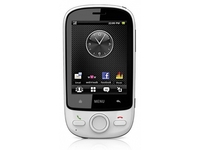
The problem with all this cool new stuff on mobile phones is that the cost of actually having one keeps going up - آ£400 is a reasonably low price for a current Android device.
That's where the T-Mobile Pulse Mini steps in - offering a huge swathe of high end tech for a penny under آ£100.
Android 2.1, GPS, Wi-Fi, 3.5mm headphone jack, 3.2MP camera with Flash, push email - the list goes on, making it a much better phone on paper than its peers, like the INQ Chat 3G or the Samsung Genio Slide.
The Pulse Mini itself isn't too much to look at, as you'd expect from a phone coming in at this price point - not only is it fairly small, it feels pretty plasticky in the hand - solid, but you can feel the budget production from the manufacturer, Huawei.

The screen is also pretty low rent too - we're talking a 2.8-inch display with resistive touch technology on top.
It's a far cry from the capacitive gloss of the HTC Desire or iPhone 3GS, but again, this isn't a phone to compete with those, it's a budget phone that attempts to outdo its price point.
The front of the phone is pretty sparse, as there's only a circular navigational key with a central 'Enter' button, and the call/terminate keys too.
You can configure the latter to push the phone into sleep mode and head back to the home screen - a nice touch and indicative of what can be done with Android with a clear thinker on the design team.

The top of the phone houses the power switch, which some might be used to using to put the phone to sleep - given the phone's small size, it's easy to reach.
There are also three touch sensitive keys just below the screen: Home, Menu and Return, which we're used to seeing on Android phones. Interestingly there's no search key here, which is odd for a Google-powered phone.

Overall, the phone sits well in the hand and is slim enough in the pocket, especially for the price point.
We're a little peturbed by the presence of the stylus, as Android is supposed to be a forward looking OS; a stylus sends us screaming back to the early days of WinMo.
On the one hand, the interface on the T-Mobile Pulse Mini is classic Android: a simple background, a few home screens and some widgets to play with.
But there's more: T-Mobile has added a huge grid-like structure to proceedings, meaning you get 15 home screens to play with, accessed by swiping up and down as well as left and right.

There are also a huge number of widgets to play with; Android offers a number of its own, and T-Mobile has thrown in 'Emotion Widgets' to let you access things like your favourite bookmarks and the FM radio.
But that's where the cool elements end - because while the interface is cool, the phone simply cannot perform well enough to keep up with it.

What's odd is that there's a decent amount of RAM on offer here, and a 600MHz Qualcomm processor - but this phone is juddery, slow and prone to freezing so often you'll want to throw it in a canal.
We're not sure why this is the case, but it seems the Pulse Mini is trying to do too much, even though it should have the grunt to perform.
Well, it's not strictly true – in some instances the phone will flow nicely, as long as it hasn't been put into sleep mode for a while, but then it will begin to jerk and slow down once more.

Simple things like opening the contacts menu or trying to shuffle between home screens can take an age, and if you leave the phone asleep for too long it will simply freeze at times, meaning no alarms, texts or phone calls.
While this phone could have been amazing with the spec list, interaction with it is just too frustrating to bear at times, and you'll yearn for the slick interface of the iPhone or HTC Desire, even if they cost that much more.
The contacts menu has also been overhauled on the T-Mobile Pulse Mini, with a new set of options on offer. You can group contacts together in the 'My Favourites' section, which offers them in a little carousel separate application.
Within the actual contacts app, there are a number of things to look at - you can see which people you talk to the most, your favourite people and (if you synchronise with your Google account) those you have starred in Android.

We're confused as to why the Pulse Mini felt it was necessary to download each contact from the Google server three or four times - and the quality of the screen was such that we simply couldn't be bothered to go in and delete everyone off that we didn't need.

Call quality is awful at times too - in areas where we usually had a good signal we couldn't hear anything through the speaker, although when out and about the bars shot up to full strength.

It's not that it's hard to call at all times, it's just very hard to predict when the T-Mobile Pulse Mini will perform well and when it will give up on you.
Messaging
Messaging options on the T-Mobile Pulse Mini are good - there's the usual SMS, MMS, Gmail and webmail synchronisation on offer.
And a little cheeky bonus for a phone of this price: push email from DataWiz via its RoadSync program is a great addition.

It works in exactly the same way as it does on much, much more expensive smartphones like the Sony Ericsson Satio - we like it a lot and are impressed T-Mobile has kept the feature from the original Pulse.
However there's a problem (another one): the T-Mobile Pulse Mini's keyboard is shocking.
Firstly, the best way to use it is with a stylus, which is something we never want to see on an Android (or any new) smartphone. This is not 2004, these aren't Windows Mobile phones.

Add to that the lag, which we mentioned before, and it's very, very hard to type out a message quickly without accidentally activating other modes.
For instance, if you long press a key, other symbols and letters pop up, which is a nice touch.
But the lag means that this frequently happens when you don't want it to, so you have to wait, reverse, and then get the message up and running again.
We feel like we're constantly pounding on the T-Mobile Pulse Mini, but in instances like this it really is so frustrating that we find we don't want to text our buddies any more.
The internet browser on the T-Mobile Pulse Mini is based on the same WebKit framework as the rest of the Android range (and the iPhone 3GS) so should be pretty good.
However, the screen is too small to make out web pages at full zoom, and the QVGA resolution means that it's very hard to see what's been written.
The speed issue also crops up here once more, with web pages taking an age to load over both 3G and Wi-Fi.

Again, we can't work out why this is, especially when there's a perfectly adequate processor under the hood.
There's obviously no Flash video or anything here, but web navigation on the smaller, more mobile-friendly sites is OK, and the double tap to zoom function resizes the text nicely.
However, it's too hard to use the internet fluidly here - T-Mobile has thrown in 6 months free internet, but we used ours so much less than usual on other phones.
The lag means the app store is also a bit harder to use than normal - although the larger icons and buttons of the application Market are easier to use.

The range of applications on offer is as good as something like the HTC Legend, and while there are a few more high res ones that are missing due to the QVGA screen, overall it's well stocked.
For instance Google Maps is on offer, and it's a surprisingly good experience, with even Google Maps Navigation, the free sat-nav program, available to T-Mobile Pulse Mini users.
It works fairly well too, with directions generally keeping up with the road, which we were surprised at given the performance in other areas of the Pulse Mini.
It does make it more confusing as to why there's also a month's subscription to TeleNav on board - but we assume that was put in place prior to Google's announcement.
The T-Mobile Pulse Mini has a pretty good 3.2MP camera on board, with a flash too - enough to take some half decent pictures in most instances.

Except that's all they are on the Pulse Mini - half decent, with a lot of blur and lack of clarity in most pics.
Add to that the laughable inability to spell 'autofocus' on our review sample, and you can see why the T-Mobile Pulse Mini has deep-rooted problems.
The LED flash wobbles between over-exposed photos and inadequacy in dark scenes - this isn't the phone to take to the club.

That said, it's what we expect from a phone at this price point; think mobiles made around three years ago and you'll get an idea of the quality.
It does offer some cool features though, like tap to snap auto focus, but thanks to the unresponsive screen this is hard to work as the zoom function will frequently kick in instead.

BRIGHT LIGHT: The Pulse Mini handles contrasting scenes surprisingly well

ALL COLOUR: The Pulse Mini picks out colours well, but fails to register good levels of detail
Video is equally 'adequate' - it's jerky and fairly blurry, so you won't be recording any Oscar-worthy material on it.
Media
However, where the Pulse Mini does pick up a few plaudits is with its media abilities. It features the standard music and video player application, with an FM radio thrown in for good measure.
The FM radio and music player get their own home screen widgets too, making it very easy to use them from the off.
The Pulse Mini also offers a good upgrade from the original T-Mobile Pulse, in that it has a 3.5mm headphone jack, rather than the annoying 2.5mm option.

Music playback is pretty darn poor though - most media files sound like they're being strained through a sieve. In another room. By a toddler.
Basically, we're saying you're very unlikely to ditch your iPod for this phone.
It's also annoying that music starts playing as soon as you plug the headphones in - sometimes you don't want it, so you have to take ages to shut it down before doing what you originally wanted to.
However, the FM radio is alright - it works quickly, scans well enough but can't hold stations as well as most other phones on the market. We could be picky and ask for FM recording to memory card, but it's a bit much for a phone like this.

Video, however, is much better than we expected, playing 3GP and (some) MP4 files, although DivX and Xvid is out of the question.
Video is clear and fast, although the sound quality is once again terrible - probably among the worst we've heard on any smartphone.
The viewing angles are a little suspect too - you really need to hold the phone at the right angles to get the best out of it, which can be annoying if you're in a bright area.
But for some reason in video mode the accelerometer is able to switch the screen from portrait to landscape without a hitch - the only time on the phone it works this well, so we're not sure what that's about.
Scrolling through is also fast - meaning video seems to be the only mode where the Pulse Mini lives up to its potential.
The battery life on the Pulse Mini is alright - the battery is a little tiny, but we expected that in a phone this size. However, we found the reason it lasted so long was that we didn't want to play with the phone, which obviously saves power.
The little things like taking an age to come out of sleep, erratic operation or poor internet mean we kept choosing not to use the phone rather than idling hours away playing pointless games or looking at nothing sites on the internet.

However, if you're really up for trying out all the functions on the Pulse Mini, then you'll probably manage to get well over a day's usage out of this bad boy - but most of the time you'll manage two or more days' juice.
Connectivity
The usual suspects are all here on this Android-powered phone: Wi-Fi, Bluetooth 2.1, GPS, 3.5mm headphone socket, HSPDA connectivity - in short, all you really need.
The Wi-Fi is pretty good - it disconnects every time you put the phone to sleep, and will tell you so when you open it back up again, but will re-connect almost instantly each time.

The data side of things gets annoying, as the APN (the connection settings for 3G data) can't seem to lock on; the Pulse Mini keeps telling you something is wrong and that the settings have changed.
GPS is fast enough to connect though as we mentioned - the Navigation feature of Google Maps works well enough, and that's the hardest application on the GPS chip.
 The T-Mobile Pulse Mini is chock-full of the latest technology, and all for under آ£100, which should put some of the more expensive smartphones to shame.
The phone is small, light and cheap - but that doesn't always equate into the best experience for a handset.
We liked
We enjoyed the T-Mobile Pulse Mini - when it worked correctly.
The sheer amount of home screens is dizzying. While it's easy to get lost on where you've put widgets and icons, we're all for choice and this certainly offers it.
The specs are high end, and simple things like being able to add in live wallpapers make it a really cool phone if you're struggling for cash.
While it's not necessarily to do with the hardware, we're impressed that T-Mobile is offering 6 months' free internet with the phone, meaning you can get the best experience from Android and the App Market.
Push email is a nice touch too, and while it can be erratic it is certainly comprehensive. The same goes for the documents viewer - something that more phones should add in, especially given the higher costs.
We disliked
It's hard to know where to start - there's a lot wrong with the Pulse Mini. While it can hide behind the budget tag for so long, the general day-to-day use borders on the abysmal at times.
If you download a task manager, you can minimise the effect somewhat, as multiple applications slow the Pulse Mini right down, to the point of intense frustration.
But like with the Sony Ericsson Xperia X10, you shouldn't have to do that with a phone, it should just work right out the box as it's supposed to.
The screen is terrible too - while we understand the cost benefit, it's unresponsive, inaccurate and had weird 'noise lines' that roll up the screen at all times, which makes it look low quality.
Taking an age to come out of sleep mode means you're constantly wondering if it's frozen, and zooming out to see all the home screens at once is poor too.
The internet browser, music quality and camera are also all below par, although we can slightly forgive this given the budget tag - if anything the Pulse Mini is guilty of doing too much in one place.
The on-screen keyboard is awful too; not only do we hate using a stylus, but it's too slow to be speedy when texting, which most of the Pulse Mini's demographic will be keen to do we'd imagine.
Verdict
This phone had so, so much potential when we saw the spec list in Barcelona - it was going to be a triumph for the budget world.
But the best way we can describe it is like going out to buy a Ferrari and seeing one on sale for آ£200.
On the outside, it looks like a brilliant supercar, until you realise it's made out of plastic and has a lawnmower engine instead. Yes, it's cheap, but you'd rather have a lesser car that worked as you'd want it to.
This isn't a case of being a smartphone snob either - we love budget phones, like the Nokia 5530 for instance - a great example of budget and functionality.
But the Pulse Mini is a victim of its own ambition; the amount of times we were massively impressed with the stuff it can do were hugely outweighed by the times we wanted to throw it out of the nearest window.
We'd advise you save up a little more cash and look at some other phones, rather than being drawn in by its budget tag.
Related Links
 |  |
Read More ...
Breaking: Google officially unveils Google TV
Google has officially unveiled its television project Google TV at its annual I/O developers conference, a scheme that it is hoping will change the face of broadcasting
Google is billing its efforts as 'when the web meets TV and TV meets the web' and is aiming to bring internet functionality to the traditional TV watching experience.
Google is currently working with partners to produce a specialised input device, and a big part of its plan is 'rethinking the way we access television' - which as you may guess is the integration of search.
More to follow...

| |
Read More ...
Google shows off Android 2.2

Google has shown off the latest flavour of Android - with Android 2.2, codenamed Froyo, bringing a whole host of new functionality, and support for Flash.
In a demonstration that contained a large amount of good-humoured pokes at phone rival and former friend Apple,Google showed how the new version of the popular mobile OS can make apps run faster on the same hardware and insisted that it was more 'enterprise friendly'.
There was also a 'cloud-to-device' API shown off that will prove popular, and tethering and portable WiFi hot spots for Android phones running 2.2.
Browser update
Another major update was to the Android browser on the phone - with 2-3x better javascript performance, which gave the company the chance to run the SunSpider test alongside an Eclair Android device and the Apple iPad.
No prizes for guessing who won - at a canter, with Google claiming that the mobile browser was now the fastest.
There were big improvements to the vocal search including using the 'call' command to actually dial direct, and a Google Translate that spoke back your query in the language you wanted it to.
Flash, apps and updates
Flash support was shown, bringing more jibes at Apple for its own stance against one of the internet's most popular formats.
Apps can now be stored on SD cards, a major desire of many developers and users alike, and the app search mechanism given a major overhaul.
Users can also allow automatic updates for all of their apps, and crash reports can be sent of apps that fail.

| |
Read More ...
Sky One to show live simulcast of Lost finale

Sky One has revealed that it is to broadcast the finale of Lost in the UK at exactly the same time as it is shown in the US.
In a bid stop piracy and, more importantly, make sure nobody spoils* what happens through the medium of Twitter, Sky will show the last two episodes (title: The End) at 5am Monday 24 May.
The episodes will be both shown on Sky 1 and Sky 1 HD and the same thing will be happening in six other countries outside of the US (Italy, Spain, Portugal, Israel, Turkey and Canada).
Lost and found
This will come as great news to many who thought that they would have to endure five days trying to stay spoiler-free before the episodes were to be shown on the proposed date 28 May.
Lost is coming to an end after six seasons and is one of the most talked-about televisions shows ever, due to its labyrinthine plot and numerous mysteries.
Recently, the show topped a social media interactions chart, with Networked Insights noting that it has between 131.4 million and 126.5 million social media interactions (posts and reads) per month.
The penultimate episode of Lost is currently available for dodgy-download from over 140,000 seeders on BitTorrent alone – expect this to be significantly less for the next episode as a result of the simulcast.
*They're all dead, Dave.

| |
Read More ...
Review: Icecrypt T2200

With around 18 million hi-def TVs in the UK still showing only standard-def channels, the market for next-gen Freeview HD receivers such as the Icecrypt T2200 is potentially huge – especially with the World Cup around the corner.
And while demand may be dampened for now by the slow spread of Freeview HD broadcasts around the UK – and by initially high prices – Icecrypt's maker Turbosat has gone out of its way to give its diminutive, yet powerful, digital box some tempting attributes to extend its appeal.
Forget high definition – this is one of the fastest and finest Freeview set-top boxes we've seen.
The T2200 is Icecrypt's only Freeview HD receiver. Elsewhere in its range of Freeview set-top boxes is its similarly designed T5000, a simple Freeview receiver that doesn't handle high definition. The T5000 sells for just آ£49 – evidence that Freeview HD commands a considerable premium, at least for now.
The Freeview HD experience extends to just three channels – BBC HD, ITV 1 HD, and 4HD. The first two are likely to feature simulcast hi-def versions of live World Cup matches (from BBC and ITV channels, respectively) this summer, while a fourth HD channel could be added by the end of 2010.
Boasting DivX and even DivX HD playback from its USB slot, the T2200 will, we're promised, soon be able to record programmes to an external hard drive, and stream BBC iPlayer services next year, though this latter future-ready feature is common to almost all Freeview HD set-top boxes.

The T2200 isn't a Freeview HD recorder, but it will be soon. Look carefully at the matt black remote control and you'll find a small record button.
For the moment it's redundant – and potentially confusing – but the T2200's maker Turbosat tells us that a software upgrade later this year (first on its website, then over-the-air) will breathe new life into the box's front-mounted USB slot and make it possible to record Freeview programmes – SD and HD – straight to a USB pen drive, or external hard drive.
We've not got confirmation of exactly when and how this will work, but we expect it to act in a similar way to the MPEG recorder on Cello's C3298FR LCD TV.
Turbosat tells us that although the T2200 will read both an NTFS drive and a FAT32 formatted drive, it recommends using the former – there's a maximum size file for video on FAT32 formatted drives, and HD recordings are around four times the size of SD content.

For now, there's plenty of life in that USB port. Hidden behind a door next to the T2200's digital display, channel up/down buttons and a standby control, its duties for now are solely with memory sticks.
The usual JPEG slideshows and MP3 files can be played – and are dealt with in a rather rudimentary manner – though it's a different story with digital video files. Not only able to play DivX and XviD files, the T2200 extends its reputation as a HD machine by playing both MKV (DivX HD) and M2TS (AVC HD camcorder) files.
One concern we do have about the prospect of USB recording is the slot's placement. At the moment its position on the front of the machine beside the digital display is convenient, but the idea of trailing a cable to an external hard drive doesn't appeal.
Future proofing
Perhaps the T2200 should have a second USB slot on the rear panel, because it would be a shame to interrupt this unit's otherwise impressive design.
Another future-proof feature is the T2200's Ethernet port. Housed in its rear panel, its sits alongside a couple of Scarts (which support both RGB and composite video qualities – though with HD on the menu these are best ignored completely), a HDMI output and an optical audio output.
That Ethernet port could spring into life when Freeview HD starts to host services such as the BBC iPlayer, expected to happen in 2011 (probably via an OTA upgrade). Software could also let the T2200 dabble in DLNA home networking, arguably something this machine should already be capable of, given its DivX capabilities.
Another boon is dual common interface slots on the machine's front panel – especially useful since Top Up TV is set to offer Sky's sports channels. To find one CI slot is pleasing; to find two is almost unheard of.

Maybe it's sheer processing power, or perhaps it's because the digital signal in our test area has strengthened since the analogue switch-off, but the T2200 finds – and holds – a lot more Freeview channels than we'd experienced before.
Its Freeview HD/DVB-T2 tuner is highly sensitive, and its search for both standard definition and HD channels takes just a couple of minutes. In our test, all Freeview HD channels available were tuned-in, and presented in the correct order.
The efficiency of its DVB-T2 tuner proves typical of the way the T2200 behaves; kudos goes to Icecrypt not just for its impressive haul of features and future-proof possibilities, but also for the way they're delivered. It's largely down to an excellent user interface, a 32-bit high resolution on-screen display befitting a receiver with hi-def status.
HD performance
Turn to channel 50 – BBC HD – and it's obvious why the devices like the T2200 are in high demand.
We watched the BBC's Life output in 1080p resolution to a Full HD plasma telly; even though the programme itself is broadcast in 1080i (you won't find 1080p transmissions on any HD broadcast platform for a very long time), the picture does look better if you let the T2200 output in its maximum resolution.
As a polar bear and its cubs trudge across the ice, the T2200 brings out some good levels of close-up detail and, most impressively, contrast between peak bright whites of the snow and the darker shades of the sky and mountains. A cinematic picture is the result, while a blast of Champions League footie from ITV 1 HD impresses, particularly with its detail and brightness.
SD upscaling
The T2200 also does a decent job of upscaling the rest of the standard definition channels, and though a bright and clean picture is always present, they necessarily don't sparkle anywhere near as much as pictures from BBC HD and ITV 1 HD.
ITV is dotted with MPEG blocking, but how much you notice that depends on how big your TV is; if anything, it lends weight to the argument that Freeview HD is essential if you've a big-screen TV (Freeview currently recommends a 28-inch screen or higher for HD, though we're not sure why; we've not seen a 28-inch TV since the days of cathode ray tube TVs).
Meanwhile, a selection of movie trailers downloaded in DivX HD format (MKV files) are played from a USB stick in spectacular fashion. Detail levels are high and images are clean, and while there's very little motion blur, slow camera pans do involve a modicum of stepping.
The T2200's build quality is better than the average Freeview box, and that extends to the way it works, too.
However, sound is an area where Freeview HD boxes in general can disappoint so it's by no means just an Icecrypt issue.
You'll also see a Dolby Digital Plus logo on the front of the T2200, which means the box can decode 7.1-channel soundtracks that could eventually be broadcast on Freeview HD channels. Sadly, this is merely a future-proofing footnote for now, because although it's technically possible to broadcast Dolby Digital Plus across the new Freeview HD framework, it's not actually being used by any TV channels yet.
Dolby Digital Plus is basically a compressed version of Dolby Digital, which is supported on other hi-def platforms such as Sky, Virgin and Freesat.
Sound specifics
Freeview HD currently uses a brand new audio format called HE-AAC, which can only provide stereo. Turbosat tells us that although the T2200 can't transcode HE-AAC to Dolby Digital, this is being looked at as a feature for a future software update.
The T2200 doesn't even sport a simple phono option for analogue fans, and in place of analogue outputs you'll find an S/PDIF output to attach the box to a home cinema amplifier. That S/PDIF output is complemented in the settings menu by an option to set an audio delay of up to 250ms; useful if you want to route the T2200's audio to a home cinema amplifier, though simple stereo will be the result.
If you're insistent on 5.1, our advice is to pipe pictures and audio to an amplifier with HDMI inputs, then use Dolby Pro Logic II to 'create' surround sound.
Ease of use
No such imaginative thinking is needed for the rest of the T2200's operation. Fast to switch on and quick to operate, it's in part down to a remote control that's very responsive. Exhaustive in terms of controls, the remote does feel lightweight and it's saddled with small buttons that can be uncomfortable to use.
During operation of the Freeview HD tuner, a simple list of channels can be inspected, and a list of favourites compiled (and easily edited). Decorated with a Freeview HD logo, the seven-day EPG, which in two modes covers either three hours on seven channels, or five hours on five channels, is graphically impressive and very responsive.
But it's digital video files that are handled best of all; it's possible to fast forward and rewind through such files at speeds ranging from 2x to 64x, and skip back to file lists while a video continues to play underneath the text.
There's also a two-way relationship between a memory stick and the T2200; files can be rearranged and added to new folders. MP3 files are not as slickly handled, with music playback graphics fuzzy and, in our test, the T2200 didn't pick-up song/artist/album details.
Though Freeview HD channels are likely to be the main reason to buy the T2200, there's a lot more here to seal the deal. It's never frustrating to use, and this attractively designed, versatile, sensitive and powerful DVB-T2 receiver has enough up its sleeve to make it well positioned to deal with the digital revolution in the years to come – with recording to portable USB devices particularly mouth watering.
The T2200 is future-proofing defined. While most manufacturers are planning to follow-up their initial Freeview HD receivers with all-singing Freeview HD+ recorders, in the T2200's case, there's no need; the USB slot on its front fascia will, we're promised, soon be able to record programmes from the TV tuner to memory stick or external hard drive.
Better still, the box is fitted with an Ethernet LAN port, so could indulge in on-demand services – such as BBC iPlayer – when Freeview gets the go-ahead to carry such services, probably in 2011.
These will all require software upgrades, unlike the USB port's current ability to play DivX and even DivX HD files – a rare skill indeed for a set-top box.
We liked:
Although the EPG is an acquired taste, it's well-presented, colourful and quick to use – there's no annoying stalling or freezing common to some Freeview decoders.
Well made and sporting excellent picture quality – especially from the HD channels – the T2200 promises much for the future, but also delivers in the here and now. DivX playback on a digital TV receiver is almost unheard of, and the T2200's ability to play DivX HD files is going to win it a lot of fans sick of using their games consoles or media streamers to watch MKV and other digital files.
We disliked:
The remote is basic and not very imaginatively designed, though it's as functional as it needs to be. We'd like to see a second USB on the rear panel for use with an external hard drive – it would make for a far tidier setup. Our only other minor complaint is about the promised Freeview HD recording software update … we want it now! That would truly give the T2200 the leg-up on its rivals.
Verdict:
A powerful and future-proof Freeview HD receiver that handles hi-def from both DVB-T2 broadcasts and DivX HD files could be hard to resist for many after pin-sharp World Cup action, but the T2200 will keep on giving.
As if the promise of iPlayer and USB recording was not enough, the appearance of two CI slots for pay TV viewing cards make this the ideal Freeview HD box considering the likely appearance of Sky Sports channels on the Top-Up TV service.
Related Links
| |
Read More ...
Panasonic broadcasts French Tennis Open in 3D
Panasonic has announced that it is doing a live 3D broadcast of the upcoming French Tennis Open, marking the first time a multi-day sports event has been shot and shown in 3D.
Unlike Sky, however, you won't be able to see this 3D extravaganza in the comfort of your local pub but in a participating retail store, between 23 May and 6 June.
Spectacular coverage
Panasonic has noted that the 3D feed will be created by GlobeCast on site at Roland Garros, then this will be piped via satellite to Panasonic's VT20 Full HD 3D TVs.
Speaking about the event, Fabrice Estornel, Product Manager, Panasonic TV Group, said: "Following the release of our first 3D HD TVs and Blu-ray players, consumers for the first time will have the opportunity to enjoy the impact of 3D technology from such a prestigious sporting occasion as the French Open.
"We really feel that the spectacular live coverage displayed on our TV's will spark the audience's imagination and viewers will enjoy exquisitely beautiful images with an incredibly powerful 3D effect."
We would really love to tell you what outlets will be showing the live tennis in 3D but Panasonic is withholding this information for now.
Instead, it wants you to log on to http://fullhd3d.panasonic.eu/en_GB where a fill list of the stores will magically appear.

| |
Read More ...
BBC Licence fee to fund UK broadband plans?

The Conservative-Lib Dem coalition government has suggested that the BBC licence fee could be used to fund part of the broadband rollout that all parties agree is necessary for Britain's communications infrastructure.
The Tory manifesto had hinted at the solution, which could, 'if necessary', see a portion of the licence fee put aside to pay for the fibre optic cabling, rather than the 50p 'broadband tax' on people with landline phones.
The portion of money that has been earmarked was set aside for the digital switchover from analogue television in the UK, and will provide a major injection of funding into the proposals to bring a rather paltry minimum speed of 2Mbps to every UK home.
If necessary
"If necessary, we will consider using the part of the TV licence fee that is supporting the digital switchover to fund broadband in areas that the market alone will not reach," said the coalition document.
The coalition document has been put together to show how the two parties that make up the government will proceed on many key policies, including broadband roll-out to the nation.
A BBC trust spokesperson told the BBC news Technology website: "We note the reference to the possible use of an element of the licence fee on broadband roll out.
"We look forward to discussing this with the Government."
Ed Vaizey MP has been appointed the minister in charge of broadband and he will oversee the project.

| |
Read More ...
Blu-ray disc sales double in a year

Blu-ray sales in Europe are looking better than ever, with new figures suggesting that the format has almost doubled in popularity in a year.
In Q1 of 2010, Blu-ray sales managed to increase by 94 per cent year on year, with 8.4 million discs sold, according to new figures released by the Digital Entertainment Group Europe.
This meant that consumers spent a cool 151.4 million Euros on the format. This is similar to what happened in 2009, where sales of Blu-ray increased by 109 per cent.
Riding the wave of success
Blu-ray has still got a long way to go to match DVD sales, however. In the same timeframe 135 million DVDs were sold, which is a slight drop of 1.7 per cent.
Money wise this equates to a massive 1.3 billion Euros.
Overall this meant that combined disc units sold was up 3.8 per cent.
Speaking about the increase, Yves Caillaud, senior vice president of Warner Home Video said: "Blu-ray has continued to ride the wave of success at the start of 2010 and it is promising to see consumers respond well to the format.
"The industry is providing consumers with the most innovative and enjoyable home entertainment experiences, and we expect sales to increase as the penetration of HDTVs continues to accelerate."
This is all good news, but surely those betting big on Blu-ray will be a little concerned that the humble DVD is still outselling the format by 10 to one?
The entertainment industry will be hoping that another Avatar-like success will be just around the corner.

| |
Read More ...
In Depth: Google Wave: the beginner's guide

Google started sending out invites to its Google Wave collaboration service back in September. But the search giant now believes the service is ready for prime time and can now be accessed by all.
Wave is a revolutionary new way to keep in contact with people and collaborate on documents and could completely replace email.
The theory is that email (which has been with us for over four decades, believe it or not) is beginning to look a little antiquated, especially when we could be using the features of Web 2.0 with 'waves'.
On that basis, Google plans to release this new system under an open source licence, so that other developers and companies can create their own wave services, and eventually help everyone to replace their current email solutions.
What exactly are these 'waves' that you're talking about?
A wave is best compared to a conversation in an instant messenger, but in the case of a wave, you can chat to yourself or to a whole group of people.
Each wave contains a subwave called a 'wavelet', which focuses on a particular aspect of the main wave, and can be manipulated in much the same way. This means one wave can branch out into a number of other waves, but keep all the original associations.
This may not sound like a killer feature from the outset, but if you subscribe to a mailing list or want to bracket multiple wavelets within the same project wave, then this is a much more elegant solution.
Isn't much of this kind of thing already included in instant messengers such as Google Talk?
By coincidence, waves are actually built on the same Extensible Messaging and Presence Protocol (XMPP) that Google Talk uses, but they deal with much more than just instant messaging.
Each wavelet contains entries, known as 'blips', posted by the various collaborators, extension apps, or even automated robots you converse with. These can contain anything, including text and video, and mean that your wave becomes diverse and dynamic, with content that's constantly updated, either from an external source or your fellow collaborators.
I heard somewhere that waves are part of a 'live' protocol?
This is because everybody sees each other's keystrokes in real time. That way we avoid a common problem you'll no doubt have encountered while instant messaging, where one person posts what someone else is about to say, or answers an older question.
By seeing each other's input in real time, you can ensure that responses don't overlap, while being assured that the other collaborators are responding to your input. You can also reply to a particular blip rather than each entry being listed in chronological order.
So where does the document collaboration come in?
A document, in wave terms, contains the content of each blip. You slowly build up and manipulate the various blips to produce in-depth conversations or collaborative papers. You can then embed your wave document into a webpage, so it can act like an interactive and automatically updating wiki. It's also possible to export everything into a final file for printing or sending to your fellow collaborators.
Couldn't it get very messy and confusing, what with everyone doing stuff at once?
It's no more difficult to manage a wave than a Google document or a traditional wiki, and as the creator, you have most control. Once you grant users edit rights, you don't need to approve each change they make. However, unlike these existing methods of collaboration, you can see edits in real time, and can roll them back on a particular section without affecting content added since the change in question.
You can also decide whether or not to make your work public from the outset, or you can publish the final document once you feel it's complete enough.
But won't we miss important tools such as spell-checkers?
You are less likely to suffer from spelling mistakes or grammatical errors than you would with a wiki, thanks to Google's innovative natural language tools. These adapt depending on the context of your writing, and pick the most likely suggestion when it compares against the text that came before.
This means you could type "I have bean eating beens" and have this automatically corrected to the sentence you expected as you type, without the need for any further intervention.
How do I embed other documents and files into this system?
Waves have full support for you to drag and drop files, text snippets or any web content. This will automatically be added to your document as a blip. This makes things much more interactive. As expected, you can also embed other Google services such as calendars, YouTube video, Picasa images and so on into your waves.
What if I no longer want someone to collaborate on my document?
As a document creator, only the people you explicitly specify as collaborators can alter your work. You can remove collaborators at any time and cycle back through the changes they might have made. These features make waves a little more robust for enterprises who may find that disgruntled employees sabotage work before leaving.
However, its usefulness isn't limited to big business – it will also come in handy for you if someone in the group of friends that you're collaborating with disagrees with the general consensus, and starts changing things in their own way.
Before I ditch Google Docs forever, you mentioned extensions?
Google has open-sourced the open-transport layer as well as large swathes of the main code, so developers can build their own extensions using the Wave API. One such extension enables you to embed Twitter feeds into a document, thereby creating a 'twave' and enabling real-time communication over another protocol while still integrating seamlessly into the interface. This can then be extended by programming robots.
Ooh, robots? Tell me more…
Developers can program robots that create blips and respond in particular ways to content in other waves and external websites. They can even respond to you sending them messages, which means you can ask your robot for the latest sports scores and be told instantly.
The API provides Java and Python bindings, so if you found Nick Veitch's tutorials on building a Python bot particularly interesting, you'll be able to apply your skills here to integrate your favourite services. To include your robot in any wave, just add it as a collaborator, and off you go.
But doesn't this mean we're entrusting even more of our data to Google?
Initially, Google will be the only wave provider, but it's offering all potential providers complete use of its Google Wave Federation Protocol (GWFP). This would allow waves from other providers to communicate seamlessly with each other and use security measures such as Transport Layer Security (TLS) and certificate authentication.
We might therefore see other providers spring up, so you could potentially entrust your data to anyone, and move between providers when you choose.
This all sounds awesome, but will it be included in Google Chrome OS?
We can only speculate at this point, as Google has been particularly vague about the features that Chrome OS will have.
In our opinion, it's hard to see Google not including a technology that it's pushing as a new standard in some form or another, especially as Chrome OS could turn out to be a flagship product for the company.
If it isn't, then you needn't worry as the protocol will be cross-platform compatible (through the browser, naturally), as this tends to be important when you're trying to establish a new web standard.
Where can I find out more about waves and what they could do for me?
TechRadar has a piece called Google Wave: what you need to know. There's also a comprehensive guide to waves in this excellent blog post at Mashable. If you're interested in developing extensions or robots for this new platform, head to the Google Wave API pages.

| |
Read More ...
First Freeview+ HD PVR goes on sale

The UK's first Freeview+ HD PVR has hit the shelves in the UK, with the Pace-designed Philips HDT8520 available for آ£299 at major retailers from today.
The Philips box is the first PVR with a Freeviw HD enabled T2 tuner, and also boasts a 500GB hard drive for recording.
"It is currently the only Freeview HD device that will allow you to record the World Cup action, explains the press release.
No subs for the World Cup
"The box provides great value access to the superior sound and picture quality of Freeview HD services for a one-off price, without the need for a monthly subscription.
500 GB allows 125 hours of HD programming to be recorded, and the Philips HDT8520 also features one-touch recording, series recording, 3 hour buffer for time shifting and two tuners.
We're also told that the box has been designed to be as quiet as possible, has 1080p upscaling and Ethernet ports for enhanced connectivity.
The Philips HDT8520 goes on sale today at a recommended retailing price of آ£299 from high-street retailers John Lewis, DSGi (Currys), Comet, Tesco and Richer Sounds, online at Amazon, and at hundreds of independent retailers throughout the UK.

| |
Read More ...
Sky Sports does the 3D treble

Sky will have its biggest 3D day ever this weekend, showing three of the biggest sporting events in the third dimension.
The action kicks of at 2pm 21 May, when the Championship play-off final (Blackpool V Cardiff City) will take place.
If seeing Ian Holloway in 3D isn't enough, Sky will also be showing the Heineken Cup Final (Biarritz v Toulouse) at 4pm and then the Champions League Final (Bayern Munich v Inter Milan) at 6pm.
Sky 3D
Sky began showing 3D in pubs back in January, but this was limited to only selected members of the public – TechRadar included.
The first publicly shown game was Man Utd Vs Chelsea in March, using LG screens and polarised 3D.
Since then, Sky has been increasing the amount of games it shows in 3D, ready for the launch of its 3D channel later this year.
The event will be taking place in pubs up and down the UK. There are far too many to mention, so check out www.sky.com/3dpubs.

| |
Read More ...
Portal hits 1.5 million free downloads

Valve's decision to celebrate the arrival of Steam on the Mac by making Portal available for nothing to both PC and Apple computer users has proven a good one – with 1.5 million downloads of the seminal puzzler.
Portal – one of TechRadar's favourite games of the last decade and originally part of the, frankly, awesome Orange Box package that also included Team Fortress 2 and Half Life 2 – has proven to be a massive success.
The first person puzzler which sees players using physics and portals to make their way across levels has given spawn to some truly huge gaming memes including 'The cake is a lie', fluffy toy Companion Cubes and "Still Alive" – the best closing credits to any game.
Portal-tastic
Valve has said that 1.5 million downloads of Portal have gone through since the game was made free through Steam, although it ha snot given the split between Mac and PC.
The free period will end on 24 May, so if you want the game then you'd better get a move on. And you do. You really do.

| |
Read More ...
Vodafone opens pre-orders for Samsung Wave

Vodafone has opened pre-orders for the Samsung Wave – the smartphone featuring the new Bada platform.
The Samsung Wave has been available elsewhere for a while, but Vodafone is now getting ready for its own launch of the phone.
The Samsung Wave will be available for free on a آ£25, 24-month price plan, including 300 minutes, unlimited texts and 500MB of mobile data.
Wave hello
"The Samsung Wave features an incredible stunning 3.3-inch Super AMOLED screen, and uses Samsung's HD TV technology to deliver crisp, rich images in the palm of your hand," says Vodafone's release.
"And all of this functionality is delivered by a speedy 1GHz processor to give you a seamless experience."
Customers purchasing the Samsung Wave on Vodafone will also receive a voucher for a free Vodafone McLaren Mercedes rucksack, which they can redeem online.

| |
Read More ...
SeeSaw offers premium TV rental service

SeeSaw has finally unveiled its premium TV rental service, offering 1,000 hours of premium content from the likes of MTV and Comedy Central.
Called The Latch, the service means that you will be able to rent shows for around 99p a pop or if you are feeling a little flush, you can purchase whole series for as little as آ£.99 up to آ£17.99.
New features
Other new functionality you get with the paid-for service includes a page where you can see all the things you have renter, extra search facilities and improved navigation.
The programmes you will be able to pay for include The Hills, My Super Sweet 16 and Laguna Beach (personally we would pay for them not to be on our screens) and much more palatable fare like South Park.
Although The Latch is just offering up TV programmes at the moment, there is film content in the offing.
The folks behind SeeSaw have reportedly signed a deal which will see around 2,000 hours of premium content from Hollywood studios in the coming months.
Get connected
"Today's announcement marks the next phase in the evolution of the UK's most exciting online TV service," explained SeeSaw chief executive Pierre-Jean Sebert.
"Since launch, SeeSaw has connected with one million TV lovers across the UK with a mixture of great content, a high quality viewing experience and simplicity of use."
SeeSaw launched back in February with 3,000 hours of free content available.
The site was borne out of the remnants of Project Kangaroo and offers content from Channel 4, Five and BBC Worldwide – as well as archived content from ITV.
This week the on-demand TV industry was given a massive boost with the news that the OFT wouldn't stop Project Canvas from happening.

| |
Read More ...
UK iPad App Store open for business

If you have bought your iPad from the US, because you just couldn't bear to wait until the 28 May launch date in the UK, then you will be glad to hear that the UK iPad app store is now open for business.
That's right. Apple has rolled out the UK iPad app store in readiness for next week's hardware launch in Britain.
Apps on the iPad
Apple's dedicated iPad store means that you can now download your apps directly to your iPad. No more messing around with iTunes and setting up fake US iTunes accounts based at anonymous hotels in Hawaii…
The advantage of using the on-device store is that you will only see iPad apps in the store – which helps you choose the best freebie and paid-for apps much easier and quicker than before.
TechRadar will of course be on hand at the UK iPad launch at the Apple Store on London's Regent Street on Friday 28 May.

| |
Read More ...
Bethesda: Natal 'seems wasted on games'

A leading games developer at Bethesda has implored Microsoft to open up its application programming interface (API) for Project Natal, suggesting that Natal-based apps are set to flourish well beyond the gaming market.
Bethesda developer Ashley Cheng said if Microsoft were to "open up" the API of Natal then the potential for what other developers – games developers and general app developers – could do with the tech is almost limitless.
Natal wasted on games
The Fallout 3 production director outlined his thoughts on his blog, noting that: "Seeing [Natal] in action, I was totally blown away by it. It seems wasted on games, really.
"Microsoft should open the NATAL API up like Apple does with the iphone/ipad. Let anyone make a NATAL "app." I bet someone makes a killer app that has nothing to do with gaming."
Project Natal should finally get a more consumer-friendly name at E3 in Los Angeles next month.

| |
Read More ...
In Depth: Top 10 best Android games worth paying for

Contrary to popular belief, it's not all free on Android.
The paid-for development scene is alive and well and charging people money, with plenty of pro-level game entertainment on hand to help you happily spend all day staring at your mobile telephone.
Thankfully, Android's a world of bargains - most of the finest examples of paid-for Android games come in around the psychologically negligible 'micro-transaction' cost level, with the majority of developers selling their works for a couple of dollars, tops.
So, now you've been gently acclimatised to the possibility of having to pay for something, pay for these things - the 10 best paid-for games on Android today.
1. Robo Defense, $2.99
What people who like to categorise things would refer to as a 'Tower Defense' game, Robo Defense has you micro-managing the stock inventory during a war.
You win points for killing enemies, you spend points on upgrading your weaponry to fend off the next, more aggressive assault. Unlike many Android games, the difficultly level feels perfect - this has obviously been tested and tested and tested.

2. Armored Strike Online, $3.99
A quite superb turn-based strategy shooter thing, based on ancient classics like Death Tank and Worms. Everyone has a go at shooting, everyone waits to see if anyone else died, then the remaining living forces have another go. A superb game really brought to life by touchscreen controls and online play.

3. Radiant, آ£1.50
A modern take on the age-old Space Invaders theme, only dragging it all into the modern era with flashy, vibrant graphics and numerous ship upgrades to keep the game changing and growing as you progress. Works better on second-gen Android phones with a bit more processing power to keep everything running smooth.

4. Flight Director, $1.99
Our favourite of the many line-based air traffic control simulators, thanks to its smart use of satellite data to bring an added aura of reality and a sense that actual human lives are at risk to the action. Also has very small plane sprites, if you still call them sprites these days, allowing for super-precise plane placement.

5. Space Physics, $2.99
An utterly insane little game of physics and drawing, where players have to draw shapes on the screen - which then come to life - and hit certain awkwardly-placed trigger points. You draw a wheel and it starts rolling. Draw a lever and you can fling boxes around the place. It's an incredible achievement.

6. Zenonia, $5.99
If you've had enough of two-minute-wonders based around puzzles and words, try Zenonia. It's a role-playing game, one created in the traditional, complex, character-enhancing style more common to 'proper' games systems. Quests, items and battles combine to make one of Android's most engrossing and long-lasting challenges.

7. Colorix, €1.99
Initially looks rather similar to the billions of other gem-based puzzle games out there, but Colorix wins by ramming loads more technical play into its approach. Complex combo bonuses and the challenge of placing 'special' gems makes it much more challenging, while it's all presented in an extremely pro style. A tiny bit of money well spent.

8. Buka, آ£1.50
If you're going to play games on a touchscreen phone, you might as well play ones that utilise the screen properly. Which Buka does, by having you pressing and poking enemies, while dragging the poor, confused Buka around the screen to protect it from attack. The ideal game for those who've given up on buttons altogether.

9. Shoot U!, $2.99
A very odd-looking, hand-drawn physics game, Shoot U! has player firing a little person out of a canon - and trying to manage the laws of momentum and gravity to crash the poor chap's body through walls, over walls, under walls and into the welcoming glow of the target. Very clever and technically brilliant.

10. Sky Force, آ£1.99
Probably of most interest to men who used to stand around in amusement arcades instead of working or going to school during the 1980s, Sky Force is a take on the classic 2D scrolling shooter. It's been lovingly squeezed into Android, with 3D elements poking out of the background to be avoided or, more likely, destroyed.

------------------------------------------------------------------------------------------------------

| |
Read More ...
Asus announces world's largest 3D gaming monitor

Asus has announced a raft of new monitors, including the world's largest 3D display, with the PG276 bringing an impressive 27 inches of gaming screen.
With 3D becoming an increasingly important factor in gaming, Asus is making sure that it stays in touch with the release of the 23-inch VG236H monitor and its bigger brother – the PG276.
Both monitors boast a 2ms response time, double speed 120Hz refresh rate for the stereoscopic 3D and anti-reflective 'colour shine' technology.
Designo
As well as the award-winning 10,000,000:1 Designo MS and LS Led monitors, Asus is also showing off the Designo ML series – describing it as "at the crossroads where design and eco-friendly technology meet."

Also on the cards is the Asus PA246Q professional display aimed at photographers, graphic designers and, of course, colour accuracy nerds.
"The PA246Q is optimised for colour accuracy and Adobe RGB colour space to deliver the most precise colour reproduction," explains Asus.

| |
Read More ...
Richard Branson set to launch Virgin Games mark II

Richard Branson is set to re-enter the videogame business, with a new online-only service planned to launch at E3 in June.
Richard Branson will be attending E3 in Los Angeles to announce his return to the videogames business.
He originally set up Virgin Games in 1984, which developed and flourished, growing into the legendary (and infamously 'rock-n-roll') publisher Virgin Interactive Entertainment in the 1990s.
Branson at E3 2010
Virgin Interactive Entertainment was acquired by Blockbuster in 1994 for $250m, which in turn was bought by Viacom.
VIE reached global revenues of $210 million in 1997 and was a leading global player in the games market, working with a raft of impressive affiliates including Westwood, Bethesda, Capcom, LucasArts, Disney and others.
Virgin's new gaming service set to be unveiled at E3 is said to be looking for partnerships with publishers and content owners. Details beyond that are scarce right now.
E3 2010 gets ever-so-slightly more intriguing, day-by-day… Stay tuned for more on the new Virgin Games plans as and when we get it.

| |
Read More ...
In pictures: Lego Star Wars for Chrome

One of the things that Google has shown off at its I/O developers conference is the way in which 3D games will run in its browser – and it illustrated this with Lego: Star Wars – the Quest For R2D2.
The impressive looking game was actually running through a plugin, but Google insisted that there was a full working version that used HTML5 – the next generation of browser code.
This will mean increasingly impressive feats from a browser, and the early signs for the games look good.
So, without further ado, here are some screenshots of this game in browser – and a look into the future for gaming


| |
Read More ...
Acer's latest netbook-tablet hybrid breaks cover

Can't decide whether or not you want a netbook or a tablet? Not sure if you want to switch to an unfamiliar Apple OS and app ecosystem with the iPad? Acer has your back, with its latest tablet-netbook hybrid, the Aspire Timeline 1825PT.
The new Aspire Timeline 1825PT is an 11.6-inch netbook with a swivel-style screen that let's you convert it into a tablet-style device in a jiffy. (Not a bag. A short space of time).
All this AND more!
"A laptop, a photo frame, the perfect presentation tool and a notepad: the Acer Aspire 1825PT is all this and more," reads Acer's press release.
"A wonder of technology and design, it combines the convenience of touch screen technology with the added bonus of all day computing. All this comes in an ultra-slim and light notebook with a 29 cm (11.6-inch) format that ensures extreme versatility."
The new Aspire's swivel-screen multitouch panel features up to 1,366 x 768 resolution, and the machine packs in...(breathe in...) up to 8GB of DDR3 RAM, a 1.3GHz Intel Core 2 Duo SU7300 processor, integrated Intel GMA 4500MHD graphics, HDMI / VGA outputs, a 250GB or 320GB hard drive, an integrated media card slot, 802.11a/b/g/n WiFi, a VGA webcam, Bluetooth 2.1+EDR, gigabit Ethernet and a 6-cell battery to give you eight hours of work and play time with the thing. If you are lucky.
Specs-wise then, it's at the very top end of the netbook market. Add in the bonus of a multitouch trackpad and the deal is almost sealed.
Acer is even shipping these new Aspire's in a range of colours, including diamond black, sapphire blue and ruby red running a 64-bit copy of Windows 7 Home Premium.
The cost? آ£599.99 for the AS1825PTZ model and آ£699.99 for the AS1825PT model. Which might seem a lot, for a netbook. But this is one hell of a netbook…

| |
Read More ...
Video: Google Chrome Web Store

Google's Chrome OS is on the way, and Google has shown off video footage of the Chrome Web Store that will play a key role in its success.
People will be able to buy and download apps, as well as install free ones, that will be tied to their browser and Google accounts.
This official video also includes some pre-amble from Google's I/O, but if you want to just watch the Chrome Web Store stuff then it starts at around 5:30.

| |
Read More ...
Google shows off Chrome Web Store

Google has shown off its Chrome Web store at its annual I/O conference, with the first raft of applications including a magazine app from Sports Illustrated and games like Plants Vs Zombies and Lego: Star Wars.
With Chrome OS on the verge of making its appearance, the applications store that will be key to the applications tab that will be at the heart of the browser/OS hybrid.
Google showed off some of the work that it has been doing on the store, with some interesting concepts shown at I/O.
Sports Illustrated
Those included a Sports Illustrated Chrome app, which rendered impressive looking magazine type pages and video in the browser window and, of course, the mass of Google applications including Gmail, Google Calendar and Google Docs.
The store offers paid-for apps, including big name games like Bejewelled 2, Fifia World Cup 2010 and, of course, Scrabble.
Google has not given a date for the launch of the store, although the internet giant did say that the Chrome Web store will be available to developers soon.
Chrome OS
That would give developers time to get their applications and tools ready for the launch of the first Google Chrome OS devices, still on course for the end of 2010 and beginning of 2011.
Acer recently denied that it was due to chow off a Chrome OS device at Computex, but the world is eagerly awaiting the first netbook that sports Google's idea of the future of cloud computing.

| |
Read More ...
Google Chrome is 70 million users strong

Google has claimed that its web browser Chrome now has a healthy 70 million users.
However, Mozilla has been quick to respond to the claim, announcing that Firefox has also gained 100 million users over the past year, taking its userbase up to 370 million.
Google Chrome, in comparison, has gained around 40 million users over the past year.
Bad news for Microsoft
Mozilla's Asa Dotzler outlined the latest Firefox growth figure on his blog with a handy graph to show off his browser's growing userbase (and compare with Google's own figures).
The bad news is really Microsoft's, with Internet Explorer use dipping below the 60 per cent market share level for the first time ever this month.
Right now, most of those 'defecting' from Internet Explorer seem to be switching to Mozilla's Firefox.

| |
Read More ...
Pakistan blocks Facebook over offensive Muhammad drawings

Pakistan has blocked itscitizen’s access to Facebook because of a competition page on the site thatencouraged people to post their drawings of the prophet Muhammad
Facebook isnow blocked by authorities in Pakistan 'until further notice'.
Public outrage
ThePakistan Telecommunications Authority, told internet service providers to blockFacebook following a high court order and public outrage over the competitionon the site.
TheFacebook page in question was called â€کEverybody DrawMohammad Day — May 20’ with over 200 images of the prophet, most ofwhich would be considered blasphemous by Muslims.
In one ofthe pictures, the prophet is depicted with a bearded male face superimposed overa bikini-clad body. Another showed pictures of an airplane crashing into theWorld Trade Centre with the slogan, "Islam: a religion of peace."
Thecompetition page had over 5,000 followers and links to leading critics ofIslam.
Thecreator of the page has not been identified.
ShakirHusain of Karachi-based net company Creative Chaos said of the ban: "Bybanning this web page, it will just make people more curious. It's pouringpetrol on a small fire that could become a lot bigger.
"Youcan't police the internet. The Saudis have tried it, as have other governments,and all have failed. It's a waste of state money."
Via TheGuardian

| |
Read More ...


No comments:
Post a Comment