

iPad pre-orders delay hits lazy early adopters

Apple has once again underestimated the power of the iPad and is having to delay the shipping of more recent pre-orders of the product until 7 June - a full 10 days after the official 28 May release date.
The computing company revealed the new dates on its website, meaing that if you pre-order now you won't be getting your shiny new tablet until June.
Essentially this means that those early adopters who pre-ordered, er, early won't be affected but 'late' early adopters who lackadaisically thought they could wait a little lonher will have to wait a few more days before they get their hands on Apple's slate.
UK delay
The UK launch of the Apple iPad has been a long time coming for some. While Apple announced the device back in January, UK details including pricing didn't come until April.
And by this time the UK was told that they wouldn't get the device until the end of May.
It seems that Apple is overwhelmed with the consumer demand of the iPad and has even limited the ordering to two iPads per customer.
When it comes to data bundles, Vodafone, Orange and O2 all unveiled their data plans this week.

 |  |
Read More ...
In Depth: Android 2.2: everything you need to know

The next version of Android – codenamed Froyo – is just around the corner. Google has been tight-lipped about what the new release will offer, but here's what we know so far.
This page will be constantly updated as new information comes to light.
Android 2.2 will be faster – a lot faster
That's 450% faster than Android 2.1 on a Nexus One, according to Android Police, who benchmarked a Nexus One running Android 2.1 at 6.5-7 MFLOPS and their Froyo Nexus One at 37.6 MFLOPS.
Admittedly, this is only for non-native applications so it won't make the general day to day actions that much faster (although you will see a speed increase as the CPU isn't taxed as strongly in the background). Still, more speed = good, in our book.
Android 2.2 Froyo turns your phone into a Wi-Fi hotspot
Froyo will let you broadcast your 3G signal to any device you like (including an iPad). The new update will also support tethering – although in the UK the HTC Legend and Desire have had this feature for a while.
HTC has been throwing this feature around for a while, too, with its Windows Mobile range, like the HTC HD2 and the HTC HD Mini - so it will have the know-how already to (hopefully) integrate it with the Android range, too.
Android 2.2 will support Flash as standard
Google's next update to its Android platform will feature integrated Flash support – that was confirmed by VP of Engineering at Google Andy Rubin. Android Police has taken a video of a Nexus One running Flash 10.1.
Android 2.2 will feature automatic background app updates
Android phone owners tired of having to manually update their apps will be pleased to learn that Froyo will let users set their phone to automatically upgrade applications in the background.
But don't worry about it hitting your privacy or acting as a Trojan horse for viruses - it's likely you'll have control over which apps will update and whether you want to do it automatically.
Android 2.2 will let you install apps to memory card
It's one of the entries in our wishlist for what we want to see in the next version of Android, and now it looks as though it's going to happen. An entry from an Android developer on the Google Code site states that this feature is "coming soon". Soon – like the end of May?
What this means is more memory-hungry applications, like those on the iPhone, which means a better experience than the casual and functional offerings currently available.
Admittedly, we don't like the thought of having to pay for more applications on the Google app Market, but if it increases the quality of what's on offer, we're all for it.
Android 2.2 release date
While Google hasn't given an official release date for Android 2.2, that's likely to be announced at Google's I/O developer conference on May 19-20.
However, it could take a while to deploy to all phones - especially if HTC needs a little while to work Froyo into its Sense UI as well for the HTC Desire and Legend.

| |
Read More ...
Exclusive: Skype clarifies position on Windows Phone 7

A Skype VP in the Asia Pacific region set tongues a-wagging earlier this week when he stated that the leading internet telephony company was NOT developing software for Microsoft's Windows Phone 7 mobile platform.
The news came as something of a shock to many, particularly those who rely on Skype as their primary VoIP and instant messaging tool on their mobiles.
Skype VP Dan Neary, the company's Vice President for the Asia Pacific region, clearly stated at an event this week that Skype "not developing software for the new Windows Mobile software due later this year."
Rigorously exploring opportunities
TechRadar was quick to seek some clarification from Skype, with a rep just sending us the following statement:
"In February, we withdrew our Skype Lite and Skype for Windows Phones apps because they didn't offer the experience our customers had come to expect.
"We explore rigorously opportunities presented by new mobile platforms, and Windows Mobile 7 is no exception. However, we don't discuss future platform developments, and have no further information to offer at this time."
So there we go. A non-committal statement from Skype about its plans for Windows Phone 7.
Microsoft is clearly hoping that Skype's 'rigorous exploration' of opportunities to develop its software for Windows 7 will leads to an official confirmation that Skype IS planning to bring its software to Windows Phone 7 later this year.
As ever, we'll bring you more updates as and when we hear more.
In the meantime, you can see the last update on the Skype blog post explaining the changes back in February relating to Windows current mobile platforms at blogs.skype.com/en/2010/02/changes_to_our_mobile_lineup.html.

| |
Read More ...
HTC Desire finally available on O2

O2 has announced that it has put the HTC Smart and HTC Desire on sale for its customers - the last network to do so.
You can pick up both the phones on the network either online or in store, ranging from free to £99 depending on your contract.
O2 is the last network to release the HTC Desire onto its shelves, after it said it was putting the device through extensive testing, causing a delay from the initial announcement.
Last - and least?
However, Vodafone, Orange, 3, Virgin Media and T-Mobile have already beaten the bubbly network to the punch so far, so it will be interesting to see how many have waited for O2 to pick up the Desire.
The HTC Smart, which is exclusive to the network, is also on sale now, with a similar Sense UI interface but much cheaper contract, with all phones available free.
The Smart is coming in white too - if you're into colour variations and all that - so check out O2's site to see what's happening HTC-style.

| |
Read More ...
Adobe says it 'hearts' Apple in new ad campaign

Adobe launches a new ad campaign today claiming to 'heart' Apple, although at the same time publishing an open letter claiming that Apple also threatens to "undermine the next chapter of the web."
Adobe's co-founders have published the aforementioned letter at the same time as running an adverting blitz in newspapers and on tech sites, running the tongue-in-cheek slogan you can see right here.
Proprietary closed system
Steve Jobs recently dismissed Adobe's Flash technology for being a "closed system" and "100% proprietary".
"While Adobe's Flash products are widely available, this does not mean they are open, since they are controlled entirely by Adobe and available only from Adobe," Jobs announced recently.
Jobs added that Apple believes that "all standards pertaining to the web should be open".
Adobe hits back
This clearly rankled Adobe co-founders Chuck Geschke and John Warnock, who write this week:
"We believe that consumers should be able to freely access their favorite content and applications, regardless of what computer they have, what browser they like, or what device suits their needs.
"No company - no matter how big or how creative - should dictate what you can create, how you create it, or what you can experience on the web.
"As the founders of Adobe, we believe open markets are in the best interest of developers, content owners, and consumers.
"If the web fragments into closed systems, if companies put content and applications behind walls, some indeed may thrive - but their success will come at the expense of the very creativity and innovation that has made the internet a revolutionary force.
"We believe that Apple, by taking the opposite approach, has taken a step that could undermine this next chapter of the web - the chapter in which mobile devices outnumber computers, any individual can be a publisher, and content is accessed anywhere and at any time."

| |
Read More ...
In Depth: Nvidia: 'we want to light every pixel in the world'

The vast majority of us want a tablet for fun not as a work PC, while such touch-based devices don't signal the end of the traditional PC.
That's according to Nvidia's CEO Jen-Hsun Huang who also says the killer apps for parallel computing are already here.
Despite telling the Future in Review conference this week that graphics cards are the future of parallel computing, Jen-Hsun Huang declared the company isn't in the micro-processing business; instead, he says, "we're in the experiential processing business - we're about creating technologies and experiences for the world".
He sees a big future for tablets, but not necessarily at the expense of the PC. "The PC used to be the most important computing device in our lives; going forward," says Huang, "we imagine it will just be one of the most important computing devices in our lives.
"We want to light every single pixel in the world; we don't care if it's a car or in your computer or on the wall."
Because you may not want to slot a GPU into the wall, Nvidia is looking at remote rendering in the cloud; "We use the cloud to render what you see. It could be your desktop or a game or it could be a movie or the most amazingly designed sport car you want to share with people.
"We would do that rendering in the cloud really fast, compress it in a frame time and stream it to you as H.264 and you could enjoy that on a computer, on a phone, on a power wall with a big projector."
The possibilities of Tegra
Your phone could also drive your TV. Today Nvidia's Tegra chip is in the Zune HD (and the Microsoft KIN phones). "When you take the Zune HD and you dock it and that dock is connected to your TV, the user interface changes - it transforms from a touch user interface to a living room remote control user interface.
"Why can't you use that same metaphor when you have a mobile phone – you get to your office and it's wireless so you simply sit down and that mobile phone is a computer. Your experience is now on your screen."
The second generation of Tegra "will show up in all kinds of areas" he says, including tablets. "Imagine a tablet where the processor is in the back of the screen instead of the keyboard. If I put all the electronics behind the touch panel and no more electronics under the keyboard, what is the difference between a PC and a tablet?"
He expects most tablets to have 9-inch or 10-inch screens. "The reason the book form factor has lasted so long it feels natural in our hands," and he sees tablets being used far more for fun than for work.
"The vast majority of us don't do professional computing; the vast majority of us do not use computers as workstations. The leisure content industry – whether that's magazines or newspapers, books, movies, games – is many times the size of the software industry.
"If the tablet is the leisure computing device to enjoy all of this leisure content and the size of the market is related to the content there is to enjoy - then this tablet market is going to be huge."
Doesn't that mean Nvidia will sell fewer graphics cards? "We're going to get to a point now where we're a multi-car family, a multi TV family - we'll be a multi-computer family."
Parallel computing: killer apps
The parallel computing you can do using Nvidia's GPUs could offer a thousand times more capability, Huang says and that's doesn't mean incremental improvements; "that's a complete discontinuity."
What can we do with that power? "The killer apps are starting to show up," he says. "Computer vision has been completely transformed and with computational photography, all of a sudden using image processing techniques, we could compensate or do something with a visual algorithmically.
"Photoshop that refocuses; I didn't like the way that focused, I'm going to refocus my image." The GPU could edit the image in a video conference on the fly so that you make eye contact with the person you're looking at; "we'll take the 2D, warp it into 3D and make it follow you."
Although he claims that wearing glasses to watch 3D is just like wearing headphones to listen to music, they will go away. "3D displays that require no glasses are around the corner; certainly not two years away but no more than five years."
Translucent displays
He also expects translucent displays to enable augmented reality for mass market scenarios. "Augmented reality will likely be Nvidia's greatest contribution to computing. I can't wait until where computing starts and computer graphics starts and the real world ends starts to become indistinguishable."
"Just as touch displays have enabled us to create new type of devices like tablets and smartphones, imagine all the windows in your car are no longer glass but displays; imagine the impact that would have on driving at night or dealing with glare…
"One of the most amazing displays we helped to create is a heads-up display for pilots. When they look down, they don't see their chair - they see below their plane. Why shouldn't you be driving like that?"
Or you could build a GPU-powered mosquito killer; he suggests "a mosquito zapper and in the back is a little GPU running Nvidia's CUDA programming language, doing motion detection and figuring out if it's a male or female mosquito or if it's a mosquito at all and firing a laser at it".
More prosaically, he predicts GPUs will accelerate encryption. "Security is an arms race. If the hackers have better computing technology than the people who are trying to protect us, we're going to have a problem. If GPUs are being used to hack passwords then it probably is a good idea for GPUs to be used to encrypt as well."

| |
Read More ...
Hollywood set to pull the plug on The Pirate Bay

Hollywood looks like it is close to scalping one of its biggest piracy threats in recent years – The Pirate Bay.
The MPA, which consists of Disney, Paramount, Sony, Twentieth Century Fox, Universal and Warner, has managed to obtain a preliminary injunction against ISP CB3ROB, which hosts the data for The Pirate Bay.
If the injunction is successful, then Hollywood have essentially cut the Pirate Bay off from its source.
The Pirate Bay's host, CB3ROB, is based in a place called CyberBunker in Germany – which is a Cold War era government command bunker – and this is where the injunction has been sanctioned.
The writ means that CB3ROB is no longer allowed to connect The Pirate Bay's servers to the web.
Copyright fines
If CB3ROB don't comply, it may well face hefty fines. This is because the MPA has managed to get the courts to say that it is liable for copyright infringement, for hosting links to torrents for the following movies: The Bounty Hunter, Alice in Wonderland, Our Family Wedding, Green Zone, Repo Men and Cop Out.
Torrent Freak, who initially reported on the MPA's plans, has contacted CB3ROB who explained: "We have no information about this. No letters have reached us or our attorneys."
All this in the same week that LimeWire is fined for hosting copyrighted content. It seems that web pirates are currently finding themselves all at sea.

| |
Read More ...
BT to cover two-thirds of UK with super-fast broadband

BT is set to bring super-fast, next-generation broadband to two-thirds of the UK by 2015, following a £1bn investment.
BT originally committed to delivering fibre-optic broadband to 40 per cent of the UK population by 2012, with minimum speeds of 40 megabits per second (Mbps).
The latest investment means that BT is now able to promise to roll-out super-fast broadband to an extra 20 per cent of the population by 2015, with the first four million Brits being connected by the end of this year.
100 Mbps downloads
The news follows BT's earlier announcement of an exclusive deal with the OnLive cloud gaming service.
The latest commitment to invest an extra £1bn into UK broadband follows BT's recent announcement that it made a clear profit of over £1bn in the last financial year up to 31 March 2010.
A quarter of those that will have access to fibre-optic services from BT will also get fibre to the home, with extra-zippy download speeds of 100 Mbps and uploads of 30 Mbps.
The remainder will get "fibre to the cabinet", offering download speeds of 40Mbps.

| |
Read More ...
Updated: Best iPhone apps: coolest, best and latest revealed

If you're after our choice of the best free iPhone apps, or want reviews of the latest full price iPhone apps, (not to mention iPod touch and iPad apps) we have a bunch of stuff for you.
We've collated a list of our iPhone app store articles, so whatever you're after, this should get you started. Take a look below.
General iPhone apps
Top 10 best iPhone apps to download today
10 unusual but cool iPhone apps
15 iPhone apps that could save your life
20 cool things to do with your iPhone

iPhone games
10 best free iPhone games on the planet
12 must-own games for iPhone or iPod touch
10 best iPhone games for hardcore gamers

Design
10 essential iPhone apps for web designers

Travel
10 brilliant iPhone apps for commuters

Productivity
Controversial
20 classic App Store rejections

Communication

Music
5 top music making apps for the iPhone
10 best iPhone apps for music fans

Updates

| |
Read More ...
Skype 'is not developing software' for Windows Phone 7
Leading VoIP provider Skype is not planning on developing its internet telephony software for Microsoft's forthcoming Windows Phone 7 platform, according to the company's Vice President.
Skype VP Dan Neary, the company's Vice President for the Asia Pacific region, has said this week that it's "not developing software for the new Windows Mobile software due later this year."
No VoIP love for Win Phone 7?
The Skype man has not elucidated on why this decision has been made. But it is quite a blow for Microsoft, with Skype providing its VoIP app to most other smartphone platforms.
Instead, Neary stressed that Skype was developing new offerings for the iPhone, iPad and Android based phones.
If Skype doesn't appear on Microsoft's Windows Phone 7 then it is a major competitive disadvantage.
However, this is not to say things might change in the future, as this is not an 'official' announcement that Skype is not going to support Microsoft's new mobile platform – more that is doesn't have any current plans to do so.

| |
Read More ...
Android 2.2 Froyo turns your phone into a Wi-Fi hotspot

Google's next edition of Android just got that much cooler as it seems Froyo will be packing some serious connectivity options.
Among the best is the fact Android 2.2/Froyo will let you turn your phone into a Wi-Fi hotspot, broadcasting your 3G signal out to any device you like (including an iPad), according to TechCrunch.
This is a feature HTC has been using on its WinMo phones of late (namely the HTC HD2 and the HTC HD Mini) and is a pretty cool feature when you can't be bothered to tie your phone to your PC.
T stands for tethering
However the new update will support tethering too, so we'd imagine any operator offering Android phones will be clamping down on their data tariffs sharpish (hang on...Vodafone?)
This latter part isn't as cool, as over in the UK the HTC Legend and Desire have had this feature for a while - but for the wider Android community it's better news.
And even better news for Android fans is that it seems the Android 2.2/Froyo release date is coming - Google has unveiled a frozen yoghurt statue on the front lawn of its US HQ.

| |
Read More ...
Sony to stream World Cup classics to Bravia TVs

Sony has announced that it is to give its customers a footballing treat this summer, streaming World Cup classic clips to its latest range of web-connected Bravia TVs and Blu-ray players.
The content is to be shown through its Bravia Internet Video service, which is Sony's portal for catch-up TV and houses the likes of Five on-demand.
The World Cup goodies on offer include: 20 Fifa World Cup Moments (which doesn't really need explaining), 14 Official Films from the World Cup (which includes a colour version of England winning the World Cup) and Fifa Mini World Cup (which shows off highlights of the best World Cup years).
Not for PS3
Unfortunately for PS3 users this content won't be coming to the system as it uses the PSN and not Bravia Internet Video.
And those with an old Bravia set will be annoyed to hear that Bravia Internet Video is a service that's just for the latest TVs – including its 3D-toting HX803 TV – and web-connected Blu-ray players.
Other services available on Bravia Internet Video include LoveFilm, YouTube and Facebook.
Internet-connected TVs are big business at the moment. Just this week Intel CEO Paul Otellini claimed that these 'smart' televisions are "the biggest change [in TVs] since the move to colour".

| |
Read More ...
HTC's targeting iPhone with patent claim
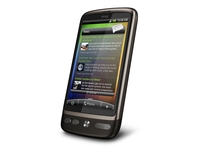
HTC's patent claim against Apple has been looked at in more detail, and it seems that the iPhone is the main subject of the claims.
There are five patents HTC is complaining about Apple infringing, and they centre around two distinct themes.
Two are related to power management, according to the International Trade Commission complaint filed by HTC, with the first about a device switching between off, sleep and on states in a phone - which can only apply to an iPhone or possibly an iPad 3G.
The second in this category is a little more technical - it involves switching data from RAM to flash to save power when the battery is getting low, and then booting it all back to normal when the charger is connected - this one could apply to all three products.
Not going to reach my Telephone
The next category, where HTC is alleging Apple has infringed three patents, relate to the telephony element on a phone, and using that to gain easy access to contact details.
This appears to be using things like working out caller ID based on the internal memory, smart dialling to find friends within your conytac book and working with multiple directories of contacts, with methods of moving between them.
It seems like a pretty light patent portfolio compared to what Apple's throwing at HTC, but we imagine its pretty solid, especially as one of the patents was only granted in the last few days.

| |
Read More ...
In Depth: 10 tech firms that should get more damn respect

Technology is a funny business. Some firms are arrogant and expensive, but people hang on their CEO's every word, queue overnight for slightly improved versions of their products and get tattoos of the company logo on their intimate parts.
Other firms are innovative, interesting or amazing, and yet the only thing you'll see at their press conferences is tumbleweed. Sometimes it's because of past mistakes. Sometimes it's because their rivals are better at PR. Sometimes it's because they also make lawnmowers or dangerous toys. And sometimes it's just baffling.
So which firms don't get the respect they deserve? We'd like to nominate 10:
1. Nokia
Apple gets the headlines, but Nokia's the big hitter of mobile: according to industry analysts Canalys, Nokia shipped 21.4 million smartphones in the first quarter of this year, giving it 38.8% market share. It shipped more touch-screen phones than Apple (10 million compared to 8.8 million) and it's miles ahead of HTC (2.8 million smartphones shipped in the same period). It's a giant in ordinary handsets too: it shipped its billionth phone way back in 2005.

BIG SELLER: The iPhone may get the headlines, but Nokia's still doing the big numbers. It shipped 21 million smartphones in the first quarter of this year
2. Microsoft
It's got a terrible public image, but for every Internet Explorer 6 there's a Windows 7, an Xbox 360 or - yes! - a Zune HD. Microsoft is more like a country than a company, and in addition to its consumer products and increasingly impressive Windows Live offerings its many divisions include some extraordinary talent producing products on which entire industries depend. No, we don't mean the tech support industry.
3. Samsung
Oh, the irony: Samsung makes fridges, and yet the company isn't cool. That's a shame, because it's a hugely important firm. It's the global leader in memory chips, flash storage and solid state drives, and it's got a finger in every electronic pie from smartphones to steam washers. If you go through its history - which takes a while; it's been around since 1938 - you'll get fed up with the phrases "world's first" and "world's smallest, lightest". Its fridges are pretty good too.
4. AMD
Forever in the shadow of its former partner Intel – AMD's market share has been slipping, with IDC reporting that its share of the overall CPU market is now 18.8% - AMD has made some amazing processors, and its takeover of ATI means it makes some amazing graphics cards, too. Its new Fusion strategy - accelerated processing units or APUs that combine CPUs and GPUs - could be enormous, especially in laptops and tablet PCs.
5. Opera
It's hard not to say "plucky Norwegians" whenever we talk about Opera. The plucky Norwegians have been at the cutting edge of browser innovation for years, only for rivals to nick all their best ideas and dominate the market. Tabbed browsing, page zooming, popup blocking, speed dial, private data deletion and many, many more all debuted in Opera before turning up in other browsers. The current browser's rather nifty, too.

INNOVATOR: Most of the features you're used to in your browser first appeared in Opera. We're baffled by its tiny share of the browser market
6. RealNetworks
We take online music and video for granted today, but 1995's RealAudio - and RealVideo two years later - felt like it had been sent to us from the future. Suddenly the internet offered even more than GeoCities pages about cats. Upstarts stole its crown - hello, Flash! - but RealNetworks effectively invented streaming media. These days its focus is mainly on mobile phones.
7. Yahoo
For all its weird acquisitions - it's bought pretty much every firm on the planet apart from the odd Cornish Pasty manufacturer - and subsequent shut-downs of services it just couldn't make work, Yahoo is one of the most profitable internet companies on the planet with the world's biggest email service and a selection of hugely popular portals. It invented the search engine, too. Despite its size and power, however, Yahoo only gets headlines when boss Carol Bartz says something controversial.
8. Linux
It's a movement rather than a firm, of course, but we think Linux still deserves to be here: from making netbooks work to powering Android phones and generally making Microsoft get its act together, Linux has been enormously influential. It might be considered more cool if journalists could get through just one Linux-mentioning article without also mentioning beards and hippies. Oops.

SUCCESS: Linux - shown here in Ubuntu flavour - has been enormously influential in PCs, netbooks and smartphones
9. 7Digital
Preaching the gospel of DRM-free downloads long before the rest of the industry finally saw the light, the 100% DRM-free, UK-based 7Digital has never been afraid to try different things to see what works - which is probably why it's had happy relationships with everyone from the Stones to Spotify. 7Digital is digital music done right.
10. Sharp
Ending its sponsorship of Manchester United appears to have dented its UK image, but Sharp's an innovative and interesting firm - especially in TV technology, where it's added yellow to the traditional red, green and blue of LCD displays to boost brightness. Its 3D panels promise "unprecedented picture quality" for 3D TV and it intends to bring glasses-free 3D to mobile phones and other devices too.

LOOK SHARP: Can anyone remember the name Sharp gives its clever flat-screen TVs? No, we can't remember it either. If only there was some kind of clue

| |
Read More ...
Sony PSP 2 to make debut at E3?

Sony is to reveal a true sequel to the PSP at this year's E3, according to those close to the company.
Games industry rag MCV has spoken to an unnamed source who believes that two key publishers about the launch who seem to think that a new handheld will be the main story for Sony at E3.
The publishers are gearing up for a new hardware iteration from Sony and the signs are pointing that it will be the PSP which gets upgraded.
PSP redux
The last update of the PSP, the PSPGo, was underwhelming. Like a product out of sync with its time, Sony got rid of game discs and made the portable able to receive content by download only.
This meant that anyone who had an old PSP would not be able to use their old discs on the system.
Downloads may well be where gaming is going, but this was a leap too far with Sony never actually releasing sales figures of the device.
With Nintendo gearing up to woo gamers with novelty 3D screens and Apple making more of a push in the gaming sector with the iPhone, is Sony going to trump this with an all-powerful handheld contender?

| |
Read More ...
BT signs rights to OnLive in UK

BT has signed the exclusive UK rights to the cloud-gaming service OnLive.
The broadband provider has obtained a 2.6 per cent share in the company and will provide OnLive's gaming offering as part of bundle deals to its customers.
OnLive has now been in development for eight years. BT issued a press release about the deal this week and has said that it will announce further details about UK launch plans for OnLive later this year.
"Entertainment is going to be at the heart of what we offer customers in the future," said CEO of BT Retail, Gavin Patterson.
"It's great for our customers - they'll have access to a huge catalogue of games, available instantly on their TV or PC without expensive hardware."
Transformative implications
Steve Perlman, CEO of OnLive, said of the latest announcement about cloud gaming in the UK:
"The UK market is extremely important to OnLive and our videogame publishing partners as we expand into Europe. We view BT as the ideal UK partner. As gamers are moving increasingly to online game distribution, OnLive delivers video games as a pure form of online media, playable instantly on almost any video-capable device attached to the internet.
"The implications are nothing short of transformative to video games and in time, all interactive media. OnLive is delighted to be pioneering this revolutionary technology in the UK together with BT."

| |
Read More ...
Record labels win in LimeWire copyright case
The developers of file-sharing software LimeWire have been decreed to be liable to 13 major record companies for infringing their copyrights in a landmark ruling.
Manhattan Federal Judge Kimba Wood agreed with the 13 record companies that LimeWire's parent company Lime Wire LLC and its founder Mark Gorton should be held liable for copyright infringement.
LimeWire has been operating since 2000 and has over 50 million monthly users.
RIAA happy with ruling
The original lawsuit dates back to August 2006 when the 13 labels - Arista, Atlantic, BMG Music, Capital, Elektra, Interscope, LaFace, Motown, Priority, Sony BMG, UMG, Virgin and Warner Brothers - sued Lime Group.
"The evidence demonstrates that LimeWire optimised LimeWire's features to ensure that users can download digital recordings, the majority of which are protected by copyright, and that LimeWire assisted users in committing infringement," Judge Wood decreed.
Mitch Bainwol, Chief Exec of The Recording Industry of Association of America (RIAA) said in a statement following the ruling:
"The court's decision is an important milestone in the creative community's fight to reclaim the internet as a platform for legitimate commerce.
"The court has sent a clear signal to those who think they can devise and profit from a piracy scheme that will escape accountability."

| |
Read More ...
Microsoft Office 2010 in stores on 15 June

Businesses already got hold of Microsoft's new Office 2010 this week, as it emerges from its beta gestation phase, with the news today that consumers will be able to pick up a copy of the new office suite on 15 June.
Microsoft's latest Office portfolio will be made available in Student, Home and Professional packages.
Microsoft is aiming its sights squarely at Google's online Docs application, which includes a free word-processing tool, spreadsheet editor, presentation package and more. With Office 2010 Microsoft is adding its own free online component with Office Web Apps (or 'Office Live').
SkyDrive into the cloud
So Office 2010 will let users create, edit, view and share files online using Microsoft's SkyDrive website.
Much of the latest Office 2010 functionality will be available for free online anyone, which is where Google might well see users switching sides.
In terms of pricing, Office 2010 Student includes Word, Excel, PowerPoint and OneNote for £109.99, Office 2010 Home includes all of that plus Outlook for £239.99 and Office 2010 Professional add in Publisher and Access for the whopping price of £429.99.
For more head over to the Office 2010 UK Pre-order Page

| |
Read More ...
HTC attempting to block iPhone and iPad sales
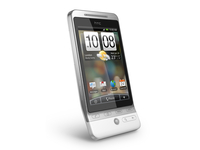
HTC has announced it is suing Apple for infringing five of its patents in the US.
The Taiwanese firm is seeking an injunction against the import and sale of the iPhone, iPad and iPod in the US, meaning this war could quickly escalate.
"As the innovator of the original Windows Mobile PocketPC Phone Edition in 2002 and the first Android smartphone in 2008, HTC believes the industry should be driven by healthy competition and innovation that offer consumers the best, most accessible mobile experiences possible," said Jason Mackenzie, VP of North America for HTC.
"We are taking this action against Apple to protect our intellectual property, our industry partners, and most importantly our customers that use HTC phones."
Tit-for-tat
HTC won't comment on which patents are infringed, but it must assume they're pretty meaty if it's to defeat the volume of infringements Apple is alleging HTC is committing.
It seems likely that this counter-suing stance is the result of its agreement with Microsoft recently to license key patents from the Redmond group - with this power behind it HTC is ready to try and beat Apple at its own game.
We're sure the attempt to stop Apple importing into the US will mean this comes to court quickly - we just hope it doesn't drag on for years and years and the two brands come to a settlement soon and concentrating on making great smartphones.

| |
Read More ...
Updated: Vodafone to offer Samsung Galaxy S Android phone in UK

Samsung's new Galaxy S Android phone is coming to the UK with Vodafone, meaning a whole host new tech to play with.
The new Android phone is packing in the best of Samsung's hardware, with a 1GHz processor, a Super AMOLED screen giving pin sharp performance and HD video recording too - a first for Android.
The Galaxy S will also be running Android 2.1, making it capable of enjoying the latest upgrades to Google's OS.
It's got a huge 4-inch screen, a 5MP camera and 16GB of internal memory with a microSD card slot.
Chrome - on a mobile?
Intriguingly, Vodafone is stating that this phone comes with Google Chrome integrated as well, making it 'quick to load, so you can do things faster online.'
UPDATE: We're still waiting for official confirmation, but it seems the addition of Chrome to the Samsung Galaxy S is an oversight from Vodafone - so no new level browser sadly.
The phone is still stuck under the 'Coming Soon' label on the Vodafone website, so we're still not sure how much this Android beast is going to cost.
But with all the tech on board, we'd bet that this one will outperform the recently released Sony Ericsson Xperia X10 - it's going to be a battle royale (hopefully).

| |
Read More ...
Samsung Wave and Sony Ericsson X10 mini appear on Vodafone
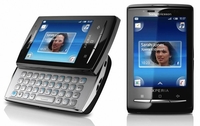
Vodafone has announced three new smartphones to its line-up today, with the Sony Ericsson X10 Mini and the Samsung Wave joining the Galaxy S in the red ranks.
The Sony Ericsson X10 Mini, which is really tiny with dimensions of 83x50x16 mm, joins its bigger brother the Xperia X10 in the SE Android line up on Vodafone.
With a 2.5-inch screen, teeny frame and the TimeScape UI on top, it's likely to entice a few people into the Android camp, even if it is only running the creaking Donut version of the Google OS.
The X10 Mini will be followed shortly by a keyboard-wielding X10 Mini pro, which is precisely the same phone but with a QWERTY bolted on - although we're not certain this is also heading to Vodafone.
Wave - hello!
The Samsung Wave, the first phone to be running Samsung's new Bada platform, is also coming to the red network in the near future.
Using the TouchWiz interface, the new Wave features HD video recording, a 5MP camera and a Super AMOLED screen to offer a superbly crisp experience.
There's also Flash video enabled, as well as integrated Facebook and Twitter support.
We're waiting for more information on these two phones with regard to pricing - we can only hope they're not too expensive in the face of all the top end Android handsets on Vodafone.

| |
Read More ...
Steam for Mac now open for business

Valve has finally made Steam for Mac official, with the platform already primed with a number of downloadable titles.
In an announcement, Valve said that Portal will be its first title available on the platform, noting: "The first collection of Mac titles will demonstrate 'Steam Play,' which allows customers to purchase a game once and play it on all Steam supported platforms."
Blowing off steam
"Portal, in addition to supporting Steam Play, will be the first of Valve's Source engine based games available on the Mac.
"Native OS/X support for the Source engine is also available immediately to licensees for use in their games."
Speaking about the launch of Steam for Mac, Max Schaefer, co-founder of Runic Games, said: "We're very excited to be bringing [the game] Torchlight to the Mac.
"Having Steam for the Mac solves so many problems for us as a developer. We look forward to our future games coming out on the Mac as well."
Dev tools
To go alongside the gaming platform, Valve is also introducing its Steamworks suite of publishing and development tools to Mac game devs.
"These include product key authentication, copy protection, auto-updating, social networking, matchmaking, anti-cheat technology, and more," states the release.
"The features and services available in Steamworks are offered free of charge and may be used for both electronic and tangible versions of games."
An update of games is to come each Wednesday for the platform, with "each designed to highlight specific functionalities of Steam on the Mac".
In short, Mac users have finally got the games platform their computers sorely need.

| |
Read More ...


No comments:
Post a Comment