

Next Generation 3DMark Named, Detailed
Futuremark is readying the next generation of its popular 3D graphics benchmark, the 3DMark. The new version will be called 3DMark 11 (probably named after the year 2011 or DirectX 11), and will strive to be every present-generation GPU's worst nightmare (stress test). With NVIDIA's entry into the DirectX 11 generation of graphics following ATI making the new GPUs "current", 3DMark 11 will focus on the GPUs' DirectX 11 capabilities, probably exploiting new texturing and hardware tessellation features.
The benchmark will be able to push present and future GPUs to their maximum capabilities. At least one of its game tests have been known to be called "Undersea Submarine". There is no mention of NVIDIA PhysX, so it's safe to assume that the benchmark will use industry standard features which are available to all DirectX 11 generation GPUs. However, similar to a marketing deal with Sapphire for 3DMark Vantage (where a certain game test showed a futuristic vehicle with Sapphire logo on it), this version will market MSI. What's more, it will be bundled with MSI graphics cards when the software releases. Futuremark will show off its latest creation at this year's Computex event held in early June, in Taiwan. The software will be released some time in Q3, 2010.

Source: Plaza.fl
Read More ...
(PR) QNAP Announces iSCSI and NFS VMware Ready Certification of TS-859 Pro iSCSI Turbo NAS
QNAP Systems, Inc., a leading manufacturer of world class Network-Attached Storage (NAS) servers, Network Video Recorders (NVR), and Network Multimedia Player (NMP) today announced its 8-bay tower model TS-859 Pro Turbo NAS has been certified as compatible NFS and iSCSI datastore with VMware vSphere4 (ESX 4.0) virtualization platform. TS-859 Pro Turbo NAS can serve as both IP-SAN and NAS which offers flexibility, ultra-high performance, easy configuration and management, and affordable price points that enable SMB and entry-level Enterprise customers to be able to enjoy the advantages of VMware Cloud Computing environments. VMware vSphere is the industry's first cloud operating system that offers a way to reduce IT costs and increase responsiveness. Shared networked storage is an essential component of a Cloud Computing infrastructure. TS-859 Pro Turbo NAS can be easily integrated into to vSphere and allows the interoperability between VMware virtual machines and QNAP's high performance certified storage.
"QNAP provides our business customers high performance, highly reliable networked storage that meets their needs and won't break the budget. The IT administrators of small businesses and workgroups can now have an affordable and powerful alternative for the storage solution in the VMware virtualized environments," said David Tsao, Product Manager of QNAP. TS-859 Pro offers enterprise-level iSCSI features such as SPC-3 compliant, multiple LUNs per target, MPIO, MC/S, and LUN (logical unit number) masking. It offers up to 16TB storage capacity via 8 hot-swappable SATA hard disks, dual Gigabit LAN ports with fail-over, load-balancing and multi-IP setting capabilities. It also features RAID 0/ 1/ 5/ 6/ 5+hot spare/ 6+hot spare configurations which offer higher redundancy. Meanwhile, the advanced RAID management tool facilitates online RAID capacity expansion, online RAID level migration, and RAID recovery maximize system up time. "Besides TS-859 Pro, the entire lineup of TS-x59 series Turbo NAS will be certified soon in June this year," Mr. Tsao added.

Read More ...
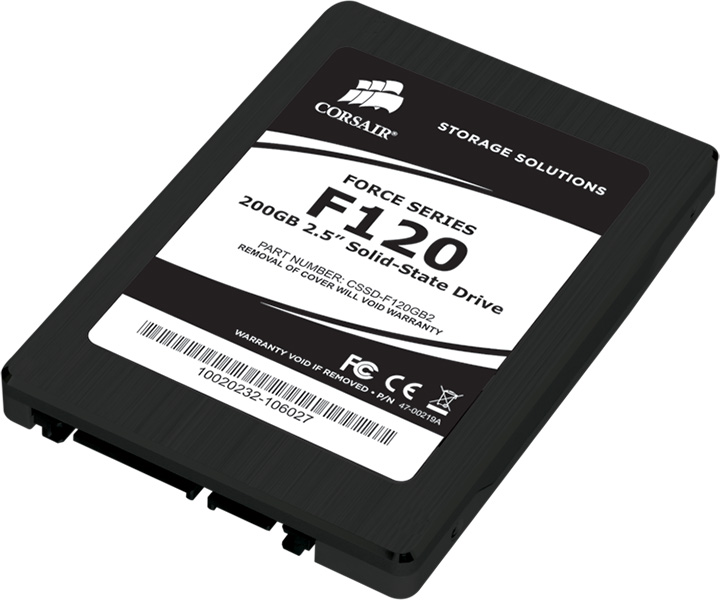
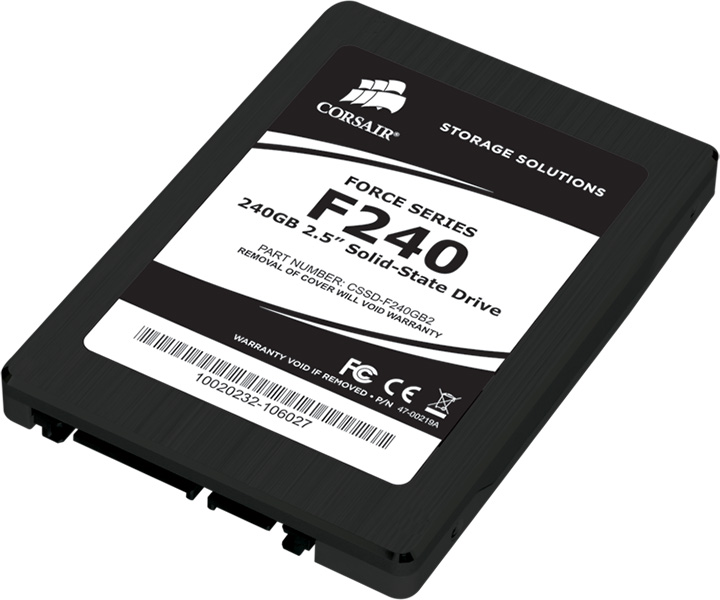
(PR) Corsair Launches 60GB, 120GB, and 240GB Force Series Solid-State Drives
Corsair, a worldwide designer and supplier of high-performance components to the PC gaming hardware market, today announced three additions to its ultra high-speed Force Series SSDs. The additions to this product family include the F60, F120, and F240 Force Series SSDs, sporting densities of 60GB, 120GB, and 240GB respectively.
All Corsair Force Series SSDs are built using the Sandforce SF-1200 SSD Processors, which provide unparalleled write endurance, superior ECC data protection, and outstanding performance. Corsair engineers worked closely with Sandforce to implement and qualify firmware which guarantees the unusually fast 4K random write performance of 180 MB/s, measured using the ATTO benchmark. This elevated 4K write speed generates 15K IOPs, resulting in excellent system performance and responsiveness. All Force Series SSDs implement the ATA TRIM command, supported by Windows 7, which helps to maintain optimal performance over the driveأ¢€™s lifetime.

Read More ...
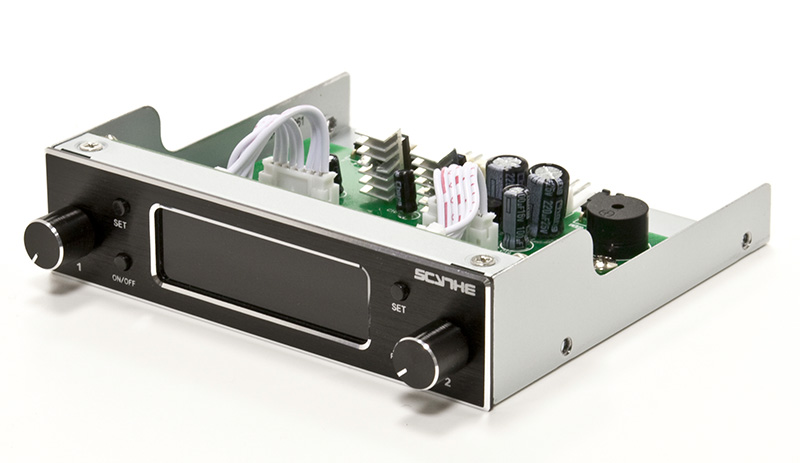
(PR) Scythe Announces Kaze Server 3.5 Intelligent Fan Controller
The Japanese cooling specialist Scythe hereby announces a scaled version of the popular fan controller Kaze Server in 3.5 "form factor. Kaze Server 3.5 offers the advanced features of its big brother, however due to the smaller layout, it is equipped with only two channels. With Kaze Server 3.5, two fans can be controlled independently, and two temperatures (in either أ‚آ° C or أ‚آ°F) can be monitored. In addition to manually control the fan speed by knobs, Kaze Server 3.5 Fan.
Controller allows a fully automated and a semi-automatic operation mode. The Auto mode turns the fan on when a freely adjustable temperature is exceeded. In Semi mode, users can set two fan speeds rpm and a temperature value. Depending on whether the measured temperature is above or below the set value, either the first or the second setting is used for the fan.

Read More ...
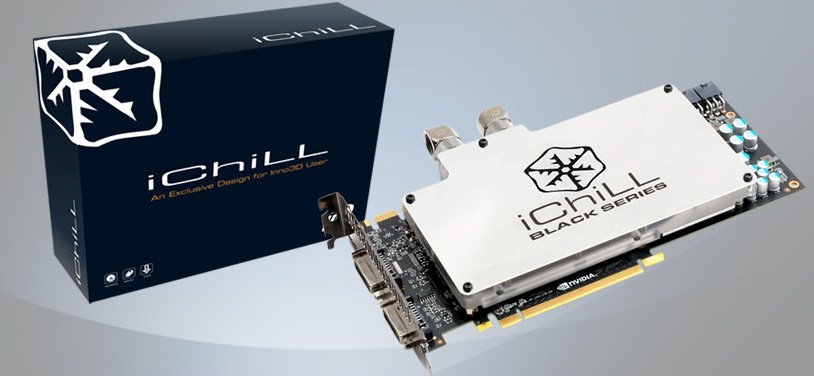
(PR) Inno3D Introduces i-ChiLL Black Series GTX 470 Graphics Card
Inno3D is excited to launch the i-ChiLL GeForce GTX 470 Black Series equipped with liquid cooling technology. The "full cover" water-block cools the GPU, Voltage Regulators, I/O chip, memory modules, and other critical components allowing for longer care-free gaming knowing your GPU is well looked after. This is definitely the ultimate cooling solution for enthusiast gamers.
In the i-ChiLL Black Series system, the water block first takes up the heat and passes it to the water flowing into it. Through the hose system, the water carries the heat to the radiator. Once it arrives in the radiator, the water passes the heat to the air via the ribs. The thinner the ribs and the larger the radiator's surface is as a result, the more powerful the cooling system. The "cooled" water flows from the outlet side of the radiator back into the CPU water block. The air flow within the water block is also important in ensuring adequate cooling. That is because the more thermal discharge the water can absorb from the surrounding material in the block, the better the cooling performance.
Read More ...
(PR) Sharkoon Introduces USB 3.0 ExpressCard for Notebooks
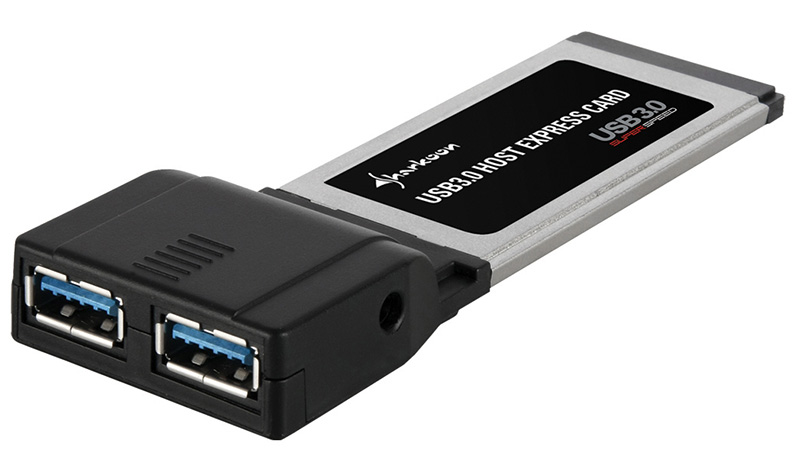
After Sharkoon has already established themselves as the first provider to introduce a USB3.0 controller for Desktop PCs, the accessory specialist now immediately offers Notebook users the possibility to upgrade their device with a SuperSpeed port.
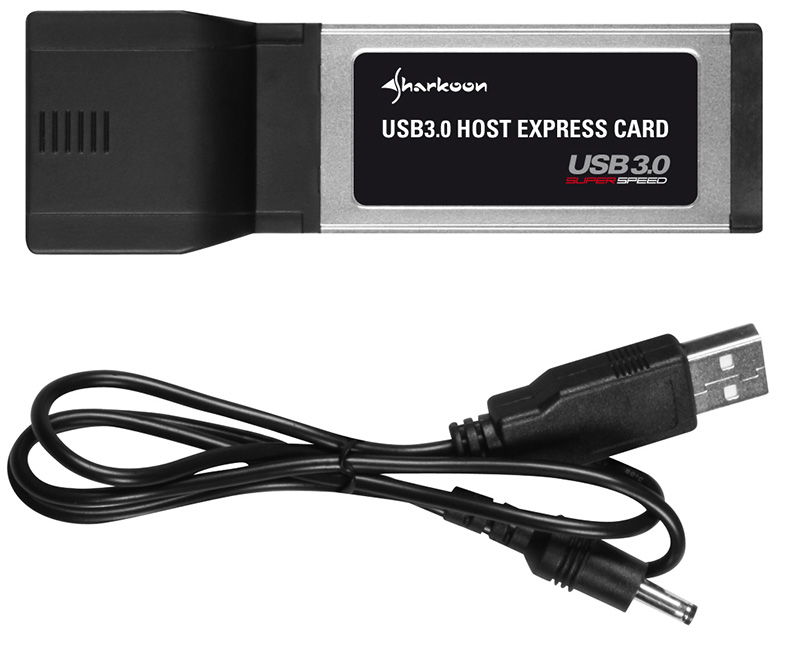
The Sharkoon USB3.0 Host Controller Card is equipped with two USB3.0 ports and is simply inserted into the ExpressCard slot of a notebook. The extension card in the 34mm format fits in both the 34mm and 54mm slots, corresponds to the ExpressCard 1.0 Standard as well as Intels xHCI specification 0.95, and supports operating systems Windows, XP, Windows Vista, and Windows 7 (32 and 64 Bit). The Plug&Play capable plug-in card is downward compatible to HiSpeed and LowSpeed USB. The two USB3.0 ports supply a maximum amperage of 900 mA; a suitable USB cable, driver CD, and instruction manual are all included within shipping.
Read More ...
(PR) Lian Li Launches PC-8NWX, PC-7FNWX & PC-60FNWX Mid-Tower Cases
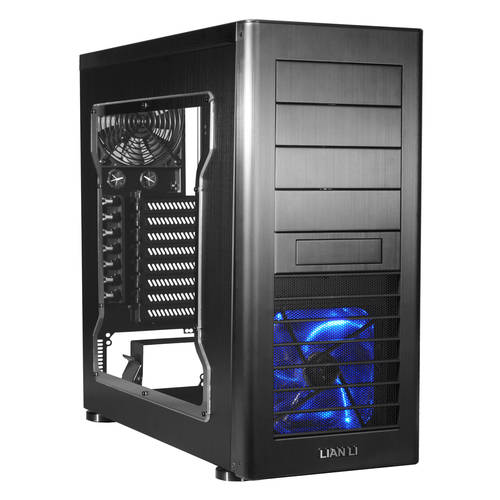
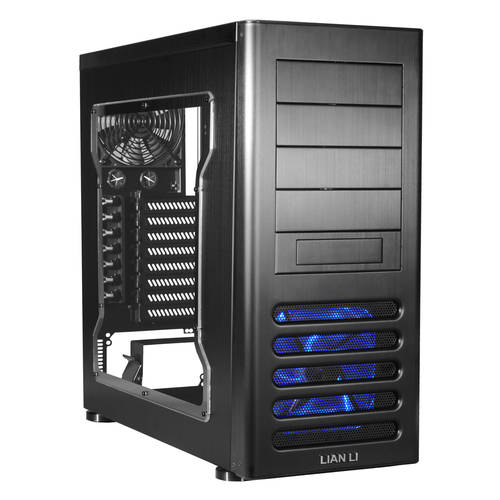
Lian Li Industrial Co. Ltd. today releases the PC-8NWX, the PC-7FNWX, and the PC-60FNWX mid tower chassis. All three models' interiors and exteriors are made with all-black, 1.5 millimeter thick, anodized aluminum making them solid but lightweight, and easy to keep cool; not to mention beautiful. These computer case chassis also feature large, side-panel windows for easy viewingof the interior. The top panels, on all three, come with a spare 140mm fan mount. Depending on the model the two USB 3.0 ports, plus HD audio ports are on the top panel or the front panel. Lian Li is known for customizable cases and these are no exception. In addition to the completely tool-less installation design of these chassis, users can mount ATX or Micro-ATX motherboards. Rubber coatings and anti-vibration silencing designs are used throughout these computer cases.
The PC-8NWX comes with a 120mm intake fan running at 1200RPM on the front panel and an identical fan mounted on the back for exhaust. The PC-7FNWX and PC-60FNWX have the same exhaust fan on the back. However, on the front they have a larger intake fan, 140mm running at 1000RPM. Additionally, the front fan on the 7FNWX & 60FNWX is lighted with blue LEDs. On the backside of the 7FNWX and 60FNWX are two, rubber-lined holes, allowing for a liquid cooling system.

Read More ...
EVGA Sells Hydro Copper Water Block for GTX 470 Loose
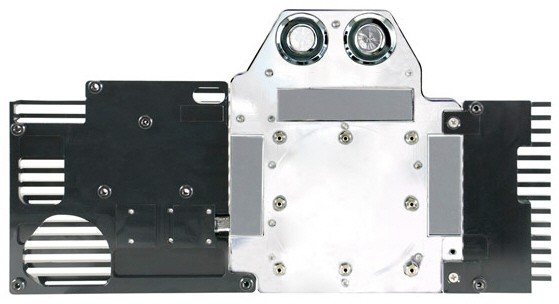
EVGA started offering the Hydro Copper water-block for GeForce GTX 470 as an accessory. Until now the block was available only as part of the EVGA GTX 470 Hydro Copper FTW graphics card, which is priced at $499.99. With the block being sold loose, users with the air-cooled variants of GTX 470 have the option of upgrading to water-cooling. The Hydro Cooper block costs $139.99.
Manufactured by Swiftech, the EVGA Hydro Copper water-block consists of a central portion from which the coolant flows, this part is directly over the GPU and memory, and makes use of 0.6 x 0.6 mm thin copper pin matrix for heat dissipation. The base consists of chrome electro-plated copper. The other two segments are heatsinks which convey heat to the central portion, cooling the VRM areas. Both both 1/2أ¢€آ and 3/8أ¢€آ high-flow fittings are supported.


Read More ...
ASUS Gives Rampage III Extreme 4-way SLI Capability with ROG Xpander
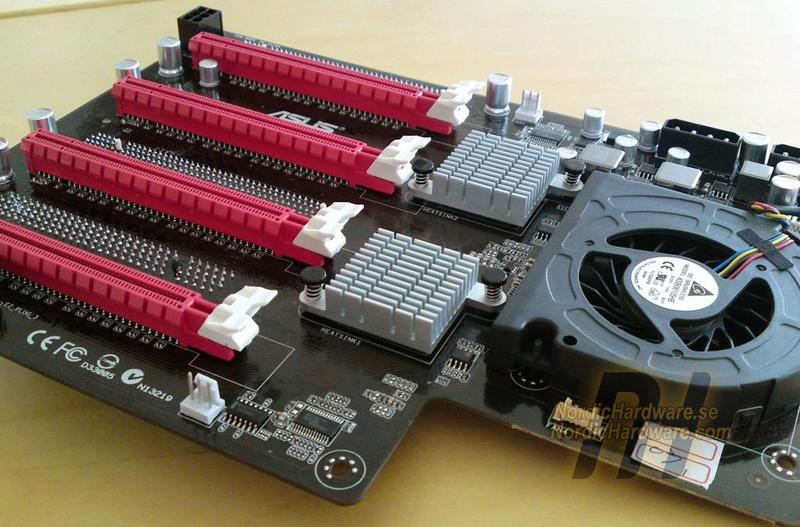
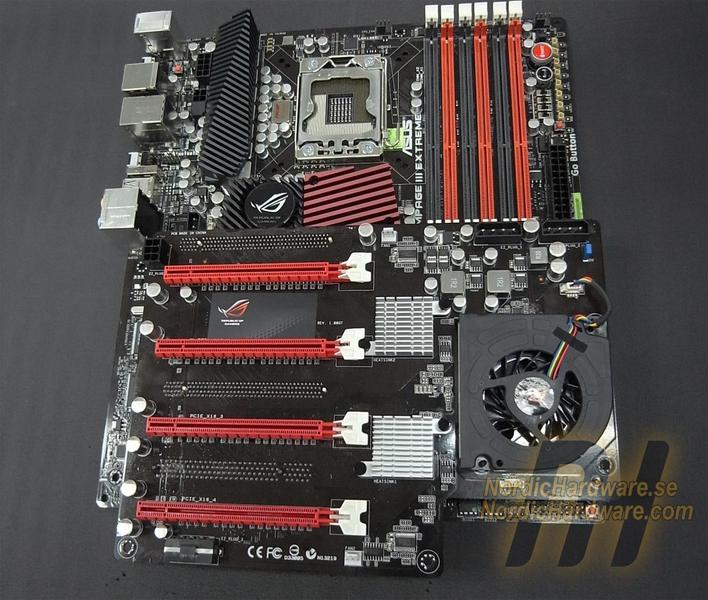
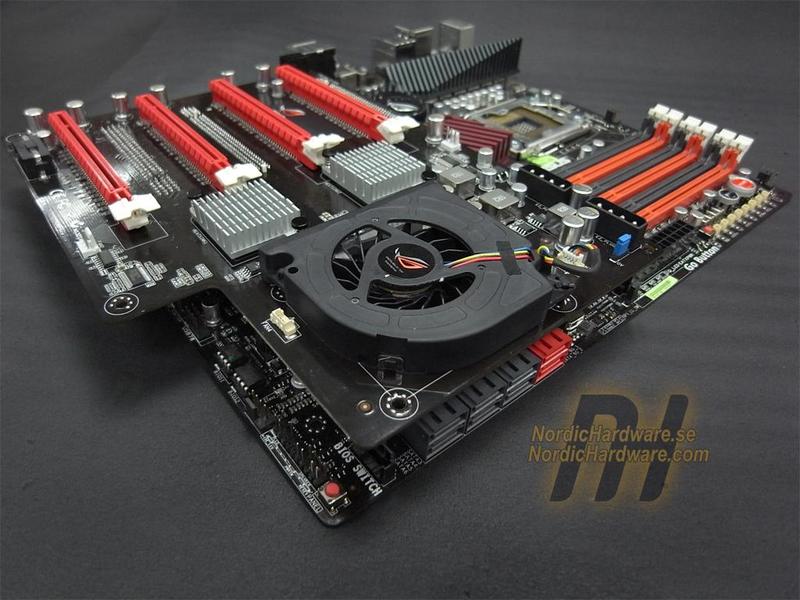
ASUS has come up with a Frankenstein solution which enables 4-way SLI on the Rampage III Extreme motherboard with full PCI-Express 2.0 x16 bandwidth, called the ROG Xpander. The device is a daughterboard that sits on the motherboard with connections to its PCI-E 2.0 x16 slots. While it might not fit into cases, it is intended to work on test-benches. The two PCI-E x16 connections from the motherboard are wired to two NVIDIA nForce 200 bridge chips, which give out two x16 links each, driving the four x16 slots on the daughterboard. It takes input from one 6-pin PCI-E power input, and three 4-pin Molex inputs, though not all may be required.
The ROG Xpander ideally would draw 12W of power per nForce chip, and with its own power inputs, will not draw any power from the motherboard for the four PCI-E cards. The point of using this device is that ASUS did not give 4-way SLI capability to the Rampage III Extreme from the factory, even though it already has four PCI-E x16 slots (x8 each when all are populated). A fan seated on the Xpander ensures components on the motherboard under it aren't suffocated of cool air. ASUS ran a 4-way SLI test of four GeForce GTX 480 graphics cards on 3DMark Vantage, where the Core i7 980X @ 6 GHz powered setup scored P52422 points.
Read More ...
EU Slaps Chip Vendors with Penalties for Price-Fixing
As many as nine major chip vendors were fined a total of 331 million Euros (US $404.2 million) for participating in illegal price-fixing activities, by the European Union authorities. These include Samsung, Hynix, Nanya, Elpida, Infineon, NEC, Toshiba, Hitachi, and Mitsubishi. A 10th company in this price-fixing cartel was Micron Technology, which escaped the fine for exposing the malpractice to the EU authorities. Of these Samsung was given the single biggest fine of 146 million Euros, followed by Infineon at 57 million Euros. The fines were reduced by 10% because all companies extended cooperation in the investigations.
The price-fixing cartel mostly involved bad trade of DRAM chips, and was active between 1998 and 2002, operating with a network of contacts which secretly exchanged pricing information. They colluded to fix prices of DRAM chips sold to major PC and server manufacturers. Investigations in the scam began in 2002 when Micron blew the whistle on the cartel. "By acknowledging their participation in a cartel the companies have allowed the Commission to bring this long-running investigation to a close and to free up resources to investigate other suspected cartels," said EU's Competition Commissioner, Joaquin Almunia. "As the procedure is applied to new cases it is expected to speed up investigations significantly," he added.
Source: BBC News
Read More ...


No comments:
Post a Comment