

In Depth: Pimp your iPad: Top 10 essential accessories

A slew of new iPad cases and numerous other third-party accessories arrive this week, as has become traditional with any new computer or device from Apple.
New iPad owners will no doubt be all too eager to spend a few more of their hard-earned dollars pimping their new tablet PC to make sure it stands out from the crowd, looks cool, and is well protected and fully compatible with their digital cameras and various other peripherals.
Apple has also released a number of its own official iPad accessories, for those that like to stick with the official gear and merchandising.
Here is TechRadar's top ten list of the essential iPad accessories available to buy right now.
The official iPad Keyboard Dock ($69/ £45) is what you need to invest in should you wish to use Apple's new tablet computer as a regular desktop-style screen. It combines a dock for charging your iPad with a full-size keyboard, featuring a number of special keys that activate iPad features.
It looks superb, featuring an anodized aluminum enclosure with low-profile keys. Special iPad keys provide one-touch access to the Home screen, Spotlight search, display brightness, picture frame mode, the onscreen keyboard, and screen lock.

APPLE IN THE DOCK: The official Apple keyboard dock for iPad
The dock lets you connect to a nearby electrical outlet using the USB Power Adapter that comes with the iPad, sync with your computer, or use some of the other official accessories such as the iPad Camera Connection Kit.
You can also connect your iPad to external speakers or headphones via the in-built audio jack or to a TV or video projector using a compatible cable such as the iPad Dock Connector to VGA Adapter or the Apple Component or Composite AV Cable.
- Order from the iPad Order page [Apple]
If you're not a fan of logo-embossed cases, then a company called Wrappers makes a decent range of affordable no-logo cases for your new Apple toy (from £18.00 plus £3.50 p&p).
The company offers "no logo, 100% soft, contract quality textile sleeves" in which you can sheath your iPad to keep it safe from screen scratches or breakages. The cases are wrapped with a 3mm closed cell foam padding and lined with a waterproof microfiber, so you can safely carry around your tablet computer in the rain!

NO LOGO: Wrappers offers a decent range of iPad cases
For the fashion-conscious, the company has also signed up a number of exclusive textile deals with the likes of Alcantara, LVMH, Andrew Martin & Paul Smith. Wrappers' also offer its original pillow case cover for the Apple iPad which is available here.
- Order from Apple iPad no logo sleeves
If, for some bizarre reason, you really have to take your new iPad with you when you next head to the beach or go sailing, then the rather-alarmingly named TrendyDigital Waterproof iPad Cover ($20/£13) might be worth investing in.

TRENDY DIGITAL: An expensive ziplock bag for your iPad
You might even want to use your iPad in the bath. Although we seriously wouldn't recommend you did!
The TrendyDigital WaterGuard waterproof case for the Apple iPad is the only iPad case that you can be sure to keep your new computer warm and dry when in or near the water (though hopefully not too warm). Of course, you could always just buy yourself a massive one-gallon zip-lock back instead – which is what Jeff Bezos claims he does when he reads his Kindle in the bath!
- Order from Amazon
A decent stylus is going to be an essential for iPad users. The Pogo Stylus ($15/£10), originally designed for the Apple iPhone, is now a far more useful bit of kit to have alongside your new iPad should you wish to do any digital drawing or art.

POGO STYLUS: Ideal for drawing and fiddly applications
This cool little stylus has been designed with light-weight aluminum alloy, with what the company says is a "soft tip [that] glides easily over the surface of your trackpad or display, making it fun and easy to sketch, draw characters, or just slide to unlock."
Sometimes finger-touch control is just not quite accurate enough for what you want to do on the iPad screen, which is also when having a decent stylus nearby is a god-send. Also handy if you just happen to have really long nails that get in the way of the iPad's touchscreen.
- Order from Pogo Stylus
Apple's own iPad Camera Connection Kit ($29/£19) is going to be an essential buy if you have any plans to use your iPad with your digital camera, allowing you to upload your pics from an SD card or directly from your camera, without having to bother doing so on your laptop first of all.

CAMERA KIT: Apple provides you with connectors for your digital camera
It means that you can immediately use your iPad to check out and edit all of your pictures on the go – which is a far more appealing prospect than having to cart around a laptop with you to do the same job (or than having to edit your pics on your tiny camera screen).
The iPad's 10-inch screen and pinch-to-zoom feature, combined with the option of running slideshows and the like means that this is a must-buy peripheral. iPad also supports all standard photo formats, including JPEG and RAW
- You can order the iPad Camera Connection Kit now from Apple's website.
While there are plenty of third-party iPad cases arriving on the market, Apple's own book-like case ($40/£26) is a decent enough option for those that aren't too bothered about making a fashion statement with their tablet PC bag.

APPLE'S IPAD CASE: The official case for your tablet PC
Apple's own iPad Case features a soft microfiber interior with reinforced panels for structure (and all-important screen protection) and it pretty lightweight. Perhaps the coolest feature is the capability of folding it horizontally or vertically to hold the iPad at an angle for viewing video or typing on the onscreen keyboard.
It also has all the necessary holes you would expect it to have for your headphone jack, dock connector port, and on/off and volume buttons
- Order from the iPad Order page [Apple]
If the official iPad case is not to your taste, then Quirky's new 'Cloak' iPad Case ($42/£28) with its two-way kick-stand adds a few useful extras to the standard book-cover style cover.
 QUIRKY CASE: Featuring a U-shaped plastic kick stand
The Cloak is perfect for propping up your iPad to watch movies or to type on the onscreen keyboard in landscape mode, featuring a U-shaped plastic kick stand that flips out. It also has a handy click-stop hinge controlled by a button on the spine, so you can set the viewing angle you want from the iPad.
That's quite a lot to pack into one case, and the price isn't bad, either, at $36. As always, you commit to order, the productions lines spin-up when the minimum order is reached and you are charged when the product ships. Hopefully you'll have yours in time for the April 3rd iPad release.
- Order now from Cloak
The Vers handcrafted wood iPad Case is clearly one for the designers amongst us and those who really care about making their new iPad look stunning when used as a part-time picture frame.
 WOOD FRAME: One for the design-conscious amongst us
The only downside? It costs $80 (£53). But that's the price you are going to have to pay if you really want your mates to swoon over your new Apple computer.
The Vers case is crafted by hand from hardwood and bamboo and reinforced with steel to keep your iPad safe and sound.
- Preorder now from Vers Audio
M-Edge's leather Moleskine-style iPad cases really do complement Apple's new machine better than most other cases out there right now. Pricing is still to be confirmed, but we imagine that it will be slightly higher than your average iPad cover, due to the quality of the textiles used.

MOLESKINE-STYLE: M-Edge's iPad cases look the part
In particular, the Flip Jacket and the Trip Jacket canvas and leather sleeves, that hold your iPad is held inside by straps across the corners, and feature a cover that closes to protect the screen, are on our iPad most-wanted list.
You can choose from a wide range of colours – opting for a conservative dark-coloured case or a brightly-coloured 'fun' case.
- You can pre-order M-Edge's Pad Cases from the M-Edge website.
RadTech's iPad accessories range is perfect for the self-style urban warrior look. The company has a decent selection of cases, screen-protectors and a stylus for those who want something slightly different to the more-conservative cases on offer from Apple and others.
 URBAN WARRIORS: Order your cases from RadTech
RadTech's shoulder bag will no doubt appeal to those that like the 'man-bag' look. We particularly like the look and styling of the company's $50 (£33) 'scout bag'.
And the company's $30 (£20) protective sleeve is a guaranteed way of protecting your new iPad screen from scratches.
- Order RadTech's iPad Accessories from the RadTech website.
------------------------------------------------------------------------------------------------------

 |  |
Read More ...
In Depth: Apple iPad vs iPhone 3GS: key specs compared

The iPhone 3GS has been around since last June, while the iPad has yet to have its UK release date.
The two devices are pretty similar in many ways, so we thought we'd do a straight-down-the-line comparison of the raw specs to see what's been enhanced for the iPad.
Processor
There's not as much difference here as you might think, despite the iPad having Apple-designed silicon inside. The iPhone 3GS has a Samsung S5PC100 chipset alongside a Samsung-made ARM Cortex-A8-based chip. That pootles along at 600MHz – unfortunately underclocked.
The iPad introduces the first spoils of Apple's 2008 acquisition of semiconductor company P.A. Semi. The Apple A4 is also ARM-based (rumoured but not confirmed to be another Cortex-A8-based chip) but runs at 1GHz. It's a fully-integrated system-on-a-chip (SoC), again rumoured to be made by Samsung for Apple.
By the way, the older iPhone 3G ran a slower ARM 11-based chip clocked at 412MHz.

Graphics
Like the iPhone, the iPad will have a PowerVR SGX graphics chip, but the spec is not known as yet. This is pretty crucial, as many applications so far developed for the iPad will have had to run on emulation rather than the hardware itself. That's an interesting challenge for developers, especially those producing games for the new device.

Memory
The iPhone 3GS comes loaded with 16GB or 32GB of Toshiba-manufactured flash storage, while the iPad adds a 64GB option. We'd expect a high end variant of the next iPhone to pack 64GB. The iPhone has 256MB of RAM, but as yet we don't know how much the iPad will have.
Display
The iPhone's 3.5-inch widescreen Multi-Touch 480 x 320 display is obviously dwarfed by the 1024 x 768 pixel resolution of the 9.7-inch LED-backlit display of the iPad. Both have the same fingerprint-resistant oleophobic coating. We're looking forward to seeing the iPad's screen for real.

Communications
As we know, there will be two versions of the iPad, the more expensive of which will pack 3G capabilities in addition to Wi-Fi. Like the 3GS (and indeed the 3G), there will be Assisted GPS. Both iPad variants will also have the digital compass from the 3GS alongside the accelerometer found in all iPhones.

Buttons and other hardware
Like the iPhone, the iPad also has an ambient light sensor, but you don't get the proximity sensor the iPhone uses when it's close to your face to turn off the screen – not that you need it. As well as the standard dock connector, volume control, Home button and sleep/wake button straight off the iPhone, the iPad replaces the mute control from the iPhone with a screen orientation lock. We wish we had that one on the iPhone, too.

Size and weight
Not surprisingly, this one's where the difference between the two pieces of hardware is most in evidence. Interestingly, the iPad with 3G carries a weight premium of 50g over the standard Wi-Fi model and also has a black plastic area along the top of the back side for the antenna. The iPad is also only a tiny, tiny bit thicker (1.1mm) than the iPhone 3GS. Full specs below.

iPhone 3GS
Height: 115.5 mm (4.5 inches)
Width: 62.1 mm (2.4 inches)
Depth: 12.3 mm (0.48 inch)
Weight: 135 grams (4.8 ounces)
iPad
Height: 242.8 mm (9.56 inches)
Width: 189.7 mm (7.47 inches)
Depth: 13.4 mm (0.5 inch)
Weight: 680g (1.5 pounds) for Wi-Fi model, 730g (1.6 pounds) for the Wi-Fi and 3G model

Battery life
The key comparison spec here is standby time. The iPhone can stay active for up to 300 hours according to Apple, though the company obviously uses different iPhones than the rest of us. Sadly there's no such detail for the iPad yet – is there something Apple doesn't want to tell us? Again, official specs below.
iPhone 3GS
Talk time : 12 hours on 2G, 5 hours on 3G
Internet: 5 hours on 3G, 9 hours on Wi-Fi
Video playback: up to 10 hours
Audio playback: up to 30 hours
iPad
Up to 10 hours of surfing the web on Wi-Fi, watching video or listening to music

| |
Read More ...
'Barcoo' barcode app promotes ethical consumerism

There are a few mobile phone apps already available that let you scan products' barcodes to then compare pricing, but Barcoo is the first of its type that lets you find out about the brand's ethical profile.
Barcoo lets you check a company's social responsibility rating, environmental credentials and find out how it treats its staff.
Promotes ethical consumerism
Developed by a group of young Germans, the app is intended to motivate users to shop more ethically.
The data used by the app is taken from a range of sources, including company statements, recognised social responsibility studies and user feedback.
Barcoo is only currently available in Germany. No word yet on plans for an English-language release, but we imagine that this will only be a matter of time.
Developer Benjamin Thym said: "Our mission is to give transparency to consumers and to allow them to be critical while they are shopping.
"Just by scanning a product, they get a whole bundle of information.With many customers, there's a huge gulf between what they want and what they get, and while most say they are critical consumers very few practise this when in a shop."

| |
Read More ...
NVidia denies rumour of Tegra 2 tablet delays

Nvidia has moved quickly to deny rumours of a delay of all projects based on the new second-gen Tegra chipset.
The rumour emerged on Slashgear.com, with a report claiming that they had heard from a trusted source that all projects based on the Tegra 2 chip have been delayed and were not expected to arrive on the market before late August 2010.
This suggests that new tablet PCs from the likes of Asus, ICD and Notion Ink would be delayed till later in the year.
Serious issues?
The newest Tegra has "some serious issues" when it comes to stability, says the same un-named source, leaving tablet manufacturers waiting for Nvidia to solve the issues.
However, Nvidia has responded claiming that the rumors aren't true, and that "everything's on track" with Tegra. Stay tuned for updates.

| |
Read More ...
Videogaming pioneer honoured in National Inventors Hall of Fame

Ralph Baer, 'the father of videogames', has been inducted into America's National Inventors Hall of Fame at a ceremony at the United States Department of Commerce in Washington, D.C. this week
Baer began work on the prototype for the first home videogame machine back in 1966, which can still be seen to this day at the Smithsonian Institution.
Magnavox Odyssey
The videogaming pioneer then sold his invention to Magnavox, and it was later commercially released as the Odyssey in 1972.
Baer's other gaming inventions include the light gun and the popular 1980's call-and-response electronic game Simon.
You can see more on the US's National Inventors Hall of Fame over at the website, with details of the latest inventors added to this year's list, which include Jacques Cousteau, for the invention of S.C.U.B.A. gear, and rocket scientist Yvonne Brill.

| |
Read More ...
In Depth: 10 best 3D TVs in the world today

Our constantly updated list of the best 3D TVs in the world
Slip on a pair of £100 3D glasses, nestle in front of a brand new £2,000 TV and switch on a £350 3D Blu-ray player and you're unlikely warm to the notion that 3D is merely an illusion.
It's created by your brain processing two separate images coming to it via your eyes, and while this stereoscopic approach can be done relatively cheaply, the big manufacturers have plumped for a rather expensive format that relies on rather clumsy, heavy glasses.
It's called Full HD 3D, and, to be fair, it's the best quality form of 3D currently available.
We've seen the demos; Full HD 3D might sound like a very expensive hobby for now, but if it's movies you're into then it's your best hope if you're at all interested in the third dimension.
Before your scowl at the prospect of your 50-inch plasma being deemed 'obsolete', bemoan the lack of 3D content, and balk at the high cost of a new breed of 3DTVs, consider this; our list may concentrate on 3D, but the TVs we've gathered here have plenty of other dimensions.
The 3D glasses are optional … and with TV prices being slashed by 25% every year, 3D TVs should be within reach of us all inside the next three years or so.

Samsung C9000 series 3D TVs
Having just released its BD-C6900 3D Blu-ray player for a cool £350, Samsung is about to unleash its huge 3D-ready range of TVs.
The flagship is the C9000 line-up of LED TVs, the 46-inch UE-46C9000 and 55-inch UE-55C9000. Prices are yet to be confirmed, but expect to part with the best part of £2,000 to get your hands on these fully featured screens.
Both are Full HD and come with Freeview HD tuners and 200Hz panels (that's key – a fast blur-free panel is crucial for 3D to work).
The C9000s use an Edge LED backlight system - that may not be quite as impressive as Full LED tech in terms of achieving deep blacks, but it does ensure the frame has a depth of just 8mm.
It's not all about the look, either; both models include four HDMI, two USB 2.0 slots (one of which can be used to hook-up a hard drive to add SD and HD recording functions), wireless DLNA networking and Internet@TV (which includes apps for BBC iPlayer, YouTube and Lovefilm).
The C9000s seem a high-end proposition even without 3D (and the largely novelty 2D-to-3D conversion); an iPhone-esque touchscreen remote control lets you watch Freeview channels on a LCD screen while something else is displayed on your TV.

Panasonic VT20 Series 3D TVs
Panasonic isn't messing around with entry-level and mid-range 3D sets; instead it's going for the high-end with its two-strong Full HD 3D VT20 plasmas.
A proponent of plasma tech for yonks, the latest Vieras have the same engineering team behind them that produced Pioneer's now defunct Kuro screens a few years ago.
These 50-inch (TX-P50VT20, £2,000) and 65-inch (TX-P65VT20, £TBC) models feature a 600Hz Sub-field Drive (not that plasma struggles with motion, as LCD/LED screens can – something that may make these screens ones to watch for 3D) alongside Intelligent Frame Creation Pro, Infinite Black Pro (look out for Pioneer's Kuro legacy here), Viera Cast and a suave metallic design.
Uniquely, the THX Certified VT20 Series include both Freeview HD and Freesat HD tuners, DivX HD from USB sticks, Wireless LAN (via a USB adaptor), and PVR functionality if you attach a hard drive. You'll also receive two pairs of 3D goggles with each set.

Philips 8000 LED series 3D TVs
Philips' 8000 Series is 3D-ready in the most basic sense; the Dutch brand will make a 3D upgrade pack available separately – at extra expense.
The pack will include two pairs of Active 3D glasses and a wireless transmitter to allow them to talk to the TV, though extra glasses will also be available.
As such, you might expect the 37-inch, 40-inch, 46-inch and 52-inch models in Philips' 8000 Series – all of which sport Full LED panels – to be relatively affordable, but that's rarely the case with Philips.
And for good reason; loaded with Ambilight, above average audio and inky black images, it's produced some of the finest LED screens in recent years. Will its success translate to 3D? Find out in June when the 8000 Series is scheduled to go on sale.

LG 47-inch LD920 3D TV
LG has been a touch passive aggressive with its 47-inch LD920 screen, but in a good way; this, the only passive 3D screen (read: lighter, more comfortable glasses with no batteries) has been largely designed solely for pubs taking a feed of Sky's upcoming 3D channel.
Specifically, it's for watching Premier League matches in a few pubs across the UK and Ireland. Intended for commercial use only, this passive 3D screen can't display pictures from a 3D Blu-ray player, though its does have a Full HD resolution.
In terms of 3D, it can host only Sky's 3D service, which may be 3D, but won't be broadcast in high definition. If you're one of the 2.1 million Sky+HD homes waiting for the start of Sky's 3D channel later this year, you'd be much better off settling for an active – and much more versatile – 3D set, though this is the telly you're likely to get your first glimpse of 3D on.

Samsung C7000 Series 3D TVs
Just launched, we've already reviewed the 40-inch from this Series, a 27mm-deep LED screen that lacks the special remote of its C8000 and C9000 siblings, and should be considered a 'budget' 3D screen – though at £1,800 for a 40-inch TV, that's a purely relative term.
Also available in 46-inch (UE46C7000, £2,000) and 55-inch (UE55C7000, £2,800) sizes, the C7000 Series has the same features as the pricier series' (Full HD, 200Hz, wireless DLNA and Internet@TV), but is stylistically different.
In an attempt to make up for its 27mm 'bulge', the C7000 Series sports a 'Mystic Earth' textured – and coloured – styling. Identically specified plasma versions that sport an oxymoronic 'brushed black touch of colour' will follow in a few months.
Read: Samsung 40C7000 3D TV review

Sony LX900 Signature Series 3D TVs
Sold under the Bravia banner, this three-strong rage counts a 40-inch (KDL-40LX903 £TBC), 52-inch (KDL-52LX903, £TBC) and 60-inch (KDL-60LX903 £TBC) within its ranks.
Representing Sony's stab at 3D glory, all three are bestowed with the 'Signature' moniker and are laden accordingly; don't expect even the 40-inch to come in at less than £1300.
Inside a 'monolithic' design that appears to be based on Bang & Olufsen's TVs, these Signature sets are built around Edge LED panels and include a Freeview HD tuner, WiFi, Bravia Internet Video (BBC iPlayer and YouTube), DLNA and, crucially for 3D, Motionflow 200Hz PRO and Image Blur Reduction.

Philips 9000 Series & Cinema 21:9 3D TVs
It may have swerved Freeview HD in its latest batch of high-end Ambilight LED TVs, but there was no way Philips could ignore the 3D era.
Not due to hit shops until August, Philips' 9000 Series comprises 32-inch, 40-inch and 46-inch models that will ostensibly be high-end Ambilight LED TVs with 3D capability thrown in via an upgrade pack.
Details are scant, but Philips has also confirmed that in 'late summer' it will also launch the second generation of its 56-inch 56PFL9945H Cinema 21:9 LCD TV, which will be Full HD 3D Ready.
The existing £4,000 version features a 2.39:1 aspect ratio 2560 x 1080 pixel resolution LED screen that apes the dimensions of projection screens found in cinemas. Expect it to be shown at September's IFA consumer electronics fair in Berlin.

LG LX9900 Series 3D TVs
Get back from a night at the pub watching footie in 3D on its 'passive' LD920 screen and you're going to need the LX9900 – a Full LED 3D Ready TV that comes in two sizes.
Part of LG's step-up Infinia sub-brand, the LX9900 boasts a 3.16cm depth and a single layer design – the glass across the panel stretches over the frame, something we've seen before on LG tellies.
The 47-inch (47LX9900, £TBC) and 55-inch (55LX9900, £TBC) both host Full Led backlighting and TruMotion 400Hz scanning, and these special-sounding sets push the envelope further by building-in Freeview HD, Bluetooth, DLNA, Netcast (YouTube, Accu Weather, Picasa), USB 2.0 (DivX HD).
Unfortunately, the 3D glasses are sold separately.

Samsung C8000 Series 3D TVs
The mid-range of 3D-ready screens from Samsung, its C8000 Series is exclusively LED-based for now.
Plasma variants are likely to appear later in the year, which perfectly demonstrates Samsung's attitude to the competing screen technologies; it loves plasma, but LED TVs sell better. Much better – and with a metallic silver look and four-pronged silver spider (or 'quad') stand, it's no surprise.
There is a 32-inch version (the UE-32C8000), but that's not 3D-ready; third dimension seekers should search out the 40-inch (UE-40C8000, £2,000), 46-inch (UE-46C8000, £2,200), 55-inch (UE-55C8000, £3,000) or 65-inch UE-65C8000 (£5,000).
All feature 200Hz, Wireless DLNA, Internet@TV, four HDMI and USB, though there's no 2D-to-3D converter on board.
The brushed titanium plasma variants will add a square stand, a Real Black Filter, a Motion Judder Canceller and a Cinema Smooth option.

Sony HX900 Cinematic Series 3D TVs
It may lack the silky design and flagship name that its sisters in the 'Signature Series' claim, but Sony's three-strong Cinematic screens are where videophiles ought to head.
For as well as 3D compatibility, these panels are Full LED, which means local dimming – which, in turn, means the best picture quality around (unless you're in the camp that still thinks, with some justification, that blur-free plasma still rules and could be re-born with 3D).
A 40-inch (KDL-40HX903, £TBC), 46-inch (KDL-46HX903 £2,200) and 52-inch (KDL-52HX903 £2,500) are available under the Cinematic banner, with Freeview HD, Wi-Fi, Bravia Internet Video, Motionflow 200Hz PRO and Image Blur Reduction all present.

| |
Read More ...
Bill Gates pays tribute to the 'father of the PC'

Microsoft founders Bill Gates and Paul Allen have led the many tributes to 'father of the PC' Dr Henry Edward Roberts, who has died at the age of 68.
Roberts was the inventor of the Altair 8800, a machine that led Bill Gates and Paul Allen contacted him after seeing the machine on a cover of a magazine, offering to write software for it.
That software became Altair-Basic, from which Microsoft was born.
Praise for Roberts
"Ed was willing to take a chance on us - two young guys interested in computers long before they were commonplace - and we have always been grateful to him," the Microsoft founders said in a statement.
"The day our first untested software worked on his Altair was the start of a lot of great things."
Dr Roberts was the founder of Micro Instrumentation and Telemetry Systems (MITS). His Altair 8800, was a computer operated by switches and with no display as with modern PCs.
This early version of the personal computer was featured on the cover of Popular Electronics magazine in 1975.
"We will always have many fond memories of working with Ed in Albuquerque, in the MITS office right on Route 66 - where so many exciting things happened that none of us could have imagined back then," the Microsoft founders said in a statement.

| |
Read More ...
Weird Tech: At last! Technically enabled underpants
If you don't get very many text messages and often feel a bit left out of today's super-social modern life, there's a... pair of underpants that may be able to help you fit in. According to Discovery News, the technically enabled underpants, developed by Simavita, are a little on the grim side - they have the ability to send out text message alerts whenever the owner has had a urine-based control accident.

PANTS ALERT: On days like this we're reminded that being lazy writers is actually an OK kind of job
The SIMsystem detects moisture, then pops out an alarm to a disinterested carer, informing whoever's been left in charge of changing the pants of elderly or leaky people that there's been a spillage and the mop needs bringing to Room 216. Solids are presumably still detected the old-fashioned way.
The most interesting roof-tiling innovation you will read today, or even this week
Scientists at the 239th National Meeting of the American Chemical Society have made an exciting innovation in roof-tiling technologies. YES REALLY!
According to Science Daily, the "bio-based intelligent roof coating" has the ability to transform itself from a reflective surface that bounces away sunlight and keeps houses cooler in summer, to an absorbent version that soaks up light in winter, warming our houses and leading to fewer arguments with the wife about what temperature the boiler's thermostat should be set to and if everyone should still be wearing two jumpers around the house in April.

INTERESTING ROOF TILE: Has many of the same properties as one of the wife's flapjacks [Image credit: Science Daily]
"This is one of the most innovative and practical roofing coating materials developed to date," said Ben Wen, vice-president of United Environment & Energy. And if you can think of a more innovative roof coating material development, we'd very much like to read about it in the comments.
YouTube "Zeus" taken down by the FBI
If you're thinking of becoming a YouTube star by recording some sort of wacky and semi-incoherent rant that manages to 'go global' thanks to people laughing at you and how you've just ruined your internet reputation for the rest of your life, you might want to first take heed of the case of Norman Leboon - a self-styled madman who went a little bit bonkers on YouTube.

THINGS NEVER TO DO: (1) Joke about having a bomb in an airport, (2) say you're going to kill people on YouTube [Image credit: ArsTechnica]
After making the not-even-ironic threat to place "bullets" in the "head" of a congressman and also claiming all YouTube employees would "lose their first born sons", Leboon was promptly tracked down by the FBI, which sent Google a request for his video-uploading IP address and had him locked up the very same day.
He's been charged with threatening to murder, so bear that in mind if you're thinking about recording a rant in which you threaten to shoot someone at BT because your broadband speed test results have been coming up a bit slow for weeks.

| |
Read More ...
Apple launches thousands of iPad apps
The iTunes store already has more than 2,500 iPad apps, many of which will be well-known to regular iPhone users, with Apple releasing the new iPad apps a day before the official launch of the new tablet PC device in the US.
The apps range from new (and upgraded) games, through to entertainment, news, travel and reference applications.
US users can view all of the newapplications for Apple's iPad now in the iTunes App Store
Comics, TV, newspapers
Apps such as Twitterific, AIM and Pandora will be familiar to iPhone users, while new apps such as the new Marvel comic reader, Netflix and new iPad-friendly versions of leading national newspapers in the US are already garnering rave reviews by early users.
Hardcore gamers are already getting excited about the fact that games such as Bizarre Creation's sublime Geometry Wars and Sega's Super Monkey Ball 2: Sakura Edition are already available to purchase for Apple's new portable computer.
Some commenters have pointed towards the fact that iPad apps seem to be noticeably more expensive on average than iPhone and iPod touch apps.
For example, Lonely Planet Publications' 1,000 Ultimate Experiences costs $19.99, MLB At Bat costs $14.99 and diagramming program OmniGraffle is priced at a whopping $49.99.
Men in queues
Apple also announced that the new iPad will work fine with most of the 150,000 apps in the App Store.
"If you already have apps for your iPhone or iPod touch, just sync them to iPad from your Mac or PC. They run in their original size or you can expand them to fill the iPad screen," Apple says on its website.
The iPad goes on sale tomorrow in the US. Expect pictures of men in queues outside Apple stores all over the internet shortly…

| |
Read More ...
Review: Lenovo ThinkPad R500

When Lenovo acquired IBM's computer division in 2005, it took on the famed ThinkPad laptop range – renowned as being among the world's best business laptops. The ThinkPad R500 is an entry-level model and a rock-solid work tool with a fantastic battery life.
Build quality is some of the sturdiest we've ever seen, with firmly mounted panels and resilient matt-finish plastics. All ThinkPads are built for frequent and demanding daily business use and this is a laptop that will easily withstand the rigorous test of all-day use on the move.
The 2.9kg chassis measures 43mm in depth, making it quite cumbersome, though the Lenovo ThinkPad R500 has an excellent battery life of 364-minutes.
ThinkPads are renowned for having arguably the best laptop keyboards around, providing a smooth and firm typing action, resulting in excellent usability. The left Ctrl key is indented by one key, however, which may irritate some users.

The 15.4-inch TFT screen adds to its usability. Its matt finish eliminates reflections, making it easy to view in all conditions. While it also reduces the impact of colour and contrast – leading to a slightly dull picture – it is a worthwhile trade-off for daily portable use.
A key feature of the R500 is the preinstalled proprietary ThinkVantage software. Activated by a blue button above the keyboard, it allows even inexperienced users to quickly and safely configure advanced system tasks and settings.
Data protection
Excellent data protection features add to the business usability. A fingerprint scanner lets you biometrically secure the laptop and, once configured, only authorised users can access data on the laptop with a quick swipe of their finger.
The Lenovo ThinkPad R500's dual-core Intel processor provides ample performance for frequent multi-tasking. Graphics power is less capable, but you'll have no trouble creating and running PowerPoint office presentations.
An analogue VGA port lets you connect to external monitors, but the inclusion of DisplayPort technology, rather than HDMI, for connecting to high-definition (HD) screens may deter some buyers, due to the limited compatibility presently available.
Offering rock-solid build quality, great usability and an impressive battery life, the ThinkPad R500 is a great entry-level business laptop. While it is quite bulky and has some questionable design choices, its strengths far outweigh its weaknesses, making it easy to recommend.
Related Links
| |
Read More ...
Review: HP Pavilion dv6-2105ea

HP is the world's most successful laptop brand and provides a range of consumer and corporate machines at varying price points. Its Pavilion dv6- 2105ea is designed for home entertainment use.
Performance is stunning, thanks to Intel's cutting-edge Core i5 processor technology. As much as doubling the power of some of its rivals, this is by far one of the most powerful laptops you can buy at this price.
This level of power is continued on the graphics side. While the dedicated Nvidia graphics card is bettered by the Packard Bell EasyNote LJ75's ATi chip, there is ample power on offer for basic home entertainment use, including photo and video editing, and even regular mid-level gaming.
Multimedia usability
The 15.6-inch Super-TFT screen adds to the multimedia usability, thanks to its widescreen aspect ratio. This extra width is ideal for watching movies and viewing multiple windows side by side. Image quality is strong, with impressive brightness, colour and contrast on offer.
While there is no Blu-ray drive in place, the integrated DVD rewriter lets you enjoy and create standard DVDs and CDs. The drive also includes LightScribe functionality for cleanly and stylishly labelling your music and video discs.
Unfortunately, where the HP is slightly flawed is its user interface. While the keyboard is wide and features a dedicated numeric keypad, the spacebar is not nearly responsive enough, requiring a very hard tap to successfully register. This makes touch typing almost impossible.

Build quality is far more pleasing, with resilient plastics used throughout. The patterned finish may not suit all tastes, but adds a subtle style.
All panels are firmly fixed, with no noticeable flex, making for a very tough overall finish. Weighing 2.8kg, this is not a machine that you'll want to carry on a regular basis.
The 227-minute battery life is impressive for such a powerful machine, however, so you can easily work around the home or on short journeys when required.
A nice touch is the excellent software package. Market-leading tools for internet security, CD/DVD playback and creation and basic office use are included, so you can get straight to work with this laptop without buying extra software.
Despite its slightly flawed keyboard, the power and features of the Pavilion dv6-2105ea make it easy to like. If you mainly plan to use your laptop for home entertainment, then it's well worth a look, but be sure to keep the keyboard in mind if you plan to do a lot of typing.
Related Links
| |
Read More ...
T-Mobile, Vodafone, Orange and Virgin HTC Desire deals compared
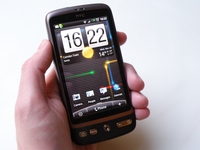
The HTC Desire was only announced two months ago, yet it's not only in consumers' hands, it's also causing a lot of excitement.
We might have given it our first five star review in donkey's years, but that's not the end of the story - the public wants to know how to get it on the cheap as well.
And they're being spoilt with the HTC Desire, as it's coming to all six top providers - but that means a plethora of deals to sort through.
But don't worry, as we've trawled the official provider's tariffs and cracked out the calculators to work out the cash behind the contracts - how much will each really cost you?
We're not talking about how little it will cost you at the start - there are plenty of ways to get a free phone and a bagillion minutes, but we want to know how much lighter your wallet will be in 18 to 24 months.
Note: We've not yet received official word on tariffs from O2, 3 or Orange (although we've taken those offered by The Carphone Warehouse for the latter), but we'll update the article as they emerge.

We've taken a few things into account - the amount of cash you'll chuck into the pockets of each network over the course of the deal, the minutes on offer, the contract length and handset cost, to find the cheapest overall cost for each network.
All are offering unlimited texts with the deals (although for T-Mobile this is a free Booster option; you could switch this for cheaper international calls for instance).
Also all of the deals we surveyed offer unlimited internet (with the exception of Vodafone, that's only giving away a measly 500MB per month) because let's be honest - if you're not going to use the HTC Desire for a lot of data hungry applications and internet, then there's not really a lot of point picking it up.
So once you've decided how long you can want to keep the phone for, and how many minutes you're likely to be chatting for each month, have a look at TechRadar's friendly chart to see which is the best deal for you:
If the thought of having to roll over and stare at the same (phone) face every day for two years is too much for you, then perhaps you'd be better off not tying yourself into a deal for 24 months.
18-month deals will generally cost the same as their two year brethren, but you do generally get more minutes and the chance to pick up a nice and shiny new phone sooner.
100-200 mins
There aren't a lot of deals around for this price point, with only Virgin Media and T-Mobile chiming in with offers.
T-Mobile just shades it though: for £15 per month and £164 for the Desire, you get 100 minutes and an overall cost of £434.
Virgin Media's offer might give you 200 minutes, but an extra tenner per month hurts over the year and half, despite the handset costing less up front.
Best deal: T-Mobile - £434

300 mins
T-Mobile is all on its lonesome in this category, with nobody else coming with a similar deal at the moment.
However, the deal isn't too bad: £20 a month for 300 minutes, although £129 is a lot to pay at the start for the phone.
Don't fret though - over the course of the deal it boils down to £489, which is a lot cheaper than buying a phone and whacking a pay-as-you go SIM in.
Best deal: T-Mobile - £434
600 mins
We've got three players in the space this time: T-Mobile, Vodafone and Virgin Media. If you're against the pink network, look away now: T-Mobile is cheapest again.
With a £25 per month deal and a £129 upfront cost, the overall deal works out at £579 over the 18 months.
Vodafone is next up, with a £35 per month deal that costs £630 overall, with a free phone. However, you do get 300 extra minutes for signing up online, although there's that pesky 500MB data limit.
And Virgin Media lags in last, with a £30 per month deal with a £115 upfront cost, taking the overall total to £655.
Best deal: T-Mobile - £579
800 - 900 mins
The same three again - T-Mobile, Vodafone and Virgin Media duke it out.
And this time we have a new winner - Virgin Media shaves it with a £35 per month deal offering 800 minutes and a free phone that costs £360 over the course of the deal.
T-Mobile is pretty close though; for £30 a month and a free phone it costs £635, and you also get 100 extra minutes per month, which equates to an extra 108,000 seconds of chat for only £5.
Vodafone limps in third again, with 900 minutes and a free phone for £40 per month, but the same 300 extra minutes if you sign up online, for £720 over 18 months.
Best deal: Virgin Media - £630
1,200 mins
Virgin Media and T-Mobile tie this one: both deals will end up costing you £720 over the course of the contract.
Virgin Media only offers 1,000 minutes, whereas T-Mobile will offer you 1,200, but both cost £40 per month with a free phone.
Vodafone is proffering a huge 1,500 minute allowance if you sign up online, but costs £45 per month and will end up costing you £810 overall.
Best deal: T-Mobile - £720 (but with 200 more mins per month)
OK, you've read our HTC Desire review and decided that two years with this phone wouldn't be so bad - we like the way you're thinking.
But we wouldn't want you to assume that's the end of the decision making process - you've still got to choose a contract to go with that bad boy.
The Carphone Warehouse is only offering 24-month deals on Orange with unlimited internet - we expect that to change when we finally get the official tariffs through.
100-200 mins
Three networks in this one: T-Mobile, Virgin Media and Orange.
And it's T-Mobile that takes the top slot, with a great £10 a month deal. The phone does cost £164 to buy first of all, and you only get 100 mins, but for £404 over two years you're not going to get a lot better.
Virgin Media is offering the HTC Desire for £20 per month with 200 minutes, and an upfront cost of £149.99 - this equates to the much pricier £630.
And Orange comes in last, with 100 minutes on a £20 a month deal - and a whopping £240 for the phone as well.
Best deal: T-Mobile - £404
300 mins
Two options only here - T-Mobile and Orange.
The former is far and away the cheapest option again, with a cheap as chips £489 the cost over two years - at £15 per month and an early £129 upfront cost.
Orange is next up at £700 for the lifetime of the contract, at £25 per month and £100 for the phone - we can only hope that the official tariffs come in a little cheaper.
Best deal: T-Mobile - £489

500-600 mins
Now we're getting somewhere - four networks duking it out, and it's a lot closer this time between T-Mobile, Vodafone, Orange and Virgin Media.
Well, we say a lot closer, but T-Mobile is still ahead of the pack: for £20 per month and £129 at the start you get 600 mins for an overall cost of £609.
Virgin Media is up next, with 600 mins for £25 per month and £100 up front - that equates to a £700 lump sum.
Vodafone and Orange's efforts will both set you back £720 over the two years (with a free phone) - with the latter you only get 500 mins, and with the former you can nab up to 300 bonus minutes (taking the total to 900) if you do it online.
Best deal: T-Mobile - £609
800-900 mins
All four in it to win it, with the price varying between £695 and £840 for the overall cost.
T-Mobile is (now predictably) the winner - it only costs £695 for a £25 per month deal, with the phone priced at £95.
If you only want 800 minutes but want to pay more cash, then check out Virgin Media's offering - it's £720 at £30 a month with a free phone.
And Vodafone and Orange tie again - both costing £840, but Vodafone offers 900 minutes (1,200 online) where Orange only offers 800.
Best deal: T-Mobile - £695
1,200 mins
We're into seriously chatty territory here - so chatty that Orange hasn't even got a tariff through The Carphone Warehouse.
£40 per month and a free phone (as well as 1,200 minutes, 1,500 online) will get you a Vodafone-branded HTC Desire for an overall cost of £960.
But the cheaper duo are the T-Mobile and Virgin Media offerings - the former giving 1,200 minutes, the latter 1,000 minutes for the same £840.
Best deal: T-Mobile - £840 (200 more minutes per month).
The findings paint an interesting early picture of the mobile phone landscape in the UK - it's nothing like the Apple iPhone snooze-fest we're used to when it comes to pricing.
T-Mobile is the winner of nearly every category when you average it out over the course of the deals - we certainly didn't expect a near-whitewash from one network.

And, of course, it's about more than this; many people get attracted by the prospect of a free phone at the start and are happy to pay a little bit more over the course of a contract. If that's the case, Vodafone is a good bet, given that you can't actually pay upfront for the HTC Desire on a contract with the network.
Don't forget the smorgasbord of other independent sites out there undercutting the networks with different minute and handset contract combos - you can use a comparison site like Omio to see all those on offer.
Virgin Media has some comparably good deals in the mix as well, and we haven't even taken into account the customer-centric offerings we've seen, with offers of either a £5 lower tariff for the same contract term or a shorter 18-month contract for the same monthly tariff.
If you're an existing customer, this makes it far and away the cheapest in a number of categories - but we're assuming many people won't be.
So T-Mobile is so far the best way to get the HTC Desire on the cheapest deal when it's all laid out. But it really depends how you like to buy your mobile really.

| |
Read More ...
PSP2 and Xbox 360 Slim pegged for 2010 release?

Will Sony announce the successor to the PSP handheld console at E3 2010? Will the much-rumoured Xbox 360 'slim' see a commercial release later this year in time for Christmas?
These are the two questions many gamers are now asking, with rumours of an imminent 'PSP2' launch re-ignited this week by mention of the device in a number of developers' LinkedIn profiles and speculation about a smaller Xbox 360 following reports of a slimmed-down motherboard combining the CPU and GPU for such a system.
Richard Allen on PlayStationLifestyle.net notes that, while it is clear that Sony is readying a next-gen PSP successor and nothing official has been announced, "what we do know is a couple of LinkedIn profiles clearly list the PSP2 in their experience and summaries."
Devs working on PSP2
Specifically Dominic Mason , Director at AtomFire Productions, a game development house located in Brighton, United Kingdom, who lists his experience as:
"AtomFire Productions undertakes games and interactive entertainment projects for high-end web, DS and DSi, Wii, PSP, PSP2, PlayStation Network, Xbox LIVE Arcade, WiiWare, iPhone and Windows."
And Hilke Muslim, Coordinator at "Frumusete pe muchie de cutit", ProTV located in Romania, who lists in her summary: "casting assistant: Sony PSP2."
Though she doesn't say what the casting is for, whether it be games, advertising or something else.
Handheld war at E3?
Interesting stuff for sure. But whether or not these personal LinkenIn profile updates mentioning PSP2 mean that Sony is closer to making an official announcement at E3 is yet to be revealed.
Lazard Capital analyst Colin Sebastian predicts that Sony will announce a true successor to the PSP at some point in the coming months, most likely at E3 in June:
"While 3D games remain on the drawing board and not yet on store shelves, the emergence of new 3D game platforms could breathe more life into the hardware market," he said.
"Along with the launch later this year of new motion sensing controllers for the PS3 and Xbox, there are several multiple growth drivers for the industry over the coming one-to-two years with new physical products.
"We expect Sony to announce a new PSP handheld device this spring, and Nintendo is likely to announce an updated console in the coming year, which could also help to reinvigorate the market."
Added to these rumours of a PSP2 set to soon be announced to counter Nintendo's own 3DS handheld, there are also persistent rumours of Microsoft releasing a redesigned Xbox 360 Slim, integrating Natal, later in 2010.

| |
Read More ...
In Depth: Is the iPad Apple's greatest folly?

There have been several factors that have kept Apple (and its fan base) alive, not least of which is the design of its products.
Apple is synonymous with cool gadgets, and this is due in no small part to one Jonathon Ive, who has been responsible for the design of the iMac, iPod and iPhone to name but a few. He's also the man behind the svelte styling of the latest addition to the Apple stables, the unfortunately-named iPad.
This isn't too surprising given that the iPad is essentially a super-sized rendition of the iPhone, with a smattering of bells and whistles to make it more relevant to its target audience.
Apple clearly has high hopes for the iPad, with the $499 price tag for the entry level model, although how this translates into UK pricing will be interesting as ever.
While we can predict that there are certain groups that will lap up this new machine, we can't help feeling that there isn't much of a market for this 'third category' device. Is there really a need for a device such as this when so many of us already have access to notebooks, netbooks and smartphones?
Here are PCFormat magazine's thoughts on what the iPad means for the industry as a whole, and what it means for PCs specifically.
Point(er)less
A surprisingly tricky question to start the dissection of Apple's new device is: who and what is it for?
Steve Jobs believes the iPad fills the gap between the capabilities of a smartphone (and lets pretend he's opening that up to non-iPhones) and the versatility of a laptop (again, lets assume that includes non-Macs).
After dismissing the current generation of netbooks, he espouses the view that any device attempting to fit into this category needs to perform better than laptops and smartphones in order to succeed. It's always helpful when the company behind a new technology outlines the criteria for its failure.
So if the iPad isn't better at the following, according to the head of Apple himself, he will deem it a failure: web browsing, email, photo viewing, video and music playback, gaming and eBook reading. Most laptops are capable of achieving all of those things perfectly well already, so it's a tall order. Maybe it's already failed.
Let's be kind, though, and suggest that the iPad needs to offer a better user experience for performing such tasks. And that includes gaming, which should be interesting.
Is the iPad even a computer in the traditional sense? It resembles a large iPhone, uses the iPhone OS and according to a recent survey by YouGov, a surprising 37 per cent of people that are aware of the device believe you can make calls from it. You can't by the way – that would be silly. It's not really like an iPhone at all then… more like a huge iPod Touch.

Such surveys also do a good job undermining arguments that it's not for computer savvy people. There's clearly a lot of confusion about what it is, and that's after the biggest slice of hype pie to hit the interwebs so far this year.
Is it really for mums, dads and grandparents of this world? A funky device to have in the room when you simply want to access the internet while watching television? Is it for people that don't want the hassle of opening a laptop to access the same information? Because, obviously, laptops are well beyond the abilities of most people.
What is in little doubt is that the user interface is going to be exemplary. The iPhone may not be everyone's dream smartphone, but you only have to slide your fingers across its screen to see that Apple knows a thing or two about interface design.
There are new challenges that come with the larger display, though; several people trying to interact with the iPad at the same time isn't too unreasonable a notion given its home-focused market.
iPad hardware
Peer closely at the hardware of this new machine and you'll discover some interesting choices and a few surprises.
The processor, for instance, isn't an off-the-shelf, Intel unit as found in its latest Macs, or a RISC ARM chip either (as found in the iPhone). Instead, Apple has developed its own processor for the task. Dubbed the A4, this is a System on a Chip (SoC) boasting integrated graphics and a parsimonious power draw. It's intriguing that Apple has decided to develop it's own chip, especially given the number of alternatives out there.
Should Intel be worried about its lucrative Mac market? Probably not, as the iPad is a completely different beast to the Mac, but you never know.
The other crucial point with the iPad is that Apple has built the iPad around an in-plane switching or IPS screen, something it should be applauded for, as the technology offers vibrant colours and great viewing angles.
Don't clap for too long, though; there's an obvious downside, and that's the resolution. At 1,024 x 768 this simply doesn't pack enough pixels for a media device in this video-heavy day and age.
High-definition movies for instance are going to struggle on such a display, as the horizontal resolution requirement of 1,280 pixels just isn't available, no matter how many times you twist the thing around in your hands. And do you really want to hold this in your hands while watching a film?
The initial reaction to the screen seems to have focused on the inch-thick bezel. It's bigger than anyone would like, it's true, but to be fair to Apple, you have to hold the iPad somewhere, and chances are that having the whole surface as a touchscreen caused all kinds of accidental navigation problems.
It does highlight the space around the screen that could accommodate a camera though – apparently there's even a space for a camera in the chassis, but Apple has deigned not to have a camera there.
Again though, would you really want to hold this out in front of you for long periods of time, when making a video call, or should we all get used to staring at each other's ceilings?
Another point that has riled many from the moment the specification details were announced is the lack of a USB port on the iPad. It isn't like people want to copy files though, that would be entirely silly. Connecting cameras? Such Foolishness. In fact the Universal bit of USB is clearly over-hyped anyway, so why would anyone want to plug a device into their shiny new iPad?
Besides Apple needs to make a bit of cash by selling adaptors for all those cameras that you may just want to plug into it.
Since we're complaining about what it can't do, there are some notable oddities. It can't multitask. This isn't a major problem when you're talking about a phone operating system, but surely being able to chat to a friend while viewing a web page at the same time isn't too unreasonable. And attempting to type anything other than a short text length message, using an onscreen keyboard is surely for masochists only?
Of course, Apple is in the rather enviable position of being a successful software vendor as well as purveyor of fruit-branded hardware. And it's actually on the software side that the iPad could have its greatest impact.
Apple's decision to furnish the iPad with a tweaked version of its iPhone OS (version 3.2 for those that count such things) is both limiting, and incredibly empowering, as it means it can tap into the huge existing application base developed for the iPhone and iPod Touch. Releasing a new device that can call on the support of 140,000 applications, no matter how trivial or useless, is something every manufacturer would love to be in a position to do.
There is a difference in the resolutions offered by the two devices (the iPhone/iPod Touch has a resolution of 320 x 480), but the application in question can be expanded to fit the higher resolution screen, or kept at its original size. This latter option probably isn't the greatest demonstration of the iPads power, and a lot of applications are going to look – well, awful.
They're available though, and in lieu of a normal operating system, it's better than relying on Apple to produce every single application you could want. Intriguingly, developers apparently produce a single executable that contains code for both the iPad and iPhone/iPod Touch, leading to a bloated file for iPhone users if higher resolution textures and features are included to make the most out of the iPad's size.
This could obviously change over time, leading to apps being specifically written for the iPad or iPhone, but we can see why Apple is actively trying to unify the code across the family. This could lead to a situation though, where the true power of the iPad isn't really tapped into for a long time.
The App Store is clearly a major revenue stream for Apple though, as this is where it controls what does and doesn't go onto its hardware.

It's also been cited as one of the reasons why Apple won't support Flash or Java in the iPhone OS, because there are so many free Java/Flash-based applications out there that would undermine those applications sold in the App Store. The very fact that the iPad has a dedicated YouTube app shows the way that Apple wants to go with this.
Reading matter
The key moment of the iPad launch was the announcement of iBooks; Apples new app that supports the reading and purchasing of electronic books. Could iBooks legitimise the electronic book format in the same way that iTunes did with music? We'll happily give Apple a nod of respect if it manages this feat.
Of course, in order to do well, the iPad needs to provide a compelling user experience while reading books, but it's here the general-purpose nature of the iPad will probably undermine it as a means for reading books. Compare an iPad with hardware designed specifically for the task of reading electronic books, and the iPad doesn't come out that well.
Amazon's Kindle 2 is more affordable and a far more book friendly piece of kit. While it may lack full colour glossy covers of iBooks, its electronic ink display is far easier on the eye than any backlit LCD screen. This is also why the Kindle 2 boasts battery life closer to a week rather than the iPad's ten hours – and that's a figure quoted from Apple, so you can expect it to run down quicker in the real world.
Indeed, while we wish the Apple iBooks store well, we can't help feeling that it's the wealth of electronic book readers already out there that will matter here, not the iPad. By trying to be so many things to so many people, the iPad loses its appeal as being a specialist device in one particular area; the modern day jack of all trades as it were.

And while you could say the same about the hugely successful iPhone, it's the portability of that device that makes it so special; having it anchored to your living room really isn't as appealing a concept.
Will the iPad be a success for Apple? Or just another modern day Newton? Apple has so much momentum in the market right now that it will certainly have its fans, and there will be enough of those early adopters to start the iPad ball rolling. But, the fact that it doesn't have a standard OS, or the flexibility of a normal computer will ultimately undermine how and where it can be used.
If we were given the choice of an iPad, an iPhone or a good laptop, we know what we'd want to use on a regular basis, and it doesn't necessarily start with a lower case 'i'.

| |
Read More ...
3 claims victory in lowering mobile call prices

The long-standing 'Terminate the Rate' campaign, which aims to make things cheaper for the consumer, has been given the green light from Ofcom.
The campaign sees BT and 3, among others, call for changes to mobile termination rates – which are the fees levied by a network to allow other networks to connect to its users.
The new proposals from Ofcom will mean these wholesale rates would fall from around 4.3p per minute today, to 0.5p per minute by 2015.
Kevin Russell, CEO of 3UK said: "Low mobile termination rates are great news for the UK consumer. This change is overdue and we call on Ofcom to bring it in as soon as possible. Consumers will benefit from better deals and we'll cut our prices significantly over the next two years."
Angry networks
However, the larger networks are less pleased with news, claiming that the proposal will mean innovation and investment will be stifled.
"This is a backward step for Britain," said an Orange UK spokesperson.
"If these measures are put in place they will stifle innovation.
"Any incoming government should be mindful of what these ill-considered proposals mean for the future of their country.
"Consumers now get better value than ever before from their mobiles – and that value will continue to increase.
"However, if these proposals come into force, the way our consumers currently buy, use and enjoy their mobiles may be forced to radically change.
"Handsets may no longer be subsidised, you may have to pay to receive calls and the rollout of Digital Britain and other network investment may be stalled considerably.
"These proposals are a lose-lose situation for the British consumer."

| |
Read More ...


No comments:
Post a Comment