

17 Freeview HD boxes to bring free HD home

Seven years after the original Freeview came to the UK, Freeview HD is finally here to give the free-to-air platform a high-definition sheen.
The service launches with three HD channels which are completely free to watch once you buy a set-top box or compatible television. These are: ITV1 HD, BBC HD and Channel 4 HD.
To help you decide which set-top box to go for, TechRadar has come up with the definitive Freeview HD list, showcasing the receivers and recorders which are in the market now or soon to be released.
With a little thing called the World Cup just around the corner, the time is right to plug yourself into the world of HD – especially when the service is subscription-free.
So, without further ado, here is our choice of boxes, starting with the Freeview HD receiver range.

ABP i-CAN HD
The i-Can HD box is a Freeview HD player set top with a difference. The difference being that it will allow Pay TV content if you so wish to pay for channels through your Freeview system.
The box is also primed for on-demand content so, in theory, you can watch things like iPlayer through the box.
Those looking for a recorder will have to look elsewhere, as the i-CAN HD is a receiver-only product.
UK release date: TBC (this is the company's first time in the UK market)
Price: TBC

Grundig GUD300HD
Offering an 8-page EPG and iPlayer functionality – which is set to come late 2010 – this box by Grundig also features a Dolby Digital Plus compatibility and an Ethernet port. Alongside the HDMI port you will also find 2x Scart sockets.
The GUD300HD is being introduced by set-top box supplier Harvard International and will be available from most high-street retailers.
UK release date: Out now
Price: £149.97

Goodmans GDB300HD
This Goodmans set-top box is similar in spec to the Grundig GUD300HD. Both are being released by Harvard International, with the Goodmans GDB300HD offering iPlayer compatibility (when updated). An eight-day EPG and Red Button access.
Also on board is an Ethernet port and USB port.
UK release date: out now
Price: £149.97

Vestel T8300 STB
Vestel is a Turkish-based manufacturer who is the first to offer a Freeview HD receiver for £100. Vestel has worked with UK-based Cabot Communications to bring the receiver to the UK and is capable of on-demand streaming, 1080p upscaling and you will be able to purchase is from Argos only at the moment.
UK release date: TBA
Price: £100

Sharp TU-T2
The brilliantly titles TU-T2 is Sharp's go at a Freeview HD receiver. Offering no recording functionality whatsoever – this is a zapper only folks – the receiver does have an Ethernet connection and will be out in the shops sooner than its hard-drive packing brother.
UK release date: April
Price: £180

Philips DTR5520
The DTR5520 HD receiver offers "superior sound and picture quality of Freeview HD services for a one-off price". Which means that it is a receiver-only product which will play all the Freeview HD content you want but doesn't have the capabilities to store it. It looks pretty sleek, though.
UK release date: April
Price: £159

Humax HD FOX-T2
The HD Fox-T2 has the accolade of being the first Freeview HD box launched in the UK. Boasting the ability to upscale content to 1080p, a USB port and it has networked streaming capabilities from the outset.
Unfortunately it doesn't have recording capabilities but it did get four-stars in our HD Fox-T2 review, so that must count for something.
UK release date: Out now
Price: £159

Digitalstream DHR8203U / DHR8205U / DHR8202U
Digital Stream is offering a range of Freeview+ HD boxes which allow you to both record and watch HD content.
There are three sizes of hard drive to choose from: 250GB (DHR8202U), 350GB (DHR8203U) and 500GB (DHR8205U). Both Currys and John Lewis will be stocking the boxes.
UK release date: 26 April
Price: From £270

Sagemcom 320 T2 HD and 500 T2 HD
Sagem has rebranded itself Sagemcom for its Freeview HD launch, offering two machines which have HD recording capabilities.
The 320 T2 HD houses 320GB of hard drive space, while the Sagemcom 500 T2 HD
Has 500GB space.
Both have one-touch recording can playback Dolby Digital Plus and you can create your own library of content on the hard drive for easier access.
UK release date: April
Price: From £270
Sharp TU-T2HR32
This TU-T2HR32 is a 320GB PVR, which allows you to watch and record two HD channels. It also has the ability to upscale and it has been given an Ethernet port, which will allow updates, like iPlayer, to be piped through it when they are available.
UK release date: May
Price: £290

Philips HDT8520
Designed by Pace but branded by Philips, the HDT8520 HD recorder boasts a 500GB hard drive.
This can hold 125 hours of HD content, 1080p HD up-scaling, and USB and Ethernet ports for enhanced connectivity.
There is also the ability to live pause TV, with a three-hour buffer limit and DD5.1 audio output.
The recorder also comes with an eight-day EPG, parental locking and consumes less than 1W of power when in standby mode.
UK release date: April
Price: £299

Toshiba HDR-5010
This is one of the most feature-packed Freeview HD boxes we have seen. It brings to the table three HDMI ports, DivX support, 500GB of storage space and two tuners to record the HD footage you want.
Unfortunately, the HDR-5010 is a little bit pricey.
UK release date: May
Price: £350

3View Freeview HD PVR
Created by a fairly new UK company, the 3View Freeview HD PVR houses 500GB hard-drive space for recording, has an Ethernet connection and is capable of WiFi via its USB connection.
Not only does it house dual DVB-T2 tuners, it is also a networked device which will be able to receive Sky Player thanks to a deal it has made with the broadcaster. That's right – Sky and Freeview HD all on one box!
UK release date: 7 April (pre-order)
Price: £299

Panasonic DMR-BW880 and DMR-BW870
Panasonic is combining both Blu-ray recording and Freeview HD recording into its latest machines.
The BW880 boasts and 500GB, while the BW870 has the lesser disk space of 250GB. Both feature twin tuners and they also have SD card slots, and VieraCast capabilities.
UK release date: Summer
Price: TBC

Samsung BD-C8500
Samsung doesn't just want to give you something which is Freeview HD ready but 3D ready to. The BD-C8500M is both a 3D Blu-ray player and Freeview HD PVR, offering 500GB hard drive space and DLNA.
This means that you will be able to get things like the iPlayer and LoveFilm straight from the device. Don't expect this too soon in the UK, though, as 3D Blu-ray haven't exactly become mainstream just yet
UK release date: Summer
Price: TBC

 |  |
Read More ...
Apple iPad dubbed this year's hottest gadget
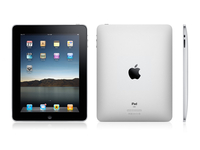
T3 has published its list of the most sought-after gadgets of the year in 2010's Hot 100.
The list tellingly includes a larger number of e-readers than ever before, and HTC's new phones, the Desire and Legend are prominent in the top 20.
But the top spot has been obviously nabbed by the Apple iPad, which has sparked frenzied debate over the past year.
Tablet frenzy
Its launch is imminent in both the UK and the US, and its presence has already sparked the nascent tablet computer market into life, with additions from the likes of HP and Notion Ink in the Hot 100 too.
"Ultimately, the products here allow us to predict the next steps in consumer technology," says T3's online editor, Kieran Alger.
"The AppleiPad epitomises this. It's a product that's caused massive media hype, securing endless column inches across the world.
"Beyond that it's a product looking to challenge the status quo, with the potential to alter the way content is both published and consumed.
"It's a gadget that could change an industry at the same time as delivering a brand new experience to the gadget buying public."
Brought about by TechRadar's publisher Future, T3 Magazine's Hot 100 is designed to give a gadget barometer of all the latest and debate-sparking gadgets on the market or set to debut soon.
If you want to take a gander at the full list, head on over to the Hot 100 home page to see if you agree with T3's findings.

| |
Read More ...
Exclusive: LG: consumers want 'both active and passive 3D TVs'

LG has revealed the reason it is to bring both active and passive 3D technology to homes in the UK – and it's all down to consumers asking for the technology.
Speaking at the launch of the Freeview HD platform, where LG showed off its LE7900 range with the platform built-in, we quizzed the company on conflicting reports that its passive 3D TV range would be only in pubs.
Launching passive in the home
A spokesperson confirmed that its passive 3D TVs – the LD360 range – will indeed be available to consumers, as well as its active-shutter LX990 3D TV range.
"We had great success trialling the passive TVs in pubs in collaboration with Sky and this is set to continue in April, starting with the Manchester Utd Vs Chelsea match this weekend.
"Although the LD920 range was primarily to be used by Sky to showcase its 3D football, we had been getting letters about the passive tech from consumers, asking when it will launch in the home.
"This is why we will be launching the 47-inch LD360 in the home, starting from the end of May."
All about choice
When asked if consumers would get confused with two 3D technologies, the spokesperson added: "It's all about choice. The active glasses aren't cheap at about £80 a pair, while the TVs themselves are well-priced.
"When it comes to passive 3D, the glasses can be sold for as little as £1 while the screens are more expensive, due to the polarisation of the screen.
"You may find couples but the more expensive active glasses and screen while those with bigger families may opt for the cheaper glasses option."
It was also revealed that for the first upcoming public 3D match, LG will be displaying both active and passive 3D in selected pubs to give viewers the choice to sample both technologies.
Don't expect to see the active-shutter glasses used in pubs any time soon, though, as the price of technology and alcohol just don't mix.

| |
Read More ...
TomTom Start2 announced for UK

TomTom has announced its latest entry level sat nav - with the TomTom Start2 'shifting car navigation up a gear'.
TomTom bills the Start2 as having premium features to its entry-level device which includes things like advanced lane guidance, spoken street names and compatibility with RDS-TMC traffic.
The latter offers traffic information to the device, including what's happened, the area it affects and the estimated delay - if you have the separate receiver and subscription of course.
Alt route
"The device will also plan an alternative route, helping drivers get to where they want to be on time," explains TomTom's release.
The device also features TomTom's IQ Routes and is available for £119 with a regional map or £139 with European maps with a UK release date of April 1.

| |
Read More ...
3 to offer Samsung Galaxy Portal in UK

3 has announced that it will be the first UK network to offer the Android Eclair-toting Samsung Galaxy Portal.
Available in red and black or white and green, the Samsung Galaxy Portal - or i5700 to give its pedigree name - comes complete with all the loveliness of Android 2.1
3 is keen to point out that the phone will also ship with the Layar augmented reality app, which utilises the phone's camera, compass and GPS data to point you to your nearest watering hole or cash machine.
How do you want to use it?
"The Samsung Galaxy Portal is all about letting people shape a phone and its functions to match how they want to use it," said Sylvia Chind - Head of Branded Devices, 3UK.
"It allows users to customise one of the 10 home screens, contact friends using various social media internet services, and access any of the thousands of Android apps.
"It's all about your phone, how you like it.Our customers have the added benefit of our high speed network, giving themthe best experience on their Samsung Galaxy Portal."
The Samsung Galaxy Portal from 3 is available from £20 a month with unlimited internet, texts and 200 anytime any network minutes on a two year monthly contract or it will set you back £184 on pay as you go, which isn't bad for the latest version of Android on a handset.

| |
Read More ...
Review: Panasonic TX-P42S20

The TX-P42S20 is one of Panasonic's first Freeview HD plasma TVs to launch in the UK this year.
Panasonic's 2009 plasma TV range felt like a classic case of two halves, to be honest. In the good half, we found screens using Panasonic's NeoPDP technology to mostly excellent effect, boosting brightness, colour response and energy efficiency.
In the rather average half were screens that essentially just offered tweaked versions of Panasonic's older plasma screen technology.
The S10 series belonged in the latter, average half. It wasn't actually Panasonic's entry-level series; that 'honour' belonged to the X10 series. But the S10 series just didn't feel cheap enough to really be considered a budget option, and nor did its performance blow us away.
The S10 TVs were just OK - which always has to count as something of a disappointment when you're talking about a Panasonic plasma TV.

So it is that we found ourselves initially struggling to muster any great enthusiasm at the arrival of 2010's S10 update, as represented by the 42in TX-P42S20. But then we noticed a couple of rather startling things.
First, the P42S20's screen has been upgraded from its predecessor to feature NeoPDP technology. And second, the P42S20 also happens to be Panasonic's first ever TV with a Freeview HD tuner built in.
Er, right. Consider our interest well and truly piqued, then!

If your eyes lit up at the mention of Freeview HD back there, we're duty bound to potentially put a bit of a damper on things by saying that the current coverage area for Freeview HD is extremely limited, with only a handful of transmitters currently able to broadcast the HD signal. Check out the postcode checker to see if it's available in your area.
It also has to be said that at the moment the Freeview HD service only holds two HD channels: BBC HD and ITV HD. But 4HD is coming soon, and there are even rumours of a second BBC HD channel - though this may only appear on satellite platforms, at least initially.
None of these current Freeview HD limitations can be laid at Panasonic's door, though, and the vast majority of the UK should be able to get HD through their TV aerial by 2012 at the latest. So even if you're not currently covered it's worth thinking about a Freeview HD TV just so you're future proof.
Plasma panel
Turning to the P42S20's NeoPDP technology, experience would lead us to expect it to deliver a marked boost to brightness from the S10 series - or marked energy efficiency advantages if you opt to run the screen at a relatively low brightness level. Colours should benefit from the NeoPDP panel design too.
There is an important 'catch' to the P42S20's NeoPDP system, though. Namely that it's last year's NeoPDP design, not the new improved version introduced for all the TVs further up Panasonic's 2010 range. This means it misses out on the latest NeoPDP technology's new filter, new discharge gas, improved phosphors and redesigned cell structure.
Until we see the new NeoPDP system in action, it's hard to say how much we'll miss it on the P42S20. Though we have to admit that looking at the technology involved with the revamp, its impact could be significant.
Oh well. At least the P42S20's NeoPDP-driven pictures should at least deliver a significant improvement over the S10's somewhat lacklustre efforts.
Super smooth pictures
Further raising our hopes in this department is the P42S20's use of 600Hz processing, versus the 400Hz engine found on the S10s.
The 600Hz claim is a touch misleading, since the P42S20's screen doesn't physically refresh 600 times a second, as you might expect. Rather the number is achieved by so-called sub-field processing that flashes the dots in the picture up to 12 extra times for every frame of picture being shown.
But while not a 'true' 600Hz system, this approach still has the potential to improve image stability and motion fluidity.
The 600Hz figure is just one of a number of potent-looking specification numbers boasted by the P42S20. Also catching the eye is s full HD resolution (still not by any means a foregone conclusion on 42in plasma TVs), a vast claimed contrast ratio of 2,000,000:1, and a claimed screen response time of 0.001ms.
This is quoted to put the boot into LCD technology, which struggles to get below a blur-inducing 4ms response time. The same fact is also drawn on by Panasonic to suggest that the P42S20 is particularly good as a gaming screen.
Heading into the P42S20's onscreen menus, meanwhile, uncovers one or two new features we didn't see on last year's Panasonic range.
Additional features
These include a Vivid Colour option which does exactly what it says on the tin; something cryptically called C.A.T.S. which turns out to be a fairly standard system for adjusting pictures based on the amount of light in your room; and most intriguingly of all, a Resolution Enhancer for boosting sharpness to either of two different levels.
Another key feature area we haven't looked at yet is connectivity.
And here again the P42S20 does a decent job, with highlights of three HDMIs, an Ethernet port for future access to any interactive services that might launch on the Freeview HD platform, and an SD card slot capable of playing both JPEG photos and AVCHD/AVCHD-Lite/DivX video formats.
For a minute we also got quite excited to find a Pause Live TV option popping up onscreen when we pressed the remote control's Viera Tools button.
Perhaps the P42S20 is one of Panasonic's new models able to record to USB HDD? Sadly not. For selecting the Pause Live TV option simply throw us a Feature not available error message.
Until, that is, you attach an external digital recorder compatible with Panasonic's Viera Link system, allowing enhanced communication between the TV and compatible external gear. For then the Pause Live TV option interfaces with your digital recorder to deliver the Pause Live TV functionality we were hankering for.
One final feature of the P42S20 concerns its design. As usual with Panasonic, the P42S20 isn't exactly a catwalk supermodel compared with what Samsung, LG and Philips are turning out these days.
It's also not particularly slim, unlike Panasonic's higher-spec NeoPDP panels. But Panasonic has at least tried to do something a bit different by applying to the bezel a pimpled finish that feels quite strokable in a slightly disturbing kind of way.
However, you can't actually see this pimpling if you're looking at the TV from much of a viewing distance, so it's debatable how useful it really is as a style point of difference.

The P42S20's remote control isn't perhaps quite as effortless and logical as some of Panasonic's past efforts - especially thanks to the way the Menu button has been relegated to a small spot at the very top left.
But the onscreen menu system is otherwise logical and easy to navigate, and most things about the remote control are actually perfectly fine.
There's room for improvement with the Freeview electronic programme guide, though. For the P42S20 doesn't squeeze as much channel information on screen at once as some rival EPGs do, as well as cluttering up the bottom third of the picture with a slightly bewildering set of not entirely necessary onscreen instructions.

The EPG also doesn't manage to keep a small version of the TV picture you were watching when you pressed the Guide button.
To rub this latter point in, where a little screen might have gone, you instead get a large advertising box on the left hand side courtesy of the GuidePlus provider Panasonic draws on for its listing info.
The P42S20's pictures do indeed look better than those of last year's S10 series, as we would expect with a NeoPDP panel at the newer TV's heart. But recent advances by some of the best LCD screens also leave its pictures looking a touch dated in a couple of ways.
The main improvement concerns the image's dynamism, thanks to a combination of enhanced black level response and NeoPDP's trademark higher brightness.
On the black level front, dark scenes suffer with only the faintest trace of the grey mistiness still found to some extent on many flat TVs, reminding us of plasma's innate advantage in this key area of picture quality.
Deep blacks
Similarly, dark scenes reveal none of the backlight inconsistency commonly witnessed on LCD TVs, nor any is there any of the haloing seen with all but the very best LCD TVs with direct LED lighting. There's more shadow detail visible during dark scenes too, thanks to the way the P42S20 doesn't need to do as LCD TVs do and drastically dim its brightness to achieve a believable black colour.
It's great, too, that you can watch the P42S20's pictures from almost right angles before dark parts of a picture start to look washed out - another notable plasma strength over the vast majority of LCD screens.
In terms of brightness, the P42S20 can have its brightness output set much higher than the old non-NeoPDP designs, or else you can keep brightness low if you have a dark room, and achieve significant energy efficiencies.
The P42S20 also impresses greatly with its motion handling, as the '600Hz' engine does a very fine job of tackling the old judder issue that we've noted before as a weakness of some of Panasonic's plasma TVs. What's more, it delivers its motion improvements without throwing up as many side effects as we might have expected.
Sharp SD Freeview pictures
One final strength concerns the P42S20's standard definition upscaling. This wasn't particularly great on last year's low-end Panasonic plasmas, but here it's shifted up a good couple of gears, at least where sharpness is concerned, by the impressive Resolution Enhancement feature.
We'd recommend only setting this to its Mid level, though, since the Max setting can push video noise levels too high.
Less inspiring things about the P42S20's pictures kick off with some occasionally rather unnatural colour tones. Especially evident during standard definition viewing, these issues include slightly orangey or over-pink skin tones, slightly dominant greens, and slightly washed out reds.
We also have to say that the P42S20's HD pictures don't look quite as crisp and pin-sharp as they do on some rivals, despite the screen's full HD resolution. Though actually this arguably isn't a bad thing if you're watching one of Freeview HD's noisier HD broadcasts.
Finally, even the introduction of last year's NeoPDP technology can't prevent the P42S20's pictures from looking a little muted in terms of overall brightness and colour saturation compared with the retina-burning efforts of some LCD TVs.
Even when pushed hard by an action scene, the P42S20's reliable speakers keep sounding open and clear, with intelligible vocals, good detailing and no distortion. The soundstage enjoys a decent amount of width, too, helping you become more immersed in the action.
A little more bass is needed before we could raise the sound score to a five, but it's a good all-round effort nonetheless that's come a pleasingly long way from the extremely average sonics Panasonic's plasma TVs commonly suffered with in the past.
Value
We can't ignore the fact that full HD 40-42in TVs of real quality and longer feature lists are now available for considerably less than the P42S20's near-£1000 asking price. However, you also can't ignore the P42S20's key built-in Freeview HD tuner, LCD-bashing viewing angle properties and the fact that it can look better than the vast majority of rival 42in screens when showing dark HD scenes...
The P42S20 is much more interesting than we'd expected it to be thanks to its Freeview HD tuner and the way it brings Panasonic's NeoPDP technology down to a new price point.
However, after spending quality time in its presence, we also have to say that it doesn't do quite enough to blow all the competition out of the water or fully justify its price relative to some of the other 40-42in TVs currently available.
In the end, how desirable the P42S20 is boils down to your individual viewing habits and circumstances. If you spend a lot of your time watching Blu-rays or other HD content, for instance, its HD pictures make it a tantalising prospect. Also, if you or members of your family regularly have to watch TV from a significant angle, we'd strongly advise you to consider this plasma over the vast majority of LCD alternatives.
However, if standard definition pictures make up the majority of your viewing time, viewing angles aren't a problem and/or you have a lot of ambient light in your room, you might be better auditioning the best LCD models instead.
We liked:
Finding a built-in Freeview HD tuner on any TV at the moment is a boon, and we were also very happy to find the P42S20 carrying Panasonic's NeoPDP technology - even if it was only 2009's NeoPDP incarnation.
The P42S20 has a full HD resolution too, something which remains difficult to achieve within a 42in plasma screen.
When it comes to performance, meanwhile, it's a frequently very good HD performer, and its sound is pretty effective too.
We disliked:
Not providing the P42S20 with a D-Sub PC port seems a strange choice for Panasonic to make on a TV that isn't even their entry level model. A USB port to go with the SD card slot would have been appreciated too.
The P42S20 also suffers with some slightly strange colour tones, especially when you're watching standard definition, and doesn't look as forensically sharp with HD as some of its rivals.
Verdict:
The P42S20's plasma technology offers certain advantages - good motion handling, wide viewing angle, natural black levels - that few if any LCD rivals can match, making it an almost default purchase for some buyers with particular conditions to satisfy. But it's also got too many flaws to be a true, LCD-crushing plasma classic.
This review was written in conjunction with:
What Video & Hi-Def TV magazine


| |
Read More ...
Exclusive: Freeview: Not having Five HD 'won't make a difference'

Freeview HD officially launched in the UK today, with the service being available to 4.5 million homes this week.
From launch, however, only three channels will be available in HD – BBC HD, ITV1 HD and Channel 4HD (S4C in Wales) – due to Ofcom's recent decision to take the available HD slot away from Channel Five.
TechRadar spoke to the Managing Director of Freeview, Ilse Howling, about this and she told us that the lack of Channel Five won't affect sales of the platform.
Channel Five, not alive
"We do have to make it clear that Channel Five and the Five portfolio is available on the platform – that is really important to consider," said Howling.
"But if you were to ask me if I thought that people would decide not to buy Freeview HD because Channel Five [in high definition] isn't on board, then I don't think that is going to happen."
When pushed for the reasons that Five's lack of HD presence wouldn't harm sales, Howling explained: "I think the strength of the BBC's HD channel, combined with ITV 1 and Channel 4 puts some tremendously strong programming in there.
"I don't think adding Five's content would have made much of a difference in terms of when it comes to purchasing boxes on content alone."
Howling is certainly impressed with the BBC's HD output, noting: "Essentially the BBC HD channel is the ninth most-watched of any channel, whether standard def or HD and that is a stunning achievement.
"I think the richness of that content, being the very best of the BBC is something quite enchanting."
Just days after Channel Five was discarded for Freeview HD it was announced that the channel would be appearing on Sky – this was something that Howling did tell us, however, that she was "unsure" whether Sky has got the channel off of the back of Ofcom's decision.
Most watched
"What you have to remember is that for the consumer, they want to know if they can watch their favourite programme on the service. This may be broadened out to favourite channels but it is the programmes which have more resonance.
"Clearly Sky and Virgin's business model is based around premium content, not available free-to-air. What is really exciting is that you look at Freeview as a whole it has 14 out of 15 of the most watched channels, and 99 out of 100 of the most watched programmes.
"If you take this stat to HD, then it is probable that your most-watched channel and programme will be free-to-air on Freeview."

| |
Read More ...
Exclusive: Freeview: Not having Five HD 'won't make a difference'
Freeview HD officially launched in the UK today, with the service being available to 4.5 million homes this week.
From launch, however, only three channels will be available in HD – BBC HD, ITV1 HD and Channel 4HD (S4C in Wales) – due to Ofcom's recent decision to take the available HD slot away from Channel Five.
TechRadar spoke to the Managing Director of Freeview, Ilse Howling, about this and she told us that the lack of Channel Five won't affect sales of the platform.
Channel Five, not alive
"We do have to make it clear that Channel Five and the Five portfolio is available on the platform – that is really important to consider," said Howling.
"But if you were to ask me if I thought that people would decide not to buy Freeview HD because Channel Five [in high definition] isn't on board, then I don't think that is going to happen."
When pushed for the reasons that Five's lack of HD presence wouldn't harm sales, Howling explained: "I think the strength of the BBC's HD channel, combined with ITV 1 and Channel 4 puts some tremendously strong programming in there.
"I don't think adding Five's content would have made much of a difference in terms of when it comes to purchasing boxes on content alone."
Howling is certainly impressed with the BBC's HD output, noting: "Essentially the BBC HD channel is the ninth most-watched of any channel, whether standard def or HD and that is a stunning achievement.
"I think the richness of that content, being the very best of the BBC is something quite enchanting."
Just days after Channel Five was discarded for Freeview HD it was announced that the channel would be appearing on Sky – this was something that Howling did tell us, however, that she was "unsure" whether Sky has got the channel off of the back of Ofcom's decision.
Most watched
"What you have to remember is that for the consumer, they want to know if they can watch their favourite programme on the service. This may be broadened out to favourite channels but it is the programmes which have more resonance.
"Clearly Sky and Virgin's business model is based around premium content, not available free-to-air. What is really exciting is that you look at Freeview as a whole it has 14 out of 15 of the most watched channels, and 99 out of 100 of the most watched programmes.
"If you take this stat to HD, then it is probable that your most-watched channel and programme will be free-to-air on Freeview."

| |
Read More ...
Gary Marshall: Happy 10th birthday, broadband!

Broadband is ten today - or at least, it is in the UK.
NTL's very first customer, Mark Bush, got his broadband connection a decade ago today, and things would never be the same again - especially not for the poor Mr Bush, who was promptly sucked into The Matrix and used as a battery*.
It's impossible to overstate the importance of broadband. It's like the invention of sliced bread, or beer, or legs. If you weren't online in 2000 you have no idea of how desperately bad things were back then.
Downloading an MP3 took a week. It was quicker and cheaper to make a movie than to download one. It took longer to send an email than to write a book. Online shopping? Online shocking.
Put it this way. If Chatroulette had existed in the year 2000 you'd have had to draw your genitals on a bit of paper, choose somebody's address from the phone book and post the picture to their house.
Broadband didn't just speed things up, although of course that's its most obvious benefit. It was also the final nail in the coffin of per-minute access - in the late 1990s, my introduction to CompuServe rang up phone bills and access charges of several hundred pounds in just one week - and it signalled what somebody pretentious would call a paradigm shift.
Dial and disconnect
Before broadband, the internet was something you dialled into and disconnected when you were finished (or more likely, your ISP disconnected you when you were in the middle of downloading something important that couldn't be resumed later).
Once broadband was here, the internet was as ubiquitous - and ultimately, as unremarkable - as running water or electricity. These days we only really notice it when it isn't working properly.
Things aren't perfect - few of us get the speeds we'd like, some of us still can't get it at all and Ofcom is considering giving ISPs a spanking over the claims they make about broadband performance - but comparing today's internet with that of 10 years ago is like comparing civilisation with a hairy man shouting at a mammoth.
From Spotify streaming to social network stalking, multiplayer gaming to movie downloading, the things we do online every day either wouldn't exist or would cost so much that we wouldn't bother doing them.
Back in 2000, .net magazine (from the same publisher as TechRadar) made a prediction. "In years to come we'll tell our kids about the internet of the nineties, when people used things called modems and got excited about speeds of 33.6Kbps," it said. "And they'll laugh at us, and put us in homes."
* Not really.

| |
Read More ...
Words with Friends HD submitted to Apple

Words with Friends has been a phenomenally successful iPhone app, allowing you to play a game of Scrabble with your mates online via your phone.
Now developer Newtoy Inc. has submitted an HD version of Words with Friends to Apple, so it will hopefully be available for the iPad launch later in April.
Newtoy Inc. told Pocket Gamer that Words with Friends HD will be a new app for the iPad and, "all of your account information from your iPhone will transfer to your iPad," so Apple fans you can play on whatever device you so desire.
Free version delayed
The iPhone version comes in both free ad-supported and paid-for flavours. Though we will have to wait a while for the free version on iPad.
"We have more work to do on the free version," the developer said, "It will be submitted as soon as possible."
For more check the developer's Facebook page.
Words with Friends HD will be priced at $4.99 (£2.99) and should hopefully launch alongside the iPad in America on April 3rd.

| |
Read More ...
Review: Canon PowerShot SX210

Canon's PowerShot range can be confusing.
Unlike the Ixus range, which is a fairly tight grouping of mid-range compacts, a PowerShot can be anything from the A490 (now down to just £80 and no worse for it) to the breath-taking DSLR-threatening Canon G11, which costs nearly £400.
This breadth of price and quality is what makes the range so interesting, and there's no doubt as to which end of the spectrum the Canon PowerShot SX210 IS lies.
Even without the tempting specifications on view, the price gives it away - at £340 this is towards the top of the compact camera pecking order.

Indeed - you could buy the Sony A200 for this much and have money left over for a new memory card.
Such a high price for a compact means the camera in question needs to be excellent in all regards, and there's no argument from us that Canon is trying to position the SX210 IS as a go-anywhere, do-anything compact for serious enthusiasts.

The key specs give it away - the 14.1MP sensor and 14x optical zoom mean you should be able to take just about any picture with this camera, with room left over to reframe shots without moving your feet, and with enough latitude in terms of resolution to crop mercilessly on areas of detail.
But how does it hold up in use?

It's deceptively slim, for a start. The SX210 IS might only be 3.2cm deep, but the 14x lens zooms out a long way. In 35mm terms the lens is a stabilised 28-392mm optic. That's more zoom power than any Canon lens, including the lenses available for its SLRs.
The ability to go from wide-angle to long telephoto is a real pleasure from anyone who's ever wished for a bit more length from their compact camera. It makes, for instance, a real difference to wildlife and zoo photography, besides giving you the flexibility to re-compose a shot without having to move around much.

The TFT, unusually, is a 16:9 LCD with a diagonal of 3in and 230,000 dots. That wide-angle aspect ratio certainly looks striking, and is useful when employing the SX210 IS's 720 HD video, but is a bit of wasted space much of the time.
In normal stills mode, the preview takes up the middle of the screen with a pair of black bars running down either side. In fairness, Canon uses the extra space to display information such as shooting mode and battery life.

However, the extra screen space does mean there's no iconography on the four-way D-pad on the back. Short of memorising which direction does what (press left to change focus mode, down to set the self-timer and so on), you have to lightly press the D-pad to show an on-screen prompt showing what to do next.
Build quality is excellent. The SX210 IS feels like it should survive the odd tumble, even if it can't match the metallised ruggedness of the PowerShot G11. Its size - and the size of the lens - means it feels well-balanced and comfortable. Just about the only chink in the armour is the flash.

This pops up when you turn the SX210 IS on whether you're going to need it or not, potentially making it a bit of a hazard if the SX210 IS turns on in your pocket, or you stuff the camera into a bag without turning it off first.
Installing a big lens into a compact camera can have its disadvantages, though.
The Nikon S8000, despite being a wholly capable compact, produced average results in our tests thanks to too much chromatic aberration, so it was with some trepidation that we loaded the SX210 IS's test shots.
Macro mode... See full-res test shot
It's fair to say that there's still a little purple fringing in evidence in some of our shots, but not much, and only in very high-contrast areas. You can induce it, for instance, by deliberately taking pictures of thin branches against an overcast sky, but for the most part it's simple enough to avoid.
Miniature effect... See full-res test shot
The rest of our test images were superb. Considering the lens's jack-of-all-trades specification it was impressively sharp both at wide-angle and telephoto focal lengths. Our test shots were also vibrant and, this being a Canon, there are plenty of ways to jazz up the colour in-camera.
Slow shutter... See full-res test shot
There are other advantages besides. For a camera that costs nearly as much as a DSLR you'd hope for a good measure of manual control, and we're pleased to report that the SX210 IS's mode dial on the back offers shutter and aperture priority modes, as well as a fully manual mode.
Zoomed in... See full-res test shot
The live view on the screen on the back changes to reflect how your picture will expose when you half-push the shutter release.
Wide angle... See full-res test shot
Finally, we're used to dismissing so-called 'creative modes' more or less out of hand, since they rarely offer anything you can't achieve with greater finesse in software after the shot. But the SX210 IS offers some genuinely interesting features.
The first of these is its mock fish-eye effect. Although this (obviously) doesn't change the wide-angle focal length, it does allow you to exaggerate foreground objects.
Fisheye... See full-res test shot
The second is called Miniature Effect. This mimics the effect of a tilt-shift lens, blurring the top and bottom of a shot, making a real-life scene appear as if it had been made in miniature. If you've ever gone to some lengths applying a fake tilt-shift effect to your photos, the ability to shoot it in-camera is useful.

Equally impressive were our ISO tests. Viewed full-screen and zoomed out they were difficult to tell apart, suggesting you should get decent prints at virtually any setting. Zoomed in, there was very little difference between ISOs 80 and 400.
At ISO 800 a little softness started to creep in, which became even less controlled at ISO 1600, Still, noise was never a really serious problem, and if you find yourself faced with low light at long focal lengths it's reassuring to know the SX210 IS's DIGIC 4 processor can take the strain.
This is particularly useful since the lens's maximum aperture when zoomed in is a comparatively-slow f/5.9.
ISO 80... See full-res test shot
ISO 100... See full-res test shot
ISO 200... See full-res test shot
ISO 400... See full-res test shot
ISO 800... See full-res test shot
ISO 1600... See full-res test shot

It's generally the case that to get a really long telephoto zoom in a non-DSLR, you needed to buy a bulky bridge camera.
With the advent of interchangeable lens cameras such as the Olympus Pen EPL-1 these appear to be on the way out, but there's still clearly an appetite for a long lens on a pocket-sized camera.
We liked:
There's very little to complain about in terms of image quality. ISO performance is good all the way up to ISO 1600, where things become a little soft, but generally having the option to raise the ISO without totally sacrificing image quality is good.
The spectacularly long focal length and ability to fit the SX210 IS in a pocket is also a massive plus.
We disliked:
By the time you cross the threshold of £300 for a compact camera you're edging into DSLR territory, and although a DSLR won't give you the same focal lengths as the SX210 IS out of the box, you can get lenses that definitely will.
It's also fair to expect better image quality from a DSLR, plus better performance in key areas such as start-up time and autofocus performance. You might note, for instance, that zooming in on a DSLR lens takes less than a second even on a long lens.
The SX210 IS takes nearly two and a half: not much when you're sitting at a desk with a stopwatch, but an eternity when you're trying to capture a flighty robin on a branch.
Verdict:
We can't find much to complain about this camera when it comes to image quality, and build quality, as you might reasonably expect from a camera costing the better part of £350. It's superb.
Related Links
| |
Read More ...
Large Hadron Collider experiment a success

The Large Hadron Collider has seen collisions for the first time, ushering in a new era for particle physics.
Despite a problem with unstable proton beams, the first collisions were recorded at ATLAS just after midday.
Beams were declared stable within twenty minutes amid joyous scenes at CERN in Switzerland.
CERN tweeted: "Experiment have seen collisions!!!!!!!!!!!"
Followed by: "Experiments are collecting their first physics data - historic moment here! Watch the webcast, look at the photos - all live!
Great time
Director for Accelerators Dr Steve Myers said: "We have finally got the beams into collision. It's a great time for us and the first real milestone for starting to do discovery physics in the LHC.
"It's taken three attempts to get started this morning but we are now in collision, now in stable beams and the detectors are taking data continuously."
Now the real work beings for the scientists, as they plough through reams of data and try to pluck out evidence of things previously only theorised about.
That includes the so-called 'God Particle' or Higgs boson, although it is expected that evidence of super-symmetry (every particle having a partner) will arrive sooner.

| |
Read More ...
FirstPlay for PlayStation to launch April 8

Europe's first on-console show FirstPlay will launch its first weekly episode on Thursday April 8 on the PlayStation, bringing high definition video reviews and previews every week, plus exclusive downloadable content and much more.
Brought about by TechRadar's publisher Future, FirstPlay will be available to UK gamers through Sony's PlayStation 3 console from the PlayStation Network for 99p an episode or £8.99 for a 90-day subscription.
Tim Clark, Editor-in-Chief of FirstPlay, said: "We're tremendously excited to be finally launching FirstPlay, and to be bringing our brand of editorial direct to PS3 owners on their consoles.
Evolving
"It will be an evolving service, but our focus will always be showing gamers the most exciting things on PlayStation systems," he added.
Highlights in the first episode include a review of Just Cause 2 – rewarding viewers with an exclusive in-game item for use by Rico Rodriquez as well as Sony's God of War III – and a first-look at EA's Fifa World Cup 2010.
Plus, there's an interactive gallery function, including screenshots and artwork from Formula One 2010, Ghost Recon: Future Soldier and Red Dead Redemption.
"Gamers can use each image as an XMB background wallpaper and also find out more about the games thanks to the accompanying audio captions," add the press release.
"With a vast variety of content available through the PlayStation Network, FirstPlay's Network Highlights section brings a round-up of the latest PlayStation Minis, films and digital comics in a weekly package."

| |
Read More ...
Steve Jobs thinks the iPad is 'magical'

If you are considering getting an iPad later this month, then you will be glad to hear that Apple is offering customers a 'personalised setup service' to make sure you are fully familiarised with your new toy before you've even walked out of your local Apple Store.
It is a really good reason why you should make the effort to get out of the house and actually go to a real world store when you buy your iPad!
Magical new product
Apple employees will show iPad customers how to set up their email, download apps from the App Store and also "host special iPad workshops to help customers learn more about this magical new product"
Early adopters will most likely not bother with getting one of Apple's so-called 'Geniuses' to give them a walkthrough of the iPad, seeing as they are likely to want to get their new toy home as soon as possible to start playing around with it themselves.
Plus, early adopters are, by definition, tech geeks and don't really need to be shown how to set up their email account.
But once your dad or your techno-phobic elderly relatives start buying the thing later next year, it will at least give you an excuse to not spend the best part of a weekend tearing your hair out while you try to teach them how to use it.

| |
Read More ...
Updated: iPhone 4G rumour round-up

Apple doesn't just make tablets, you know. No! It makes phones, too!
We know the iPhone's on an annual upgrade cycle, so a new one is due by the summer - and that means it could be announced as early as next week.
Despite Apple's best efforts details of the next iPhone are beginning to leak, but what's coming and what's just wishful thinking? Let's find out.
The iPhone 4G will have a "magic arse"
Some call it "touch-sensitive casing"; we call it "magic arse" - a much better description, we're sure you'll agree. Either way, the big rumour is that Apple will bring Magic Mouse-style tech to the iPhone, enabling you to use the casing for things such as controlling games without putting your thumbs over the on-screen action.

MOUSE TO PHONE: It's the iPhone 4G! Of course it isn't - it's a Magic Mouse, but the same multi-touch tech could be coming to the iPhone's casing
The iPhone 4G will use Bing as its default search engine
It's no secret that relations between Apple and Google are becoming increasingly frosty, especially now that Google has entered the smartphone market. So will we see Bing as the iPhone's default? BusinessWeek says Apple and Microsoft are certainly talking about it, although "the discussions could still unravel and may not be concluded quickly."
The iPhone 4G will have an RFID antenna
Another rumour based on a real patent: Apple filed a patent showing an integrated RFID antenna, which would enable iPhone users to scan packages and dogs, to use their phones as Oyster cards or to pay for things with a quick swipe. Other patents included haptic feedback, which would enable you to "feel" on-screen keys, and fingerprint identification. Of the three, RFID is generating the most online noise.
The iPhone 4G will have more storage
This one's a no-brainer. We've gone from 8GB to 16GB to 32GB, and only a fool would bet against 64GB as this year's magic number. The flash memory chips certainly exist.
The iPhone 4G will have an OLED screen
A brighter, higher resolution screen was originally rumoured for the iPhone 3GS but didn't make it, so it's a shoo-in for the fourth generation iPhone - not least because rivals such as Google's Nexus One have OLED displays.
The iPhone 4G will not have an OLED screen
John Gruber of Daring Fireball thinks the OLED predictors are wrong. "I think Apple is all-in on LED-backlit IPS displays (which they're using for the iPad and iMac, and promoting in the tech specs)," he writes.
The iPhone 4G will have a double-resolution display, two cameras, an A4-style Apple chip and third-party multitasking
These widely reported specs are from Mr Gruber again, who was either taking the mickey out of the Wall Street Journal or sneakily leaking some inside information. Or both!
The iPhone 4G will be called the iPhone HD
Unless the next iPhone supports 4G networking - more of that in a moment - then calling it the 4G doesn't make sense unless Apple intends to call its 4G model the iPhone 4G 4G. iPhone HD sounds much better, especially if…
The iPhone HD will have a 16:9 screen
Watching TV or films on existing iPhones isn't perfect, because the aspect ratio is slightly narrower than the 16:9 we've come to expect from widescreen displays. This YouTube video claims to show the next iPhone's display, and it's a 16:9 effort - perfect for mobile movies. A higher resolution screen makes sense, as many iPhone rivals now have better displays than Apple's phone.
The iPhone 4G will have a removable battery
We really don't see this one happening - Apple is removing removable batteries from its laptops - but that hasn't stopped endless predictions of an iPhone with swappable batteries. We think this one's a wish rather than a reliable prediction.
The iPhone 4G will have an LED flash and more megapixels
This is a common one on wish lists, but while phones do indeed have LED flashes for better low light photography we're not sure it's a deal-breaker: would you really consider a rival phone because it had a flash?
A better camera and/or a flash would be nice, certainly, but the rubbish camera in the first few iPhones didn't exactly hurt sales. Nevertheless AppleInsider reckons that Apple has been hoovering up lots of Philips LED flash components - and by "lots" we mean "tens of millions" - while DigiTimes says Apple has also been shopping for 5 megapixel cameras.
The iPhone 4G will support 4G mobile phone networks
This one's been kicking around for a while, but we really don't see it happening. It's hard enough getting networks to deliver decent 3G coverage; 4G is a long way off yet.
This is a global phone. Is Apple really going to embrace a technology that only reaches about six people worldwide?

BETTER COVERAGE? Will the next iPhone use 4G networks? Here's a clue. The purple areas show 3G coverage. The lime green bits with orange polka dots show 4G coverage
The iPhone 4G will have a front-facing camera
2008 will be the year of videophones! 2009 will be the year of videophones! No! 2010 will be the year of videophones!
A front-facing camera has been rumoured since the very first iPhone, but there's still no sign of it turning up. Apple has certainly patented a front-facing camera for the iPhone, but not for video chat: the patent applications show it acting as an input device. Nevertheless the rumour mill still reckons we'll see a twin-camera iPhone this year.
The iPhone 4G will have a new sibling for CDMA networks
So says the Wall Street Journal. CDMA is the networking technology used by some US operators including Verizon and Sprint. Of course, the AT&T-losing-iPhone-exclusivity rumour has been around as long as the iPhone itself, and it's bound to come true eventually.
The iPhone 4G release date is June.
The iPhone 4G release date is May.
So says Challenges.fr, as reported by 9 to 5 Mac.
The iPhone 4G release date is April
So says a number of Korean sources, reports The Register.
The iPhone 4G release date is 22 June
That's what sources are telling Engadget, anyway. This year's WWDC - you know, the Mac love-fest where Apple often launches new products - starts on 28 June. We're just saying.

| |
Read More ...
Motorola Milestone users get Android 2.1 over the air

The Motorola Milestone Android 2.1 update for the European market is finally here - and you don't even need to get out any cables.
Apparently the new update will be delivered over the air, meaning Moto Milestone users will be able to click and go.
The new Android 2.1 update brings the raft of changes we've talked about many-a-time before: Live wallpapers, Google Earth compatibility etc.
More windows than you can shake a stick at
But it also adds another two home screens to the Motorola Android platform - taking the grand total to nine panes to throw widgets onto.
There's also a new camera and Facebook App from Motorola, as well as the Car Home interface, for finding your way in the car (in the continued absence of Google Navigation).
However, while GSM Arena has anecdotal evidence that this new feature is now working in Western Europe, we still need someone to confirm it's up and running in the UK.
So if you're a Milestone user, either perform a software upgrade or head to the official Milestone support page to download the file... and let us know how you get on.

| |
Read More ...
Freeview HD officially launches

Freeview HD has finally officially launched, bringing free high definition televisions through the airwaves with no need for a satellite or cable connection.
Although people will need a Freeview HD ready box, the subscription-free progression of Freeview will bring events like the World Cup in high definition to a huge audience.
"High definition television comes of age today with the launch of the new HD service from Freeview, the UK's most popular digital TV platform," said Freeview's release.
Benefit
"With the arrival of Freeview HD, millions of TV lovers will benefit from free HD channels without installation, offering the quality viewers have come to expect from HD - up to five times more detail than standard definition and the possibility of stunning 5.1 surround sound," it added
"From tomorrow, around 4.5 million new homes will come into Freeview HD coverage for the first time, including the cities of Birmingham, Leeds and Cardiff which puts Freeview HD coverage on track to reach up to 50% of the UK by the World Cup."
Only three channels will be available from launch, with the BBC HD channel, a dedicated channel from ITV - ITV1 HD - and Channel 4 HD (or S4C) all up and running.
Access and availability
"Freeview is taking the experience of stunning HD to a new level of access and availability, said Ilse Howling, Managing Director of Freeview.
"Our high definition service offers many of the UK's favourite shows in glorious high definition and as always with Freeview, you just need to buy the equipment and there's no contract or monthly bills.
"And with the World Cup just around the corner, there is no better time for viewers to embrace High Definition TV."
Danielle Nagler, Controller of BBC HD at the BBC added: "It's important to us that everyone in the UK who wants to, can enjoy the best of the BBC's programmes in HD.
"The arrival of HD on Freeview is a big step forward for HD and for UK audiences."

| |
Read More ...
TechniSat adds wireless iPlayer to Freesat box

TechniSat has added BBC iPlayer to its Freesat box, and will offer the potential to bring the VOD service wirelessly to a set top box on the platform.
The TechniSat box has already won plaudits, and the added iPlayer functionality will be another string in its bow.
Wireless
Plus, the TechniSat box has the option of a wireless link-up to the BBC iPlayer service, via a USB WLAN adaptor, which the company states will aid those who cannot get an ethernet cable to their televisions.
TechniSat UK's Research & Development Manager, Martin Wilks, said "We are very pleased to be joining the BBC iPlayer trial.
"We believe that the wireless capability of the HDFS offers customers the lowest cost solution to receiving the service when a fixed connection is not possible."

| |
Read More ...
HTC Desire offered early on Vodafone and Orange

The HTC Desire is now available from more networks than just T-Mobile, with the Carphone Warehouse expanding the line-up.
Vodafone and Orange are both likely to launch the Desire via their shops in the near future, but TCW will be stocking it from today.
The phone will be available from £30 per month with a free phone (for a two year deal) and you can also pick it up for £399 on pay as you go.
Still not cheapest
This means that the deals are in line with those offered from T-Mobile thus far, although Virgin's offering is still slightly cheaper (providing you're an existing customer to Virgin Media).
However, looking at the deals on offer, a number aren't available with bundled internet - something you surely need to get the full benefit of Android.
And even of those with mobile internet deals, only T-Mobile is unlimited, with Vodafone offering a paltry 500MB limit.
Still, you can head on over to The Carphone Warehouse landing page if you're on Vodafone or Orange - that's if you can't wait until the weekend for the latter.

| |
Read More ...
In Depth: 10 free multimedia tools to save you a fortune

Whether you need to capture, edit, convert or process images, audio or video, there are tools to help simplify the job.
It's tempting to think you've got to spend money to get all the functionality you need, but that's not strictly true.
We've compiled a list of 10 free multimeda tools that tick the boxes for features, ease of use and – most importantly of all – zero cost.
1. VideoPad Video Editor
VideoPad Video Editor is a video capture and editing tool which combines support for a large variety of video files and capture devices with a decent editing suite (complete with support for VirtualDub filters if you want to create special effects).

After 14 days, the Pro version reverts to the fully functional free Basic version, with the only restrictions being a limited number of output formats: AVI, WMV, ASF or video DVD. But that leads us neatly on to...
2. iWisoft Free Video Converter
Everything you need to convert video is in iWisoft Free Video Converter: support for all major formats – including HD, basic editing and cropping tools, dozens of (fully editable) presets for quick-and-easy conversions, and a user-friendly interface too.

3. Format Factory
Format Factory can convert all kinds of files: images, audio and video. It's not as powerful as the two standalone conversion tools in this list, but its ability to rip music from CD and video from DVD make it worthy of inclusion in your toolkit for reasons other than versatility.

4. DVD Styler
If you're running Vista Home Basic/Business or XP, you won't have access to a DVD video creation tool. If you're after a simple three-step process with similar functionality to Windows DVD Maker, try DVD Flick; if you're looking for something a little more flexible and powerful, try DVD Styler, an open-source freebie instead.

5. Codec Installer
Audio or video file won't play properly – or even at all? Likely reason is that you're missing certain codecs – Codec Installer can scan specific media files to tell you what's missing, or it can perform a more general check for common codecs like DivX. If they're not present, you'll be pointed in the right direction for the files you need.

6. Any Audio Converter
While Format Factory actually supports a wider range of output formats, Any Audio Converter covers the most common bases, plus it can also grab the soundtracks from video files, both offline and online (including YouTube).

7. Audacity
It may be a little long in the tooth, but Audacity is still the best free audio-capture and editing suite out there. Hook up your stereo to digitise old analogue recordings, or use it to record podcasts or edit existing digital recordings. You'll need the LAME encoder to export to MP3 – get it here.

8. FastStone Image Viewer
FastStone Image Viewer's limited support for just six of the most common image formats means there are better image viewers out there (IrfanView is the obvious choice, particularly for archaic and obscure formats), but FastStone is in our list for two neat features: a contact sheet builder, and its batch processing tools. You'll never get RSI again from resizing, renaming, editing or converting large numbers of images at once.

9. Paint.NET
It's a toss up between Paint.NET and The GIMP for your multimedia toolkit's image editor. Paint.NET isn't quite as powerful – but it's plenty powerful enough for most people – and it boasts a more accessible user interface too. It also has its own plug-in repository if you can't find a tool that does the job you need.

10. Inkscape
If you find yourself having to work with vector image formats, then why shell out for an expensive program when Inkscape offers a powerful, user-friendly and – most importantly – open-source alternative?

------------------------------------------------------------------------------------------------------

| |
Read More ...
Review: Panasonic DMR-EX99V

For the benefit of younger HCC readers baffled by the picture below of Panasonic's new DMR-EX99V, take note: that large slot on the left of the front panel takes analogue VHS tapes.
Yes, while it may cater for Freeview terrestrial digital and DVD, this Panasonic deck also connects with the old-tech past, by featuring a VCR.
The very mention of VHS makes many of us go all misty-eyed and nostalgic for the early 1980s, when VCRs were prized family possessions. The good news is that, with the EX99V, those vintage tapes lurking at the back of the cupboard can easily be transferred to DVD.
Get editing
First, though, you can dub them to the 250GB HDD. This'll let you eliminate unwanted material, thanks to Panasonic's friendly editing functions, before copying what's left to blank DVDs. Discs/tracks can be named, and thumbnails and basic menus chosen, before the disc is finalised. Bingo.
What's also cool – especially if someone in the family is either not au fait with modern tech or merely charmed by the retro fuzzy chic of clunky VHS – is that HDD and (non-copyright) DVDs can be dubbed to tape.
The VCR supports index search, hi-fi sound, NTSC playback/dubbing and SP/LP/EP recording modes, but lacks full S-VHS compatibility. Sure, it will play/dub such tapes, but with mere VHS quality. S -VHS users can, however, connect up their old VCRs to the front-panel AV inputs.
Naturally, there's far more to the EX99V than its VCR talents. It's also a Freeview+ HDD recorder, upscaling DVD player and music jukebox. It doesn't record Freeview's digital datastreams as broadcast directly, though. Instead they're decoded and then re-encoded by the machine's recording electronics. On the plus side, you can cram a lot more on the hard drive or DVD – but with a drop-off in AV quality.
Another niggle is the EX99V's timeshifting feature. For a start, the annoying onscreen graphic that appears cannot be turned off. What's more, you can't permanently preserve a recording that's in the buffer, should you decide it's a 'keeper'.
But beyond that, I'm pleased with the EX99V's TV-related features: the GuidePlus EPG, which can schedule the 32-event/1-month timer directly, offers a programme search facility as well as basic categories; and 'auto renewal recording' means you need never miss another soap again...
The EX99V lacks a Firewire input for DV camcorders, but the USB port will accept footage from modern cams. The SD card slot allows playback and copying of JPEGs and MPEG-2 video, too.
File support extends to MP3 music, and you can rip CDs to the hard drive, where an onboard Gracenote database will even attempt to identify your disc.
Setup
Owing to HDMI incompatibilities with my Onkyo AV receiver, I had to connect the EX99V directly to my TV, sound being carried to the AVR via optical digital (the only non-HDMI option that Panasonic gives you).
I immediately discovered the machine pesters you with a 'new channels found...' message whenever it's started. Rescan and reboot, and the message persists! Thankfully, it can be turned off in the menus.
Freeview pictures were impressive, even after upscaling (which is available for all sources including VHS). Naturally, recording quality depends on which of the modes you've set. In the top (XP) mode, it's difficult to tell the recording apart from the original.
As far as digital TV is concerned, though, the next rung down (SP) is probably an adequate bet. The third choice (LP) retains all of the source's detail, but is spoilt by blocking. EP is best described as wobblymatter swimming in a sea of artifacts. Even VHS is better!
On which subject, the VHS-to-digital dubbing facilities exceeded my expectations in terms of the picture quality. I expect Panasonic is using some very clever processing. In all modes, sound quality is superb, and the jukebox facility uses linear PCM (no MP3 compression here) so there's no perceptible loss of quality relative to the original CD.
Old faithful
Okay, Panasonic's EX99V is a bit dowdy in terms of looks, and feels about as cutting-edge as rubber scissors, but it's still a very versatile, solidly-built machine that covers all bases (excepting S-VHS, maybe).
However, Freeview datastream recording would give you the best possible AV quality. It's also annoying that the EX99V doesn't automatically play the next HDD recording – something Panasonics used to do. oh, and finally, the machine can be very slow to boot up. A bit like an old VCR, in fact.
Related Links
| |
Read More ...
Review: Epson EH-TW5500

While LCD has its place in the projection world, and many dedicated followers, I've long felt that its inherent weakness – black level response – makes it a problematic technology to use at the higher end of the market. Epson, though, is having none of this.
Its flagship EH-TW5500 costs the best part of four grand, putting it in the same price ball-park as JVC's HD550 custom install D-ILA projector. Ouch.
The TW5500's build quality is suitably luxurious, with its heavy-duty matt-black finish and no-nonsense shape combining practicality (it won't stand out in a darkened room) with a satisfyingly serious aesthetic.
What really stands out about the TW5500, though, is its claimed 200,000:1 contrast ratio (and measured by our Tech Labs at a still very impressive 97,000:1). The answer to how this has been achieved lies in two main parts.
First, the latest incarnation of Epson's DeepBlack system means less light is 'lost' between the bulb and your screen. Second, you've got Epson's new dual-layer notched iris design, which reduces light in two quick stages as a film switches from light to dark shots, rather than just the usual single stage. This allows the Epson to deliver more drastic shifts in light output – and thus deeper blacks – without the usual, distracting 'brightness jumps'.
Other important features of the TW5500 include 12bit HQV video processing (versus PixelWorks processing on the TW4400), ISF calibration support, third-party anamorphic lens support, and new frame interpolation processing.
After a startlingly easy set up, thanks to a lovely 2.1x zoom and loads of vertical and horizontal image shifting, the TW5500 quickly has me eating my 'LCD can't do premium' opinion with a slice of humble pie.

For starters, black level response is outstanding. There's practically no sign of the grey wash over dark scenes often seen with LCD projector images (including the TW4400), leaving blacks that look rich and credible. JVC's D-ILA based HD550 goes darker still, but it's a close call. The Epson's blacks also hold good shadow detailing despite their depth.
The TW5500 also performs superbly with its colours, which are gorgeously nuanced and more vibrant than those of the TW5500's predecessor, the TW5800; the TW4400; and JVC's HD550.
Sharpness is no issue either, as the TW5500's Full HD resolution and advanced processing allows HD material to appear with impeccable clarity and detail, yet without the grain and over-stressed edges you get with projectors that try too hard.
Contributing to the sense of clarity is the Frame Interpolation processing, which substantially reduces judder while generating hardly any nasty processing side effects. The trick is that the TW5500's system is adaptive, reducing its power when it recognises that a particular scene is going to push it into causing artefacts.
With the TW5500 also running extremely quietly in low-lamp mode, the only bad thing I can find with its performance is that occasionally it marginally loses focus without you touching anything.
But aside from this piffling issue, Epson has succeeded in making me completely rethink my position about LCD's projector potential. And you can't say fairer than that.
Related Links
| |
Read More ...
Greenpeace criticises coal-fuelled internet cloud

Eco-campaigners at Greenpeace have criticised the idea of an internet 'cloud' - with data centres built by the likes of Facebook, Apple, Google and others still largely powered by coal.
Greenpeace releases a new report this week that notes how a Facebook facility being built in Oregon will rely on a coal-fuelled power station, while Apple is building a new data warehouse in a North Carolina region that also relies mostly on coal.
"The last thing we need is for more cloud infrastructure to be built in places where it increases demand for dirty coal-fired power," said Greenpeace in the new report..
Coal is number one
Coal is still the number one fuel for US power plants, and Greenpeace wants to highlight the fact that Apple, Facebook, Microsoft, Yahoo and Google all have at data centres that still rely heavily on coal power.
Data centre energy use is huge already and is growing rapidly, according to Greenpeace, with the organisation predicting that the cloud is set to be the fastest-growing facet of tech infrastructure over the next ten years.
If considered as a country, global telecommunications and data centres behind cloud computing would have ranked fifth in the world for energy use in 2007, behind the US, China, Russia and Japan, says the new report.
Via Reuters

| |
Read More ...
Grand National to be broadcast in HD

One of the world's most famous horse races will be broadcast in HD this year, with the BBC confirming that it will be showing the Grand National live from Aintree in high definition.
Although it is far from a surprise, the prospect of watching the John Smith sponsored Grand National in HD will be an attractive one, and further indication of the growing weight behind high definition broadcasting.
The BBC has also revealed that it will be using high speed cameras at two of Aintree's most famous jumps - The Chair and Becher's Brook - so audiences can look forward to cart-wheeling hedgerow and, possibly, jockeys.
Jewel in the crown
The BBC HD channel is one of the jewel's in UK broadcasting's crown, bringing many of the key dramas and documentaries to audiences on several platforms.
The BBC's mandate to provide its content to the widest possible UK audience means that the channel is available not only on the likes of the recently launched Freeview HD and Freesat, but also paid-for platforms like Virgin Media cable and Sky.
Although HD horses will have to do for now, those who have been closely watching the progression of television trends this year might well be asking if the 2011 Grand National will be broadcast in 3D.
Via BBC

| |
Read More ...
Review: Orb Audio Peoples' Choice system

Orb Audio describes itself as a 'high-end manufacturer', which subscribes to an 'innovative direct business model'. The model in question is direct sales from manufacturer to end user, bypassing the traditional retail chain, and the inevitable cost mark-ups that this involves.
Specifically, Orb claims that the system sampled here, which currently appears to be its only product, though it is available in various versions, ranks above many speaker systems that retail 'north of $2500'.
Also that direct sales cuts at least 50 per cent off the manufacturer's suggested retail price, while delivering higher performance and 'white glove' customer performance – whatever that is when it's at home.
Orb makes additional claims for its direct sales operation, too, which it say allows it to use the highest-quality components and expensive handmade materials while simultaneously keeping prices in check. The question is, of course, can these claims be justified?
There are several statements on the Orb website that don't stand up to scrutiny. The general one, that the brand is high-end, just isn't so, when based on any meaningful definition of the high-end.
More specifically, the so called digital hybrid amplifier used in the subwoofer is not digital at all. It is a variant on the Class D theme, but the letter D as used here is simply the next letter in the alphabet after A, B and C, and doesn't imply digital. It is an analogue topology, albeit cool running.
Another claim, that the satellites don't use crossovers, is true enough, but disingenuous. There is no crossover because there is no tweeter to share the acoustic load. Also the so-called 'full-range', 3in driver is certainly not full range, because it doesn't cover the full range of audio frequencies (generally taken as 20Hz-20kHz) at any usable level. As a system, the subwoofer takes care of the low frequency heavy lifting, but the treble is limited by geometry of the satellite drive unit.

Even the more basic claim that Orb's marketing model is innovative should be taken with a pinch of salt. A number of speaker makers over the years have ploughed the direct sales furrow, of which the best known currently is German manufacturer Teufel, which offers a much broader range of models over a much wider range of price points.
The savings from buying a speaker through the traditional retail channel is real enough in principal, but again the devil is in the detail. The system reviewed here is attractively priced, and you do get some protection by taking advantage of the maker's 30-day no hassle home trial. This means you can decide whether you like them, and whether to return them, which can be for any reason or no reason at all. This is currently at the user's expense, though Orb is setting up a UK office which can be used for returns.
Shipping to the UK in the first instance is reasonably priced – $45 per pair of satellites, $200 for a full system with subwoofer plus tracking and insurance. You can find out more by emailing support@orbaudio.com, which promises a response within hours. Not too many, hopefully.
MODs are rockers
For this review, HCC was supplied with two satellite models and a subwoofer. The satellites are closely related: the MOD1 is a single enclosure model fitted with a single drive unit in its diminutive spherical housing, supplied with a simple steel desktop support.

The MOD2 consists of two of the above stacked vertically or horizontally (the latter is better adapted to the centre channel role), which are fitted to a taller or wider version of the support.
A key benefit of the design is that it is modular – MOD1 can be upgraded to MOD2 simply and economically. A heavy floor stand is also available at extra cost.
There are two compact subwoofers too, one based on an 8in driver (tested here), the other a similar design based on a 10in unit, housed in a slightly larger enclosure. The subwoofers look very similar to a number of other designs, from REL, for example.
And if you think you've seen something similar to the MOD1 in the past, well you have. It's from Anthony Gallo, whose speakers are visually similar and indeed much more expensive. In fact, the two brands are related: one of the Orb co-founders, Gary Pelled, was also a partner in Gallo Acoustics, and they are clearly working from a similar aesthetic blueprint, though technically and sonically, the designs are miles apart.
The Orb MOD 1 satellite consists of a single spherical enclosure made from steel with a brushed finish in most of its versions, though a range of alternative finishes and colours are available. The spheres are just over four inches in diameter and house a single 3in drive unit.
Wiring hooks up via spring clip terminals rather than 4mm plugs, which are easy to use with modest gauge bare wires, but which preclude using 4mm plugs.
The sound of round
The audio performance of Orb's system is interesting, and largely positive, though it is hard to accept that the satellites and the subwoofer were designed by the same team. They don't just look at odds with each other, they are voiced quite differently.
In fact, this is a concealed compliment for the subwoofer, which is surprisingly deep and tuneful, with a fluid quality that is missing from many apparently similar designs.
The satellites, of course, dominate the picture sonically, and there are some good features to be highlighted here, though my final judgement is mixed.
On the plus side, both versions of the satellite are bold and detailed. There's plenty of presence and sparkle, but the balance is very mid dominant. The upper bass and lower midrange are lean and dry, while the upper midband has a rather sharp, aggressive feel that may not wear well for all listeners. The upper treble doesn't really exist – overtones of the midrange tend to dominate. This overall effect can be a tad tiring, and doesn't really pass muster as neutral.
However, in its favour the system can be driven to surprisingly high volume levels without breaking up, and the warm balance tends to suit high-octane film soundtracks. It certainly did justice to the likes of Kill Bill or Quantum of Solace.
Choosing which version of the Orb system to go for is not entirely straightforward. The single and dual version of the satellite sounds very similar. There is no extra bass from the larger model, which is limited to a moderate increase in the maximum volume level, less distortion under full throttle drive but the same slightly aggressive quality and trademark clarity.

The satellites look wonderful, but the subwoofer is much more agricultural in appearance. There are some stunning finishes for the sats, including antique copper – a personal favourite – though the cost of the hand-finished specials is significantly higher.
Orb suggests strongly that the smaller subwoofer will suffice for most systems as long as the room is not too large, but it will advise on this, and other system related issues, if required.
Related Links
| |
Read More ...


No comments:
Post a Comment