

Motorola bringing Android 2.1 to Milestone by April
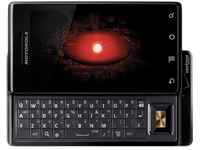
Motorola might be releasing approximately a bagillion phones per minute these days, but that hasn't stopped it keeping it an eye on the older ones.
Well, we say older, as the Motorola Milestone only launched at the tail end of last year – hardly ancient in phone terms.
But it 'only' launched in the UK with Android 2.0, which is so last year – it's all about Android 2.1 these days, with all them fancy things like interactive wallpapers (trust us, they're awesome).
Upping the ante
So the good news if you're in Europe and have forked out the moolah for the Motorola Milestone: it will be getting the upgrade in a matter of days.
It's currently available for the Hong Kong and Macau markets at the moment, so if you can't wait and know a thing or two about modding your device, you can download it directly.
Otherwise, be patient and you'll be using a faster and more slick Moto Milestone before the end of Easter.

 |  |
Read More ...
Belkin adds 'apps' to Surf, Share, Play routers

Belkin's latest range of Surf, Share and Play routers borrows an entire marketing concept from its buddies at Apple – apps. The company also revealed to TechRadar that it hopes to make more additional apps available in the future.
So here's the skinny: the networking and accessory maker has launched a new range of easy-to-install routers based around the concept of having specific software applications for extra router functions.
These are common tasks such as backing up your files, streaming HD and network printing. Essentially the core hardware is the same as existing routers, but Belkin hopes that its extra software (combined with the clever 'apps' marketing spin) will give it the edge.
More interestingly, Belkin hopes to make other apps available in future. TechRadar spoke to Senior Product Manager Bart Bomers who confirmed the concept as something Belkin would like to make more of. "Our intention is to make more and more functionality available for these routers [through firmware updates]. We're still investigating how we want to do that."
The company didn't appear to be shy in admitting the clear inspiration from Apple here, with both all the Belkin representatives present even talking up the concept and mentioning Apple in the same sentence.
Are they really 'apps'?
But the name apps should be taken with a pinch of salt. These 'apps' aren't apps at all, with Self Healing, for example, just something that runs in the background to make sure your connection remains OK and Easy Start just meaning that the installation's, well, easy.
However, Torrent Genie, for example, enables the downloading of torrents while your PC is off while Memory Safe and Music Labeller are things you access from a system tray icon on your desktop.
Several models are available – Surf (802.11n), Share (802.11n), Play and Play Max. The latter models both have 2.4 and 5GHz dual-band 802.11n. Each of the different lines has a cable router and BT line/ADSL router variant with the latter carrying a £20 premium.
Prices vary between £50 for the standard Surf router to £120 for the Play Max ADSL variant. They're all designed to be as easy-to-set up as possible, with clear guides and installation. The Surf models even come with all the cables ready-connected in the box!
All have a UK release date of May.

| |
Read More ...
Breaking: Tax breaks coming to the UK videogames industry

Alistair Darling in his budget report has announced that tax relief is finally coming to the UK videogames industry.
The move means that those who make videogames in the UK will be given tax breaks. This is a bid to bring games design back to the UK, which has been dominated by countries such as Canada.
Helping gamers
In his speech Darling explained: "I will help the computer games sector… we need to keep British talent in this country."
He also noted that the tax breaks would be "similar to that of British film industry."
Currently, if you make a film under £20 million in the UK, you can get a cash rebate of 25 per cent back.
If it is over £20 million, then this is cut to around 20 per cent.
Tax win
Recently, TIGA (The Industry Gaming Association) proposed that the videogames industry in the UK should be given tax breaks. This was backed by the Liberal Democrats.
Speaking at the time about the proposed tax relief, Dr Richard Wilson, Chief Executive Officer of TIGA, said: "Our latest research shows that out of a range of fiscal measures that could be introduced to help the UK games industry, the introduction of games tax relief is the most popular."
The idea of tax breaks was also announced in the Digital Britain report.
So good news all round for the UK games industry then. Well, bad news if you are a cider-drinking gamer as your pocket is about to be hit hard.

| |
Read More ...
FarmVille gets too big for Facebook, launches own site

FarmVille, the ridiculously popular Facebook app, has decided that Facebook isn't a big enough platform for the game and has launched its very own website.
Farmville.com is the games new, official website which offers links to the Farmville forum, support and access to the game's shop.
That's right, FarmVille has its own shop where you can pick up everything from mugs to keyrings to t-shirts. We looked for a model of a cash cow being milked, but that item seems to be out of stock.
Self-farming
You can also play FarmVille on the website - crazy, we know. It hasn't completely got rid of its Facebook roots, though, as the only way you can play the game is through the Facebook Connect service.
There's no doubting FarmVille's insane popularity, but does it really warrant its very own website? If it means we are one step closer to getting rid of those annoying Facebook status updates about what livestock so-and-so has bought, then it gets a thumbs-up from us.

| |
Read More ...
3M MPro150 pico projector breaks cover in UK

Big-time maker of small-form kit 3M has announced an update to its pico projector range – the ultra-portable MPro150.
Weighing in at a rather lean 160 grams and measuring just 125mm long, the projector is said to be around the same size of a mobile phone and can handle piping out images for two hours.
The image that is projected is anything up 50-inches in size, which is pretty impressive. The resoultion for this is 1280x800, in VGA, SVGA, XGA and WXGA formats.
The projector can handle main Microsoft Office apps out of the box (Word, PowerPoint and Excel), so is great for the space-saving business people.
File focus
Other files which are compatible with the MPro150 include PDF docs, MPEG4 and H.264 videos and BMP and JPG photos,
There is 1GB of internal memory inside but this can be expanded with micro SD card. Or, if you fancy, you can hook up the projector to your computer, iPod or other devices.
Included in the package is flip stand, tripod and myriad input cables.
The 3M MPro150 is available to pre-order now, with an official UK release date still to be confirmed.

| |
Read More ...
Is Dell next to exit China?

Indian PM claims Dell Corporation considering shifting $25 billion business from China to India
The Indian Prime Minister has hinted that Dell may well relocate around $25 billion worth of business from China to India, following this week's problems with Google pulling out of the Chinese market.
Indian PM meets Dell
The Hindustan Times covers Google's current problems in China in depth this week, quoting Indian PM Manmohan Singh who claims that Dell is considering shifting $25 billion's worth of business out of China.
The Indian Prime Minister tells the newspaper: "This morning I met the chairman of Dell Corporation. He informed me that they are buying equipment and parts worth $25 billion from China.
"They would like to shift to safer environment with climate conducive to enterprise with security of legal system."
Dell has one manufacturing plant in India right now and Michael Dell has been visiting India this week, presumably with a view to doing further business in the country.
Whether or not that will turn out to be $25 billion of extra business of course remains to be seen…
TechRadar has contacted Dell for further comment.

| |
Read More ...
Review: Green Mountain Rio

The Green Mountain Rio loudspeaker combines time coherent technology and a proprietary 'Balanced-Phase' crossover circuit to bring an impeccable musicality to medium size and small rooms.
So much so, that this discreet little standmount turned out to be one of the most exciting speakers to come my way in years.
It might look small and unassuming, but clever design gives it a marvellous freedom from time-smear, which makes it musically very communicative with vivid dynamic expression. Indeed, the only regret is that the Rio, being GMA's smallest loudspeaker, did have some inevitable limitations in terms of bottom end weight, scale and sheer welly.
Massive marble
A closer inspection reveals numerous examples of the considerable and painstaking care that has gone into selecting every one of its ingredients.
Take its weight, for example. Most standmounts of this size weigh around five to eight kilograms, so it's simple enough to pick one up and pop it onto a stand. The Rio tops the scales at 19 kilograms, more like that of a typical floorstander and that's because the cunningly shaped enclosure has been moulded from Q-stone – a marble/ polyester resin mix.
A lot of mathematical calculation went into designing the dimensions of this very complex multi-faceted enclosure – essentially eight faces, as it's larger in the middle than the top or base. This is partly in order to minimise the focusing of internal reflections and standing waves, assisted by 15 carefully positioned layers of low-density, fibreglass wadding.
Small-to-medium
Because the Rio is primarily expected to be used in small-to-medium size rooms (between 100 and 600 square feet), the designer has tried to limit the dispersion from the two drivers. This is achieved by the shape of the enclosure and, in particular, the way the baffle is inset behind a proud edge, while the tweeter is surrounded by absorbers. All this is meant to to minimise reflections from nearby walls.

Another feature of the enclosure is a 'tilted back' front panel, one crucial reason being that this helps ensure that the listener-to-voice-coil distance is the same for both drive units, in order to maintain accurate phase coherence across the band, especially through the crossover region.
To this end, Green Mountain Audio provides recommendations for the optimum stand height for any given seated ear-height and listening distance. Relatively low (e.g 500-millimetre) stands are suggested.
Similar care has clearly gone into selecting the other ingredients. The bass/mid driver has an 'under-hung' voice-coil, operating in a large field generated by neodymium magnets. The lightweight (damped, pressed steel) 153-millimetre frame accommodates a 115-millimetre diameter cone made from a mix of paper and carbon fibre. The tweeter has a 25-millimetre doped fabric dome diaphragm with a relatively wide (twomillimetre) surround.
Internal wiring consists of Audio Magic Teflon-insulated 14 gauge (1.6-millimetre) silver-plated OFC feeding the bass/mid driver and Jena Labs polyethylene insulated, cryogenically treated 22 gauge (0.64-millimetre) OFC.
The crossover also uses high-quality components and is essentially a simple first order (six-decibel/octave) affair, albeit modified by a Zobel network. The objective is to minimise phase shift right across the band, and a very impressive +/-2 degrees, 200hz- 8.5khz is claimed.
Texture-Koting
The cast Q-stone marble composite enclosure gives massive weight and rigidity, as well as an interesting and clearly effective shape. It can be difficult to achieve an acceptable surface finish with such material, but the black Texture-Kote preparation used here gives a sort of suede look and feel that is very acceptable.
Enclosure detailing also looks very good, above and below the thin acoustic foam grille, which may be left in place without influencing the sound in any way.
A single pair of Vampire Wire socket/binder terminals are fitted, fashioned from solid brass and then silver-and gold-plated.

State-of-the-art
The Rio might seem rather costly for a compact standmount, but the bottom line must always be to question whether a component actually delivers sound quality commensurate with its price. In this case there's absolutely no doubting the exceptional overall sound of the little Rio's.
Naturally the small size will limit the bass weight and warmth to a significant degree, but over the rest of the audio band it delivers splendid sound-quality. The top-end might, perhaps, have been a little sweeter, but the midband expression and coherence truly approaches the state-of-the-art.
This exceptional performer is way ahead of its peers in delivering a vivid and engrossing musical experience, so value for money is, therefore, unquestionably very high.
Vivid excitement
Once set up, the impressive strengths of these compact speakers quickly becomes obvious. They do show some limitations: the small size and high-sensitivity inevitably restricts the amount of bass weight and warmth, but experimenting with positioning does result in modest changes.
However, these are less than expected, so the best advice has to be to experiment in situ to achieve the best results, even though smooth, deep bass seems unlikely to be on the agenda here.
Furthermore, there's also some upper midband forwardness that some listeners (depending on the source) might find a little uncomfortable, but which I found easy enough to get used to. In every other respect this loudspeaker is rather wonderful.
Best of all is its exceptional speed and minimal time-smear, which brings a brilliant immediacy and tight, solid focus to the reproduction of instruments and voices, creating vivid dynamic expression and an unusual degree of realism. It's all very realistic, as is that most difficult of tests – single speaker mono.
This freedom from timesmear in loudspeakers is very important, because it does much to break down the barrier between 'real' and 'reproduced'. The closer you get to 'real', the less hard the brain has to work to interpret what the ears hear and the more relaxing the listening experience becomes.
The advanced enclosure seems very effective, both in banishing any box coloration and in providing a measure of control over dispersion. The latter probably contributes to the relative consistency of the Rio's sound, irrespective of positioning, as well as its fine stereo focus and general image consistency.
Time is tight
Loudspeakers as phase-accurate as these are very rare, but some listeners (not all!) will find them quite irresistible. The tight time focus of the Rios reminds me a little of the Rehdekos, which I keep as a reference, though the Rios are smoother and less extreme, which will probably make them rather more generally acceptable.
There's no denying the criticisms of a lack of smoothness and weight at the bass end of things and the upper mid forwardness. But if those limitations are considered acceptable, the Green Mountain Rio will bring excellent communication skills to the party and considerable musical pleasure to listeners.
Related Links
| |
Read More ...
Twitter reduces spam to just 1%

Twitter has radically reduced the amount of spam on the site, announcing that just over one per cent of all tweets are now spam-related.
This is a significant change from August 2009 when spam was at its highest on the site accounting for a massive 11 per cent of tweets sent.
The micro-blogging site has put in measures to cut down spam on the site even further, but it does admit that "while the battle will never be over, we're doing well on the front lines."
"Posting harmful links to phishing or malware sites, repeatedly posting duplicate tweets, and aggressively following and un-following accounts to attract attention are just a few examples of spam on Twitter," explains the site on its blog.
"Like it or not, as the system becomes more popular, more and more spammers will try to do their thing.
"We're constantly battling against spam to improve the Twitter experience and we're happy to report that it's working."
Gone phishing
There have been a number of high-profile phishing attacks on the site in recent months, with the likes of MP Ed Miliband getting caught out for unwittingly spamming his followers with a sex tweet.
"With help from engineers on our Research team like @wfarner, we've moved the percentage of spam flowing through the Twitter network way down – and counting," continues the blog.
"To help us battle spam, you can click the 'report for spam' link on any suspicious profile page."
With spam nearly out of the way on the site, let's hope Twitter's next focus is on those pesky Twitter-bots.

| |
Read More ...
In Depth: 10 really cool new apps and gadgets you've never heard of

Some companies come to the DEMO conference looking for investors so they can get their idea to market; others are on sale the day they go on stage.
Some products sink without trace, others go on to be household names (Palm launched at DEMO). Not everything is brand new –last year Gwabbit won the coveted Demo God award, this year the Gwab-o-sphere service that works with it won again.
Some of the neatest DEMO launches may never make it, but these are the ones we most want to use ourselves.
1. GlideTV Navigator
GlideTV Navigator is a neat little $99 RF remote control which balances comfortably in one hand, while the big curved touchpad in the middle makes it easy to glide around even a big screen.
You can use it with Windows Media Center or a PlayStation 3, but it also comes with its own multi-tab browser (based on Truveo and Mozilla) for searching and watching online video.

Press the search button and you can choose search engines that specialise in video, and the on-screen keyboard offers video-related predictive text. You can leave video playing in one tab while you search in another, or you can browse what's on by category and get thumbnail clips that also give you a great overview of key news and sports stories.
We like Hillcrest's Loop better as a controller, but the Navigator comes with a browser with more features.
2. Vivox
You can send instant messages without leaving Facebook and now you can make voice calls to friends in your social network - turning Facebook into your phone book.
Vivox is bringing the same voice chat it already has in Second Life and on Sony Online Entertainment to sites like Facebook, Google Wave and Ning - and if you can't make it to your PC or Mac you can join the call from any phone.

Calls are free but you might get short audio adverts, or Facebook could sell you a custom phone number with your name in it - or special voice effects, so you can sound like a munchkin or an elf.
3. Genieo
You can check out headlines from your favourite sites in an RSS reader and updates from your friends on social networks, but Genieo puts them side by side on a web page that looks like a newspaper site.

Your top story might come from the BBC - or Facebook or Twitter, depending on what's important to you and Genieo works that out by watching you as you surf; the information stays on your PC, the company promises, rather than being used to build a profile to sell you ads or reveal who your contacts are - but you can also see your customised page on an iPhone or Android device.
4. ThickButtons
No matter how good you are with the keyboard on a touchscreen phone, it's never as good as typing on a physical keyboard. ThickButtons makes it far easier to type without mistakes; as soon as you hit one key, this replacement touch keyboard calculates which keys you're not likely to need and shrinks them down, making the keys you will want to type bigger and easier to hit.

Working out the letters you don't need is easier than working out exactly which word you want, so it's faster than many predictive text systems. Plus a highlight around the key you're most likely to type makes it faster to find the key you're probably looking for.
It learns as you go and while it's not perfect it will speed you up. The Android version is out now and a Windows Mobile keyboard is on the way.
5. InVisage QuantumFilm
The CMOS camera sensors in smartphones have a couple of problems; they're tiny silicon chips and silicon isn't that good at absorbing light, plus there are often connectors running across the silicon sensor. Only a quarter of the light coming into the lens actually gets to the sensor.
InVisage has a quantum film made of nanoscale particles that can just be painted on to the silicon (something that happens 30 to 40 times during etching silicon chips already).

Today a 1.1 micron pixel size (which you need for a higher resolution camera) needs an expensive 65nm manufacturing facility; with QuantumFilm a phone manufacturer can make the same pixel size on a much cheaper 110nm process line. The sensors this creates can take photos more quickly and get more detail as well as brighter images - and it even uses a little less power.
The QuantumFilm prototype we saw is the size of a PCI card but the company will have finished sensors by the end of the year and they could be in phones in six to nine months' time.
6. The Panel
If you've got a large LCD monitor or a second screen on your desk, you get used to all that screen space to spread your windows out; you can't do that on a latop. MEDL has come up with a 13" WXGA LCD screen that's light enough to carry around with your notebook (it only weighs 2.2lbs and has a built-in stand); The Panel connects to your PC or Mac via USB but that doesn't give it enough power so there's a five hour battery.

"We think we can improve that to a full day of usage," CEO Eric Liao told us. If the company attracts investors it could have the screen on the market by the end of the year, for around $300.
7. MobileDocuments
Getting email on your phone is great, until you try to download a huge attachment. VISIARC's MobileDocuments lets you view the attachment through your phone without downloading the whole file; attachments get copied into the cloud and you can see thumbnails of the pages or zoom in - the progressive download means you don't have to wait for the whole file to read the bit you're interested in.

Most phone document apps assume you want to edit; Mobile Documents has some tools for that but mostly it assumes you want to read a couple of pages quickly. You also get an archive of files you've received that you can send on to other people or browse on the web.
MobileDocuments works with any IMAP email account and you can use it with two email accounts to store up 1GB of documents for €5 a month. It's available for Symbian phones today and an Android version is in development.
8. Gwab-os-phere
The Gwabbit BlackBerry and Outlook contact tool grabs addresses and contact details from incoming emails; now you can connect it up to your social networks so addresses stay up to date automatically.
If someone you've 'grabbed' changes their details on Facebook, Twitter or LinkedIn you get those updates, if they mail you a new phone number it gets added to the entry you have in your Facebook address book for them and if you can't remember them you can see how you know them.

Even better, the gwab-o-sphere tool is free to anyone already using Gwabbit for Outlook for BlackBerry (even if you're using the free BlackBerry version).
9. Phone Halo
Pair your iPhone, BlackBerry or Android with the Phone Halo fob and if either of them get too far apart (you choose how far), the phone rings and the fob beeps.

If you still manage to leave the phone behind the Phone Halo service checks where the phone is via GPS and mails you, texts you – and even tweets a few close friends in case you left it at their house. Attach one to your keys or your wallet to track them too (there's even one to stick on your children).
10. Rebtel
When you make calls with Rebtel, you get much cheaper calls over a normal mobile phone connection; it doesn't need Wi-Fi but usually you have to fiddle around with redirects and dialbacks, but the Rebtel app for Android (and soon for BlackBerry and maybe iPhone) does away with all that.

Rebtel thinks you'll like it so much that they're prepared to give you free international calls to 51 countries (including the US but not India or Africa) to get you to use it.

| |
Read More ...
Review: AMR CD-777

The AMR CD-777 not only uses old school valves, it also employs a technology that became obsolete back in the nineties – genuine multi-bit DACs.
It's also AMR's most affordable disc spinner yet and comes from a brand that has quickly established itself as the most interesting new player on the hybrid electronics scene.
A spawn of the CD-77 it even looks very similar, if not more compact. For example, it has the same fabulous finish and top-loading transport and it earns its processor credentials thanks to USB and S/PDIF inputs for external digital sources.
The unusual suspects
AMR's decision to discard contemporary upsampling DACs and use NOS (new old stock) Philips multi-bit devices in their place is rather unusual. The CD-77 has a valve output stage built around NOS 6H1N-EV tubes and offers two variants of non-oversampled output among its array of processing options.
At the digital heart of the CD-777 is a Philips multi-bit chipset (UDA1305AT). That AMR refers to as 'Son of TDA1541A', its favourite converter. AMR also claim that it's never been used in a CD player before.
The CD-777 lets you choose from six Optisample filter settings with the remote control, the first two being non-oversampled purist settings called Digital Master I and II. The latter is the default filter and adds an analogue filter to balance the slight treble roll-off produced by the totally unfiltered Digital Master I setting. These settings are clearly AMR's favourites and you are encouraged to use them according to taste.
There are four over/upsampled filters offering 2x, 4x, 96Khz and 192Khz, but the manual suggests that all of these are a compromise that introduce one form of coloration or another to the result.
AMR has equipped the CD-777 with a USB input, as is the fashion in these days of PC audio, and it's keen to point out that this is not just something that's been tacked on at the last moment.
In its favour, I recall seeing such a socket on the CD-77 three years ago, so there may be something in OptiUSB as it's dubbed. OptiUSB's angle is that jitter is kept to a minimum by the associated circuitry, something that usefully also applies to the coaxial S/PDIF input.
Among the cherry-picked components inside the casework are hand-made transformers in the power supply and NOS valves called 6H1N-EV in the analogue stage. Even the transport is custom built, using a high-torque motor, Sony K-Series laser pick-up and a Philips CD-18 servo system.

The supplied remote is a touch screen variety of the old school, insofar as there is only one screen set. It seems to be reasonably sensitive, but the player itself is not very responsive, unless you make a point of aiming the handset. I also had a couple of occasions where the unit seemed to seize and required a reboot to get it going, it's clearly a lives a little closer to the edge than most.
The back panel is not too cluttered, the analogue outputs are on either side of the chassis and come in balanced and single-ended flavours. Slightly confusing is the red/white colour coding of the coaxial digital in/out sockets, these impersonate traditional analogue outputs well enough to fool the casual installer/reviewer!
Out of this world
By using aircraft-grade aluminium to build the CD-777 casework, AMR has produced a stunning piece of kit. It's enhanced by windows that let you see the electronics within (including the glow of the valves), while letting the heat out.
The player emits an orangey blue glow which gives it a slightly otherworldly appearance and this and the heat output does rather discourage leaving it powered up at all times.
The door that slides over the disc drive is manually operated and allows a change of disc without pressing stop. You'll need the puck of course, but it's not as if you're likely to forget it.
Tears of joy
This is one of the most natural-sounding digital sources I have heard in ages, it is tonally delightful and that's not something you often read about a CD player. You get so used to the dry and tight sound of digital sources that there's a tendency to assume it will always be that way, but this AMR shows things in a whole new light.

It could be the valves – in fact it almost certainly is – but I've had glass-powered players before and they've never sounded quite like this.
Usually there's an obvious softening of frequency extremes and an increase in tonal warmth and here there are bits of the latter – the midband is a little cosy but it's only apparent by comparison. On its own terms it's easy to accept the CD-777's presentation as realistic. Especially when an acoustic instrument comes along and reveals its timbre.
I've not known the cello on Antonio Forcione's Tears of Joy to be so real and woody before, nor Keith Jarrett's piano to have such depth. Up against the Leema Antila II, there is a loss of solidity and depth of image and the solid state player has a lower noise floor with greater bass definition.
But, there's no doubt that the AMR has a strong sense of timing, as well as the fact that tonal beauty is just as appealing, if not more so, than image scale and depth. Audiophiles traditionally crave deeper bass and more physical soundstaging, but these are not necessarily the qualities that make music alluring outside of the demo room.
Having read the spiel, I had to hear what the digital inputs could do and started with the coaxial S/PDIF. With a DVD-A player connected I achieved superb results, cleaner and more real than could be achieved with CD thanks to remarkable integrity of sound.
Plugging a laptop into the USB input yielded a positive, detailed result as well. Not one that could compete with the onboard Detail transport, but inspiring enough to look into ways of getting a better signal out of the PC.
Hearts and minds
Like the Rega Isis, this is a CD player for the heart more than the head, it isn't as bone crunching nor spatially capable as its rivals, but it does get to the parts that other players so often miss.
The combination of superb tonal rendering with fine timing allows music to float free of the mechanics of reproduction. You need to be reasonably careful with ancillary amplification, speakers and even cables – van den Hul's carbon interconnects are just too soft for instance.
But give it a revealing window to play through and you will forget about the hi-fi and be carried away by the artistry and emotions of the musicians on the disc. That is what living is all about, don't let anyone tell you otherwise.
Related Links
| |
Read More ...
Dell finally comes clean with Aero Android phone

Dell has unveiled the western version of its Android phone - the Dell Aero.
The new Aero is apparently the lightest Android device in the world – which is hardly a headline grabber, but at least it's something.
It's running Android 1.5, but with a hope of a 2.1 upgrade in the near future, and it's also packing a 5MP camera.
When's it coming?
The Dell Aero has been seen in numerous spy shots in the past, as well as being released in China as the Mini 3i – it was also present at CES this year, but with no information on when it would be coming to other territories.
The main selling point the Dell Aero has is its overlay to the Android OS – we've not seen a great deal on what this will look like, but companies like HTC and Sony Ericsson have already been hard at working bringing similar things to the OS for much longer.
It's always nice to have another player in the market, but sadly we don't have a definite UK release date for the Dell Aero, but we hear it is coming in the near future.

| |
Read More ...
Review: Amphion Helium 510

This ice-cold, sharp-edged, black-on-white two-way standmount loudspeaker sounds smooth, evenhanded and essentially neutral. The baby brother of the larger Amphion Helium 520 floorstanding loudspeaker, the 510 also includes the best bits of its elder sibling, the key component being the 'waveguide' surrounding the tweeter.
A variation on the horn theme, with a truncated throat and a very wide flare, it loads the tweeter and has several benefits. One is that it allows the crossover point to be an octave lower than usual (at around 1.6kHz), which moves it below the most critical part of the audio band.
It also helps match the acoustic sizes of the mid/bass and the treble drivers, which should benefit the crossover transition. Also, lining up the voice coil of the recessed tweeter with that of the cone drive unit should improve time alignment.
Whole lotta love
Certainly, there can be no complaints about the high standard of presentation here. The 135-millimetre mid/bass unit deploys a 110-millimetre flared paper cone and a cast alloy basket, and the drivers appear to be good quality. The relatively modest sensitivity does indicate a rather small magnet, however.
The 25-millimetre titanium dome tweeter, on the other hand, is sensibly protected by the depth of the waveguide and a mesh cover.
At £750 per pair, it does seem on the pricey side, especially as good-quality stands will also be required, partly because of the gulf that's grown between European and Chinese production costs. In a European context, this loudspeaker represents respectable value.
The 510 is available in black or white – with black or white grilles and waveguides – or in a choice of birch, cherry or walnut real wood veneers. The latter is fitted with black grilles and waveguides and carries a price premium.
Versatile performer
Even mounted well clear of walls, the bass end sounds a trifle heavy with some material. In fact, the best results are found with the supplied bungs in place and the speakers quite close to a wall.
Connected onto the end of a top-quality audiophile system, this Amphion seems lacking in dynamic expression. Stereo focus is good and the sound is notably free from any boxiness, but instrumental textures tend to be glossed over. There's a lack of tautness and tension, while the sound can get congested with complex and bass-rich material.
Used with more modest 'budget' components, however, the 510 actually works rather well. It might not aspire to high-end standards, but it doesn't exaggerate the differences between components or emphasise any limitations – good news in the context of a sensible market.
The budget Cambridge Audio CD player and amplifier I used admittedly have obvious limitations compared with my usual upmarket components, but to give it its due, the Helium 510 doesn't emphasise these deficiencies.
Results are a little bland and boxier, but the sound remains tidy and smooth. You'll need a little extra volume is required to make speech intelligible, however.
This little speaker might not set any records for either audiophile dynamics or ultimate value for money, but it is an attractively present and sonically well-judged package, nonetheless.
Impressively, it also discreetly slips into the listening room and won't embarrass the type of components to which it is likely to be coupled.
Related Links
| |
Read More ...
Digg's native iPhone App arrives

[UPDATE - the new Digg app for iPhone is now available at the App Store]
Digg's highly anticipated native iPhone application is set to hit the Apple App Store at some point later today.
Mashable got the exclusive tip on the launch of the new Digg application for iPhone, which is sure to be a hugely popular news app for the hardcore news junkies amongst us.
Search, bury, comment
Digg's Kevin Rose first mentioned that they were planning an iPhone app late last year, with the new app supporting browsing popular, upcoming, and recent stories across topics and giving users the chance to dig and bury stories from within the app.
The app also offers users options for navigating comments and related stories.
Digg has offered an iPhone-optimised version of its site since 2007, so the app is sure to be a welcome addition to most Digg-er's iPhones
We'll be sure to keep an eye on the App Store for the new Digg app and let you know when it finally arrives.

| |
Read More ...
Review: Linn Majik DS-1

Now here's an opportunity to make your CD collection sound even better than ever – without the aid of a CD player! And it's all thanks to the future-proof Linn Majik DS-1 digital streaming amplifier, making its debut in the wake of Linn's vision of a future in which CDs are stored on networked hard disks and replayed by digital streamers.
Alternatively, the dedicated music fan can dispense with physical storage media entirely and download their albums (preferably at above-CD resolution) from internet sites that provide better-than-MP3-format files – one of which is Linn itself.
Once downloaded, storage can be taken care of on the optional RipNAS combined CD-ripper/Network Attached Storage unit, with a hard-disk capacity of one terabyte (£894).
I found, however, that when I compared it with my Netgear Storage Area Network, the rips weren't as satisfactory, so I regularly fed the DS-I with this alternative source. You could just as easily use a PC with UPnP delivery software, or a NAS unit if you preferred.
A kind of magic
The Majik DS-I is fundamentally a DS digital streamer combined with an analogue/digital preamplifier, as well as the Chakra 90 watts per channel power amp, all of which are powered by Linn's fifth-generation Switched Mode Power Supply, the Dynamik (the name Majik actually signifying Linn's bronze-level product, the other been silver-level, Akurate and the gold-level, Klimax models).
The Majik DS-I can be controlled by software on a PC or a handheld device such as the iPod Touch. I used the open-source Kinsky Desktop software on a laptop. In truth, it isn't wonderful, but show me a player/server/streamer software today that is.
Kinsky Desktop is no worse than any other front-end although my reaction to it is wholly personal and subjective. The preamplifier section of the DS-I offers both analogue and digital inputs for system expansion and there are both pre-and line outs for use with external amplifiers or analogue recorders, with S/PDIF and Toslink connections providing digital outputs.

Analogue input is configurable: it comes as a moving magnet phono input, but can be dealer-converted to moving coil or line-level. The power amplifier stage is a 90 watts per channel Linn chakra design that had no problems whatsoever, driving either the Linn Majik 109 speakers or the NEAT Petite SX compacts – the latter I used throughout the review period simply because I know them well and preferred their performance.
Social networking
The network side of the install is where things can become a little tricky. Linn supplied the review sample with its recommended third party network components, which is a methodology that reduces the variables and so decreases the likelihood of incompatibility problems for its installers.
It likes to see the DS-I attached to its own sub-net rather than simply integrated with an existing network. Indeed, this is probably the best way to do things in most situations, but it wasn't ideal with my set-up where my network storage (a SAN (Storage Area Network box)) and the server to which it is attached were on a different network segment. For a typical home network this should not be a problem.
I am not so certain, though, about Linn's insistence on including a dedicated ethernet switch, a discrete router and a separate wireless access point (the Wi-Fi is only for control purposes: all the music travels on cat5 cable).

According to Linn; this is better than using an all-in-one device, because each has its own processor dedicated to one task and that provides greater performance. That, I would argue, might be true but it is hardly relevant when all you are doing is sending one music stream over a length of Ethernet.
I linked my own network to the Linn sub-network through a truly ancient, dusty, 10-megabyte hub and did not detect any glitches or degradation in the musical performance of the system while material streaming from my server.
Smooth and rounded
I like the clean lines and styling of the DS-I and I had absolutely no reservations about its construction. It is a sturdy, weighty unit and its casework is beautifully engineered. There is not a sharp edge on it anywhere. Every edge with which your hands will come in contact is as smooth and rounded as Beyonce's bum.
It is important with such 'computerised' hi-fi that it not only functions as a piece of hi-fi, but that it integrates successfully with the host network. In my domain-based system it was none too happy being removed from the Linn-installed sub-net. A few times, everything with a network address and a couple of items without, demanded to be power-cycled and left alone to meditate for five minutes before anything would converse with its neighbours.
I began to see the logic in Linn's belt and braces approach to networking, although I would be interested to discover which element, process or combination thereof causes this flakiness. However, Linn is definitely not alone in this respect.
The integration and user interface aspects of equipment in this relatively new discipline seem to be dragging their heels way behind the audio performance. The DS-I is not hugely expensive, but it costs more than the NaimUniti, which also features additional facilities such as a CD drive, DAB and FM tuners and isn't quite as fussy about network connections. The Uniti also gets by with just a remote handset and a simple facia-mounted display.
Sparkling and spellbinding
The DS-I performs well, though, in hi-fi terms and is particularly noteworthy in a couple of respects: it is a ferocious scavenger of information and its sound is so clean it sparkles. Hi-res downloads from the Linn Records site demonstrated this graphically: the 24-bit/192khz recording of William Carter playing the music of Fernando Sor came across beautifully.
Carter's playing was spell-binding and the sound was impeccably realistic and alive, creating the feeling that he was sitting only a few feet in front of me exposing those rich veins of tonal colour and expression from his gut-strung replica baroque guitar.
The dynamic gradation evident was incredible and it was easy to hear one string being quietly plucked while another was being sounded more vigorously. Listening to his double-stopping and his use of harmonics during the air O cara armonia from Mozart's Il Flauto Magico op 9, was little short of sublime – both the playing and the hi-fi aspects of the portrayal.

The Majik also managed to turn me on to a new, contemporary canadian singer, Dawn Langstroth, whose vocal style and backing band on highwire put me strongly in mind of Aimee Mann, a real favourite of mine. It conveyed Langstroth's similarly economical approach to singing and the powerful lyricism of her song writing, succinctly contrasting her often delicate voice with the robust dynamism of her band.
The portrayal of the piano and electric guitar stood out as being especially notable: the piano for its pitch stability and full-bodied tonality on You Don't Want Me and the guitar for its wholly credible leading edge attack on It's All Good.
Compare and contrast
Eventually, curiosity got the better of me and I tinkered with the networking set-up and managed to resurrect the infamous Linn/Naim Axis of the 1980s: I persuaded the Linn DS-I to stream tracks from my Naim HDX. Older readers might appreciate the irony in that role reversal.
This, however, afforded me the opportunity to compare the quality of rips made by the HDX and those produced by exact Audio copy on my PC, to those of the less expensive RipNAS.
The Majik DS-I is an analytical machine and seems readily to discriminate between good and inferior rips. Not surprisingly, I preferred the first two to the latter. If one were not listening critically then the RipNAS might seem acceptable, although a highly discerning colleague and I both felt that its rips did not appear as involving or exciting: they were just about on a par with those you'd hear through a Mac laptop and an inexpensive DAC, a combination that is fine... for casual listening only.
A prime example of this was Academia from the Sia albums. The timing on this track seemed lethargic on the RipNAS rip, while her delivery sounded half-hearted and uninspired. Her phrasing is particularly dextrous on this number, her vocal weaving sinuously around the band's playing to great effect, but this nuance seemed to escape the RipNAS. I also did not particularly enjoy the way it presented the timbre and tonality of her voice, occasionally making it sound nasal and hard.
The revealing Majik DS-I deserves a more transparent storage device and is hard to fault in isolation. And if you crave detail above all else, then this might well be the answer to all your dreams. I greatly preferred its performance with hi-res material to that with CD-resolution rips, unless they were sourced from one of my preferred ripping set-ups.
The DS-I seems to be an absolute resolution junkie. It has an especially convincing way with classical music that absolutely delighted me, but with rock music, I think it perhaps needs to let its hair down a little, loosen up and have some fun.
Related Links
| |
Read More ...
Mozilla shuts down Firefox for Windows Phone 7

Mozilla has announced it is shutting down development of its Firefox Mobile platform for Windows Phone 7 Series.
The company has a long history of coding its mobile browser for Microsoft's handset platform, but since the redevelopment of Windows Mobile, Mozilla has had to shut down its development.
This is due to the fact Microsoft is not supporting native third-party application development on its platform, concentrating instead on working with its own components like Internet Explorer for Mobile.
Heavy heart
Technical Leader of the Mozilla Mobile team Stuart Parmenter wrote on his blog that he hopes the project can be started up again in the future:
"While we think Windows Phone 7 looks interesting and has the potential to do well in the market, Microsoft has unfortunately decided to close off development to native applications.
"Because of this, we won't be able to provide Firefox for Windows Phone 7 at this time. Given that Microsoft is staking their future in mobile on Windows Mobile 7 (not 6.5) and because we don't know if or when Microsoft will release a native development kit, we are putting our Windows Mobile development on hold.
"While I hope that we do see Microsoft provide us with a way to build Firefox for Windows Phone 7, we will continue to focus on the things that we can control: building a great consumer product on both Android and Maemo."
On the plus side, Parmenter says all the knowledge gained will serve other platforms equally as well, but it shows the Microsoft is taking a very hard line over this reboot of its mobile service.

| |
Read More ...
Microsoft responds to Natal space concerns

Following recent concerns that Microsoft's Project Natal motion control technology would require an extra large play-space in your lounge, the company has issued a response to assure gamers that the tech will work fine in any given space.
TechRadar reported earlier that a Microsoft rep had commented on how Natal would require at least 13 feet of free space in order to work properly, sparking concern in Britain and Japan because very few of us actually have that amount of space in our living quarters!
Little lounges compatible
Techflash was the source of the reports, with the Microsoft rep telling them: "To be precise, you'll want to clear an area extending at least 4 meters (a little more than 13 feet) away from the television."
Gaming blog Kotaku was quick to check on the facts, as this seemed a little bit fishy. And Microsoft has been quick to reassure gamers that:
"The comments recently about the play space for "Project Natal" were misinterpreted. It is true that the 'Project Natal' sensor reads the configuration of your room and adjusts play space, as appropriate.
"We know that living rooms come in all shapes and sizes, and have conducted numerous play tests to ensure everyone will be able to jump off the couch and into the fun when 'Project Natal' launches globally this holiday."

| |
Read More ...
Nintendo's new 3DS technology explained

Nintendo announced that it plans to launch a new 3D-capable handheld gaming console at E3 2010, sending the games industry into a flurry of speculation this week as to how the new machine will work.
How, gamers are now desperate to know, will Nintendo deliver a well-executed 3D gaming experience without the gamer requiring to wear any glasses?
Nintendo is pegging the Nintendo 3DS as the true "successor" to DS with the new console set for release sometime before the end of March 2011.
"3D-capable displays without nerd-lenses have actually been possible for many years, and in various technical ways, too," notes CVG this week.
Lenticular tech explained
"Nintendo is likely to use lenticular technology," according to Neil Dodgson, a 3D displays expert at Cambridge University. "A lenticule is a long thin lens, shaped with a flat back and a curved front, like a slice taken off a cylinder.
"The lenticules direct the pixels' light in different directions, so each eye sees only every alternate column of pixels.
"The graphics chip renders two images, one for the left eye and one for the right. These two images are displayed on the two sets of alternating columns of pixels."
Also, Dodgson adds that, "to look as good as the current Nintendo hand-held, the new display will need to have twice the resolution on the underlying screen."
Dodgson adds that lenticular tech does have its own set of limitations, mainly that: "Once you have got the 3D effect you cannot move your head left/right very much because otherwise your right eye would switch to a zone where it sees the left eye's image and vice-versa.
"You will also need to be roughly the right distance away from the screen for this to work well: too close or too far away and the effect will break up."
Still, CVG speculates that using lenticular technology to achieve true 3D is more likely than Nintendo pursuing the "somewhat faked alternative used in Japanese DSiWare game, 3D Hidden Picture, which uses the DSi camera to track when the console is being moved, adjusting the on-screen image accordingly."
E3 press conference reveal
Analyst Michael Pachter thinks Nintendo is likely to aim for a similar price range to the £159.99 DSi XL. "Based on charging $189 (US) for the DSi XL, my guess is that Nintendo will try to charge at least that much," Pachter told CVG.
"If they accomplish the effect with a thicker screen (in order to allow for layering of the image), costs will go in one direction; if they do so by alternating left/right eye images (what's done with current 3D with glasses), costs will go in another.
"We can't even dream about what a thicker screen with an optical illusion would cost unless we know the specs of the illusion," the analyst added.
Either way, we will have to wait till Nintendo's E3 2010 press conference until we find out.

| |
Read More ...
Yahoo releases Sketch-a-Search iPhone app

Yahoo has released two new iPhone apps for Search and Sketch-A-Search this month, with the latter app being a particularly innovative new location-based searching tool.
Yahoo made the announcement of its two new iPhone applications on its corporate blog this week. No word on when the apps will be available outside of the US yet, but we imagine this will only be a matter of days.
Sketch then search
Yahoo's new dedicated search app will of course be going up against similar apps from Google and Microsoft's recently released Bing app for iPhone. Microsoft's Bing app was released in December.
However, it is the new Sketch-A-Search which Yahoo hopes will capture users' imaginations, which gives you a map of your local area and then lets you sketch out an area on the map for a local search. A superb way of quickly filtering down your search to a very localized area.
Right now, the app only supports local restaurant searching in the U.S., but Yahoo promises to expand its scope to other activities and countries soon.

| |
Read More ...
Sergey Brin wants reconciliation with China

Following earlier reports that Google is being accused of collaborating with U.S. spy agencies, Google founder and president of technology Sergey Brin still hopes for a reconciliation with China.
"Perhaps we can return to serving mainland China in the future," Brin told the New York Times this week.
It is not surprising that Brin wants to find a resolution to this current impasse, as China has nearly 400 million web users, and a greater number of potential customers for mobile phones and smartphones.
Confusion over strategy
As far as relocating its search functions to Hong Kong, there is now widespread confusion as to the thinking behind the strategy from analysts and political pundits alike.
J. Stapleton Roy, former United States ambassador to China and Director of the Kissinger Institute on China and the United States at the Woodrow Wilson International Center for Scholars says of Google's latest move: "I don't understand their calculation. I do not see how Google could have concluded that they could have faced down the Chinese on a domestic censorship issue."
David M. Lampton, Director of China Studies at the Johns Hopkins School of Advanced International Studies, said the move is sure to be "seen as fundamentally politically subversive in China… I am not sure whether it was an attempt by Google to give the Chinese a way out, but instead it magnified the political controversy."

| |
Read More ...
Chinese Communist Party accuses Google of spying

A Chinese Communist Party newspaper accused Google of colluding with U.S. spies this week.
A report in the overseas edition of the People's Daily, the chief newspaper of China's ruling Communist Party, said that Google's retreat from the Chinese market – with the search giant relocating its websites to a Hong Kong-based server – was a justification of Beijing's own efforts to promote Chinese-developed tech.
Doublethink and internet gods
Google has closed down Google.cn and began rerouting searches to a Hong Kong-based site, which has prompted the Communist Party paper to respond with the following:
"For Chinese people, Google is not god, and even if it puts on a full-on show about politics and values, it is still not god.
"In fact, Google is not a virgin when it comes to values. Its cooperation and collusion with the U.S. intelligence and security agencies is well-known.
The front-page commentary in the paper chillingly adds: "All this makes one wonder. Thinking about the United States' big efforts in recent years to engage in Internet war, perhaps this could be an exploratory pre-dawn battle."
It continues, claiming that Google "completely misjudged the situation, and does not grasp that Chinese people are extremely averse to external threats and pressure."

| |
Read More ...
Philips unveils Freeview HD recorder and receiver

Philips has announced it's the latest manufacturer to bring out a Freeview HD PVR.
Designed by Pace but branded by Philips, the HDT8520 HD recorder boasts a 500GB hard drive.
This can hold 125 hours of HD content, 1080p HD up-scaling, and USB and Ethernet ports for enhanced connectivity.
There is also the ability to live pause TV, with a three-hour buffer limit and DD5.1 audio output.
The recorder also comes with an eight-day EPG, parental locking and consumes less than 1W of power when in standby mode.

As well as the recorder, Philips is also introducing a slim-line receiver to the market, which will offer up Freeview HD but with no recording capabilities.
Called the DTR5520 HD receiver (where do they come up with these snappy titles?), the box is said to offer "superior sound and picture quality of Freeview HD services for a one-off price."

And what will that price be? Well, both the DTR5520 and HDT8520 have a UK release date of April – in plenty of time for the World Cup then – and will be priced at £159 (for the receiver) and £299 (for the recorder) respectively.

| |
Read More ...
HD2 finally converted to Android as HTC Evo

HTC has unveiled another Android super smartphone – the HTC Evo, the first 3G/4G handset in the world.
And if you liked the HTC HD2, you'll love this: a 4.3-inch screen, a 1GHz processor and a huge 8MP camera, the first from the Taiwanese firm.
The camera is also HD-capable with HDMI-port, making this a real spec-heavy device capable of downloading data much faster than the average 3G mobile.
HTC Sense is predictably plopped on top of the Android 2.1 experience, much likes its Legend and Desire brothers, so Facebook and Twitter integration will be offered as standard.
Google Goggles is offered in the box as well, making it easier to search for things in the real world, and there's also a forward facing camera to enable easy video conferencing.
Memory, all alone in the moonlight...
It will come with 1GB of internal memory as well as 512MB RAM, with an 8GB microSD card in the box too.
We knew there would be a phone like this coming from HTC after all the rumours and pictures of the HTC Supersonic – it's just a shame that name wasn't actually used.
The Evo is being brought to the US by Sprint, which offers 4G networks in 27 territories in the US. This is slightly worrying to us British-type folk, as we're currently without the high speed 4G goodness.
But don't worry, we'll be poking around to find out whether there will be stripped down version coming our way – come on, who doesn't want an Android version of the HD2?

| |
Read More ...
Samsung fights back with new Android Galaxy S

Samsung has unveiled the next in its Android-powered line of smartphones – the Galaxy S.
The new phone packs a huge four inch screen with Super AMOLED technology – meaning a wider viewing angle, more vivid colours and a more 'immersive' experience according to Samsung.
The Galaxy S also comes with a 1GHz processor – bringing it up to speed with the likes of the HTC Desire and the Sony Ericsson Xperia X10 – which should mean lightning fast loading times.
It's Android 2.1-enabled right out the box, which means some cool extras like Live Wallpapers, and Layar augmented reality browser is included as well.
The camera side of things is taken care of with a 5MP snapper and forward facing video camera, although there's no mention of an LED flash.
Pocket-light
Dimensions-wise we're looking at 64.2 x 122.4 x 9.9mm and a weight of 118g, so not too bad in the pocket at all. Plus Samsung is throwing in either 16GB or 8GB of onboard storage with a microSD card slot for extra movies.
Add in all the natural Android extras – GPS, Wi-Fi, Bluetooth 2.1 etc - and you're looking at a pretty well-specified phone. Well, it needs to be to erase the memory of the Galaxy and Galaxy Portal, which were pretty snooze-worthy from Samsung.
The bad news is that while this is definitely going to be a worldwide release, there's no UK release date and certainly no UK price as yet for the Samsung Galaxy S – but all will become clear soon, we reckon.

| |
Read More ...


No comments:
Post a Comment