

CVG names Uncharted 2 as number one PS3 game

CVG.com has revealed what the 50 best PS3 games ever are, with Naughty Dog's Uncharted 2: Among Thieves nabbing the top spot.
The gaming website, created by the same publishing company as TechRadar, consulted its readers on what they thought deserved a place in the '50 Best PS3 Games' feature and the results, though not surprising, do show a nice mix of first-person shooters, third-person actioners and sandbox delights.
After its success at this year's gaming Baftas – where it won four awards – Uncharted 2 sits in first place, with the biggest PS3 game of all time, Modern Warfare 2, nestled in third place.
While Batman: Arkham Asylum won the Best Game Bafta, it only reached seventh place. Ahead of it is God Of War III – the most recent game to be released on the list resides in fifth.
PS3's golden age
Speaking about the top 50, Tim Ingham, Editor of CVG, told TechRadar: "The PS3 has really come of age of late.
"The number of classic games released in the last 12 months on the system is astonishing.
"From Uncharted 2 to Heavy Rain, God Of War 3 to Final Fantasy XIII, we simply wouldn't have been able to make a list like this a year ago. It's been a golden age in PlayStation's history."
Proving that you don't need to spend huge amounts of money to play games, there's a few PSN-only titles in the list, including PixelJunk Shooter (43), Braid (48) and Flower (in at 50).
There's already plenty of debate in the comments about what should and shouldn't be on the list, so head over and have your say.

 |  |
Read More ...
BitDefender update wipes Windows 64-bit

A faulty update for BitDefender anti-virus software has caused chaos for many 64-bit Windows users.
Instead of protecting systems from new malware threats, the update – issued earlier this week – decided to detect a number of essential Windows files as a Trojan virus (trojan.fakealert.5) and wipe them in the process.
This meant that some executable files were wiped, forcing some unlucky users to do a full re-install.
BitDefender has issued an apology over the gaffe, saying on its blog: "We understand your disappointment, we have solved the problem for many of our users already and we are continuing to work relentlessly to rectify the problem for all users still affected."
But, it seems that it is not just BitDefender users that are affected. TechRadar was contacted by an owner of BullGuard anti-virus software (a UK-based company) which utilises BitDefender and it seems there are big problems for its users too.
Its forums are ablaze with angry comments from those affected by the update, who feel the company isn't doing enough to sort the problem out.
Trying to help users
BullGuard, like BitDefender, has issued an apology on the forum stating: "We apologise for this issue that you are experiencing on behalf of the BullGuard update released yesterday for Windows 64-bit systems.
"The faulty update has been removed and we are trying to help all our users that have been affected."
But this hasn't appeased the masses. Even an offer of a free subscription hasn't helped, with one member noting: "I think it is laughable that Bullguard are offering subscription to their software as compensation for all the problems their software caused."
TechRadar has contacted BullGuard and asked for them to tell us exactly how it is dealing with the problem.
Despite the update issue, It does seem that the company still wants to use the BitDefender anti-virus engine, explaining on the forum: "Based on BullGuard's own evaluations and evaluations done by external parties we have and still see BitDefender's anti-virus engine to be the best one in the market and we have still trust in BitDefender."
It did say, though, that it while it currently relies on BitDefender to test all updates, it is "in dialogue with BitDefender on longer term actions to secure a similar situation cannot happen in the future".

| |
Read More ...
In Depth: How much of Silverlight is in Windows Phone 7?

The Silverlight browser plug-in started out back in 2006 as a project called WPF/e – Windows Presentation Foundation Embedded – or as the team also called it, WPF Everywhere.
The idea was that it would ship for the browser in 2007 and then on Windows Mobile by the end of the year. Although Microsoft has demonstrated Silverlight Mobile several times since then, it's only just arriving on mobile.
The Symbian beta is available now and Windows Phone Series 7 treats it as much more than an add-on; it's one of the only two ways to write Windows Phone apps.
The version of Silverlight that will be on Windows Phone (that you can already try out with the emulator in the free Windows Phone Developer tools) is closer to the desktop version than you might expect (and it's hardware accelerated like Silverlight on the desktop).
"This isn't Silverlight 'lite', it isn't Silverlight 'different', it is Silverlight," corporate vice president Scott Guthrie told TechRadar. It includes "all the APIs of the current Silverlight version 3 and quite a bit of Silverlight 4; it's a superset plus some extras".
The difference is less about what the phone can run and more about thinking about what you need on a phone. "Pretty much all the features that we think are mobile-specific, that you'd want in the phone, are there," says Guthrie.
"There are features like printing and more business features that don't necessarily make sense in the phone, but all the graphics, the access to the webcam and microphone, those we already have."
Optimising Silverlight for phones
Microsoft has also done a lot of optimisation of the way Silverlight is rendered on Windows Phone, mainly, says Guthrie, "because on the phone you have ARM processors typically and instead of one giant one you have about four cores the more work you're doing on a processor - one quarter of an Arm processor - the slower your app is going to be. So we did a lot of work to partition the graphics operators out across multiple CPUs, and the animation system. We have to do that because otherwise you can't get above 12 frames per second."
Interestingly, he promises that those improvements will make their way back to desktop Silverlight; "probably in an update to Silverlight 4 and certainly by [the next version]".
The other main difference between Windows and Windows Phone is that Silverlight on the desktop supports multi-tasking (it's based on the Windows standard .NET components); although Guthrie says the Windows Phone OS is "a multi-tasking OS" third party Silverlight apps won't run in the background.
One reason is battery life: "As soon as you allow arbitrary apps in the background, you run things down".
The other is stability: "typically," he claims, "when Windows crashes, it's a driver – but you don't blame your USB mouse, you blame Windows. We're trying to be careful in terms of not providing a hand grenade for people to play with and not realise they can blow themselves up. We're trying to make sure the user experience is good out of the box."
For users frustrated by the notion that, say, the route in their navigation app would go away if they answer a phone call, he promises that the team is listening to feedback and "we're going to continue to innovate and learn".

| |
Read More ...
Gary Marshall: Paying for girls on Xbox Live is a loser's game

From time to time a service launches that makes us wish the aliens would hurry up and erase us all from the planet.
No, not Chatroulette. We're talking about GameCrush, a new service for Xbox gamers (and web gamers) that enables you to chat with girls while waggling your analogue stick.
The idea is simple enough. Instead of logging on for multiplayer with a bunch of 14-year-old boys who'll bore you senseless and call you a "fag", you can log on to play with - and talk to - a girl instead.
You may be wondering what's in it for her. The answer, as you've probably guessed already, is cash. GameCrush's PlayDates, as they're called, earn up to $30 per hour. PlayDates "can have fun, talk trash, do all the things you'd normally do playing games online - only now you're getting paid for it!"
Hmmm. Paying women to talk to you? Isn't that what the ads for HOT GRANNY ACTION in the back of movie magazines and men's magazines are for?
Apparently not. GameCrush's ethos is much purer than that. It's designed to engage the brain, not engorge the groin. That's why the girls can choose to offer chats ranging from "flirty" to "dirty" or, if they're feeling particularly empowered, "flirty and dirty".
It's why "for online casual games you'll need a webcam", and why "because of this video component, these games pay a bit more than Xbox Live games." We bet they do.
Assuming the whole thing isn't an Onion-style gag, it's all rather depressing and tawdry. We're particularly baffled by the thought process behind it, because the Xbox games mentioned aren't of the Dead Or Alive Xtreme variety, where scantily-clad lovelies bounce around on a beach, or Mass Effect 2, which has the odd romantic subplot (or plenty of opportunity to scan planets for minerals if you just want to make the controller vibrate like crazy).
Either choice would be pretty weird, but at least they'd make some kind of sense. But according to the games you'll be sharing with your PlayDate, on Xbox at least, are first-person shooters. According to the site, the Xbox games GameCrush will support at launch are games "including Call of Duty 4, Gears of War 2, Grand Theft Auto IV and Halo".
Is it just us, or is there something deeply disturbing about having "flirty and dirty" chat with someone when you're busy shooting people in the face? Isn't that in the same territory as calling sex lines while wearing people's skins as a coat?
And anyway, it's far too expensive.

| |
Read More ...
Sagem outs its first Freeview+ HD recorders

Sagem is the latest manufacturer to jump on the Freeview+ HD recorder bandwagon, with the announcement of the 320 T2 HD and 500 T2 HD machines.
Both recorders have been released with Sagemcom branding, are said to be compact and have been give a high-quality glossy black look.
But it's underneath the chassis we are interested in and the T2 HD machines do not disappoint.
Both support the new DVB-T2 standard, have an eight-day EPG on board and can do things like Series Link, one-touch recording and access to library of recorded programmes.
Storage space
Connectivity wise, the recorders have HDMI-out, Scart, USB and Ethernet ports. And both utilise Dolby Digital Plus.
The difference between the 320 T2 HD and 500 T2 HD is disk size. As the names suggest, the 320 T2 HD houses 320GB of hard-disk space, while the 500 T2 HD has 500GB of disk space.
As for UK release dates, the RTI90-320 T2 HD is out in April and the RTI90-500 T2 HD will be available in May.
Pricing is still to be announced.

| |
Read More ...
Exclusive: BT: Canvas won't spell end for BT Vision

BT's Richard Young insists that the company's involvement in Project Canvas does not spell the end of BT Vision, believing that the company can benefit from serving as an aggregator of both free and paid-for content.
BT is one of the partners in Project Canvas, which is awaiting the final approval of the BBC Trust, but already has its own IPTV offering, BT Vision, in the market.
Vision has hardly been the success that BT hoped for, and Sky's Mike Darcey recently went on record as suggesting that BT was using Canvas as an opportunity to re-launch its television offering.
Aggregator
Speaking at the IPTV World Forum, Young, the Business Development Director of BT Vision, admitted that Project Canvas will bring more competition to BT Vision, but remains confident that a BT Vision with Canvas package will prove irresistible to consumers.
"We will continue to provide BT vision to our customers," said Young. "We need to aggregate key content and we see services which we think will come on to Canvas as complimentary
"We can see a role for us as aggregating free content but also the best pay content as a on overall package with services."
With Canvas designed to be an open platform that could feasibly bring IPTV from any number of other companies, Young confessed that competition to be the most successful Canvas platform would be big, but he believes that BT is ready for the fight.
"We face more competition...but we are ready to accept that challenge to provide what's best for our consumers."

| |
Read More ...
Nearly half of iPad launch apps will be new games

Next week should be a fun and interesting one in the world of tech, what with the traditional April's fool gags dominating the tail-end of the week, swiftly followed by Apple's iPad launch in the US on Saturday 3 April.
The iPad is still very much an unknown quantity, with those developers that have been allowed access to one still being forced by Apple to keep it locked in a dark room (seriously).
However, it looks like Apple is set to make handheld and mobile gaming a major part of the iPad launch, something which has continued to grow in popularity over the last two years on the iPhone and the iPod touch.
Flurry of activity
Indeed, a new report from Flurry Analytics shows that Apple's casual gaming business has very nearly quadrupled between where it was at in 2008 and where it was at a year later in 2009.
The PSP, in turn, fell from a 20% share in 2008 to only 11% of US revenue last year.
Nintendo, for its part, is concentrating on the forthcoming Nintendo 3DS announcement, set to wow the gaming hacks and industry pundits at E3 this year.
TechRadar has had no word, as yet, on whether or not Apple will have any official presence at this year's show.
Perhaps most interesting of all the data that comes out of Flurry's latest report into portable gaming is the fact that the analysts claim that 44 per cent of apps being tested on iPads this month are games, followed by entertainment (14%), social networking (7%), sports (6%), travel (5%) and books (3%).

| |
Read More ...
LG EL9500 OLED TV now shipping in UK
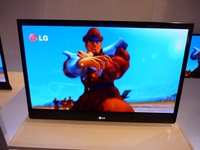
LG's latest OLED TV – the LG EL95000 – is apparently now shipping in the UK, if a new listing on Amazon.co.uk is to be believed.
The latest OLED TV from LG costs a mere £1970, according to the site. The LG EL9500 has a 15-icnh OLED panel with 1366x768 resolution, 100,000:1 contrast and a response time that is lower than 0.01msec.
Thin and good-looking
On top of all that it's only 1.7mm thick. The news follows Sony's recent decision to stop making its own small OLED TV.
LG originally announced that it plans to start shipping the TV in Europe in May, so there is always the chance that Amazon UK is getting a little ahead of itself here.
Either way, if you have the cash to splash and are in the market for a top-end TV for your study or bedroom, the latest OLED marvel from LG is going to be pleasing your tired eyes sometime very soon.

| |
Read More ...
Opera Mini browser submitted to iPhone App Store

Opera's super-speedy Opera Mini mobile browser has finally been submitted to the iPhone App Store.
We first got wind of the iPhone-flavoured browser at Mobile World Congress, where Opera noted it is "six times faster than Safari".
For this reason, it will be interesting to see if the browser is accepted, considering Apple rules its app store with something of an iron fist – especially when it comes to allowing web browsers on the store.
Customised and stylised
"The Opera Mini for iPhone sneak peek during MWC told us that we have something special," explained Jon von Tetzchner, Co-founder, Opera Software in the company's release.
"Opera has put every effort into creating a customised, stylised, feature-rich and highly responsive browser that masterfully combines iPhone capabilities with Opera's renowned web experience, and the result is a high performing browser for the iPhone."
The Opera Mini browser is already on the Android Market and for BlackBerry handsets, albeit in beta form. It's also available as a full version for WinMo phones.
One of the features the browser seems to be lacking is the ability to use the iPhone's pinch-to-zoom feature.
But it seems that this could be something that is added to the app later on. If there is a 'later on'.

| |
Read More ...
Exclusive: Canvas is the 'evolution' of Freeview and Freesat

Richard Halton has described Project Canvas as 'an evolution' for both Freesat and Freeview – hoping that the arrival of IPTV can take both platforms to a new level.
Halton – Director of Project Canvas – told the IPTV World Forum that he has personal experience with both Freesat and Freeview, and says that Canvas will remain 'very distinct' from both of the free-to-air services whilst adding to both.
"I have deep history with both projects, having been on the board of Freeview for two years and having been involved in the development of Freesat so I personally have very good relationships with those two," said Halton.
"Canvas will be very distinct from Freeview and Freesat but particularly for Freeview, Canvas is an important next step in the journey of subscription free television.
"We see Canvas as an evolution for those platforms."
Exciting times
Halton lavished praise on both platforms, believing that the arrival of things like the iPlayer for Freesat and Freeview HD show the vibrancy and success.
"Interesting things are happening with those platforms," added Halton.
"For all of the shareholders of those companies involved in canvas, canvas becomes the next expression."

| |
Read More ...
Android 2.1 comes to HTC Hero in April

The HTC Hero is set to get an Android 2.1 firmware update 16 April, after it was announced a worldwide update for the handset was on the cards.
The update (codenamed Froyo) mean that the phone will match the recently released HTC Legend and soon to be released Desire for firmware.
Although the worldwide rollout is to start as early as 2 April, UK HTC Hero users – who have Orange and T-Mobile contracts – won't see the firmware until 16 April at the earliest.
If you are a 3 user, then you will have to wait another week, as your update isn't coming till 22 April.
New features
Key features for Android 2.1 include the use of multiple email accounts on a device, Quick Contacts feature and Exchange support.
Things like the camera, messaging and virtual keyboard are also improved. As is the browser – now with support for HTML 5 – and Calendar.
While the update is good news for HTC Hero users, it does give the more expensive Legend one less feature to differentiate itself from the handset – something that may well impact in sales.

| |
Read More ...
Exclusive: T-Mobile confirms HTC Desire is on sale now

After the confusion over whether T-Mobile is stocking the HTC Desire yet, TechRadar has spoken to the network to clarify the situation.
Apparently the phone is now on sale via the website, so T-Mobile has gone live ahead of its previously stated 26 March UK release date.
Many readers contacted us to say they were being told they couldn't order the phone or it was out of stock, and T-Mobile has admitted a slight problem with the HTC Desire ordering process:
""We can confirm that the HTC Desire is now available to order from our website, with a delivery time of around 7 days, and will be available in stores from Monday 29 March.
Glitch
"A technical glitch which had shown the device as out of stock has now been amended, and we apologies for any inconvenience or confusion this has caused."
We've not been able to get word on whether the stock is for new or existing customers, although we are hearing that T-Mobile has stock for both.
But don't worry if you're not with the pink network – Vodafone, O2, Orange, 3 and Virgin Media are all going to be stocking it within the month.

| |
Read More ...
Review: One For All SV9380

The One For All SV9380 is a different beast altogether. Selling for a whopping £60 it needs to really deliver to justify paying between three and six times the cost of its rivals.
The packaging boasts of Full HD compatibility, which might be construed as being misleading given that there are no full HD broadcasts, nor likely to be.
The aerial is a slab design, measuring 280mm wide by 138mm tall, encased in a sturdy plastic housing with a brushed aluminium stand. The built-in booster can amplify signals up to 42dB.
Technically speaking, the SV9380’s main draw is the use of Dual Patch technology. One For All claims that this ensures maximum reception for higher density information streams such as the DVB-T2 and HD MPEG4 transmission.
It eliminates unwanted reflection by using a differential mode in the two antenna plates. There is no need for polarisation so it can receive both horizontal and vertical transmitted broadcast signals at the same time.
It should also ensure stable load and gain across the entire frequency spectrum in order to minimise echo and reflection between both the antenna and receiver.
The aerial features SignalClear technology with triple interference filters that offer 10 stages of filtering to eliminate all unwanted wireless signals such as mobile phones.
How it fares
Tragically, in our home test with a less than strong signal the aerial picked up no channels at all.
Related Links
| |
Read More ...
Exclusive: Canvas chief praises Sky's BBC Trust submission

Richard Halton – the man fronting Project Canvas – has insisted that the IPTV partnership can overcome the objections of other major UK broadcasters, and offered his congratulations to its harshest critic Sky for the constructive nature of its submission to the BBC Trust.
Although it has been granted a preliminary greenlight from the BBC Trust, it will wait for the Office of Fair Trading to look into the partnership between the BBC, BT, Channel Four, Five, ITV, Talk Talk and Arqiva, as well as receiving submissions from those critical of the project before giving a final go ahead
In the meantime, Sky has not let up in its outspoken and public criticisms of the BBC involvement, with a column by Mike Darcey in the Guardian outlining the main objections from the broadcaster.
Charm offensive
However, at the IPTV World Forum, Halton joked about the failure to yet rein in the criticism and insisted that the complexity of the project was what made it so fascinating.
"As you see from Mike Darcey's piece last week I've been brilliantly successful," joked Halton when asked how the charm offensive was going.
"Sky in particular have their own perspective on Canvas. I'm not sure that the arguments that they have put forward in recent weeks are particularly consistent but you know there's two sides to that discussion which is what makes this such an interesting project for me.
"For any broadcaster that has a wide range of content and wants to make it available over an IPTV device, Canvas is pretty exciting.
"Whether it's Sky Player or Blinkbox or the BBC iPlayer, Canvas will open up three or four million homes that can't get interactive and on-demand services; regardless of your business model that's pretty exciting."
Constructive criticism
Halton believes that Sky's submission to the Trust raised interesting points, adding: "In some ways I congratulate Sky for its submission because it's very constructive in lots of ways.
"My view is that partners will engage in the project."

| |
Read More ...
Real-time sharing app pulled from YouTube

YouTube announced this week it has done away with its Realtime Toolbar – a feature which was meant to aid the finding of new videos on the site.
Instead of announcing the pulling of the feature on its blog, the news was spilled on the site's bug report forum by 'Liz' from the YouTube team.
"We've seen some of you wondering what occurred to the Realtime Toolbar," explained Liz.
"The Realtime Toolbar was recently retired and is no longer an available feature on YouTube.
"We were excited to release and experiment with Realtime and it has inspired us for new features on YouTube in the future."
Improving the YouTube community
But all is not lost, however, with Liz noting: "We look forward to introducing many new features in the coming months and are sharing them with you all.
"Many thanks to those of you who used Realtime and for your feedback to us on this feature – your suggestions and input help the Team shape the site and determine what should be developed to further improve the YouTube community."
The Realtime Toolbar won't be missed by many as it was an invite-only scheme. In a statement YouTube explained that the feature was part of its TestTube service and while "some social features, like Auto-Share, gain a lot of interest and adoption within the YouTube community, others do not."

| |
Read More ...
In Depth: Is 2010 the year for 3D TV, games and movies?

The future is here – and it's looking pretty. I'm sitting in a darkened room at Sky's HQ in West London, peering through a pair of polarised glasses at television's next evolutionary step - 3D TV.
In front of me is a 46in JVC 3D TV displaying a show reel of Sky's best efforts in the brave new world of 3D entertainment. It's impressive.
The action appears to be happening an inch or so behind the razor-thin bezel of the TV, then telescoping off into the distance. There's a real sensation of depth.
With Sky's Senior Product Development Manager John Dollin, I watch clips of a Champions' League game, a boxing match featuring Ricky Hatton and a spot of rugby. The ball zooms into the screen from the corners and the players run convincingly in front of the distant stands.
"All the investment we did in 2005 and 2006, when we did HD, is what enables us to do 3D. We're just piggybacking off that," Dollin says. The changes Sky needed to make to its broadcast technology to offer 3D channels were "small and incremental", and it plans to launch its first 3D offering in 2010.
The three dimensional clouds are gathering into the perfect storm. In December 2009, it was announced that 3D Blu-ray discs will be available from this summer. Graphics card manufacturer Nvidia already markets a 3D solution for PC gamers, complete with a high-spec monitor and 3D glasses. Even better, the tech works, and big-name manufacturers and content producers are getting in on the act.

"Every single [television] manufacturer you can think of has a 3D TV coming out," says Dollin. But promises of a 3D future are all too familiar.
Since the advent of 3D cinema in the early '50s, entertainment companies have sporadically announced that the future is 3D – and it's arriving soon. Whether it was House of Wax in the '50s or the 1983 box office smash Jaws 3D, the future has worn silly glasses for as long as most of us can remember.
What makes this time any different, and how is the entertainment industry going to make 3D stick?
How 3D TV works
Happily, 3D technology has progressed beyond recognition since the days of glasses made of cardboard and red and blue cellophane. The only constant is how we detect depth – each eye sees a slightly different image and the brain merges them together.
Flatscreens use a little trickery to display a 3D image: each eye is fed a different picture by filtering out light, and the brain is fooled into providing information about an image's depth.
One of the oldest – and least commercially successful – tricks in the book is adding red and blue tints to a pair of images and displaying them simultaneously. Known as anaglyph 3D, a pair of coloured glasses filter out either the blue or red channel, tricking the brain into thinking that it's seeing different perspectives. However, the technology isn't that impressive visually, and anaglyph has failed to find favour with the new wave of 3D technology.

Now there are two frontrunners. The first is known as passive polarisation, and it's what Sky is demonstrating. Footage is shot using two cameras that are placed in slightly different positions but converge on a single focal point – like your eyes. It then broadcasts two images, each 960 x 960 in size.
These are stretched across a special HDTV with what Dollin calls a "pixel perfect" polarising filter across it. Finally, a pair of polarised glasses filter out light line by line, providing your eyes with slightly different images and your brain with enough information to build a 3D image.
The advantage is that the glasses are cheap, making them perfect for Sky's initial intended audience of pub-goers. Dollin also says that the 3D image can be received by all of Sky's 1.6 million Sky HD subscribers without the need for a new decoder box.
The second approach is more accessible for PC users. It doesn't require a polarised screen – just a monitor or a TV capable of running at 120Hz or faster. Instead of showing two perspectives at once, the display flickers between them.
Light is filtered out by a pair of active shutter glasses that have LCD crystals for lenses. When a charge is applied to each lens, it blacks out for a fraction of a second, perfectly in sync with the image that the screen is showing thanks to a transmitter connected to the display.
This means the screen is a little cheaper – ViewSonic's 22in 120Hz VX2268wm display costs just over £200. However, the glasses are far more complex than Sky's passive solution. Nvidia's 3D Vision set – which comprises just one pair of glasses and a wireless transmitter – costs just over £100.
The introduction of 3D into your home means one thing to hardware manufacturers: the opportunity to sell more kit. The first thing you'll need is a new screen, and if 120Hz or faster displays seem costly, you should hold your breath when looking at the price of a passive 3D display.
The 46in JVC TV that Sky used to demonstrate its 3D content might be capable of 1080p and come with a pair of 3D glasses, but the £8,000 price tag is positively mouth-drying. Not only are you likely to need a new screen, but you might also need a new graphics card if your PC is looking a little long in the tooth.
All 3D games are rendered twice, thanks to the need for distinct left and right images. "It's quite handy for us that people want to play in this 3D environment," says Richard Huddy, ATI's Senior Developer Relations Manager. "The gaming situation clearly requires a great deal more horsepower, because essentially [the video card] is doing twice as much work."
There's even worse news if you're a console owner. Huddy says that while Sony and Microsoft are in the process of giving their PlayStation 3 and Xbox 360 consoles longevity by releasing new motion-sensitive controllers, neither has a future in 3D.
"The truth is, doubling the memory demand and the fill rate [would] overwhelm both an Xbox 360 and the PlayStation 3 at any respectable resolution," he says.
If Microsoft or Sony released 3D games for either console, Huddy says that it would be a "token effort". "You couldn't take any of the high-end games of the moment – Killzone, Halo 3 or anything like that – and run them in full 3D on those consoles. They don't have the horsepower," he warns.

However, a Sony spokesperson revealed to PC Plus magazine that "technological investigation" into 3D on the PlayStation 3 is underway, with a view to allowing gamers to play 3D games on the existing hardware.
For the time being, the best way to play 3D games is on a PC. Doug McConkey, a product manager at EA, claims that the PC is the best medium for dragging 3D into the consumer's consciousness. "The more platforms [3D] is on the better, but the PC has the potential to make it mainstream," he told us.
3D gaming on PCs
For now, PC users are at the forefront of the 3D revolution. Upgrading a monitor is cheaper than upgrading a TV set and, similarly, a graphics card can be replaced without the need for an entirely new system. 3D is even available on laptops.
The Acer Aspire 5738G, for instance, looks like any other mid-range laptop, but its bright 15.6in screen has a polarised filter that's similar to Sky's 3D system. Pop on a pair of polarised 3D specs and the ATI Radeon HD 4750 can render videos or games in 3D.
If anything, however, the Aspire underlines how new 3D really is, as well as how far it has to go before it becomes, in the words of an Nvidia spokesperson, "just there" – included by default in all consumer screens.
The demo material included with the laptop has an undeniable sense of depth, but vertical lines appear jagged and the laptop screen's viewing angles are so restricted that tilting the screen just slightly too far towards or away from you ruins the image.
3D isn't restricted to computers. Fujifilm raised eyebrows in July last year when it announced its twin lens, dual-CCD camera, the FinePix W1 3D. Like Sky's 3D cameras, the set-apart lenses capture the same picture from slightly different angles. Unlike the polarised 3D effects of Nvidia or Acer's solutions, however, the W1 relies on lenticular technology to trick you into seeing a 3D image.

Lenticular technology places a ridged coating on top of an image to feed you different pictures, much like the apparently moving images occasionally found on the back of cereal packets. The W1's 2.8in screen displays two images at once, so depending on where you stand you'll either see a 3D image or a mishmash of two separate ones. The upside is that you don't need a pair of glasses to see a 3D image, but, as with Acer's 3D laptop, the technology currently feels a little rough and ready.
Lenticular technology's major downfall is that it's heavily dependent on your viewing angle, so you need to be almost exactly the right distance away from the screen, and viewing it at almost exactly the right angle, which can be difficult with a handheld device. The W1's price also smacks of early-adopter pocket-squeezing: at £400 it's more expensive than the far more luxurious – but 2D – Canon G11.
For 3D to succeed, it will take much more than a token effort. According to Sky's Dollin, part of the reason previous generations of 3D have failed to capture the imagination of the gaming and film-going public is that 3D was treated as a "fairground ride" – a gimmick.
Unsuccessful efforts at 3D tried too hard, he says, exhausting audiences by providing a constant stream of 3D trickery designed to make as much of the technology as possible. Modern producers "are trying to be a lot more sympathetic to the medium, and trying to make it more real," he says.
Andrew Pulver, Film Editor at The Guardian, agrees. Past attempts to bring 3D into the mainstream resulted in "low-rent, exploitative [films]," he says. New films such as Avatar – which is reported to have cost as much as £300million – could prompt an explosion of 3D films. Pulver says the 3D "works really well" in Avatar and that, for the first time, a studio has financed a "serious, major [3D] blockbuster by the biggest director in town".

There's little arguing with the list of upcoming 3D releases, either: director Tim Burton features heavily, with releases such as Alice in Wonderland and The Nightmare Before Christmas due in the next 12 months.
Games are easier to convert. Depth information is already programmed in, so the only major added cost is the hardware needed to play the result. "In development time, the costs are minimal," says EA's Doug McConkey. Hopefully this should mean a proliferation of 3D games – and soon.
3D controllers
Even if the future of entertainment isn't 3D screens, the world of the controller is expanding in every direction. Nintendo's Wii Remote is the most famous example – a controller that knows where it is in relation to the screen. Richard Huddy describes the Wii Remote as "immensely attractive" to gamers. And the figures seem to prove him right: the Wii is by far the best selling console, leaving Microsoft and Sony playing catch-up.
Sony's forthcoming motion controller, the Move, works in a similar way to the Wii Remote. It features a coloured orb on the top which is tracked by a webcam on top of the display, while the controller itself also feeds back motion information. A spectacular demo at E3 last summer hinted at an incredibly powerful system, although recent reports about lag are a bit worrying.
Microsoft's Project Natal for the Xbox 360 is even more advanced, removing the controller altogether and tracking a user's movements in real-time via a display-mounted camera. To hit an opponent, simply throw a punch in mid-air.

Speaking at the technology's launch at CES in Las Vegas back in January 2009, Steven Spielberg described Project Natal's announcement as "a pivotal moment" that would "reach far beyond video games".
With Sky's 3D service set to launch this year, 3D gaming beginning to emerge and popular blockbusters such as Avatar making great use of 3D technology, you might think that the battle is won. But the experts PC Plus spoke to were cautious.
"The truth is, it's stumbled many times before," says ATI's Richard Huddy, describing the longevity of the latest 3D tech as "the toughest question".
Will 3D stick this time?
Back in September 2009, The Guardian ran a story saying that the BBC might show Olympic events in 3D in 2012. This raised the prospect of a BBC 3D channel arriving in less than two years.
However, Roger Mosey, the Director of the BBC's 2012 Olympics operation, has been quick to talk the BBC's plans back to reality. "There won't be a BBC 3D channel in 2012," he told PC Plus. But that's not to say that the BBC is shunning 3D altogether.
Instead, the corporation plans to capture certain Olympic events in 3D regardless of the public's ability to receive them at home. "It would be a shame for some of the big moments not to be captured in 3D," he says – but for now, the BBC's priorities lie with broadcasting the Olympics in HD rather than 3D.
The BBC aren't alone in holding off from investing in 3D technology, and The Guardian's Pulver seemed to share the corporation's misgivings. "I wouldn't be surprised if [3D] did peter out," he says, noting that Avatar is largely responsible for the medium's future. The film's results need to be "pretty spectacular" for studios to finance more 3D films.
Sky's John Dollin is optimistic, though. He says that Sky isn't releasing a 3D service "just for the sake of 3D". ATI's Richard Huddy sees hope for the future, too: "If the BBC, Sky, Virgin and so on roll [3D] out over the next couple of years, then it will work."
Sky's service is to launch this year, although the company refuses to be drawn on precisely when. "This is going to be bigger than I think people believe," says Dollin. We just hope he's right.

| |
Read More ...
Review: Audio Desk Systeme CD Improver

German company Audio Desk Systeme has come up with a machine that cuts a bevel into the edge of CDs (DVDs, BDs etc) and is designed to combat light scatter when playing an optical disc.
It sounds bizarre but even more odd is how well it works.
Making the cut
The CD Sound Improver is a simple lathe that's built specifically to cut a bevel on the playing side of a 12-centimetre disc. It has a belt-driven turntable onto which you clamp the disc and a specially mounted cutting tool.
This tool also makes the disc totally concentric, thus reducing any potential vibration that an off-centre disc will induce in the disc transport. A surprising number of the discs I bevelled were not truly concentric.
It's a little unnerving to start slicing the edge off your favourite CDs, so my initial investigations were done with a pair of identical CD-Rs, in order to have something to compare results with.
The process is pretty straightforward once you steal yourself to get going and its very fast to do, twenty seconds is enough. You then need to mark the edge with the supplied permanent pen.
Built to last
As one would hope with small-scale German engineering, build quality is very good, while the lathe and cutter are remarkably good value. You won't find many accessories that offer this sort of quality/price ratio.
There's a port at the back for connecting a vacuum cleaner hose to extract the swarf which builds up quickly, and the cutting tool, or burin as it's called, is said to be good for 2,000 discs and can then be replaced.
The knob on the front adjusts speed: run it fast for cutting and slow for marking with a permanent marker afterwards. In practice, turning it by hand makes this second process a little easier.
How it makes a difference
The effect is not mind-blowing, but it's certainly worthwhile. Discs that have been 'improved' clearly have wider dynamic range, thanks to a lowered noise floor that naturally lets more detail through. Nothing changes tonally and imaging remains the same, but you can hear further into the mix and the nature of sounds is easier to distinguish.
There is a general cleaning-up of the sound across the board, so bass is better defined and more punchy, while the treble has more air – cymbals, for instance, sound more realistic.
On one album of percussion and drums it was not possible to hear exactly how some of the sounds were being made prior to bevelling and marking, but after machining the extra resolve gave me enough insight to be able to visualise the instruments (if not actually name them!).
The improvements wrought by this device are clearly worthwhile if you want to hear more of what's on your discs. And you'd have to spend a lot more on cables or hardware to get the same effect, this combined with the fine build quality make the CD Improver something of a bargain.
Related Links
| |
Read More ...
Virgin's VSS Enterprise takes to the skies

Virgin Galactic saw the inaugural "captive carry" test flight of space tourism aircraft the VSS Enterprise (formerly known as SpaceShipTwo) this week.
The space cruiser spent just under three hours attached to the WhiteKnightTwo carrier aircraft flying around the Mojave Air and Spaceport in California. The VSS Enterprise has been developed by Ansari X prize-winners, Scaled Composites.
A momentous day
"This is a momentous day for the Scaled and Virgin Teams", said Scaled founder Burt Rutan. "The captive carry flight signifies the start of what we believe will be extremely exciting and successful spaceship flight test program."
The captive carry test flight reached an altitude of 45,000 ft (13716 metres) which was just under the 50,000 ft release height planned for actual space flight, in which the VSS Enterprize will hit Mach 4 once released and cross the Kármán line to reach its maximum height of 361,000 ft (110 km) before it heads back down to earth.
Virgin Galactic has already taken $45 million in deposits for spaceflight reservations.

| |
Read More ...
Review: Philex digiTop 27770R

The Philex digiTop 27770R is the 27768R's big brother, costing just £4 more it adds a signal booster to the party and aims to deliver where the cheaper sibling sadly failed.
Assembly is more or less the same procedure as the 27768R, combining the column and the base. With over 3m of aerial and power supply cable the aerial provides good flexibility in terms of positioning.
The specification meets the needs of most indoor aerial users with a couple of very handy features. The power supply is 12V DC and a UK mains adaptor is supplied although you could run it off a car or caravan battery.
There's also an RF input which enables the unit to act as a booster for a separate UHF source such as a roof-top aerial.
How it fares
Without the amp plugged in the signal delivered to the TV or Freeview box is whatever is fed into the aerial's external RF socket.
To select the signal from the aerial you switch the booster on. The 27770R is a different beast to the 27768R with excellent reception of all BBC channels, plus ITV, C4, C4 + 1, E4, Dave and Sky 3.
The booster features a variable gain control for fine tuning although it's best to simply set it to maximum.
Related Links
| |
Read More ...
Project Natal needs 13 feet of free space

Microsoft has revealed that you will need 13 feet of free space in your lounge to properly play Project Natal games.
That's four metres. Of space in your lounge. Not taking into account sofas and coffee tables and bookcases and chairs and other encumberants that might get in the way of you pretending to play a virtual game of tennis on your TV.
If you need to visualise this, four metres is around the average length of a standard family saloon car. Which is, on average, more space than most Brits (and Japanese) have available in their living rooms.
Four metre rule
The latest finding on Natal's requirements comes directly from Techflash, which claims the 'four metre' comment was made at a press event led by Microsoft Xbox division's Chief Research and Strategy Officer Craig Mundie.
"To be precise, you'll want to clear an area extending at least 4 meters (a little more than 13 feet) away from the television. That's the back edge of the space to be taken into account by the Natal sensors," Techflash reports Mundie as saying.
"In terms of width and height, the field of vision naturally expands as it moves from the Natal device to that back edge, ending up a little more than 4 meters wide and 2.7 meters high (about 8 feet, 10 inches)."
We don't know many Brits with that amount of free space in their lounges, particularly amongst city-dwellers. Also, Japanese gamers (admittedly not the fastest Xbox 360-adopting population in the world) have even less free space in their living rooms that their British counter-parts.
Could the space issue be an area in which Natal might fail to take hold in Europe and Japan? It would certainly seem strange if Microsoft has not taken this into account…

| |
Read More ...
Review: Pro-Ject RPM-1 Genie 3

The Pro-Ject RPM-1 Genie 3 is built exactly how a budget turntable should be; solidly and precisely constructed with no clumsy mechanical or complex electronic devices to spoil the sound.
It's also from a company whose Debut and Genie ranges have not only brought new blood into the vinyl market, but tempted back the more mature audiophile with basic, but well-engineered decks. Decks that are perfect for playing a favourite disc from a prized record collection.
Magic lamp
The Genie 3 is typically evolutionary of Pro-Ject, yet features some pretty impressive technology at this price point.
The decoupled motor unit stands out-effectively preventing noise and vibration from the motor interfering with the sensitive pick-up. A two-step pulley allows for the playback of both 33 and 45s by manual belt change, while the brand new 8.6 tonearm (ike the famous Rega RBs) is now a one-piece, aluminium design for improved rigidity.
Internal wiring is silver-plated, high-purity copper and, as before, the counterweight is under-slung, lowering the centre of gravity and, hopefully, improving the tracking ability. Anti-skating is now adjustable via a thread and weight system, while the plinth thickness is up from 24 millimetres to 30 millimetres for improved mass and rigidity and sits on three, fixed, plastic cones.
Included with the Genie is an Ortofon OM3E MM cartridge which, on its own, is worth about £40. Not included, however, is any form of lid or soft plastic cover.
For the money the Genie 3 is exceptionally well made. The motor unit is weighty and features a non-slip, damping pad. Its MDF platter is thick, but let down by the thinnest felt mat I've ever seen!
The re-profiled MDF chassis is neatly finished with glossy, evenly applied paint and no nasty sharp edges; black and white finishes are also available. The tonearm is terminated by gold-plated phono sockets that allow a choice of leads.
In-genie-ous
Given its price, the Genie 3 sounds exceptionally good. Listening first with The Black Eyed Peas, I found the performance instantly involving with a cohesive, well balanced sound quality. Vocals are naturally portrayed and cleanly separated from the rest of the mix, while the soundstaging is good enough to compete with turntables from a class above.
Although the bass is on the rich side and certainly not as incisive as more expensive turntables, the timing is fine and the depth of sound trounces similarly priced digital sources. The treble response is surprisingly well detailed although frequency extremes, such as high female vocals do expose some rough edges.
Classical music shows a realistic instrumental timbre and good layering of the orchestra. By the way, the Genie 3 is well able to withstand cartridge upgrades, so try an Ortofon 2M Blue for added refinement and bass precision.
In terms of sound and build quality it's difficult to fault the Genie 3. A lid and a thicker mat would be worthy additions, but these complaints seem churlish next to the thoughtful spec and excellent construction.
Equally, the sound is slightly compromised at frequency extremes, but overall offers a cohesive and seamless balance. A class leader.
Related Links
| |
Read More ...
The great firewall of China blocks Google.com.hk

Internet users in China searching Google's Hong Kong-hosted site (google.com.hk) for information on Falun Gong, the banned spiritual movement, or '89 student movement' were met with an all-too familiar message: "the connection was reset" today.
This is because the 'great firewall of China' is already blocking search results from Google's new Hong Kong hosted site.
"Connection was reset"
Google's decision to relocate its Chinese-language search engine from Beijing to Hong Kong will no doubt have many repercussions. The first of which is the fact that those searching Google in China can no longer access sensitive information that the state doesn't want them to read.
The Chinese government heavily controls content posted inside China and the so-called "great firewall" stops them from reading sensitive material that is hosted on websites overseas.
This is why Chinese web users cannot access YouTube, Twitter, Facebook and thousands of other sites that western web users just take for granted.
"The great firewall is implemented by internet police in three ways," notes a report by Tania Branigan, The Guardian's Beijing correspondent today. "The first two are common tactics: blacklisting domain names and IP addresses, for example those belonging to groups such as Amnesty International. These methods are used by many countries around the world.
Unique censorship technique
"The third technique used by China is "close to unique"…[a] keyword blocking system. Essentially, the government's system mirrors and searches each packet of data as it passes in and out of the country, looking in URLs and webpages for keywords such as "falun", in reference to the banned Falun Gong spiritual movement. Should it find them, it breaks the connection.
Now that Google has pulled out of China, the rest of the world will be focusing heavily on China's censorship of the internet, asking difficult questions about the reasons behind the state's activities in this area.
"The result is that China is beginning to look like the world's biggest intranet, joke users."

| |
Read More ...
Breaking: Glasses-free 3D-capable Nintendo 3DS to be revealed at E3 in June

Nintendo is to announce a new 3D-capable handheld gaming console called the Nintendo 3DS at E3 this coming June.
The Nintendo 3DS will allow you to play games "enjoyed with 3D effects without the need for any special glasses," according to Nintendo.
Out soon
The company will release the new 3D handheld console at some point within the next financial year, between April 2010 and March 2011.
Kotaku notes that Nintendo president Satoru Iwata previously stated Nintendo was considering the "possible health effects" of playing video games in 3D for long periods of time.
The Nintendo 3DS will be fully backwards compatible with Nintendo DS and DSi games.
Nintendo recently released a DSi game in Japan that used the devices' camera to track your head movements in order to deliver a glasses-free 3D illusion to the gamer. It's not clear if this is the type of 3D tech that Nintendo plans to make use of in the Nintendo 3DS.
TechRadar has spoken with a Nintendo UK rep this morning who could not tell us anything more about the technology being used in the new Nintendo 3DS. "We will not release any further information until E3 in June," the rep informed us.
Stay tuned for updates as they come in. in the meantime, you can read the Google translation of Nintendo's 3DS press release online here.
Here's the full announcement in English:
Nintendo Co., Ltd.(Minami-ward of Kyoto-city, President Satoru Iwata) will launch "Nintendo 3DS"(temp) during the fiscal year ending March 2011, on which games can be enjoyed with 3D effects without the need for any special glasses.
"Nintendo 3DS"(temp) is going to be the new portable game machine to succeed "Nintendo DS series", whose cumulative consolidated sales from Nintendo amounted to 125million units as of the end of December 2009, and will include backward compatibility so that the software for Nintendo DS series, including the ones for Nintendo DSi, can also be enjoyed. We are planning to announce additional details at E3 show, which is scheduled to be held from June 15, 2010 at Los Angeles in the U.S

| |
Read More ...
Google pulls out of China, stops censoring search

Google has stopped censoring its search results in China and started to re-direct Chinese users to an uncensored Hong-Kong based site.
Chinese state officials have been quick to criticise the move, saying it was 'totally wrong' and in violation of Google's promise to abide by Chinese law.
Beijing's firewalls are already censoring sensitive searches within mainland China.
Major political upheaval
Google has explained the move in detail on its blog.
For its part, China is clearly not happy with the latest moves by Google, with Chinese foreign ministry spokesman Qin Gang saying that the move was an isolated act by a commercial company and that it should not affect China-US ties "unless politicised" by others.
A leading (and un-named) Chinese official responsible for online affairs told the Chinese state news agency Xinhua: "Google has violated its written promise it made when entering the Chinese market by stopping filtering its searching service and blaming China in insinuation for alleged hacker attacks.
"This is totally wrong. We're uncompromisingly opposed to the politicisation of commercial issues, and express our discontent and indignation to Google for its unreasonable accusations and conducts."
However, make no mistake, while Chinese officials are already playing this down as a 'minor commercial matter', this is a major political upheaval and is sure to have significant repercussions, with one of the internet's leading companies refusing to do business in China, claiming 'free speech' issues as its reason for pulling out of this huge and potentially massively lucrative market.
Don't be evil
Chinese IT specialist Chen Yafei told Reuters: "Any company entering China should abide by Chinese laws… Google has its own credos. The fighting between Google and the Chinese government is their own business. Chinese internet users will have no regrets if Google withdraws."
Google's Legal Officer, David Drummond noted that the company thought that providing uncensored searches via Hong Kong-based google.com.hk website was "entirely legal" and would provide "access to information for people in China".
"We very much hope that the Chinese government respects our decision, though we are well aware that it could at any time block access to our services," the Google rep wrote in a blog post.
Analysts said that initially Google's prospects would not be dented by shutting down Google.cn as it is responsible, at most, for 2 per cent of its annual $24bn (£15.9bn) revenue.
China operates one of the most sophisticated and wide-reaching censorship systems in the world.
Thousands of police officers are employed to monitor web activity and many automated systems watch blogs, chat rooms and other sites to ensure that banned subjects, such as Tiananmen Square, are not discussed.

| |
Read More ...
Government launches MyGov - uses holiday sites as inspiration

A new government website which vows to cut through the bureaucracy that makes managing things like tax credits and pensions a pain has been announced.
MyGov is a customisable site, created using the wonders of open source, which allows everyone in the UK to fashion a homepage for their own needs.
A successor to DirectGov, MyGov allows you to do things like sort out a doctor's appointment, apply for a school or get a new passport quicker and easier.
According to Gordon Brown, who outlined the site in his Building Britain's Digital Future speech, "MyGov marks the end of the one-size-fits-all, man-from-the-ministry-knows-best approach to public services.
Radical new model
Brown also remarked that: "MyGov will constitute a radical new model for how public services will be delivered and for how citizens engage with government - making interaction with government as easy as internet banking or online shopping.
"This open, personalised platform will allow us to deliver universal services that are also tailored to the needs of each individual; to move from top-down, monolithic websites broadcasting public service information in the hope that the people who need help will find it - to government on demand."
It seems that Brown et al have taken the idea of booking a holiday online and used this as the blueprint of MyGov.
For one, Martha Lane Fox has been put in charge (she of LastMinute.com fame) and Brown also offered this brilliant piece of wisdom in his speech: "Today you can book and pay for a holiday online in minutes. Why can't you do that for a blue badge for a disabled person? With MyGov you will."
There's no UK release date yet for the site but MyGov we'll let you know when it's announced.

| |
Read More ...


1 comment:
www.sangambayard-c-m.com
Post a Comment