

SXSWi 2010: Google worked on Buzz for 4 years before launch

In a panel at South by South West Interactive called Gmail: Behind the Scenes, Gmail engineer Jonathan Perlow dropped a jawdropping fact: Google had been working on Buzz for four years before it launched.
To find out why it took so long, we spoke with Todd Jackson, product manager for Gmail and Google Buzz.
Jackson was keen to point out that it wasn't four years of solid development:
"For many of the projects that we do in Gmail, we'll try something and for whatever reason maybe it will work or maybe it won't work and sometimes we come back to the projects later," he explains.
"For example, some of the labels work that we launched about a year ago had been an ongoing thing. We'd always thought from the beginning of Gmail, how could we improve labels, how could we make them more accessible to people.
"So that's something we often do - it wasn't unique to Buzz in any way. We often try a project several times before we get something that we really like. It's part of our philosophy around iteration."
We asked Jackson how the idea for Buzz came about.
"The thing that was most interesting to us originally was we had chat in Gmail and we wanted people to be able to share status messages in chat, and then the next logical thing was we wanted to be able to let people reply to status messages, because before Buzz there was no way to do that," Jackson explains.
"You could post a status message but it could never turn into a conversation. So that was one of the early experiments that we tried before."
The 'experiment' was then put on ice. "For whatever reason there were other projects that we decided were more important," says Jackson.
"The biggest project we did was the entire re-write of Gmail's JavaScript architecture which has allowed us to do more projects concurrently. But for a time two or three years ago the entire team was working on that and so we weren't as able to work on certain different projects. Since that major rewrite we've been able to revisit some of those projects and bring them to life."
What is Buzz for?
Feedback to TechRadar since the launch of Buzz has shown confusion about just what it's for.
"Then we have to do a better job communicating that to people," admits Jackson, going on to explain the Google Buzz philosophy.
"First of all, within Gmail, we want to solve all the ways that users want to communicate. We started with just email and then we added chat and then we added video chat. And this sort of passive social sharing is another way that people obviously want to communicate and so we want Gmail to be a good tool for that. But if people can't figure out what it's for then that's something we need to do better at."
Jackson says Google envisions Buzz as a way people to be able to "share all kinds of stuff – interesting news that they are reading, photos that they just took, places they went to, chat status messages that turn into conversations, and we want that to be a really easy and fluid experience inside Gmail where we know a lot of people are a lot of the time."
And while that's the vision for Buzz, Jackson admits that the service hasn't yet fulfilled that promise.
"I don't think we're there yet," says Jackson. "It's something that we are continually working on and launching new features – we just launched some features that are enhancements to Buzz and you're going to see us continue to work on it and adding new features to serve this vision that we have where people will be using it as a major communication tool."

 |  |
Read More ...
Blu-ray players replace cameras in UK inflation basket

Blu-ray players have made it into the UK's inflation shopping basket, the hypothetical collection of goods which highlight consumer spending habits.
The hi-def disc spinners have been included in the mix of what we are spending our hard-earned on as they "capture price changes in this new expanding technology."
We're guessing that the changes mean that the price of players is rapidly coming down, so everyday consumers are now starting to purchase players and not just early adopters.
Ch-ch-changes
Other bits of technology which have been added to the 'shopping basket' are computer games' accessories, something the report call a "relatively new market".
Hair straighteners and tongs are also included – interestingly these goods replace the hair dryer.
Other than a hairdryer, the only other piece of technology which has dropped out of the basket is a disposable camera. This is "due to decreasing expenditure as digital compact cameras and mobile phone photography become increasingly popular".
Other goods to drop out include pitta bread (in its place is the far more exotic garlic bread), fizzy drinks for fruit drinks and, wait for it, liquid soap is now preferred to individual bars of toilet soap.
We're hoping that broadband implants and the iPhone HD make it into 2011's list.

| |
Read More ...
Exclusive: Gmail: we are focussing on features not user numbers
Since launch, Gmail has grown to become the third largest web mail service in the US, and while Google wants to see usage grow, it is more focussed on bringing new features to existing users.
In an exclusive interview with TechRadar at South by South West Interactive, Todd Jackson, Product Manager for Gmail and Google Buzz, explained why.
"We hope that more and more people will use Gmail – and not just that more people will use it but that people will use it more often," he said.
"This is something that Larry and Sergey, the founders, tell us – focus on usage not users, because the people who are using your product the most, the most active demanding users, are the ones who are going to be helping inform you about what the future is.
"The leading edge users are where everyone else is going to be two to three years later. So they are the ones that can help push your product to where it needs to be for the future, so we're really focussed on innovation."
Labels vs folders
But could such a focus on Gmail's power users mean that features that could attract new users across from Hotmail are being ignored? The lack of folders, for instance, might be a deal-breaker for many webmail switchers.
"We worked on this recently with our project where we improved labels," replies Jackson. "We wanted them to be accessible for people who are familiar with folders.
"We believe that the label model is a good model because it allows something to be in multiple labels. If I receive an email that's from my family but it's about a vacation I want it to be both in the 'family' and the 'vacation' label."
Jackson admits that many people just didn't understand labels. "All our research showed this. And so we did this big project to improve them. While still keeping them as labels we wanted to make them familiar to people who use folders, so you can drag and drop, you can 'move to' – which is essentially moving something out of one label and into another label. So we made them, sort of, still implemented as labels under the covers but look and feel and behave like folders so that users who are familiar with folders could use it."
The change was a success, claims Jackson: "After we launched this we saw the usage of labels go way up and we saw the number of people doing the traditional label commands go down a little and the amount of people doing the 'move to' and the folder-like commands go way up."

| |
Read More ...
HTC planning Touch Pro 3 for Q3 UK release?

HTC is rumoured to be bringing out the third in its Touch Pro series in Europe in Q3.
This means a similar UK release date for the nattily-named HTC Touch Pro3, but would be an odd choice for the Taiwanese firm.
According to a user over on the XDA-developer forums, the European HTC distributor has claimed the company is getting the first shipments later this summer, ahead of the Q3 release.
Odd launch
However, if the HTC Touch Pro3 did launch at this point, it would be months ahead of the Windows Phone 7 Series release, meaning it would be based on Windows Mobile 6.5.
We'd have to expect that the new phone would have the basic specs mandated by Microsoft, which would be the correct search, back and Windows keys on the front, a 1GHz processor and high resolution capacitive screen.
That would mean it could still be upgraded to the latter version of Windows Mobile - and ensure it wouldn't end up on the scrapheap months after release.

| |
Read More ...
Exclusive: Google: Gmail to get more powerful search
Gmail users will have noticed that the search in mail is nowhere near as powerful as Google's web search, but that's set to change with a large project that Google is currently working on.
In an exclusive interview with TechRadar at South by South West Interactive, Todd Jackson, Product Manager for Gmail and Google Buzz, said improvements to Gmail search are coming.
"Gmail works on pretty much exact string matching," says Jackson. "There's an incredible amount of knowledge that's baked into Google web search and we're trying to incorporate more and more of that into Gmail.
"So you will see improvement in that area in the future. It's one of the bigger back-end projects that we're working on right now."
Does this mean that we'll see suggestions such as 'did you mean?'
"Similar. You have to make it make sense in a mail context," Jackson explains. "We refer to this as 'stemming' – certain terms that are the stem of a longer term. It's a basic property of web search. And things like synonyms and bigrams and anagrams – all that stuff we want to work well in Gmail. It doesn't work yet, but it's something we are working on."
Jackson refused to be drawn on a launch date, saying that Google tries not to be too forward-looking with what it announces.
"This is because of the fits and starts that projects often have. Projects happen organically at Google and they are very engineering driven, and sometimes they start and stop and resume later. And we also don't like to tease users – we want to announce it to users at the moment that it's ready for them to use it."

| |
Read More ...
Google Nexus One UK release date delayed?

Reports are suggesting that the Google Nexus One will be delayed past its expected April UK release date.
The reports state that the UK release of the Google Nexus One has been pushed back to mid-April, not earlier in the month as previously expected.
The reason for the delay hasn't been given, but it's all the more confusing as other reports are claiming that shipments of the Nexus One are imminent to the UK, available on the Vodafone network.
Not just the UK
Of course, the UK is just one territory where Vodafone will be the official contract provider for the Nexus One, as it has plans to do so all over Europe.
But the UK will be one of the first territories, so if the phone is shipping, it should come here first.
All this talk is essentially just handing the advantage to HTC - by the time the Nexus One launches, both the HTC Desire (which is very similar in design to the Nexus One) and the HTC Legend will have appeared on the UK market.
And it's hard to see how Google intends to make waves with a phone that it won't really market - the online portal seems to be the only way to get it.

| |
Read More ...
In Depth: The Bluffer's Guide to HTML5

Apple and Google love it. Adobe allegedly fears it (although it probably shouldn't). Microsoft is sort of squinting at it. It's HTML5, the future of the Web. So, er, what is it?
HTML is the language that tells your browser what to do, whether that's showing a LOLcat or running a browser-based application, and HTML5 is its latest incarnation. It's designed to handle the way the Web works now and in the future, which means support for Web applications and multimedia, and your browser already supports some of its key features.
Still none the wiser? Don't worry: here's your quick guide to what it is, why it matters and why people are getting excited about it.
1. It could replace Flash and Silverlight in a lot of sites…
Lots of websites use Flash or Silverlight technology to deliver video, and that's something HTML5 is perfectly capable of doing - without requiring the installation of a plugin. Other sites use Flash or Silverlight to deliver animation. HTML5 can do that too - without requiring the installation of a plugin.
2. …but it won't kill Flash or Silverlight
There's a lot more to Flash and Silverlight than mere video playback. Replicating some of the more interesting games, interfaces and Rich Internet Applications is a whole different ballgame. Remember, too, that Flash and Silverlight aren't carved in stone or dependent on browser support: if Adobe or Microsoft dream up a cool new feature they can build it, stick it in their plugin and update all their users almost immediately.
There's also the issue of hardware video acceleration, which the latest Flash Player - on Windows - takes advantage of: in tests by Jan Ozer Flash was less of a hardware hog than HTML5.
There's another very good reason why the Web won't entirely switch to HTML 5 audio and video: DRM.
3. It doesn't do DRM
Publishing content in unprotected, easily duplicated formats won't appeal to some of the bigger media firms, so they'll stick with what they're currently using.
4. It's good news for Web app users
Some of the most important bits of HTML5 are under the hood where they make coding Web applications simpler and the apps themselves more stable - which means better performance and fewer crashes. It also provides a mechanism for offline data storage, blurring the boundaries between web apps and desktop ones.
5. It's killed Google Gears…
Gears was Google's technology for making its web applications work offline, but the search giant has decided that HTML5 is a better solution to the same issue. As a result, it's stopped developing Google Gears (although it's still supporting the technology until HTML5 can do every single thing Gears does).
6. …but it won't kill Photoshop
HTML5 is great for browser-based applications, but trying to replicate something as complicated - and as performance-dependent - as Photoshop would be madness. Madness!
7. It knows where you live
One of the most interesting bits in HTML5 is its support for Geolocation, which works out where you are (based on your IP address, or GPS if your hardware has a GPS chip) provided you give it the go-ahead. That opens up some interesting possibilities such as location-aware search results, or Big Brother-style monitoring by the boss.
8. You can use it right now…
All the major browser makers are baking HTML5 into their browsers like chocolate chips in a cookie, so for example the welcome screen in Apple's Safari is an HTML5 effort. You'll find lots of HTML5 demos at the cunningly named HTML5 Demos website.
9. …but it's all over the place
As you probably noticed on HTML5 Demos, many of the demos only work on a few browsers. That's because different browsers have different levels of support, and differing approaches to common elements - so for example while Safari, Chrome and Firefox all support HTML5 video, Firefox only works with the Ogg Theora codec while the others prefer H.264. Internet Explorer doesn't support either.
10. It's evolution, not revolution
Introducing HTML5 to the Internet isn't a big, dramatic event where some Web guru flicks a giant lever and we all switch over to a new technology. It's much more subtle than that. With each new browser version more of HTML5 becomes supported, and as that support improves websites will start to take advantage of more HTML5 features.

| |
Read More ...
Ofcom hands Five's Freeview HD slot back to BBC

Five will not be given a Freeview HD slot, with Ofcom deciding that the broadcaster has been unable to reach 'key criteria' to keep its slot, and deciding that the BBC should be given any extra room.
Channel 4 had bid for a second HD slot, but the communications watchdog was not convinced by that bid either and any spare allocation on multiplex B will now be handed over to the BBC.
The BBC has yet to announce if this will mean the potential for a second HD channel to join BBC HD, with Ofcom merely stating that: "The BBC will now consider options to ensure the capacity can be used to provide high-definition services that will further benefit viewers of digital terrestrial television."
Five and C4 fail
"In June 2009, Ofcom made a provisional decision to reserve a HD slot for Channel 5 Broadcasting Ltd to provide new services on Freeview from 2010," said Ofcom. "This decision was subject to it resolving certain key criteria by the end of 2009.
"Channel 5 Broadcasting Ltd has not been able to resolve these outstanding issues.
"The only other applicants, Channel 4 and S4C, were unable to provide Ofcom with confirmation of their ability to launch a service within a defined timescale.
"Ofcom has therefore decided not to reserve capacity for either of the applicants at this time.
"Any capacity within Multiplex B that is not reserved by Ofcom is available for the BBC to use."
Why were Five and C4 ruled out?
The final reasons for taking the slot away from Five revolved around the lack of an arrangement with another broadcaster to fill the daytime hours (the evening hours would have consisted of an HD simulcast of channel Five), and the lack of a confirmation around final launch dates.
But with Five ruled out it appears that Channel 4's bid was not renewed, which is why the broadcaster was taken out of the running.
"While the Channel 4 second application had also been judged to satisfy the assessment criteria, the Committee judged that it would be prudent to seek confirmation in December 2009 of the continued validity of the Channel 4 application, as the provisional reservation had been made for the Channel 5 application since June 2009," stated Ofcom's report.
"The Channel 4 application had stated that it was contingent upon alternative funding solutions being put in place for Channel 4 and S4C (which appear not to have materialised.
"Channel 4 and S4C were unable to confirm that the Channel 4 application remained valid and could not confirm their commitment to launch the proposed service within the timescales originally envisaged."
"The Committee concluded on 23 February 2010 that neither of the applicants remained in a position to commit to a specific date to launch a HD service. The Committee therefore agreed not to reserve capacity for either of the applicants at this time."
Second chance in 2012
However, all is not lost for Five, or for the chance of a second Channel 4 HD service, with Ofcom stating that it will listen to new applications from the commercial public service broadcasters in two years' time.
"Ofcom intends next year to give the Commercial Public Service Broadcasters another opportunity to apply to provide an additional HD service from 2012," stated Ofcom.

| |
Read More ...
iPhone 4G to actually be named iPhone HD?

Apple could be set to release the iPhone HD later this year, according to a new video 'uncovered' by a tech fan.
A new commercial discovered on YouTube shows the new iPhone HD, and brings up a new phone with a radically new chassis.
We're taking this 'discovery' with so much salt that we're in danger of drying up completely - we can't imagine that Apple would change the iPhone design so much for the upgrade, as maintaining chassis shape and basic specs makes for easier and cheaper upgrades.
What would the iPhone HD look like?
The iPhone HD would basically mean a phone with a higher-power camera, apparently a front-facing camera for video conferencing, and a new high-res screen.
Although the second point does tally with forthcoming tariff changes to allow video calling on an iPhone, the rest just seems a bit fanboy-friendly to be taken seriously.
But it does solve the problem of what the next iPhone will be called (iPhone 4G would be too confusing ahead of the actual high speed 4G services coming in a few years) and iPhone HD has a very Jobs-y ring to it.
Have a look at the video below and tell us what you think - accidental leak from Apple or someone getting a bit over-excited with iMovie?

| |
Read More ...
WikiLeaks leaks US Government's WikiLeaks plans

WikiLeaks may not be fighting fit at the moment, but the whistle-blowing site is still releasing some interesting titbits while it waits for money to make it fully operational again.
In a 'pop will eat itself moment', it has decided to make a US counter intelligence document available to the public which outlines ways America's Government is trying to stop the flow of restricted information getting to the site.
Increased threats
The document is titled 'Wikileaks.org – An Online Reference to Foreign Intelligence Services, Insurgents, or Terrorist Groups?' and was created in 2008.
In the report it reveals that information leaked to WikiLeaks "could result in increased threats to DoD personnel, equipment, facilities, or installations".
It also notes that: "Wikileaks.org uses trust as a center of gravity by assuring insiders, leakers, and whistleblowers who pass information to Wikileaks.org personnel or who post information to the website that they will remain anonymous.
"The identification, exposure, or termination of employment of or legal actions against current or former insiders, leakers, or whistleblowers could damage or destroy this centre of gravity and deter others from using Wikileaks.org to make such information public."
WikiLeaks is a site that strives to make sensitive information public in the name of freedom of speech. Leaking a document which outlines an active push to stifle this isn't just back-slapping but something of a call to arms to those who want to keep this type of information in the public eye.
This is something it needs to do, if it is to get the $600,000 needed to stay afloat.

| |
Read More ...
Google looks likely to pull out of China

Talks between Google and China are still on-going but it seems that the search giant is ready to pull out of the country.
The censorship feud has been on-going since January, when Google issued a statement that it would not tolerate censorship of its search service in China.
Both parties have stood firm since, with China's Minister of Industry and Information Technology, Li Yizhong, saying last week that: "if you betray Chinese laws and regulations... it means that you are unfriendly, irresponsible, and you will have to pay the consequences."
Google isn't likely to fork out for what consequences Yizhong is alluding too, however, with the search giant saying to Reuters this week: "We've been very clear that we are no longer going to self-censor our search results."
Sinking the censor ship
Also speaking to Reuters, Mark Natkin, Managing Director of Marbridge Consulting, explained his though, noting: "Our forecast has always remained firm that once Google announced it would not accept censorship, then it was nearly impossible to imagine a scenario either where Google didn't act on that or the government accepted their position."
Google hasn't announced outright it is ditching China. Instead it has issued a statement saying: "We are in active discussions with the Chinese government, but we are not going to engage in a running commentary about those conversations."
Unless Google or China blink first – and we know that's not going to happen – then all signs point to a less-than amicable split.

| |
Read More ...
Sci Fi HD coming to Virgin Media

Virgin Media has announced the arrival of Sci Fi HD for its cable platform, with the latest channel due to arrive on 13 April.
it's a case of another day, another HD channel announcement for a UK platform, following a raft of announcements by Virgin and Sky last week.
With the channel due to follow its American brother and rebrand as the horribly clumsy SyFy on the same date, Virgin Media customers can look forward to the likes of the V reimagining and, of course, Legend of the Seeker in HD.
6th sense
This is the sixth HD channel announced by Virgin Media this year, as the quality of the picture becomes increasingly important in the buying process for UK consumers who appear to be finally waking up to the fact that an HD Ready TV needs a high definition source.
Virgin Media's executive director of digital entertainment, Cindy Rose, said: "The Sci Fi channel is synonymous with the science fiction genre and premieres many high-profile, first-run series.
"We are excited to be bringing the channel's programmes to our customers in spectacular HD ahead of its rebrand as I know they will be introducing yet more fantastic shows in the coming months.
"We are continuing to add more HD channels to our growing line-up, all of which are all available to our XL TV customers for no extra monthly fee."
Early adopters
Laurence Dawkin-Jones, UK MD of Universal Networks International, added: "Sci Fi channel audience tend to be early adopters so they will love the opportunity to watch some of their favourite shows in fantastic high definition.
"The picture quality will really make the most of our new look channel and the fantastic raft of UK premiere shows we've got coming up."
Sci Fi HD is already available on Sky's satellite platform.

| |
Read More ...
Nokia-Apple patent trial not expected until 2012
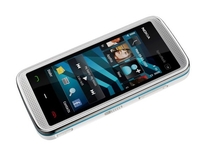
Nokia and Apple are supposed to be duking it out in court over both infringing on each other's patents - but that doesn't seem likely to happen any time soon.
According to Reuters, the duo will only actually get to present their cases to a packed courtroom (probably with a comedic, oddball lawyer if TV dramas are to be believed) by 2012.
This means that this litigation battle - unless settled in the intervening period - will be dragged over months and months, by which point the balance of power in the mobile world may have shifted even further.
What's it all about?
Engadget has a good description of what this is all about - basically, Nokia is required by the licensing groups to license out its patents to anyone who wants them 'on fair terms'.
However, under Nokia's interpretation of said 'fair terms' it wanted cross-licensing of Apple's touchscreen technology.
Hence now Apple is suing for breach of contract by not being fair as well as Nokia nabbing its touchscreen tech, and Nokia suing because Apple is using its tech without being licensed. And breathe.
Nokia has since moved to ask the court to dismiss Apple's contract dispute, claiming it clouds the issue unnecessarily.
Looks like this case will rumble on in a rather dull fashion - we'd like to suggest a cage fight instead, but we doubt that will ever happen. Or will it...?

| |
Read More ...
Review: Cyberpower Infinity i7 Phoenix

Last month saw YOYOtech's latest behemoth crash-land onto our test-benches in a cloud of benchmarks. It was a £5,500 rig that looked fantastic from a distance, gave great synthetic scores but up close wasn't as rosy as we'd hoped.
CyberPower, in the meantime, has jumped to it and is keen to show what it can do for half that; and so we have the Infinity i7 Phoenix. Quite which flames this li'l bird is rising from we're not sure, and we can promise YOYOtech the Fi7epower MLK3 hasn't been turned into ashes, so stop fretting.
What we do have here is a slightly more responsible spec on a machine that will take whatever you throw at it, whether you're gaming or rendering your own response to Avatar. At nearly three large it's still a huge outlay cash-wise, but there are enough bi-annual upgraders out there looking for their next £2,500 rig that this price point stands nowhere near the ridiculous level the Fi7epower occupies.
It's still got it where it counts though, with a Bloomfield Core i7 CPU running at 4GHz, more RAM than you can shake a Villazon at, a lightning-fast SSD boot drive and the fastest single-PCB GPU around. Obviously cuts have had to be made when compared with YOYOtech's monster machine, but for the most part these have been made intelligently, minimising the performance hit.
The most obvious is in the choice of CPU; going for the cheaper, out-going, i7 920 saves a lot of cash and in day-to-day use you will hardly notice the difference.
The storage array is where the biggest drop in performance will be felt, though plumping for only a single X25-M SSD as the boot drive will still give you an enormous boost over any HDD-based solution you're used to. The RAID pairing of the Fi7epower is incredible, but the twinning of the single drive and the massive 24GB RAM means that the desktop speed of the Phoenix is still lightning quick.
You could arguably halve the RAM and save yourself some cash without impacting performance too much, especially if you went for faster memory as well.
Pixel poor
The real disappointment though is the choice of graphics card. When you're spending between £550 and £620 on the graphics the cash difference between getting two HD 5870s in CrossFire and a single dual- GPU HD 5970 is negligible. The performance difference though can be huge.
This is where the Phoenix drops performance points on the Fi7epower and in a place where it really didn't need to. You're still having to cope with the vagaries of CrossFire with the HD 5970 so you might as well drop another £50-odd on the faster cards.
Still, the Phoenix is a well put together rig, immaculately tidy inside and stress-tested to within an inch of its life to make sure the setup's stable when it gets to you. Customise the rig on the site with 12GB of 1,800MHz RAM and swap out the 5970 for twin 5870s and you'll save over £200 on the list price.
This will hit the same benches as the Fi7epower without requiring you lug around that monstrous Thermaltake Level 10 chassis…
Related Links
| |
Read More ...
Ford planning in-car app store for games and more

Ford is planning an in-car app store to allow developers to build software that will run in customisable displays in its new web-enabled cars.
Ford revealed its plans for in-car apps in a recent SXSW talk embarrassingly called, 'Dude, This Is My Car' hosted by Ford R & D man TJ Giuli, and Paddy Srinivasan, founder of cloud computing company Cumulux.
The panellists discussed a host of intriguing ideas for in-car entertainment and other apps, such as games that scored you points for driving in a more eco-friendly way, in which you might compete against friends to see who is the 'greenest' driver.
More interesting journeys
There was also mention of the possibilities of a tour-guiding app that links GPS navigation to Wikipedia to keep you posted on your surroundings and nearby points of interest.
"Instead of having points of interest drawn from a stock database, what if you could have POIs your friends have recommended to you?" said Giuli.
More practically, there could also be apps that contacted your nearest and dearest to help you out in case of emergency.

| |
Read More ...
New details emerge over BlackBerry slider phone

The BlackBerry slider phone - the one that has been shown off in a number of spy shots in the last few weeks - has had a bit more dirt dug up on it.
New photos have emerged (shocking, we know) of the new BlackBerry, with comparisons to the Bold 9700.
Some are even positing that this will be called the 9700a, essentially a slider phone update to the popular new Bold.
Bigger, longer - faster?
The photos show the new slider phone next to a BlackBerry Bold 9700, highlighting that it's much thicker and a little longer (which you'd expect with an extra expanse of screen and keyboard wedged in there).
However, despite the myriad pictures leaking out of the phone, we're starting to doubt that this phone is actually in the works.
Each of the leaks look like further pictures of the same phone - so until we start seeing it turning up in other locations we're not sure this isn't much more than a retired prototype.
Add to that the fact it won't even turn on, and we're starting to worry even more - so here's hope the internet's intrepid spy-cam lovers can unearth some more dirt.

| |
Read More ...
Review: OcUK Core i3 Barebones kit

Over the last five years, overclocking has made the almost effortless leap from the realm of the solder-happy tweaker to the mainstream PC community. Indeed, it's such an important part of modern PC tech that all new motherboards, processors and some new graphics cards are sold on how much extra they give you for free.
Overclockers UK is hoping to get you to part with your upgrade cash by giving you a free 1GHz+ overclock, but will you end up paying for it in other ways?
We're seeing an increasing number of factory-overclocked rigs coming out of the system integrators as the norm, and there's nothing wrong with that. Despite the fact that the machines are operating well over stated frequencies, the manufacturer's warranty gives you the peace of mind you don't get clocking things yourself.
You also get the reassurance of knowing that, despite the extra stresses on your rig brought about by the overclocked components, all the bits work together and will continue to do so for the foreseeable future. So that should ring true for these overclocked bundles, right? Well, no.
The components are tested together to ensure they'll run overclocked happily once they get to you, but these bundles aren't full systems. While the CPU, motherboard and memory make up the core of your machine, you'll have to add things, such as the GPU and power supply, which can make a big difference.
Overclockers UK has tweaked this Core i3 so it runs at a lightning-fast 4GHz. The problem is that it doesn't always do so. The first time we plugged it into our test bench it stuttered trying to hit the overclock and booted at stock speeds. It would eventually boot into Windows after many aborted attempts to POST and trips into the BIOS.
Stable mates
Overclockers UK guarantees stability, but only with a 'quality brand PSU' so if it doesn't believe your PSU to be from a good enough brand it may not honour that promise. There's also the problem that you won't be able to update your motherboard's BIOS without invalidating the warranty.
There's little safety then in picking up a specific overclocking bundle. You save £3 on the listed price of the components and get some overclocking know-how in the BIOS, but the rest of your PC might take umbrage at these new components and not play nice.
This isn't a safe way to avoid the hassle of overclocking. A full OC system will work out of the box and won't give you the problems you could find with a bundle – or you could forget serious overclocking until you've got the know-how.
Related Links
| |
Read More ...
XXX porn domain still being considered

The .xxx domain is still being considered, according to reports, with the Global Internet Oversight Agency looking into whether creating the new domain would be a good thing for the web.
Currently, pornographic websites have the same suffix as normal sites – so we are told – but there are calls for porn on the internet to get its own domain, so parents and the like can easier block sites.
The problem with the idea, though, is that it will be voluntary, so sites hosting pornographic content would still be allowed to carry a .com address.
And then there's the fact that adding a .xxx to porn sites would make them easier to find. Not that finding pornographic sites on the internet is too much of a problem at the moment (so we are told).
The porn identity
A 70-day consultation process has been started by ICANN (the Internet Corporation for Assigned Names and Numbers). Considering the committee has already said no to the .xxx name three times in the past, it doesn't look to plausible that it will ever happen however.
In rather blunt terms, ICANN CEO Rod Beckstorm said that "there's a lot of complex issues" surrounding the .xxx domain.

| |
Read More ...
Human arm turned into broadband channel

Korean researchers have demonstrated how a human arm is capable of transmitting a broadband data signal.
Researchers at Korea University in Seoul managed to transmit data at a rate of 10 megabits per second through a subject's arm via low-frequency electromagnetic waves, between two electrodes on the skin spaced at 30 centimetres apart.
There could be major health benefits if the technology is able to be developed for widespread use, in terms of monitoring a patients vital signs - such as blood sugar levels or heart activity – while they go about their daily lives.
"If we use wireless for each of these vital signs we would need many batteries," study co-author Sang-Hoon Lee of Korea University, while noting that a network transmitting through the skin would cut power requirements by around 90 per cent.
Health-monitoring networks
The Korean team is currently working with an unnamed electronics manufacturer to develop health-monitoring networks using the new electrode technology they have developed.
Computer engineer John Lach, from the University of Virginia, told New Scientist: "You would need to attach some type of receiver to connect an intra-body network to a cellphone, whereas most cellphones are already Bluetooth enabled."
But as far as medical applications go, Lach thinks that using the body as a conduit for energy means "more energy-efficient communication systems because wireless transmission is such a big power hog."

| |
Read More ...
Review: ATI Radeon HD 5830

The way the graphics war is going at the moment, it's like AMD is starting its very own game of Battlefield while adding more and more irrelevant spawn points. Its already got heavily armed squads holding onto the three main spawn points; the low, mid and high-end of the graphics sector and Nvidia hasn't even logged in yet.
AMD isn't resting on its laurels though, it's bringing out more troops to take the pointless spawn points of every other conceivable price bracket. This HD 5830 then is supposed to be bolstering the front line, covering the gap between the HD 5770 and the HD 5850.
While it may not be a gap we were particularly bothered about, or even aware of, AMD has seen fit to plug it with another slab of confusing silicon. Luckily, things have been made very easy for us all with the HD 5830 as it's a card that you shouldn't be bothered about.
No matter how much money you've got or the native resolution of your monitor, this is one card that hasn't even got a round hole to fit its square peg into.
How much?
The big problem is that price spawn point. Two hundred pounds is a lot of cash to spend on a graphics board so you'd want something special for your money, and not some half-baked, half-way house of a card.
Seeing this imaginary gap in the market AMD has created something that's only slightly better than a HD 5770, and far worse than a HD 5850 and yet sits directly in the middle price-wise.
The HD 5830 sports the same basic 40nm Cypress chip as the HD 5870 and HD 5850s, but with the memory bus and ROPs count slashed in half. That makes it a rather hobbled affair only just holding up against the Juniper-based HD 5770.

Indeed, it was only the somewhat strange World in Conflict benchmark that showed any clear space between the HD 5830 and HD 5770, leaving nothing to choose between them in the theoretically more exhausting Far Cry 2 and DiRT 2 tests.
With the HD 5850s so thin on the ground, the cynic in me is screaming inside my wee skull. This card isn't being created by AMD despite the reference board we have here (using as it does the same cooler and PCB as the HD 5870) what it's doing is giving the chips to the graphics companies for them to design their own PCB around this hobbled GPU. It feels like AMD is throwing a bone to its manufacturing partners, so they can create their own individual spins rather than relying on slightly different coolers on standard reference boards.
Unfortunately, as I've said, this GPU isn't one that you should be that bothered about. Unless one of AMD's partners finds a way to unlock that 256-bit memory interface and open up the ROP count that is.
Related Links
| |
Read More ...
Review: Acer Aspire 1820PT

Forget your internals, it's all about two different techs: 3D and touchscreens. Everyone's gulping down 3D like it's a free pint of Guinness, but so far we just can't seem to find much of a use for it.
A couple of months ago Dave looked at the Albatron OTM, which despite sounding like a Hollywood sex robot, was a touchscreen monitor. It worked well, but it had few practical applications. It's great being able to literally hold the world in your hands and spin it round, but the novelty soon wears off.
The other problem with the devices we've touched so far is that they tend to be desk-bound: monitors and all-in-one systems. This is great if you want to wall-mount them in your fantasy kitchen that doesn't exist, but not so great when you find yourself leaning across your desk, at a weird angle, to use an interface that's probably never going to be as intuitive and responsive as a good ol' keyboard and mouse.
Acer's Aspire 1820PT, then, could be the Windows 7 device to change all that. Rather than being a monitor or all-in-one desktop PC, it's a kind of tablet-netbooky thing.
Open it up and it functions like a normal netbook, but there's a twist: you can rotate the screen and flip it back on itself and it becomes a tablet PC. Like Apple's much-vaunted iPad, only with a physical keyboard.
Acer has packed some beefy components inside this tablet. As soon as we see any kind of mini-PC of this format, it shouts "ATOM 1.6GHz!" at us. Literally. So we were surprised to find that it includes one of Intel's new- fangled, ultra-low-voltage Core 2 Duo processors.
This is backed up with 4GB of DDR3, which is expandable to 8GB; a 320GB hard drive (on our model – only 250GB versions are available in the UK at the time of writing), and a 1,366 x 768 resolution screen. Not bad at all.
Nice package
These stats alone put it head and shoulders above the current splurge of netbooks, even if it is three times their price. HD video playback is impressively sharp on the screen and it felt like a spritely little machine. The included HDMI port means that displaying content on your whopping tellybox is nice and easy.
Also, battery life was incredible, with just under five hours of hi-def playback. Of course, this is an intentional battery draining test, so if you're merely using it for office work or web surfing you can expect a lot more from it.
It seems strange, then, that Acer has opted for a rubbish integrated graphics chip: Intel's horrid 4500MHD, which can barely muster a decent frame rate in World of Warcraft. Definitely not a gaming laptop then.
It seems Acer is going for that business market of people who wear nice shoes and have Blackberries and like nothing more than a great big Excel spreadsheet. Damn shame though, we'd love to get our hands on a touchscreen tablet capable of gaming, even if the touchscreen version of RUSE looks a tad befuddling.
It's all very well stuffing a laptop full of high-performance components – graphics chip excluded – but if you're selling it as a touchscreen device it had better have a bloody good one. The unfortunate truth is that the 1820PT doesn't have a good touchscreen.
Compare it to the God of Touchscreens, who currently provides the one on the iPhone and it can't come close, which means it's probably not as good as the iPad's either. Most of the more advanced touchscreens we've seen recently, such as those by Sony and Albratron, have used some kind of optical recognition to identify your greasy digits as they expand porn.
It's hard to find out exactly what Acer has used here, but the horrific slight give in the screen as you press it, makes it feel like it's resistive rather than capacitive. If you know anything about touchscreen mobiles, you'll know that this is a bad thing. They're the reason you see people using stupid styluses with their Samsung phones.
This Aspire's touchscreen is responsive, though: it responds once it's cottoned on to the fact that you've pressed it and done the complete opposite to what you wanted it to. The onscreen keyboard is next to useless, as you're permanently hitting the key next to the one you wanted to press.
Windows 7 is an impressive touchscreen operating system, but here it feels fudged by the lack of a decent touchscreen. Part of the problem is that slight give when using the screen, so you can't tap it as you would an iPhone. It makes it feel quite squishy and cheap. It's also very, very shiny, and liable to pick up fingerprints. Before you know it, it'll look like a prop from CSI.
Could it be that the resolution is just too high for this to properly function in a touchscreen fashion? Millions of tiny pixels are nice, but when this, in turn, reduces the size of the icons – and the touch areas – it makes it a tad more difficult to use. It's true that you can increase the size of your icons and text, but who wants to make their laptop look like a SimplicITy PC? Aside from Valerie Singleton?
Schmoking action
The screen swivel mechanism is ace and Acer has obviously put a lot of thought into its design. It's skinny, and the screen rotates into a tablet form quickly and easily. The 1820PT boasts an accelerometer, which means that the device will automatically tilt the screen when you hold it vertically or horizontally.

Acer has also included its own touchscreen software, which is activated by flicking up one corner of the screen. It's known as TouchPortal, and it lets you drag content, such as photos and videos onto a panel in the middle of the screen, then view or play them. YAY.
Acer has also included a few games, and Microsoft's own collection of touchscreen-specific applications, such as Blackboard, which lets you create weird physics-based machines.
It's nice to see a netbook that's actually pushing the boat out a bit; even if the boat is being pushed by an index finger across a rather insensitive touchscreen. It's a powerful little blighter, too, but we can't help feeling that the Aspire 1820PT is going to fall short next to Apple's similarly priced iPad.
Related Links
| |
Read More ...
TomTom adds live traffic updates to iPhone app

TomTom has updated its iPhone app with a number of new features, including live traffic updates, local Google searches and better overall integration with the iPhone and the iPod functions on the device.
TomTom's app update promises users "optimal routing and an even more intuitive navigation experience" and users can buy the latest version 1.3 of the TomTom app on the App Store as of today.
"TomTom continues to expand its offering of premier navigation services and features to a growing base of TomTom app for iPhone users," said Tom Murray, vice president of market development.
"Among the many enhancements in the latest version of the app, TomTom's comprehensive traffic offering gives users dynamic, real-time information that helps them avoid traffic delays and find the fastest routes. It makes the TomTom app for iPhone even more useful in our daily lives."
Constant traffic updates
Your iPhone will receive TomTom Traffic updates every three minutes, giving you real-time traffic speed and incident reports. If you don't want them (ie if the road ahead is clear) then simply turn them off.
Note, however, that you will still have to pay extra to get access to TomTom HD Traffic, which you can either purchase online or via the app itself - TomTom Traffic for iPhone users is available via in-app purchase for an additional £0.59/£4.99/£11.49/£37.99 per day/month/quarter/year respectively.
However, if paying for extra services on top of the cost of the app is a turn-off for you, TomTom app for iPhone version 1.3 also packs in the following features at no extra cost:
- Local Search powered by Google - The TomTom app for iPhone now provides a countless number of points of interest at the user's fingertips. Users can tap into the latest local Google listings from within the TomTom app to locate and route to anything from restaurants to flower shops.
- Pinch and zoom - Integrating one of the iPhone's most popular features, the latest version of the TomTom app allows users to "pinch and zoom" for a more detailed view of the navigation map.
- New map update - The TomTom app now incorporates TomTom's latest map, which was rated best for overall accuracy
- Automatic day/night mode - For a safer drive, the TomTom app now also calculates local sunrise and sunset times to automatically adjust the screen brightness while driving.
- Music fading - This music fading feature ensures that you never miss a navigation instruction while listening to music on your iPhone. The music volume decreases during turn-by-turn instructions and then increases when instructions are complete.
- Add to my TomTom feature - Save locations from other iPhone apps and Web browsers to your TomTom app.

| |
Read More ...
25th birthday for .com domain

The .com domain name is celebrating its 25th birthday, with computer maker Symbolics.com the first to add the domain to its name on March 15, 1985.
Nine years before anyone thought to buy sex.com, and with the world wide web still a gleam in Sir Tim Berners-Lee's eye, Symbolics became the first to register a .com, and earn itself a footnote in internet history.
Five others took the plunge that year and bought a domain name, with the BBC suggesting that another 199 million or so have been registered since.
Around 86 million of those are still active as internet sites.
Who would have guessed?
Mark McLaughlin, CEO of .com domain controllers Verisign, said: "Who would have guessed 25 years ago where the internet would be today and the number of businesses that have been built on it."
Symbolics may have shown great foresight in getting on the .com gravy train years before anyone had started to cook the meat, but unfortunately it was not enough to save the company, which went bust.

| |
Read More ...
Civilization designer: Why gamers' expectations defy reason

Civilization designer and veteran god game developer Sid Meier gave one of the final keynote speeches at this years' Games Developers Conference in San Francisco, explaining his thoughts on what drives his players and how his thinking on player psychology has changed over time.
Meier talked of the "unholy alliance" between the player's suspension of disbelief and the designer's willingness to defy both logic and the laws of maths to satisfy the player's expectations.
"A lot of what I thought I knew was wrong," said the Civilization designer. "And the reason was because I really hadn't taken into account what really happens in the player's game."
Can't reward the player enough
Meier, the Director of Creative Development at Firaxis Games, stressed that it is crucial to give players the feeling of winning and to make the first 15 minutes "really compelling, really fun - almost a foreshadowing of all the cool stuff that's going to happen later in the game.
"These rewards are really a way of making the player feel comfortable in this world, of letting them know they're on the right track.… You can almost not reward the player enough in the early stages of the game.
"Players are very much inclined to accept anything you give them gladly and feel it was their own clever play, their own incredibly strategy that earned them that cool reward. On other hand, if something bad happens to the player, your game is broken, there's something horribly wrong, the game is cheating. It's really important to be very careful with the setbacks the player experiences."
Meier revealed that Civilization originally had a "rise and fall" arc, so players would build a civilization, experience disaster, and come back mightier than ever. That was soon dropped because:
"What we found was, just at the cusp of the crumble, most players would reload a save game. They would never experience the glorious rerise that we had in mind for them."

| |
Read More ...
Researchers move closer to 300% improved battery life

The lithium-ion battery is a common sight in today's gadgets, but researchers at Stanford University have shown off technology that can be used to make longer-lasting lithium-sulphur batteries.
With early tests showing that lithium-sulphur can potentially last four times longer than regular batteries, the Nanostructured Li2S/Silicon Rechargeable Battery with High Specific Energytechnology project was discussed in Nano Letters.
"The recent development of sulfur/mesoporous carbon nanocomposite cathodes represents a particularly exciting advance, but in full battery cells, sulfur-based cathodes have to be paired with metallic lithium anodes as the lithium source, which can result in serious safety issues," explains the report.
Novel and metal free
"Here we report a novel lithium metal-free battery consisting of a Li2S/mesoporous carbon composite cathode and a silicon nanowire anode," it continues.
"This new battery yields a theoretical specific energy...which is four times that of the theoretical specific energy of existing lithium-ion batteries based on LiCoO2 cathodes and graphite anodes."
So, in a nutshell, the battery builds on research from a few years ago into an electrode made of silicon nanowires - which could hold ten times the charge of li-ion batteries - and has paired it with a clever lithium-sulphide cathode.
Upshot? Potentially gadgets that can last four times longer, and that's certainly exciting news.

| |
Read More ...


No comments:
Post a Comment