

Your view: How far do you trust Google?

Google is a company that it's hard not to admire. In the last decade it's swept aside all rivals, becoming so powerful on the internet that it's almost synonymous with it.
And yet, for a company that prides itself on its 'don't be evil' slogan it has found itself under increasing amounts of scrutiny for the way it operates.
Why? Because this is a company that wants to know every single detail about you, from the contents of your email to your exact location at any given moment.
Information is power
Sharing that content can be massively useful – allowing each and every one of us to find the most relevant information. Be it an internet query or a frantic search for an after-work pub on a Friday night, a local movie screenings or what your friend got up to at the weekend.
But sharing that information is also incredibly valuable to the company that holds it – and at the moment it is Google that is collecting the world's data and storing it away in its massive banks of hard drives. Information is power and, as every superhero fan will tell you, with great power comes great responsibility.
So when Google finds itself under fire for choosing your followers for you on its newly launched Buzz, or because its CEO suggests that if you don't want to share your web habits it's probably because you are doing something you shouldn't, you can't really blame people for asking 'who decides what's evil?'.
It comes down to trust. Do you trust Google with your information and do you trust it to use it in the right way? Is Google a benign facilitator or a potential dictator? We'd love to know what you think.

 |  |
Read More ...
Nokia: N97 was a 'tremendous disappointment'
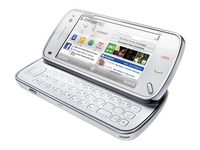
Nokia has admitted that the N97 has been something of a disappointment since its release last June, and that the company made mistakes.
Speaking to All About Symbian, Anssi Vanjoki, EVP of Markets at Nokia said the company realised the issues and has learnt lessons from the experience.
While pointing to decent margins made in terms of sales and profit on the N97, Vanjoki added: "it has been a tremendous disappointment in terms of the experience quality for the consumers".
Issues
The phone was beset with issues when it launched, with freezing firmware, hard to navigate systems and problematic web access.
Firmware updates have fixed issues to some degree, but the phone was still dubbed a failure by many critics.
Vanjoki also stated that the first version of Symbian has been overused, with Nokia using it "for too long, something which should not have been stretched", although it "has been an unbelievable cycle of things for us, that has taken far too long to repair and mitigate."
The good news is that Symbian^3, the next release of the OS from the Open Symbian Foundation, will be a lot more consumer focused, according to Vanjoki, who stated: "we have taken the learnings and when Symbian^3 comes out you can rest assured it will be perfect".

| |
Read More ...
Guide: How to make a USB mini fridge

Physics, how we love you. You keep our feet on the ground, ontologically-ambiguous cats locked in boxes and photons in two places at the same time. It also enables the Peltier effect, what's that we hear you breathlessly ask?
If a current is passed between two different materials a heat differential is created; one side hot the other cold. The principle is used in all sorts of situations including cooling processors and mini-fridges, though apparently they're not that efficient, just small and light.
So why do we care? Well you can pick up a Peltier heat pump on eBay for under آ£5, we're interested in the 30W ones, these run at 5 to 12 volts so can be powered from a USB port.
Also don't worry, the 'hot' side on these won't go over 40آ°C under these power conditions, so the passive cooling we're going to use is perfectly suitable. Slap this between two old heatsinks and hey presto instant hot and cold fronts!
We also picked up a couple of A3 sheets of 5mm foam board using this we can construct an insulated box, pack polystyrene around the base of the cooling heatsink and we've got an instant mini-fridge!
For better cooling you could connect any suitable (sub 12v, sub 2a) spare DC adaptor to it, but if you do this will increase the hot side to over 60آ°c. So double-checking the cooling and adding a small fan would be advisable.
What you will need
A Peltier heat-pump
Old heatsink x2
Polystyrene
A3 foam mounting boards
USB lead
Soldering iron
Stanley knife
Glue
How to make a tiny USB fridge

1. Lets turn this pile of junk into a mini-fridge.


2. Wire up the Peltier heat pump and test to see if it's the right way around.

3. Strip down the heatsinks, we don't need the fans or fixings. We'll use the larger one as the base and for more stability thermal tape is available from most overclockers.

4. The plan is to create a box around the cooler; we're going for 120mm square big enough for bottle of beer. Take the A3 foam board and use a sharp Stanley knife to score and cut through.


5. For a stronger construction we're going use dovetail joints, use an off-cut piece to practice. Mark a 5mm strip, cut two opposing 45آ° slits into this, remove the strips either side to leave the joint.

6. You'll want three perhaps four joints on each side. Use the off-cut piece as a template to mark and cut three sides. For the front use an off-cut from the door to connect the bottom area.

7. Measure a 120mm square and a 110mm square area of foam board and glue these together, this is going to be the lid. Glue all the sides and the top in place. We used elastic bands and some books to press things together.

8. Double check the measurements inside and cut a slab of polystyrene to fit. Cut a hole that fits the upper heat sink.

9. Construct a front door, we added a window by cutting a smaller version that can fit inside the front. We kept things easy with card hinges and Velcro.

10. The final article in full chilling effect. Well, 10آ°C or so.

| |
Read More ...
Sony: Don't hold your breath for PS4

The chances of seeing a PlayStation 4 underneath your television any time soon are receding, with the CEO of Sony Computer Entertainment America insisting that we are in the 'first 25 to 30 per cent' of the current generation.
With the battle against Xbox 360 showing no sign of abating, it's clearly not a time to be producing a loss-leading games machine, but it sounds like it will be several years before the PS4 sees the light of day.
"I would say we're sitting in the catbird seat," Tretton told Fast Company.
Third year
"We've just passed the third year of the PlayStation 3 and we're just hitting our stride. And I don't think anyone is saying, 'This is a five-year cycle; what's new on the horizon?'
"I can't even imagine what can be done technically beyond the PlayStation 3 in the near future."
So, PS3 owners will just have to make do with looking forward to God of War III and start wondering exactly what they would like to see in six or seven years time.

| |
Read More ...
Twitter sex spam hits MP Ed Miliband

Labour MP Ed Miliband has found his Twitter page has been hijacked by the latest Twitter phishing scandal.
Late last night the Energy and Climate Change Secretary posted: "Hey, I've been having better sex and longer with this here," – a familiar tweet for anyone who has had their account hacked in recent days.
Miliband admitted on his feed that he had been hacked but only after his 6,693 followers received his fake sex admission.
Resetting passwords
Other high-profile Twitter users have been hit by the phishing scam, including the Guardian, the BBC and the Press Complaints Commission.
Twitter has updated its Status blog, noting: "Over the past few days, we've seen an increase in phishing attempts and are working on resetting passwords for accounts that were affected."
The blog also offers this advice: "While simply receiving this message does not mean your account is compromised, if you do click through and enter your username and password, you'll want to change your password."
Something Miliband et al will probably be doing right now – unless they really are tweeting about the joys of 'longer and better sex'.

| |
Read More ...
Sony Bravia 'Freeview HD' TV range out this week

Sony has announced that the UK's first TV range with an integrated Freeview HD tuner is hitting the shops this week.
The HX, NX and EX range of TVs from Sony all have been given Sony's monolithic design – think 2001: A Space Odyssey – and are said to fit into any living space without proving to be an eye sore.
The main kicker for the UK is that these TVs have a Freeview HD tuner in-built. So, you can now get HD content without the need of purchasing an expensive set-top box.
3D Ready
Other features of the TVs include their IPTV capabilities. Demand Five and LoveFilm are available straight from the TV set and you can even check your Facebook and Twitter updates via your goggle-box.
And if you decide on buying the HX range, then you will be pleased to hear that the TV is 3D-Ready. All you have to do is wait for Sony to pipe out it 3D firmware update to its Blu-ray players and the Sony PS3 and you'll be on your inter-dimensional way.
All we need now is for the flagship LX range to come to the UK and we would be very excited indeed.
For more information on the HX (Cinematic), NX (Network) and EX (Essential) Bravia range, go to Shop.sonystyle-europe.com for more details.

| |
Read More ...
Windows Phone 7 coming to older phones?

Microsoft has hinted that older Windows Mobile phones could be upgraded to the new Windows Phone 7.
The decision will apparently be left to OEMs to work out whether they want to engineer the upgrade, but we're betting the likes of HTC attempt it with its HD2.
Twitter chat
In a response to a Twitter question about whether upgrades will be possible, Alex Reese, Head of Microsoft's Mobile Business Group, said that it wasn't impossible:
"It's early days yet, and that's really for our hardware partners to think about."
Given that the specs for the touchscreen style of Windows Phone 7 devices mirror some forthcoming WinMo 6.5 devices (and the HD2 already fits the bill) this is good news to all those thinking about buying a Microsoft-run phone in the near future.
It would be a real shame if Microsoft didn't make the upgrade possible, but given the high end specs it's mandated for Windows Phone 7, it wouldn't actually lose that many legacy devices if it decided against it.

| |
Read More ...
Exclusive: DAB heavyweights respond to 6 Music closure rumour

The rumours that the BBC is set to close alternative music station 6 Music and the Asian Network, which TechRadar reported on earlier today, have sent shockwaves through the radio industry and among listeners.
Two of the major DAB Radio manufacturers, Pure and Roberts, have been quick to comment on the rumours, with Leslie Burrage, Chief Executive at Roberts telling TechRadar:
"It's obviously disappointing to hear that BBC 6 Music is not a sustainable business in its own right. However, the ceasing of this station highlights how the running of a station on the DAB multiplex is expensive and, therefore, it should be heeded that switching most stations from FM to DAB is not as simple as some may perceive.
"In these recessionary times, while regrettable, it is inevitable that some stations will be unable to remain profitable, particularly in the commercial radio sector and as also demonstrated in the BBC."
Passion for digital radio
Meanwhile, over at Pure, Marketing Director Colin Crawford remains confident about the longer term future of digital radio in the UK, telling TechRadar:
"The reaction to the Times article shows the real passion that exists in the UK for digital radio. Over the past few months, a number of new stations have launched on the national digital radio network and there are now over 10 stations on the national commercial multiplex, including really great stations such as NME Radio and Planet Rock.
"We are more confident than ever about the robust health of the future of digital radio in the UK."
Robert Shepherd, a spokesperson for the government sponsored group Digital Radio UK, added that they were, "aware that the BBC are conducting a Strategy Review," and that they were awaiting the outcome, "but the BBC have confirmed that they have a continued commitment to the development of digital radio and to investing in high quality digital only content."
But the increasingly vocal campaign online, on Twitter and on music and radio industry blogs to save 6 Music only wants to know one thing – that this 'continued commitment' to 'high quality digital only content' means that the 620,000 regular 6 Music listeners in the UK won't lose the station they treasure at some point in the near future.
How to find new music
Dave Haynes, head of business development at digital music specialists SoundCloud told TechRadar that, "6Music plays an important role in championing music that often doesn't find an outlet elsewhere. We know this firsthand since Tom Robinson uses SoundCloud to find new music for his Introducing show.
"It's important that these opportunities exist for up-and-coming musicians to get their music heard on a BBC radio station, and for that avenue to be shut down would be a tragedy for musicians and music fans alike."
Stay tuned for further updates as we get them on the news of the BBC's plans to make cuts to its digital radio and online divisions.

| |
Read More ...
Guide: 8 easy ways to manage multiple social networks

Straw poll: how many social networks, instant messaging platforms and online email tools do you have accounts with? Of those, how many do you actually use?
The proliferation of online communication services over the last decade has been rampant. Forget swine flu: there's a social media pandemic in progress.
The problem is that not everyone is adopting and dropping services at the same rate. Some of our friends are only just getting into Facebook, while others are spamming us with invites to join Google Wave. So, how do you keep track of all these services?
By juggling multiple logins and applications on your PC? It works to begin with, but you'll soon end up with an organisational headache. Or do you try to do it by bringing everything together? This is more limited, but it's easier to manage.
Let's look at some methods for consolidating your networks.
1. One ID, multiple tools
A perennial issue with web services is remembering multiple passwords and logins. Common sense dictates that you shouldn't write them down, or use the same password for every service. This makes the idea of shared IDs counter-intuitive.
However, if you have fewer logins with stronger passwords then the security risks are adequately balanced out.
Google and Yahoo each offer a suite of services with a single login. For example, sign up for Yahoo Mail and you can also access Flickr, Messenger and a host of news services. A Gmail address gets you access to services such as Google Docs and Maps, as well as YouTube, Blogger and other well-known sites.
Facebook provides a shared ID API called Facebook Connect to developers. This has proved very popular, and you can use your Facebook log-in details to access Gawker's suite of blogs, genealogy site Geni and a huge collection of blogs.
Other social networks with similar initiatives include LiveJournal and MySpace. When logging into trusted services, keep a sharp eye out for buttons that enable you to log in with an existing account. You'll save yourself time and hassle.
2. The OpenID protocol
The majority of the initiatives we've covered so far are connected by the same tissue – OpenID. This is a standard aimed at creating a single login protocol for the majority of services you use.
Google, Yahoo, Facebook and others allow their logins to be used as OpenIDs on services that support it. This means that whenever you see the 'OpenID' box, you can log in without creating a new account as long as you already hold an account with an associated site.

There has been criticism, however, that many providers allow their own username and password combo to be used as an OpenID while not accepting them from others. We're looking at you, Google.
A list of sites and services you can log into with OpenID can be found at MyOpenID.
3. Merge your inboxes
Windows Live (formerly MSN) also has a shared ID initiative called Microsoft Passport. This enables you to use any Microsoft online service with the same ID. Recent changes to Live Hotmail make it possible to have Facebook updates, Twitter messages and emails from several accounts in one place.
To receive mail from other POP accounts, click 'Add an Email Account' in your Windows Live Hotmail inbox and enter the details when prompted. You'll be asked for an email address, its password and the POP3 mail server details, so make sure you have them to hand.
4. Add Facebook updates
Windows Live Messenger can be used to alert you to new mail from all accounts that you've added to Live Hotmail. As a bonus, when you're logged in you can also follow Facebook status updates from friends.
In the latest version of the app, click the Facebook icon and log in to authorise the API connection. You'll get a rolling feed from your friends list without having to connect to Facebook proper.
5. Twitter by IM
You can integrate Twitter into your online mail service or messaging client. BuddyFuse is an add-on for Windows Live Messenger with Google Talk and Twitter connectivity. When installing, untick the sponsorship options, otherwise your browser homepage will be changed.

An icon appears in Messenger when installation has finished. Click it to add your accounts. Functionality is limited, but it's the best of the add-ons we've found.
However, BuddyFuse's days may be numbered. The current beta version of Windows Live Messenger removes the official add-on API from the tool.
6. Switch to Digsby
Digsby was in beta when we first looked at it, and it still is. However, this multifunctional IM client has really piled on the features, making it a much easier way to consolidate your social networks, email and messaging needs than any number of plug-ins.
Thing is, you have to ditch your old tools and switch over entirely if you're going to make the most of it. That's a tough move when you're used to how an app works – and although Digsby now has Twitter integration added to Facebook support, we can't see ourselves letting go of Tweetdeck (which also offers Facebook integration) for good just yet. But what we do like is its Gmail and Live Hotmail notification.
The tool is self-explanatory. When you first use it you'll be prompted to create a Digsby account and then add all the further services you use. Be careful though – the program will add a Digsby toolbar, switch your search engine to a Digsby-endorsed version and will also launch automatically at boot time if you don't pay enough attention to the set-up options.
7. Browse with Flock
While Digsby replaces your instant messenger, Flock replaces your browser. It's built on the same Gecko engine as Mozilla's Firefox, with an interface that integrates with social-networking sites such as Facebook, Blogger, LiveJournal and more.

Want to check out which of your friends are online on Facebook? Logging in on the People bar will help you keep track of your latest messages, friend requests and notifications. You can even upload photos direct to many sites and post blog entries to LiveJournal, Blogger and Wordpress.
In short, Flock turns your browser into a desktop.
8. Extend Firefox
Love the sound of Floc, but can't bear to part with Firefox? There are add-ons that can create an approximation of Flock's functionality within the more established browser.
Yoono is our favourite – it's an integrated sidebar that connects Firefox to Twitter, Facebook, MySpace, Flickr and even a selection of instant messaging tools.

A toolbar on the left enables you to add as many or as few accounts as you need. It's like having a cut-down version of Flock within Firefox.

| |
Read More ...
Weird Tech: Jetpack commercialisation attempt #214
If only. If only we had a pound for every time some new company arrived on the scene and promised to finally commercialise the personal jetpack.
We would then, ironically, have enough money to be able to afford the planned آ£50,000 asking price that's attached to Martin Aircraft Company's Martin Jetpack - the latest believe-it-or-not promise to commercialise the personal jetpack.
Claiming an operating distance of 30 miles on one tank of fuel, the Martin Jetpack genuinely does have a chance at cracking the rich businessman personal escape unit market, thanks to being small and light enough to come in below the requirement level for a pilot's licence. All you need to operate one is $50k and a very, very strong crash helmet just in case.

JET-SET: Looks like it comes with blue or red straps to help it suit your unique style
Martin Aircraft says it has enough money in the bank to actually start production, and is planning to knock out 500 of the things each year. There's a superb demo video over on Martin's site, if you're keen on tangling yourself in the local power lines.
In the nood?
If you're a self-consciously fashionable consumer of costly gourmet noodles, there is an app to assist you with your habit. High street noodle-based restaurant chain Wagamama has this week launched an iPhone app compatible with its mobile ordering system, designed to help you bagsie your choice of soba and udon via iPhone without the awkwardness of a face-to-face scenario with one of its incredibly stylish European waiting staff.

CURRY SOURCE: "And a portion of chips, please. Chips. You know, chips. Chips? You what? No chips? Seriously, no chips?"
Once you've decided if you want to have that thing you always have or risk disappointment by trying something new, you're then able to pay for your order via the app, leaving you to only put on something clean and head off to your local branch to pick it all up.
Metal Mickey-take
There's a man called Tim Shaw. He's currently in a sealed metal box. He's alive, it's nothing too sick or weird and he hasn't locked himself in there for any odd sexual reasons - it's all part of a competition called, for SEO purposes, Man in Box. There's a streaming video of Tim up on the site, with viewers tasked with finding Tim's box.
The problem is, Tim doesn't know where he is. All he knows is that the box is in a place he already knows, that's meaningful to him, and if you manage to correctly guess where it is he'll be released - and you win آ£30,000.

BOX FRESH: We have no details regarding the toilet arrangements
However, at the time of writing, Tim's currently lying in his tiny bed, behind a scrawled sign that says he's not talking to anyone until he's given food. This could get on the news for some spectacularly wrong reasons.
Le movie posteurs tres ironique
These images purport to be foreign-language sci-fi film posters, only they're not - they're fakes. Illustrator Travis Pitts had the amazing idea of knocking up some pretend overseas promotional posters for hit Hollywood blockbusters, giving them a retro style and enough foreign-sounding words to convince film amateurs they're authentic posters from strange lands.

JE VOUDRAIS VOTRE PANTALON ET MOTOCYCLETTE: Definitely on the Christmas 2010 present shortlist
And if you're wondering, the reason this is in Weird Tech is because Travis made a particularly brilliant fake poster for "Terminateur" and The Terminator is a robot and the film's sci-fi. It's not been a very good week for tech news, basically.

| |
Read More ...
Blockbuster suffers $425 million loss

Blockbuster, the movie rental company, posted a $425 million (آ£280 million) loss this week – prompting speculation the company's position on the New York Stock Exchange is at risk.
Blockbuster has had a hard time of it of late. Its slow transformation from a high-street store to an online one has not had the success the company would have hoped. This has meant that many stores – in the US at least – have closed.
Last count there was 253 shut in January and another 150 to go in March.
Future is bright, honest
There is some hope. Cheaper DVD kiosks are cropping up – 7,000 set for 2010 – and its on-demand streaming service is to be bolstered. But the company currently has debts of $964 million (آ£632 million) – which points to a drastic change in its business, including a chunk of its advertising budget disappearing.
Despite the rather downbeat news, CEO Jim Keyes said in a statement, "While we believe the future is bright, the next 12 to 18 months will remain challenging."
Where's Bob Holness when you need him?

| |
Read More ...
Review: Editors Keys Vocal Booth Pro

Editors Keys' Vocal Booth Pro bundle is an all-in-one voice recording solution aimed at both the broadcast and music-making markets.
You get a microphone and shock mount, a pop-shield (for removing annoying pops from the beginning of plosive 'p' and 'b' sounds), a mic stand and the Vocal Booth Pro itself, a 'soundproof' shield designed to stop your voice reflecting around the room and thus colouring the sound.
The centrepiece is, of course, the microphone. The Editors Keys SL150 is a large-diaphragm condenser mic, the same type the pros use to record vocals and instruments such as acoustic guitars.
It's actually a USB mic, meaning it acts as an audio interface and pops right up in System Preferences as an extra input source. The mic lacks an XLR output (so you can't use it with sound gear such as mixers and so on – it has to go into a computer), and while this is standard for microphones in this price bracket, it does make the mic's 'Studio Series' label a bit of a misnomer.
Still, it does a perfectly acceptable job of recording both talking and singing. Again, performance is on a par with similarly-priced XLR condensers, and it certainly cuts the mustard for pro broadcast work.
Unlike most mics, however, the SL150 lights up when plugged in – a neat feature, although it's a bit unnerving to put your lips so near to electrical equipment illuminated in a shade best described as 'high-voltage blue'.
The rest of the hardware isn't quite as neat. The mic stand feels cheap, and the large slugs of metal used to mount the Vocal Booth are difficult to assemble and poorly manufactured.
The Vocal Booth Pro itself is a clamshell design, with the mic-facing side covered in sound-absorbing, high-density foam. Rigged up, the mic does a fine job. Reduced reflections from the room means a less diluted sound, making vocals tighter, more concise and easier to mix.
Overall, it's a respectable if slightly flawed offering, which provides very decent results on a home budget.
Related Links
| |
Read More ...
TechRadar Choice: 4 of the best Windows 7 media PCs

Many of us now use our laptops or desktop PCs to watch and record live TV or to catch up with programmes we have missed through online services such as BBC iPlayer or 4oD.
Microsoft's recently launched Windows 7 operating system comes bundled with a much-improved version of Windows Media Center.
It offers compatibility with both terrestrial and satellite signals (including DVB-S2) and full support for MHEG-5, giving users access to the interactive services off ered by Freeview and Freesat.
Add to this a version of Sky's online Sky Player, off ering channels and programmes on a buy, rent or subscribe basis.
Windows 7 Media Center's setup wizard is very user-friendly, helping you to get the best settings to work with your TV tuner(s), display and audio configuration. It's never been easier to organise your TV recordings and media libraries on your local hard drive, removable drives or other PCs on your network.
Testing explained
So it's a perfect time to consider investing in a decent all-in-one PC or laptop to enhance your viewing experience in the bedroom, study or even – with some of the bigger hi-def screen models now merging – to consider replacing your TV in the lounge with a PC.
Manufacturers are starting to sell all-in-one 'net-top' style PCs with Freeview decoders built in, bundled with TV-style remote controls and impressive new tech such as touchscreen control, Blu-ray drives and lots more.
We tested three all-in-ones from MSI, Packard Bell and Asus and one laptop from Toshiba, all of which are in the آ£600-آ£800 price range.
PC Freeview HD tuners have yet to appear, but Freeview SD tuners can be picked up for as little as آ£20.
For this test we were using Asus' latest USB 2.0 Express TV Stick (costing آ£55) with the Asus and Toshiba machines, which handily doubles up as a 4GB USB storage stick as well, so you can save a bunch of recordings elsewhere.

Asus Eeetop PC ET22
The latest EeeTop ET2203T is a real looker, with a striking black-on-silver design.
It also has a really decent spec, including a full HD touchscreen and a Blu-ray drive.
It's the machine that's the least like a traditional computer out of the four machines here and, as such, it would work well in any room in the home.
Put simply, it looks more like a very modern TV as opposed to a PC that is also trying to be a TV. Its 'frameless' 21.6in crystal-clear display, which segues into the piano-black bezel, does attract fingerprints because the touchscreen capability of the PC works so well.
Features
As with the Toshiba laptop, providing you keep a screen cleaner nearby this is not going to become more than a minor bother. Perhaps the most immediate difference between the Asus EeeTop and the MSI Wind Top and Packard Bell all-in-one is the fact that Asus' designers have paid attention to every detail, down to the impressive design of the wireless mouse and keyboard that ship with the machine.
There's no need for additional USB dongles to make the peripherals sync with the PC. It all works out of the box. Nothing about this package feels cheap. The 1,920 x 1,080 resolution screen is perfect for full HD TV and movie viewing, with integrated 3W SRS stereo speakers that will work well in most lounges or bedrooms.
On the downside, there is no TV tuner built in and the EeeTop doesn't come with a TV-style remote control. But after a few hours of using the machine such things pale into insignificance.
After a quick Google search we soon found a range of free TV remote and wireless touchpad apps for our iPhone that actually worked better than the devices shipped with the Packard Bell and MSI PCs.
It lack the ability to use several fingers at once but the touchscreen is easily the best of the bunch we tested and the tray-loading Blu-ray drive behind the EeeTop's right bezel tops off the whole package for us.


MSI Wind Top AE2220
The AE2220 features an Nvidia Ion-powered graphics chip and 2.2GHz Intel Core 2 Duo T6600 processor, both neatly contained behind the back of a 21.5-inch widescreen monitor. It has a hybrid analogue and digital terrestrial tuner built in and the 16:9 LCD widescreen display offers full HD (1080p) resolution and pseudo-5.1-channel SRS Premium Sound.
The machine's 4GB of DDR2 system memory means that it is quick and responsive, and its 640GB hard drive is enough to store a decent number of recordings.
Distinguishing features
You can opt for either a white or black bezel, which is in turn wrapped around by a transparent frame, giving the PC a pretty distinctive look. We particularly liked the simple and well-positioned operating buttons running down the right-hand side of the screen.
Round the back are a D-Sub VGA and an HDMI 1.3 input (the latter ideal for HD receivers,
perhaps). With six USB 2.0 ports (two down the side and four hidden at the back) you are also unlikely to run out of places to plug in your gadgets.
Touchscreens are becoming an increasingly important feature on Windows 7-powered PCs and the multi-touch capability of MSI's net-top is shown off perfectly by the MSIToucD software. We soon found ourselves ditching the cheap-looking wireless keyboard and mouse that ship with the machine and instead relied on a combination of touchscreen with the Media Center remote control.
Freeview pictures look good but the portable aerial bundled with the tuner proved ineffective at finding channels, leading us to use a rooftop antenna.
Audio quality is excellent. Watching a HD movie with the sound cranked up high still gives out a decent, warm surround sound effect, even in a lounge. The machine is pretty silent, though heated-air exhaust at the top of the screen did get rather hot after long periods of use.


Packard Bell ONETWO M
Packard Bell's oneTwo M is another all-in-one machine aimed at the budget end of the market.
It is also of two machines in our test that ships with a TV tuner built in (for reception/recording of one Freeview or analogue terrestrial channel at a time).
The portable aerial supplied failed to produce satisfactory results in our test area but you can connect a rooftop alternative. The oneTwo M may well be less than half the price of Apple's latest all-in-one iMac, but is let down by the quality of its design and peripherals.
The 20in screen looks OK from the front. The glossy plastic bezel surrounding the oneTwo M is split by an insert of clear acrylic between the front and back of the PC. There's no Blu-ray drive, but you do get a DVD writer. Five USB ports are included – four on the back of the machine and one on the rear as is a 5-in-1 multimedia card reader.
Disappointing
On the downside, the grey plastic stand on the back of the machine looks quite ugly and proved stiff and difficult to use when we were trying to alter the angle at which the PC was stood on the desk.
This is disappointing compared with the attention to design seen on the Asus and MSI machines. There are no operating buttons on the side of the screen but you do get a decent Windows Media Center remote controlled bundled in with the package.
Powered by an embedded Intel Graphics Media Accelerator and 3GB of DDR2 RAM, the oneTwo M has a 20in touchscreen with a maximum resolution of 1600 x 900 pixels. Again, while this is adequate for watching standard-def video, including Freeview and films, it just does not match the 'full HD' offerings of the other machines in our test.
However, the touchscreen functionality works well. We should also mention that Packard Bell does sell a 23in oneTwo L model with a faster quad core CPU and full HD resolution, although that will set you back around آ£900.


Toshiba Satellite P500-12D
The glossy black 18.4in Toshiba Satellite P500-12D is the only laptop in our Windows 7 PC test, with a decent enough spec sheet to truly be considered as a media centre PC and one of the best screens we've ever seen on a laptop.
It's 41.5mm thick and weighs 3.93kg, which means that this is not a laptop that you want to carry around with you daily.
And the two-hour maximum battery life isn't going to last you that long, either. That said, the benefit of this machine over the other three all-in-one 'net-tops' in our test is clear.
Good all-rounder
You can quickly shift this machine around the house – between the bedroom, the lounge, the kitchen and the study – with little bother. Whether or not you like the glossy styling of Toshiba's casing is really a matter of taste.
In our test we found that both the exterior and the area around the trackpad were both 'fingerprint magnets' and we had to have a box of tissues and bottle of screen cleaner close by to keep the thing looking shiny and new.
Perhaps the other major difference between the P500- 12D and the other PCs in our test is that Toshiba's laptop doesn't have touchscreen control – this being a relatively new technology that has yet to find its niche in the laptop market. Instead, there is a set of touch-sensitive controls set just to the left of the keyboard, including an eco-mode and all of the requisite media and volume controls.
We found these to be adequate for watching TV and movies on the machine, used in conjunction with the multi-touch trackpad (although after a few weeks of familiarising ourselves with touchscreen control, we still felt the urge to use our fingers on the screen on a couple of occasions).
Build quality is excellent. The keys are nice and large and the keyboard feels solid and works well. The Harman Kardon speakers belt out audiophile-quality sound, adding an unexpected level of pleasure that we had not experienced on a laptop – especially when listening to music on Spotify.

All four PCs are more than powerful enough to function well as TV replacements, easily managing the job of displaying live high-definition television programmes or movies with no annoying jerkiness or jitter.
It helps that Microsoft's Windows 7 Home Premium is genuinely a massive improvement on Windows Vista in almost every way.
It is faster, much more secure and easier to use and, most important of all, considerably more stable than its predecessor. None of these machines is likely to crash in the middle of recording Doctor Who.
Keen prices
Both the MSI and Packard Bell machines are very similar and neither would look out of place on an office desk or in a bedroom or study. Each benefits from the fact that both have DVB-T receivers built in and decent Media Centercentric remote controls.
But we would recommend using a rooftop aerial with both for Freeview. At a shade under آ£600, MSI's Wind Top AE2220 PC is our budget recommendation for a keenly priced Windows 7 entertainment machine.
Although the oneTwo M is similarly priced, its lack of a high-definition screen (unless you're prepared to pay extra for the L version), decent peripherals and such bonuses as HDMI input, left it wanting.
It is, of course, difficult to compare desktop PCs with laptops, but we would certainly recommend the Toshiba Satellite P500-12D which – despite its form factor – serves well as a portable entertainment hub
Final verdict
The Asus EeeTop PC ET22 wins out in the end, being a beautifully designed machine that looks nothing like a work PC or a laptop. It fits well in any setting. And, most importantly, it looks and sounds superb. Despite not shipping with a TV tuner and remote control in the box, with a capable tuner added it's still the best all-round media PC here.

| |
Read More ...
Facebook News Feed patent unearthed

A patent filed by Facebook's founders – including Mark Zuckerberg – has been validated this week which shows the company claiming the idea of a news feed as its own.
Facebook's News Feed is where the site lets its users know just what their friends are up to. Within this feed there is also the Live Feed which treads on Twitter's toes – offering live status updates of what people are up to.
This is the main problem. Sites like Twitter are essentially a news feed and MySpace, even Google, use a news feed of some sort to distribute content.
Status update
At first glance this could mean big trouble for a number of sites, if Facebook decided to coin it in when it comes to its patent.
Bu it's not as clear-cut as this. The site which unearthed the patent, All Facebook, has an update which notes that 'status updates' aren't part of the patent, merely the actions of a user's friend. For example, 'John Smith tagged an embarrassing photo of you/wrote about copping off with your mum on your wall'.
This should mean that Twitter and the like are safe but any site using an activity stream out there should be a bit worried.

| |
Read More ...
Opinion: A year with superfast broadband

With the announcement that Virgin Media is bringing a 100Mbps service to the UK by the end of 2010, the argument is sure to rage over how ready the UK is for a service of this kind. TechRadar editor Patrick Goss has been using Virgin Media's 50Mbps service for the past year, and he outlines his impressions of an offering that is about to lose its place as the flagship cable broadband package.
A few months after Virgin Media had installed a 50Mbps connection in my house a partner in Deloitte told the Intellect conference that superfast broadband was a waste of time. "Why bother with tens of megabits per second," he asked, "when you can watch the iPlayer with just 2Mbps?"
But even after just a few short months with a fast connection I felt compelled to disagree. It may be an expensive option at the moment, but it doesn't take a genius to come to the conclusion that superfast broadband is very much the future.
I had been less convinced when I had signed up for the service; I wasn't sure if I even needed a 50 meg line, but was finally convinced to give it a go and see if it made any difference to my life.
Of course, like everyone with a fast internet connection, my first check on being handed the keys to my superfast new kingdom was a speedchecker. And the next use my connection got was to Google the question 'why am I not getting 50Mb connection?'.
I was well aware that, not only are online speedcheckers patchy on superfast packages, but that a myriad of other factors could influence my connection, so got on with what I would consider the best possible test of the 50Mb connection.

Rather than spend every day checking the speed, something that has precious little real-world value beyond numbers, I simply lived with it.
Gaming, surfing, multiple computers, big downloads, small downloads, phone updates, a move to Windows 7, outages, phone connection issues, I put my connection through a reality test. Could it deal with my connected household?
And the answer was indisputably yes.
I'm not an inveterate downloader; I get the odd album over iTunes rather than steal entire movies off of the Pirate Bay for instance, but for a modern connected home it's easy to lose track of just how much data you need to suck into your kit.
From Xbox and PlayStation updates, to getting games through Steam, from updating my iPhone firmware to putting service packs on my Windows PCs – as much as I might not consider myself a hardcore data user, I'm certainly no slouch, and I would imagine that I am far from unique in a generation that has swallowed the connected dream wholesale.
A real-life example came when I installed the same game on two PCs at the same time – one through steam and one from the disc. Of course, it was quicker to get Team Fortress 2 onto my PC via a disc, but then it had to download and install a major patch before I could actually play and by the time it had finished doing that the downloaded version had been up and running for several minutes
I found myself curiously interested in watching people complain about their download speeds for big files as mine shot down the line in minutes and theirs took hours, more inclined to run updates on my software and applications knowing it would not carve too large a chunk out of my time to do so and the latency in my online gaming was as good as I had ever had outside of LANs.

Crucially, my household does not live with a single connection point; multiple Wi-Fi phones, games consoles, a PC and laptops are all present and, potentially, grabbing data at the same time.
It all adds up, and despite having had a fairly decent connection for many years, I had always been well aware that the moment that anyone else in the house booted up their laptop, or fired up the Xbox, or even started checking their emails on a phone then it did noticeably affect my connection.
And superfast broadband is very much catering for connected households rather than individuals.
It's a very modern concept; just a few years ago telling somebody that we would be watching entire television shows streaming to our laptop might have raised an eyebrow, but now with millions of households using applications like the iPlayer as a viable alternative to the big screen the prospect of television over IP is not just looming large but increasingly prominent.
So as high data services become more popular, the need for an infrastructure that can cope with not just one stream but multiple ones becomes more pressing.. Do you need a superfast connection to watch the iPlayer? Not currently, but does it help if multiple people want to use the connection? Yes.

The other important word in that statement is 'currently'. The digital world is evolving so rapidly that it's naأ¯ve to claim that anything other than superfast connections will be the norm within the decade.
Already, the need for HD streaming is becoming clearer as people use large screen televisions to play content from the web, and this is just the start of an ever-changing sea of technologies that are more data demanding and, therefore, make it more important to have a fast connection.
Those technologies could include things like streaming 3D, streamed gaming and hundreds of things that, for the moment, are merely a gleam in their creator's eye.
By 2020, or even 2015, it would not be overly optimistic to suggest that people's internet connections will once again by under strain from what people are trying to consume in their homes. Superfast connections will be far faster that the 50Mb currently on offer and probably far in excess of the 100 and 200Mbps trials that are currently ongoing.
Let's put this in context, Virgin Media's flagship service is far from perfect. It's still a pricey purchase and age-old problems like customer support out of an Indian call-centre remain.
In the space of the year there have been significant outages, and some frustrating moments, but the proof of the pudding has been in my growing belief that fast internet is not just important, but vital for Britain's businesses and homes in the coming 10 years.
Prices will fall and it's hard not to think, slightly cynically, that customer service from all the major players will continue to frustrate, but superfast broadband is here to stay, and Virgin's continued investment in its fibre-optic infrastructure is, for the time being, central to that progression.
The 50Mbps service probably won't appeal to everyone, but with 100Mbs on the horizon and hundreds of exciting things that will start to take advantage of these super-connected homes, investing in your connection, sooner or later, seems like a fairly sensible decision.

| |
Read More ...
Review: Altec Lansing inMotion Classic

Altec Lansing's inMotion Classic isn't short of features. It's a speaker set for the iPod and iPhone, and also offers a built-in FM radio.
It has a rechargeable battery for when mains power's not available; in our tests it lasted over five hours. An LCD shows which track or radio frequency you're listening to, and its auxiliary input means you can connect any audio device that has a headphone socket.
Its sound quality is very good for a mobile speaker set. It doesn't match the standards set by expensive, high-end models, but it's loud enough to fill a decent-sized room without distorting and gives a surprisingly warm and complete sound considering its small form factor.
There's lots of bass, plenty of definition and Altec Lansing's own Expanded Sound Stage technology makes the speakers seem further apart than they actually are.
It's portable too, with its kickstand folding down when not in use or doubling as a handle for carrying your dock.
Folding the stand into the 'closed' position turns off the device to save on precious battery power, which is a neat idea. There's even a built-in storage slot to hold the remote when not in use.
The inMotion Classic is not without its faults. The hand controller feels cheap and insubstantial, with buttons that take far too much pressure to press.
Its four radio presets aren't enough, and a clock with alarm functions would have been welcome. Even so, you're getting a lot of dock for your money.
Related Links
| |
Read More ...
Is BBC 6 Music about to be culled?

An exclusive report in The Times today claims that the BBC is set to axe two digital radio stations – alternative music station BBC 6 Music and BBC Asian Network – sending shockwaves through the DAB and radio industry.
TechRadar has contacted the BBC press office this morning who could only issue us with a 'no comment', with a spokesperson stressing that the report in the Times which clearly states that the BBC will close two radio stations in an overhaul of services next month, is purely speculative.
"In a wide ranging strategic review, he [Mark Thompson, the Director-General] will announce the closure of the digital radio stations 6 Music and Asian Network and introduce a cap on spending on broadcast rights for sports events of 8.5 per cent of the licence fee, or about آ£300 million," reads the Times report – in language which is far from speculative.
The review was drawn up by the corporation's director of policy and strategy, John Tate, a former head of the Conservative policy unit. It is also reported that the BBC's web pages are to be halved, backed by a 25 per cent cut in staff.
Save 6 Music campaign
As a 'Save 6 Music' campaign already gains traction on Twitter - at #saveBBC6Music -6 Music DJ Andrew Collins asks on his blog today: "Is 6 Music really on death row?," adding: "Nobody actually knows for sure, and speculation and paranoid rumour have been rife for some time. But it's looking worse this morning than it did when I left the building at 10am on Wednesday.
"We all know that DG Mark Thompson is being forced to make cuts to appease readers of the Daily Mail and the Tory government-in-waiting, who think that the آ£3.6 billion annual licence fee is being wasted on some programmes and stations that they don't watch or listen to. The bashing of the BBC has long been a national sport among the media conglomerates who control the Rest Of The Media, corporations with fingers in multiple pies that chuck money at redesigns and failed ventures every day but are only accountable to their shareholders
"The question is - and it really doesn't matter in the broader scheme of things - how come [The Times'] Patrick Foster has read this report, which is due to be made public next month? There are jobs at stake here. This is not about me - I just freelance for 6 Music, and have been thoroughly enjoying doing so since just before Christmas - most of the people who work at the network, day in, day out, doing a death-defying job with less resources and less warm bodies than any other comparable 24-hour music network while attracting some of the biggest names in music and receiving full support of the record industry, are on staff, or contracts. I worry for these people first, and for the loyal listeners second, with my own interests a long way down the list."
Collins signs off with a note of caution, adding that, "we should all sit back and take a pinch of salt; the Times pieces is necessarily written and published from a stance of wishful thinking, and may not turn out to be gospel."
Stay tuned for more news from the BBC, DAB execs, DAB radio manufacturers and music industry insiders as we get it.

| |
Read More ...
Hands on: Xbox Project Natal review

Microsoft has been running 'secret' demonstrations of its much-talked about Xbox 360 Project Natal system in London, and naturally TechRadar was there.
The motion control and voice recognition system has been much debated since its unveiling at E3 last year but what's the reality of the user experience as it nears launch? Is it really a game-changer or just another gimmick?
Certainly after just a few minutes playtime with the system, its potential becomes apparent. Project Natal isn't just a Wii-competitor, it's way more interesting. For the first time, users will be able to control their home entertainment with gestures and voice commands, dispensing with a traditional controller altogether.
Microsoft is planning a firmware update that will make the entire Xbox 360 Dashboard navigable using Natal. This rather modest pronouncement has huge implications.
Imagine navigating the Dash with air-swipes of your hand to find your favourite movie download or music track and then verbally instructing the console to play it – without ever needing to resort to a control pad.

NO CONTROLLER: Erin Hofto demonstrates Project Natal
"People say it's like Minority Report," says Erin Hofto, one of Microsoft's Xbox Global Consumer Communications team, "only we don't require you to have a huge glove on to use it. We've taken a much more consumer friendly approach. It's high technology, for sure, but you're not even aware you're using it."
At the London demonstrations, no photography of the Natal sensor was allowed. What we can say is that the unit we used is larger than the original promotional photography suggests. It's still very much in beta form. "We haven't gone into production yet," we were told.
Inside Project Natal
The unit comprises an RGB camera, depth sensor and array microphone - all fairly off-the-shelf components. "What we've done is build a proprietary software layer that sits over the top of it and brings it all together," explains Hofto.

KICKING OFF: Microsoft first showed Project Natal at the E3 game show in 2009
Much of the tech originates from research carried out by Microsoft's R&D facility in Cambridge. "Their work in developing Natural User Interface technology is key. It's all about how helping humans work naturally with technology, removing barriers.
"Everything we do with computers, interacting with a mouse and keyboard, that's us speaking the language of the computer; command prompts we have to do in order to communicate with the hardware.
"The Natural User Interface project flips that and helps the computer understand the nature of the human. With Project Natal, it's about the sensor understanding the language of you. The deep tech behind this has been going on for a number of years."
Project Natal games
Of course, the end result of that tech also involves a lot of jumping around. To demonstrate, a ball and wall game called Ricochet is proffered. It's a bit like a third-person version of the classic Arkanoid. Only you are the bat, thwacking the ball by waving your arms/legs/body about.
What's immediately apparent is just how precise the tracking is. Your onscreen avatar authentically mirrors your movement as you jump around in front of the sensor. The sensor tracks your joints and removes the background.
Consequently, lurking interlopers do not confuse the system. The required distance between user and sensor varies depending on what activities are taking place. To play our bat and ball casual game, which requires a fair amount of physical movement, we stood around 3m from the transmitter.
Less active control would require less space. Think of the tracker as a stationary camera; it needs to keep you in the frame as you move left and right.

JUMP AROUND: Project Natal isn't for couch potatoes
As Hofto moves backwards and forwards, the onscreen avatar mimics with astonishing accuracy. Unlike similar Eye-Toy-type products, the RGB camera maps skeletally and apparently understands how human joints work. It can also distinguish colours and it's this which allows it to cut the main subject away from the background.
Significantly, the amount of lag is minimal. The demo bat and ball game is dependant on very fast reaction times, but the system never seemed to struggle to keep up.
We ask if players will get to choose their avatar's body type or does the system need to map your actual shape?
"It would depend on the way the experience is built. This particular demonstration works with a basic male and female template," says Hofto.
Natal updates for existing games
It's unclear at the moment if existing games will receive Natal updates. Certainly Microsoft is concentrating on new fare, and regards Natal as the perfect lure to entice casual gamers from Nintendo's Wii.
"The Xbox 360 is thought of as a hardcore games platform, offering singular experiences. But Natal is a social technology, enabling us to introduce casual games we haven't been able to create before. It will be focused on fun, simple games. We don't know what third party publishers will do with the technology."
Adds Hofto: "All of our publishing partners have had Natal development kits for some time, but we have no idea what these third party publishers are up to. They might want to introduce a voice element to Bioshock 2, for example. But I don't know. We're focused on family content, titles that you can jump in and out of."
Why is it called Project Natal?
The moniker Project Natal stems from a long held Microsoft tradition of giving new technology city names as internal codenames
"Our Head of Incubation, Alex Kipman, is Brazilian and Natal is a beach city in Brazil that he used to visit. Natal also refers to birth and new life. The pieces fit together pretty neat. We think this is in some ways a new start for the Xbox 360. We're half way through this console generation and we're now bringing something to it that's brand new."
So will the technology come to market with its now well-known codename? "You know, we're debating that. We've talked so much about it and people know it, but we're not sure what we will call it when it arrives in stores this Christmas."
Project Natal prices and bundling information are currently unavailable, although we do know that the Project Natal release date is by Christmas 2010. It's pretty evident Project Natal will debut with a number of SKUs. Says the woman from Microsoft: "The important thing to realise is that all existing Xbox 360s are compatible, everyone will be able experience the Natal revolution."

| |
Read More ...
Review: Klipsch Image S4i

The iPhone's great success has meant that earphone manufacturers haven't been reluctant to create earphones especially for it, including the mic/clicker arrangement used for calls and to control playback.
There are relatively few that have volume controls on the same clicker; but the Image S4i earbuds from Klipsch do.
While volume controls are a nice convenience for, say, iPhone users, they're vital for anyone who wants to add better third-party earbuds to a new iPod shuffle, as is the Image S4i's support for VoiceOver.
They're reasonably comfortable, though we found it tricky to get a good fit with the supplied tips, and the over-the-ear route the thin cable takes isn't to everyone's taste.
Also the lightness of the clicker meant that there was nothing keeping the over-the-ear cable from riding up and unhooking over the top of the ear.
The quality of the mic for hands-free calls was variable. In a quiet room, callers reported good results, but the mic's placement on your sternum puts it rather far away from your voice, doesn't shield it from wind and ambient noise, and means you can't really thread the cable neatly through clothing. (An optional clip in the package can help with both issues, but it's inelegant.)
They sound good, but certainly not 'ninety quid' good – the bass is too flabby. Note that very few iPhone and iPod models can use all the Image S4i's features.
Owners of the volume-rocker-less original iPod touch especially would have loved these, but the volume controls don't work with that model.
Related Links
| |
Read More ...
HTC Incredible shown off in Android-heavy video

Another HTC phone - the Incredible - has been shown off on video, taking it one step closer to release.
We brought you news of this bright red phone earlier this month, and now the video (albeit a terribly filmed video, even by spyshot standard) confirms it to be real.
The Incredible is packing a 3.7-inch screen with a Snapdragon processor, 256MB of RAM and the optical trackpad we know and love from the Desire.
Double the flash
It also has a 5MP camera with dual LED flash - something that we haven't seen on the recent crop of phones from the Taiwanese brand.
We've not heard any word on a UK release date for the Incredible, and if we're honest we'd imagine this is only going to be a US-only release (not least because it doesn't have a distinctive chin).
But we like new phones, and if this is morphed into a more Europe-centric device (that doesn't cannibalise the Desire) then bring on the dual-LED flashiness!

| |
Read More ...
Review: Kodak Zi8

Kodak's latest pocket digital video camera, the Zi8, is an object lesson in why an impressive spec sheet does not necessarily make a good product.
At first glance, the Zi8 answers all the criticisms we had of the Kodak Zi6.
It has basic stabilisation, a rechargeable Li-ion battery rather than AAs, 1080p recording rather than 720p, HDMI output and a port for an optional stereo microphone. (That last point is particularly welcome; all models in this class seem to completely forget about audio fidelity.)
And yet, while our general impression is positive, niggles remain. The image stabilisation can smooth out small jitters from using it hand-held, but you may be disappointed.
The 1080p recordings, while technically impressive, are a little dirty at 100%, and while the Zi8 claims 30fps, it often drops below this and videos are sometimes a little stuttery.
Alternatively, you can opt for 720p at 30 or even 60fps – great for slow-mos, though there's some annoying vertical banding. Video, though, is generally good.
Low-light performance, in particular, is striking at this price point and the convenience of plugging the Zi8 directly into your Mac and dragging a neat series of clips across, ready to be edited in iMovie '08 and later, is most welcome.
In giving the case a slicker, more designed feel (available in raspberry, as above, black and aqua) Kodak is treading a difficult line; one of the charms of this kind of camera is that it doesn't feel precious, and yet the smart finish here runs counter to that. It also makes it more slippery than we'd like; it wriggled out of our hands and onto the pavement more than once during testing.
You'll start to notice after a while that the internal mic isn't exactly a great performer at the natural distance from which you frame your subjects, but you can at least plug in an external one. The mic jack seems to be a little noisy, however.
Related Links
| |
Read More ...
Mog gets kitty to make UK music streaming push

A music streaming service that hopes to challenge the likes of Spotify and Last.fm has raised a big chunk of capital that could see it arrive in the UK sooner rather than later.
Mog.com, which is based in Berkeley, California, has raised $9.5 million as it looks to expand.
The company has already won the backing of some high profile companies – notably Sony Music and Universal Music Group – and is now expected to take the jump across the pond.
Not for free
The service told paidcontent.com that it was hoping to provide a cheaper service than Spotify's آ£9.99 premium service but would not be going down the free route that launches the Swedish service to prominence.
"We'd like to do free, but the model doesn't work…the services are haemorrhaging money," CEO David Hyman told PaidContent.
"The labels won't let them continue to do free. Contrary to what you read, I don't think you'll be seeing that (free Spotify) in the States at all. Free's cool, free's like crack."

| |
Read More ...
Palm CEO makes clarion call for company
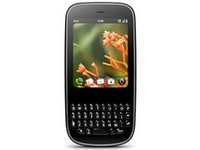
Palm CEO Jon Rubenstein has penned a letter to his employees in an attempt to clam fears after the company posted lower than expected financial results.
Palm confirmed that sales of the Palm Pre and Pixi were lower than expected in its Q3 financial guidance, which led to lower carrier purchasing volumes (and therefore less money in the bank).
However Rubenstein has thrown together a few thoughts on the matter and sent it to all his employees, telling them that things will get better.
He mentions the news being 'difficult to swallow' after reporting revenues lower than the $300 million expected.
Re-resurgent
He also pointed to new product advisors being deployed to stores around the US as well as a renewed ad campaign, as the company bids to turn things around.
He did point to $500 million in the bank as a sign that Palm has the power to change things, so it's not all bad news.
But until Palm announces some new phones to join the ageing Palm Pre and Pixi (the latter of which hasn't even yet made it to the UK) things will continue to be tricky for the resurgent firm.
If you want to see the letter in full, then head on over to the Wall Street Journal, and see a CEO's over exuberant use of exclamation marks.

| |
Read More ...
Secure-Me launches all-in-one ID-theft protection service

A service launching in the UK today promises to help users protect their privacy and avoid identity theft while browsing the web.
Secure-Me, available for PCs, Macs and smartphones, offers a secure browser which encrypts traffic coming to and from the user's machine.
The service also compresses data - which it claims will speed up transfer - and anonymises traffic by routing it through Secure-Me's US servers.
In addition, Secure-Me offers built in anti-virus (Clam AV on the local machine, and McAfee on the server), and checks visited websites against McAfee's Site Advisor database of malicious websites.
The service is not intended to replace existing anti-virus, though – the company told TechRadar that Secure-Me was intended to "complement local protection," and offered "a second opinion".
Secure-Me also comes with a virtual keyboard, keystroke interference software (to confuse keystroke loggers), and the ability to encrypt and decrypt files. The service works with Firefox and can be configured to work with Internet Explorer and Safari.
Because traffic using Secure-Me is routed through US servers, users will appear to have a US IP address, which means that Secure-Me also brings the additional benefit of being able to view US-only sites such as Hulu. In a briefing with TechRadar, representatives from Secure-Me said they planned to add servers in a number of countries so users could choose which country they wanted to appear to be surfing from.
Secure-Me Portable (for Windows and OS X) is supplied on a USB stick at آ£89.95 for the first year then آ£39.95 per year. For Android, iPhone, Symbian and Windows Mobile platforms, Secure-Me costs آ£14.95 a year, and the desktop version (Windows XP, Vista and 7) is priced at آ£39.95 a year.
You can purchase the software or download the demo at www.secure-me.co.uk.

| |
Read More ...


1 comment:
Great article, I completely agree with your points.
Post a Comment